
Europe Microspheres Market Size, Share, Trends and Forecast by Type, Raw Material, Application, and Country, 2026-2034
Europe Microspheres Market Size, Share, Trends & Forecast (2026-2034)
The Europe microspheres market grew from USD 2.00 Billion in 2025 to USD 2.14 Billion in 2026 and is projected to reach USD 3.72 Billion by 2034, growing at a CAGR of 6.93% during 2026-2034. The European Union's Green Deal mandating a 55% carbon emission reduction by 2030 is driving transformative demand for lightweight materials across automotive, construction, and aerospace sectors, with hollow microspheres delivering weight reductions in composite formulations that directly enable fuel efficiency and insulation performance targets that are otherwise unachievable with conventional material technologies. Hollow microspheres lead by type at 64.4%, glass dominates raw material at 45.4%, and Germany commands the largest country share at 30.2%.
Market Snapshot
|
Metric |
Value |
|
Base Year Market Size (2025) |
USD 2.00 Billion |
|
Market Size (2026) |
USD 2.14 Billion |
|
Forecast Market Size (2034) |
USD 3.72 Billion |
|
CAGR (2026-2034) |
6.93% |
|
Base Year |
2025 |
|
Historical Period |
2020-2025 |
|
Forecast Period |
2026-2034 |
|
Dominant Type |
Hollow (64.4%, 2025) |
|
Dominant Raw Material |
Glass (45.4%, 2025) |
|
Leading Country |
Germany (30.2%, 2025) |
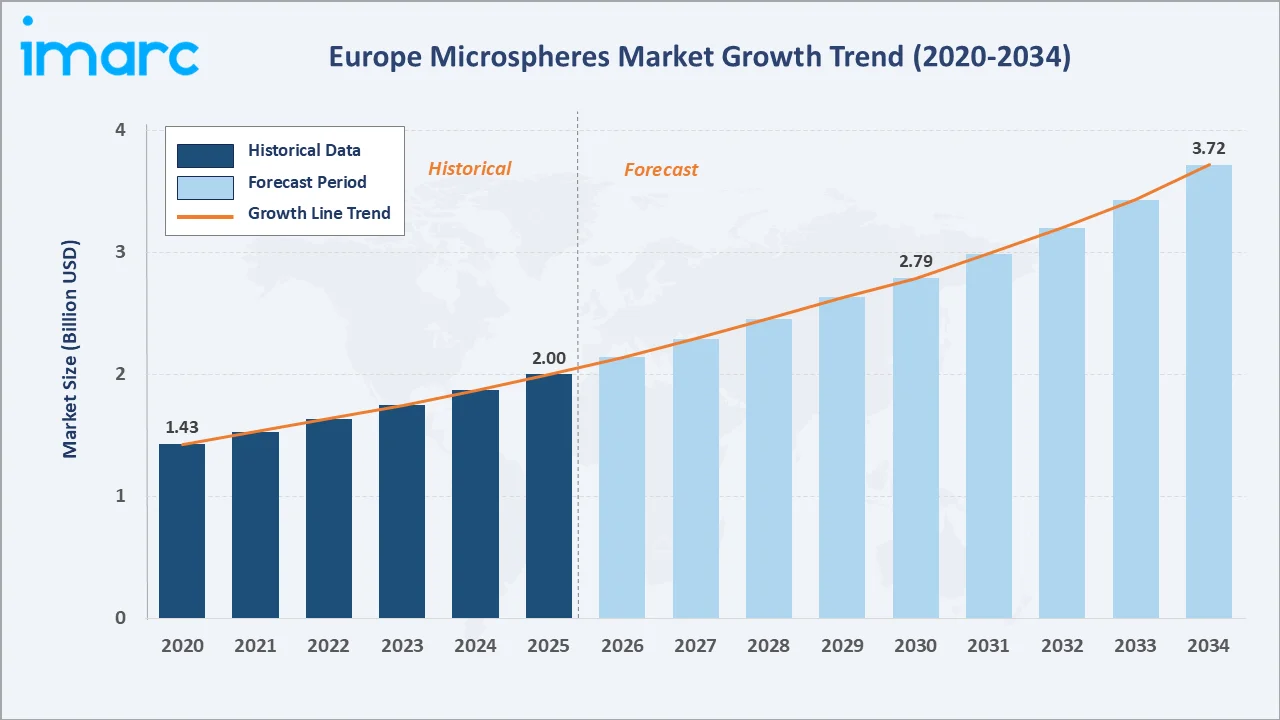
The Europe microspheres market grew from USD 1.43 Billion in 2020 to USD 2.00 Billion by 2025 and is estimated to reach USD 2.14 Billion in 2026. The market is projected to reach USD 2.79 Billion by 2030 and USD 3.72 Billion by 2034.
To get more information on this market, Request Sample
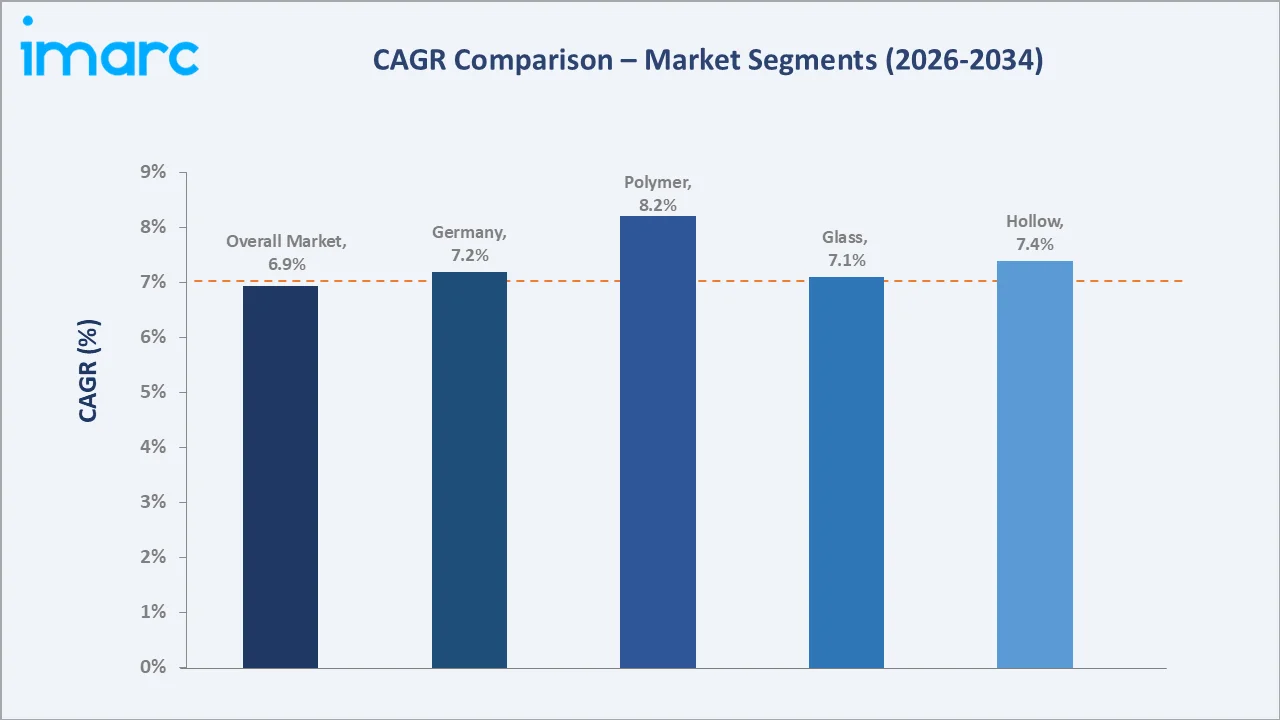
Hollow microspheres grow at ~7.4% CAGR through expanding lightweight composite applications in automotive and aerospace. Polymer microspheres expand fastest at ~8.2% CAGR through drug delivery and bio-based material innovation. Germany leads country growth at ~7.2% CAGR through automotive manufacturing and chemical industry demand.
Executive Summary
The Europe microspheres market is experiencing robust growth driven by the European Green Deal's lightweighting mandates, expanding medical technology applications for drug delivery and diagnostic microspheres, and the construction industry's adoption of insulating microsphere-filled materials. The market is supported by an expanding glass bubbles portfolio, thermally expandable microsphere range, and growing pharmaceutical polymer microsphere applications from European biotech and medtech innovators.
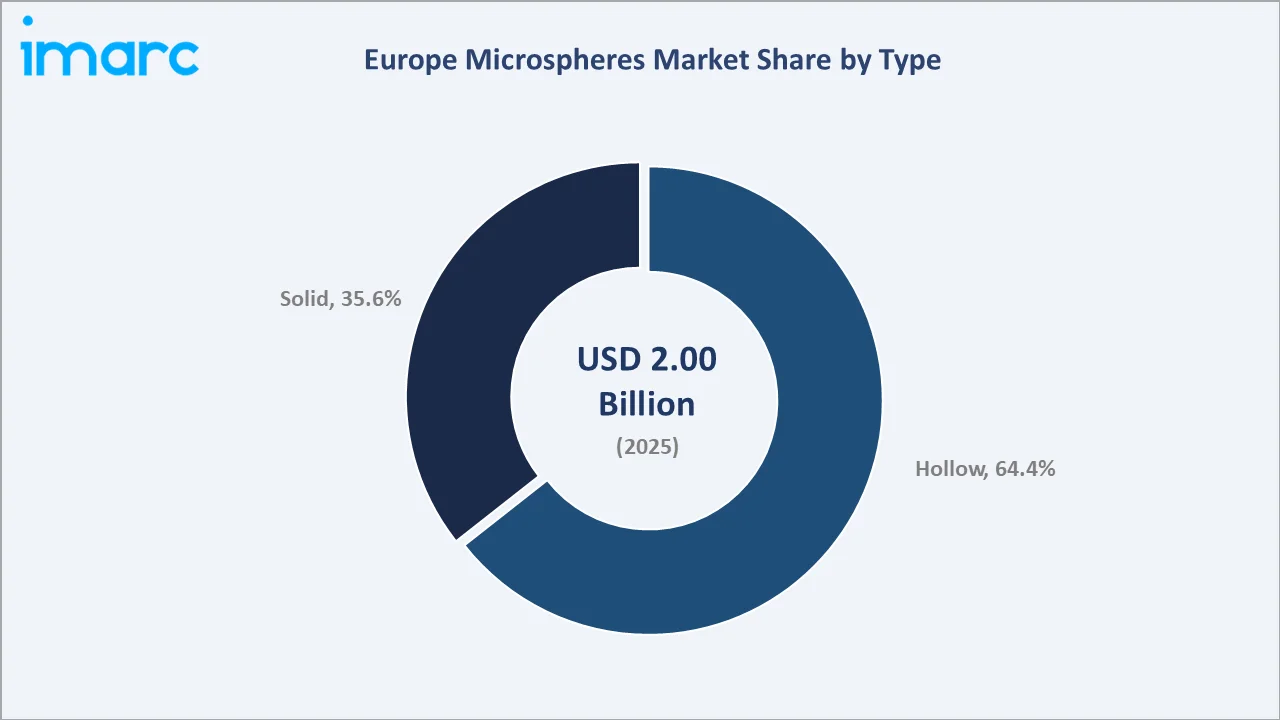
Hollow microspheres command 64.4% market share through their weight reduction performance in composites, syntactic foams, and insulation materials. Glass leads raw materials at 45.4% through its cost-performance balance in industrial and specialty applications. Germany holds 30.2% of market share through its automotive manufacturing leadership and advanced chemical industry.
Key Market Insights
|
Insight |
Data |
|
Dominant Type |
Hollow Microspheres - 64.4% share (2025) |
|
Dominant Raw Material |
Glass - 45.4% share (2025) |
|
Leading Country |
Germany - 30.2% (2025) |
|
Key Market Opportunity |
The EU Green Deal-driven shift to lightweight and energy-efficient construction materials, combined with the EV vehicle lightweighting mandate, represents an incremental microsphere demand opportunity by 2030 across composite construction, automotive, and insulation material applications. |
Key Analytical Observations Supporting the Above Data:
- Hollow Microspheres at 64.4%: Hollow microspheres, whether glass bubbles, hollow polymer spheres, or ceramic hollow microspheres, dominate the European market through their unique density reduction capability that enables composite materials to achieve weights below solid-filled equivalents without proportionate strength sacrifice.
- Glass at 45.4%: Glass microspheres, encompassing solid glass beads and hollow glass bubbles produced from borosilicate, soda-lime, and aluminosilicate glass compositions, lead European microsphere demand through their combination of cost competitiveness (glass raw materials are abundant and economically processed), chemical inertness (resistance to solvents, acids, and polymers enables broad application compatibility), and established supply chains that provide quality consistency required by European automotive and construction specifications.
- Germany at 30.2%: Germany's market leadership derives from the convergence of four structural advantages: first, Europe's largest automotive manufacturing cluster; second, Germany's chemical industry concentration; third, Germany's construction sector growth under EU renovation wave requirements drives insulating microsphere demand; and fourth, Germany hosts leading microsphere application R&D.
Europe Microspheres Market Overview
The Europe microspheres market encompasses engineered spherical particles in the 1-1000 micrometer diameter range produced from glass, polymer, ceramic, metal, and fly ash raw materials in hollow or solid morphologies for industrial, medical, and specialty applications. The European microsphere industry is underpinned by the EU regulatory compliance framework that governs microsphere production and end-use application safety documentation, the particle size analysis standard that defines measurement methodology for microsphere characterization, and sector-specific EU directives driving automotive lightweighting.
Market Dynamics
To evaluate market opportunities, Request Sample
Market Drivers
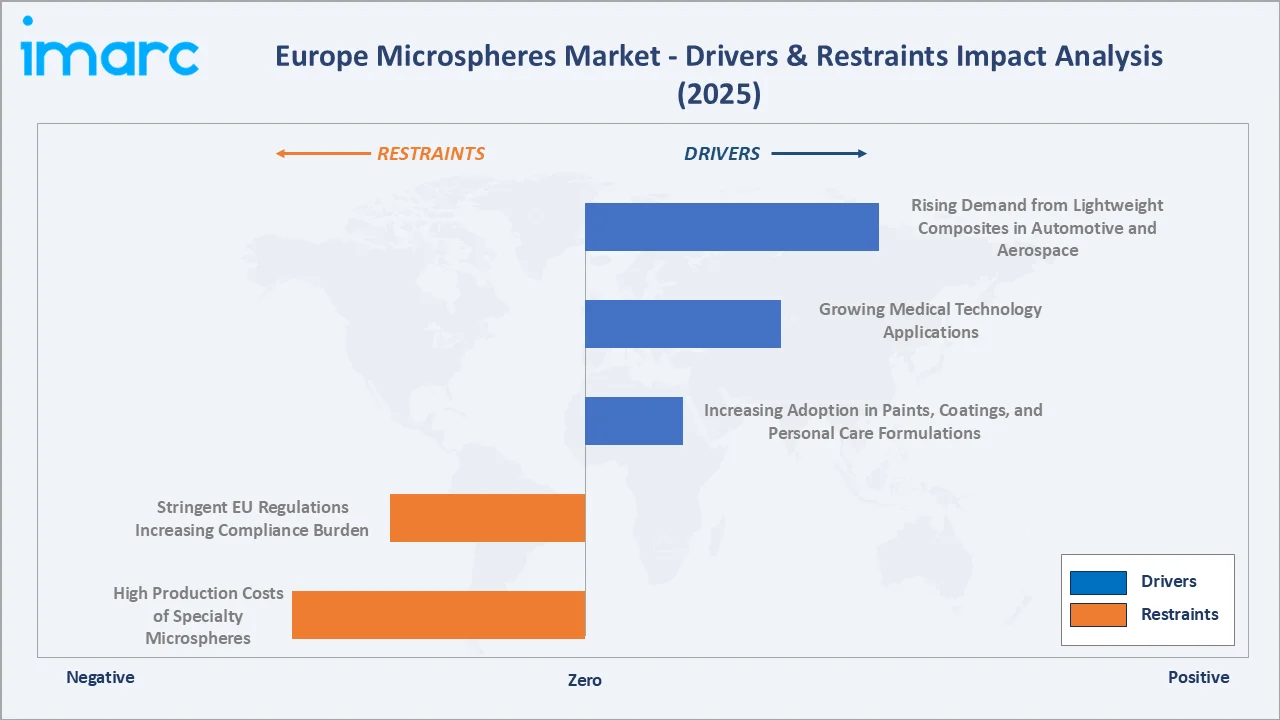
- Rising Demand from Lightweight Composites in Automotive and Aerospace: The EU's CO2 fleet emission regulation and the emission reduction trajectory are compelling European automotive OEMs to systematically reduce vehicle mass across platforms. Hollow glass microspheres in underbody acoustic dampening materials, structural adhesives, and body-in-white composite panels provide weight reduction versus conventional filler-loaded formulations, with each kilogram of vehicle mass reduction enabling CO2 reduction.
- Growing Medical Technology Applications: European pharmaceutical and medical device manufacturers are increasingly adopting microspheres for targeted drug delivery, encapsulating chemotherapy agents, anti-inflammatory drugs, and biologics in biodegradable polymer microspheres that enable controlled release kinetics unachievable with conventional tablet or injection formulations. In April 2024, Terumo Europe N.V. launched BioPearl microspheres, described as the first resorbable drug-eluting microspheres. The product is designed to combine the established capabilities of drug-eluting microsphere technology with the advantages offered by a resorbable embolic agent.
- Increasing Adoption in Paints, Coatings, and Personal Care Formulations: European paint and coatings manufacturers are incorporating hollow glass and polymer microspheres as functional extenders that simultaneously reduce formulation density (reducing material weight and VOC per unit volume), improve thermal insulation properties of coatings applied to industrial equipment, and provide controlled surface texture in decorative architectural applications. In cosmetics and personal care, polymer microspheres serve as exfoliants in face scrubs, opacifiers in sunscreens, and active ingredient encapsulants in skincare formulations.
Market Restraints
- High Production Costs of Specialty Microspheres: Medical-grade biodegradable polymer microspheres for drug delivery command premium production costs due to pharmaceutical-grade raw material requirements, cleanroom manufacturing conditions, aseptic processing equipment, and extensive biocompatibility and sterility testing required for EU CE marking. Aerospace-grade hollow ceramic microspheres with tightly controlled particle size distributions command similar premium pricing.
- Stringent EU Regulations Increasing Compliance Burden: Registration requirements mandate that microsphere manufacturers producing or importing more than one substance provide comprehensive chemical safety documentation including physical-chemical properties, toxicology, ecotoxicology, and exposure scenario modeling for each substance component. Hollow glass microspheres, polymer microspheres, and specialty surface-treated microspheres frequently require registration updates as formulations evolve or new applications are developed, imposing recurring regulatory compliance costs.
Market Opportunities
- Electric Vehicle Thermal Management Microsphere Applications: European EV battery system thermal management requires advanced thermal interface materials, heat-resistant encapsulants, and lightweight battery housing composites where microspheres provide unique benefits. Alumina and ceramic hollow microspheres in battery pack encapsulant systems improve thermal conductivity while reducing overall system weight, enabling higher energy density per kilogram of battery system.
- Next-Generation Drug Delivery Microspheres for European Pharmaceutical Sector: European pharmaceutical companies are advancing clinical development of radiolabeled microspheres for internal radiation therapy (SIRT), RNA-loaded lipid nanoparticle/microsphere hybrid systems for mRNA vaccine delivery, and stimuli-responsive polymer microspheres that release drug payload in response to pH, temperature, or magnetic field triggers.
Market Challenges
- EU Microplastics Restriction Creating Demand Uncertainty for Polymer Microspheres: The EU’s tightening restrictions on intentionally added microplastics are creating regulatory uncertainty for certain polymer-based microsphere applications across Europe. Manufacturers may face additional compliance, reporting, reformulation, and material substitution requirements, increasing development costs and operational complexity. This regulatory environment could restrict demand in affected applications while accelerating the shift toward biodegradable or alternative microsphere materials.
- Supply Chain Concentration Risk in Glass Microsphere Production: The European glass microsphere market is significantly dependent on 3M as the primary supplier of high-performance hollow glass bubbles for automotive and aerospace applications, with limited European alternative supply for the highest-performance density grades. Supply disruption risk, pricing pressure from single-supplier dependence, and geopolitical factors affecting transatlantic supply chains are creating European demand for domestic hollow glass microsphere manufacturing capacity that currently does not exist at scale.
Emerging Market Trends
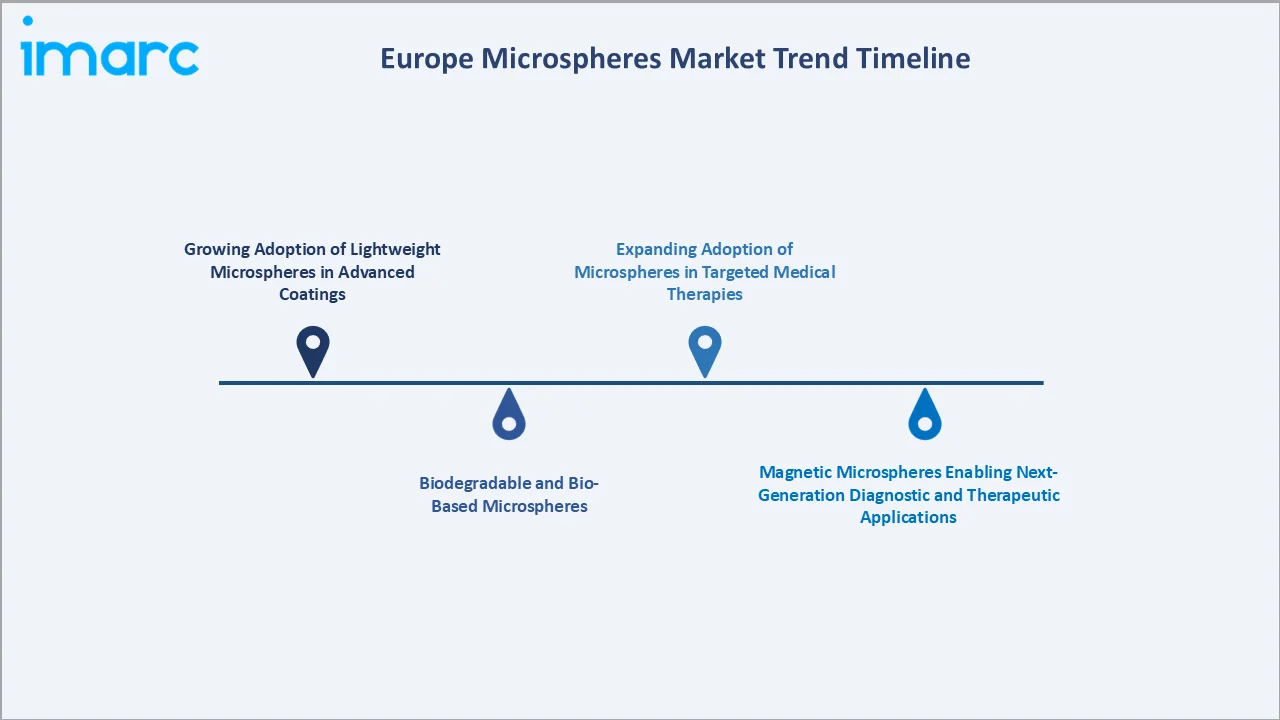
1. Growing Adoption of Lightweight Microspheres in Advanced Coatings
Manufacturers are developing smaller and more efficient microspheres that reduce coating weight while maintaining surface smoothness, durability, and cleanability. This trend is supporting material efficiency and the development of higher-performance coating formulations across Europe. In March 2025, Nouryon launched Expancel XS200 microspheres at the European Coatings Show in Nuremberg, Germany. Designed for thin-layer decorative paints, the product reduces paint weight compared with conventional fillers while maintaining smoothness, durability, and cleanability.
2. Biodegradable and Bio-Based Microspheres
European personal care brands are replacing conventional polystyrene and polyethylene microsphere exfoliants with cellulose, jojoba wax, and sugar-derived biodegradable microspheres to comply with EU Single-Use Plastics and Cosmetics Microplastics restrictions. This regulatory-driven substitution is creating a rapidly growing European market for bio-based microsphere manufacturers, with specialty companies including emerging European startups capturing formulation development contracts from major personal care brands seeking REACH-compliant microsphere alternatives ahead of full restriction enforcement.
3. Expanding Adoption of Microspheres in Targeted Medical Therapies
Advances in delivery systems are improving precision, controlled administration, and ease of use for healthcare professionals. Regulatory approvals for innovative microsphere-based medical devices are further supporting their commercialization and adoption across Europe. In September 2024, Sirtex Medical received EU MDR certification for its SIR-Spheres Y-90 resin microspheres and associated delivery systems, enabling the European launch of its Siros delivery system. Siros is designed to support controlled and user-friendly administration of Y-90 microspheres for liver cancer treatment.
4. Magnetic Microspheres Enabling Next-Generation Diagnostic and Therapeutic Applications
Iron oxide-based magnetic microspheres and polymer-coated magnetic beads are finding expanding European applications in molecular diagnostics (automated nucleic acid extraction, immunoassay separation), cell therapy manufacturing (magnetic cell isolation for CAR-T cell production), and emerging MRI-guided hyperthermia cancer treatment approaches. Leading life science companies are expanding magnetic microsphere product portfolios to serve Europe's rapidly growing cell and gene therapy manufacturing sector.
Industry Value Chain Analysis
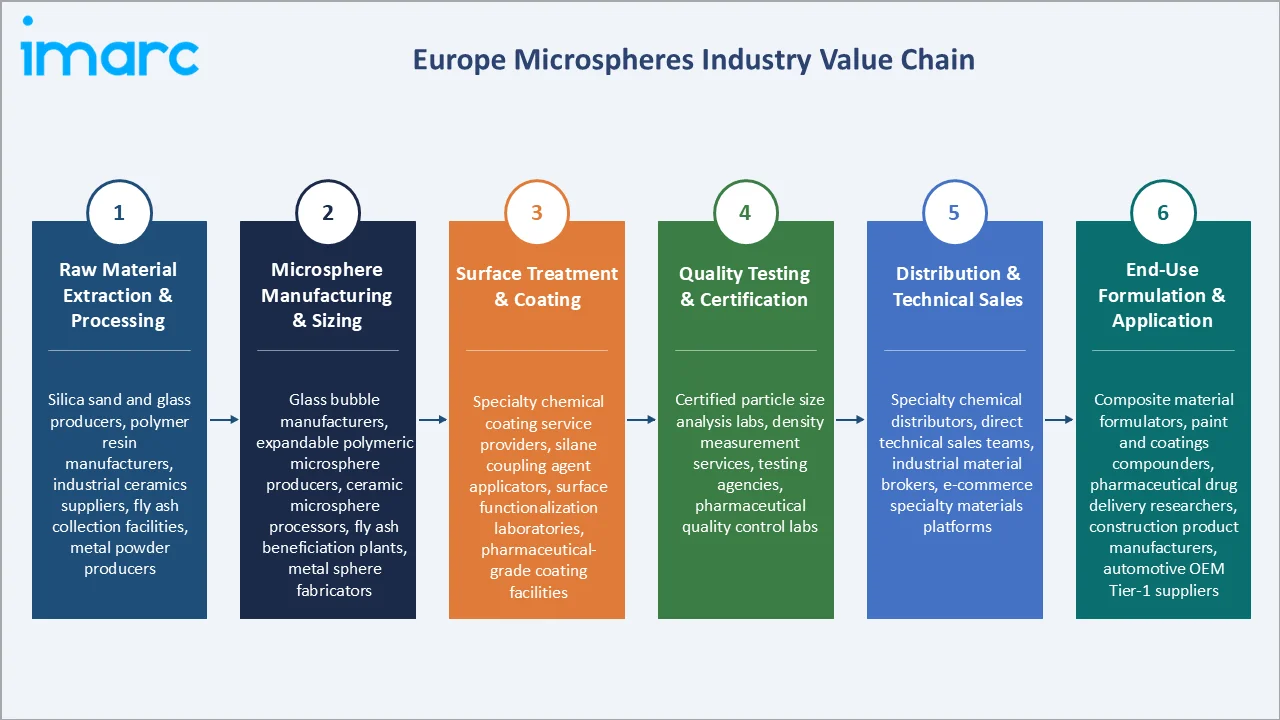
The Europe microspheres value chain encompasses raw material extraction and processing, microsphere manufacturing and sizing, surface treatment and coating, quality testing and certification, distribution and technical sales, and end-use formulation and application.
|
Stage |
Key Players |
|
Raw Material Extraction & Processing |
Silica sand and glass producers, polymer resin manufacturers, industrial ceramics suppliers, fly ash collection facilities, metal powder producers. |
|
Microsphere Manufacturing & Sizing |
Glass bubble manufacturers, expandable polymeric microsphere producers, ceramic microsphere processors, fly ash beneficiation plants, metal sphere fabricators. |
|
Surface Treatment & Coating |
Specialty chemical coating service providers, silane coupling agent applicators, surface functionalization laboratories, pharmaceutical-grade coating facilities. |
|
Quality Testing & Certification |
Certified particle size analysis labs, density measurement services, testing agencies, pharmaceutical quality control labs. |
|
Distribution & Technical Sales |
Specialty chemical distributors, direct technical sales teams, industrial material brokers, e-commerce specialty materials platforms. |
|
End-Use Formulation & Application |
Composite material formulators, paint and coatings compounders, pharmaceutical drug delivery researchers, construction product manufacturers, automotive OEM Tier-1 suppliers. |
Surface treatment and coating represent a high-value differentiation stage, where standard glass or polymer microspheres are functionalized with silane coupling agents, hydrophobic coatings, or biocompatible surface layers that enable compatibility with specific polymer matrices, water-based formulations, or biological systems.
Technology Landscape in the Europe Microspheres Industry
Hollow Glass Bubble Manufacturing Technology
Hollow glass microspheres (glass bubbles) are commercially produced through two primary technologies: the flame spheroidization process (heating fine glass powder particles in a high-temperature flame until surface tension forms spherical shells around entrapped gas) and the rotary kiln expansion process (heating glass frit containing sulfate blowing agents until controlled gas evolution forms hollow shells during viscous glass flow).
Polymer Microsphere Encapsulation and Drug Delivery Technology
Pharmaceutical polymer microspheres for European drug delivery applications are manufactured using emulsion polymerization, solvent evaporation/extraction, spray drying, and microfluidic droplet techniques that control particle size (1-500 micrometers), drug loading efficiency, and release kinetics (hours to months depending on polymer composition). PLGA (poly (lactic-co-glycolic acid)) microspheres dominate European pharmaceutical applications due to PLGA's established biocompatibility track record, tunable degradation rates, and compatibility with diverse drug classes including proteins, peptides, small molecules, and nucleic acids.
Microfluidic Microsphere Production for Precision Life Science Applications
European life science research institutions and specialty manufacturers are adopting microfluidic droplet generation technology for producing monodisperse microspheres required by flow cytometry calibration, single-cell analysis, and molecular diagnostic bead assays. Droplet-based microfluidics using PDMS or glass microchip reactors enables production of precisely controlled microsphere populations that conventional bulk manufacturing methods cannot achieve, creating specialty European production capacity for high-value life science microsphere products commanding premium pricing in research and clinical markets.
Market Segmentation Analysis
The report covers the following segments:
|
Segment Category |
Leading Segment |
Market Share |
Year |
|
Type |
Hollow |
64.4% |
2025 |
|
Raw Material |
Glass |
45.4% |
2025 |
|
Application |
Construction Composites |
🔒 |
2025 |
|
Country |
Germany |
30.2% |
2025 |
.webp)
By Type
Hollow microspheres command 64.4% in 2025, through their fundamental performance advantage of dramatically reducing composite material density while partially preserving bulk mechanical properties. This density reduction performance is irreplaceable by solid microspheres or conventional fillers in weight-constrained automotive, aerospace, and marine buoyancy applications.
To access detailed market analysis, Request Sample
Solid microspheres at 35.6% serve applications where surface area maximization, optical properties, or controlled flow characteristics are the primary value rather than density reduction. Solid glass beads in road surface markings (reflective safety beads), abrasive blasting media (shot peening for metal fatigue life improvement in aerospace components), and reference standards for particle size analyzer calibration represent solid microsphere applications where hollow alternatives are technically inappropriate.
By Raw Material
Glass dominates at 45.4% in 2025 through the optimal combination of production scalability, chemical inertness, dimensional precision, and cost-performance ratio that glass composition enables across both solid bead and hollow bubble applications. European glass microsphere supply benefits from the continent's established glass manufacturing infrastructure, with borosilicate glass raw materials sourced from multiple European producers enabling stable and cost-competitive supply for industrial hollow glass bubble and solid glass bead production.
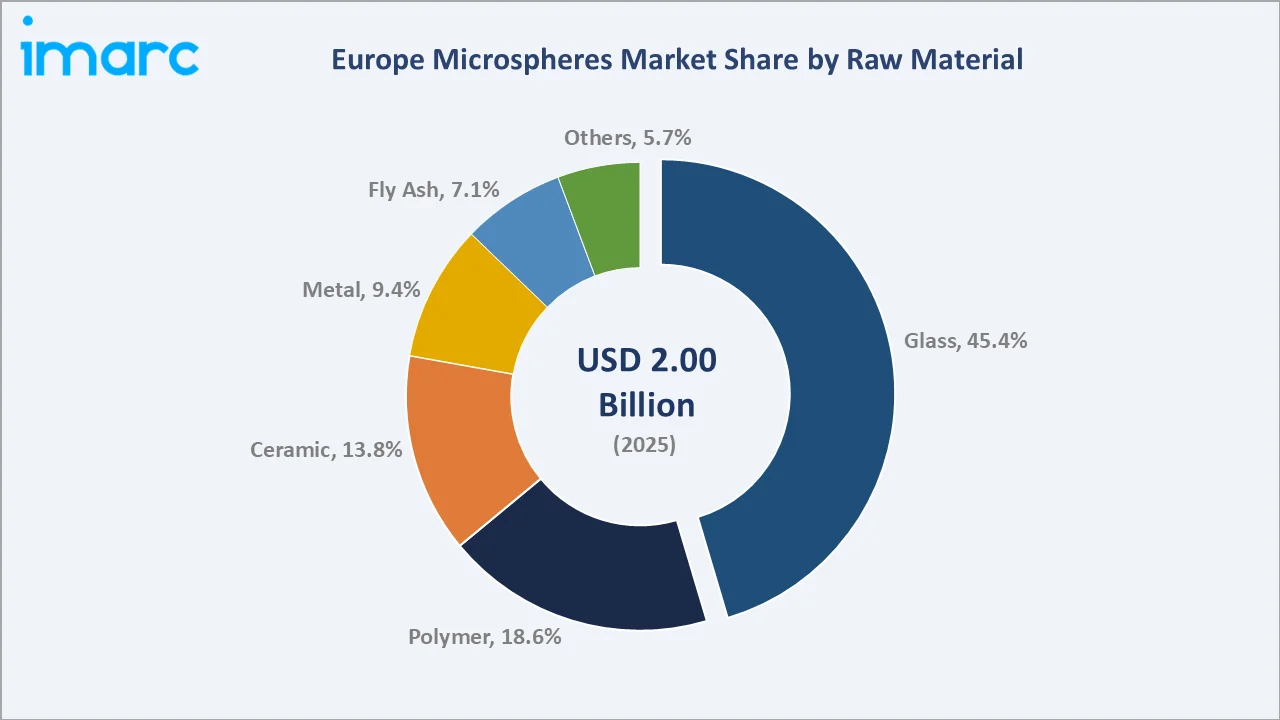
Polymer at 18.6% is growing fastest at ~8.2% CAGR through expanding pharmaceutical drug delivery, personal care ingredients, and life science diagnostic applications. Ceramics at 13.8% serve high-temperature and specialized abrasion resistance applications in automotive thermal spray coatings and oil and gas proppants. Metal at 9.4% addresses conductive adhesive, sintering, and medical radiopaque marker applications. Fly ash at 7.1% provides cost-effective cenospheres for construction and industrial composites from power station byproduct recovery.
Regional Market Insights
|
Country |
Share (2025) |
Key Europe Microspheres Market Drivers & Characteristics |
|
Germany |
30.2% |
Reflecting Germany's position as Europe's largest industrial manufacturing economy, with automotive clusters driving hollow glass microsphere demand for lightweight composite parts, and a strong chemical industry consuming microspheres in specialty coatings. |
|
France |
17.8% |
Reflecting France's leading aerospace sector generating significant demand for ceramic and glass microspheres in lightweight structural composites, and a strong pharmaceutical and medical technology industry driving polymer microsphere growth for drug delivery applications. |
|
United Kingdom |
17.1% |
Reflecting the UK's advanced aerospace and defense sector driving precision microsphere demand, a strong pharmaceutical R&D industry expanding polymer microsphere biomedical applications, and oil and gas operational requirements generating syntactic foam and hollow glass microsphere procurement for deepwater buoyancy applications. |
|
Italy |
12.4% |
Reflecting Italy's significant construction and building materials industry driving demand for hollow microspheres in thermal insulation mortars and lightweight concrete, strong luxury automotive segment requiring precision composite microspheres, and cosmetics and personal care industry using polymer microspheres. |
|
Spain |
10.6% |
Reflecting Spain's growing construction sector and Mediterranean climate-adapted building renovation market driving insulation microsphere demand, expanding renewable energy installation consuming glass microsphere-filled epoxy systems. |
|
Others |
11.9% |
Reflecting the other EU markets generating distributed microsphere demand across automotive, construction, and industrial applications, with Nordic countries particularly active in renewable energy composite applications and Eastern European markets growing through manufacturing sector expansion. |
Germany's 30.2% share reflects its structural dominance through the automotive manufacturing ecosystem, and its 1,200+ Tier-1 and Tier-2 suppliers collectively represent Europe's highest-volume industrial microsphere procurement base. France's 17.8% reflects company headquarters driving composite and syntactic foam microsphere demand for aircraft manufacturing, glass specialty materials production contributing to domestic glass microsphere supply, and France's pharmaceutical sector's growth in polymer microsphere drug delivery research.
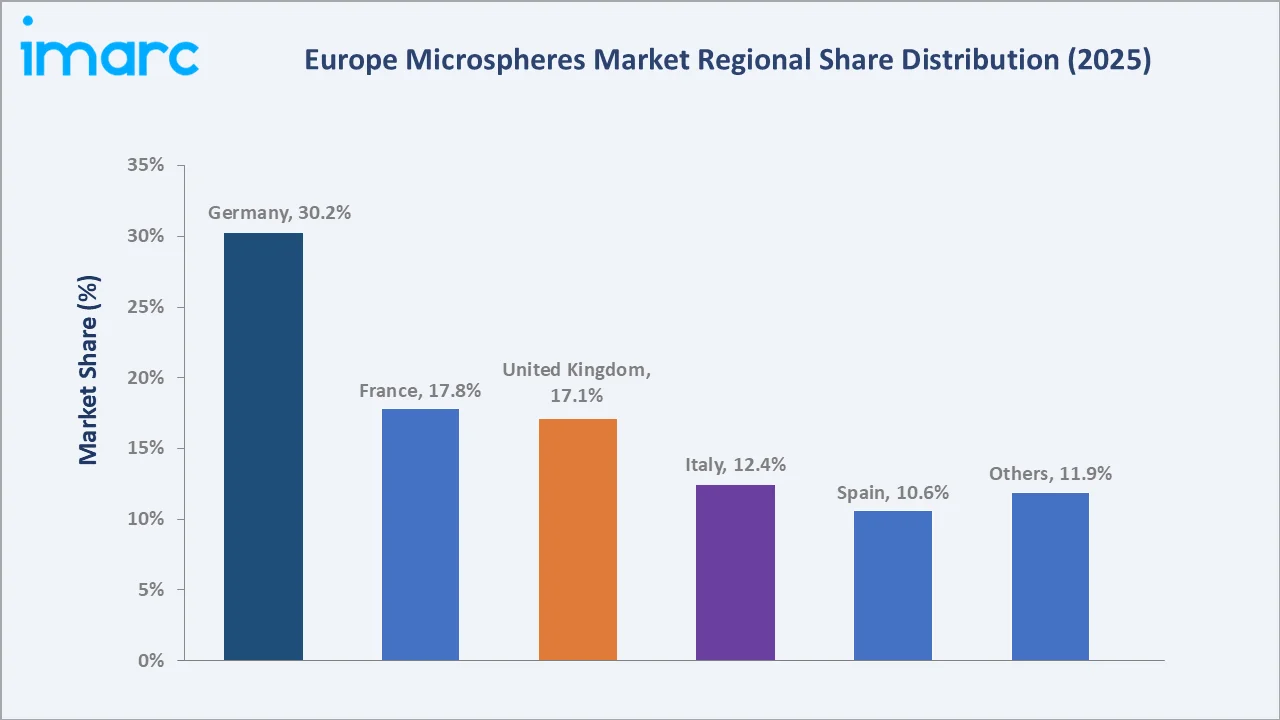
The UK contributes 17.1% through oil and gas syntactic foam buoyancy applications, pharmaceutical polymer microsphere R&D, and defense sector hollow ceramic microsphere consumption. Italy at 12.4% and Spain at 10.6% generate construction- and automotive-driven hollow microsphere demand, with growing pharmaceutical and cosmetic specialty microsphere adoption in their respective industrial bases.
Competitive Landscape
The Europe microspheres market features a competitive landscape spanning multinational leaders, European specialty materials producers, and specialty life science and medical device companies. Market leadership is contested through product portfolio breadth, technical application support, regulatory compliance documentation, particle size precision, and the ability to serve both industrial commodity volume and specialty high-purity niche applications.
|
Company |
Key Products |
Market Position |
Core Strength |
|
3M |
3M Ceramic Microspheres, 3M Glass Bubbles |
Market Leader |
3M provides advanced hollow glass bubbles and solid ceramic microspheres in Europe as key functional additives. |
|
Trelleborg AB |
Eccospheres, Hollow Glass Microspheres |
Market Leader |
Trelleborg AB plays a prominent role in the European microspheres market as a leading specialist manufacturer and downstream integrator of premium hollow microspheres. |
|
Terumo Corporation |
BioPearl Microspheres, LifePearl Drug Elutable Microspheres, HydroPearl Compressible Microspheres |
Established Player |
Terumo Corporation plays a major role in Europe's interventional oncology market through the development, acquisition, and distribution of advanced, specialized microspheres used for treating liver tumors. |
|
Cospheric LLC |
Hollow Glass Microspheres, Ceramic Microspheres, Polymer Microspheres, Metal Microspheres |
Innovator |
Cospheric LLC acts as a key market participant in the Europe and international microspheres markets, providing engineered precision spherical particles for industrial and research applications. |
|
Merit Medical Systems |
Embosphere Microspheres, EmboGold Microspheres, HepaSphere Microspheres |
Established Player |
Merit Medical Systems provides advanced Embosphere Microspheres, used across Europe for minimally invasive, image-guided embolization procedures. |
The competitive landscape is evolving as bio-based microsphere startups challenge conventional polymer suppliers in the EU personal care market under microplastics restriction pressure, while established glass bubble leaders face European supply chain localization pressure from automotive OEM customers seeking dual-source supply security for lightweighting-critical materials.
Key Company Profiles
3M
3M is a diversified materials science and technology company with an established presence across Europe. In the microspheres market, the company offers specialized microsphere solutions used across applications such as coatings, adhesives, composites, construction materials, and lightweight formulations. Its expertise in material science, product innovation, and application-specific solutions supports its participation in the European microspheres industry.
- Key Products: 3M Ceramic Microspheres, 3M Glass Bubbles.
- Strategic Focus: Developing high-performance microsphere technologies that enhance lightweight, durability, insulation, and material efficiency across industrial applications in Europe. The company emphasizes material innovation and application-specific solutions to address evolving requirements in coatings, composites, adhesives, and other advanced materials.
Trelleborg AB
Trelleborg AB is a Sweden-based engineered polymer solutions provider with an extensive industrial presence across Europe. In the microspheres market, the company utilizes advanced polymer and material technologies to support lightweighting, buoyancy, insulation, and performance enhancement in specialized applications. Its expertise in engineered polymers, composites, and application-specific material solutions supports its presence in the European microspheres industry.
- Key Products: Eccospheres, Hollow Glass Microspheres.
- Strategic Focus: Focuses on advanced engineered polymer and microsphere-based material solutions that enhance lightweighting, buoyancy, insulation, and durability across specialized applications. The company emphasizes material innovation, customized solutions, and performance optimization to address evolving requirements across European industrial markets.
Market Concentration Analysis
The Europe microspheres market is moderately concentrated in specific segments while fragmented overall. In hollow glass microspheres for industrial applications, 3M commands an estimated 50-60% of European market share through its dominant glass bubbles product line. In medical and pharmaceutical microspheres, the market is highly fragmented among specialty producers serving narrow application niches with unique regulatory qualifications. The emergence of bio-based microsphere startups in the personal care segment and precision microfluidic microsphere producers in the life science segment is simultaneously fragmenting the specialty microsphere tier while the industrial segment consolidates around established suppliers with regulatory-compliant documentation and quality systems.
Investment & Growth Opportunities
Highest Growth Segments
Polymer microspheres (~8.2% CAGR) through pharmaceutical drug delivery and bio-based personal care, hollow microspheres in EV automotive applications (~7.4% CAGR), Germany and France premium industrial and medical applications (~7.2% CAGR), drug-eluting oncology microspheres, magnetic microspheres for cell therapy manufacturing, and bio-based biodegradable microsphere alternatives to restricted microplastics represent the highest-return investment vectors in the European microspheres market through 2034.
Investment Themes
- European Hollow Glass Bubble Manufacturing Capacity: The European market's dependence on US-origin 3M glass bubbles for the highest-performance hollow glass microsphere grades represents a supply chain risk that major European automotive OEMs are seeking to mitigate through dual-source qualification programs. Investment in European hollow glass bubble manufacturing capacity could capture the high European hollow glass microsphere market currently served exclusively by US and Asian production.
- Biodegradable Microsphere Development for Cosmetics and Personal Care Compliance: EU microplastics restriction implementation creates a high annual European cosmetics microsphere replacement opportunity for regulatory-compliant biodegradable alternatives. Early-mover investment in certified biodegradable cellulose, PHA, or silica microsphere manufacturing for personal care applications can capture market share from transitioning brands before full restriction enforcement concentrates supply options.
Future Market Outlook (2026-2034)
The Europe microspheres market is projected to grow from USD 2.00 Billion in 2025 to USD 2.14 Billion in 2026, reaching USD 3.72 Billion by 2034, exhibiting a CAGR of 6.93% during 2026-2034. The market is projected to reach an anchor value of USD 2.79 Billion by 2030, representing the mid-period milestone at which EU Green Deal lightweighting mandates have generated significant automotive microsphere demand growth, bio-based polymer microspheres have achieved commercial scale in personal care applications, and drug-eluting microspheres have expanded to additional European cancer treatment indications beyond current hepatic chemoembolization applications.
Three structural forces will define the Europe microspheres market through 2034. First, the EU's comprehensive regulatory framework creates a durable, policy-enforced demand floor for lightweight, energy-efficient, and sustainable materials across automotive, construction, and personal care applications where microspheres provide technically unique and economically validated performance benefits. Second, the European pharmaceutical and medical device sector's expansion of polymer microsphere drug delivery applications is creating the highest-value growth segment within the microsphere market. Third, the transition to electric vehicles and offshore renewable energy infrastructure creates two large new application areas, where microsphere materials provide performance solutions.
Research Methodology
Primary Research
Primary research comprised in-depth interviews with European microsphere manufacturers, automotive composite formulation engineers, pharmaceutical drug delivery researchers, construction product development managers, paint and coating technical directors, and specialty chemical distributors serving the microsphere market. These discussions validated market size estimates, type and raw material segment demand dynamics, country market characteristics, and technology adoption trajectories for the 2026-2034 forecast period.
Secondary Research
Secondary research encompassed registration database analysis for microsphere substances, European Automobile Manufacturers Association fleet emission compliance data, EU technical guidance publications, IMARC Group proprietary specialty chemicals and advanced materials databases, company annual reports and investor presentations, European patent filing analysis for microsphere innovation trends, and industry publications covering European specialty materials market developments through 2025.
Forecasting Models
Forecasting models incorporated historical microsphere market revenue correlations with European industrial production indices, automotive vehicle production forecasts, pharmaceutical R&D spending trajectories, construction renovation activity under EU Green Deal programs, and macroeconomic indicators. Both bottom-up product type and raw material revenue modeling and top-down country-level demand approaches were cross-validated for forecast consistency across all segments and countries.
Europe Microspheres Market Report Coverage:
| Report Features | Details |
|---|---|
| Base Year of the Analysis | 2025 |
| Historical Period | 2020-2025 |
| Forecast Period | 2026-2034 |
| Units | Billion USD |
| Scope of the Report | Exploration of Historical and Forecast Trends, Industry Catalysts and Challenges, Segment-Wise Historical and Predictive Market Assessment:
|
| Types Covered | Hollow, Solid |
| Raw Materials Covered | Glass, Ceramic, Fly Ash, Polymer, Metal, Others |
| Applications Covered | Construction Composites, Medical Technology, Life Science & Biotechnology, Paints & Coatings, Cosmetics & Personal Care, Oil & Gas, Automotive, Aerospace, Others |
| Countries Covered | Germany, France, United Kingdom, Italy, Spain, Others |
| Companies Covered | 3M, Trelleborg AB, Terumo Corporation, Cospheric LLC, Merit Medical Systems, etc. |
| Customization Scope | 10% Free Customization |
| Post-Sale Analyst Support | 10-12 Weeks |
| Delivery Format | PDF and Excel through Email (We can also provide the editable version of the report in PPT/Word format on special request) |
Frequently Asked Questions About the Europe Microspheres Market Report
The Europe microspheres market reached USD 2.14 Billion in 2026, driven by EU Green Deal lightweighting mandates, growing pharmaceutical polymer microsphere applications, expanding construction insulation material demand, and automotive composite weight reduction adoption under EU CO2 fleet emission compliance requirements.
The Europe microspheres market is projected to grow at a CAGR of 6.93% during 2026-2034, driven by automotive EV lightweighting, pharmaceutical drug delivery polymer microsphere expansion, construction energy efficiency material adoption, EU microplastics restriction-driven bio-based polymer microsphere growth, and offshore renewable energy buoyancy applications.
The market is projected to reach USD 2.79 Billion by 2030, the mid-period milestone when EU Green Deal lightweighting has driven significant automotive microsphere demand, bio-based polymer microspheres achieve commercial scale in personal care, and drug-eluting microspheres expand to additional European oncology treatment indications.
Hollow microspheres lead with a 64.4% share in 2025, through their fundamental density reduction performance enabling weight savings in composites, syntactic foams, and insulation materials, performance that solid microspheres cannot replicate and that directly enables EU CO2 automotive emission compliance and building energy performance standards.
Glass leads with a 45.4% share in 2025, through the combination of cost-competitive production from abundant silica raw materials, chemical inertness enabling broad application compatibility, dimensional precision meeting automotive and aerospace specifications, and established European supply chains from 3M, Potters Industries, and Sibelco.
Germany leads with a 30.2% share in 2025, driven by Europe's largest automotive manufacturing ecosystem, Germany's major chemical industry generating internal microsphere consumption, advanced application R&D, and Germany's construction sector renovation activity under EU energy efficiency mandates.
Key players include 3M, Trelleborg AB, Terumo Corporation, Cospheric LLC, and Merit Medical Systems, among others.
The market is projected to reach USD 3.72 Billion by 2034, driven by comprehensive EV lightweighting adoption, expanded drug delivery microsphere clinical indications, offshore wind buoyancy material demand, bio-based biodegradable polymer microsphere personal care market maturation, and EV battery thermal management ceramic microsphere applications.
Key opportunities include European hollow glass bubble manufacturing capacity to replace import dependence, biodegradable microsphere production for EU microplastics restriction compliance in cosmetics, EV battery thermal management ceramic microsphere development, drug-eluting microsphere portfolio expansion for additional oncology indications, and magnetic microsphere systems for European cell therapy manufacturing scale-up.
Need more help?
- Speak to our experienced analysts for insights on the current market scenarios.
- Include additional segments and countries to customize the report as per your requirement.
- Gain an unparalleled competitive advantage in your domain by understanding how to utilize the report and positively impacting your operations and revenue.
- For further assistance, please connect with our analysts.
 Request Customization
 Speak to an Analyst
 Request Brochure
 Inquire Before Buying
Benefits of Customization
- Personalize this research
- Triangulate with your data
- Get data as per your format and definition
- Gain a deeper dive into a specific application, geography, customer, or competitor
- Any level of personalization
Get in Touch With Us
UNITED STATES
Phone: +1-201-971-6302
INDIA
Phone: +91-120-433-0800
UNITED KINGDOM
Phone: +44-753-714-6104
Email: [email protected]
Client Testimonials




.webp)




.webp)













Related Reports

Choose your plan
*Please note that the prices mentioned below are starting prices for each bundle type. Kindly contact our team for further details.*
Single User License
- 1 User License, Access on 2 Devices
- PDF Report + Excel Dataset (Password Protected)
- Lifetime Access
- No Printing Rights
- 10% Free Report Customization
- 10–12 Weeks of Analyst Support
Five User License
- Access for 5 Users, 2 Devices per User
- PDF Report + Excel Dataset (Password Protected)
- Lifetime Access
- Dedicated Account Manager
- 12–14 Weeks of Analyst Support
- No Printing Rights
- 15% Free Report Customization
- 25% Discount on Your Next Purchase
Corporate User License
- Unlimited User Access (Within Your Organization)
- PDF Report + Excel Dataset
- Lifetime Access
- Dedicated Account Manager
- 14–20 Weeks of Analyst Support
- No Printing Rights
- 20% Free Report Customization
- 30% Discount on Your Next Purchase
Essential Insights
What's included:
3 reports
- Lifetime Access
- PDF Reports
- Excel Datasets
- 2 Weeks of Free Analyst Support
- 2 User Licenses
- Access on 2 Devices
- Printing Rights
- Complimentary PowerPoint (PPT) Version
- Complimentary License Upgrade
Professional Access
What's included:
5 reports
- Lifetime Access
- PDF Reports
- Excel Datasets
- 8 Weeks of Free Analyst Support
- 2 User Licenses
- Access on 2 Devices
- Printing Rights
- Complimentary PowerPoint (PPT) Version
- Complimentary License Upgrade
Business Advantage
What's included:
8 reports
- Lifetime Access
- PDF Reports
- Excel Datasets
- 14 Weeks of Free Analyst Support
- 2 User Licenses
- Access on 2 Devices
- Printing Rights
- Complimentary PowerPoint (PPT) Version
- Complimentary License Upgrade
Enterprise Intelligence
What's included:
10 reports
- Lifetime Access
- PDF Reports
- Excel Datasets
- 20 Weeks of Free Analyst Support
- 2 User Licenses
- Access on 2 Devices
- Printing Rights
- Complimentary PowerPoint (PPT) Version
- Complimentary License Upgrade