
Indian Agricultural Equipment Market Size, Share, Trends and Forecast by Equipment, Application, and Region, 2026-2034
Indian Agricultural Equipment Market Size, Share, Trends & Forecast (2026-2034)
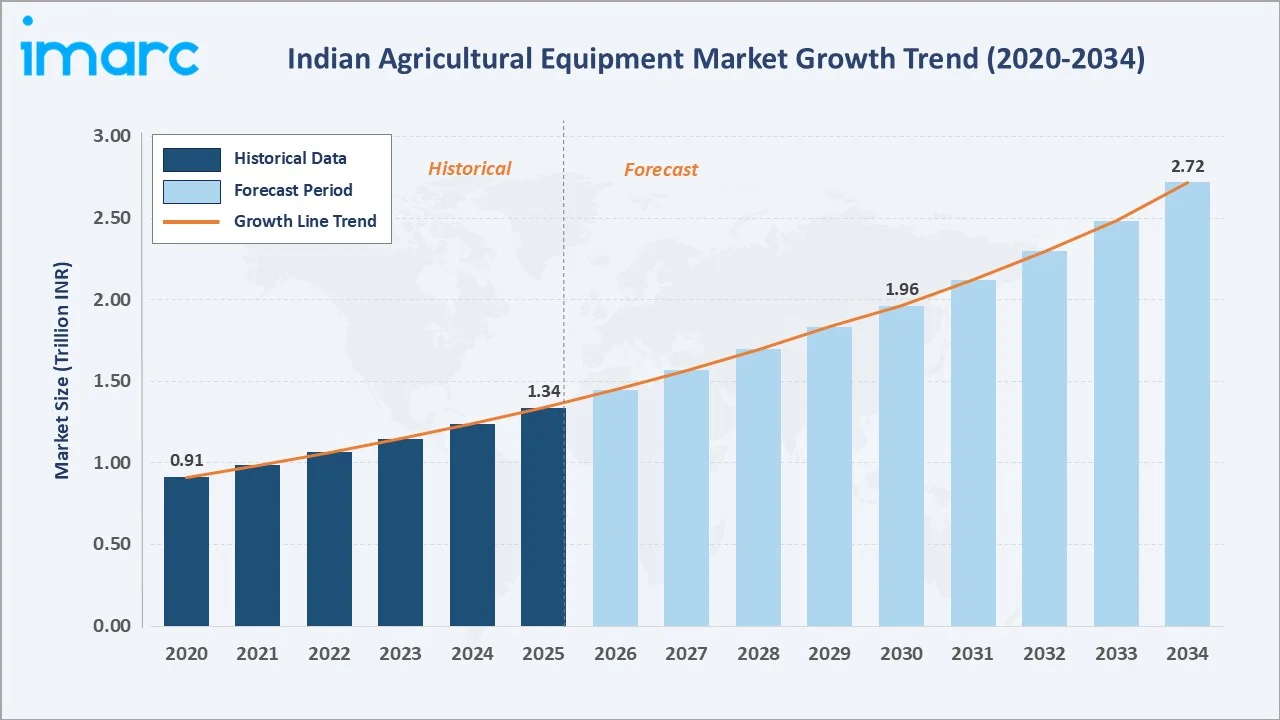
The Indian agricultural equipment market reached INR 1.34 Trillion in 2025 and is projected to reach INR 2.72 Trillion by 2034, growing at a CAGR of 7.95% during 2026-2034. Rising farm mechanization, shrinking rural labor supply, government subsidy programs under SMAM and PM-KISAN, and accelerating adoption of precision agriculture technologies are the primary growth catalysts. India is one of the world's largest and fastest-growing agricultural equipment markets, directly driving demand across all equipment and application segments.
Market Snapshot
|
Metric |
Value |
|
Market Size (2025) |
INR 1.34 Trillion |
|
Forecast Market Size (2034) |
INR 2.72 Trillion |
|
CAGR (2026-2034) |
7.95% |
|
Base Year |
2025 |
|
Historical Period |
2020-2025 |
|
Forecast Period |
2026-2034 |
North India leads regionally with a 34.8% share in 2025, anchored by Punjab, Haryana, and Uttar Pradesh's dense agricultural belts. Tractors command the largest equipment segment at 38.7%, while land development and seed bed preparation lead the application breakdown at 26.5%.
To get more information on this market, Request Sample
India's agricultural equipment market is underpinned by three structural forces: a nationwide labor scarcity from rural-to-urban migration, a government mandate to double farmer incomes, and a rapidly expanding farm mechanization gap in southern and eastern states. Each force independently accelerates equipment procurement cycles, collectively sustaining a 7.95% CAGR through 2034.
Executive Summary
The Indian agricultural equipment market is experiencing accelerated expansion, driven by the convergence of rural labor scarcity, government-backed mechanization subsidies, and rising farmer aspirations for yield improvement. The market was valued at INR 1.34 Trillion in 2025 and is forecast to reach INR 2.72 Trillion by 2034, growing at a CAGR of 7.95%. This growth is anchored by the Sub-Mission on Agricultural Mechanization (SMAM), which provides 50–80% subsidies on farm machinery and has established over 26,662 Custom Hiring Centers (CHCs) up to 2024–2025, dramatically expanding equipment access for marginal and small farmers.
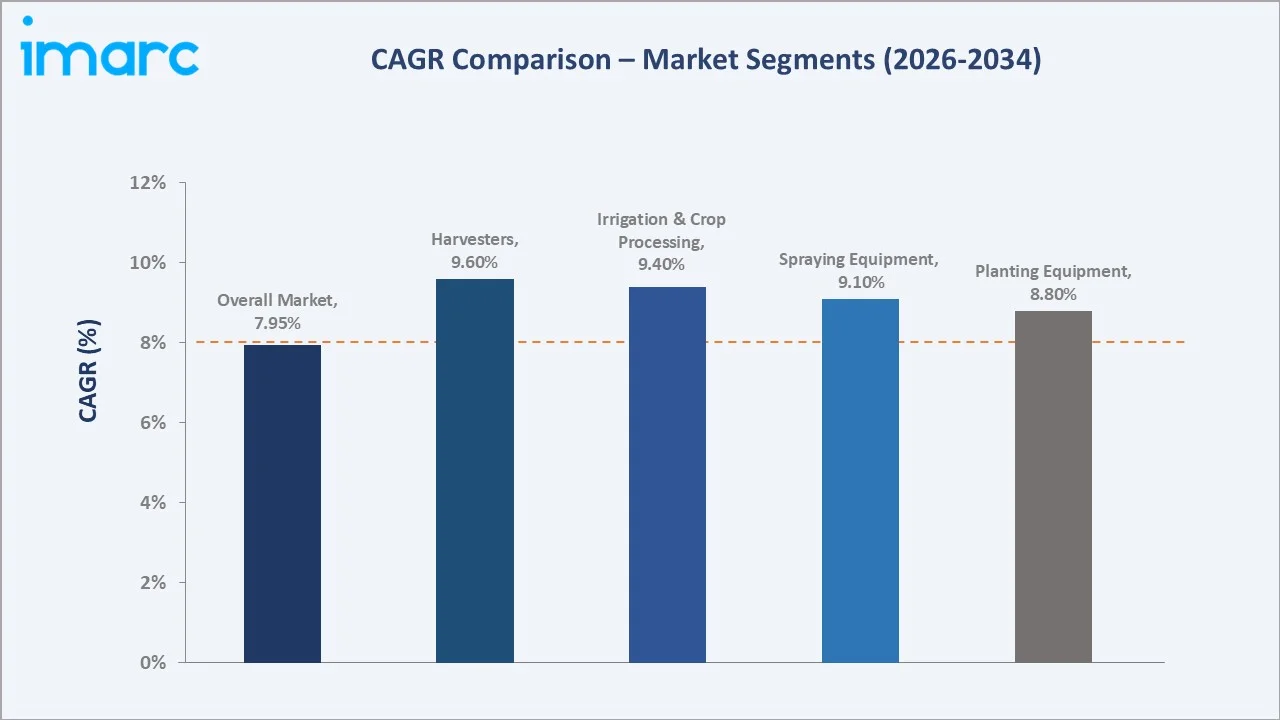
Tractors dominate the equipment segment with a 38.7% share in 2025, driven by Mahindra&Mahindra Ltd.'s domestic tractor sales reaching 38,484 units in January 2026, representing a 46% year-on-year increase from January 2025. Harvesters represent the fastest-growing segment at ~9.6% CAGR, driven by the mechanization of paddy and wheat harvesting in northern and western states. Land development and seed bed preparation lead the application segment at 26.5%, while harvesting and threshing follow closely at 22.4%.
North India leads regionally at 34.8%, anchored by Uttar Pradesh, Punjab, and Haryana's dense agricultural belts. West India follows at 26.7%, driven by Maharashtra and Gujarat's commercialized farming. Key vendors including Mahindra&Mahindra Ltd., Amalgamations Group, KUBOTA Corporation, Deere & Company, and Sonalika collectively hold over 80% of the market revenue.
Key Market Insights
|
Insight |
Data |
|
Largest Equipment Segment |
Tractors – 38.7% share (2025) |
|
Fastest Growing Equipment |
Harvesters – ~9.6% CAGR (2026-2034) |
|
Largest Application |
Land Development & Seed Bed Preparation – 26.5% share (2025) |
|
Fastest Growing Application |
Irrigation & Crop Processing – ~9.4% CAGR (2026-2034) |
|
Leading Region |
North India – 34.8% share (2025) |
|
Top Companies |
Mahindra&Mahindra Ltd., Amalgamations Group, KUBOTA Corporation, Deere & Company, and Sonalika |
Key Analytical Observations Supporting the Above Data:
- Tractors at 38.7% (2025) reflect India's tractor-centric farm mechanization model. Mahindra&Mahindra Ltd. maintained a strong market leadership position in FY26. The group, which includes the Mahindra and Swaraj brands, sold 505,930 tractors in the domestic market in FY26, marking a 24.28% year-on-year increase and slightly raising its wholesale market share to 43.61%.
- Harvesters growing at ~9.6% CAGR reflect accelerating paddy combine harvester adoption in Punjab, Haryana, and increasingly in Andhra Pradesh and Telangana, driven by stubble-burning restrictions that mandate mechanized harvest-and-mulch operations.
- Land development at 26.5% (2025) is the dominant application as primary tillage and land preparation represent the first mandatory step in every cropping cycle. Rotavators, disc ploughs, and cultivators in this category benefit from universal demand across all crop types and all geographies.
- North India's 34.8% share (2025) reflects the Green Revolution belt's deep-rooted mechanization culture in Punjab and Haryana, with high tractor density (over 100 per 1,000 ha), combined with government subsidy disbursements of 7,777 agricultural tools, 51 Custom Hiring Centers (CHCs), and 64 farm machinery banks were added under SMAM in Uttar Pradesh during FY2025–26 up to January.
Indian Agricultural Equipment Market Overview
Agricultural equipment encompasses the mechanical tools, machines, and vehicles used across the farming cycle from land preparation and planting to harvesting, post-harvest processing, and irrigation. India's market spans tractors, combine harvesters, threshers, rotavators, seed drills, spray pumps, irrigation systems, and agro-processing equipment, serving 146+ million farm holdings across diverse agro-climatic zones.
Macroeconomic drivers include the Pulses Mission, supported by an allocation of INR 1,000 crore, which aims to achieve self-sufficiency in selected pulses by 2027; the Digital Agriculture Mission (DAM) with a financial outlay of INR 2,817 crore in September 2024; and government farm mechanization subsidies covering 40–80% of equipment cost. The integration of IoT-based telematics through Mahindra's Krish-e Smart Kit and TAFE's JFarm Services app is creating digital ecosystems around equipment that accelerate replacement cycles and cross-selling of implements and inputs.
Market Dynamics
To evaluate market opportunities, Request Sample
Market Drivers
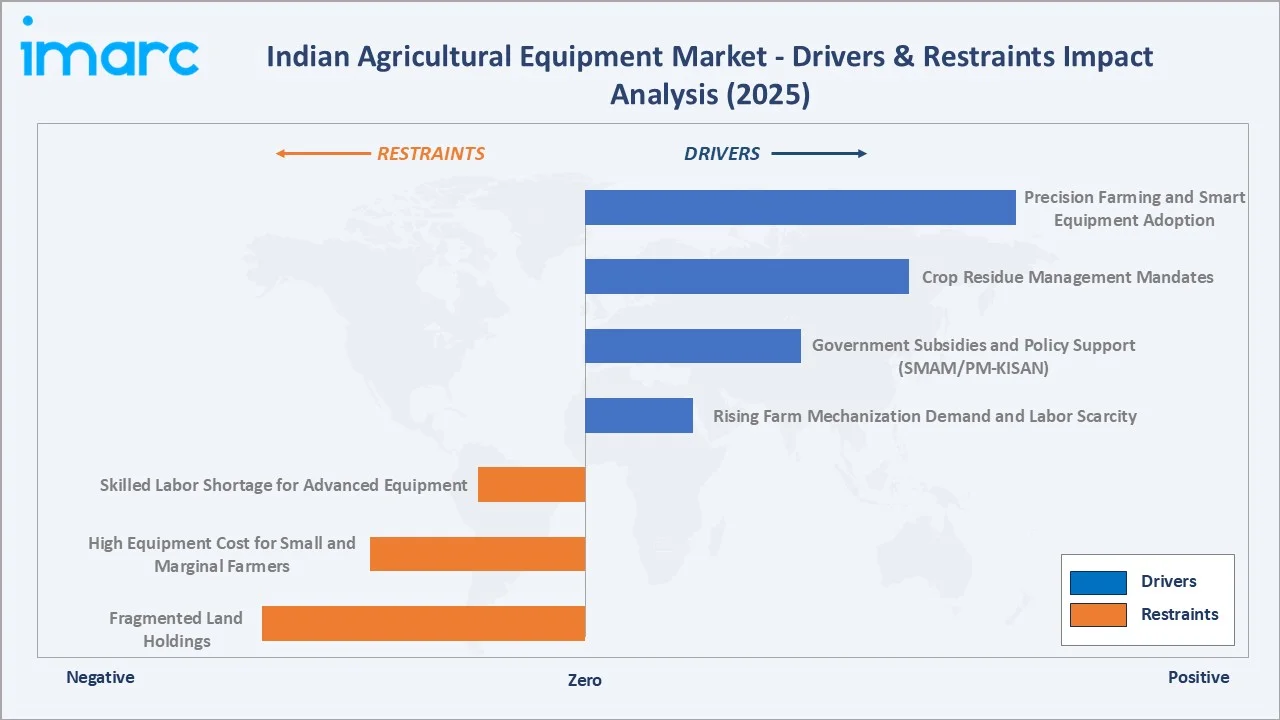
- Rising Farm Mechanization Demand and Labor Scarcity: Rural-to-urban migration has reduced agricultural labor availability over the past decade in key farming states. With crop residue management deadlines and kharif sowing windows narrowing, tractor and harvester equipment reduces manual dependency and crop loss, directly driving procurement demand.
- Government Subsidies and Policy Support (SMAM/PM-KISAN): PM-KISAN’s INR 6,000 per year is transferred in three equal instalments into the Aadhaar-seeded bank accounts of farmers through Direct Benefit Transfer (DBT) mode. This provides liquidity that measurably spikes tractor finance applications.
- Crop Residue Management Mandates: Higher subsidy slabs for crop-residue management equipment have reduced stubble-burning incidents in Punjab, creating compulsory demand for Happy Seeders, Mulchers, and Super-SMS attachments, which in turn drive tractor HP upgrades to 50+ HP.
- Precision Farming and Smart Equipment Adoption: India's Digital Agriculture Mission and the adoption of telematics platforms, including JFarm Services’ initial pilot rollout, covered Madhya Pradesh, Rajasthan, Gujarat, and Uttar Pradesh, directly benefiting around 60,000 users and generating more than 100,000 orders.
Market Restraints
- Fragmented Land Holdings: Average farm size has declined to 0.74 hectares in 2021-22 from 1.08 hectares in 2016-17, constraining the economic viability of large equipment purchases for individual farmers and concentrating demand in rental (CHC) channels rather than direct ownership.
- High Equipment Cost for Small and Marginal Farmers: Despite subsidies, 89.4% of India's farm holdings belong to agricultural households owning less than two hectares who lack collateral for tractor finance.
- Skilled Labor Shortage for Advanced Equipment: Combine harvesters, GPS-guided equipment, and precision sprayers require trained operators. The shortage of certified equipment operators constrains adoption in Eastern India and tribal belt districts where formal training infrastructure is limited.
Market Opportunities
- India's Untapped Mechanization Gap: In India, agricultural mechanization stands at around 47%, lower than other developing economies such as China at 60% and Brazil at 75%. Mechanization levels vary significantly across the country, reaching 40–45% in states such as Punjab and Haryana, while remaining minimal in regions such as India’s north-eastern states.
- Electric and Autonomous Tractors: PM E-DRIVE and FAME II incentives for electric farm vehicles are catalyzing domestic investment. Mahindra's OJA smart tractor platform and startups including Celestial E-Mobility are targeting the sub-30 HP electric tractor segment, opening a disruptive growth vector through 2034.
Market Challenges
- Monsoon Dependency and Revenue Volatility: Tractor retail sales are directly correlated with monsoon performance. Below-normal rainfall in major agricultural states can suppress equipment sales by 15–20% annually, creating lumpy revenue cycles for manufacturers and dealers.
- Emission Compliance Transition Costs: India's TREM Stage V emission standards mandate substantial engine upgrades for tractors and harvesters. Compliance costs of INR 50,000–150,000 per tractor model are being partially passed to farmers, creating short-term demand drag during transition years.
Emerging Market Trends
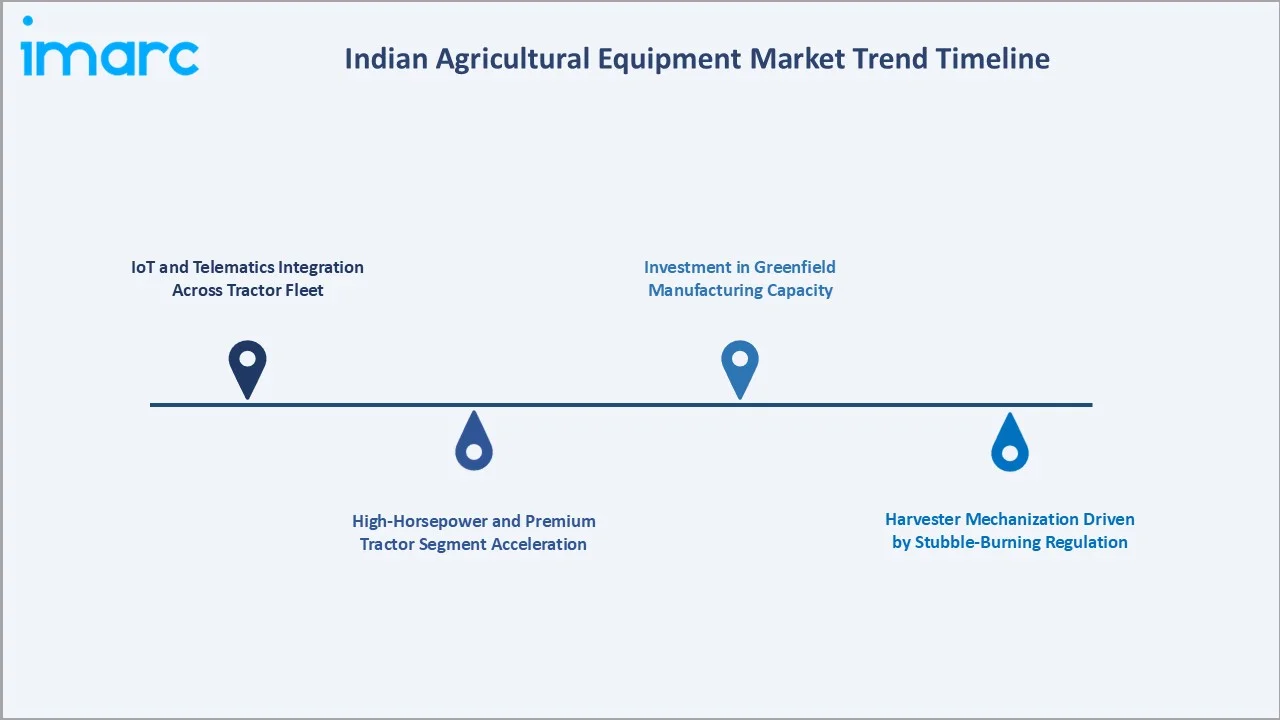
1. IoT and Telematics Integration Across Tractor Fleet
In May 2026, Mahindra&Mahindra Ltd. launched a new heavy-duty rotavator series under the Mahavator and Mahavator HD range, covering 4–9 feet, with a wider mast design for improved durability, stability, and performance. The company also introduced limited-edition tricolor-inspired rotavators and highlighted its Tez-e Intelligent Rotavator, which uses Bluetooth-enabled real-time farm data transmission via a mobile app. Moreover, TAFE's JFarm Services platform has directly benefited around 65,000 users and generated approximately 145,000 orders, demonstrating the scalability of digital CHC platforms.
2. High-Horsepower and Premium Tractor Segment Acceleration
In March 2026, John Deere launched its new 5M Series 5130M tractor in India, rated at 130 HP, alongside technologies such as 5E AutoTrac guidance, GreenSystem Link connectivity, front PTO, and radial tire upgrades. Additionally, CNH’s New Holland launched the WORKMASTER 105 in June 2024, bringing TREM-IV-compliant 100+ HP capability to Indian farmers.
3. Harvester Mechanization Driven by Stubble-Burning Regulation
Escorts Kubota introduced the PRO588i-G combine harvester in September 2025, designed to enhance harvesting efficiency across paddy and wheat crops. Government-mandated stubble management combined with state-level subsidies for combine harvesters in Punjab, Haryana, and Telangana is creating a multi-year demand surge for both new and custom-hired harvesters, with annual additions exceeding 8,000 units in the northern belt alone.
4. Investment in Greenfield Manufacturing Capacity
Escorts Kubota announced a USD 540 million investment in a new Uttar Pradesh greenfield factory in August 2025, reflecting confidence in India's long-term demand trajectory. Deere & Company's USD 100 million Maharashtra plant targets mid-power tractor exports, positioning India as an agricultural equipment export hub for Southeast Asia and Africa through 2034.
Industry Value Chain Analysis
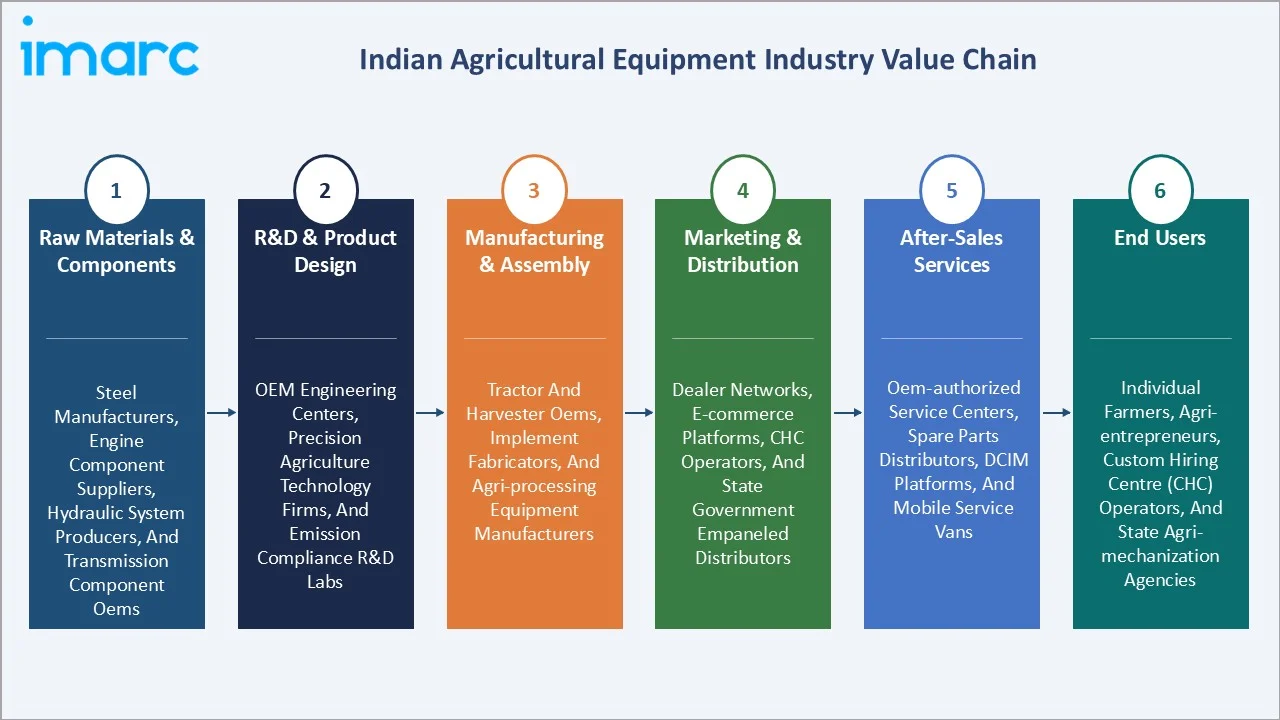
India's agricultural equipment value chain spans steel and engine component supply through end-user farm mechanization services, with each stage occupied by specialized manufacturers, integrators, and distribution networks.
|
Stage |
Key Players / Examples |
|
Raw Materials & Components |
Steel manufacturers, engine component suppliers, hydraulic system producers, and transmission component OEMs |
|
R&D & Product Design |
OEM engineering centers, precision agriculture technology firms, and emission compliance R&D labs |
|
Manufacturing & Assembly |
Tractor and harvester OEMs, implement fabricators, and agri-processing equipment manufacturers |
|
Marketing & Distribution |
Dealer networks, e-commerce platforms, CHC operators, and state government empaneled distributors. |
|
After-Sales Services |
OEM-authorized service centers, spare parts distributors, DCIM platforms, and mobile service vans |
|
End Users |
Individual farmers, agri-entrepreneurs, Custom Hiring Centre (CHC) operators, and state agri-mechanization agencies |
Technology Landscape in the Indian Agricultural Equipment Industry
Tractor Technology – Smart and High-HP Platforms
Tractors remain the backbone of Indian farm mechanization, with the 31–50 HP band commanding 46% of unit sales. OEMs are integrating telematics (Mahindra's MYOJA, TAFE's JFarm Services), GPS guidance, and remote diagnostics into new models. Mahindra's OJA smart tractor platform and TAFE's Massey Ferguson MF 7700 Series represent the premium connected segment, while Sonalika's Tiger range targets value-conscious buyers in the 40–75 HP band.
Harvesting Technology – Combine and Self-Propelled Harvesters
Combine harvester penetration is accelerating, driven by labor costs and stubble management mandates. Escorts Kubota's PRO588i-G (September 2025), designed for paddy and wheat, and CLAAS Dominator series represent the state of the art in Indian combine harvesting. Self-propelled paddy reaper-binders in the sub-10 HP category are gaining ground in Eastern India's fragmented paddy fields where larger combines cannot operate.
Irrigation Equipment – Micro-Irrigation and Solar-Powered Systems
Pradhan Mantri Krishi Sinchayee Yojana (PMKSY)’s Har Khet Ko Pani mandate is driving mass adoption of drip and sprinkler irrigation. The irrigation and crop processing equipment segment (10.9% share, 9.4% CAGR) benefits from 45–55% subsidy on micro-irrigation systems and the rapid scale-up of solar pump installations under PM-KUSUM, which targets a solar capacity of 34,800 MW by March 2026.
Precision Agriculture – Drones and Variable-Rate Technology
India's civil aviation authority has approved agricultural drone operations, and the Namo Drone Didi scheme aims to provide drones to 15,000 selected women SHGs during the period from 2024–25 to 2025–26. Variable-rate sprayers and GPS-guided seed drills are gaining adoption in wheat and cotton belts, reducing input costs by 15–25% while improving spray efficacy. This segment is expected to emerge as a key driver of the spraying equipment category's 9.1% CAGR through 2034.
Market Segmentation Analysis
The report covers the following segments:
|
Segment Category |
Leading Segment |
Market Share |
Year |
|
Equipment |
Tractors |
38.7% |
2025 |
|
Application |
Land Development & Seed Bed Preparation |
26.5% |
2025 |
|
Region |
North India |
34.8% |
2025 |

By Equipment
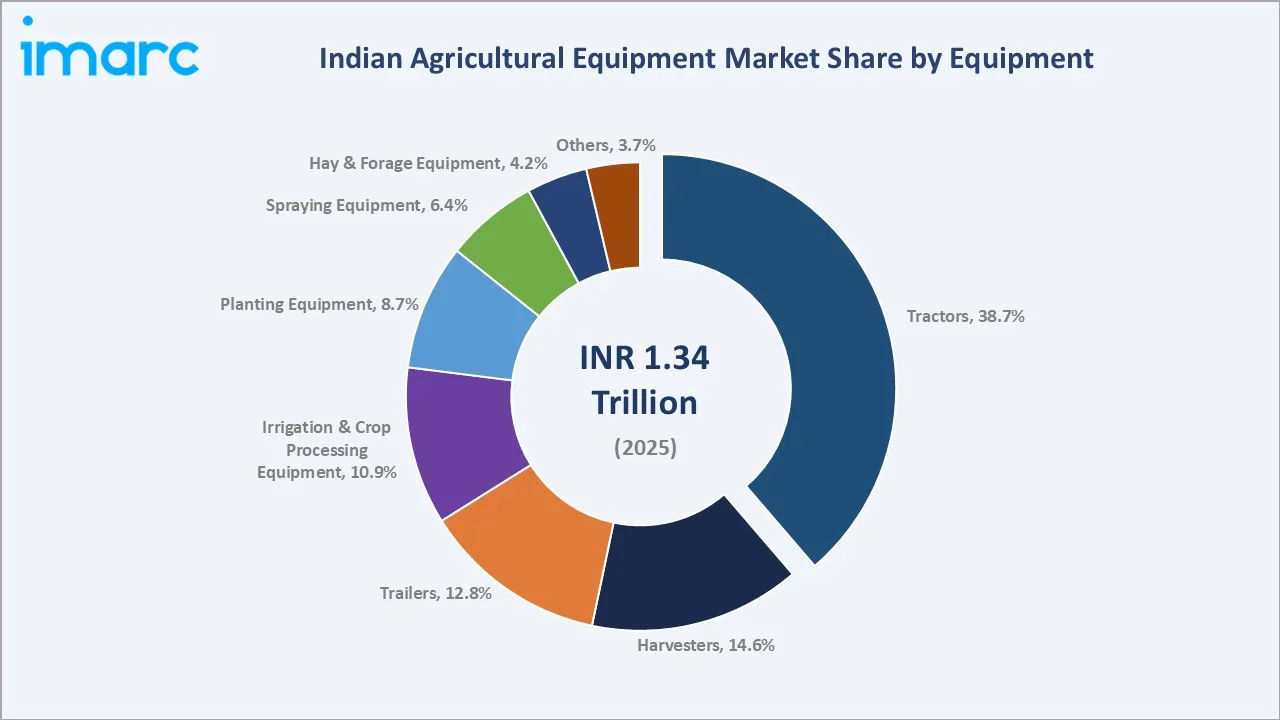
Tractors dominate the equipment segment with a 38.7% share in 2025. This reflects India's tractor-centric mechanization model where tractors serve as the primary power source not only for tillage but for threshing, irrigation pump operations, and transportation. Record FY2026 domestic tractor sales of 505,930 tractors by Mahindra&Mahindra Ltd., alone underscore the robust demand environment driven by PM-KISAN liquidity and SMAM subsidies.
To access detailed market analysis, Request Sample
Harvesters at 14.6% represent the fastest-growing category (~9.6% CAGR), driven by mechanization of paddy and wheat harvesting and stubble-burning restrictions. Trailers at 12.8% reflect the deep integration of tractor-trailer combinations as the primary farm-to-market transport in rural India. Irrigation and crop processing equipment at 10.9% is growing at ~9.4% CAGR, driven by PM Krishi Sinchayee Yojana subsidy deployment and acute water stress in peninsular India.
By Application
Land development and seed bed preparation lead the application segment at 26.5% in 2025. This encompasses rotavators, disc harrows, cultivators, and field levelling equipment representing the mandatory first step in every cropping cycle. The adoption of rotavators compatible with Happy Seeder operations for in-situ stubble management has created a new equipment sub-category growing at above-market rates.
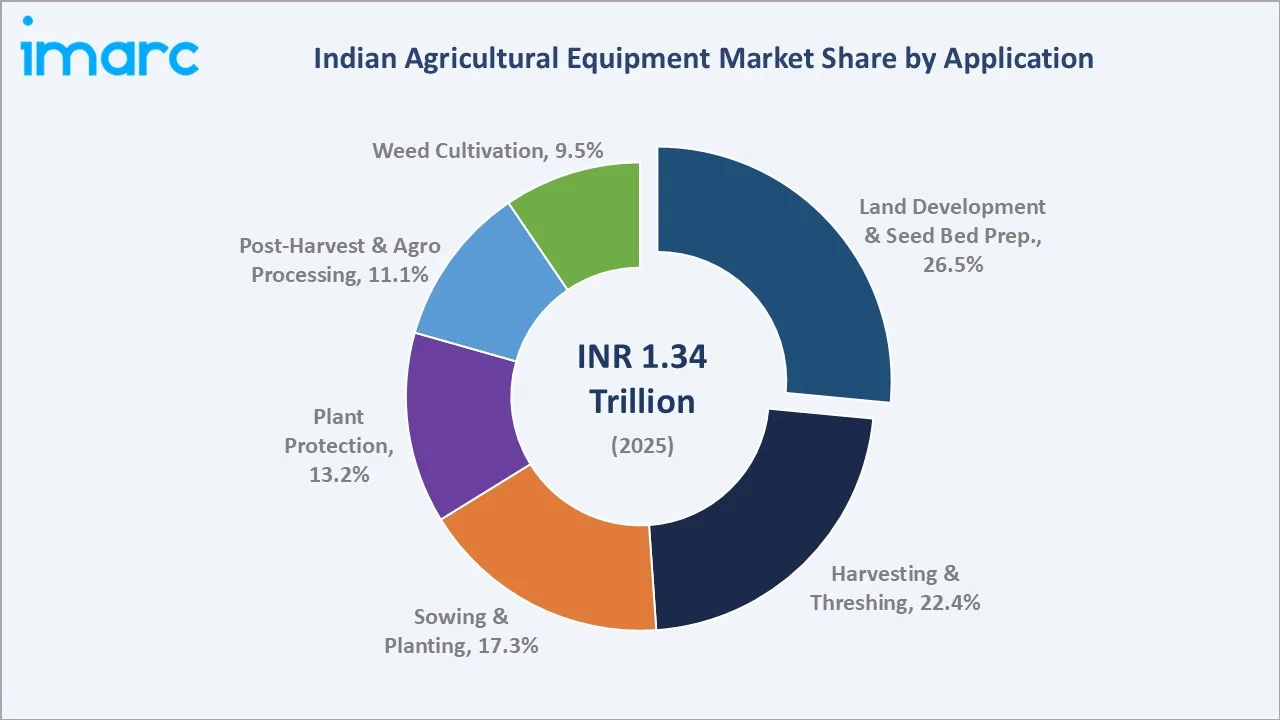
Harvesting and threshing at 22.4% benefits from the nationwide shift from manual to mechanized harvest. Sowing and planting at 17.3% is accelerating with pneumatic seed drills and direct seeding rice (DSR) technology adoption under water conservation mandates. Plant protection at 13.2% is growing fastest in precision spraying applications.
Regional Market Insights
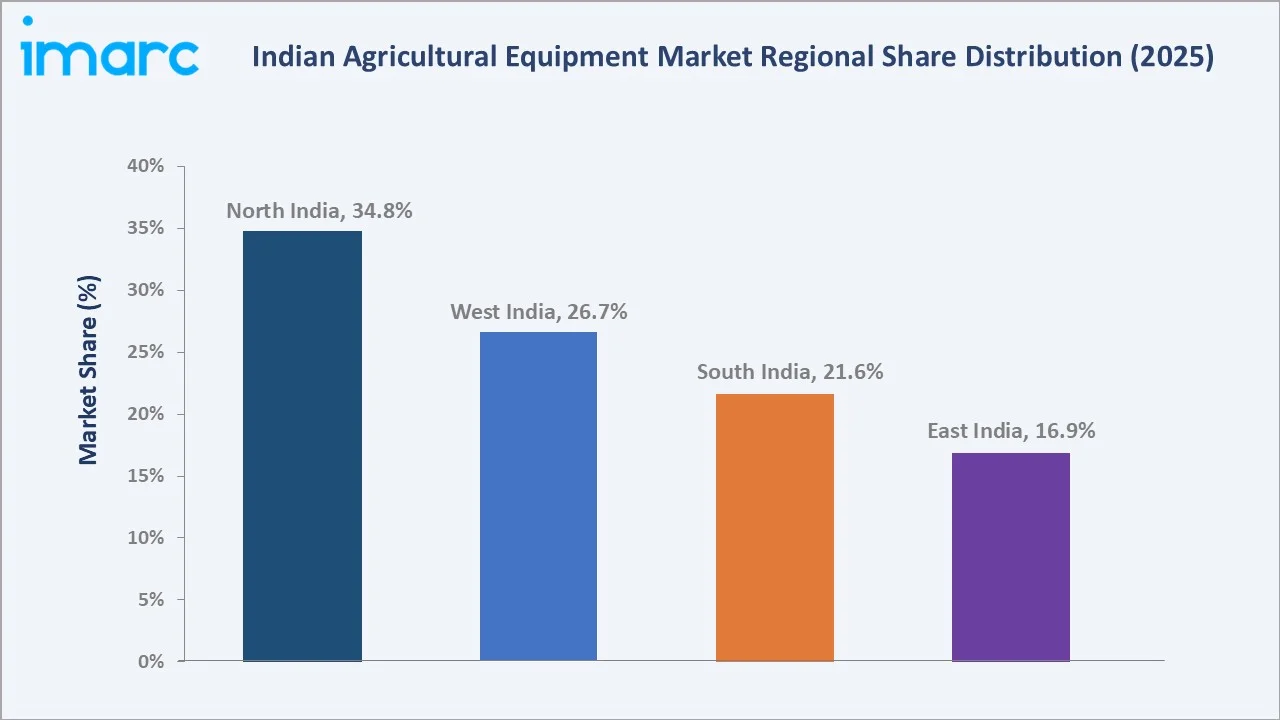
North India's market leadership (34.8%, 2025) reflects Punjab, Haryana, and Uttar Pradesh's mechanization-intensive wheat-paddy-sugarcane cropping systems. Punjab and Haryana's tractor density of over 100 per 1,000 hectares is among the world's highest, and state-level subsidy programs continue to drive replacement and upgrade demand.
|
Region |
Share (2025) |
Key Growth Drivers |
|
North India |
34.8% |
High tractor density in wheat-paddy belt, SMAM subsidy concentration, stubble management regulations driving harvester demand |
|
West India |
26.7% |
Commercialized farming in Maharashtra and Gujarat, rising sugarcane harvester adoption, and micro-irrigation expansion |
|
South India |
21.6% |
Paddy and cotton mechanization in Andhra Pradesh and Telangana, horticulture equipment demand in Karnataka and Tamil Nadu |
|
East India |
16.9% |
Lowest mechanization rate; strong growth potential from SMAM expansion in Odisha, West Bengal, and Bihar paddy belts |
West India at 26.7% represents the second-largest and fastest-urbanizing agricultural equipment market. Maharashtra's transition to high-value horticulture and Gujarat's commercial groundnut and cotton farming are driving demand for precision planters, sprayers, and micro-irrigation systems, with annual equipment additions growing above the national average CAGR.
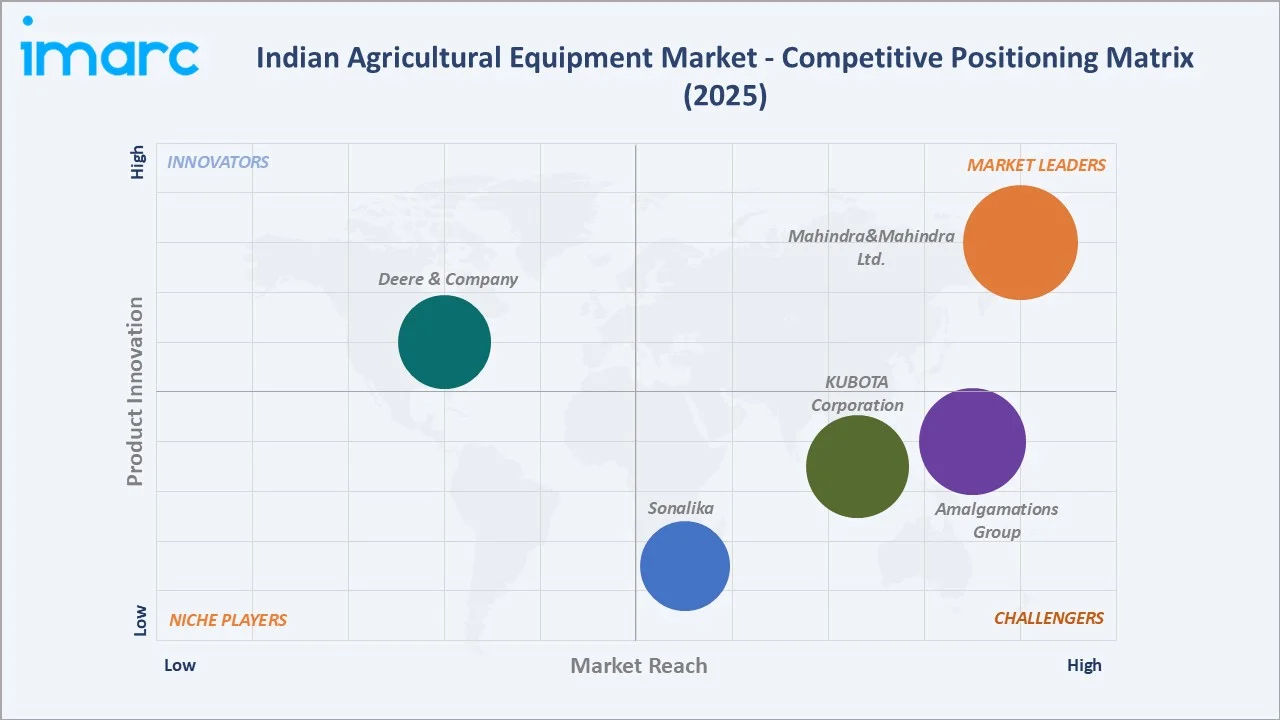
Competitive Landscape
India's agricultural equipment market is highly concentrated. The top five vendors (Mahindra&Mahindra Ltd., Amalgamations Group, KUBOTA Corporation, Deere & Company, and Sonalika) collectively hold over 80% of market revenue in 2025. Mahindra&Mahindra Ltd. alone holds a ~41% domestic tractor market share in 2025.
|
Company Name |
Key Brand |
Market Position |
Core Strength |
|
Mahindra&Mahindra Ltd. |
Mahindra, Swaraj, Trakstar, Erkunt, Hisarlar, Sampo Rosenlew, Mitra |
Market Leader |
Largest tractor network (1,200+ dealers); Krish-e digital ecosystem; OJA smart tractor; captive finance arm |
|
Amalgamations Group |
TAFE, Massey Ferguson, Eicher, IMT |
Strong Challenger |
Massey Ferguson technology; JFarm Services rental platform; African export volume; broad HP range |
|
KUBOTA Corporation |
Powertrac, Farmtrac, Kubota (Escorts Kubota) |
Strong Challenger |
Kubota Japanese engine technology; Powertrac, Kubota, and Farmtrac brands; PRO588i-G harvester leadership |
|
Deere & Company |
John Deere, GreenSystem |
Innovator |
Premium 55+ HP segment leadership; 130 HP launch; JDLink telematics; precision farming bundles |
|
Sonalika |
Sonalika Tiger, Agro Solutions |
Challenger |
Tiger range in 40–75 HP; European design; export market presence; two new greenfield plants under construction. |
Key Company Profiles
Mahindra&Mahindra Ltd.
Mahindra&Mahindra Ltd. is one of India's largest agricultural equipment manufacturers and one of the highest-selling tractor brands by volume. Its farm equipment sector operates a range of tractors and other agricultural equipment.
- Product Portfolio: Mahindra Tractors (15–85 HP), Swaraj Tractors (15–65 HP), OJA Smart Tractors, rotavators, cultivators, and seeding equipment.
- Recent Developments: In April 2026, Mahindra&Mahindra Ltd.’s farm equipment business sold 46,404 tractors domestically, up 20% year-on-year from 38,516 units in April 2025. Total tractor sales, including exports, reached 48,411 units, while exports stood at 2,007 units, marking 30% growth year-on-year.
- Strategic Focus: OJA smart tractor platform scale-up; Krish-e ecosystem cross-selling; INR 4,995 Smart Kit telematics expansion; electric tractor (Oja Electric) development for sub-30 HP segment.
Amalgamations Group
Amalgamations Group operates TAFE Limited, which is also one of India's largest tractor manufacturers by volume.
- Product Portfolio: Massey Ferguson Tractors (27–75 HP), TAFE-branded tractors, TAFE-branded combined harvesters, implements, Eicher tractors, and IMT tractors.
- Recent Developments: In November 2025, TAFE unveiled its EVX75 electric hybrid tractor at Agritechnica 2025, featuring a 75 HP hybrid powertrain, EU Stage V diesel engine, and 400 V battery system for zero-emission electric and hybrid field operations. It also showcased Terra Vista vision guidance, new utility/compact/orchard tractor ranges up to 100 HP, and highlighted the EV28 electric tractor.
- Strategic Focus: JFarm platform CHC expansion; mid-HP tractor export growth in Africa and Southeast Asia; Massey Ferguson brand strengthening.
KUBOTA Corporation
KUBOTA Corporation operates Escorts Kubota Limited in India. The company combines Kubota's precision Japanese engineering with Escorts' deep rural India distribution to serve tractor, harvester, and agri-implement segments.
- Product Portfolio: Powertrac Tractors, Farmtrac Tractors, Farmtrac Promaxx range, Kubota tractors, PRO588i-G harvester, and agri-implements.
- Recent Developments: In April 2026, Escorts Kubota Limited expanded its Digitrac series under Powertrac from two models to a five-model lineup in the 45–55 HP segment, including the new PP 46i 4WD, PP 43i Plus, and PP 41i. The series is aimed at advanced farming and heavy haulage, featuring a 12F+3R constant mesh gearbox, independent PTO, and 2,000 kg hydraulic lift.
- Strategic Focus: Greenfield capacity expansion for export; harvester market share growth; Kubota technology deepening for fuel efficiency and TREM Stage V compliance.
Market Concentration Analysis
India's agricultural equipment market is highly concentrated, with the top five OEMs collectively holding over 80% of tractor market revenue in FY2025. Mahindra&Mahindra Ltd. commands approximately 41% of domestic tractor volumes, making it one of the most dominant single-group positions in any major agricultural equipment market globally.
Consolidation continues through joint ventures (Escorts-Kubota) and digital platform development rather than direct M&A. The market's second tier of 10–15 regional and specialized manufacturers, including VST Tillers Tractors, Force Motors, and Kerala-based implement makers, serves niche geographies and equipment categories with differentiated value propositions.
Investment & Growth Opportunities
Fastest Growing Segments
Harvesters (~9.6% CAGR), irrigation and crop processing equipment (~9.4% CAGR), spraying equipment (~9.1% CAGR), and planting equipment (~8.8% CAGR) represent the highest-growth investment vectors through 2034. Together, these sub-categories address a combined addressable market exceeding INR 800 Billion by 2030 within the overall equipment ecosystem.
Emerging Market Expansion
Mechanization levels vary widely across India, reaching 40–45% in states such as Punjab and Haryana, while remaining very low in regions such as the north-eastern states. This implies substantial catch-up demand as SMAM subsidies, CHC infrastructure, and rural credit access improve. OEMs establishing dealer networks and CHC partnerships in Patna, Bhubaneswar, and Kolkata corridors will capture first-mover advantage.
Venture and Institutional Investment Trends
- Escorts Kubota's USD 540 million greenfield plant in Uttar Pradesh (announced August 2025) and Deere's USD 100 million Maharashtra facility signal long-term manufacturing commitment that will expand domestic supply capacity and export competitiveness.
- AgriFintech platforms offering tractor loan origination and equipment EMI products through partnership with NABARD, SIDBI, and regional rural banks are lowering financing barriers, with potential to increase addressable buyer pools by 15–20% in the mid-term.
Future Market Outlook (2026-2034)
India's agricultural equipment market is positioned for sustained growth through 2034. From a base of INR 1.34 Trillion in 2025, the market is projected to reach INR 2.72 Trillion by 2034, representing total incremental value creation of INR 1.38 Trillion at a CAGR of 7.95%. This growth is structurally assured by India's legally binding food security commitments, government capital expenditure pipelines under SMAM and DAM, and the irreversible rural labor scarcity trend.
The technology transition from conventional tractors to smart, connected, and eventually autonomous farm equipment will define the market's character by 2034. Tractors' share may moderate from 38.7% in 2025 to approximately 36% by 2034 as harvesters, precision irrigation, and planting equipment grow faster. This shift creates replacement demand for incumbent OEMs and market entry opportunities for precision agriculture technology specialists and electric vehicle startups.
Research Methodology
Primary Research
Primary research comprised structured interviews with over 100 industry participants in 2024–2025, including tractor OEM representatives, equipment dealers, Custom Hiring Centre operators, agricultural engineers, state government SMAM coordinators, and institutional investors across North, West, South, and East India.
Secondary Research
Secondary research encompassed OEM annual reports, TRACTOR AND MACHINERY ASSOCIATION (TMA) monthly sales data, Ministry of Agriculture's SMAM program reports, NABARD agricultural mechanization surveys, FADA (Federation of Automobile Dealers Associations) retail data, and industry publications.
Forecasting Models
Market size estimations were derived using top-down and bottom-up forecasting, incorporating tractor unit sales data, per-unit average selling prices by segment, implement-to-tractor attachment ratios, and OEM revenue disclosures. A base-case CAGR of 7.95% reflects consensus estimates validated against announced capacity expansion plans and SMAM disbursement pipelines.
Indian Agricultural Equipment Market Report Coverage:
| Report Features | Details |
|---|---|
| Base Year of the Analysis | 2025 |
| Historical Period | 2020-2025 |
| Forecast Period | 2026-2034 |
| Units | INR Trillion |
| Scope of the Report |
Exploration of Historical Trends and Market Outlook, Industry Catalysts and Challenges, Segment-Wise Historical and Future Market Assessment:
|
| Equipments Covered | Tractors, Trailers, Harvesters, Planting Equipment, Irrigation and Crop Processing Equipment, Spraying Equipment, Hay and Forage Equipment, Others |
| Applications Covered | Land Development and Seed Bed Preparation, Sowing and Planting, Weed Cultivation, Plant Protection, Harvesting and Threshing, Post-Harvest and Agro Processing |
| Region Covered | North India, West India, South India, East India |
| Companies Covered | Mahindra&Mahindra Ltd., Amalgamations Group, KUBOTA Corporation, Deere & Company, Sonalika, etc. |
| Customization Scope | 10% Free Customization |
| Post-Sale Analyst Support | 10-12 Weeks |
| Delivery Format | PDF and Excel through Email (We can also provide the editable version of the report in PPT/Word format on special request) |
Frequently Asked Questions About the Indian Agricultural Equipment Market Report
The Indian agricultural equipment market reached INR 1.34 Trillion in 2025 and is projected to reach INR 2.72 Trillion by 2034.
The market is expected to grow at a CAGR of 7.95% during the forecast period of 2026-2034.
Tractors dominate the equipment segment with a 38.7% market share in 2025, driven by Mahindra & Mahindra's record 505,930 tractors sold in the domestic market in FY26.
Land development and seed bed preparation dominate the application segment with a 26.5% market share in 2025.
North India leads with a 34.8% share in 2025, anchored by Punjab, Haryana, and Uttar Pradesh's mechanization-intensive wheat-paddy belts.
Irrigation and Crop Processing Equipment is the fastest-growing application at approximately 9.4% CAGR, driven by PM Krishi Sinchayee Yojana subsidy deployment and acute water stress in peninsular India.
The leading companies are Mahindra&Mahindra Ltd., Amalgamations Group, KUBOTA Corporation, Deere & Company, and Sonalika, collectively holding over 80% of domestic tractor market revenue.
Primary growth drivers include rural labor scarcity, government subsidies under SMAM and PM-KISAN, crop residue management mandates, precision farming adoption, and rising farmer income and aspirations for mechanized agriculture.
Need more help?
- Speak to our experienced analysts for insights on the current market scenarios.
- Include additional segments and countries to customize the report as per your requirement.
- Gain an unparalleled competitive advantage in your domain by understanding how to utilize the report and positively impacting your operations and revenue.
- For further assistance, please connect with our analysts.
 Request Customization
 Speak to an Analyst
 Request Brochure
 Inquire Before Buying
Benefits of Customization
- Personalize this research
- Triangulate with your data
- Get data as per your format and definition
- Gain a deeper dive into a specific application, geography, customer, or competitor
- Any level of personalization
Get in Touch With Us
UNITED STATES
Phone: +1-201-971-6302
INDIA
Phone: +91-120-433-0800
UNITED KINGDOM
Phone: +44-753-714-6104
Email: [email protected]
Client Testimonials




.webp)




.webp)













Related Reports

Choose your plan
*Please note that the prices mentioned below are starting prices for each bundle type. Kindly contact our team for further details.*
Single User License
- 1 User License, Access on 2 Devices
- PDF Report + Excel Dataset (Password Protected)
- Lifetime Access
- No Printing Rights
- 10% Free Report Customization
- 10–12 Weeks of Analyst Support
Five User License
- Access for 5 Users, 2 Devices per User
- PDF Report + Excel Dataset (Password Protected)
- Lifetime Access
- Dedicated Account Manager
- 12–14 Weeks of Analyst Support
- No Printing Rights
- 15% Free Report Customization
- 25% Discount on Your Next Purchase
Corporate User License
- Unlimited User Access (Within Your Organization)
- PDF Report + Excel Dataset
- Lifetime Access
- Dedicated Account Manager
- 14–20 Weeks of Analyst Support
- No Printing Rights
- 20% Free Report Customization
- 30% Discount on Your Next Purchase
Essential Insights
What's included:
3 reports
- Lifetime Access
- PDF Reports
- Excel Datasets
- 2 Weeks of Free Analyst Support
- 2 User Licenses
- Access on 2 Devices
- Printing Rights
- Complimentary PowerPoint (PPT) Version
- Complimentary License Upgrade
Professional Access
What's included:
5 reports
- Lifetime Access
- PDF Reports
- Excel Datasets
- 8 Weeks of Free Analyst Support
- 2 User Licenses
- Access on 2 Devices
- Printing Rights
- Complimentary PowerPoint (PPT) Version
- Complimentary License Upgrade
Business Advantage
What's included:
8 reports
- Lifetime Access
- PDF Reports
- Excel Datasets
- 14 Weeks of Free Analyst Support
- 2 User Licenses
- Access on 2 Devices
- Printing Rights
- Complimentary PowerPoint (PPT) Version
- Complimentary License Upgrade
Enterprise Intelligence
What's included:
10 reports
- Lifetime Access
- PDF Reports
- Excel Datasets
- 20 Weeks of Free Analyst Support
- 2 User Licenses
- Access on 2 Devices
- Printing Rights
- Complimentary PowerPoint (PPT) Version
- Complimentary License Upgrade