
Functional Ingredients Market Size, Share, Trends and Forecast by Type, Source, Application, and Region, 2026-2034
Functional Ingredients Market Size, Share, Trends & Forecast (2026-2034)
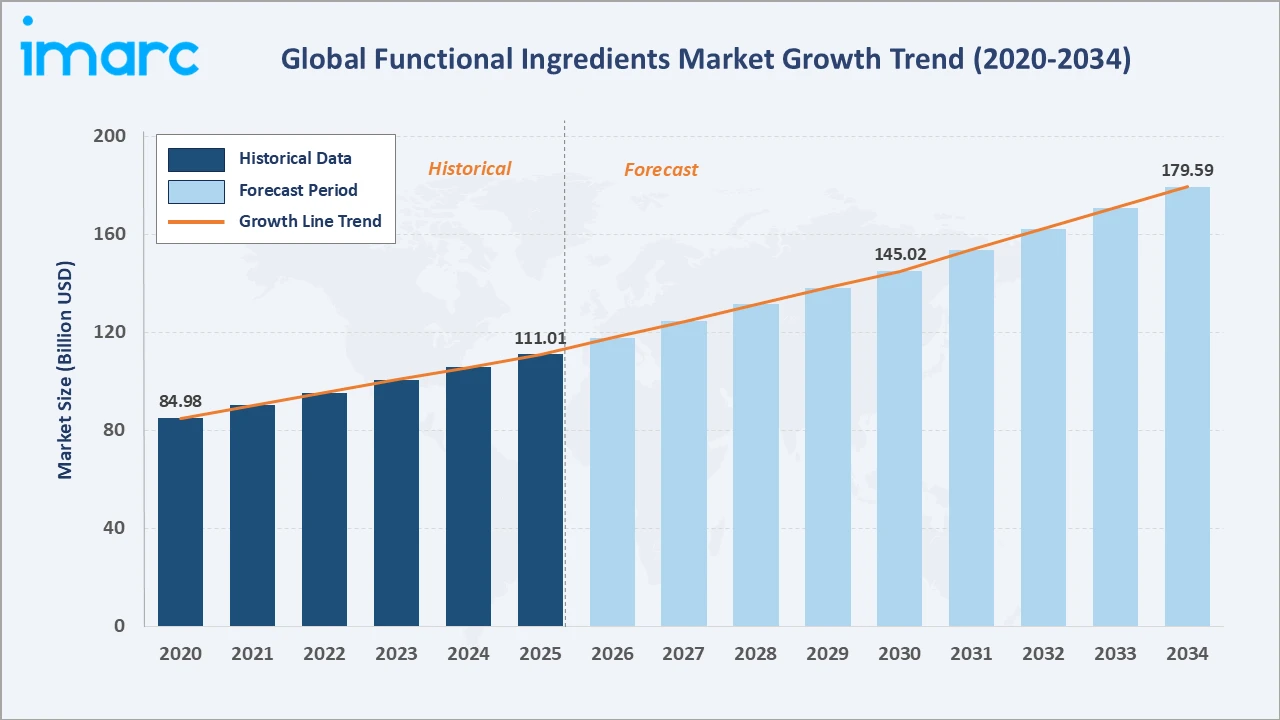
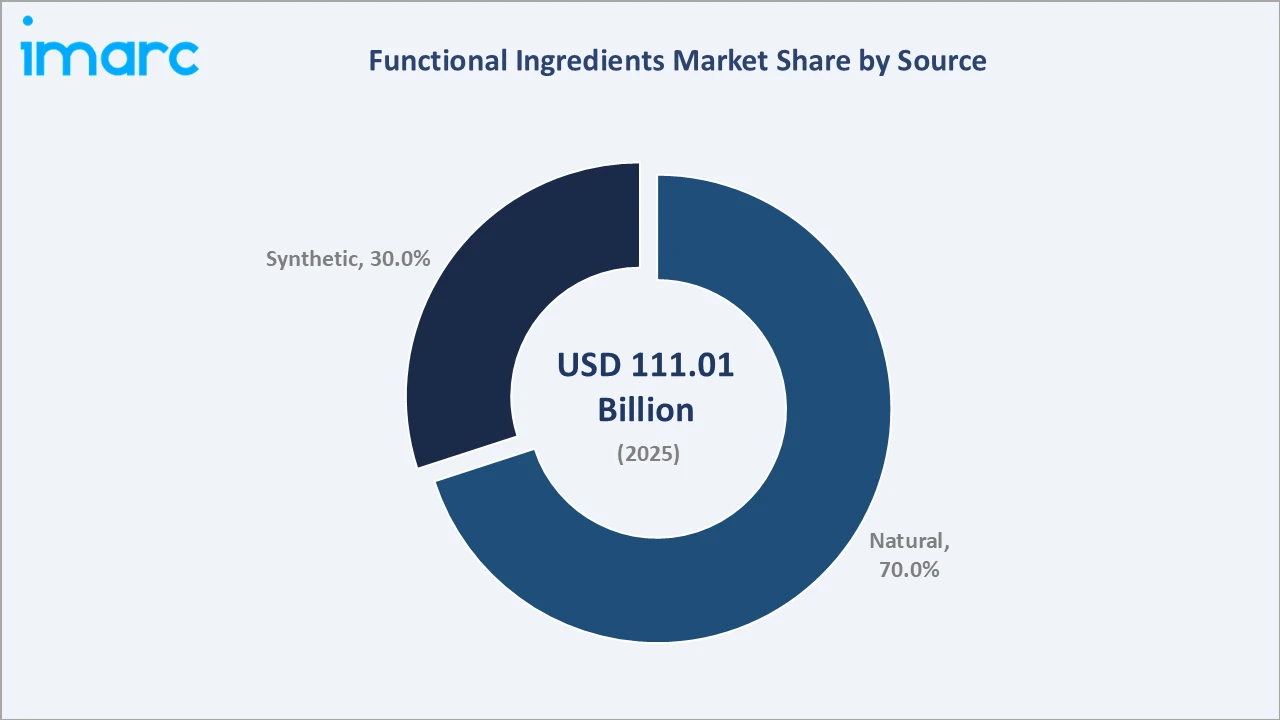
The global functional ingredients market reached USD 111.01 Billion in 2025 and is projected to reach USD 179.59 Billion by 2034, growing at a CAGR of 5.49% during 2026-2034. The market is driven by rising health consciousness, increasing prevalence of lifestyle-related disorders, and growing demand for fortified food, beverage, and personal care products. Natural sources dominate at 70.0%, reflecting consumer preference for clean-label formulations. Vitamin and Minerals lead the type segment at 30.0%, while Asia Pacific commands 34.0% of the global market share.
Market Snapshot
|
Metric |
Value |
|
Market Size (2025) |
USD 111.01 Billion |
|
Forecast Market Size (2034) |
USD 179.59 Billion |
|
CAGR (2026-2034) |
5.49% |
|
Base Year |
2025 |
|
Historical Period |
2020-2025 |
|
Forecast Period |
2026-2034 |
|
Dominant Source |
Natural (70.0%, 2025) |
|
Dominant Type |
Vitamin and Minerals (30.0%, 2025) |
|
Leading Region |
Asia Pacific (34.0%, 2025) |
The global functional ingredients market expanded from USD 84.98 Billion in 2020 to USD 111.01 Billion in 2025, anchored at USD 145.02 Billion in 2030, and forecast to reach USD 179.59 Billion by 2034. Rising incidence of chronic and lifestyle-related health conditions worldwide is prompting consumers to adopt preventive nutrition, sustaining above-trend demand for fortified and functional formulations through the forecast period.
To get more information on this market, Request Sample
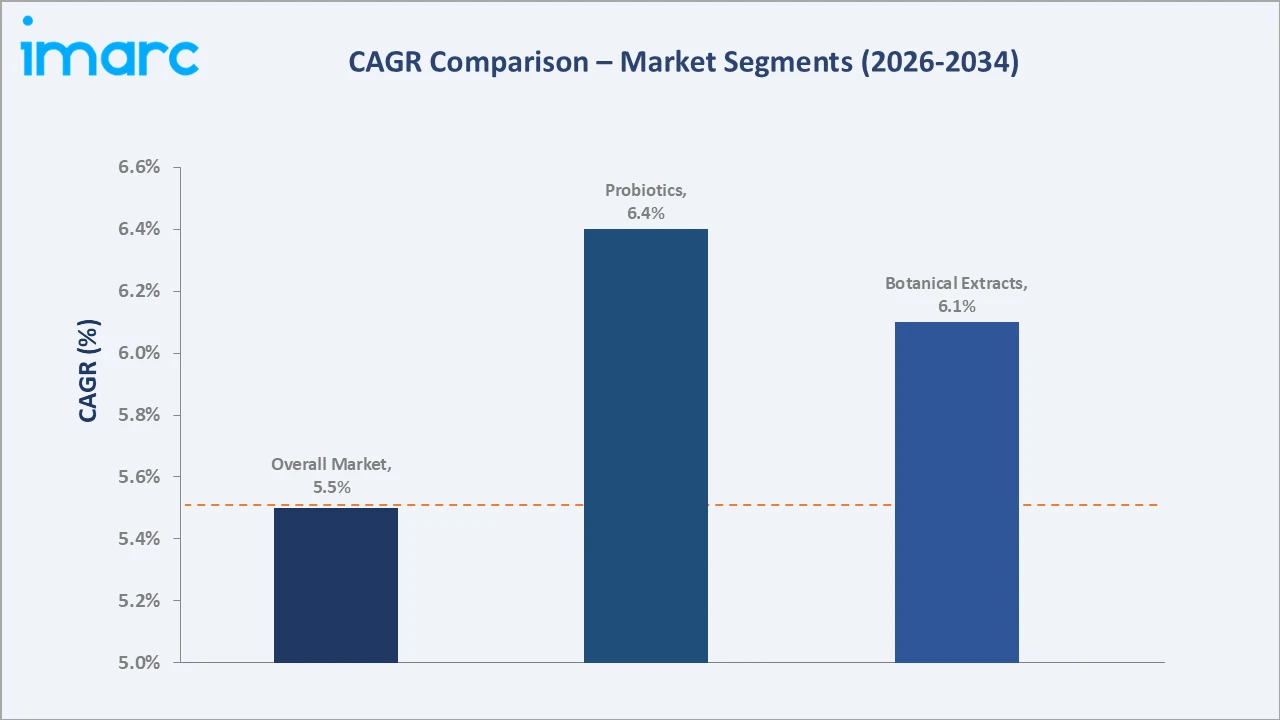
Probiotics grow fastest at ~6.4% CAGR as gut-health awareness accelerates adoption across dairy, beverage, and supplement formats. Botanical Extracts grow at ~6.1% CAGR through rising demand for plant-derived, clean-label functional additives.
Executive Summary
The global functional ingredients market reached USD 111.01 Billion in 2025, representing a critical intersection of food science, preventive healthcare, and consumer wellness. The market encompasses proteins and amino acids, vitamins and minerals, probiotics, prebiotics, omega-3 and omega-6 fatty acids, botanical extracts, and other bioactive compounds used across food and beverage, personal care, pharmaceutical, and animal feed applications.
Natural sources at 70.0% dominate through clean-label consumer preference and regulatory support for plant, dairy, and microbial-derived ingredients. Vitamin and Minerals at 30.0% lead the type segment through their foundational role in nutritional fortification programs. Asia Pacific, at 34.0%, leads through large-scale food fortification initiatives and expanding nutraceutical manufacturing capacity in China and India.
Key Market Insights
|
Insight |
Data |
|
Dominant Source |
Natural - 70.0% share (2025) |
|
Dominant Type |
Vitamin and Minerals - 30.0% market share (2025) |
|
Leading Region |
Asia Pacific - 34.0% market share |
|
Market Opportunity |
Precision fermentation ingredients; personalised nutrition; AI-driven formulation; probiotic beverage innovation; clean-label reformulation; novel encapsulation technology |
Key Analytical Observations Supporting the Above Data:
- Natural at 70.0%: The natural segment dominates due to rising clean-label demand, regulatory tailwinds for plant and dairy-derived compounds, and consumer distrust of synthetic additives. These ingredients are increasingly favored for fortified food, supplement, and personal care formulations.
- Vitamin and Minerals at 30.0%: Vitamins and minerals dominate because they remain the most widely mandated and cost-effective category across staple foods, supplements, and infant nutrition. Their broad regulatory acceptance and established supply chains sustain leadership.
- Asia Pacific at 34.0%: Asia Pacific dominates the market due to large-scale government fortification programs, a fast-growing nutraceutical manufacturing base, and rising disposable incomes across China, India, and Southeast Asia supporting functional food adoption.
Functional Ingredients Market Overview
The global functional ingredients market encompasses the sourcing, processing, and formulation of bioactive compounds added to food, beverage, personal care, pharmaceutical, and animal feed products to deliver targeted health benefits. The market spans proteins and amino acids, vitamins and minerals, probiotics, prebiotics, omega-3 and omega-6 fatty acids, botanical extracts, and other specialty compounds.
Macroeconomic factors include rising healthcare costs, aging populations, and increasing consumer spending on preventive wellness. In addition, growing prevalence of nutritional deficiencies, expanding e-commerce distribution of nutraceuticals, and manufacturer investment in fortified product innovation are accelerating functional ingredient adoption worldwide.
Market Dynamics
To evaluate market opportunities, Request Sample
Market Drivers
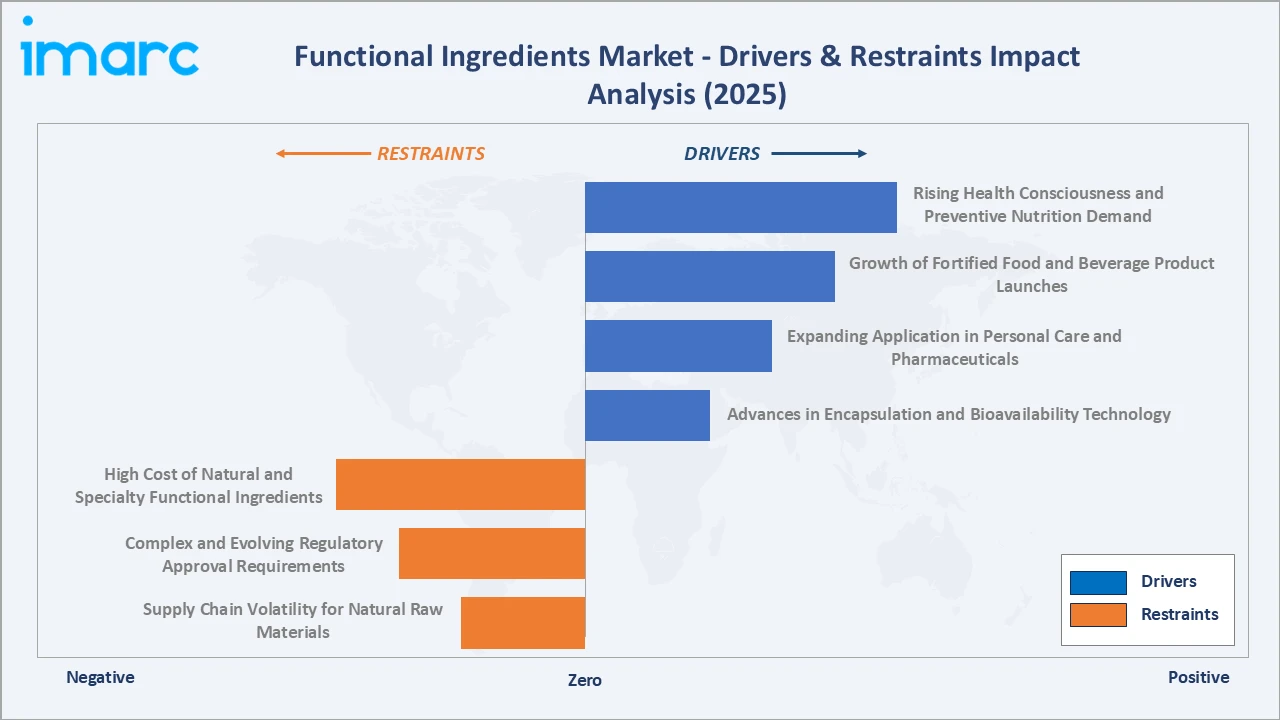
- Rising Health Consciousness and Preventive Nutrition Demand: Rising health consciousness is prompting consumers to proactively manage wellbeing through diet rather than reactive treatment, driving demand for fortified and functional products. Increasing prevalence of obesity, diabetes, and cardiovascular conditions is reinforcing preventive nutrition as a mainstream consumer priority. Manufacturers are responding with expanded functional portfolios across everyday food and beverage categories, sustaining broad-based category growth.
- Growth of Fortified Food and Beverage Product Launches: Food and beverage manufacturers are rapidly expanding fortified product portfolios spanning dairy, bakery, snacks, and beverages to capture health-focused consumer spending. New product launches incorporating probiotics, plant protein, and immunity-supporting botanicals are accelerating category penetration. This innovation pace is compelling ingredient suppliers to scale production and broaden application-specific formulations.
- Expanding Application in Personal Care and Pharmaceuticals: Functional ingredients are increasingly incorporated into personal care formulations for skin, hair, and oral health, and into pharmaceutical and nutraceutical products targeting specific health outcomes. This cross-category expansion is broadening the addressable market beyond traditional food and beverage applications and creating new high-margin revenue streams for ingredient manufacturers.
- Advances in Encapsulation and Bioavailability Technology: Advances in microencapsulation, taste-masking, and bioavailability enhancement technologies are enabling functional ingredients to be incorporated into a wider range of products without compromising sensory quality. These innovations are reducing formulation barriers and expanding the addressable application base for heat-sensitive and bitter-tasting bioactive compounds.
Market Restraints
- High Cost of Natural and Specialty Functional Ingredients: Natural and specialty functional ingredients, particularly plant-derived botanicals and marine-sourced omega-3 compounds, carry significantly higher costs than conventional additives. This cost premium limits adoption among price-sensitive manufacturers and constrains penetration in developing markets with lower purchasing power.
- Complex and Evolving Regulatory Approval Requirements: Functional ingredient approval requirements vary significantly across regions, with novel ingredients often requiring extensive safety documentation and lengthy regulatory review. This complexity increases time-to-market and compliance costs, particularly for smaller manufacturers introducing innovative bioactive compounds.
- Supply Chain Volatility for Natural Raw Materials: Natural raw material supply, particularly for botanical extracts and marine-derived compounds, is subject to climate variability, seasonal availability, and geopolitical disruption. This volatility creates pricing unpredictability and supply security challenges for manufacturers dependent on consistent natural ingredient sourcing.
Market Opportunities
- Precision Fermentation Ingredient Platforms: Precision fermentation technology enables cost-efficient, scalable production of proteins, vitamins, and specialty bioactives without traditional agricultural constraints. Companies investing early in fermentation-derived ingredient platforms are positioned to capture share as the technology matures toward commercial scale.
- Personalised and AI-Driven Nutrition Formulation: Personalized nutrition, enabled by diagnostic testing and AI-driven formulation, allows functional ingredient suppliers to develop targeted products for specific consumer health profiles. This shift from generic fortification toward individualised nutrition represents a substantial premium-value growth avenue.
Market Challenges
- Balancing Clean-Label Expectations with Functional Performance: Maintaining ingredient stability, taste, and bioavailability while meeting clean-label consumer expectations requires sophisticated formulation expertise. Balancing these often-competing requirements increases product development timelines and cost for manufacturers pursuing functional innovation.
- Substantiating Health Claims Amid Regulatory Fragmentation: Consumer skepticism regarding health claims and inconsistent scientific substantiation standards across regions create marketing and compliance challenges for functional ingredient suppliers. This uncertainty can slow adoption and complicate cross-border product positioning.
Emerging Market Trends
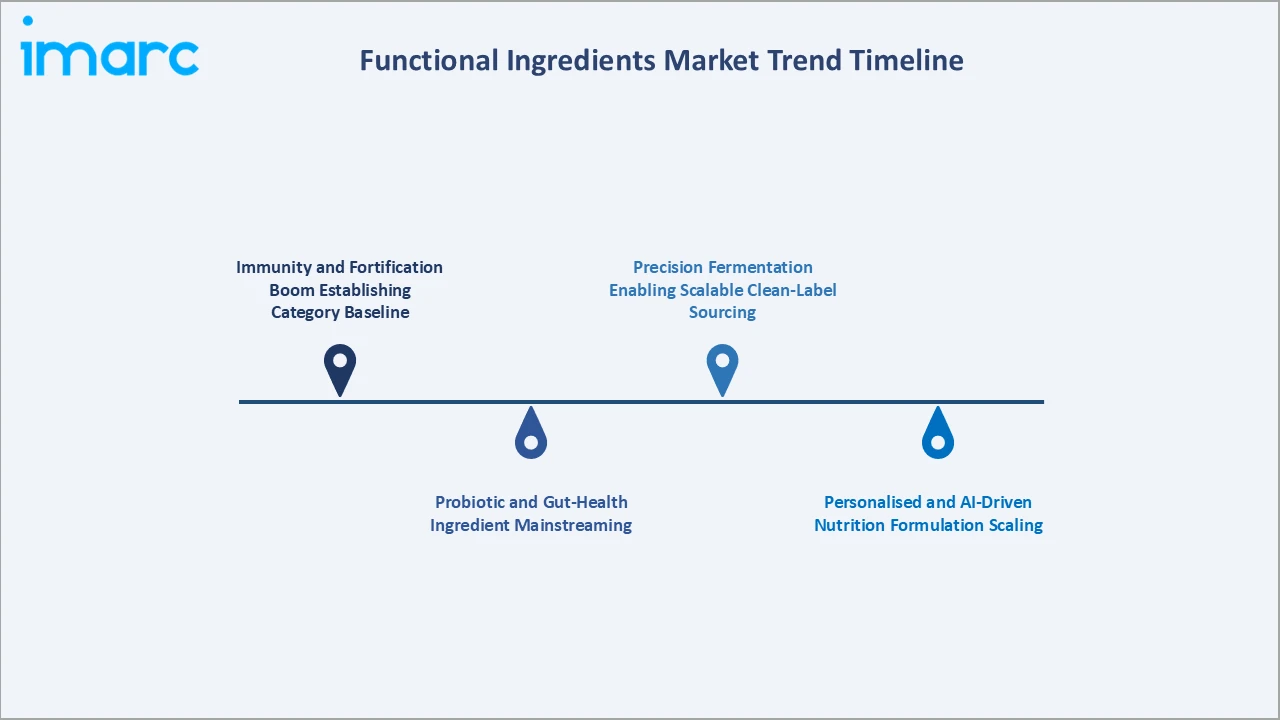
1. Immunity and Fortification Boom Establishing Category Baseline
The 2020-2023 period saw unprecedented consumer focus on immune-supporting nutrition, permanently elevating baseline demand for vitamin, mineral, and probiotic fortification across mainstream food and beverage categories. This structural shift in consumer priorities continues to underpin category growth well beyond the initial demand surge, as fortified products have become standard rather than niche offerings across major retail channels.
2. Probiotic and Gut-Health Ingredient Mainstreaming
Gut-health science is moving from niche wellness positioning into mainstream food and beverage innovation, with probiotics, prebiotics, and postbiotics increasingly combined in synbiotic formulations. Expanding scientific evidence linking gut microbiome health to immunity, mental wellness, and metabolic health is broadening probiotic application beyond dairy into snacks, beverages, and supplements.
3. Personalised and AI-Driven Nutrition Formulation Scaling
AI-enabled formulation platforms and at-home diagnostic testing enabling functional ingredient suppliers and brands to develop personalised nutrition products tailored to individual health profiles. This shift is creating premium-value opportunities for suppliers capable of flexible, small-batch, ingredient-specific formulation and supply.
4. Precision Fermentation Enabling Scalable Clean-Label Sourcing
Precision fermentation technology is emerging as a scalable, climate-resilient alternative to traditional agricultural and marine sourcing for proteins, vitamins, and specialty bioactives. As production costs decline through the forecast period, fermentation-derived ingredients are expected to capture growing share within the natural ingredients segment.
Industry Value Chain Analysis
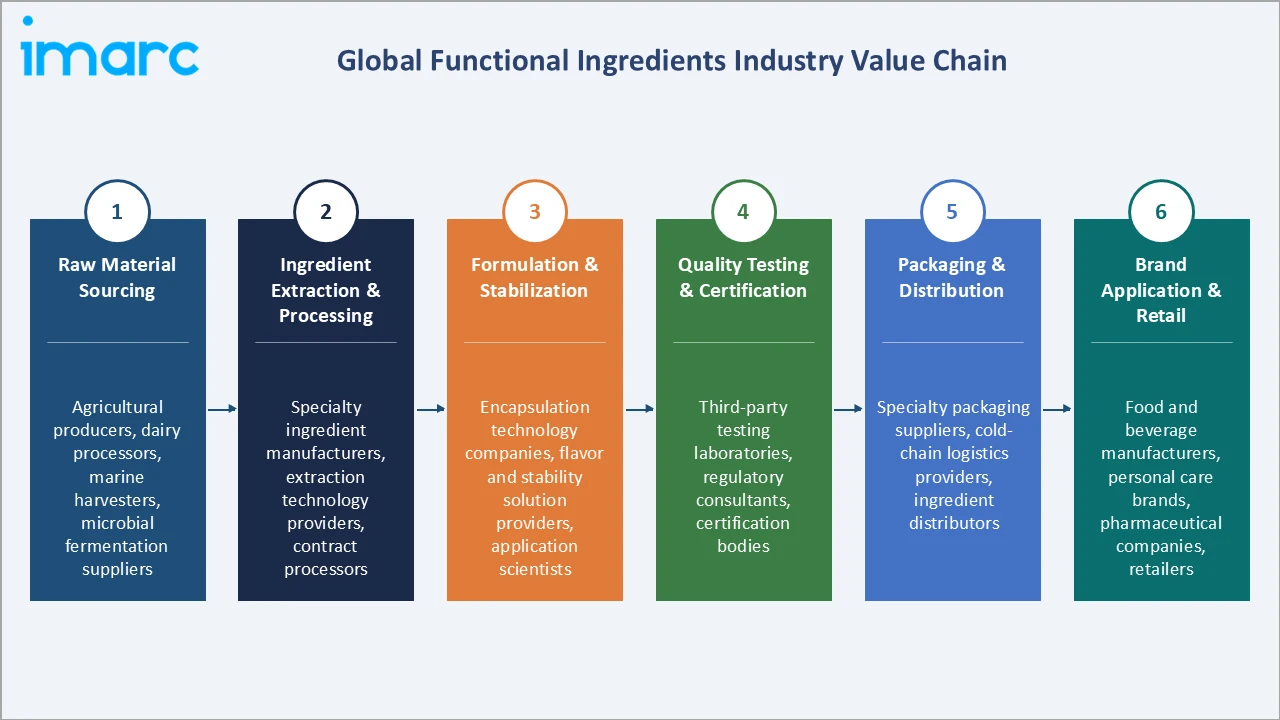
The functional ingredients value chain integrates raw material sourcing, ingredient extraction and processing, formulation and stabilization, quality testing and certification, packaging and distribution, and brand application and retail.
|
Stage |
Key Participants |
|
Raw Material Sourcing |
Agricultural producers, dairy processors, marine harvesters, microbial fermentation suppliers |
|
Ingredient Extraction & Processing |
Specialty ingredient manufacturers, extraction technology providers, contract processors |
|
Formulation & Stabilization |
Encapsulation technology companies, flavor and stability solution providers, application scientists |
|
Quality Testing & Certification |
Third-party testing laboratories, regulatory consultants, certification bodies |
|
Packaging & Distribution |
Specialty packaging suppliers, cold-chain logistics providers, ingredient distributors |
|
Brand Application & Retail |
Food and beverage manufacturers, personal care brands, pharmaceutical companies, retailers |
The formulation and stabilization stage is the value chain's most technically differentiated phase, as encapsulation and bioavailability technology determine whether sensitive bioactive compounds retain efficacy through processing and shelf life. Quality testing and certification sustains the trust premium that functional ingredients command from health-conscious end consumers.
Technology Landscape in the Functional Ingredients Industry
Microencapsulation and Bioavailability Technology
Microencapsulation technology protects sensitive bioactive compounds from heat, moisture, and oxidation while enabling controlled release and taste-masking. This technology is critical for incorporating probiotics, omega-3 fatty acids, and botanical extracts into processed food and beverage matrices without compromising sensory quality or shelf stability.
Precision Fermentation Technology
Precision fermentation enables scalable, climate-independent production of proteins, vitamins, and specialty bioactive compounds using engineered microorganisms. As production economics improve, fermentation-derived ingredients are increasingly positioned as sustainable alternatives to traditional agricultural and marine sourcing.
AI-Enabled Formulation and Quality Analytics
AI-based formulation platforms are helping manufacturers optimize ingredient combinations for stability, bioavailability, and cost efficiency, while predictive quality analytics reduce batch variability. These tools are shortening product development cycles and enabling more personalized, application-specific ingredient solutions.
Market Segmentation Analysis
The report covers the following segments:
|
Segment Category |
Leading Segment |
Market Share |
Year |
|
Source |
Natural |
70.0% |
2025 |
|
Type |
Vitamin and Minerals |
30.0% |
2025 |
|
Application |
Food and Beverages |
47.0% |
2025 |
|
Region |
Asia Pacific |
34.0% |
2025 |

By Source
Natural sources lead at 70.0% (2025). The natural segment encompasses plant-derived, dairy-derived, marine-derived, and microbial fermentation-based functional ingredients favored for clean-label formulation and regulatory acceptance across major markets.
To access detailed market analysis, Request Sample
Synthetic ingredients at 30.0% grow at a comparatively moderate ~4.6% CAGR, below the overall market rate, as manufacturers increasingly reformulate toward natural alternatives. Synthetic ingredient production nonetheless retains manufacturing consistency and cost advantages, sustaining continued use in mass-market fortification programs, animal feed, and select pharmaceutical applications where price sensitivity outweighs clean-label preference.
By Type
Vitamin and Minerals lead at 30.0% (2025). This segment encompasses fortification compounds widely mandated across staple foods, infant nutrition, and dietary supplements, supported by decades of regulatory precedent and established supply infrastructure.
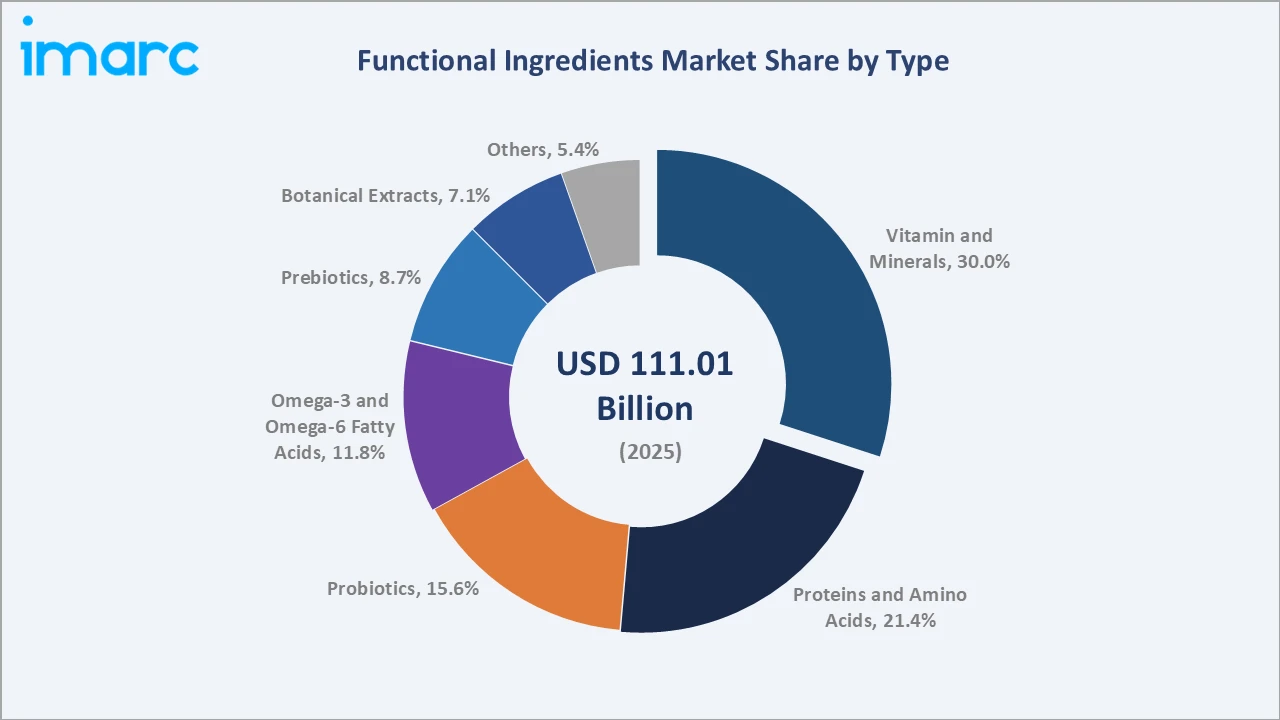
Proteins and Amino Acids at 21.4% is driven by sports nutrition and plant-based protein demand. Probiotics at 15.6% is growing fastest at ~6.4% CAGR through gut-health awareness. Omega-3 and Omega-6 Fatty Acids at 11.8%, Prebiotics at 8.7%, and Botanical Extracts at 7.1% collectively reflect diversifying consumer wellness priorities, while Others at 5.4% encompasses enzymes, antioxidants, and specialty bioactive compounds.
Regional Market Insights
|
Region |
Share (2025) |
Key Functional Ingredients Market Drivers & Characteristics |
|
Asia Pacific |
34.0% |
Driven by large-scale government food fortification programs, expanding nutraceutical manufacturing, and rising disposable incomes across China and India. |
|
North America |
28.6% |
Driven by strong sports nutrition and dietary supplement culture, high consumer awareness, and advanced functional food innovation infrastructure. |
|
Europe |
22.1% |
Driven by stringent food fortification regulation, mature clean-label consumer demand, and strong probiotic dairy tradition. |
|
Latin America |
8.3% |
Supported by growing fortified staple food programs and expanding functional beverage adoption in urban markets. |
|
Middle East and Africa |
7.0% |
Driven by rising government nutrition initiatives and increasing awareness of preventive health among urban populations. |
Asia Pacific's 34.0% market leadership is anchored by China's large-scale food fortification infrastructure and India's rapidly expanding nutraceutical manufacturing base. North America's 28.6% reflects the region's deeply established sports nutrition culture and premium supplement retail infrastructure.
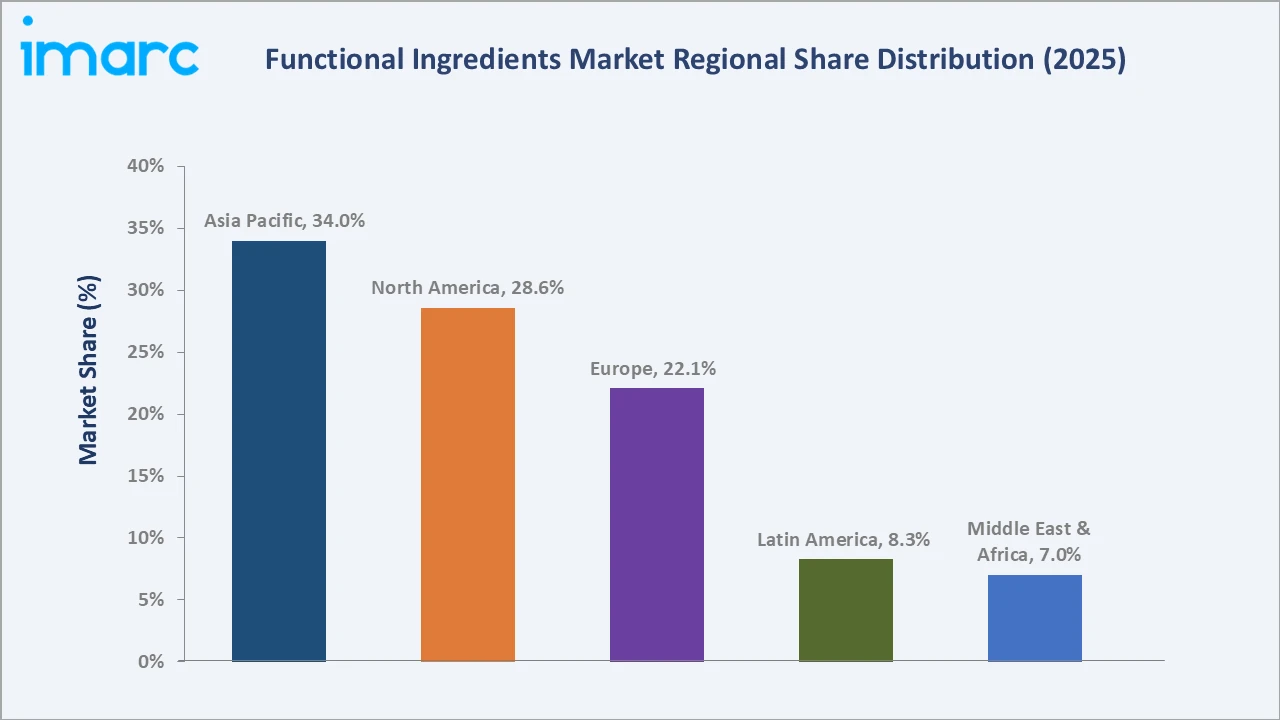
Europe's 22.1% share reflects stringent EFSA fortification standards and a mature probiotic dairy heritage across the Netherlands, Germany, and France. The Middle East and Africa, at 7.0%, is emerging as a dynamic growth region as government nutrition programs expand.
Competitive Landscape
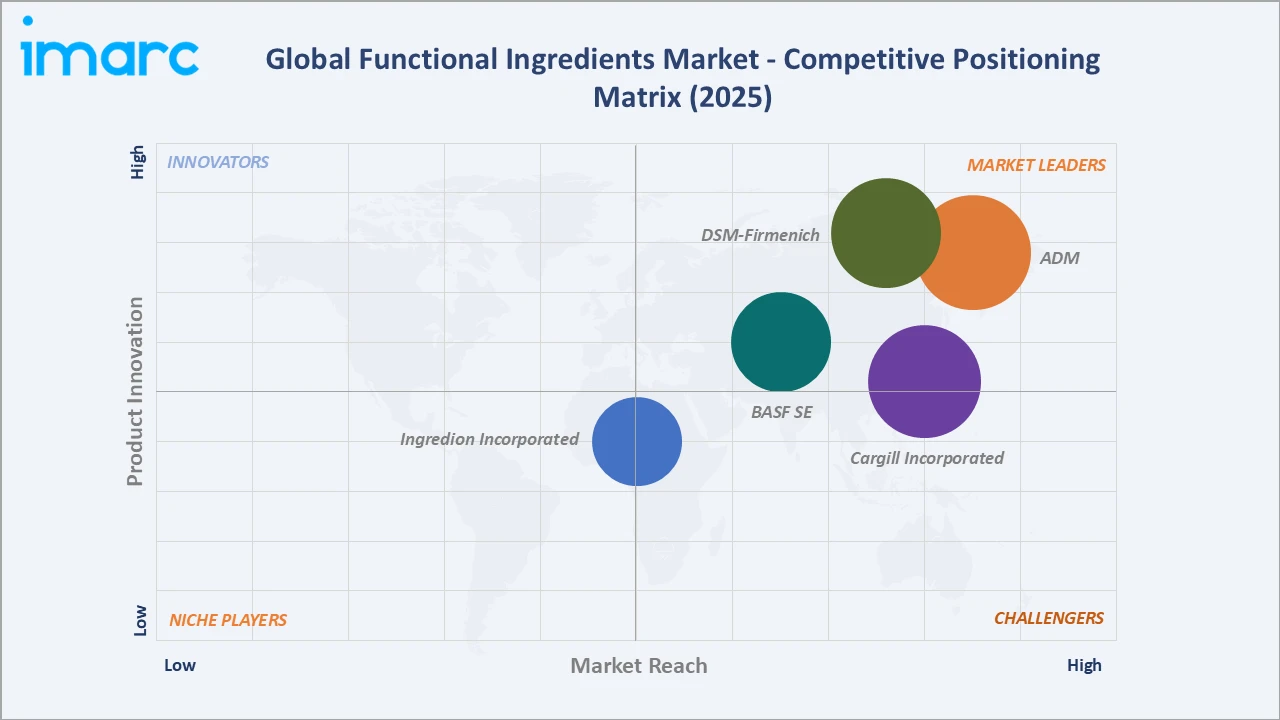
The global functional ingredients market competitive landscape encompasses distinct tiers: diversified agribusiness and ingredient conglomerates, specialty bioscience companies, and dairy and nutrition-focused manufacturers.
|
Company Name |
Key Products |
Market Position |
Core Strength |
|
ADM |
Proteins, vitamins, probiotics, botanical extracts |
Market Leader |
ADM plays a central role in functional ingredients through its diversified global sourcing, processing scale, and integrated nutrition solutions portfolio. |
|
Cargill Incorporated |
Functional proteins, sweeteners |
Market Leader |
Cargill provides broad functional ingredient solutions backed by extensive agricultural sourcing and application development capabilities. |
|
DSM-Firmenich |
Vitamins, nutritional lipids, probiotics |
Market Leader |
DSM is a global leader in vitamin and nutritional ingredient science, supported by strong R&D and regulatory expertise. |
|
BASF SE |
Vitamins, carotenoids, omega-3 fatty acids |
Established Player |
BASF leverages advanced chemical and biotechnology capabilities to deliver high-purity functional ingredients at scale. |
|
Ingredion Incorporated |
Specialty starches, fibers, plant-based proteins |
Established Player |
Ingredion specializes in texturizing and functional carbohydrate ingredients supporting clean-label reformulation. |
Companies such as ADM, Cargill, and DSM-Firmenich sustain competitive advantage through integrated sourcing-to-formulation capabilities and global regulatory expertise, creating high switching costs for large food and beverage customers. Consolidation reflects customer preference for suppliers offering broad, application-ready functional ingredient portfolios.
Key Company Profiles
ADM
ADM is a leading global provider of functional ingredients spanning proteins, vitamins, probiotics, and botanical extracts for the food, beverage, and nutrition industries. The company combines extensive agricultural sourcing with advanced processing and formulation capabilities.
- Key Products: Proteins and amino acids, vitamin premixes, probiotic cultures, botanical extracts.
- Recent Developments: In November 2025, Archer Daniels Midland Company (ADM) showcased its latest microbiome solutions and functional ingredients at Fi Europe 2025. The company highlighted science-backed postbiotic ingredients—including Lactobacillus gasseri CP2305, Bifidobacterium longum CECT7347 (ES1), and BPL1—that supported sleep, stress, mood, digestive, and metabolic health. ADM also presented its portfolio of plant-based proteins, prebiotic fibers, natural flavors, and sweetening solutions, reinforcing its commitment to helping food and beverage manufacturers develop health-focused functional products.
- Strategic Focus: Focuses on integrated nutrition solutions, sustainable sourcing, and expanding functional ingredient application science.
Cargill Incorporated
Cargill Incorporated is a prominent global supplier of functional ingredients, offering proteins, sweeteners, texturizers, and omega-3 solutions for food, beverage, and animal nutrition applications. The company operates an extensive integrated agricultural sourcing and processing network.
- Key Products: Plant and dairy proteins, functional starches, omega-3 ingredients, natural sweeteners.
- Recent Developments: In March 2025, Cargill showcased its portfolio of functional food ingredients and innovative food solutions at AAHAR 2025 in India. The company introduced ingredient innovations including pectin alternatives, bake-stable fillings, and trans fat-free vanaspati, while demonstrating how its ingredient solutions help manufacturers develop products that deliver improved functionality, taste, texture, and nutritional value. The showcase reflected Cargill's focus on supporting food and beverage manufacturers with value-added functional ingredient solutions.
- Strategic Focus: Centered on sustainable sourcing, application innovation, and expanding plant-based and fermentation-derived ingredient capabilities.
DSM-Firmenich
DSM-Firmenich is a global science-based leader in nutritional ingredients, specializing in vitamins, nutritional lipids, and probiotic solutions for food, beverage, dietary supplement, and animal nutrition applications.
- Key Products: Vitamin premixes, nutritional lipids, probiotic and enzyme solutions.
- Recent Developments: In July 2025, dsm-firmenich launched new ModulaSENSE® maskers to unlock the full potential of its Vertis™ CanolaPRO® plant protein in ready-to-mix drinks and protein bars. The receptor-based taste modulation technology reduced bitterness, astringency, and off-notes, enabling manufacturers to develop better-tasting, protein-rich functional foods and beverages while improving the sensory performance of plant-based functional ingredients.
- Strategic Focus: Focuses on biotechnology-driven ingredient innovation, sustainability, and expanding personalized nutrition science capabilities.
Market Concentration Analysis
The global functional ingredients market is moderately fragmented, with diversified agribusiness conglomerates commanding significant share in commodity-scale categories such as vitamins and proteins, while specialty segments including probiotics and botanical extracts remain more fragmented among bioscience-focused suppliers. Market concentration is increasing at the technology platform tier through M&A as large players acquire specialty fermentation and encapsulation technology companies.
Investment & Growth Opportunities
Highest Growth Segments
Probiotics (~6.4% CAGR), botanical extracts (~6.1% CAGR), precision fermentation-derived proteins (~15% CAGR from a small base), personalised nutrition ingredient formats (~12% CAGR), and AI-enabled formulation platforms represent the highest-growth functional ingredients investment vectors through 2034.
Emerging Investment Opportunities
Government-backed food fortification programs across Asia Pacific and the Middle East represent the largest near-term functional ingredients opportunity. Suppliers establishing preferred partnerships with national nutrition procurement programs are positioned for above-market revenue growth as government disbursement accelerates.
Investment Themes
- Precision fermentation ingredient platform investment capturing scalable clean-label supply: Precision fermentation technology enables scalable, climate-resilient production of proteins, vitamins, and specialty bioactives without traditional agricultural land or water constraints. Companies investing in fermentation platform development and commercial-scale capacity by 2027-2028 are positioned to capture the coming commercial deployment wave.
- AI-driven formulation platform development for functional ingredient customization: AI-enabled formulation and personalised nutrition platforms have documented benefits in improving formulation efficiency and consumer health outcomes. A subscription or platform-licensing model sustains recurring, above-hardware-margin revenue as adoption scales across ingredient suppliers and brand customers.
Future Market Outlook (2026-2034)
The global functional ingredients market is projected to grow from USD 111.01 Billion in 2025 to USD 179.59 Billion by 2034, delivering a 5.49% CAGR over the forecast period. The market's anchor value of USD 145.02 Billion in 2030 represents a functional ingredients industry at a transformative inflection point, as precision fermentation technology achieves commercial scale, personalized nutrition platforms move from pilot to mainstream deployment, and government fortification investment in Asia Pacific and the Middle East creates durable structural demand.
Three structural forces define functional ingredients market growth through 2034 with strong confidence. Preventive healthcare as a consumer and policy priority across developed and emerging markets creates durable, multi-decade demand independent of short-term economic cycles. Rising chronic disease prevalence increases the addressable population for fortified and functional products. Technology cost reduction in fermentation and encapsulation is making premium functional ingredients commercially accessible to a broader range of manufacturers.
Research Methodology
Primary Research
Primary research comprised structured interviews with industry stakeholders including ingredient R&D directors, procurement executives, regulatory affairs specialists, and category managers across food, beverage, and nutraceutical manufacturers.
Secondary Research
Secondary research encompassed nutraceutical industry publications, regulatory agency filings, company annual reports, functional food industry data, and trade association statistics. A broad set of secondary sources was reviewed to validate market sizing and segmentation.
Forecasting Models
Market revenue forecasts developed using a segment bottom-up model: (i) source component; (ii) type component; (iii) application component.
Report Coverage:
| Report Features | Details |
|---|---|
| Base Year of the Analysis | 2025 |
| Historical Period | 2020-2025 |
| Forecast Period | 2026-2034 |
| Units | Billion USD |
| Scope of the Report | Exploration of Historical Trends and Market Outlook, Industry Catalysts and Challenges, Segment-Wise Historical and Future Market Assessment:
|
| Types Covered | Probiotics, Proteins and Amino Acids, Omega-3 and Omega-6 Fatty Acids, Vitamin and Minerals, Prebiotics, Botanical Extracts, Others |
| Sources Covered | Natural, Synthetic |
| Applications Covered | Food and Beverages, Personal Care, Pharmaceuticals, Animal Feed, Others |
| Regions Covered | Asia Pacific, Europe, North America, Latin America, Middle East and Africa |
| Countries Covered | United States, Canada, Germany, France, United Kingdom, Italy, Spain, Russia, China, Japan, India, South Korea, Australia, Indonesia, Brazil, Mexico |
| Companies Covered | ADM, Cargill Incorporated, DSM-Firmenich, BASF SE, Ingredion Incorporated, etc. |
| Customization Scope | 10% Free Customization |
| Post-Sale Analyst Support | 10-12 Weeks |
| Delivery Format | PDF and Excel through Email (We can also provide the editable version of the report in PPT/Word format on special request) |
Frequently Asked Questions About the Functional Ingredients Market Report
The global functional ingredients market reached USD 111.01 Billion in 2025. The market is driven by rising health consciousness, increasing prevalence of lifestyle-related disorders, and growing demand for fortified food, beverage, and personal care products.
The market grows at 5.49% CAGR during 2026-2034, reaching USD 179.59 Billion by 2034. Probiotics grow fastest at ~6.4% CAGR through rising gut-health awareness.
Natural sources lead at 70.0% through clean-label consumer preference, regulatory support, and established plant, dairy, and microbial supply chains.
Vitamin and Minerals lead at 30.0% through their foundational role in fortification programs across staple foods, infant nutrition, and dietary supplements.
Asia Pacific leads at 34.0% through large-scale government food fortification programs and expanding nutraceutical manufacturing capacity in China and India.
Leading companies include ADM, Cargill Incorporated, DSM-Firmenich, BASF SE, and Ingredion Incorporated among others.
The market is projected to reach approximately USD 145.02 Billion by 2030, with precision fermentation ingredients achieving broader commercial validation and personalised nutrition platforms scaling across developed markets.
Precision fermentation uses engineered microorganisms to produce proteins, vitamins, and specialty bioactive compounds at scale without traditional agricultural constraints. Its commercial case combines cost efficiency with climate resilience, positioning it as a growing share of natural ingredient supply through 2034.
Need more help?
- Speak to our experienced analysts for insights on the current market scenarios.
- Include additional segments and countries to customize the report as per your requirement.
- Gain an unparalleled competitive advantage in your domain by understanding how to utilize the report and positively impacting your operations and revenue.
- For further assistance, please connect with our analysts.
 Request Customization
 Speak to an Analyst
 Request Brochure
 Inquire Before Buying
Benefits of Customization
- Personalize this research
- Triangulate with your data
- Get data as per your format and definition
- Gain a deeper dive into a specific application, geography, customer, or competitor
- Any level of personalization
Get in Touch With Us
UNITED STATES
Phone: +1-201-971-6302
INDIA
Phone: +91-120-433-0800
UNITED KINGDOM
Phone: +44-753-714-6104
Email: [email protected]
Client Testimonials




.webp)




.webp)













Related Reports

Choose your plan
*Please note that the prices mentioned below are starting prices for each bundle type. Kindly contact our team for further details.*
Single User License
- 1 User License, Access on 2 Devices
- PDF Report + Excel Dataset (Password Protected)
- Lifetime Access
- No Printing Rights
- 10% Free Report Customization
- 10–12 Weeks of Analyst Support
Five User License
- Access for 5 Users, 2 Devices per User
- PDF Report + Excel Dataset (Password Protected)
- Lifetime Access
- Dedicated Account Manager
- 12–14 Weeks of Analyst Support
- No Printing Rights
- 15% Free Report Customization
- 25% Discount on Your Next Purchase
Corporate User License
- Unlimited User Access (Within Your Organization)
- PDF Report + Excel Dataset
- Lifetime Access
- Dedicated Account Manager
- 14–20 Weeks of Analyst Support
- No Printing Rights
- 20% Free Report Customization
- 30% Discount on Your Next Purchase
Essential Insights
What's included:
3 reports
- Lifetime Access
- PDF Reports
- Excel Datasets
- 2 Weeks of Free Analyst Support
- 2 User Licenses
- Access on 2 Devices
- Printing Rights
- Complimentary PowerPoint (PPT) Version
- Complimentary License Upgrade
Professional Access
What's included:
5 reports
- Lifetime Access
- PDF Reports
- Excel Datasets
- 8 Weeks of Free Analyst Support
- 2 User Licenses
- Access on 2 Devices
- Printing Rights
- Complimentary PowerPoint (PPT) Version
- Complimentary License Upgrade
Business Advantage
What's included:
8 reports
- Lifetime Access
- PDF Reports
- Excel Datasets
- 14 Weeks of Free Analyst Support
- 2 User Licenses
- Access on 2 Devices
- Printing Rights
- Complimentary PowerPoint (PPT) Version
- Complimentary License Upgrade
Enterprise Intelligence
What's included:
10 reports
- Lifetime Access
- PDF Reports
- Excel Datasets
- 20 Weeks of Free Analyst Support
- 2 User Licenses
- Access on 2 Devices
- Printing Rights
- Complimentary PowerPoint (PPT) Version
- Complimentary License Upgrade