
GCC Biopsy Devices Market Size, Share, Trends and Forecast by Procedure Type, Product, Application, Guidance Technique, End User, and Country, 2026-2034
GCC Biopsy Devices Market Size, Share, Trends & Forecast (2026-2034)
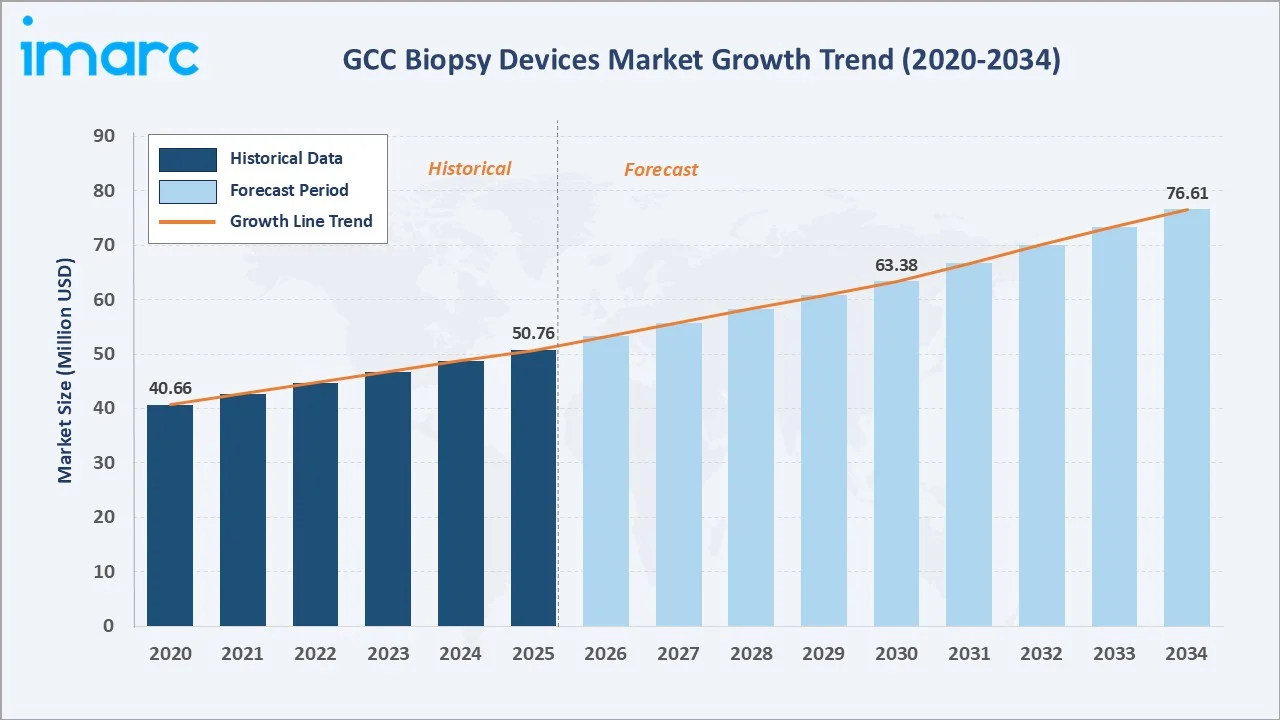
The GCC biopsy devices market reached USD 50.76 Million in 2025 and is projected to reach USD 76.61 Million by 2034, growing at a CAGR of 4.54% during 2026-2034. The market is driven by rising cancer incidence, increasing healthcare investments, and growing adoption of minimally invasive diagnostic procedures across the region. Surgical Biopsy dominates at 58.7%. Hospitals and Clinics lead end users at 72.5%. Saudi Arabia commands 38.6% of the regional market share.
Market Snapshot
|
Metric |
Value |
|
Market Size (2025) |
USD 50.76 Million |
|
Forecast Market Size (2034) |
USD 76.61 Million |
|
CAGR (2026-2034) |
4.54% |
|
Base Year |
2025 |
|
Historical Period |
2020-2025 |
|
Forecast Period |
2026-2034 |
|
Dominant Procedure Type |
Surgical Biopsy (58.7%, 2025) |
|
Dominant End User |
Hospitals and Clinics (72.5%, 2025) |
|
Leading Country |
Saudi Arabia (38.6%, 2025) |
The GCC biopsy devices market expanded from USD 40.66 Million in 2020 to USD 50.76 Million in 2025, anchored at USD 63.38 Million in 2030, and forecast to reach USD 76.61 Million by 2034. COVID-19 caused temporary disruption in elective diagnostic procedures in 2020, but GCC governments swiftly accelerated healthcare infrastructure investment. Post-COVID healthcare system strengthening sustained above-trend biopsy devices market growth through 2022-2025.
To get more information on this market, Request Sample
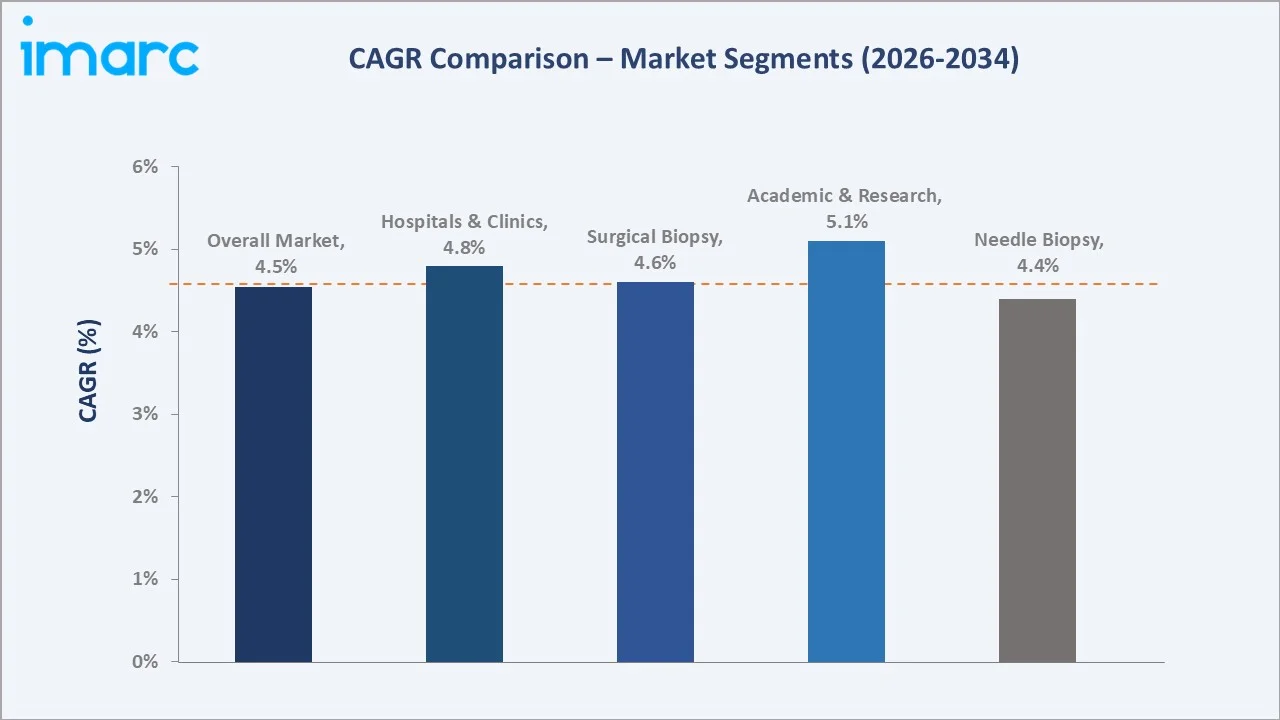
Hospitals and Clinics grow fastest at ~4.8% CAGR as GCC governments expand specialist hospital networks and oncology centers across all six member states. Surgical Biopsy grows at ~4.6% CAGR through continued preference for definitive tissue sampling in complex cancer staging procedures.
Executive Summary
The GCC biopsy devices market reached USD 50.76 Million in 2025, representing a critical diagnostic segment within the region's rapidly expanding healthcare ecosystem. The market encompasses surgical biopsy devices, needle-based biopsy systems, vacuum-assisted biopsy platforms, and guidance system accessories used across cancer diagnostic workflows in Saudi Arabia, UAE, Qatar, Oman, Kuwait, and Bahrain.
Surgical Biopsy at 58.7% dominates through widespread adoption in tertiary hospitals across the GCC. Hospitals and Clinics at 72.5% lead end users through centralized diagnostic infrastructure. Saudi Arabia, at 38.6%, leads through Vision 2030 healthcare expansion and largest GCC patient population.
Key Market Insights
|
Insight |
Data |
|
Dominant Procedure Type |
Surgical Biopsy - 58.7% share (2025) |
|
Dominant End User |
Hospitals and Clinics - 72.5% market share (2025) |
|
Leading Country |
Saudi Arabia - 38.6% market share (2025) |
|
Market Opportunity |
AI-guided biopsy; minimally invasive platforms; robotic biopsy; liquid biopsy integration; oncology center expansion; smart needle technology |
Key Analytical Observations Supporting The Above Data:
- Surgical Biopsy at 58.7%: The surgical biopsy segment dominates due to its wide application in open and laparoscopic procedures performed across GCC tertiary hospitals. These procedures are preferred for large lesion sampling and definitive cancer staging.
- Hospitals and Clinics at 72.5%: Hospitals and clinics lead because they possess advanced imaging infrastructure and multidisciplinary oncology teams required for guided biopsy procedures. Centralized diagnostic workflows further drive adoption.
- Saudi Arabia at 38.6%: Saudi Arabia leads through the largest GCC population base, Vision 2030 healthcare transformation investments, and national cancer screening programs. The Kingdom hosts the majority of specialist biopsy centers in the region.
GCC Biopsy Devices Market Overview
The GCC biopsy devices market encompasses surgical and needle-based biopsy equipment, guidance systems, and accessories used for tissue sampling across cancer diagnostic workflows. The market serves hospitals, clinics, and academic research institutions across Saudi Arabia, UAE, Qatar, Oman, Kuwait, and Bahrain.
Macroeconomic factors include rising cancer incidence, population growth, increased healthcare spending, and government-funded national cancer programs. Climate-related non-communicable disease burden, urbanization-driven lifestyle changes, and advanced screening program rollouts are accelerating biopsy device adoption across the GCC.
Market Dynamics
To evaluate market opportunities, Request Sample
Market Drivers
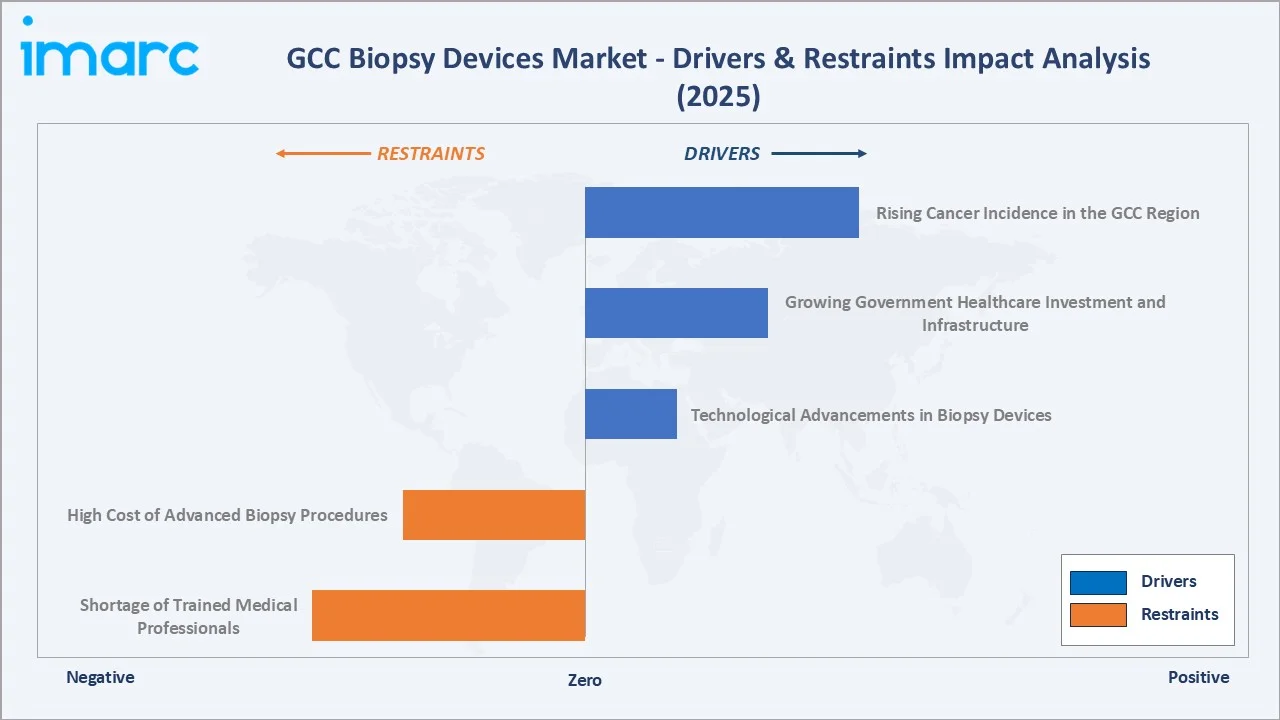
- Rising Cancer Incidence in the GCC Region: Cancer incidence across the GCC is rising due to lifestyle changes, sedentary behavior, and dietary patterns, creating sustained demand for biopsy devices. National cancer registries in Saudi Arabia and UAE report growing prevalence of breast, colorectal, and prostate cancers. This expanding patient pool directly drives biopsy procedure volumes and device procurement.
- Growing Government Healthcare Investment and Infrastructure: GCC governments are significantly expanding healthcare infrastructure through national transformation programs including Saudi Arabia's Vision 2030 and UAE's National Agenda. New hospitals, oncology centers, and diagnostic facilities are being commissioned. Government procurement programs ensure sustained institutional purchasing at scale.
- Technological Advancements in Biopsy Devices: Advances in vacuum-assisted biopsy, ultrasound-guided needle systems, and robotic-assisted biopsy platforms are improving diagnostic accuracy and patient outcomes. These innovations reduce procedure time and complications, making biopsy more accessible. GCC hospitals seeking JCIA accreditation actively upgrade to internationally certified advanced biopsy systems.
- Increasing Awareness of Early Cancer Diagnosis: National cancer awareness campaigns across GCC countries are encouraging early screening and diagnosis. Government-mandated mammography and colorectal screening programs are increasing the patient pool requiring biopsy confirmation. Rising health literacy among GCC populations is supporting biopsy procedure volume growth.
Market Restraints
- High Cost of Advanced Biopsy Procedures: The cost of advanced biopsy systems, including MRI-guided and vacuum-assisted platforms, remains high, limiting adoption in smaller facilities. In price-sensitive healthcare settings outside major urban centers, cost barriers slow technology upgrades. Reimbursement limitations in some GCC markets further constrain procedure uptake despite clinical need.
- Shortage of Trained Medical Professionals: Skilled pathologists, interventional radiologists, and surgical oncologists trained in advanced biopsy techniques remain in short supply across GCC markets. Healthcare systems rely heavily on expatriate specialists, creating retention and capacity risks. This talent gap limits procedure scalability even where infrastructure investment is available.
- Stringent Regulatory Approval Processes: Medical device regulatory approval across GCC countries requires compliance with national health authority standards, international certifications, and local registration procedures. Lengthy approval timelines for new biopsy device models slow product introductions. Regulatory fragmentation across six GCC jurisdictions adds complexity for international manufacturers seeking market entry.
Market Opportunities
- Minimally Invasive Biopsy Technology Expansion: Growing patient preference for outpatient, minimally invasive biopsy procedures creates opportunity for needle-based and vacuum-assisted device adoption. These technologies reduce recovery time, lower complication rates, and allow same-day discharge. GCC hospitals competing for patient preference are actively investing in minimally invasive biopsy suites.
- AI-Guided Imaging Integration in Biopsy Platforms: Integration of artificial intelligence in biopsy guidance systems enables real-time lesion identification, automated targeting, and procedural accuracy optimization. AI-assisted biopsy platforms reduce operator dependency and improve first-pass tissue adequacy rates. This technology aligns with GCC healthcare digitalization agendas and smart hospital programs.
Market Challenges
- Limited Pathology Laboratory Capacity: Rapid expansion of biopsy procedures is outpacing pathology laboratory capacity across several GCC markets. Turnaround times for histopathology reports remain a constraint on biopsy workflow efficiency. Insufficient digital pathology adoption means that growing biopsy volumes cannot always be matched with timely diagnostic reporting.
- Integration of Advanced Guidance Technologies: Integration of ultrasound, MRI, and CT guidance modalities with biopsy platforms requires significant capital investment and training. Small and mid-size facilities often lack the infrastructure to deploy multi-modality guided biopsy. This limits geographic spread of advanced biopsy beyond major urban hospital centers.
Emerging Market Trends
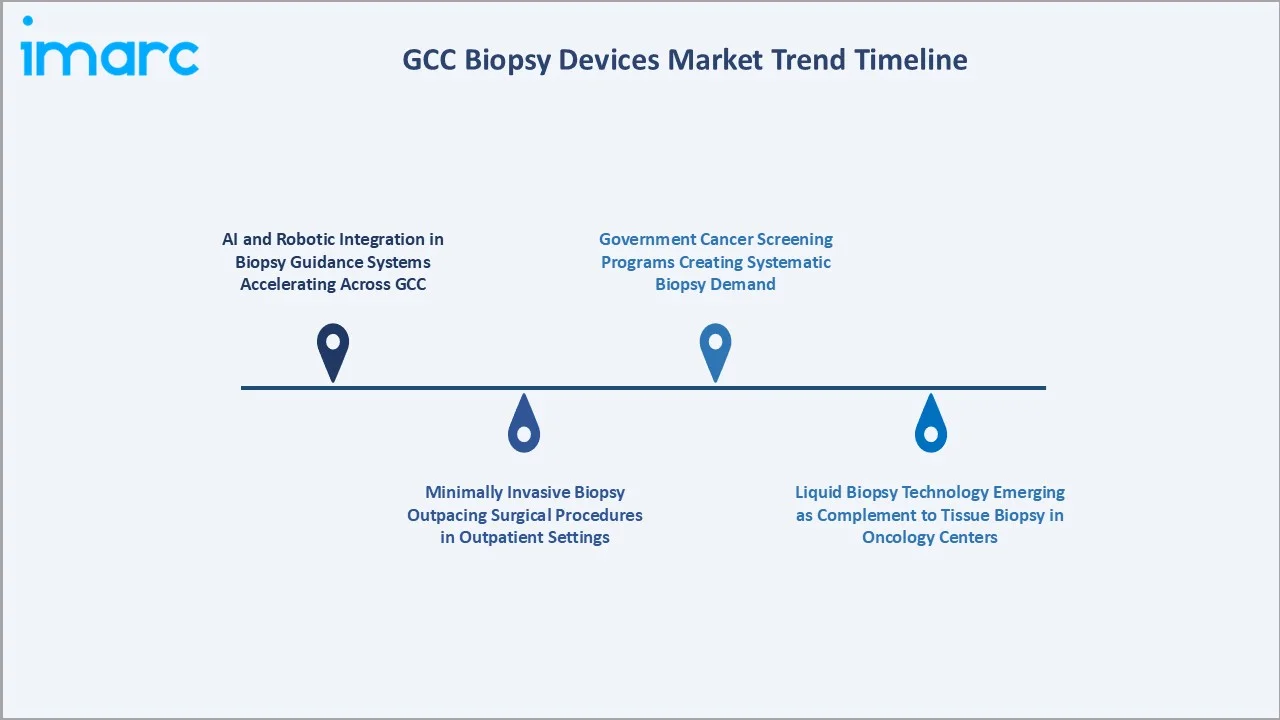
1. AI and Robotic Integration in Biopsy Guidance Systems Accelerating Across GCC
AI and robotic-assisted biopsy platforms are gaining adoption across GCC tertiary hospitals as accuracy and workflow efficiency requirements intensify. These systems provide real-time targeting guidance, automated needle placement, and procedure documentation. GCC hospitals pursuing JCIA and JCI international accreditations are accelerating adoption of AI-guided biopsy as a patient safety and quality standard.
2. Minimally Invasive Biopsy Outpacing Surgical Procedures in Outpatient Settings
Minimally invasive biopsy platforms are displacing traditional open surgical biopsy in outpatient settings across GCC private hospitals. Vacuum-assisted and fine needle aspiration platforms now enable same-day tissue sampling without general anesthesia. Growing GCC patient preference for outpatient procedures with faster recovery is accelerating the transition toward needle-based biopsy modalities.
3. Liquid Biopsy Technology Emerging as Complement to Tissue Biopsy in Oncology Centers
Liquid biopsy, which detects circulating tumor DNA and cancer biomarkers from blood samples, is emerging as a complementary diagnostic tool across GCC oncology centers. Leading GCC cancer centers are beginning to integrate liquid biopsy for monitoring treatment response and recurrence detection. As liquid biopsy platforms receive international regulatory clearance and pricing improves, GCC adoption will accelerate through 2028-2030.
4. Government Cancer Screening Programs Creating Systematic Biopsy Demand
GCC governments are rolling out systematic national cancer screening programs for breast, colorectal, and cervical cancers that generate sustained biopsy procedure demand. Saudi Arabia's national mammography screening program and UAE's cancer early detection initiatives are directly expanding the pool of screen-detected lesions requiring biopsy confirmation. These government programs create long-term structural demand that is policy-mandated and budget-committed.
Industry Value Chain Analysis
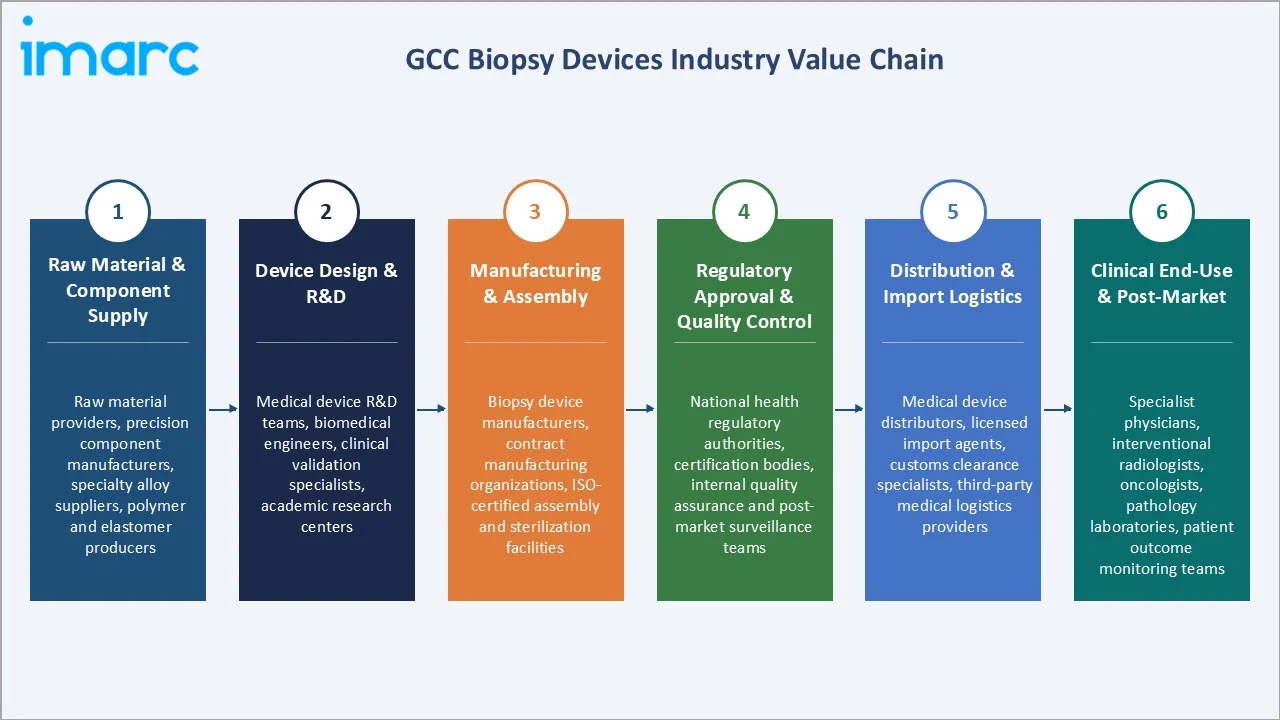
The GCC biopsy devices value chain integrates raw material sourcing, device design and manufacturing, regulatory approval, import and distribution logistics, healthcare provider procurement, clinical end-use, and post-market surveillance activities.
|
Stage |
Key Participants |
|
Raw Material & Component Supply |
Raw material providers, precision component manufacturers, specialty alloy suppliers, polymer and elastomer producers |
|
Device Design & R&D |
Medical device R&D teams, biomedical engineers, clinical validation specialists, academic research centers |
|
Manufacturing & Assembly |
Biopsy device manufacturers, contract manufacturing organizations, ISO-certified assembly and sterilization facilities |
|
Regulatory Approval & Quality Control |
National health regulatory authorities, international certification bodies, internal quality assurance and post-market surveillance teams |
|
Distribution & Import Logistics |
Medical device distributors, licensed import agents, customs clearance specialists, third-party medical logistics providers |
|
Healthcare Provider Procurement |
Hospital and clinic procurement departments, group purchasing organizations, government health ministry tender units |
|
Clinical End-Use & Post-Market |
Specialist physicians, interventional radiologists, oncologists, pathology laboratories, patient outcome monitoring teams |
The manufacturing and assembly stage is the value chain's most technically complex phase, where proprietary needle engineering and guidance system integration create the device performance differentiation that justifies premium pricing. Regulatory approval and quality control create a critical checkpoint that protects GCC patients and creates competitive barriers for certified device suppliers.
Technology Landscape in the GCC Biopsy Devices Industry
Ultrasound-Guided Biopsy Systems
Ultrasound-guided biopsy is the most widely deployed real-time imaging modality for needle placement in GCC hospitals. Its portability, cost-effectiveness, and real-time visualization capability make it the preferred guidance technique for breast and liver biopsies. Continuous transducer technology improvements are expanding ultrasound-guided biopsy applications across multiple anatomical sites.
Vacuum-Assisted Biopsy Technology
Vacuum-assisted biopsy platforms enable sampling of multiple tissue cores through a single needle insertion, significantly improving tissue adequacy rates for breast lesion diagnosis. These systems reduce the need for repeat procedures and are increasingly adopted in GCC breast screening programs. Device miniaturization is making vacuum-assisted biopsy feasible in outpatient clinic settings.
MRI-Guided and Stereotactic Biopsy Platforms
MRI-guided biopsy provides superior soft tissue contrast for lesions not visualizable by ultrasound or mammography. Premium GCC hospitals are investing in MRI-compatible biopsy systems to serve complex diagnostic cases. Stereotactic platforms enable sub-millimeter precision for microcalcification biopsy in breast cancer screening programs, improving diagnostic yield and reducing false-negative rates.
Market Segmentation Analysis
The report covers the following segments:
|
Segment Category |
Leading Segment |
Market Share |
Year |
|
Procedure Type |
Surgical Biopsy |
58.7% |
2025 |
|
Product |
Biopsy Guidance Systems |
🔒 |
2025 |
|
Application |
Breast Biopsy |
🔒 |
2025 |
|
Guidance Technique |
Ultrasound-guided Biopsy |
🔒 |
2025 |
|
End User |
Hospitals and Clinics |
72.5% |
2025 |
|
Country |
Saudi Arabia |
38.6% |
2025 |

By Procedure Type
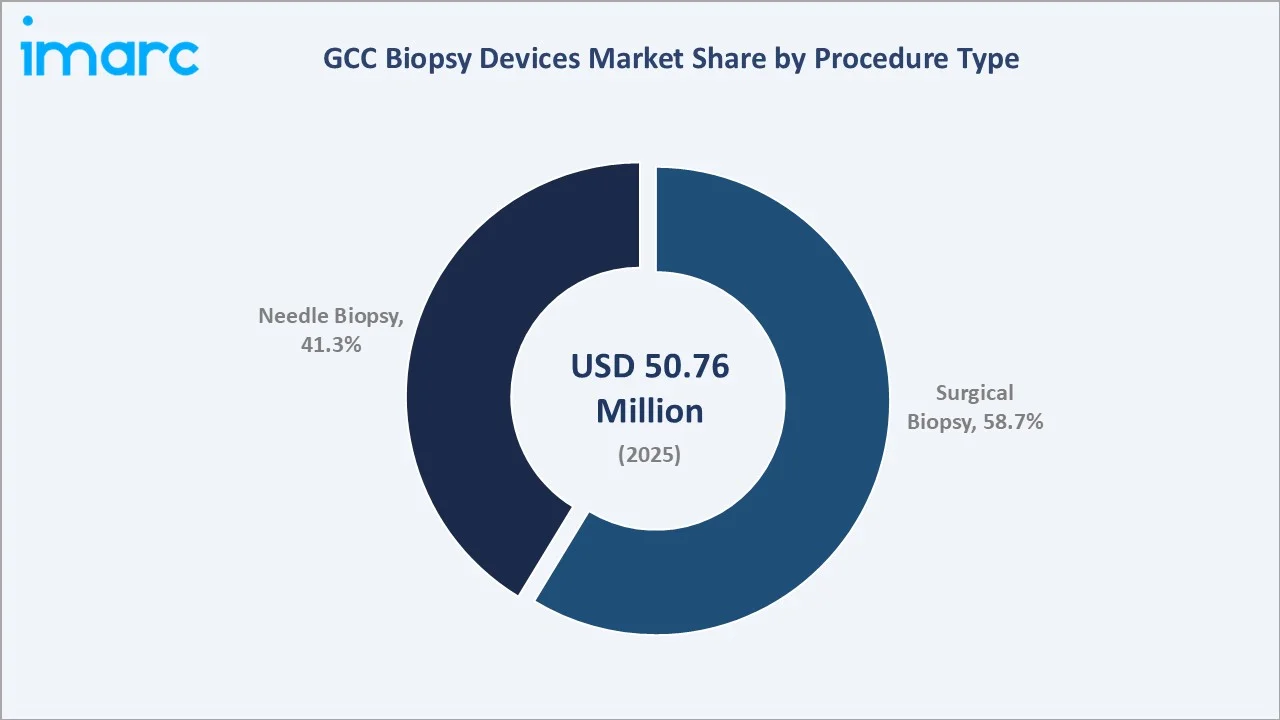
Surgical Biopsy leads at 58.7% (2025). The surgical biopsy segment encompasses open surgical excision biopsy, laparoscopic biopsy, and endoscopic mucosal resection procedures performed across GCC tertiary hospitals. Surgical biopsy is preferred for large lesions, anatomically complex sites, and cases requiring definitive tissue characterization for oncologic staging.
To access detailed market analysis, Request Sample
Needle Biopsy at 41.3% encompasses fine needle aspiration, core needle biopsy, and vacuum-assisted needle biopsy procedures. Needle biopsy growth is accelerating as GCC hospitals expand outpatient diagnostic capacity and patient preference shifts toward minimally invasive procedures with shorter recovery periods. Needle biopsy's ~4.4% CAGR reflects this transition through the forecast period.
By End User
Hospitals and Clinics lead at 72.5% (2025). This segment encompasses government and private hospitals, specialist oncology centers, and diagnostic clinics equipped with imaging-guided biopsy suites. GCC hospital network expansion under national healthcare transformation programs is directly driving institutional biopsy device procurement volumes.
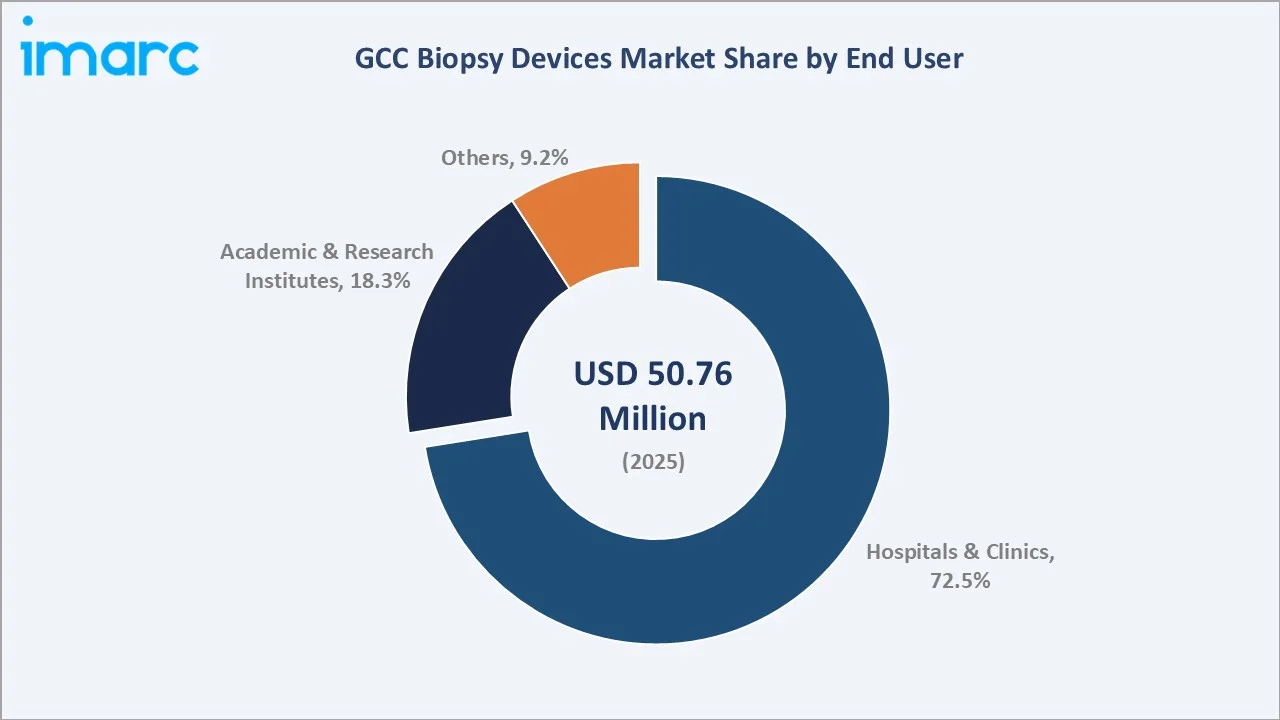
Academic and Research Institutes at 18.3% represent universities, medical colleges, and clinical research centers engaged in biopsy technology validation, oncology research, and physician training programs. Others at 9.2% includes standalone diagnostic imaging centers and ambulatory surgical facilities.
Regional Market Insights
|
Country |
Share (2025) |
Key GCC Biopsy Devices Market Drivers & Characteristics |
|
Saudi Arabia |
38.6% |
Driven by Vision 2030 healthcare expansion, KFSH&RC oncology programs, National Cancer Control Program, and largest GCC population base. |
|
UAE |
24.2% |
Driven by advanced private hospital network, medical tourism ecosystem, Dubai Health Authority initiatives, and high-income patient population. |
|
Qatar |
12.1% |
Driven by Hamad Medical Corporation investments, National Cancer Strategy, and expanding specialist oncology services. |
|
Oman |
9.6% |
Driven by Sultan Qaboos University Hospital oncology programs, Ministry of Health modernization, and rising cancer awareness. |
|
Kuwait |
8.7% |
Driven by Kuwait Cancer Control Center, government-funded hospital expansion, and increasing subspecialty diagnostic capacity. |
|
Bahrain |
6.8% |
Driven by Salmaniya Medical Complex expansion, national NCD strategy, and growing private healthcare sector. |
Saudi Arabia's 38.6% market leadership is anchored by the largest GCC population base, the King Faisal Specialist Hospital and Research Centre's oncology infrastructure, and Vision 2030 healthcare transformation investments. The UAE's 24.2% reflects its advanced private hospital ecosystem, medical tourism positioning, and high prevalence of international patient flows seeking specialist diagnostics.
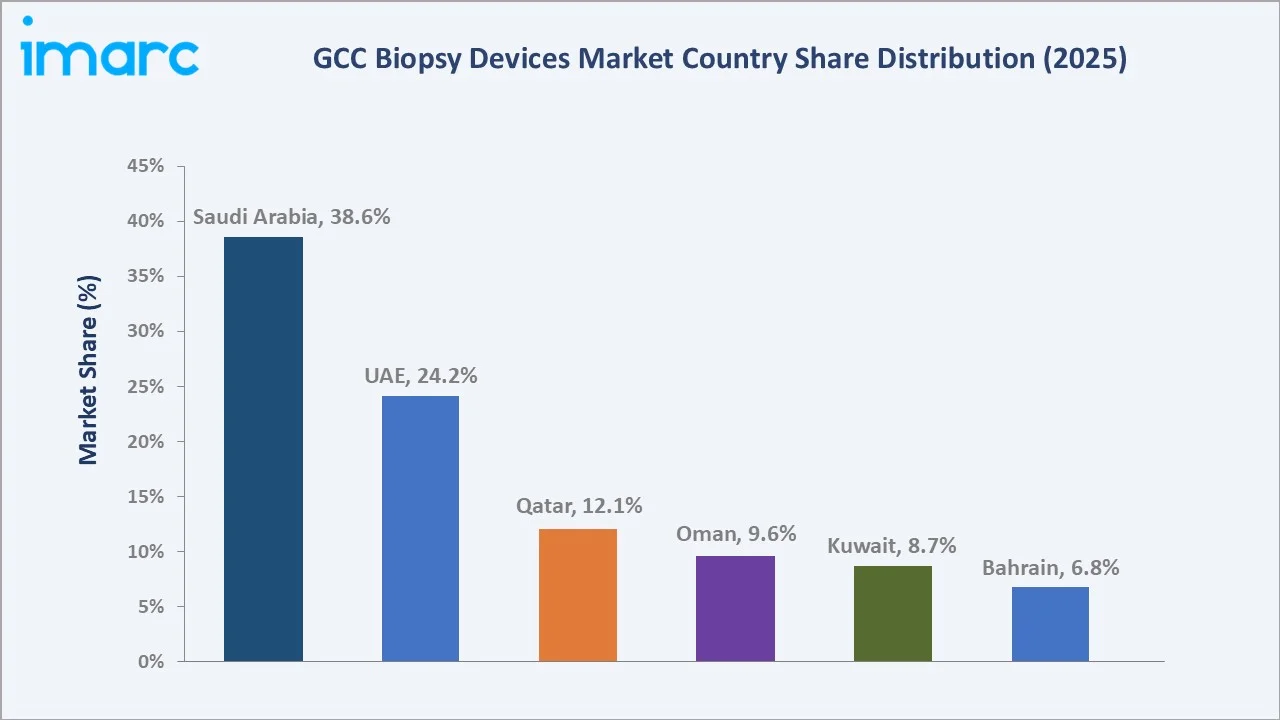
Qatar's 12.1% share reflects Hamad Medical Corporation's investment in oncology infrastructure and the post-FIFA healthcare capacity build-out. Oman, Kuwait, and Bahrain collectively represent 25.1%, with all three markets exhibiting strong government healthcare investment trends that will support above-average biopsy device market growth through 2034.
Competitive Landscape
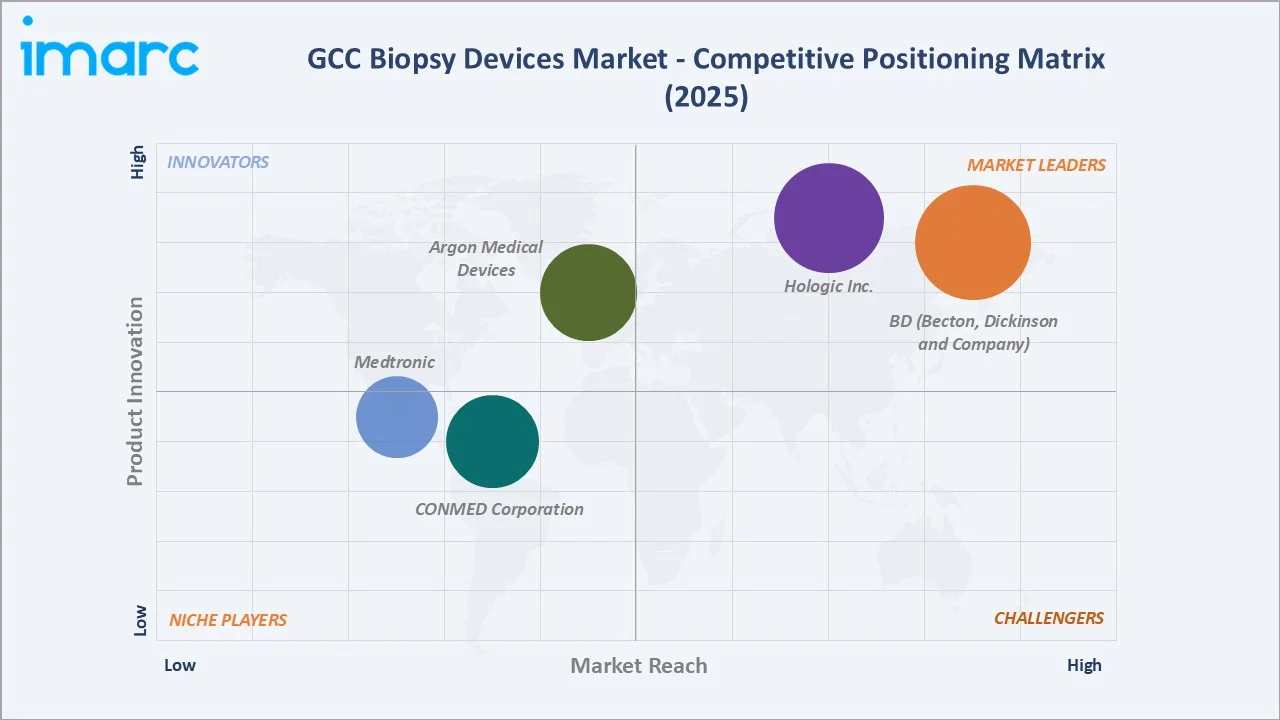
The GCC biopsy devices competitive landscape encompasses multinational medical device corporations with established regulatory clearances, distribution networks, and service infrastructure. Competition centers on device innovation, imaging guidance integration, tissue adequacy performance, and total cost of ownership across government and private hospital procurement channels.
|
Company Name |
Key Products |
Market Position |
Core Strength |
|
BD (Becton, Dickinson and Company) |
Marquee, Max-Core, TruGuide |
Market Leader |
BD leads through comprehensive biopsy needle and device portfolio, strong GCC distributor relationships, and global supply chain reliability. |
|
Hologic Inc. |
Eviva, Brevera Breast Biopsy System |
Market Leader |
Hologic leads the vacuum-assisted breast biopsy segment with integrated workflow solutions for breast imaging centers. |
|
Argon Medical Devices |
BioPince Ultra |
Established Player |
Argon provides specialized core needle and vacuum-assisted biopsy devices for interventional radiology applications. |
|
CONMED Corporation |
Precisor EXL Disposable Biopsy Forceps |
Established Player |
CONMED's endoscopic biopsy forceps portfolio serves GI oncology and gastroenterology biopsy applications in GCC hospitals. |
|
Medtronic |
SharkCore FNB needle, GenCut |
Established Player |
Medtronic's bronchoscopic and EUS-guided biopsy systems serve thoracic oncology departments in GCC tertiary hospitals. |
Market concentration is moderate at the device technology tier, with BD and Hologic holding leading positions through comprehensive portfolio breadth and strong GCC tender participation track records. Consolidation reflects hospital procurement preference for integrated device system suppliers, reducing procurement coordination complexity across multiple categories.
Key Company Profiles
BD (Becton, Dickinson and Company)
BD is a global medical technology company and market leader in the GCC biopsy devices segment. The company provides a comprehensive portfolio of biopsy needles, biopsy guns, and guidance accessories for interventional radiology and surgical oncology applications across GCC hospital networks.
- Key Products: BD Bard Biopsy Instruments, Bard Magnum Biopsy Instrument, BD Vacora Vacuum-Assisted Biopsy System.
- Recent Developments: In January 2026, BD (Becton, Dickinson and Company) received U.S. FDA 510(k) clearance for its EnCor EnCompass™ Breast Biopsy and Tissue Removal System, a next-generation vacuum-assisted breast biopsy platform designed for use across multiple breast imaging modalities. The system features adjustable vacuum settings, a variable sample notch, 360° tissue sampling capability, and enhanced visualization to improve biopsy accuracy and clinical workflow. This approval strengthens BD's breast biopsy portfolio and reinforces its position in the minimally invasive breast diagnostics market.
- Strategic Focus: Focused on expanding needle-based biopsy portfolio penetration in GCC government hospital tenders, improving supply chain localization, and investing in clinical training programs for interventional radiologists.
Hologic Inc.
Hologic is a leading developer of diagnostic solutions focused on women's health, with particular strength in breast biopsy systems. The company's vacuum-assisted biopsy platforms are deployed across GCC breast screening and diagnostic centers serving national mammography programs.
- Key Products: Hologic Brevera Biopsy System with CorLumina Imaging Technology, Hologic Affirm Breast Biopsy Guidance System.
- Recent Developments: In February 2025, Hologic Inc. obtained CE Mark for its Affirm® Contrast Biopsy Software, expanding its breast biopsy portfolio in Europe. The software is designed to work with Hologic’s contrast-enhanced mammography system, enabling radiologists to perform contrast-guided breast biopsies with improved workflow efficiency and precise lesion targeting. This milestone strengthens Hologic’s position in image-guided breast biopsy by enhancing minimally invasive breast cancer diagnosis and intervention capabilities.
- Strategic Focus: Centered on capturing breast cancer screening program-driven biopsy volume growth across Saudi Arabia and UAE through integrated digital mammography and biopsy workflow solutions.
Argon Medical Devices
Argon Medical Devices specializes in interventional accessories including biopsy devices for use in radiology and oncology procedures. The company's core needle and vacuum-assisted biopsy portfolios are widely deployed in GCC interventional radiology suites across government hospital networks.
- Key Products: Argon AutoVac Vacuum-Assisted Biopsy System, Temno Evolution Core Biopsy Needle, Liberty Bone Biopsy System.
- Strategic Focus: Focused on interventional radiology segment growth in GCC government hospital systems through competitive tender positioning and comprehensive needle consumable supply agreements.
Market Concentration Analysis
The GCC biopsy devices market is moderately concentrated at the device manufacturer level, with multinational players collectively holding the majority of procurement value through established government and private hospital tender relationships. BD and Hologic occupy leadership positions through portfolio breadth covering multiple biopsy categories. Market concentration is increasing at the guidance system integration tier through acquisition of specialist guidance companies by major device manufacturers.
Investment & Growth Opportunities
Highest Growth Segments
Needle Biopsy (~4.4% CAGR), Academic and Research Institutes (~5.1% CAGR), AI-guided biopsy platforms (~12% CAGR from small base), liquid biopsy complementary diagnostics (~18% CAGR from near-zero base), robotic-assisted biopsy systems (~15% CAGR), and Qatar and Bahrain national oncology program infrastructure build-out (~6-7% CAGR) represent the highest-growth GCC biopsy devices investment vectors through 2034.
Emerging Investment Opportunities
GCC government national cancer screening program expansion represents the largest near-term structural demand driver for biopsy device procurement. Device manufacturers and distributors who establish preferred supplier relationships with GCC Ministry of Health procurement offices are positioned for above-market revenue growth as government screening program rollouts accelerate across Saudi Arabia, UAE, and Qatar.
Investment Themes
- AI-integrated biopsy guidance system development for GCC hospital networks: AI biopsy guidance systems have demonstrated procedural accuracy improvements of 20-30% versus conventional guidance in clinical studies. Developing AI-integrated biopsy platforms optimized for GCC cancer prevalence patterns and hospital workflow requirements positions suppliers for premium procurement in new hospital commissioning tenders through 2027-2030.
- Liquid biopsy platform localization for GCC oncology center adoption: Liquid biopsy platforms represent a complementary and potentially disruptive diagnostic approach that detects circulating tumor DNA from blood rather than tissue sampling. A localized liquid biopsy platform with regional pricing, Arabic-language reporting, and GCC regulatory clearances from SFDA and DHA creates a high-margin market entry ahead of global platform commoditization.
Future Market Outlook (2026-2034)
The GCC biopsy devices market is projected to grow from USD 50.76 Million in 2025 to USD 76.61 Million by 2034, delivering a 4.54% CAGR over the forecast period. The market's anchor value of USD 63.38 Million in 2030 represents a biopsy devices industry at a meaningful inflection point, as AI-guided biopsy systems achieve commercial deployment in GCC tertiary hospitals, minimally invasive platforms displace surgical biopsy in outpatient settings, and government cancer screening programs reach full national coverage.
Three structural forces define GCC biopsy devices market growth through 2034. Cancer incidence as a rising public health priority across all six GCC governments creates mandatory healthcare spending on diagnostic oncology infrastructure that is policy-mandated and multi-decade in commitment. Healthcare infrastructure transformation programs including Saudi Arabia's Vision 2030, UAE National Agenda, and Qatar National Vision 2030 are creating new hospital capacity that directly requires biopsy device procurement. Technology advancement is making premium biopsy guidance systems commercially accessible and clinically compelling beyond the major tertiary centers.
Research Methodology
Primary Research
Primary research comprised structured interviews with 40+ industry stakeholders (2025) including oncologists, interventional radiologists, hospital procurement managers, biopsy device distributor executives, and regulatory affairs specialists across GCC markets.
Secondary Research
Secondary research encompassed GCC national cancer registry reports; WHO cancer incidence data for the Middle East; SFDA and DHA regulatory databases; company annual reports and earnings calls; hospital procurement tender records; and peer-reviewed oncology and interventional radiology journals. Over 50 secondary sources reviewed.
Forecasting Models
Market revenue forecasts developed using a segment bottom-up model: (i) procedure volume analysis component; (ii) average selling price trend component; (iii) end user procurement pattern component. Country-level healthcare expenditure growth projections validated against historical market performance and GCC government budget allocations.
Report Coverage:
| Report Features | Details |
|---|---|
| Base Year of the Analysis | 2025 |
| Historical Period | 2020-2025 |
| Forecast Period | 2026-2034 |
| Units | Million USD |
| Scope of the Report | Exploration of Historical Trends and Market Outlook, Industry Catalysts and Challenges, Segment-Wise Historical and Predictive Market Assessment:
|
| Procedure Types Covered | Surgical Biopsy, Needle Biopsy |
| Products Covered | Biopsy Guidance Systems, Needle Based Biopsy Guns, Biopsy Needles, Biopsy Forceps, Others |
| Applications Covered | Breast Biopsy, Lung Biopsy, Colorectal Biopsy, Prostate Biopsy, Others |
| Guidance Techniques Covered | Ultrasound-guided Biopsy, Stereotactic-guided Biopsy, MRI-guided Biopsy, Others |
| End Users Covered | Hospitals and Clinics, Academic and Research Institutes, Others |
| Countries Covered | Saudi Arabia, UAE, Qatar, Oman, Kuwait, Bahrain |
| Companies Covered | BD (Becton, Dickinson and Company), Hologic Inc., Argon Medical Devices, CONMED Corporation, Medtronic, etc. |
| Customization Scope | 10% Free Customization |
| Post-Sale Analyst Support | 10-12 Weeks |
| Delivery Format | PDF and Excel through Email (We can also provide the editable version of the report in PPT/Word format on special request) |
Frequently Asked Questions About the GCC Biopsy Devices Market Report
The GCC biopsy devices market reached USD 50.76 Million in 2025. The market is driven by rising cancer incidence across the region, growing government healthcare investment, and increasing adoption of minimally invasive diagnostic procedures in GCC hospital networks.
The market grows at 4.54% CAGR during 2026-2034, reaching USD 76.61 Million by 2034. Hospitals and Clinics segment growth and Saudi Arabia's oncology infrastructure expansion are key growth catalysts through the forecast period.
Surgical Biopsy leads at 58.7% through its widespread application across GCC tertiary hospitals for large lesion sampling, definitive cancer staging, and complex anatomical site biopsy procedures requiring open or laparoscopic approaches.
Hospitals and Clinics lead at 72.5% through centralized diagnostic infrastructure, multidisciplinary oncology team availability, advanced imaging guidance systems, and government procurement programs supporting institutional biopsy device adoption.
Saudi Arabia leads at 38.6% through the largest GCC population base, Vision 2030 healthcare transformation investments, King Faisal Specialist Hospital oncology program, and national cancer screening initiatives driving biopsy procedure volumes.
Leading companies include BD (Becton, Dickinson and Company), Hologic Inc., Argon Medical Devices, CONMED Corporation, and Medtronic plc.
The market is projected to reach approximately USD 63.38 Million by 2030, supported by continued GCC healthcare infrastructure expansion, rising cancer screening program enrollment, adoption of AI-guided biopsy platforms, and growing private hospital investment in diagnostic oncology capabilities.
Key opportunities include AI-integrated biopsy guidance systems, minimally invasive vacuum-assisted platforms, liquid biopsy adoption in oncology centers, robotic-assisted biopsy development, and government cancer screening program expansion creating new procedure volume across all six GCC member states.
Need more help?
- Speak to our experienced analysts for insights on the current market scenarios.
- Include additional segments and countries to customize the report as per your requirement.
- Gain an unparalleled competitive advantage in your domain by understanding how to utilize the report and positively impacting your operations and revenue.
- For further assistance, please connect with our analysts.
 Request Customization
 Speak to an Analyst
 Request Brochure
 Inquire Before Buying
Benefits of Customization
- Personalize this research
- Triangulate with your data
- Get data as per your format and definition
- Gain a deeper dive into a specific application, geography, customer, or competitor
- Any level of personalization
Get in Touch With Us
UNITED STATES
Phone: +1-201-971-6302
INDIA
Phone: +91-120-433-0800
UNITED KINGDOM
Phone: +44-753-714-6104
Email: [email protected]
Client Testimonials




.webp)




.webp)













Related Reports

Choose your plan
*Please note that the prices mentioned below are starting prices for each bundle type. Kindly contact our team for further details.*
Single User License
- 1 User License, Access on 2 Devices
- PDF Report + Excel Dataset (Password Protected)
- Lifetime Access
- No Printing Rights
- 10% Free Report Customization
- 10–12 Weeks of Analyst Support
Five User License
- Access for 5 Users, 2 Devices per User
- PDF Report + Excel Dataset (Password Protected)
- Lifetime Access
- Dedicated Account Manager
- 12–14 Weeks of Analyst Support
- No Printing Rights
- 15% Free Report Customization
- 25% Discount on Your Next Purchase
Corporate User License
- Unlimited User Access (Within Your Organization)
- PDF Report + Excel Dataset
- Lifetime Access
- Dedicated Account Manager
- 14–20 Weeks of Analyst Support
- No Printing Rights
- 20% Free Report Customization
- 30% Discount on Your Next Purchase
Essential Insights
What's included:
3 reports
- Lifetime Access
- PDF Reports
- Excel Datasets
- 2 Weeks of Free Analyst Support
- 2 User Licenses
- Access on 2 Devices
- Printing Rights
- Complimentary PowerPoint (PPT) Version
- Complimentary License Upgrade
Professional Access
What's included:
5 reports
- Lifetime Access
- PDF Reports
- Excel Datasets
- 8 Weeks of Free Analyst Support
- 2 User Licenses
- Access on 2 Devices
- Printing Rights
- Complimentary PowerPoint (PPT) Version
- Complimentary License Upgrade
Business Advantage
What's included:
8 reports
- Lifetime Access
- PDF Reports
- Excel Datasets
- 14 Weeks of Free Analyst Support
- 2 User Licenses
- Access on 2 Devices
- Printing Rights
- Complimentary PowerPoint (PPT) Version
- Complimentary License Upgrade
Enterprise Intelligence
What's included:
10 reports
- Lifetime Access
- PDF Reports
- Excel Datasets
- 20 Weeks of Free Analyst Support
- 2 User Licenses
- Access on 2 Devices
- Printing Rights
- Complimentary PowerPoint (PPT) Version
- Complimentary License Upgrade