
Hair and Body Mist Market Size, Share, Trends and Forecast by Type, Distribution Channel, and Region, 2026-2034
Hair and Body Mist Market Size, Share, Trends & Forecast (2026-2034)
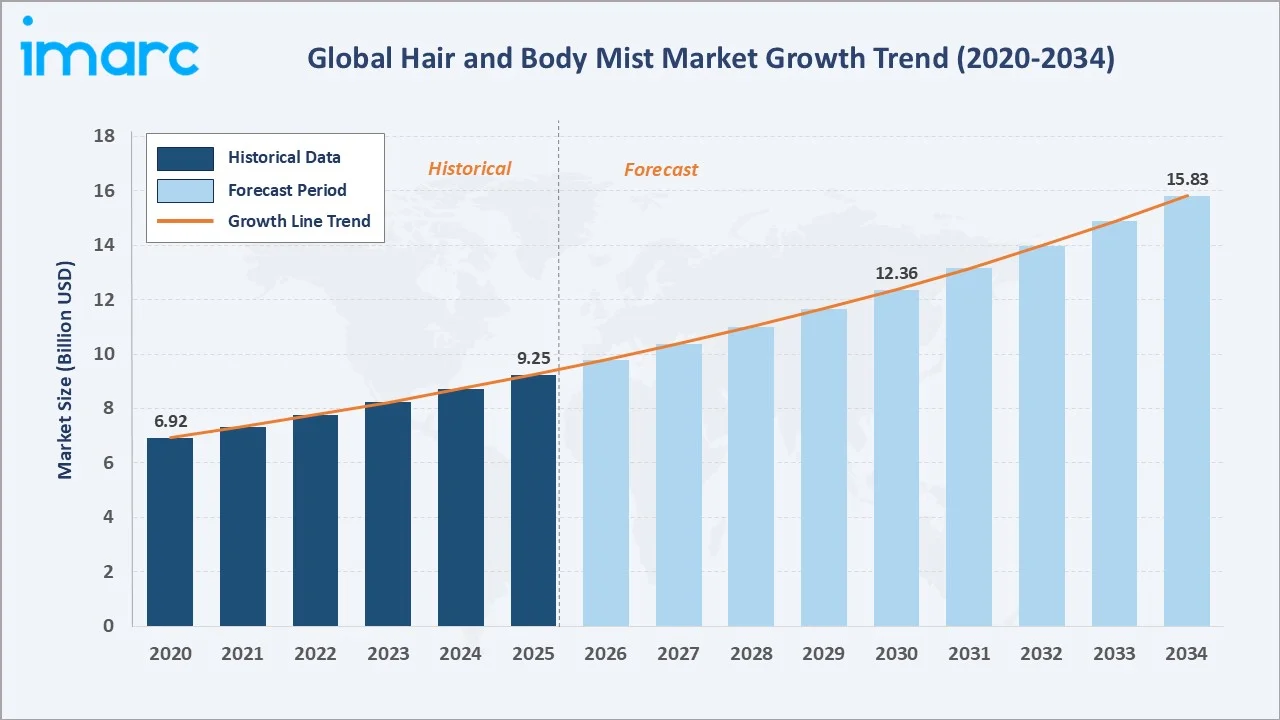
The global hair and body mist market reached USD 9.25 Billion in 2025 and is projected to reach USD 15.83 Billion by 2034, exhibiting a CAGR of 5.97% during 2026-2034. The democratization of premium fragrance and demand for alcohol-free, vegan, and sustainably packaged fragrance mists are the primary growth catalysts. Growing consumer interest is strengthening the hair and body mists category, with Google searches rising by 68% and Instagram searches increasing by 308% in 2026 to date, according to research from UK beauty retailer Superdrug. The sharp increase in online searches reflects rising awareness and demand for lightweight, affordable fragrance products. Body mist leads the type at 68.4%, offline dominates the distribution channel at 71.2%, and North America accounts for the largest regional share at 35.8%.
Market Snapshot
|
Metric |
Value |
|
Market Size (2025) |
USD 9.25 Billion |
|
Forecast Market Size (2034) |
USD 15.83 Billion |
|
CAGR (2026-2034) |
5.97% |
|
Base Year |
2025 |
|
Historical Period |
2020-2025 |
|
Forecast Period |
2026-2034 |
|
Dominant Type |
Body Mist (68.4%, 2025) |
|
Dominant Distribution Channel |
Offline (71.2%, 2025) |
|
Leading Region |
North America (35.8%, 2025) |
The global hair and body mist market grew from USD 6.92 Billion in 2020 to USD 9.25 Billion in 2025, driven by pandemic-era self-care spending elevating fragrance as an accessible mood-boosting ritual; the global Gen Z fragrance discovery phenomenon on social media created the defining body mist viral marketing template for the decade. The market is projected to reach USD 12.36 Billion by 2030 and USD 15.83 Billion by 2034.
To get more information on this market, Request Sample
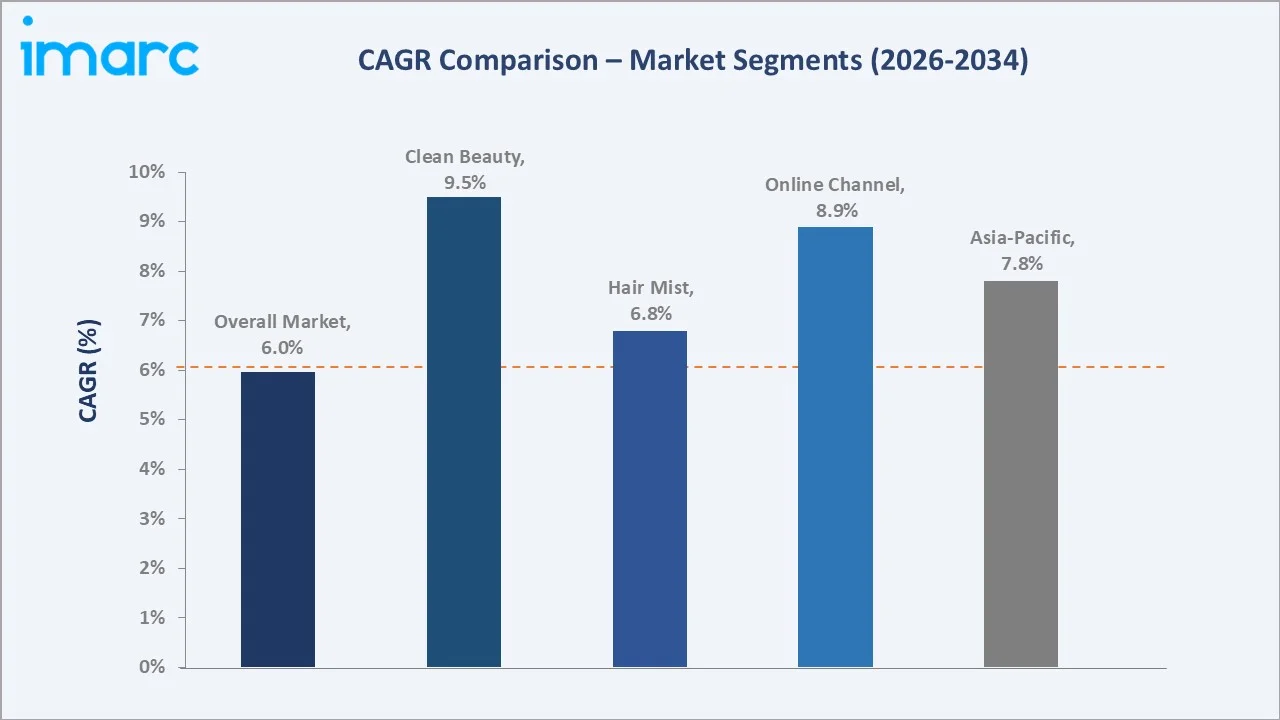
Online distribution grows at ~8.9% CAGR through beauty e-commerce platform expansion and DTC brand growth. Hair mist grows at ~6.8% CAGR as the fastest type through expanding hair care-fragrance convergence, and UV protection and nourishment functionality claims. Asia-Pacific leads regional growth at ~7.8% CAGR through China's digital beauty commerce expansion, India's fragrance premiumization, and South Korea's global beauty trend influence.
Executive Summary
The global hair and body mist market occupies a unique and rapidly expanding position in the personal fragrance and beauty industry, serving as the accessible entry point into premium fragrance for younger consumers, the daily-use signature scent vehicle for established fragrance enthusiasts, and the functional-meets-fragrance platform for hair care and skin care benefit delivery simultaneously with scent. Body mists and hair mists have transcended their traditional positioning as "lighter, cheaper alternatives to perfume" into culturally relevant, social-media-celebrated beauty categories that generate extraordinary viral commercial momentum. Market value stood at USD 9.25 Billion in 2025 and is forecast to reach USD 15.83 Billion by 2034, driven by demographic and cultural forces that are progressively normalizing fragrance layering, elevating body mist from functional afterthought to aspirational beauty ritual.
Body mist leads type at 68.4% (2025), representing the category's foundational and most commercially developed segment through its broad appeal across demographic groups, the widest fragrance variety available, and the established retail gifting occasion that makes body mists perennial holiday and birthday purchase staples. Offline distribution commands 71.2% (2025) through specialty beauty retail's exceptional importance in fragrance discovery. North America commands 35.8% (2025) through the deepest specialty beauty retail density globally and Gen Z's disproportionate beauty spending concentrated in the US market.
Key Market Insights
|
Insight |
Data |
|
Dominant Type |
Body Mist – 68.4% share (2025) |
|
Dominant Distribution Channel |
Offline – 71.2% share (2025) |
|
Leading Region |
North America – 35.8% share (2025) |
|
Market Opportunity |
Clean/alcohol-free mists; hair mist functional-fragrance hybrids; refillable mist packaging; Asia-Pacific online beauty expansion |
Key Analytical Observations:
- Body Mist at 68.4% (2025): Body mists represent the personal fragrance market's most accessible price tier, with mass-market options and premium options. This wide price architecture means body mist spans from the fragrance category's most accessible consumer segment through prestige and luxury consumers who use body mists as fragrance layering complements to their primary perfume investment.
- Offline Distribution at 71.2% (2025): Fragrance is the personal care category most fundamentally dependent on sensory in-store experience; consumers cannot reliably evaluate a fragrance from digital descriptions alone and require smell sampling before committing purchase confidence to a scent.
- North America at 35.8% (2025): North America's market leadership reflects US stores and annual body mist unit sales in the hundreds of millions. North America's market leadership is sustained by dominant specialty beauty retail presence, the highest global Gen Z discretionary beauty spending concentration, and the most developed social commerce ecosystem that amplifies body mist viral moments into immediate e-commerce revenue.
Hair and Body Mist Market Overview
The global hair and body mist market encompasses a broad spectrum of personal fragrance products designed for direct application to skin surfaces (body mists) or hair (hair mists), formulated with lower fragrance oil concentrations than traditional fine fragrances to deliver lighter, freshening fragrance experiences appropriate for daytime, sport, and layering applications. The category sits at the intersection of three major consumer product industries: personal fragrance, personal care and body care, and hair care. Market growth is anchored by a fundamental demographic shift: Gen Z consumers are the most fragrance-engaged consumer generation in history, approaching fragrance as identity expression, mood management, and social currency rather than merely hygiene or attraction. Gen Z's fragrance engagement, disproportionately concentrated in the accessible body mist price tier where self-purchase is feasible without parental budget dependency, is creating the most significant structural consumer demand expansion. Macroeconomic factors include rising disposable incomes, urbanization, and increased consumer spending on personal care and affordable luxury products.
Market Dynamics
To evaluate market opportunities, Request Sample
Market Drivers
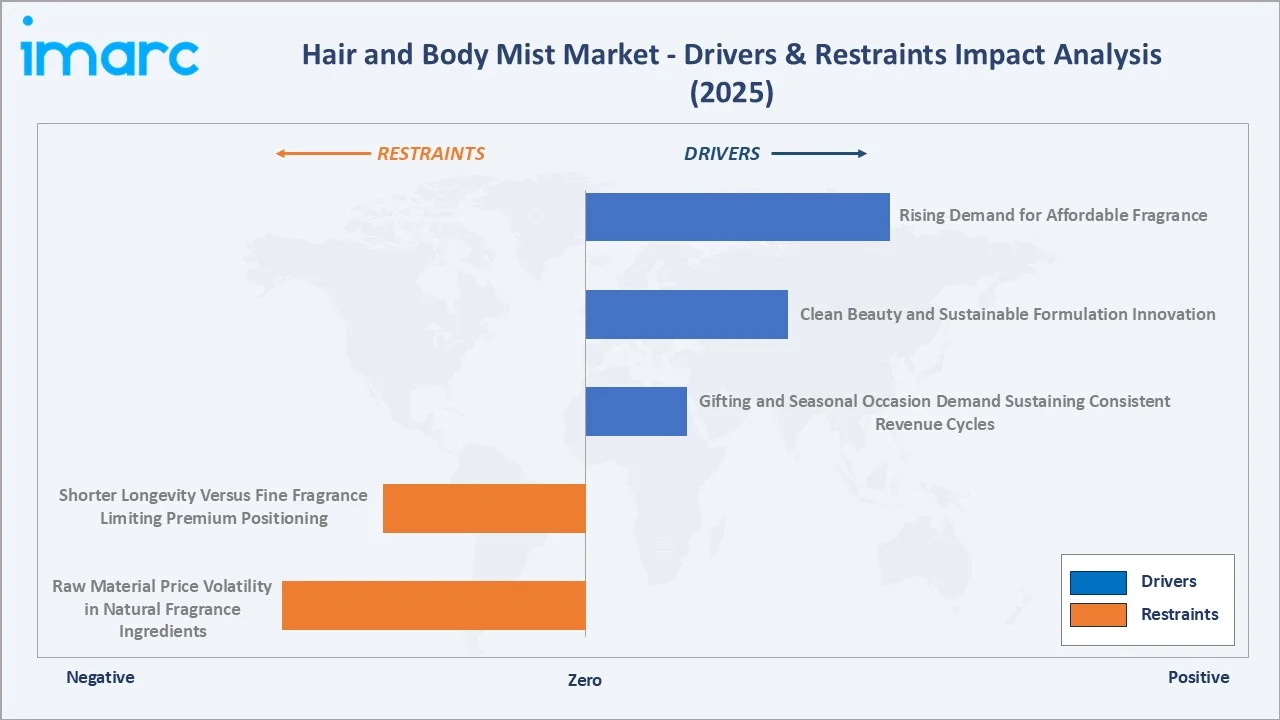
- Rising Demand for Affordable Fragrance: The democratization of luxury fragrance through the "dupe" trend, where consumers seek body mist alternatives that approximate the scent profile of expensive designer fragrances at a fraction of the cost, has created a massive parallel body mist market where brands explicitly or implicitly position their products as affordable alternatives to luxury perfume. This dupe culture and affordable luxury positioning has fundamentally expanded the body mist category's addressable market by converting consumers who previously could not access fine fragrance into active, engaged, high-purchase-frequency body mist category participants.
- Clean Beauty and Sustainable Formulation Innovation: The intersection of fragrance and clean beauty has created compelling product innovation opportunities in the body mist category, where alcohol-free water-based formulas, gender specific products, natural and naturally derived fragrance ingredients, biodegradable surfactants, and refillable spray bottle formats address the growing consumer segment that applies clean beauty purchasing criteria to fragrance decisions. In July 2026, the L’OCCITANE Group launched Sol de Janeiro’s Cheiroso 7 and Cheiroso 10 Cologne Mists, marking the brand’s first fragrance collection developed specifically for men. The launch represents a strategic expansion into the men’s personal care segment, extending Sol de Janeiro’s consumer reach while retaining the vibrant and sensorial identity of its established fragrance portfolio.
- Gifting and Seasonal Occasion Demand Sustaining Consistent Revenue Cycles: Hair and body mists are among the most giftable personal care products available, presenting well at price points that fit birthday, holiday, thank-you, and bridesmaid gifting budgets; available in gift-set formats that add perceived value; and safe gifts since the fragrance experience is generally pleasant and lightweight mist application requires no commitment to a signature scent.
Market Restraints
- Shorter Longevity Versus Fine Fragrance Limiting Premium Positioning: Body mists' lower fragrance oil concentration means longevity is typically 1-3 hours on skin versus 6-12 hours for fine fragrances, creating a functional limitation that requires frequent reapplication and constrains the price premium that consumers are willing to pay for body mist compared to fine fragrance. This longevity limitation is inherent to the body mist format and cannot be entirely solved through formulation innovation without crossing into the concentration range, creating a structural ceiling on the price point premium that even luxury body mists can command.
- Raw Material Price Volatility in Natural Fragrance Ingredients: The clean beauty trend driving consumer demand for naturally derived fragrance ingredients simultaneously creates raw material supply chain volatility risk from climate-sensitive agricultural commodity supply and price inflation from increasing clean fragrance demand competing for limited naturally certified ingredient supply. Natural fragrance ingredient prices can be highly volatile, creating formulation cost pressure that either compresses margins for clean body mist brands or requires retail price increases that risk consumer price sensitivity threshold breaches.
Market Opportunities
- Refillable and Sustainable Packaging Ecosystem: Consumer and regulatory pressure for sustainable packaging across beauty categories is creating a significant packaging innovation opportunity in body mists, where refillable aluminum bottle systems, glass bottle refill programs, and concentrated refill tablets or pods can differentiate brands on sustainability credentials while generating recurring revenue. In August 2025, Floral Street introduced a sustainable Perfume Mist collection using Spectra Packaging’s 125 mL non-aerosol tubular bottle. Made entirely from post-consumer recycled Prevented Ocean Plastic, the sleek bottle supports fine-mist applications and reinforces the brand’s commitment to environmentally responsible beauty packaging.
- Functional Hair Mist Innovation for Multi-Benefit Products: The convergence of hair care and hair fragrance creates a compelling product innovation space where hair mists deliver measurable hair care benefits alongside fragrance delivery, creating multi-benefit products that justify premium pricing and occupy a distinct market position from both pure fragrance and pure hair care.
Market Challenges
- Counterfeit Product Risk in Online Channels: The high brand recognition and social media desirability of leading body mist brands make them targets for counterfeit product production and distribution through marketplace seller programs where brand authentication is challenging. Counterfeit fragrance products create consumer safety risks, brand reputation damage, and revenue displacement. Brands with strong DTC and authenticated retail channel strategies are better positioned to mitigate counterfeit risk than brands relying primarily on marketplace channels for online distribution.
- Fragrance Allergen Regulation Tightening: Stricter regulations governing fragrance allergens are increasing compliance costs and reformulation requirements for hair and body mist manufacturers. Companies must update ingredient formulations, labeling, and safety testing to meet evolving regulatory standards, which can delay product launches and raise development expenses. These challenges are particularly significant for brands with diverse fragrance portfolios.
Emerging Market Trends
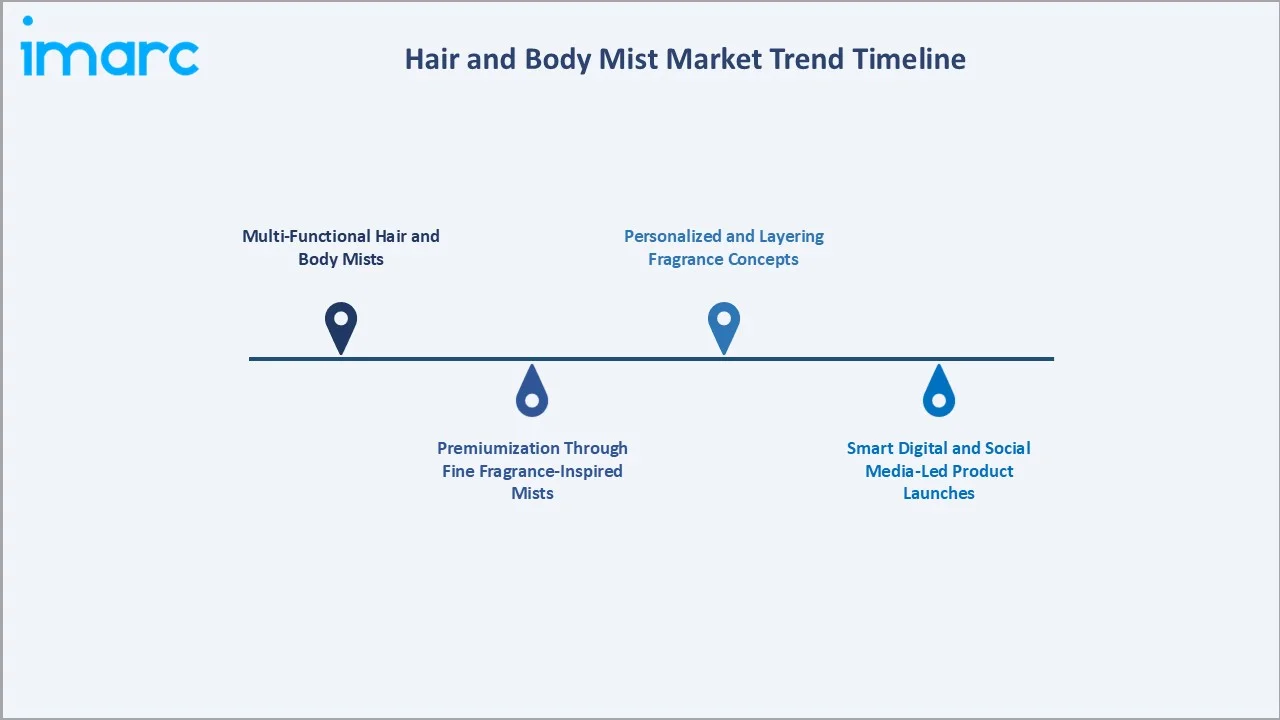
1. Multi-Functional Hair and Body Mists
Brands are increasingly launching products that combine fragrance with skincare and haircare benefits, such as hydration, UV protection, antioxidants, and nourishing botanical extracts. These multifunctional formulations appeal to consumers seeking convenient, all-in-one personal care solutions. The trend is particularly popular among younger consumers focused on wellness and beauty.
2. Premiumization Through Fine Fragrance-Inspired Mists
Hair and body mists are evolving beyond basic refreshing products, with brands introducing premium formulations inspired by luxury perfumes. Higher-quality fragrance oils, longer-lasting scents, and sophisticated packaging are attracting consumers seeking affordable luxury alternatives to traditional perfumes. In July 2026, L’Occitane en Provence expanded its Almond range with two lightweight Hair & Body Fragrance Mists designed for everyday use. The new collection includes Almond Crème Brûlée, featuring roasted almond, vanilla milk, and praline notes, and Almond Pistachio, combining roasted pistachio, vanilla, cedarwood, and the brand’s signature almond accord. This trend is expanding the premium segment of the market.
3. Smart Digital and Social Media-Led Product Launches
Social media platforms, beauty influencers, and online communities are playing a major role in driving product discovery and consumer engagement. Brands increasingly leverage Instagram and creator collaborations to launch limited-edition collections and viral fragrance trends. This first digital marketing approach is accelerating product adoption and strengthening direct-to-consumer sales.
4. Personalized and Layering Fragrance Concepts
Consumers are increasingly embracing fragrance layering by combining multiple hair and body mists to create personalized scent profiles. Brands are responding by launching complementary fragrance collections designed to be mixed and matched. This trend encourages repeat purchases and enhances consumer engagement through customized fragrance experiences.
Industry Value Chain Analysis
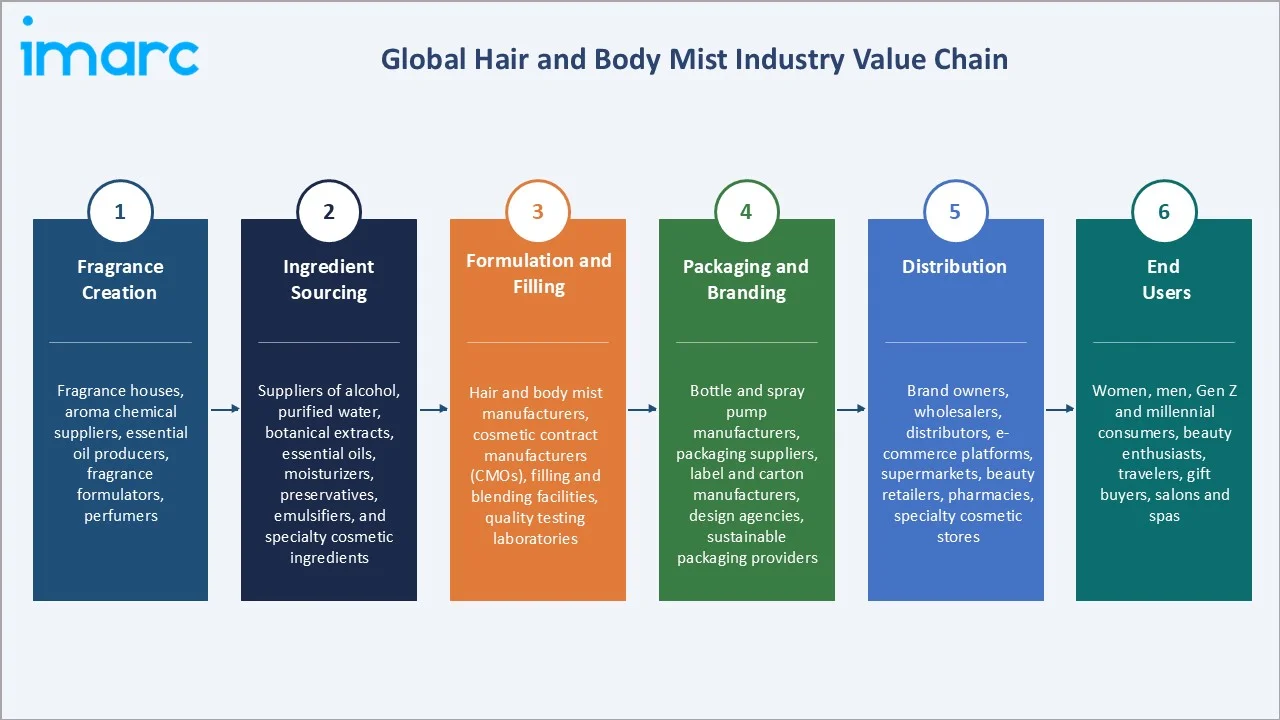
The hair and body mist value chain integrates fragrance creation, ingredient sourcing, formulation and filling, packaging and branding, distribution, and consumer end-use across mass-market, prestige, and luxury market tiers.
|
Stage |
Key Participants |
|
Fragrance Creation |
Fragrance houses, aroma chemical suppliers, essential oil producers, fragrance formulators, perfumers. |
|
Ingredient Sourcing |
Suppliers of alcohol, purified water, botanical extracts, essential oils, moisturizers, preservatives, emulsifiers, and specialty cosmetic ingredients. |
|
Formulation and Filling |
Hair and body mist manufacturers, cosmetic contract manufacturers (CMOs), filling and blending facilities, quality testing laboratories. |
|
Packaging and Branding |
Bottle and spray pump manufacturers, packaging suppliers, label and carton manufacturers, design agencies, sustainable packaging providers. |
|
Distribution |
Brand owners, wholesalers, distributors, e-commerce platforms, supermarkets, beauty retailers, pharmacies, specialty cosmetic stores. |
|
End Users |
Women, men, Gen Z and millennial consumers, beauty enthusiasts, travelers, gift buyers, salons and spas. |
Fragrance creation and formulation represent the most value-added stage in the hair and body mist value chain, as they determine the product's scent profile, longevity, skin compatibility, and overall consumer appeal. Innovation in fragrance composition, ingredient selection, and multifunctional formulations (such as hydrating or skin-nourishing mists) enable brands to differentiate their products, command premium pricing, and build strong brand loyalty.
Technology Landscape in the Hair and Body Mist Industry
Mood-Enhancing Fragrance Technology
In June 2025, Coty launched the Adidas Vibes Hair and Body Mist Collection, featuring five fragrances formulated with mood-enhancing ingredients. The collection was developed in collaboration with five leading perfumers: Frank Voelkl, Gabriela Chelariu, Guillaume Flavigny, Ilias Ermenidis, and Valérie Garnuch-Mentzel. The collection uses fragrance compositions designed to support positive emotional responses and improve the wearer’s mood. This approach combines sensory science with carefully selected aromatic ingredients to create uplifting fragrance experiences. It reflects the growing use of functional fragrance technology in personal care products.
Microencapsulation Technology
Microencapsulation, embedding fragrance molecules within biodegradable polymer shells that rupture on skin contact, friction, or heat activation to release controlled amounts of fragrance over extended periods, is being deployed in premium body mists to address the category's primary consumer limitation without increasing fragrance oil concentration to eau de parfum levels.
AI-Powered Personalized Fragrance Development
Artificial intelligence fragrance composition tools enable personalized fragrance creation at commercial scale, potentially enabling body mist brands to offer consumer-personalized scent profiles through digital fragrance questionnaires, behavioral data analysis, and AI-generated bespoke fragrance formula development.
Market Segmentation Analysis
The report covers the following segments:
|
Segment Category |
Leading Segment |
Market Share |
Year |
|
Type |
Body Mist |
68.4% |
2025 |
|
Distribution Channel |
Offline |
71.2% |
2025 |
|
Region |
North America |
35.8% |
2025 |

By Type
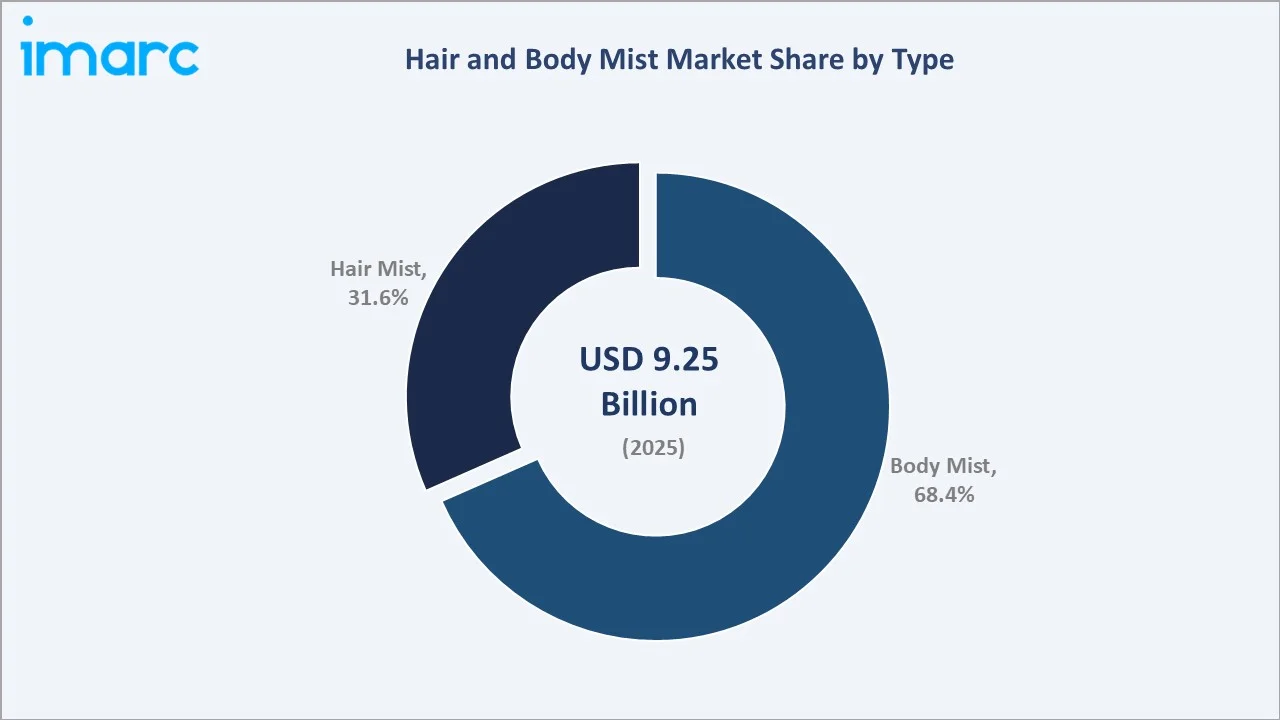
Body mist leads at 68.4% (2025) as the foundational and most commercially developed category segment, encompassing the full price spectrum from mass-market collections through celebrity-licensed fragrance body mists to luxury body mists.
To access detailed market analysis, Request Sample
Hair mist at 31.6%, growing at ~6.8% CAGR, represents the higher-growth type through the global "hair perfume" normalization driven by beauty influence, functional-fragrance hybrid product innovation, and luxury brand extension into hair mist formats.
By Distribution Channel
Offline distribution leads at 71.2% (2025) through the non-negotiable sensory experience requirement of fragrance purchasing; consumers require scent sampling before financial commitment, which in-store try-before-you-buy enables definitively.
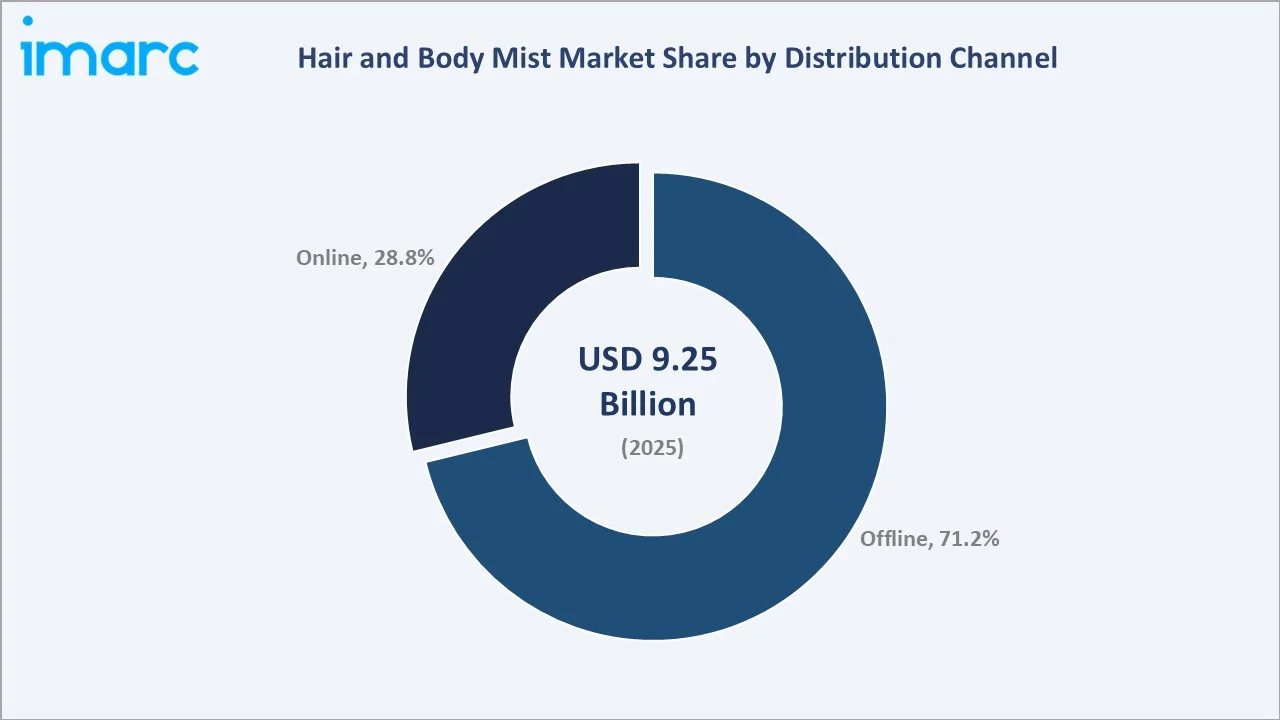
Online at 28.8%, growing at ~8.9% CAGR, is the fastest-growing channel through social commerce, DTC brand website expansion, Amazon beauty subscription, and the repeat purchase migration online once consumers have sampled and committed to fragrance through offline discovery.
Regional Market Insights
|
Region |
Share (2025) |
Key Hair and Body Mist Market Drivers & Characteristics |
|
North America |
35.8% |
High consumer spending on premium personal care products, strong fragrance culture, and growing demand for clean beauty and multifunctional mists drive market leadership. |
|
Europe |
27.4% |
Strong presence of global fragrance brands, increasing preference for sustainable formulations, and demand for premium lifestyle products support steady market growth. |
|
Asia-Pacific |
25.6% |
Rising disposable incomes, expanding beauty-conscious population, rapid urbanization, and strong influence of K-beauty and J-beauty trends are accelerating market expansion. |
|
Latin America |
6.1% |
Growing youth population, increasing adoption of affordable fragrance products, and expanding retail and e-commerce channels are supporting market development. |
|
Middle East and Africa |
5.1% |
Rising demand for luxury fragrances, increasing beauty product consumption, and expanding modern retail infrastructure are driving gradual market growth. |
North America's 35.8% regional leadership is supported by high spending on personal care, strong fragrance consumption, and broad availability of premium and mass-market products. Europe at 27.4% is sustained by its established perfume industry, sustainability-focused consumers, and strong presence of global beauty brands.
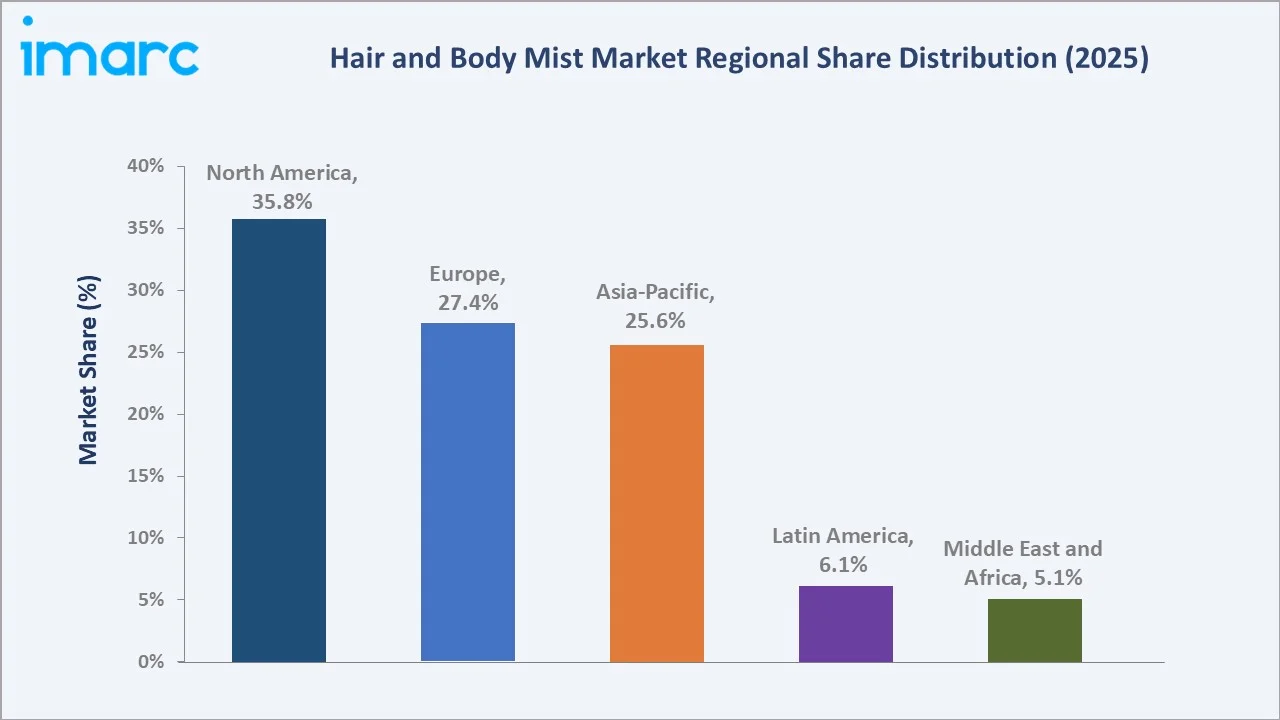
Asia-Pacific at 25.6%, growing fastest at ~7.8% CAGR, driven by rising disposable incomes, rapid urbanization, and increasing influence of K-beauty and J-beauty trends. Social media and e-commerce are also accelerating product discovery among younger consumers across the region. Latin America, at 6.1%, is witnessing steady growth as affordable fragrance formats gain popularity and modern retail networks expand. Middle East and Africa’s 5.1% benefit from a strong cultural preference for fragrances and rising demand for premium personal care products.
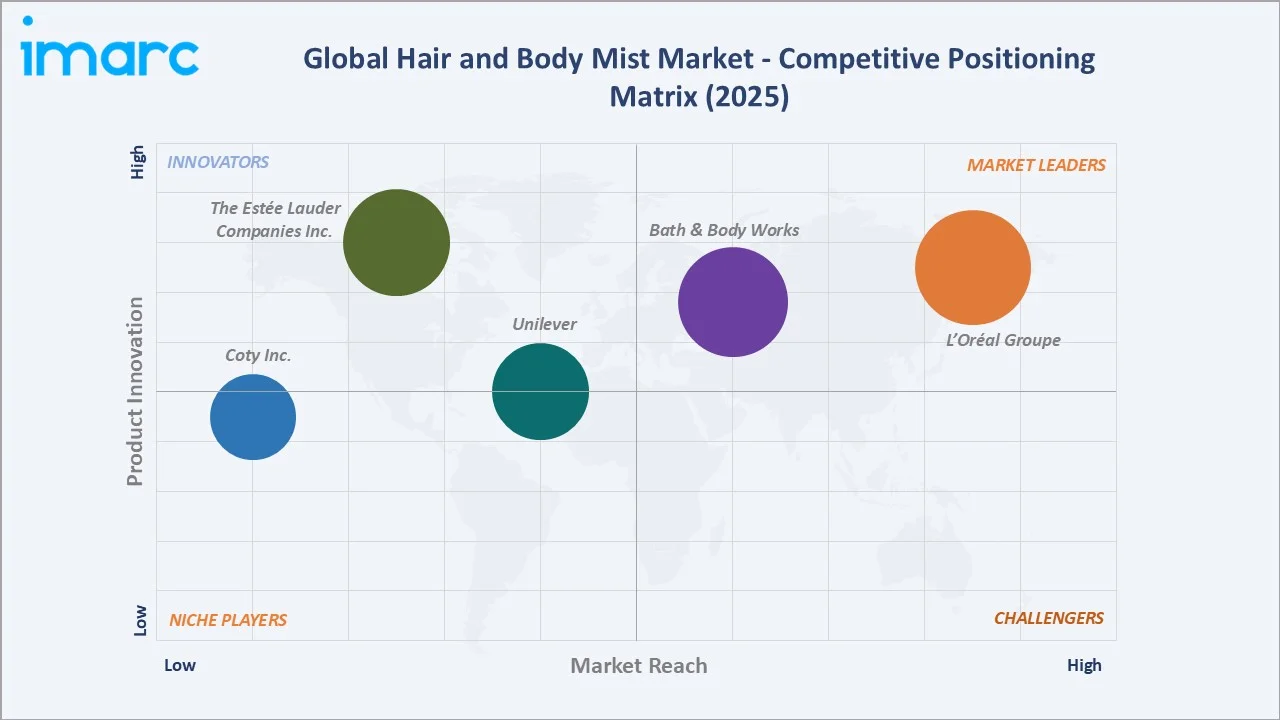
Competitive Landscape
The global hair and body mist market features a layered competitive structure where mass-market volume leaders, prestige portfolio powerhouses, luxury fragrance houses, emerging DTC disruptors, celebrity-licensed fragrance specialists, and Japanese/Korean premium players compete across overlapping price tiers and consumer segments.
|
Company |
Key Brands |
Market Position |
Core Strength |
|
L’Oréal Groupe |
L'Oreal Paris |
Market Leader |
L’Oréal Groupe shapes the hair and body mist market by bridging fine fragrance with advanced cosmetic care. |
|
The Estée Lauder Companies Inc. |
Jo Malone London, Le Labo, Kilian Paris, Aveda, Bumble and bumble, Editions de Parfums Frédéric Malle |
Innovator |
The Estée Lauder Companies Inc. is a global leader in prestige beauty that shapes the hair and body mist market primarily through its diverse portfolio of luxury and niche fragrance brands. |
|
Bath & Body Works |
Bath & Body Works |
Market Leader |
Bath & Body Works established the modern fine fragrance mist as an accessible, everyday alternative to heavy perfumes. |
|
Unilever |
Sunsilk, Love Beauty and Planet |
Established Player |
Unilever plays a dominant role in the hair and body mist market by driving the trend of "hybrid" beauty, fusing fine fragrance with hair and skin care benefits. |
|
Coty Inc. |
Adidas, Chanson d’Eau |
Established Player |
Coty Inc. is leveraging its global fragrance leadership to capitalize on the surge of consumer interest in hair and body mists. |
Competition in the hair and body mist market is accelerating around three axes: viral social commerce content generation, clean and functional formulation differentiation, and acquisition activity.
Key Company Profiles
Unilever
Unilever is a global consumer goods company, with a broad portfolio spanning beauty, personal care, home care, and nutrition products. In the hair and body mist market, the company offers fragrance products through brands targeting diverse consumer segments. Unilever focuses on lightweight, everyday fragrance solutions that combine scent with skin and hair care benefits while emphasizing sustainable formulations and packaging. Supported by its extensive global distribution network, strong brand portfolio, and continuous product innovation, Unilever maintains a significant presence in the global hair and body mist market.
- Key Brands: Sunsilk, Love Beauty and Planet.
- Key Developments: In January 2026, Unilever repositioned Sunsilk, its largest mass-market haircare brand, to strengthen engagement with Gen Z through new product development and a social-first marketing approach. Its new Sunsilk Wondermist responds to rising demand for hair mists by combining shine-enhancing benefits with scientifically tested mood-lifting fragrances. The launch also reflects research showing that eight in ten consumers want to incorporate self-care into their beauty routines.
- Strategic Focus: Expanding its fragrance and personal care portfolio through lightweight, multifunctional hair and body mists that combine long-lasting fragrance with skin and hair care benefits. The company emphasizes clean formulations, sustainable packaging, premiumization, and innovation while leveraging its strong global brand portfolio and omnichannel distribution network to strengthen its presence across mass and premium market segments.
Coty Inc.
Coty Inc. is a global beauty company, with a strong portfolio spanning fragrances, cosmetics, skincare, and personal care. In the hair and body mist market, the company offers products through brands under licensing and owned-brand agreements. Coty focuses on developing innovative fragrance mists that combine premium scent profiles with wellness-inspired and lifestyle-oriented positioning. Supported by its expertise in fragrance innovation, global distribution network, and partnerships with leading fashion and lifestyle brands, Coty holds a strong position in the global hair and body mist market.
- Key Brands: Adidas, Chanson d’Eau.
- Key Developments: In June 2025, Coty introduced the Adidas Vibes Hair and Body Mist Collection, comprising five fragrances formulated with mood-enhancing ingredients. Inspired by Adidas’ sporting and cultural identity, the collection is positioned as an uplifting, everyday fragrance range. Coty developed the five scents in collaboration with renowned perfumers Frank Voelkl, Gabriela Chelariu, Guillaume Flavigny, Ilias Ermenidis, and Valérie Garnuch-Mentzel.
- Strategic Focus: Expanding its hair and body mist portfolio through fragrance innovation, wellness-inspired formulations, and collaborations with globally recognized brands. The company emphasizes premiumization, mood-enhancing fragrance technologies, and trend-driven product launches while leveraging its strong licensing partnerships, omnichannel distribution network, and digital marketing strategies to strengthen its position across global fragrance markets.
Market Concentration Analysis
The global hair and body mist market is moderately fragmented, with the top five companies, L’Oréal Groupe, The Estée Lauder Companies Inc., Bath & Body Works, Unilever, and Coty Inc., collectively estimated to hold 40-50% of global market revenue across all segments and price tiers. Bath & Body Works holds the most concentrated single-company market share position in North American body mist by unit volume. Market fragmentation is highest in Asia-Pacific (where regional brands compete effectively) and in the emerging clean DTC body mist segment (where hundreds of independent brands compete). Concentration is expected to increase through 2034 as major conglomerate acquisition programs target high-growth body mist brands.
Investment & Growth Opportunities
Highest Growth Segments
Online distribution channel (~8.9% CAGR), clean beauty body mist sub-segment (~9.5% CAGR niche), hair mist type (~6.8% CAGR), Asia-Pacific region (~7.8% CAGR), and luxury body mist gifting segment (above-market value CAGR) represent the hair and body mist market's highest-growth investment vectors through 2034.
Investment Themes
- DTC body mist brand building for conglomerate acquisition: Growing investor interest is supporting the development of direct-to-consumer (DTC) body mist brands with strong digital engagement, loyal customer communities, and differentiated product portfolios. Well-established DTC brands are becoming attractive acquisition targets for global beauty conglomerates seeking to expand their fragrance and personal care offerings.
- Asia-Pacific online beauty commerce platform body mist expansion: Rapid growth in e-commerce and social commerce across Asia-Pacific is creating investment opportunities for brands to expand their body mist portfolios through online beauty platforms. Rising beauty spending, influencer-driven marketing, and increasing demand for affordable fragrances are accelerating digital sales and regional market penetration.
Future Market Outlook (2026-2034)
The global hair and body mist market is projected to grow from USD 9.25 Billion in 2025 to USD 15.83 Billion by 2034, delivering a 5.97% CAGR, anchored by three structural forces that are simultaneously expanding the category's geographic reach, demographic penetration, and per-consumer spending intensity. The anchor value of USD 12.36 Billion in 2030 reflects the social commerce maturation converting viral content into immediate global commerce at unprecedented scale, and Asia-Pacific market development that progressively closes the per-capita body mist spending gap with North America and Europe.
Three structural forces will define the hair and body mist market trajectory through 2034. First, the generational fragrance shift represented by Gen Z's unprecedented fragrance engagement will sustain above-GDP market growth as the largest consumer generation enters peak personal discretionary spending age with deeply embedded fragrance ritual behaviors formed during adolescent beauty discovery. Second, the hair mist category's structural growth trajectory will continue to accelerate as functional-fragrance convergence enables competition with both premium hair care and fine fragrance. Third, Asia-Pacific's emerging e-commerce beauty market will progressively unlock the region's fragrance consumption potential through digital discovery and purchase channels that are growing faster in Asia than in any other global region.
Research Methodology
Primary Research
Primary research comprised in-depth interviews with hair and body mist brand marketing executives and product development managers, specialty beauty retail buyers, fragrance house commercial directors, social media beauty content creators and fragrance influencers, and independent beauty market analysts specializing in prestige and mass fragrance categories. These discussions validated market size estimates, assessed type and distribution channel segment dynamics, evaluated social commerce impact on body mist purchase conversion, and provided insights into hair mist category development trajectory and Asia-Pacific market opportunity.
Secondary Research
Secondary research encompassed partnership announcements, global sales data disclosure, natural-ingredient body mist launches, influencer partnership announcements, global fragrance collection launches, body mist market data, beauty e-commerce sales data, and credible market intelligence sources.
Forecasting Models
Forecasting models were developed using historical hair and body mist market data, Gen Z and Gen Alpha demographic spending trajectory projections, social commerce body mist conversion and market impact modeling, revenue projections, online distribution channel e-commerce growth rate analysis by region, hair mist category adoption curve modeling from South Korean and Japanese market precedents, Asia-Pacific middle-class consumer spending on personal fragrance projections, and clean beauty sub-segment penetration rate scenarios. Both top-down and bottom-up approaches were validated through primary research.
Hair and Body Mist Market Report Scope:
| Report Features | Details |
|---|---|
| Base Year of the Analysis | 2025 |
| Historical Period | 2020-2025 |
| Forecast Period | 2026-2034 |
| Units | Billion USD |
| Scope of the Report | Exploration of Historical and Forecast Trends, Industry Catalysts and Challenges, Segment-Wise Historical and Predictive Market Assessment:
|
| Types Covered | Body Mist, Hair Mist |
| Distribution Channels Covered | Online, Offline |
| Regions Covered | Asia Pacific, Europe, North America, Latin America, Middle East and Africa |
| Countries Covered | United States, Canada, Germany, France, United Kingdom, Italy, Spain, Russia, China, Japan, India, South Korea, Australia, Indonesia, Brazil, Mexico |
| Companies Covered | L’Oréal Groupe, The Estée Lauder Companies Inc., Bath & Body Works, Unilever, Coty Inc., etc. |
| Customization Scope | 10% Free Customization |
| Post-Sale Analyst Support | 10-12 Weeks |
| Delivery Format | PDF and Excel through Email (We can also provide the editable version of the report in PPT/Word format on special request) |
Key Benefits for Stakeholders:
- IMARC’s report offers a comprehensive quantitative analysis of various market segments, historical and current market trends, market forecasts, and dynamics of the hair and body mist market from 2020-2034.
- The research study provides the latest information on the market drivers, challenges, and opportunities in the global hair and body mist market.
- The study maps the leading, as well as the fastest-growing, regional markets. It further enables stakeholders to identify the key country-level markets within each region.
- Porter's five forces analysis assist stakeholders in assessing the impact of new entrants, competitive rivalry, supplier power, buyer power, and the threat of substitution. It helps stakeholders to analyze the level of competition within the hair and body mist industry and its attractiveness.
- Competitive landscape allows stakeholders to understand their competitive environment and provides an insight into the current positions of key players in the market.
Frequently Asked Questions About the Hair and Body Mist Market Report
The global hair and body mist market reached USD 9.25 Billion in 2025, driven by the expansion of natural-ingredient body mist, influencer partnerships, and social commerce acceleration.
The market grows at 5.97% CAGR during 2026-2034, reaching USD 15.83 Billion by 2034. The CAGR reflects Gen Z fragrance structural growth and expansion amplifying category growth.
Body mist leads at 68.4% (2025) through mass-market dominance, prestige portfolio breadth and fragrance gifting occasion scale.
Offline dominates at 71.2% (2025) through fragrance's essential sensory sampling purchase requirement at stores.
North America leads at 35.8% (2025) through US stores, US market concentration, specialty beauty retail density, and highest global Gen Z fragrance spending.
Leading players include L’Oréal Groupe, The Estée Lauder Companies Inc., Bath & Body Works, Unilever, and Coty Inc., among others.
The market is projected to reach approximately USD 12.36 Billion by 2030, driven by international market expansion under global distribution infrastructure, social commerce maturation creating direct viral-to-purchase body mist pipelines globally, Asia-Pacific middle-class body mist adoption, hair mist category normalization, and Gen Z peak spending entry creating structural demand expansion.
Top opportunities include DTC body mist brand building for conglomerate acquisition, Asia-Pacific social commerce body mist expansion, clean/alcohol-free body mist premiumization, functional hair mist with UV protection and conditioning claims, and refillable body mist packaging ecosystem development.
Need more help?
- Speak to our experienced analysts for insights on the current market scenarios.
- Include additional segments and countries to customize the report as per your requirement.
- Gain an unparalleled competitive advantage in your domain by understanding how to utilize the report and positively impacting your operations and revenue.
- For further assistance, please connect with our analysts.
 Request Customization
 Speak to an Analyst
 Request Brochure
 Inquire Before Buying
Benefits of Customization
- Personalize this research
- Triangulate with your data
- Get data as per your format and definition
- Gain a deeper dive into a specific application, geography, customer, or competitor
- Any level of personalization
Get in Touch With Us
UNITED STATES
Phone: +1-201-971-6302
INDIA
Phone: +91-120-433-0800
UNITED KINGDOM
Phone: +44-753-714-6104
Email: [email protected]
Client Testimonials




.webp)




.webp)













Related Reports

Choose your plan
*Please note that the prices mentioned below are starting prices for each bundle type. Kindly contact our team for further details.*
Single User License
- 1 User License, Access on 2 Devices
- PDF Report + Excel Dataset (Password Protected)
- Lifetime Access
- No Printing Rights
- 10% Free Report Customization
- 10–12 Weeks of Analyst Support
Five User License
- Access for 5 Users, 2 Devices per User
- PDF Report + Excel Dataset (Password Protected)
- Lifetime Access
- Dedicated Account Manager
- 12–14 Weeks of Analyst Support
- No Printing Rights
- 15% Free Report Customization
- 25% Discount on Your Next Purchase
Corporate User License
- Unlimited User Access (Within Your Organization)
- PDF Report + Excel Dataset
- Lifetime Access
- Dedicated Account Manager
- 14–20 Weeks of Analyst Support
- No Printing Rights
- 20% Free Report Customization
- 30% Discount on Your Next Purchase
Essential Insights
What's included:
3 reports
- Lifetime Access
- PDF Reports
- Excel Datasets
- 2 Weeks of Free Analyst Support
- 2 User Licenses
- Access on 2 Devices
- Printing Rights
- Complimentary PowerPoint (PPT) Version
- Complimentary License Upgrade
Professional Access
What's included:
5 reports
- Lifetime Access
- PDF Reports
- Excel Datasets
- 8 Weeks of Free Analyst Support
- 2 User Licenses
- Access on 2 Devices
- Printing Rights
- Complimentary PowerPoint (PPT) Version
- Complimentary License Upgrade
Business Advantage
What's included:
8 reports
- Lifetime Access
- PDF Reports
- Excel Datasets
- 14 Weeks of Free Analyst Support
- 2 User Licenses
- Access on 2 Devices
- Printing Rights
- Complimentary PowerPoint (PPT) Version
- Complimentary License Upgrade
Enterprise Intelligence
What's included:
10 reports
- Lifetime Access
- PDF Reports
- Excel Datasets
- 20 Weeks of Free Analyst Support
- 2 User Licenses
- Access on 2 Devices
- Printing Rights
- Complimentary PowerPoint (PPT) Version
- Complimentary License Upgrade