
Halo Butyl Rubber Prices, Trend, Chart, Market Analysis, News, Demand, Historical and Forecast Data Report 2026 Edition
Halo Butyl Rubber Price Trend, Index and Forecast
Track the latest insights on halo butyl rubber price trend and forecast with detailed analysis of regional fluctuations and market dynamics across North America, Latin America, Central Europe, Western Europe, Eastern Europe, Middle East, North Africa, West Africa, Central and Southern Africa, Central Asia, Southeast Asia, South Asia, East Asia, and Oceania.
Halo Butyl Rubber Prices Outlook Q2 2026
- USA: USD 2696/MT
- Japan: USD 3084/MT
- France: USD 3095/MT
- Germany: USD 3436/MT
- Canada: USD 3013/MT
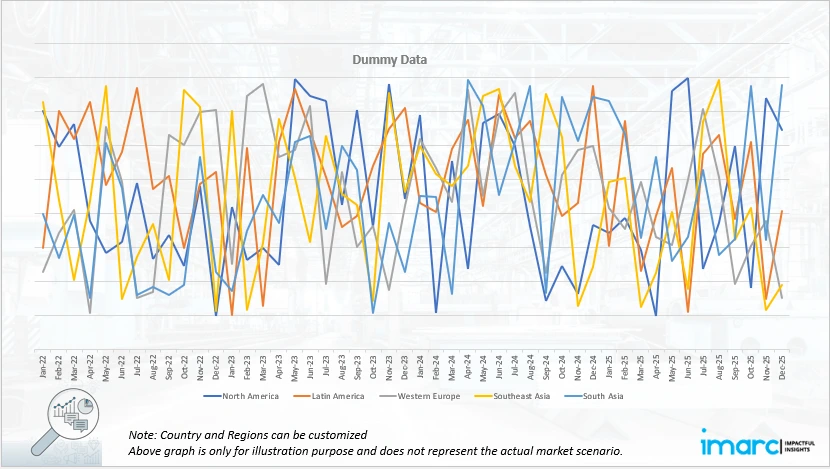
Halo Butyl Rubber Price Chart
Get real-time access to monthly/quarterly/yearly prices Request Sample
During the second quarter of 2026, the halo butyl rubber prices in the USA reached 2696 USD/MT in June. Prices rose as higher isobutylene costs strengthened production expenses and encouraged producers to maintain firmer offers. Scheduled maintenance and compliance related operating limits reduced prompt domestic availability, while lower inventories restricted supplier flexibility. Demand from tire inner liner manufacturers remained supportive as regular vehicle and replacement tire production sustained consumption.
During the second quarter of 2026, the halo butyl rubber prices in Japan reached 3084 USD/MT in June. Prices advanced as high industrial electricity charges and elevated conversion expenses supported firmer producer offers. Limited exportable surplus tightened prompt availability, especially when overseas inquiries competed with domestic requirements. Pharmaceutical closure demand remained steady and provided a stable consumption base, while tire producers maintained routine purchasing for inner liner applications.
During the second quarter of 2026, the halo butyl rubber prices in France reached 3095 USD/MT in June. Prices increased as limited import availability and disciplined supplier offers tightened the domestic market. Demand from tire manufacturing remained constructive, while pharmaceutical closures and industrial sealing applications supported regular procurement. Higher freight expenses raised replacement costs for imported cargoes and encouraged distributors to defend inventories at firmer levels.
During the second quarter of 2026, the halo butyl rubber prices in Germany reached 3436 USD/MT in June. Prices rose as import tightness restricted prompt material and strengthened supplier negotiating power. Tire producers and technical rubber manufacturers maintained steady consumption, supporting regular contract and spot purchases. Pharmaceutical stopper and sealing applications added resilient demand, reducing the effect of cautious automotive procurement. Elevated freight costs and longer import lead times increased replacement expenses for distributors.
During the second quarter of 2026, the halo butyl rubber prices in Canada reached 3013 USD/MT in June. Prices moved upward as higher North American feedstock costs and firm supplier allocations raised replacement values. Canadian buyers remained dependent on regional and imported material, making freight, border movement, and delivery timing important price influences. Demand from tire production, automotive components, pharmaceutical closures, and industrial sealing remained stable enough to support regular purchasing.
Halo Butyl Rubber Prices Outlook Q1 2026
- USA: USD 2261/MT
- Japan: USD 2631/MT
- France: USD 2596/MT
- Germany: USD 2888/MT
- Canada: USD 2504/MT
During the first quarter of 2026, the halo butyl rubber prices in the USA reached 2261 USD/MT in March. Prices moved downward as downstream tire and automotive component demand remained cautious, limiting spot buying from processors. Buyers preferred need based procurement due to comfortable inventories and weak confidence in near term resale margins. Feedstock support from isobutylene and related petrochemical chains was not strong enough to offset slow consumption.
During the first quarter of 2026, the halo butyl rubber prices in Japan reached 2631 USD/MT in March. The market softened as demand from tire inner liner, sealing, and specialty rubber applications stayed measured. Domestic buyers showed limited urgency because inventories were adequate and replacement buying remained selective. As a result, sellers lowered prices to maintain volumes and clear available stocks. The overall market tone stayed bearish, driven by weak consumption and balanced supply.
During the first quarter of 2026, the halo butyl rubber prices in France reached 2596 USD/MT in March. Prices declined as demand from automotive, pharmaceutical closure, and industrial sealing segments remained restrained. Demand from tire manufacturers was stable but not strong enough to absorb excess material. Consequently, French halo butyl rubber prices weakened through the quarter, reflecting cautious buying and soft industrial activity.
During the first quarter of 2026, the halo butyl rubber prices in Germany reached 2888 USD/MT in March. The market followed a downward movement as consumption from tire, automotive, and technical rubber sectors remained moderate. Industrial buyers focused on contract discipline and delayed spot purchases where inventory coverage was sufficient. Demand from medical and sealing applications provided some support, but it was insufficient to reverse the decline. Overall, German prices eased as supply availability outpaced fresh buying interest.
During the first quarter of 2026, the halo butyl rubber prices in Canada reached 2504 USD/MT in March. Prices edged lower as regional buyers remained cautious and followed limited replenishment strategies. Feedstock related cost support remained limited, and logistics conditions were stable enough to prevent supply tightness. Sellers focused on retaining customer volumes rather than pushing higher prices. This kept the market under mild downward pressure during the quarter.
Regional Coverage
The report provides a detailed analysis of the market across different regions, each with unique pricing dynamics influenced by localized market conditions, supply chain intricacies, and geopolitical factors. This includes price trends, price forecast and supply and demand trends for each region, along with spot prices by major ports. The report also provides coverage of FOB and CIF prices, as well as the key factors influencing halo butyl rubber prices.
Europe Halo Butyl Rubber Price Trend
Q2 2026:
The halo butyl rubber price index in Europe moved upward as constrained imports, disciplined producer offers, and steady downstream demand tightened availability. Tire manufacturers maintained regular purchases for inner liner applications, while pharmaceutical closure and industrial sealing demand provided support. Producers operated at controlled rates, leaving limited spot material after contractual commitments were covered. Rising freight expenses increased replacement costs for cargoes arriving from overseas suppliers and encouraged distributors to protect margins. Isobutylene costs remained firm enough to support production economics, while energy expenses continued to influence conversion costs. Buyers avoided inventory accumulation, but restricted prompt supply reduced their bargaining power and limited discount opportunities. Export inquiries tightened available volumes in trading centers.
Q1 2026:
The halo butyl rubber price index in Europe declined as weaker automotive activity and cautious procurement weighed on market sentiment. Demand from tire manufacturers, sealing applications, and technical rubber processors remained moderate, with buyers focusing on need based purchases rather than inventory expansion. Regional supply was stable, and import availability from Asia increased competitive pressure on domestic suppliers. Feedstock cost support was limited, which reduced the scope for producers to defend higher offers.
This analysis can be extended to include detailed halo butyl rubber price information for a comprehensive list of countries.
| Region | Countries Covered |
|---|---|
| Europe | Germany, France, United Kingdom, Italy, Spain, Russia, Turkey, Netherlands, Poland, Sweden, Belgium, Austria, Ireland, Switzerland, Norway, Denmark, Romania, Finland, Czech Republic, Portugal, and Greece, among other European countries. |
North America Halo Butyl Rubber Price Trend
Q2 2026:
The halo butyl rubber price index in North America rose as stronger feedstock costs, reduced inventories, and firm producer allocations supported higher offers. Isobutylene and bromination reagent expenses raised manufacturing costs and encouraged suppliers to pass pressure through contract and spot quotations. Maintenance activity and compliance related operating limits reduced production days, tightening near term supply. Tire inner liner demand remained steady, supported by vehicle manufacturing and replacement tire requirements. Pharmaceutical closure and industrial sealing applications added consumption. Export inquiries competed with domestic buying and limited material available for distributors. Freight and insurance costs lifted delivered values, particularly for imported grades and feedstock movements.
Q1 2026:
The halo butyl rubber price index in North America moved downward, led by subdued buying from tire, automotive, and industrial rubber sectors. USA and Canada both reported weaker pricing as buyers maintained sufficient inventories and avoided advance purchases. The market was influenced by steady supply, moderate import availability, and limited feedstock cost pressure. Distributors focused on clearing existing stocks, while compounders placed smaller orders to manage cash flow and reduce exposure to further price softness. Demand from replacement tire and pharmaceutical applications remained present, but it lacked the strength needed to support a rebound.
Specific halo butyl rubber historical data within the United States and Canada can also be provided.
| Region | Countries Covered |
|---|---|
| North America | United States and Canada |
Middle East and Africa Halo Butyl Rubber Price Trend
Q2 2026:
The study includes halo butyl rubber price trends and charts in the Middle East and Africa, taking into consideration elements that have a direct impact on market prices, such as regional industrial expansion, natural resource availability, and geopolitical conflicts.
Q1 2026:
According to the halo butyl rubber price chart, supply chain interruptions, seasonal variations in demand, and geopolitical influences were the main causes of the price fluctuations in the Middle East and Africa.
In addition to region-wise data, information on halo butyl rubber prices for countries can also be provided.
| Region | Countries Covered |
|---|---|
| Middle East & Africa | Saudi Arabia, UAE, Israel, Iran, South Africa, Nigeria, Oman, Kuwait, Qatar, Iraq, Egypt, Algeria, and Morocco, among other Middle Eastern and African countries. |
Asia Pacific Halo Butyl Rubber Price Trend
Q2 2026:
The halo butyl rubber prices in Asia Pacific strengthened as firm feedstock costs, high conversion expenses, and limited exportable supply supported producer offers. Tire manufacturing remained the main demand source, with procurement for tubeless tire inner liners sustaining consumption across processing markets. Pharmaceutical stopper demand provided stable offtake for cleaner halobutyl grades. Producers maintained disciplined operating rates, and maintenance activity at selected facilities restricted spot availability. Electricity expenses in manufacturing centers raised production costs and reduced sellers' willingness to discount. Export inquiries tightened supply available for domestic buyers, while freight and insurance risks increased landed costs for import dependent countries.
Q1 2026:
In the Asia Pacific, halo butyl rubber prices declined as cautious demand and other key manufacturing markets influenced regional sentiment. Tire and automotive linked consumption remained subdued, while converters avoided large purchases due to sufficient inventories. Regional supply stayed comfortable, and sellers faced pressure to match lower bids from buyers. Feedstock costs offered limited support, especially as petrochemical market sentiment remained mixed. Export competition among Asian suppliers added further pressure, as producers attempted to protect sales volumes amid slower domestic buying.
This halo butyl rubber price analysis can be expanded to include a comprehensive list of countries within the region.
| Region | Countries Covered |
|---|---|
| Asia Pacific | China, India, Indonesia, Pakistan, Bangladesh, Japan, Philippines, Vietnam, Thailand, South Korea, Malaysia, Nepal, Taiwan, Sri Lanka, Hongkong, Singapore, Australia, and New Zealand, among other Asian countries. |
Latin America Halo Butyl Rubber Price Trend
Q2 2026:
The market for halo butyl rubber in Latin America is primarily driven by the region's vast natural resources, particularly in Chile and Brazil. However, pricing for halo butyl rubber may change dramatically due to political uncertainty and varying regulatory frameworks.
Q1 2026:
A thorough overview is given by the analysis of halo butyl rubber pricing in Latin America, which reflects the distinct market dynamics in the area impacted by trade frameworks, industrial growth, and economic policies.
This comprehensive review can be extended to include specific countries within the region.
| Region | Countries Covered |
|---|---|
| Latin America | Brazil, Mexico, Argentina, Columbia, Chile, Ecuador, and Peru, among other Latin American countries. |
Halo Butyl Rubber Pricing Report, Market Analysis, and News
IMARC's latest publication, “Halo Butyl Rubber Prices, Trend, Chart, Demand, Market Analysis, News, Historical and Forecast Data Report 2026 Edition,” presents a detailed examination of the halo butyl rubber market, providing insights into both global and regional trends that are shaping prices. This report delves into the spot price of halo butyl rubber at major ports and analyzes the composition of prices, including FOB and CIF terms. It also presents detailed halo butyl rubber prices trend analysis by region, covering North America, Europe, Asia Pacific, Latin America, and Middle East and Africa. The factors affecting halo butyl rubber pricing, such as the dynamics of supply and demand, geopolitical influences, and sector specific developments, are thoroughly explored. This comprehensive report helps stakeholders stay informed with the latest market news, regulatory updates, and technological progress, facilitating informed strategic decision-making and forecasting.
Halo Butyl Rubber Industry Analysis
The global halo butyl rubber industry size reached 1,100.2 Thousand Tonnes in 2025. By 2034, IMARC Group expects the market to reach 1,698.2 Thousand Tonnes, at a projected CAGR of 4.79% during 2026-2034. Market growth is driven by demand from tire inner liners, pharmaceutical closures, and high performance sealing applications.
Latest News and Developments:
- March 2024: ExxonMobil announced that the company has donated more than $230,000 to the Beaumont Independent School District, STEM programs have been implemented for nearly 5,000 students since 2018. They have further donated over $130,000 to the Southeast Texas Family Resource Center which provides afterschool STEM activities for about 100 students from fence-line communities every year since 2018.
- January 2024: JSR Active Innovation Fund LLC (JSR-AIF), a subsidiary of JSR Corporation, has invested in Aillis, Inc. during its Series D financing round to support the advancement of AI medical devices. Aillis's notable development includes the "nodoca®" influenza examination device, which has been supported by Japanese insurance since December 1, 2022, for its less invasive diagnostic approach. This investment aligns with JSR's goal of using innovative technology to address societal challenges and continues JSR’s strategy of enhancing value through partnerships with technology-driven startups.
- January 2024: JSR Active Innovation Fund LLC (JSR-AIF), a subsidiary of JSR Corporation, has invested in Aillis, Inc. during its Series D financing round to support the advancement of AI medical devices. Aillis's notable development includes the "nodoca®" influenza examination device, which has been supported by Japanese insurance since December 1, 2022, for its less invasive diagnostic approach. This investment aligns with JSR's goal of using innovative technology to address societal challenges and continues JSR’s strategy of enhancing value through partnerships with technology-driven startups.
- August 2023: Sinopec was officially certified for a 30.55-billion-cubic-meter proven geological reserve of natural gas at its Bazhong gas field in northeast Sichuan, China. This marks a major advancement in Sinopec's Project Deep Earth-Sichuan and Chongqing, highlighting the potential of the region's tight sandstone.
Product Description
Halo butyl rubber is a specialty elastomer produced by halogenating butyl rubber with bromine or chlorine. The base polymer is mainly an isobutylene and isoprene copolymer, and the halogenation step creates bromobutyl rubber or chlorobutyl rubber. This modification improves cure speed, adhesion, compatibility with other rubber compounds, and resistance to cure reversal. The material retains the low gas and moisture permeability associated with butyl rubber and also offers strong resistance to heat, oxidation, chemicals, and weather exposure. Its principal application is the inner liner of tubeless tires, where it helps maintain air pressure and protect internal tire components. Halo butyl rubber is also used in pharmaceutical stoppers, hoses, seals, gaskets, membranes, tank linings, conveyor components, curing bladders, and other products requiring reliable sealing and long service life.
Report Coverage
| Key Attributes | Details |
|---|---|
| Product Name | Halo Butyl Rubber |
| Report Features | Exploration of Historical Trends and Market Outlook, Industry Demand, Industry Supply, Gap Analysis, Challenges, Halo Butyl Rubber Price Analysis, and Segment-Wise Assessment. |
| Currency/Units | US$ (Data can also be provided in local currency) or Metric Tons |
| Region/Countries Covered | The current coverage includes analysis at the global and regional levels only. Based on your requirements, we can also customize the report and provide specific information for the following countries: Asia Pacific: China, India, Indonesia, Pakistan, Bangladesh, Japan, Philippines, Vietnam, Thailand, South Korea, Malaysia, Nepal, Taiwan, Sri Lanka, Hongkong, Singapore, Australia, and New Zealand Europe: Germany, France, United Kingdom, Italy, Spain, Russia, Turkey, Netherlands, Poland, Sweden, Belgium, Austria, Ireland, Switzerland, Norway, Denmark, Romania, Finland, Czech Republic, Portugal and Greece North America: United States and Canada Latin America: Brazil, Mexico, Argentina, Columbia, Chile, Ecuador, and Peru Middle East & Africa: Saudi Arabia, UAE, Israel, Iran, South Africa, Nigeria, Oman, Kuwait, Qatar, Iraq, Egypt, Algeria, and Morocco The list of countries presented is not exhaustive. Information on additional countries can be provided if required by the client. |
| Information Covered for Key Suppliers |
|
| Customization Scope | The report can be customized as per the requirements of the customer |
| Report Price and Purchase Option |
Plan A: Monthly Updates - Annual Subscription
Plan B: Quarterly Updates - Annual Subscription
Plan C: Biannually Updates - Annual Subscription
|
| Post-Sale Analyst Support | 360-degree analyst support after report delivery |
| Delivery Format | PDF and Excel through email (We can also provide the editable version of the report in PPT/Word format on special request) |
Key Benefits for Stakeholders:
- IMARC’s report presents a detailed analysis of halo butyl rubber pricing, covering global and regional trends, spot prices at key ports, and a breakdown of Ex Works, FOB, and CIF prices.
- The study examines factors affecting halo butyl rubber price trend, including raw material costs, supply-demand shifts, geopolitical impacts, and industry developments, offering insights for informed decision-making.
- The competitive landscape review equips stakeholders with crucial insights into the latest market news, regulatory changes, and technological advancements, ensuring a well-rounded, strategic overview for forecasting and planning.
- IMARC offers various subscription options, including monthly, quarterly, and biannual updates, allowing clients to stay informed with the latest market trends, ongoing developments, and comprehensive market insights. The halo butyl rubber price charts ensure our clients remain at the forefront of the industry.
Need more help?
- Speak to our experienced analysts for insights on the current market scenarios.
- Include additional segments and countries to customize the report as per your requirement.
- Gain an unparalleled competitive advantage in your domain by understanding how to utilize the report and positively impacting your operations and revenue.
- For further assistance, please connect with our analysts.
 Request Customization
 Inquire Before Buying
 Speak to an Analyst
 Request Brochure
Benefits of Customization
- Personalize this research
- Triangulate with your data
- Get data as per your format and definition
- Gain a deeper dive into a specific application, geography, customer, or competitor
- Any level of personalization
Get in Touch With Us
UNITED STATES
Phone: +1-201-971-6302
INDIA
Phone: +91-120-433-0800
UNITED KINGDOM
Phone: +44-753-714-6104
Email: [email protected]
Client Testimonials




.webp)




.webp)













Related Reports

Why Choose Us
IMARC offers trustworthy, data-centric insights into commodity pricing and evolving market trends, enabling businesses to make well-informed decisions in areas such as procurement, strategic planning, and investments. With in-depth knowledge spanning more than 1000 commodities and a vast global presence in over 150 countries, we provide tailored, actionable intelligence designed to meet the specific needs of diverse industries and markets.
1000
+Commodities
150
+Countries Covered
3000
+Clients
20
+Industry

Robust Methodologies & Extensive Resources
IMARC delivers precise commodity pricing insights using proven methodologies and a wealth of data to support strategic decision-making.

Subscription-Based Databases
Our extensive databases provide detailed commodity pricing, import-export trade statistics, and shipment-level tracking for comprehensive market analysis.

Primary Research-Driven Insights
Through direct supplier surveys and expert interviews, we gather real-time market data to enhance pricing accuracy and trend forecasting.

Extensive Secondary Research
We analyze industry reports, trade publications, and market studies to offer tailored intelligence and actionable commodity market insights.
Trusted by 3000+ industry leaders worldwide to drive data-backed decisions. From global manufacturers to government agencies, our clients rely on us for accurate pricing, deep market intelligence, and forward-looking insights.