
Heritage Tourism Market Size, Share, Trends and Forecast by Type, Booking Channel, End User, and Region, 2026-2034
Heritage Tourism Market Size and Share:
The global heritage tourism market size was valued at USD 630.13 Billion in 2025. Looking forward, IMARC Group estimates the market to reach USD 871.91 Billion by 2034, exhibiting a CAGR of 3.37% from 2026-2034. Europe currently dominates the market, holding a market share of 37.5% in 2025. The region benefits from its unparalleled concentration of UNESCO World Heritage sites, extensive government-backed cultural preservation programs, and deeply embedded traditions of historical tourism that attract millions of visitors annually, contributing significantly to the growing heritage tourism market share.
The rising global interest in experiential travel that builds deeper connections with history, traditions, and local communities is a major factor shaping the heritage tourism market. Travelers are increasingly shifting away from conventional sightseeing toward immersive cultural experiences that allow them to understand the historical significance of destinations. Visits to ancient monuments, heritage towns, museums, and cultural festivals offer opportunities to engage directly with local customs and storytelling traditions. Educational travel is also gaining importance as tourists seek knowledge about civilizations, architecture, and historical events that have influenced modern societies. This growing preference for authentic cultural engagement encourages tour operators and destination authorities to develop curated heritage experiences that combine historical interpretation, community interaction, and guided exploration, strengthening long-term demand for heritage tourism worldwide.
The United States is emerging as a major region in the heritage tourism market owing to the country's vast network of national parks, historical monuments, and culturally significant landmarks attracts both domestic and international visitors in substantial numbers. Federal and state-level investments in heritage preservation and visitor infrastructure are strengthening the appeal of heritage destinations across multiple regions. The growing interest in genealogical tourism, civil rights trail visits, and indigenous cultural experiences reflects evolving consumer preferences toward deeper historical engagement. For instance, in 2024, visitors to National Park Service sites spent an estimated USD 29 billion in local gateway communities, generating 340,100 jobs and contributing USD 56.3 billion in total economic output to the national economy. The increasing integration of digital interpretation tools at heritage sites further enhances visitor experiences and encourages repeat visits.
To get more information on this market Request Sample
Heritage Tourism Market Trends:
Strengthening Heritage Preservation and Site Management for Sustainable Tourism
A significant trend shaping the heritage tourism market is the growing emphasis on structured preservation and professional management of archaeological and cultural heritage sites. Governments and heritage authorities are increasingly prioritizing conservation frameworks that balance tourism access with long-term protection of historically significant locations. Improved site management practices, expert-led research, and coordinated public policy initiatives are helping ensure that heritage assets remain preserved while also contributing to sustainable tourism development. These initiatives often involve collaboration with archaeologists, conservation specialists, and local communities to safeguard cultural resources while enhancing visitor experiences. Reflecting this trend, in 2025, Brazil launched a national program to strengthen the preservation and management of archaeological heritage through technical visits to key sites. The first phase was conducted at Serra da Capivara National Park, a UNESCO World Heritage site renowned for its ancient rock paintings and archaeological importance. By developing best practices and encouraging community participation, such programs help ensure responsible tourism growth while protecting historically valuable sites.
Government-Led Destination Development and Heritage Tourism Infrastructure
Large-scale government initiatives aimed at upgrading tourism infrastructure are becoming a major trend supporting the growth of the heritage tourism market. Countries are investing in comprehensive destination development programs that improve accessibility, visitor amenities, and environmental sustainability around culturally significant locations. These efforts often include enhancements in transportation connectivity, accommodation capacity, digital interpretation tools, and heritage site conservation. Structured development plans also encourage private investment and create employment opportunities in tourism-related services. A notable example of this approach emerged in 2025, when India announced Tourism Vision 2029, a national initiative designed to transform 50 destinations into world-class tourism hubs. Under the program, states and union territories were tasked with identifying heritage and natural sites for phased infrastructure upgrades. The initiative was expected to strengthen India’s international tourism competitiveness while supporting local businesses and expanding community-based economic participation in the heritage tourism ecosystem.
Innovative Heritage Tourism Experiences Through Cultural Mobility
The heritage tourism sector is witnessing a growing shift toward innovative visitor experiences that combine transportation, storytelling, and cultural education. Tourism authorities and operators are developing themed travel concepts that transform journeys themselves into immersive heritage experiences. By integrating exhibitions, interactive learning elements, and curated narratives within transportation systems, destinations can expand the ways travelers engage with historical and cultural content. Such approaches help distribute tourist flows across regions while increasing accessibility to heritage sites that may otherwise receive limited visitation. In 2026, China introduced the Qilu No.1 tourism train, a themed “moving museum” connecting Shandong and Hebei provinces. The train features seven exhibition-themed carriages showcasing artifacts including jade, ceramics, traditional clothing, and architectural heritage. By presenting cultural history during transit, the initiative provides travelers with an educational experience while encouraging exploration of regional historical attractions and supporting local tourism-driven economic growth.
Heritage Tourism Industry Segmentation:
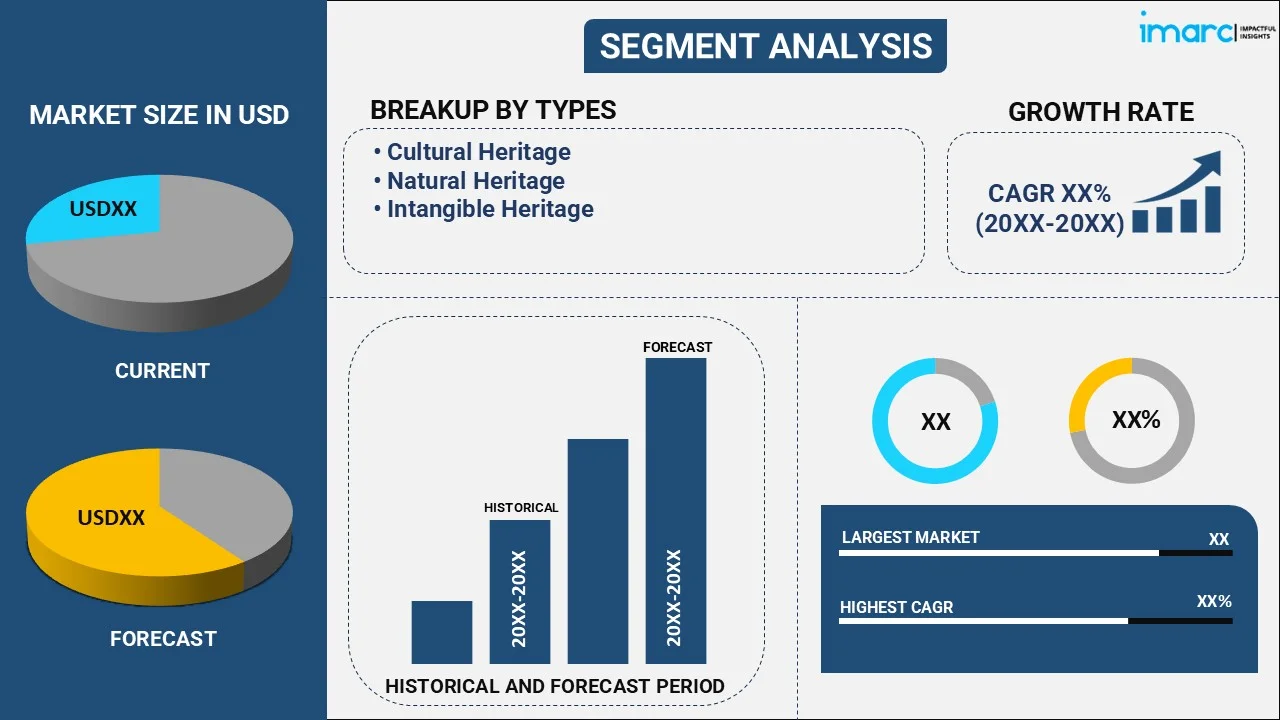
IMARC Group provides an analysis of the key trends in each segment of the global heritage tourism market, along with forecast at the global, regional, and country levels from 2026-2034. The market has been categorized based on type, booking channel, and end user.
Analysis by Type:
To get detailed segment analysis of this market Request Sample
- Cultural Heritage
- Natural Heritage
- Intangible Heritage
Cultural Heritage holds 61.2% of the market share. Cultural heritage encompasses historical sites, monuments, traditional festivals, and indigenous arts and crafts, attracting travelers interested in exploring different cultures' unique identities and customs. Tourists seek to immerse themselves in a destination's rich history, traditions, and customs, fostering cross-cultural understanding and appreciation among diverse visitor segments. The growing accessibility of cultural heritage sites through improved transportation networks and digital interpretation tools has broadened the visitor base significantly. Additionally, the rising influence of historical television shows, documentary films, and social media content showcasing cultural landmarks has sparked increased curiosity and travel interest among global audiences. For instance, in 2025, Germany's four King Ludwig II palaces, including Neuschwanstein Castle, were officially inscribed as UNESCO World Heritage sites, with the castle already attracting 1.5 million visitors annually. The heritage tourism market forecast indicates continued global demand for culturally significant destinations and immersive historical travel experiences.
Analysis by Booking Channel:
- Online
- Offline
Offline leads the market with a share of 59.5%. Offline booking channels, including traditional travel agencies, tour operators, and direct venue reservations, continue to dominate the heritage tourism market due to the personalized service and expert guidance they provide to travelers seeking curated cultural experiences. Many heritage tourists, particularly those in older demographic segments, prefer the reliability and human interaction offered by offline booking methods when planning complex multi-destination heritage itineraries. Travel agencies specializing in heritage and cultural tours leverage established relationships with local guides, heritage site managers, and accommodation providers to deliver comprehensive packages that ensure seamless visitor experiences. The trust factor associated with established offline operators remains significant, as travelers frequently rely on expert recommendations for navigating unfamiliar cultural destinations. The continued preference for expert-led planning and trusted service providers is expected to influence the heritage tourism market outlook as demand for curated cultural travel experiences continues to expand globally.
Analysis by End User:
- 30 and Under
- 31 to 50
- 51 to 70
- 71 and Above
51 to 70 dominates the market, with a share of 38.5%, driven by a combination of greater financial resources, increased leisure time, and a heightened appreciation for historical and cultural enrichment among this demographic. Individuals within this age bracket frequently prioritize immersive, slower-paced travel experiences that align with heritage tourism offerings, including guided historical site visits, cultural festival attendance, and educational heritage workshops. Their preference for intellectually fulfilling travel that deepens their understanding of global civilizations and traditions creates sustained demand for premium heritage tour packages. The segment's willingness to invest in curated, high-quality cultural experiences supports revenue growth across heritage tourism operators worldwide. As global tourism continues to evolve, the strong participation of these demographics highlights important heritage tourism market trends shaping demand for culturally focused travel experiences.
Regional Analysis:
To get more information on the regional analysis of this market Request Sample
- North America
- United States
- Canada
- Europe
- Germany
- France
- United Kingdom
- Italy
- Spain
- Others
- Asia Pacific
- China
- Japan
- India
- South Korea
- Australia
- Indonesia
- Others
- Latin America
- Brazil
- Mexico
- Others
- Middle East and Africa
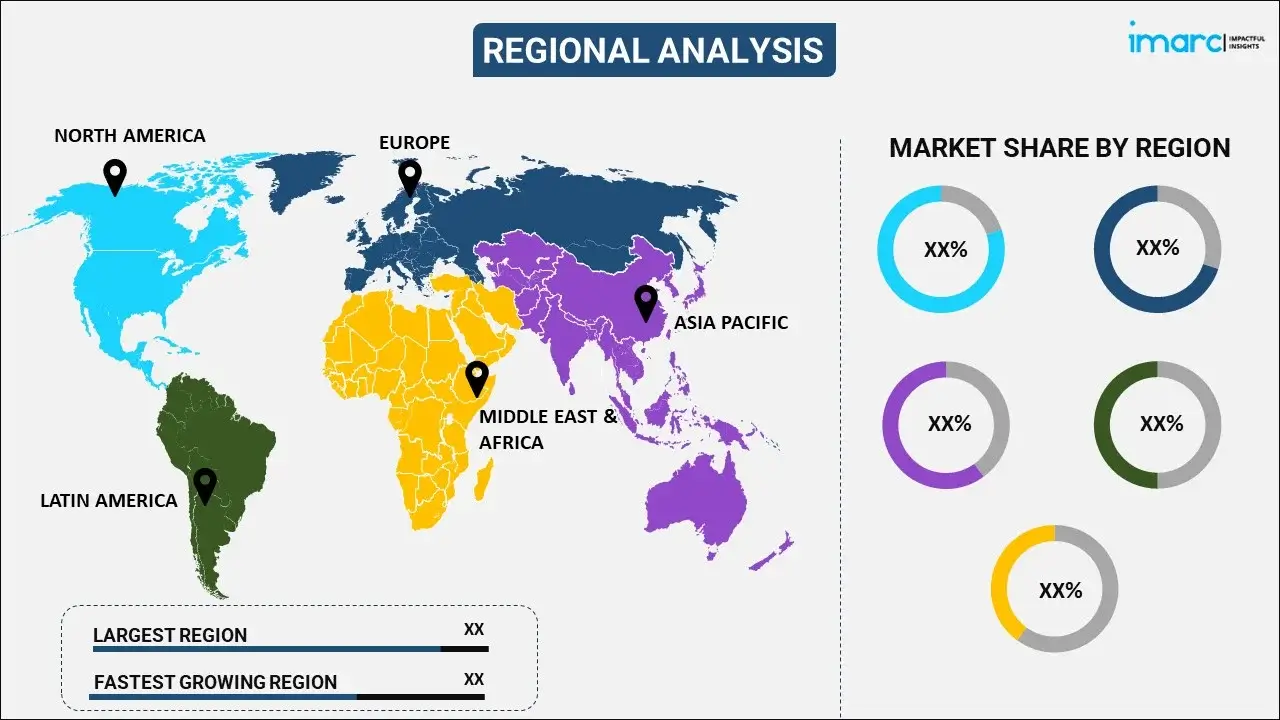
Europe holds the leading position in the heritage tourism market, accounting for 37.5% of the total share, supported by its dense concentration of UNESCO World Heritage sites, preserved historic cities, and centuries-old cultural traditions. The region benefits from well-developed tourism infrastructure, efficient cross-border connectivity, and sustained investment in heritage conservation. Historic monuments, museums, and cultural routes continue to attract travelers seeking immersive historical experiences. Reflecting this strong demand, France achieved a new tourism milestone in 2025 by welcoming 102 million international visitors, up from 100 million in 2024. According to the French ministry, the country recorded significant inflows from neighboring European markets including Italy, Spain, Belgium, and the Netherlands, while Germany reported a notable 9% increase in visitor numbers compared with the previous year. Such consistent tourism growth across major European destinations highlights the enduring appeal of the region’s cultural heritage. These factors collectively reinforce Europe’s dominant position in the global heritage tourism industry.
Key Regional Takeaways:
North America Heritage Tourism Market Analysis
North America is a significant market for heritage tourism, backed by a rich historical environment featuring indigenous cultural locations, colonial sites, preserved battlegrounds, and vast national parks. The United States and Canada collectively provide a diverse array of heritage encounters that integrate historical conservation with educational tourism, museums, and community-oriented cultural initiatives. Governments and regional organizations persist in funding collaborative tourism projects that link various heritage sites, enhancing accessibility and visitor interaction. In line with this strategy, in 2026, Atlantic Canada revealed a federal investment of $309,500 to create a UNESCO Tourism Corridor connecting 13 heritage sites throughout Nova Scotia, New Brunswick, Prince Edward Island, and Newfoundland. Spearheaded by the Fundy Biosphere Region, the initiative emphasizes sustainable tourism growth, cohesive marketing, and enhanced regional connectivity among heritage sites. Connecting cultural and natural heritage sites through organized travel routes improves the visitor experience and boosts economic activity in smaller communities. These joint initiatives underscore the increasing focus on regional partnerships to enhance heritage tourism throughout North America.
United States Heritage Tourism Market Analysis
The United States plays a vital role in the global heritage tourism market due to its vast network of conserved historic districts, cultural sites, museums, and heritage trails that together draw both domestic and international travelers. Federal, state, and local efforts focused on safeguarding historical assets and enhancing cultural education further enhance visitor interaction with heritage locations. Community-oriented initiatives and heritage festivals significantly contribute to linking tourism with local history and the preservation of architecture. In line with this strategy, Las Vegas revealed the 11th annual Home + History Las Vegas heritage tourism festival set for April 16–19, 2026, coordinated by the Nevada Preservation Foundation. The event will showcase over 35 cultural tours and learning activities, including guided neighborhood strolls, historic architecture explorations, vintage home tours, and storytelling events that emphasize Southern Nevada's cultural development. These initiatives illustrate how events centered on heritage raise awareness for preservation and improve tourism experiences. These festivals promote increased public involvement in cultural preservation and enhance the enduring sustainability of heritage tourism throughout the United States by combining educational programming with historical site exploration.
Europe Heritage Tourism Market Analysis
Europe continues to lead the global heritage tourism market because of its concentration of historic landmarks, preserved cultural landscapes, and mature tourism infrastructure that supports year-round visitor activity. Strong governmental commitment toward conservation, restoration, and sustainable tourism planning further strengthens the region’s position. Heritage attractions are often integrated with museums, public spaces, and cultural routes that enhance visitor engagement while safeguarding historic assets. Reflecting this policy-driven approach, in 2025, the United Kingdom launched the Nature Towns and Cities initiative with £15 million in funding to improve natural heritage and green infrastructure across 40 towns and cities. Grants were allocated to 19 partnership projects in locations, including Bradford, Belfast, Coventry, and Fife, focusing on park restoration, biodiversity enhancement, and improved community access to nature. Supported by the National Lottery Heritage Fund and associated partners, the program demonstrates how public investment in heritage-linked urban spaces can simultaneously support tourism development, environmental conservation, and local economic vitality across European destinations.
Asia-Pacific Heritage Tourism Market Analysis
Asia-Pacific is emerging as one of the fastest-growing regions in the heritage tourism market owing to its vast concentration of historic sites, cultural traditions, and ancient trade routes that attract global visitors. Governments across the region are investing heavily in heritage preservation, tourism infrastructure, and cross-border connectivity to strengthen cultural tourism ecosystems. Reflecting this momentum, in 2025, China unveiled a 10-year plan to transform the 1,000 km Hexi Corridor into the country’s first National Heritage Route along the ancient Silk Road. The initiative included visa-on-arrival pilots at Dunhuang and Jiayuguan airports, development of a unified e-visa portal for group tours by 2027, expanded international rail connectivity, and multilingual smart-ticketing systems across 120 heritage sites. These integrated tourism development strategies are expected to improve accessibility, enhance visitor experiences, and further contribute to the heritage tourism market growth across the Asia-Pacific region.
Latin America Heritage Tourism Market Analysis
Latin America is witnessing growth in heritage tourism, driven by the region's rich archaeological heritage, vibrant cultural traditions, and increasing government efforts to promote cultural destinations internationally. Countries, such as Mexico, Peru, Brazil, and Colombia, offer diverse heritage experiences encompassing ancient indigenous sites, colonial architecture, and living cultural traditions. For instance, Peru's Ministry of Culture announced a visitor cap of 5,600 people per day at Machu Picchu during the 2025 high season to balance preservation needs with tourism demand, reflecting the growing importance of sustainable heritage management in the region.
Middle East and Africa Heritage Tourism Market Analysis
The Middle East and Africa region is increasingly gaining prominence as a center for heritage tourism due to its rich cultural legacy, historic trade routes, and religious landmarks that attract global travelers. Governments across the region are investing in heritage preservation, museums, and visitor infrastructure to promote cultural tourism and diversify economic activity. Reflecting this strategic direction, in 2026, Oman announced five flagship heritage tourism projects under Vision 2040, including the Natural History Museum in Muscat, the Maritime History Museum in Sur, and archaeological visitor centers in Dibba, Qalhat, and Al Dhahirah. These developments aim to highlight the country’s archaeological heritage and maritime traditions while strengthening international tourism appeal and generating sustainable opportunities for local communities.
Competitive Landscape:
The heritage tourism market features a diverse competitive landscape comprising established global travel companies, specialized cultural tour operators, and regional heritage tourism providers. Major players are investing in digital transformation, expanding heritage-focused itineraries, developing sustainable tourism practices, and forming strategic partnerships with cultural institutions and heritage site managers. The growing emphasis on curated, immersive heritage experiences is encouraging operators to differentiate through expert-led cultural programming, exclusive site access, and technology-enhanced visitor engagement. Competitive strategies increasingly focus on integrating AR interpretation tools, personalized trip curation through AI, and community-based tourism models that ensure authentic cultural exchanges. The market also benefits from increased collaboration between private operators and government heritage agencies, enabling access to newly designated cultural sites and protected heritage areas.
The report provides a comprehensive analysis of the competitive landscape in the heritage tourism market with detailed profiles of all major companies, including:
- ACE Cultural Tours Limited
- ATG Oxford
- Exodus Travels Limited
- Kesari Tours Pvt Ltd.
- Martin Randall Travel Ltd.
Latest News and Developments:
- In March 2026, Delhi Tourism has expanded its Heritage Walks program by introducing curated evening and night tours across landmarks, such as Feroz Shah Kotla, Connaught Place and Qutub Minar. The guided walks focus on storytelling and themed experiences, with tours concluding by 8:30 PM. The initiative aims to boost experiential and night tourism while encouraging visitors to explore the capital beyond daytime hours.
- In January 2026, UNESCO and the European Union launched a three-year Africa–Europe Partnerships for Culture initiative to promote heritage-based sustainable tourism across six Southern African countries. The project will support community-led tourism at sites including Tsodilo Hills, Twyfelfontein and Matobo Hills, with governance structures and implementation plans approved for 2025–2027. The program aims to generate local jobs, strengthen regional cooperation, and ensure heritage conservation delivers direct economic and social benefits to communities.
Heritage Tourism Market Report Scope:
| Report Features | Details |
|---|---|
| Base Year of the Analysis | 2025 |
| Historical Period | 2020-2025 |
| Forecast Period | 2026-2034 |
| Units | Billion USD |
| Scope of the Report | Exploration of Historical and Forecast Trends, Industry Catalysts and Challenges, Segment-Wise Historical and Predictive Market Assessment:
|
| Types Covered | Cultural Heritage, Natural Heritage, Intangible Heritage |
| Booking Channels Covered | Online, Offline |
| End Users Covered | 30 and Under, 31 to 50, 51 to 70, 71 and Above |
| Regions Covered | North America, Europe, Asia Pacific, Latin America, Middle East and Africa |
| Countries Covered | United States, Canada, Germany, France, United Kingdom, Italy, Spain, China, Japan, India, South Korea, Australia, Indonesia, Brazil, Mexico |
| Companies Covered | ACE Cultural Tours Limited, ATG Oxford, Exodus Travels Limited, Kesari Tours Pvt Ltd., Martin Randall Travel Ltd., etc. |
| Customization Scope | 10% Free Customization |
| Post-Sale Analyst Support | 10-12 Weeks |
| Delivery Format | PDF and Excel through Email (We can also provide the editable version of the report in PPT/Word format on special request) |
Key Benefits for Stakeholders:
- IMARC's report offers a comprehensive quantitative analysis of various market segments, historical and current market trends, market forecasts, and dynamics of the heritage tourism market from 2020-2034.
- The research study provides the latest information on the market drivers, challenges, and opportunities in the global heritage tourism market.
- The study maps the leading, as well as the fastest-growing, regional markets. It further enables stakeholders to identify the key country-level markets within each region.
- Porter's Five Forces analysis assists stakeholders in assessing the impact of new entrants, competitive rivalry, supplier power, buyer power, and the threat of substitution. It helps stakeholders to analyze the level of competition within the heritage tourism industry and its attractiveness.
- Competitive landscape allows stakeholders to understand their competitive environment and provides an insight into the current positions of key players in the market.
Frequently Asked Questions About the Heritage Tourism Market Report
The heritage tourism market was valued at USD 630.13 Billion in 2025.
The heritage tourism market is projected to exhibit a CAGR of 3.37% during 2026-2034, reaching a value of USD 871.91 Billion by 2034.
The heritage tourism market is driven by the stronger heritage preservation frameworks, increased government investment in tourism infrastructure, improved accessibility to historical destinations, and the development of immersive cultural experiences that integrate education, storytelling, and sustainable site management to enhance visitor engagement and long-term tourism growth.
Europe currently dominates the heritage tourism market, accounting for a share of 37.5%. The region's unparalleled concentration of UNESCO World Heritage sites, centuries of preserved architectural and cultural heritage, well-developed tourism infrastructure, and sustained government commitment to cultural preservation drive its leading market position.
Some of the major players in the heritage tourism market include ACE Cultural Tours Limited, ATG Oxford, Exodus Travels Limited, Kesari Tours Pvt Ltd., Martin Randall Travel Ltd., etc.
Need more help?
- Speak to our experienced analysts for insights on the current market scenarios.
- Include additional segments and countries to customize the report as per your requirement.
- Gain an unparalleled competitive advantage in your domain by understanding how to utilize the report and positively impacting your operations and revenue.
- For further assistance, please connect with our analysts.
 Request Customization
 Speak to an Analyst
 Request Brochure
 Inquire Before Buying
Benefits of Customization
- Personalize this research
- Triangulate with your data
- Get data as per your format and definition
- Gain a deeper dive into a specific application, geography, customer, or competitor
- Any level of personalization
Get in Touch With Us
UNITED STATES
Phone: +1-201-971-6302
INDIA
Phone: +91-120-433-0800
UNITED KINGDOM
Phone: +44-753-714-6104
Email: [email protected]
Client Testimonials




.webp)




.webp)













Related Reports

Choose your plan
*Please note that the prices mentioned below are starting prices for each bundle type. Kindly contact our team for further details.*
Single User License
- 1 User License, Access on 2 Devices
- PDF Report + Excel Dataset (Password Protected)
- Lifetime Access
- No Printing Rights
- 10% Free Report Customization
- 10–12 Weeks of Analyst Support
Five User License
- Access for 5 Users, 2 Devices per User
- PDF Report + Excel Dataset (Password Protected)
- Lifetime Access
- Dedicated Account Manager
- 12–14 Weeks of Analyst Support
- No Printing Rights
- 15% Free Report Customization
- 25% Discount on Your Next Purchase
Corporate User License
- Unlimited User Access (Within Your Organization)
- PDF Report + Excel Dataset
- Lifetime Access
- Dedicated Account Manager
- 14–20 Weeks of Analyst Support
- No Printing Rights
- 20% Free Report Customization
- 30% Discount on Your Next Purchase
Essential Insights
What's included:
3 reports
- Lifetime Access
- PDF Reports
- Excel Datasets
- 2 Weeks of Free Analyst Support
- 2 User Licenses
- Access on 2 Devices
- Printing Rights
- Complimentary PowerPoint (PPT) Version
- Complimentary License Upgrade
Professional Access
What's included:
5 reports
- Lifetime Access
- PDF Reports
- Excel Datasets
- 8 Weeks of Free Analyst Support
- 2 User Licenses
- Access on 2 Devices
- Printing Rights
- Complimentary PowerPoint (PPT) Version
- Complimentary License Upgrade
Business Advantage
What's included:
8 reports
- Lifetime Access
- PDF Reports
- Excel Datasets
- 14 Weeks of Free Analyst Support
- 2 User Licenses
- Access on 2 Devices
- Printing Rights
- Complimentary PowerPoint (PPT) Version
- Complimentary License Upgrade
Enterprise Intelligence
What's included:
10 reports
- Lifetime Access
- PDF Reports
- Excel Datasets
- 20 Weeks of Free Analyst Support
- 2 User Licenses
- Access on 2 Devices
- Printing Rights
- Complimentary PowerPoint (PPT) Version
- Complimentary License Upgrade