
Hexamine Market Size, Share, Trends and Forecast by Grade, Function, Application, and Region, 2026-2034
Hexamine Market Size, Share, Trends & Forecast (2026-2034)
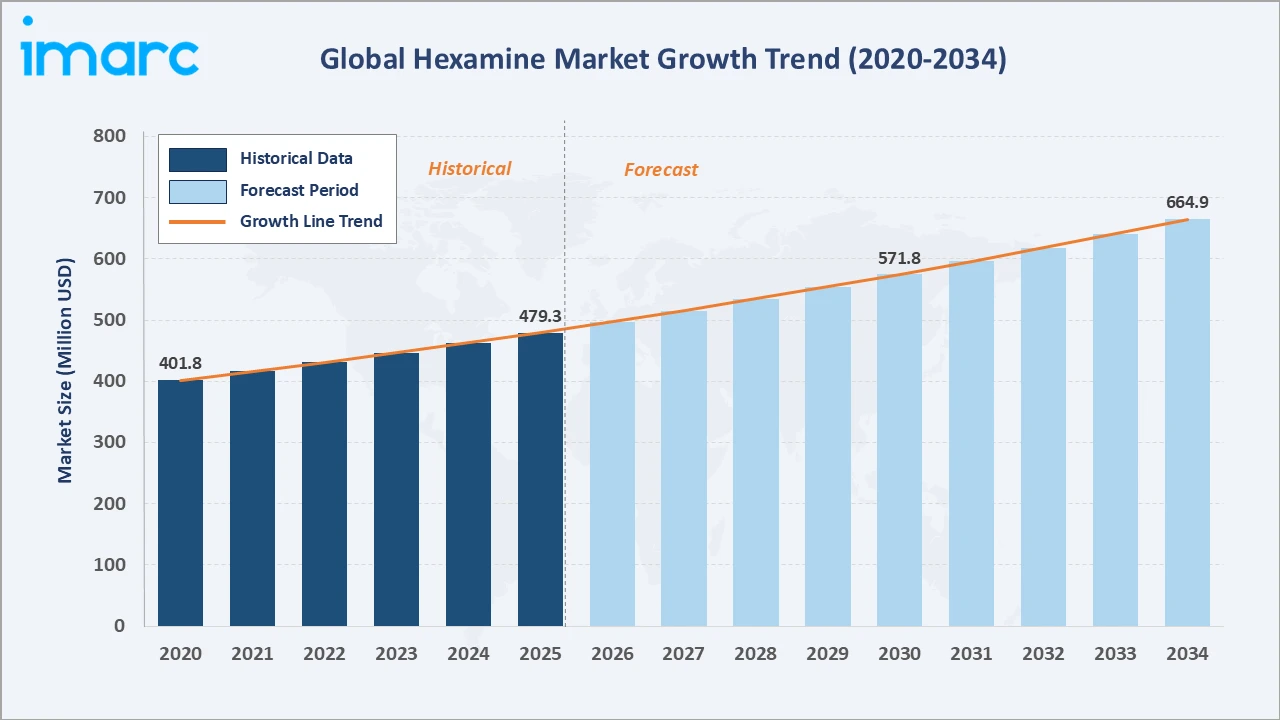
The global hexamine market reached USD 479.3 Million in 2025 and is projected to reach USD 664.9 Million by 2034, exhibiting a CAGR of 3.59% during 2026-2034. Sustained demand from the phenolic resin industry for automotive friction materials, brake linings, and construction board binders, expanding pharmaceutical applications of hexamine as a urinary tract infection medication, and robust capacity expansion are the primary growth catalysts. By 2020, China’s phenolic resin output had reached approximately 1.43 million metric tons, supported by an installed production capacity of nearly 1.75 million metric tons. This growth is supporting the global hexamine market because hexamine is widely used as a curing agent in phenolic resin production. Unstabilized grade leads at 58.0%, resin dominates application at 34.0%, and Asia-Pacific accounts for the largest regional share at 41.0%.
Market Snapshot
|
Metric |
Value |
|
Market Size (2025) |
USD 479.3 Million |
|
Forecast Market Size (2034) |
USD 664.9 Million |
|
CAGR (2026-2034) |
3.59% |
|
Base Year |
2025 |
|
Historical Period |
2020-2025 |
|
Forecast Period |
2026-2034 |
|
Dominant Grade |
Unstabilized Grade (58.0%, 2025) |
|
Dominant Application |
Resin (34.0%, 2025) |
|
Leading Region |
Asia-Pacific (41.0%, 2025) |
The global hexamine market grew steadily from USD 401.8 Million in 2020 to USD 479.3 Million in 2025, underpinned by hexamine's indispensable role as a cross-linking hardener in phenolic resin production serving automotive, construction, and abrasives industries, supplemented by pharmaceutical grade demand. The market is projected to reach USD 571.8 Million by 2030 and USD 664.9 Million by 2034.
To get more information on this market, Request Sample
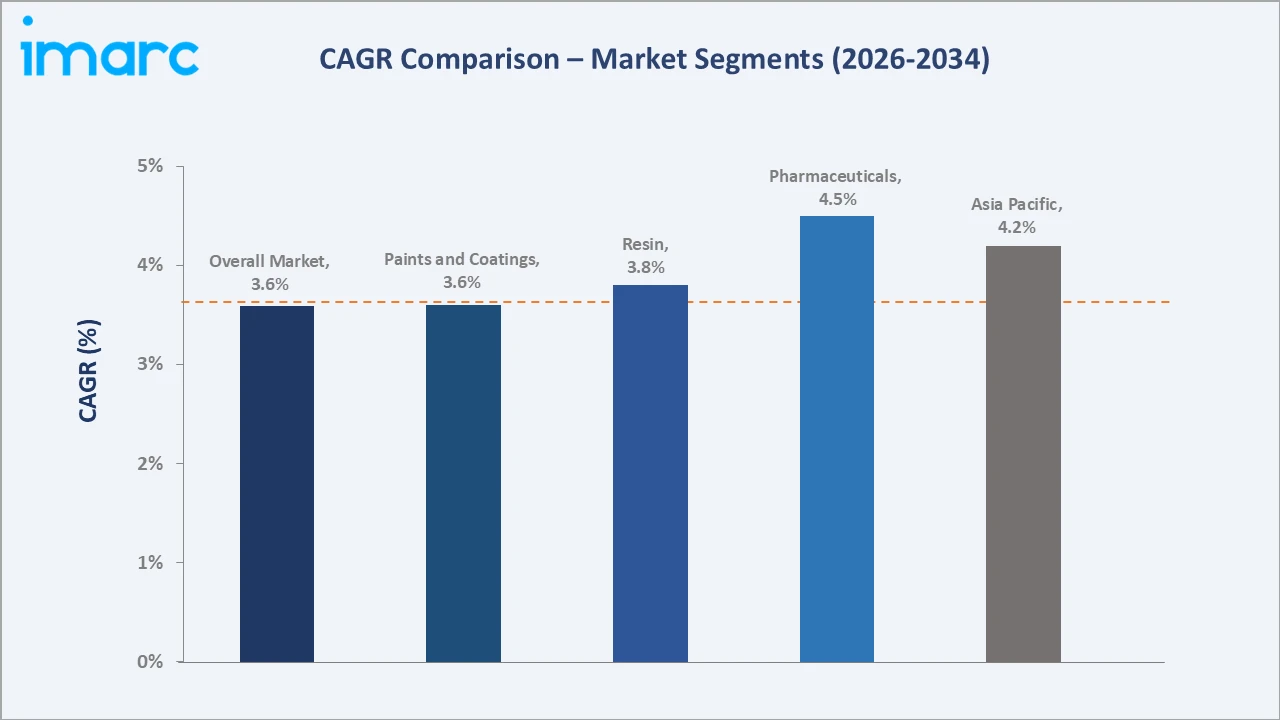
Pharmaceutical applications grow at ~4.5% CAGR, driven by UTI medication formulations and antimicrobial compound demand. Resin application grows at ~3.8% CAGR through automotive and construction phenolic resin demand. Asia-Pacific leads regional growth at ~4.2% CAGR through China and India's expanding chemical and automotive manufacturing sectors.
Executive Summary
The global hexamine market serves a wide and diverse industrial demand base through its multifunctional chemical properties, acting as a hardening agent, cross-linker, slow-release formaldehyde donor, antimicrobial compound, and organic nitrogen source across applications spanning phenolic resin production, pharmaceutical formulations, rubber vulcanization, paints and coatings, and explosive manufacturing. Market value stood at USD 479.3 Million in 2025 and is forecast to reach USD 664.9 Million by 2034. The market's most important structural characteristic is hexamine's classification as an essential chemical intermediate with no effective direct substitute in phenolic resin hardening, which provides demand durability that insulates market growth from substitution risk.
Unstabilized grade leads at 58.0% (2025), serving the resin, rubber, and industrial chemical sectors where cost-effectiveness and wide availability are prioritized over the enhanced shelf-life characteristics of stabilized grade products. Resin application commands 34.0% (2025), reflecting hexamine's fundamental role as the primary hardener in phenolic resin polymerization, enabling the thermoset characteristics that make phenolic resins essential in friction materials, brake and clutch linings, molded parts, and construction board binders. Asia-Pacific commands 41.0% (2025), anchored by China's position as the largest hexamine consumer, producer, and trader, serving the country's dominant phenolic resin and chemical manufacturing base.
Key Market Insights
|
Insight |
Data |
|
Dominant Grade |
Unstabilized Grade – 58.0% share (2025) |
|
Dominant Application |
Resin – 34.0% share (2025) |
|
Leading Region |
Asia-Pacific - 41.0% (2025) |
|
Market Opportunity |
High-purity pharma grade expansion; eco-friendly synthesis routes; India capacity build-out; stabilized grade automotive resin adoption |
Key Analytical Observations Supporting the Above Data:
- Unstabilized Grade at 58.0% (2025): Unstabilized hexamine represents the market's high-volume commodity segment, serving resin manufacturing, rubber processing, and industrial chemical applications where immediate end-use eliminates the need for extended storage stability. China's large domestic hexamine producers compete primarily in the unstabilized grade segment on cost and volume, collectively representing the majority of Asia-Pacific's hexamine supply.
- Resin Application at 34.0% (2025): Phenolic resin, produced through the reaction of phenol with formaldehyde using hexamine as either a hardener or formaldehyde donor, is the oldest and most widely used thermoset resin, serving applications in automotive friction materials, abrasive products, non-woven textiles, construction board binders, and molded components.
- Asia-Pacific at 41.0% (2025): Asia-Pacific leads regionally due to its large and expanding phenolic resin, pharmaceuticals, rubber chemicals, and construction industries, particularly in China and India. Strong industrialization, growing manufacturing activities, and increasing demand for foundry resins and industrial chemicals continue to drive hexamine consumption across the region.
Hexamine Market Overview
The global hexamine market encompasses the production, distribution, and application of hexamethylenetetramine, an organic heterocyclic compound (chemical formula C6H12N4) prepared through the condensation of formaldehyde and ammonia in aqueous solution, followed by evaporation and crystallization. The compound's distinctive cage-like molecular structure, high nitrogen content, and capacity for slow formaldehyde release under acidic conditions create the multifunctional chemical properties that make hexamine valuable across an unusually broad application range. Hexamine is produced in two primary grades: unstabilized (commodity grade for direct end-use) and stabilized (premium grade with additives for extended shelf-life and pharmaceutical/food applications). Macroeconomic factors include expanding industrial production, rising construction and automotive manufacturing activities, and increasing demand for phenolic resins and industrial chemicals.
Market Dynamics
To evaluate market opportunities, Request Sample
Market Drivers
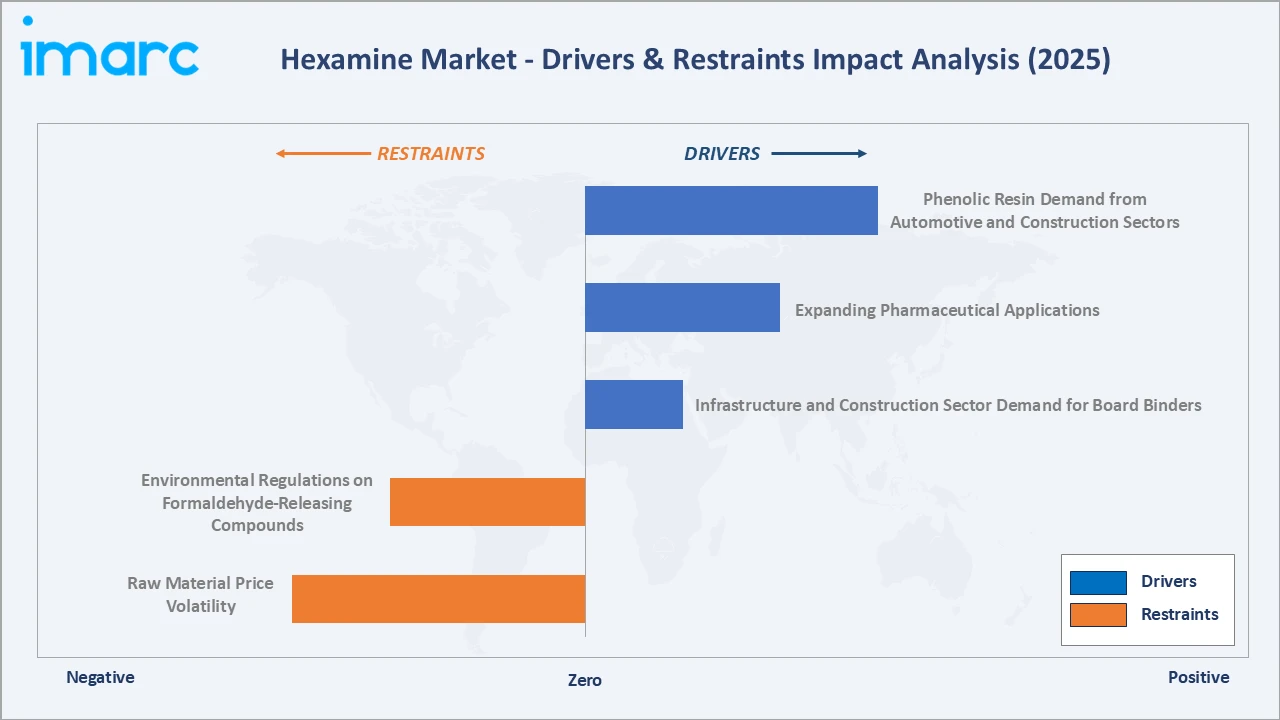
- Phenolic Resin Demand from Automotive and Construction Sectors: The phenolic resin sector is sustained by automotive friction materials, abrasive grinding wheels, non-woven automotive textiles, and construction board binders, where phenolic resin's fire resistance and dimensional stability are essential. Global phenolic resin production creates stable hexamine procurement demand from major resin producers.
- Expanding Pharmaceutical Applications: Hexamine's USP/BP-grade pharmaceutical application in methenamine salts is growing, driven by the global UTI burden, rising antibiotic resistance creating clinical preference for non-antibiotic methenamine prophylaxis, and the aging population's elevated UTI susceptibility. More than 400 million urinary tract infection (UTI) cases are reported each year globally. Around 50–60% of women experience at least one UTI during their lifetime, compared with approximately 12–14% of men. This high disease burden is increasing demand for hexamine in urinary antiseptic formulations used to prevent recurrent infections.
- Infrastructure and Construction Sector Demand for Board Binders: The post-COVID infrastructure investment wave across Asia-Pacific, North America, and Europe is sustaining elevated demand for oriented strand board (OSB), medium-density fiberboard (MDF), and particleboard products that use hexamine-cross-linked phenolic resins as binders. These engineered wood products require phenolic resin systems where hexamine serves as the essential hardener, creating structural demand linked to residential construction, commercial building renovation, and infrastructure projects that benefit from government infrastructure spending programs globally.
Market Restraints
- Raw Material Price Volatility: Hexamine production depends entirely on formaldehyde (from methanol oxidation) and ammonia (from natural gas nitrogen fixation) as primary feedstocks. Both feedstocks are subject to petrochemical commodity price cycles; natural gas price volatility directly affects ammonia production costs, while methanol price fluctuations propagate through to formaldehyde pricing.
- Environmental Regulations on Formaldehyde-Releasing Compounds: Hexamine's mechanism of slow formaldehyde release under acidic conditions creates regulatory exposure under formaldehyde emission regulations in indoor construction applications. Hexamine is a hazardous chemical with specific transport and safety requirements due to its dual flammability and health risks.
Market Opportunities
- High-Purity Pharmaceutical and Food Grade Hexamine Production: The pharmaceutical and food-grade hexamine market is growing at the highest rate among all application segments. Manufacturers with certified hexamine production facilities and the quality management systems required for pharmaceutical supply chain qualification are positioned to capture disproportionate value from this premium segment.
- Eco-Friendly Synthesis and Green Production Investment: Environmental compliance pressure in European and North American markets is driving investment in cleaner hexamine production processes that reduce VOC emissions, minimize wastewater generation, and decrease energy consumption per metric ton of output. Manufacturers investing in green production technology ahead of regulatory tightening are building regulatory compliance moats that create sustainable competitive advantages in premium chemical markets.
Market Challenges
- Market Fragmentation: The hexamine market is highly fragmented, with numerous regional and local manufacturers competing primarily on price, product quality, and distribution reach. This limits pricing power, intensifies margin pressure, and makes product differentiation difficult for suppliers.
- Geopolitical Risk and Supply Chain Disruption: Geopolitical tensions, trade restrictions, transportation bottlenecks, and volatility in formaldehyde and ammonia supplies can disrupt hexamine production and international trade. These factors may increase raw material costs, extend delivery times, and create supply uncertainty for downstream industries.
Emerging Market Trends
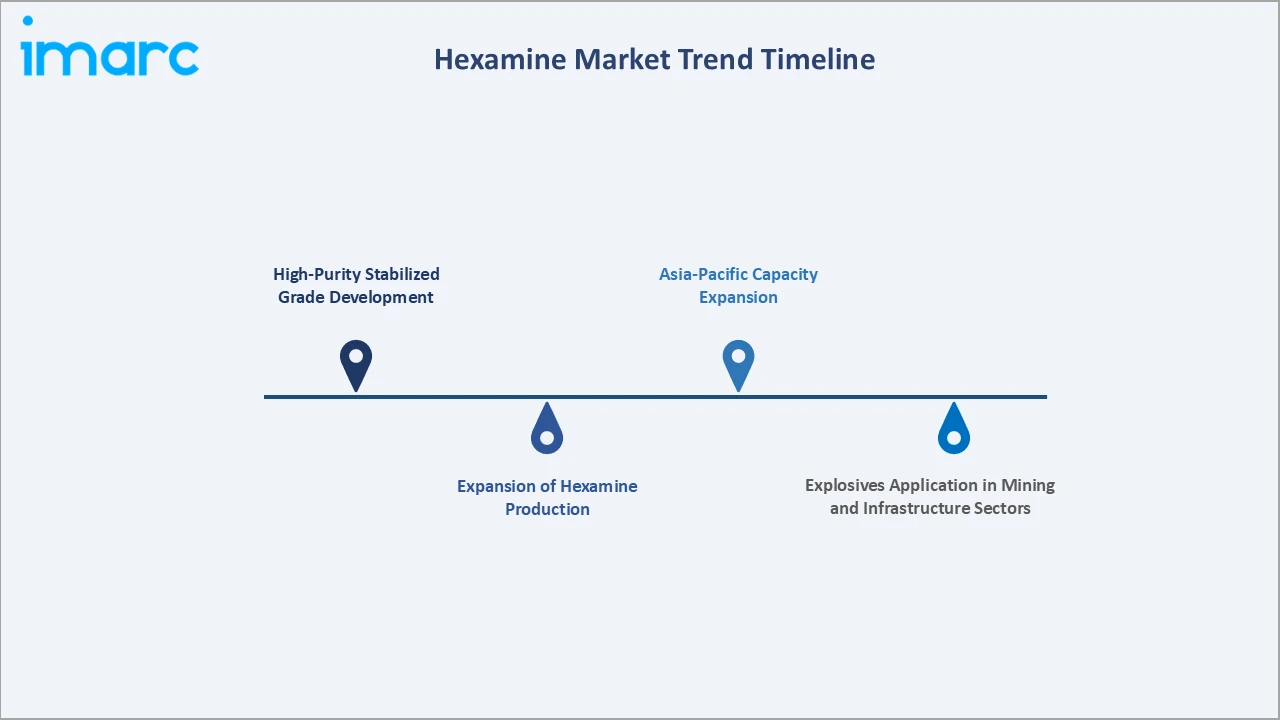
1. High-Purity Stabilized Grade Development
High-purity stabilized grades are emerging as pharmaceutical, electronics, specialty resin, and precision manufacturing applications require tighter impurity control and consistent performance. Manufacturers are improving purification, stabilization, and quality-control processes to enhance storage stability, reduce decomposition, and meet application-specific standards. This shift is supporting product differentiation and creating higher-value opportunities beyond conventional industrial-grade hexamine.
2. Expansion of Hexamine Production
Expansion of hexamine production is emerging as manufacturers add capacity to meet rising demand from phenolic resins, rubber chemicals, pharmaceuticals, explosives, and fuel tablets. Producers are also investing in modernized facilities to improve efficiency, product purity, and supply reliability. In September 2024, Kanoria Chemicals & Industries Limited (KCI) commissioned two new manufacturing units at its GIDC Ankleshwar facility in Gujarat. The company added an 18 MTPD hexamine plant, doubling its total production capacity to 36 MTPD, along with a 345 MTPD formaldehyde unit that increased its overall formaldehyde capacity to 763 MTPD.
3. Asia-Pacific Capacity Expansion
Asia-Pacific capacity expansion is emerging as producers increase output to serve growing demand from phenolic resins, rubber chemicals, pharmaceuticals, explosives, and other industrial applications. Competitive manufacturing costs, strong downstream industries, and rising domestic consumption in China, India, and Southeast Asia are supporting new investments. This expansion is also improving regional supply availability and strengthening Asia-Pacific’s role in global hexamine trade.
4. Explosives Application in Mining and Infrastructure Sectors
The use of hexamine in explosive formulations is gaining momentum as mining, quarrying, tunneling, and large-scale infrastructure projects expand worldwide. Hexamine serves as an important intermediate in the production of energetic materials, supporting controlled blasting operations. Rising mineral extraction and construction activity are therefore strengthening demand from industrial explosives manufacturers.
Industry Value Chain Analysis
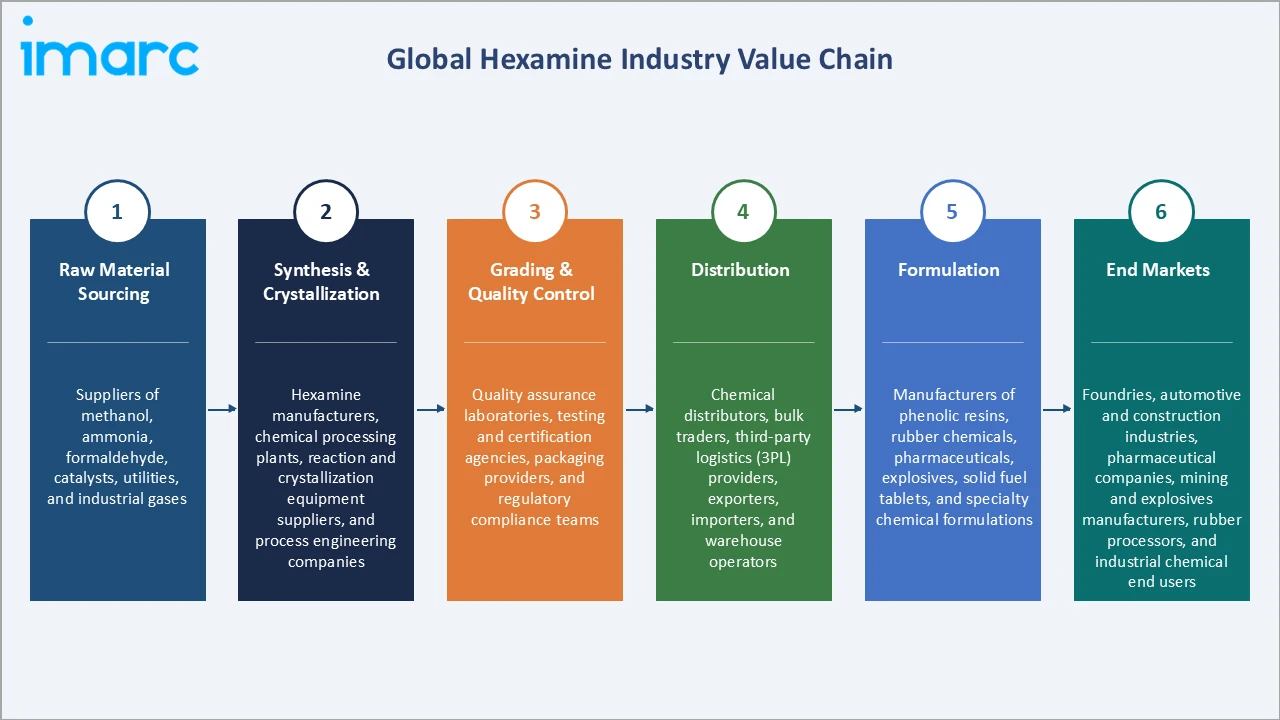
The hexamine value chain integrates raw material sourcing, condensation synthesis and crystallization, grading and quality control, chemical distribution, formulation for end applications, and deployment across resin, pharmaceutical, rubber, paint, and explosive manufacturing sectors.
|
Stage |
Key Participants |
|
Raw Material Sourcing |
Suppliers of methanol, ammonia, formaldehyde, catalysts, utilities, and industrial gases. |
|
Synthesis & Crystallization |
Hexamine manufacturers, chemical processing plants, reaction and crystallization equipment suppliers, and process engineering companies. |
|
Grading & Quality Control |
Quality assurance laboratories, testing and certification agencies, packaging providers, and regulatory compliance teams. |
|
Distribution |
Chemical distributors, bulk traders, third-party logistics (3PL) providers, exporters, importers, and warehouse operators. |
|
Formulation |
Manufacturers of phenolic resins, rubber chemicals, pharmaceuticals, explosives, solid fuel tablets, and specialty chemical formulations. |
|
End Markets |
Foundries, automotive and construction industries, pharmaceutical companies, mining and explosives manufacturers, rubber processors, and industrial chemical end users. |
The hexamine value chain's critical efficiency characteristic is the geographic integration of formaldehyde and ammonia feedstock production with hexamine synthesis in large-scale facilities that eliminate intermediate transportation costs. This integration economics reality is a key barrier to entry for new hexamine producers and a primary competitive moat for established integrated manufacturers.
Technology Landscape in the Hexamine Industry
Condensation Synthesis Process Technology
Condensation synthesis process technology enables the efficient reaction of formaldehyde and ammonia to produce high-purity hexamine with consistent quality. Advances in reactor design, process automation, and crystallization techniques are improving production yields while reducing energy consumption and waste generation. Manufacturers are also adopting continuous processing technologies to enhance operational efficiency, product consistency, and cost competitiveness. These innovations support the growing demand for high-quality hexamine across resin, pharmaceutical, and industrial applications.
Stabilization Technology and Grade Differentiation
Stabilization technology and grade differentiation enable the production of high-purity, application-specific grades with improved storage stability and consistent performance. Advanced purification, crystallization, and quality control processes help minimize impurities and enhance product reliability. Manufacturers are developing customized grades for pharmaceuticals, specialty resins, rubber chemicals, and explosives to meet stringent regulatory and performance requirements. This focus on differentiated products is supporting higher-value applications and strengthening competitive positioning in the market.
Environmental Synthesis Technology Advancement
Environmental synthesis technology advancement improves production efficiency while reducing emissions, waste generation, and energy consumption. Manufacturers are adopting cleaner synthesis routes, energy-efficient reactors, closed-loop processing systems, and advanced emission control technologies to comply with increasingly stringent environmental regulations. Process optimization and resource recovery techniques are also helping reduce raw material losses and operating costs. These advancements are supporting more sustainable hexamine production while enhancing competitiveness and regulatory compliance.
Market Segmentation Analysis
The report covers the following segments:
|
Segment Category |
Leading Segment |
Market Share |
Year |
|
Grade |
Unstabilized Grade |
58.0% |
2025 |
|
Function |
🔒 |
🔒 |
2025 |
|
Application |
Resin |
34.0% |
2025 |
|
Region |
Asia Pacific |
41.0% |
2025 |

By Grade
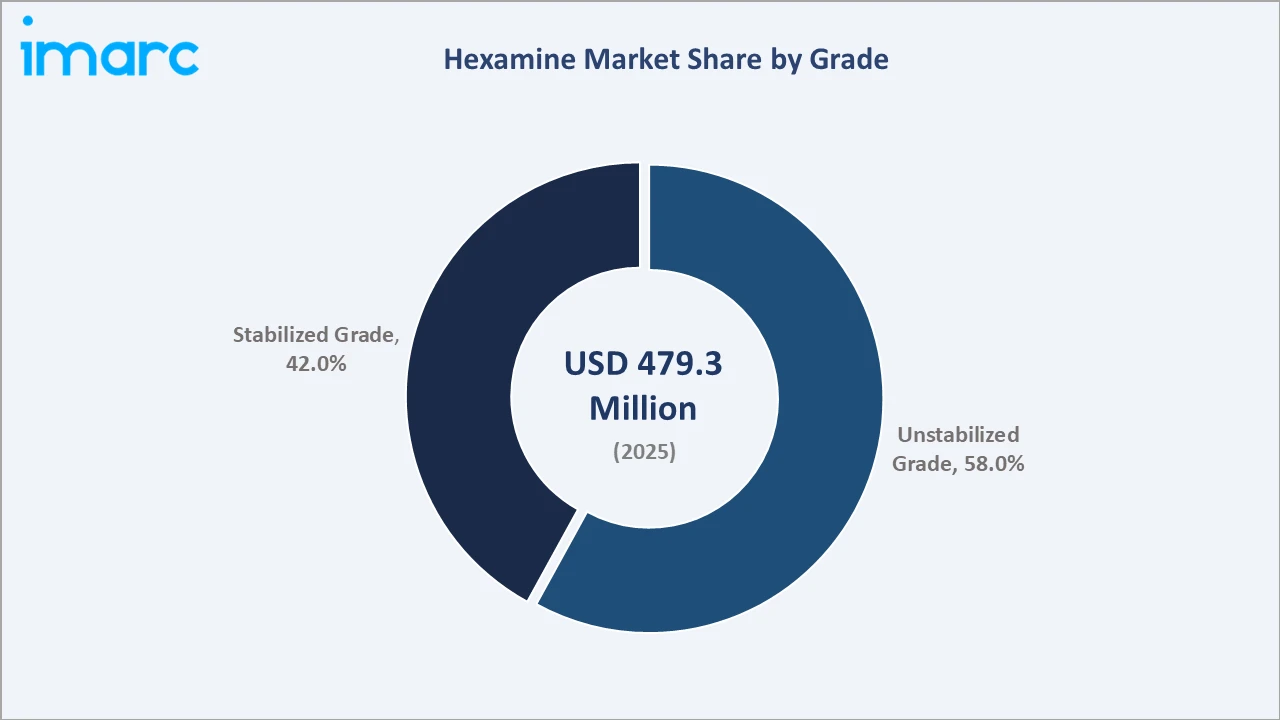
Unstabilized grade leads at 58.0% (2025), serving the resin, rubber, industrial chemical, and explosives sectors where large-volume procurement, cost competitiveness, and direct end-use without extended storage cycles make anti-caking additives unnecessary. The unstabilized segment's dominance reflects hexamine's commodity nature in its largest application segments, where consistency between production batches is managed through process control rather than post-production stabilization.
To access detailed market analysis, Request Sample
Stabilized grade at 42.0% (2025), growing at ~3.8% CAGR, serves the pharmaceutical, food additive, premium automotive resin, and export applications where extended shipping and storage cycles necessitate anti-caking treatment. The stabilized grade segment's above-market growth trajectory reflects the demand pull from expanding pharmaceutical applications and the automotive industry's quality requirements for high-performance phenolic friction materials.
By Application
Resin dominates at 34.0% (2025), serving phenolic resin cross-linking in friction materials, construction board binders, molding compounds, and specialty thermoset applications. Hexamine's function as the formaldehyde donor in two-step phenolic resin curing is chemically irreplaceable with current commercial alternatives, providing demand security unmatched in hexamine's other application sectors. Paints and coatings at 21.0% use hexamine as a corrosion inhibitor in metalworking fluids and as a curing accelerator in certain epoxy and phenolic coating systems.
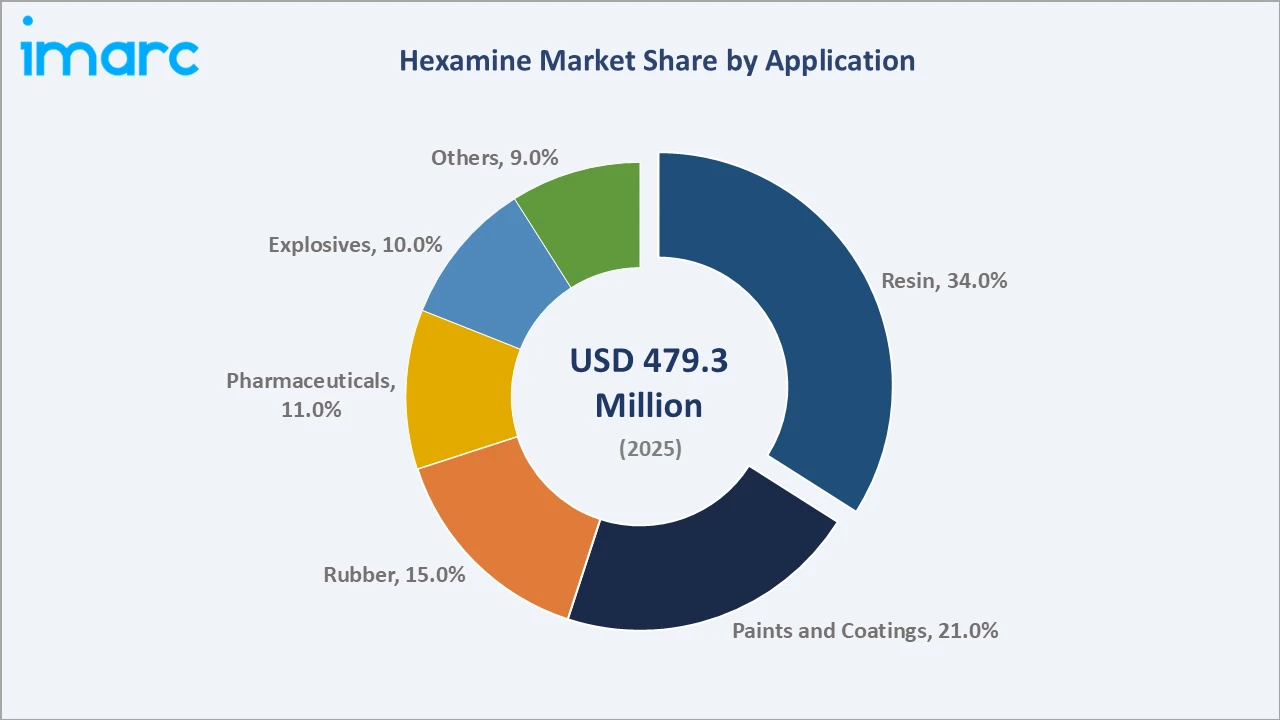
Rubber at 15.0% utilizes hexamine as a vulcanization accelerator and insoluble sulfur stabilizer in natural and synthetic rubber compounding, serving tire manufacturing, rubber belting, and industrial rubber goods production. Pharmaceuticals at 11.0%, the fastest-growing application at ~4.5% CAGR, encompasses methenamine hippurate and mandelate UTI medications, plus uses as a chemical intermediate in pharmaceutical synthesis. Explosives at 10.0% serve RDX precursor supply chains and military solid fuel tablets under regulated procurement frameworks. Others at 9.0% include textile auxiliaries, fire suppression agents, and chemical intermediate uses.
Regional Market Insights
|
Region |
Share (2025) |
Key Hexamine Market Drivers & Characteristics |
|
Asia-Pacific |
41.0% |
The region also benefits from low production costs, abundant raw material availability, and ongoing capacity expansions by major manufacturers. |
|
Europe |
24.0% |
The region emphasizes high-purity and specialty-grade hexamine for industrial and pharmaceutical applications while maintaining strict environmental and product quality standards. |
|
North America |
19.0% |
A well-established manufacturing base, advanced production technologies, and increasing focus on specialty chemical formulations support market expansion. |
|
Latin America |
9.0% |
Increasing demand for phenolic resins, rubber products, and industrial explosives is contributing to higher hexamine consumption. |
|
Middle East & Africa |
7.0% |
Rising investments in petrochemicals, construction materials, and manufacturing industries are supporting demand for hexamine in resins and explosives. |
Asia-Pacific's 41.0% regional dominance reflects its large-scale production of phenolic resins, expanding chemical manufacturing sector, and strong demand from the construction, automotive, foundry, and pharmaceutical industries. Europe at 24.0% is supported by advanced specialty chemical production, stringent quality standards, and growing demand for high-purity hexamine in industrial and pharmaceutical applications.
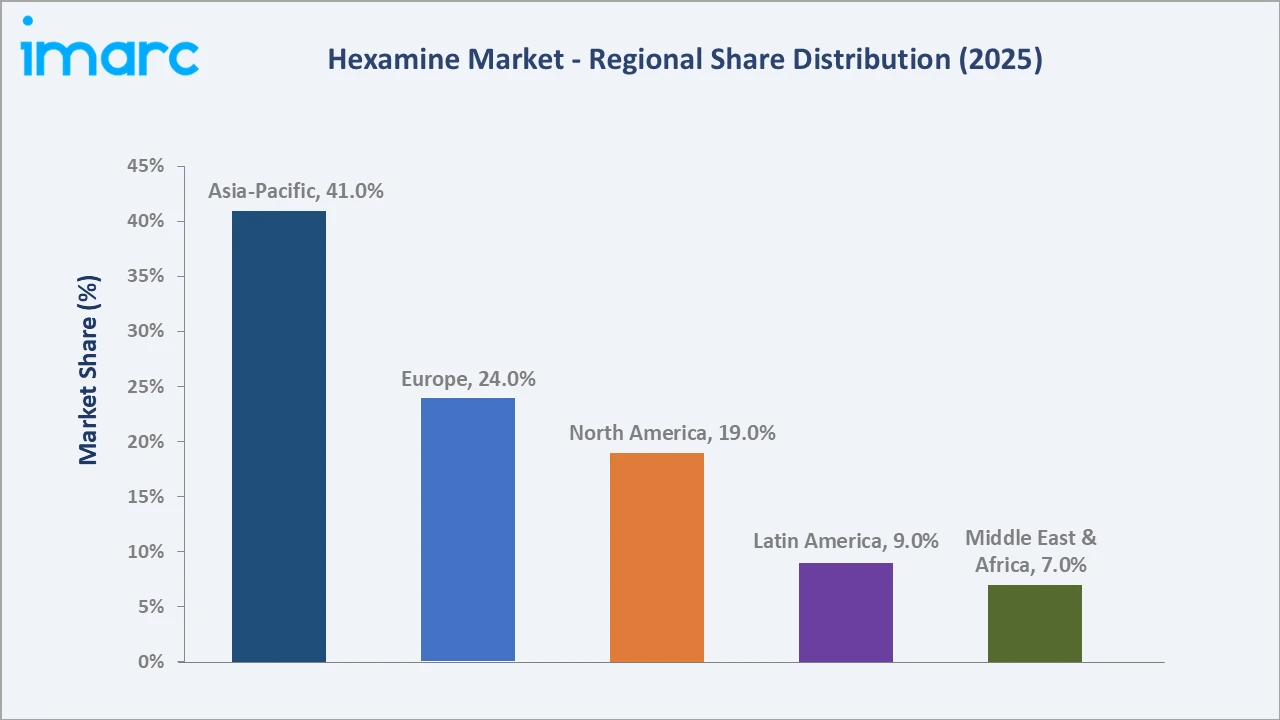
North America at 19.0% benefits from a well-established manufacturing base, stable demand for phenolic resins and industrial chemicals, and increasing investments in infrastructure and mining activities. Latin America at 9.0% driven by expanding construction, mining, and industrial manufacturing sectors that increase the consumption of resins and explosives. Middle East and Africa at 7.0% are witnessing rising demand due to infrastructure development, industrialization, and growing investments in mining and petrochemical industries.
Competitive Landscape
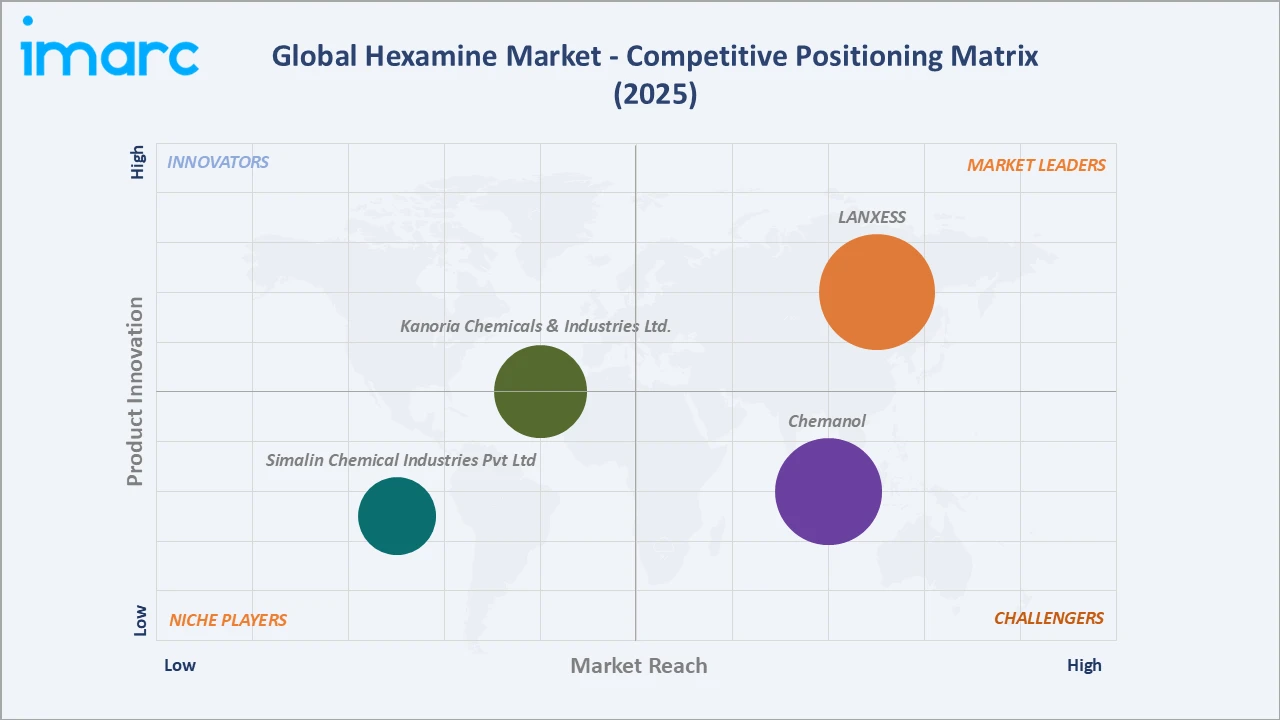
The global hexamine market is highly fragmented. This fragmentation reflects the commodity chemical nature of standard hexamine, the relatively accessible synthesis technology, and the importance of regional production proximity to formaldehyde feedstock sources. Competition differentiators include feedstock integration economics, environmental compliance credentials, pharmaceutical grade capabilities, and technical service quality for specialty applications.
|
Company |
Key Products |
Market Position |
Core Strength |
|
LANXESS |
COHEDUR H 30 |
Market Leader |
LANXESS produces hexamine (hexamethylenetetramine) mainly for the rubber industry under its brand Cohedur H 30. |
|
Chemanol |
Hexamethylene Tetramine |
Challenger |
Chemanol manufactures premium-grade hexamethylenetetramine (hexamine / HMT), which acts as a highly efficient formaldehyde donor, curing agent for phenolic resins, and vulcanizing agent for the rubber industry. |
|
Kanoria Chemicals & Industries Ltd. |
Hexamine |
Established Player |
Kanoria Chemicals & Industries Ltd. is a leading chemical manufacturer producing industrial-grade Hexamine at its facilities. |
|
Simalin Chemical Industries Pvt Ltd |
UNSTABILIZED GRADE and STABILIZED GRADE Hexamine |
Niche Player |
Simalin Chemical Industries Pvt Ltd is a major Indian manufacturer of Hexamine (Methenamine), operating an automated continuous process plant in Gujarat. |
Competitive differentiation is increasingly concentrated in three dimensions: feedstock integration economics, environmental compliance and green production credentials, and pharmaceutical/specialty grade capability. Manufacturers competing on all three dimensions simultaneously are best positioned to sustain market positions throughout the forecast period.
Key Company Profiles
LANXESS
LANXESS is a leading global specialty chemicals company with a presence in the hexamine market through its portfolio of intermediates and industrial chemical solutions. The company supplies high-quality hexamine for applications including phenolic resins, rubber chemicals, pharmaceuticals, explosives, and industrial manufacturing. Leveraging its expertise in chemical process technologies, quality assurance, and sustainable production, LANXESS focuses on delivering reliable products that meet stringent industrial and regulatory requirements.
- Key Products: COHEDUR H 30.
- Strategic Focus: Strengthening its position in the hexamine market through high-quality production, process optimization, and sustainable manufacturing practices. The company emphasizes supplying consistent, high-purity hexamine for applications in phenolic resins, rubber chemicals, pharmaceuticals, and specialty industrial products.
Chemanol
Chemanol is a leading chemical manufacturer and a prominent producer of hexamine, leveraging its integrated methanol and formaldehyde production capabilities. The company manufactures industrial-grade hexamine for applications in phenolic and amino resins, rubber chemicals, pharmaceuticals, explosives, fuel tablets, and other specialty chemical products. Its vertically integrated production model ensures a reliable supply of key feedstocks, enabling consistent product quality and cost-efficient manufacturing.
- Key Products: Hexamethylene Tetramine.
- Strategic Focus: Leveraging its vertically integrated methanol and formaldehyde value chain to ensure cost-efficient, reliable production and a stable supply of high-quality hexamine. The company focuses on expanding its presence in key end-use industries, including phenolic resins, rubber chemicals, pharmaceuticals, and explosives, while enhancing operational efficiency and product quality.
Market Concentration Analysis
The global hexamine market is highly fragmented. This low concentration reflects the commodity nature of standard hexamine, accessible synthesis chemistry, and the importance of regional production proximity to formaldehyde feedstock sources. The market's fragmentation creates intense price competition in commodity industrial grades that constrains pricing power across the industry. However, the pharmaceutical and specialty stabilized grade segments, serving only qualified producers meeting stringent purity and quality management standards, exhibit higher concentration and more sustainable margins. Market concentration is not expected to increase significantly through 2034, given the continued growth of Chinese and Indian domestic producers serving their rapidly expanding local markets.
Investment & Growth Opportunities
Highest Growth Segments
Pharmaceuticals application (~4.5% CAGR), stabilized grade (~3.8% CAGR), Asia-Pacific region (~4.2% CAGR), paints and coatings application (~3.6% CAGR), and pharmaceutical grade specialty premium segment (~8-10% niche CAGR) represent the hexamine market's highest-growth investment vectors through 2034.
Investment Themes
- Pharmaceutical-grade hexamine production certification: The pharmaceutical hexamine market's growth, combined with price premiums over industrial grade, creates compelling investment returns for manufacturers capable of achieving USP/BP/EP certification and FDA/EMA GMP compliance. Investment in dedicated pharmaceutical manufacturing lines, quality management systems, and regulatory certifications provides sustainable competitive moats in the fastest-growing and highest-margin hexamine application segment.
- Eco-friendly synthesis investments: Companies are investing in cleaner production technologies, energy-efficient processes, and emission reduction systems to improve the sustainability of hexamine manufacturing. These investments help ensure compliance with environmental regulations, reduce operating costs, and meet growing customer demand for sustainably produced industrial chemicals.
Future Market Outlook (2026-2034)
The global hexamine market is projected to grow from USD 479.3 Million in 2025 to USD 664.9 Million by 2034, delivering a 3.59% CAGR, steady, demand-anchored growth reflecting hexamine's indispensable role as a chemical intermediate in multiple industrial processes while constrained by the commodity nature of its primary application and the global market's high fragmentation. The market's anchor value of USD 571.8 Million in 2030 marks the midpoint of a consistent growth trajectory that will be shaped by three structural forces through 2034.
First, phenolic resin demand from the global construction sector will provide the market's largest and most stable demand driver through the forecast period. Second, the pharmaceutical application's structural acceleration will progressively elevate the hexamine market's average revenue per metric ton as pharmaceutical-grade production expands its share of total output. Third, the competitive landscape's evolution will reshape regional trade flows and competitive dynamics through 2034.
Research Methodology
Primary Research
Primary research comprised in-depth interviews with hexamine producers, chemical industry procurement specialists, phenolic resin manufacturers, pharmaceutical formulation chemists, rubber chemical specialists, and independent specialty chemical market analysts. These discussions validated market size estimates, assessed application demand trends, evaluated competitive dynamics including recent capacity additions and supply chain restructuring events, and provided insights into grade pricing differentials and pharmaceutical application growth drivers.
Secondary Research
Secondary research encompassed company press releases, registration database analysis for hexamine chemical information, USP/BP pharmacopoeia specification documentation, chemical production statistics, construction and automotive sector production data, regulatory framework documentation, and credible specialty chemical market intelligence sources.
Forecasting Models
Forecasting models were developed using historical hexamine market data, global phenolic resin production trends, construction sector activity indicators by region, automotive production projections, pharmaceutical UTI medication demand epidemiology, and regional industrial output growth rates. Both top-down and bottom-up approaches were validated through primary research.
Report Coverage:
| Report Features | Details |
|---|---|
| Base Year of the Analysis | 2025 |
| Historical Period | 2020-2025 |
| Forecast Period | 2026-2034 |
| Units | Million USD |
| Scope of the Report | Exploration of Historical Trends and Market Outlook, Industry Catalysts and Challenges, Segment-Wise Historical and Future Market Assessment:
|
| Grades Coverage | Stabilized Grade, Unstabilized Grade |
| Functions Coverage | Antioxidants, Modifiers, Inhibitors, Chemical Intermediates, Others |
| Applications Coverage | Resin, Paints and Coatings, Rubber, Pharmaceuticals, Explosive, Others |
| Region Covered | Asia Pacific, Europe, North America, Latin America, Middle East and Africa |
| Countries Covered | United States, Canada, Germany, France, United Kingdom, Italy, Spain, Russia, China, Japan, India, South Korea, Australia, Indonesia, Brazil, Mexico |
| Companies Covered | LANXESS, Chemanol, Kanoria Chemicals & Industries Ltd., Simalin Chemical Industries Pvt Ltd, etc. |
| Customization Scope | 10% Free Customization |
| Post-Sale Analyst Support | 10-12 Weeks |
| Delivery Format | PDF and Excel through Email (We can also provide the editable version of the report in PPT/Word format on special request) |
Frequently Asked Questions About the Hexamine Market Report
The global hexamine market reached USD 479.3 Million in 2025, driven by phenolic resin demand from automotive and construction sectors, pharmaceutical-grade hexamine demand, and the VOC reduction eco-synthesis.
The market grows at 3.59% CAGR during 2026-2034, reaching USD 664.9 Million by 2034. The CAGR reflects phenolic resin construction sector demand, pharmaceutical application, and stabilized grade premium segment.
Unstabilized grade leads at 58.0% (2025), serving resin, rubber, industrial chemical, and explosives sectors where cost-effectiveness and direct end-use eliminate stabilization requirements.
Resin dominates at 34.0% (2025) as hexamine is the irreplaceable cross-linking hardener in phenolic resin polymerization serving automotive friction materials, construction board binders, and abrasive products.
Asia-Pacific leads at 41.0% (2025), growing at ~4.2% CAGR, the fastest region, driven by China's consumption and dominant producer role, India's expanding pharmaceutical and resin manufacturing, and Japan's specialty chemical demand.
Leading companies include LANXESS, Chemanol, Kanoria Chemicals & Industries Ltd., and Simalin Chemical Industries Pvt Ltd, among others.
The market is projected to reach approximately USD 571.8 Million by 2030, driven by new capacity ramp-up, feedstock upgrade enabling supply expansion, pharmaceutical UTI medication demand structural growth, Asia-Pacific construction and automotive resin demand, and specialty grade expanding market penetration.
Top opportunities include pharmaceutical-grade hexamine production, eco-friendly synthesis technology investment for European market access, India capacity expansion serving pharmaceutical and resin demand growth under national manufacturing policy and stabilized high-purity automotive resin grade development.
Need more help?
- Speak to our experienced analysts for insights on the current market scenarios.
- Include additional segments and countries to customize the report as per your requirement.
- Gain an unparalleled competitive advantage in your domain by understanding how to utilize the report and positively impacting your operations and revenue.
- For further assistance, please connect with our analysts.
 Request Customization
 Speak to an Analyst
 Request Brochure
 Inquire Before Buying
Benefits of Customization
- Personalize this research
- Triangulate with your data
- Get data as per your format and definition
- Gain a deeper dive into a specific application, geography, customer, or competitor
- Any level of personalization
Get in Touch With Us
UNITED STATES
Phone: +1-201-971-6302
INDIA
Phone: +91-120-433-0800
UNITED KINGDOM
Phone: +44-753-714-6104
Email: [email protected]
Client Testimonials




.webp)




.webp)













Related Reports

Choose your plan
*Please note that the prices mentioned below are starting prices for each bundle type. Kindly contact our team for further details.*
Single User License
- 1 User License, Access on 2 Devices
- PDF Report + Excel Dataset (Password Protected)
- Lifetime Access
- No Printing Rights
- 10% Free Report Customization
- 10–12 Weeks of Analyst Support
Five User License
- Access for 5 Users, 2 Devices per User
- PDF Report + Excel Dataset (Password Protected)
- Lifetime Access
- Dedicated Account Manager
- 12–14 Weeks of Analyst Support
- No Printing Rights
- 15% Free Report Customization
- 25% Discount on Your Next Purchase
Corporate User License
- Unlimited User Access (Within Your Organization)
- PDF Report + Excel Dataset
- Lifetime Access
- Dedicated Account Manager
- 14–20 Weeks of Analyst Support
- No Printing Rights
- 20% Free Report Customization
- 30% Discount on Your Next Purchase
Essential Insights
What's included:
3 reports
- Lifetime Access
- PDF Reports
- Excel Datasets
- 2 Weeks of Free Analyst Support
- 2 User Licenses
- Access on 2 Devices
- Printing Rights
- Complimentary PowerPoint (PPT) Version
- Complimentary License Upgrade
Professional Access
What's included:
5 reports
- Lifetime Access
- PDF Reports
- Excel Datasets
- 8 Weeks of Free Analyst Support
- 2 User Licenses
- Access on 2 Devices
- Printing Rights
- Complimentary PowerPoint (PPT) Version
- Complimentary License Upgrade
Business Advantage
What's included:
8 reports
- Lifetime Access
- PDF Reports
- Excel Datasets
- 14 Weeks of Free Analyst Support
- 2 User Licenses
- Access on 2 Devices
- Printing Rights
- Complimentary PowerPoint (PPT) Version
- Complimentary License Upgrade
Enterprise Intelligence
What's included:
10 reports
- Lifetime Access
- PDF Reports
- Excel Datasets
- 20 Weeks of Free Analyst Support
- 2 User Licenses
- Access on 2 Devices
- Printing Rights
- Complimentary PowerPoint (PPT) Version
- Complimentary License Upgrade