
Human Enhancement Market Size, Share, Trends and Forecast by Product, Device Type, End User, and Region, 2026-2034
Human Enhancement Market Size, Share, Trends & Forecast (2026-2034)
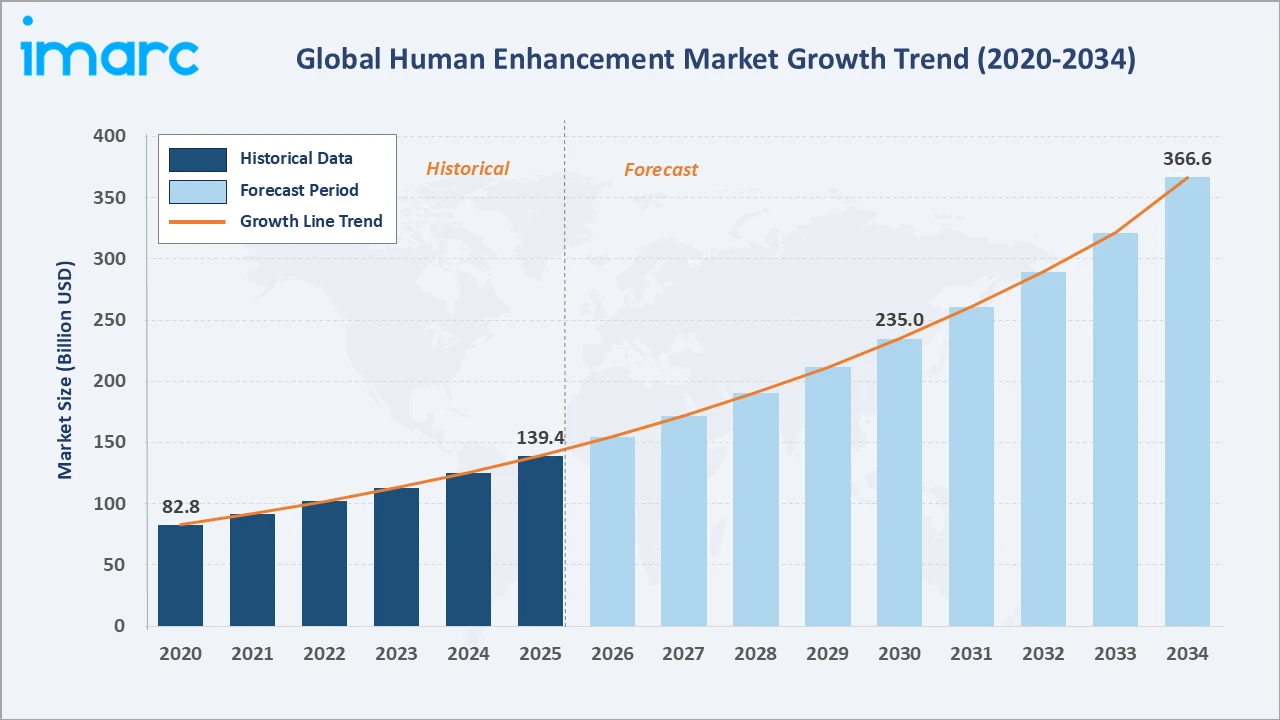
The global human enhancement market reached USD 139.4 Billion in 2025 and is projected to reach USD 366.6 Billion by 2034, exhibiting a CAGR of 11.00% during 2026-2034. The rapidly aging global population, the technological convergence of artificial intelligence, augmented reality, and advanced sensor systems, and FDA-authorized human brain-computer interface trials are the primary growth catalysts. The global population is aging rapidly, with the number of people aged 60 years and above projected to increase from 1 billion in 2020 to 1.4 billion by 2030, when one in every six people worldwide will be aged 60 or older. By 2050, this population is expected to double, reaching approximately 2.1 billion. The rapidly aging population is driving demand for human enhancement technologies that improve physical mobility, cognitive function, sensory capabilities, and overall quality of life. Smart devices lead the product at 34.8%, body worn dominate the device type at 64.5%, and North America accounts for the largest regional share at 39.2%.
Market Snapshot
|
Metric |
Value |
|
Market Size (2025) |
USD 139.4 Billion |
|
Forecast Market Size (2034) |
USD 366.6 Billion |
|
CAGR (2026-2034) |
11.00% |
|
Base Year |
2025 |
|
Historical Period |
2020-2025 |
|
Forecast Period |
2026-2034 |
|
Dominant Product |
Smart Devices (34.8%, 2025) |
|
Dominant Device Type |
Body Worn (64.5%, 2025) |
|
Leading Region |
North America (39.2%, 2025) |
The global human enhancement market grew from USD 82.8 Billion in 2020 to USD 139.4 Billion in 2025, driven by COVID-19-accelerated adoption of remote health monitoring wearables, record investment in brain-computer interface research, and a wave of commercial exoskeleton launches targeting both clinical rehabilitation and industrial worker augmentation. The market is projected to reach USD 235.0 Billion by 2030 and USD 366.6 Billion by 2034.
To get more information on this market, Request Sample
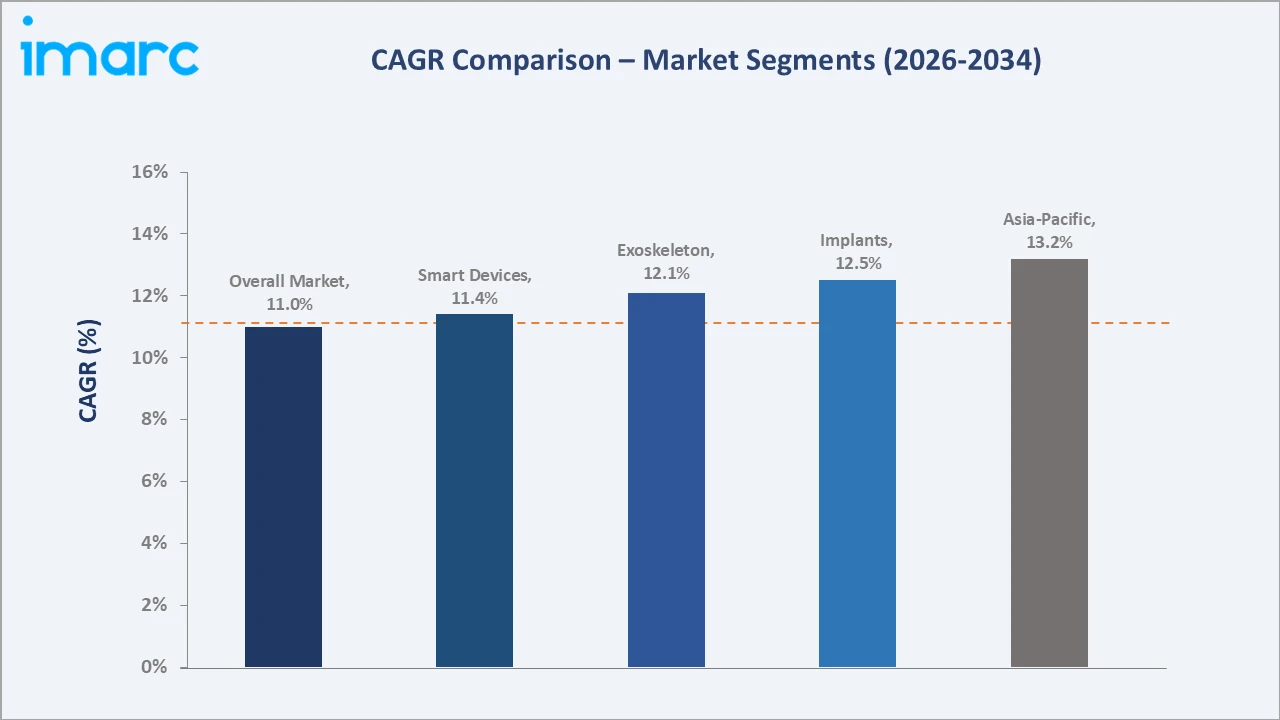
Implants growing at ~12.5% CAGR through BCI commercialization, cochlear implant demand expansion, and next-generation neural interface technology. Exoskeleton at ~12.1% CAGR through defense deployment, industrial worker augmentation, and rehabilitation exoskeleton FDA clearance expansion. Asia-Pacific leads regional growth at ~13.2% CAGR through China AI-implant investment, Japan aging society rehabilitation technology demand, and South Korea exoskeleton manufacturing expansion.
Executive Summary
The global human enhancement market represents one of the most transformative sectors at the intersection of biotechnology, artificial intelligence, advanced materials, and human physiology, encompassing technologies that restore, supplement, or exceed natural human capabilities through exoskeletons, smart wearable devices, active medical implants, neural interfaces, and augmented reality systems. The market's extraordinary breadth creates a uniquely complex competitive landscape where technology companies, defense contractors, medical device specialists, and specialized enhancement pure-plays compete across overlapping application spaces. Market value stood at USD 139.4 Billion in 2025 and is forecast to reach USD 366.6 Billion by 2034.
Smart devices lead the product at 34.8% (2025), reflecting the commercial maturity and mass-market adoption of body-worn health monitoring and augmentation devices that form the dominant volume and revenue segment through their billions of consumer and enterprise users globally. Body worn devices command 64.5% (2025) through the structural advantage of form factors that integrate directly with the human body during activities, enabling continuous physiological monitoring, augmentation, and interaction that non-body-worn systems cannot replicate. North America leads regionally at 39.2% (2025).
Key Market Insights
|
Insight |
Data |
|
Dominant Product |
Smart Devices – 34.8% share (2025) |
|
Dominant Device Type |
Body Worn – 64.5% share (2025) |
|
Leading Region |
North America – 39.2% share (2025) |
|
Market Opportunity |
Defense exoskeleton fleet deployment; BCI commercialization; aging population rehabilitation technology; industrial worker augmentation |
Key Analytical Observations:
- Smart Devices at 34.8% (2025): Smart devices, encompassing smartwatches, fitness trackers, hearable devices, smart glasses, augmented reality headsets, and health-monitoring wearables, represent human enhancement's largest and most commercially developed product category through their mainstream consumer adoption and broad device base.
- Body Worn at 64.5% (2025): Body-worn devices dominate human enhancement through the structural advantage that intimate body contact enables: continuous physiological monitoring without active user interaction, direct human force augmentation through exoskeleton mechanical linkages, real-time sensory augmentation through smart glasses and hearables, and seamless human-machine interface through skin-contact electrodes and embedded sensors.
- North America at 39.2% (2025): North America dominates due to its advanced healthcare infrastructure, strong investment in AI, neurotechnology, and wearable devices, and the presence of leading technology and medical device companies.
Human Enhancement Market Overview
The global human enhancement market encompasses the full spectrum of technologies, devices, and systems designed to augment, restore, or surpass natural human biological capabilities across physical, sensory, cognitive, and communicative dimensions. The market's definition spans from the broadly accessible through the clinically regulated to the emerging frontier. Human enhancement technologies serve four primary end-use sectors: Healthcare (rehabilitation, assistive technology, clinical-grade monitoring); defense (soldier strength amplification, situational awareness enhancement, endurance extension); information technology (AR-assisted knowledge work, hands-free computing, cognitive augmentation for technical workers); and consumer/sports (health optimization, performance enhancement, lifestyle augmentation). Macroeconomic factors include rising healthcare expenditure, rapid population aging, and increasing investment in biotechnology, artificial intelligence, robotics, and wearable technologies.
Market Dynamics
To evaluate market opportunities, Request Sample
Market Drivers
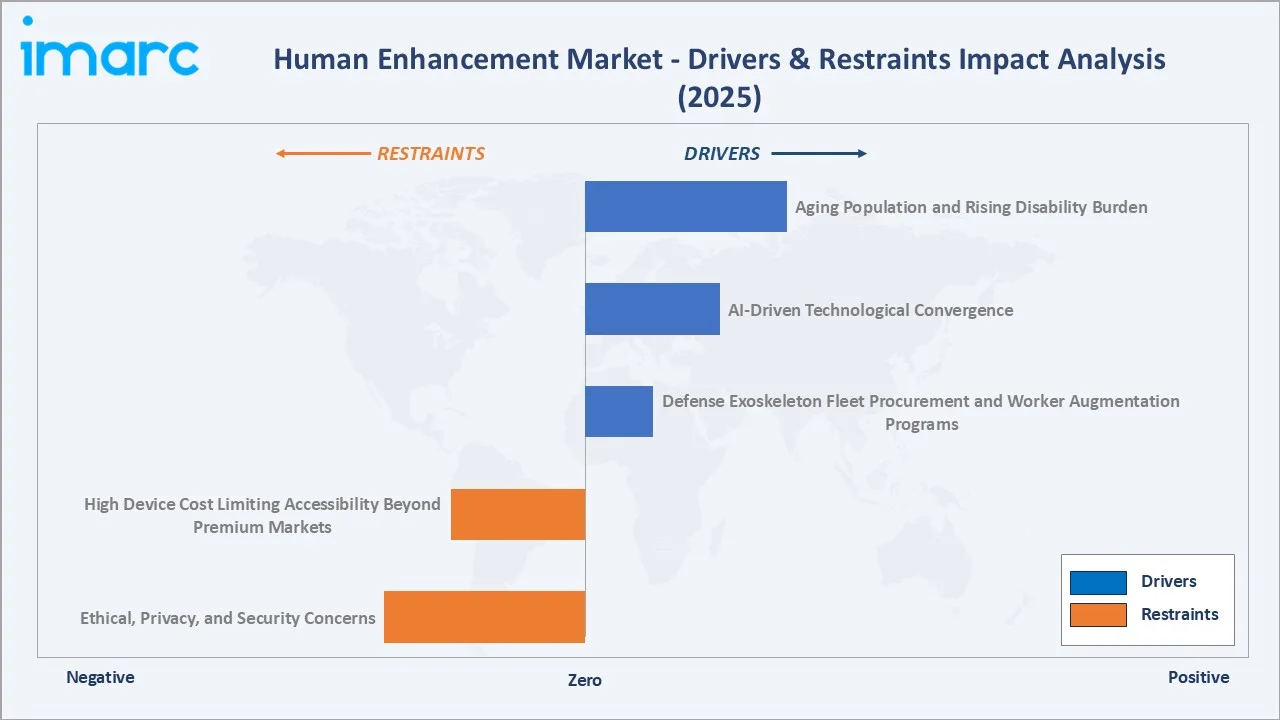
- Aging Population and Rising Disability Burden: By 2030, one in every six people worldwide is expected to be aged 60 years or older, with this population increasing from 1 billion in 2020 to 1.4 billion. By 2050, the number of people aged 60 and above is projected to reach 2.1 billion, while the population aged 80 years or older is expected to triple to approximately 426 million. Aging populations experience elevated incidence of mobility impairment from stroke, Parkinson's disease, hip and knee degeneration, and neuromuscular conditions that create direct demand for rehabilitation exoskeletons, powered orthoses, advanced prosthetics, cochlear implants, and health monitoring wearables.
- AI-Driven Technological Convergence: The convergence of artificial intelligence, computer vision, natural language processing, and miniaturized biosensor technology is enabling human enhancement product categories that were technically infeasible five years ago. In July 2026, Vital Signals launched the Signal Ring, a titanium wearable that measures blood pressure from the finger without an inflatable cuff. The speed of AI capability improvement means that AI-connected body-worn devices will deliver progressively more powerful cognitive enhancement through the forecast period.
- Defense Exoskeleton Fleet Procurement and Worker Augmentation Programs: Increasing defense procurement of powered exoskeletons and wearable augmentation systems is accelerating innovation in the human enhancement market. Military organizations are investing in technologies that improve soldier endurance, strength, mobility, and injury prevention during demanding operations. Similar augmentation programs are also being adopted in industrial sectors to reduce worker fatigue, improve productivity, and enhance occupational safety, driving broader commercial adoption of human enhancement solutions.
Market Restraints
- Ethical, Privacy, and Security Concerns: Human enhancement devices generate intimate personal physiological and behavioral data that raises profound privacy concerns. Brain-computer interfaces create the most extreme data sensitivity: neural signal data collected by BCIs reflects thought patterns, emotional states, cognitive processes, and involuntary physiological responses that have no precedent in existing privacy regulatory frameworks. Consumer distrust of extensive biometric data collection constrains adoption of the most capable enhancement devices that require persistent health data collection and cloud processing.
- High Device Cost Limiting Accessibility Beyond Premium Markets: Advanced human enhancement products carry acquisition costs that place them beyond the reach of the majority of potential beneficiaries without insurance coverage or institutional procurement. Insurance reimbursement for enhancement devices is inconsistently available, with payers often applying restrictive criteria that limit coverage to the most severe disability presentations while denying coverage for mild-to-moderate functional impairment populations who could benefit from enhancement technology.
Market Opportunities
- Non-Invasive Brain-Computer Interface Development: Non-invasive BCIs could expand the BCI addressable market from the surgical candidate population to hundreds of millions of cognitive workers, creative professionals, and individuals seeking enhanced human-computer interaction. In July 2026, ABILITY Neurotech successfully completed the first-in-human procedure of its brain-computer interface (BCI) technology at the Technical University of Munich. The clinical study validates the platform's neural signal acquisition capabilities and will further evaluate neural decoding for restoring communication and movement in individuals with severe neurological impairments.
- Industrial Exoskeleton Subscription Models: The transition from upfront exoskeleton capital purchase to subscription-as-a-service models could dramatically accelerate industrial exoskeleton market adoption by converting prohibitive capital expenditure into operational cost management. Successful subscription model pilots could unlock the enormous addressable market of manufacturing, warehousing, construction, and logistics workers who require physical augmentation for injury prevention and productivity enhancement.
Market Challenges
- Long Regulatory Pathways for Novel Enhancement Devices: Human enhancement devices combining multiple regulated technologies face complex multi-pathway regulatory requirements that can extend regulatory review timelines substantially. International regulatory divergence requires manufacturers to pursue country-specific regulatory strategies that multiply compliance costs for globally marketed products.
- User Adoption and Training Barriers for Complex Enhancement Systems: Advanced human enhancement systems require significant user training before productive operation, creating adoption barriers in both clinical and industrial deployment contexts. Clinical exoskeleton gait training programs require 20-40 therapy sessions before patients achieve functional ambulatory proficiency, consuming significant therapist time and patient motivation resources.
Emerging Market Trends
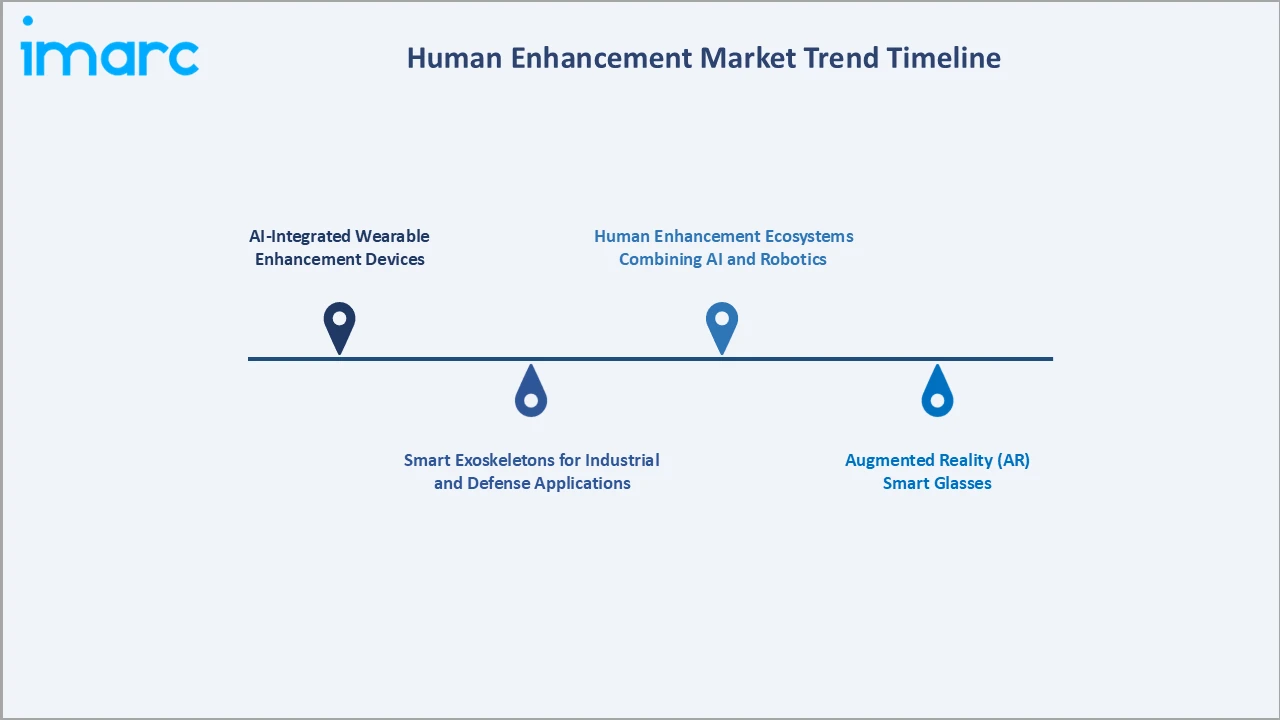
1. AI-Integrated Wearable Enhancement Devices
Artificial intelligence is being increasingly integrated into wearable devices such as smart glasses, smart rings, and health-monitoring wearables to provide real-time physiological insights and personalized recommendations. In July 2026, Hilo launched Hilo Core, a wearable system designed to provide continuous, long-term blood pressure insights without relying on traditional cuff-based measurements. These devices enhance human performance, wellness, and productivity while enabling continuous health monitoring and preventive care.
2. Smart Exoskeletons for Industrial and Defense Applications
Demand for powered exoskeletons is increasing across defense, manufacturing, logistics, and healthcare sectors to improve worker strength, endurance, and mobility. These wearable robotic systems reduce fatigue, prevent musculoskeletal injuries, and enhance operational efficiency in physically demanding environments.
3. Augmented Reality (AR) Smart Glasses
Next-generation AR smart glasses are evolving into hands-free AI assistants that provide real-time navigation, communication, and contextual information. In June 2026, Snap launched its new augmented reality smart glasses, Specs, nearly a decade after its first-generation eyewear. Priced at £1,995 in the UK and $2,195 in the US, the glasses will overlay digital content onto the physical world. Improvements in lightweight designs, voice interaction, and AI integration are driving adoption across consumer, enterprise, healthcare, and industrial applications.
4. Human Enhancement Ecosystems Combining AI and Robotics
The convergence of artificial intelligence, robotics, wearable sensors, and cloud connectivity is creating integrated human enhancement ecosystems. In March 2026, Kody Technolab launched Medigo Robot, an AI-powered preventive healthcare system developed in India for rapid routine screening. The robot evaluates more than 65 health parameters and generates a structured health report in approximately three minutes, supporting early detection and wider access to health monitoring. These platforms enable seamless interaction between humans and intelligent technologies, improving physical capability, decision-making, rehabilitation, and overall quality of life across healthcare and industrial settings.
Industry Value Chain Analysis
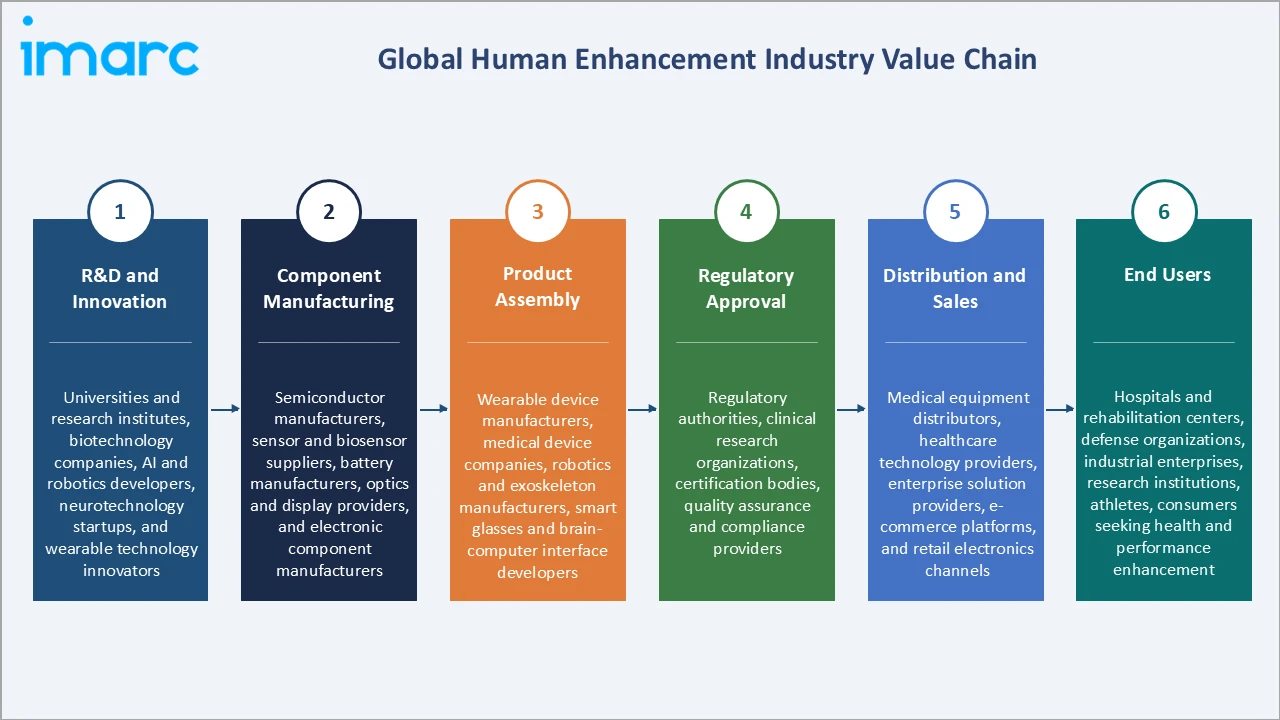
The human enhancement market value chain integrates R&D and innovation, component manufacturing, product assembly, regulatory approval, commercial distribution, and end-use deployment across healthcare, defense, information technology, and consumer applications.
|
Stage |
Key Participants |
|
R&D and Innovation |
Universities and research institutes, biotechnology companies, AI and robotics developers, neurotechnology startups, and wearable technology innovators. |
|
Component Manufacturing |
Semiconductor manufacturers, sensor and biosensor suppliers, battery manufacturers, optics and display providers, and electronic component manufacturers. |
|
Product Assembly |
Wearable device manufacturers, medical device companies, robotics and exoskeleton manufacturers, smart glasses and brain-computer interface developers. |
|
Regulatory Approval |
Regulatory authorities, clinical research organizations, certification bodies, quality assurance and compliance providers. |
|
Distribution and Sales |
Medical equipment distributors, healthcare technology providers, enterprise solution providers, e-commerce platforms, and retail electronics channels. |
|
End Users |
Hospitals and rehabilitation centers, defense organizations, industrial enterprises, research institutions, athletes, consumers seeking health and performance enhancement. |
The R&D and innovation stage generates the highest value by developing advanced technologies such as AI-powered wearables, brain-computer interfaces, exoskeletons, and biosensors. Strong intellectual property, continuous innovation, and product differentiation enable companies to command premium pricing and maintain a competitive advantage.
Technology Landscape in the Human Enhancement Industry
Brain-Computer Interface Technology
Brain-computer interface technology, enabling direct communication between neural activity and digital systems without requiring physical movement, represents human enhancement's most transformative frontier, with commercial development currently bifurcated between invasive high-resolution implantable systems and non-invasive lower-resolution EEG and transcranial direct current stimulation systems. The BCI technology roadmap includes improvements in electrode longevity, wireless data transmission capacity, and neural decoding algorithm sophistication that will progressively expand the BCI's accessible application space through the forecast period.
Exoskeleton Actuation and Control Technology
Powered exoskeleton technology combines precision mechanical joint engineering with sensing, actuation, and control systems that interpret wearer intent and provide proportional mechanical assistance. Modern clinical rehabilitation exoskeletons use force-torque sensors at foot contact points, IMUs for body segment orientation, and crutch-mounted user intent sensors to detect gait initiation intent and provide hip and knee joint actuation synchronized with the user's walking rhythm. Industrial and defense exoskeletons amplify upper body lifting force through hydraulic or electromechanical actuation while maintaining wearer proprioception and movement coordination.
Wearable Biosensing and Health Monitoring Technology
Advanced wearable biosensors form the technological foundation of smart device human enhancement by providing real-time physiological data that AI algorithms translate into health intelligence. In April 2026, Peri introduced the first wearable specifically designed to monitor perimenopause. Using continuous biometric tracking, the device assesses physiological changes over time and provides actionable insights for symptom management and clinical care, while generating a large-scale dataset on this historically under-researched life stage.
Market Segmentation Analysis
The report covers the following segments:
|
Segment Category |
Leading Segment |
Market Share |
Year |
|
Product |
Smart Devices |
34.8% |
2025 |
|
Device Type |
Body Worn |
64.5% |
2025 |
|
End User |
Healthcare |
🔒 |
2025 |
|
Region |
North America |
39.2% |
2025 |

By Product
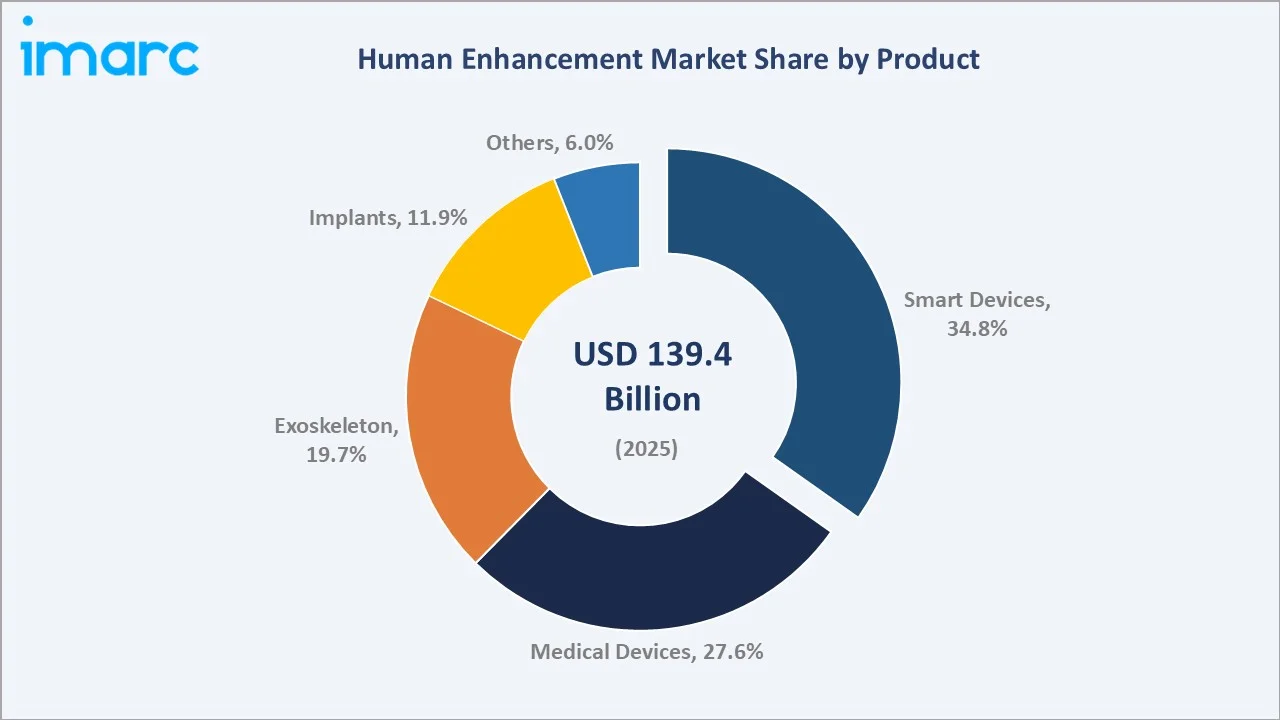
Smart devices lead at 34.8% (2025) through mass-market consumer adoption of smartwatches, health monitoring rings, wearable devices with biometric sensing, and enterprise AR headsets. Smart device human enhancement is growing through the AI capability integration that transforms sensor data into actionable health intelligence, converting continuous biosensor streams into personalized health guidance, cognitive assistance, and real-time performance optimization. Medical devices at 27.6% serve clinical rehabilitation, assistive technology, and medical-grade sensing applications with FDA-cleared or CE-marked products that access insurance reimbursement and hospital procurement channels.
To access detailed market analysis, Request Sample
Exoskeleton at 19.7%, growing at ~12.1% CAGR, spans medical rehabilitation systems, defense soldier enhancement, and industrial worker augmentation. Implants at 11.9%, growing fastest at ~12.5% CAGR, encompasses cochlear implants, neural interfaces, BCI systems, retinal prosthetics, and active implantable devices. Others at 6.0% include smart garments, embedded sensors, skin-interface biometric patches, and emerging modalities including smart contact lenses and subcutaneous passive microchips.
By Device Type
Body worn devices dominate at 64.5% (2025), encompassing the full spectrum of human enhancement products physically worn during activity. Body worn devices' structural advantage is the enablement of continuous, activity-integrated enhancement that does not require discrete user interaction; health monitoring occurs automatically during sleep and exercise, AR information appears seamlessly in the visual field during work tasks, and exoskeleton assistance activates in real time with gait initiation.
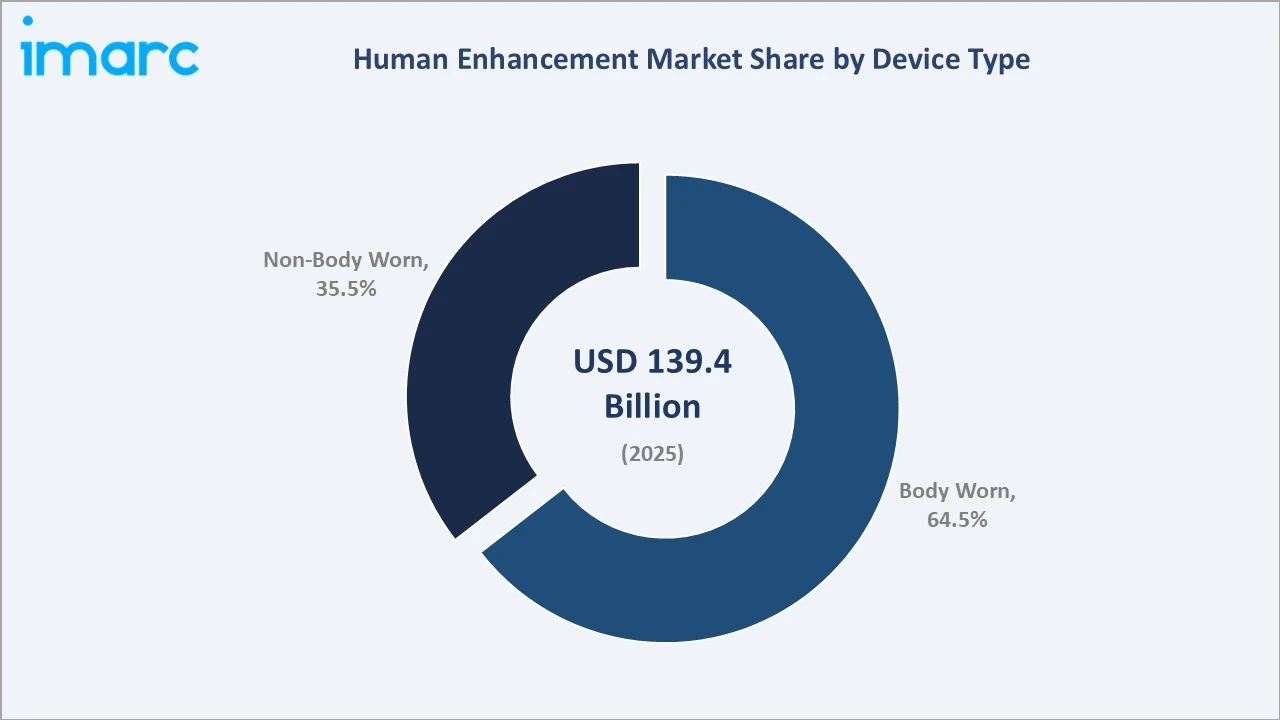
Non-body worn devices at 35.5% serve applications where physical body contact is not required or desired. Non-body worn devices offer user comfort advantages that may enable adoption by user populations for whom body-worn device acceptance is a barrier, including elderly users with limited upper body mobility and patients with pain conditions affecting comfortable device contact.
Regional Market Insights
|
Region |
Share (2025) |
Key Human Enhancement Market Drivers & Characteristics |
|
North America |
39.2% |
Leads the market due to advanced healthcare infrastructure, high R&D investment, strong adoption of AI-enabled wearables and neurotechnology, and the presence of major technology and medical device companies. |
|
Europe |
27.8% |
Growth is supported by an aging population, increasing healthcare digitalization, favorable regulatory frameworks, and rising adoption of rehabilitation and assistive technologies. |
|
Asia-Pacific |
22.4% |
Fastest-growing region driven by expanding healthcare infrastructure, rising disposable incomes, increasing consumer electronics adoption, and government investment in AI and digital health. |
|
Latin America |
6.1% |
Market expansion is supported by improving healthcare access, growing awareness of wearable health technologies, and increasing investment in digital healthcare solutions. |
|
Middle East and Africa |
4.5% |
Growth is driven by healthcare modernization initiatives, rising investment in medical technologies, and gradual adoption of wearable devices and AI-powered healthcare solutions. |
North America's 39.2% regional dominance reflects advanced healthcare infrastructure, strong research funding, and early adoption of AI-enabled wearables, neurotechnology, and assistive robotics. Europe’s 27.8% is supported by an aging population, healthcare digitalization, and demand for rehabilitation technologies. Asia-Pacific at 22.4%, growing at ~13.2% CAGR, driven by healthcare investment, disposable incomes, and increasing consumer electronics adoption. China, Japan, South Korea, and India are emerging as major innovation and manufacturing centers.
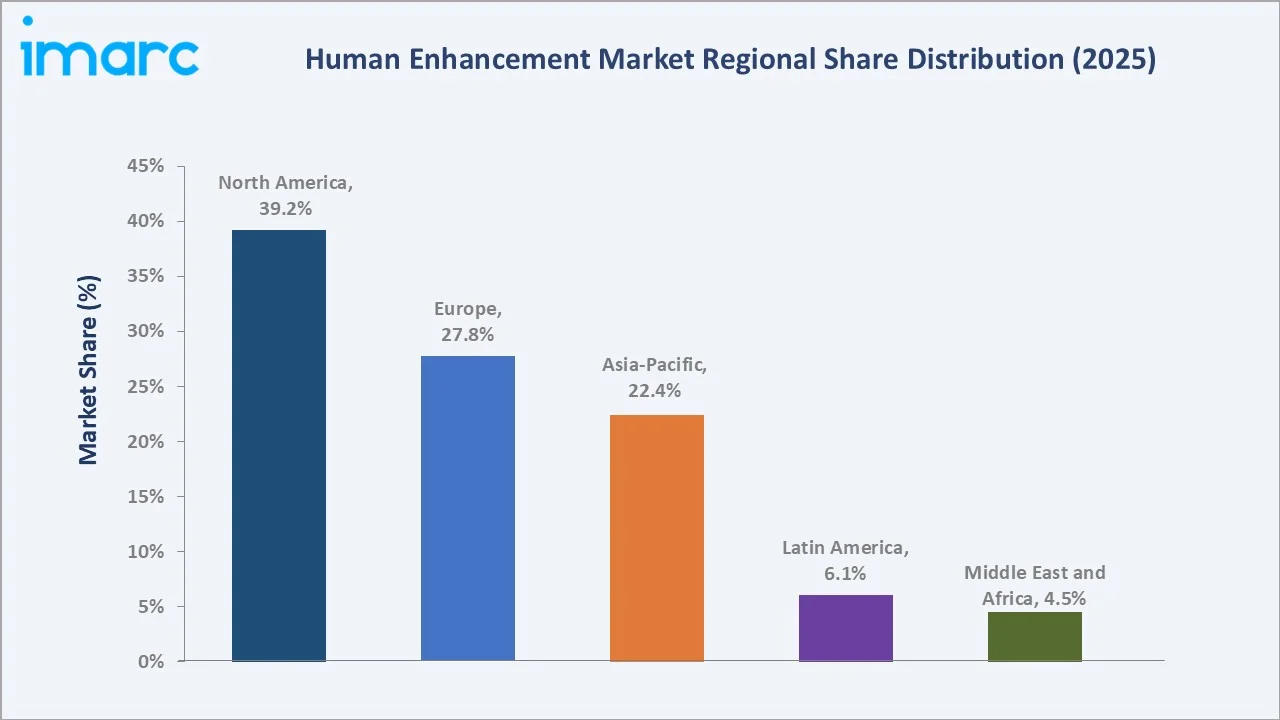
Latin America’s 6.1% is experiencing steady expansion through improved healthcare access and rising awareness of wearable health solutions. The Middle East and Africa’s 4.5% reflect investment in smart healthcare systems and advanced medical technologies.
Competitive Landscape
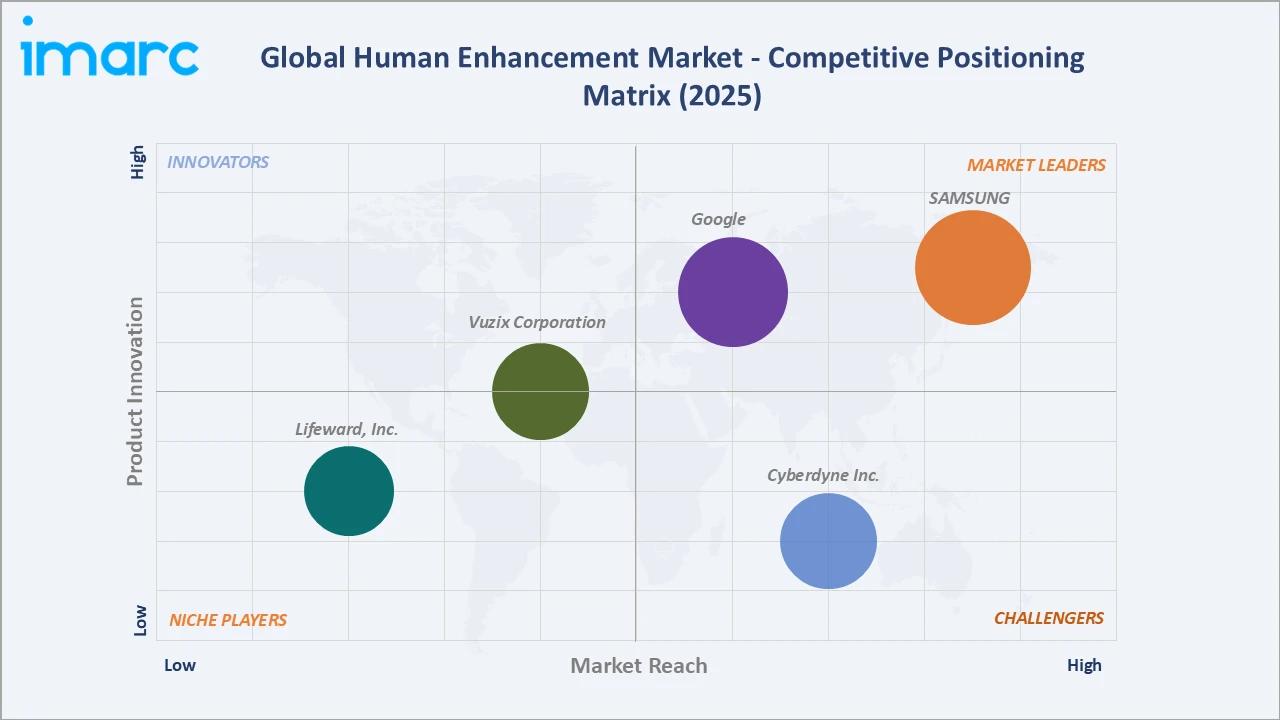
The global human enhancement market features a highly heterogeneous competitive structure spanning technology mega corporations, aerospace and defense prime contractors, specialized medical robotics companies, neural interface innovators, AR display specialists, sensory implant companies, and industrial exoskeleton specialists. Competition in the enhancement market is characterized by application-specific rather than head-to-head rivalry.
|
Company |
Key Products |
Market Position |
Core Strength |
|
|
Google Fitbit Inspire 3, Google Fitbit Charge 6, Google Fitbit Sense 2, Google Fitbit Versa 4 |
Market Leader |
Google plays a profound role in human enhancement primarily through cognitive augmentation and biomedical research. |
|
SAMSUNG |
Galaxy Ring, Galaxy Watch8 Classic, Galaxy Watch8, Galaxy Watch7, Galaxy Watch Ultra |
Market Leader |
SAMSUNG shapes human enhancement by focusing on non-invasive, everyday augmentations through wearables, AI, and smart environments. |
|
Vuzix Corporation |
Vuzix LX1 smart glasses, Vuzix M400 smart glasses |
Established Player |
Vuzix Corporation bridges the gap between digital AI optimization and human capability by producing lightweight Augmented Reality (AR) smart glasses and optical waveguides. |
|
Lifeward, Inc. |
ReWalk Personal Exoskeleton, ReStore Exo-Suit |
Niche Player |
Lifeward, Inc. plays a transformative role in human enhancement by transitioning wearable robotics and AI from science fiction into clinical and daily reality. |
|
Cyberdyne Inc. |
HAL Lower Limb, HAL Single Joint, HAL Lumbar |
Challenger |
Cyberdyne Inc. specializes in the Hybrid Assistive Limb (HAL) and is the first wearable cyborg-type robot designed to improve, support, and regenerate the wearer's physical functions. |
Competition in the human enhancement market is transitioning from technology validation to commercial scale and business model innovation. Companies achieving reimbursement, subscription deployment models, and platform ecosystem lock-in are developing sustainable competitive advantages that extend beyond device specifications.
Key Company Profiles
Google is a leading technology company actively advancing the human enhancement market through artificial intelligence, wearable technologies, augmented reality, digital health, and cloud computing. The company develops AI-powered platforms, smart wearables, health monitoring technologies, and immersive AR solutions that enhance human productivity, communication, and well-being. Google also supports innovation in healthcare through its research initiatives, digital health ecosystem, and collaborations focused on personalized medicine, continuous health monitoring, and human-machine interaction.
- Key Products: Google Fitbit Inspire 3, Google Fitbit Charge 6, Google Fitbit Sense 2, Google Fitbit Versa 4.
- Strategic Focus: Advancing the human enhancement market through investments in artificial intelligence, wearable technologies, augmented reality, and digital health platforms. The company is expanding AI-powered health monitoring, smart wearable devices, and immersive AR experiences while leveraging cloud computing and machine learning to deliver personalized healthcare, improve human-computer interaction, and support preventive health and productivity enhancement.
SAMSUNG
SAMSUNG is a technology company with a strong presence in the human enhancement market through its portfolio of wearable devices, digital health solutions, semiconductor technologies, and extended reality (XR) innovations. The company develops AI-powered smartwatches, health monitoring sensors, mobile platforms, and connected ecosystem solutions that support fitness tracking, preventive healthcare, and personalized wellness. Samsung also invests in advanced sensors, artificial intelligence, and next-generation wearable technologies to enhance human health, productivity, and everyday digital experiences.
- Key Products: Galaxy Ring, Galaxy Watch8 Classic, Galaxy Watch8, Galaxy Watch7, Galaxy Watch Ultra.
- Strategic Focus: Expanding its human enhancement portfolio through AI-enabled wearables, digital health technologies, advanced biosensors, and extended reality (XR) devices. The company is enhancing its connected ecosystem by integrating health monitoring, personalized wellness insights, and intelligent mobile experiences while investing in next-generation technologies to support continuous human performance and healthcare innovation.
Market Concentration Analysis
The human enhancement market is moderately concentrated, with a mix of global technology companies, medical device manufacturers, and specialized neurotechnology startups competing across multiple segments. Leading players leverage strong R&D capabilities, AI expertise, and extensive product ecosystems to maintain competitive advantages. At the same time, emerging companies are driving innovation in brain-computer interfaces, wearable biosensors, exoskeletons, and digital health platforms. Strategic partnerships, product innovation, and investments in AI and advanced wearable technologies remain the primary factors shaping market competition.
Investment & Growth Opportunities
Highest Growth Segments
Implants (~12.5% CAGR), exoskeletons (~12.1% CAGR), Asia-Pacific (~13.2% CAGR), defense exoskeleton procurement (above-market niche CAGR), and BCI commercialization represent the human enhancement market's highest-growth investment vectors through 2034.
Investment Themes
- BCI commercialization infrastructure investment: Investment is increasing in brain-computer interface (BCI) manufacturing, clinical validation, software platforms, and regulatory infrastructure to accelerate commercialization. These initiatives support scalable production, improve clinical adoption, and expand applications across healthcare, rehabilitation, and human augmentation.
- Defense exoskeleton supply chain: Governments and defense contractors are investing in resilient exoskeleton supply chains, including advanced materials, sensors, batteries, and robotic components. These investments strengthen domestic manufacturing capabilities, improve technology readiness, and support large-scale deployment of wearable augmentation systems.
Future Market Outlook (2026-2034)
The global human enhancement market is projected to grow from USD 139.4 Billion in 2025 to USD 366.6 Billion by 2034, delivering an 11.00% CAGR through the compounding effect of three extraordinary structural forces that are simultaneously accelerating human enhancement adoption across all product categories and geographies. The anchor value of USD 235.0 Billion in 2030, driven primarily by the commercial consequences of BCI milestones, smart device ecosystem expansion, and defense exoskeleton fleet procurement.
Three structural forces will define the human enhancement market trajectory through 2034. First, BCI commercialization trajectory will create an entirely new commercial medical device category that expands from severe disability treatment toward healthy human enhancement such as electrode longevity, signal quality, and decoding AI improved through successive hardware generations. Second, the aging demographic mega-trend will sustain structural, policy-supported demand growth for rehabilitation exoskeletons, advanced prosthetics, hearing and vision enhancement implants, and health monitoring wearables that enable active aging and mobility independence preservation. Third, the enterprise augmentation market is developing from isolated pilot programs toward institutional procurement standards.
Research Methodology
Primary Research
Primary research comprised in-depth interviews with human enhancement technology company executives and product managers, clinical rehabilitation specialists deploying exoskeletons in hospital programs, defense acquisition program officers evaluating exoskeleton platforms, enterprise AR deployment managers, neural interface researchers, medical device reimbursement specialists, and independent technology market analysts.
Secondary Research
Secondary research encompassed databases for cleared and authorized enhancement devices, clearance press releases, human BCI implant announcements, product launch documentation, national coverage determination for exoskeletons, human enhancement research program publications, and credible market intelligence sources.
Forecasting Models
Forecasting models were developed using historical human enhancement market data, BCI commercialization scenario modeling, aging demographic projections for rehabilitation technology demand, defense exoskeleton procurement timeline analysis, enterprise AR adoption curve modeling from industrial deployment programs, insurance reimbursement expansion scenario analysis, Asia-Pacific healthcare infrastructure investment projections, and technology cost curve modeling for implants and exoskeletons. Both top-down and bottom-up approaches were validated through primary research.
Human Enhancement Market Report Coverage:
| Report Features | Details |
|---|---|
| Base Year of the Analysis | 2025 |
| Historical Period | 2020-2025 |
| Forecast Period | 2026-2034 |
| Units | Billion USD |
| Scope of the Report |
Exploration of Historical Trends and Hot Melts Adhesive Market Outlook, Industry Catalysts and Challenges, Segment-Wise Historical and Future Market Assessment:
|
| Products Covered | Exoskeleton, Smart Devices, Medical Devices, Implants, Others |
| Device Types Covered | Body Worn, Non-Body Worn |
| End Users Covered | Healthcare, Defense, Information Technology, Others |
| Region Covered | Asia Pacific, Europe, North America, Latin America, Middle East and Africa |
| Countries Covered | United States, Canada, Germany, France, United Kingdom, Italy, Spain, Russia, China, Japan, India, South Korea, Australia, Indonesia, Brazil, Mexico |
| Companies Covered | Google, SAMSUNG, Vuzix Corporation, Lifeward, Inc., Cyberdyne Inc., etc. |
| Customization Scope | 10% Free Customization |
| Post-Sale Analyst Support | 10-12 Weeks |
| Delivery Format | PDF and Excel through Email (We can also provide the editable version of the report in PPT/Word format on special request) |
Frequently Asked Questions About the Human Enhancement Market Report
The global human enhancement market reached USD 139.4 Billion in 2025, driven by human BCI implants, FDA clearance expansion, aging population rehabilitation technology demand, and defense exoskeleton program advancement.
The market grows at 11.00% CAGR during 2026-2034, reaching USD 366.6 Billion by 2034. The CAGR reflects aging demographic rehabilitation demand sustaining structural baseline growth.
Smart devices lead at 34.8% (2025) through consumer smartwatch, biosensor ring, enterprise, and health monitoring wearable mass-market adoption.
Body worn devices dominate at 64.5% (2025) through smartwatches, biosensor rings, AR smart glasses, rehabilitation exoskeletons, hearing aids, and BCI implants, all providing continuous, activity-integrated enhancement that non-body-worn systems cannot replicate.
North America leads at 39.2% (2025) through defense exoskeleton programs, US manufacturing and clinical deployment, enterprise AR, and the rising demand for smart devices.
Leading companies include Google, SAMSUNG, Vuzix Corporation, Lifeward, Inc., and Cyberdyne Inc., among others.
The market is projected to reach approximately USD 235.0 Billion by 2030, driven by BCI commercial scale-up, defense exoskeleton operational procurement at scale, Asia-Pacific aging society rehabilitation technology investment, and enterprise AR adoption transitioning from pilot programs to institutional procurement standards in aviation, automotive, and logistics sectors.
Top opportunities include BCI commercialization ecosystem investment, defense exoskeleton supply chain, enterprise AR deployment services, Asia-Pacific aging rehabilitation technology distribution, and Insurance reimbursement advocacy for exoskeleton stroke rehabilitation.
Need more help?
- Speak to our experienced analysts for insights on the current market scenarios.
- Include additional segments and countries to customize the report as per your requirement.
- Gain an unparalleled competitive advantage in your domain by understanding how to utilize the report and positively impacting your operations and revenue.
- For further assistance, please connect with our analysts.
 Request Customization
 Speak to an Analyst
 Request Brochure
 Inquire Before Buying
Benefits of Customization
- Personalize this research
- Triangulate with your data
- Get data as per your format and definition
- Gain a deeper dive into a specific application, geography, customer, or competitor
- Any level of personalization
Get in Touch With Us
UNITED STATES
Phone: +1-201-971-6302
INDIA
Phone: +91-120-433-0800
UNITED KINGDOM
Phone: +44-753-714-6104
Email: [email protected]
Client Testimonials




.webp)




.webp)













Related Reports

Choose your plan
*Please note that the prices mentioned below are starting prices for each bundle type. Kindly contact our team for further details.*
Single User License
- 1 User License, Access on 2 Devices
- PDF Report + Excel Dataset (Password Protected)
- Lifetime Access
- No Printing Rights
- 10% Free Report Customization
- 10–12 Weeks of Analyst Support
Five User License
- Access for 5 Users, 2 Devices per User
- PDF Report + Excel Dataset (Password Protected)
- Lifetime Access
- Dedicated Account Manager
- 12–14 Weeks of Analyst Support
- No Printing Rights
- 15% Free Report Customization
- 25% Discount on Your Next Purchase
Corporate User License
- Unlimited User Access (Within Your Organization)
- PDF Report + Excel Dataset
- Lifetime Access
- Dedicated Account Manager
- 14–20 Weeks of Analyst Support
- No Printing Rights
- 20% Free Report Customization
- 30% Discount on Your Next Purchase
Essential Insights
What's included:
3 reports
- Lifetime Access
- PDF Reports
- Excel Datasets
- 2 Weeks of Free Analyst Support
- 2 User Licenses
- Access on 2 Devices
- Printing Rights
- Complimentary PowerPoint (PPT) Version
- Complimentary License Upgrade
Professional Access
What's included:
5 reports
- Lifetime Access
- PDF Reports
- Excel Datasets
- 8 Weeks of Free Analyst Support
- 2 User Licenses
- Access on 2 Devices
- Printing Rights
- Complimentary PowerPoint (PPT) Version
- Complimentary License Upgrade
Business Advantage
What's included:
8 reports
- Lifetime Access
- PDF Reports
- Excel Datasets
- 14 Weeks of Free Analyst Support
- 2 User Licenses
- Access on 2 Devices
- Printing Rights
- Complimentary PowerPoint (PPT) Version
- Complimentary License Upgrade
Enterprise Intelligence
What's included:
10 reports
- Lifetime Access
- PDF Reports
- Excel Datasets
- 20 Weeks of Free Analyst Support
- 2 User Licenses
- Access on 2 Devices
- Printing Rights
- Complimentary PowerPoint (PPT) Version
- Complimentary License Upgrade