
India 3D Printing Market Size, Share, Trends and Forecast by Technology, Process, Material, Offering, Application, End User, and Region, 2026-2034
India 3D Printing Market Size, Share, Trends & Forecast (2026-2034)
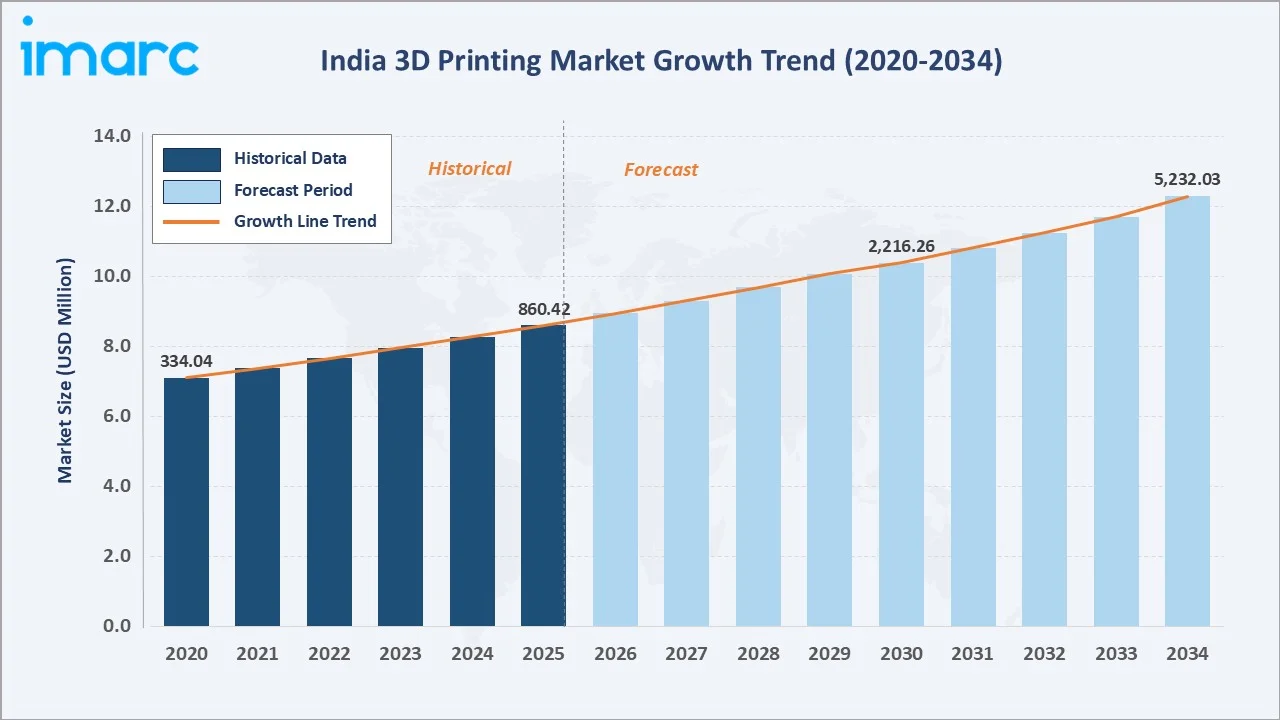
The India 3D printing market size was valued at USD 860.42 Million in 2025 and is projected to reach USD 5,232.03 Million by 2034, registering a CAGR of 20.83% during the forecast period 2026-2034, driven by MeitY's National Strategy on Additive Manufacturing, targeting a 5% share of the global Additive Manufacturing (AM) market in next 3 years, alongside surging demand for rapid prototyping across the automobile and aerospace sectors. Fused Deposition Modeling (FDM) leads the technology segment with a 35.2% share in 2025, while Plastics dominate materials at 42.3% in 2025. South India commands a 34.8% regional share in 2025.
Market Snapshot
|
Metric |
Value |
|
Market Size (2025) |
USD 860.42 Million |
|
Forecast Market Size (2034) |
USD 5,232.03 Million |
|
CAGR (2026-2034) |
20.83% |
|
Base Year |
2025 |
|
Historical Period |
2020-2025 |
|
Forecast Period |
2026-2034 |
|
Largest Region |
South India (34.8% share, 2025) |
|
Fastest Growing Region |
West & Central India |
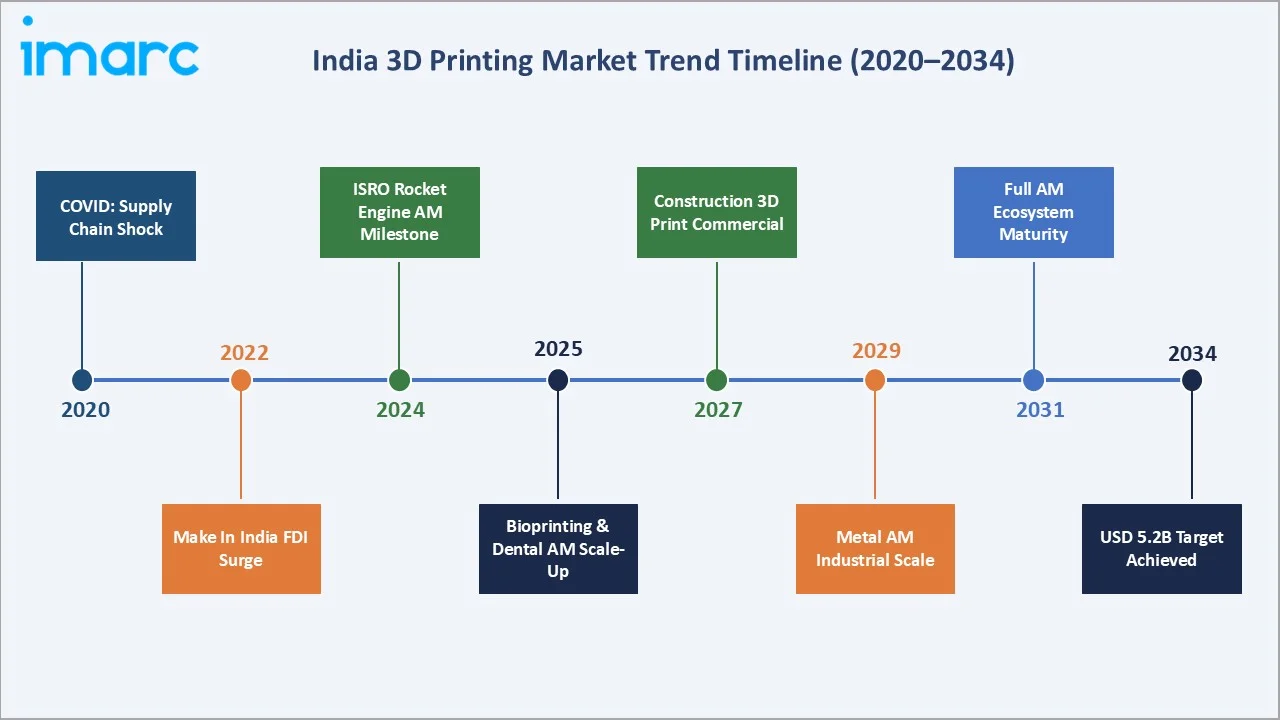
The India 3D printing market growth trajectory from 2020 through 2034, contrasting the solid historical base against an exponential forecast curve driven by expanding industrial applications and sustained government-backed manufacturing incentives.
To get more information on this market, Request Sample
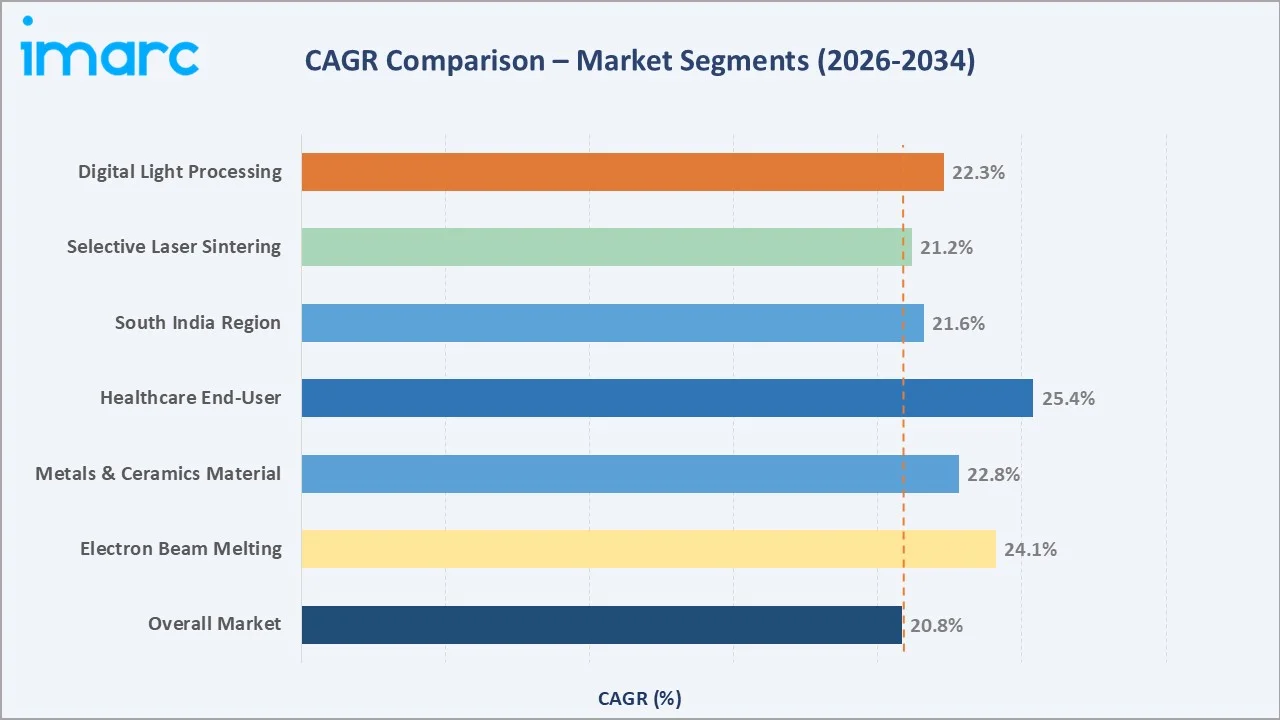
The CAGR comparisons across key technology and end-user segments underscore how aerospace, defense, and metals-related categories are outpacing the market average of 20.83% through 2034.
Executive Summary
The India 3D printing market is undergoing a decisive transition, moving from a niche prototyping tool to a mainstream industrial manufacturing technology. Government initiatives, including the Make in India campaign that attracted USD 667.4 Billion in FDI between 2014 and 2024 are catalysing manufacturing technology investment.
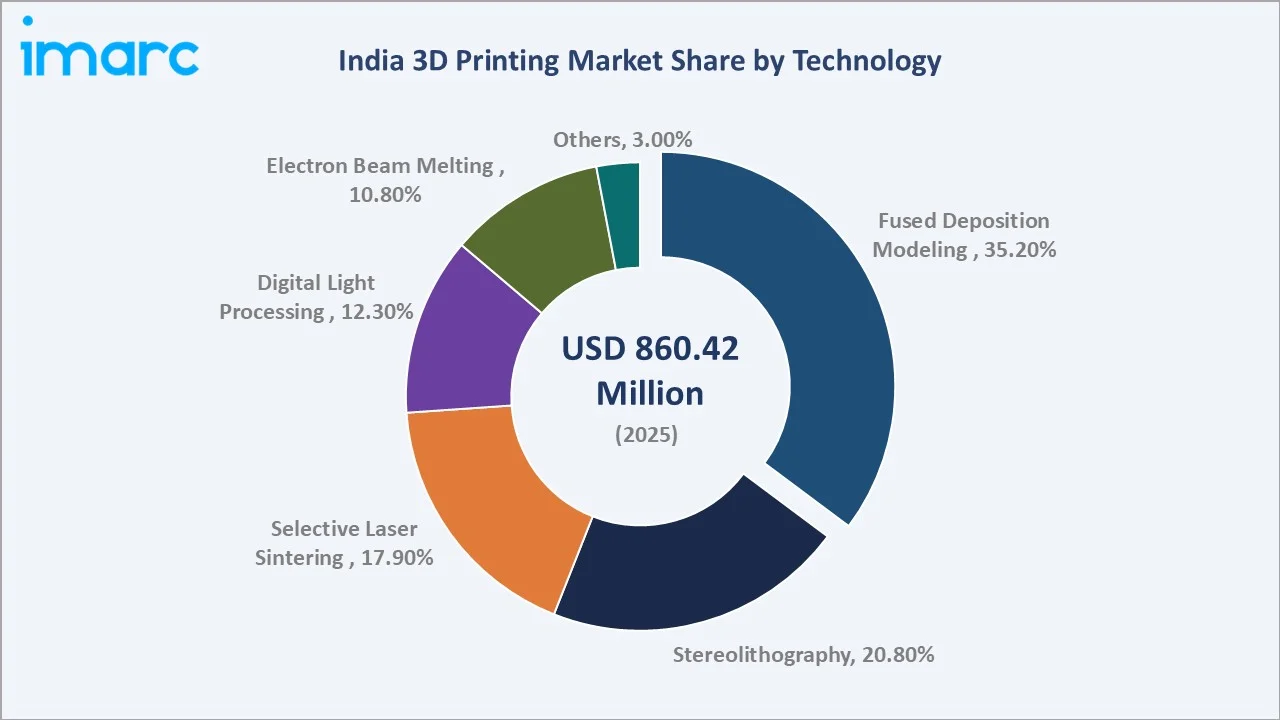
Fused Deposition Modeling holds the largest technology share at 35.2% in 2025. SLA follows at 20.8% in 2025, serving precision dental and jewelry applications with ±25-micron accuracy. Metals and Ceramics represent 25.8% of material demand in 2025, the second largest material category, reflecting the rapid scale-up of defense and aerospace AM.
South India holds 34.8% of the India 3D printing market share in 2025 with Bengaluru as the AM capital. North India follows at 28.0%, driven by Delhi NCR healthcare demand and the upcoming defense corridors in Uttar Pradesh. West & Central India (23.4%, 2025) is the fastest-growing region as Gujarat's PLI-backed manufacturing ecosystem accelerates AM adoption across automotive, pharmaceutical, and industrial segments.
Key Market Insights
|
Insight |
Data |
|
Largest Technology |
Fused Deposition Modeling - 35.2% share (2025) |
|
Largest Material |
Plastics - 42.3% share (2025) |
|
Leading Region |
South India - 34.8% revenue share (2025) |
|
Top End-User Sectors |
Healthcare, Automotive, Aerospace & Defense |
|
Top Companies |
Stratasys, 3D Systems, HP Inc., EOS, Tvasta, Divide by Zero |
Key Analytical Observations Supporting the Above Data:
- FDM leads with a 35.2% technology share in 2025, the broadest deployment stems from low filament costs, open-source printer ecosystems, and suitability for India's SME-dominated manufacturing base.
- Plastics hold a 42.3% material share in 2025, the largest material category encompassing PLA, ABS, PETG, Nylon, and specialty engineering polymers.
- South India's 34.8% regional dominance in 2025 is anchored by Bengaluru's service bureau and R&D ecosystem, Chennai's automotive AM cluster, and Hyderabad's pharmaceutical and healthcare AM corridor.
India 3D Printing Market Overview
In India, the 3D printing ecosystem encompasses polymer, metal, ceramic, and photopolymer raw material suppliers; hardware manufacturers and distributors; CAD, slicing, and simulation software providers; printing service bureaus; and diverse end-user industries spanning healthcare, automotive, aerospace, construction, education, and consumer goods.
India's AM landscape is characterised by a dual structure. Global technology leaders, including Stratasys, HP Inc., and EOS GmbH dominate the industrial hardware layer, while a vibrant domestic start-up ecosystem (Tvasta, Divide by Zero, Objectify Technologies, Think3D) is building competitive positions in construction printing, service bureau operations, and desktop FDM hardware manufacturing.
Macroeconomic tailwinds, including India's 7.4% annual GDP growth in FY 2025-26, and a manufacturing sector targeting 25% of GDP under the National Manufacturing Policy provide structural demand foundations for India's 3D printing market trends through 2034.
Market Dynamics
To evaluate market opportunities, Request Sample
Market Drivers
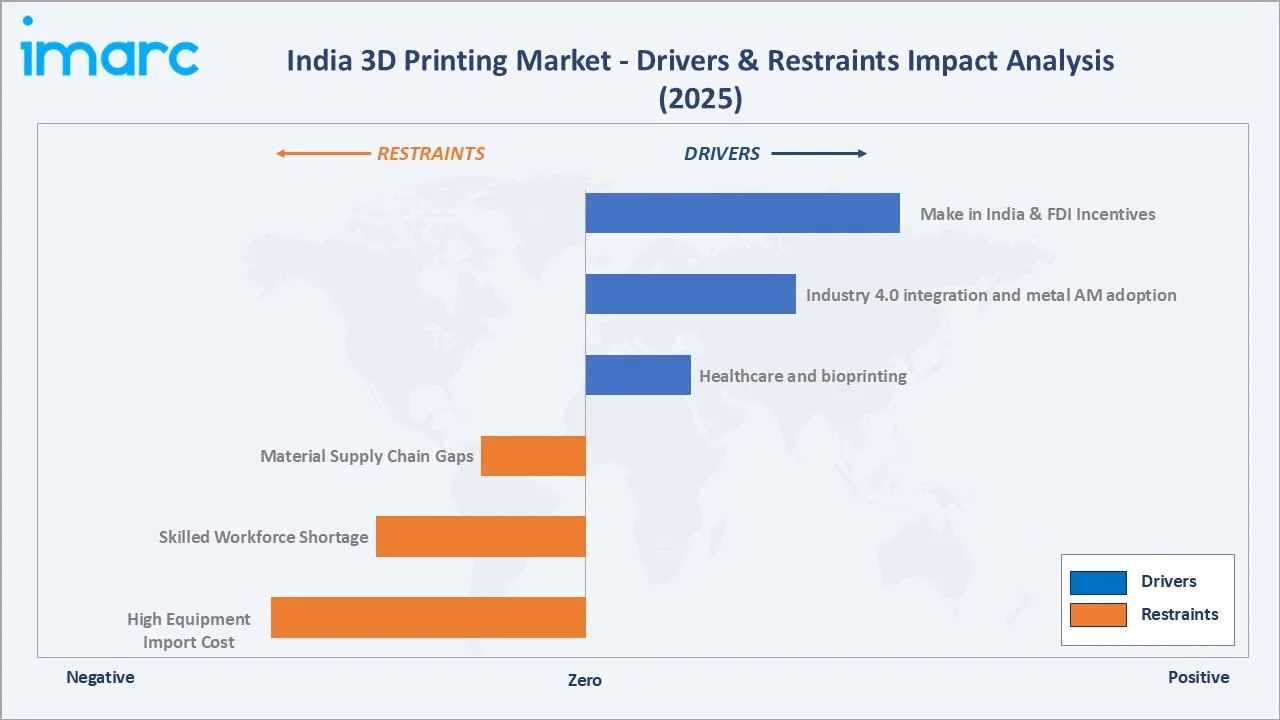
- Make in India & FDI Incentives: India's Make in India programme attracted USD 667.4 Billion in cumulative FDI between 2014 and 2024.
- Industry 4.0 integration and metal AM adoption: The convergence of Industry 4.0 digital manufacturing with additive processes is among the defining India 3D printing market trends. In April 2025, EOS and Godrej Enterprises signed a partnership announced at Aero India to develop a state-of-the-art additive manufacturing (AM)-based partnership focused on the Indian aviation and space industries.
- Healthcare and bioprinting: Incredible 3D reached a milestone of over 3,000 patient-specific implants by April 2024, collaborating with nearly 1,000 surgeons and more than 50 distributors across over 50 Indian cities using biocompatible materials such as Ti6AI4V ELI alloy, PEEK, and PMMA.
Market Restraints
- High Equipment Import Cost: Over 70% of industrial-grade AM hardware consumed in India is imported as of 2025.
- Skilled Workforce Shortage: India faces a projected deficit of a million qualified engineers and technicians by 2027.
- Material Supply Chain Gaps: Specialty AM materials metal powders (titanium, Inconel, SS316L), high-performance photopolymers, and bio-resins are predominantly imported, which creates supply chain gaps.
Market Opportunities
- Construction 3D Printing Scale-Up: Under PMAY Phase 2, the government targets 2 crore affordable homes by 2030, a housing scale at which construction printing's time savings and cost reduction offer compelling economics.
- Defence Indigenisation and Aerospace AM: DRDO's indigenisation mandate and HAL's AM evaluation programmes for titanium airframe components represent a captive AM demand stream.
- Fabless Design and Bioprinting Ecosystem: India's 24 chip design start-ups under the DLI scheme, combined with IIT Hyderabad and AIIMS Delhi's bioprinting research programmes, represent converging innovation fronts.
Market Challenges
- Post-Processing Infrastructure Gap: AM parts typically require secondary finishing, sanding, heat treatment, chemical polishing, and HIP (Hot Isostatic Pressing) for metal parts.
- IP and Patent Complexity: India's AM patent filings, signalling rising innovation activity but also increasing IP dispute risk for service bureaus and start-ups navigating complex international AM patent landscapes covering FDM, SLA, and SLS process claims.
Emerging Market Trends
1. Metals & Ceramics AM Rising as the Highest-Growth Category
DMLS (Direct Metal Laser Sintering) and EBM systems are being evaluated by DRDO, HAL, and ISRO for titanium and nickel alloy component production. India's import of metal AM powders, and domestic powder production initiatives are underway in Tamil Nadu and Maharashtra targeting commercial-scale output by 2027.
2. Selective Laser Sintering (SLS) Scaling for Industrial AM
In January 2024, STPL3D, one of India's leading domestic printer manufacturers, developed the first Made-in-India SLS printer, demonstrating how Indian manufacturers are building on an extrusion-era foundation to graduate into higher-process categories.
3. Construction 3D Printing Entering Commercial Scale
In October 2024, the Indian Army, collaborated with Military Engineer Services (MES), Simpliforge Creations, and IIT Hyderabad, and opened its largest 3D-printed building at Morar Cantonment in Gwalior, showcasing construction AM applications in defence infrastructure.
4. Digital Manufacturing and DTC AM Services Growing at 30%+ Annually
Online, API-connected instant-quote AM service platforms are disrupting India's traditional bureau model. Platforms integrating CAD-to-print pipelines with real-time pricing, material selection guidance, and logistics management are growing at 30%+ annually in India in 2024-2025.
Industry Value Chain Analysis
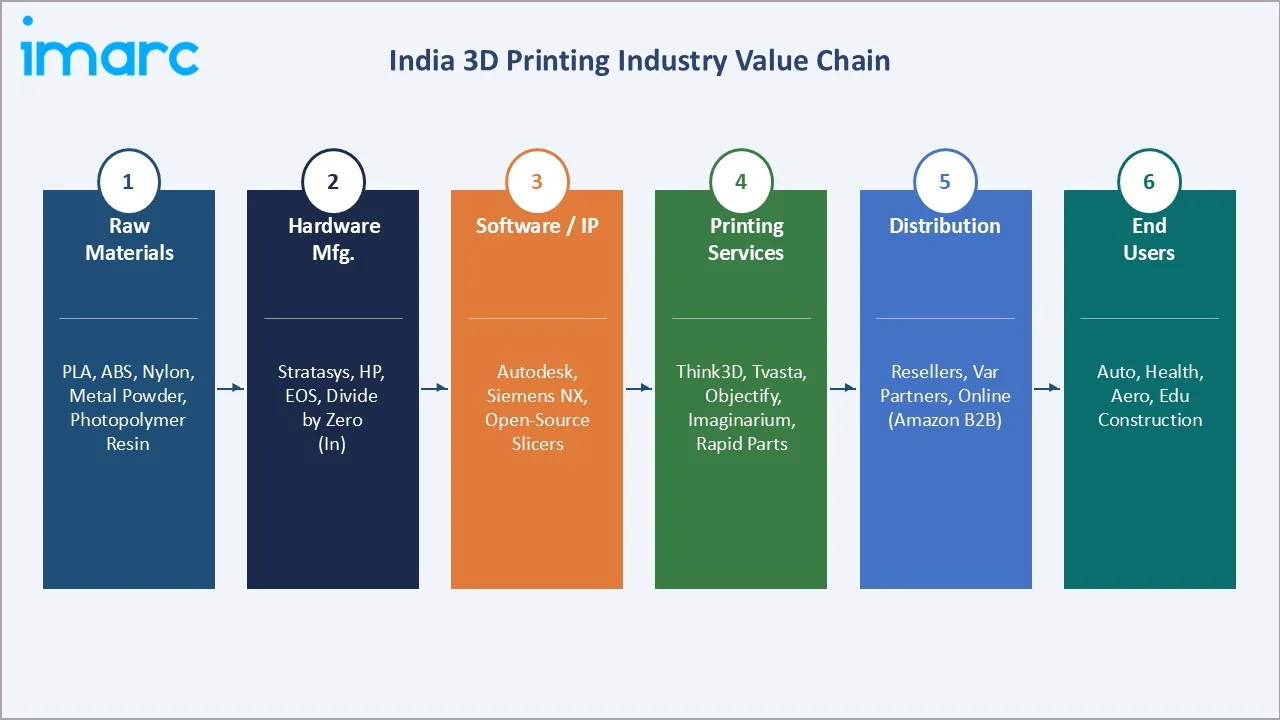
The India 3D printing industry value chain spans six interconnected stages from raw material production to end-user consumption. Each stage presents distinct investment requirements, competitive dynamics, and policy leverage points for domestic and international players.
|
Stage |
Key Players / Examples |
|
Raw Materials |
Evonik (nylon powder), BASF (polymer filaments), Sandvik (metal powder), domestic PLA producers, Merck (resins) |
|
Hardware Manufacturing |
Stratasys, 3D Systems, HP Inc. (MJF), EOS GmbH, Renishaw, Carbon Inc., Divide by Zero (India-made FDM) |
|
Software & Design IP |
Autodesk Fusion 360, Siemens NX, Materialise Magics, Ultimaker Cura, PrusaSlicer, nTopology |
|
3D Printing Services & Bureaus |
Tvasta Manufacturing, Think3D, Objectify Technologies, Imaginarium, Rapid Parts India, Fathom |
|
Distribution & Sales |
Arrow Electronics India, Tech Data India, authorised resellers, Amazon B2B, Industrybuying |
|
End Users |
ISRO, DRDO, Tata Motors, Apollo Hospitals, L&T Construction, Maruti Suzuki, educational institutions |
India's value chain is strongest in the services and distribution stages. Hardware manufacturing is dominated by imports, with Divide by Zero as the leading indigenous FDM OEM. Government initiatives are prioritising domestic metal powder production and hardware manufacturing capability through PLI-adjacent incentive structures. Closing the hardware and raw material gaps would shift an estimated USD 600-800 Million in annual import value to domestic production by 2030.
Technology Landscape in the India 3D Printing Industry
Stereolithography (SLA) and Digital Light Processing (DLP)
SLA holds 20.8% of India's technology share in 2025, the second-largest position. Its 25-micron dimensional accuracy makes it the preferred technology for dental labs, precision jewelry, and surgical simulation model production.
Electron Beam Melting (EBM) - Premium Metal AM
EBM operates in high-vacuum environments at temperatures exceeding 1000°C, producing fully dense titanium and cobalt-chrome metal parts with superior mechanical properties versus laser-based metal AM. GE Additive's Arcam systems are deployed at select DRDO and orthopedic implant manufacturers in India as of 2025.
Construction 3D Printing and Concrete Extrusion
A rapidly emerging sub-technology in India, construction 3D printing uses large-format modified FDM-type extrusion with rapid-setting concrete mixes. Tvasta's NIRMAAN RD11 (1 cubic meter build volume) and Kelvin6k's onsite printing systems represent India's leading domestic platforms.
Market Segmentation Analysis
The report covers the following segments:
|
Segment Category |
Leading Segment |
Market Share |
Year |
|
Technology |
Fused Deposition Modeling |
35.2% |
2025 |
|
Process |
Material Extrusion |
28.4% |
2025 |
|
Material |
Plastics |
42.3% |
2025 |
|
Offering |
Printer |
38.6% |
2025 |
|
Application |
Prototyping |
31.7% |
2025 |
|
End User |
Automobile |
24.1% |
2025 |
|
Region |
South India |
34.8% |
2025 |

By Technology
To access detailed market analysis, Request Sample
FDM's 35.2% technology dominance in 2025 reflects its unrivalled price-performance ratio for polymer prototyping and functional part production. Thermoplastic compatibility spanning commodity ABS and PLA to engineering-grade PEEK, Ultem, and Carbon Fibre Composites gives FDM the widest application reach of any AM technology in India.
By Material
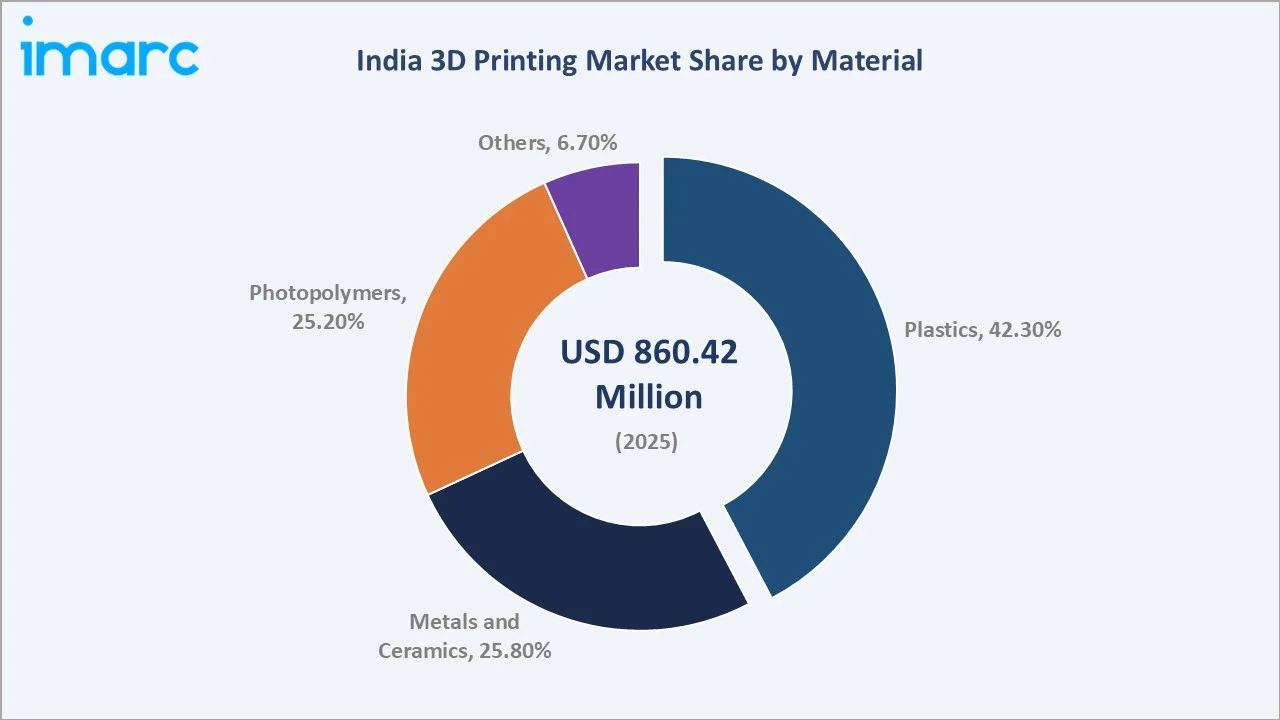
Plastics lead with 42.3% material share in 2025, representing the cumulative demand from India's large FDM printer installed base across MSMEs, educational institutions, and consumer-goods prototyping workshops. The market is witnessing a product mix upgrade within the Plastics segment as commodity PLA/ABS volumes are supplemented by higher-ASP engineering polymers (PEEK, PEKK, Nylon 12 CF) demanded by automotive and industrial customers.
Regional Market Insights
South India leads with a 34.8% share of India's 3D printing market in 2025. Bengaluru is home to Agnikul Cosmos, whose September 2025 large-format AM facility at IIT Madras Research Park in Chennai can print one-metre rocket engine components and deliver flight-ready hardware in days.Tamil Nadu's automotive cluster (Hyundai, Ford Heritage, BMW Chennai) drives sustained FDM and SLS tooling and prototyping demand. Hyderabad's pharmaceutical corridor, home to Dr. Reddy's, Aurobindo Pharma, and Apollo Hospitals, contributes significantly to medical AM demand for custom drug dissolution testing apparatus and personalised prosthetics.
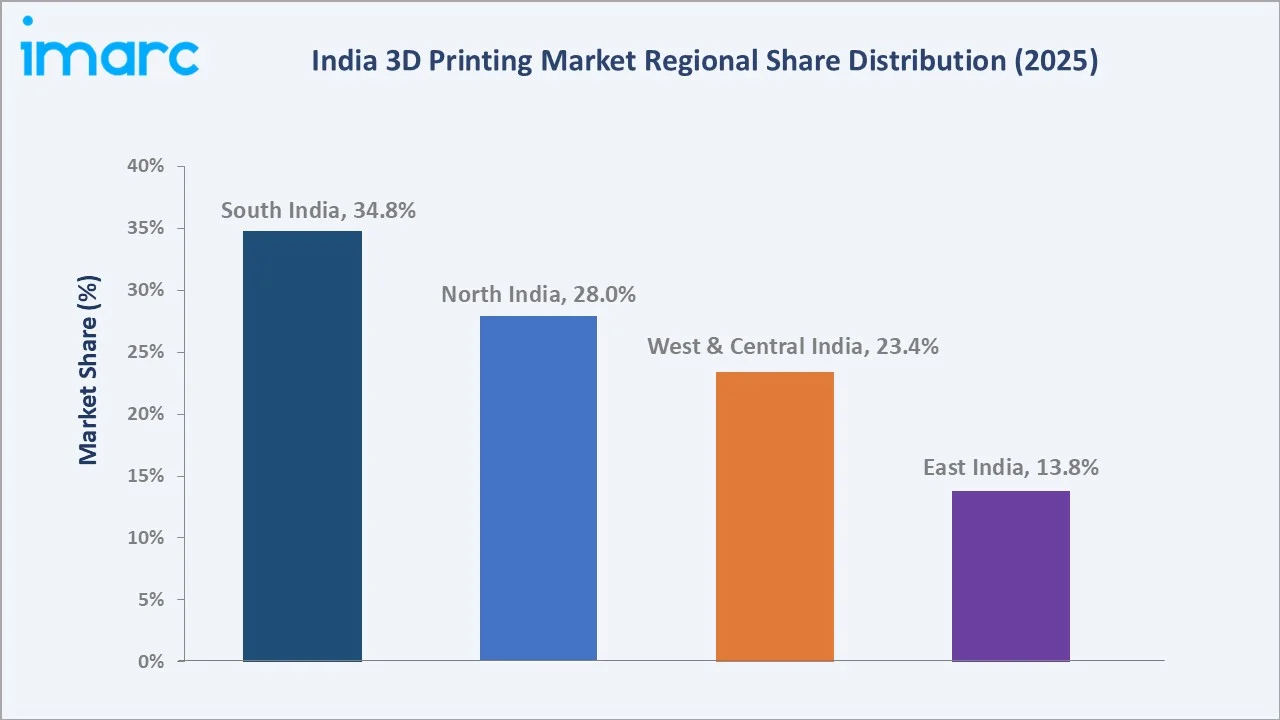
West & Central India, with 23.4% in 2025, is the fastest-growing region. West and Central India's 3D printing market is led by MP and Pune's mature industrial and automotive manufacturing clusters. In October 2024, the Indian Army, collaborated with Military Engineer Services (MES), Simpliforge Creations, and IIT Hyderabad, and opened its largest 3D-printed building at Morar Cantonment in Gwalio, showcasing construction AM applications in defence infrastructure.
Competitive Landscape
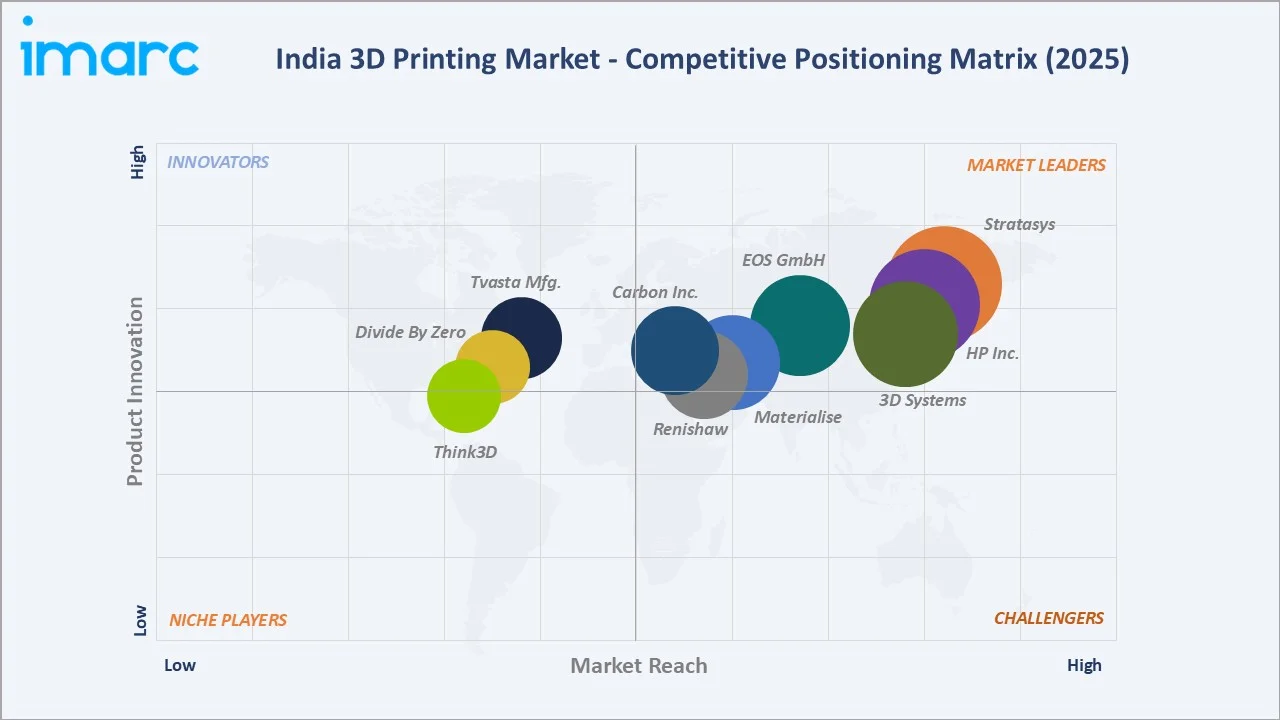
India's 3D printing competitive landscape features global AM technology incumbents Stratasys, 3D Systems, HP Inc., and EOS GmbH, competing against niche specialists and a growing cohort of domestic players.
|
Company Name |
Brand / Division |
Market Position |
Core Strength |
|
Stratasys Ltd. |
Fortus / F900 Systems |
Leader |
Industrial FDM, PolyJet, aerospace & medical |
|
3D Systems Corp. |
ProX / Figure 4 |
Leader |
SLA, SLS, metal AM, healthcare |
|
HP Inc. |
HP Jet Fusion |
Leader |
Multi Jet Fusion, industrial polymers |
|
EOS GmbH |
EOS P & M Series |
Leader |
SLS & DMLS metals, aerospace |
|
Materialise NV |
Magics / Build Processor |
Challenger |
Software, medical, service bureau |
|
Renishaw plc |
RenAM 500 Series |
Challenger |
Metal AM, dental, precision industrial |
|
Carbon Inc. |
Carbon DLS Platform |
Challenger |
Digital Light Synthesis, auto parts |
|
Tvasta Manufacturing |
NIRMAAN Series |
Emerging |
Construction AM, India-made systems |
|
Divide by Zero Technologies |
Aion 500 MK2 |
Emerging |
Desktop & industrial FDM OEM (India) |
|
Think3D |
Think3D Services |
Emerging |
Multi-technology service bureau |
International companies dominate the hardware and materials layers; Indian companies are carving competitive positions in construction printing, service bureau operations, and desktop FDM manufacturing.
Key Company Profiles
Stratasys Ltd.
Stratasys is the global leader in polymer 3D printing. Its India presence serves over 50 enterprise clients across aerospace, automotive, education, and medical sectors through a network of 12 authorised channel partners and a dedicated Bengaluru technical support centre.
- Product Portfolio: FDM series, PolyJet multi-material platforms, SAF technology
- Recent Developments: In September 2024, Aakash Healthcare Super Speciality Hospital in Dwarka opened its Advanced 3D Printing Lab in partnership with Stratasys.
- Strategic Focus: Stratasys targets India's aerospace (HAL, ISRO supply chain), automotive (Tata, Mahindra, Bajaj tooling), and medical (Apollo, Fortis surgical models) verticals.
3D Systems Corporation
3D Systems offers one of the industry's most comprehensive AM portfolios spanning SLA, SLS, DMP metal printing, and production systems.
- Product Portfolio: SLS systems, NextDent 300, PSLA 270, MJP 300W Plus.
- Recent Developments: In July 2023, 3D Systems announced Matrix Moon, an additive manufacturing-focused training center and a 3D Systems reseller located in India which is purchased an EXT 1070 Titan Pellet 3D printer.
- Strategic Focus: 3D Systems' India strategy emphasises healthcare applications (dental, surgical), DMP metal AM for aerospace and tooling, and growing its on-demand manufacturing services revenue through certified Indian partners.
Divide by Zero Technologies
Divide by Zero is India's leading indigenous FDM 3D printer manufacturer, headquartered in Navi Mumbai. Founded in 2014, it designs, manufactures, and markets industrial and desktop FDM 3D printers serving automotive, defense, education, and industrial tooling sectors across India, offering a fully domestically manufactured AM hardware platform aligned with Make in India procurement preferences.
- Product Portfolio: Aion 500 MK2, ACCUCRAFT I250+, ACCUCRAFT I250D, AEQON 400 V4, ALPHA 500, Quantum Pro 500, AION NX.
- Recent Developments: In November 2025, Zuppa and Divide By Zero Technologies collaborated to develop mobile rapid fabrication units, deployable containerized systems capable of 3D printing and assembling drones directly at the frontlines.
- Strategic Focus: Divide by Zero's strategy centres on import substitution, providing Indian-manufactured FDM systems at 30-40% lower total cost of ownership versus equivalent imports, and on capturing government, defence, and MSME AM demand through Aatmanirbhar Bharat alignment and GEM (Government e-Marketplace) listing.
Market Concentration Analysis
The India 3D printing market exhibits moderate fragmentation, with global AM technology incumbents dominating hardware and materials, and a diverse ecosystem of domestic and international service bureaus capturing the services layer.
The top 5 global AM players collectively hold approximately 40-50% of the India 3D printing market in 2025. The remaining 50-60% is distributed across domestic service bureaus, equipment distributors, material suppliers, educational institutions with commercial service arms, and domestic OEMs including Divide by Zero and Tvasta.
Divide by Zero and Tvasta, India's leading indigenous hardware players, are potential acquisition targets for global OEMs seeking Make in India alignment for government procurement advantages. The growing DLI (Design Linked Incentive) ecosystem is expected to create new AM-adjacent Indian start-ups annually, sustaining fragmentation at the innovation layer even as consolidation occurs at the production services layer.
Investment & Growth Opportunities
Fastest-Growing Segments
Metals & Ceramics is the highest-growth material segment. The Aerospace & Defense end-user segment at ~27.2% CAGR through 2034 represents India's fastest-growing AM end-market. India's defense capital budget of and the ongoing Aatmanirbhar Bharat indigenisation mandate provide structural procurement certainty.
Emerging Market Expansion
Construction 3D printing is projected to contribute USD 300 Million+ to India's total AM market by 2030. Education and vocational training are an underinvested AM segment. India's government ITIs and polytechnics represent a hardware and material procurement opportunity once AM is formally integrated into Skill India Mission curricula, a policy transition expected between 2026 and 2028 based on current Ministry of Education consultation timelines.
Venture & Private Investment Trends
India's start-up ecosystem attracted around USD 11 billion in 2025. International PE funds are monitoring multi-technology service bureau assets in India with EBITDA margins, as India's 20.83% CAGR market growth compares favourably against global AM investment benchmarks. Government co-investment through SIDBI's AM-focused MSME technology fund adds a public-sector catalyst for the broader AM investment ecosystem.
Future Market Outlook (2026-2034)
The India 3D printing market forecast projects expansion from USD 860.42 Million in 2025 to USD 5,232.03 Million by 2034 at a CAGR of 20.83%, making it one of the fastest-growing AM markets globally. This trajectory positions India to represent approximately 5-6% of the global AM market by 2034.
Four technology shifts are most likely to disrupt India's 3D printing landscape through 2034. Continuous liquid interface production (CLIP), commercialised by Carbon Inc. at speeds 100x faster than SLA, is expected to enter India's dental and consumer goods markets by 2027. Generative AI design tools, including nTopology and Autodesk Dreamcatcher integration with AM slicers, are enabling 40-70% material savings in aerospace and medical components, reshaping the economics of AM for high-value applications. Chiplet-based electronics manufacturing using AM-printed substrates is an emerging frontier aligning India's semiconductor ambitions with its AM ecosystem.
By 2034, India's 3D printing industry is forecast to operate as a distributed, digitally-integrated manufacturing ecosystem. Digital inventory models, where CAD design files replace physical spare part stocks, will reduce Indian Railways, Indian Navy, and Indian Air Force maintenance logistics costs. On-demand, locally-distributed AM will enable cost-effective product manufacturing across India's Tier-3 cities and rural industrial clusters.
Research Methodology
Primary Research
Primary research encompassed over 55 structured interviews conducted in 2024-2025 with key value chain stakeholders, including AM equipment distributors and resellers, service bureau operators, end-user procurement executives, and institutional investors and venture funds active in India's AM ecosystem. Primary data was used to validate market sizing estimates, segmentation split assumptions, competitive positioning, and trend identification.
Secondary Research
Secondary research sources consulted include Government of India publications, industry association reports, SEMI global market intelligence, Wohlers Report 2024, company annual reports and press releases, academic papers on bioprinting and construction AM, and reputed trade publications including Additive Manufacturing Magazine, TCT Magazine, and Manufacturing Today India.
Forecasting Models
Market size estimations and growth projections were derived using a combination of top-down and bottom-up forecasting models, incorporating GDP growth rates, urbanization indices, consumer expenditure data, and historical market evolution patterns. Scenario analysis (base, optimistic, and conservative cases) was performed to account for macroeconomic uncertainty.
Report Coverage
|
Attribute |
Details |
|
Base Year |
2025 |
|
Historical Period |
2020-2025 |
|
Forecast Period |
2026-2034 |
|
Market Size (2025) |
USD 860.42 Million |
|
Market Forecast (2034) |
USD 5,232.03 Million |
|
CAGR (2026-2034) |
20.83% |
|
Segmentation by Technology |
Stereolithography (20.8%), FDM (35.2%), SLS (17.9%), EBM (10.8%), DLP (12.3%), Others (3.0%) |
|
Segmentation by Material |
Photopolymers (25.2%), Plastics (42.3%), Metals & Ceramics (25.8%), Others (6.7%) |
|
Segmentation by Process |
Binder Jetting, DED, Material Extrusion, Material Jetting, PBF, Sheet Lamination, Vat Photopolymerization |
|
Segmentation by End User |
Healthcare (24.5%), Automotive (19.8%), Aerospace & Defense (18.3%), Education, Consumer Goods, Construction |
|
Regional Coverage |
South India (34.8%), North India (28.0%), West & Central India (23.4%), East India (13.8%) |
|
Key Companies |
Stratasys Ltd., 3D Systems Corp., HP Inc., EOS GmbH, Materialise NV, Renishaw plc, Carbon Inc., Tvasta Manufacturing, Divide by Zero Technologies, Think3D |
Key Benefits for Stakeholders:
- IMARC’s report offers a comprehensive quantitative analysis of various market segments, historical and current market trends, market forecasts, and dynamics of the India 3D printing market from 2020-2034.
- The research study provides the latest information on the market drivers, challenges, and opportunities in the India 3D printing market.
- Porter's Five Forces analysis assists stakeholders in assessing the impact of new entrants, competitive rivalry, supplier power, buyer power, and the threat of substitution. It helps stakeholders to analyze the level of competition within the India 3D printing industry and its attractiveness.
- Competitive landscape allows stakeholders to understand their competitive environment and provides an insight into the current positions of key players in the market.
Frequently Asked Questions About the India 3D Printing Market Report
The India 3D printing market was valued at USD 860.42 Million in 2025, growing from approximately USD 334.04 Million in 2020, representing a near-3.3x increase over five years.
The India 3D printing market is projected to reach USD 5,232.03 Million by 2034, growing at a CAGR of 20.83% from 2026 to 2034.
Fused Deposition Modeling (FDM) leads with a 35.2% share in 2025, favoured for its affordability, wide material range, and broad SME and educational sector adoption.
Selective Laser Sintering (SLS) is the fastest-growing technology, driven by aerospace functional part production and defence indigenisation under Aatmanirbhar Bharat.
Plastics dominate with a 42.3% share in 2025, driven by PLA, ABS, and PETG filament demand from India's large FDM-printer installed base across SMEs and educational institutions.
Metals & Ceramics at 25.8% share in 2025, propelled by ISRO rocket engine manufacturing and DRDO defence AM programs.
South India leads with 34.8% market share in 2025, anchored by Bengaluru's 200+ service bureau cluster, Chennai's automotive demand, and Hyderabad's healthcare and pharma ecosystem.
Leading companies include Stratasys, 3D Systems, HP Inc., EOS GmbH, Materialise, Carbon Inc., and Indian-origin players Tvasta Manufacturing, Divide by Zero, and Think3D.
Make in India FDI initiatives (USD 667.4 Billion FDI 2014-2024), PLI manufacturing incentives, Aatmanirbhar Bharat indigenisation mandates, and the Chips to Startup (C2S) program collectively support AM adoption.
Dental prosthetics, surgical simulation models, personalised prosthetics, and emerging bioprinting research at AIIMS and IITs drive India's healthcare AM sector at ~25.0% CAGR through 2034.
Yes. Tvasta Manufacturing and Kelvin6k are commercial leaders. A 2,500 sq-ft home can be 3D-printed in two weeks versus four months conventionally, at 20% lower cost – viable for India's affordable housing programmes.
Need more help?
- Speak to our experienced analysts for insights on the current market scenarios.
- Include additional segments and countries to customize the report as per your requirement.
- Gain an unparalleled competitive advantage in your domain by understanding how to utilize the report and positively impacting your operations and revenue.
- For further assistance, please connect with our analysts.
 Request Customization
 Speak to an Analyst
 Request Brochure
 Inquire Before Buying
Benefits of Customization
- Personalize this research
- Triangulate with your data
- Get data as per your format and definition
- Gain a deeper dive into a specific application, geography, customer, or competitor
- Any level of personalization
Get in Touch With Us
UNITED STATES
Phone: +1-201-971-6302
INDIA
Phone: +91-120-433-0800
UNITED KINGDOM
Phone: +44-753-714-6104
Email: [email protected]
Client Testimonials




.webp)




.webp)













Related Reports

Choose your plan
*Please note that the prices mentioned below are starting prices for each bundle type. Kindly contact our team for further details.*
Single User License
- 1 User License, Access on 2 Devices
- PDF Report + Excel Dataset (Password Protected)
- Lifetime Access
- No Printing Rights
- 10% Free Report Customization
- 10–12 Weeks of Analyst Support
Five User License
- Access for 5 Users, 2 Devices per User
- PDF Report + Excel Dataset (Password Protected)
- Lifetime Access
- Dedicated Account Manager
- 12–14 Weeks of Analyst Support
- No Printing Rights
- 15% Free Report Customization
- 25% Discount on Your Next Purchase
Corporate User License
- Unlimited User Access (Within Your Organization)
- PDF Report + Excel Dataset
- Lifetime Access
- Dedicated Account Manager
- 14–20 Weeks of Analyst Support
- No Printing Rights
- 20% Free Report Customization
- 30% Discount on Your Next Purchase
Essential Insights
What's included:
3 reports
- Lifetime Access
- PDF Reports
- Excel Datasets
- 2 Weeks of Free Analyst Support
- 2 User Licenses
- Access on 2 Devices
- Printing Rights
- Complimentary PowerPoint (PPT) Version
- Complimentary License Upgrade
Professional Access
What's included:
5 reports
- Lifetime Access
- PDF Reports
- Excel Datasets
- 8 Weeks of Free Analyst Support
- 2 User Licenses
- Access on 2 Devices
- Printing Rights
- Complimentary PowerPoint (PPT) Version
- Complimentary License Upgrade
Business Advantage
What's included:
8 reports
- Lifetime Access
- PDF Reports
- Excel Datasets
- 14 Weeks of Free Analyst Support
- 2 User Licenses
- Access on 2 Devices
- Printing Rights
- Complimentary PowerPoint (PPT) Version
- Complimentary License Upgrade
Enterprise Intelligence
What's included:
10 reports
- Lifetime Access
- PDF Reports
- Excel Datasets
- 20 Weeks of Free Analyst Support
- 2 User Licenses
- Access on 2 Devices
- Printing Rights
- Complimentary PowerPoint (PPT) Version
- Complimentary License Upgrade