
India Biofertilizer Market Size, Share, Trends and Forecast by Type, Crop, Microorganism, Mode of Application, and Region, 2026-2034
India Biofertilizer Market Summary:
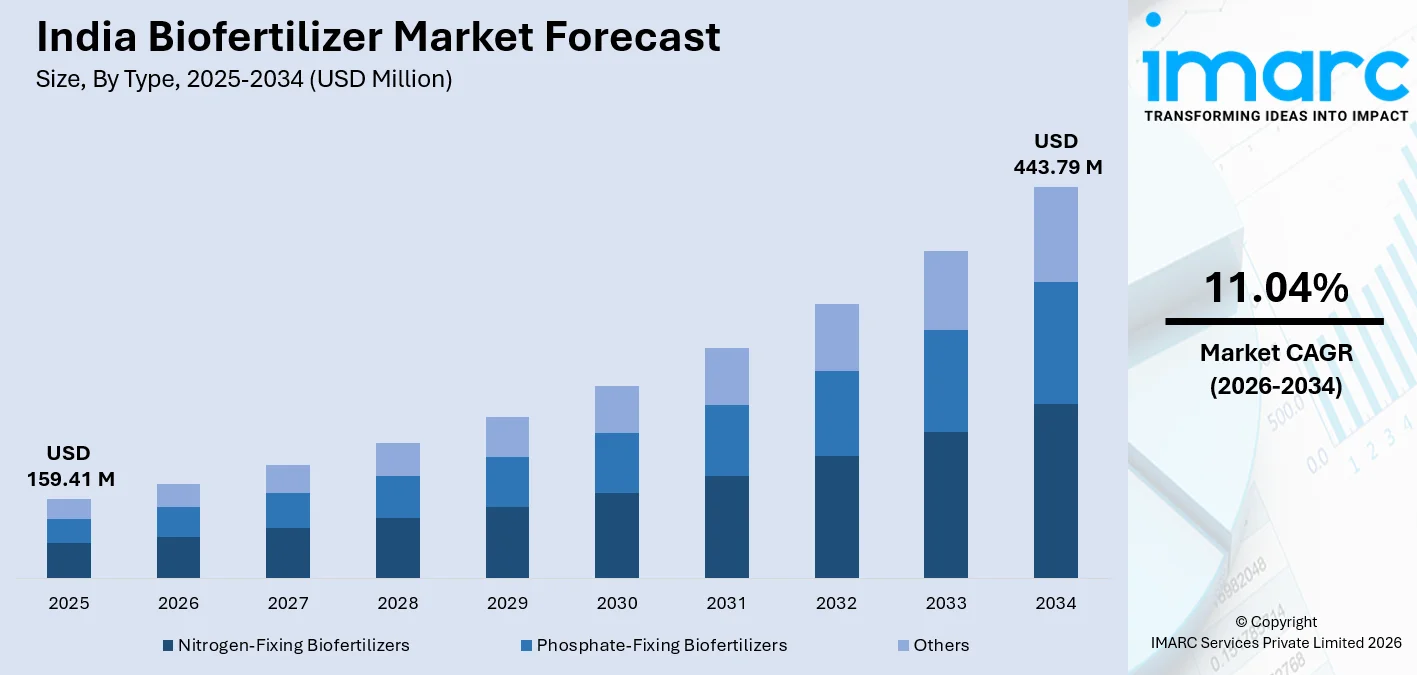
The India biofertilizer market size was valued at USD 159.41 Million in 2025 and is projected to reach USD 443.79 Million by 2034, growing at a compound annual growth rate of 11.04% from 2026-2034.
India’s biofertilizer market is experiencing robust growth, driven by the increasing shift toward sustainable and organic agricultural practices. Rising farmer awareness of the long-term benefits of biological inputs for soil health and crop productivity is accelerating adoption nationwide. Supportive government policies promoting eco-friendly farming, combined with growing consumer demand for chemical-free food products, are collectively strengthening the India biofertilizer market share.
Key Takeaways and Insights:
- By Type: Nitrogen-Fixing biofertilizers dominate the market with a share of 55.0% in 2025, owing to their critical role in enhancing soil nitrogen levels and supporting sustainable crop nutrition across diverse agro-climatic regions.
- By Crop: Cereals and grains lead the market with a share of 40.0% in 2025, driven by the widespread cultivation of rice, wheat, and maize that benefit significantly from biological nutrient inputs.
- By Microorganism: Rhizobium represents the largest segment with a market share of 28.0% in 2025, representing the leading microorganism segment owing to its well-established role in nitrogen fixation, particularly for leguminous and pulse crops across diverse regions.
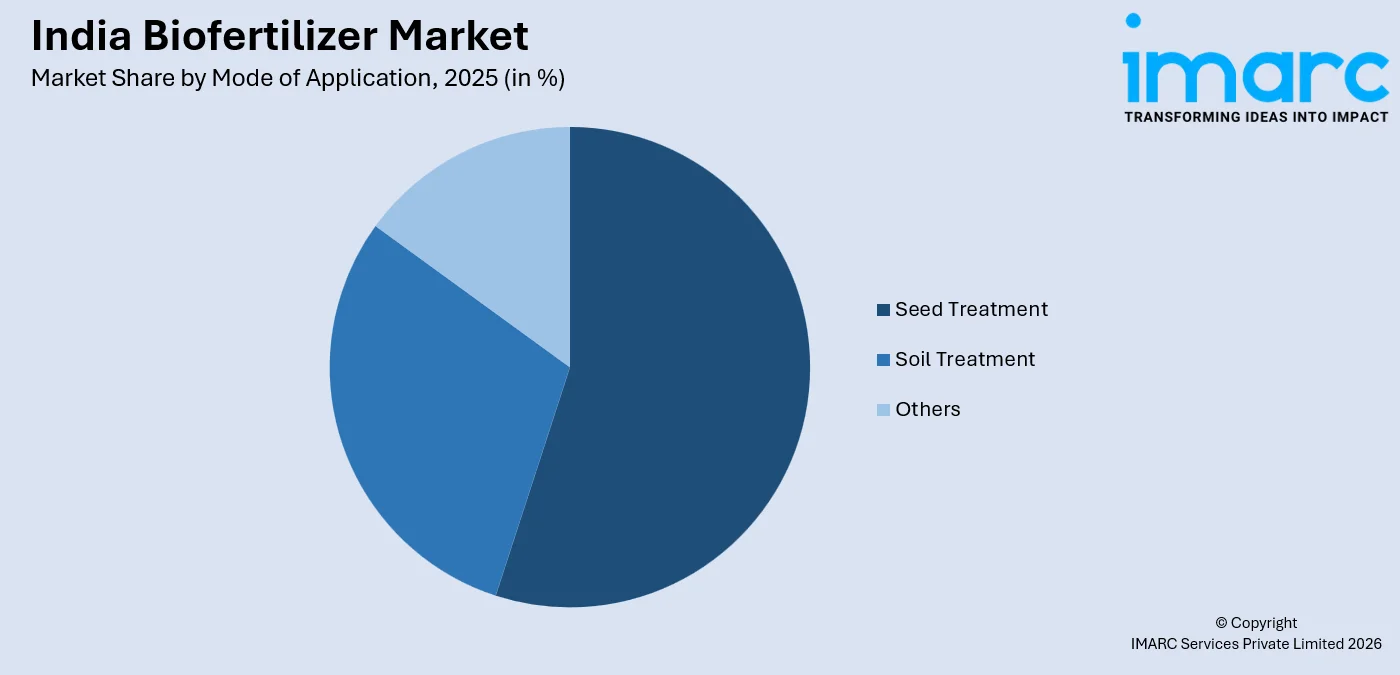
- By Mode of Application: Seed treatment dominates the market with a share of 52.0% in 2025, as it ensures direct inoculation of beneficial microorganisms onto seeds, enhancing germination efficiency and early-stage nutrient availability for crops.
- By Region: South India leads the market with a share of 34.0% in 2025, driven by progressive adoption of organic farming practices, high agricultural output, and strong government support for sustainable inputs.
- Key Players: The India biofertilizer market is moderately competitive, featuring a mix of public sector undertakings, cooperative entities, and private agri-input companies competing through product innovation, distribution expansion, and strategic partnerships.
To get more information on this market Request Sample
The India biofertilizer market is driven by a convergence of environmental, economic, and policy-related factors reshaping the country’s agricultural landscape. Growing recognition of the adverse effects of prolonged chemical fertilizer use on soil health, groundwater quality, and long-term crop productivity has prompted farmers to transition toward bio-based alternatives. For example, in September 2024, Krishak Bharati Cooperative Limited (KRIBHCO) partnered with Novonesis to launch an advanced mycorrhizal biofertilizer product, KRIBHCO Rhizosuper, powered by proprietary microbial technology to improve soil quality and crop yields across India. The rapid expansion of organic farming across major agricultural states is generating consistent demand for microbial inputs that enhance nutrient availability naturally. Government-led initiatives, subsidies, and awareness programs are facilitating widespread adoption of biofertilizers among smallholder and commercial farmers. The expanding network of agri-input retailers and digital distribution channels is improving accessibility, while ongoing research into high-efficacy microbial strains is broadening the application scope of biofertilizers across diverse crop types and soil conditions across India.
India Biofertilizer Market Trends:
Rising Shift Toward Organic and Sustainable Farming Practices
India’s agricultural sector is transitioning from chemical-dependent farming toward sustainable approaches. Growing consumer awareness about food safety and environmental preservation is encouraging farmers to adopt biofertilizers as primary nutrient inputs. Government programs actively promoting natural farming practices, such as the National Mission on Natural Farming (NMNF) approved in 2024 to establish 10,000 Bio‑Input Resource Centres and reach 1 crore farmers with chemical‑free practices, are reinforcing this shift and creating favorable long‑term conditions for market expansion by reducing reliance on synthetic inputs and enhancing soil health and biodiversity.
Advancement in Liquid Biofertilizer Formulations
Technological innovation in liquid biofertilizer formulations is gaining significant traction across India. These advanced formulations offer extended shelf life, higher microbial viability, and greater compatibility with fertigation and precision irrigation systems. In October 2024, the Council of Scientific & Industrial Research (CSIR) – National Botanical Research Institute partnered with a local entrepreneur in Odisha’s Nabarangpur to establish a liquid biofertilizer production unit using high‑efficiency microbial strains developed by the institute, reaching over 25,000 farmers in Odisha and neighboring states with its improved formulation. Growing adoption of protected cultivation and drip irrigation in horticulture and high-value crop segments is accelerating farmer preference for liquid variants, positioning them as a rapidly expanding product category within the overall biofertilizer market.
Expansion of Government-Backed Agricultural Support Programs
Multiple central and state-level schemes are actively supporting the biofertilizer market by providing financial assistance, technical guidance, and training to farmers transitioning to bio-based inputs. For example, in December 2024 the Union Minister of State for Agriculture highlighted that biofertilizers are being actively promoted under the Paramparagat Krishi Vikash Yojana (PKVY) and the Mission Organic Value Chain Development for North Eastern Region (MOVCDNER), with direct financial assistance of up to ₹15,000–₹32,500 per hectare for organic inputs including biofertilizers, and training and awareness programs run by the National Centre of Organic and Natural Farming (NCOF). Programs focused on soil health restoration and sustainable crop production are prioritizing biofertilizer inclusion in recommended input packages, significantly broadening market outreach and creating favorable conditions for consistent long-term adoption across diverse farming communities throughout India.
Market Outlook 2026-2034:
India’s biofertilizer market is expected to grow steadily in the coming years, driven by increasing acceptance of organic fertilizers by farmers and government initiatives to promote organic farming. With increasing research in microbial biotechnology, it is expected that even better and crop-specific formulations of biofertilizers would become available, thus increasing the usage and penetration of this product. With increasing organic food export potential and demand for organic food in India, this would also help to increase demand. The market generated a revenue of USD 159.41 Million in 2025 and is projected to reach a revenue of USD 443.79 Million by 2034, growing at a compound annual growth rate of 11.04% from 2026-2034.
India Biofertilizer Market Report Segmentation:
| Segment Category | Leading Segment | Market Share |
|---|---|---|
|
Type |
Nitrogen-Fixing Biofertilizers |
55.0% |
|
Crop |
Cereals and Grains |
40.0% |
|
Microorganism |
Rhizobium |
28.0% |
|
Mode of Application |
Seed Treatment |
52.0% |
|
Region |
South India |
34.0% |
Type Insights:
- Nitrogen-Fixing Biofertilizers
- Phosphate-Fixing Biofertilizers
- Others
The nitrogen-fixing biofertilizers dominate with a market share of 55.0% of the total India biofertilizer market in 2025.
Nitrogen-fixing biofertilizers hold a commanding position in the India biofertilizer market owing to their fundamental role in replenishing soil nitrogen levels, one of the most essential macronutrients for healthy plant development. These biofertilizers contain specialized microorganisms that convert atmospheric nitrogen into plant-available forms, significantly reducing dependency on synthetic nitrogen inputs. The widespread cultivation of nitrogen-intensive crops such as rice, wheat, and pulses across India's diverse agricultural regions drives consistent and growing demand for this category.
With increasing national focus on reducing dependency on synthetic sources of urea, the current stature of nitrogen-fixing biofertilizers assumes significant prominence in India's nutrient management profile. With government-endorsed programs to promote the usage of alternative sources of nitrogen instead of synthetic ones, and raising awareness about the benefits of using these fertilizers, their compatibility with a wide variety of soil and agro-climatic conditions makes this segment a dominant force in all major crop-growing areas of India.
Crop Insights:
- Cereals and Grains
- Pulses and Oilseeds
- Fruits and Vegetables
- Others
The cereals and grains lead with a share of 40.0% of the total India biofertilizer market in 2025.
Cereals and grains are considered to be the largest crop-based application area in the India biofertilizer market, and this is mainly due to the large area covered under rice, wheat, and maize crops in the major agricultural states of India. These crops require consistent and high levels of nitrogen and phosphate fertilizers, and hence are considered to be most suitable and compatible with the usage of biofertilizers. The large area covered under grain crops in India, especially under government schemes of price stabilization programs, provides a consistent and stable demand for biofertilizers formulated specifically for this crop category.
The integration of biofertilizers into cereal crop production is further reinforced by growing awareness among farming communities about their capacity to enhance soil microbial activity, improve long-term fertility, and reduce overall input costs across successive cropping seasons. National programs supporting the intensification of grain production provide a structured platform for agri-input providers to promote biofertilizer adoption alongside conventional crop management practices. This combination of agronomic compatibility and policy support ensures that the cereals and grains segment retains its dominant position.
Microorganism Insights:
- Cyanobacter
- Rhizobium
- Phosphate Solubilizing Bacteria
- Azotobacter
- Others
The rhizobium dominates with a market share of 28.0% of the total India biofertilizer market in 2025.
Rhizobium holds the leading position among microorganism-based biofertilizer categories due to its well-documented and scientifically validated effectiveness in symbiotic nitrogen fixation, particularly for leguminous and pulse crops. This microorganism establishes specialized root nodules in host plants, converting atmospheric nitrogen into bioavailable forms and thereby reducing the requirement for synthetic fertilizer inputs. The significant cultivation of pulse crops across central and peninsular India provides a robust agronomic foundation that continues to drive consistent demand for Rhizobium-based biofertilizer products.
National initiatives aimed at boosting pulse production and achieving protein self-sufficiency have further amplified demand for Rhizobium-based formulations, as the microorganism is specifically suited to maximizing yields in these crops. State agricultural programs offering biofertilizer input packages for pulse farmers have broadened adoption considerably across key growing regions. Ongoing advancements in multi-strain formulation development and improved carrier materials continue to enhance the agronomic performance of Rhizobium products, reinforcing their leadership within the microorganism segment of the India biofertilizer market.
Mode of Application Insights:
Access the comprehensive market breakdown Request Sample
- Seed Treatment
- Soil Treatment
- Others
The seed treatment leads with a share of 52.0% of the total India biofertilizer market in 2025.
Seed treatment represents the dominant mode of biofertilizer application in the India biofertilizer market, owing to its simplicity, cost-efficiency, and proven effectiveness in establishing direct contact between beneficial microorganisms and germinating seeds. By coating seeds with targeted microbial strains prior to sowing, this method ensures early colonization of the root zone, enhancing nutrient uptake from the earliest stages of plant growth. Reflecting this trend, IPL Biologicals launched six innovative soluble powder biological products under its NXG Range in May 2025, designed for easy application and compatibility with micro‑irrigation systems, many of which are suited for seed treatment and integration into precision nutrient management practices. These launches underscore the commercial focus on enhancing biological efficacy and operational ease for seed‑based applications in sustainable agriculture.
The preference for seed treatment is reinforced by its strong compatibility with widely cultivated field crops including rice, wheat, and legumes, which collectively account for the majority of India's agricultural acreage. Training programs conducted by state agricultural departments and agronomy research centers have significantly improved farmer proficiency in correct inoculation techniques, driving adoption across varied agro-climatic regions. The comparatively lower cost of biofertilizer seed treatment relative to other application methods further strengthens its position as the preferred and most widely practiced application mode across India.
Regional Insights:
- North India
- West and Central India
- South India
- East India
South India exhibits a clear dominance with a 34.0% share of the total India biofertilizer market in 2025.
South India has the highest market share in the India biofertilizer market, which can be attributed to the rich heritage of agriculture and a progressive attitude toward adopting eco-friendly agri-inputs. The states of Karnataka, Tamil Nadu, Andhra Pradesh, and Telangana have a highly diverse agro-ecosystem with crops such as rice, pulses, sugarcane, and horticultural crops, which benefit immensely from the application of biofertilizers. The tropical and semi-arid agro-climatic conditions of this region are conducive to supporting sustainable microbial activities.
Government initiatives have played a significant role in promoting the use of biofertilizers in this region. The presence of strong cooperative societies and high levels of farmer literacy regarding eco-friendly agri-inputs have collectively contributed to increased awareness about the benefits of using biofertilizers. The strong presence of agri-input distribution networks and their proximity to major biofertilizer production centers have also contributed to this region maintaining dominance in the market.

Market Dynamics:
Growth Drivers:
Why is the India Biofertilizer Market Growing?
Government Policies and Subsidies Supporting Sustainable Agriculture
India’s regulatory framework has been instrumental in catalyzing biofertilizer adoption across the country. Multiple nationally funded programs explicitly allocate financial assistance for the procurement of bio-inputs, enabling farmers to access biofertilizers at subsidized rates. In January 2025, Super Crop Safe Ltd. launched its innovative bio‑fertilizer Super Gold WP+, combining inoculant mycorrhiza with essential nutrients to enhance root growth, improve nutrient absorption, and reduce reliance on chemical fertilizers, underscoring industry commitment to sustainable farming solutions. Flagship agricultural schemes incorporating biofertilizer components into their crop management recommendations have systematically broadened adoption among both subsistence and commercial farming communities. Central and state governments have also invested in establishing biofertilizer quality control laboratories and production units, improving product standardization and reliability. Research-led initiatives focused on developing crop-specific microbial strains are expanding the efficacy of commercially available products.
Growing Demand for Organic Food and Sustainable Crop Production
The rapid expansion of India’s organic food market is creating a structural pull effect on biofertilizer demand as farmers adopting organic and natural farming practices require compliant, chemical-free inputs for nutrient management. Domestic consumer preferences are shifting toward produce certified free from synthetic residues, with health-conscious urban consumers driving premium demand for organically grown fruits, vegetables, and grains. Reflecting this trend, India’s organic food exports registered a robust 35 % increase in FY 2024‑25, reaching around $665 million and highlighting strengthening global demand for certified chemical‑free produce. India’s growing participation in global organic agricultural export markets amplifies this trend, as international certification standards require adherence to biological input guidelines. This demand-side momentum is encouraging more farmers to integrate biofertilizers into their cropping systems as viable substitutes for conventional nutrient inputs, thereby supporting sustained market expansion.
Increasing Awareness About Soil Health and Chemical Fertilizer Hazards
Prolonged and excessive application of synthetic chemical fertilizers across India’s agricultural land has resulted in measurable degradation of soil quality, characterized by declining organic matter content, reduced microbial biodiversity, and structural deterioration. Growing awareness among farmer communities, research institutions, and agricultural extension workers about these long-term hazards is prompting a proactive shift toward bio-based alternatives that restore rather than deplete soil health. According to sources, a major report released by the Indian Council for Research on International Economic Relations (ICRIER) highlighted a clear decline in key soil quality indicators across India due to imbalanced fertilizer use and stressed the need for sustainable soil management practices to support crop health and nutrition. Educational campaigns, field demonstration programs, and soil health monitoring initiatives supported by national and state governments are bringing these concerns to the forefront of farming decision-making. As understanding of the long-term economic and ecological benefits of biofertilizers deepens, the behavioral transition toward their adoption is being reinforced across diverse agricultural regions.
Market Restraints:
What Challenges the India Biofertilizer Market is Facing?
Limited Shelf Life and Storage Challenges
A key constraint in the India biofertilizer industry is that the products have limited shelf life and are temperature, moisture, and storage sensitive. There is inadequate cold storage in rural agricultural areas of India, and viability is lost in transit and in holding at retail outlets. This limits the effectiveness of biofertilizers when used by farmers. This is a key issue for biofertilizer manufacturers seeking to penetrate geographically remote areas.
Low Awareness Among Small-Scale and Subsistence Farmers
Despite rising levels of urbanization and digital connectivity in India, there is still a considerable percentage of its rural farming population that is not well-informed of the proper use and application of biofertilizers and their agronomic benefits. Misconceptions of biofertilizers’ effectiveness in relation to chemical fertilizers and lack of access to agronomic advisory support services hinder the adoption of biofertilizers. Therefore, without extension support and communication interventions at the grassroots level, knowledge limitations will always hinder the potential of biofertilizers in serving rural farming communities.
Standardization and Quality Control Issues
Challenges persist in the Indian biofertilizer sector in terms of standardization of products, wherein differences in microbial content, carrier material, and formulation are reportedly noted in various brands of biofertilizers. Presence of substandard products in the market is creating a negative impact on farmers, and this is especially true in areas where initial experiences of using these products have not been satisfactory. It is important to strengthen the enforcement of quality parameters to ensure that there is a complete match between product quality and claims of effectiveness.
Competitive Landscape:
The India biofertilizer market features a moderately competitive landscape comprising a diverse mix of public sector enterprises, cooperative institutions, agricultural input corporations, and emerging agri-tech ventures. Market participants differentiate their offerings through product innovation, including the development of multi-strain formulations, liquid biofertilizer lines, and crop-specific microbial products tailored to the agronomic requirements of key Indian crops. Strategic partnerships between biofertilizer manufacturers and biotechnology research institutions are accelerating the commercialization of advanced microbial technologies, enhancing product performance and shelf life. Distribution network expansion, digital marketing outreach, and dealer incentive programs are key strategies employed to penetrate underserved rural markets. Public-private partnerships and collaborations with state agricultural departments are further strengthening market reach and farmer education efforts. The competitive intensity is expected to increase progressively as new entrants with specialized biotechnological capabilities enter the market, driving continuous innovation across product categories and application segments.
Recent Developments:
- In January 2026, BioPrime AgriSolutions Pvt Ltd, an Indian biofertilizer and biocontrol products maker, has begun exporting its biological agricultural inputs, including biofertilizers, to markets in the United States and Southeast Asia, marking a significant step in commercial scaling and global market expansion.
India Biofertilizer Market Report Scope:
| Report Features | Details |
|---|---|
| Base Year of the Analysis | 2025 |
| Historical Period | 2020-2025 |
| Forecast Period | 2026-2034 |
| Units | Million USD |
| Scope of the Report |
Exploration of Historical Trends and Market Outlook, Industry Catalysts and Challenges, Segment-Wise Historical and Future Market Assessment:
|
| Types Covered | Nitrogen-Fixing Biofertilizers, Phosphate-Fixing Biofertilizers, Others |
| Crops Covered | Cereals and Grains, Pulses and Oilseeds, Fruits and Vegetables, Others |
| Microorganisms Covered | Cyanobacter, Rhizobium, Phosphate Solubilizing Bacteria, Azotobacter, Others |
| Mode of Applications Covered | Seed Treatment, Soil Treatment, Others |
| Region Covered | North India, West and Central India, South India, East India |
| Customization Scope | 10% Free Customization |
| Post-Sale Analyst Support | 10-12 Weeks |
| Delivery Format | PDF and Excel through Email (We can also provide the editable version of the report in PPT/Word format on special request) |
Frequently Asked Questions About the India Biofertilizer Market Report
The India biofertilizer market size was valued at USD 159.41 Million in 2025.
The India biofertilizer market is expected to grow at a compound annual growth rate of 11.04% from 2026-2034 to reach USD 443.79 Million by 2034.
Nitrogen-Fixing Biofertilizers dominated the market with a 55.0% share, owing to their critical role in enhancing soil nitrogen availability and supporting sustainable crop nutrition across diverse agricultural regions in India.
Key factors driving the India biofertilizer market include growing awareness about sustainable and organic farming practices, government subsidies and policy support, rising demand for chemical-free food products, increasing organic farmland area, and the pressing need to restore soil health degraded by prolonged synthetic fertilizer use.
Major challenges include the limited shelf life of carrier-based biofertilizer products, inadequate cold storage infrastructure in rural areas, inconsistent product quality standards across manufacturers, low awareness and improper application practices among smallholder farmers, and continued competition from well-established and heavily subsidized chemical fertilizer alternatives.
Need more help?
- Speak to our experienced analysts for insights on the current market scenarios.
- Include additional segments and countries to customize the report as per your requirement.
- Gain an unparalleled competitive advantage in your domain by understanding how to utilize the report and positively impacting your operations and revenue.
- For further assistance, please connect with our analysts.
 Request Customization
 Speak to an Analyst
 Request Brochure
 Inquire Before Buying
Benefits of Customization
- Personalize this research
- Triangulate with your data
- Get data as per your format and definition
- Gain a deeper dive into a specific application, geography, customer, or competitor
- Any level of personalization
Get in Touch With Us
UNITED STATES
Phone: +1-201-971-6302
INDIA
Phone: +91-120-433-0800
UNITED KINGDOM
Phone: +44-753-714-6104
Email: [email protected]
Client Testimonials




.webp)




.webp)













Related Reports

Choose your plan
*Please note that the prices mentioned below are starting prices for each bundle type. Kindly contact our team for further details.*
Single User License
- 1 User License, Access on 2 Devices
- PDF Report + Excel Dataset (Password Protected)
- Lifetime Access
- No Printing Rights
- 10% Free Report Customization
- 10–12 Weeks of Analyst Support
Five User License
- Access for 5 Users, 2 Devices per User
- PDF Report + Excel Dataset (Password Protected)
- Lifetime Access
- Dedicated Account Manager
- 12–14 Weeks of Analyst Support
- No Printing Rights
- 15% Free Report Customization
- 25% Discount on Your Next Purchase
Corporate User License
- Unlimited User Access (Within Your Organization)
- PDF Report + Excel Dataset
- Lifetime Access
- Dedicated Account Manager
- 14–20 Weeks of Analyst Support
- No Printing Rights
- 20% Free Report Customization
- 30% Discount on Your Next Purchase
Essential Insights
What's included:
3 reports
- Lifetime Access
- PDF Reports
- Excel Datasets
- 2 Weeks of Free Analyst Support
- 2 User Licenses
- Access on 2 Devices
- Printing Rights
- Complimentary PowerPoint (PPT) Version
- Complimentary License Upgrade
Professional Access
What's included:
5 reports
- Lifetime Access
- PDF Reports
- Excel Datasets
- 8 Weeks of Free Analyst Support
- 2 User Licenses
- Access on 2 Devices
- Printing Rights
- Complimentary PowerPoint (PPT) Version
- Complimentary License Upgrade
Business Advantage
What's included:
8 reports
- Lifetime Access
- PDF Reports
- Excel Datasets
- 14 Weeks of Free Analyst Support
- 2 User Licenses
- Access on 2 Devices
- Printing Rights
- Complimentary PowerPoint (PPT) Version
- Complimentary License Upgrade
Enterprise Intelligence
What's included:
10 reports
- Lifetime Access
- PDF Reports
- Excel Datasets
- 20 Weeks of Free Analyst Support
- 2 User Licenses
- Access on 2 Devices
- Printing Rights
- Complimentary PowerPoint (PPT) Version
- Complimentary License Upgrade