
India Oral Care Market Size, Share, Trends and Forecast by Product Type, Application, Distribution Channel, and Region, 2026-2034
India Oral Care Market Size, Share, Trends & Forecast (2026-2034)
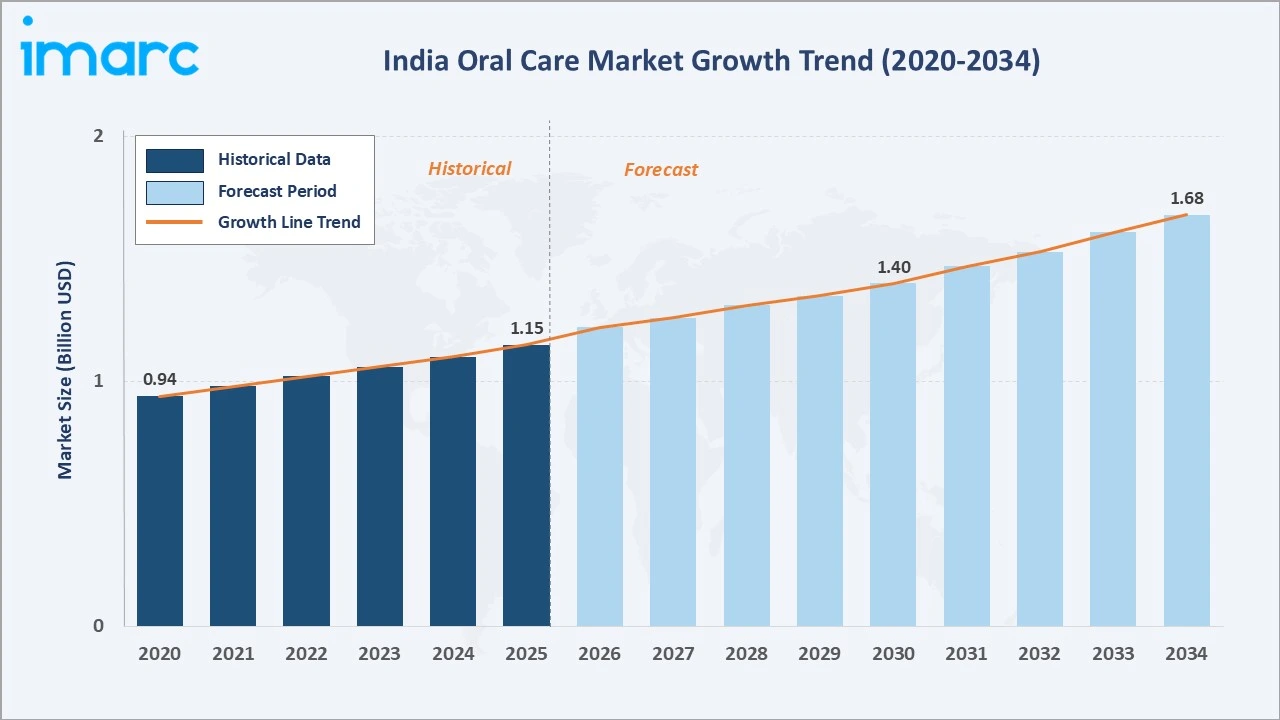
The India oral care market grew from USD 1.15 Billion in 2025 to USD 1.22 Billion in 2026 and is projected to reach USD 1.68 Billion by 2034, growing at a CAGR of 4.15% during 2026-2034. Rising oral hygiene awareness, premiumization, and strong demand for Ayurvedic and specialized products are supporting steady growth. Haleon Group of Companies’s Rs 20 Sensodyne pack, launched to reach new consumers at an affordable price, is now available in more than 500,000 stores in India.
Expanding modern retail, e-commerce, and quick commerce, along with growing access to oral health care services in India, continue to broaden demand. Tooth paste dominates at 58.4%. Hypermarkets and supermarkets lead distribution channels at 34.8%. North India commands 31.4% of national market share.
Market Snapshot
|
Metric |
Value |
|
Base Year Market Size (2025) |
USD 1.15 Billion |
|
Market Size (2026) |
USD 1.22 Billion |
|
Forecast Market Size (2034) |
USD 1.68 Billion |
|
CAGR (2026-2034) |
4.15% |
|
Base Year |
2025 |
|
Historical Period |
2020-2025 |
|
Forecast Period |
2026-2034 |
|
Dominant Product Type |
Tooth Paste (58.4%, 2025) |
|
Dominant Distribution Channel |
Hypermarkets and Supermarkets (34.8%, 2025) |
|
Leading Region |
North India (31.4%, 2025) |
The India oral care market size increased from USD 0.94 Billion in 2020 to USD 1.15 Billion in 2025 and is estimated to reach USD 1.22 Billion in 2026. The market is further expected to grow to USD 1.40 Billion by 2030 and USD 1.68 Billion by 2034. Growth reflects rising per capita consumption, premiumization, and wider product availability in rural and urban areas.
To get more information on this market, Request Sample
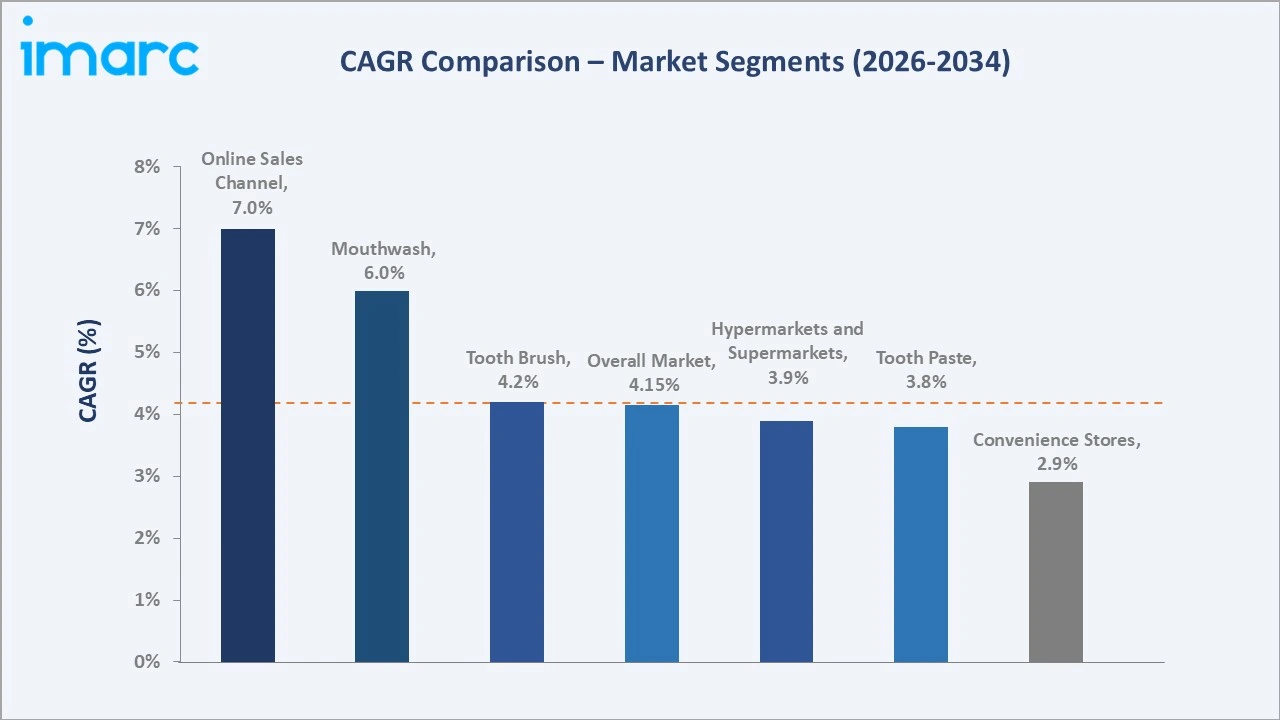
Online sales channel is expected to grow fastest at ~7.0% CAGR, supported by e-commerce and quick commerce platforms. Mouthwash follows at ~6.0% CAGR as urban consumers add rinses and specialized products to their daily oral care routines.
Executive Summary
The India oral care market expanded from USD 1.15 Billion in 2025 to an estimated USD 1.22 Billion in 2026. Toothpaste and toothbrushes are used in almost every household, but per capita consumption remains low compared with developed markets, leaving significant room for growth. Brands are investing in premium, therapeutic, herbal, and beauty-oriented products, while affordable packs expand reach in rural areas. The market is projected to reach USD 1.68 Billion by 2034. Tooth paste at 58.4% leads as the core daily product. Hypermarkets and supermarkets at 34.8% lead distribution. North India leads regionally at 31.4%.
Key Market Insights
|
Insight |
Data |
|
Dominant Product Type |
Tooth Paste - 58.4% share (2025) |
|
Dominant Distribution Channel |
Hypermarkets and Supermarkets - 34.8% market share (2025) |
|
Leading Region |
North India - 31.4% share (2025) |
|
Market Opportunity |
Premium sensitivity and whitening products; Ayurvedic and natural formulations; mouthwash and kids oral care; e-commerce and quick commerce growth |
Key Analytical Observations Supporting the Above Data:
- Tooth Paste at 58.4%: Tooth paste dominates because it is the most widely used oral care product across all income groups. Strong brand loyalty, frequent repeat purchases, and a wide range of variants, from basic cavity protection to sensitivity, whitening, and herbal formulations, keep it at the center of the market.
- Hypermarkets and Supermarkets at 34.8%: Hypermarkets and supermarkets lead because they offer wide brand choice, multipacks, promotions, and convenient monthly shopping for urban households.
- North India at 31.4%: North India leads regionally due to its large population base in Uttar Pradesh, Delhi NCR, Punjab, and Rajasthan, along with strong distribution networks and rising urban consumption.
India Oral Care Market Overview
Oral care products in India include toothpaste, toothbrushes, mouthwash, dental floss, tooth powder, and specialized products for sensitivity, gum care, and whitening. The market includes multinational brands, large Indian FMCG companies, Ayurvedic specialists, and emerging direct-to-consumer brands. Most households use toothpaste and toothbrushes daily, while mouthwash and floss remain largely urban products. Commercial demand comes from hotels, hospitals, airlines, and institutions that purchase oral care products in bulk.
The industry ecosystem links raw material suppliers, manufacturers, distributors, retailers, online platforms, dental professionals, regulators, and consumers. Macroeconomic factors include household income, rural consumption, urbanization, retail expansion, and public health awareness programs, all of which shape demand and product choices. Public health initiatives and school dental programs also contribute to rising awareness across age groups. Rising healthcare spending and the growth of private dental clinics are also supporting demand for specialized products.
Market Dynamics
To evaluate market opportunities, Request Sample
Market Drivers
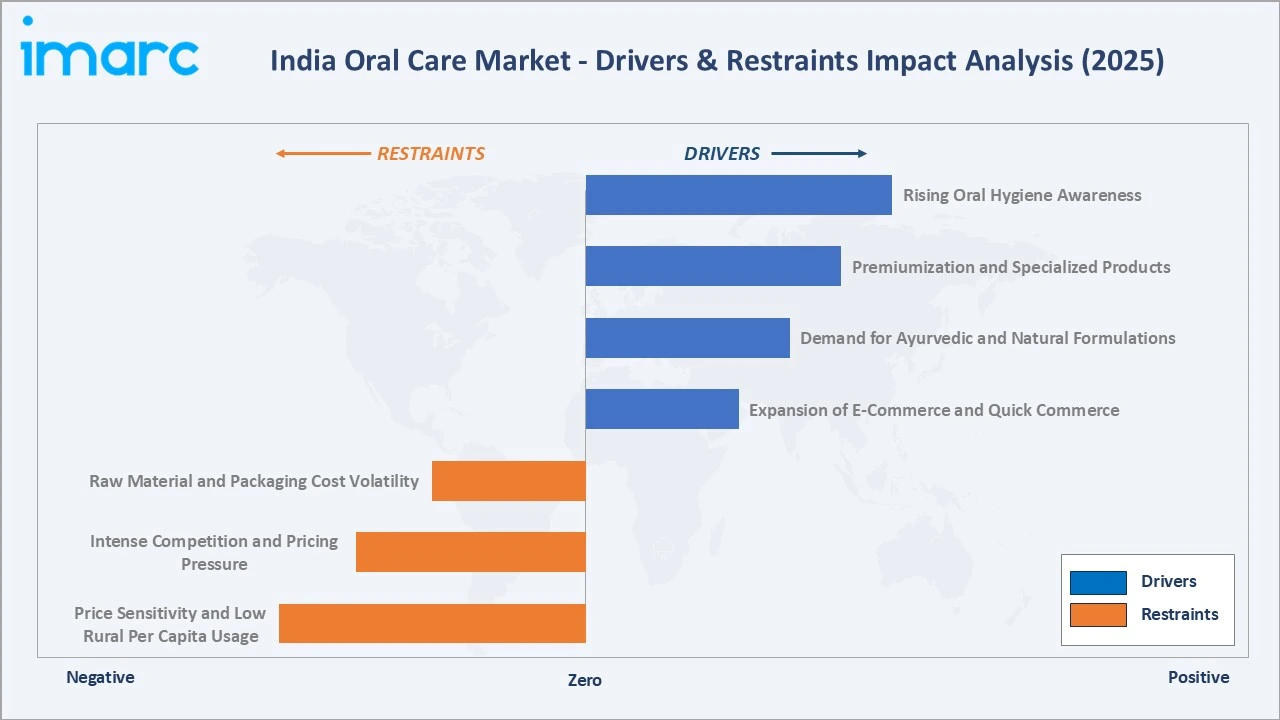
- Rising Oral Hygiene Awareness: Awareness of the link between oral health and overall health is increasing through dental check-up camps, school programs, government initiatives, and brand campaigns. Consumers are adopting habits such as brushing twice a day and replacing toothbrushes regularly, which increases consumption and supports steady market growth. Social media, dental influencers, and television campaigns are making oral health a regular topic of discussion, while schools and community programs teach children correct brushing techniques. Growing understanding of conditions such as gum disease, sensitivity, and bad breath is encouraging consumers to choose products designed for specific concerns. Dentists are also increasingly recommending specialized toothpastes and mouthwash, which supports trial and repeat purchase among urban consumers.
- Premiumization and Specialized Products: Consumers are moving from basic toothpaste to products addressing specific needs, such as sensitivity, gum care, enamel protection, and whitening. Premium and therapeutic variants offer higher value and are gaining traction in urban areas, supported by recommendations from dental professionals. Rising disposable incomes and exposure to global brands through digital media are encouraging consumers to trade up. Premium products also carry higher margins, leading brands to invest more in research, clinical claims, and attractive packaging. Premium gel formats, flavored variants, and dual-action products are also attracting younger buyers who seek both freshness and protection.
- For Ayurvedic and Natural Formulations: Indian consumers have a strong preference for herbal and Ayurvedic oral care products containing ingredients such as neem, clove, babool, and salt. Leading brands and Ayurvedic specialists are expanding herbal ranges, attracting consumers who seek natural, chemical-free solutions. Ayurvedic positioning resonates particularly well in smaller towns and rural areas, where traditional remedies remain trusted. Multinational companies have also launched herbal variants to compete in this fast-growing space. Ayurvedic oral care also benefits from strong word-of-mouth recommendations and long-standing family usage across generations.
- Expansion of E-Commerce and Quick Commerce: Online marketplaces and quick commerce platforms are making oral care products easier to buy, especially premium and niche products not widely available in local stores. Digital channels also allow brands to launch new products quickly and reach younger consumers. Data from online sales helps brands understand preferences, track trends, and personalize offers. Subscription models and bundled offers on digital platforms are also encouraging regular repurchase of oral care products. Quick commerce is particularly useful for impulse and urgent purchases, such as travel packs and replacement toothbrushes.
Market Restraints
- Price Sensitivity and Low Rural Per Capita Usage: Many consumers, especially in rural areas, are highly price-sensitive and use small quantities of toothpaste or traditional alternatives such as tooth powder and neem twigs. This limits the adoption of premium products and keeps per capita consumption low. Brands are responding with small, low-priced packs, but these offer lower margins and require extensive distribution to be profitable. Changing long-standing habits in traditional households also takes sustained investment in awareness programs. Low awareness of the need to replace toothbrushes regularly also limits repeat purchases in some segments. In addition, many consumers still view oral care as a basic necessity rather than a health investment, which slows trading up to higher-priced products.
- Intense Competition and Pricing Pressure: The market is crowded with multinational, domestic, Ayurvedic, and private label brands. Frequent promotions and price competition put pressure on margins and make it harder for new brands to build share. Large companies with extensive distribution networks and advertising budgets hold significant advantages, making it difficult for smaller players to compete nationally. Trade schemes and retailer margins also influence which brands receive visibility in local stores.
- Raw Material and Packaging Cost Volatility: Changes in the prices of raw materials, plastics, and packaging can increase production costs. Manufacturers often struggle to pass these increases to price-sensitive consumers. Volatility in global commodity markets and currency movements can further affect the cost of imported ingredients and materials. Compliance with labeling and packaging regulations can further add to operational costs for manufacturers.
Market Opportunities
- Kids and Specialized Oral Care: Products for children, sensitive teeth, gum health, and enamel protection represent fast-growing niches where brands can build loyalty early and offer higher-value products. Dentist-recommended positioning and clinical claims can help brands differentiate in these segments and justify premium prices. Older consumers with gum and sensitivity issues are another important target group for specialized products. Products for denture care and orthodontic users also offer growth potential as awareness increases.
- Mouthwash and Electric Toothbrushes: Rising urban awareness creates opportunities for mouthwash, electric toothbrushes, and complete oral care regimes beyond toothpaste and manual brushes. Electric toothbrush adoption is still at an early stage in India, offering significant long-term growth potential as prices fall and awareness rises. Bundled oral care kits and gift packs also create opportunities to raise average spending per household.
Market Challenges
- Limited Dental Access in Rural Areas: Low availability of dentists and dental clinics in rural areas restricts awareness of advanced oral care and limits professional recommendations for specialized products. Mobile dental units and tele-dentistry services may help bridge this gap over time and expand awareness of oral health care services in India.
- Counterfeit and Unbranded Products: Low-cost counterfeit and unbranded products in local markets can affect consumer trust and quality perceptions, while diverting sales from established brands. Stronger regulatory enforcement and consumer education on product authenticity are needed to address this issue. Established brands are investing in secure packaging and authentication features to protect consumers.
Emerging Market Trends
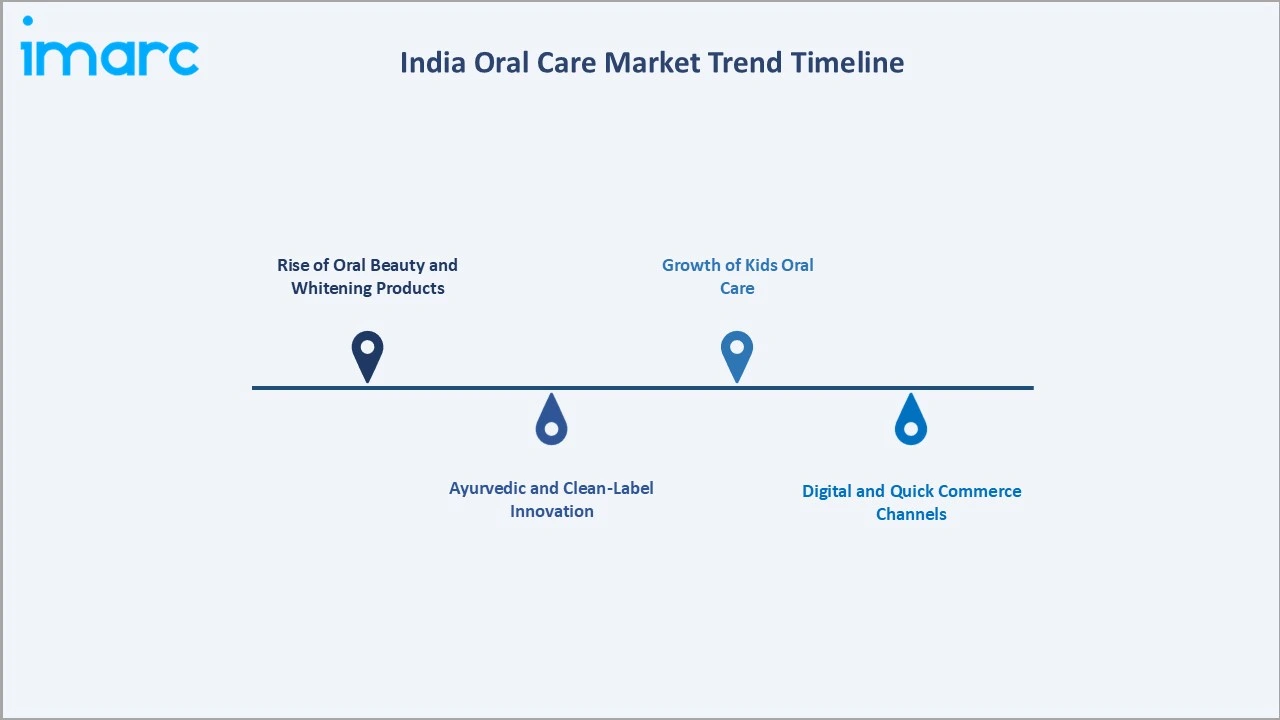
1. Rise of Oral Beauty and Whitening Products
Young urban consumers increasingly see a bright smile as part of their beauty and grooming routine. Brands are launching whitening toothpastes, color-correcting formulas, and teeth whitening kits, promoted through social media influencers and beauty platforms. Whitening products are increasingly sold through beauty retailers and online marketplaces alongside skincare and cosmetics, broadening the category’s appeal. This trend is creating new opportunities for collaboration between oral care and beauty brands.
2. Ayurvedic and Clean-Label Innovation
Brands are expanding Ayurvedic and natural ranges with oil pulling products, herbal gels, and formulations free from parabens and artificial colors. Clean-label claims and traditional ingredients appeal strongly to health-conscious Indian consumers. Oil pulling and herbal mouth rinses are gaining popularity as consumers rediscover traditional practices with modern formulations. Brands are also emphasizing transparency in ingredient sourcing and testing to strengthen consumer trust and loyalty further.
3. Growth of Kids Oral Care
Parents are increasingly buying toothpastes and toothbrushes designed for children, with milder formulas, attractive flavors, and fun designs. Brands are entering the kids segment to build early brand loyalty and promote healthy habits. Character-based packaging and educational campaigns aimed at parents are helping the kids segment grow quickly in urban markets. Pediatric dentists are also recommending specific products for children, supporting brand credibility.
4. Digital and Quick Commerce Channels
E-commerce and quick commerce platforms are becoming important launch channels for new products, especially premium and niche ranges. Fast delivery and digital promotions help brands reach urban consumers and test new products quickly. Brands are also using online reviews and ratings to refine products and build trust among first-time buyers. Exclusive online launches allow brands to measure demand before wider retail rollout.
Industry Value Chain Analysis
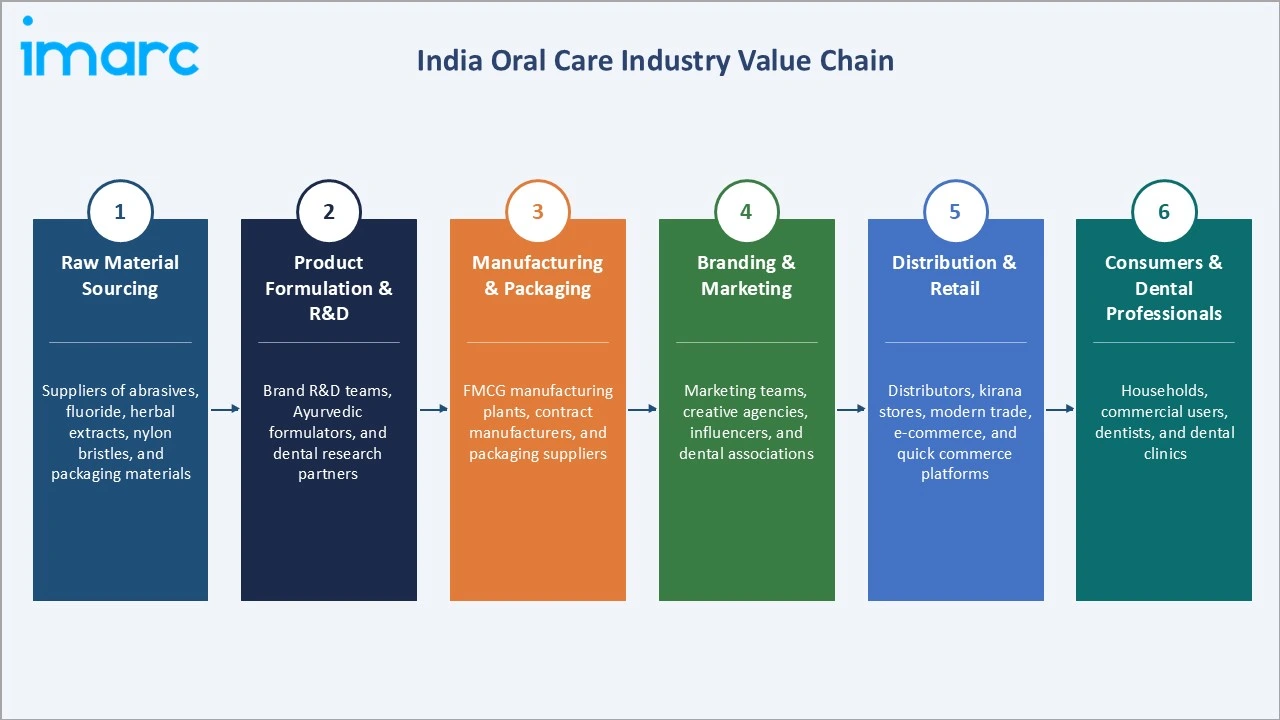
The India oral care value chain spans raw material sourcing, product formulation and research, manufacturing and packaging, branding and marketing, distribution and retail, and consumers and dental professionals. Value is concentrated in brand building, product innovation, and distribution reach.
|
Stage |
Key Participants |
|
Raw Material Sourcing |
Suppliers of abrasives, fluoride, herbal extracts, nylon bristles, and packaging materials |
|
Product Formulation & R&D |
Brand R&D teams, Ayurvedic formulators, and dental research partners |
|
Manufacturing & Packaging |
FMCG manufacturing plants, contract manufacturers, and packaging suppliers |
|
Branding & Marketing |
Marketing teams, creative agencies, influencers, and dental associations |
|
Distribution & Retail |
Distributors, kirana stores, modern trade, e-commerce, and quick commerce platforms |
|
Consumers & Dental Professionals |
Households, commercial users, dentists, and dental clinics |
Distribution and retail is the most consequential stage of the chain. Reaching millions of small kirana stores across urban and rural India requires extensive distribution networks, and brands with the widest reach hold a major advantage in this highly competitive market. Packaging and branding also play an important role, as attractive packs and clear claims influence purchase decisions at the shelf. Efficient supply chains also help brands manage costs and maintain product availability across the country. Dental professionals also influence brand choice through recommendations, particularly for sensitivity and gum care products, making professional engagement an important part of marketing strategies.
Technology Landscape in the India Oral Care Industry
Advanced Formulation Technologies
Manufacturers are using advanced ingredients such as potassium nitrate, stannous fluoride, hydroxyapatite, and optic brighteners to address sensitivity, enamel erosion, gum health, and whitening. Improved formulations deliver visible results and support premium positioning. Clinical testing and dental association endorsements help brands substantiate claims and build consumer trust. Research into new ingredients and delivery systems continues to expand the range of benefits offered by oral care products.
Toothbrush Design and Smart Oral Care Devices
Toothbrushes now feature ultra-soft and high-density bristles, ergonomic handles, and specialized designs for gums and sensitive teeth. Electric and sonic toothbrushes with timers and pressure sensors are gaining adoption among urban consumers. Brush designs for children and orthodontic users are also expanding the range of specialized products.
Sustainable Packaging and Digital Engagement
Brands are introducing recyclable tubes, bamboo toothbrushes, and reduced-plastic packaging. Digital tools, including online dental consultations and oral health apps, help brands educate consumers and promote better oral care habits. Recyclable packaging and sustainable materials are increasingly important to environmentally conscious urban consumers.
Market Segmentation Analysis
The report covers the following segments:
|
Segment Category |
Leading Segment |
Market Share |
Year |
|
Product Type |
Tooth Paste |
58.4% |
2025 |
|
Application |
Household |
82.6% |
2025 |
|
Distribution Channel |
Hypermarkets and Supermarkets |
34.8% |
2025 |
|
Region |
North India |
31.4% |
2025 |

By Product Type
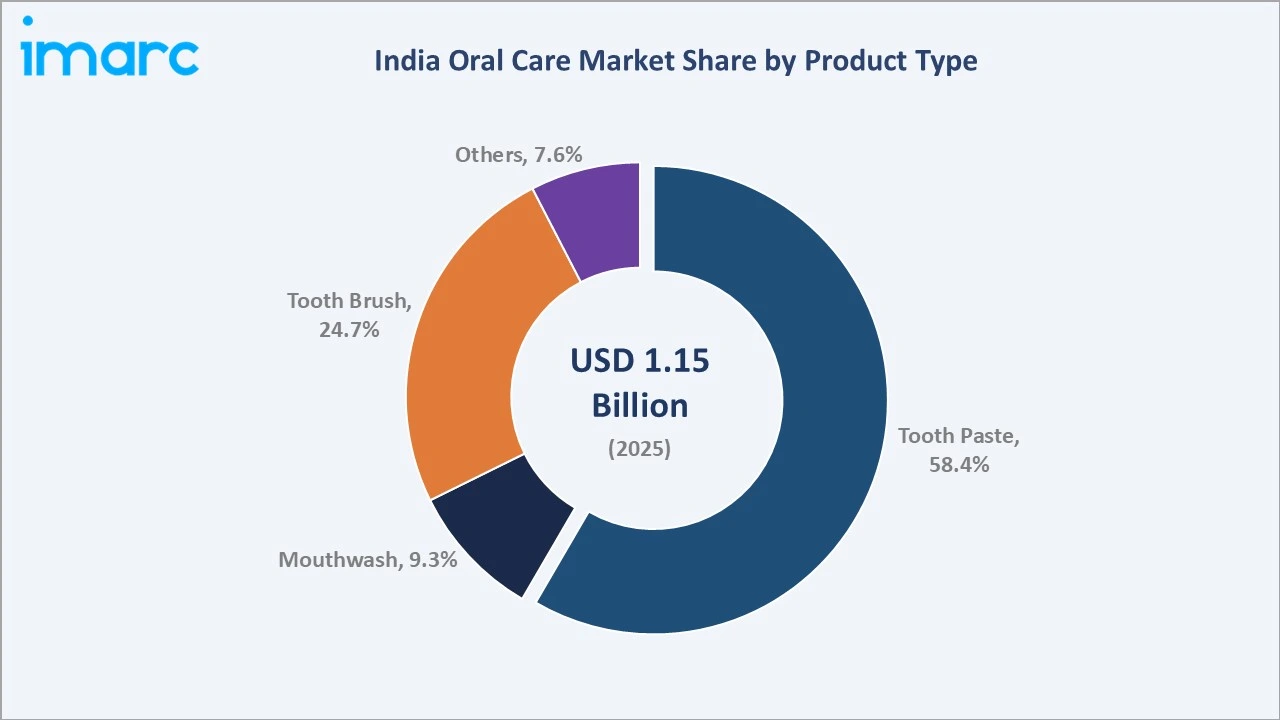
Tooth paste leads at 58.4% (2025). It is the most widely used oral care product, with strong repeat purchases and a broad range of variants covering cavity protection, sensitivity, whitening, herbal, and gel formats. Affordable small packs help brands reach rural consumers, while premium variants drive value growth in cities. Herbal and gel variants continue to grow as consumers seek variety in taste and benefits. Toothbrush demand is supported by multipacks and premium designs, while mouthwash adoption is rising quickly in metro cities.
To access detailed market analysis, Request Sample
Tooth brush at 24.7% is growing at ~4.2% CAGR, supported by premium designs. Mouthwash at 9.3% is growing fastest at ~6.0%, and others at 7.6%, including floss and tooth powder, are growing at ~4.4%.
By Distribution Channel
Hypermarkets and supermarkets lead at 34.8% (2025). Wide brand choice, multipacks, and promotions make them the preferred channel for monthly household purchases in urban areas. Modern trade chains also provide valuable shelf space for new launches and premium products.
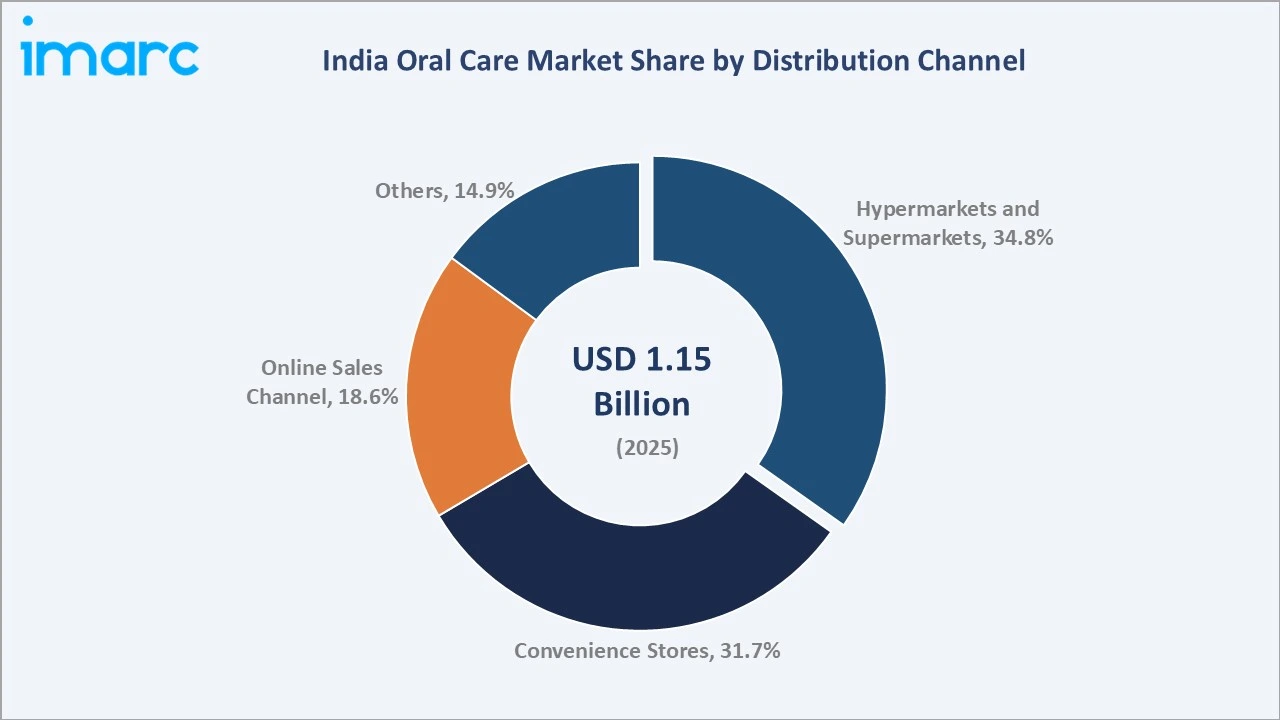
Convenience stores at 31.7% remain important for daily and rural purchases. Online sales channel at 18.6% is growing fastest at ~7.0% CAGR, and others at 14.9% include pharmacies and dental clinics. Quick commerce is particularly strong in large cities, where consumers value fast delivery of daily essentials. Convenience stores remain critical in rural India, where they are the main point of purchase for oral care products. Pharmacies are gaining importance for therapeutic products such as sensitivity toothpastes and medicated mouthwashes.
Regional Market Insights
|
Region |
Share (2025) |
Key India Oral Care Market Drivers & Characteristics |
|
North India |
31.4% |
Large population base in Uttar Pradesh, Delhi NCR, Punjab, and Rajasthan with strong distribution networks. |
|
South India |
27.6% |
High awareness, strong modern retail, and demand for premium and herbal products. |
|
West India |
23.5% |
Urban demand in Mumbai, Pune, and Ahmedabad and fast growth of e-commerce. |
|
East India |
17.5% |
Rising rural penetration and growing retail presence in West Bengal, Odisha, and Bihar. |
North India's 31.4% market leadership reflects its large population, strong distribution networks, and rising urban consumption. South India's 27.6% reflects high oral hygiene awareness, strong modern retail, and demand for premium and herbal products. Strong dental infrastructure in cities such as Bengaluru, Chennai, and Hyderabad also supports demand for specialized products.
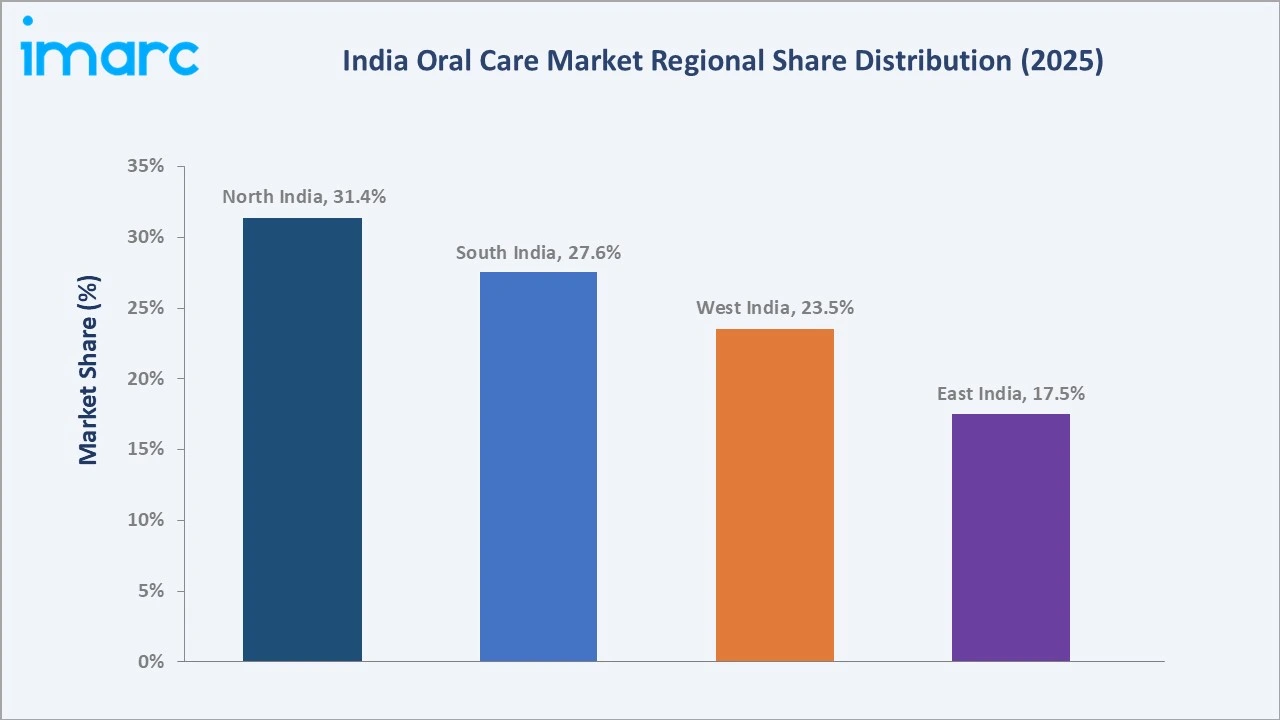
West India's 23.5% reflects strong urban demand and e-commerce growth. East India's 17.5% is the smallest share, but rising rural penetration and better access to oral health care services in India support steady growth. Improving retail infrastructure and rising incomes in smaller towns are expected to lift demand across the region.
Competitive Landscape
The India oral care market is led by a few multinational and domestic FMCG companies, alongside Ayurvedic specialists, regional brands, and new direct-to-consumer players. Competition centers on brand trust, product innovation, pricing, and distribution reach.
|
Company |
Key Brands |
Market Position |
Core Strength |
|
Colgate-Palmolive Company |
Colgate |
Market Leader |
Market leader in Indian oral care with strong science-backed portfolio. |
|
Hindustan Unilever Limited |
Closeup, Pepsodent |
Strong Challenger |
Strong brands and wide distribution reach. |
|
Haleon Group of Companies |
Sensodyne, Polident, Parodontax |
Innovator |
Leader in therapeutic oral care and sensitivity products. |
|
Dabur India Limited |
Dabur Red, Babool, Meswak |
Strong Challenger |
Leading Ayurvedic oral care portfolio. |
|
Patanjali Ayurved Limited |
Dant Kanti |
Strong Challenger |
Ayurvedic positioning and strong rural presence. |
|
Procter & Gamble |
Oral-B |
Innovator |
Toothbrush and electric toothbrush expertise. |
|
Himalaya Wellness Company |
Himalaya Complete Care, Sparkling White |
Niche Player |
Herbal formulations and pharmacy presence. |
The most important competitive dynamic is the balance between premiumization and affordability. Leading brands are launching specialized and premium products for urban consumers while using low-priced packs to expand reach in rural India. Partnerships with dental associations and healthcare providers also help brands build credibility and reach consumers. Local and regional brands remain competitive in specific states, supported by strong distribution and regional preferences.
Key Company Profiles
Colgate-Palmolive Company
Colgate-Palmolive (India) Limited, part of Colgate-Palmolive Company, is the market leader in oral care in India, with a portfolio spanning toothpaste, toothbrushes, and mouthwash.
- Key Brands: Colgate
- Recent Developments: In the quarter ended June 2026, Colgate launched MaxFresh Blast with blue cooling crystals and Ultrafreeze technology, and the Colgate Total Active Prevention Foaming Clean Toothbrush with over 5,000 ultra-soft bristles.
- Strategic Focus: Introducing more brands in India from its global portfolio and expanding premium oral care.
Haleon Group of Companies
Haleon Group of Companies markets Sensodyne, Parodontax, and Polident in India, which is the second biggest market worldwide for Sensodyne.
- Key Brands: Sensodyne, Polident, Parodontax
- Recent Developments: In June 2026, Sensodyne launched Pronamel Kids toothpaste in India, marking Haleon Group of Companies’s foray into the children’s oral care segment.
- Strategic Focus: Building its first India manufacturing facility at Pithampur, Madhya Pradesh, focused on oral care and slated to begin operations by 2029-30.
Patanjali Ayurved Limited
Patanjali Ayurved Limited offers Ayurvedic oral care products under the Dant Kanti brand, including toothpastes, gels, and dental care products formulated with herbal ingredients.
- Key Brands: Dant Kanti
- Recent Developments: In July 2025, Patanjali launched Dant Kanti Gandusha Oil Pulling, an Ayurvedic formulation to support oral health, including gum conditions.
- Strategic Focus: Continuing to launch evidence-based Ayurvedic dental products.
Market Concentration Analysis
The India oral care market is moderately concentrated, with a few large companies holding a significant share of toothpaste sales. Ayurvedic brands, regional players, and private labels compete strongly in specific segments and regions.
Market concentration is evolving through two opposing forces: leading brands strengthen positions through innovation and distribution, while Ayurvedic and digital-first brands continue to gain share in niche and premium segments. Acquisitions and new product launches by leading companies are expected to shape the competitive landscape in the coming years.
Investment & Growth Opportunities
Highest Growth Segments
Online sales channel (~7.0% CAGR through e-commerce and quick commerce), mouthwash (~6.0% CAGR through urban adoption), East India (~4.5% CAGR through rural penetration), and South India (~4.3% CAGR through premium demand) represent the highest-growth investment areas through 2034.
Emerging Investment Opportunities
Premium therapeutic and kids oral care products are among the most promising opportunities. Brands that combine scientific claims, dentist recommendations, and attractive formats can capture higher-value demand. Expanding distribution of premium products into smaller cities can unlock significant new growth. Investments in mouthwash, floss, and electric toothbrush categories can also benefit from rising urban demand.
Investment Themes
- Ayurvedic and natural oral care: Herbal formulations appeal to a large base of health-conscious consumers.
- Digital and quick commerce brands: Online-first oral care brands can reach urban consumers quickly.
Future Market Outlook (2026-2034)
The India oral care market is projected to grow from USD 1.15 Billion in 2025 to USD 1.22 Billion in 2026, reaching USD 1.68 Billion by 2034, registering a CAGR of 4.15% during 2026-2034. The anchor value of USD 1.40 Billion in 2030 marks a point at which premium and specialized products should hold a larger share. By then, e-commerce and quick commerce should also account for a much larger share of oral care sales.
Three structural forces define India oral care market growth through 2034: rising oral hygiene awareness; premiumization and specialized products; and expanding retail and digital distribution. Together, these forces support steady growth across product types, channels, and regions over the forecast period.
Research Methodology
Primary Research
Primary research comprised structured interviews with industry stakeholders, including oral care manufacturers, distributors, retailers, dentists, and e-commerce category managers, along with consumer inputs from all regions of India.
Secondary Research
Secondary research covered company websites and press releases, government health publications, trade data, and industry reports. Over 50 credible secondary sources were reviewed, compared, and cross-checked for accuracy and consistency across datasets.
Forecasting Models
Market revenue forecasts were developed using a consumption-based model population by region multiplied by product penetration, usage rates, and average prices for each product type and channel, with segment results aggregated to total market value. Assumptions were validated through detailed discussions with experienced industry experts, distributors, retailers, and practicing dental professionals across all major regions of India today.
India Oral Care Market Report Coverage:
| Report Features | Details |
|---|---|
| Base Year of the Analysis | 2025 |
| Historical Period | 2020-2025 |
| Forecast Period | 2026-2034 |
| Units | Billion USD |
| Scope of the Report |
Exploration of Historical Trends and Market Outlook, Industry Catalysts and Challenges, Segment-Wise Historical and Future Market Assessment:
|
| Product Types Covered | Toothpaste, Toothbrush, Mouthwash, Others |
| Applications Covered | Household, Commercial |
| Distribution Channels Covered | Hypermarkets and Supermarkets, Convenience Stores, Online Sales Channel, Others |
| Regions Covered | North India, South India, East India, West India |
| Companies Covered | Colgate-Palmolive Company, Hindustan Unilever Limited, Haleon Group of Companies, Dabur India Limited, Patanjali Ayurved Limited, Procter & Gamble, Himalaya Wellness Company, etc. |
| Customization Scope | 10% Free Customization |
| Post-Sale Analyst Support | 10-12 Weeks |
| Delivery Format | PDF and Excel through Email (We can also provide the editable version of the report in PPT/Word format on special request) |
Key Benefits for Stakeholders:
- IMARC’s industry report offers a comprehensive quantitative analysis of various market segments, historical and current market trends, market forecasts, and dynamics of the India oral care market from 2020-2034.
- The research report provides the latest information on the market drivers, challenges, and opportunities in the India oral care market.
- Porter's five forces analysis assist stakeholders in assessing the impact of new entrants, competitive rivalry, supplier power, buyer power, and the threat of substitution. It helps stakeholders to analyze the level of competition within the India oral care industry and its attractiveness.
- Competitive landscape allows stakeholders to understand their competitive environment and provides an insight into the current positions of key players in the market.
Frequently Asked Questions About the India Oral Care Market Report
The India oral care market size is estimated at USD 1.22 Billion in 2026, supported by rising hygiene awareness and premiumization.
The India oral care market grows at 4.15% CAGR during 2026-2034, reaching USD 1.68 Billion by 2034.
Tooth paste leads at 58.4%, as the most widely used daily oral care product.
Hypermarkets and supermarkets lead at 34.8%, owing to wide brand choice and promotions.
North India leads at 31.4%, driven by its large population and strong distribution networks.
Leading companies include Colgate-Palmolive Company, Hindustan Unilever Limited, Haleon Group of Companies, Dabur India Limited, Patanjali Ayurved Limited, Procter & Gamble, and Himalaya Wellness Company, among others.
The India oral care market is projected to reach approximately USD 1.40 Billion by 2030.
Wider access to oral health care services in India, including dental camps and clinics, is raising awareness and encouraging the use of specialized products.
Need more help?
- Speak to our experienced analysts for insights on the current market scenarios.
- Include additional segments and countries to customize the report as per your requirement.
- Gain an unparalleled competitive advantage in your domain by understanding how to utilize the report and positively impacting your operations and revenue.
- For further assistance, please connect with our analysts.
 Request Customization
 Speak to an Analyst
 Request Brochure
 Inquire Before Buying
Benefits of Customization
- Personalize this research
- Triangulate with your data
- Get data as per your format and definition
- Gain a deeper dive into a specific application, geography, customer, or competitor
- Any level of personalization
Get in Touch With Us
UNITED STATES
Phone: +1-201-971-6302
INDIA
Phone: +91-120-433-0800
UNITED KINGDOM
Phone: +44-753-714-6104
Email: [email protected]
Client Testimonials























Related Reports

Choose your plan
*Please note that the prices mentioned below are starting prices for each bundle type. Kindly contact our team for further details.*
Single User License
- 1 User License, Access on 2 Devices
- PDF Report + Excel Dataset (Password Protected)
- Lifetime Access
- No Printing Rights
- 10% Free Report Customization
- 10–12 Weeks of Analyst Support
Five User License
- Access for 5 Users, 2 Devices per User
- PDF Report + Excel Dataset (Password Protected)
- Lifetime Access
- Dedicated Account Manager
- 12–14 Weeks of Analyst Support
- No Printing Rights
- 15% Free Report Customization
- 25% Discount on Your Next Purchase
Corporate User License
- Unlimited User Access (Within Your Organization)
- PDF Report + Excel Dataset
- Lifetime Access
- Dedicated Account Manager
- 14–20 Weeks of Analyst Support
- No Printing Rights
- 20% Free Report Customization
- 30% Discount on Your Next Purchase
Essential Insights
What's included:
3 reports
- Lifetime Access
- PDF Reports
- Excel Datasets
- 2 Weeks of Free Analyst Support
- 2 User Licenses
- Access on 2 Devices
- Printing Rights
- Complimentary PowerPoint (PPT) Version
- Complimentary License Upgrade
Professional Access
What's included:
5 reports
- Lifetime Access
- PDF Reports
- Excel Datasets
- 8 Weeks of Free Analyst Support
- 2 User Licenses
- Access on 2 Devices
- Printing Rights
- Complimentary PowerPoint (PPT) Version
- Complimentary License Upgrade
Business Advantage
What's included:
8 reports
- Lifetime Access
- PDF Reports
- Excel Datasets
- 14 Weeks of Free Analyst Support
- 2 User Licenses
- Access on 2 Devices
- Printing Rights
- Complimentary PowerPoint (PPT) Version
- Complimentary License Upgrade
Enterprise Intelligence
What's included:
10 reports
- Lifetime Access
- PDF Reports
- Excel Datasets
- 20 Weeks of Free Analyst Support
- 2 User Licenses
- Access on 2 Devices
- Printing Rights
- Complimentary PowerPoint (PPT) Version
- Complimentary License Upgrade