
Indian Shrimp Market Size, Share, Trends and Forecast by Species, Shrimp Size, and State, 2026-2034
Indian Shrimp Market Size, Share, Trends & Forecast (2026-2034)
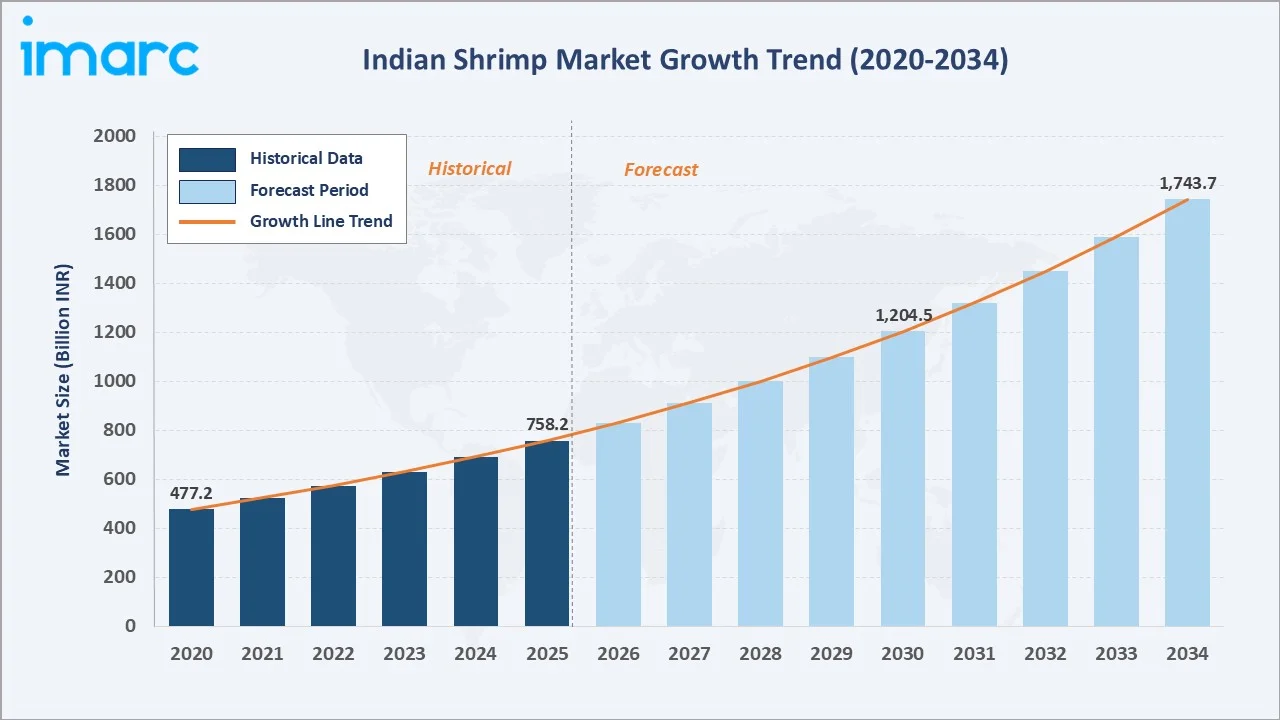
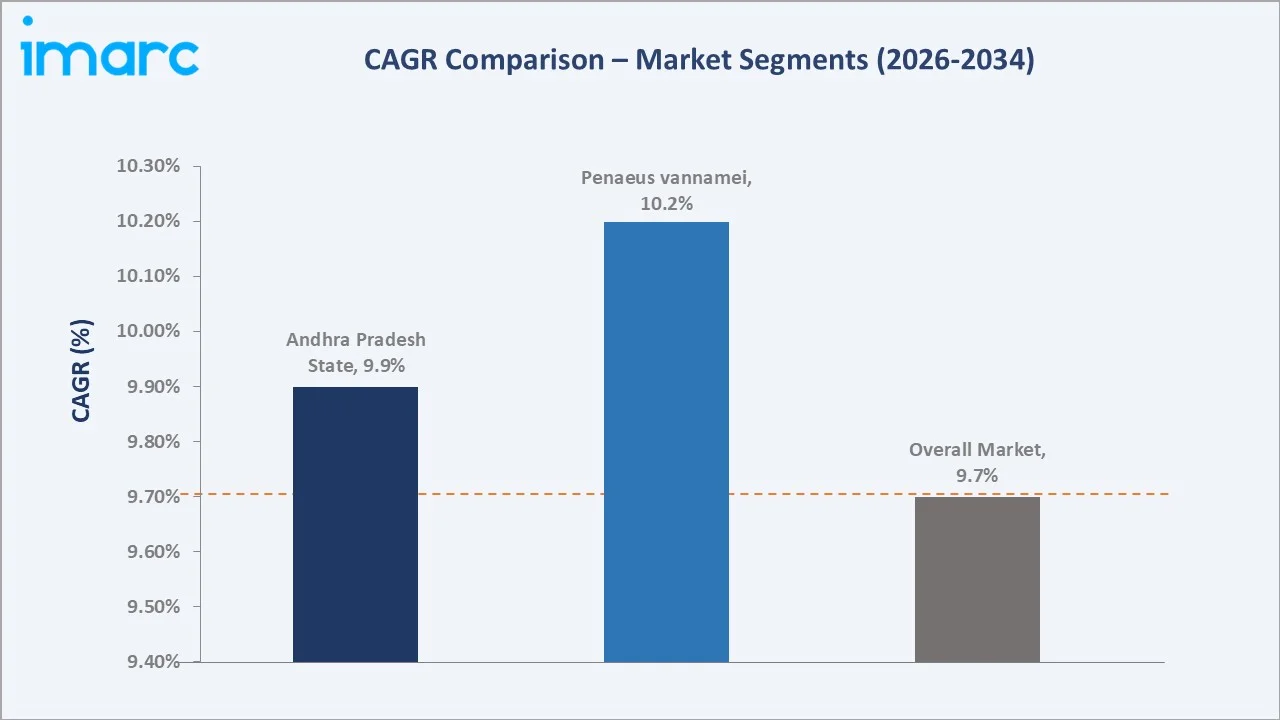
The Indian shrimp market reached INR 758.2 Billion in 2025 and is projected to reach INR 1,743.7 Billion by 2034, growing at a CAGR of 9.7% during 2026-2034. Market growth is driven by escalating global seafood demand, India's established position as the world's second-largest shrimp producer, increasing adoption of Penaeus vannamei technology, strong government export promotion, and growing biosecurity and quality certification investments.
Market Snapshot
|
Metric |
Value |
|
Market Size (2025) |
INR 758.2 Billion |
|
Forecast Market Size (2034) |
INR 1,743.7 Billion |
|
CAGR (2026-2034) |
9.7% |
|
Base Year |
2025 |
|
Historical Period |
2020-2025 |
|
Forecast Period |
2026-2034 |
Andhra Pradesh's commanding 78.0% state share reflects its 974 km coastline, 555 marine fishermen villages, 357 hatcheries, and 234 Aqualabs, established feed and processing infrastructure, and a skilled aquaculture workforce concentrated in the Krishna, Guntur, and Nellore districts.
To get more information on this market, Request Sample
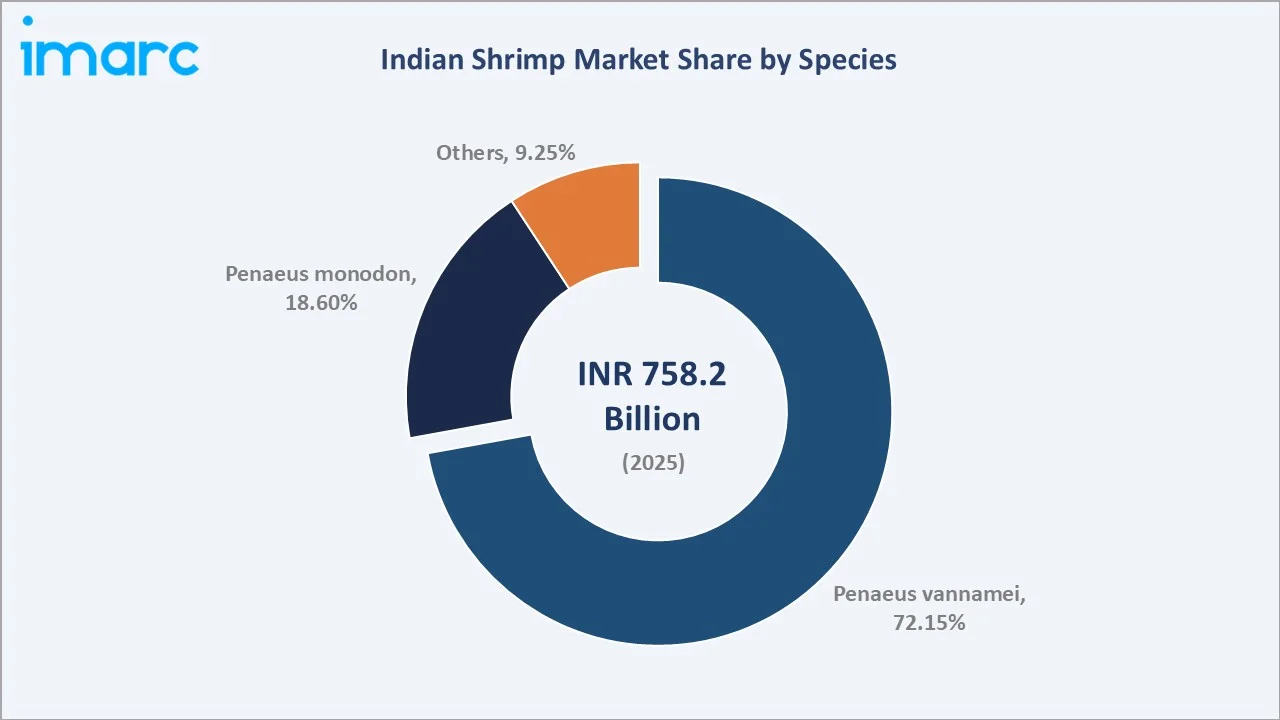
Penaeus vannamei's 72.15% species dominance reflects its transformation of Indian shrimp farming since its commercial introduction in 2009, delivering 3–4× higher yield densities than traditional Penaeus monodon culture at lower production costs.
Executive Summary
The Indian shrimp market is one of the world's most dynamic aquaculture export sectors, serving as the primary protein export commodity in India's seafood trade portfolio. From INR 758.2 Billion in 2025, the market will reach INR 1,743.7 Billion by 2034, generating INR 985.5 Billion in incremental value at a 9.7% CAGR.
Penaeus vannamei leads species supply at 72.15% in 2025, a testimony to the variety's dominance since its government-approved commercial introduction. Size 41–50 leads the shrimp size segment at 21.84%, representing the standard export grade preferred by US, EU, and Asian bulk importers that balances yield per pond cycle with per-unit price realization in finished product formulations.
Key players, including Nekkanti SeaFoods, Avanti Feeds Limited, Devi Fisheries Ltd., Apex Frozen Foods Ltd., and Falcon, compete through processing capacity, value-added product development, export certification breadth, cold chain reliability, and deep buyer relationships across global importing markets.
Key Market Insights
|
Insight |
Data |
|
Largest Species Segment |
Penaeus vannamei – 72.15% share (2025) |
|
Second Species Segment |
Penaeus monodon – 18.60% share |
|
Largest Shrimp Size |
Size 41–50 – 21.84% share (2025) |
|
Second Largest Size |
Size 31–40 – 19.6% share |
|
Leading State |
Andhra Pradesh – 78.0% share (2025) |
|
Top Companies |
Nekkanti SeaFoods, Avanti Feeds Limited, Devi Fisheries Ltd., Apex Frozen Foods Ltd., Falcon |
Key Analytical Observations:
- Penaeus vannamei's 72.15% (2025) species share reflects its complete transformation of Indian shrimp aquaculture since commercial introduction. Vannamei's specific pathogen-free (SPF) seed technology, faster growth rate, tolerance of higher stocking densities, and lower feed conversion ratio deliver significantly superior farm economics.
- Penaeus monodon at 18.60% (2025) retains its niche position as a premium species commanding 30–50% price premiums over vannamei in Japanese, South Korean, and European gourmet seafood markets.
- The Size 41–50 category at 21.84% (2025) represents the most traded shrimp count category globally, the standard 2 lb. retail bag specification in the US grocery market, the most common shrimp cocktail ring size, and the widely used foodservice pouch specification.
- Andhra Pradesh's 78.0% (2025) state dominance is structural and self-reinforcing: the state's concentration of hatcheries, feed mills, processing plants, cold chain infrastructure, and specialized aquaculture workforce creates a co-location advantage that lowers costs and improves supply chain efficiency for all actors.
Indian Shrimp Market Overview
India is the world's second-largest shrimp producer and the largest shrimp exporter by value, with annual shrimp exports exceeding INR 43,334 crore (fiscal year 2024–25). Shrimp accounts for approximately 70% of India's total seafood export revenue, making it the single most important marine product in India's agricultural trade portfolio.
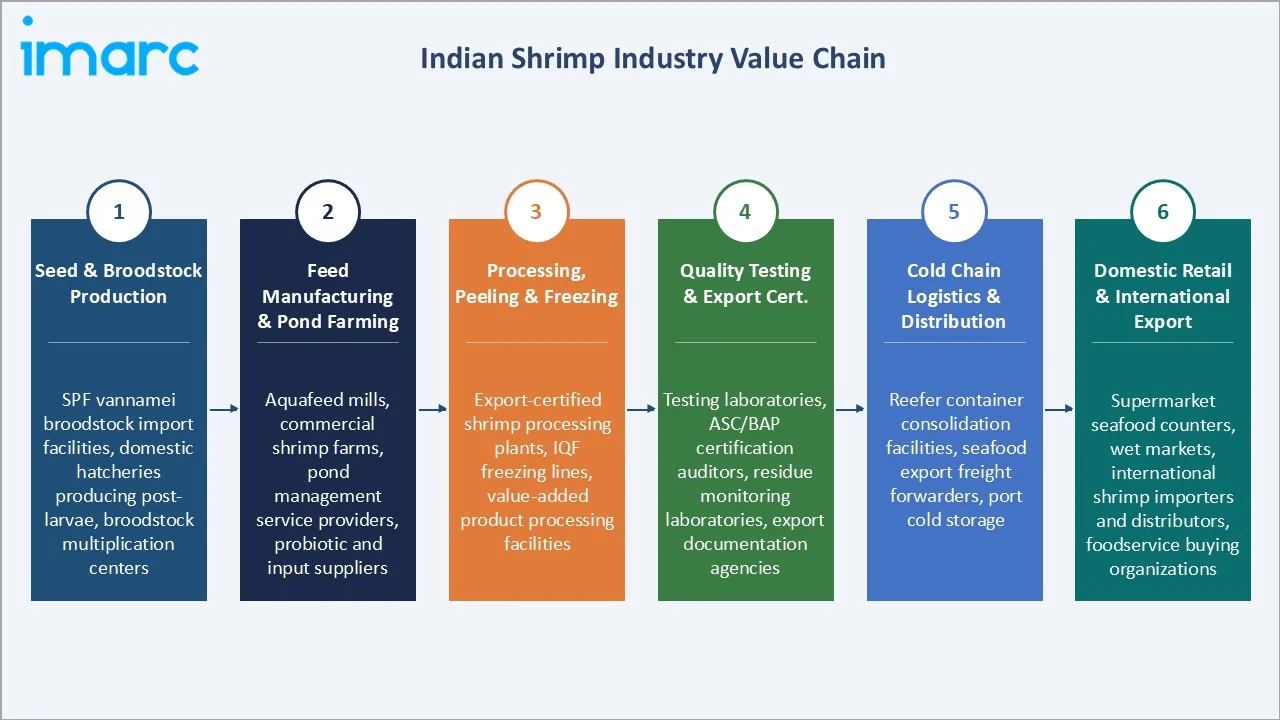
The industry spans the complete value chain from coastal hatcheries and feed mills through to state-of-the-art export-certified processing plants operating under HACCP, BRC, SQF, BAP, and ASC quality frameworks.
India's shrimp cultivation is predominantly conducted in earthen pond systems across the coastal states of Andhra Pradesh, Odisha, West Bengal, Tamil Nadu, and Gujarat, with semi-intensive and intensive culture systems using aeration, probiotics, and scientific pond management predominating in commercial-scale operations.
The industry is transitioning toward Biosecure Recirculating Aquaculture Systems (RAS) and lined pond technologies in response to disease pressure and tightening international biosecurity requirements.
Market Dynamics
To evaluate market opportunities, Request Sample
Market Drivers
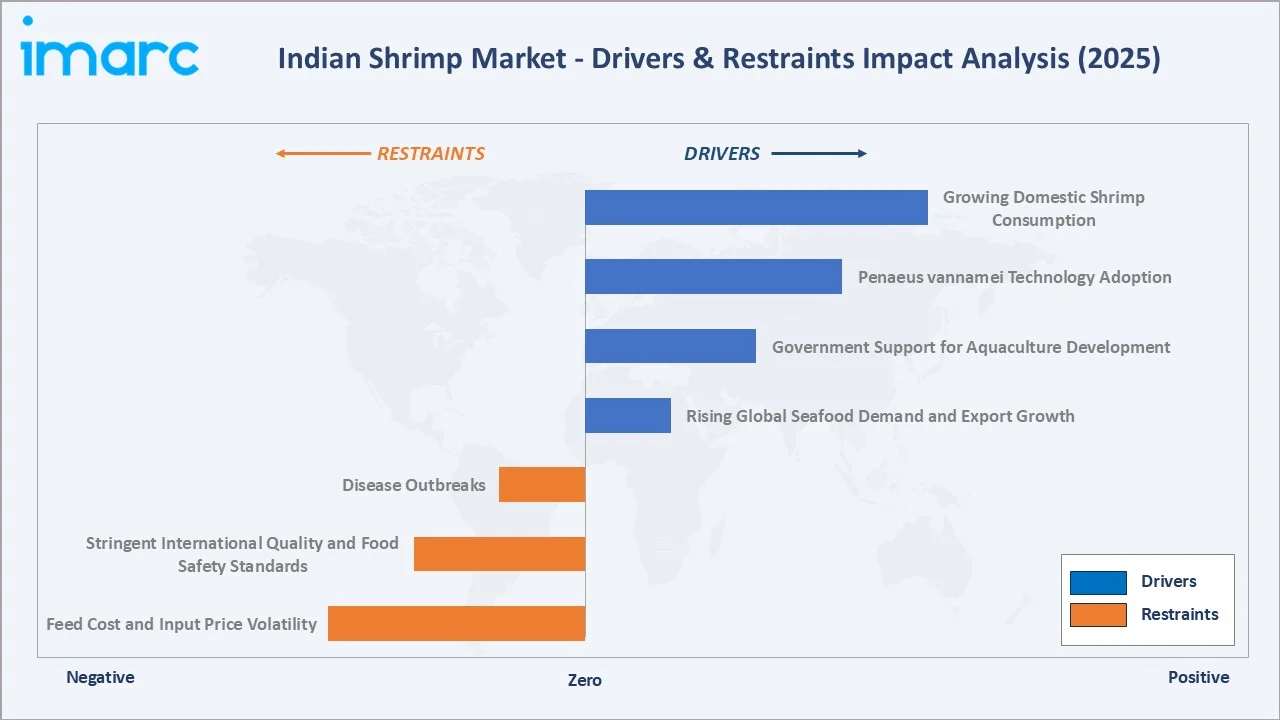
- Rising Global Seafood Demand and Export Growth: Shrimp is the world's most traded seafood commodity, with a global market size of USD 74.7 Billion in 2025. India's cost-competitive production, with farm-gate vannamei prices approximately 20–30% below competing origins Ecuador and Vietnam, provides a structural export advantage.
- Government Support for Aquaculture Development: The Pradhan Mantri Matsya Sampada Yojana (PMMSY), with an outlay of INR 20,050 crore, has been implemented from FY 2020–21 to FY 2025–26 across all States and Union Territories, including Tamil Nadu, to support the holistic development of the fisheries sector.
- Penaeus vannamei Technology Adoption: Since India's CIBA (Central Institute of Brackishwater Aquaculture) introduced SPF vannamei broodstock for domestic hatcheries in 2009, the species has progressively displaced Penaeus monodon in commercial culture, achieving 72.15% species share by 2025.
- Growing Domestic Shrimp Consumption: While exports dominate the industry, India's domestic shrimp consumption is growing at approximately 8–10% annually, driven by rising urban incomes, the expanding quick service restaurant sector's shrimp menu adoption, and modern retail seafood counter growth in Tier 1 and 2 cities.
Market Restraints
- Disease Outbreaks: The country’s gross national losses due to shrimp diseases were estimated at 48,717 metric tons of shrimp, valued at INR 1,022.1 crore. Disease pressure creates year-to-year production volatility that creates supply uncertainty for international buyer procurement planning.
- Stringent International Quality and Food Safety Standards: Indian consignments have faced periodic EU import alert warnings and US FDA import alerts due to positive antibiotic and microbiological testing, requiring mandatory intensified laboratory testing of all Indian origin consignments. Meeting and maintaining compliance with evolving international standards requires significant investment in Good Aquaculture Practice (GAP) training, input control, and testing infrastructure.
- Feed Cost and Input Price Volatility: Shrimp feed represents 50–60% of total vannamei production costs in India. Fishmeal prices are linked to Peruvian anchovy catch volumes, which fluctuate with El Niño climate cycles. Moreover, soya and wheat by-product ingredient prices are subject to global commodity price volatility.
Market Opportunities
- Value-Added Product Development: India's shrimp export revenue growth opportunity lies in transitioning from raw frozen commodity export toward value-added processed products that command 30–80% higher per-kilogram export prices.
- Expansion into New Export Markets: India's shrimp exports are growing most rapidly in South Korea, Japan, Australia, and Middle Eastern markets, where traditional supply origins are constrained. The growing Vietnamese and Chinese restaurant sectors in these markets create structured demand for Indian shrimp at competitive price points.
Market Challenges
- Climate Change and Cyclone Risk: India's primary shrimp production coastal zones, including Andhra Pradesh, Odisha, and West Bengal, are increasingly exposed to extreme weather events, including cyclone-induced flooding, prolonged high-temperature spells that increase disease pressure, and irregular monsoon rainfall that disrupts pond salinity management.
- Antibiotic Resistance and Food Safety Compliance: The persistent practice of using unapproved antibiotics as a prophylactic measure by small-scale shrimp farmers, despite extension service warnings and export customer requirements, continues to generate food safety compliance failures that periodically trigger import alerts in the EU and US.
Emerging Market Trends
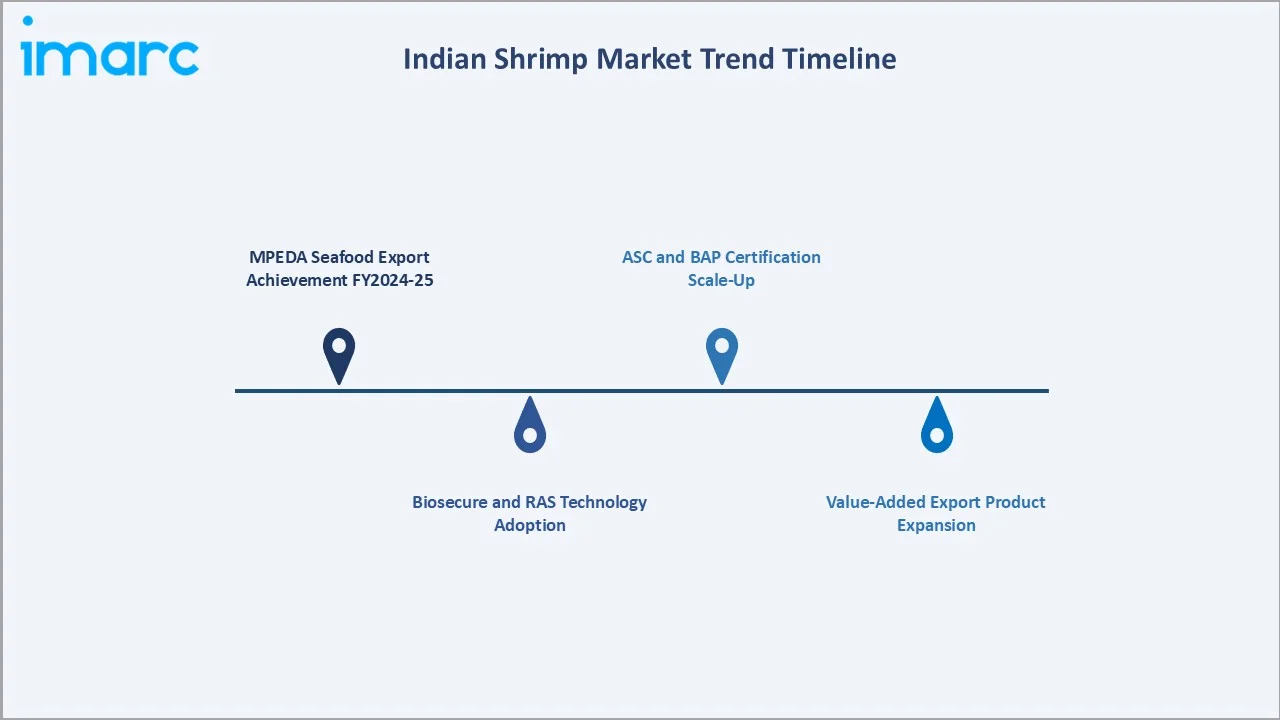
1. MPEDA Seafood Export Achievement FY2024–25
India achieved its landmark seafood export performance in FY2024–25, shipping 1,698,170 metric tons of seafood worth INR 62,408.45 crore, the highest-ever seafood export value in Indian history. Frozen shrimp remained the leading seafood export item, generating ₹43,334.25 crore (US$5,177.01 million). It accounted for 43.67% of total seafood export volume and 69.46% of total export earnings in dollar terms.
2. Biosecure and RAS Technology Adoption
Leading Indian shrimp companies are investing in Biosecure Recirculating Aquaculture Systems (RAS) and high-density lined pond culture as the next-generation farming technology that addresses disease risk, reduces environmental footprint, and enables year-round production independent of monsoon seasonality.
3. Value-Added Export Product Expansion
Indian shrimp exporters are systematically expanding their value-added product portfolios to capture higher-margin export revenue. Nekkanti SeaFoods’ cooked and peeled IQF shrimp range, Devi Fisheries Ltd.’s skewered and marinated shrimp, and Apex Frozen Foods' ready-to-cook marinated shrimp for European foodservice represent the industry's shift toward higher-value export categories.
4. ASC and BAP Certification Scale-Up
The number of ASC and BAP-certified shrimp farms and processing plants in India has grown significantly since 2020, driven by EU and North American retailer mandates. Andhra Pradesh's district-level cluster certification programs are reducing the per-farm certification cost and enabling smaller operations to access premium certified markets previously accessible only to larger integrated producers.
Industry Value Chain Analysis
The Indian shrimp value chain is a vertically structured system from coastal hatcheries through integrated processing and cold chain export, with Andhra Pradesh's coastal districts providing a concentrated co-location of all major value chain components.
|
Stage |
Key Players / Examples |
|
Seed & Broodstock Production |
SPF vannamei broodstock import facilities, domestic hatcheries producing post-larvae, broodstock multiplication centers |
|
Feed Manufacturing & Pond Farming |
Aquafeed mills, commercial shrimp farms, pond management service providers, probiotic and input suppliers |
|
Processing, Peeling & Freezing |
Export-certified shrimp processing plants, IQF freezing lines, value-added product processing facilities |
|
Quality Testing & Export Cert. |
Testing laboratories, ASC/BAP certification auditors, residue monitoring laboratories, export documentation agencies |
|
Cold Chain Logistics & Distribution |
Reefer container consolidation facilities, seafood export freight forwarders, port cold storage |
|
Domestic Retail & International Export |
Supermarket seafood counters, wet markets, international shrimp importers and distributors, foodservice buying organizations |
Technology Landscape in the Indian Shrimp Industry
Penaeus vannamei SPF Seed Technology
SPF (Specific Pathogen Free) vannamei broodstock and post-larvae technology has been the most transformative development in Indian shrimp farming. CIBA-certified hatcheries produce PL10–PL15 post-larvae certified free of WSSV, TSV, IHHNV, and IMNV, providing the biosecurity foundation for high-density commercial culture.
IQF Processing and Value-Added Technology
IQF tunnel freezers freeze individual shrimp at -35°C to -40°C within 8–12 minutes, delivering superior texture and shelf life versus block-frozen product. Advanced processing lines enable peeling, deveining, butterflying, breading, and marinating at 10,000–50,000 kg/day capacity, serving multiple export specifications from a single facility.
Water Quality Monitoring and IoT Farm Management
IoT-based water quality systems continuously track dissolved oxygen, pH, temperature, salinity, and ammonia-nitrogen in shrimp ponds, transmitting mobile alerts for immediate action. These systems reduce mortality from water quality fluctuations by 20–30% and are becoming mandatory for premium certification programs.
Market Segmentation Analysis
The report covers the following segments:
|
Segment Category |
Leading Segment |
Market Share |
Year |
|
Species |
Penaeus vannamei |
72.15% |
2025 |
|
Shrimp Size |
Size 41–50 |
21.84% |
2025 |
|
State |
Andhra Pradesh |
78.00% |
2025 |

By Species
Penaeus vannamei leads at 72.15% in 2025, having progressively displaced monodon as the commercial culture standard since 2009. Its technical advantages have made it the economically rational choice for Indian farmers across the spectrum from 0.5-hectare smallholder ponds to 100+ hectare commercial operations.
To access detailed market analysis, Request Sample
Penaeus monodon at 18.60% is cultivated primarily in West Bengal's bheri system, where traditional Brackishwater ponds support extensive and semi-intensive shrimp farming. Its premium market positioning commands farm-gate prices 30–50% above vannamei equivalents.
By Shrimp Size
Size 41–50 with 21.84% share in 2025 is the most produced and exported count category, matching the dominant specification in US retail grocery, EU foodservice, and Japanese frozen shrimp markets, where "41–50 count per pound" is the standard bulk import size.
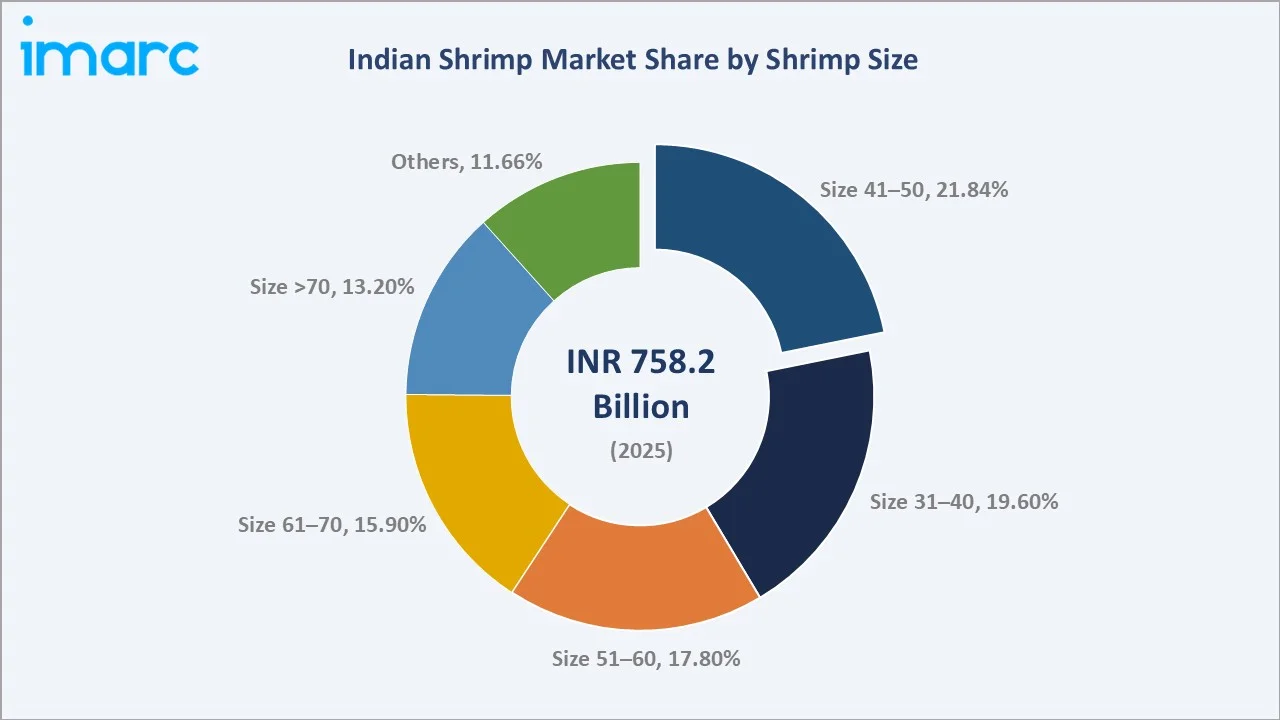
Size 31–40 at 19.60% represents the premium export count for larger presentations in shrimp cocktail, butterfly cut, and EZ-peel retail formats, commanding 15–25% price premiums. Size 51–60 (17.80%) and 61–70 (15.9%) serve value-oriented bulk institutional and quick service restaurant procurement.
Regional Market Insights
Andhra Pradesh dominates Indian shrimp production with a 78.00% state market share in 2025. The state's 974 km coastline, 357 hatcheries, 234 Aqualabs, and the concentration of processing plants, feed mills, and hatcheries in the Krishna–Nellore–Guntur coastal corridor create a self-sustaining aquaculture ecosystem unmatched in any other Indian state.
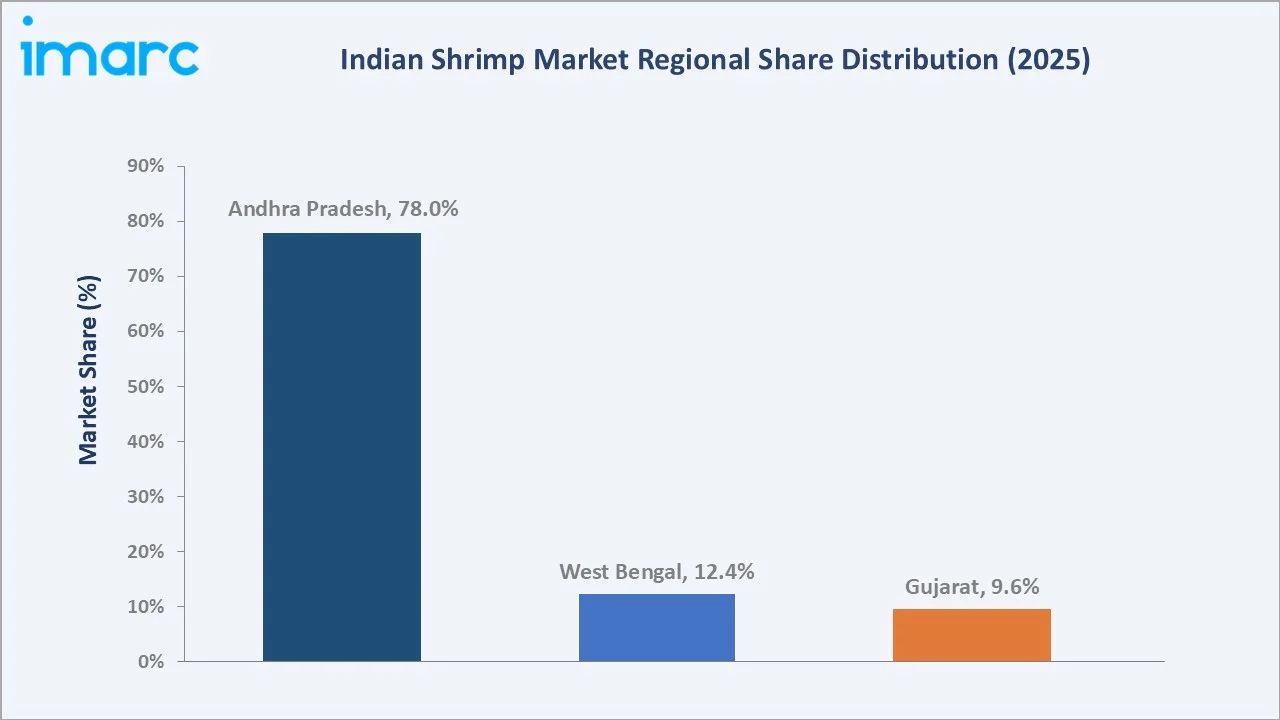
West Bengal's 12.40% share reflects the state's distinct aquaculture tradition in tidal flat bheri systems, where shrimp culture is integrated with traditional rice farming in low-input extensive systems. Sundarbans-region shrimp commands geographic indication recognition, supporting premium pricing in domestic and export markets.
|
State |
Share (2025) |
Key Growth Drivers |
|
Andhra Pradesh |
78.00% |
Concentrated shrimp farming ecosystem; largest processing plant cluster; dominant vannamei culture adoption; government aquaculture infrastructure support |
|
West Bengal |
12.40% |
Traditional bheri system integrating shrimp with rice and fish; Penaeus monodon specialization for premium export; growing export infrastructure; government bheri development programs |
|
Gujarat |
9.60% |
Expanding vannamei culture along the Gulf of Khambhat coastline; proximity to Kandla and Mundra ports for export; growing private investment in lined pond biosecure farms |
Gujarat's 9.60% share is the fastest-growing state contribution as private equity-funded biosecure lined pond farms establish themselves in the state's emerging aquaculture coastal zones.
Competitive Landscape
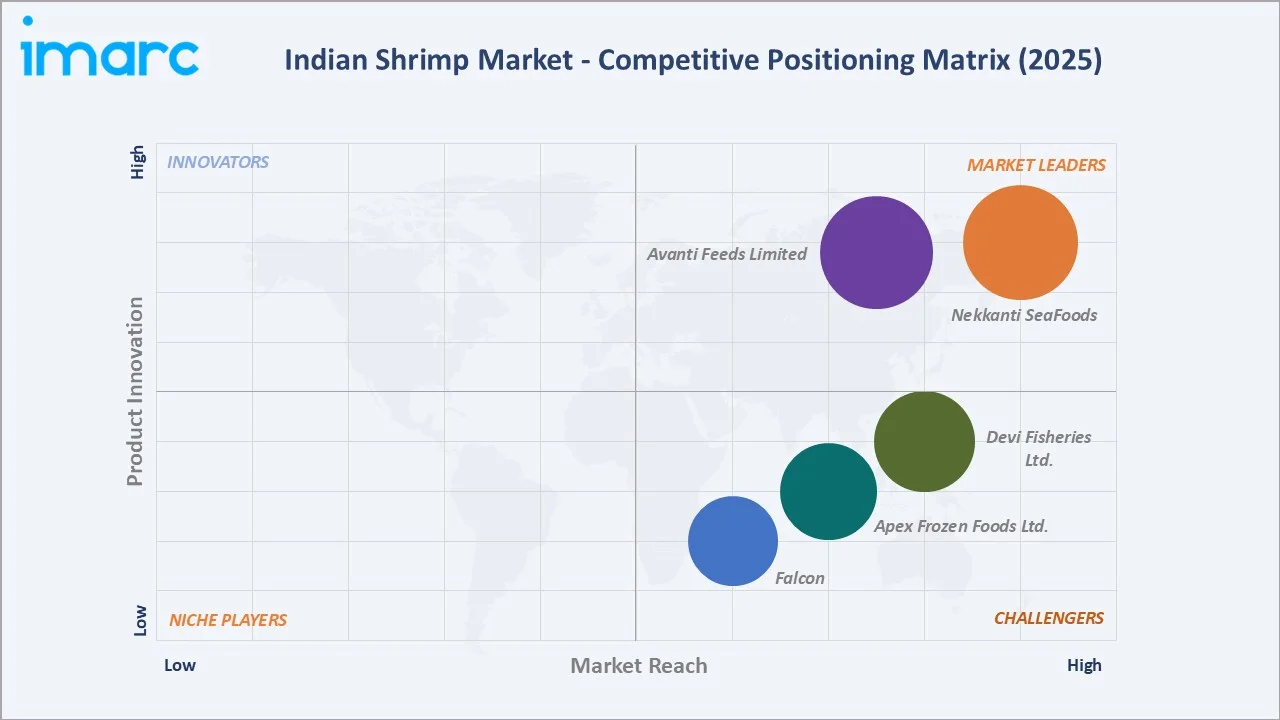
The Indian shrimp market exhibits a moderately fragmented competitive structure at the processing and export level, with the top 8–10 processors collectively accounting for approximately 35–40% of India's total shrimp export volume.
|
Company Name |
Brands/Positions |
Market Position |
Core Strength |
|
Nekkanti SeaFoods |
Nekkanti |
Market Leader |
India's largest shrimp processor, with value-added product innovation, broad export coverage |
|
Avanti Feeds Limited |
Avanti |
Market Leader |
Integrated feed-farm-processing model, vannamei genetics program, strong market relationships |
|
Devi Fisheries Ltd. |
Sindhu Classic, Freshly Netted, Mornings Harvest, Volga Classic |
Strong Challenger |
Vertically integrated breeder-hatchery-farm-processing, value-added retail supply |
|
Apex Frozen Foods Ltd. |
Bay Fresh, Bay Harvest, and Bay Premium |
Strong Challenger |
Value-added IQF processing, EU and US dual-market certification |
|
Falcon |
Sea Gold, Aqua Gem, Tarax, Pravas |
Challenger |
Large-capacity processing plant, diverse shrimp product range, multi-region export focus |
The upstream farming segment is highly fragmented across an estimated 300,000+ individual shrimp farmers, with average farm sizes of 2–10 hectares in Andhra Pradesh and smaller in West Bengal.
Key Company Profiles
Avanti Feeds Limited
Avanti Feeds Limited is India's largest integrated aquaculture company, operating across shrimp feed production, shrimp processing, and export.
- Product Portfolio: Raw white shrimp includes raw and cooked shrimp types. Black Tiger Shrimp includes raw, breaded, and marinated shrimp types.
- Recent Developments: In May 2024, Avanti Feeds ramped up its shrimp processing and export capacity through a new factory, enabling its export division to target around 15,000 metric tons of shrimp exports in 2024.
- Strategic Focus: Value-added product mix enhancement; Kovvur processing scale-up; domestic pet food market entry; Andhra Pradesh farmer ecosystem digital engagement through Avanti Aqua app.
Apex Frozen Foods Ltd.
Apex Frozen Foods Ltd. is a leading vertically integrated shrimp producer and exporter, with hatchery, farm, and processing operations concentrated in the East Godavari-Kakinada coastal belt.
- Product Portfolio: Black Tiger Shrimp (Penaeus monodon); White Shrimp (Penaeus vannamei) includes head-on whole shrimp, headless shell-on shrimp, easy peel shrimp, peeled deveined tail-on shrimp, peeled un-deveined tail-on shrimp, peeled deveined tail-off shrimp, peeled un-deveined shrimp, peeled vein & deveined shrimp, butterfly shrimp, and skewered shrimp.
- Recent Developments: Apex Frozen Foods reported standalone net sales of INR 238.34 crore in September 2025, up 19.46% YoY from INR 199.52 crore in September 2024. Net profit rose sharply to INR 11.87 crore, while EBITDA increased to INR 17.68 crore, reflecting a strong quarterly recovery.
- Strategic Focus: BAP and ASC certification maintenance; US market recovery and EU diversification; value-added product premiumization; integrated farm biosecurity upgrade.
Market Concentration Analysis
Indian shrimp production is geographically concentrated in Andhra Pradesh (78%) but fragmented at the farm level across 300,000+ smallholder and commercial farmers. At the processing level, the top 8–10 processors hold 35–40% of export volume, with 500+ MPEDA-registered exporters accounting for the remainder.
Investment & Growth Opportunities
Fastest Growing Segments
Value-added processed shrimp (~12%+ CAGR in revenue), vannamei aquaculture expansion in Gujarat and Odisha, certified sustainable shrimp premium supply chain development, and domestic modern retail channel shrimp sales represent the highest-growth investment vectors through 2034.
Emerging Market Expansion
South Korea, Japan, and the Middle East are India's fastest-growing shrimp export destinations, with combined CAGR exceeding 15% in recent years. These markets offer premium per-kilogram pricing versus the bulk US market and are accessible with appropriate species mix (monodon for Japan/Korea, vannamei for the Middle East) and certification profile adjustments.
Venture and Institutional Investment Trends
- Private equity investment in biosecure RAS and lined pond shrimp farms in Andhra Pradesh and Gujarat has exceeded USD 500 Million since 2022, with domestic and international investors funding high-density premium-certified shrimp production capacity.
- NABARD and SBI Agri loans under the PMMSY scheme provide concessional financing for shrimp hatchery, pond infrastructure, and processing capacity expansion, supporting the industry's INR 1 Trillion-plus growth trajectory through 2034.
Future Market Outlook (2026-2034)
The Indian shrimp market will reach INR 1,743.7 Billion by 2034 from INR 758.2 Billion in 2025, growing at a 9.7% CAGR. Andhra Pradesh will remain the dominant production state, while Gujarat and Odisha will grow their contributions as aquaculture infrastructure expands. Vannamei will consolidate its species dominance, and value-added products will grow their share of total export revenue significantly.
India's ambition to achieve USD 15 Billion in seafood export revenue by 2030 will require simultaneous progress across biosecurity (disease-free production), sustainability, value addition, and market diversification, all of which are underway and supported by government policy frameworks.
Research Methodology
Primary Research
Primary research comprised structured interviews with over 90 industry participants in 2024–2025, including shrimp farmers, hatchery operators, feed company executives, processing plant managers, MPEDA officials, and export buyers across Andhra Pradesh, West Bengal, and Gujarat. Expert input validated market sizing, species adoption trends, and export market dynamics.
Secondary Research
Secondary research encompassed MPEDA export statistics, NFDB production data, CIBA aquaculture research publications, company annual reports, MCA filings, and trade publications, including Aqua International, Fish Farmer, and Seafood Business.
Forecasting Models
Market size estimations used bottom-up forecasting incorporating state-wise production area and yield data, species mix evolution, export value per ton trajectories, and domestic consumption growth assumptions. A base-case CAGR of 9.7% reflects validated consensus against MPEDA export program targets and major processor capacity expansion announcements.
Indian Shrimp Market Report Scope:
| Report Features | Details |
|---|---|
| Base Year of the Analysis | 2025 |
| Historical Period | 2020-2025 |
| Forecast Period | 2026-2034 |
| Units | Billion INR |
| Scope of the Report |
Exploration of Historical and Forecast Trends, Industry Catalysts and Challenges, Segment-Wise Historical and Predictive Market Assessment:
|
| Species Covered | Penaeus Vannamei, Penaeus Monodon, Others |
| Shrimp Sizes Covered | Size 31-40, Size 41-50, Size 51-60, Size 61-70, Size >70, Others |
| States Covered | West Bengal, Gujarat, Andhra Pradesh |
| Companies Covered | Nekkanti SeaFoods, Avanti Feeds Limited, Devi Fisheries Ltd., Apex Frozen Foods Ltd., Falcon, etc. |
| Customization Scope | 10% Free Customization |
| Post-Sale Analyst Support | 10-12 Weeks |
| Delivery Format | PDF and Excel through Email (We can also provide the editable version of the report in PPT/Word format on special request) |
Frequently Asked Questions About the Indian Shrimp Market Report
The market reached INR 758.2 Billion in 2025 and is projected to reach INR 1,743.7 Billion by 2034 at a 9.7% CAGR.
Andhra Pradesh dominates with a 78.0% share in 2025, anchored by its concentrated shrimp farming ecosystem in the Krishna-Nellore-Guntur coastal corridor.
Penaeus vannamei leads at 72.15% in 2025, having displaced Penaeus monodon as the commercial culture standard due to its superior growth rate, density tolerance, and production economics.
Size 41–50 leads at 21.84% in 2025, representing the standard export grade for US retail grocery, EU foodservice, and Japanese frozen shrimp markets.
Nekkanti SeaFoods, Avanti Feeds Limited, Devi Fisheries Ltd., Apex Frozen Foods Ltd., and Falcon are some of the leading players in the market.
Rising global seafood demand, government PMMSY support, vannamei technology adoption, and growing domestic consumption are the primary drivers.
Disease outbreaks (WSSV, EMS), stringent international food safety standards, antibiotic residue compliance, and input cost volatility are key challenges.
Andhra Pradesh accounts for 78.0% of Indian shrimp production, hosting the largest concentration of shrimp farms, hatcheries, feed mills, and export processing plants in the country.
Need more help?
- Speak to our experienced analysts for insights on the current market scenarios.
- Include additional segments and countries to customize the report as per your requirement.
- Gain an unparalleled competitive advantage in your domain by understanding how to utilize the report and positively impacting your operations and revenue.
- For further assistance, please connect with our analysts.
 Request Customization
 Speak to an Analyst
 Request Brochure
 Inquire Before Buying
Benefits of Customization
- Personalize this research
- Triangulate with your data
- Get data as per your format and definition
- Gain a deeper dive into a specific application, geography, customer, or competitor
- Any level of personalization
Get in Touch With Us
UNITED STATES
Phone: +1-201-971-6302
INDIA
Phone: +91-120-433-0800
UNITED KINGDOM
Phone: +44-753-714-6104
Email: [email protected]
Client Testimonials




.webp)




.webp)













Related Reports

Choose your plan
*Please note that the prices mentioned below are starting prices for each bundle type. Kindly contact our team for further details.*
Single User License
- 1 User License, Access on 2 Devices
- PDF Report + Excel Dataset (Password Protected)
- Lifetime Access
- No Printing Rights
- 10% Free Report Customization
- 10–12 Weeks of Analyst Support
Five User License
- Access for 5 Users, 2 Devices per User
- PDF Report + Excel Dataset (Password Protected)
- Lifetime Access
- Dedicated Account Manager
- 12–14 Weeks of Analyst Support
- No Printing Rights
- 15% Free Report Customization
- 25% Discount on Your Next Purchase
Corporate User License
- Unlimited User Access (Within Your Organization)
- PDF Report + Excel Dataset
- Lifetime Access
- Dedicated Account Manager
- 14–20 Weeks of Analyst Support
- No Printing Rights
- 20% Free Report Customization
- 30% Discount on Your Next Purchase
Essential Insights
What's included:
3 reports
- Lifetime Access
- PDF Reports
- Excel Datasets
- 2 Weeks of Free Analyst Support
- 2 User Licenses
- Access on 2 Devices
- Printing Rights
- Complimentary PowerPoint (PPT) Version
- Complimentary License Upgrade
Professional Access
What's included:
5 reports
- Lifetime Access
- PDF Reports
- Excel Datasets
- 8 Weeks of Free Analyst Support
- 2 User Licenses
- Access on 2 Devices
- Printing Rights
- Complimentary PowerPoint (PPT) Version
- Complimentary License Upgrade
Business Advantage
What's included:
8 reports
- Lifetime Access
- PDF Reports
- Excel Datasets
- 14 Weeks of Free Analyst Support
- 2 User Licenses
- Access on 2 Devices
- Printing Rights
- Complimentary PowerPoint (PPT) Version
- Complimentary License Upgrade
Enterprise Intelligence
What's included:
10 reports
- Lifetime Access
- PDF Reports
- Excel Datasets
- 20 Weeks of Free Analyst Support
- 2 User Licenses
- Access on 2 Devices
- Printing Rights
- Complimentary PowerPoint (PPT) Version
- Complimentary License Upgrade