Philippines Travel & Tourism Industry: International Arrivals Boom, Major Sectors, Hospitality Leaders
_11zon.webp)
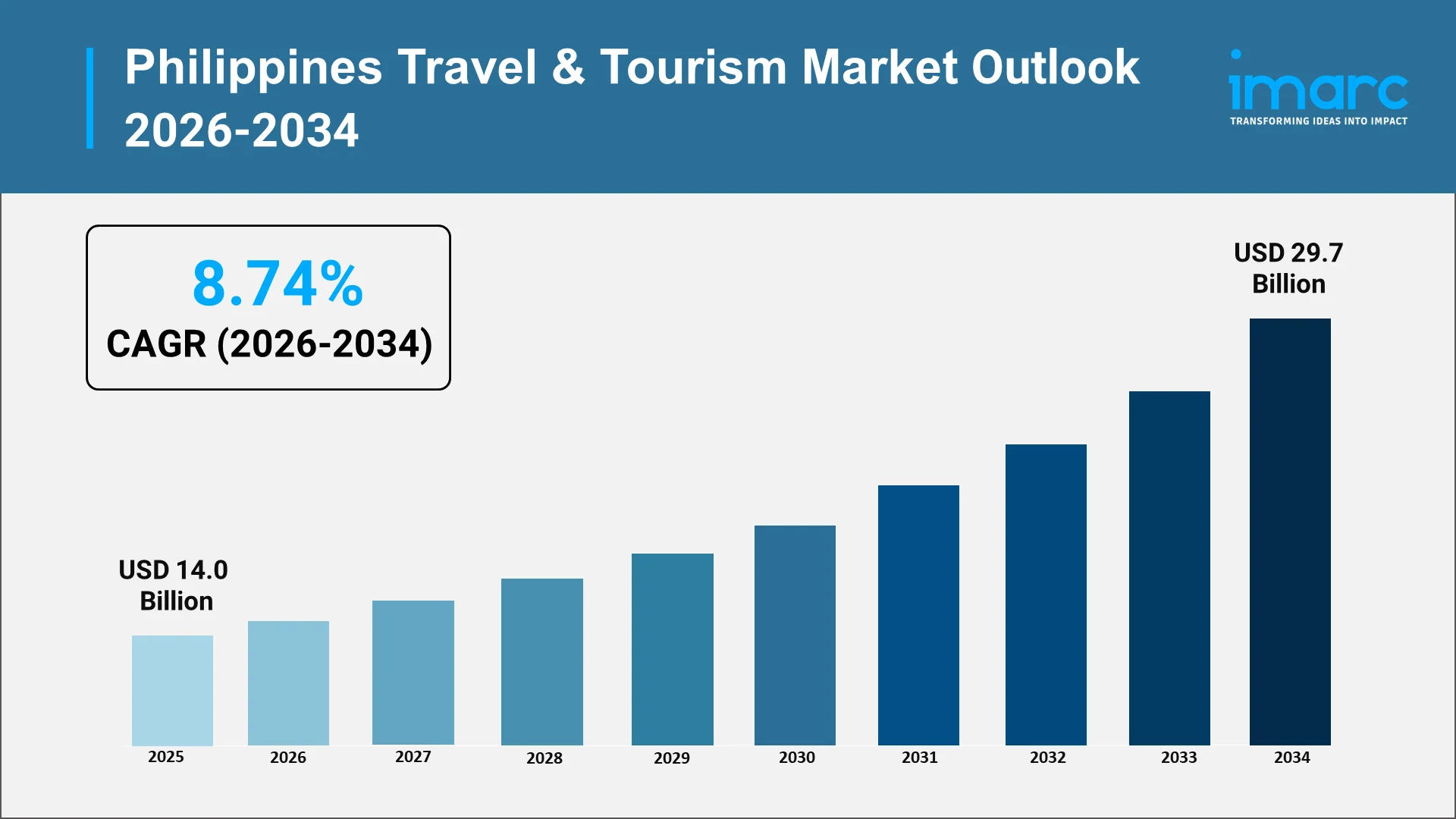
The Philippines travel and tourism industry is thriving, with travelers drawn to its islands, heritage, and vibrant city life. IMARC Group estimates the market reached USD 14.0 Billion in 2025, reflecting the country’s growing appeal as a global destination. Stronger air connectivity, better infrastructure, and widespread use of digital booking platforms are boosting both leisure and business travel. Government initiatives promoting sustainable tourism and streamlined visa processes are also helping attract more visitors. Domestic tourism continues to grow as natives explore local destinations, supported by improved transportation and digital convenience. Hotels, airlines, and tour operators are increasingly adopting technology for online payments, itinerary customization, and real-time assistance. Furthermore, international investors are showing confidence in the country’s long-term tourism potential, fueling the rise of new resorts, eco-tourism projects, and cultural circuits.
 Explore in-depth findings for this market, Request Sample
From Resorts to Research: Tracking the Latest Developments in Philippine Tourism
- October 2025: Camiguin launched the “Isle Visit Camiguin 2026” campaign to boost tourism, promote sustainable growth, and create local employment. The initiative highlights natural beauty, cultural heritage, and sports tourism, including events like Ironman 5150, Climb Camiguin, and Isle Dive Camiguin. The campaign emphasizes sustainability, community involvement, and infrastructure improvements to strengthen the island’s long-term tourism development.
- October 2025: Philippines launched a three-volume travelogue on Muslim-friendly tourism to attract more visitors from Muslim-majority countries. The publication highlights Islamic history, culture, cuisine, and travel destinations across the country. Tourism Secretary Christina Frasco said the initiative supports the nation’s goal of becoming a top Muslim-friendly destination in Asia.
- September 2025: Philippines expanded its electronic visa (e-Visa) system to nationals of France, Austria, Greece, and the Netherlands. The program allows these travelers to apply online for a Temporary Visitor Visa valid for stays of up to 59 days. This marks the e-Visa system’s first rollout in Europe, strengthening tourism and diplomatic ties.
- September 2025: The Philippine Department of Tourism (DOT) announced a PHP15 million fund for its 2025 Tourism Start-Up Challenge, supporting innovative tourism projects from Luzon, Visayas, and Mindanao. Each of the three national winners will receive PHP5 million, with school groups of college students eligible to participate. The initiative, in partnership with CHED and TIEZA, aims to promote youth-driven innovation and enhance tourism education in the country.
- September 2025: Philippines launched the PH Golf Experience to boost sports tourism by promoting world-class golf courses and luxury travel packages. The program targets international golf enthusiasts while integrating eco-friendly practices and sustainable tourism. It aims to enhance the economy, attract high-end tourists, and position the Philippines as a premier golf destination in Asia.
Designing Destinations: Companies Transforming the Filipino Travel Journey
Major market participants are focusing on digital innovation, eco-friendly practices, and enhanced user experience to strengthen their market positions. They are implementing data analytics, AI-powered tools, and unified booking systems to enhance convenience and efficiency for travelers. Numerous entities are aligning their approaches with government tourism initiatives and investing in infrastructure, staff training, and sustainable projects to encourage responsible travel. Moreover, collaborations with global operators, local communities, and technology companies are creating enhanced travel experiences that attract both local and international travelers. By focusing on innovation, service quality, and sustainability, these entities are enhancing operational performance while also advancing the nation's objective of establishing itself as a competitive, future-oriented tourism hub. Emphasizing improved individual interaction and digital marketing initiatives, Davao in the Philippines launched a tourism passport in 2025 to encourage visitors to explore the region, earn rewards, and support local businesses. The passport provides stamps at attractions, unlocking discounts and exclusive offers while promoting lesser-known destinations. This initiative aims to boost tourism, stimulate the local economy, and inspire sustainable travel practices.
From Potential to Prosperity: Navigating the Ups and Downs of Philippine Travel & Tourism Industry
Growth Opportunities
The Philippines travel and tourism industry entering a period of renewed expansion, supported by advancements in infrastructure, technological innovation, and a broader range of market options. Increasing investor trust and robust government support are creating novel opportunities in leisure, business, and experiential travel sectors.
- Enhancing Tourism Facilities: Significant enhancements in airports, seaports, and highways are creating new locations and enhancing travel efficiency. Government collaborations and private funding are improving accessibility, accommodation capacity, and transportation integration among major islands.
- Digital Travel Ecosystem: The emergence of online reservation systems, cashless transactions, and data-focused tourism insights is changing how travelers organize and enjoy their journeys. This digital advancement enables quicker transactions, customized suggestions, and greater visibility for small and mid-sized tourism operators.
- Varied Travel Segments: Increasing enthusiasm for heritage, adventure, culinary, and wellness tourism is expanding the nation’s attraction beyond conventional beach locales. This variety appeals to more valuable travelers in search of genuine and immersive experiences.
Persistent Challenges
Despite its strong potential, the industry faces structural and operational challenges that could impact its long-term competitiveness. Tackling these obstacles is essential for guaranteeing sustainable development and preserving visitor trust.
- Regulatory Discrepancies: Conflicting national and local tourism regulations, complicated business licenses, and sluggish approval procedures frequently postpone project execution and discourage prospective investors.
- Infrastructure Upkeep and City Development: As growth persists, irregular maintenance of roadways, waste management systems, and public facilities can impact tourist contentment and the sustainability of emerging centers.
- Data and Market Intelligence Shortcomings: The scarcity of current tourism data and disjointed market research impede strategic planning and restrict the competitiveness of smaller market participants.
Sailing into Tomorrow: Factors Steering Philippine Travel & Tourism Industry
According to IMARC Group’s projections, the Philippines travel and tourism market is projected to grow at a CAGR of around 8.74% from 2026 to 2034, reaching USD 29.7 Billion by 2034. The growth will be supported by the following factors:
-
Expanding Air Connectivity
The expansion of both local and international flight paths is greatly enhancing access to key and developing tourist spots throughout the Philippines. Budget airlines, new airport terminals, and regional aviation collaborations are making inter-island travel cheaper and easier. This connectivity enhances tourist arrivals and spreads travel activity to secondary locations, aiding in reducing congestion at popular hotspots, such as Boracay and Palawan, while fostering inclusive tourism-led economic growth throughout the country. Supporting the expansion of international flight paths to secondary locations, the Philippines announced new direct flights from Russia to Kalibo in 2025, strengthening tourism and international connectivity. This move aims to boost visitor arrivals, cultural exchange, and economic cooperation between the Philippines and Russia.
- Government Tourism Initiatives
Programs and campaigns initiated by the government are enhancing global presence and local involvement. Simplified visa regulations, infrastructure funding, and collaborations between the public and private sectors are enhancing the nation's competitiveness. These efforts also highlight sustainable and community-focused tourism, promoting inclusive economic advantages while establishing the Philippines as a secure, inviting, and well-organized location for leisure, business, and cultural visitors from nearby and distant markets. Solidifying these governmental efforts to enhance global presence and local involvement, the Philippine Department of Tourism (DOT) unveiled strategic initiatives in 2025 to accelerate tourism recovery, including infrastructure upgrades and the nationwide expansion of the Philippine Experience Program. The DOT is also funding local tourism projects with P255 million and introducing innovations like hyperbaric chambers and electronic visas. These efforts aim to extend tourist stays, boost spending, and enhance the Philippines’ global competitiveness.
- Infrastructure Modernization
Significant infrastructure improvements through programs are enhancing the accessibility of the tourism centers in the Philippines. New airports, ports, highways, and bridges are linking isolated areas to key economic hubs, promoting balanced growth in regional tourism. Upgrades in utilities, communication, and transport networks improve visitor comfort and dependability. These advancements draw in foreign investors, shorten travel durations, and promote the establishment of integrated tourism routes that enhance long-term sustainability of destinations. Showcasing these significant infrastructure improvements, San Miguel Corp. announced in 2025 the start of construction for the new Caticlan Airport terminal, a project designed to enhance tourism access to Boracay Island. Designed to accommodate seven million passengers annually, the new terminal underscores San Miguel’s commitment to modernizing Philippine airport infrastructure.
- Sustainable and Eco-Tourism Appeal
With travelers becoming more environmentally conscious, Philippines with its marine parks, rainforests, and protected islands, is emerging as a leading eco-tourism destination. Initiatives promoting low-impact travel, conservation-led community programs, and renewable-energy-based resorts are becoming popular. Tourists are drawn to experiences that combine nature, authenticity, and responsibility. This emphasis on sustainability is reshaping tourism practices, ensuring long-term ecological preservation while providing stable livelihoods for local communities. In line with this trend, in 2024, the Philippines launched the first-ever Philippine Dive Experience in Anilao, Batangas, to promote eco-friendly and sustainable diving tourism. The initiative emphasized marine conservation, cultural education, and international collaboration, with participation from local and foreign guests.
.webp)
Building Forward: A Strategic Vision for the Next Era of Philippine Tourism
The travel and tourism sector in the Philippines is steadily transforming into one of Asia's most dynamic industries, showcasing the nation's skill in harmonizing tradition with modernity. The growth of digital platforms, enhanced connectivity, and robust policy support are fostering an environment that appeals to both leisure and business tourists. In addition to its beaches and cultural legacy, the Philippines is increasingly acknowledged for its commitment to sustainable tourism, community involvement, and responsible growth. Regional operators, international investors, and governing authority are collaborating to upgrade infrastructure, improve service standards, and foster inclusiveness across various areas. The growing appeal of experiential, eco-conscious travel aligns with global tourism trends, positioning the country for long-term relevance and resilience. However, as the sector grows, preserving environmental integrity, regulatory uniformity, and data-driven strategies remains crucial. By fostering collaboration, embracing adaptability, and maintaining a common vision for sustainability, the Philippines is creating a tourism framework that enhances its economy while safeguarding its natural and cultural heritage.
Charting Tomorrow’s Journeys: IMARC’s Vision for Philippine Travel & Tourism Industry
IMARC Group empowers stakeholders in the Philippines travel and tourism industry with data-driven intelligence to navigate a fast-evolving and competitive market. Our research and consulting services help clients uncover emerging opportunities, manage operational and regulatory challenges, and enhance competitiveness through innovation, service excellence, and sustainable development strategies.
- Market Insights: Monitor trends shaping the Philippines travel and tourism landscape, including the rise of experiential travel, digital booking platforms, eco-tourism, and domestic travel demand. Understand how individual behavior, infrastructure development, and hospitality digitization are influencing market and visitor engagement.
- Strategic Forecasting: Anticipate advancements in AI-driven travel planning, sustainable tourism initiatives, destination management technologies, and hospitality automation. Assess how evolving traveler preferences, government tourism policies, and investment trends are redefining the market outlook.
- Competitive Intelligence: Analyze the business models, marketing strategies, and partnerships of leading travel companies, hotel groups, and online platforms. Evaluate innovation approaches that enhance user experience, strengthen brand loyalty, and expand market presence across local and international destinations.
- Policy and Regulatory Analysis: Gain clarity on tourism development plans, environmental regulations, visa reforms, and transport infrastructure projects that influence tourism flows and foreign investment in the Philippines.
- Tailored Consulting Solutions: Access customized guidance on market entry, destination branding, digital transformation, and sustainable tourism planning. IMARC’s consulting expertise enables clients to design scalable, visitor-centric, and resilient strategies aligned with national tourism objectives.
As the Philippines travel and tourism sector continues to grow across leisure, business, and eco-tourism segments, IMARC Group remains a trusted partner, delivering actionable insights and strategies that drive innovation, competitiveness, and long-term sustainable growth.
Our Clients









Contact Us
Have a question or need assistance?
Please complete the form with your inquiry or reach out to us at
Phone Number
+91-120-433-0800+1-201-971-6302
+44-113-547-7077
Previous Post

The Mexico 3PL market has emerged as a critical pillar supporting the country's economic transformation and integration into global trade networks. As multinational corporations are increasingly viewing Mexico as a strategic manufacturing and distribution hub, the industry is evolving from a supporting service sector into a fundamental driver of competitive advantage.
An e-rickshaw is an electric-powered three-wheeled vehicle designed to transport passengers and goods over a short distance. It is an efficient, low-cost, eco-friendly substitute for conventional fuel-based auto-rickshaws and cycle rickshaws. The general specification of an e-rickshaw involves an electrical motor ranging from 650W to 1500W powered by a rechargeable lead-acid or lithium-ion battery, a lightweight chassis manufactured from mild steel or reinforced metal, and a simple drivetrain system.
Speed, reliability, and supply chain precision have become cornerstones of global commerce. As businesses operate across borders and customers expect shorter delivery times, the need to move products efficiently across continents has become essential. Air freight isn’t just connecting time zones—it’s enabling fast, predictable service that modern logistics depend on.
A truck radiator is an essential part of the truck's cooling system, which is used to control engine temperature by dispersing the excess heat produced during running. The radiator functions by circulating a coolant liquid around the engine, absorbing heat, and then releasing the heat to the air through the radiator's finned surface.
Australia's third-party logistics (3PL) industry is witnessing a revolution, driven by the integration of artificial intelligence (AI), digital infrastructure, and e-commerce growth. Initially based on manual procedures and operations, contemporary logistics chains are now being transformed by real-time data streams, predictive analytics, and smart automation.
Dropshipping is a streamlined e-commerce fulfillment model where sellers promote products without the need to maintain inventory. Instead of managing stock, sellers pass customer orders to third-party suppliers, often manufacturers or wholesalers, who handle packaging and shipping directly to the customer.
The logistics industry, encompassing transportation, warehousing, and distribution, is undergoing significant transformation in 2025. This growth is driven by technological advancements, evolving consumer expectations, and the need for more resilient supply chains.
The logistics sector is a vital component of the supply chain, encompassing the management and transportation of goods and services from their origin to their destination. It involves a broad spectrum of activities such as transportation, warehousing, inventory management, packaging, and goods handling, alongside information flow and supply chain management. The sector ensures the efficient movement of goods through various supply chain stages to meet consumer demand, playing a crucial role in facilitating trade and commerce, supporting economic growth, and serving diverse industries, including manufacturing, consumer goods, retail, food and beverages, IT hardware, healthcare, and chemicals.