
Insulated Concrete Form Market Size, Share, Trends and Forecast by Type, Material, End Use, and Region, 2026-2034
Insulated Concrete Form Market Size, Share, Trends & Forecast (2026-2034)
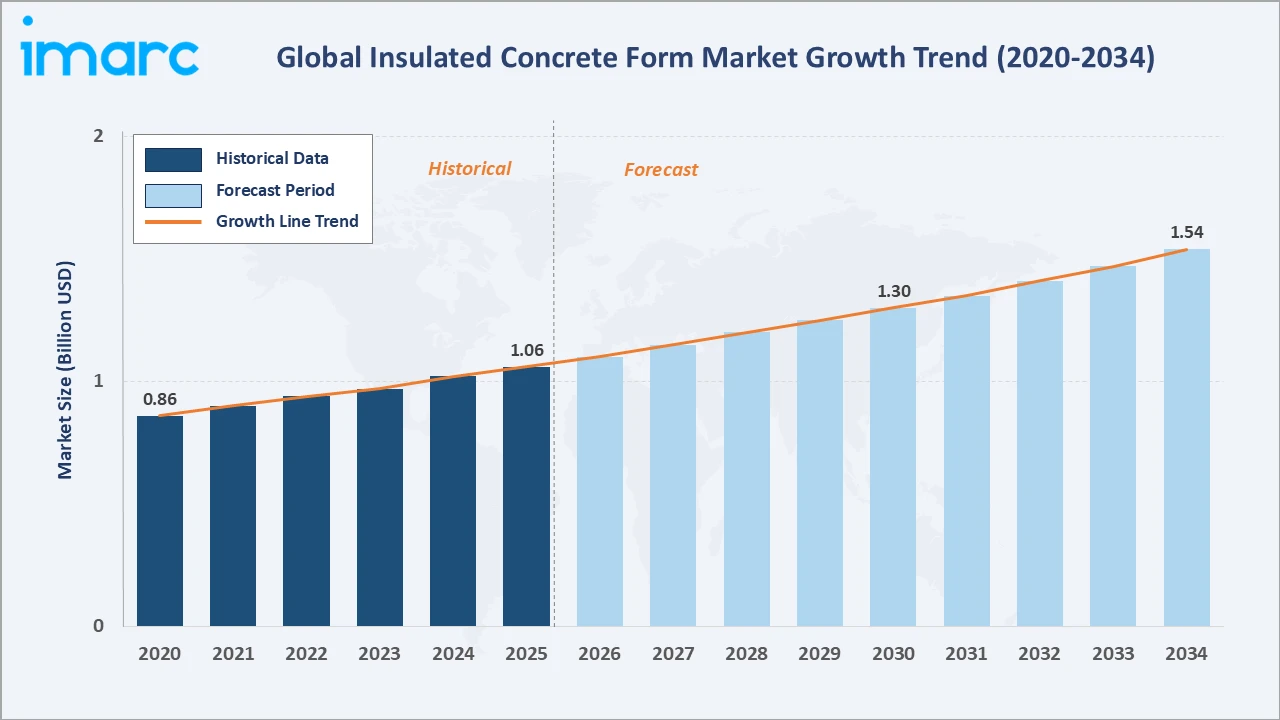
The global insulated concrete form (ICF) market reached USD 1.06 Billion in 2025 and is projected to reach USD 1.54 Billion by 2034, exhibiting a CAGR of 4.15% during 2026-2034. The escalating global push for energy-efficient construction driven by progressively tightening building energy codes, combined with growing consumer and developer awareness of ICF's superior disaster resistance and the rapid adoption of flat wall ICF systems in North America's new residential construction market, are the primary growth catalysts. Construction is a key pillar of the US economy, with more than 919,000 construction establishments operating in the first quarter of 2023. This extensive industry base is supporting demand for insulated concrete forms as builders increasingly adopt energy-efficient, durable, disaster-resistant, and faster construction systems for residential and commercial projects. Flat wall systems lead the type at 56.4%, polystyrene foam dominates the material at 81.2%, and North America accounts for the largest regional share at 38.9%.
Market Snapshot
|
Metric |
Value |
|
Market Size (2025) |
USD 1.06 Billion |
|
Forecast Market Size (2034) |
USD 1.54 Billion |
|
CAGR (2026-2034) |
4.15% |
|
Base Year |
2025 |
|
Historical Period |
2020-2025 |
|
Forecast Period |
2026-2034 |
|
Dominant Type |
Flat Wall Systems – 56.4% (2025) |
|
Dominant Material |
Polystyrene Foam – 81.2% (2025) |
|
Leading Region |
North America – 38.9% (2025) |
The global insulated concrete form (ICF) market grew from USD 0.86 Billion in 2020 to USD 1.06 Billion in 2025, driven by post-pandemic residential construction booms in North America and Australia, the progressive adoption of ICF in commercial and institutional construction for schools and healthcare facilities requiring disaster-resilient building envelopes, and the expanding awareness of ICF's lifecycle cost advantages over wood frame and CMU construction. The market is projected to reach USD 1.30 Billion by 2030 and USD 1.54 Billion by 2034.
To get more information on this market, Request Sample
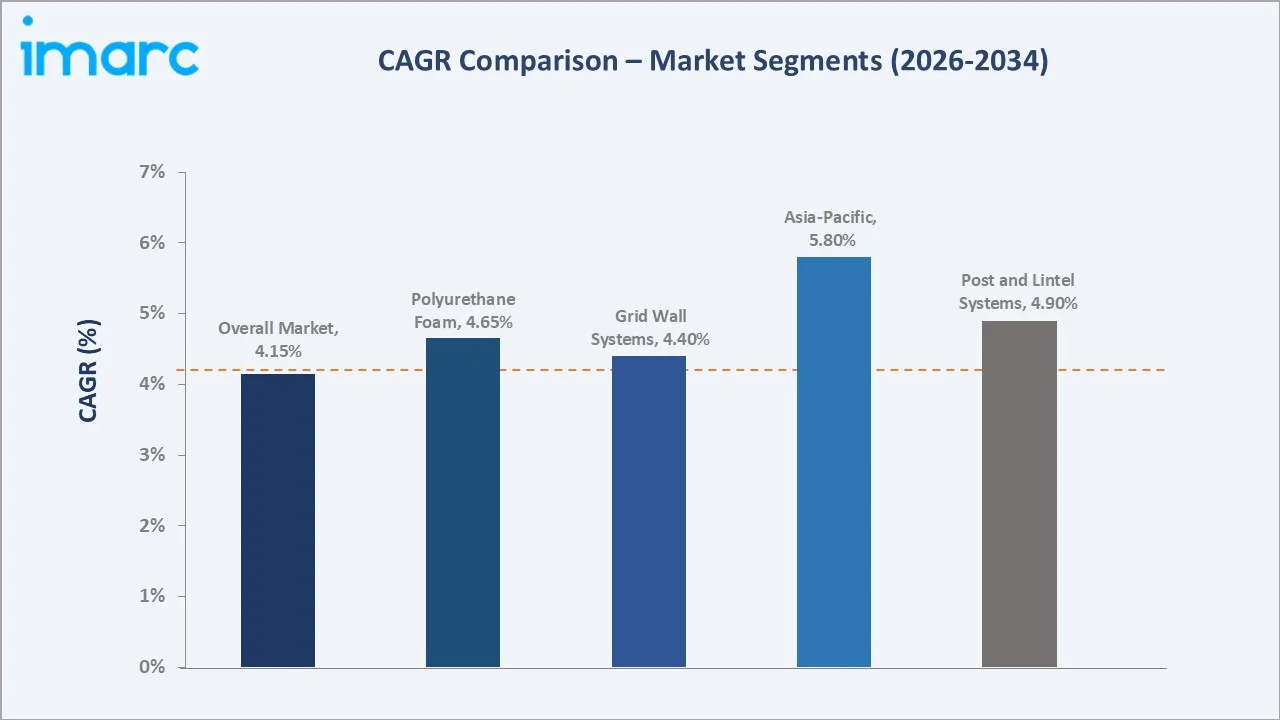
Post and lintel systems grow at ~4.90% CAGR through adoption in non-residential commercial construction, educational facilities, and custom residential applications requiring architectural flexibility. Asia-Pacific grows at ~5.80% CAGR through China's prefabricated construction mandates, India's affordable housing programs, and the progressive adoption of building energy codes aligned with international energy efficiency standards across Southeast Asia. Grid wall systems grow at ~4.40% CAGR through increased specification for heavy commercial applications requiring enhanced compressive strength. Polyurethane foam grows at ~4.65% CAGR through its superior thermal performance, attracting premium residential and cold-climate construction.
Executive Summary
The global insulated concrete form (ICF) market operates at the intersection of three powerful, sustained macrotrends: the global imperative to decarbonize the built environment, the increasing frequency and severity of climate-driven natural disasters creating demand for disaster-resistant construction, and the progressive shortage of skilled construction labor making ICF's speed advantage over conventional construction increasingly commercially compelling for developers managing project schedules and labor costs.
Flat wall systems lead at 56.4% (2025) through their universal applicability across residential and commercial construction, simplicity of installation that minimizes training requirements for ICF-novice construction crews, and the full range of concrete fill depths that allow flat wall ICF to meet any structural loading requirement from single-family residential to mid-rise commercial. Polystyrene foam dominates at 81.2% (2025) through its proven field performance record, recyclability credentials that support green building certification, and the exceptional availability of raw material from global suppliers. North America leads at 38.9% (2025) through Canada's highest ICF market penetration, the US's growing adoption in residential construction for energy code compliance, and both countries' widespread awareness of ICF's disaster resistance value in hurricane, tornado, and wildfire-prone regions.
Key Market Insights
|
Insight |
Data |
|
Dominant Type |
Flat Wall Systems – 56.4% share (2025) |
|
Dominant Material |
Polystyrene Foam (EPS) – 81.2% share (2025) |
|
Leading Region |
North America – 38.9% share (2025) |
|
Market Opportunity |
Asia-Pacific code-compliant affordable housing; cold-climate premium residential; school and healthcare facility ICF specification; low-GWP polyurethane ICF innovation; ICF retrofit market development |
Key Analytical Observations Supporting the Above Data:
- Flat Wall Systems at 56.4% (2025): Flat wall ICF, where expanded polystyrene foam panels are connected by plastic or steel ties at fixed spacing to create a form that accepts concrete fills in thicknesses of 4 to 12 inches of solid concrete with EPS foam panels on each side, commands market dominance through its universal applicability across all residential and commercial building types, its installation simplicity that allows general construction crews to learn ICF installation through manufacturer-provided training programs, and the resulting solid concrete wall that provides a single-pass completion of structural, insulation, vapor retarder, and fire-rated wall functions that would require separate trade installations in conventional construction.
- Polystyrene Foam (EPS) at 81.2%: Expanded polystyrene foam reflects three decades of field performance verification in North America's climate-extreme environments that have proven EPS foam's dimensional stability under thermal cycling, moisture resistance in below-grade and above-grade applications, and long-term R-value retention that some alternative insulation materials cannot sustain.
- North America at 38.9% (2025): North America leads due to stringent energy-efficiency standards, high demand for disaster-resistant buildings, and strong adoption of sustainable construction practices. Established construction infrastructure and growing residential and commercial development further support regional dominance.
Insulated Concrete Form Market Overview
To evaluate market opportunities, Request Sample
Insulated concrete forms (ICFs) are modular building components comprising two layers of rigid foam insulation, typically expanded polystyrene (EPS) or polyurethane, connected by plastic or steel ties to form a wall cavity that is filled with reinforced concrete during construction. The ICF system functions as a permanent formwork that remains in place after concrete placement, providing continuous insulation on both sides of the concrete wall that eliminates thermal bridging, achieves superior air sealing, and creates a monolithic concrete structure with thermal mass that moderates indoor temperature fluctuations. ICF systems are classified by wall form type, insulation material, and end use application. Macroeconomic factors include rising residential and commercial construction activity, increasing infrastructure investment, stringent energy-efficiency building regulations, and growing demand for sustainable construction materials.
Market Dynamics
Market Drivers
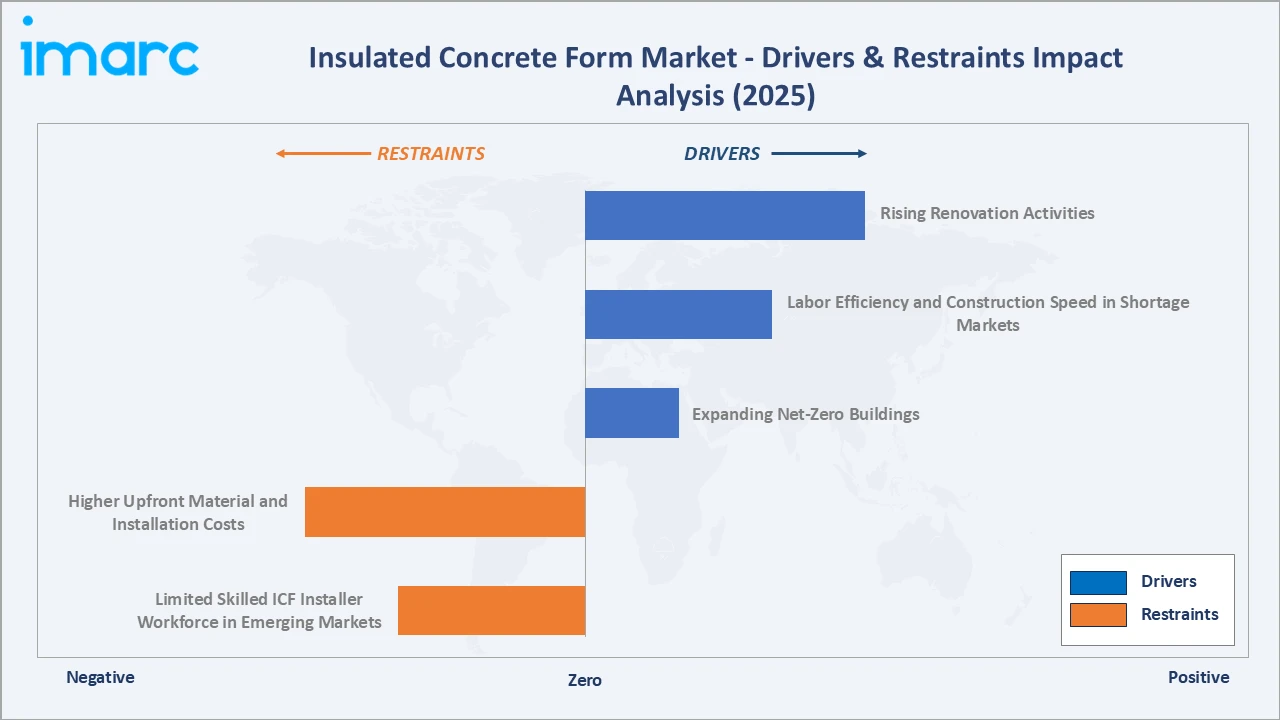
- Rising Renovation Activities: Increasing renovation and retrofit activities are driving demand for insulated concrete forms (ICFs) as property owners seek to improve the energy efficiency, durability, and structural performance of existing buildings. The EU’s Renovation Wave strategy seeks to upgrade 35 million buildings by 2030 while at least doubling the region’s annual rate of energy-efficient renovations. ICF systems provide superior thermal insulation, noise reduction, and moisture resistance while helping meet stricter building codes. Growing investments in residential and commercial modernization, coupled with sustainability goals, are further accelerating the adoption of ICFs in renovation projects.
- Labor Efficiency and Construction Speed in Shortage Markets: The severe skilled construction labor shortage in North America, Europe, and Australia creates commercial incentives for construction methods that reduce labor requirements per unit of completed building envelope. ICF construction's documented reduction in labor hours versus wood frame construction for equivalent wall assemblies represents a meaningful labor cost reduction that partially or fully offsets ICF's material cost premium over wood framing in high-labor-cost markets.
- Expanding Net-Zero Buildings: The growing adoption of net-zero buildings is driving demand for insulated concrete forms due to their superior thermal insulation, airtightness, and ability to reduce heating and cooling requirements. Of total building-related greenhouse gas emissions, approximately 27% arises from building operations, including heating, ventilation, and appliance use, while another 13% comes from embodied carbon in construction materials. Since nearly two-thirds of today’s buildings are expected to remain in use by 2040, they will continue to generate substantial emissions. This increases the need for energy-efficiency upgrades, renewable energy integration, and low-carbon materials, supporting the development of net-zero buildings.
Market Restraints
- Higher Upfront Material and Installation Costs: ICF systems command a premium material cost per wall area over wood frame construction, creating an upfront cost barrier that limits ICF adoption in cost-sensitive housing markets despite the favorable lifecycle economics. In production homebuilding markets where builders compete primarily on entry pricing and where first-time buyers cannot financially justify the energy savings payback period, ICF's initial cost premium remains a commercial barrier that market education and incentive programs are progressively addressing but have not yet fully overcome.
- Limited Skilled ICF Installer Workforce in Emerging Markets: Despite ICF installation being learnable by general construction crews through manufacturer training programs, the limited availability of ICF-experienced subcontractors in Asia-Pacific, Latin America, and Middle East markets creates project delay risk and quality uncertainty that deters architect and developer specification of ICF in markets where the technology is relatively new.
Market Opportunities
- Asia-Pacific Energy Code Adoption and Affordable Housing Programs: The Indian government introduced sector-specific energy-efficiency plans targeting an 89 Million tons of oil equivalent (Mtoe) reduction in energy consumption by 2030. To promote sustainable cooling and efficient buildings, the Bureau of Energy Efficiency issued the Energy Conservation and Sustainable Building Code (ECSBC) for commercial buildings and Eco Niwas Samhita for residential buildings, and the ASEAN framework's building sector efficiency targets collectively represent a regulatory demand creation event for high-performance wall insulation systems in Asia's massive construction market.
- ICF Retrofit and Overclad Market Development: ICF systems enhance thermal insulation, structural durability, and weather resistance without requiring complete building reconstruction. Increasing renovation activity, stricter energy-efficiency regulations, and government-backed retrofit programs are expected to accelerate demand for ICF applications in residential and commercial building upgrades.
Market Challenges
- Foam Blowing Agent Sustainability and Low-GWP Transition: Polyurethane foam ICF manufacturing uses blowing agents that have historically high Global Warming Potential (GWP). The transition to low-GWP hydrofluoroolefin (HFO) blowing agents requires formulation changes by polyurethane ICF manufacturers that add complexity and cost to foam manufacturing.
- Wildfire Ember Resistance of EPS Foam ICF: While ICF concrete walls are inherently fire resistant, unfinished EPS foam ICF walls have been identified as a vulnerability in wildland-urban interface (WUI) construction where ember showers during wildfires can ignite exposed EPS foam surfaces during the construction phase before exterior cladding is applied. This challenge is being progressively resolved through industry collaboration with fire safety regulators but represents an area requiring ongoing technical attention.
Emerging Market Trends
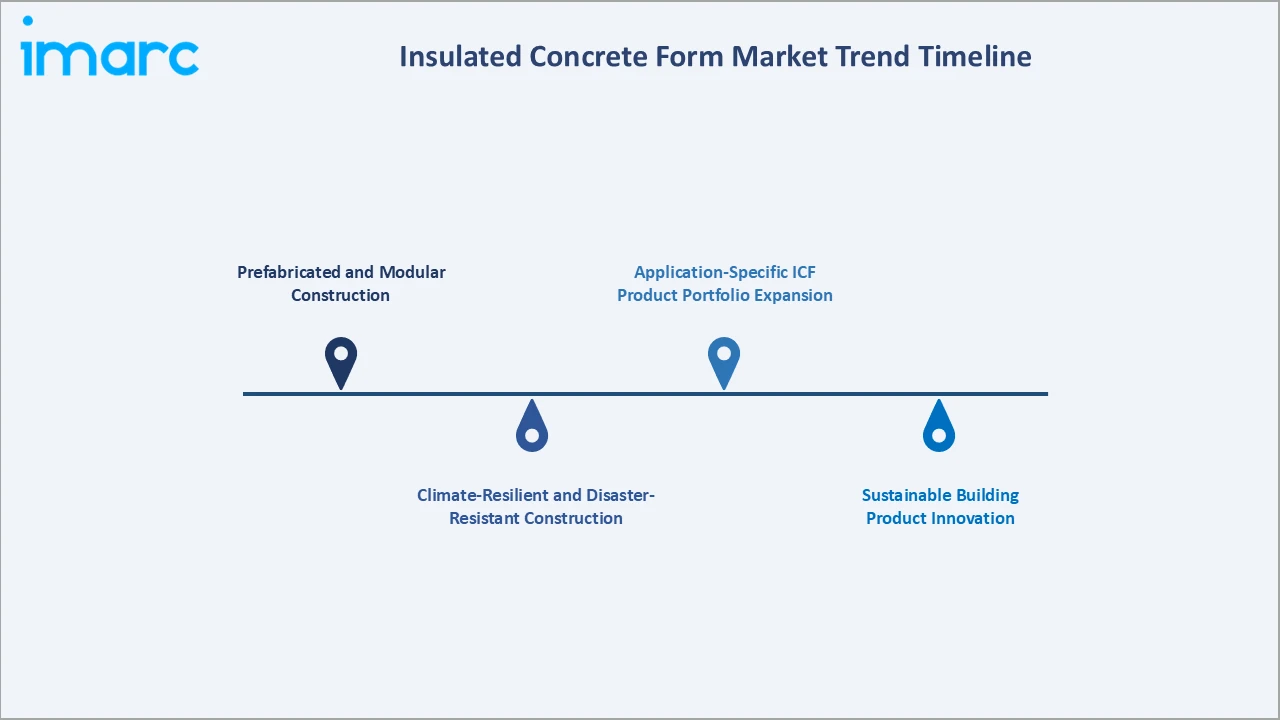
1. Prefabricated and Modular Construction
The shift toward prefabricated and modular building methods is driving demand for ICF systems that enable faster installation and reduced labor requirements. Factory-manufactured ICF components improve construction quality, minimize material waste, and shorten project timelines. Their compatibility with off-site construction supports greater adoption across residential and commercial projects.
2. Climate-Resilient and Disaster-Resistant Construction
Increasing frequency of extreme weather events is encouraging the use of durable building materials with superior structural performance. ICF structures offer enhanced resistance to hurricanes, floods, earthquakes, and fire while improving occupant safety. This is boosting adoption in disaster-prone regions and resilient infrastructure projects.
3. Sustainable Building Product Innovation
According to the Intergovernmental Panel on Climate Change (IPCC), building efficiency policies could reduce greenhouse gas emissions by up to 90% in developed economies and 80% in developing economies, while helping alleviate energy poverty for as many as 2.8 billion people. However, with nearly half of the buildings required by 2050 yet to be constructed, the sector remains below its full decarbonization potential. Building efficiency and resilience also offer major economic benefits, as the built environment contributes around 7% of global employment and 11–13% of global GDP. This is driving the insulated concrete form market because ICF systems improve thermal efficiency, reduce operational energy use, and support durable, low-emission building envelopes. Growing investment in sustainable construction and energy-efficient retrofits is therefore increasing ICF adoption.
4. Application-Specific ICF Product Portfolio Expansion
Manufacturers are increasingly organizing insulated concrete form portfolios around specific building applications to simplify product selection and improve project efficiency. In September 2025, Kingspan Insulation North America introduced a simplified naming structure for its expanded polystyrene portfolio, grouping products under Aeroroof, Aerowall, Aeroslab, and Aerobloc. The Aeroslab range includes the A-ONE insulated concrete form system, which combines insulation and thermal mass within the wall assembly. It offers high thermal resistance, reduced thermal bridging, secure interlocking, and easier installation through integrated brackets and wire clips. This trend enhances customer experience while supporting wider adoption of ICF systems.
Industry Value Chain Analysis
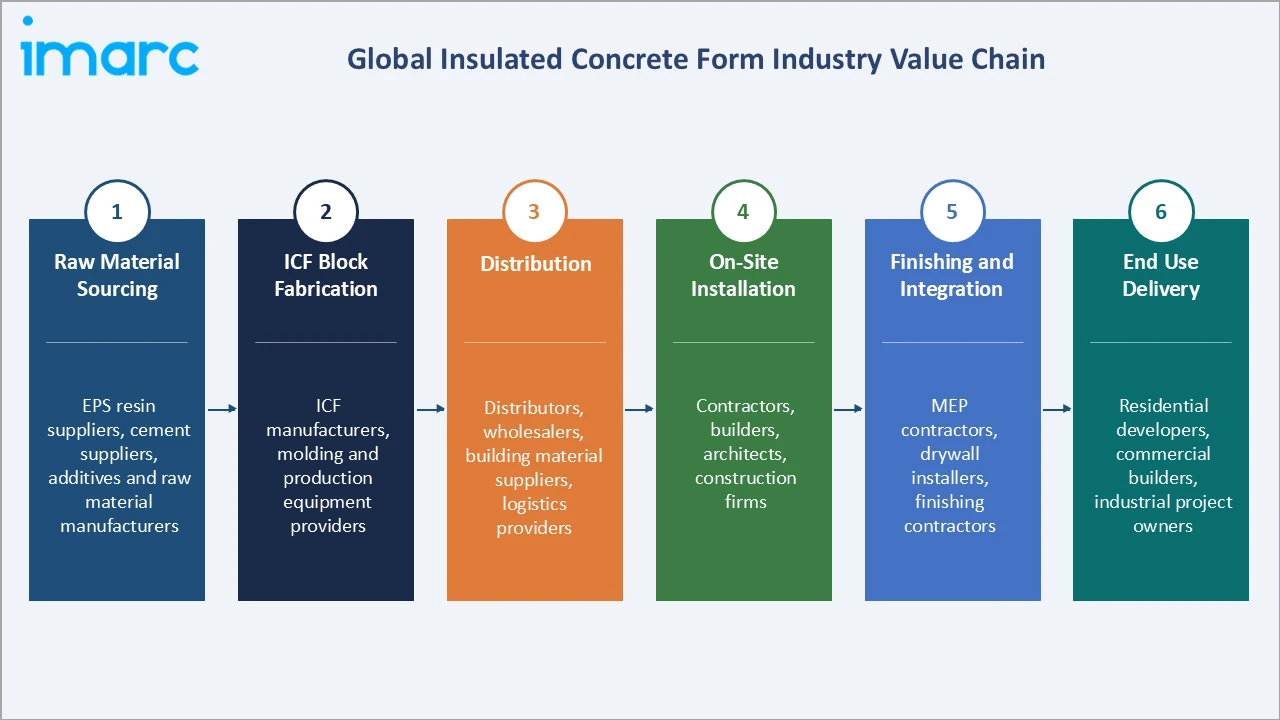
The insulated concrete form (ICF) value chain integrates raw material sourcing, ICF block fabrication, distribution, on-site installation, finishing and integration, and end use delivery.
|
Stage |
Key Participants |
|
Raw Material Sourcing |
EPS resin suppliers, cement suppliers, additives and raw material manufacturers. |
|
ICF Block Fabrication |
ICF manufacturers, molding and production equipment providers. |
|
Distribution |
Distributors, wholesalers, building material suppliers, logistics providers. |
|
On-Site Installation |
Contractors, builders, architects, construction firms. |
|
Finishing and Integration |
MEP contractors, drywall installers, finishing contractors. |
|
End Use Delivery |
Residential developers, commercial builders, industrial project owners. |
The ICF block fabrication stage is the most value-added part of the value chain, as it determines the product's insulation performance, structural integrity, durability, and ease of installation. Innovations in block design, manufacturing precision, and material quality directly influence energy efficiency, construction speed, and overall building performance.
Technology Landscape in the Insulated Concrete Form Industry
Expanded Polystyrene (EPS) Foam Technology
Expanded polystyrene (EPS) is the most widely used material in ICF systems due to its excellent thermal insulation, lightweight properties, and moisture resistance. Advanced EPS formulations improve compressive strength, durability, and fire performance while reducing thermal bridging. Manufacturers are also developing recyclable and lower-carbon EPS solutions to enhance sustainability.
Building Information Modeling (BIM)
BIM enables architects, engineers, and contractors to accurately design and coordinate ICF-based construction projects before installation. It improves clash detection, material planning, cost estimation, and project scheduling while minimizing construction errors. BIM integration also enhances collaboration across the construction value chain.
Low-Carbon Concrete Technology
Manufacturers are increasingly pairing ICF systems with low-carbon concrete mixes that incorporate supplementary cementitious materials and recycled aggregates. This combination reduces the embodied carbon of buildings while maintaining structural performance. The technology supports green building certifications and net-zero construction goals.
Market Segmentation Analysis
The report covers the following segments:
|
Segment Category |
Leading Segment |
Market Share |
Year |
|
Type |
Flat Wall Systems |
56.4% |
2025 |
|
Material |
Polystyrene Foam |
81.2% |
2025 |
|
End Use |
Residential |
🔒 |
2025 |
|
Region |
North America |
38.9% |
2025 |

By Type
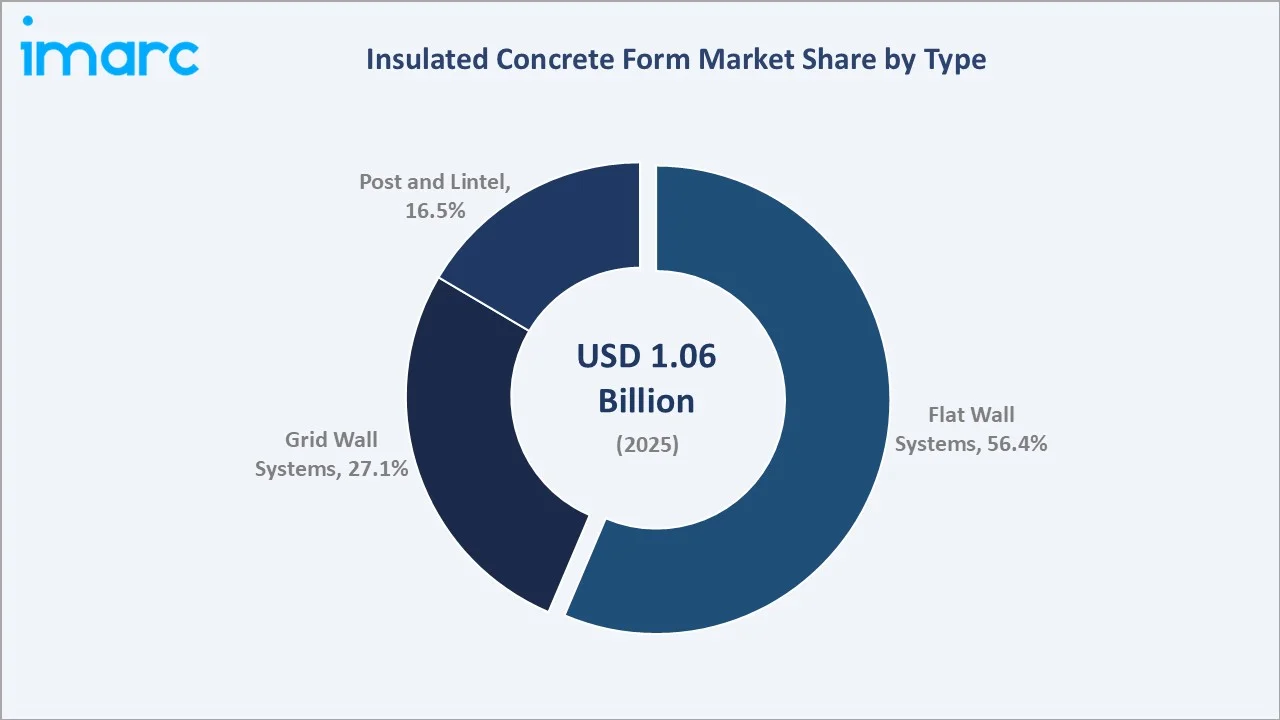
Flat wall systems lead at 56.4% (2025) through their universal residential and commercial applicability, installation simplicity, and the complete structural, insulation, and air barrier functions that the solid concrete core provides.
To access detailed market analysis, Request Sample
Grid wall systems at 27.1% serve commercial construction requiring enhanced structural performance and seismic applications where concrete concentration at columns and beams improves lateral load resistance. Post and lintel systems at 16.5%, growing fastest at~4.90% CAGR, serve architectural applications requiring large window openings, curved wall configurations, and structural beam-column frame construction where ICF foam provides continuous insulation around the post and lintel concrete frame.
By Material
Polystyrene foam dominates at 81.2% (2025) through proven performance, recyclability, and universal availability. The record of polystyrene foam (EPS) ICF in North America's climate extremes has established EPS as the reference material for ICF construction globally.
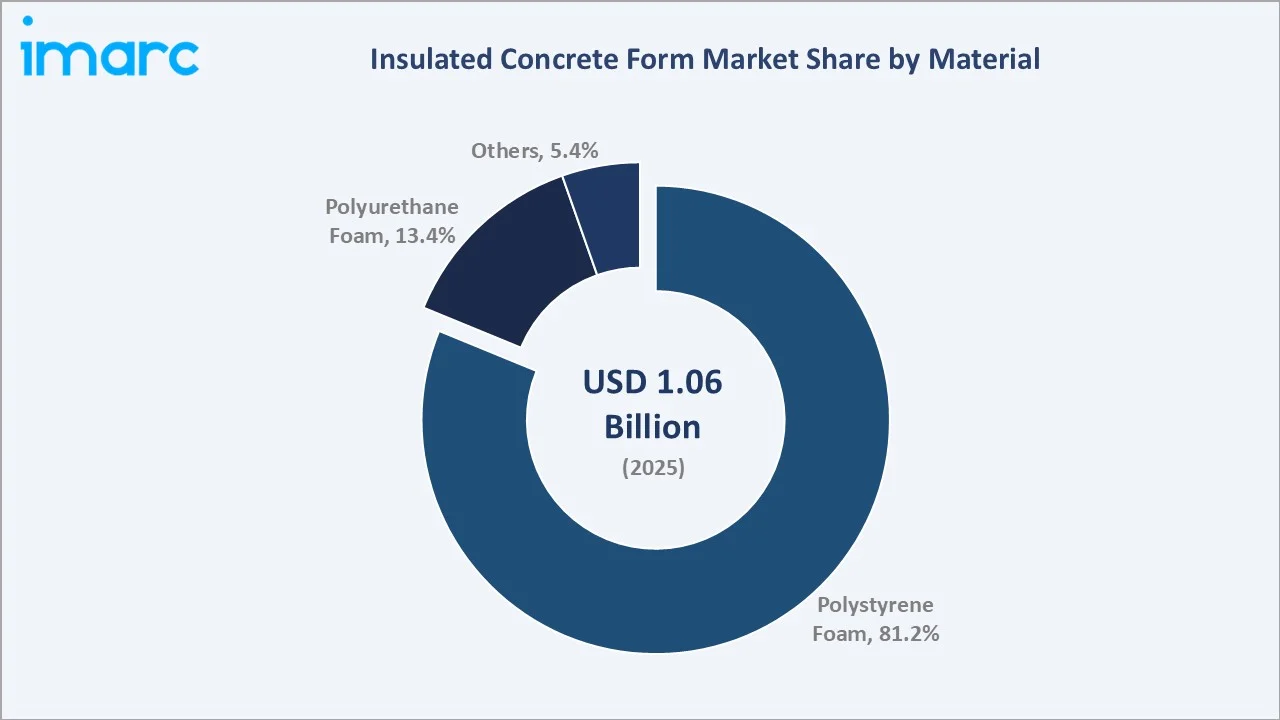
Polyurethane foam at 13.4%, growing at ~4.65% CAGR, serves the premium residential and cold-climate institutional market where R-value maximization justifies the PU premium over EPS ICF systems. Others at 5.4% encompass wood-cement composite ICF, mineral wool composite ICF, and cement-bonded wood fiber ICF products that serve specific European and UK construction requirements for breathable wall assemblies and alternative material sustainability credentials.
Regional Market Insights
|
Region |
Share (2025) |
Key Insulated Concrete Form Market Drivers & Characteristics |
|
North America |
38.9% |
Strong adoption of energy-efficient building systems, stringent building codes, and high demand for disaster-resistant construction support market leadership. |
|
Asia-Pacific |
29.4% |
Rapid urbanization, infrastructure development, and increasing green building initiatives are driving ICF adoption across residential and commercial construction. |
|
Europe |
22.3% |
Strict energy-efficiency regulations, renovation programs, and net-zero building targets are accelerating the use of high-performance insulation systems. |
|
Latin America |
5.4% |
Rising residential construction, growing infrastructure investment, and increasing awareness of sustainable building materials support market growth. |
|
Middle East and Africa |
4.0% |
Expanding urban development, government infrastructure projects, and demand for energy-efficient buildings are creating opportunities for ICF adoption. |
North America's 38.9% market dominance is supported by stringent energy-efficiency standards, established construction practices, and strong demand for disaster-resistant buildings. The United States and Canada are major adopters across residential, commercial, and institutional projects. Asia-Pacific's 29.4% share is growing fastest at ~5.80% CAGR, reflecting rapid urbanization, infrastructure expansion, and increasing green building activity.
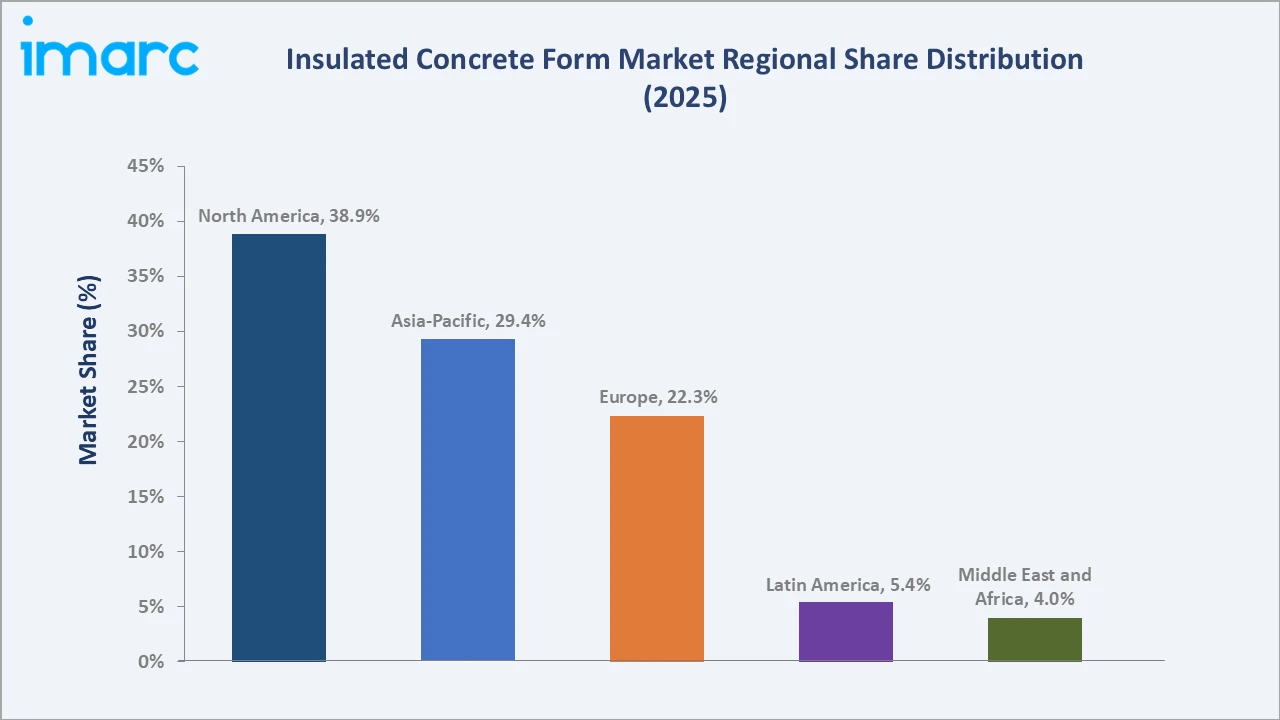
Europe's 22.3% is driven by renovation programs, net-zero targets, and strict building energy regulations. Latin America’s 5.4% is witnessing gradual adoption as sustainable construction awareness and housing investment increase. The Middle East and Africa’s 4.0% present long-term opportunities through urban development, commercial construction, and government-backed infrastructure projects.
Competitive Landscape
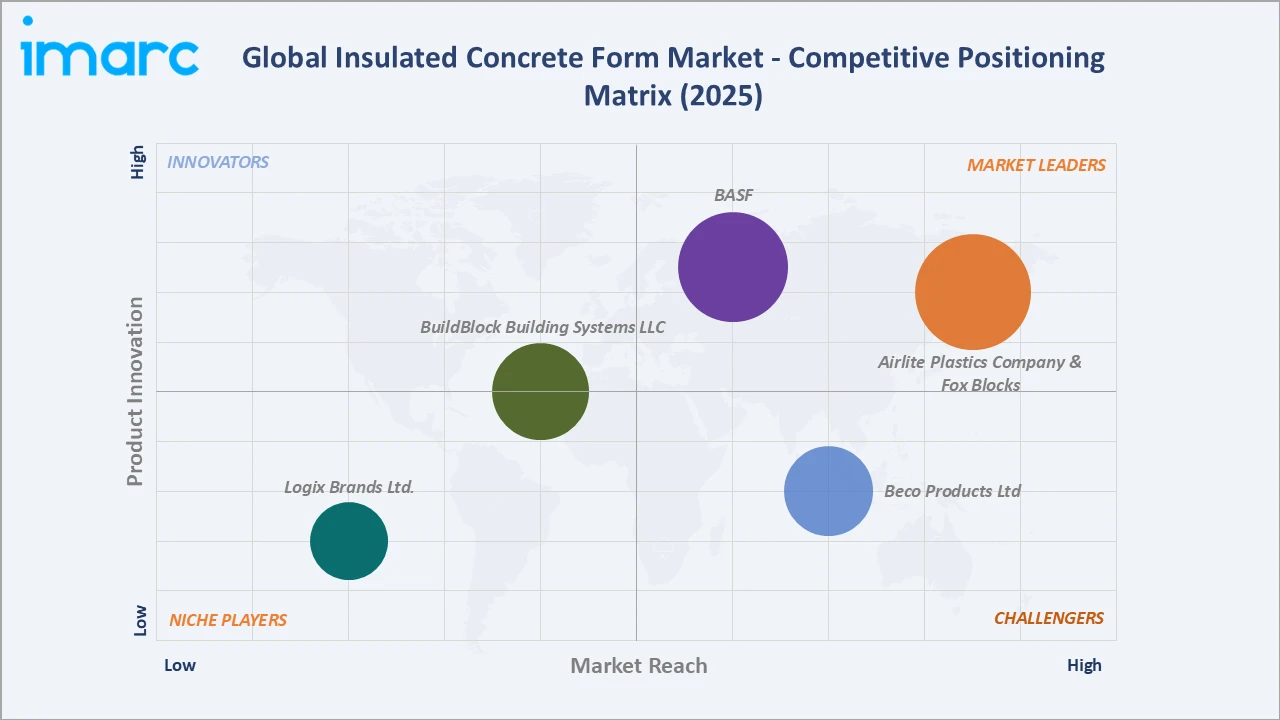
The global insulated concrete form market is moderately concentrated, while a broader competitive set of regional manufacturers competes effectively in geographic and product niches where their technical differentiation, regional relationships, or specialty product features command competitive preference over the market leaders' broader platforms.
|
Company |
Key Products |
Market Position |
Core Strength |
|
Airlite Plastics Company & Fox Blocks |
Fox Blocks Series |
Market Leader |
Airlite Plastics Company & Fox Blocks is a leading manufacturer in the insulated concrete form (ICF) market. They operate their primary ICF product line through their division, Fox Blocks. |
|
BASF |
Neopor Insulating Concrete Forms |
Market Leader |
BASF operates as a vital raw material supplier in the Insulated Concrete Form (ICF) market. Their flagship material, Neopor, is heavily utilized by ICF manufacturers globally to create energy-efficient, fire-resistant, and sustainable building forms. |
|
BuildBlock Building Systems LLC |
BuildBlock Insulated Concrete Forms (ICF Blocks), BuildBuck ICF Bucking |
Established Player |
BuildBlock Building Systems LLC is a key manufacturer in the global insulated concrete form (ICF) market. The company drives industry growth through product innovation while actively expanding ICF adoption by providing extensive contractor education and technical support. |
|
Logix Brands Ltd. |
Element ICF |
Niche Player |
Logix Brands Ltd. acts as a major industry leader in the insulated concrete form (ICF) market. They drive market growth through continuous product innovation and high-volume manufacturing of energy-efficient wall systems. |
|
Beco Products Ltd |
BecoWallform |
Challenger |
Beco Products Ltd is a key player in the Insulated Concrete Form (ICF) market, recognized for its BecoWallform system. |
Competitive dynamics are increasingly shaped by geographic expansion capabilities, where an international distribution network and Asia-Pacific regional presence provide structural commercial advantages in the ICF market's fastest-growing regional markets that product performance alone cannot create for smaller competitors.
Key Company Profiles
Airlite Plastics Company & Fox Blocks
Airlite Plastics Company & Fox Blocks is a leading manufacturer of insulated concrete form (ICF) systems for residential, commercial, institutional, and industrial construction. Fox Blocks offers high-performance ICF wall systems that combine reinforced concrete with expanded polystyrene (EPS) insulation to deliver superior energy efficiency, structural strength, fire resistance, and sound insulation. The company supports architects, builders, and contractors with comprehensive design resources, technical assistance, and sustainable building solutions, making it a prominent participant in the global insulated concrete form market.
- Key Products: Fox Blocks Series.
- Strategic Focus: Expanding the adoption of high-performance insulated concrete form systems for energy-efficient and resilient construction. The company emphasizes product innovation, improved thermal performance, and simplified installation to enhance construction efficiency.
BASF
BASF is a global chemical company that supplies high-performance raw materials and polymer solutions used in the production of insulated concrete forms (ICFs), including expandable polystyrene (EPS), insulation materials, and construction chemicals. Through its advanced material technologies, BASF supports the development of energy-efficient, durable, and sustainable building systems for residential, commercial, and infrastructure applications. The company's focus on innovation, low-carbon construction materials, and sustainable building solutions makes it an important contributor to the global insulated concrete form market.
- Key Products: Neopor Insulating Concrete Forms.
- Strategic Focus: Developing advanced polymer materials and insulation solutions that enhance the thermal performance, durability, and sustainability of insulated concrete form systems. The company invests in low-carbon materials, recyclable polymers, and energy-efficient construction technologies to support green building initiatives.
Market Concentration Analysis
The global insulated concrete form market is moderately concentrated at the North American scale while being fragmented at the global scale, where regional manufacturers serve local markets with logistical and regulatory compliance advantages that global manufacturers cannot cost-effectively provide from centralized North American manufacturing. Leading companies focus on product innovation, sustainable materials, and expanding distribution networks to strengthen their market positions. Strategic partnerships, capacity expansions, and contractor training initiatives are common competitive strategies. Regional manufacturers also play a significant role by addressing local building codes and project-specific requirements.
Investment & Growth Opportunities
Highest Growth Segments
Asia-Pacific region (~5.80% CAGR), post and lintel systems (~4.90% CAGR), polyurethane foam material (~4.65% CAGR), grid wall systems (~4.40% CAGR), and institutional non-residential construction (school, healthcare, government facility ICF) represent the ICF market's highest-growth investment vectors through 2034.
Investment Themes
- Asia-Pacific ICF market entry and manufacturing investment: Manufacturers are investing in production facilities, distribution networks, and strategic partnerships across Asia-Pacific to capitalize on rapid urbanization, infrastructure development, and tightening building energy-efficiency regulations. Local manufacturing also helps reduce logistics costs and improve supply chain responsiveness.
- ICF retrofit and external overclad market development for Renovation Wave: Companies are developing ICF-based retrofit and external overclad solutions to support Europe's Renovation Wave initiative, enabling energy-efficient upgrades of existing buildings. These systems improve thermal insulation, reduce carbon emissions, and help older structures comply with increasingly stringent building performance standards.
Future Market Outlook (2026-2034)
The global insulated concrete form market is projected to grow from USD 1.06 Billion in 2025 to USD 1.54 Billion by 2034, delivering a 4.15% CAGR that reflects the sustained acceleration of three structural forces that are progressively expanding ICF's addressable market and commercial attractiveness relative to conventional construction alternatives. The anchor value of USD 1.30 Billion in 2030 is driven by the convergence of regulatory, climate, and economic drivers that are systematically improving ICF's competitive position against wood frame, steel stud, CMU, and precast concrete alternatives across an expanding spectrum of building types and geographic markets.
First, the global tightening of building energy performance codes creates a sustained regulatory demand expansion for the ICF industry that is essentially decoupled from the economic cycles that historically correlated construction activity with building material demand. Second, climate change's impact on natural disaster frequency and severity creates consumer, developer, and institutional preference for ICFs' documented disaster resistance performance. Third, the progressive commercialization of ICF through RPM's global distribution network during 2026-2030 is expected to accelerate ICF market development in the Asia-Pacific and European regions where the regulatory, consumer, and climate drivers for ICF adoption are aligned but historical product accessibility limitations have constrained market growth below its potential.
Research Methodology
Primary Research
Primary research comprised in-depth interviews with ICF executives, ICF manufacturer technical directors and sales management, certified ICF installation contractors in North America and Australia, building code officials familiar with ICF construction inspection, residential and commercial developers with completed ICF projects, and specialty foam business representatives. Discussions validated market size estimates, segment dynamics, competitive positioning, regional demand patterns, and technology development timelines.
Secondary Research
Secondary research encompassed annual market reports, ICF market data, safe room design guidelines, ICF-specific code sections, EU Renovation Wave implementation documentation, technical specifications and market communications, company annual reports, ICF performance analysis, ICF project database, and ICF market intelligence resources.
Forecasting Models
Forecasting models were developed using historical global ICF market data, US and Canada building permit data with ICF penetration rate estimation, EU renovation market volume projection, Asia-Pacific green building code implementation timeline modeling, regional CAGR differential analysis, energy code tightening cycle ICF market penetration acceleration modeling, and disaster resilience market premium valuation in wildfire geographic zones. Both top-down and bottom-up approaches were validated through primary research.
Insulated Concrete Form (ICF) Market Report Scope:
| Report Features | Details |
|---|---|
| Base Year of the Analysis | 2025 |
| Historical Period | 2020-2025 |
| Forecast Period | 2026-2034 |
| Units | Billion USD |
| Scope of the Report | Exploration of Historical Trends and Market Outlook, Industry Catalysts and Challenges, Segment-Wise Historical and Future Market Assessment:
|
| Types Covered | Flat Wall Systems, Grid Wall Systems, Post and Lintel Systems |
| Materials Covered | Polystyrene Foam, Polyurethane Foam, Others |
| End Uses Covered | Residential, Non-Residential |
| Regions Covered | Asia Pacific, Europe, North America, Latin America, Middle East and Africa |
| Countries Covered | United States, Canada, Germany, France, United Kingdom, Italy, Spain, Russia, China, Japan, India, South Korea, Australia, Indonesia, Brazil, Mexico |
| Companies Covered | Airlite Plastics Company & Fox Blocks, BASF, BuildBlock Building Systems LLC, Logix Brands Ltd., Beco Products Ltd, etc. |
| Customization Scope | 10% Free Customization |
| Post-Sale Analyst Support | 10-12 Weeks |
| Delivery Format | PDF and Excel through Email (We can also provide the editable version of the report in PPT/Word format on special request) |
Key Benefits for Stakeholders:
- IMARC’s industry report offers a comprehensive quantitative analysis of various market segments, historical and current market trends, market forecasts, and dynamics of the insulated concrete form (ICF) market from 2020-2034.
- The research report provides the latest information on the market drivers, challenges, and opportunities in the global insulated concrete form (ICF) market.
- The study maps the leading, as well as the fastest-growing, regional markets. It further enables stakeholders to identify the key country-level markets within each region.
- Porter's five forces analysis assist stakeholders in assessing the impact of new entrants, competitive rivalry, supplier power, buyer power, and the threat of substitution. It helps stakeholders to analyze the level of competition within the insulated concrete form (ICF) industry and its attractiveness.
- Competitive landscape allows stakeholders to understand their competitive environment and provides an insight into the current positions of key players in the market.
Frequently Asked Questions About the Insulated Concrete Form Market Report
The global insulated concrete form market reached USD 1.06 Billion in 2025, driven by the EU Renovation Wave 35 million building retrofit target, residential ICF penetration demonstrating market maturity benchmark, and rising natural disaster frequency creating demand for ICFs' documented wind resistance and fire rating.
The market grows at 4.15% CAGR during 2026-2034, reaching USD 1.54 Billion by 2034. This growth is supported by rising demand for energy-efficient, durable, and sustainable construction systems.
Flat wall systems lead at 56.4% (2025) through universal residential and commercial applicability, simplicity of installation by general construction crews, and solid concrete wall achievement of structural, insulation, vapor retarder, and fire-rated functions in a single installation.
Polystyrene foam (EPS) dominates at 81.2% (2025) through North America's field performance record in all climate extremes, recyclability credentials supporting green building certification, and graphite EPS premium technology achieving wall assembly values for leading ICF manufacturers.
North America leads at 38.9% (2025) through Canada's highest ICF residential penetration, US energy code driving ICF adoption, and established ICF ecosystems enabling reliable market delivery.
Leading companies include Airlite Plastics Company & Fox Blocks, BASF, BuildBlock Building Systems LLC, Logix Brands Ltd., and Beco Products Ltd.
The market is projected to reach approximately USD 1.30 Billion by 2030, driven by EU Renovation Wave 35 million building retrofit program implementation, India affordable housing ICF construction scaling, Asia-Pacific green building code maturation, and growing residential builder adoption in wildfire zones driven by rising disaster insurance premium differentials for wood frame versus concrete construction.
Top opportunities include Asia-Pacific ICF manufacturing, EU retrofit ICF system development, passive house and net-zero energy building polyurethane ICF, ICF commercial construction expansion, and digital ICF design tools.
Need more help?
- Speak to our experienced analysts for insights on the current market scenarios.
- Include additional segments and countries to customize the report as per your requirement.
- Gain an unparalleled competitive advantage in your domain by understanding how to utilize the report and positively impacting your operations and revenue.
- For further assistance, please connect with our analysts.
 Request Customization
 Speak to an Analyst
 Request Brochure
 Inquire Before Buying
Benefits of Customization
- Personalize this research
- Triangulate with your data
- Get data as per your format and definition
- Gain a deeper dive into a specific application, geography, customer, or competitor
- Any level of personalization
Get in Touch With Us
UNITED STATES
Phone: +1-201-971-6302
INDIA
Phone: +91-120-433-0800
UNITED KINGDOM
Phone: +44-753-714-6104
Email: [email protected]
Client Testimonials




.webp)




.webp)













Related Reports

Choose your plan
*Please note that the prices mentioned below are starting prices for each bundle type. Kindly contact our team for further details.*
Single User License
- 1 User License, Access on 2 Devices
- PDF Report + Excel Dataset (Password Protected)
- Lifetime Access
- No Printing Rights
- 10% Free Report Customization
- 10–12 Weeks of Analyst Support
Five User License
- Access for 5 Users, 2 Devices per User
- PDF Report + Excel Dataset (Password Protected)
- Lifetime Access
- Dedicated Account Manager
- 12–14 Weeks of Analyst Support
- No Printing Rights
- 15% Free Report Customization
- 25% Discount on Your Next Purchase
Corporate User License
- Unlimited User Access (Within Your Organization)
- PDF Report + Excel Dataset
- Lifetime Access
- Dedicated Account Manager
- 14–20 Weeks of Analyst Support
- No Printing Rights
- 20% Free Report Customization
- 30% Discount on Your Next Purchase
Essential Insights
What's included:
3 reports
- Lifetime Access
- PDF Reports
- Excel Datasets
- 2 Weeks of Free Analyst Support
- 2 User Licenses
- Access on 2 Devices
- Printing Rights
- Complimentary PowerPoint (PPT) Version
- Complimentary License Upgrade
Professional Access
What's included:
5 reports
- Lifetime Access
- PDF Reports
- Excel Datasets
- 8 Weeks of Free Analyst Support
- 2 User Licenses
- Access on 2 Devices
- Printing Rights
- Complimentary PowerPoint (PPT) Version
- Complimentary License Upgrade
Business Advantage
What's included:
8 reports
- Lifetime Access
- PDF Reports
- Excel Datasets
- 14 Weeks of Free Analyst Support
- 2 User Licenses
- Access on 2 Devices
- Printing Rights
- Complimentary PowerPoint (PPT) Version
- Complimentary License Upgrade
Enterprise Intelligence
What's included:
10 reports
- Lifetime Access
- PDF Reports
- Excel Datasets
- 20 Weeks of Free Analyst Support
- 2 User Licenses
- Access on 2 Devices
- Printing Rights
- Complimentary PowerPoint (PPT) Version
- Complimentary License Upgrade