
Integrated Facilities Management Market Size, Share, Trends and Forecast by Type, Sourcing Model, Service, End Use, and Region, 2026-2034
Integrated Facilities Management Market Size and Share:
The global integrated facilities management market size was valued at USD 126.45 Billion in 2025. Looking forward, IMARC Group estimates the market to reach USD 211.63 Billion by 2034, exhibiting a CAGR of 5.40% from 2026-2034. North America currently dominates the market, holding a market share of 35.2% in 2025. The region benefits from advanced infrastructure development, widespread adoption of smart building technologies, and a mature commercial real estate sector that prioritizes operational efficiency and sustainability-driven solutions, driving demand for comprehensive facility management services and contributing to the integrated facilities management market share.
The market growth is primarily propelled by the potential for cost savings offered through consolidated service delivery models. Organizations are increasingly recognizing the value of outsourcing non-core activities, such as facility maintenance and management, to specialized providers. By partnering with integrated facilities management providers, businesses can redirect their internal resources and expertise toward their core competencies, enhancing productivity and competitive advantage. The unified approach to service delivery improves coordination, communication, and accountability across various functions including maintenance, cleaning, and security services. Additionally, advancements in technology, particularly in building automation, Internet of Things (IoT) sensors, data analytics, and cloud computing platforms, are driving adoption as these enable real-time monitoring, predictive maintenance capabilities, and data-driven decision-making for optimized facility operations and resource allocation, thereby propelling the integrated facilities management market growth.
The United States has emerged as a major region in the integrated facilities management market owing to many factors. The country benefits from advanced infrastructure, high technology adoption rates, and a mature real estate sector emphasizing sustainability and operational efficiency. Federal initiatives, including the Inflation Reduction Act which allocates USD 975 million for federal building upgrades, are accelerating demand for energy-efficient retrofits and smart building solutions. The expanding commercial real estate sector, combined with growing institutional investments in healthcare and education facilities, drives substantial demand for professional facility management services. Furthermore, corporate sustainability targets and building performance standards across multiple states are pushing organizations to adopt integrated facility management solutions that combine IoT monitoring, AI-driven analytics, and comprehensive service delivery to achieve operational excellence and regulatory compliance.
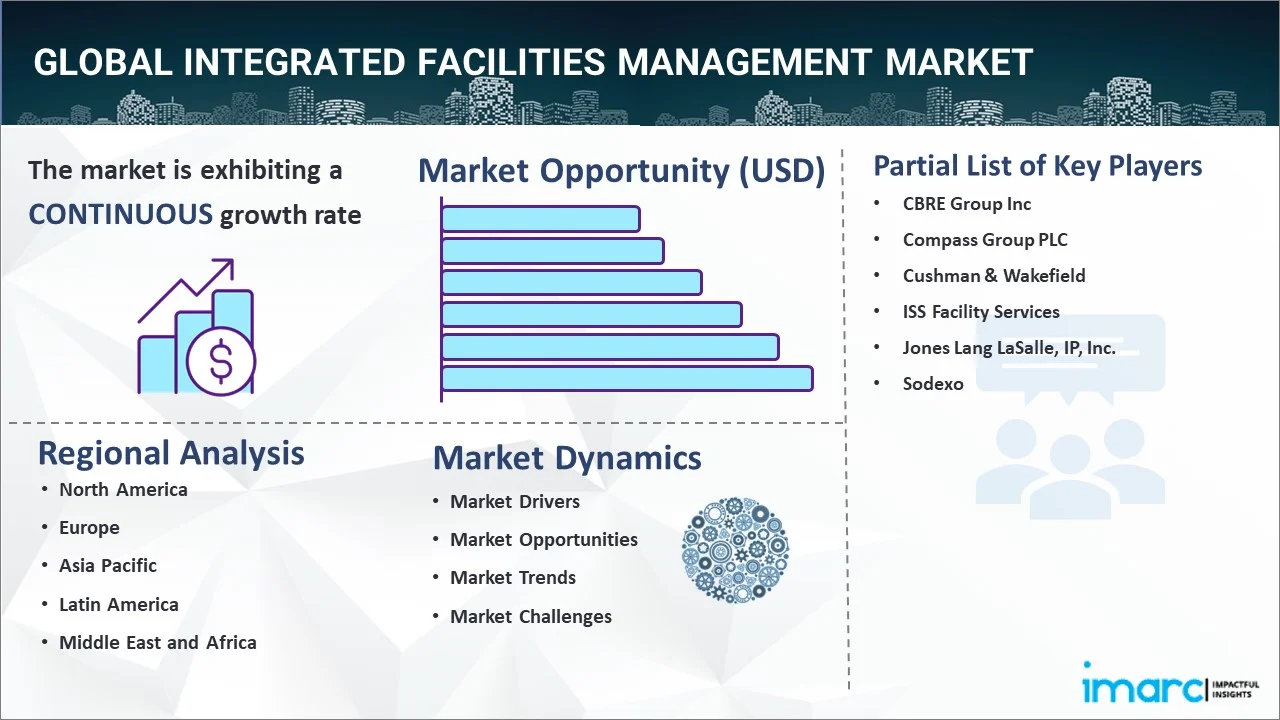
To get more information on this market Request Sample
Integrated Facilities Management Market Trends:
Digital Transformation Reshaping Facility Operations
The integration of advanced digital technologies is fundamentally transforming how facilities are managed and maintained globally. Organizations are rapidly adopting Internet of Things enabled sensors, artificial intelligence platforms, and cloud-based management systems to enable predictive maintenance and optimize energy consumption across their portfolios. This shift from reactive repairs to proactive performance management allows for measurable key performance indicators and service-level agreement-based service delivery. Digital twins and integrated workplace management systems are becoming standard among leading providers, enabling real-time simulations to optimize energy use and reduce carbon footprints. According to industry analysis, cloud-based deployment captured a major percentage share in the global facility management software market in 2025, reflecting the accelerating transition toward technology-enabled operations. These technological advancements are helping facility managers reduce operational costs while enhancing occupant comfort and safety across diverse building portfolios.
Sustainability and ESG Compliance Driving Adoption
The growing emphasis on sustainability and environmental responsibility is significantly impelling the integrated facilities management market outlook. Integrated facilities management providers play a crucial role in helping organizations achieve their environmental, social, and governance goals by implementing energy management strategies, monitoring resource consumption, and implementing eco-friendly operational practices. Regulatory pressures are intensifying globally, with the European Union's Corporate Sustainability Reporting Directive requiring granular disclosure of Scope 1, 2, and 3 emissions, sparking demand for facility management partners capable of collecting asset-level data and channeling insights into corporate sustainability dashboards. Organizations are increasingly retrofitting legacy properties with IoT sensors, digital twins, and AI-driven energy controls that deliver up to 30% energy savings. For instance, Sodexo's WasteWatch initiative in UK & Ireland targeting a 50% food-waste reduction by August 2025 illustrates how providers embed technology and process controls to help clients achieve public sustainability targets.
Workplace Experience Enhancement Gaining Momentum
The transformation of workplace environments to enhance employee experience and productivity is becoming a central focus of the integrated facilities management market forecast. As businesses continue to encourage employees back to offices, facility managers are leveraging smart building technologies to create hospitality-grade environments that prioritize occupant comfort and wellbeing. Premium office towers are deploying layered building-automation controls, demanding holistic oversight from integrated providers who can manage advanced ventilation systems, personalized climate control, and dynamic lighting solutions. Space utilization analytics using IoT sensors enable facility teams to track movement patterns and adjust services based on actual occupancy rather than fixed timetables. Moreover, the growing recognition that specialized facility management expertise is essential for creating productive, attractive workplaces that support talent retention and organizational success. In 2025, Frost & Sullivan is delighted to reveal that GFM Services Berhad has received the 2025 Malaysian Facility Management Competitive Strategy Leadership Recognition for its remarkable accomplishments in cost efficiency, energy efficiency, operational excellence, market leadership, and revenue diversification. This acknowledgment emphasizes GFM's steady leadership in achieving measurable results, enhancing its market presence, and providing customer-focused innovation within Malaysia’s changing facility management environment.
Integrated Facilities Management Industry Segmentation:
IMARC Group provides an analysis of the key trends in each segment of the global integrated facilities management market, along with forecast at the global, regional, and country levels from 2026-2034. The market has been categorized based on type, sourcing model, service, and end use.
Analysis by Type:
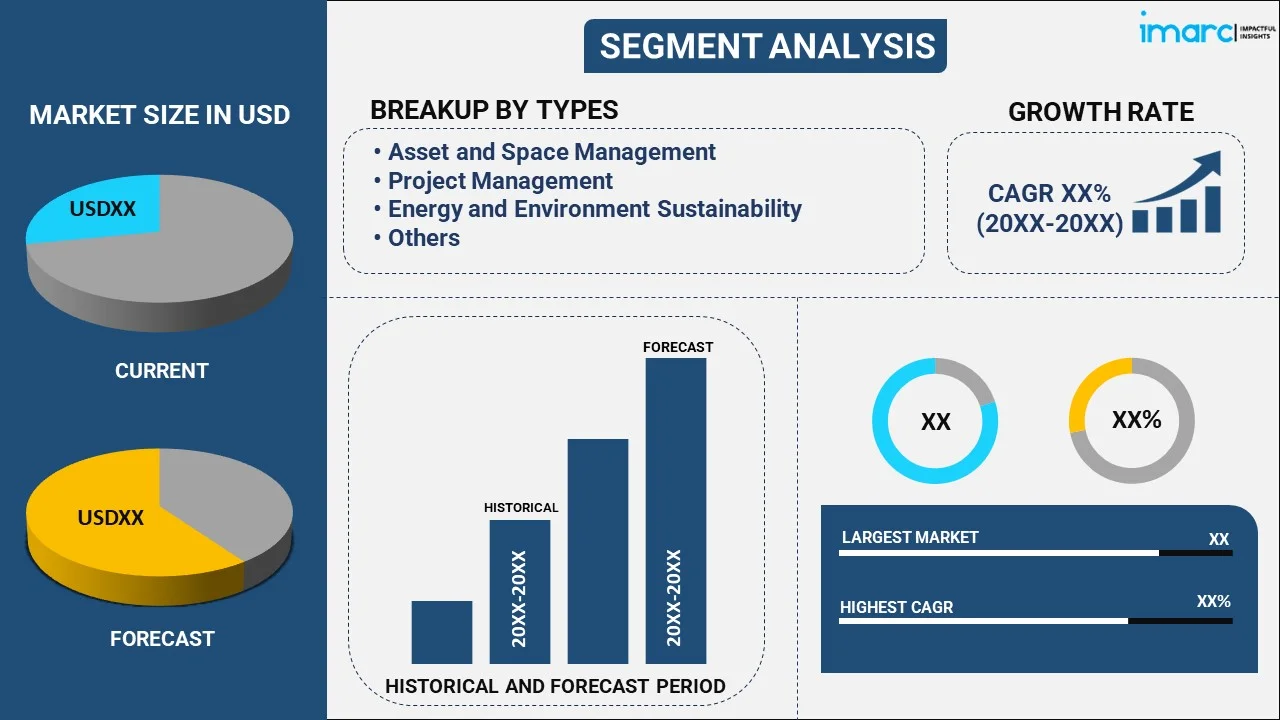
To get detailed segment analysis of this market Request Sample
- Asset and Space Management
- Project Management
- Real Estate Portfolio Management and Lease Administration
- Energy and Environment Sustainability
- Maintenance Management
- Others
Maintenance management holds 27.6% of the market share. Maintenance management represents a critical function within the integrated facilities management framework, encompassing preventive, predictive, and corrective maintenance activities across building systems and equipment. The segment's prominence is driven by the essential nature of mechanical, electrical, and plumbing upkeep in ensuring facility functionality, safety, and regulatory compliance. Organizations increasingly recognize that proactive maintenance programs extend asset lifecycles, minimize operational disruptions, and reduce long-term capital expenditure requirements. The integration of predictive maintenance tools powered by artificial intelligence and sensor networks enables early detection of potential equipment failures, allowing scheduled interventions before costly breakdowns occur. Additionally, aging building infrastructure across developed markets necessitates continuous maintenance investments, while growing commercial real estate portfolios in emerging economies require structured maintenance frameworks to protect substantial asset values.
Analysis by Sourcing Model:
- In House FM
- Single FM
- Bundled FM
- Integrated FM
Integrated FM leads the market with a share of 38.2%. The integrated facilities management sourcing model has emerged as the preferred approach for organizations seeking comprehensive, streamlined facility operations under a single contractual framework. This model consolidates multiple service categories including hard services, soft services, and strategic facility planning under unified management, providing clients with a single point of contact for all facility-related requirements. The appeal of integrated facilities management lies in its ability to improve coordination, enhance accountability, and deliver cost efficiencies through economies of scale and optimized resource allocation. Large enterprises and institutional clients increasingly favor this approach as it simplifies vendor management, reduces administrative burden, and enables consistent service quality standards across distributed portfolios. The trend toward outcome-based service contracts further reinforces demand for integrated solutions that can deliver measurable performance improvements while managing compliance risk.

Analysis by Service:
- Soft Service
- Hard Service
Hard service dominates the market, with a share of 56.4%. Hard services encompass the technical and infrastructure-related aspects of facility management, including mechanical, electrical, and plumbing systems maintenance, HVAC operations, fire safety systems, and enterprise asset management. The segment's dominance reflects the essential and non-discretionary nature of these services for ensuring building functionality, occupant safety, and regulatory compliance. Organizations cannot defer critical infrastructure maintenance without risking operational disruptions, safety incidents, or regulatory penalties. The rising complexity of modern building systems, incorporating smart technologies and energy-efficient equipment, demands specialized technical expertise that many organizations prefer to outsource. Furthermore, stringent building codes and energy efficiency mandates across jurisdictions require continuous system monitoring and maintenance, reinforcing demand for professional hard facility management services that combine technical competence with compliance assurance.
Analysis by End Use:
- Public and Infrastructure
- Commercial
- Industrial
- Institutional
- Others
Commercial represents the leading segment, with a market share of 34.8%. The commercial segment encompasses facility management services for office buildings, retail centers, hospitality establishments, and mixed-use developments, representing the largest end-use category in the integrated facilities management market trends. This segment's leadership position reflects the substantial scale of commercial real estate globally and the complex operational requirements of modern office environments and retail spaces. Commercial property owners and occupiers increasingly recognize that professional facility management enhances tenant satisfaction, improves asset values, and supports premium rental rates. The rise of flexible workspace models and hybrid work arrangements has intensified focus on workplace experience, requiring sophisticated facility services that optimize space utilization, maintain high cleanliness standards, and provide technology-enabled amenities. Banking, financial services, insurance, information technology, and retail sectors continue driving outsourcing demand as organizations prioritize core business activities while seeking consistent operational standards across distributed portfolios.
Regional Analysis:
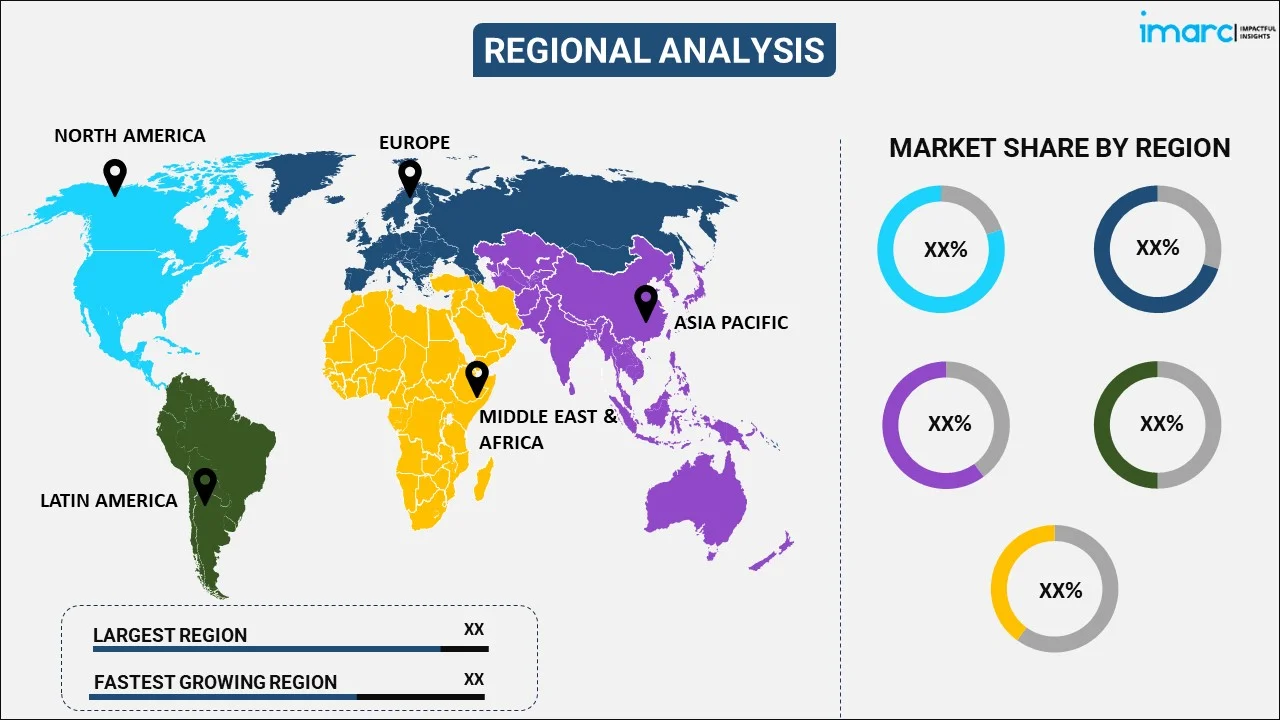
To get more information on the regional analysis of this market Request Sample
- North America
- United States
- Canada
- Asia Pacific
- China
- Japan
- India
- South Korea
- Australia
- Indonesia
- Others
- Europe
- Germany
- France
- United Kingdom
- Italy
- Spain
- Others
- Latin America
- Brazil
- Mexico
- Others
- Middle East and Africa
North America, accounting for 35.2% of the share, enjoys the leading position in the market. The region's dominance is underpinned by advanced infrastructure, high technology adoption rates, and a mature commercial real estate sector that prioritizes operational efficiency and sustainability. The United States and Canada together host extensive portfolios of commercial, institutional, and industrial facilities requiring professional management services. Federal and state-level initiatives supporting building modernization, energy efficiency improvements, and smart building adoption continue driving demand for integrated facility solutions. The region's emphasis on regulatory compliance, workplace safety standards, and environmental sustainability has accelerated investment in technology-enabled facility management platforms that deliver measurable operational improvements while supporting corporate ESG objectives and building performance requirements across diverse property portfolios.
Key Regional Takeaways:
United States Integrated Facilities Management Market Analysis
The United States represents the largest national market within the integrated facilities management sector, driven by its expansive commercial real estate portfolio and strong institutional demand across healthcare, education, and government sectors. The country benefits from advanced infrastructure, high technology adoption rates, and a mature real estate market that emphasizes sustainability, regulatory compliance, and operational efficiency through integrated facility management solutions. Federal initiatives and agency-led modernization programs are compelling facility owners to adopt advanced management systems, with programs such as the Department of Energy's Better Buildings Initiative and General Services Administration modernization efforts incentivizing upgrades to building automation, energy management, and performance benchmarking across federal and affiliated facilities. In 2024, The U.S. General Services Administration chose JLL and Corg Management Group to deliver integrated facilities management services for 22 of its locations. The country's facility management sector is experiencing significant expansion driven by rising investment in smart building technologies, including IoT-enabled platforms, AI-driven analytics, and predictive maintenance tools that transform building operations while supporting decarbonization targets. Commercial users represent a major portion of the market, led by information technology, banking, and retail facilities demanding redundancy-rich networks and temperature-controlled environments.
Europe Integrated Facilities Management Market Analysis
Europe represents a mature and highly developed integrated facilities management market characterized by stringent sustainability regulations and strong demand for compliant service delivery. The region's market is substantially influenced by the European Union's ambitious environmental directives, including the Corporate Sustainability Reporting Directive requiring comprehensive ESG disclosures and the Energy Efficiency Directive mandating significant reductions in building energy consumption. Germany's commitment to sustainability and energy efficiency, as outlined in the Federal Ministry for Economic Affairs and Energy's Energy Efficiency Strategy 2050, has established ambitious targets encouraging businesses to adopt integrated facility management solutions prioritizing energy efficiency. The rise of smart building technologies and IoT-enabled systems is revolutionizing facility management across Europe, enabling real-time monitoring, predictive maintenance, and automation that make buildings more efficient and cost-effective. For instance, Germany's Digital Strategy 2025 provides incentives for companies embracing digitalization and innovative facility management solutions, further accelerating market adoption across the continent.
Asia Pacific Integrated Facilities Management Market Analysis
Asia-Pacific represents one of the fastest-growing regions in the integrated facilities management market, driven by rapid urbanization, large-scale infrastructure investment, and increasing institutional capacity across both emerging and developed economies. Cities across China, India, Japan, Australia, and Southeast Asian nations are experiencing unprecedented expansion of commercial buildings, industrial parks, and public facilities requiring professional management services. Government initiatives such as India's Smart Cities Mission targeting 100 cities for sustainable urban development and China's extensive data center construction program are creating substantial demand for comprehensive facility management solutions. In 2025, Savills Singapore has today confirmed the finalization of its purchase of Alpina Holdings, representing a significant achievement in its long-term plan to create Singapore’s most extensive Property Management, Integrated Facilities Management, and Facilities Services platform.
Latin America Integrated Facilities Management Market Analysis
Latin America is witnessing growing adoption of integrated facilities management solutions driven by increasing commercial establishment counts in major countries including Brazil and Mexico. The region benefits from rising foreign direct investment flows supporting infrastructure development and data center expansion, creating demand for professional facility management services. Brazil and Mexico lead regional market development, together contributing a major portion of total regional revenue, with emphasis on smart infrastructure, energy efficiency policies, and sustainable building practices driving service adoption across commercial and institutional sectors.
Middle East and Africa Integrated Facilities Management Market Analysis
Middle East and Africa represents the fastest-growing regional market for integrated facilities management services, supported by funds in Gulf-funded infrastructure investments across ports, airports, and renewable energy projects. Saudi Arabia's Vision 2030 initiative, combined with the UAE's smart city programs and mega-project developments, is driving unprecedented demand for professional facility management services. Saudi Arabia's USD 342.05 billion 2025 budget appropriation underscores government commitment to infrastructure development, while public-private partnerships embed long-term facilities management clauses affording providers predictable revenue streams.
Competitive Landscape:
Top integrated facilities management (IFM) players are tightening their value proposition in a few consistent ways. They are investing in digital FM platforms that unify work orders, asset data, and vendor performance, often adding IoT sensors and predictive maintenance to cut downtime. Many are shifting contracts from input-based staffing to outcome-based service level agreements tied to uptime, energy use, and occupant satisfaction. ESG is a major focus: providers bundle energy audits, retrofits, and carbon reporting, then guarantee savings where possible. To protect margins, they standardize operating playbooks across sites, expand shared service centers, and use AI-assisted scheduling to reduce labor waste. Growth also comes through acquisitions and partnerships for niche capabilities like cybersecurity for building systems, smart cleaning, and workplace experience apps. They also expand regional coverage to win multi-country accounts and renewals.
The report provides a comprehensive analysis of the competitive landscape in the integrated facilities management market with detailed profiles of all major companies, including:
- CBRE Group Inc.
- Compass Group Plc
- Cushman & Wakefield
- ISS Facility Service
- Jones Lang LaSalle, IP, Inc.
- Sodexo
Latest News and Developments:
- December 2025: Muheel, a leading integrated facilities management provider in Saudi Arabia, is utilizing MRI Software's worldwide knowledge in real estate and facilities management solutions to speed up its digital transformation and improve core service delivery. The partnership positions Muheel as a leader in FM innovation by implementing MRI Evolution, a cohesive Computer-Aided Facilities Management (CAFM) solution that provides real-time insights into asset performance, automated maintenance processes, and enhanced lifecycle planning.
- June 2025: YY Group Holding Limited, a worldwide frontrunner in on-demand workforce solutions and integrated facility management (IFM), is excited to announce the acquisition of assets related to the Managing Facilities Applications, which will be marketed as 24IFM, signifying a strategic growth into the property and facility management industry. This action aims to expand YY Group's service portfolio and generate an additional revenue source via application subscriptions.
Integrated Facilities Management Market Report Scope:
| Report Features | Details |
|---|---|
| Base Year of the Analysis | 2025 |
| Historical Period | 2020-2025 |
| Forecast Period | 2026-2034 |
| Units | Billion USD |
| Scope of the Report | Exploration of Historical and Forecast Trends, Industry Catalysts and Challenges, Segment-Wise Historical and Predictive Market Assessment:
|
| Types Covered | Asset and Space Management, Project Management, Real Estate Portfolio Management and Lease Administration, Energy and Environment Sustainability, Maintenance Management, Others |
| Sourcing Models Covered | In house FM, Single FM, Bundled FM, Integrated FM |
| Services Covered | Soft Service, Hard Service |
| End Uses Covered | Public and Infrastructure, Commercial, Industrial, Institutional, Others |
| Regions Covered | Asia Pacific, Europe, North America, Latin America, Middle East and Africa |
| Countries Covered | United States, Canada, Germany, France, United Kingdom, Italy, Spain, China, Japan, India, South Korea, Australia, Indonesia, Brazil, Mexico |
| Companies Covered | CBRE Group Inc., Compass Group Plc, Cushman & Wakefield, ISS Facility Service, Jones Lang LaSalle, IP, Inc., Sodexo, etc. |
| Customization Scope | 10% Free Customization |
| Post-Sale Analyst Support | 10-12 Weeks |
| Delivery Format | PDF and Excel through Email (We can also provide the editable version of the report in PPT/Word format on special request) |
Key Benefits for Stakeholders:
- IMARC’s report offers a comprehensive quantitative analysis of various market segments, historical and current market trends, market forecasts, and dynamics of the integrated facilities management market from 2020-2034.
- The research study provides the latest information on the market drivers, challenges, and opportunities in the global integrated facilities management market.
- The study maps the leading, as well as the fastest-growing, regional markets. It further enables stakeholders to identify the key country-level markets within each region.
- Porter's Five Forces analysis assists stakeholders in assessing the impact of new entrants, competitive rivalry, supplier power, buyer power, and the threat of substitution. It helps stakeholders to analyze the level of competition within the integrated facilities management industry and its attractiveness.
- Competitive landscape allows stakeholders to understand their competitive environment and provides an insight into the current positions of key players in the market.
Frequently Asked Questions About the Integrated Facilities Management Market Report
The integrated facilities management market was valued at USD 126.45 Billion in 2025.
The integrated facilities management market is projected to exhibit a CAGR of 5.40% during 2026-2034, reaching a value of USD 211.63 Billion by 2034.
The market is driven by the growing emphasis on cost efficiency and operational optimization, increasing adoption of smart building technologies and IoT-enabled systems, rising focus on sustainability and ESG compliance, and the expanding trend of outsourcing non-core facility operations to specialized providers.
North America currently dominates the integrated facilities management market, accounting for a share of 35.2% in 2025. The region benefits from advanced infrastructure, high technology adoption, and a mature commercial real estate sector emphasizing sustainability and operational efficiency.
Some of the major players in the integrated facilities management market include CBRE Group Inc., Compass Group Plc, Cushman & Wakefield, ISS Facility Service, Jones Lang LaSalle, IP, Inc., Sodexo, etc.
Need more help?
- Speak to our experienced analysts for insights on the current market scenarios.
- Include additional segments and countries to customize the report as per your requirement.
- Gain an unparalleled competitive advantage in your domain by understanding how to utilize the report and positively impacting your operations and revenue.
- For further assistance, please connect with our analysts.
 Request Customization
 Speak to an Analyst
 Request Brochure
 Inquire Before Buying
Benefits of Customization
- Personalize this research
- Triangulate with your data
- Get data as per your format and definition
- Gain a deeper dive into a specific application, geography, customer, or competitor
- Any level of personalization
Get in Touch With Us
UNITED STATES
Phone: +1-201-971-6302
INDIA
Phone: +91-120-433-0800
UNITED KINGDOM
Phone: +44-753-714-6104
Email: [email protected]
Client Testimonials




.webp)




.webp)













Related Reports

Choose your plan
*Please note that the prices mentioned below are starting prices for each bundle type. Kindly contact our team for further details.*
Single User License
- 1 User License, Access on 2 Devices
- PDF Report + Excel Dataset (Password Protected)
- Lifetime Access
- No Printing Rights
- 10% Free Report Customization
- 10–12 Weeks of Analyst Support
Five User License
- Access for 5 Users, 2 Devices per User
- PDF Report + Excel Dataset (Password Protected)
- Lifetime Access
- Dedicated Account Manager
- 12–14 Weeks of Analyst Support
- No Printing Rights
- 15% Free Report Customization
- 25% Discount on Your Next Purchase
Corporate User License
- Unlimited User Access (Within Your Organization)
- PDF Report + Excel Dataset
- Lifetime Access
- Dedicated Account Manager
- 14–20 Weeks of Analyst Support
- No Printing Rights
- 20% Free Report Customization
- 30% Discount on Your Next Purchase
Essential Insights
What's included:
3 reports
- Lifetime Access
- PDF Reports
- Excel Datasets
- 2 Weeks of Free Analyst Support
- 2 User Licenses
- Access on 2 Devices
- Printing Rights
- Complimentary PowerPoint (PPT) Version
- Complimentary License Upgrade
Professional Access
What's included:
5 reports
- Lifetime Access
- PDF Reports
- Excel Datasets
- 8 Weeks of Free Analyst Support
- 2 User Licenses
- Access on 2 Devices
- Printing Rights
- Complimentary PowerPoint (PPT) Version
- Complimentary License Upgrade
Business Advantage
What's included:
8 reports
- Lifetime Access
- PDF Reports
- Excel Datasets
- 14 Weeks of Free Analyst Support
- 2 User Licenses
- Access on 2 Devices
- Printing Rights
- Complimentary PowerPoint (PPT) Version
- Complimentary License Upgrade
Enterprise Intelligence
What's included:
10 reports
- Lifetime Access
- PDF Reports
- Excel Datasets
- 20 Weeks of Free Analyst Support
- 2 User Licenses
- Access on 2 Devices
- Printing Rights
- Complimentary PowerPoint (PPT) Version
- Complimentary License Upgrade