
Interior Design Software Market Size, Share, Trends and Forecast by Application, End User, and Region, 2026-2034
Interior Design Software Market Size and Share:
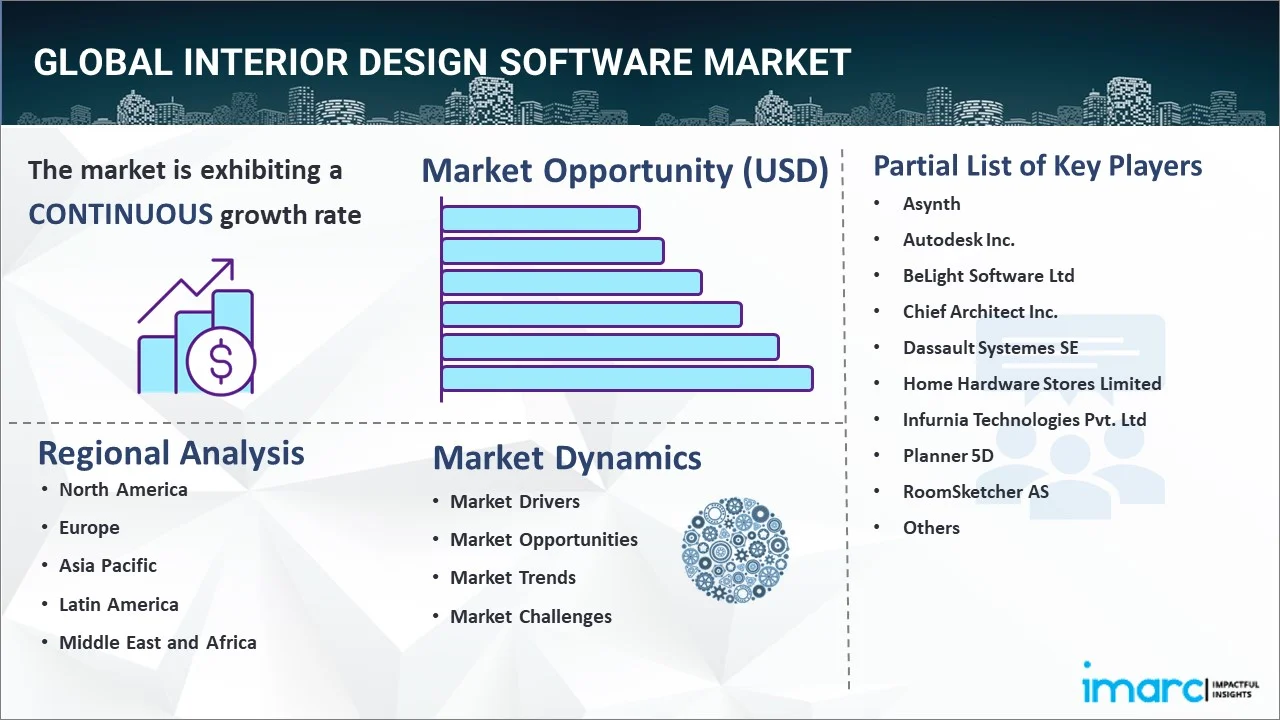
The global interior design software market size was valued at USD 5.69 Billion in 2025. Looking forward, IMARC Group estimates the market to reach USD 11.13 Billion by 2034, exhibiting a CAGR of 7.01% from 2026-2034. North America currently dominates the market, holding a market share of 35.9% in 2025. The region benefits from a strong foundation of real estate development, consistently high user spending on home improvement projects, advanced digital infrastructure, and the increasingly widespread adoption of cloud-based and artificial intelligence (AI)-enabled design tools, all of which collectively support the interior design software market share.
The global interior design software market is driven by the increasing adoption of digital tools for visualization, planning, and project management across residential and commercial construction activities. Architects, interior designers, and real estate developers are using design software to create detailed layouts, 3D renderings, and virtual walkthroughs that improve design accuracy and client communication. The rising demand for customized interior spaces, particularly in urban housing and commercial buildings, is encouraging professionals to rely on advanced design platforms to present multiple layout options efficiently. Cloud-based software solutions are also gaining traction as they enable real-time collaboration among designers, contractors, and clients across different locations. In addition, the growing integration of technologies, such as AI, augmented reality (AR), and virtual reality (VR), is enhancing design visualization capabilities, allowing users to simulate interior environments before implementation, which supports wider adoption of interior design software globally.
The United States represents a major market for interior design software, supported by a mature real estate sector and a large base of residential and commercial properties that require regular renovation, redesign, and space optimization. A strong culture of home improvement, combined with steady homeownership levels, continues to generate consistent demand for accessible yet capable design tools among homeowners and professionals alike. The country also hosts a well-established community of architects, interior designers, landscape planners, and construction firms that rely on advanced digital platforms for project planning, visualization, and client presentations. Reflecting the scale of renovation-driven demand, the Harvard Joint Center for Housing Studies projected that homeowner spending on improvements and repairs would reach approximately USD 466 billion through the second quarter of 2025. Such significant investment in residential upgrades encourages wider adoption of interior design software across both professional practices and individual home improvement projects.
To get more information on this market Request Sample
Interior Design Software Market Trends:
Growing Focus on Skill Development and Professional Training for Designers
The increasing adoption of AI in design workflows is driving the demand for specialized education and professional training programs within the interior design software market. As AI tools become more integrated into design platforms, professionals require structured learning opportunities to understand how to effectively incorporate automation, generative design capabilities, and data-driven insights into their projects. Training programs focused on AI applications are helping designers improve productivity, streamline concept development, and enhance collaboration with clients. This shift toward professional skill development is reflected in recent initiatives within the industry. In 2026, AI for Interior Designers launched the industry’s first multi-semester, CEU-accredited Certificate Program created by interior designer Jenna Gaidusek. The program combines structured AI education with a dedicated AI App Studio, enabling participants to experiment with AI tools and integrate them into practical design workflows. By strengthening digital competencies and encouraging responsible technology adoption, such programs are supporting the broader digital transformation of the interior design profession.
Expansion of Immersive VR-Based Design Platforms Enhancing User Engagement
The rising integration of immersive VR technologies is emerging as a key trend bolstering the interior design software market growth, as companies focus on enhancing user engagement and bridging the gap between inspiration and real-world purchasing decisions. VR-powered platforms allow users to explore spaces interactively, visualize design layouts in real time, and make more confident decisions regarding furniture, décor, and spatial arrangements. This technological shift is making professional design experiences accessible to a wider consumer base, particularly homeowners seeking convenient and visually rich design tools. Reflecting this trend, in 2025, Mondän launched the first VR-powered design-on-demand platform that enables users to access curated and fully shoppable room designs through immersive 360° exploration. The platform allowed homeowners to browse, personalize, and purchase design elements directly within the virtual environment. By combining immersive visualization with simplified purchasing pathways, such platforms are transforming how consumers interact with interior design services and products.
Rising Adoption of AI-Powered Design Assistants for Interactive Home Planning
AI-powered design assistants are gaining prominence in the interior design software market as platforms aim to simplify home redesign and make digital planning more interactive for everyday users. AI-driven tools can analyze room images, recommend layouts, and generate realistic visualizations, enabling users to explore design possibilities quickly without extensive technical knowledge. These platforms also enhance accessibility by guiding users through the design process using conversational interfaces and automated suggestions. Reflecting this shift toward AI-enabled user experiences, in 2024, Venus Williams co-founded Palazzo, an AI-powered interior design platform that converted room photos into realistic design makeovers through chatbot-guided interactions. The platform allowed users to experiment with new styles, visualize changes, and plan renovations through an intuitive digital interface. By combining design expertise with advanced AI capabilities, solutions like Palazzo are making interior design more approachable, interactive, and efficient for homeowners seeking personalized design ideas and renovation guidance.
Interior Design Software Industry Segmentation:
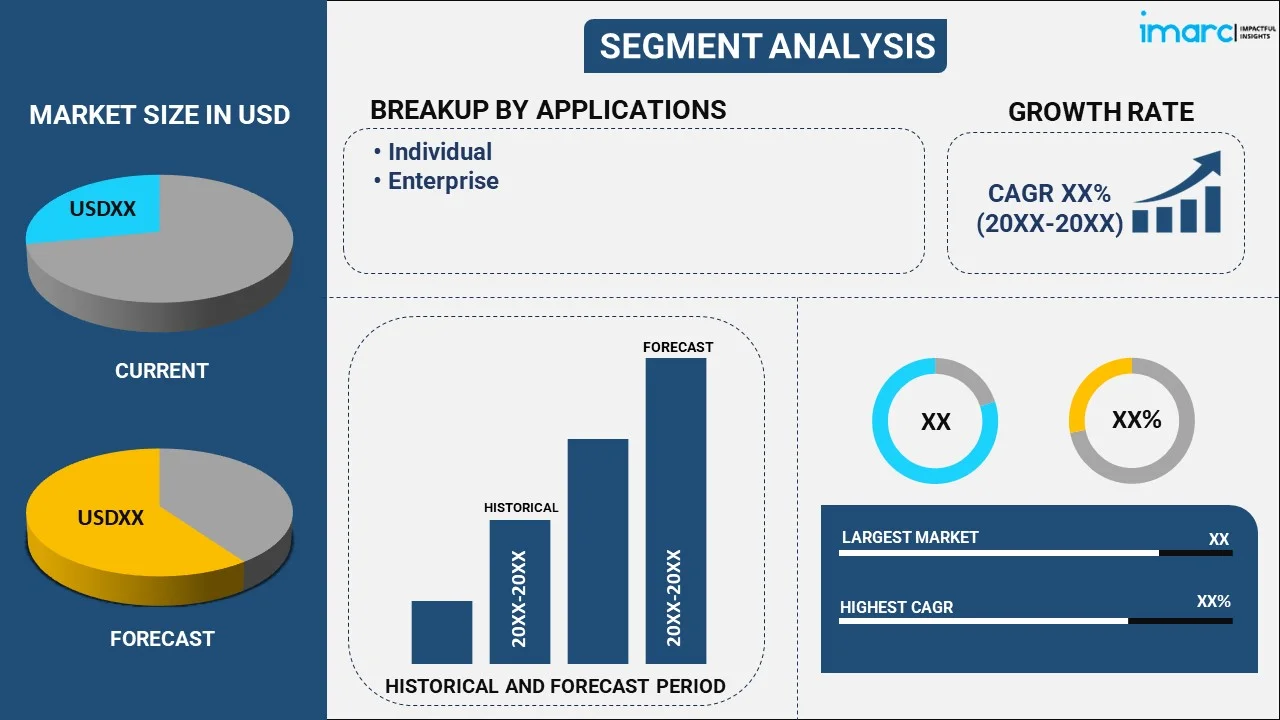
IMARC Group provides an analysis of the key trends in each segment of the global interior design software market, along with forecast at the global, regional, and country levels from 2026-2034. The market has been categorized based on application and end user.
Analysis by Application:
To get detailed segment analysis of this market Request Sample
- Individual
- Enterprise
Enterprise holds 62.8% of the market share, driven by strong demand from large corporations, commercial real estate developers, architecture firms, and hospitality groups that manage complex design operations. This segment requires advanced software capable of handling large-scale projects that may involve multiple floors, buildings, or geographic locations at the same time. Enterprise users rely on solutions that support team collaboration, structured workflows, and secure role-based access so that designers, project managers, and clients can coordinate efficiently. Integration with enterprise resource planning systems, building information modeling tools, and project management platforms is also a key requirement, enabling smoother data exchange and project tracking across departments. Many enterprises invest in customized deployments or enterprise-grade subscriptions to align software capabilities with their operational needs. Such solutions support diverse applications including retail store planning, hotel interiors, healthcare facility design, and corporate office development, where precision, coordination, and efficiency are essential. These factors are expected to positively influence the interior design software market outlook.
Analysis by End User:
- Residential Sector
- Non-Residential Sector
Residential sector leads the market with a share of 54.6%, reflecting the growing adoption of digital design tools by homeowners, renters, and individual design enthusiasts. This segment primarily includes users who rely on software for personal space planning, home renovation projects, and interior decoration activities. Rising homeownership rates across many countries, along with a strong focus on home aesthetics influenced by lifestyle media, design television programs, and social media platforms, are significantly expanding the user base for residential design applications. In response to this demand, software developers are introducing intuitive and easy-to-use platforms that require minimal technical expertise, enabling users to create layouts, experiment with furniture arrangements, and test different color palettes. Many solutions also incorporate AR capabilities, allowing homeowners to visualize furniture and décor within real room photographs. This functionality improves purchase confidence and helps individuals make more informed design decisions before committing to renovation or furnishing investments. The interior design software market forecast indicates continued growth as residential users increasingly adopt digital tools for planning and visualizing home improvement projects.
Regional Analysis:
To get more information on the regional analysis of this market Request Sample
- North America
- United States
- Canada
- Asia-Pacific
- China
- Japan
- India
- South Korea
- Australia
- Indonesia
- Others
- Europe
- Germany
- France
- United Kingdom
- Italy
- Spain
- Russia
- Others
- Latin America
- Brazil
- Mexico
- Others
- Middle East and Africa
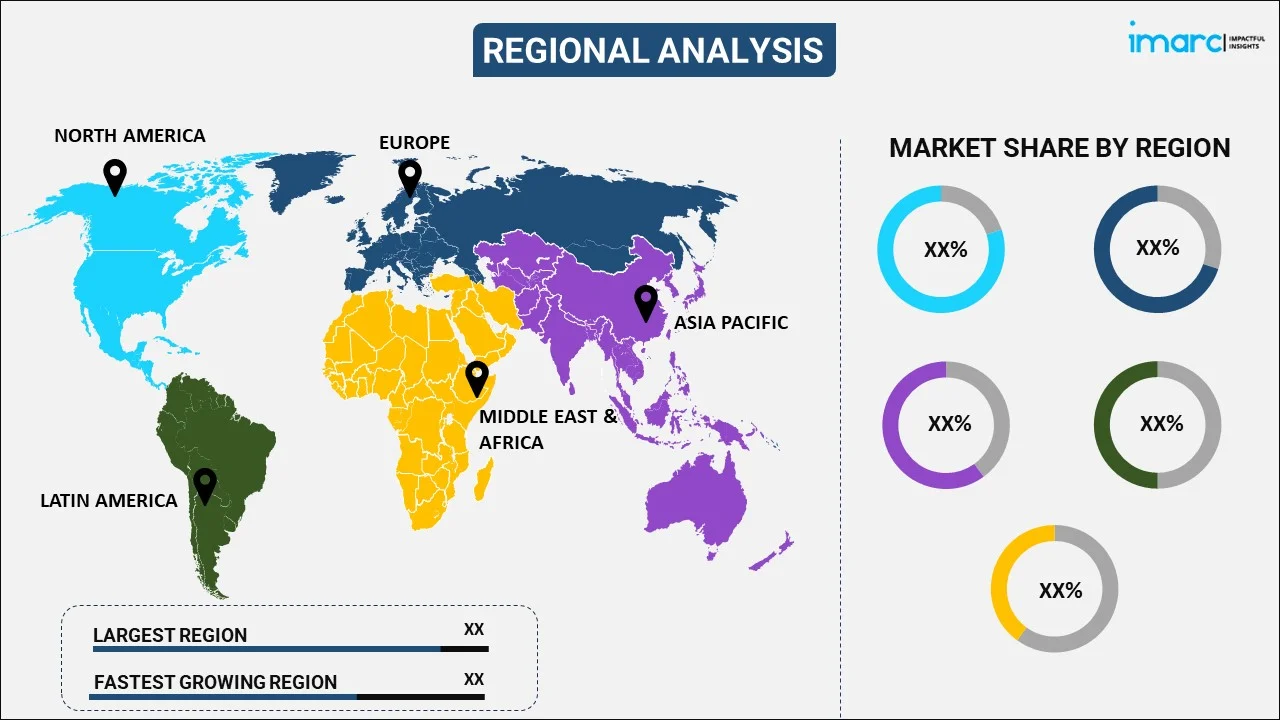
North America, accounting for 35.9% of the share, enjoys the leading position in the market. The region benefits from a well-established real estate sector, strong demand from commercial developers and professional design firms, and a technologically advanced user base that actively adopts digital tools for home improvement and renovation projects. The regional dominance is also supported by a mature ecosystem of software providers offering integrated solutions that combine design visualization, project management, and business operations for design professionals. Reflecting this trend toward platform consolidation and workflow integration, in 2024, Studio Designer acquired Ottawa-based Mydoma to form a unified business management platform for interior designers at different career stages. The combined solution integrated project management, design capabilities, and accounting software while serving nearly 20,000 designers across the United States and Canada. Such developments highlight the region’s continued focus on improving operational efficiency and expanding digital capabilities within the professional interior design community.

Key Regional Takeaways:
United States Interior Design Software Market Analysis
The United States represents the largest national market for interior design software globally, supported by strong real estate activity, high consumer expenditure on home improvement, and a well-established professional design industry. The country hosts a large network of licensed interior designers, architects, and construction professionals who depend on advanced software solutions for design development, visualization, project coordination, and client presentations. At the same time, homeowners are increasingly adopting consumer-friendly design platforms to plan renovations, experiment with layouts, and visualize interiors before hiring professional services. This demand is closely linked to ongoing housing transactions and post-purchase renovation activity. According to the National Association of Realtors, existing home sales in the United States totaled approximately 4.06 million units in 2024, a scale of housing turnover that significantly expands the number of households undertaking redesign and remodeling projects. Government incentives promoting energy-efficient building upgrades and widespread access to high-speed internet further support the adoption of cloud-based and AI-enabled interior design software across both professional and individual user segments. The interior design software market trends indicate continued growth as renovation activity and digital design adoption expand across residential and professional segments in the United States.
Europe Interior Design Software Market Analysis
Europe represents a mature yet steadily expanding market for interior design software, attributed to regulatory initiatives promoting building renovation, the preservation of architectural heritage, and increasing user interest in sustainable and energy-efficient home design. Many European countries are implementing policies encouraging the modernization of older housing stock, which is catalyzing the demand for digital design tools that assist architects and interior professionals in planning renovations, visualizing layouts, and improving project coordination. This shift toward technology-enabled design solutions is reflected in recent industry developments. In 2025, Decorilla expanded its interior design platform to Spain, allowing homeowners in cities, such as Barcelona and Madrid, to access immersive AI- and VR-powered design services. Through hyper-realistic 3D visualization and guidance from a global network of more than 400 designers, the platform helped users evaluate design choices more effectively while improving customization, decision-making, and overall project confidence. As renovation activity and sustainability-focused home upgrades continue across the region, digital design platforms are becoming an increasingly valuable tool for professionals and homeowners alike.
Asia-Pacific Interior Design Software Market Analysis
The Asia-Pacific region represents the fastest-growing market for interior design software, driven by rapid urbanization, expanding middle-class populations, and strong construction activity across major economies. The rising residential development, increasing demand for modular housing solutions, and the digitalization of design workflows are encouraging architects and interior professionals to adopt advanced design platforms that improve visualization, collaboration, and project efficiency. Reflecting this growing momentum, in 2024, Bengaluru-based cloud-native design software startup Infurnia raised USD 1.2 Million in an angel funding round led by Yogesh Chaudhary. The platform enabled professionals to design buildings, interiors, and modular kitchens and already served more than 600 clients, including LivSpace and Urban Ladder, bringing its total angel funding to USD 4.9 Million and supporting its push toward USD 1 Million in annual recurring revenue. The interior design software market outlook indicates sustained growth in Asia-Pacific as urban development and digital adoption continue to accelerate across residential and commercial design projects.
Latin America Interior Design Software Market Analysis
Latin America presents a growing and dynamic market for interior design software, driven by ongoing urbanization trends, government-backed housing programs, and a burgeoning professional design community. Brazil anchors regional demand as the largest economy in the region, with government-backed affordable housing initiatives creating significant construction activity. The Minha Casa Minha Vida program, targeting the delivery of 2 million affordable housing units by 2026, is generating increased demand for residential design planning tools among developers and contractors. Mexico’s expanding construction sector and rising urban middle class are also contributing to growing software adoption, particularly across the residential and commercial retail design segments.
Middle East and Africa Interior Design Software Market Analysis
The Middle East and Africa region is witnessing higher demand for interior design software, supported by increasing construction activity and large-scale infrastructure development. Governments and private investors are prioritizing modern residential, commercial, and hospitality projects, which is driving the need for digital tools that streamline design planning, project coordination, and renovation management. Reflecting this shift toward technology-enabled project execution, in 2024, Reno launched a new interior design and renovation platform in the UAE that allows residential and commercial clients to manage projects from design to completion, connecting users with designers, project managers, and contractors while also offering flexible “Renovate Now, Pay Later” financing to simplify project execution.
Competitive Landscape:
The interior design software market features intense competition among established technology leaders and specialized niche players offering solutions tailored to professional designers, architects, and home users. Major global software companies focus on developing comprehensive design platforms that integrate 2D drafting, 3D modeling, rendering, and project management tools within a single ecosystem. Furthermore, smaller developers compete by offering user-friendly, cost-effective, and cloud-based solutions that cater to independent designers and small design firms. Continuous innovation remains a key competitive strategy, with vendors incorporating technologies like AI, AR, and real-time visualization to enhance design capabilities. Companies are also expanding subscription-based pricing models and cloud collaboration features to attract a wider user base. Strategic partnerships with construction firms, furniture brands, and real estate developers further strengthen product ecosystems, enabling software providers to expand market reach while addressing evolving design workflow requirements.
The report provides a comprehensive analysis of the competitive landscape in the interior design software market with detailed profiles of all major companies, including:
- Asynth
- Autodesk Inc.
- BeLight Software Ltd
- Chief Architect Inc.
- Dassault Systemes SE
- Home Hardware Stores Limited
- Infurnia Technologies Pvt. Ltd
- Planner 5D
- RoomSketcher AS
- Roomtodo OU
- SmartDraw Software LLC
- Trimble Inc.
Latest News and Developments:
- In October 2025, Foyr launched its AI Hub within Foyr Neo, introducing generative AI tools for interior design and home remodeling. Designers can instantly convert images into 3D models, enhance renderings, and apply style variations, dramatically speeding up project visualization. The platform has already enabled over 10,000 AI-generated models, improving efficiency and client engagement.
- In September 2025, iDesign.Market, a New Delhi-based startup, launched iDesign Pro, an all-in-one software for interior designers and contractors. The platform streamlined client management, project tracking, billing, and design sharing, aiming to boost efficiency and profits.
Interior Design Software Market Report Scope:
| Report Features | Details |
|---|---|
| Base Year of the Analysis | 2025 |
| Historical Period | 2020-2025 |
| Forecast Period | 2026-2034 |
| Units | Billion USD |
| Scope of the Report |
Exploration of Historical Trends and Market Outlook, Industry Catalysts and Challenges, Segment-Wise Historical and Future Market Assessment:
|
| Applications Covered | Individual, Enterprise |
| End Users Covered | Residential Sector, Non-Residential Sector |
| Region Covered | Asia Pacific, Europe, North America, Latin America, Middle East and Africa |
| Countries Covered | United States, Canada, Germany, France, United Kingdom, Italy, Spain, Russia, China, Japan, India, South Korea, Australia, Indonesia, Brazil, Mexico |
| Companies Covered | Asynth, Autodesk Inc., BeLight Software Ltd, Chief Architect Inc., Dassault Systemes SE, Home Hardware Stores Limited, Infurnia Technologies Pvt. Ltd, Planner 5D, RoomSketcher AS, Roomtodo OU, SmartDraw Software LLC and Trimble Inc. |
| Customization Scope | 10% Free Customization |
| Post-Sale Analyst Support | 10-12 Weeks |
| Delivery Format | PDF and Excel through Email (We can also provide the editable version of the report in PPT/Word format on special request) |
Key Benefits for Stakeholders:
- IMARC’s report offers a comprehensive quantitative analysis of various market segments, historical and current market trends, market forecasts, and dynamics of the interior design software market from 2020-2034.
- The research study provides the latest information on the market drivers, challenges, and opportunities in the global interior design software market.
- The study maps the leading, as well as the fastest-growing, regional markets. It further enables stakeholders to identify the key country-level markets within each region.
- Porter’s Five Forces analysis assists stakeholders in assessing the impact of new entrants, competitive rivalry, supplier power, buyer power, and the threat of substitution. It helps stakeholders to analyze the level of competition within the interior design software industry and its attractiveness.
- Competitive landscape allows stakeholders to understand their competitive environment and provides an insight into the current positions of key players in the market.
Frequently Asked Questions About the Interior Design Software Market Report
The interior design software market was valued at USD 5.69 Billion in 2025.
The interior design software market is projected to exhibit a CAGR of 7.01% during 2026-2034, reaching a value of USD 11.13 Billion by 2034.
The interior design software market is driven by the rising adoption of AI-enabled design tools, the growing use of immersive visualization technologies, higher demand for user-friendly digital planning platforms, expanding home renovation activities, greater focus on workflow automation, and increasing digital skill development among professional designers.
North America currently dominates the interior design software market, accounting for a share of 35.9%. The region benefits from extensive real estate development activity, a large base of professional design firms, high consumer spending on home renovation, and strong adoption of digital design technologies across both residential and commercial sectors.
Some of the major players in the interior design software market include Asynth, Autodesk Inc., BeLight Software Ltd, Chief Architect Inc., Dassault Systemes SE, Home Hardware Stores Limited, Infurnia Technologies Pvt. Ltd, Planner 5D, RoomSketcher AS, Roomtodo OU, SmartDraw Software LLC and Trimble Inc., etc.
Need more help?
- Speak to our experienced analysts for insights on the current market scenarios.
- Include additional segments and countries to customize the report as per your requirement.
- Gain an unparalleled competitive advantage in your domain by understanding how to utilize the report and positively impacting your operations and revenue.
- For further assistance, please connect with our analysts.
 Request Customization
 Speak to an Analyst
 Request Brochure
 Inquire Before Buying
Benefits of Customization
- Personalize this research
- Triangulate with your data
- Get data as per your format and definition
- Gain a deeper dive into a specific application, geography, customer, or competitor
- Any level of personalization
Get in Touch With Us
UNITED STATES
Phone: +1-201-971-6302
INDIA
Phone: +91-120-433-0800
UNITED KINGDOM
Phone: +44-753-714-6104
Email: [email protected]
Client Testimonials




.webp)




.webp)













Related Reports

Choose your plan
*Please note that the prices mentioned below are starting prices for each bundle type. Kindly contact our team for further details.*
Single User License
- 1 User License, Access on 2 Devices
- PDF Report + Excel Dataset (Password Protected)
- Lifetime Access
- No Printing Rights
- 10% Free Report Customization
- 10–12 Weeks of Analyst Support
Five User License
- Access for 5 Users, 2 Devices per User
- PDF Report + Excel Dataset (Password Protected)
- Lifetime Access
- Dedicated Account Manager
- 12–14 Weeks of Analyst Support
- No Printing Rights
- 15% Free Report Customization
- 25% Discount on Your Next Purchase
Corporate User License
- Unlimited User Access (Within Your Organization)
- PDF Report + Excel Dataset
- Lifetime Access
- Dedicated Account Manager
- 14–20 Weeks of Analyst Support
- No Printing Rights
- 20% Free Report Customization
- 30% Discount on Your Next Purchase
Essential Insights
What's included:
3 reports
- Lifetime Access
- PDF Reports
- Excel Datasets
- 2 Weeks of Free Analyst Support
- 2 User Licenses
- Access on 2 Devices
- Printing Rights
- Complimentary PowerPoint (PPT) Version
- Complimentary License Upgrade
Professional Access
What's included:
5 reports
- Lifetime Access
- PDF Reports
- Excel Datasets
- 8 Weeks of Free Analyst Support
- 2 User Licenses
- Access on 2 Devices
- Printing Rights
- Complimentary PowerPoint (PPT) Version
- Complimentary License Upgrade
Business Advantage
What's included:
8 reports
- Lifetime Access
- PDF Reports
- Excel Datasets
- 14 Weeks of Free Analyst Support
- 2 User Licenses
- Access on 2 Devices
- Printing Rights
- Complimentary PowerPoint (PPT) Version
- Complimentary License Upgrade
Enterprise Intelligence
What's included:
10 reports
- Lifetime Access
- PDF Reports
- Excel Datasets
- 20 Weeks of Free Analyst Support
- 2 User Licenses
- Access on 2 Devices
- Printing Rights
- Complimentary PowerPoint (PPT) Version
- Complimentary License Upgrade