
IVF Devices and Consumables Market Size, Share, Trends and Forecast by Product, Technology, End User, and Region, 2026-2034
IVF Devices and Consumables Market Size, Share, Trends & Forecast (2026-2034)
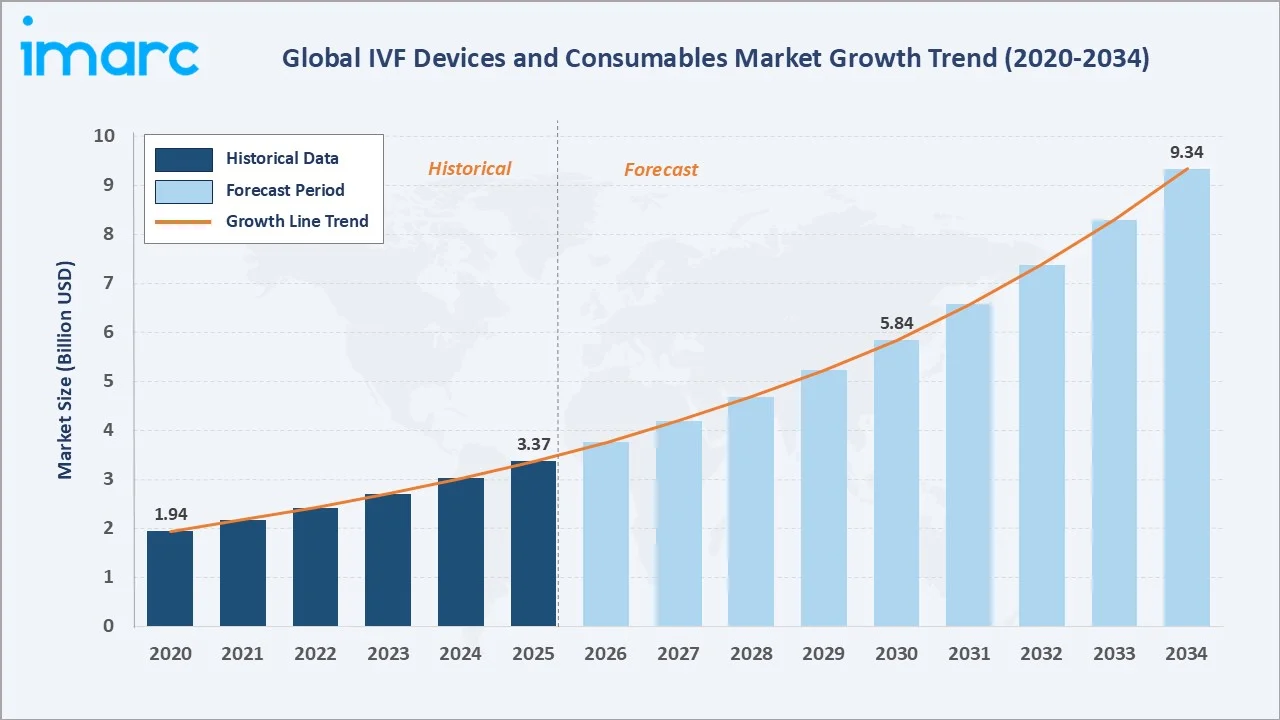
The IVF devices and consumables market was valued at USD 3.37 Billion in 2025 and is projected to reach USD 9.34 Billion by 2034, exhibiting a CAGR of 11.63% during 2026-2034. Rising global infertility prevalence, delayed parenthood, and continuous innovation in embryology laboratory tools are the primary drivers shaping the market growth.
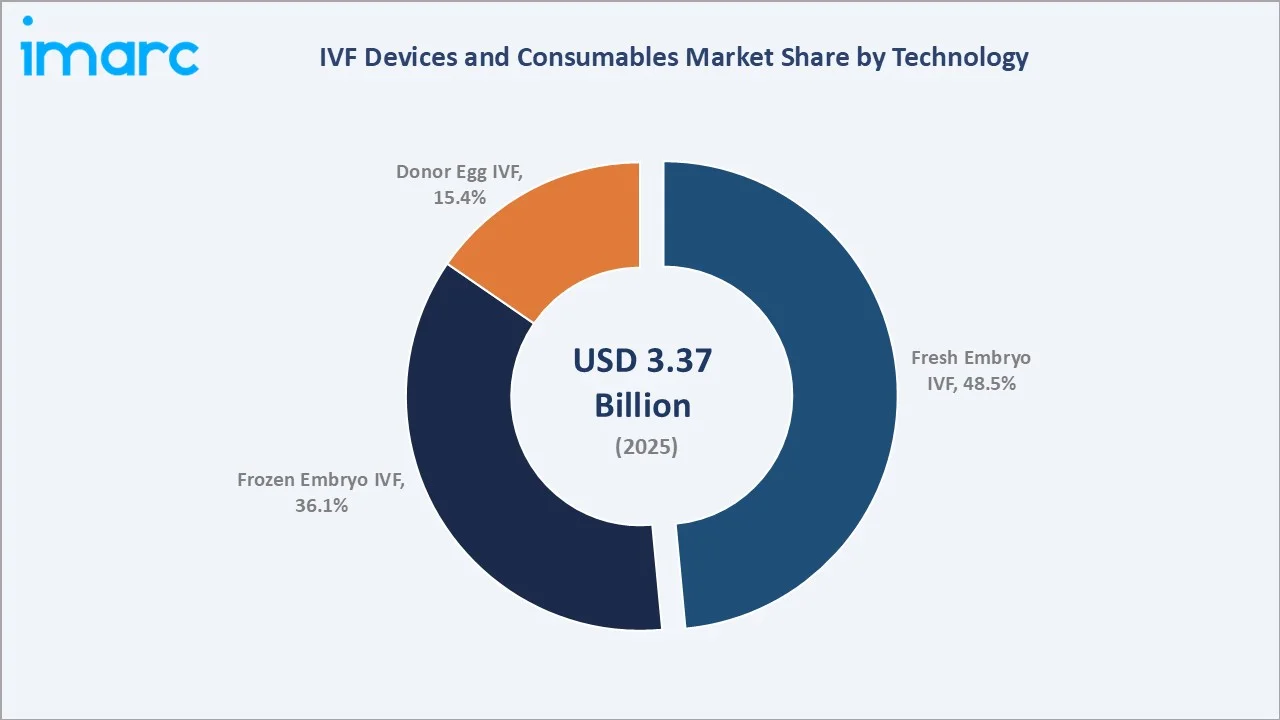
Fresh embryo IVF leads the technology segment at 48.5%, fertility clinics, at 61.9%, prevail over the end user segment, and North America commands 38.4% of the regional share.
Market Snapshot
|
Metric |
Value |
|
Market Size (2025) |
USD 3.37 Billion |
|
Forecast Market Size (2034) |
USD 9.34 Billion |
|
CAGR (2026-2034) |
11.63% |
|
Base Year |
2025 |
|
Historical Period |
2020-2025 |
|
Forecast Period |
2026-2034 |
|
Largest Region |
North America (38.4%, 2025) |
|
Second Largest Region |
Europe (28.6%, 2025) |
|
Leading Technology |
Fresh Embryo IVF (48.5%, 2025) |
|
Leading End User |
Fertility Clinics (61.9%, 2025) |
The IVF devices and consumables market expanded from USD 1.94 Billion in 2020 to USD 3.37 Billion in 2025, driven by rising assisted reproduction uptake, expanding fertility clinic networks, and continuous advances in embryo culture and cryopreservation technologies. Anchored at USD 5.84 Billion in 2030, the forecast to USD 9.34 Billion by 2034 is supported by broader insurance coverage, growing donor egg program adoption, and rapid adoption of closed vitrification systems.
To get more information on this market, Request Sample
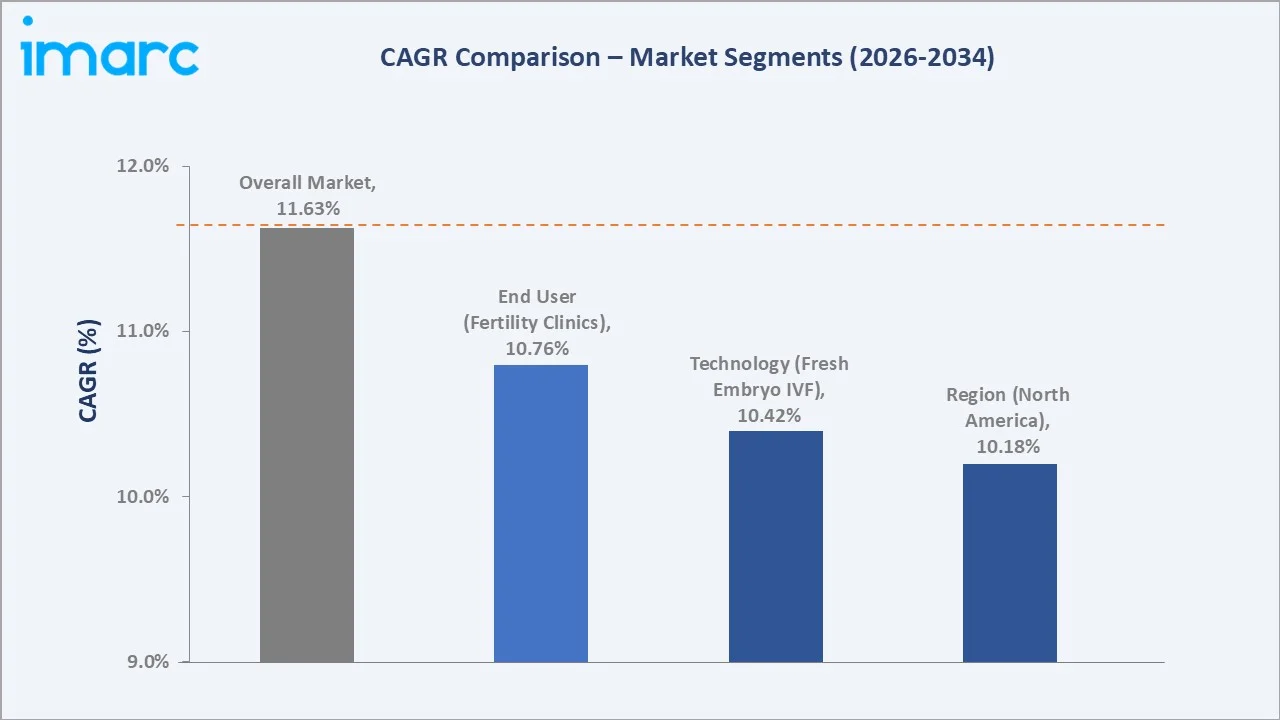
CAGR trajectories across technology and end user sub-segments show frozen embryo IVF and surgical centers expanding faster than the overall 11.63% market CAGR, driven by rising cryopreservation adoption, same-day procedure convenience, and broader clinical accessibility.
Executive Summary
The IVF devices and consumables market is on a steady growth trajectory from USD 1.94 Billion in 2020 to USD 9.34 Billion by 2034. The industry has moved from conventional laboratory workflows toward automated, digitally monitored embryology systems supported by time-lapse imaging, closed cryosystems, and AI-assisted embryo grading.
Fresh embryo IVF dominates the technology segment at 48.5% in 2025, supported by established clinical protocols and predictable transfer timing. Fertility clinics lead the end user segment at 61.9%, driven by specialized reproductive care services, advanced laboratory infrastructure, and high treatment volumes. North America commands 38.4% of the regional share, supported by widespread access to assisted reproductive technologies and the presence of well-established fertility treatment networks.
Key Market Insights
|
Insight |
Data |
|
Leading Technology |
Fresh Embryo IVF - 48.5% share (2025) |
|
Second Largest Technology |
Frozen Embryo IVF - 36.1% share (2025) |
|
Leading End User |
Fertility Clinics - 61.9% share (2025) |
|
Second Largest End User |
Hospitals - 22.8% share (2025) |
|
Leading Region |
North America - 38.4% share (2025) |
|
Second Largest Region |
Europe - 28.6% share (2025) |
|
Top Companies |
Vitrolife AB, Merck KGaA, Thermo Fisher Scientific Inc., Nexpring Health |
Key Analytical Observations Expanding On The Data Above:
- Fresh embryo IVF dominance at 48.5% is supported by predictable single-cycle timing and lower per-cycle laboratory costs, sustaining its role as the default protocol across established fertility clinics worldwide.
- Frozen embryo IVF at 36.1% is expanding as closed vitrification systems and endometrial-receptivity-timed transfers improve implantation consistency across staged treatment cycles.
- Fertility clinics at 61.9% share reflects the concentration of IVF cycles within dedicated outpatient centers offering specialized embryology laboratories and streamlined patient pathways.
- Hospitals at 22.8% share continue to support complex assisted reproductive procedures by providing multidisciplinary care, advanced surgical capabilities, and integrated maternal and reproductive health services.
- North America share at 38.4% is anchored by widening employer-sponsored fertility benefits, a mature clinic network, and high per-capita IVF cycle volumes across the United States and Canada.
IVF Devices and Consumables Market Overview
IVF devices and consumables encompass the instruments, culture media, cryopreservation systems, and laboratory disposables used across oocyte retrieval, fertilization, embryo culture, and embryo transfer procedures. The market spans incubators, time-lapse imaging systems, micromanipulation tools, vitrification devices, catheters, needles, and embryo culture media.
The global ecosystem integrates device and consumable manufacturers, culture media and cryopreservation suppliers, fertility clinics and hospitals, embryologists and clinical specialists, distributors and service providers, and regulatory and accreditation bodies. Together, they enable delivery of assisted reproduction services within an evolving clinical and regulatory framework.
Market Dynamics
To evaluate market opportunities, Request Sample
Market Drivers
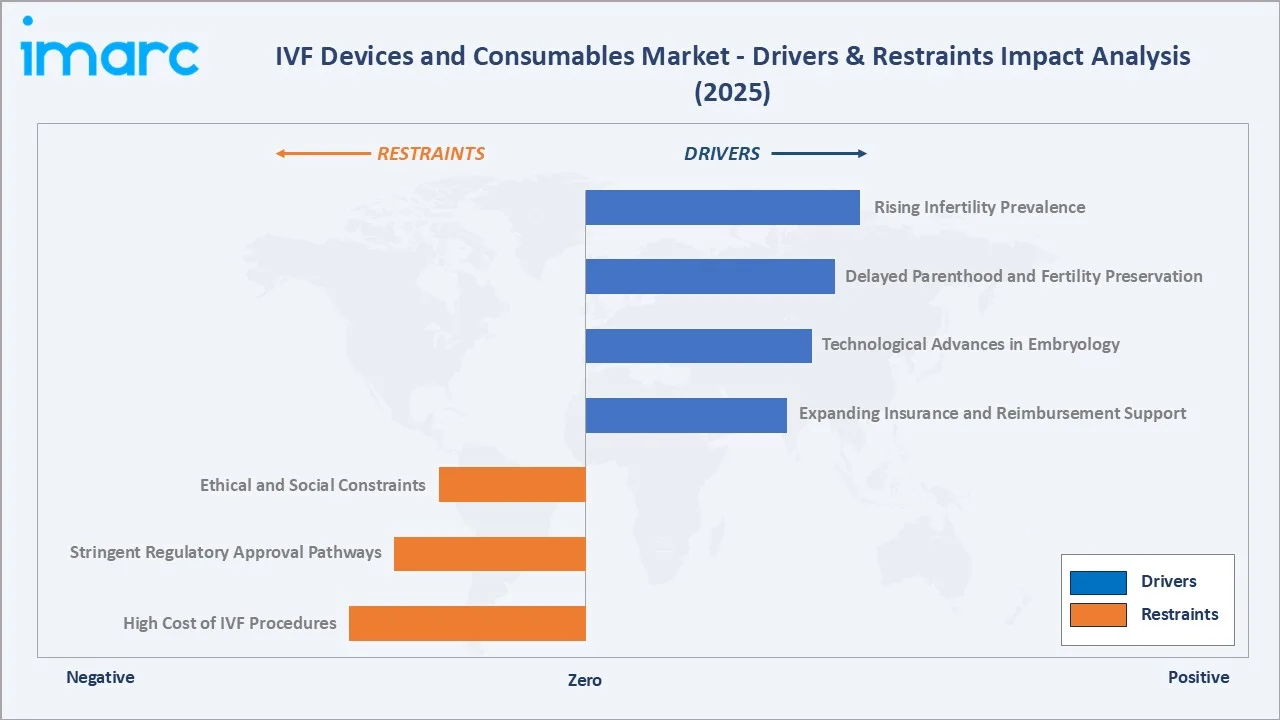
- Rising Infertility Prevalence: Increasing incidence of infertility among couples worldwide, driven by delayed childbearing, lifestyle factors, and environmental exposures, continues to expand the addressable patient pool for assisted reproduction. As per a report published by the WHO in 2025, around one in every six individuals of reproductive age globally faces infertility at some point in their lives.
- Delayed Parenthood and Fertility Preservation: Growing career-driven delay of childbearing and rising elective egg-freezing awareness are broadening demand for oocyte cryopreservation devices and related laboratory services.
- Technological Advances in Embryology: Continuous innovation in time-lapse incubators, AI-assisted embryo grading, and closed vitrification systems is improving clinical outcomes and encouraging clinic equipment upgrades.
- Expanding Insurance and Reimbursement Support: Broadening employer-sponsored fertility benefits and select state-level insurance mandates are gradually easing the out-of-pocket burden associated with IVF treatment cycles.
Market Restraints
- Stringent Regulatory Approval Pathways: Varying device and biologics approval requirements across regions extend product launch timelines and raise compliance costs for manufacturers entering new markets.
- Ethical and Social Constraints: Religious, cultural, and legal restrictions on donor gametes, embryo storage, and surrogacy in several countries continue to constrain addressable demand for certain technology segments.
- High Cost of IVF Procedures: The substantial cost of assisted reproductive treatments, including medications, laboratory services, and multiple treatment cycles, limits accessibility for many patients, particularly in markets with limited insurance coverage or reimbursement support.
Market Opportunities
- AI-Enabled Laboratory Automation: Growing clinic interest in automated embryo grading and workflow digitization creates opportunities for software-integrated device platforms across fertility laboratories.
- Emerging Market Clinic Expansion: Rising disposable incomes and expanding private fertility clinic networks across Asia-Pacific and Latin America present untapped opportunity for device and consumable suppliers.
Market Challenges
- Skilled Embryologist Shortage: Limited availability of trained embryologists in several regions constrains laboratory capacity expansion despite rising patient demand for assisted reproduction services.
- Reimbursement Fragmentation: Inconsistent insurance coverage across countries, and even within federal healthcare systems, complicates pricing and market entry strategies for device and consumable manufacturers.
Emerging Market Trends
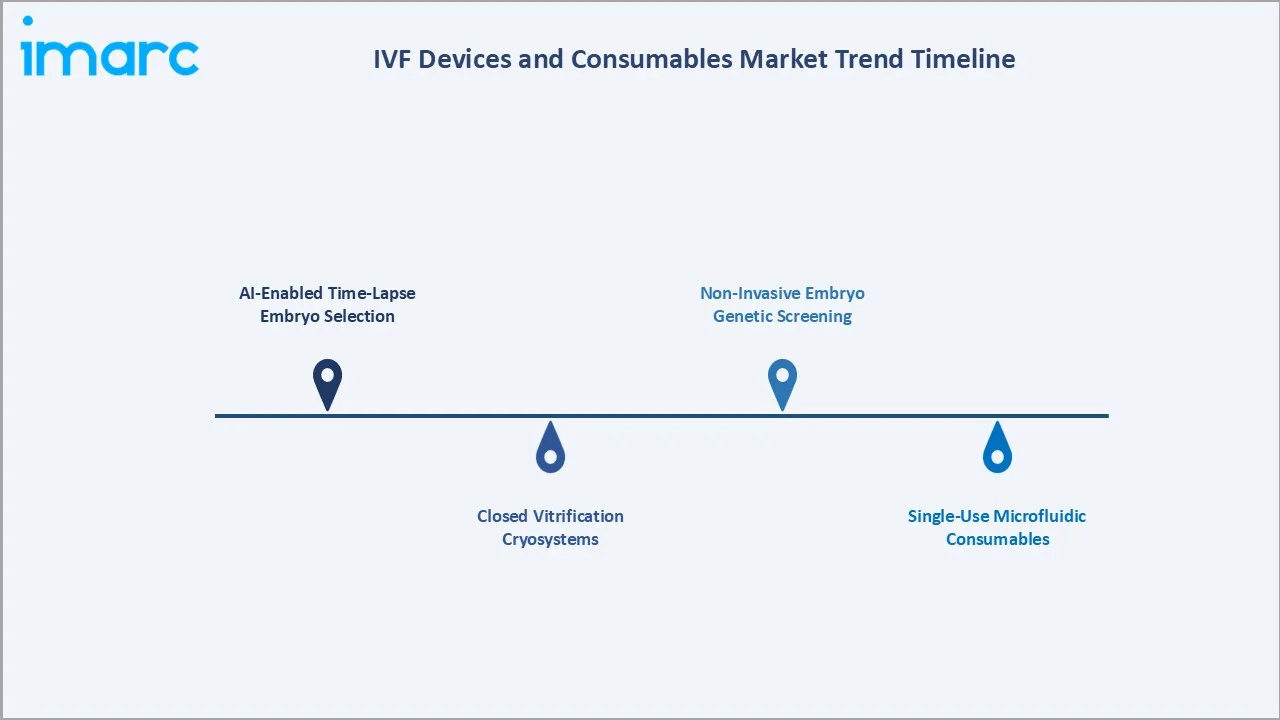
1. AI-Enabled Time-Lapse Embryo Selection
Clinics are increasingly integrating AI platforms with time-lapse incubators to support embryo grading and selection. This trend is helping embryologists improve workflow efficiency, standardize embryo assessment, and support more informed clinical decision-making during IVF procedures.
2. Closed Vitrification Cryosystems
Closed cryopreservation devices that isolate biological samples from direct liquid nitrogen contact are gaining preference over open systems, reducing cross-contamination risk and supporting more consistent post-thaw survival rates across oocyte and embryo freezing protocols.
3. Non-Invasive Embryo Genetic Screening
Non-invasive preimplantation genetic testing approaches analyzing spent culture media are emerging as an alternative to traditional biopsy-based screening, offering embryologists a lower-risk method to assess chromosomal status before embryo transfer.
4. Single-Use Microfluidic Consumables
Microfluidic sperm-separation and handling devices are replacing traditional centrifugation-based methods, reducing DNA fragmentation risk and simplifying andrology laboratory workflows across fertility clinics.
Industry Value Chain Analysis
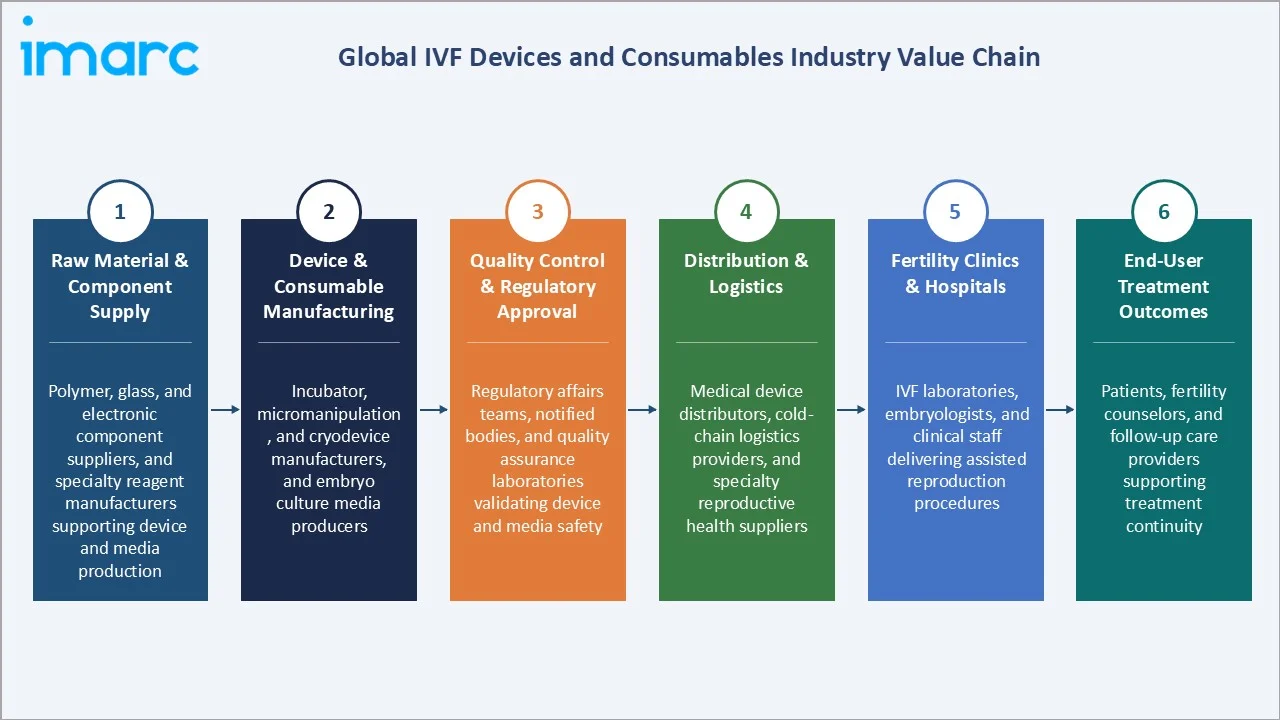
The IVF devices and consumables value chain spans six stages, from raw material and component supply through end-user treatment outcomes. Device manufacturing and quality assurance capture the highest value-add, while distribution and clinical adoption increasingly determine sustainable competitive position in this tightly regulated category.
|
Stage |
Key Players / Examples |
|
Raw Material & Component Supply |
Polymer, glass, and electronic component suppliers, and specialty reagent manufacturers supporting device and media production |
|
Device & Consumable Manufacturing |
Incubator, micromanipulation, and cryodevice manufacturers, and embryo culture media producers |
|
Quality Control & Regulatory Approval |
Regulatory affairs teams, notified bodies, and quality assurance laboratories validating device and media safety |
|
Distribution & Logistics |
Medical device distributors, cold-chain logistics providers, and specialty reproductive health suppliers |
|
Fertility Clinics & Hospitals |
IVF laboratories, embryologists, and clinical staff delivering assisted reproduction procedures |
|
End-User Treatment Outcomes |
Patients, fertility counselors, and follow-up care providers supporting treatment continuity |
Vertically integrated players, particularly those combining proprietary culture media, cryodevices, and time-lapse imaging platforms, are positioned to capture greater value than suppliers reliant on single-product portfolios.
Technology Landscape in the IVF Devices and Consumables Industry
Time-Lapse Imaging and AI
Modern IVF laboratories are deploying time-lapse incubators integrated with AI-based embryo grading software to support more objective embryo selection. These systems capture continuous developmental images without disturbing culture conditions, enabling embryologists to assess morphokinetic parameters alongside traditional grading criteria.
Cryopreservation Innovation
Closed vitrification systems and automated freezing instruments are improving post-thaw survival rates for oocytes and embryos while reducing manual variability across laboratory technicians and clinics.
Microfluidics and Laboratory Automation
Microfluidic sperm-separation devices and automated liquid-handling platforms are streamlining andrology and embryology workflows, reducing manual handling steps and supporting standardized outcomes across high-volume fertility clinics.
Genetic Screening Technology
Next-generation sequencing-based preimplantation genetic testing is becoming more accessible, supporting chromosomal screening and informed embryo selection ahead of transfer, particularly among patients with advanced maternal age or recurrent implantation failure.
Market Segmentation Analysis
The report covers the following segments:
|
Segment Category |
Leading Segment |
Market Share |
Year |
|
Product |
Accessories & Disposables |
🔒 |
2025 |
|
Technology |
Fresh Embryo IVF |
48.5% |
2025 |
|
End User |
Fertility Clinics |
61.9% |
2025 |
|
Region |
North America |
38.4% |
2025 |

By Technology
Fresh embryo IVF commands a 48.5% majority share in 2025, driven by established clinical protocols, predictable single-cycle timing, and lower per-cycle laboratory costs compared with frozen or donor-based pathways. The segment benefits from broad physician familiarity and streamlined scheduling across high-volume clinics.
To access detailed market analysis, Request Sample
Frozen embryo IVF at 36.1% in 2025 is gaining share as closed vitrification systems and endometrial-receptivity-timed transfers improve implantation consistency. The segment appeals to patients pursuing staged treatment cycles, preimplantation genetic testing, or fertility preservation.
By End User
Fertility clinics lead the end user segment at 61.9% in 2025, supported by dedicated embryology laboratories, specialized staff, and streamlined patient pathways that concentrate the majority of global IVF cycle volume.
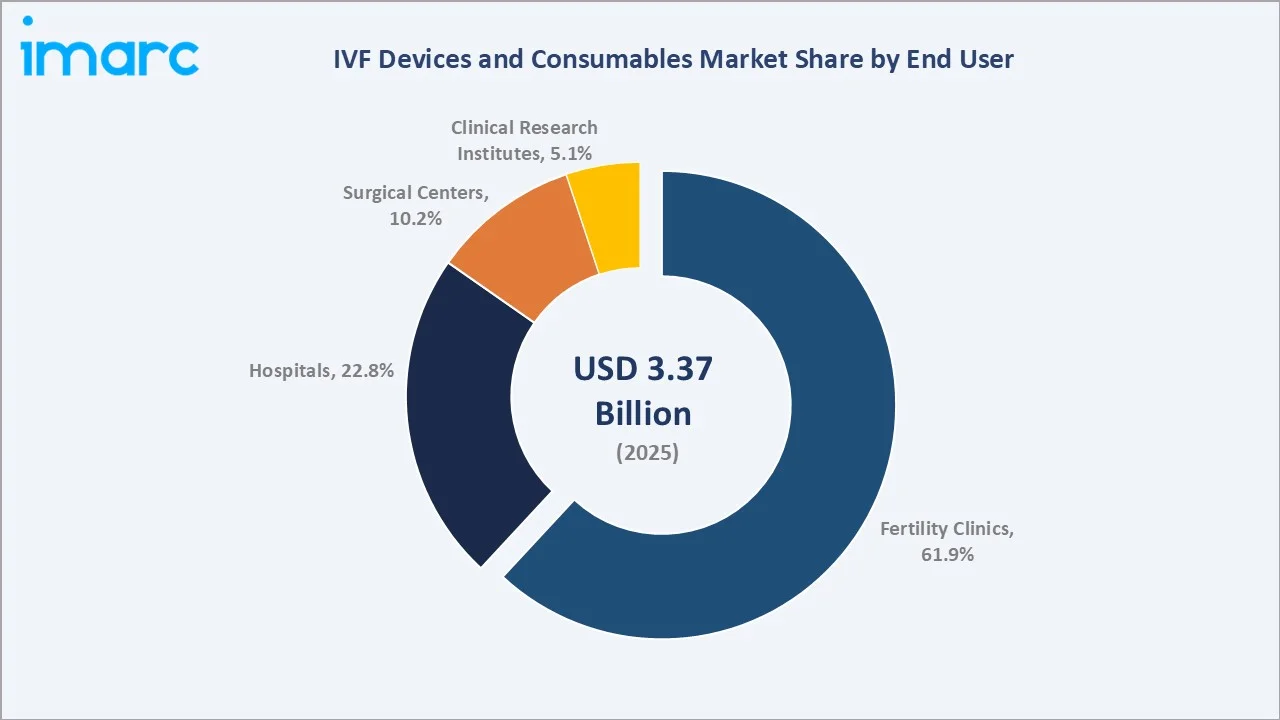
Hospitals follow at 22.8%, offering integrated reproductive endocrinology and IVF services alongside broader obstetric and gynecological care, particularly in regions with limited standalone clinic infrastructure.
Regional Market Insights
|
Region |
Share (2025) |
Key Growth Drivers |
|
North America |
38.4% |
Established fertility clinic infrastructure, broad insurance and employer-benefit coverage, high patient awareness, and strong presence of leading device manufacturers |
|
Europe |
28.6% |
Supportive public healthcare reimbursement in several countries, mature regulatory frameworks, and high per-capita IVF cycle utilization |
|
Asia-Pacific |
22.1% |
Rising disposable incomes, expanding private fertility clinic networks, growing infertility awareness, and increasing government support in select countries |
|
Latin America |
6.0% |
Growing urban middle-class demand, expanding private healthcare investment, and gradually improving access to specialized fertility care |
|
Middle East and Africa |
4.9% |
Rising government health investment, growing medical tourism for fertility treatment, and expanding private clinic networks in key urban centers |
North America at 38.4% in 2025 leads the regional landscape, anchored by the United States, supported by a dense fertility clinic network, broad employer-sponsored insurance coverage, and a strong presence of leading device and consumable manufacturers.
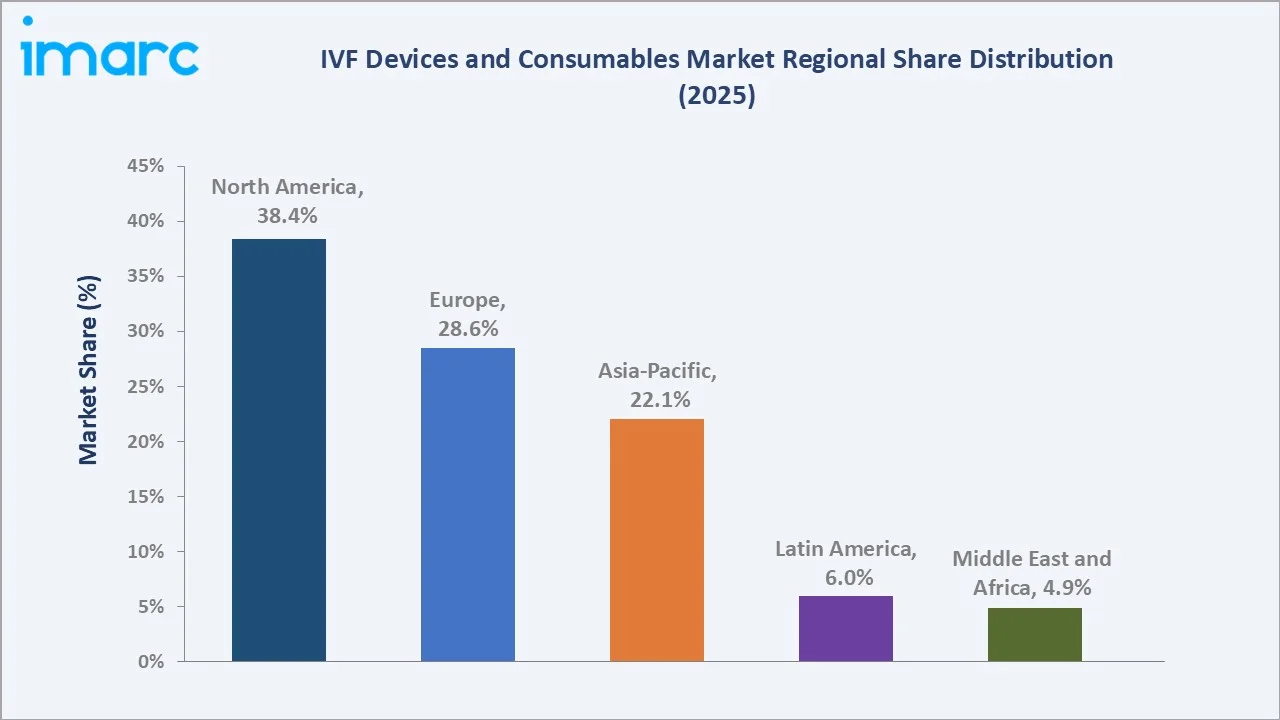
Europe at 28.6% is expanding steadily. Rising disposable incomes and growing private fertility clinic investment are accelerating regional adoption of advanced IVF devices through 2034.
Competitive Landscape
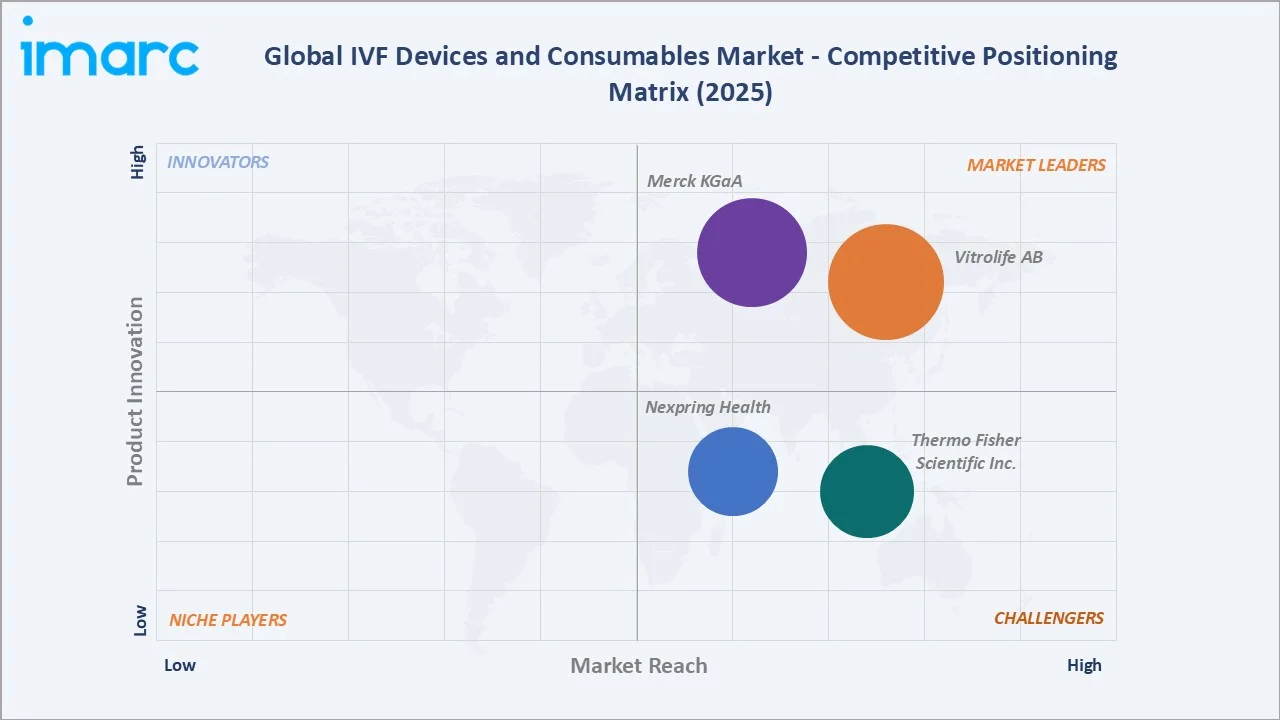
The IVF devices and consumables market is moderately consolidated, with established device and media manufacturers competing alongside private-equity-backed platforms formed through recent industry consolidation. Product breadth, culture media quality, and clinical partnerships form key competitive differentiators across the sector.
|
Company Name |
Brand / Key Product |
Position |
Strategic Focus |
|
Vitrolife AB |
Vitrolife EmbryoScope + Time-Lapse System |
Leader |
Reproductive-health specialist expanding across the entire IVF workflow through innovation and acquisitions |
|
Merck KGaA |
EMD Serono Fertility Technologies |
Leader |
Diversified life-science and healthcare group combining fertility pharmaceuticals with device partnerships |
|
Thermo Fisher Scientific Inc. |
Nunc IVF Dishes |
Challenger |
Global life-science solutions provider extending laboratory consumables into reproductive health |
|
Nexpring Health |
Hamilton Thorne, Cook RH |
Challenger |
Private-equity-backed platform integrating instruments, consumables, and media into a unified assisted reproductive technology portfolio |
Key players include Vitrolife AB, Merck KGaA, Thermo Fisher Scientific Inc., and Nexpring Health, among others.
Key Company Profiles
Vitrolife AB
Vitrolife AB is a Swedish reproductive-health company that develops and distributes medical devices and genetic testing services spanning the entire IVF workflow, from oocyte retrieval through embryo transfer.
- Product Portfolio: Vitrolife EmbryoScope + Time-Lapse System, alongside culture media, cryopreservation solutions, micromanipulation instruments, and witnessing systems for fertility clinics.
- Recent Developments: In May 2025, Vitrolife AB became the lead investor in AutoIVF, supporting development of an automated system for egg retrieval and preparation designed to decentralize parts of the IVF laboratory workflow.
- Strategic Focus: Building an end-to-end reproductive-health platform connecting products and services across the entire IVF workflow through innovation and acquisitions.
Merck KGaA
Merck KGaA is a diversified science and technology company whose healthcare business maintains a dedicated fertility technologies division offering hormone treatments, delivery devices, and laboratory equipment for IVF clinics.
- Product Portfolio: EMD Serono Fertility Technologies, spanning fertility medications and distributed laboratory devices used across IVF culture and embryo assessment workflows.
- Recent Developments: The company continues to broaden its fertility technologies division through partnerships that combine its pharmaceutical portfolio with third-party laboratory devices and services.
- Strategic Focus: Combining fertility pharmaceuticals with laboratory device and media partnerships to support a broader share of the IVF treatment pathway.
Thermo Fisher Scientific Inc.
Thermo Fisher Scientific Inc. is a global life-science solutions provider that supplies laboratory consumables and genomics tools to reproductive health laboratories worldwide.
- Product Portfolio: Nunc IVF Dishes, alongside cryopreservation tubes and next-generation sequencing solutions used for preimplantation genetic testing and carrier screening.
- Recent Developments: The company continues to expand its reproductive genetic testing offering, extending its sequencing and consumables platforms to support fertility clinic workflows.
- Strategic Focus: Leveraging its broad life-science consumables and genomics expertise to extend its footprint across reproductive health and embryology laboratory workflows.
Market Concentration Analysis
The IVF devices and consumables market is moderately concentrated, with the top players accounting for a significant share of global device and media supply through established clinical relationships and broad product portfolios.
Barriers to entry include the need for regulatory approvals across multiple jurisdictions, established clinical trust, and scalable manufacturing capable of meeting stringent quality standards. These factors favor well-capitalized incumbents with diversified product lines.
Consolidation is accelerating as larger fertility technology companies expand through acquisitions, strategic partnerships, and portfolio diversification, while smaller manufacturers focus on specialized consumables, automation technologies, and niche laboratory solutions to strengthen their competitive position.
Investment & Growth Opportunities
Fastest-Growing Segments
Frozen embryo IVF is expanding fastest among technology segments, driven by rising vitrification adoption and staged treatment cycles incorporating genetic testing. Surgical centers are the next-fastest-growing end user category, supported by same-day procedure convenience and lower overhead compared with hospital-based settings.
Emerging Markets
Asia-Pacific represents the fastest-growing region, anchored by rising disposable incomes, expanding private clinic networks, and growing government support across several countries. The region presents significant untapped opportunity for device and media suppliers able to deliver cost-effective, regionally adapted solutions.
Venture & Investment Trends
Investment is concentrated in AI-enabled embryology software, closed cryopreservation platforms, and advanced embryo culture systems that improve laboratory efficiency, embryo selection, and treatment outcomes.
Future Market Outlook (2026-2034)
The IVF devices and consumables market is forecast to expand from USD 3.37 Billion in 2025 to USD 9.34 Billion by 2034 at a CAGR of 11.63%, adding roughly USD 5.97 Billion in incremental market value over the forecast period.
Four forces will shape the market through 2034: broader insurance and employer-benefit coverage; the rise of AI-enabled embryo selection and closed cryosystems; deeper integration of genetic screening into standard IVF protocols; and continued consolidation among device, consumable, and media suppliers.
By 2034, the IVF devices and consumables market is expected to be defined by automated, digitally monitored laboratory workflows, with frozen embryo IVF and surgical center-based procedures accounting for a meaningfully higher share of overall activity.
Research Methodology
Primary Research
Primary research included structured interviews with fertility clinic administrators, embryologists, device and consumables manufacturers, and healthcare policy specialists, validating market sizing, technology mix, and end-user adoption trends.
Secondary Research
Secondary sources included regulatory agency publications, company annual reports, investor presentations, press releases, and public health data from national and international health organizations.
Forecasting Models
Market forecasts used top-down and bottom-up models combining IVF cycle volumes, average device and consumable spend per cycle, technology mix evolution, and regional healthcare expenditure trends. Scenario analysis addressed insurance reform, regulatory timelines, and clinic capacity expansion.
IVF Devices and Consumables Market Report Coverage:
| Report Features | Details |
|---|---|
| Base Year of the Analysis | 2025 |
| Historical Period | 2020-2025 |
| Forecast Period | 2026-2034 |
| Units | Billion USD |
| Scope of the Report | Exploration of Historical Trends and Market Outlook, Industry Catalysts and Challenges, Segment-Wise Historical and Future Market Assessment:
|
| Products Covered | Instruments, Accessories and Disposables, Reagents and Media |
| Technologies Covered | Fresh Embryo IVF, Frozen Embryo IVF, Donor Egg IVF |
| End Users Covered | Fertility Clinics, Hospitals, Surgical Centers, Clinical Research Institutes |
| Regions Covered | Asia Pacific, Europe, North America, Latin America, Middle East and Africa |
| Countries Covered | United States, Canada, Germany, France, United Kingdom, Italy, Spain, Russia, China, Japan, India, South Korea, Australia, Indonesia, Brazil, Mexico |
| Companies Covered | Vitrolife AB, Merck KGaA, Thermo Fisher Scientific Inc., Nexpring Health, etc. |
| Customization Scope | 10% Free Customization |
| Post-Sale Analyst Support | 10-12 Weeks |
| Delivery Format | PDF and Excel through Email (We can also provide the editable version of the report in PPT/Word format on special request) |
Frequently Asked Questions About the IVF Devices and Consumables Market Report
The IVF devices and consumables market was valued at USD 3.37 Billion in 2025, driven by rising infertility prevalence, expanding fertility clinic networks, and continuous embryology technology innovation.
The market is projected to grow at a CAGR of 11.63% from 2026-2034, reaching USD 9.34 Billion, supported by rising frozen embryo IVF adoption and clinic expansion.
Fresh embryo IVF leads at 48.5% in 2025, supported by established clinical protocols. Its widespread adoption and streamlined treatment workflow continue to make it the preferred approach across many fertility clinics.
Fertility clinics dominate at 61.9% in 2025, driven by dedicated embryology laboratories. Their specialized infrastructure and focus on assisted reproductive technologies support high procedure volumes and consistent clinical outcomes.
North America commands 38.4% in 2025, led by established clinic infrastructure and broad insurance coverage.
Leading players include Vitrolife AB, Merck KGaA, Thermo Fisher Scientific Inc., and Nexpring Health, among others.
AI-enabled time-lapse embryo grading is helping embryologists assess morphokinetic parameters more objectively, supporting improved embryo selection and rising clinic adoption of integrated software platforms.
High out-of-pocket treatment costs, stringent multi-jurisdiction regulatory approval pathways, and cultural or legal restrictions on donor gametes and surrogacy limit broader market penetration.
Need more help?
- Speak to our experienced analysts for insights on the current market scenarios.
- Include additional segments and countries to customize the report as per your requirement.
- Gain an unparalleled competitive advantage in your domain by understanding how to utilize the report and positively impacting your operations and revenue.
- For further assistance, please connect with our analysts.
 Request Customization
 Speak to an Analyst
 Request Brochure
 Inquire Before Buying
Benefits of Customization
- Personalize this research
- Triangulate with your data
- Get data as per your format and definition
- Gain a deeper dive into a specific application, geography, customer, or competitor
- Any level of personalization
Get in Touch With Us
UNITED STATES
Phone: +1-201-971-6302
INDIA
Phone: +91-120-433-0800
UNITED KINGDOM
Phone: +44-753-714-6104
Email: [email protected]
Client Testimonials




.webp)




.webp)













Related Reports

Choose your plan
*Please note that the prices mentioned below are starting prices for each bundle type. Kindly contact our team for further details.*
Single User License
- 1 User License, Access on 2 Devices
- PDF Report + Excel Dataset (Password Protected)
- Lifetime Access
- No Printing Rights
- 10% Free Report Customization
- 10–12 Weeks of Analyst Support
Five User License
- Access for 5 Users, 2 Devices per User
- PDF Report + Excel Dataset (Password Protected)
- Lifetime Access
- Dedicated Account Manager
- 12–14 Weeks of Analyst Support
- No Printing Rights
- 15% Free Report Customization
- 25% Discount on Your Next Purchase
Corporate User License
- Unlimited User Access (Within Your Organization)
- PDF Report + Excel Dataset
- Lifetime Access
- Dedicated Account Manager
- 14–20 Weeks of Analyst Support
- No Printing Rights
- 20% Free Report Customization
- 30% Discount on Your Next Purchase
Essential Insights
What's included:
3 reports
- Lifetime Access
- PDF Reports
- Excel Datasets
- 2 Weeks of Free Analyst Support
- 2 User Licenses
- Access on 2 Devices
- Printing Rights
- Complimentary PowerPoint (PPT) Version
- Complimentary License Upgrade
Professional Access
What's included:
5 reports
- Lifetime Access
- PDF Reports
- Excel Datasets
- 8 Weeks of Free Analyst Support
- 2 User Licenses
- Access on 2 Devices
- Printing Rights
- Complimentary PowerPoint (PPT) Version
- Complimentary License Upgrade
Business Advantage
What's included:
8 reports
- Lifetime Access
- PDF Reports
- Excel Datasets
- 14 Weeks of Free Analyst Support
- 2 User Licenses
- Access on 2 Devices
- Printing Rights
- Complimentary PowerPoint (PPT) Version
- Complimentary License Upgrade
Enterprise Intelligence
What's included:
10 reports
- Lifetime Access
- PDF Reports
- Excel Datasets
- 20 Weeks of Free Analyst Support
- 2 User Licenses
- Access on 2 Devices
- Printing Rights
- Complimentary PowerPoint (PPT) Version
- Complimentary License Upgrade