
Japan Bariatric Surgery Market Size, Share, Trends and Forecast by Product Type, End User, and Region, 2026-2034
Japan Bariatric Surgery Market Size, Share, Trends & Forecast (2026-2034)
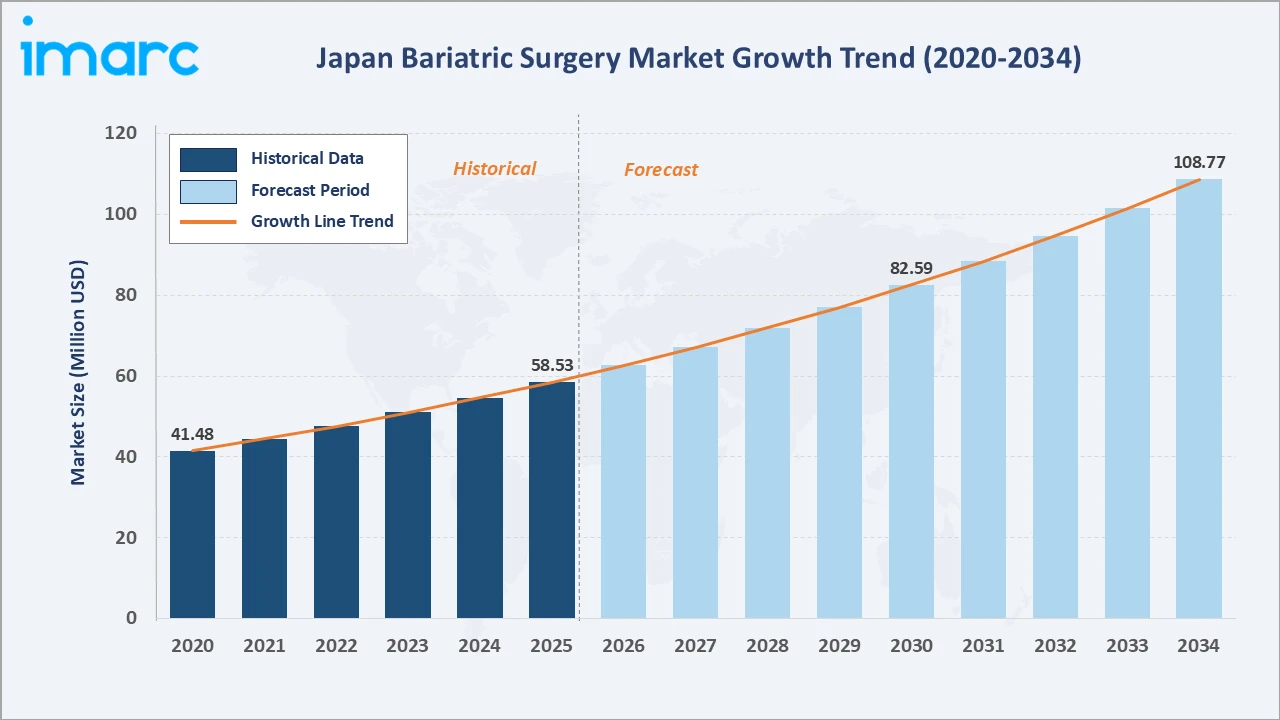
The Japan bariatric surgery market grew from USD 58.53 Million in 2025 to USD 62.70 Million in 2026 and is projected to reach USD 108.77 Million by 2034, growing at a CAGR of 7.13% during 2026-2034. Rising obesity prevalence, increasing incidence of lifestyle-related diseases such as type 2 diabetes and hypertension, and growing adoption of minimally invasive surgical procedures are the primary growth drivers. Implantable devices lead with a 58.6% share by product type, hospitals dominate the end-user segment at 48.7%, and the Kanto region commands the largest regional share at 36.8% in 2025.
Market Snapshot
| Metric | Value |
|---|---|
| Base Year Market Size (2025) | USD 58.53 Million |
| Market Size (2026) | USD 62.70 Million |
| Forecast Market Size (2034) | USD 108.77 Million |
| CAGR (2026-2034) | 7.13% |
| Base Year | 2025 |
| Historical Period | 2020-2025 |
| Forecast Period | 2026-2034 |
| Dominant Product Type | Implantable Devices (58.6%, 2025) |
| Dominant End User | Hospitals (48.7%, 2025) |
| Leading Region | Kanto Region (36.8%, 2025) |
The Japan bariatric surgery market grew from USD 41.48 Million in 2020 to USD 58.53 Million in 2025, and further to USD 62.70 Million in 2026, reflecting sustained demand driven by the rising burden of obesity-related comorbidities, government-backed health initiatives targeting metabolic syndrome, and increasing surgical infrastructure. The market is projected to reach USD 82.59 Million by 2030 before reaching USD 108.77 Million by 2034.
To get more information on this market, Request Sample
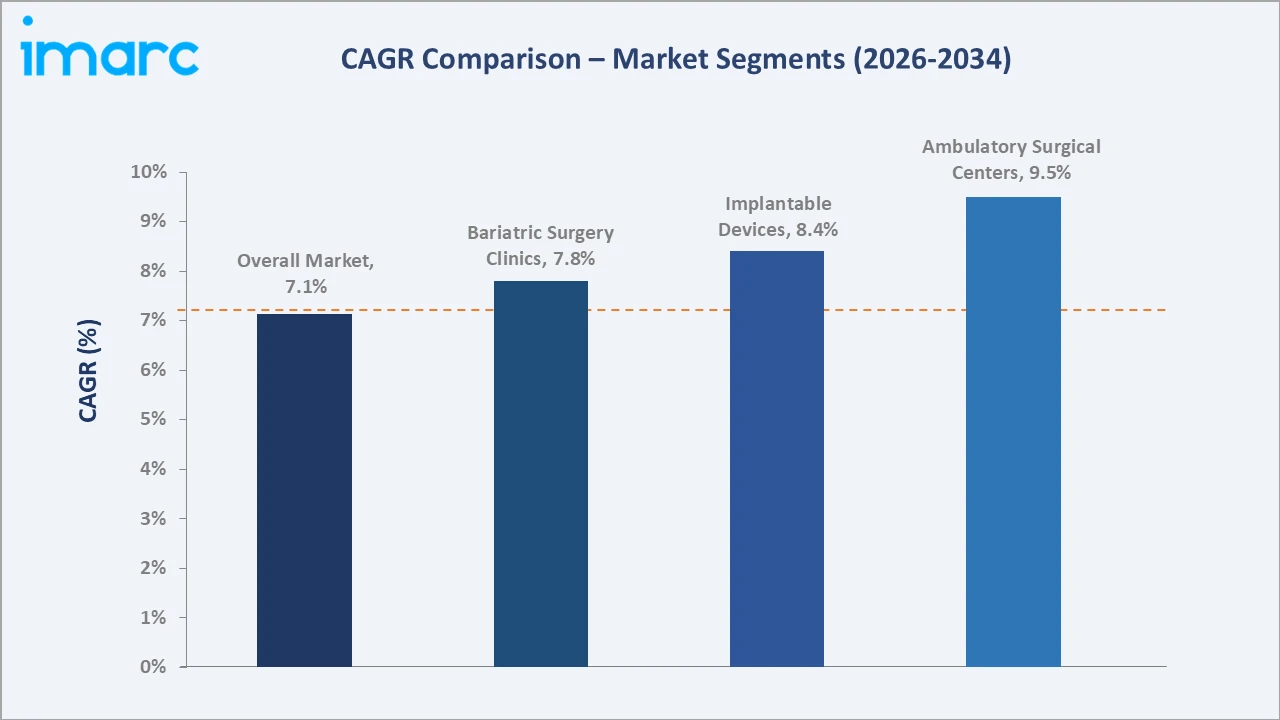
The implantable devices segment is growing at an 8.4% CAGR, driven by the increasing adoption of adjustable gastric bands and other surgically implanted devices for long-term weight management. Ambulatory surgical centers represent the fastest-growing end-user segment at 9.5% CAGR, supported by Japan's shift toward cost-efficient, outpatient surgical care models for bariatric procedures.
Executive Summary
The Japan bariatric surgery market is experiencing consistent structural growth, driven by the convergence of Japan's rising obesity burden and the rapid adoption of minimally invasive surgical techniques that have improved patient outcomes and reduced recovery times. The market is further supported by growing awareness of surgery-assisted weight management as an effective therapeutic approach for obesity-related metabolic disorders, including type 2 diabetes and obstructive sleep apnea.
Implantable devices lead the product type at 58.6%, driven by demand for adjustable gastric bands, intragastric balloons, and electrical stimulation devices that offer long-term metabolic benefits. Hospitals at 48.7% dominate the end-user segment, reflecting the complex infrastructure and specialized surgical teams required for bariatric procedures. The Kanto region at 36.8% leads all regions, concentrating Japan's highest density of accredited bariatric centers and obesity specialists in the Greater Tokyo Metropolitan Area.
Key Market Insights
| Insight | Data |
|---|---|
| Dominant Product Type | Implantable Devices - 58.6% share (2025) |
| Dominant End User | Hospitals - 48.7% share (2025) |
| Leading Region | Kanto Region - 36.8% (2025) |
| Key Market Opportunity | Robotic surgery expansion, rising bariatric surgery awareness, ASC growth, and digital health integration for post-operative follow-up. |
Key Analytical Observations Supporting the Above Data:
- Implantable Devices at 58.6%: Implantable devices command a dominant share because surgically placed tools such as adjustable gastric bands and electrical stimulators offer sustained, clinically measurable outcomes in weight reduction and metabolic control, meeting the rigorous outcome standards expected in Japan's healthcare system.
- Hospitals at 48.7%: Hospitals lead the end-user segment because bariatric procedures require advanced anesthesia, intensive care capabilities, and multidisciplinary surgical teams that can only be assembled within accredited hospital infrastructure.
- Kanto Region at 36.8%: The Kanto region commands the largest share as it hosts Japan's highest concentration of specialized bariatric centers, obesity management clinics, and surgical training institutions.
Japan Bariatric Surgery Market Overview
The Japan bariatric surgery market encompasses all surgical procedures and medical devices used in the treatment of clinically severe obesity, including laparoscopic sleeve gastrectomy, Roux-en-Y gastric bypass, adjustable gastric banding, and biliopancreatic diversion. Market participants span device manufacturers supplying implantable tools, surgical instruments including trocars, stapling systems and suturing devices, and robotic surgical platforms.
Market Dynamics
To evaluate market opportunities, Request Sample
Market Drivers
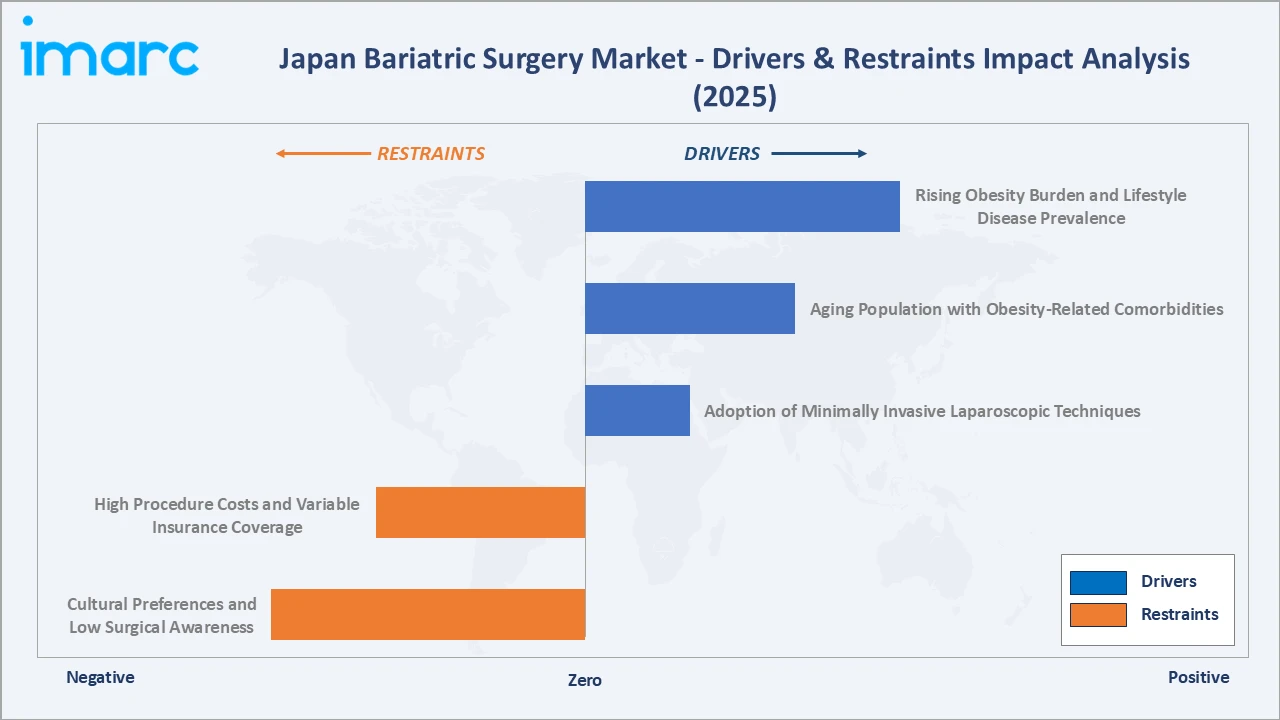
- Rising Obesity Burden and Lifestyle Disease Prevalence: Japan’s adult obesity prevalence rate stood at 4.30% in 2025, driving medical demand for surgical weight management interventions.
- Aging Population with Obesity-Related Comorbidities: According to Japan’s Ministry of Internal Affairs and Communications, the population aged 65 and older reached 36.2 million as of September 15, 2026, presenting a growing cohort of patients with concurrent obesity, type 2 diabetes, and cardiovascular conditions, for whom bariatric surgery offers clinically proven metabolic improvement beyond lifestyle interventions.
- Adoption of Minimally Invasive Laparoscopic Techniques: The adoption of minimally invasive laparoscopic techniques enables smaller incisions, reduced postoperative pain, and shorter hospital stays. These procedures support faster recovery and lower the risk of complications compared with traditional open surgery. Growing preference for less invasive treatment options among patients and advancements in laparoscopic surgical instruments are further supporting market growth.
Market Restraints
- High Procedure Costs and Variable Insurance Coverage: Bariatric procedures in Japan carry high out-of-pocket costs for patients who do not qualify for national health insurance coverage based on BMI thresholds and comorbidity criteria. This financial barrier constrains patient access and limits market penetration, particularly among eligible candidates who fall outside current reimbursement eligibility guidelines.
- Cultural Preferences and Low Surgical Awareness: Public awareness of bariatric surgery as a medically valid treatment pathway remains limited in Japan, where dietary modification and lifestyle-based approaches are culturally preferred over surgical interventions. Many eligible patients remain unaware of surgery as a covered treatment option, constraining the addressable candidate population relative to clinical need.
Market Opportunities
- Robotic and AI-Assisted Surgical Platform Expansion: Robotic surgical platforms represent an underserved technology upgrade opportunity, as robotic assistance improves surgical precision, reduces procedural time, and expands the pool of surgeons capable of performing complex bariatric operations.
- Digital Health Integration for Post-Operative Management: The integration of connected health platforms, remote patient monitoring tools, and AI-driven dietary compliance tracking into post-bariatric care protocols creates a new market adjacency, supporting long-term patient outcomes and creating recurring revenue streams for device manufacturers and digital health companies.
Market Challenges
- Regulatory Approval Timelines for Novel Devices: Japan's medical device regulatory process for novel bariatric surgical technologies involves multi-stage reviews, creating commercialization lags for globally approved platforms seeking Japan market entry. This timeline constrains the pace at which new surgical platforms and implantable device innovations reach Japanese healthcare providers, delaying competitive market access.
- Restrictive Patient Eligibility Criteria and Protocol Variability: Bariatric surgery eligibility in Japan is governed by defined BMI and comorbidity thresholds that are more restrictive than in several Western markets, limiting the addressable surgical candidate pool. Additionally, variability in clinical protocols across hospital networks creates inconsistent procedure rates by region and constrains nationwide standardization of bariatric care pathways.
Emerging Market Trends
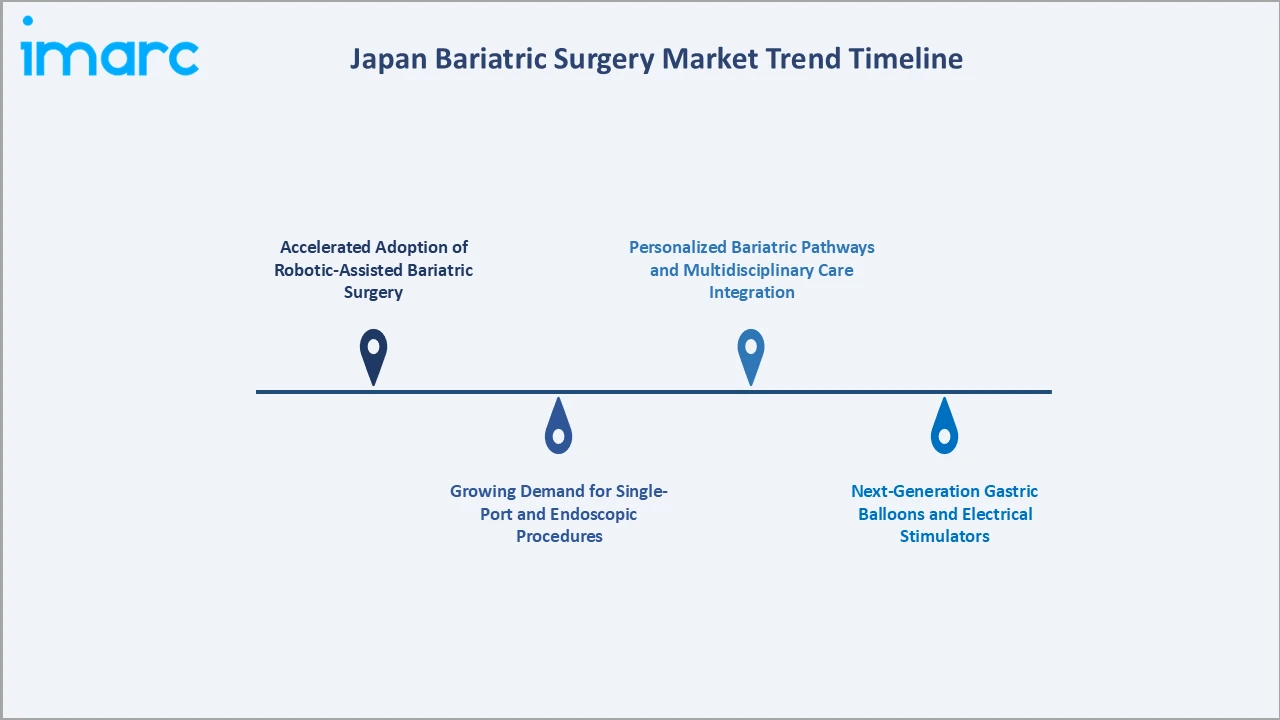
1. Accelerated Adoption of Robotic-Assisted Bariatric Surgery
Japan's bariatric surgery centers are progressively integrating robotic surgical platforms, with growing adoption of robot-assisted laparoscopic gastric bypass and sleeve gastrectomy across leading tertiary hospitals. Robotic assistance enables more precise tissue manipulation, supports consistent anastomotic integrity, and contributes to shorter inpatient stays. Investment in robotic platform training programs at Japan's major teaching hospitals is accelerating this clinical shift throughout the forecast period.
2. Growing Demand for Single-Port and Endoscopic Procedures
Single-port laparoscopic surgery and endoscopic bariatric approaches, including endoscopic sleeve gastroplasty (ESG), are gaining clinical adoption in Japan as less invasive alternatives with favorable recovery profiles. These techniques require minimal or no incisions and support short-stay care models, creating alignment among patients, payers, and bariatric programs seeking accessible outpatient treatment pathways. Clinical adoption is being supported by expanding specialist training and growing evidence for endoscopic approaches in appropriate patient populations.
3. Personalized Bariatric Pathways and Multidisciplinary Care Integration
Japan's leading bariatric programs are shifting toward integrated weight management pathways that combine surgical intervention with structured dietary counseling, psychological support, and long-term metabolic monitoring. This multidisciplinary model improves weight management outcomes and metabolic health beyond what standalone surgical intervention achieves alone, driving investment in comprehensive bariatric care units at major hospital networks. The approach is being widely adopted as the clinical standard at accredited bariatric centers nationwide.
4. Next-Generation Gastric Balloons and Electrical Stimulators
Advances in swallowable and adjustable gastric balloon technologies, alongside evolving implantable electrical stimulators that modulate gastric motility and appetite signaling, are expanding the procedural options available to Japanese bariatric surgeons. These devices bridge the gap between lifestyle interventions and more invasive surgical pathways, extending market reach to patients in earlier obesity stages who are not yet surgical candidates. Their adoption broadens the addressable patient population and supports incremental market growth beyond traditional surgical thresholds.
Industry Value Chain Analysis
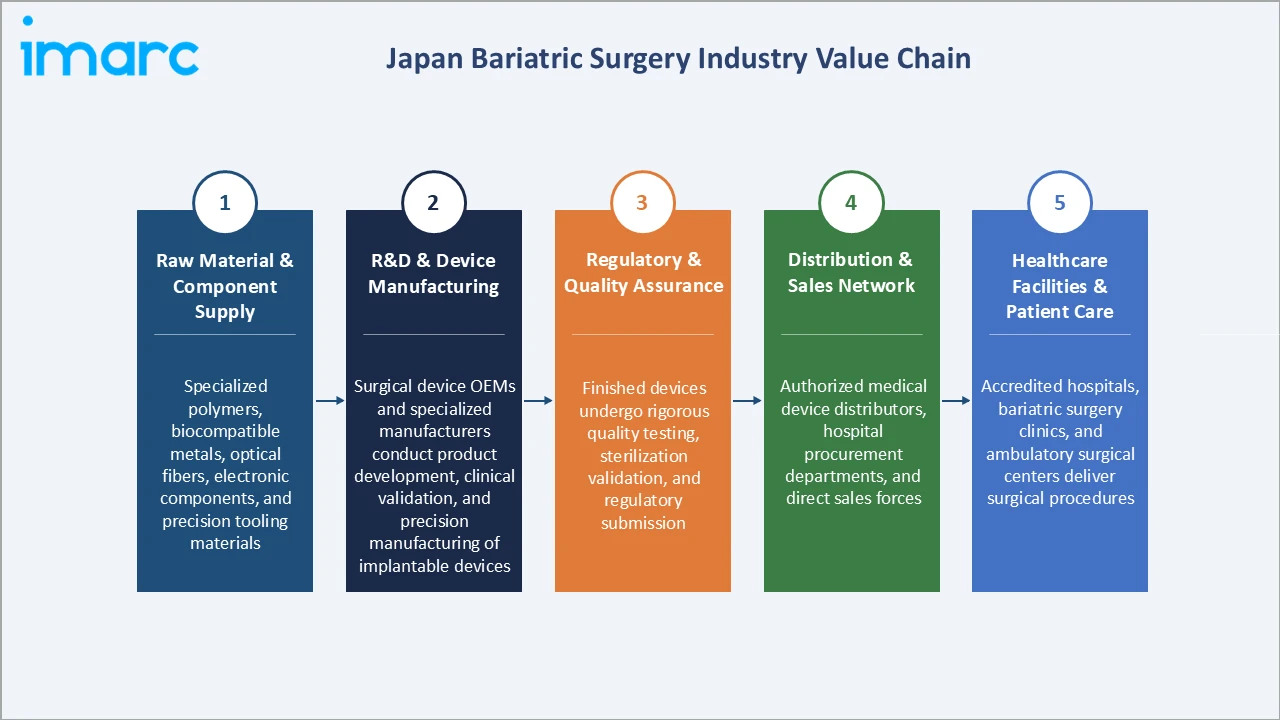
The Japan bariatric surgery market value chain spans five integrated stages from raw material and component supply through healthcare delivery and post-operative patient care.
| Stage | Description |
|---|---|
| Raw Material & Component Supply | Specialized polymers, biocompatible metals, optical fibers, electronic components, and precision tooling materials. |
| R&D & Device Manufacturing | Surgical device OEMs and specialized manufacturers conduct product development, clinical validation, and precision manufacturing of implantable devices. |
| Regulatory & Quality Assurance | Finished devices undergo rigorous quality testing, sterilization validation, and regulatory submission. |
| Distribution & Sales Network | Authorized medical device distributors, hospital procurement departments, and direct sales forces. |
| Healthcare Facilities & Patient Care | Accredited hospitals, bariatric surgery clinics, and ambulatory surgical centers deliver surgical procedures. |
The R&D and device manufacturing stage is the highest value-added stage in the Japan bariatric surgery value chain. Device manufacturers that invest most deeply in clinical evidence generation, device safety validation, and aligned regulatory pathways command the pricing premiums and procurement preference that sustain commercial leadership in Japan's evidence-driven surgical device market.
Technology Landscape in the Japan Bariatric Surgery Industry
Robotic Surgical Platforms and Precision Instrumentation
Robotic surgery platforms integrate high-definition 3D visualization, wristed instrument articulation, and motion scaling to enhance the precision and reproducibility of bariatric procedures. These platforms are enabling a growing cohort of surgeons to perform complex bariatric operations with improved consistency, reduced complication rates, and shorter inpatient stays. Investment in robotic platform training programs across Japan's major teaching hospitals is accelerating adoption through the forecast period.
Advanced Stapling and Energy-Based Vessel Sealing Technologies
Powered surgical staplers with intelligent tissue-thickness sensing and advanced energy-based vessel sealing systems are improving anastomotic integrity in gastric bypass and sleeve gastrectomy procedures, reducing leak rates and post-operative complications. These device innovations directly address Japan's high surgical quality standards, supporting clinical adoption by surgeons prioritizing patient safety outcomes.
Endoscopic Bariatric Devices and Swallowable Technologies
Endoscopic sleeve gastroplasty devices, swallowable gastric balloons, and endoluminal suturing systems represent a technology frontier that extends bariatric intervention accessibility to patients below traditional surgical thresholds. These technologies require no incisions and are performed under sedation, broadening the addressable patient population and expanding market opportunity into moderate obesity categories currently untreated by conventional surgery.
Market Segmentation Analysis
The report covers the following segments:
| Segment Category | Leading Segment | Market Share | Year |
|---|---|---|---|
| Product Type | Implantable Devices | 58.6% | 2025 |
| End User | Hospitals | 48.7% | 2025 |
| Region | Kanto Region | 36.8% | 2025 |

By Product Type
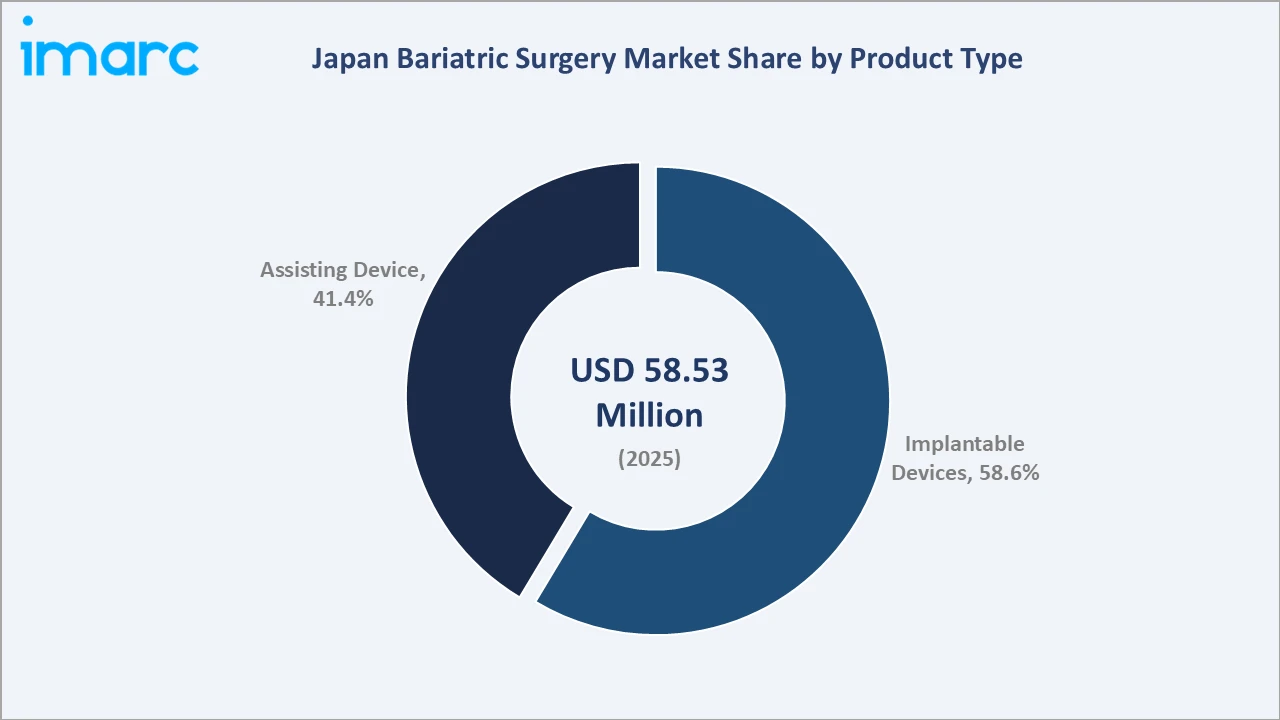
Implantable devices lead at 58.6% in 2025, driven by Japan's clinical preference for long-term, hardware-supported weight management solutions that provide adjustable and reversible mechanisms for portion control and appetite modulation. Adjustable gastric bands, intragastric balloons, and implantable electrical stimulators represent the core implantable device categories.
To access detailed market analysis, Request Sample
Assisting devices at 41.4% encompass the broad category of laparoscopic instruments, trocars, surgical staplers, suturing systems, and vessel sealing tools that support bariatric procedures across all surgical settings. This segment benefits from high procedural volume-driven replacement demand, as single-use laparoscopic instruments are consumed per procedure, creating a predictable recurring revenue base for device manufacturers.
By End User
Hospitals dominate with a 48.7% share in 2025, reflecting the structural requirement for comprehensive anesthesia support, intensive care capabilities, and multidisciplinary surgical teams that bariatric procedures demand. Japan's national network of accredited general hospitals provides the primary setting for complex bariatric interventions.
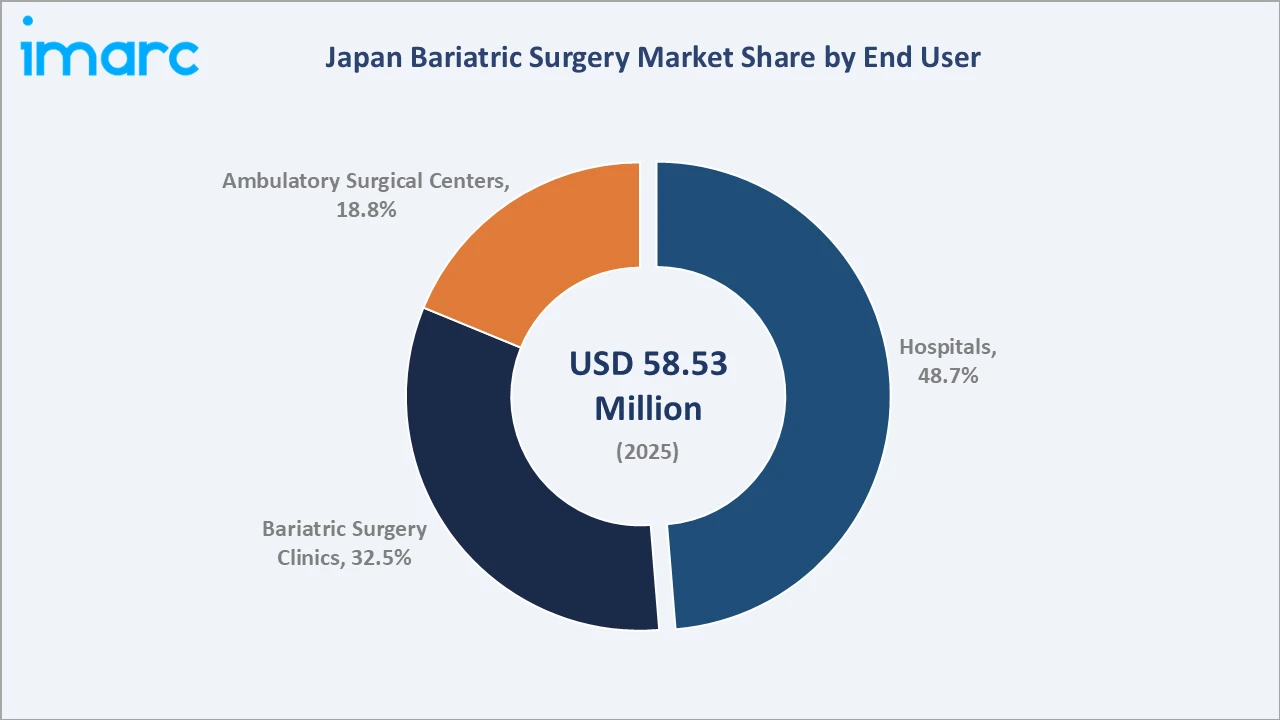
Bariatric surgery clinics at 32.5% serve a growing patient segment seeking specialized, focused surgical weight management programs outside the general hospital system. These dedicated facilities offer higher procedural concentration, shorter wait times, and integrated pre- and post-operative support compared to general hospital bariatric programs. Ambulatory surgical centers at 18.8% represent the fastest-growing end-user segment, driven by the shift of suitable laparoscopic procedures to outpatient settings, with ASC-performed bariatric procedures growing at approximately 9.5% CAGR through 2034.
Regional Market Insights
| Region | Share (2025) | Key Drivers & Characteristics |
|---|---|---|
| Kanto Region | 36.8% | Largest bariatric surgery market, with the highest concentration of accredited bariatric centers, obesity specialists, and surgical training institutions in the Greater Tokyo Metropolitan Area. |
| Kansai/Kinki Region | 20.4% | Strong urban patient base with established bariatric surgery programs at major medical university hospitals and growing private clinic activity. |
| Central/Chubu Region | 13.8% | Supported by a well-resourced hospital network, industrial population base, and growing awareness of obesity-related metabolic conditions driving surgical consultation rates. |
| Kyushu-Okinawa Region | 9.4% | Growing surgical infrastructure, higher regional obesity prevalence in Okinawa prefecture, and expanding bariatric program development at regional medical centers. |
| Tohoku Region | 6.7% | Demand is driven by urban centers with limited specialized bariatric access, creating patient referral flows to regional hospital networks with trained bariatric surgeons. |
| Chugoku Region | 5.4% | Moderate demand anchored in healthcare infrastructure, with procedural volumes driven by referrals from outlying prefectures to major regional medical centers. |
| Hokkaido Region | 4.6% | Growing bariatric awareness among healthcare providers, with procedural volume constrained by limited specialized surgical capacity outside the prefectural capital. |
| Shikoku Region | 2.9% | Smallest market share, with demand concentrated in Matsuyama and other urban centers. Limited bariatric specialist capacity constrains regional procedural growth. |
Japan's bariatric surgery market is highly concentrated in the Kanto region, accounting for 36.8%, driven by the highest density of accredited bariatric programs and urban obesity patient populations. The Kansai/Kinki region holds 20.4%, supported by major medical university hospitals. The Central/Chubu region represents 13.8%, benefiting from well-developed tertiary healthcare infrastructure.
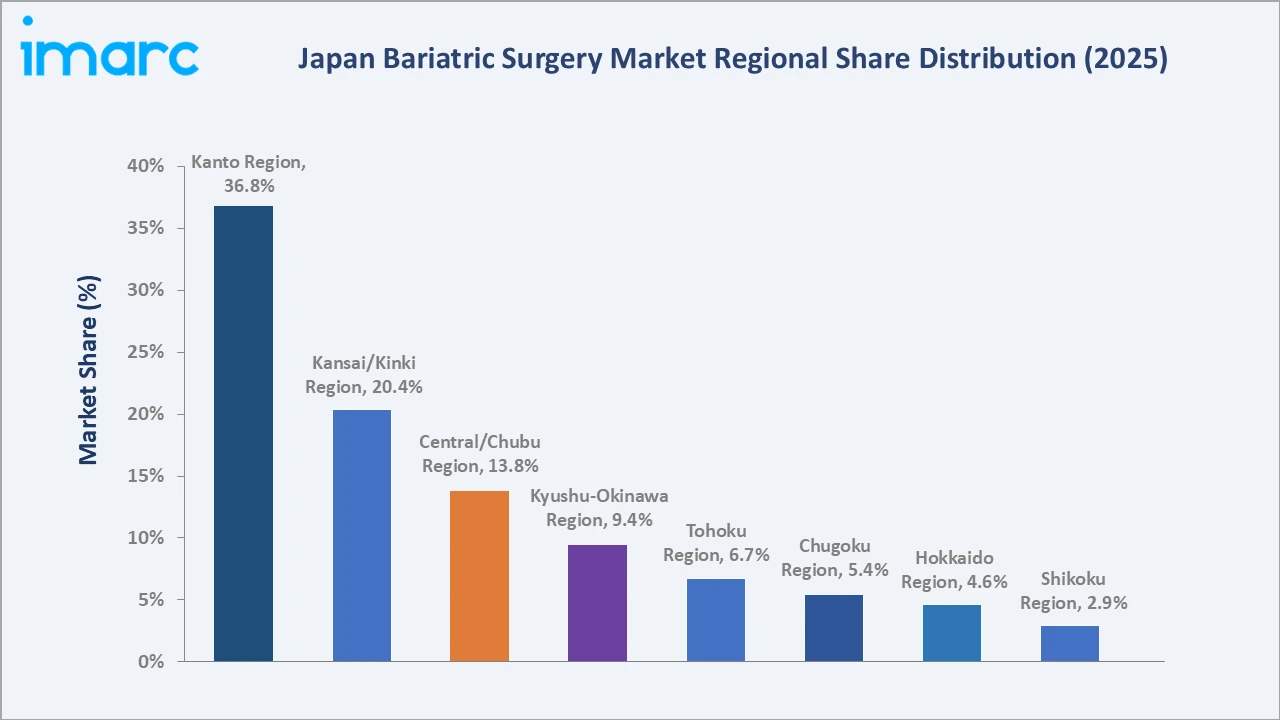
Kyushu-Okinawa contributes 9.4%, with Okinawa's higher obesity prevalence creating above-average surgical need. The Tohoku region represents 6.7%, with surgical access concentrated in regional medical hubs. Chugoku accounts for 5.4%, Hokkaido 4.6%, and Shikoku 2.9%, with demand in each region constrained by limited specialist capacity outside major urban centers.
Competitive Landscape
The Japan bariatric surgery market is characterized by the dominance of global medical device multinationals alongside specialized bariatric and endoscopic device companies and a growing presence of Japanese domestic surgical instrument manufacturers. The competitive landscape is being reshaped by robotic surgery platform competition and the expansion of minimally invasive device portfolios.
| Company | Key Offerings | Market Position | Core Strength |
|---|---|---|---|
| Medtronic | Signia powered stapler, Simplify Suturing, Sonicision 7 curved jaw cordless ultrasonic dissection device | Market Leader | Medtronic plays a major role in Japan's bariatric and metabolic surgery sector by supplying critical medical devices, intelligent surgical stapling systems, and energy instruments. |
| Johnson & Johnson | ECHELON Stapler, Harmonic Scalpel, ENDOPATH Stapler | Market Leader | Johnson & Johnson (through its subsidiary Ethicon) supplies core surgical tools, energy devices, and powered staplers used in bariatric and metabolic procedures in Japan. |
| Intuitive Surgical Operations, Inc. | da Vinci Surgical System | Established Player | Intuitive Surgical Operations, Inc. acts as a leading technology provider for minimally invasive robotic-assisted surgery through its da Vinci Surgical System. |
| KARL STORZ | KARL STORZ Laparoscopy Systems | Established Player | KARL STORZ provides specialized minimally invasive surgical equipment, high-definition imaging towers, and bariatric-specific instrumentation. |
| Stryker | MV3 Bariatric Hospital Bed | Challenger | Expanding surgical technology portfolio into bariatric and metabolic surgery segment through technology partnerships. |
The competitive landscape in the Japan bariatric surgery market is being actively reshaped by the robotic surgery and endoscopic procedure dual transformation. The outcome of this product competition will significantly influence brand share dynamics through the forecast period.
Key Company Profiles
Medtronic
Medtronic is a medical technology leader with a comprehensive surgical technologies portfolio spanning energy-based devices, surgical stapling systems, and advanced instrumentation used across minimally invasive and open surgical procedures. The company maintains a strong commercial presence in Japan through its dedicated Medtronic Japan subsidiary, supported by an extensive clinical education and surgical training infrastructure serving bariatric and general surgery programs.
- Key Offerings: Signia powered stapler, Simplify Suturing, Sonicision 7 curved jaw cordless ultrasonic dissection device.
- Strategic Focus: Advancing integration of intelligent surgical stapling with real-time tissue feedback, expanding robotic surgery compatibility across its device portfolio, and deepening Japan clinical partnerships to accelerate regulatory submission timelines for next-generation bariatric devices.
Johnson & Johnson
Johnson & Johnson's Ethicon division is a dominant supplier of surgical instruments, energy devices, and wound closure technologies, with a well-established commercial infrastructure in Japan serving the bariatric, general surgery, and gastrointestinal surgery markets. Ethicon's product portfolio spans the full range of tools required for laparoscopic bariatric procedures, from advanced circular staplers to energy-based vessel sealing systems.
- Key Offerings: ECHELON Stapler, Harmonic Scalpel, ENDOPATH Stapler.
- Strategic Focus: Expanding powered and intelligent stapling solutions with integrated tissue sensors, strengthening Japan hospital procurement relationships through outcomes-based device programs, and enhancing post-operative complication reduction through advanced energy and sealing technologies.
Market Concentration Analysis
The Japan bariatric surgery market is moderately concentrated, with the top five device companies collectively accounting for approximately 68-72% of total device market revenue in 2025. Top companies constitute the market leadership tier, with their combined portfolio covering all major device categories from stapling and energy to robotic platforms and endoscopic tools.
The assisting device segment is more fragmented, with multiple international and domestic manufacturers competing across stapling, energy, and laparoscopic instrument categories. Market concentration is expected to remain stable through the forecast period, with the established leaders retaining procedural share dominance while niche specialists in endoscopic and robotic bariatric tools incrementally expand their positions as these procedure categories grow faster than the overall market.
Investment & Growth Opportunities
Highest Growth Segments
Ambulatory surgical centers represent Japan's highest-growth end-user segment at approximately 9.5% CAGR, driven by the shift of laparoscopic bariatric procedures to cost-efficient outpatient settings supported by expanding reimbursement for ASC-performed procedures.
Investment Themes
- Robotic and Endoscopic Platform Investment for Japan-Specific Certification: Investment in obtaining regulatory clearance for next-generation robotic surgical systems and endoscopic bariatric devices tailored to Japan's BMI-specific patient population and procedural preferences positions manufacturers to lead the fastest-growing technology tiers of Japan's bariatric surgery market.
- Digital Post-Operative Management Solutions: Investment in AI-driven dietary compliance platforms, remote biometric monitoring wearables, and integrated post-bariatric care apps addresses Japan's healthcare system's focus on long-term metabolic outcome improvement, creating recurring software and service revenue streams alongside device sales.
- Bariatric Surgeon Training and Education Infrastructure: Investment in Japan-localized surgical training programs, simulation center development, and clinical fellowship support addresses the structural shortage of trained bariatric surgeons that currently constrains market volume growth, creating goodwill and commercial preference among trained surgical networks.
Future Market Outlook (2026-2034)
The Japan bariatric surgery market stood at USD 58.53 Million in 2025 and is projected to grow from USD 62.70 Million in 2026 to USD 108.77 Million by 2034, exhibiting a CAGR of 7.13% during 2026-2034. The market is expected to reach an intermediate milestone of approximately USD 82.59 Million by 2030, as expanding insurance reimbursement for bariatric procedures and growing ASC channel development progressively accelerate procedure volumes across Japan's regional markets.
Three structural forces will define Japan's bariatric surgery market through 2034. First, the robotic surgery transition in Japan's bariatric programs will progressively shift procedure delivery toward robot-assisted laparoscopic techniques, growing well above the overall market CAGR and driving premium device spend per procedure. Second, the endoscopic bariatric procedure expansion, including ESG and advanced intragastric balloon systems, will create new patient pathways for the large population of eligible patients below traditional surgical BMI thresholds, extending market access to a broader addressable population. Third, Japan's aging and increasingly obesity-burdened population will sustain long-term surgical candidate generation, ensuring consistent procedure volume growth and device demand through 2034.
Research Methodology
Primary Research
Primary research comprised structured consultations with bariatric surgeons at accredited hospital programs, medical device sales and marketing executives at Japan subsidiaries of major global manufacturers, hospital procurement officers at tertiary care centers, and obesity medicine specialists at clinical weight management programs. These discussions validated market sizing, assessed surgical adoption trends for robotic and endoscopic procedure categories, identified device procurement decision drivers, and provided competitive intelligence on brand market share and procedural volume trends.
Secondary Research
Secondary research drew on IMARC Group's Japan bariatric surgery market database, obesity clinical guidelines and prevalence data, National Health and Nutrition Survey statistics, device approval databases, national health insurance reimbursement policy records, and published clinical outcome data from major Japan bariatric surgery programs.
Forecasting Models
Market forecasts incorporated Japan obesity prevalence trajectory and surgical penetration rate projections, insurance coverage expansion timeline modeling, device approval pipeline assessment for key bariatric technologies, ASC channel development rate modeling, regional healthcare infrastructure investment trends, and macroeconomic indicators including Japan GDP growth, healthcare expenditure trajectory, and aging population demographic projections through 2034.
Japan Bariatric surgery Market Report Coverage:
| Report Features | Details |
|---|---|
| Base Year of the Analysis | 2025 |
| Historical Period | 2020-2025 |
| Forecast Period | 2026-2034 |
| Units | Million USD |
| Scope of the Report |
Exploration of Historical Trends and Market Outlook, Industry Catalysts and Challenges, Segment-Wise Historical and Future Market Assessment:
|
| Product Types Covered | Assisting Device, Implantable Device |
| End Users Covered | Bariatric Surgery Clinics, Hospitals, Ambulatory Surgical Centers |
| Regions Covered | Kanto Region, Kansai/Kinki Region, Central/ Chubu Region, Kyushu-Okinawa Region, Tohoku Region, Chugoku Region, Hokkaido Region, Shikoku Region |
| Companies Covered | Medtronic, Johnson & Johnson, Intuitive Surgical Operations, Inc., KARL STORZ, Stryker, etc. |
| Customization Scope | 10% Free Customization |
| Post-Sale Analyst Support | 10-12 Weeks |
| Delivery Format | PDF and Excel through Email (We can also provide the editable version of the report in PPT/Word format on special request) |
Key Benefits for Stakeholders:
- IMARC’s industry report offers a comprehensive quantitative analysis of various market segments, historical and current market trends, market forecasts, and dynamics of the Japan bariatric surgery market from 2020-2034.
- The research report provides the latest information on the market drivers, challenges, and opportunities in the Japan bariatric surgery market.
- Porter's five forces analysis assist stakeholders in assessing the impact of new entrants, competitive rivalry, supplier power, buyer power, and the threat of substitution. It helps stakeholders to analyze the level of competition within the Japan bariatric surgery industry and its attractiveness.
- Competitive landscape allows stakeholders to understand their competitive environment and provides an insight into the current positions of key players in the market.
Frequently Asked Questions About the Japan Bariatric Surgery Market Report
The Japan bariatric surgery market reached USD 62.70 Million in 2026, driven by rising obesity prevalence, expanding minimally invasive procedure adoption, and increasing insurance coverage for approved bariatric interventions.
The market is projected to grow at a CAGR of 7.13% during 2026-2034, driven by rising obesity burden, minimally invasive technique adoption, robotic surgery expansion, and growing ASC channel development.
The market is projected to reach approximately USD 82.59 Million by 2030, supported by expanding reimbursement, increasing ASC procedural volumes, and robotic-assisted bariatric surgery adoption across major regional centers.
Implantable devices lead with a 58.6% share in 2025, driven by demand for adjustable gastric bands and implantable stimulation devices offering long-term metabolic weight management outcomes.
Hospitals lead with a 48.7% share in 2025, reflecting the complex infrastructure and multidisciplinary surgical team requirements of bariatric procedures.
The Kanto region leads with a 36.8% share in 2025, reflecting the Greater Tokyo metropolitan area's concentration of accredited bariatric centers, obesity specialists, and the highest-density patient population.
Key companies include Medtronic, Johnson & Johnson, Intuitive Surgical Operations, Inc., KARL STORZ, and Stryker, among others.
The market is projected to reach USD 108.77 Million by 2034, driven by sustained obesity burden growth, expanding robotic and endoscopic procedure adoption, broadening insurance coverage, and growing ASC channel penetration.
Need more help?
- Speak to our experienced analysts for insights on the current market scenarios.
- Include additional segments and countries to customize the report as per your requirement.
- Gain an unparalleled competitive advantage in your domain by understanding how to utilize the report and positively impacting your operations and revenue.
- For further assistance, please connect with our analysts.
 Request Customization
 Speak to an Analyst
 Request Brochure
 Inquire Before Buying
Benefits of Customization
- Personalize this research
- Triangulate with your data
- Get data as per your format and definition
- Gain a deeper dive into a specific application, geography, customer, or competitor
- Any level of personalization
Get in Touch With Us
UNITED STATES
Phone: +1-201-971-6302
INDIA
Phone: +91-120-433-0800
UNITED KINGDOM
Phone: +44-753-714-6104
Email: [email protected]
Client Testimonials























Related Reports

Choose your plan
*Please note that the prices mentioned below are starting prices for each bundle type. Kindly contact our team for further details.*
Single User License
- 1 User License, Access on 2 Devices
- PDF Report + Excel Dataset (Password Protected)
- Lifetime Access
- No Printing Rights
- 10% Free Report Customization
- 10–12 Weeks of Analyst Support
Five User License
- Access for 5 Users, 2 Devices per User
- PDF Report + Excel Dataset (Password Protected)
- Lifetime Access
- Dedicated Account Manager
- 12–14 Weeks of Analyst Support
- No Printing Rights
- 15% Free Report Customization
- 25% Discount on Your Next Purchase
Corporate User License
- Unlimited User Access (Within Your Organization)
- PDF Report + Excel Dataset
- Lifetime Access
- Dedicated Account Manager
- 14–20 Weeks of Analyst Support
- No Printing Rights
- 20% Free Report Customization
- 30% Discount on Your Next Purchase
Essential Insights
What's included:
3 reports
- Lifetime Access
- PDF Reports
- Excel Datasets
- 2 Weeks of Free Analyst Support
- 2 User Licenses
- Access on 2 Devices
- Printing Rights
- Complimentary PowerPoint (PPT) Version
- Complimentary License Upgrade
Professional Access
What's included:
5 reports
- Lifetime Access
- PDF Reports
- Excel Datasets
- 8 Weeks of Free Analyst Support
- 2 User Licenses
- Access on 2 Devices
- Printing Rights
- Complimentary PowerPoint (PPT) Version
- Complimentary License Upgrade
Business Advantage
What's included:
8 reports
- Lifetime Access
- PDF Reports
- Excel Datasets
- 14 Weeks of Free Analyst Support
- 2 User Licenses
- Access on 2 Devices
- Printing Rights
- Complimentary PowerPoint (PPT) Version
- Complimentary License Upgrade
Enterprise Intelligence
What's included:
10 reports
- Lifetime Access
- PDF Reports
- Excel Datasets
- 20 Weeks of Free Analyst Support
- 2 User Licenses
- Access on 2 Devices
- Printing Rights
- Complimentary PowerPoint (PPT) Version
- Complimentary License Upgrade