
Japan Biofertilizer Market Size, Share, Trends and Forecast by Type, Crop, Microorganism, Mode of Application, and Region, 2026-2034
Japan Biofertilizer Market Summary:
The Japan biofertilizer market size was valued at USD 103.96 Million in 2025 and is projected to reach USD 248.69 Million by 2034, growing at a compound annual growth rate of 10.18% from 2026-2034.
The Japan biofertilizer market is witnessing strong growth as the nation is moving ahead to further strengthen its committed approach towards sustainable agriculture. Awareness of the ecological and health-related consequences of synthetic chemicals is driving the Japan biofertilizer market. The approach of the government by focusing more on organic farming is further driving the Japan biofertilizer market. Increasing consumer demand is also driving the Japan biofertilizer market, and further research in next-generation inoculants is also driving the Japan biofertilizer market. Biofertilizers are an integral part of the Japan agricultural sector, and the Japan biofertilizer market is gaining momentum.
Key Takeaways and Insights:
- By Type: Nitrogen-fixing biofertilizers dominate the market with a share of 45% in 2025, driven by Japan’s strong agricultural reliance on nitrogen supplementation for staple cereal crops and the growing adoption of bio-based nitrogen fixation as a sustainable alternative to synthetic urea and ammonium-based fertilizers.
- By Crop: Cereals and grains hold the largest share of 36% in 2025, reflecting the centrality of rice, wheat, and barley cultivation in Japanese agriculture and the increasing integration of biofertilizer applications to enhance grain yield and soil health.
- By Microorganism: Rhizobium leads the market with a share of 30% in 2025, owing to its proven nitrogen-fixing symbiosis with leguminous crops and its expanding application across diversified cropping systems to improve soil fertility.
- By Mode of Application: Soil treatment accounts for the largest share of 44% in 2025, supported by its broad compatibility with various crop types and its effectiveness in enhancing rhizosphere microbial activity and long-term soil nutrient availability.
- Key Players: The Japan biofertilizer market features a moderately competitive landscape, with domestic manufacturers and international agricultural technology providers investing in microbial research, product diversification, and strategic collaborations to strengthen market positioning across diverse crop segments.
The Japanese biofertilizers market is growing at a gradual pace as the Japanese agriculture sector is shifting its focus towards adopting sustainable agriculture practices that are environmentally friendly. However, one of the key factors influencing the growth is the government’s push for decreasing the use of chemical fertilizers or synthetic fertilizers in the future. It is reported that the Japanese government wants the farming sector in the country to gradually move towards organic farming. In this context, the use of biofertilizers will be the key factor for enhancing the nutrient content of the soil. In addition, the Japanese agriculture sector is using the services of some of the most technologically advanced research centers in the world. At the company level, BioConsortia announced in 2024 the commercial rollout of its nitrogen-fixing microbial seed treatment technology, designed to reduce synthetic fertilizer usage while improving crop nutrient efficiency, highlighting rising private-sector innovation in microbial fertilizer solutions. It is also creating various possibilities for the development of effective strains of biofertilizers that will be helpful in the formulation of nanotechnology-based products. Increasing the demand for organic food products among consumers is also creating growth prospects for the use of such products, which are treated with the aid of biofertilizers.
Japan Biofertilizer Market Trends:
Shift Toward Regenerative and Organic Farming Practices
Japan is experiencing a growing transition toward regenerative agriculture and organic farming methods, as farmers increasingly seek to restore soil health while reducing environmental impact. This shift is encouraging the adoption of microbial-based soil inputs that support natural nutrient cycling, improve soil structure, and enhance biodiversity within farming ecosystems. According to reports, Novozymes and AgroFresh partner to develop biological solutions combating post-harvest fungal decay, aiming to reduce food waste, improve fruit and vegetable quality, and enhance sustainability across the global supply chain. Expanding interest in chemical-free cultivation methods is reinforcing the role of biofertilizers as essential components of integrated nutrient management strategies, particularly supporting Japan biofertilizer market growth.
Integration of Precision Agriculture and Smart Farming Technologies
The incorporation of precision agriculture tools, including sensor-based soil monitoring, drone-assisted crop assessment, and data-driven nutrient management systems, is reshaping how biofertilizers are applied across Japanese farms. These technologies enable more targeted and efficient use of microbial inputs, optimizing application timing, dosage, and placement. In February 2025, Terra Drone Corporation was selected by Japan’s Ministry of Agriculture, Forestry and Fisheries (MAFF) for a smart agriculture demonstration project, focusing on high-precision drone-based pesticide and fertilizer spraying. The initiative supports data-driven input optimization to improve efficiency and reduce environmental impact. By aligning biofertilizer use with real-time soil and crop data, smart farming approaches are improving both product performance and resource utilization, driving broader adoption across commercial and smallholder farms.
Rising Demand for Organic and Health-Conscious Food Products
Consumer awareness around food safety, nutritional quality, and environmental sustainability is fueling demand for organically grown produce in Japan. This growing preference is encouraging farmers to shift away from chemical-intensive practices and embrace biofertilizers that comply with organic certification standards. In 2024, Japan’s Ministry of Agriculture, Forestry and Fisheries (MAFF) announced that the number of designated “Organic Villages” promoting organic farming reached 124 municipalities, surpassing the national target ahead of schedule. The initiative supports organic production, reduces reliance on chemical fertilizers and pesticides, and expands supply chains to meet growing consumer demand for organic food. The expanding domestic and export-oriented organic food market is creating a strong demand-side incentive for biofertilizer adoption, particularly in high-value crop segments such as fruits, vegetables, and specialty grains.
Market Outlook 2026-2034:
Japan's biofertilizer market is positioned for sustained expansion, underpinned by the government's ongoing commitment to reducing reliance on synthetic chemical fertilizers, broadening organic farmland coverage, and advancing environmentally harmonized food production systems. Strategic policy frameworks aimed at achieving carbon neutrality in agriculture, coupled with increasing budgetary allocations for sustainable farming initiatives, are reinforcing long-term market momentum. The convergence of regulatory encouragement, rising farmer participation in organic certification programs, and growing institutional support for bio-based agricultural inputs is establishing a favorable foundation for continued market development across the country. The market generated a revenue of USD 103.96 Million in 2025 and is projected to reach a revenue of USD 248.69 Million by 2034, growing at a compound annual growth rate of 10.18% from 2026-2034.
Japan Biofertilizer Market Report Segmentation:
|
Segment Category |
Leading Segment |
Market Share |
|
Type |
Nitrogen-Fixing Biofertilizers |
45% |
|
Crop |
Cereals and Grains |
36% |
|
Microorganism |
Rhizobium |
30% |
|
Mode of Application |
Soil Treatment |
44% |
Type Insights:
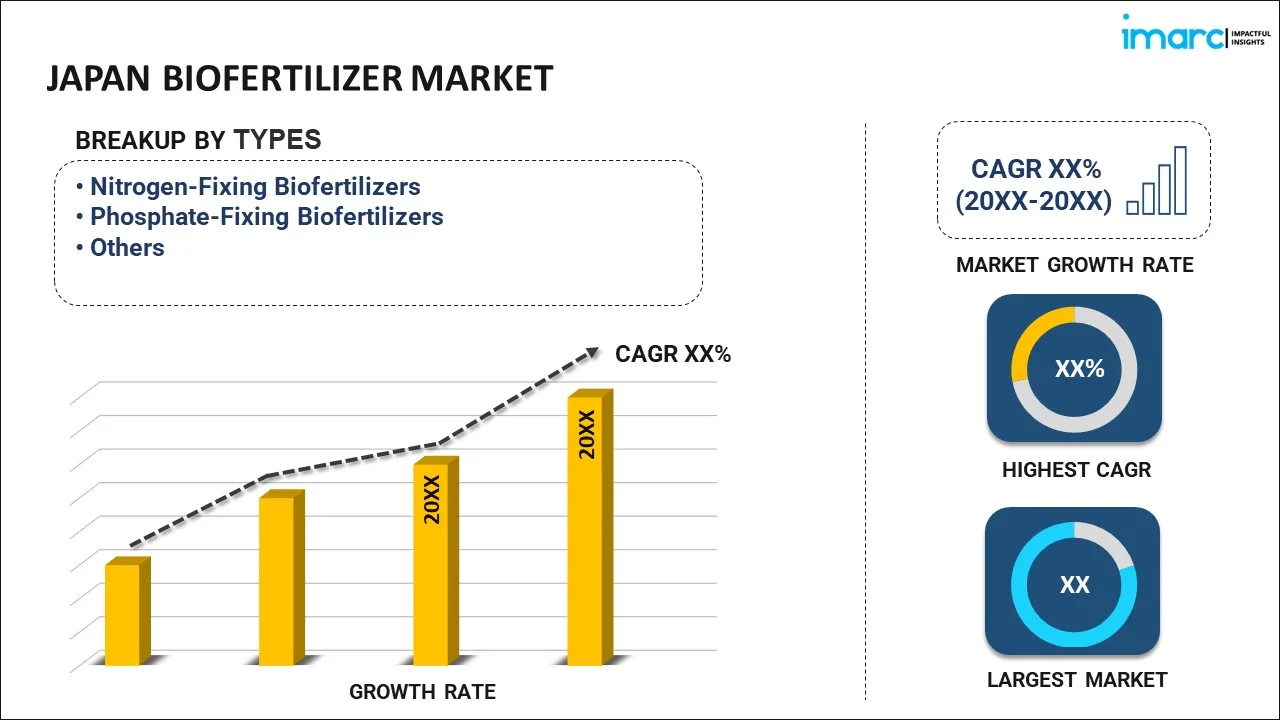
To get detailed segment analysis of this market, Request Sample
- Nitrogen-Fixing Biofertilizers
- Phosphate-Fixing Biofertilizers
- Others
The nitrogen-fixing biofertilizers dominates with a market share of 45% of the total Japan biofertilizer market in 2025.
In the case of nitrogen-fixing biofertilizers, specific microorganisms are used to convert atmospheric nitrogen into plant-accessible nitrogen. This would considerably reduce the requirement of synthetic nitrogen sources and would therefore occupy a vital position in the context of Japan's usage of biofertilizers, given its extensive practice of rice and cereal cropping systems. The rising practice of sustainable nutrient management techniques, along with awareness about certain health hazards of using chemical nitrogen fertilizers, would further increase the usage of biologically driven nitrogen fixation techniques for crops.
The preference for the usage of nitrogen-fixing formulations is further corroborated by rising environmental concerns regarding the adverse impacts of proportionately large quantities of synthetic nitrogenous compounds on the groundwater table and soil health. The government is taking active initiatives in discouraging the usage of chemical fertilizers and emphasizing the usage of food production systems. The preference for using these formulations is in conformity with the levels of crop productivity and the preservation of healthy agricultural activities in the different zones of the country.
Crop Insights:
- Cereals and Grains
- Pulses and Oilseeds
- Fruits and Vegetables
- Others
The cereals and grains leads with a share of 36% of the total Japan biofertilizer market in 2025.
Rice, wheat, and barley are considered to be the pillars of the Japanese agricultural sector. Hence, the use of biofertilizers in the cultivation of cereals has started to see considerably increasing momentum due to the urgent need to employ sustainable cereal cultivation practices to ensure crop productivity and fertility of the soil. The urgent need to curb the use of synthetic fertilizers in paddy and dryland cereals has started to promote the use of biofertilizers. Additionally, its use has started to gain increasing recognition of the potential of biofertilizers to ensure crop productivity in cereal cultivation.
Besides, from a broader perspective, the interest in organic or low-chemical rice cultivation is offering additional scope for the use of biofertilizers in cereal crops. The various initiatives of the government for sustainable cereal cultivation, organic certification, and environmentally safe farming practices, among others, offer farmers an added incentive to use biofertilizers as they improve nutrient uptake efficiencies, matching an enhanced convergence with the demand for safe food products, including cereal crops, generated in the market.
Microorganism Insights:
- Cyanobacter
- Rhizobium
- Phosphate Solubilizing Bacteria
- Azotobacter
- Others
The rhizobium dominates with a market share of 30% of the total Japan biofertilizer market in 2025.
The value of Rhizobium-based biofertilizers depends on the symbiotic association between the Rhizobium microbe and legume roots, which play an important role in efficient biological nitrogen fixation and reduce dependence on synthetic sources of N. This has become essential in the cultivation of soybeans and pulses in Japan, as indicated by an increasing emphasis on the maintenance of quality in crops while reducing the use of chemical N fertilizers. This has remained invaluable and continues to generate more demand in major legume-producing agricultural areas, as indicated by the established scientific understanding of Rhizobium and legume associations.
With more emphasis being laid upon crop diversification and the development of integrated farming systems, the scope for using Rhizobium-based inoculants is moving from legume crops to other crops. More research is being conducted on the development of better strains of Rhizobium, which is helping farmers to make the best use of the amazing capabilities of this bacterium, thereby paving the way for the sustainability of this crop management strategy. Therefore, it is helping the segment make a competitive market presence nationwide.
Mode of Application Insights:
- Seed Treatment
- Soil Treatment
- Others
The soil treatment leads with a share of 44% of the total Japan biofertilizer market in 2025.
Soil-applied biofertilizers are widely favored for their ability to improve overall rhizosphere health, enhance microbial diversity, and support sustained nutrient release throughout the crop growth cycle. This application method is particularly well-suited for Japan's paddy rice systems and diversified horticultural operations, where maintaining consistent soil biological activity is essential for optimal crop performance. The broad compatibility of soil treatment with various crop types, soil conditions, and farming scales further reinforces its position as the preferred biofertilizer application method across the country's major agricultural regions.
The preference for soil treatment is also driven by its strong compatibility with traditional Japanese farming practices and its proven effectiveness in rehabilitating degraded and nutrient-depleted soils. As concerns about declining soil organic matter, reduced microbial populations, and long-term fertility loss continue to intensify, soil-applied microbial formulations are gaining widespread recognition as essential tools for maintaining productive and resilient agricultural ecosystems. These formulations support sustained biological activity beneath the root zone, helping farmers preserve soil vitality across Japan's varied agro-climatic regions and diverse cropping systems.
Regional Insights:
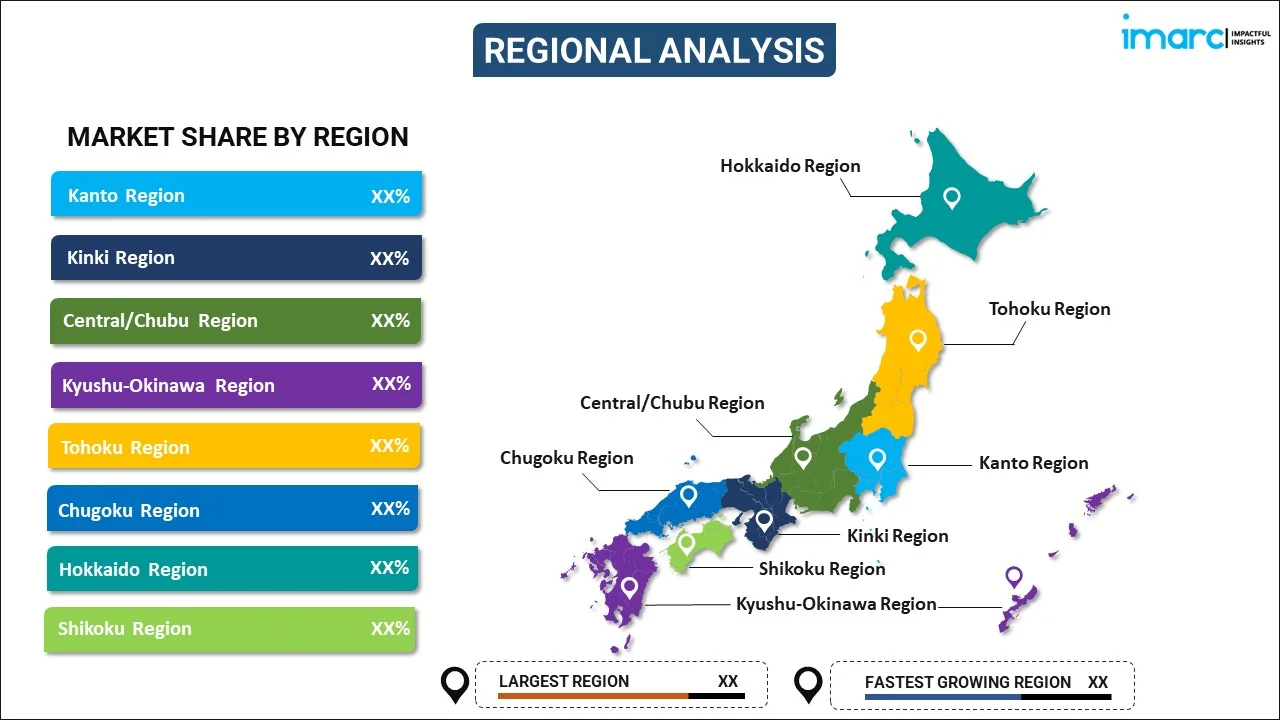
To get detailed regional analysis of this market, Request Sample
- Kanto Region
- Kinki Region
- Central/ Chubu Region
- Kyushu-Okinawa Region
- Tohoku Region
- Chugoku Region
- Hokkaido Region
- Shikoku Region
The Kanto region drives significant biofertilizer demand owing to its large-scale agricultural output and close proximity to major urban consumer markets increasingly seeking organically produced food products. Advanced farming infrastructure, well-established research institutions, and strong collaboration between agricultural cooperatives and technology providers are further supporting the integration of microbial-based soil nutrition solutions across diverse cropping systems in the region.
The Kinki region is witnessing growing biofertilizer adoption as local governments actively promote sustainable agriculture initiatives and organic farming expansion, particularly in rice and specialty vegetable cultivation. Increasing consumer preference for locally grown organic produce, combined with prefectural support programs encouraging reduced chemical fertilizer usage, is driving farmer interest in bio-based nutrient management solutions across both commercial and smallholder farming operations.
The Central/Chubu region benefits from diverse crop cultivation patterns and active agricultural cooperatives that are increasingly incorporating biofertilizer applications into integrated nutrient management programs for enhanced soil health. The region's balanced mix of cereal, horticultural, and specialty crop production creates sustained demand for microbial-based fertilizers, supported by growing awareness of sustainable farming practices among local farming communities.
The Kyushu-Okinawa region is emerging as a biofertilizer growth hub, driven by favorable climatic conditions, strong horticultural activity, and rising organic farming interest among local communities. The region's extensive fruit, vegetable, and tea cultivation provides significant opportunities for biofertilizer integration, while government-supported sustainability programs and expanding organic certification efforts are further accelerating adoption across diverse agricultural operations.
The Tohoku region is experiencing steady biofertilizer adoption supported by rice-centric farming systems and government-backed programs promoting reduced chemical input usage and sustainable grain production practices. The region's focus on premium rice cultivation, combined with growing environmental awareness among farmers and expanding organic market opportunities, is encouraging the incorporation of microbial-based soil amendments into traditional paddy farming operations.
The Chugoku region shows increasing interest in biofertilizers as farmers diversify into organic fruit and vegetable production, supported by prefectural sustainability programs and agricultural extension services. Growing consumer demand for chemical-free produce in nearby urban centers, along with local government incentives encouraging environmentally responsible farming practices, is fostering a favorable environment for broader biofertilizer adoption across the region's varied agricultural landscape.
Hokkaido's expansive agricultural landscape and large-scale farming operations are driving substantial biofertilizer demand, particularly for cereal, pulse, and dairy forage crops cultivated under sustainable management systems. The region's leadership in field crop production, combined with increasing emphasis on soil conservation practices and organic farming transitions supported by both government programs and cooperative networks, is strengthening long-term biofertilizer market penetration.
The Shikoku region is gradually embracing biofertilizer use, with growing emphasis on organic citrus and specialty crop production supported by local agricultural cooperative networks and sustainability initiatives. Rising consumer interest in pesticide-free and organically certified produce, alongside prefectural programs promoting reduced chemical dependency and environmentally conscious farming methods, is encouraging farmers to integrate microbial-based fertilizers into their cultivation practices.
Market Dynamics:
Growth Drivers:
Why is the Japan Biofertilizer Market Growing?
Government Policies Promoting Sustainable Agriculture and Chemical Fertilizer Reduction
Japan’s government has implemented comprehensive policy frameworks aimed at transforming the country’s agricultural sector toward greater environmental sustainability. Strategic initiatives focused on reducing synthetic chemical fertilizer consumption, expanding organic farmland, and achieving carbon neutrality in food production systems are creating a highly favorable regulatory environment for biofertilizer adoption. A notable example is Japan’s Green Food System Strategy (2021), which sets a national target to reduce chemical fertilizer use by 30% by 2050 while promoting the expanded use of soil microorganisms and bio-based inputs to improve nutrient efficiency and soil health. These policies include direct financial support for farmers transitioning to organic methods, subsidies for purchasing bio-based agricultural inputs, and certification programs that reward environmentally responsible farming practices. The establishment of designated organic farming zones across multiple prefectures is further facilitating the large-scale integration of biofertilizers into mainstream agricultural operations, encouraging both new entrants and established farmers to adopt microbial-based soil nutrition solutions.
Advancements in Microbial Biotechnology and Formulation Innovation
Continuous innovation in microbial science is enhancing the effectiveness, shelf life, and application versatility of biofertilizer products available in the Japanese market. This trend is reflected in a 2025 initiative by Tokyo University of Agriculture and Technology and Suntory Holdings, which launched a regenerative agriculture pilot in Kagoshima Prefecture to restore soil health and improve crop resilience by strengthening soil microbial activity while reducing chemical fertilizer use. Research institutions and agricultural technology firms are developing improved microbial strains with enhanced nitrogen-fixing, phosphorus-solubilizing, and plant growth-promoting capabilities. Breakthroughs in formulation technologies, including nanotechnology-based delivery systems, biofilm carriers, and liquid inoculant preparations, are enabling more precise and efficient nutrient delivery to plant root systems. These technological advancements are addressing previous limitations related to product consistency and field performance, thereby building greater confidence among farmers and accelerating commercial adoption across diverse cropping systems and agro-climatic zones.
Expanding Organic Food Market and Rising Consumer Health Awareness
The growing preference among Japanese consumers for organic, chemical-free, and sustainably produced food products is generating strong demand-side momentum for biofertilizer adoption. Reflecting this shift, Japan’s Ministry of Agriculture, Forestry and Fisheries (MAFF) reported in its FY2023 Annual Report that approximately 32.6% of Japanese consumers now purchase organic food at least once per week, highlighting rising health and sustainability awareness nationwide. Health-conscious purchasing behavior, increased awareness of food safety issues associated with chemical residues, and the expanding availability of organic products in retail and online channels are encouraging farmers to shift toward bio-based cultivation practices. This consumer-driven transition is particularly evident in high-value crop segments such as fruits, vegetables, and premium rice varieties, where organic certification commands significant price premiums. The alignment between consumer expectations for clean-label food products and government targets for organic agricultural expansion is creating a mutually reinforcing growth dynamic for the biofertilizer market.
Market Restraints:
What Challenges the Japan Biofertilizer Market is Facing?
Higher Production and Procurement Costs Compared to Chemical Fertilizers
Biofertilizers generally entail higher production costs than conventional synthetic fertilizers due to specialized manufacturing processes, stringent quality control requirements, and cold chain logistics essential for maintaining microbial viability throughout the distribution network. These elevated cost factors can discourage price-sensitive farmers, particularly smallholders operating on narrow profit margins, from transitioning fully to bio-based nutrient management systems, limiting broader market penetration across cost-conscious agricultural segments.
Limited Awareness and Knowledge Among Conventional Farmers
Despite growing government promotion, a significant portion of Japanese farmers remain unfamiliar with proper biofertilizer application techniques, storage requirements, and expected agronomic outcomes. Inadequate agricultural extension services and limited field-level demonstration programs contribute to slow adoption rates, particularly in regions where conventional farming practices are deeply entrenched and well-established supply chain networks continue to favor readily available chemical fertilizer inputs over newer biological alternatives.
Performance Variability Under Diverse Agro-Climatic Conditions
Biofertilizer efficacy can be significantly influenced by soil type, temperature fluctuations, moisture levels, and existing microbial populations, leading to inconsistent field results across different agricultural zones. This performance variability undermines farmer confidence and creates hesitation in adopting biofertilizers as primary nutrient sources, particularly for staple crops such as rice and cereals where yield consistency remains critical for ensuring economic viability and farm-level profitability.
Competitive Landscape:
The Japan biofertilizer market is characterized by a moderately competitive environment featuring a mix of established domestic agricultural input providers and international biotechnology firms. Companies are focusing on developing advanced microbial formulations, expanding product portfolios, and forming strategic partnerships with research institutions to strengthen their competitive positioning. Investment in strain improvement, innovative delivery technologies, and crop-specific biofertilizer solutions is intensifying as market participants seek to address the growing demand for sustainable agricultural inputs. Collaboration between manufacturers, agricultural cooperatives, and government agencies is facilitating broader market penetration, while efforts to enhance product awareness and farmer education are helping companies build lasting relationships within Japan’s evolving agricultural ecosystem.
Recent Developments:
- In May 2025, Japan-based OAT Agrio launched “Enten Master,” a bio-based biostimulant designed to improve crop heat tolerance and stabilize yields during rising temperature conditions. The product supports climate-resilient agriculture and strengthens Japan’s expanding sustainable fertilizer and biological inputs market.
Japan Biofertilizer Market Report Coverage:
| Report Features | Details |
|---|---|
| Base Year of the Analysis | 2025 |
| Historical Period | 2020-2025 |
| Forecast Period | 2026-2034 |
| Units | Million USD |
| Scope of the Report |
Exploration of Historical and Forecast Trends, Industry Catalysts and Challenges, Segment-Wise Historical and Predictive Market Assessment:
|
| Types Covered | Nitrogen-Fixing Biofertilizers, Phosphate-Fixing Biofertilizers, Others |
| Crops Covered | Cereals and Grains, Pulses and Oilseeds, Fruits and Vegetables, Others |
| Microorganisms Covered | Cyanobacter, Rhizobium, Phosphate Solubilizing Bacteria, Azotobacter, Others |
| Mode of Applications Covered | Seed Treatment, Soil Treatment, Others |
| Region Covered | Kanto Region, Kinki Region, Central/ Chubu Region, Kyushu-Okinawa Region, Tohoku Region, Chugoku Region, Hokkaido Region, Shikoku Region |
| Customization Scope | 10% Free Customization |
| Post-Sale Analyst Support | 10-12 Weeks |
| Delivery Format | PDF and Excel through Email (We can also provide the editable version of the report in PPT/Word format on special request) |
Frequently Asked Questions About the Japan Biofertilizer Market Report
The Japan biofertilizer market size was valued at USD 103.96 Million in 2025.
The Japan biofertilizer market is expected to grow at a compound annual growth rate of 10.18% from 2026-2034 to reach USD 248.69 Million by 2034.
Nitrogen-fixing biofertilizers, holding the largest share of approximately 45%, lead the Japan biofertilizer market by type, driven by strong demand for bio-based nitrogen supplementation across staple cereal and grain crops.
Key factors driving the Japan biofertilizer market include government policies promoting organic farming, advancements in microbial biotechnology, rising consumer demand for organic food, declining arable land, and increasing awareness of environmental impacts of chemical fertilizers.
Major challenges include higher production costs compared to chemical fertilizers, limited farmer awareness and knowledge of application methods, performance variability across different soil and climatic conditions, and competition from well-established synthetic fertilizer supply chains.
Need more help?
- Speak to our experienced analysts for insights on the current market scenarios.
- Include additional segments and countries to customize the report as per your requirement.
- Gain an unparalleled competitive advantage in your domain by understanding how to utilize the report and positively impacting your operations and revenue.
- For further assistance, please connect with our analysts.
 Request Customization
 Speak to an Analyst
 Request Brochure
 Inquire Before Buying
Benefits of Customization
- Personalize this research
- Triangulate with your data
- Get data as per your format and definition
- Gain a deeper dive into a specific application, geography, customer, or competitor
- Any level of personalization
Get in Touch With Us
UNITED STATES
Phone: +1-201-971-6302
INDIA
Phone: +91-120-433-0800
UNITED KINGDOM
Phone: +44-753-714-6104
Email: [email protected]
Client Testimonials




.webp)




.webp)













Related Reports

Choose your plan
*Please note that the prices mentioned below are starting prices for each bundle type. Kindly contact our team for further details.*
Single User License
- 1 User License, Access on 2 Devices
- PDF Report + Excel Dataset (Password Protected)
- Lifetime Access
- No Printing Rights
- 10% Free Report Customization
- 10–12 Weeks of Analyst Support
Five User License
- Access for 5 Users, 2 Devices per User
- PDF Report + Excel Dataset (Password Protected)
- Lifetime Access
- Dedicated Account Manager
- 12–14 Weeks of Analyst Support
- No Printing Rights
- 15% Free Report Customization
- 25% Discount on Your Next Purchase
Corporate User License
- Unlimited User Access (Within Your Organization)
- PDF Report + Excel Dataset
- Lifetime Access
- Dedicated Account Manager
- 14–20 Weeks of Analyst Support
- No Printing Rights
- 20% Free Report Customization
- 30% Discount on Your Next Purchase
Essential Insights
What's included:
3 reports
- Lifetime Access
- PDF Reports
- Excel Datasets
- 2 Weeks of Free Analyst Support
- 2 User Licenses
- Access on 2 Devices
- Printing Rights
- Complimentary PowerPoint (PPT) Version
- Complimentary License Upgrade
Professional Access
What's included:
5 reports
- Lifetime Access
- PDF Reports
- Excel Datasets
- 8 Weeks of Free Analyst Support
- 2 User Licenses
- Access on 2 Devices
- Printing Rights
- Complimentary PowerPoint (PPT) Version
- Complimentary License Upgrade
Business Advantage
What's included:
8 reports
- Lifetime Access
- PDF Reports
- Excel Datasets
- 14 Weeks of Free Analyst Support
- 2 User Licenses
- Access on 2 Devices
- Printing Rights
- Complimentary PowerPoint (PPT) Version
- Complimentary License Upgrade
Enterprise Intelligence
What's included:
10 reports
- Lifetime Access
- PDF Reports
- Excel Datasets
- 20 Weeks of Free Analyst Support
- 2 User Licenses
- Access on 2 Devices
- Printing Rights
- Complimentary PowerPoint (PPT) Version
- Complimentary License Upgrade