
Japan Organic Cosmetics Market Size, Share, Trends and Forecast by Product Type, Gender, Age Group, Price, End Use, Distribution Channel, and Region, 2026-2034
Japan Organic Cosmetics Market Summary:
The Japan organic cosmetics market size was valued at USD 26,093.60 Million in 2025 and is projected to reach USD 40,120.31 Million by 2034, growing at a compound annual growth rate of 4.90% from 2026-2034.
The market for organic cosmetics in Japan is steadily growing as people place a higher value on plant-based, chemical-free cosmetics that complement wellness-conscious lives. Product preferences across demographics are changing as a result of growing knowledge of ethical sourcing procedures, environmental sustainability, and dermatological sensitivity. Adoption of organic alternatives is being bolstered by the cultural emphasis on simple skincare regimens, as well as the rising desire for ingredient formulation transparency and environmentally friendly packaging. The market share of Japanese organic cosmetics is being strengthened by developments in fermentation-based active ingredients and botanical extraction technologies, which are also improving product efficacy and promoting wider consumer acceptability.
Key Takeaways and Insights:
- By Product Type: Skin care dominates the market with a share of 32% in 2025, owing to the deep-rooted cultural preference for maintaining clear, healthy skin through gentle, plant-based formulations and preventive care routines.
- By Gender: Female leads the market with a share of 55% in 2025, driven by established beauty rituals, heightened ingredient awareness, and strong demand for organic skincare and makeup alternatives among women across age groups.
- By Age Group: 25-54 represents the biggest segment with a market share of 60% in 2025, reflecting the purchasing power and skincare consciousness of working-age adults who actively seek organic products for anti-aging and wellness benefits.
- By Price: Mid-range exhibits a clear dominance in the market with 49% share in 2025, as consumers gravitate toward accessible yet quality-driven organic formulations that balance premium ingredients with reasonable price points.
- By End Use: Household is the largest segment with 77% share in 2025, fueled by the growing preference for integrating organic beauty products into daily at-home skincare and grooming routines.
- By Distribution Channel: Supermarkets and hypermarkets lead the market with a share of 28% in 2025, benefiting from convenient access, broad product assortments, and consumer trust in established retail environments for organic cosmetics purchasing.
- Key Players: In order to increase brand awareness and customer engagement in both domestic and foreign markets, major players in the Japanese organic cosmetics market are investing in the R&D of plant-based formulations, growing their sustainable product portfolios, and fortifying their omnichannel distribution strategies. Some of the key players operating in the market include Amway Corporation, Aubrey Organics, Inc. (Nutraceutical Corporation), Korres S.A., L’Occitane International S.A, L'Oréal S.A., Oriflame Cosmetics, The Avon Company, The Estée Lauder Companies Inc., Weleda, and Yves Rocher.
The Japan organic cosmetics market is advancing as consumers embrace cleaner beauty solutions rooted in traditional Japanese ingredients and modern botanical science. A major driver shaping this progress is the growing emphasis on ingredient transparency and skin health, with formulations increasingly incorporating heritage elements such as green tea, rice bran, and camellia oil. For instance, according to Japan’s Statistics Bureau, individuals aged 65 and older accounted for a record 29.3% of the total population as of October 2024, creating sustained demand for anti-aging and gentle organic skincare products suited for mature and sensitive skin types. Policy support, expanding organic certification frameworks, and rising consumer preference for cruelty-free and environmentally responsible beauty products are contributing to a more favorable environment for organic cosmetics adoption across the country.
Japan Organic Cosmetics Market Trends:
Rising Demand for Clean Beauty and Ingredient Transparency
Japanese consumers are increasingly scrutinizing product labels and favoring cosmetics formulated with natural, traceable ingredients free from synthetic additives and parabens. This shift reflects a broader wellness movement that values simplicity, purity, and skin safety. Brands are responding by adopting clean beauty certifications and transparent ingredient disclosure practices. For instance, in October 2025, Beautyworld Japan Osaka attracted over 35,000 visitors and featured extensive natural and organic product showcases, underscoring the growing industry and consumer focus on clean beauty solutions across western Japan.
Expansion of J-Beauty Wellness Philosophy
Harmonizing the skin, body, and mind is a Japanese beauty concept that is becoming more and more popular. It promotes holistic beauty techniques that combine organic topical treatments with wellness-focused lives. Demand for multipurpose organic formulations that combine stress-relieving, aromatherapy, and skincare advantages is now being driven by this trend. As consumers seek effectiveness founded in natural science, fermentation-based chemicals, botanical adaptogens, and traditional Kampo-inspired formulations are becoming more popular, supporting the ongoing rise of the Japanese organic cosmetics business.
Growth of Men’s Organic Grooming Segment
The organic grooming segment for men is emerging as a dynamic growth area within Japan's beauty landscape, driven by evolving societal norms and rising grooming awareness among male consumers. Men are increasingly adopting skincare routines featuring organic cleansers, moisturizers, and anti-aging products formulated with natural plant-derived ingredients. Leading domestic manufacturers are expanding their men's organic product lines to include dedicated facial care, body care, and hair care ranges, reflecting a broadening demographic acceptance of organic beauty beyond traditional female consumer segments.
Market Outlook 2026-2034:
The Japan organic cosmetics market is poised for continued expansion, supported by deepening consumer preference for sustainable beauty solutions, ongoing advancements in plant-based formulation technologies, and a favorable regulatory environment that encourages organic product development. The market generated a revenue of USD 26,093.60 Million in 2025 and is projected to reach a revenue of USD 40,120.31 Million by 2034, growing at a compound annual growth rate of 4.90% from 2026-2034. Higher-performance organic goods that satisfy the rigorous requirements of Japanese customers are anticipated as a result of increased investments in research and development centered on fermentation technology and botanical active ingredients. Revenue streams are expected to be further strengthened by the growth of e-commerce platforms and the rising demand for J-beauty items from inbound tourists. Over the course of the forecast period, a more mature and diverse organic cosmetics landscape is anticipated due to the growing integration of organic cosmetics into wellness and preventive health routines, as well as the growing interest of younger demographics seeking ethical and environmentally conscious beauty choices.
Japan Organic Cosmetics Market Report Segmentation:
|
Segment Category |
Leading Segment |
Market Share |
|
Product Type |
Skin Care |
32% |
|
Gender |
Female |
55% |
|
Age Group |
25-54 |
60% |
|
Price |
Mid-Range |
49% |
|
End Use |
Household |
77% |
|
Distribution Channel |
Supermarkets and Hypermarkets |
28% |
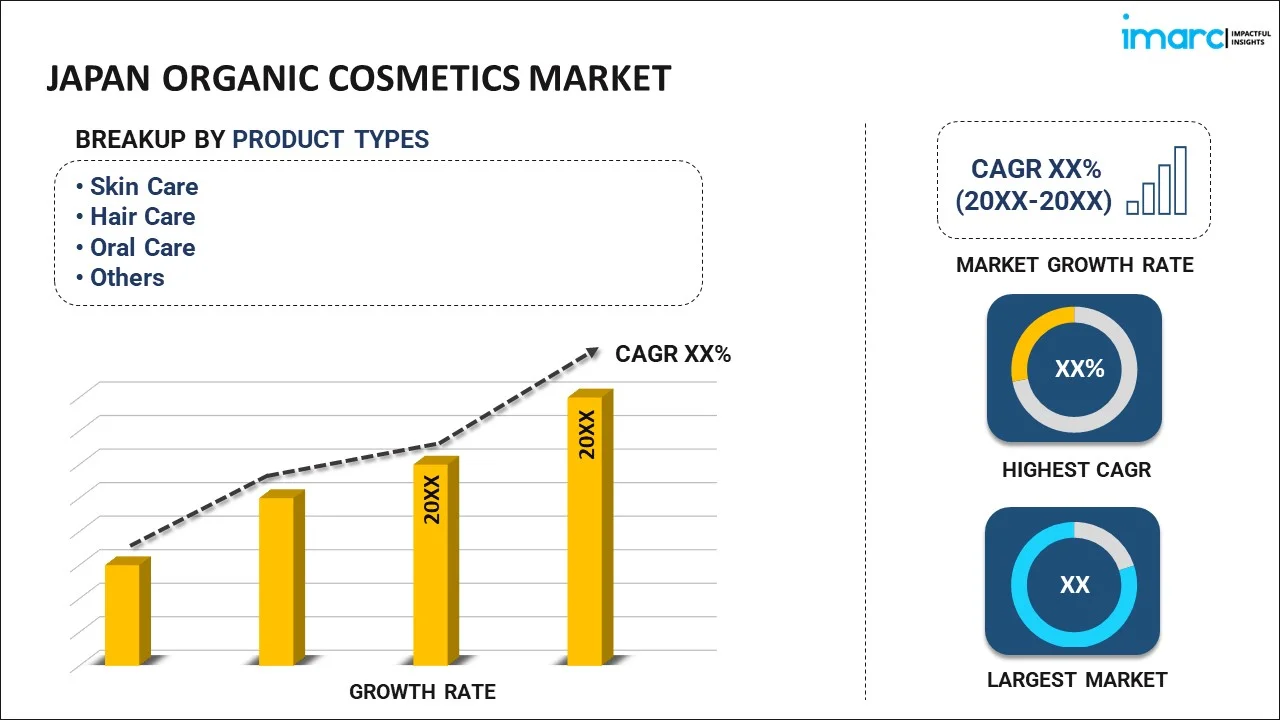
Product Type Insights:
To get detailed segment analysis of this market Request Sample
- Skin Care
- Hair Care
- Oral Care
- Fragrances and Perfumes
- Makeup Cosmetics
- Toiletries
- Others
Skin care dominates with a market share of 32% of the total Japan organic cosmetics market in 2025.
Because developing and keeping bright, beautiful, and youthful-looking skin is strongly established in Japanese culture, the organic skincare sector dominates the country's organic cosmetics industry. Organic cleansers, moisturizers, serums, and sunscreens made with natural plant extracts are consistently in demand in Japan because Japanese consumers value long-term, mild skincare techniques above extensive cosmetic covering. The popularity of organic formulations, which support the idea of promoting skin health using plant-derived active ingredients and less synthetic intervention, is further supported by the rising interest in age management and preventative skincare.
The ongoing development of formulation methods that use traditional Japanese ingredients like rice bran, green tea, camellia oil, and fermented plant extracts also supports the organic skincare market. The segment's market position is being reinforced by the growing demand for organic products that are hydration-focused, anti-aging, and UV-protective, as well as by their increased availability through specialized shops and online platforms. In order to further solidify skincare's dominance in the larger organic cosmetics market, manufacturers are increasingly creating multipurpose organic skincare products that address a range of skin issues while upholding clean component profiles.
Gender Insights:
- Male
- Female
- Unisex
Female leads with a share of 55% of the total Japan organic cosmetics market in 2025.
With the highest percentage of purchases in the skincare, makeup, and personal care categories, female customers form the backbone of Japan's organic cosmetics sector. The desire for organic cosmetics, which offer kinder, healthier alternatives to conventional formulations, is fuelled by the rich cultural heritage of multi-step beauty rituals among Japanese women. All age groups of women show increased concern for the safety of ingredients and a growing preference for cruelty-free and certified organic goods that reflect their own values of environmental responsibility and well-being.
The attraction of organic beauty products is further enhanced for the female market by widespread brand involvement through digital platforms, beauty media, and social influencer recommendations. Manufacturers are expanding their organic product portfolios with dedicated ranges targeting particular feminine skincare demands as a result of Japanese women's active search for formulations free of preservatives and additives that promote long-term skin health. Female consumers' allegiance to organic cosmetics firms that value product purity and transparency is being strengthened by the rise in popularity of clean beauty communities, subscription-based organic beauty boxes, and individualized skincare consultations.
Age Group Insights:
- 15-24
- 25-54
- 55 and Above
25-54 is the largest segment, accounting for 60% of the total Japan organic cosmetics market in 2025.
The 25-54 age group commands the largest share of the Japan organic cosmetics market, reflecting the substantial purchasing power and sophisticated skincare awareness of working-age adults. Consumers in this demographic actively invest in preventive anti-aging routines and seek organic products that combine efficacy with ingredient safety. The demand for multifunctional organic skincare solutions addressing concerns such as fine lines, uneven skin tone, and environmental damage is particularly strong within this cohort, driving both premium and mid-range organic product consumption.
This age group also demonstrates the highest receptivity to new product innovations and emerging beauty trends in the organic space. Working-age consumers represent the core of conscious purchasing behavior, actively researching ingredients and seeking products backed by botanical science and dermatological validation. The growing emphasis on work-life balance and self-care among professionals further sustains demand for organic beauty products as essential components of daily wellness routines. Additionally, this demographic's digital fluency enables seamless engagement with online organic beauty communities, product reviews, and e-commerce platforms that facilitate informed purchasing decisions.
Price Insights:
- Low-End
- Mid-Range
- High-End
The mid-range exhibits a clear dominance with 49% share of the total Japan organic cosmetics market in 2025.
The mid-range price segment leads the Japan organic cosmetics market, reflecting consumer preference for organic products that deliver premium-quality ingredients and formulations at accessible price points. Japanese consumers are discerning in their purchasing decisions, seeking organic cosmetics that offer visible efficacy, clean ingredient lists, and reliable brand reputations without the premium costs associated with luxury organic lines. This price-performance balance resonates particularly with the mass consumer base, including young professionals and families seeking everyday organic alternatives.
The segment benefits from strong distribution across supermarkets, drugstores, and convenience stores, which serve as the primary purchasing channels for mid-range organic cosmetics in Japan. The growing availability of domestically formulated organic brands alongside international entrants continues to strengthen competitive dynamics and product innovation within this price tier. Manufacturers are expanding mid-range organic offerings by introducing refillable packaging, multi-purpose formulations, and value-sized options that enhance affordability without compromising ingredient quality. This strategic positioning enables mid-range organic cosmetics to attract a broadening consumer base seeking accessible entry points into sustainable beauty consumption.
End Use Insights:
- Household
- Salon & Spa
Household represents the leading segment with 77% share of the total Japan organic cosmetics market in 2025.
The household segment dominates the Japan organic cosmetics market, driven by the widespread consumer habit of maintaining comprehensive at-home beauty routines. Japanese consumers prefer to perform their skincare, hair care, and personal grooming rituals within the comfort and privacy of their homes, utilizing a curated selection of organic products for daily and weekly care. The cultural tradition of dedicating time to personal beauty maintenance, combined with the convenience of home-based application, sustains strong household demand for organic cleansers, lotions, masks, and treatment products.
The household segment also benefits from the rapid expansion of e-commerce and subscription-based beauty services that deliver organic products directly to consumers, providing convenient access to a wide range of organic cosmetics for home use. The increasing integration of organic beauty products into holistic home wellness practices and the growing availability of refill-friendly packaging options further reinforce the household segment's market leadership. Rising consumer interest in at-home spa experiences, do-it-yourself facial treatments, and personalized organic beauty regimens is encouraging manufacturers to develop home-oriented product formats that enhance the self-care experience.
Distribution Channel Insights:
- Supermarkets and Hypermarkets
- Convenience Stores
- Speciality Stores
- Online
- Others
Supermarkets and hypermarkets lead the market with a share of 28% of the total Japan organic cosmetics market in 2025.
Supermarkets and hypermarkets serve as the primary distribution channel for organic cosmetics in Japan, offering consumers a trusted, accessible, and convenient environment for everyday beauty purchases. These retail formats benefit from high foot traffic, extensive product assortments, and the ability to position organic cosmetics alongside conventional alternatives, enabling side-by-side comparison and discovery. Japanese consumers value the reliability and familiarity of these established retail channels for purchasing organic skincare, hair care, and personal care products as part of regular shopping routines.
The segment also leverages strategic in-store merchandising, promotional activities, and dedicated organic beauty sections that enhance product visibility and consumer education. Established retailers are expanding dedicated floor space for organic and natural cosmetics selections, creating curated beauty aisles that guide consumer discovery and encourage trial purchases. The integration of loyalty programs, seasonal promotions, sampling initiatives, and knowledgeable beauty advisors within these retail environments continues to strengthen the channel's market positioning. Additionally, the co-location of organic cosmetics with health foods and wellness products within supermarket formats reinforces the holistic lifestyle appeal of organic beauty consumption.
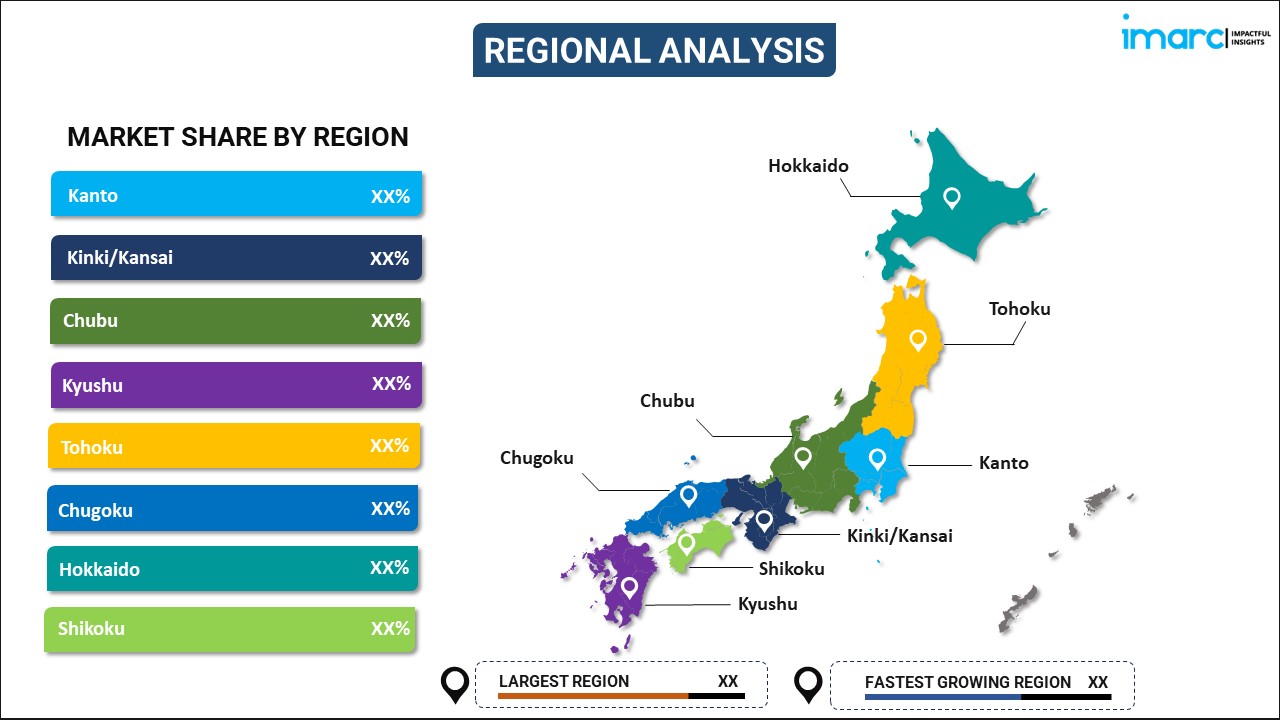
Regional Insights:
To get detailed regional analysis of this market Request Sample
- Kanto
- Kinki/Kansai
- Chubu
- Kyushu
- Tohoku
- Chugoku
- Hokkaido
- Shikoku
Kanto dominates the Japan organic cosmetics market, benefiting from the concentration of population, commercial activity, and beauty industry infrastructure in the Greater Tokyo metropolitan area. The region serves as the primary hub for product launches, flagship retail experiences, and consumer trend adoption. Kanto’s affluent and trend-conscious consumer base drives significant demand for organic beauty products, supported by extensive distribution networks.
Kinki/Kansai represents a significant market for organic cosmetics, anchored by the Osaka-Kobe-Kyoto metropolitan corridor. The region’s vibrant retail landscape, cultural appreciation for traditional beauty practices, and growing wellness consciousness sustain steady demand for plant-based and organic beauty formulations across diverse consumer segments.
Chubu contributes meaningfully to the organic cosmetics market, with Nagoya and surrounding urban centers driving consumer adoption. The region’s strong industrial economy supports a growing middle-class consumer base that increasingly favors organic and natural beauty alternatives for daily personal care routines.
Kyushu maintains a notable presence in the organic cosmetics landscape, with Fukuoka serving as the regional commercial center. Growing consumer health awareness and expanding retail infrastructure are supporting organic product adoption across both urban and semi-urban areas in the region.
Tohoku presents emerging opportunities for organic cosmetics growth, as rising health consciousness and improving distribution networks extend organic product availability beyond major metropolitan areas. The region’s consumers are gradually embracing organic beauty options aligned with broader wellness and environmental sustainability preferences.
Chugoku contributes to the organic cosmetics market through steady consumer adoption in Hiroshima and surrounding areas. The region’s growing awareness of clean beauty trends and expanding specialty retail presence support incremental market development for organic formulations.
Hokkaido represents a developing market for organic cosmetics, with consumers increasingly interested in natural and plant-derived beauty products. The region’s emphasis on natural ingredients and environmental consciousness aligns well with the core values of organic cosmetics consumption.
Shikoku is an emerging market for organic cosmetics, with gradual consumer awareness building around the benefits of natural and chemical-free beauty products. Expanding retail access and growing digital commerce penetration are helping bring organic beauty options to consumers across the region.
Market Dynamics:
Growth Drivers:
Why is the Japan Organic Cosmetics Market Growing?
Heightened consumer awareness of ingredient safety and skin health
Japanese consumers are becoming increasingly informed about the potential adverse effects of synthetic chemicals, preservatives, and artificial fragrances commonly used in conventional cosmetic products. This growing awareness is driving a fundamental shift in purchasing behavior, with consumers actively seeking organic alternatives that utilize plant-derived, non-toxic ingredients to minimize the risk of skin irritation, allergic reactions, and long-term dermatological concerns. The widespread availability of ingredient-checking applications and beauty education content on digital platforms has empowered consumers to make more discerning choices, reinforcing demand for organic cosmetics with transparent labeling and verifiable sourcing practices. Japan’s regulatory framework under the Ministry of Health, Labour and Welfare further supports this trend by maintaining stringent safety standards for cosmetic products, encouraging manufacturers to adopt cleaner formulations. The cultural emphasis on preventive skincare, where consumers invest in products that support long-term skin health rather than merely providing cosmetic coverage, fundamentally aligns with the core value proposition of organic cosmetics.
Aging population driving demand for gentle, organic formulations
Japan’s rapidly aging demographic structure is creating sustained demand for organic cosmetics specifically formulated for mature and sensitive skin types. As individuals age, skin becomes more susceptible to irritation, dryness, and allergic reactions, making the gentle, nourishing properties of organic formulations increasingly appealing. The aging population seeks anti-aging products that address concerns such as wrinkle reduction, hydration, firmness, and pigmentation correction through natural botanical active ingredients rather than harsh chemical compounds. The growing segment of elderly consumers who prioritize wellness and quality of life is expanding the addressable market for organic cosmetics designed to support skin barrier function and provide protective, restorative benefits. Additionally, the rising healthcare expenditure among older demographics enables greater spending on premium organic beauty products that promise safer, more skin-compatible formulations. This demographic-driven demand is encouraging manufacturers to develop specialized organic product lines targeting age-related skincare needs, contributing to sustained market expansion.
Sustainability and ethical consumption trends
The growing emphasis on environmental sustainability and ethical consumption practices among Japanese consumers is significantly boosting the organic cosmetics market. Consumers, particularly younger demographics, are increasingly prioritizing beauty brands that demonstrate genuine commitment to eco-friendly packaging, responsible ingredient sourcing, cruelty-free manufacturing, and minimal environmental impact across their supply chains. This shift in consumer values aligns with broader societal movements toward reducing plastic waste, supporting biodiversity, and promoting corporate transparency in environmental practices. The rising popularity of refillable packaging systems, biodegradable product containers, and sustainably harvested botanical ingredients reflects the deepening integration of environmental consciousness into beauty purchasing decisions. Japanese beauty brands are responding by implementing comprehensive sustainability programs that encompass carbon reduction targets, zero-waste manufacturing goals, and partnerships with certified organic ingredient suppliers. The growing availability of internationally recognized organic certifications and eco-labels is further empowering consumers to identify genuinely sustainable products, fostering greater trust and loyalty toward organic beauty brands that authentically embody these values.
Market Restraints:
What Challenges the Japan Organic Cosmetics Market is Facing?
Absence of a unified organic cosmetics certification standard
Japan currently lacks a standardized national certification framework specifically for organic cosmetics, unlike markets such as the European Union which maintain established certification bodies. This regulatory gap creates confusion among consumers attempting to distinguish genuinely organic products from those making unsubstantiated natural or organic claims. The absence of clear labeling standards complicates purchasing decisions and can undermine consumer trust in organic cosmetics categories, potentially limiting market expansion.
Higher price premiums compared to conventional alternatives
Organic cosmetics typically command higher retail prices than their conventional counterparts due to costlier raw material sourcing, specialized manufacturing processes, and stringent quality control requirements. This price differential poses a significant barrier for price-sensitive consumer segments, particularly in an economic environment where household spending remains cautious. The perception of organic products as premium offerings limits their penetration into mass-market consumer segments.
Supply chain constraints for organic raw materials
The sourcing of certified organic botanical ingredients faces supply chain challenges including limited domestic cultivation capacity, seasonal availability fluctuations, and dependence on imported raw materials. Climate variability, geopolitical disruptions, and rising global demand for organic ingredients can create procurement difficulties, increase production costs, and affect product consistency. These supply constraints restrict manufacturing scalability and may delay new product introductions.
Competitive Landscape:
The Japan organic cosmetics market features a moderately competitive landscape characterized by the presence of established international beauty conglomerates alongside specialized domestic organic brands. Market participants are actively investing in research and development to create innovative plant-based formulations that leverage traditional Japanese ingredients and modern biotechnology. Competition is intensifying across multiple dimensions, including ingredient purity, sustainability credentials, packaging innovation, and omnichannel distribution strategies. Companies are differentiating through clean beauty certifications, transparent supply chain practices, and personalized product offerings that cater to diverse skin types and consumer preferences. Strategic partnerships, mergers, and acquisitions are reshaping the competitive dynamics as players seek to strengthen their organic product portfolios and expand market reach. The growing influence of digital marketing, social media beauty influencers, and e-commerce platforms is enabling both established brands and emerging niche players to engage directly with consumers and build brand loyalty within the organic cosmetics segment.
Some of the key players include:
- Amway Corporation
- Aubrey Organics, Inc. (Nutraceutical Corporation)
- Korres S.A.
- L’Occitane International S.A
- L'Oréal S.A.
- Oriflame Cosmetics
- The Avon Company
- The Estée Lauder Companies Inc.
- Weleda
- Yves Rocher
Japan Organic Cosmetics Market Report Coverage:
| Report Features | Details |
|---|---|
| Base Year of the Analysis | 2025 |
| Historical Period | 2020-2025 |
| Forecast Period | 2026-2034 |
| Units | Million USD |
| Scope of the report |
Exploration of Historical Trends and Market Outlook, Industry Catalysts and Challenges, Segment-Wise Historical and Future Market Assessment:
|
| Product Types Covered | Skin Care, Hair Care, Oral Care, Fragrances and Perfumes, Makeup Cosmetics, Toiletries, Others |
| Genders Covered | Male, Female, Unisex |
| Age Groups Covered | 15-24, 25-54, 55 and Above |
| Prices Covered | Low-End, Mid-Range, High-End |
| End Uses Covered | Household, Salon & Spa |
| Distribution Channels Covered | Supermarkets and Hypermarkets, Convenience Stores, Speciality Stores, Online, Others |
| Region Covered | Kanto, Kinki/Kansai, Chubu, Kyushu, Tohoku, Chugoku, Hokkaido, Shikoku |
| Companies Covered | Amway Corporation, Aubrey Organics, Inc. (Nutraceutical Corporation), Korres S.A., L’Occitane International S.A, L'Oréal S.A.,Oriflame Cosmetics, The Avon Company, The Estée Lauder Companies Inc., Weleda, Yves Rocher |
| Customization Scope | 10% Free Customization |
| Post-Sale Analyst Support | 10-12 Weeks |
| Delivery Format | PDF and Excel through Email (We can also provide the editable version of the report in PPT/Word format on special request) |
Frequently Asked Questions About the Japan Organic Cosmetics Market Report
The Japan organic cosmetics market size was valued at USD 26,093.60 Million in 2025.
The Japan organic cosmetics market is expected to grow at a compound annual growth rate of 4.90% from 2026-2034 to reach USD 40,120.31 Million by 2034.
Skin care dominated the market with a share of 32%, driven by the deep-rooted cultural emphasis on preventive skincare, growing demand for plant-based formulations, and consumer preference for gentle, natural ingredients that support long-term skin health.
Key factors driving the Japan organic cosmetics market include heightened consumer awareness of ingredient safety, rising demand from the aging population for gentle formulations, growing sustainability consciousness, and expanding availability of certified organic beauty products.
Major challenges include the absence of a unified national organic cosmetics certification standard, higher price premiums compared to conventional alternatives, supply chain constraints for certified organic raw materials, and limited consumer awareness in rural regions.
Need more help?
- Speak to our experienced analysts for insights on the current market scenarios.
- Include additional segments and countries to customize the report as per your requirement.
- Gain an unparalleled competitive advantage in your domain by understanding how to utilize the report and positively impacting your operations and revenue.
- For further assistance, please connect with our analysts.
 Request Customization
 Speak to an Analyst
 Request Brochure
 Inquire Before Buying
Benefits of Customization
- Personalize this research
- Triangulate with your data
- Get data as per your format and definition
- Gain a deeper dive into a specific application, geography, customer, or competitor
- Any level of personalization
Get in Touch With Us
UNITED STATES
Phone: +1-201-971-6302
INDIA
Phone: +91-120-433-0800
UNITED KINGDOM
Phone: +44-753-714-6104
Email: [email protected]
Client Testimonials




.webp)




.webp)













Related Reports

Choose your plan
*Please note that the prices mentioned below are starting prices for each bundle type. Kindly contact our team for further details.*
Single User License
- 1 User License, Access on 2 Devices
- PDF Report + Excel Dataset (Password Protected)
- Lifetime Access
- No Printing Rights
- 10% Free Report Customization
- 10–12 Weeks of Analyst Support
Five User License
- Access for 5 Users, 2 Devices per User
- PDF Report + Excel Dataset (Password Protected)
- Lifetime Access
- Dedicated Account Manager
- 12–14 Weeks of Analyst Support
- No Printing Rights
- 15% Free Report Customization
- 25% Discount on Your Next Purchase
Corporate User License
- Unlimited User Access (Within Your Organization)
- PDF Report + Excel Dataset
- Lifetime Access
- Dedicated Account Manager
- 14–20 Weeks of Analyst Support
- No Printing Rights
- 20% Free Report Customization
- 30% Discount on Your Next Purchase
Essential Insights
What's included:
3 reports
- Lifetime Access
- PDF Reports
- Excel Datasets
- 2 Weeks of Free Analyst Support
- 2 User Licenses
- Access on 2 Devices
- Printing Rights
- Complimentary PowerPoint (PPT) Version
- Complimentary License Upgrade
Professional Access
What's included:
5 reports
- Lifetime Access
- PDF Reports
- Excel Datasets
- 8 Weeks of Free Analyst Support
- 2 User Licenses
- Access on 2 Devices
- Printing Rights
- Complimentary PowerPoint (PPT) Version
- Complimentary License Upgrade
Business Advantage
What's included:
8 reports
- Lifetime Access
- PDF Reports
- Excel Datasets
- 14 Weeks of Free Analyst Support
- 2 User Licenses
- Access on 2 Devices
- Printing Rights
- Complimentary PowerPoint (PPT) Version
- Complimentary License Upgrade
Enterprise Intelligence
What's included:
10 reports
- Lifetime Access
- PDF Reports
- Excel Datasets
- 20 Weeks of Free Analyst Support
- 2 User Licenses
- Access on 2 Devices
- Printing Rights
- Complimentary PowerPoint (PPT) Version
- Complimentary License Upgrade