
Japan Smoothies Market Size, Share, Trends and Forecast by Product, Distribution Channel, Packaging Material, Consumption Pattern, and Region, 2026-2034
Japan Smoothies Market Size, Share, Trends & Forecast (2026-2034)
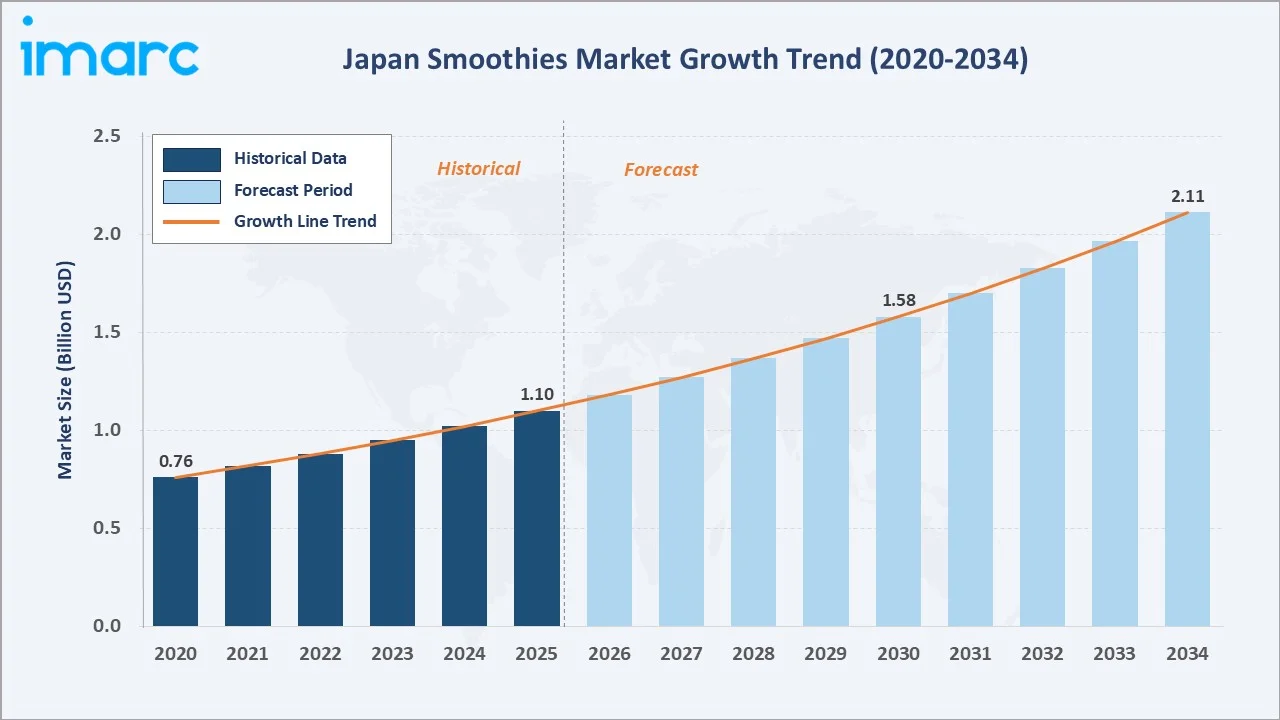
The Japan smoothies market size increased from USD 1.10 Billion in 2025 to USD 1.18 Billion in 2026 and is projected to reach USD 2.11 Billion by 2034, exhibiting a CAGR of 7.52% during 2026-2034. Surging health consciousness among Japanese consumers, expanding availability through convenience store networks, and the rising popularity of functional beverages are the primary drivers shaping market growth.
Fruit-based leads the product segment at 58.4%, convenience stores dominate distribution channel at 34.8%, and Kanto Region commands 31.4% regional share.
Market Snapshot
|
Metric |
Value |
| Base Year Market Size (2025) |
USD 1.10 Billion |
| Market Size (2026) | USD 1.18 Billion |
|
Forecast Market Size (2034) |
USD 2.11 Billion |
|
CAGR (2026-2034) |
7.52% |
|
Base Year |
2025 |
|
Historical Period |
2020-2025 |
|
Forecast Period |
2026-2034 |
|
Largest Region |
Kanto Region (31.4%, 2025) |
|
Second Largest Region |
Kansai/Kinki Region (18.2%, 2025) |
|
Leading Product |
Fruit-Based (58.4%, 2025) |
|
Leading Distribution Channel |
Convenience Stores (34.8%, 2025) |
The Japan smoothies market expanded from USD 0.76 Billion in 2020 to USD 1.10 Billion in 2025 and an estimated USD 1.18 Billion in 2026, supported by widening health-oriented consumption trends, growing availability in convenience store chains, and expanding product innovation in functional and fortified blends. Anchored at USD 1.58 Billion in 2030, the forecast to USD 2.11 Billion by 2034 is supported by accelerating premiumization, deepening penetration in food service channels, and a more mature consumer preference for nutrient-dense beverage options.
To get more information on this market, Request Sample
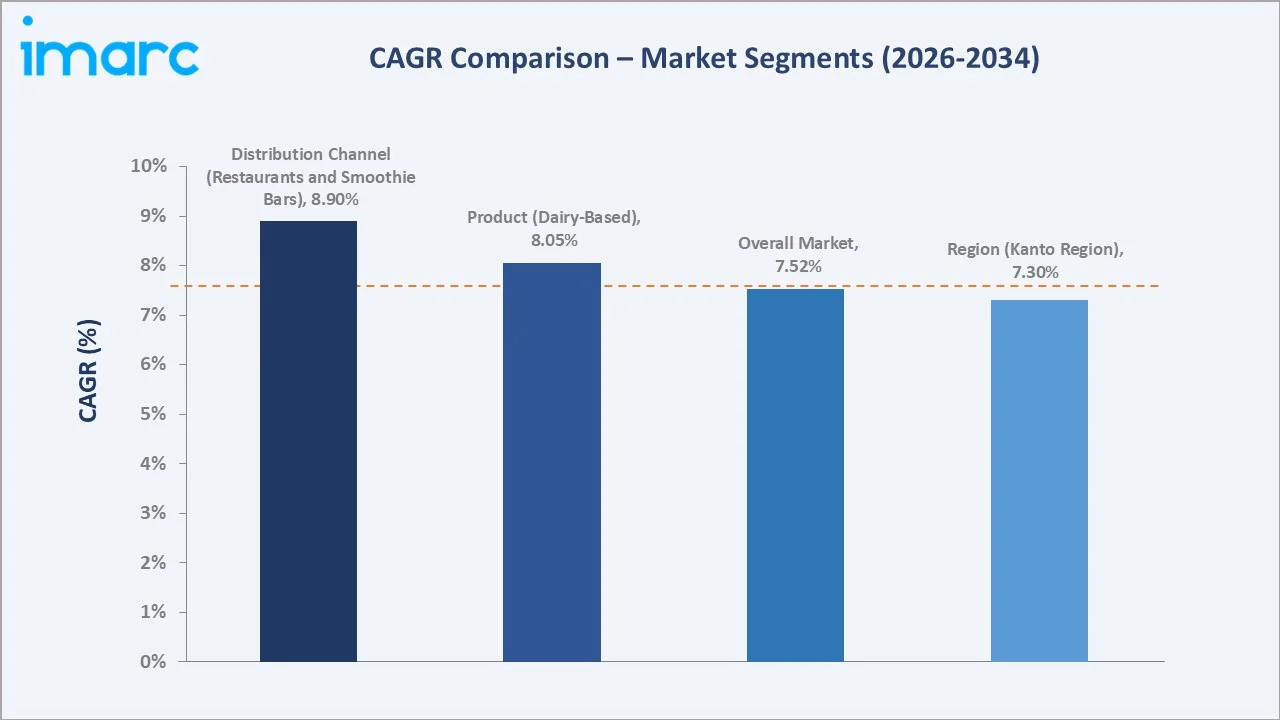
CAGR trajectories across product and distribution channel sub-segments, together with regional patterns, show dairy-based and restaurants and smoothie bars expanding faster than the overall 7.52% market CAGR, driven by premiumization trends, increasing café culture in urban centers, and growing demand for high-protein functional beverages.
Executive Summary
The Japan smoothies market is on a sustained growth trajectory, rising from USD 0.76 Billion in 2020 to USD 1.18 Billion in 2026 and is projected to reach USD 2.11 Billion by 2034. The industry has evolved from basic blended fruit drinks to sophisticated, functional beverage formulations incorporating superfoods, plant-based proteins, and probiotic ingredients. Growing urban health consciousness, expanding retail penetration across convenience store chains, and government-supported wellness initiatives are encouraging consumers across age groups to incorporate smoothies into their daily nutrition routines.
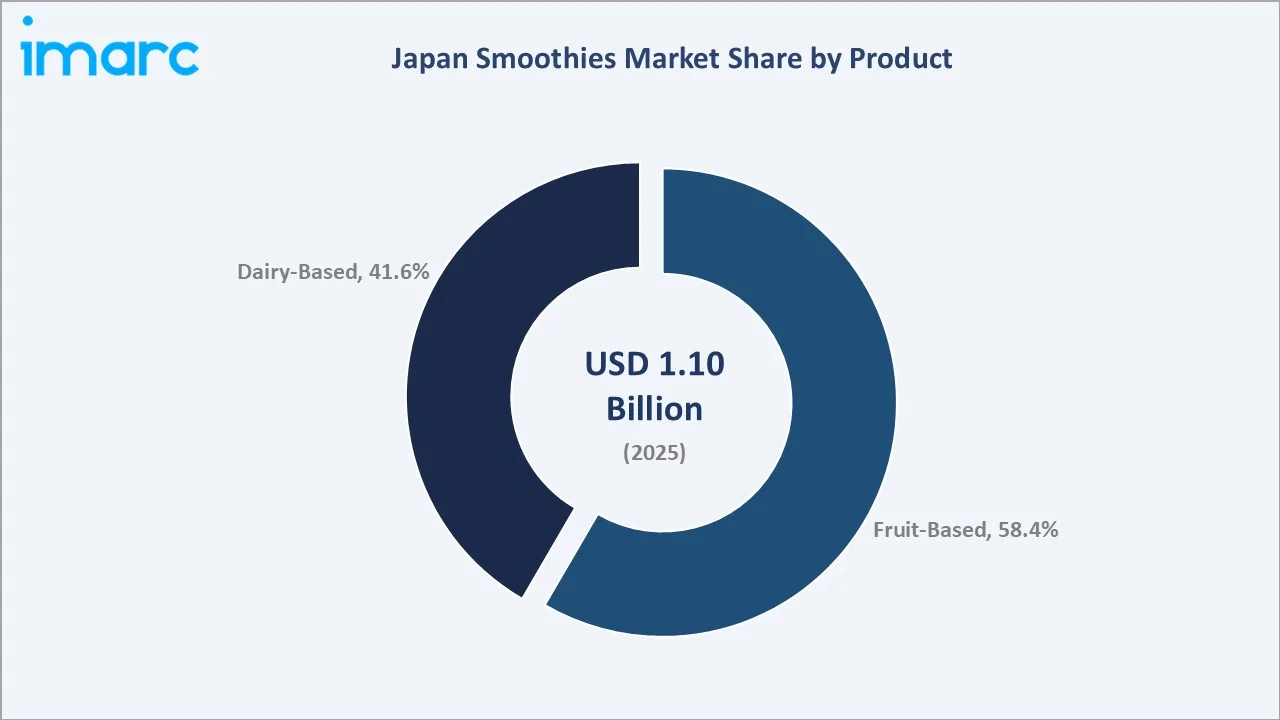
Fruit-based dominates the product segment at 58.4% in 2025, supported by natural ingredient preferences, tropical and domestic fruit blends, and strong consumer familiarity with fruit-forward flavor profiles. Convenience stores lead distribution channel with 34.8% share, reflecting Japan's deeply embedded convenience retail culture and the strategic positioning of chilled beverage sections in high-traffic store formats. Kanto Region commands 31.4% of the regional share, driven by Tokyo's dense urban population, high disposable income levels, and strong concentration of premium retail and food service outlets.
Key Market Insights
|
Insight |
Data |
|
Leading Product |
Fruit-Based – 58.4% share (2025) |
|
Second Largest Product |
Dairy-Based – 41.6% share (2025) |
|
Leading Distribution Channel |
Convenience Stores – 34.8% share (2025) |
|
Second Largest Distribution Channel |
Supermarkets and Hypermarkets – 29.6% share (2025) |
|
Leading Region |
Kanto Region – 31.4% share (2025) |
|
Second Largest Region |
Kansai/Kinki Region – 18.2% share (2025) |
|
Top Companies |
Kagome Co., Ltd., ITO EN, Ltd. |
Key Analytical Observations Expanding On the Data Above:
- Fruit-based dominance at 58.4% is supported by strong consumer preference for natural, whole-fruit blends, seasonal limited-edition offerings tied to domestic produce, and broad availability across retail and food service formats.
- Dairy-based at 41.6% reflects growing consumer interest in high-protein, probiotic-enriched formulations and the expanding presence of yogurt-smoothie hybrids in convenience and specialty retail channels.
- Convenience stores leadership at 34.8% is driven by Japan's pervasive convenience retail infrastructure, with major chains dedicating significant chilled shelf space to premium blended beverages across their nationwide networks.
- Supermarkets and hypermarkets at 29.6% remain a critical channel, supported by family purchase occasions, private-label smoothie ranges, and promotional bundling with complementary health food categories.
- Kanto Region at 31.4% is underpinned by Tokyo's high-income urban consumer base, strong concentration of premium food service outlets, and early adoption of international functional beverage trends.
Japan Smoothies Market Overview
Smoothies refer to blended beverages typically combining fruits, vegetables, dairy or plant-based liquids, and functional add-ins, such as protein powders, seeds, or probiotic cultures. In Japan, they are consumed across health, wellness, and convenience occasions, spanning in-home preparation, food service consumption, and retail ready-to-drink formats.
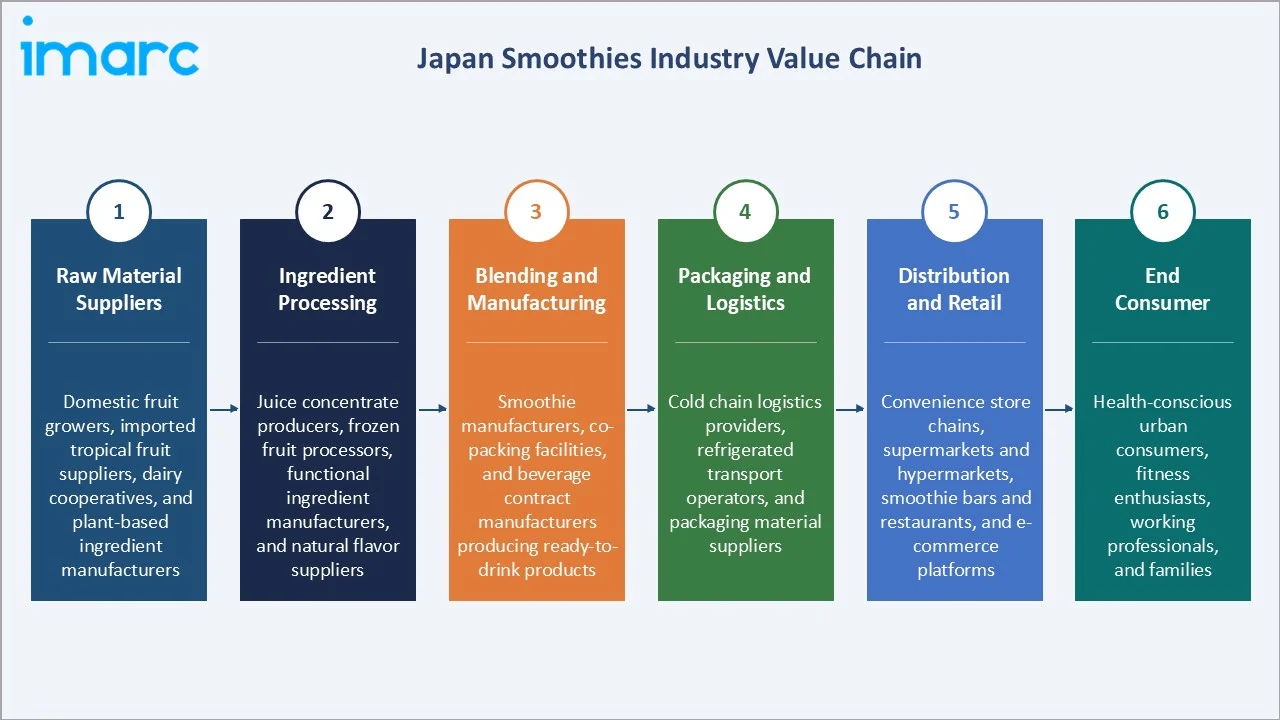
The Japanese smoothies ecosystem integrates raw ingredient sourcing and processing, blending and manufacturing, packaging and cold chain logistics, retail and food service distribution, and consumer engagement. Domestic and imported fruit suppliers, dairy cooperatives, contract manufacturers, convenience chains, and specialist smoothie bars interact across the value chain to deliver chilled and shelf-stable smoothie products to a broad and increasingly health-conscious consumer base.
Market Dynamics
To evaluate market opportunities, Request Sample
Market Drivers
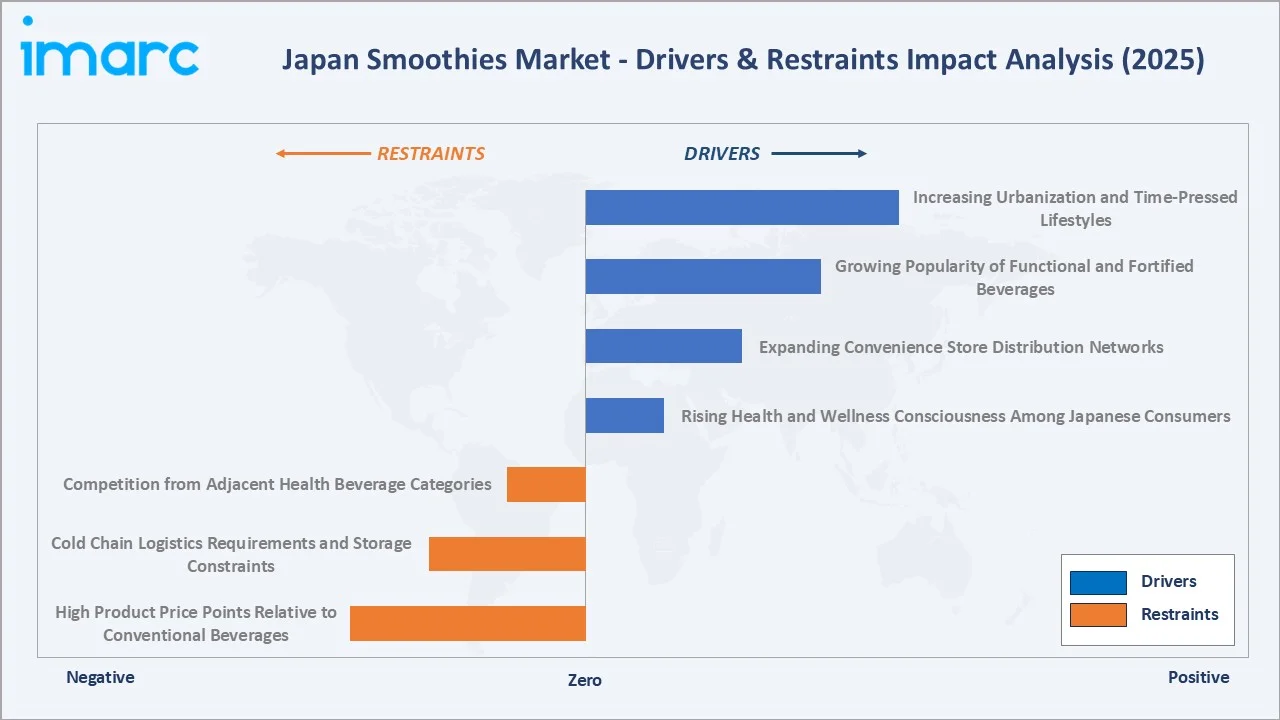
- Rising Health and Wellness Consciousness Among Japanese Consumers: As per IMARC Group, the Japan health and wellness market was valued at USD 214.5 Billion in 2025. Sustained interest in preventive healthcare and balanced nutrition is motivating Japanese consumers to shift toward functional, nutrient-dense beverages. Smoothies positioned as convenient health solutions are benefiting from this structural shift across urban and suburban demographics.
- Expanding Convenience Store Distribution Networks: Japan's extensive convenience store infrastructure provides unmatched distribution reach for chilled smoothie products. Strategic shelf placement and private-label product development by major chains are accelerating consumer trial and repeat purchase.
- Growing Popularity of Functional and Fortified Beverages: Consumer demand for smoothies enriched with collagen, probiotics, plant-based proteins, and adaptogens is supporting premiumization and new product development across both retail and food service channels.
- Increasing Urbanization and Time-Pressed Lifestyles: Urban Japanese consumers are increasingly seeking convenient meal-replacement and on-the-go nutrition solutions, positioning smoothies as practical substitutes for traditional breakfast and snack occasions.
Market Restraints
- High Product Price Points Relative to Conventional Beverages: Premium smoothie products, particularly those in food service and specialty retail formats, carry significantly higher price points than conventional juices and soft drinks, limiting penetration among price-sensitive consumer segments.
- Cold Chain Logistics Requirements and Storage Constraints: Maintaining product quality for fresh and chilled smoothie formulations demands robust refrigerated logistics and limited shelf-life management, increasing operational complexity for manufacturers and retailers across distribution networks.
- Competition from Adjacent Health Beverage Categories: The Japan smoothies market faces intensifying competition from green teas, collagen drinks, protein shakes, and kombucha, which are all competing for the same health-oriented consumer wallet and retail shelf space.
Market Opportunities
- Product Innovation in Functional and Adaptogenic Smoothie Formats: Growing consumer interest in stress management, immunity support, and gut health presents significant white space for manufacturers to develop smoothies incorporating adaptogens, prebiotics, and clinically validated functional ingredients.
- Expanding Penetration in Food Service and Smoothie Bar Channels: The rising café and smoothie bar culture in urban centers, combined with the growth of specialty health food service concepts, offers meaningful expansion opportunities for branded smoothie products and dedicated outlet formats.
- E-Commerce and Direct-to-Consumer Distribution Growth: Growing acceptance of online grocery and health food delivery platforms is enabling smoothie brands to reach health-oriented consumers directly, bypassing traditional retail constraints and supporting subscription-based business models.
Market Challenges
- Seasonal Demand Variability and Ingredient Price Fluctuations: Smoothie demand is subject to seasonal variation, with consumption typically peaking in warmer months. Concurrent fluctuations in fresh and frozen fruit input costs can compress manufacturer margins and complicate pricing strategies.
- Consumer Preference Fragmentation Across Flavor and Format Profiles: Highly diverse consumer taste preferences across age groups and regions require manufacturers to maintain broad and frequently refreshed product portfolios, increasing complexity and new product development costs.
Emerging Market Trends
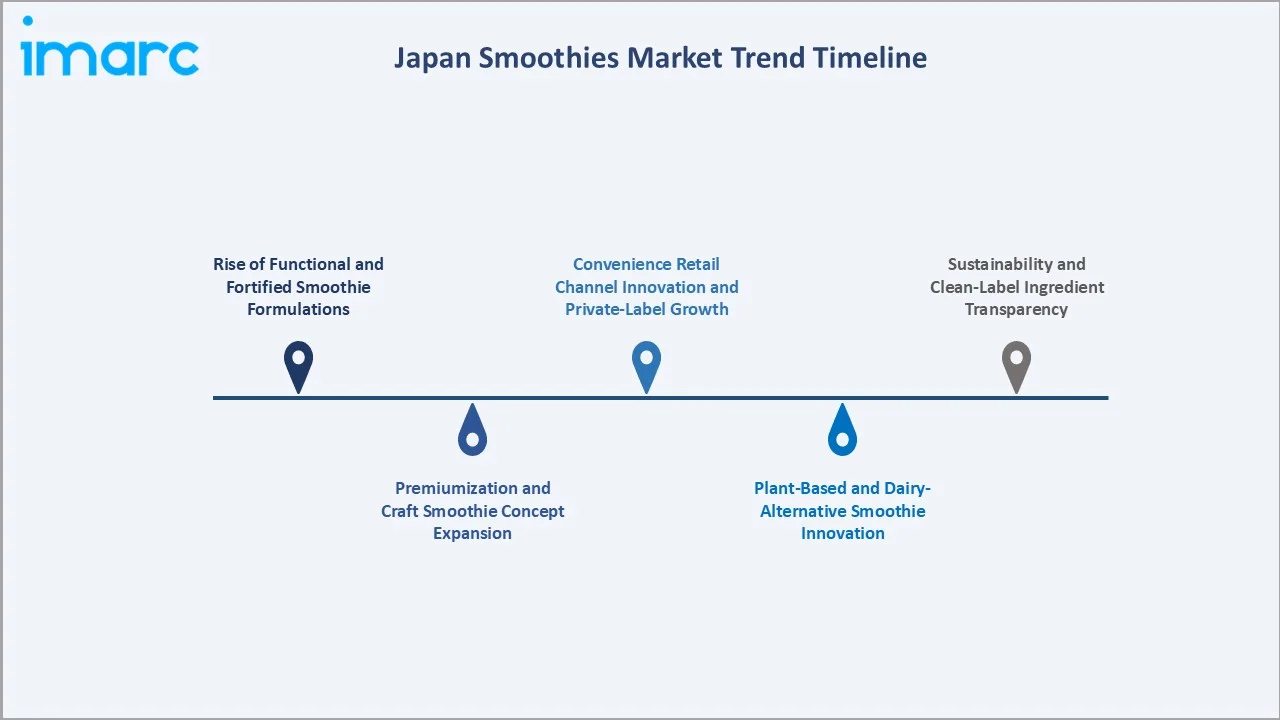
1. Rise of Functional and Fortified Smoothie Formulations
Manufacturers are increasingly incorporating clinically supported functional ingredients including probiotics, collagen peptides, plant-based proteins, and adaptogenic botanicals into smoothie products. This trend is supporting premium price positioning and driving growth in both retail and food service channels.
2. Premiumization and Craft Smoothie Concept Expansion
The growing craft and artisan food movement in Japan is translating into a rising segment of premium smoothie concepts featuring single-origin fruits, organic certifications, and traceable ingredient sourcing. Dedicated smoothie bars and café concepts are capitalizing on consumer willingness to pay premium prices for differentiated product experiences.
3. Plant-Based and Dairy-Alternative Smoothie Innovation
Growing consumer interest in plant-based nutrition is driving the development of dairy-free smoothie formulations using almond milk, oat milk, and soy-based bases. Brands are also incorporating plant-based proteins, nuts, seeds, and functional ingredients to improve nutritional value and appeal to health-conscious consumers.
4. Convenience Retail Channel Innovation and Private-Label Growth
Major convenience chains are accelerating private-label smoothie development and exclusive collaborative product launches, leveraging their store networks and consumer loyalty programs to build proprietary smoothie brand equities. Limited-edition seasonal and regional flavor launches are driving impulse purchase occasions.
5. Sustainability and Clean-Label Ingredient Transparency
Japanese consumers are increasingly scrutinizing ingredient lists, leading manufacturers to invest in clean-label formulations, reduced artificial additive profiles, and sustainable sourcing certifications. Eco-friendly packaging and biodegradable cup formats are emerging as differentiation factors in the food service channel.
Industry Value Chain Analysis
The Japan smoothies market value chain spans six stages, from raw material sourcing and ingredient processing through consumer engagement and product lifecycle management. Blending, functional formulation, and cold chain distribution capture the highest value-add, while brand equity and consumer loyalty management increasingly determine sustainable competitive position within this growing market.
|
Stage |
Key Players / Examples |
|
Raw Material Suppliers |
Domestic fruit growers, imported tropical fruit suppliers, dairy cooperatives, and plant-based ingredient manufacturers providing core smoothie inputs |
|
Ingredient Processing |
Juice concentrate producers, frozen fruit processors, functional ingredient manufacturers, and natural flavor and color suppliers |
|
Blending and Manufacturing |
Smoothie manufacturers, co-packing facilities, and beverage contract manufacturers producing ready-to-drink and fresh-blended smoothie products |
|
Packaging and Logistics |
Cold chain logistics providers, refrigerated transport operators, and packaging material suppliers supporting chilled distribution infrastructure |
|
Distribution and Retail |
Convenience store chains, supermarkets and hypermarkets, smoothie bars and restaurants, and e-commerce and direct-to-consumer platforms |
|
End Consumer |
Health-conscious urban consumers, fitness enthusiasts, working professionals, and families seeking convenient nutrition solutions |
Vertically integrated beverage manufacturers with proprietary cold chain infrastructure and direct retail partnerships are positioned to capture greater value than contract manufacturers reliant on third-party distribution networks.
Technology Landscape in the Japan Smoothies Industry
Cold Blending and High-Pressure Processing Technology
High-pressure processing technology is increasingly adopted by Japanese smoothie manufacturers to extend product shelf life without heat treatment, preserving natural nutrients, vitamins, and flavor profiles. This technology supports premium positioning and enables broader retail and e-commerce distribution without compromising product quality.
Functional Ingredient Encapsulation and Bioavailability Enhancement
Advanced microencapsulation technologies are enabling manufacturers to incorporate heat-sensitive functional ingredients, such as probiotics, omega-3 fatty acids, and collagen peptides, into smoothie formulations without degradation. These innovations support the development of clinically validated functional beverage claims and premium price positioning.
AI-Driven Flavor Profiling and Product Development
AI and machine learning (ML) tools are being applied in flavor profiling, consumer taste preference modeling, and new product development processes, enabling manufacturers to accelerate concept-to-market timelines and improve product alignment with evolving consumer preferences across different regional markets.
Smart Packaging and Freshness Monitoring
Active packaging technologies incorporating freshness indicators and temperature-sensitive labels are gaining adoption in premium chilled smoothie products, providing consumers with real-time product quality assurance and supporting brand differentiation in retail environments.
Market Segmentation Analysis
The report covers the following segments:
|
Segment Category |
Leading Segment |
Market Share |
Year |
|
Product |
Fruit-Based |
58.4% |
2025 |
|
Distribution Channel |
Convenience Stores |
34.8% |
2025 |
|
Packaging Material |
🔒 |
🔒 |
2025 |
|
Consumption Pattern |
🔒 |
🔒 |
2025 |
|
Region |
Kanto Region |
31.4% |
2025 |

By Product
Fruit-based commands a 58.4% majority share in 2025, driven by natural ingredient preferences, broad consumer familiarity with fruit-forward flavor profiles, and strong product availability across retail and food service channels. The segment benefits from deep-rooted domestic fruit culture in Japan, seasonal limited-edition offerings tied to local produce, and growing premium positioning around single-origin and organic fruit blends.
To access detailed market analysis, Request Sample
Dairy-based at 41.6% in 2025 reflect growing consumer interest in high-protein and probiotic-enriched formulations, the expanding presence of yogurt-smoothie hybrids in convenience and specialty channels, and Japan's strong dairy consumption culture supporting product acceptance across demographics.
By Distribution Channel
Convenience stores lead with 34.8% share in 2025, reflecting Japan's pervasive convenience retail infrastructure and the strategic positioning of chilled beverage sections in high-traffic store formats operated by leading chains across urban and suburban locations.
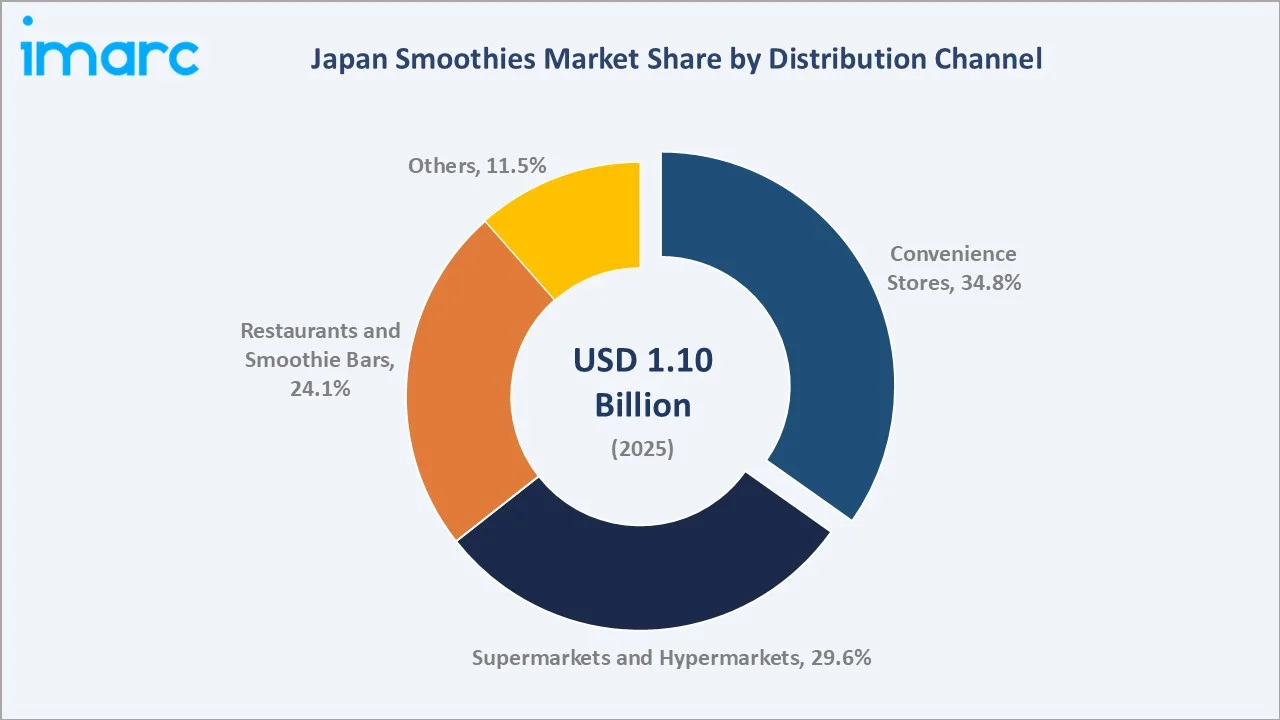
Supermarkets and hypermarkets at 29.6% remain a significant channel, supported by family purchase occasions and private-label smoothie product ranges.
Regional Market Insights
|
Region |
Share (2025) |
Key Growth Drivers |
|
Kanto Region |
31.4% |
Large urban consumer base, high disposable income, dense concentration of premium retail and food service outlets, and strong health and wellness trend adoption |
|
Kansai/Kinki Region |
18.2% |
Strong food culture, growing café and smoothie bar penetration, and high consumer engagement with premium beverage products |
|
Central/Chubu Region |
15.1% |
Expanding urban consumer market, growing health consciousness among working professionals, and rising convenience store network penetration |
|
Kyushu-Okinawa Region |
11.3% |
Tropical fruit availability, growing local smoothie brand presence, and expanding food service channel development across regional cities |
|
Tohoku Region |
8.7% |
Growing regional health and wellness awareness, expanding modern retail infrastructure, and rising demand for convenient nutrition solutions in urban centers |
|
Chugoku Region |
6.4% |
Increasing urban consumer health consciousness, expanding convenience store network reach, and growing food service development |
|
Hokkaido Region |
5.2% |
Rich dairy tradition supporting dairy-based smoothie demand, growing tourism-driven food service consumption, and expanding premium retail formats |
|
Shikoku Region |
3.7% |
Emerging health trend adoption, growing local citrus and fruit availability supporting product development, and expanding convenience retail coverage |
Kanto Region at 31.4% in 2025 leads the regional landscape, anchored by Tokyo's dense urban population, high per-capita disposable income, and strong concentration of premium retail, convenience, and food service outlets. A mature health and wellness consumer culture and early adoption of international functional beverage trends support sustained regional leadership.
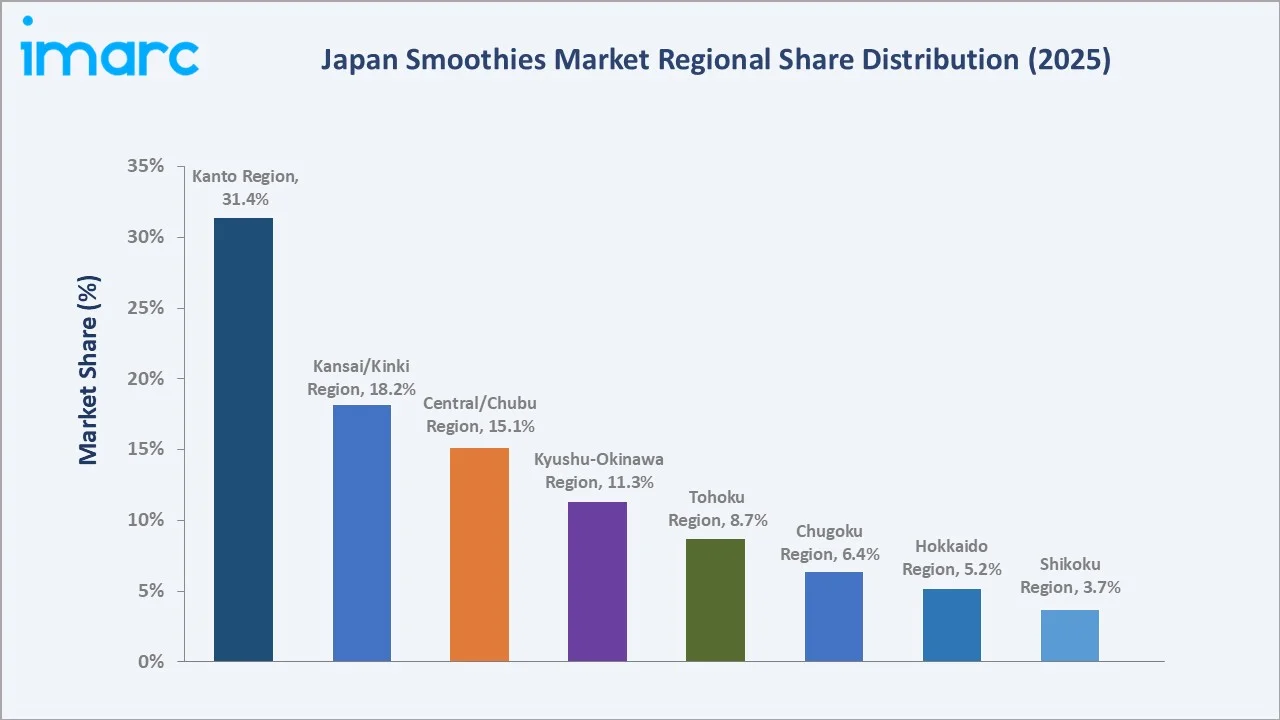
Kyushu-Okinawa Region, while currently contributing 11.3% of regional share, presents meaningful growth potential driven by local tropical fruit availability, expanding food service infrastructure, and growing health consciousness among younger consumer demographics in regional urban centers.
Competitive Landscape
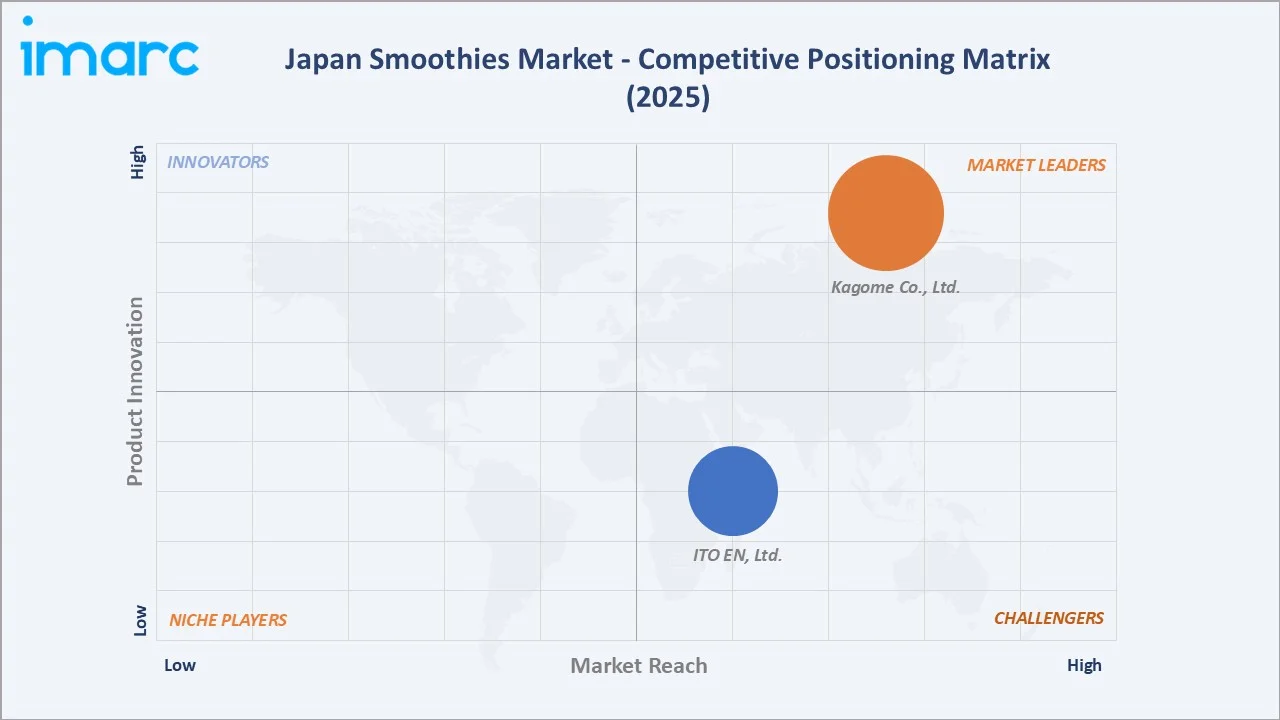
The Japan smoothies market features a range of domestic manufacturers producing fruit-based and vegetable-based smoothie formats distributed through retail and food service channels. Competitive differentiation is driven by product innovation, ingredient sourcing, branding, and distribution reach across Japan's convenience store and supermarket network.
|
Company Name |
Brand / Key Product |
Position |
Strategic Focus |
|
Kagome Co., Ltd. |
Yasai Seikatsu 100 Smoothie |
Leader |
Strengthening product innovation and expanding retail distribution reach across convenience and supermarket channels |
|
ITO EN, Ltd. |
ITO EN Crunchy Smoothie |
Challenger |
Broadening the beverage product portfolio through ingredient innovation and sustainable packaging to address evolving consumer health preferences |
Key players include Kagome Co., Ltd. and ITO EN, Ltd., among others.
Key Company Profiles
Kagome Co., Ltd.
Kagome Co., Ltd. is a leading Japanese food and beverage manufacturer headquartered in Nagoya, Aichi, with over 125 years of history in producing tomato-based products, vegetable juices, and fruit and vegetable mixed beverages.
- Product Portfolio: The Yasai Seikatsu 100 Smoothie range includes multiple active SKUs, such as Green Smoothie, Vitamin Smoothie, Berry and Pomegranate Mix, and Banana and Almond Mix.
- Recent Developments: The company continues to develop and refresh its smoothie portfolio by introducing new flavor varieties and enhancing existing smoothie offerings to align with changing consumer preferences for convenient and health-oriented beverages.
- Strategic Focus: Strengthening its smoothie portfolio through product innovation, expanding flavor and ingredient offerings, and increasing its presence in the health-oriented beverage industry.
ITO EN, Ltd.
ITO EN, Ltd. is a leading Japanese beverage manufacturer headquartered in Tokyo. The company offers vegetable- and fruit-based beverages that align with growing interest in convenient and health-oriented smoothie options.
- Product Portfolio: Crunchy Smoothie range, distributed across convenience stores, supermarkets, and food service channels throughout Japan.
- Recent Developments: The company continues to enhance its smoothie offerings by developing new flavor combinations and refining existing products to meet evolving consumer preferences for nutritious and convenient beverages.
- Strategic Focus: Expanding the product range by innovating ingredients and developing sustainable packaging to meet increasing consumer interest in health-focused beverage options.
Market Concentration Analysis
The Japan smoothies market is moderately concentrated, with a mix of established beverage companies and smaller specialized players competing through product innovation, brand development, and expanding distribution networks.
Barriers to entry include established cold chain logistics requirements, the need for significant retail shelf-space relationships with major convenience chains, brand equity investment, and the scale required to support consistent chilled product supply across Japan's extensive convenience network. These factors favor established beverage manufacturers with existing retail partnerships and proven distribution infrastructure.
Consolidation is gradually increasing as larger beverage conglomerates invest in functional ingredient capabilities and selectively acquire or partner with specialist smoothie and health beverage brands. Strategic collaborations between manufacturers, fruit suppliers, and retail chains are further shaping competitive positioning across the market.
Investment & Growth Opportunities
Fastest-Growing Segments
Dairy-based is expanding fastest among product categories, driven by rising consumer demand for high-protein and probiotic-enriched formulations and the growing popularity of yogurt-smoothie hybrid products across convenience and specialty retail channels. Restaurants and smoothie bars are also growing rapidly as premium food service consumption expands in major urban centers.
Emerging Markets
Kyushu-Okinawa Region is among the faster-growing regions, supported by local tropical fruit availability, expanding food service infrastructure, and growing health consciousness among younger consumer demographics across regional cities. The region represents significant untapped opportunity for premium smoothie brands and dedicated food service concepts.
Venture & Investment Trends
Investment activity is concentrated in functional ingredient smoothie platforms, cold-press and high-pressure processing-enabled premium brands, and direct-to-consumer subscription smoothie delivery services. Capital is also flowing into plant-based smoothie innovation and sustainable packaging solutions aligned with growing Japanese consumer environmental awareness.
Future Market Outlook (2026-2034)
The Japan smoothies market is projected to grow from USD 1.10 Billion in 2025 to USD 1.18 Billion in 2026, reaching USD 2.11 Billion by 2034 at a CAGR of 7.52%, adding approximately USD 1.01 Billion in incremental market value over the forecast period.
Four forces will shape the market through 2034: continued premiumization of product formulations incorporating functional and adaptogenic ingredients; deepening penetration of smoothie products across food service and restaurant channels; expansion of direct-to-consumer and e-commerce distribution models; and growing consumer demand for sustainable and clean-label beverage options.
By 2034, the Japan smoothies market is expected to be defined by sophisticated functional formulations, with health-positioned dairy-based and fortified fruit smoothie products accounting for a growing share of total market value. Continued innovation in cold processing technologies and ingredient bioavailability enhancement is expected to further accelerate product premiumization and support sustained market growth.
Research Methodology
Primary Research
Primary research included structured interviews with beverage manufacturing executives, convenience store category managers, smoothie bar operators, and nutritional ingredient suppliers, validating market sizing, segment mix, and regional demand patterns across Japan.
Secondary Research
Secondary sources included Japan Fruit Juice Association publications, Ministry of Health, Labor and Welfare dietary survey data, Japan Chain Stores Association retail statistics, and annual reports, press releases, and investor presentations from listed beverage manufacturers and food service operators.
Forecasting Models
Market forecasts used top-down and bottom-up models combining consumer health spending data, per-capita beverage consumption trends, retail distribution coverage rates, and macroeconomic variables. Scenario analysis addressed consumer preference shifts, ingredient cost dynamics, and food service channel expansion rates.
Japan Smoothies Market Report Coverage:
| Report Features | Details |
|---|---|
| Base Year of the Analysis | 2025 |
| Historical Period | 2020-2025 |
| Forecast Period | 2026-2034 |
| Units | Billion USD |
| Scope of the Report |
Exploration of Historical and Forecast Trends, Industry Catalysts and Challenges, Segment-Wise Historical and Predictive Market Assessment:
|
| Products Covered | Dairy-Based, Fruit-Based |
| Distribution Channels Covered | Restaurants and Smoothie Bars, Supermarkets and Hypermarkets, Convenience Stores, Others |
| Packaging Materials Covered | Plastic, Paper, Glass, Others |
| Consumption Patterns Covered | Out of Home, At Home |
| Regions Covered | Kanto Region, Kansai/Kinki Region, Central/ Chubu Region, Kyushu-Okinawa Region, Tohoku Region, Chugoku Region, Hokkaido Region, Shikoku Region |
| Companies Covered | Kagome Co., Ltd., ITO EN, Ltd., etc. |
| Customization Scope | 10% Free Customization |
| Post-Sale Analyst Support | 10-12 Weeks |
| Delivery Format | PDF and Excel through Email (We can also provide the editable version of the report in PPT/Word format on special request) |
Key Benefits for Stakeholders:
- IMARC’s industry report offers a comprehensive quantitative analysis of various market segments, historical and current market trends, market forecasts, and dynamics of the Japan smoothies market from 2020-2034.
- The research report provides the latest information on the market drivers, challenges, and opportunities in the Japan smoothies market.
- Porter's five forces analysis assist stakeholders in assessing the impact of new entrants, competitive rivalry, supplier power, buyer power, and the threat of substitution. It helps stakeholders to analyze the level of competition within the Japan smoothies industry and its attractiveness.
- Competitive landscape allows stakeholders to understand their competitive environment and provides an insight into the current positions of key players in the market.
Frequently Asked Questions About the Japan Smoothies Market Report
The Japan smoothies market size is estimated at USD 1.18 Billion in 2026, driven by rising health consciousness, expanding convenience store distribution, and growing consumer demand for functional blended beverages.
The market is projected to grow at a CAGR of 7.52% from 2026 to 2034, reaching USD 2.11 Billion, supported by premiumization trends, functional ingredient innovation, and expanding food service channel penetration.
Fruit-based is the largest product segment, commanding 58.4% of the market in 2025. This leadership is driven by strong consumer preference for natural whole-fruit blends, broad product availability across convenience store and supermarket retail formats, and deep familiarity with fruit-forward flavor profiles among Japanese consumers.
Convenience stores are the largest distribution channel, holding a 34.8% share of the Japan smoothies market in 2025. Japan's unmatched convenience store network, with dedicated chilled beverage sections and private-label smoothie product ranges developed by major chain operators, positions this channel as the primary point of purchase for ready-to-drink smoothie products.
Kanto Region commands 31.4% share in 2025, led by Tokyo's dense urban population, high disposable income levels, and strong concentration of premium retail and food service outlets.
Leading players include Kagome Co., Ltd. and ITO EN, Ltd., among others.
Consumer demand for probiotics, collagen peptides, plant-based proteins, and adaptogenic botanicals is supporting premiumization and new product development, enabling manufacturers to command higher price points and differentiate product portfolios.
Key investment opportunities include functional and adaptogenic smoothie formulations, cold-press and high-pressure processing-enabled premium brand development, plant-based smoothie innovation, and direct-to-consumer subscription delivery service platforms.
Need more help?
- Speak to our experienced analysts for insights on the current market scenarios.
- Include additional segments and countries to customize the report as per your requirement.
- Gain an unparalleled competitive advantage in your domain by understanding how to utilize the report and positively impacting your operations and revenue.
- For further assistance, please connect with our analysts.
 Request Customization
 Speak to an Analyst
 Request Brochure
 Inquire Before Buying
Benefits of Customization
- Personalize this research
- Triangulate with your data
- Get data as per your format and definition
- Gain a deeper dive into a specific application, geography, customer, or competitor
- Any level of personalization
Get in Touch With Us
UNITED STATES
Phone: +1-201-971-6302
INDIA
Phone: +91-120-433-0800
UNITED KINGDOM
Phone: +44-753-714-6104
Email: [email protected]
Client Testimonials




.webp)




.webp)













Related Reports

Choose your plan
*Please note that the prices mentioned below are starting prices for each bundle type. Kindly contact our team for further details.*
Single User License
- 1 User License, Access on 2 Devices
- PDF Report + Excel Dataset (Password Protected)
- Lifetime Access
- No Printing Rights
- 10% Free Report Customization
- 10–12 Weeks of Analyst Support
Five User License
- Access for 5 Users, 2 Devices per User
- PDF Report + Excel Dataset (Password Protected)
- Lifetime Access
- Dedicated Account Manager
- 12–14 Weeks of Analyst Support
- No Printing Rights
- 15% Free Report Customization
- 25% Discount on Your Next Purchase
Corporate User License
- Unlimited User Access (Within Your Organization)
- PDF Report + Excel Dataset
- Lifetime Access
- Dedicated Account Manager
- 14–20 Weeks of Analyst Support
- No Printing Rights
- 20% Free Report Customization
- 30% Discount on Your Next Purchase
Essential Insights
What's included:
3 reports
- Lifetime Access
- PDF Reports
- Excel Datasets
- 2 Weeks of Free Analyst Support
- 2 User Licenses
- Access on 2 Devices
- Printing Rights
- Complimentary PowerPoint (PPT) Version
- Complimentary License Upgrade
Professional Access
What's included:
5 reports
- Lifetime Access
- PDF Reports
- Excel Datasets
- 8 Weeks of Free Analyst Support
- 2 User Licenses
- Access on 2 Devices
- Printing Rights
- Complimentary PowerPoint (PPT) Version
- Complimentary License Upgrade
Business Advantage
What's included:
8 reports
- Lifetime Access
- PDF Reports
- Excel Datasets
- 14 Weeks of Free Analyst Support
- 2 User Licenses
- Access on 2 Devices
- Printing Rights
- Complimentary PowerPoint (PPT) Version
- Complimentary License Upgrade
Enterprise Intelligence
What's included:
10 reports
- Lifetime Access
- PDF Reports
- Excel Datasets
- 20 Weeks of Free Analyst Support
- 2 User Licenses
- Access on 2 Devices
- Printing Rights
- Complimentary PowerPoint (PPT) Version
- Complimentary License Upgrade