
Lateral Fitness Equipment Market Size, Share, Trends and Forecast by Type, Body Type, Distribution Channel, End User, and Region, 2026-2034
Lateral Fitness Equipment Market Size, Share, Trends & Forecast (2026-2034)
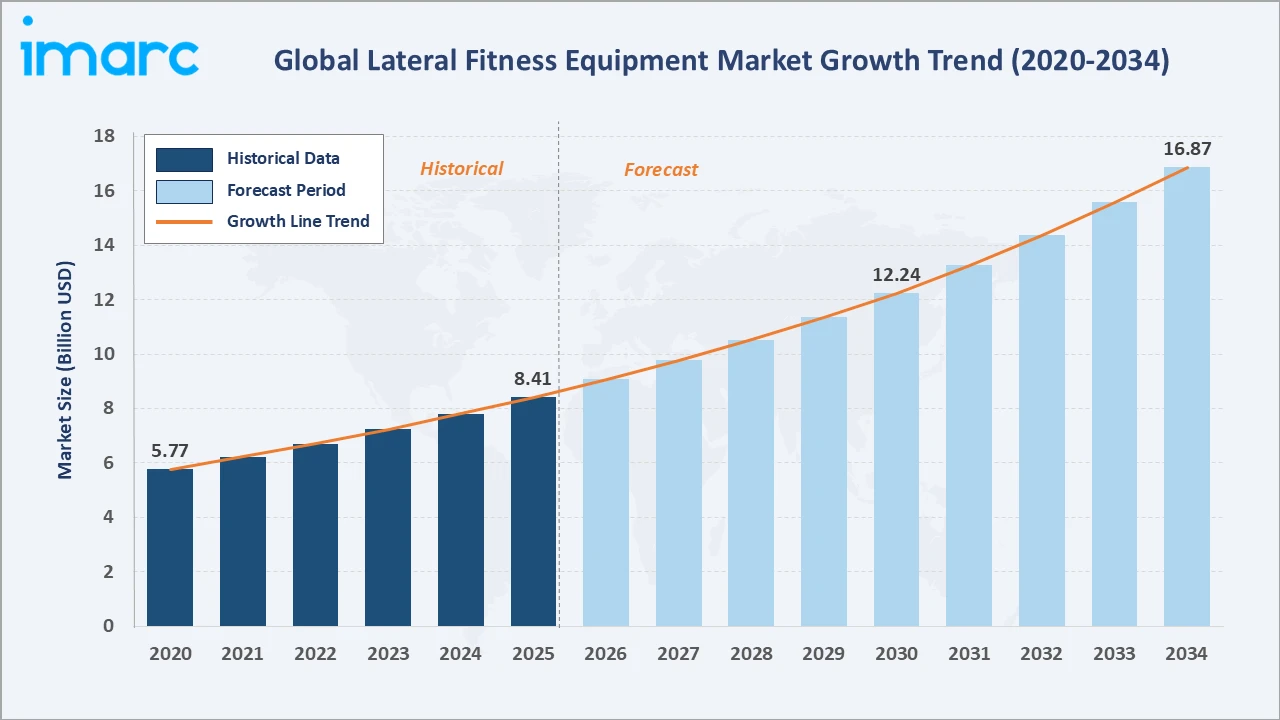
The global lateral fitness equipment market reached USD 8.41 Billion in 2025 and is projected to reach USD 16.87 Billion by 2034, growing at a CAGR of 7.80% during 2026-2034. Growth is driven by rising health consciousness, expanding gym culture, and increasing online fitness class enrolment.
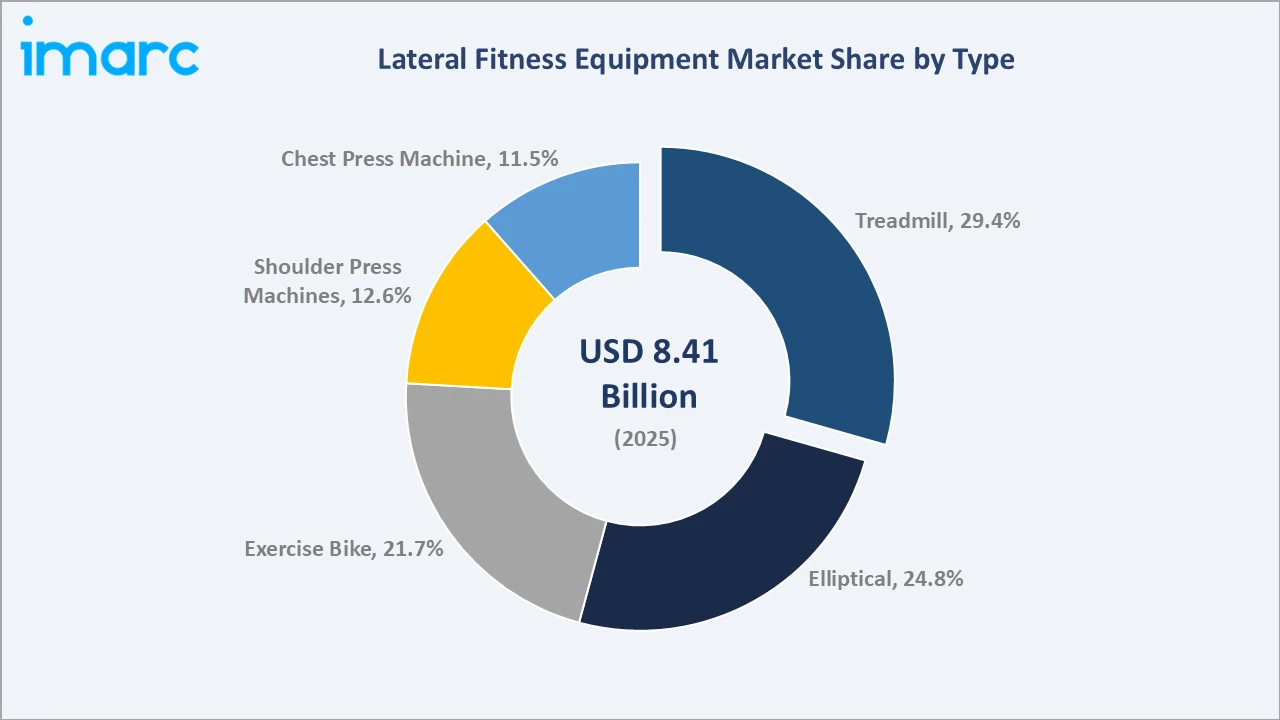
Treadmills lead the type segment at 29.4% share, while the lower body segment dominates the body-type category at 63.8%. North America commands the largest regional share at 35.2%, supported by boutique fitness studio expansion and strong home-fitness adoption.
Market Snapshot
|
Metric |
Value |
|
Market Size (2025) |
USD 8.41 Billion |
|
Forecast Market Size (2034) |
USD 16.87 Billion |
|
CAGR (2026-2034) |
7.80% |
|
Base Year |
2025 |
|
Historical Period |
2020-2025 |
|
Forecast Period |
2026-2034 |
|
Dominant Type |
Treadmill (29.4%, 2025) |
|
Dominant Body Type |
Lower Body (63.8%, 2025) |
|
Leading Region |
North America (35.2%, 2025) |
The market expanded steadily from an estimated USD 5.77 Billion in 2020 to USD 8.41 Billion in 2025, anchored near USD 12.24 Billion in 2030, and is forecast to reach USD 16.87 Billion by 2034 as gym infrastructure and home-fitness adoption continue to scale worldwide.
To get more information on this market, Request Sample
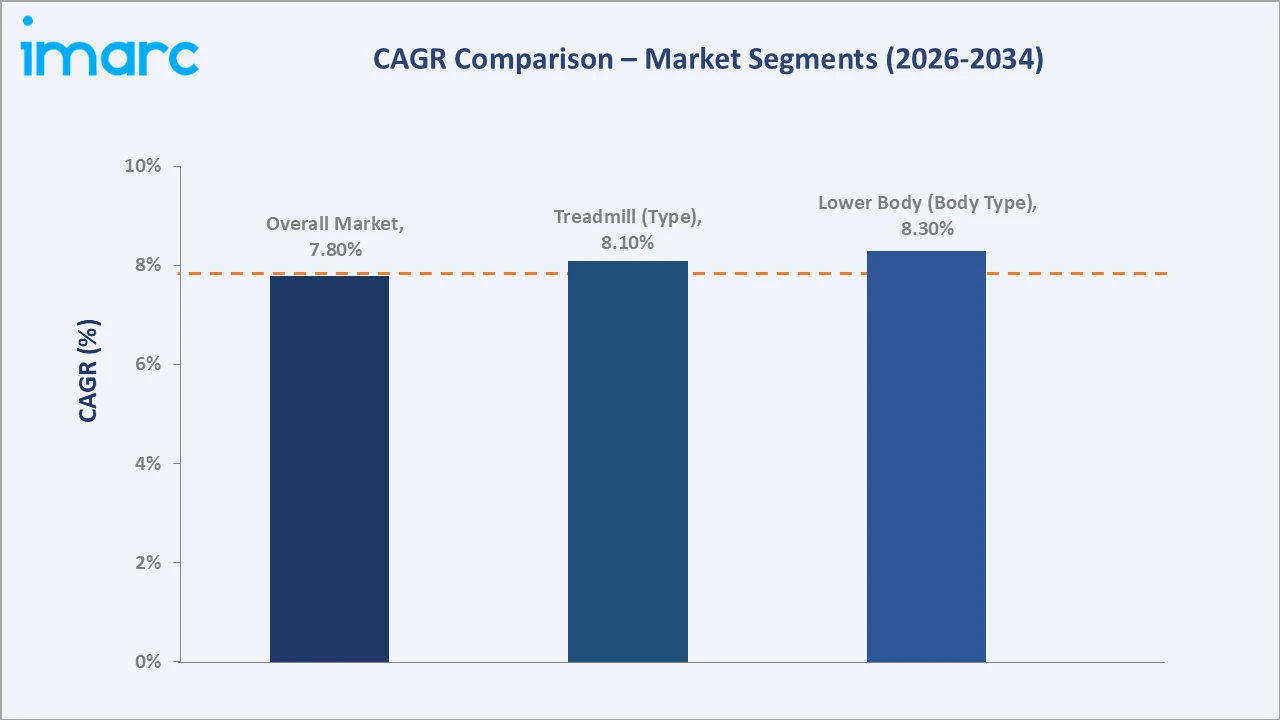
Treadmill and lower body equipment, the leading segments within their respective categories, are each growing marginally faster than the overall market average, reflecting sustained demand concentration in these high-volume product categories.
Executive Summary
The global lateral fitness equipment market reached USD 8.41 Billion in 2025, reflecting sustained demand for functional, multi-directional training equipment across gyms, homes, and rehabilitation settings. The market is projected to reach USD 16.87 Billion by 2034, expanding at a CAGR of 7.80% during 2026-2034.
Treadmills lead the type segment at 29.4% share owing to their versatility and widespread adoption across commercial and household settings. The lower body segment dominates the body-type category at 63.8%, driven by rising demand for equipment targeting glutes, hips, and thighs. North America leads regionally at 35.2%, supported by expanding boutique fitness studios and rising home-fitness solution adoption.
Key Market Insights
|
Insight |
Data |
|
Dominant Type |
Treadmill - 29.4% share (2025) |
|
Dominant Body Type |
Lower Body - 63.8% market share (2025) |
|
Leading Region |
North America - 35.2% market share (2025) |
|
Market Opportunity |
Smart connected equipment; online fitness class integration; rehabilitation-focused product lines |
Key Analytical Observations Supporting The Above Data:
- Treadmill at 29.4%: Treadmills dominate due to their broad familiarity, versatility across cardio and rehabilitation use cases, and strong penetration in gyms, hotels, and households alike.
- Lower Body at 63.8%: The lower body segment leads as equipment targeting glutes, hips, and thighs supports injury recovery and functional conditioning, appealing to a wide demographic base.
- North America at 35.2%: North America leads through expanding boutique fitness studios, high gym membership rates, and rising consumer spending on home-fitness solutions.
Lateral Fitness Equipment Market Overview
The global lateral fitness equipment market encompasses the design, manufacture, and supply of equipment delivering smooth 3D lateral motion for functional, full-body conditioning, spanning treadmills, ellipticals, exercise bikes, and press machines used across gyms, households, and therapeutic facilities.
.webp)
The ecosystem integrates equipment manufacturers, component and motor suppliers, distribution partners across online and offline channels, gym and fitness centre operators, and healthcare institutions. Rising urbanization, sedentary lifestyles, and growing awareness of arthritis, diabetes, and cardiovascular risk are reinforcing structural demand for functional fitness equipment. The market's end-user base spans commercial gyms and fitness centres, households, therapeutic hospitals, and hospitality venues, each with distinct purchasing criteria ranging from durability and throughput in commercial settings to compactness and ease of use in household environments.
Market Dynamics
To evaluate market opportunities, Request Sample
Market Drivers
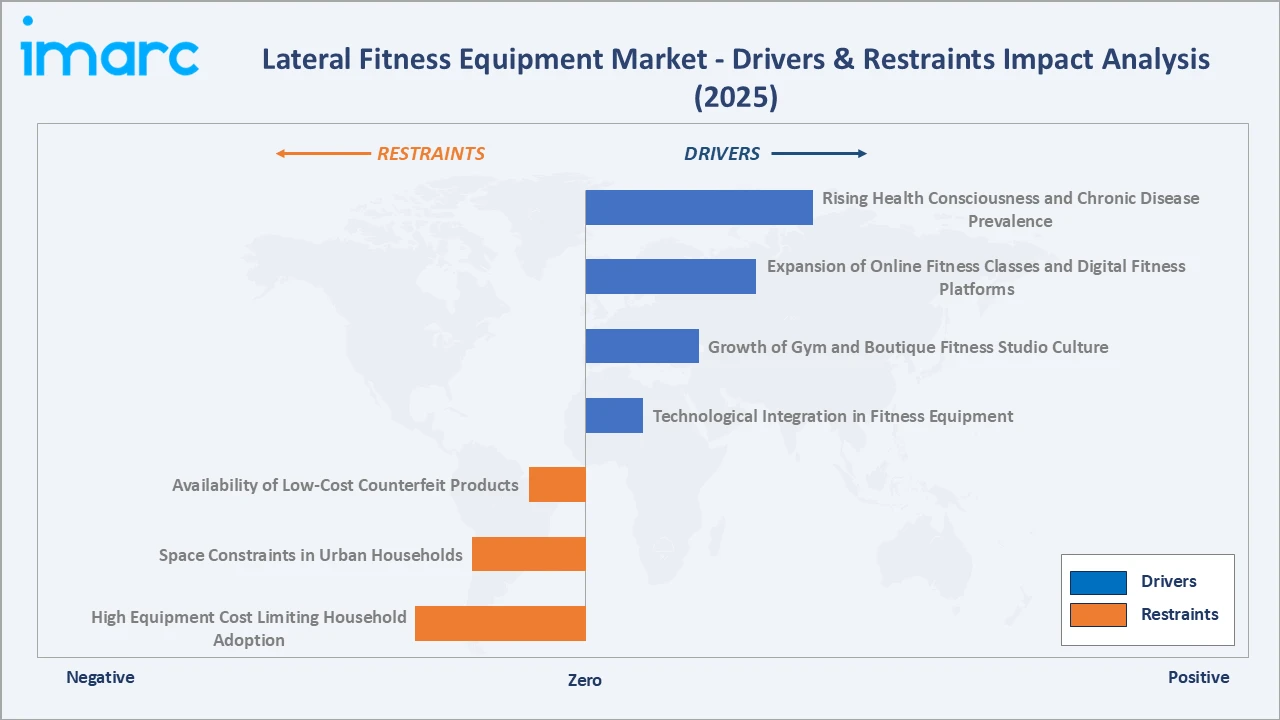
- Rising Health Consciousness and Chronic Disease Prevalence: Growing incidence of arthritis, diabetes, and cardiovascular disease linked to sedentary lifestyles is driving demand for low-impact, joint-friendly lateral fitness equipment that supports functional conditioning and injury recovery. Consumers recovering from injury or managing chronic conditions increasingly favour equipment that reduces joint strain while maintaining cardiovascular benefit. Rising awareness campaigns from healthcare providers are further reinforcing preventive exercise adoption across age groups.
- Expansion of Online Fitness Classes and Digital Fitness Platforms: Rising internet penetration and social media influence are increasing enrolment in online fitness classes, boosting at-home demand for connected lateral fitness equipment that supports guided digital workouts. Digital platforms are packaging equipment-specific workout routines that encourage repeat engagement and equipment upgrades. Influencer-led fitness content is also normalizing home workout routines, expanding the addressable consumer base beyond traditional gym-goers.
- Growth of Gym and Boutique Fitness Studio Culture: Expanding gym membership and the proliferation of boutique studios focused on specialized, functional training are increasing commercial procurement of lateral fitness equipment across developed and emerging markets. Boutique studios differentiate through curated equipment selections that support niche training formats, prompting operators to refresh inventories more frequently. This replacement cycle is sustaining steady commercial procurement volumes for equipment manufacturers.
- Technological Integration in Fitness Equipment: Incorporation of GPS, pedometers, heart rate monitors, and smartphone app connectivity into lateral fitness equipment is enhancing user engagement and driving premium product adoption among health-conscious consumers. Connected features allow users to track progress over time and receive personalized coaching cues, increasing perceived value relative to basic equipment. Manufacturers are leveraging this differentiation to command premium pricing across both commercial and household channels.
Market Restraints
- High Equipment Cost Limiting Household Adoption: Premium lateral fitness equipment with advanced connectivity and biomechanical features carries a high price point, restricting adoption among price-sensitive household consumers in emerging economies. Financing and installment purchase options are helping offset upfront cost barriers in some markets, though affordability remains a persistent constraint. Manufacturers are responding by introducing tiered product lines at varying price points.
- Space Constraints in Urban Households: Compact urban living spaces limit the ability of consumers to accommodate bulky lateral fitness equipment at home, constraining the household distribution channel's growth potential. This constraint is particularly pronounced in dense metropolitan markets across Asia-Pacific and Europe, where apartment living limits available floor space. Foldable and wall-mountable equipment designs are emerging as partial mitigations to this restraint.
- Availability of Low-Cost Counterfeit Products: The popularity of established lateral fitness equipment brands has encouraged the emergence of counterfeit alternatives, which can undermine brand value and safety standards across price-sensitive markets. Counterfeit products often lack proper safety certification, raising injury risk and creating potential liability concerns for the broader industry. Established brands are increasingly investing in authentication measures and consumer education to counter this trend.
Market Opportunities
- Smart Connected Equipment Adoption: Integration of GPS, heart rate monitoring, and smartphone app connectivity into lateral fitness equipment opens new premium product lines catering to tech-savvy, health-conscious consumers. Subscription-based digital content bundled with connected equipment can generate recurring revenue streams beyond the initial hardware sale. This model is increasingly attractive to manufacturers seeking to diversify revenue beyond one-time equipment purchases.
- Rehabilitation-Focused Product Lines: Growing use of lateral fitness equipment in therapeutic and hospital settings for injury recovery creates opportunities for manufacturers to develop specialized, clinically validated equipment. Partnerships with healthcare providers and physiotherapy clinics can help manufacturers establish clinical credibility and expand into institutional procurement channels. This segment also supports premium pricing given its specialized, outcome-driven positioning.
Market Challenges
- Intense Price-Based Competition from Counterfeit Brands: The proliferation of low-cost counterfeit products pressures established brands to balance pricing competitiveness with quality and safety standards. This dynamic is particularly acute in price-sensitive emerging markets, where counterfeit products can undercut established brands by significant margins. Sustained brand investment in quality assurance and consumer trust remains essential to offset this pressure.
- Balancing Compact Design with Full Functionality: Developing space-efficient equipment without compromising workout range and durability requires sustained engineering investment, raising development costs for manufacturers. Achieving this balance often requires iterative prototyping and material innovation, extending product development timelines. Manufacturers that successfully navigate this trade-off can capture growing demand from space-constrained urban households.
Emerging Market Trends
1. Smart Connected Equipment Integration
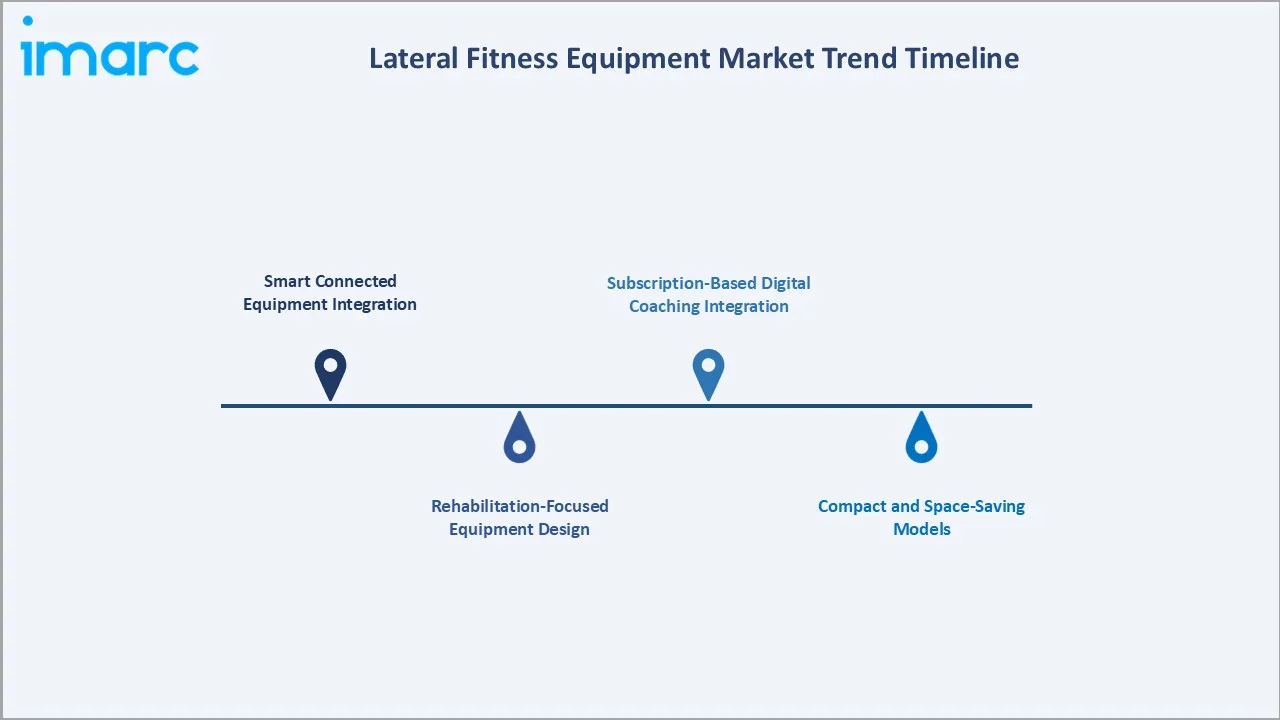
Manufacturers are increasingly embedding GPS, pedometers, heart rate monitors, and smartphone app connectivity into lateral fitness equipment, enabling users to track workouts digitally and driving premium product adoption across gyms and households. This trend is also encouraging equipment makers to build proprietary data ecosystems that support long-term customer engagement and cross-selling of accessories and digital content.
2. Rehabilitation-Focused Equipment Design
Growing use of lateral fitness equipment in therapeutic and hospital settings is encouraging manufacturers to design low-impact, joint-friendly equipment tailored to injury recovery and geriatric care needs. Collaboration with physiotherapists and clinical researchers is increasingly informing product design specifications for this expanding institutional segment.
3. Compact and Space-Saving Models
Rising urban space constraints are driving demand for foldable and compact lateral fitness equipment that retains full workout functionality while fitting smaller home environments. Manufacturers are responding with modular designs that allow multiple exercise modes within a single, space-efficient equipment frame.
4. Subscription-Based Digital Coaching Integration
Equipment manufacturers are partnering with digital fitness platforms to offer subscription-based guided workout content, enhancing user engagement and creating recurring revenue streams alongside equipment sales. This shift toward hybrid hardware-software business models is reshaping how manufacturers measure customer lifetime value beyond the initial equipment purchase.
Industry Value Chain Analysis
The lateral fitness equipment value chain integrates raw material and component sourcing, equipment manufacturing and assembly, quality testing and certification, distribution across online and offline channels, and aftersales maintenance services.
|
Stage |
Key Participants |
|
Raw Material & Component Sourcing |
Sourcing of steel, motors, electronic components, and upholstery materials used in equipment manufacturing |
|
Equipment Manufacturing & Assembly |
Fabrication, assembly, and integration of frames, drive systems, and electronic consoles |
|
Quality Testing & Certification |
Performance testing, safety validation, and regulatory certification of finished equipment |
|
Distribution (Online/Offline) |
Distribution through online retail platforms and offline specialty and general retail stores |
|
Aftersales & Maintenance |
Installation support, servicing, spare parts supply, and equipment maintenance |
The distribution stage is undergoing the value chain's most notable transition, as offline retail gradually cedes share to online channels offering discounted pricing and at-home delivery convenience.
Technology Landscape in the Lateral Fitness Equipment Industry
Connected Fitness Technology
Connected fitness technology, incorporating GPS, heart rate monitoring, and smartphone app integration, enables real-time workout tracking and personalized training feedback, driving adoption among tech-savvy consumers across commercial and household segments.
Low-Impact Biomechanical Design
Low-impact biomechanical design technology reduces joint strain during lateral motion, supporting rehabilitation use cases and broadening equipment adoption among elderly and injury-recovering user groups.
AI-Based Personalized Training Algorithms
AI-based personalized training algorithms analyze user performance data to recommend adaptive workout intensity and progression, improving training outcomes and supporting sustained user engagement across connected equipment platforms.
Motor-Driven Resistance Systems
Motor-driven resistance systems replace traditional mechanical resistance with electronically controlled resistance profiles, enabling precise, programmable workout intensity and supporting compact, multi-function equipment designs suited to space-constrained settings.
Market Segmentation Analysis
The report covers the following segments:
|
Segment Category |
Leading Segment |
Market Share |
Year |
|
Type |
Treadmill |
29.4% |
2025 |
|
Body Type |
Lower Body |
63.8% |
2025 |
|
Distribution Channel |
Offline Stores |
🔒 |
2025 |
|
End User |
Gyms and Fitness Centres |
🔒 |
2025 |
|
Region |
North America |
35.2% |
2025 |

By Type
Treadmill leads the type segment at 29.4% in 2025, reflecting its versatility across cardio training and rehabilitation applications in both commercial and household settings. Its broad familiarity among consumers of varying fitness levels continues to support consistent replacement and upgrade demand.
To access detailed market analysis, Request Sample
Elliptical trainers follow at 24.8%, valued for their low-impact, full-body workout capability. Exercise bikes hold 21.7% share, driven by strong adoption in home and gym settings. Shoulder press machines and chest press machines account for 12.6% and 11.5% respectively, catering to targeted upper-body strength training demand.
By Body Type
Lower body equipment dominates at 63.8% in 2025, reflecting strong demand for equipment targeting glutes, hips, and thighs for functional conditioning and rehabilitation. This dominance is reinforced by the broad applicability of lower body training across general fitness, athletic conditioning, and post-injury recovery programs.
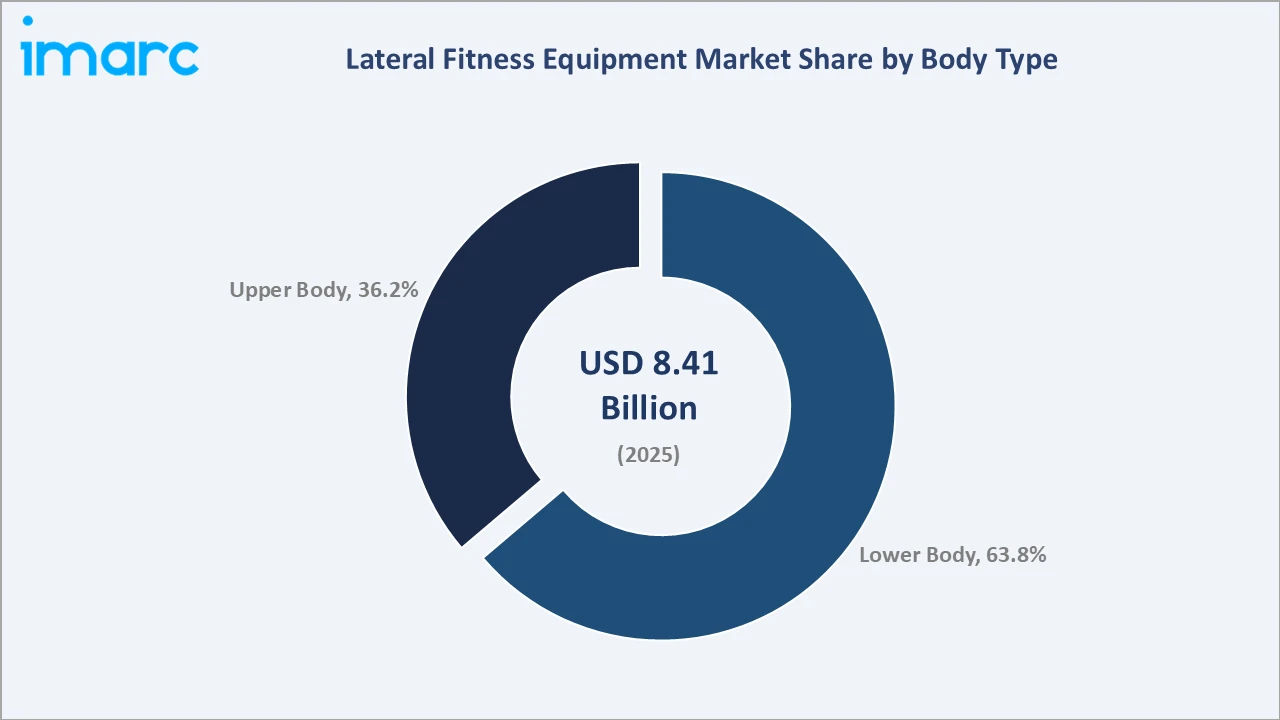
Upper body equipment accounts for 36.2% share, supported by rising demand for targeted strength training solutions in gyms and rehabilitation centres.
Regional Market Insights
|
Region |
Share (2025) |
Key Market Drivers & Characteristics |
|
North America |
35.2% |
Supported by established fitness infrastructure, high gym membership rates, and growing consumer spending on home-fitness solutions |
|
Europe |
27.8% |
Driven by a strong health and wellness culture, supportive public health initiatives, and steady demand for rehabilitation equipment |
|
Asia-Pacific |
25.1% |
Driven by rapid urbanization, rising disposable income, and expanding fitness centre penetration across major economies |
|
Latin America |
6.4% |
Emerging with growing gym culture and increasing consumer health awareness |
|
Middle East and Africa |
5.5% |
Emerging with fitness infrastructure development and rising interest in wellness-oriented lifestyles |
North America, at 35.2%, leads through expanding boutique fitness studios and strong home-fitness solution demand. Europe, at 27.8%, reflects a well-established health and wellness culture supported by government-backed initiatives.
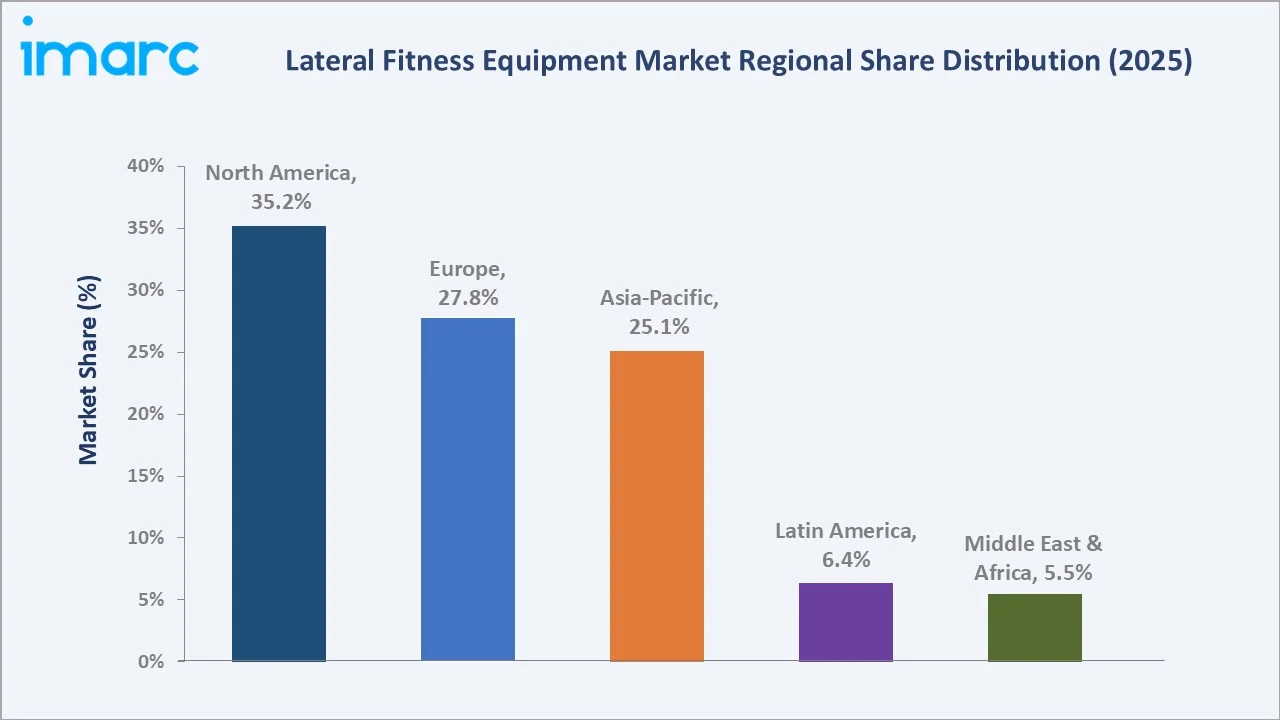
Asia-Pacific, at 25.1%, is expanding rapidly on urbanization and rising fitness centre penetration. Latin America and the Middle East and Africa, at 6.4% and 5.5% respectively, represent emerging markets supported by growing wellness-oriented consumer interest.
Competitive Landscape
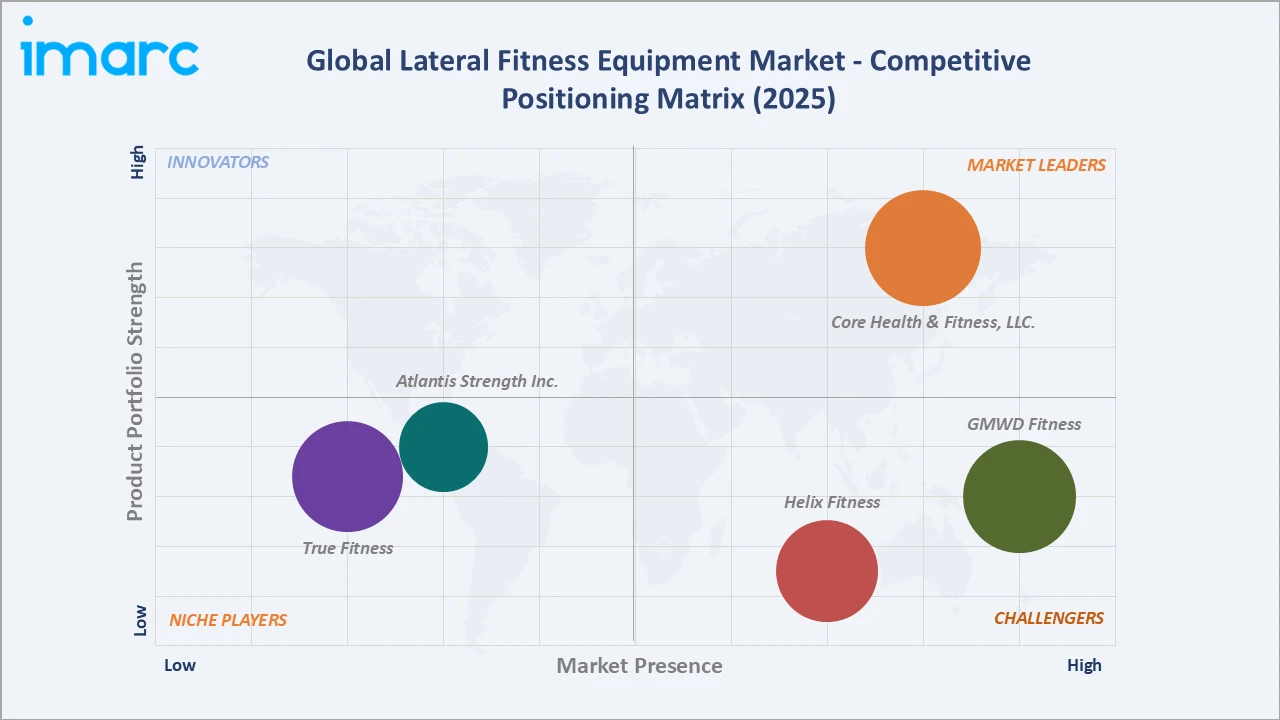
The global lateral fitness equipment market competitive landscape is moderately fragmented, comprising established commercial equipment manufacturers, integrated fitness technology brands, and regional specialists competing across gym, household, and therapeutic end-user segments.
|
Company Name |
Key Products |
Market Position |
Core Strength |
|
Core Health & Fitness, LLC |
Inspiration Lat Pull Down, Impact Fixed Lat Pull Down, Leverage Lat Pull Down, HumanSport Lat Pulley |
Market Leader |
Core Health & Fitness specializes in commercial cardio and strength equipment with strong gym and fitness centre distribution. |
|
True Fitness |
Commercial treadmills and cardio equipment, Shoulder Press Machines, Chest Press Machine |
Niche Player |
True Fitness focuses on durable, commercial-grade cardio equipment for gyms and fitness centres. |
|
Helix Fitness |
Eco Essential - H905, NEW Jan 2026 - Digital Essential, Club Connect - HLT3500 |
Strong Challenger |
Helix Fitness differentiates through digitally connected, club-oriented strength equipment tailored to commercial fitness operators. |
|
Atlantis Strength Inc. |
Shoulder Press Machines, Chest Press Machine |
Niche Player |
Atlantis Strength Inc. focuses on purpose-built strength training equipment for targeted upper-body conditioning in commercial settings. |
|
GMWD Fitness |
Treadmill, Shoulder Press Machines, Chest Press Machine |
Strong Challenger |
GMWD Fitness maintains a broad cardio and strength equipment portfolio supporting flexible gym configurations. |
Key players include Core Health & Fitness, LLC, True Fitness, Helix Fitness, Atlantis Strength Inc., GMWD Fitness, and others.
Key Company Profiles
Core Health & Fitness, LLC
Core Health & Fitness, LLC is a US-based fitness equipment manufacturer headquartered in Vancouver, Washington, supplying commercial cardio and strength equipment to gyms and fitness centres through its portfolio of owned brands.
- Key Products: Inspiration Lat Pull Down, Impact Fixed Lat Pull Down, Leverage Lat Pull Down, HumanSport Lat Pulley.
- Strategic Focus: Strengthening its multi-brand commercial portfolio and expanding gym and fitness centre distribution worldwide. The company is unifying its iconic fitness brands under a single commercial platform, aiming to deliver a consistent, vertically integrated equipment and support experience across health clubs, boutique studios, and hospitality venues globally.
Helix Fitness
Helix Fitness is a US-based specialist manufacturer of lateral training equipment, supplying lateral elliptical trainers to households, gyms, and rehabilitation clinics.
- Key Products: Eco Essential – H905, Digital Essential, Club Connect – HLT3500.
- Strategic Focus: Advancing clinically validated, three-dimensional lateral training technology across residential, commercial, and therapeutic end-user segments. The company is broadening its console technology tier-by-tier, from manual entry-level units to Android-powered, club-grade connected trainers, aiming to serve household, commercial, and clinical rehabilitation buyers with a single differentiated lateral-motion product line.
Market Concentration Analysis
The lateral fitness equipment market is moderately fragmented, with the top three key players collectively holding a leading share of global commercial and household equipment revenue. Regional and niche players continue to gain share in the therapeutic and household segments through targeted, cost-competitive product lines.
Market concentration is expected to remain broadly stable through the forecast period, as leading players continue to invest in brand differentiation through connected technology and premium design, while regional manufacturers compete primarily on price and localized distribution reach. Consolidation activity, including brand acquisitions among household equipment makers, is gradually reshaping competitive positioning within the household distribution channel.
Investment & Growth Opportunities
Highest Growth Segments
Treadmill and lower-body equipment categories, along with the North American and Asia-Pacific regional markets, represent the highest-growth investment vectors through 2034, supported by expanding gym infrastructure and rising home-fitness adoption.
Within these categories, connected and app-integrated product variants are expected to outpace category averages, as consumers increasingly prioritize equipment offering measurable performance feedback and guided training content over purely mechanical alternatives.
Emerging Investment Opportunities
Connected fitness equipment integrating digital coaching subscriptions represents the market's highest-value emerging opportunity, as recurring software revenue complements hardware sales and strengthens customer retention.
Therapeutic and institutional procurement channels also present a structurally under-penetrated opportunity, as hospitals and rehabilitation centres increasingly seek clinically validated, low-impact equipment tailored to injury recovery and geriatric care needs.
Investment Themes
- Digital Fitness Ecosystem Integration: Manufacturers investing in proprietary app and subscription platforms can build durable customer relationships and recurring revenue streams beyond one-time equipment sales.
Ecosystem-based strategies also generate valuable usage data that can inform future product development, allowing manufacturers to iterate more precisely on user preferences and workout patterns. - Therapeutic and Rehabilitation Equipment Development: Targeted investment in clinically validated, low-impact equipment can capture rising demand from hospitals and rehabilitation centres seeking specialized fitness solutions.
Building clinical partnerships and securing relevant safety certifications can serve as a durable competitive moat, as institutional buyers typically favour vendors with established medical-grade validation over generic consumer equipment suppliers.
Future Market Outlook (2026-2034)
The global lateral fitness equipment market is projected to grow from USD 8.41 Billion in 2025 to USD 16.87 Billion by 2034, delivering a 7.80% CAGR over the forecast period. Connected, app-integrated equipment is expected to become a standard feature across commercial and premium household product lines, while rehabilitation-focused designs gain wider adoption across therapeutic and geriatric care settings.
Two structural forces underpin sustained market growth through 2034: rising global health consciousness continues to expand the addressable consumer base across gyms and households, while the convergence of digital fitness platforms with physical equipment creates additive revenue opportunities beyond traditional hardware sales.
By the end of the forecast period, the competitive landscape is expected to feature a clearer separation between technology-integrated premium brands and cost-focused mass-market suppliers, with therapeutic and institutional procurement emerging as a distinct, higher-margin growth avenue alongside traditional gym and household channels.
Research Methodology
Primary Research
Primary research comprised structured interviews with industry stakeholders, including product managers, gym and fitness centre operators, distribution partners, and healthcare procurement specialists.
Secondary Research
Secondary research encompassed company annual reports, industry association publications, government health statistics, and trade press coverage of the global fitness equipment industry.
Forecasting Models
Market revenue forecasts were developed using a bottom-up model incorporating equipment unit sales by type and body type, average revenue per unit, and regional distribution channel penetration rates.
Lateral Fitness Equipment Market Report Coverage:
| Report Features | Details |
|---|---|
| Base Year of the Analysis | 2025 |
| Historical Period | 2020-2025 |
| Forecast Period | 2026-2034 |
| Units | Billion USD |
| Scope of the Report |
Exploration of Historical Trends and Hot Melts Adhesive Market Outlook, Industry Catalysts and Challenges, Segment-Wise Historical and Future Market Assessment:
|
| Types Covered | Treadmill, Elliptical, Exercise Bike, Shoulder Press Machines, Chest Press Machine |
| Body Types Covered | Upper Body, Lower Body |
| Distribution Channels Covered | Online Stores, Offline Stores |
| End Users Covered | Gyms and Fitness Centres, Household, Therapeutic Hospitals, Hotels and Corporate Offices, Others |
| Regions Covered | Asia Pacific, Europe, North America, Latin America, Middle East and Africa |
| Countries Covered | United States, Canada, Germany, France, United Kingdom, Italy, Spain, Russia, China, Japan, India, South Korea, Australia, Indonesia, Brazil, Mexico |
| Companies Covered | Core Health & Fitness LLC, True Fitness, Helix Fitness, Atlantis Strength Inc., GMWD Fitness, etc. |
| Customization Scope | 10% Free Customization |
| Post-Sale Analyst Support | 10-12 Weeks |
| Delivery Format | PDF and Excel through Email (We can also provide the editable version of the report in PPT/Word format on special request) |
Frequently Asked Questions About the Lateral Fitness Equipment Market Report
The global lateral fitness equipment market reached USD 8.41 Billion in 2025, driven by treadmills at 29.4% share, lower body equipment leading at 63.8%, and North America commanding 35.2% market share. Rising health consciousness and growing enrolment in online fitness classes continue to underpin steady market expansion.
The market is projected to grow at a CAGR of 7.80% during 2026-2034, reaching USD 16.87 Billion by 2034. This growth reflects sustained demand across gym, household, and therapeutic end-user segments worldwide.
Treadmill leads at 29.4% share in 2025, owing to its versatility across cardio training and rehabilitation applications in both commercial and household settings.
Lower body equipment leads at 63.8% share, driven by strong demand for equipment targeting glutes, hips, and thighs for functional conditioning and injury recovery.
North America leads at 35.2% share, supported by expanding boutique fitness studios and strong home-fitness adoption, followed by Europe and Asia-Pacific as the next-largest regional markets.
Leading companies include Core Health & Fitness, LLC, True Fitness, Helix Fitness, Atlantis Strength Inc., GMWD Fitness, and others.
The market is projected to reach approximately USD 12.24 Billion by 2030, supported by continued gym infrastructure expansion and rising home-fitness adoption worldwide, alongside growing integration of connected, app-based training features.
Priority investment opportunities include digital fitness ecosystem integration, therapeutic and rehabilitation-focused equipment development, and expansion of connected app-based coaching subscriptions that generate recurring revenue alongside hardware sales.
Need more help?
- Speak to our experienced analysts for insights on the current market scenarios.
- Include additional segments and countries to customize the report as per your requirement.
- Gain an unparalleled competitive advantage in your domain by understanding how to utilize the report and positively impacting your operations and revenue.
- For further assistance, please connect with our analysts.
 Request Customization
 Speak to an Analyst
 Request Brochure
 Inquire Before Buying
Benefits of Customization
- Personalize this research
- Triangulate with your data
- Get data as per your format and definition
- Gain a deeper dive into a specific application, geography, customer, or competitor
- Any level of personalization
Get in Touch With Us
UNITED STATES
Phone: +1-201-971-6302
INDIA
Phone: +91-120-433-0800
UNITED KINGDOM
Phone: +44-753-714-6104
Email: [email protected]
Client Testimonials




.webp)




.webp)













Related Reports

Choose your plan
*Please note that the prices mentioned below are starting prices for each bundle type. Kindly contact our team for further details.*
Single User License
- 1 User License, Access on 2 Devices
- PDF Report + Excel Dataset (Password Protected)
- Lifetime Access
- No Printing Rights
- 10% Free Report Customization
- 10–12 Weeks of Analyst Support
Five User License
- Access for 5 Users, 2 Devices per User
- PDF Report + Excel Dataset (Password Protected)
- Lifetime Access
- Dedicated Account Manager
- 12–14 Weeks of Analyst Support
- No Printing Rights
- 15% Free Report Customization
- 25% Discount on Your Next Purchase
Corporate User License
- Unlimited User Access (Within Your Organization)
- PDF Report + Excel Dataset
- Lifetime Access
- Dedicated Account Manager
- 14–20 Weeks of Analyst Support
- No Printing Rights
- 20% Free Report Customization
- 30% Discount on Your Next Purchase
Essential Insights
What's included:
3 reports
- Lifetime Access
- PDF Reports
- Excel Datasets
- 2 Weeks of Free Analyst Support
- 2 User Licenses
- Access on 2 Devices
- Printing Rights
- Complimentary PowerPoint (PPT) Version
- Complimentary License Upgrade
Professional Access
What's included:
5 reports
- Lifetime Access
- PDF Reports
- Excel Datasets
- 8 Weeks of Free Analyst Support
- 2 User Licenses
- Access on 2 Devices
- Printing Rights
- Complimentary PowerPoint (PPT) Version
- Complimentary License Upgrade
Business Advantage
What's included:
8 reports
- Lifetime Access
- PDF Reports
- Excel Datasets
- 14 Weeks of Free Analyst Support
- 2 User Licenses
- Access on 2 Devices
- Printing Rights
- Complimentary PowerPoint (PPT) Version
- Complimentary License Upgrade
Enterprise Intelligence
What's included:
10 reports
- Lifetime Access
- PDF Reports
- Excel Datasets
- 20 Weeks of Free Analyst Support
- 2 User Licenses
- Access on 2 Devices
- Printing Rights
- Complimentary PowerPoint (PPT) Version
- Complimentary License Upgrade