
Light-Sport Aircraft Market Size, Share, Trends and Forecast by Type, Application, and Region, 2026-2034
Light-Sport Aircraft Market Size, Share, Trends & Forecast (2026-2034)
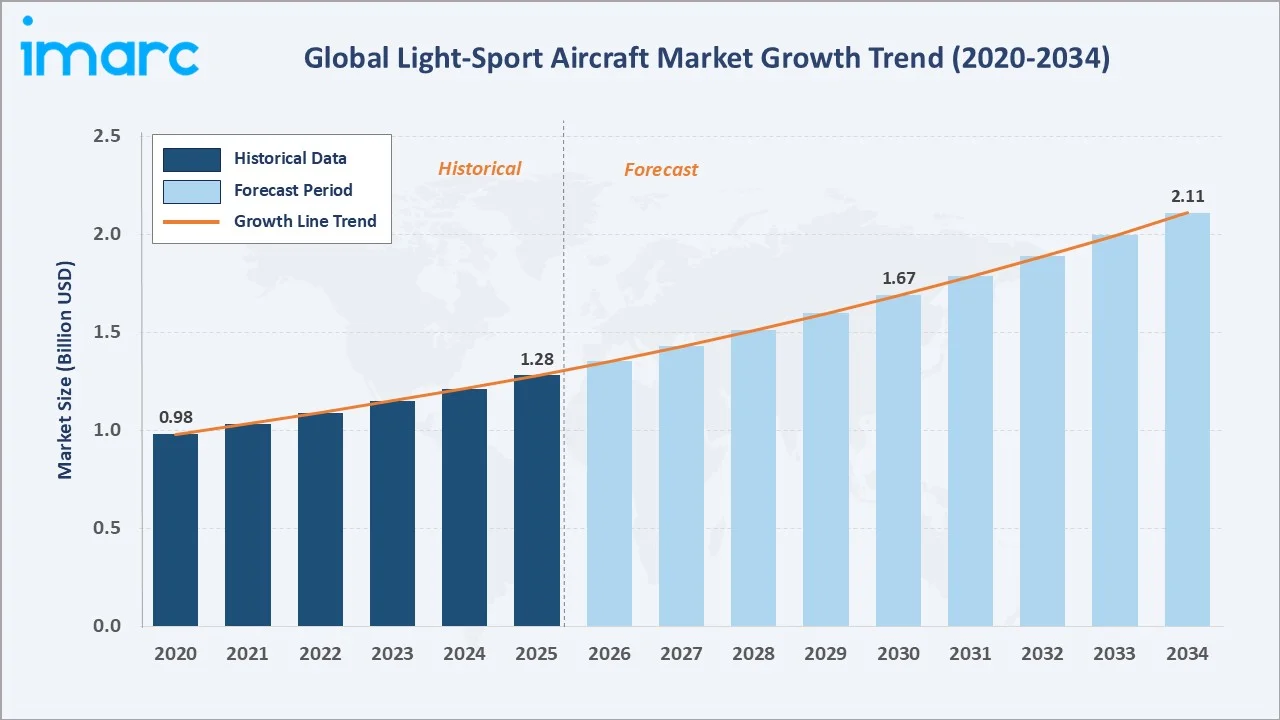
The light-sport aircraft market grew from USD 1.28 Billion in 2025 to USD 1.35 Billion in 2026 and is projected to reach USD 2.11 Billion by 2034, growing at a CAGR of 5.40% during 2026-2034. The market is driven by rising general aviation enthusiasm, growing sport pilot participation, and increasing adoption of lightweight composite materials and advanced avionics technology in LSA manufacturing. Global regulatory modernization through frameworks such as the FAA's proposed MOSAIC rule is lowering market barriers and expanding the addressable pilot population.
Expanding flight training networks, growing aero club infrastructure, and youth adoption of recreational aviation are further supporting market growth. Airplane dominates at 78.6%. Sport and Recreation leads application segments at 48.7%. Europe commands 34.8% of the global market share.
Market Snapshot
|
Metric |
Value |
|
Base Year Market Size (2025) |
USD 1.28 Billion |
|
Market Size (2026) |
USD 1.35 Billion |
|
Forecast Market Size (2034) |
USD 2.11 Billion |
|
CAGR (2026-2034) |
5.40% |
|
Base Year |
2025 |
|
Historical Period |
2020-2025 |
|
Forecast Period |
2026-2034 |
|
Dominant Type |
Airplane (78.6%, 2025) |
|
Dominant Application |
Sport and Recreation (48.7%, 2025) |
|
Leading Region |
Europe (34.8%, 2025) |
The light-sport aircraft market size increased from USD 0.98 Billion in 2020 to USD 1.28 Billion in 2025 and is estimated to reach USD 1.35 Billion in 2026. The market is further expected to grow to USD 1.67 Billion by 2030 and USD 2.11 Billion by 2034. The light-sport aircraft market is commercially unique among global aviation segments, combining the world's most accessible certified aircraft category, a rapidly growing electric propulsion segment driven by expanding flight training economics, and a regulatory environment experiencing its most significant modernization since 2004.
To get more information on this market, Request Sample
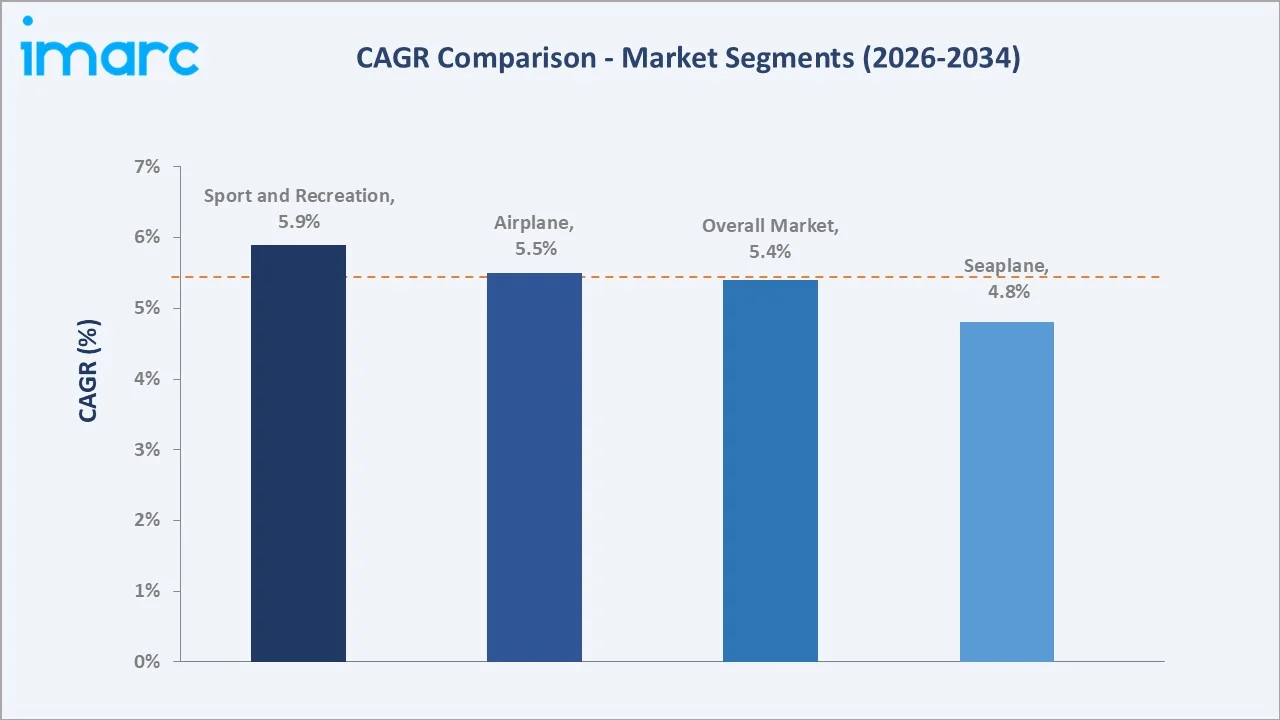
The Flight Training application segment grows fastest at ~6.2% CAGR through the global commercial pilot shortage, expanding flight academy networks, and the cost-per-flight-hour advantage of LSA over traditional trainer aircraft. The Airplane type grows at ~5.5% CAGR through continued infrastructure compatibility and the MOSAIC rule's anticipated expansion of the certified airplane category, reaching a larger addressable pilot base across general aviation markets.
Executive Summary
The light-sport aircraft market expanded from USD 1.28 Billion in 2025 to an estimated USD 1.35 Billion in 2026, positioning it among the most commercially dynamic segments in the broader general aviation industry. The market's scale is underpinned by a large and growing global sport pilot community, the enduring commercial appeal of affordable certified aircraft for recreational and training purposes, and rising demand for innovative electric and composite-airframe LSA platforms across key markets. These structural demand drivers are supporting expansion of the electric LSA segment at rates that outpace the broader market CAGR.
The light-sport aircraft market is commercially distinguished from other general aviation segments by its regulatory accessibility and cost advantage structure. Simplified sport pilot certification, lower insurance costs, and reduced maintenance requirements collectively create a lower barrier to aircraft ownership and active flying than traditional general aviation categories. The market is projected to reach USD 2.11 Billion by 2034. Airplane at 78.6% leads through commercial infrastructure compatibility. Sport and Recreation at 48.7% reflects the recreational pilot community's scale. Europe leads regionally at 34.8%.
Key Market Insights
|
Insight |
Data |
|
Dominant Type |
Airplane — 78.6% share (2025) |
|
Dominant Application |
Sport and Recreation — 48.7% market share (2025) |
|
Leading Region |
Europe — 34.8% share (2025) |
|
Market Opportunity |
Electric LSA expansion in flight training; FAA MOSAIC rule addressable market growth |
Key Analytical Observations Supporting the Above Data:
- Airplane at 78.6%: The airplane segment dominates due to widespread general aviation infrastructure compatibility, broad pilot familiarity, and versatility across sport, training, rental, and recreational missions. Airplanes benefit from established maintenance networks and the largest installed base of any LSA configuration.
- Sport and Recreation at 48.7%: This application segment leads as recreational flying grows globally, supported by expanding sport pilot communities, aero clubs, airshow culture, and lifestyle aviation adoption particularly among younger demographics seeking accessible certified aviation entry points.
- Europe at 34.8%: Europe leads regionally due to its strong general aviation culture, dense airfield infrastructure, and an established LSA manufacturing ecosystem concentrated in Czech Republic, Italy, Germany, and France, home to leading global LSA manufacturers and a large active recreational pilot community.
Light-Sport Aircraft Market Overview
Light-sport aircraft market is commercially positioned at a unique intersection: the most accessible certified aircraft category creating the world's broadest pilot addressable market, a regulatory environment undergoing its most significant modernization in two decades through the FAA's proposed MOSAIC rule, and an emerging electric propulsion segment that is fundamentally altering the economics of flight training and recreational aviation. The market's commercial structure is characterized by a two-speed dynamic between established conventional LSA platforms and rapidly advancing electric platforms.
Light-sport aircraft ecosystem integrates raw material suppliers, composite airframe manufacturers, powerplant OEMs, avionics manufacturers, regulatory certification bodies, distribution channels, flight training institutions, and sport pilot license holders. Macroeconomic factors include rising discretionary spending on lifestyle activities, growing commercial aviation pilot demand creating training aircraft requirements, and technology advancement in electric propulsion and composite manufacturing reducing LSA production costs.
Market Dynamics
To evaluate market opportunities, Request Sample
Market Drivers
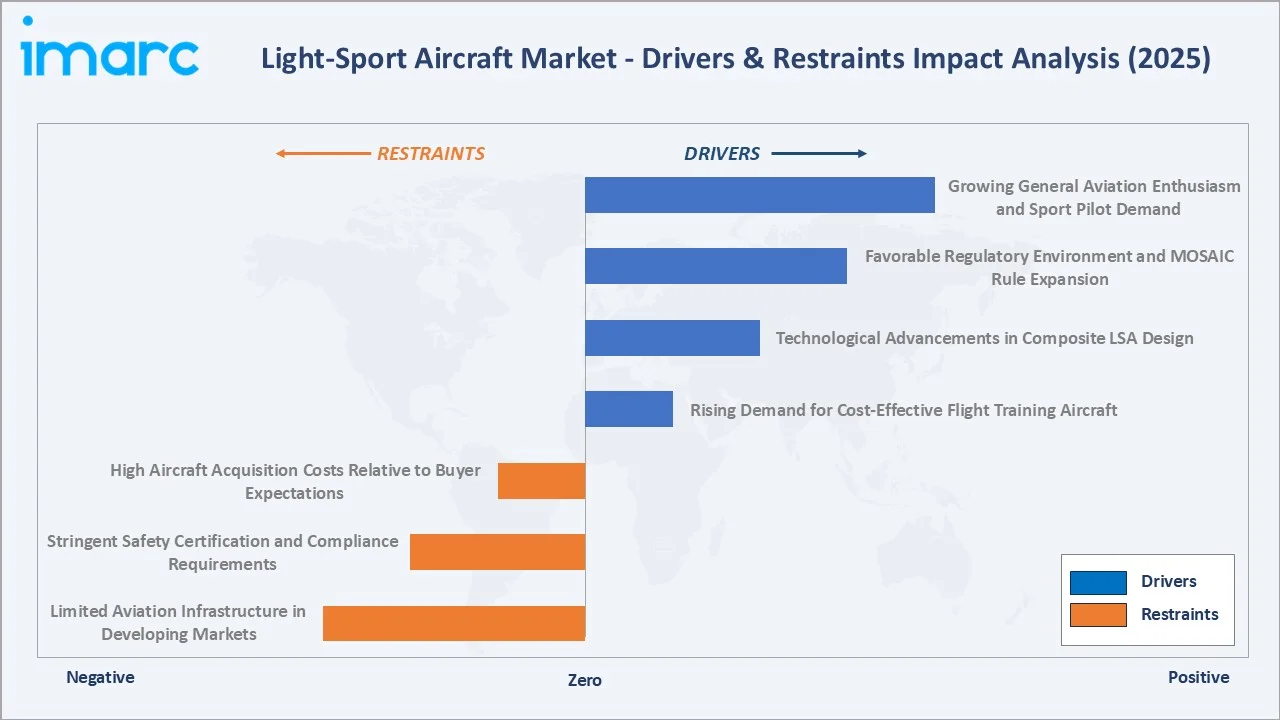
- Growing General Aviation Enthusiasm and Sport Pilot Demand: Rising interest in recreational and sport flying is contributing to an expanding global pilot community. Lower barriers to aircraft ownership, streamlined licensing frameworks, and growing aviation lifestyle culture are collectively supporting demand for light-sport aircraft, particularly among demographics seeking accessible and cost-effective certified aviation options. The sport pilot community continues to grow in established markets and is expanding into emerging aviation geographies globally.
- Favorable Regulatory Environment and MOSAIC Rule Expansion: Regulatory frameworks governing the light-sport aircraft category have progressively evolved to reduce certification barriers and expand the addressable market. Ongoing regulatory modernization efforts by aviation authorities are broadening the scope of aircraft eligible for sport pilot operations, lowering entry barriers for manufacturers and pilots alike. These developments are creating structural market growth opportunities that exceed organic demand expansion, attracting new participants across the aviation value chain.
- Technological Advancements in Composite LSA Design: Continuous innovation in airframe construction materials, propulsion systems, and cockpit avionics is improving light-sport aircraft performance, safety, and affordability. Advances in lightweight composite manufacturing enable aircraft that meet regulatory weight limits while delivering performance levels that appeal to both new sport pilots and experienced general aviation operators. These technological improvements are broadening the appeal of light-sport aircraft and supporting wider adoption across recreational and training use cases.
- Rising Demand for Cost-Effective Flight Training Aircraft: Growing demand for qualified pilots globally is driving sustained expansion of flight training programs. Light-sport aircraft serve as cost-effective primary training platforms, offering lower operating costs per flight hour relative to traditional trainer aircraft while meeting the performance and safety standards required for initial pilot training. This structural training demand is creating sustained fleet acquisition requirements for flight academies and training institutions across key growth markets.
Market Restraints
- High Aircraft Acquisition Costs Relative to Buyer Expectations: Despite their cost advantages relative to standard category aircraft, light-sport aircraft represent a significant capital investment for individual buyers and smaller flight training operations. Acquisition cost levels can limit market penetration among entry-level buyers and constrain fleet expansion at aero clubs and training institutions with limited capital budgets. This cost dynamic creates competitive pressure from lower-cost recreational aviation alternatives in price-sensitive market segments.
- Stringent Safety Certification and Compliance Requirements: Compliance with applicable airworthiness standards and certification requirements presents operational and financial challenges for light-sport aircraft manufacturers. Multi-jurisdiction certification processes require significant regulatory investment, and ongoing compliance obligations including airworthiness directives and maintenance documentation requirements create operational burdens for operators. These compliance demands are particularly challenging in markets where qualified light-sport aircraft maintenance expertise is limited.
- Limited Aviation Infrastructure in Developing Markets: Insufficient aviation infrastructure in developing market geographies restricts light-sport aircraft adoption in otherwise high-demand regions. Limitations in paved airstrip availability, fuel supply networks, certified maintenance facilities, and qualified maintenance personnel constrain market access in regions where pilot training and recreational aviation demand growth rates are highest. This infrastructure gap creates a mismatch between addressable market potential and current commercial opportunity in several high-growth geographies.
Market Opportunities
- Electric LSA Development and Flight Training Economics: Growing investment in electric and hybrid-electric light-sport aircraft platforms is creating significant new market opportunity. Electric propulsion systems offer substantially lower per-flight-hour operating costs relative to conventional piston platforms, creating compelling economics for flight training operations. Ongoing improvements in energy storage technology are progressively extending electric aircraft practical endurance toward commercially viable training mission requirements, supporting accelerating adoption by flight academies and training operators.
- Emerging Pilot Training Markets in Asia-Pacific and Middle East: Rapid commercial aviation expansion across Asia-Pacific, Middle East, and African markets is generating structural demand for cost-effective primary flight training aircraft. Growing commercial aviation networks in these regions require significant volumes of newly qualified pilots, and light-sport aircraft platforms offer training economics that align well with the cost requirements of high-growth emerging market training programs. This structural demand dynamic is creating sustained addressable market growth across the forecast period.
Market Challenges
- Rapid Technological Obsolescence in Avionics and Propulsion: Accelerating innovation cycles in avionics, propulsion systems, and connected aircraft technologies create product obsolescence challenges for light-sport aircraft manufacturers. Continuous investment in research and development is required to maintain product competitiveness as technology standards evolve. Development cost requirements relative to typical light-sport aircraft production volumes can create financial pressure, particularly for smaller manufacturers with limited capacity to distribute development expenditures across large production runs.
- Competition from UAS, eVTOL, and Simulator Technology: Emerging unmanned aircraft systems, electric vertical take-off and landing platforms, and advanced flight simulation technologies are increasingly competing with light-sport aircraft for recreational and training market segments. Flight simulation capabilities continue to improve, potentially reducing required flight hours for certain training objectives. Light-sport aircraft manufacturers face the ongoing need to differentiate through operational performance, regulatory advantages, and the overall flight experience value that only certified manned aircraft can provide.
Emerging Market Trends
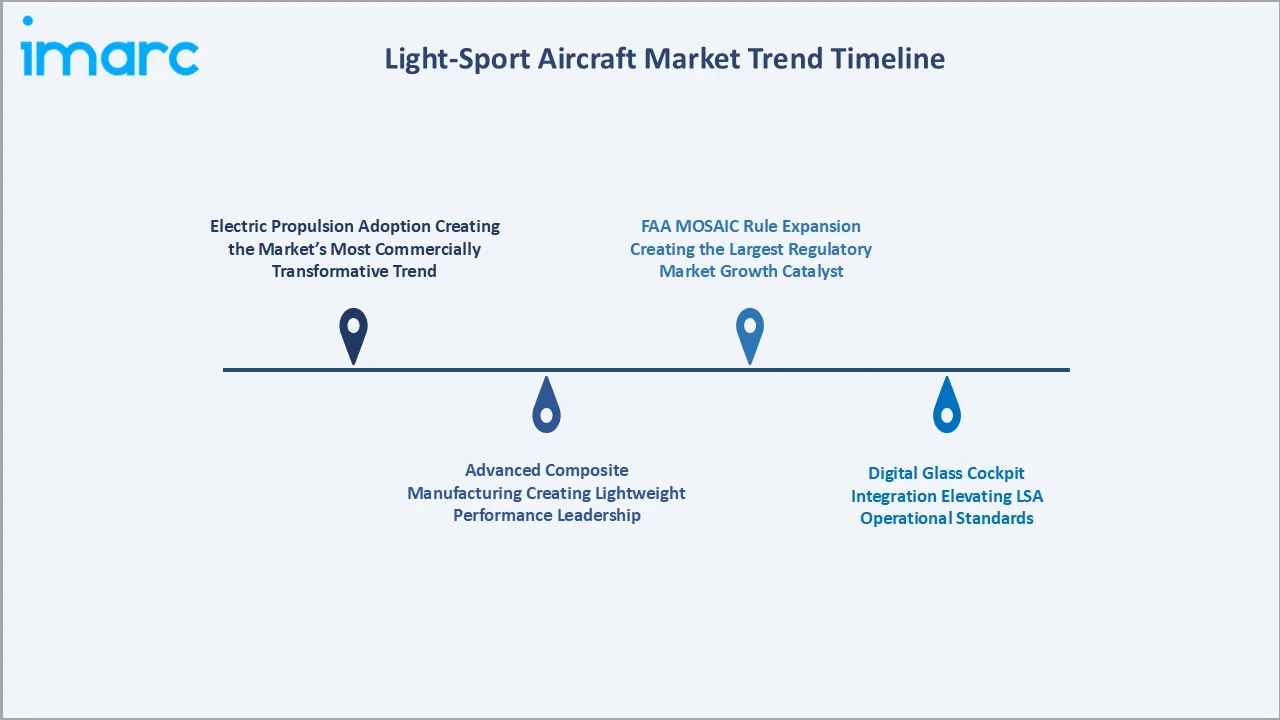
1. Electric Propulsion Adoption Creating the Market's Most Commercially Transformative Trend
Electric propulsion systems are transforming LSA operations by reducing per-flight-hour costs and noise footprint to levels that make urban and suburban airpark operations commercially viable. Certified electric LSAs are entering commercial use at accelerating rates, with Pipistrel's Alpha Electro representing the first type-certificated electric aircraft. Growing flight school adoption of electric LSAs for primary training circuits is establishing a new commercial standard for training aircraft economics, with energy costs of approximately USD 2-4 per flight-hour versus USD 30-50 for conventional piston LSAs.
2. FAA MOSAIC Rule Expansion Creating the Largest Regulatory Market Growth Catalyst
The FAA's proposed MOSAIC rule would expand LSA weight limits from 1,320 lbs to approximately 3,000 lbs and remove the two-seat restriction, substantially broadening the LSA category to encompass a large portion of existing general aviation aircraft. This regulatory development is anticipated to reclassify many established single-engine piston aircraft as eligible for Sport Pilot operations, dramatically expanding the addressable pilot population. Industry analysis suggests MOSAIC could add over 30,000 existing aircraft to the LSA-eligible fleet in the United States alone, creating substantial market demand for aircraft upgrades and avionics modernization.
3. Advanced Composite Manufacturing Creating Lightweight Performance Leadership
Advanced composite airframe manufacturing using carbon fiber, fiberglass, and hybrid polymer materials is enabling lighter, stronger, and more fuel-efficient LSA designs at progressively lower production costs. European manufacturers, particularly Czech and Italian producers, are leveraging composite expertise developed through glider manufacturing to produce premium LSAs with cruise performance and finish quality approaching Part 23 certified aircraft. Modern composite LSAs achieve empty weights below 700 lbs while delivering 120-knot cruise speeds, creating a performance profile that competes effectively with more complex and expensive standard category trainers.
4. Digital Glass Cockpit Integration Elevating LSA Operational Standards
Digital glass cockpit integration including multifunction displays with moving maps, ADS-B In/Out, digital engine monitoring, and integrated communication systems is now standard or near-standard equipment in new composite LSA production. These avionics advancements improve situational awareness and reduce pilot workload, making LSAs more operationally capable and attracting pilots transitioning from more complex aircraft. The standardization of glass cockpit equipment in LSA also aligns student pilot training environments with modern commercial cockpit standards, enhancing the training value proposition for flight academies evaluating LSA versus traditional trainer platforms.
Industry Value Chain Analysis
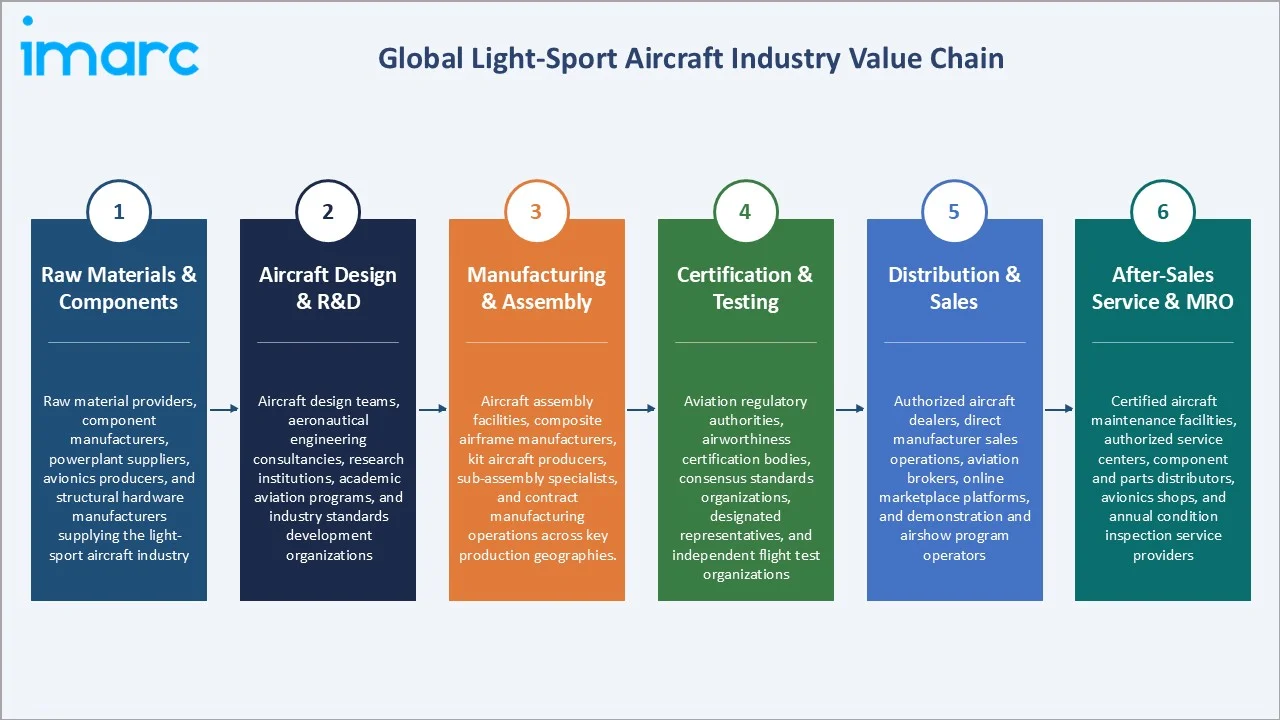
The light-sport aircraft value chain integrates raw material suppliers, component manufacturers, aircraft assemblers, certification bodies, distribution networks, and end-user service channels. Each stage creates commercial value while maintaining compliance with applicable airworthiness standards. The value chain's commercial structure creates the LSA market's unique competitive dynamic, where boutique European composite manufacturers compete alongside US-based kit aircraft producers and emerging Asian entrants at radically different price points, but with overlapping commercial objectives for the global sport pilot consumer.
|
Stage |
Key Participants |
|
Raw Materials & Components |
Raw material providers, component manufacturers, powerplant suppliers, avionics producers, and structural hardware manufacturers supplying the light-sport aircraft industry. |
|
Aircraft Design & R&D |
Aircraft design teams, aeronautical engineering consultancies, research institutions, academic aviation programs, and industry standards development organizations. |
|
Manufacturing & Assembly |
Aircraft assembly facilities, composite airframe manufacturers, kit aircraft producers, sub-assembly specialists, and contract manufacturing operations across key production geographies. |
|
Certification & Testing |
Aviation regulatory authorities, airworthiness certification bodies, consensus standards organizations, designated representatives, and independent flight test organizations. |
|
Distribution & Sales |
Authorized aircraft dealers, direct manufacturer sales operations, aviation brokers, online marketplace platforms, and demonstration and airshow program operators. |
|
After-Sales Service & MRO |
Certified aircraft maintenance facilities, authorized service centers, component and parts distributors, avionics shops, and annual condition inspection service providers. |
The certification and regulatory stage is the light-sport aircraft value chain's most commercially consequential stage, where manufacturers' ability to obtain ASTM certification and multi-jurisdiction airworthiness approval determines global market access. Manufacturers investing 20-30% of development budgets in regulatory compliance documentation, test programs, and airworthiness submissions gain multi-market sales authority that substantially expands their total addressable market versus single-market certification.
Technology Landscape in the Light-Sport Aircraft Industry
Composite Airframe and Structural Technologies
Composite airframe technologies using fiberglass, carbon fiber, and advanced polymer materials provide superior structural performance at lower weights compared to traditional aluminum construction. Composite manufacturing enables complex aerodynamic shapes that improve fuel efficiency and speed within LSA weight limits. Advances in pre-preg carbon fiber layup, vacuum-infused fiberglass construction, and CNC-routed core materials are progressively reducing composite LSA production costs while improving dimensional accuracy and structural consistency. Czech and Italian manufacturers have achieved global leadership in composite LSA production, combining aircraft engineering expertise with competitive labor cost structures to deliver premium composite LSAs at price points accessible to individual sport pilot buyers.
Electric and Hybrid-Electric Propulsion Technologies
Electric and hybrid-electric propulsion technologies are integrating sustainable energy with traditional aviation performance requirements. Certified electric LSAs powered by lithium-ion battery packs and brushless electric motors achieve zero direct emissions during flight operations, substantially reducing noise footprint and per-flight energy costs. In 2025, multiple manufacturers received expanded airworthiness approvals for second-generation electric LSAs featuring improved battery energy density of 250-300 Wh/kg, enabling 45-60 minute endurance at training power settings. Hybrid-electric systems combining small combustion engines with electric motor-generators are extending practical endurance to 2+ hours for cross-country recreational missions, bridging the performance gap between current electric and conventional piston LSA platforms. This technology trend encourages established manufacturers to innovate, attracting tech-oriented younger demographics and expanding the market beyond traditional aviation enthusiasts.
Digital Avionics and Connected Aircraft Systems
Digital avionics including multifunction displays, synthetic vision systems, GPS moving maps, ADS-B In/Out, and autopilot systems are standardizing the LSA cockpit environment at capability levels previously associated with far more expensive aircraft categories. Connected aircraft technology enabling real-time weather data overlay, traffic awareness, and electronic flight bag integration on tablet devices is further enhancing LSA operational capability. These avionics advancements improve safety through enhanced situational awareness while reducing the cognitive workload gap between LSA and commercial aircraft operations, strengthening LSA's value proposition for both primary training and proficiency flying applications.
Market Segmentation Analysis
The report covers the following segments:
|
Segment Category |
Leading Segment |
Market Share |
Year |
|
Type |
Airplane |
78.6% |
2025 |
|
Application |
Sport and Recreation |
48.7% |
2025 |
|
Distribution Channel |
🔒 |
🔒 |
2025 |
|
End User |
🔒 |
🔒 |
2025 |
|
Region |
Europe |
34.8% |
2025 |

By Type
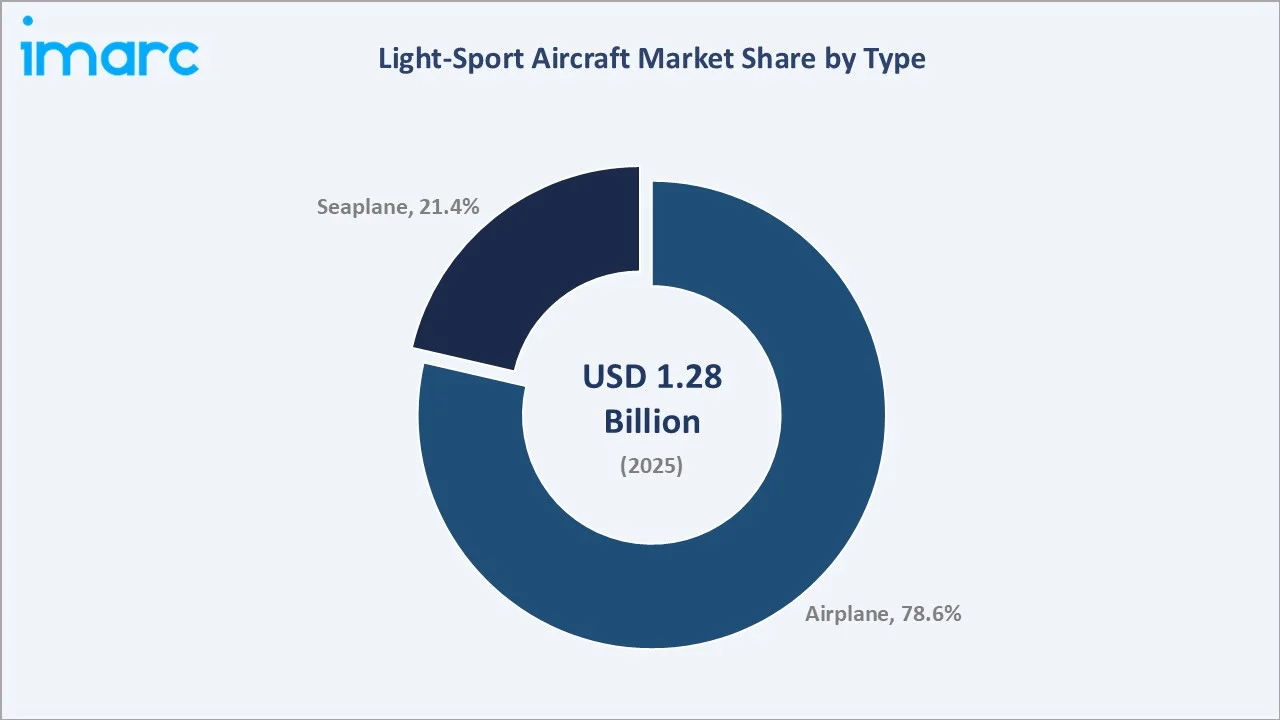
Airplane leads at 78.6% (2025). The airplane type segment encompasses the broadest range of LSA configurations, from high-wing composite trainers to low-wing sport cruisers. Airplanes benefit from established pilot familiarity, compatibility with existing general aviation infrastructure, widespread maintenance expertise, and the largest pool of available instructors and training resources. The airplane segment serves commercial demand across all three application categories — sport/recreation, flight training, and aircraft rental — maintaining its dominant market position across all geographies and regulatory frameworks.
To access detailed market analysis, Request Sample
Seaplane at 21.4% grows at ~4.8% CAGR through coastal and island tourism market development. Seaplanes offer unique access to water-based destinations unavailable to land-based LSAs, serving coastal sightseeing, island tourism, fishing, and remote area access applications. Growing investment in water-based recreational infrastructure across Southeast Asia, Scandinavia, and North American lake regions is creating new commercial operating environments for LSA-category seaplanes.
By Application
Sport and Recreation leads at 48.7% (2025). This application segment encompasses all recreational flying activities including cross-country touring, aerobatics, formation flying, air racing, and pleasure flying. Growth is driven by expanding pilot communities globally, rising disposable income supporting lifestyle aviation adoption, and the growing culture of aviation as an active recreational pursuit among health-conscious and adventure-oriented demographics. Sport and recreation flying is the primary application driver for the highest-performance and most innovative LSA designs.
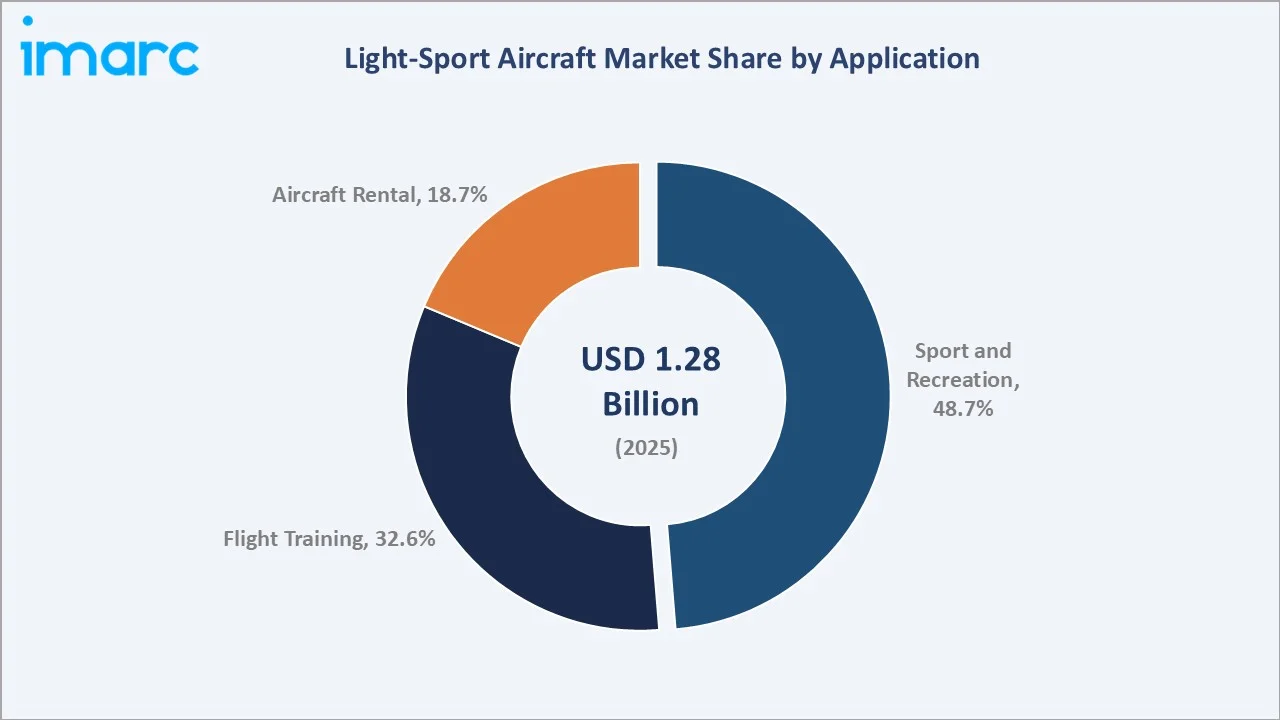
Flight Training at 32.6% grows fastest at ~6.2% CAGR through the global commercial pilot shortage driving sustained demand for cost-effective primary training platforms. LSAs serve as ideal primary trainers through lower hourly operating costs, appropriate performance characteristics for initial training, and favorable safety records. Aircraft Rental at 18.7% supports flying clubs, aero club fleets, and Part-time pilot proficiency programs, with the rental market providing accessible aircraft access for pilots unable to justify individual ownership costs.
Regional Market Insights
|
Region |
Share (2025) |
Key Light-Sport Aircraft Market Drivers & Characteristics |
|
Europe |
34.8% |
Strong GA culture, established LSA manufacturers (Czech Republic, Italy, Germany), dense airfield network, large aero club community |
|
North America |
28.6% |
Large sport pilot community, FAA regulatory framework support, growing training demand, affluent recreational buyer base |
|
Asia-Pacific |
20.4% |
Emerging aviation markets, rising commercial pilot training demand, fastest growth rate, expanding infrastructure investment |
|
Latin America |
9.2% |
Growing recreational aviation interest, tourism-driven coastal and island flying demand, cost-conscious buyer profile |
|
Middle East and Africa |
7.0% |
Aviation infrastructure expansion, government aviation investment programs, nascent sport flying culture in UAE and South Africa |
Europe's 34.8% market leadership reflects the continent's strong general aviation culture, dense airfield infrastructure, established LSA manufacturing base, and large active recreational pilot community. Countries including Czech Republic, Italy, Germany, France, and Austria collectively host the majority of global LSA production capacity and some of the world's highest concentrations of active sport pilots and aero club members.
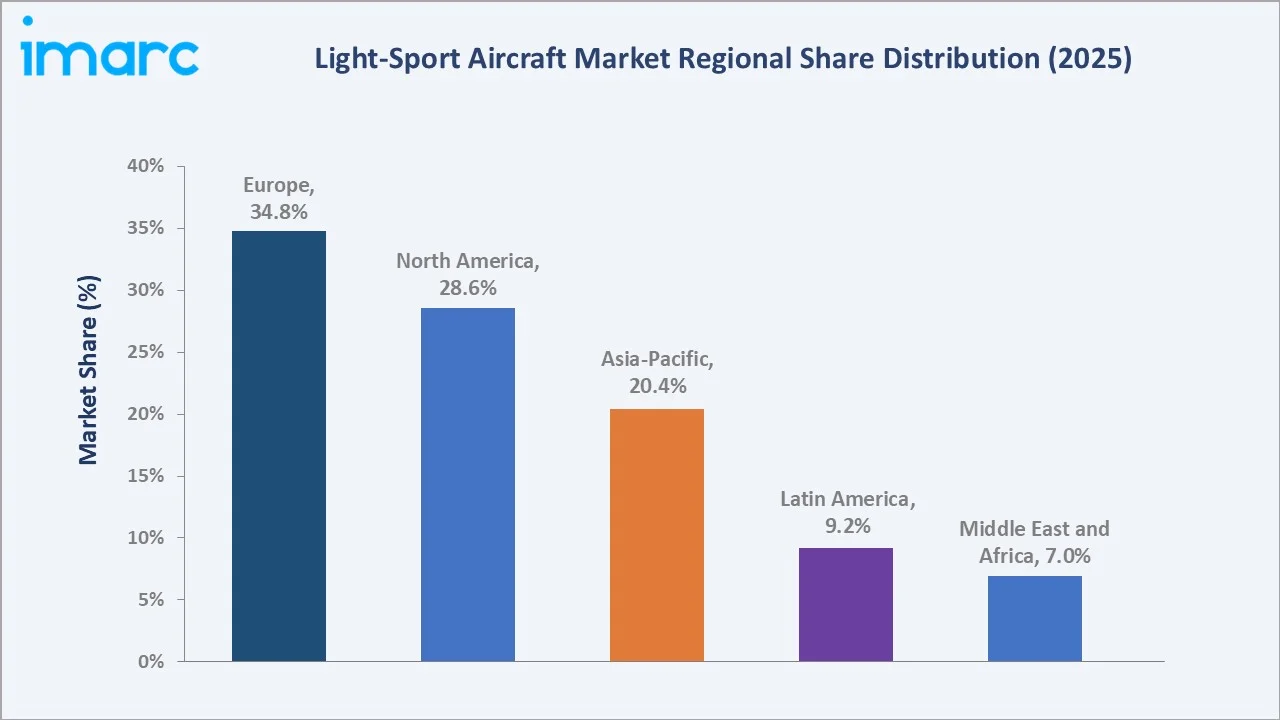
North America's 28.6% reflects the United States' large sport pilot license community and strong general aviation culture. FAA regulatory support since the 2004 sport pilot rule has enabled robust LSA adoption. North America's LSA rental and flight training segments are particularly developed relative to other regions. Asia-Pacific at 20.4% is the fastest-growing region, driven by commercial pilot training demand and government aviation infrastructure development across China, India, Australia, and Southeast Asia.
Competitive Landscape
Light-sport aircraft market competitive landscape is moderately fragmented, with no single manufacturer commanding more than 20-25% of global market share by revenue. European manufacturers, particularly Czech and Italian producers, hold significant market share through superior composite manufacturing capabilities, established export distribution networks, and decades of accumulated certification expertise. North American manufacturers benefit from proximity to the world's largest sport pilot community and regulatory relationships with the FAA as the primary LSA standard-setting authority.
|
Company |
Key Brands |
Market Position |
Core Strength |
|
Textron Aviation Inc. |
Cessna, Pipistrel |
Market Leader |
Textron Aviation combines Cessna's brand equity and dealer network with Pipistrel's electric LSA leadership, creating dual conventional-electric market positioning. |
|
Czech Sport Aircraft a.s. |
SportCruiser PS-28 |
Regional Leader |
Czech Sport Aircraft delivers cost-effective composite LSAs through Czech Republic's established manufacturing ecosystem. |
|
Fly Synthesis S.r.l. |
Storch HS, Texan Top Class |
Specialist |
Fly Synthesis S.r.l. specializes in customizable composite ultralight and LSA designs for the European recreational market. |
|
Jabiru Aircraft |
J170-D, J230-D series |
Niche Player |
Jabiru Aircraft commands strong position in the Southern Hemisphere LSA market through Australian manufacturing and regional dealer networks. |
The competitive landscape's most commercially significant emerging dynamic is the electric LSA segment's creation of new competitive positioning opportunities. Pipistrel (now Textron) has established first-mover advantages in certified electric LSA through regulatory leadership, with the Pipistrel Alpha Electro representing the world's first type-certificated electric aircraft. This electric positioning advantage creates a structurally different competitive position from conventional composite LSA market leadership, as flight school operating economics and environmental positioning increasingly favor electric platforms.
Key Company Profiles
Textron Aviation Inc.
Textron Aviation Inc. is a leading manufacturer of general and business aviation aircraft, operating the Cessna and Beechcraft brands alongside the Pipistrel electric aircraft division acquired in 2022. Through this portfolio, Textron holds market positions across both conventional and electric light-sport aircraft categories, operating a global distribution network spanning over 40 countries.
- Key Brands: Cessna, Beechcraft, Pipistrel Alpha Electro, Pipistrel Virus SW, Pipistrel Sinus.
- Recent Developments: In July 2025, Pipistrel, a Textron company, announced the establishment of a U.S.-based parts warehouse at Textron eAviation’s headquarters in Wichita, Kansas. The facility is designed to enhance parts distribution and customer support across North America, stocking components for Pipistrel’s current-production aircraft and supporting regular maintenance requests and warranty orders. The initiative forms part of Pipistrel’s broader investment in strengthening its U.S. customer-support infrastructure.
- Strategic Focus: Leveraging Pipistrel's electric LSA certification leadership to capture growing flight school demand for lower operating cost electric training aircraft, while maintaining conventional Cessna LSA market positions and expanding into Asian pilot training markets through fleet sales programs.
Czech Sport Aircraft a.s.
Czech Sport Aircraft a.s. is a Central European light-sport aircraft manufacturer producing the SportCruiser (PS-28) and PiperSport composite two-seat LSA platforms. The company benefits from Czech Republic's established LSA manufacturing ecosystem, a skilled composite manufacturing workforce, government export support, and strategic proximity to European and North American aviation markets.
- Key Brands: SportCruiser PS-28, PiperSport — composite two-seat LSA platforms certified under ASTM standards for the North American market and EASA CS-LSA for European operations.
- Strategic Focus: Expanding North American and Asia-Pacific distribution networks while integrating next-generation Garmin glass cockpit avionics packages to maintain product competitiveness and appeal to instrument-rated pilots seeking LSA platforms with familiar avionics environments.
Market Concentration Analysis
Light-sport aircraft market is moderately fragmented with no single manufacturer commanding more than 20-25% of global market share by revenue. European manufacturers collectively represent the largest production base, with Czech Republic and Italy accounting for the majority of new LSA airframe production. Textron Aviation's acquisition of Pipistrel has created the most commercially significant market consolidation event in LSA history, combining the world's largest aviation distribution network with the segment's leading electric platform portfolio.
Market concentration is evolving through two forces: established manufacturer consolidation through acquisition and distribution expansion creating larger multi-segment players, and electric LSA segment emergence creating new competitive categories structurally distinct from conventional composite LSA, where Pipistrel-Textron's first-mover certification advantages create near-term barriers to competitive parity for conventional manufacturers pivoting to electric platforms.
Investment & Growth Opportunities
Highest Growth Segments
Aircraft Rental (~6.2% CAGR) and Flight Training (~5.6% CAGR) represent the highest-growth application segments, collectively driving the light-sport aircraft market's strongest investment vectors through 2034.
Emerging Investment Opportunities
The electric LSA flight training market — growing as flight academies transition to lower operating cost electric platforms — represents the market's most commercially significant near-term investment opportunity. Operating cost advantages of 70-80% per flight-hour versus conventional LSA trainers create compelling economic incentives for flight school fleet transitions, with payback periods of 3-5 years at typical utilization rates justifying electric LSA capital investment despite higher acquisition costs.
Investment Themes
- Electric LSA manufacturing investment targeting the global flight training market, offering above-market CAGR through structural operating cost advantages versus conventional piston LSA training aircraft across the forecast period. First-mover certification advantages create near-term competitive moats for established electric LSA producers.
- Asia-Pacific pilot training infrastructure investment capturing the structural demand created by the global commercial pilot shortage, with Asia-Pacific pilot training demand growth rate exceeding any other region's LSA market expansion through 2034.
Future Market Outlook (2026-2034)
The light-sport aircraft market is projected to grow from USD 1.28 Billion in 2025 to USD 1.35 Billion in 2026, reaching USD 2.11 Billion by 2034, registering a CAGR of 5.40% during 2026-2034. The market's anchor value of USD 1.67 Billion in 2030 represents the light-sport aircraft market at a structural inflection. The electric LSA segment is growing as battery technology improvements extend practical endurance to commercial training mission lengths, the FAA MOSAIC rule implementation would substantially expand the addressable pilot and aircraft market, and Asia-Pacific's commercial aviation growth is creating sustained flight training demand requiring cost-effective primary trainer fleet expansion.
Three structural forces define the light-sport aircraft market's growth through 2034: regulatory modernization through MOSAIC substantially expanding the LSA category's addressable market; electric propulsion technology reaching commercial viability at scale for flight training operations; and sustained global commercial aviation expansion creating training aircraft requirements that favor LSA economics over more expensive traditional trainers.
Research Methodology
Primary Research
Primary research comprised structured interviews with light-sport aircraft industry stakeholders, including OEM Managing Directors, Chief Engineers, flight school operators, authorized dealers, FAA and EASA regulatory specialists, aviation finance professionals, and consumer survey data from sport pilot license holders across North America, Europe, and Asia-Pacific markets.
Secondary Research
Secondary research encompassed FAA and EASA aircraft registration databases, LSA manufacturer annual reports, EAA (Experimental Aircraft Association) industry data, LAMA (Light Aircraft Manufacturers Association) production statistics, aviation industry publications, ASTM standards documentation, and IATA commercial aviation pilot demand forecasts. Over 50 secondary sources reviewed.
Forecasting Models
Market revenue forecasts were developed using an aviation demand model incorporating regulatory environment indices, sport pilot population growth rates, GDP-linked discretionary aviation spending variables, commercial pilot demand projections, and technology adoption curves for electric propulsion and composite manufacturing cost reduction trajectories.
Light-Sport Aircraft Market Report Scope:
| Report Features | Details |
|---|---|
| Base Year of the Analysis | 2025 |
| Historical Period | 2020-2025 |
| Forecast Period | 2026-2034 |
| Units | Billion USD |
| Scope of the Report |
Exploration of Historical Trends and Market Outlook, Industry Catalysts and Challenges, Segment-Wise Historical and Future Market Assessment:
|
| Types Covered | Airplane, Seaplane |
| Applications Covered | Sport and Recreation, Flight Training, Aircraft Rental |
| Regions Covered | Asia Pacific, Europe, North America, Latin America, Middle East and Africa |
| Countries Covered | United States, Canada, Germany, France, United Kingdom, Italy, Spain, Russia, China, Japan, India, South Korea, Australia, Indonesia, Brazil, Mexico |
| Companies Covered | Textron Aviation Inc., Czech Sport Aircraft a.s., Fly Synthesis S.r.l., Jabiru Aircraft, etc. |
| Customization Scope | 10% Free Customization |
| Post-Sale Analyst Support | 10-12 Weeks |
| Delivery Format | PDF and Excel through Email (We can also provide the editable version of the report in PPT/Word format on special request) |
Key Benefits for Stakeholders:
- IMARC's report offers a comprehensive quantitative analysis of various market segments, historical and current market trends, market forecasts, and dynamics of the light-sport aircraft market from 2020-2034.
- The research study provides the latest information on the market drivers, challenges, and opportunities in the global light-sport aircraft market.
- The study maps the leading, as well as the fastest-growing, regional markets. It further enables stakeholders to identify the key country-level markets within each region.
- Porter's five forces analysis assists stakeholders in assessing the impact of new entrants, competitive rivalry, supplier power, buyer power, and the threat of substitution. It helps stakeholders to analyze the level of competition within the light-sport aircraft industry and its attractiveness.
- The competitive landscape allows stakeholders to understand their competitive environment and provides insight into the current positions of key players in the market.
Frequently Asked Questions About the Light-Sport Aircraft Market Report
Light-sport aircraft market size is estimated at USD 1.35 Billion in 2026, driven by growing recreational aviation demand, FAA regulatory modernization, and technological advancements in electric propulsion and composite manufacturing that are expanding the market's commercial and pilot addressable base.
Light-sport aircraft market grows at 5.40% CAGR during 2026-2034, reaching USD 2.11 Billion by 2034. Overall growth is sustained by electric LSA adoption, structural commercial pilot training demand, regulatory modernization through FAA MOSAIC, and geographic market expansion in Asia-Pacific.
Airplane leads at 78.6% through established general aviation infrastructure compatibility, broad pilot familiarity, and versatility across sport, training, and recreational missions. Seaplane at 21.4% represents a growing niche driven by coastal and island recreational market development.
Sport and Recreation leads at 48.7% through the large global recreational pilot community and growing lifestyle aviation adoption. Flight Training at 32.6% is the fastest-growing application driven by the global commercial pilot shortage. Aircraft Rental at 18.7% supports aero club and proficiency flying demand.
Europe leads at 34.8% through its strong general aviation culture, dense airfield infrastructure, and established LSA manufacturing base in Czech Republic, Italy, and Germany. North America follows at 28.6% as the largest single-country demand market through the US sport pilot community.
Leading companies include Textron Aviation Inc., Czech Sport Aircraft a.s., Fly Synthesis S.r.l. and Jabiru Aircraft, among other regional manufacturers.
Light-sport aircraft market is projected to reach approximately USD 1.67 Billion by 2030, with the electric LSA flight training segment growing as battery technology improvements extend practical endurance, MOSAIC rule implementation expanding the addressable market, and Asia-Pacific training infrastructure development reaching commercial scale.
Three priority investment opportunities: electric LSA manufacturing targeting the global flight training market with cost-per-flight-hour advantages of 70-80% versus conventional trainers; Asia-Pacific pilot training infrastructure capturing structural demand from the global commercial pilot shortage; and FAA MOSAIC rule addressable market positioning to capture the expanded LSA category's significant additional demand volume upon rule finalization.
Need more help?
- Speak to our experienced analysts for insights on the current market scenarios.
- Include additional segments and countries to customize the report as per your requirement.
- Gain an unparalleled competitive advantage in your domain by understanding how to utilize the report and positively impacting your operations and revenue.
- For further assistance, please connect with our analysts.
 Request Customization
 Speak to an Analyst
 Request Brochure
 Inquire Before Buying
Benefits of Customization
- Personalize this research
- Triangulate with your data
- Get data as per your format and definition
- Gain a deeper dive into a specific application, geography, customer, or competitor
- Any level of personalization
Get in Touch With Us
UNITED STATES
Phone: +1-201-971-6302
INDIA
Phone: +91-120-433-0800
UNITED KINGDOM
Phone: +44-753-714-6104
Email: [email protected]
Client Testimonials























Related Reports

Choose your plan
*Please note that the prices mentioned below are starting prices for each bundle type. Kindly contact our team for further details.*
Single User License
- 1 User License, Access on 2 Devices
- PDF Report + Excel Dataset (Password Protected)
- Lifetime Access
- No Printing Rights
- 10% Free Report Customization
- 10–12 Weeks of Analyst Support
Five User License
- Access for 5 Users, 2 Devices per User
- PDF Report + Excel Dataset (Password Protected)
- Lifetime Access
- Dedicated Account Manager
- 12–14 Weeks of Analyst Support
- No Printing Rights
- 15% Free Report Customization
- 25% Discount on Your Next Purchase
Corporate User License
- Unlimited User Access (Within Your Organization)
- PDF Report + Excel Dataset
- Lifetime Access
- Dedicated Account Manager
- 14–20 Weeks of Analyst Support
- No Printing Rights
- 20% Free Report Customization
- 30% Discount on Your Next Purchase
Essential Insights
What's included:
3 reports
- Lifetime Access
- PDF Reports
- Excel Datasets
- 2 Weeks of Free Analyst Support
- 2 User Licenses
- Access on 2 Devices
- Printing Rights
- Complimentary PowerPoint (PPT) Version
- Complimentary License Upgrade
Professional Access
What's included:
5 reports
- Lifetime Access
- PDF Reports
- Excel Datasets
- 8 Weeks of Free Analyst Support
- 2 User Licenses
- Access on 2 Devices
- Printing Rights
- Complimentary PowerPoint (PPT) Version
- Complimentary License Upgrade
Business Advantage
What's included:
8 reports
- Lifetime Access
- PDF Reports
- Excel Datasets
- 14 Weeks of Free Analyst Support
- 2 User Licenses
- Access on 2 Devices
- Printing Rights
- Complimentary PowerPoint (PPT) Version
- Complimentary License Upgrade
Enterprise Intelligence
What's included:
10 reports
- Lifetime Access
- PDF Reports
- Excel Datasets
- 20 Weeks of Free Analyst Support
- 2 User Licenses
- Access on 2 Devices
- Printing Rights
- Complimentary PowerPoint (PPT) Version
- Complimentary License Upgrade