
Linear Alkyl Benzene Prices, Trend, Chart, Demand, Market Analysis, News, Historical and Forecast Data Report 2026 Edition
Linear Alkyl Benzene Price Trend, Index and Forecast
Track the latest insights on linear alkyl benzene price trend and forecast with detailed analysis of regional fluctuations and market dynamics across North America, Latin America, Central Europe, Western Europe, Eastern Europe, Middle East, North Africa, West Africa, Central and Southern Africa, Central Asia, Southeast Asia, South Asia, East Asia, and Oceania.
Linear Alkyl Benzene Prices Outlook Q2 2026
- USA: USD 2143/MT
- China: USD 1608/MT
- Germany: USD 1672/MT
- South Korea: USD 1482/MT
- Saudi Arabia: USD 1538/MT
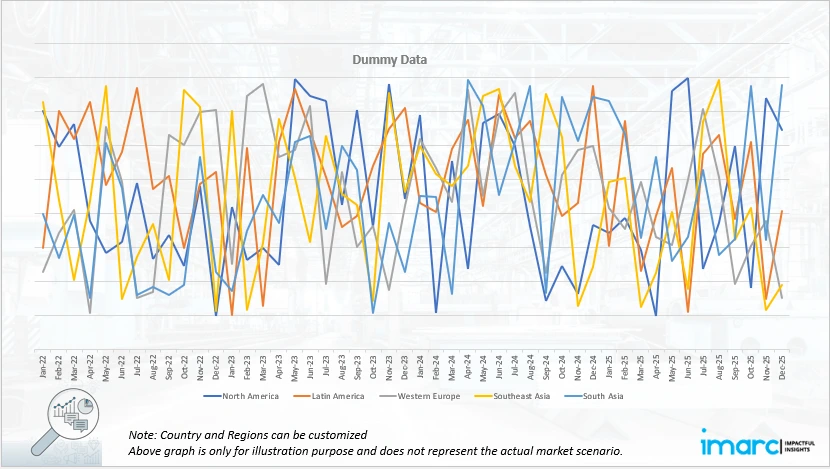
Linear Alkyl Benzene Price Chart
Get real-time access to monthly/quarterly/yearly prices Request Sample
During the second quarter of 2026, the linear alkyl benzene prices in the USA reached 2143 USD/MT in June. Prices in the country were supported by steady demand from detergent and surfactant manufacturing sectors, where purchasing activity remained consistent across household and industrial cleaning applications. Supply conditions were shaped by stable operating rates at domestic production facilities, though periodic feedstock cost variation influenced procurement decisions.
During the second quarter of 2026, the linear alkyl benzene prices in China reached 1608 USD/MT in June. The market was influenced by steady production activity and stable availability of key raw materials used in surfactant manufacturing. Domestic demand from detergent and cleaning product sectors remained consistent, supported by ongoing industrial and household consumption.
During the second quarter of 2026, the linear alkyl benzene prices in Germany reached 1672 USD/MT in June. The market was shaped by stable demand from specialty chemical and cleaning product manufacturers, with procurement activity aligned to long term supply agreements. Import dependency influenced overall pricing dynamics, as regional availability of feedstock and finished material played a key role in cost formation.
During the second quarter of 2026, the linear alkyl benzene prices in South Korea reached 1482 USD/MT in June. Pricing conditions were influenced by moderate demand from detergent manufacturing and surfactant blending industries. Domestic production and regional supply availability contributed to stable market conditions. Import parity levels from nearby Asian suppliers also affected purchasing decisions, leading to competitive procurement behavior.
During the second quarter of 2026, the linear alkyl benzene prices in Saudi Arabia reached 1538 USD/MT in June. Market conditions were supported by strong integration with petrochemical feedstock availability, which influenced production economics and supply stability. Domestic demand from surfactant and detergent industries remained consistent, while export oriented production provided additional market support. Supply chains benefited from established refining and petrochemical infrastructure, contributing to steady availability.
Linear Alkyl Benzene Prices Outlook Q1 2026
- USA: 2074 USD/MT
- China: 1588 USD/MT
- Germany: 1576 USD/MT
- South Korea: 1492 USD/MT
- Saudi Arabia: 1463 USD/MT
During the first quarter of 2026, the linear alkyl benzene prices in the USA reached 2074 USD/MT in March. Prices increased moderately, reflecting steady domestic demand across the cleaning and detergent industries. Supply constraints from reduced imports and production maintenance contributed to the upward trend. Additionally, transportation and logistics costs remained firm, supporting price growth despite stable feedstock availability.
During the first quarter of 2026, the linear alkyl benzene prices in China reached 1588 USD/MT in March. Prices rose gradually as domestic demand strengthened in the detergent and chemical sectors. Tight supply from regional producers and higher energy costs influenced the market. Import restrictions and port congestion added pressure on availability, which contributed to steady upward pricing.
During the first quarter of 2026, the linear alkyl benzene prices in Germany reached 1576 USD/MT in March. Prices strengthened noticeably, driven by increased demand from detergent and specialty chemical manufacturers. Production limitations due to maintenance and stricter environmental regulations contributed to a tighter supply. Energy price fluctuations and rising raw material costs further influenced the market.
During the first quarter of 2026, the linear alkyl benzene prices in South Korea reached 1492 USD/MT in March. Prices inched upward amid steady industrial consumption. Limited domestic supply, combined with rising energy costs and logistics constraints, supported the price movement. Import adjustments and regional demand from the detergent sector influenced buying patterns.
During the first quarter of 2026, the linear alkyl benzene prices in Saudi Arabia reached 1463 USD/MT in March. Prices showed mild growth supported by stable regional demand. Supply was generally adequate, but rising shipping costs and moderate feedstock adjustments contributed to upward trends. Procurement strategies reflected caution as regional buyers balanced inventory with anticipated market shifts.
Linear Alkyl Benzene Prices Outlook Q1 2025
- USA: USD 1826/MT
- China: USD 1550/MT
- Germany: USD 1227/MT
- South Korea: USD 1493/MT
- Saudi Arabia: USD 1505/MT
During the first quarter of 2025, the linear alkyl benzene prices in the USA reached 1826 USD/MT in March. As per the linear alkyl benzene price chart, the market was quite volatile, first dropping in January as a result of weak demand from important industries, including cleaning supplies and detergents. The problem was made worse by cold weather and excessive stockpiles, which caused prices to decline. But by February and March, demand started to increase.
During the first quarter of 2025, linear alkyl benzene prices in China reached 1550 USD/MT in March. Due to low demand, especially in January and February, when seasonal factors like the post-holiday period kept consumption low, the market had a poor start. Slow purchasing made it harder for businesses to boost prices despite growing feedstock costs. But by March, both domestic demand and LABSA consumption recovered, which contributed to price stability.
During the first quarter of 2025, the linear alkyl benzene prices in Germany reached 1227 USD/MT in March. The market experienced a mixed performance, with prices dropping initially due to weak demand post-holiday and an oversupply situation. However, as February and March rolled in, demand from the detergent and surfactant industries improved, helping to stabilize prices.
During the first quarter of 2025, the linear alkyl benzene prices in South Korea reached 1493 USD/MT in March. The market experienced erratic patterns, with prices falling in January and February. A difficult market environment resulted from low export activity, surplus inventories, and weak demand, especially from the detergent and cleaning product industries. But by March, the market was showing signs of recovery as LABSA demand and domestic consumption both increased.
During the first quarter of 2025, the linear alkyl benzene prices in Saudi Arabia reached 1505 USD/MT in March. The market faced challenges, with prices falling in the initial months of the quarter. Weak demand from key sectors such as detergents, along with excess supply and low export activity, put downward pressure on the market. In March, however, there was some recovery, driven by improving domestic demand and expectations of stronger consumption in the upcoming months.
Regional Coverage
The report provides a detailed analysis of the market across different regions, each with unique pricing dynamics influenced by localized market conditions, supply chain intricacies, and geopolitical factors. This includes price trends, price forecast and supply and demand trends for each region, along with spot prices by major ports. The report also provides coverage of FOB and CIF prices, as well as the key factors influencing linear alkyl benzene prices.
Europe Linear Alkyl Benzene Price Trend
Q2 2026:
Linear alkyl benzene pricing in Europe moved upward during the second quarter of 2026, supported by firm demand from detergent and surfactant manufacturers across key industrial economies. Import dependence continued to shape supply conditions, with limited regional production flexibility influencing pricing strength. Energy and utility cost pressures across manufacturing hubs added upward momentum to production economics. Buyers maintained contract based procurement, which reduced spot market availability and reinforced steady price transmission across the region. Downstream consumption from institutional and household cleaning sectors remained consistent, supporting sustained market absorption. Overall, prices trended higher due to constrained cost structures and stable demand conditions.
Q1 2026:
The linear alkyl benzene price index in Europe exhibited moderate growth. Strengthened industrial demand from detergent manufacturers and specialty chemical industries supported price increases. Supply constraints due to production maintenance and stricter environmental regulations tightened market availability. Rising energy costs further contributed to upward price pressure. Regional buyers adjusted procurement strategies, focusing on maintaining sufficient inventory while navigating market volatility. Logistics costs and port operations also influenced regional pricing, adding complexity to trade flows.
Q1 2025:
As per the linear alkyl benzene price index, the market saw mixed results. Prices dropped in January as a result of the post-holiday slowdown and regional overstock. Because of excess inventory and declining transportation rates, market sentiment remained weak despite rising feedstock costs. Prices started to increase in February as the detergent and surfactant sectors' demand rose, and the market was supported by supply constraints in some areas. By March, everything stabilized, with production costs under control and consistent purchases from downstream industries.
This analysis can be extended to include detailed linear alkyl benzene price information for a comprehensive list of countries.
| Region | Countries Covered |
|---|---|
| Europe | Germany, France, United Kingdom, Italy, Spain, Russia, Turkey, Netherlands, Poland, Sweden, Belgium, Austria, Ireland, Switzerland, Norway, Denmark, Romania, Finland, Czech Republic, Portugal, and Greece, among other European countries. |
North America Linear Alkyl Benzene Price Trend
Q2 2026:
Linear alkyl benzene prices in North America recorded a moderate upward movement, driven by steady consumption from cleaning product and detergent manufacturing industries. Stable operating rates at domestic production facilities supported supply continuity, though feedstock cost variations influenced producer pricing behavior. Import inflows remained balanced, but procurement strategies favored structured contracting rather than spot buying. Demand from household cleaning and industrial surfactant applications remained consistent, supporting stable offtake levels. Market sentiment reflected cautious purchasing patterns, which limited volatility but maintained a firm pricing bias across the region.
Q1 2026:
The linear alkyl benzene price index in North America showed a gradual upward movement. Domestic demand in the household and industrial cleaning sectors remained steady, while limited import availability and transportation costs bolstered prices. Maintenance schedules in regional production facilities affected supply levels, further supporting price growth. Buyers carefully balanced inventory with anticipated seasonal changes, ensuring continuity of supply. Regional market participants responded to price trends by adjusting procurement strategies, reflecting cautious optimism.
Q1 2025:
January experienced a drop because of high inventory levels, colder weather, and decreased demand from important businesses like detergents. This made it difficult to pass on growing feedstock prices, especially for benzene. But as the quarter went on, the LABSA sector's demand increased, aided by stronger economic activity and warmer weather. February saw a modest improvement as precautionary purchasing was prompted by rising feedstock prices and worries about possible tariffs.
Specific linear alkyl benzene historical data within the United States and Canada can also be provided.
| Region | Countries Covered |
|---|---|
| North America | United States and Canada |
Middle East and Africa Linear Alkyl Benzene Price Trend
Q2 2026:
Linear alkyl benzene prices in the Middle East and Africa region showed a firm trend, supported by strong petrochemical integration and steady feedstock availability. Production hubs benefited from cost efficient refining infrastructure, which supported consistent supply to both domestic and export markets. Demand from detergent and surfactant industries remained stable, particularly in urban consumption centers. Export oriented trade flows also contributed to market balance, with contract based shipments providing pricing stability. Overall, regional pricing remained firm due to steady industrial demand and strong upstream integration.
Q1 2026:
Pricing in the Middle East and Africa demonstrated mild increases. Stable regional demand from detergent manufacturers and cleaning product industries maintained consistent consumption levels, supporting modest upward pressure on prices. Supply was generally sufficient, though occasional feedstock fluctuations influenced short-term availability and prompted slight price adjustments. Rising shipping and transportation costs due to global fuel price changes further contributed to incremental price increases. Buyers monitored inventory levels carefully, avoiding excess stock while ensuring uninterrupted supply.
Q1 2025:
As per the linear alkyl benzene price chart, the market had a mixed performance. Prices fell in January and February as a result of surplus supply, low export activity, and waning demand from the detergent industries. Despite increased benzene costs, these factors caused prices to decline. A slight rebound was observed in March, nevertheless, as domestic demand escalated in expectation of elevated consumption in the upcoming months.
In addition to region-wise data, information on linear alkyl benzene prices for countries can also be provided.
| Region | Countries Covered |
|---|---|
| Middle East & Africa | Saudi Arabia, UAE, Israel, Iran, South Africa, Nigeria, Oman, Kuwait, Qatar, Iraq, Egypt, Algeria, and Morocco, among other Middle Eastern and African countries. |
Asia Pacific Linear Alkyl Benzene Price Trend
Q2 2026:
The linear alkyl benzene prices in Asia Pacific reflected a mixed movement pattern with slight upward bias across key consuming economies. Demand conditions remained steady from detergent and surfactant manufacturing sectors, supported by consistent household and industrial cleaning consumption. At the same time, competitive supply availability from regional producers helped limit sharp price escalation in several markets. Feedstock cost variations influenced production economics, leading to periodic adjustments in supplier offers. Export and intra regional trade flows remained active, though short term procurement strategies from buyers created uneven purchasing patterns across different markets.
Q1 2026:
Prices in the Asia Pacific edged higher. Industrial and detergent sector demand remained robust, particularly in major markets such as South Korea and China, driving steady buying activity. Domestic production was limited, creating reliance on imports and putting upward pressure on prices. Energy cost fluctuations and raw material variations affected production economics, contributing to moderate price increases. Regional logistics and shipping delays influenced delivery schedules, prompting buyers to adopt selective procurement strategies and staggered orders.
Q1 2025:
In Q1 2025, the Asia-Pacific LAB market had a range of outcomes. Prices were under pressure to decline in January and February due to a combination of poor export activity, excessive stockpiles, and weak demand. After the New Year, there was little foreign purchasing, particularly from China, and consumption in important areas like detergents stayed low. The strain was exacerbated by rising feedstock costs, which producers found difficult to pass on because of slow buying habits.
This linear alkyl benzene price analysis can be expanded to include a comprehensive list of countries within the region.
| Region | Countries Covered |
|---|---|
| Asia Pacific | China, India, Indonesia, Pakistan, Bangladesh, Japan, Philippines, Vietnam, Thailand, South Korea, Malaysia, Nepal, Taiwan, Sri Lanka, Hongkong, Singapore, Australia, and New Zealand, among other Asian countries. |
Latin America Linear Alkyl Benzene Price Trend
Q2 2026:
The supply chain is frequently impacted by logistical inefficiencies and infrastructure problems, which make it difficult for the area to reliably satisfy demand from elsewhere. When examining linear alkyl benzene pricing trends in this area, it is also important to take into account the linear alkyl benzene price index, economic volatility, and currency devaluation.
Q1 2026:
A thorough review of the region's distinct market dynamics, which are impacted by trade frameworks, industrial expansion, and economic policies, is provided by the examination of linear alkyl benzene pricing in Latin America.
Q1 2025:
Latin America's linear alkyl benzene market is predominantly influenced by its rich natural reserves, particularly in countries like Chile and Brazil. However, political instability and inconsistent regulatory frameworks can lead to significant volatility in linear alkyl benzene prices. Infrastructure challenges and logistical inefficiencies often impact the supply chain, affecting the region's ability to meet international demand consistently. Moreover, the linear alkyl benzene price index, economic fluctuations, and currency devaluation are critical factors that need to be considered when analyzing linear alkyl benzene pricing trends in this region.
This comprehensive review can be extended to include specific countries within the region.
| Region | Countries Covered |
|---|---|
| Latin America | Brazil, Mexico, Argentina, Columbia, Chile, Ecuador, and Peru, among other Latin American countries. |
Linear Alkyl Benzene Pricing Report, Market Analysis, and News
IMARC's latest publication, “Linear Alkyl Benzene Prices, Trend, Chart, Demand, Market Analysis, News, Historical and Forecast Data Report 2026 Edition,” presents a detailed examination of the linear alkyl benzene market, providing insights into both global and regional trends that are shaping prices. This report delves into the spot price of linear alkyl benzene at major ports and analyzes the composition of prices, including FOB and CIF terms. It also presents detailed linear alkyl benzene prices trend analysis by region, covering North America, Europe, Asia Pacific, Latin America, and Middle East and Africa. The factors affecting linear alkyl benzene pricing, such as the dynamics of supply and demand, geopolitical influences, and sector specific developments, are thoroughly explored. This comprehensive report helps stakeholders stay informed with the latest market news, regulatory updates, and technological progress, facilitating informed strategic decision-making and forecasting.
Linear Alkyl Benzene Industry Analysis
The global linear alkyl benzene industry size reached 4.7 Million Tons in 2025. By 2034, IMARC Group expects the market to reach 6.3 Million Tons, at a projected CAGR of 3.26% during 2026-2034. Market growth is driven by the rising demand in detergent and cleaning product industries, expanding industrial applications in chemical intermediates, and increasing regional production capacity to meet growing consumption.
Latest News and Developments:
- May 2026: Honeywell was selected by Egyptian Linear Alkyl Benzene Company (ELAB) to provide petrochemical licensing, technologies, and engineering services to increase normal paraffin production at ELAB’s facility in Egypt. The project included the addition of new processing units and upgrades to existing infrastructure, enabling Egyptian Linear Alkyl Benzene Company to expand production capacity within an accelerated timeline.
- January 2023: Cepsa Química presented NextLab, the world's first sustainable linear alkyl benzene (LAB). LAB is used to produce linear alkyl benzene sulfonate (LAS), the largest primary surfactant used in the homecare industry to manufacture biodegradable detergents.
- July 2022: Sasol Chemicals earned certification from the International Sustainability and Carbon Certification (ISCC) system for its three largest manufacturing facilities in Europe. The facilities of the company in Marl and Brunsbüttel, Germany, and Augusta, Italy, earned ISCC-PLUS certification for the use of mass balanced bio-based and recycled feedstocks in the production of alcohols, ethoxylates, linear alkyl benzenes and derivatives.
Product Description
Linear alkyl benzene is an organic chemical compound primarily used as a key raw material in the production of linear alkylbenzene sulfonate, which is a widely used surfactant in detergents and cleaning agents. It is typically produced through the alkylation of benzene with long chain linear olefins derived from kerosene or similar petroleum fractions. The compound is characterized by a linear hydrocarbon chain attached to a benzene ring, which provides strong biodegradability compared to branched alternatives. It is a colorless to pale yellow liquid with good chemical stability and compatibility with sulfonation processes. Linear alkyl benzene is widely used in household detergents, industrial cleaners, dishwashing liquids, textile auxiliaries, and institutional cleaning formulations. Its performance in producing effective surfactants, combined with cost efficiency and environmental acceptability, makes it a core intermediate in the global surfactant industry.
Report Coverage
| Key Attributes | Details |
|---|---|
| Product Name | Linear Alkyl Benzene |
| Report Features | Exploration of Historical Trends and Market Outlook, Industry Demand, Industry Supply, Gap Analysis, Challenges, Linear Alkyl Benzene Price Analysis, and Segment-Wise Assessment. |
| Currency/Units | US$ (Data can also be provided in local currency) or Metric Tons |
| Region/Countries Covered | The current coverage includes analysis at the global and regional levels only. Based on your requirements, we can also customize the report and provide specific information for the following countries: Asia Pacific: China, India, Indonesia, Pakistan, Bangladesh, Japan, Philippines, Vietnam, Thailand, South Korea, Malaysia, Nepal, Taiwan, Sri Lanka, Hongkong, Singapore, Australia, and New Zealand Europe: Germany, France, United Kingdom, Italy, Spain, Russia, Turkey, Netherlands, Poland, Sweden, Belgium, Austria, Ireland, Switzerland, Norway, Denmark, Romania, Finland, Czech Republic, Portugal and Greece North America: United States and Canada Latin America: Brazil, Mexico, Argentina, Columbia, Chile, Ecuador, and Peru Middle East & Africa: Saudi Arabia, UAE, Israel, Iran, South Africa, Nigeria, Oman, Kuwait, Qatar, Iraq, Egypt, Algeria, and Morocco The list of countries presented is not exhaustive. Information on additional countries can be provided if required by the client. |
| Information Covered for Key Suppliers |
|
| Customization Scope | The report can be customized as per the requirements of the customer |
| Report Price and Purchase Option |
Plan A: Monthly Updates - Annual Subscription
Plan B: Quarterly Updates - Annual Subscription
Plan C: Biannually Updates - Annual Subscription
|
| Post-Sale Analyst Support | 360-degree analyst support after report delivery |
| Delivery Format | PDF and Excel through email (We can also provide the editable version of the report in PPT/Word format on special request) |
Key Benefits for Stakeholders:
- IMARC’s report presents a detailed analysis of linear alkyl benzene pricing, covering global and regional trends, spot prices at key ports, and a breakdown of Ex Works, FOB, and CIF prices.
- The study examines factors affecting linear alkyl benzene price trend, including raw material costs, supply-demand shifts, geopolitical impacts, and industry developments, offering insights for informed decision-making.
- The competitive landscape review equips stakeholders with crucial insights into the latest market news, regulatory changes, and technological advancements, ensuring a well-rounded, strategic overview for forecasting and planning.
- IMARC offers various subscription options, including monthly, quarterly, and biannual updates, allowing clients to stay informed with the latest market trends, ongoing developments, and comprehensive market insights. The linear alkyl benzene price charts ensure our clients remain at the forefront of the industry.
Need more help?
- Speak to our experienced analysts for insights on the current market scenarios.
- Include additional segments and countries to customize the report as per your requirement.
- Gain an unparalleled competitive advantage in your domain by understanding how to utilize the report and positively impacting your operations and revenue.
- For further assistance, please connect with our analysts.
 Request Customization
 Inquire Before Buying
 Speak to an Analyst
 Request Brochure
Benefits of Customization
- Personalize this research
- Triangulate with your data
- Get data as per your format and definition
- Gain a deeper dive into a specific application, geography, customer, or competitor
- Any level of personalization
Get in Touch With Us
UNITED STATES
Phone: +1-201-971-6302
INDIA
Phone: +91-120-433-0800
UNITED KINGDOM
Phone: +44-753-714-6104
Email: [email protected]
Client Testimonials




.webp)




.webp)













Related Reports

Why Choose Us
IMARC offers trustworthy, data-centric insights into commodity pricing and evolving market trends, enabling businesses to make well-informed decisions in areas such as procurement, strategic planning, and investments. With in-depth knowledge spanning more than 1000 commodities and a vast global presence in over 150 countries, we provide tailored, actionable intelligence designed to meet the specific needs of diverse industries and markets.
1000
+Commodities
150
+Countries Covered
3000
+Clients
20
+Industry

Robust Methodologies & Extensive Resources
IMARC delivers precise commodity pricing insights using proven methodologies and a wealth of data to support strategic decision-making.

Subscription-Based Databases
Our extensive databases provide detailed commodity pricing, import-export trade statistics, and shipment-level tracking for comprehensive market analysis.

Primary Research-Driven Insights
Through direct supplier surveys and expert interviews, we gather real-time market data to enhance pricing accuracy and trend forecasting.

Extensive Secondary Research
We analyze industry reports, trade publications, and market studies to offer tailored intelligence and actionable commodity market insights.
Trusted by 3000+ industry leaders worldwide to drive data-backed decisions. From global manufacturers to government agencies, our clients rely on us for accurate pricing, deep market intelligence, and forward-looking insights.