
Margarine Market Size, Share, Trends and Forecast by Source, Form, Distribution Channel, Application, and Region, 2026-2034
Margarine Market Size and Share:
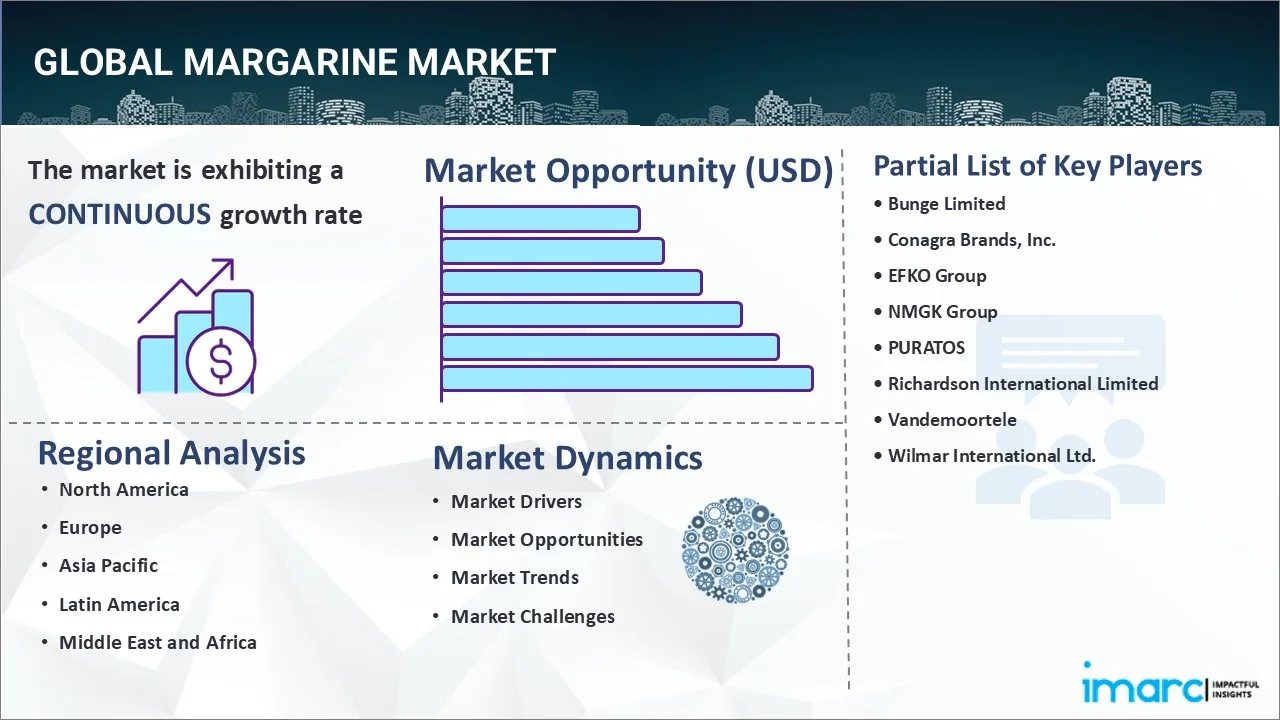
The global margarine market size was valued at USD 3.75 Billion in 2025. Looking forward, IMARC Group estimates the market to reach USD 4.84 Billion by 2034, exhibiting a CAGR of 2.63% from 2026-2034. North America currently dominates the market, holding a market share of 33.8% in 2025. The region benefits from an expansive food processing industry, a strong retail infrastructure, the growing health consciousness among consumers, and sustained demand for cost-effective butter alternatives, with rising adoption of plant-based and trans-fat-free formulations, thus contributing to the margarine market share.
The margarine market is witnessing steady global growth driven by a confluence of factors that underscore its versatility and affordability as a butter substitute in both household and industrial settings. Rising awareness about cholesterol management and heart health is encouraging consumers to seek lower saturated fat alternatives to dairy butter, creating a shift toward margarine across multiple demographics. The growing global aging population, increasingly conscious of dietary choices to manage cardiovascular health, is supporting this transition. Moreover, a rise in veganism and plant-based lifestyles is expanding the consumer base for non-dairy fat products, as margarine aligns naturally with vegan dietary principles. Ongoing product innovations, including fortified margarine enriched with omega-3 fatty acids and plant sterols, are further strengthening the margarine market growth by appealing to health-conscious individuals seeking functional and nutritionally enriched everyday food products.
The United States is emerging as a major region in the margarine market due to strong consumer demand for affordable and versatile cooking fats across both household and foodservice channels. Margarine continues to be widely used in baking, frying, and food preparation, supported by its cost advantage over butter and its suitability for large-scale culinary applications. The growth of modern retail and digital sales channels is further improving product availability and consumer access. Reflecting this broader retail expansion, the U.S. Census Bureau reported that retail e-commerce sales reached USD 310.3 billion in the third quarter of 2025, representing a 1.9% increase from the second quarter of the same year. This steady expansion in retail distribution networks is facilitating easier market access for packaged food products, including margarine, thereby strengthening overall market growth in the country.
To get more information on this market Request Sample
Margarine Market Trends:
Increasing Product Innovation with Functional and Flavor Enhancements
Product innovation focused on enhanced flavor profiles and functional benefits is emerging as a key trend influencing the margarine market. Manufacturers are introducing variants that replicate the taste and texture of premium dairy products while maintaining the cost efficiency and versatility associated with margarine. These developments are expanding the product’s use across diverse culinary applications, including baking, cooking, and spreading. Furthermore, companies are incorporating nutritional enhancements to align with evolving consumer expectations for value-added food products. Such innovations allow margarine to compete more effectively with butter and other spreads in both retail and foodservice sectors. Reflecting this trend, in 2025, Lam Soon (Thailand) Public Company launched Zest Gold Cheese Flavored Margarine in Thailand, offering a product with a natural cheese aroma and creamy, spreadable texture enriched with Omega 3, 6, and 9. The product was designed for both sweet and savory preparations, demonstrating how manufacturers are combining flavor innovation with functional and nutritional attributes to strengthen product appeal.
Rise of Manufacturing Infrastructure to Strengthen Regional Supply
The expansion of manufacturing infrastructure is playing an important role in supporting the growth of the margarine market. Companies are investing in modern production facilities to increase manufacturing capacity, improve operational efficiency, and ensure a stable supply of specialized margarine products for bakery and foodservice industries. These investments enable producers to develop a broader portfolio of margarine and fat-based solutions tailored to industrial baking and patisserie applications. In addition, the establishment of advanced facilities supports regional distribution networks, reducing logistical constraints and improving product availability in emerging markets. Sustainability considerations are also becoming a priority, with manufacturers integrating energy-efficient technologies and lower-emission processes into new production sites. Demonstrating this trend, in 2024, Puratos Group opened a state-of-the-art margarine production facility in Kragujevac, Serbia, with an investment of €7 million. The plant enabled expanded production of margarine and Mimetic solutions for the bakery sector across Serbia and the Western Balkans while reducing CO₂ emissions and supporting local employment.
Growing Demand for Health-Oriented and Plant-Based Margarine Products
The increasing demand for health-oriented and plant-based food products is significantly influencing innovation within the margarine market. Consumers are increasingly seeking alternatives that align with dietary preferences, such as vegan, plant-based, and trans fat-free formulations, encouraging manufacturers to reformulate products while maintaining desirable taste and performance characteristics. Margarine producers are responding by introducing specialized variants that cater to both household consumers and professional bakers looking for healthier ingredient options without compromising baking quality or texture. This shift is also encouraging the development of products with improved functional properties, such as enhanced whipping, aeration, and stability in baked goods. Reflecting this trend, in 2024, Sinar Mas Agribusiness and Food showcased new margarine and shortening innovations at SIAL InterFOOD in Jakarta. The company introduced Palmboom® Cake Margarine Vegan, a trans fat-free vegan margarine, along with FILMA® Prestige butter-blend margarine developed specifically for bakery applications, highlighting the industry’s growing emphasis on healthier formulations and plant-based solutions.
Margarine Industry Segmentation:
IMARC Group provides an analysis of the key trends in each segment of the global margarine market, along with forecast at the global, regional, and country levels from 2026-2034. The market has been categorized based on source, form, distribution channel, and application.
Analysis by Source:
To get detailed segment analysis of this market Request Sample
- Plant
- Animal
Plant holds 88.3% of the market share. Plant-based margarine leads the market, supported by increasing consumer preference for plant-derived food products and the functional advantages offered by vegetable oil–based formulations. Margarine produced from oils, such as soybean, sunflower, canola, and palm, provides cost efficiency and versatile performance in cooking, baking, and food processing. The growing adoption of vegan and flexitarian diets is further encouraging consumers to select plant-based spreads over animal-derived alternatives. Manufacturers are also improving product formulations by incorporating healthier oil blends and fortifying products with vitamins and functional ingredients to enhance nutritional value. Reflecting this innovation, in 2024, Flora, owned by Upfield, launched a limited-edition plant-based smoked garlic butter as part of its spreads and margarine range. The vegan and allergen-free product was designed for savory dishes like pasta and garlic mushrooms and was positioned as having a significantly lower climate impact than traditional dairy butter.
Analysis by Form:
- Sticks
- Cubes
- Tubs
- Liquid
- Others
Tubs lead the market with a share of 38.7%, driven by their strong appeal among household and commercial consumers seeking convenience, easy handling, and flexible portion usage. Soft, spreadable margarine packaged in tubs allows immediate use for spreading, cooking, and baking without prior softening, making it particularly suitable for daily household consumption. The packaging also enables consumers to visually assess product freshness and quality in retail environments, supporting purchase confidence. In commercial food preparation, tub containers simplify storage and allow efficient measurement during large-scale bakery operations. Sustainability considerations are also shaping packaging innovation in this segment. Reflecting this shift, in 2024, Upfield introduced what it described as the world’s first paper margarine tub for its Flora brand in the United Kingdom, distributed across 386 Sainsbury’s stores. The packaging was made from compressed wet paper fibres and can be recycled as paper or cardboard waste, supporting the company’s goal of reducing plastic use across its portfolio by 80% by 2030.

Analysis by Distribution Channel:
- Hypermarkets and Supermarkets
- Convenience Stores
- Specialty Stores
- Online Stores
- Others
Hypermarkets and supermarkets dominate the market, with a share of 45.4%, because of their ability to provide extensive product variety, competitive pricing, and convenient shopping experiences. These large-format retail outlets offer strong shelf visibility for margarine products in multiple formats, including sticks, tubs, and liquid variants, allowing consumers to compare brands and select products based on price, quality, and functionality. Retail chains are also expanding private-label margarine offerings, increasing competition and encouraging manufacturers to improve product quality and maintain price competitiveness. Product launches through organized retail further strengthen sales through this channel. In 2024, Bangladesh’s TK Group introduced Pusti margarine, Dolce Vita margarine, and Pusti special ghee at its headquarters in Karwan Bazar. The products were launched in multiple pack sizes and distributed across markets nationwide, reflecting how manufacturers are leveraging retail networks to expand their edible fats portfolios and improve market reach. These developments support a positive margarine market forecast driven by strong retail distribution networks.
Analysis by Application:
- Household
- Bakery
- Confectionery
- Spreads, Sauces and Toppings
- Others
Bakery represents the leading segment, with a market share of 33.8%, due to the essential functional role margarine plays in large-scale and artisanal baked goods production. It is widely used in bread, cakes, pastries, biscuits, and other processed bakery items because it delivers reliable creaming, shortening, and laminating properties that support consistent texture and product quality. Margarine also offers advantages, such as heat stability, longer shelf life, and a lower cost compared to butter, making it a preferred ingredient for commercial bakeries seeking efficiency and standardized output. The importance of this segment is reflected in product developments targeted at bakery users. For example, in 2025, BlueBand, a brand of Flora Food Group, launched BlueBand Master Cake Margarine 500g alongside the “BlueBand Professional UMKM Star #AhlinyaRasaSukses” program in Indonesia to support culinary MSMEs. The new economy pack margarine was designed to provide affordable, high-quality baking ingredients for small food businesses.
Regional Analysis:
To get more information on the regional analysis of this market Request Sample
- North America
- United States
- Canada
- Europe
- Germany
- France
- United Kingdom
- Italy
- Spain
- Russia
- Others
- Asia Pacific
- China
- Japan
- India
- South Korea
- Australia
- Indonesia
- Others
- Latin America
- Brazil
- Mexico
- Others
- Middle East and Africa
- Turkey
- Saudi Arabia
- United Arab Emirates
- Others
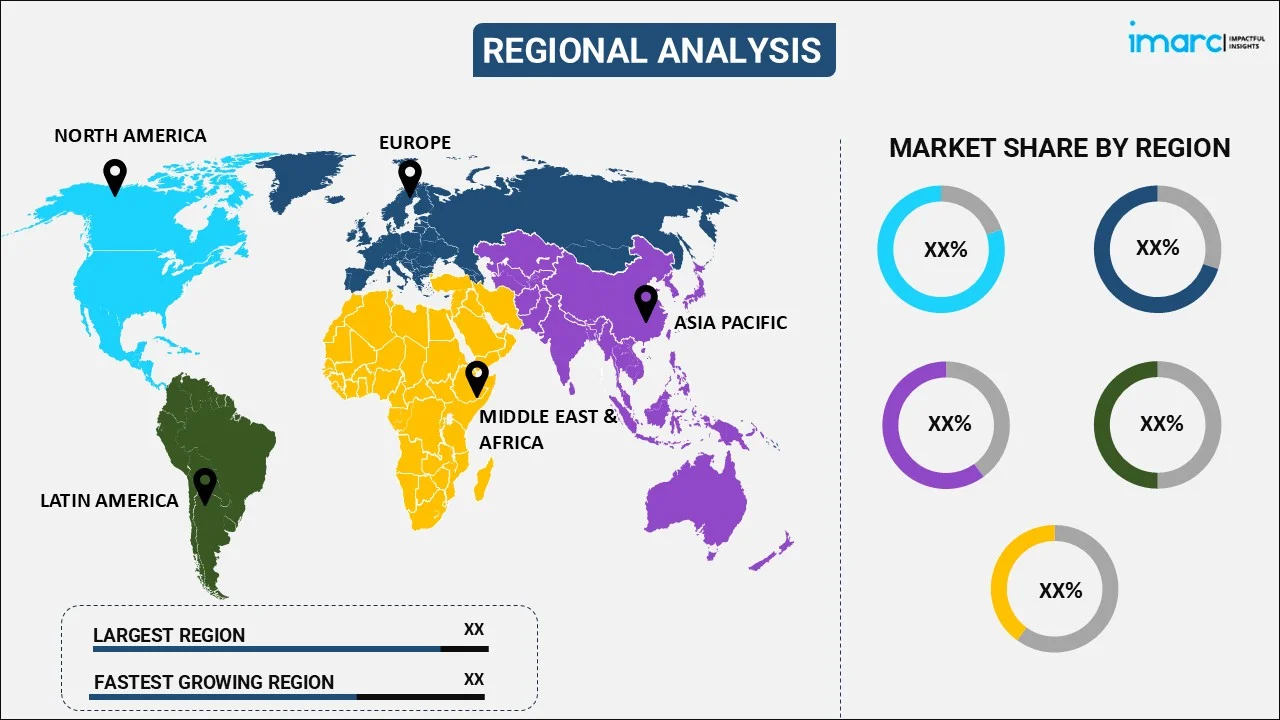
North America, accounting for 33.8% of the share, enjoys the leading position in the market. The dominance is supported by its large-scale food processing sector, well-developed retail systems, and strong consumption of baked goods and packaged foods that rely on margarine as a key ingredient. The region benefits from widespread distribution through supermarkets, hypermarkets, and expanding digital retail channels that improve consumer access to food products. The growing role of online retail is also influencing purchasing patterns across packaged food categories. Reflecting this shift, according to the International Trade Administration (ITA), e-commerce accounted for 6.1% of total Canadian retail sales in December 2024, with online retail sales reaching approximately US$3.14 billion. The expansion of both physical and digital retail networks is supporting product availability and reinforcing margarine consumption across household and commercial food preparation segments throughout North America. These developments collectively reflect evolving margarine market trends in the region.
Key Regional Takeaways:
United States Margarine Market Analysis
The United States accounts for 85.50% of the margarine market in North America and remains the most significant national market globally due to its diverse demand base across households, bakeries, foodservice establishments, and large-scale food processors. Consumer preferences are gradually shifting toward plant-based, non-GMO, and allergen-free formulations, reflecting broader dietary awareness and evolving lifestyle choices. Regulatory actions, including restrictions on partially hydrogenated oils and guidance on dietary fat consumption issued by the U.S. Food and Drug Administration, have accelerated the transition toward healthier, trans-fat-free margarine products. These developments are occurring alongside increased scientific focus on the health implications of different fat sources. In this context, a 2025 long-term study published in The American Journal of Clinical Nutrition, based on data from more than 121,000 participants across three U.S. cohort studies, found that higher olive oil consumption was associated with lower weight gain over time when compared with fats such as butter, margarine, and vegetable oils. Such findings are reinforcing consumer attention toward fat quality and influencing product reformulation strategies across the margarine industry.
Europe Margarine Market Analysis
Europe represents a vital market for margarine, characterized by strong consumer preference for plant-based spreads, strict food quality regulations, and continuous product innovation focused on sustainability and health-conscious formulations. Manufacturers in the region are increasingly introducing dairy-free and allergen-friendly alternatives that cater to the growing demand for vegan and lactose-free food products. In addition, packaging innovations and sustainable sourcing practices are becoming central to brand positioning across European retail channels. Reflecting this shift toward plant-based innovation, in 2024, Vandemoortele launched a new 100% plant-based baking and frying margarine in Belgium under its Vandemoortele® brand. The product, made from sunflower oil and designed to deliver a butter-like taste, was free from lactose and gluten and packaged in recyclable rPET squeeze bottles. It was distributed through major Belgian supermarkets, including Delhaize, Spar, Okay, and Carrefour, highlighting the region’s emphasis on sustainable packaging and plant-based food alternatives.
Asia-Pacific Margarine Market Analysis
The Asia-Pacific region represents a rapidly expanding market for margarine, driven by rising consumption of processed foods, expanding bakery industries, and strengthening regulatory frameworks that influence food production and labeling practices. Governments across the region are increasingly focusing on transparency and food safety standards, encouraging manufacturers to improve product labeling and ingredient disclosure. This regulatory environment is shaping product development and consumer awareness in the edible oils and spreads segment. Reflecting this trend, in 2026, South Korea’s Ministry of Food and Drug Safety proposed expanding GMO labeling requirements to include soy sauce, sugars, and edible oils produced using GMO raw materials. The draft regulation introduces phased implementation, beginning with soy sauce labeling by December 31, 2026, and extending to sugars and edible oils, including margarine and shortening, from December 31, 2027, supporting greater transparency in food labeling.
Latin America Margarine Market Analysis
Latin America presents growing opportunities for margarine producers, fueled by expanding retail networks, increasing urbanization, and rising adoption of digital shopping platforms that improve access to packaged food products. The growing penetration of e-commerce and organized retail is enabling consumers to purchase a wider range of spreads and cooking ingredients with greater convenience. This structural shift is reflected in market scale, as Brazil’s e-commerce sector was projected to generate USD 36.3 billion in revenue in 2025, with an estimated 94 million Brazilians making online purchases, up by 3 million compared to 2024, according to the Associação Brasileira de Comércio Eletrônico (ABCOMM). The expansion of these retail channels is improving product availability and offering a favorable margarine market outlook in the region.
Middle East and Africa Margarine Market Analysis
The Middle East and Africa region is witnessing growth in margarine demand due to increasing local production initiatives, expanding food processing industries, and rising consumption of affordable cooking fats across households and bakeries. Governments and private companies are also supporting domestic manufacturing to reduce reliance on imports and strengthen regional supply chains. Reflecting this shift toward local production capacity, in 2024, Wilmar Africa launched Fortune all-purpose margarine, Fortune spread, and Fortune shortening while commissioning the largest margarine factory in Ghana at Tema. The products were enriched with vitamins A and D and designed for baking, cooking, spreading, and toasting, supporting job creation and strengthening Ghana’s palm oil value chain.
Competitive Landscape:
The margarine market operates within a moderately consolidated competitive environment where multinational food companies with strong oil processing capabilities, established research and development (R&D) functions, and extensive distribution systems maintain leading positions. These players focus on product innovation to respond to changing user preferences, particularly through plant-based formulations, reduced saturated fat profiles, and trans-fat-free alternatives. Sustainability initiatives, including responsible palm oil sourcing and improved supply chain transparency, are also gaining importance as companies respond to regulatory pressure and consumer expectations. Strategic acquisitions and partnerships are commonly used to strengthen regional presence, broaden product portfolios, and improve access to raw materials. At the same time, private label products introduced by large retail chains are expanding rapidly and offering competitively priced alternatives to branded margarine. This trend is pushing established manufacturers to strengthen brand differentiation through premium product positioning, improved taste and texture, functional ingredients, and health-oriented formulations that appeal to increasingly nutrition-conscious consumers.
The report provides a comprehensive analysis of the competitive landscape in the margarine market with detailed profiles of all major companies, including:
- Bunge Limited
- Conagra Brands, Inc.
- EFKO Group
- NMGK Group
- PURATOS
- Richardson International Limited
- Vandemoortele
- Wilmar International Ltd.
Latest News and Developments:
- In April 2025, Sterling Products Limited announced the official launch of Golden Cream Liquid Margarine, expanding its Golden Cream range with a convenient pourable format designed for everyday cooking. The product was introduced at a launch event on April 19, 2025, where Chef Dustin demonstrated its versatility by preparing several dishes live. The company highlighted that the liquid margarine delivers the same creamy, buttery flavor while making tasks like sautéing, pan-frying, and topping snacks easier in the kitchen.
- In March 2025, Vandemoortele announced an agreement to acquire Bunge’s European Margarines & Spreads business to strengthen its position in plant-based oils, fats, and spreads across Europe. The deal supported Vandemoortele’s plan to expand its plant-based food offerings and broaden its market presence in Central Eastern Europe and Scandinavia.
Margarine Market Report Scope:
| Report Features | Details |
|---|---|
| Base Year of the Analysis | 2025 |
| Historical Period | 2020-2025 |
| Forecast Period | 2026-2034 |
| Units | Billion USD |
| Scope of the Report | Exploration of Historical Trends and Market Outlook, Industry Catalysts and Challenges, Segment-Wise Historical and Future Market Assessment:
|
| Sources Covered | Plant, Animal |
| Forms Covered | Sticks, Cubes, Tubs, Liquid, Others |
| Distribution Channels Covered | Hypermarkets and Supermarkets, Convenience Stores, Specialty Stores, Online Stores, Others |
| Applications Covered | Household, Bakery, Confectionery, Spreads, Sauces and Toppings, Others |
| Regions Covered | North America, Europe, Asia Pacific, Latin America, Middle East and Africa |
| Countries Covered | United States, Canada, Germany, France, United Kingdom, Italy, Spain, Russia, China, Japan, India, South Korea, Australia, Indonesia, Brazil, Mexico, Turkey, Saudi Arabia, United Arab Emirates |
| Companies Covered | Bunge Limited, Conagra Brands, Inc., EFKO Group, NMGK Group, PURATOS, Richardson International Limited, Vandemoortele, Wilmar International Ltd., etc. |
| Customization Scope | 10% Free Customization |
| Post-Sale Analyst Support | 10-12 Weeks |
| Delivery Format | PDF and Excel through Email (We can also provide the editable version of the report in PPT/Word format on special request |
Key Benefits for Stakeholders:
- IMARC's report offers a comprehensive quantitative analysis of various market segments, historical and current market trends, market forecasts, and dynamics of the margarine market from 2020-2034.
- The research study provides the latest information on the market drivers, challenges, and opportunities in the global margarine market.
- The study maps the leading, as well as the fastest-growing, regional markets. It further enables stakeholders to identify the key country-level markets within each region.
- Porter's Five Forces analysis assists stakeholders in assessing the impact of new entrants, competitive rivalry, supplier power, buyer power, and the threat of substitution. It helps stakeholders to analyze the level of competition within the margarine industry and its attractiveness.
- Competitive landscape allows stakeholders to understand their competitive environment and provides an insight into the current positions of key players in the market.
Frequently Asked Questions About the Margarine Market Report
The margarine market was valued at USD 3.75 Billion in 2025.
The margarine market is projected to exhibit a CAGR of 2.63% during 2026-2034, reaching a value of USD 4.84 Billion by 2034.
The margarine market is driven by the increasing product innovation with enhanced flavors and nutritional benefits, expansion of manufacturing infrastructure to strengthen regional supply and production capacity, and rising demand for health-oriented, plant-based, and trans fat-free margarine formulations suited for both household consumption and bakery applications.
North America currently dominates the margarine market, accounting for a share of 33.8%. The region benefits from an expansive food processing sector, widespread adoption of plant-based margarine formulations, well-developed retail infrastructure, and sustained demand from the commercial bakery industry.
Some of the major players in the margarine market include Bunge Limited, Conagra Brands, Inc., EFKO Group, NMGK Group, PURATOS, Richardson International Limited, Vandemoortele, Wilmar International Ltd., etc.
Need more help?
- Speak to our experienced analysts for insights on the current market scenarios.
- Include additional segments and countries to customize the report as per your requirement.
- Gain an unparalleled competitive advantage in your domain by understanding how to utilize the report and positively impacting your operations and revenue.
- For further assistance, please connect with our analysts.
 Request Customization
 Speak to an Analyst
 Request Brochure
 Inquire Before Buying
Benefits of Customization
- Personalize this research
- Triangulate with your data
- Get data as per your format and definition
- Gain a deeper dive into a specific application, geography, customer, or competitor
- Any level of personalization
Get in Touch With Us
UNITED STATES
Phone: +1-201-971-6302
INDIA
Phone: +91-120-433-0800
UNITED KINGDOM
Phone: +44-753-714-6104
Email: [email protected]
Client Testimonials




.webp)




.webp)













Related Reports

Choose your plan
*Please note that the prices mentioned below are starting prices for each bundle type. Kindly contact our team for further details.*
Single User License
- 1 User License, Access on 2 Devices
- PDF Report + Excel Dataset (Password Protected)
- Lifetime Access
- No Printing Rights
- 10% Free Report Customization
- 10–12 Weeks of Analyst Support
Five User License
- Access for 5 Users, 2 Devices per User
- PDF Report + Excel Dataset (Password Protected)
- Lifetime Access
- Dedicated Account Manager
- 12–14 Weeks of Analyst Support
- No Printing Rights
- 15% Free Report Customization
- 25% Discount on Your Next Purchase
Corporate User License
- Unlimited User Access (Within Your Organization)
- PDF Report + Excel Dataset
- Lifetime Access
- Dedicated Account Manager
- 14–20 Weeks of Analyst Support
- No Printing Rights
- 20% Free Report Customization
- 30% Discount on Your Next Purchase
Essential Insights
What's included:
3 reports
- Lifetime Access
- PDF Reports
- Excel Datasets
- 2 Weeks of Free Analyst Support
- 2 User Licenses
- Access on 2 Devices
- Printing Rights
- Complimentary PowerPoint (PPT) Version
- Complimentary License Upgrade
Professional Access
What's included:
5 reports
- Lifetime Access
- PDF Reports
- Excel Datasets
- 8 Weeks of Free Analyst Support
- 2 User Licenses
- Access on 2 Devices
- Printing Rights
- Complimentary PowerPoint (PPT) Version
- Complimentary License Upgrade
Business Advantage
What's included:
8 reports
- Lifetime Access
- PDF Reports
- Excel Datasets
- 14 Weeks of Free Analyst Support
- 2 User Licenses
- Access on 2 Devices
- Printing Rights
- Complimentary PowerPoint (PPT) Version
- Complimentary License Upgrade
Enterprise Intelligence
What's included:
10 reports
- Lifetime Access
- PDF Reports
- Excel Datasets
- 20 Weeks of Free Analyst Support
- 2 User Licenses
- Access on 2 Devices
- Printing Rights
- Complimentary PowerPoint (PPT) Version
- Complimentary License Upgrade