
Mexico Fantasy Sports Market Size, Share, Trends and Forecast by Sports Type, Platform, Demographics, and Region, 2026-2034
Mexico Fantasy Sports Market Size, Share, Trends & Forecast (2026-2034)
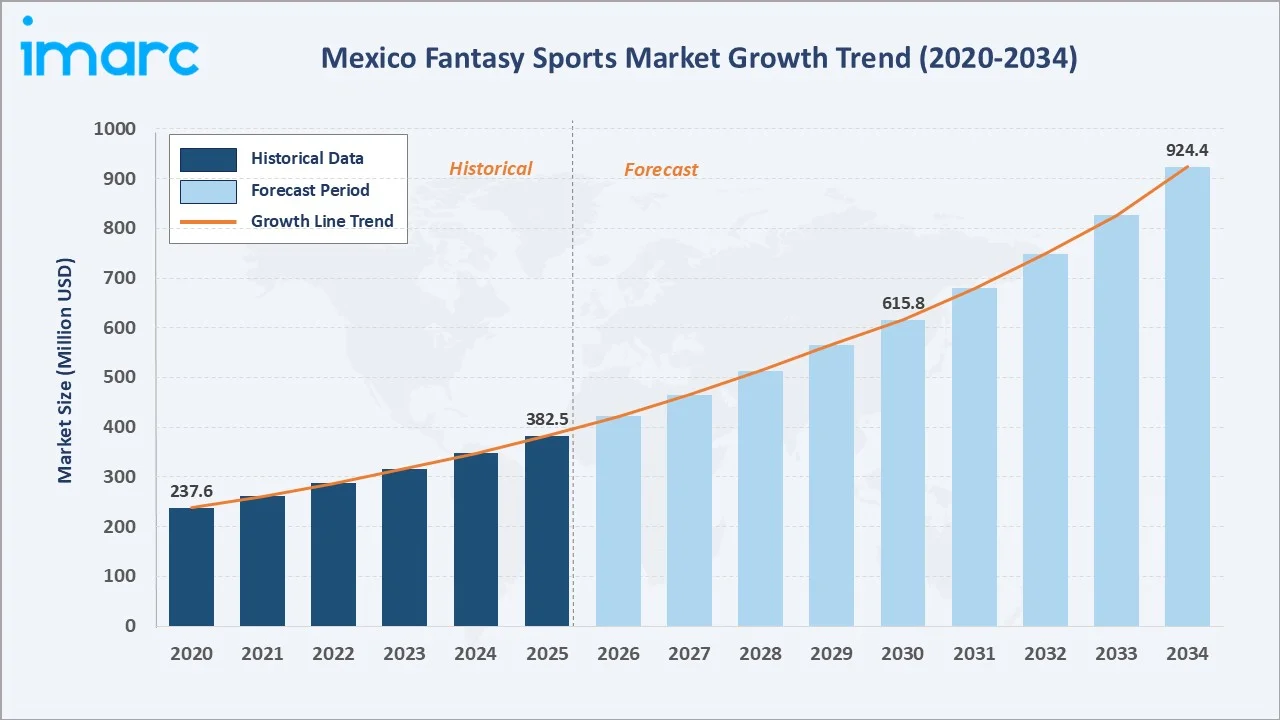
The Mexico fantasy sports market reached USD 382.5 Million in 2025 and is projected to reach USD 924.4 Million by 2034, growing at a CAGR of 9.99% during 2026-2034. The market is driven by surging football fandom, widespread smartphone adoption, and the growing availability of real-time sports data. The Mexican Confederation of Chambers of Commerce, Services and Tourism (CONCANACO Servytur) reported that the 13 FIFA World Cup 2026 matches hosted in Mexico generated an estimated economic impact of MXN 45–50 billion (approximately USD 2.57–2.86 billion). This strong event-driven spending is supporting market growth by increasing fan engagement, digital sports consumption, and participation in football-focused fantasy contests. Football leads sports type at 52.7%. Mobile application dominates the platform at 74.8%. Central Mexico leads regionally at 46.9%.
Market Snapshot
|
Metric |
Value |
|
Market Size (2025) |
USD 382.5 Million |
|
Forecast Market Size (2034) |
USD 924.4 Million |
|
CAGR (2026-2034) |
9.99% |
|
Base Year |
2025 |
|
Historical Period |
2020-2025 |
|
Forecast Period |
2026-2034 |
|
Dominant Sports Type |
Football (52.7%, 2025) |
|
Dominant Platform |
Mobile Application (74.8%, 2025) |
|
Leading Region |
Central Mexico (46.9%, 2025) |
The Mexico fantasy sports market has demonstrated strong and sustained growth, increasing from USD 237.6 Million in 2020 to USD 382.5 Million in 2025, reflecting expanding digital sports fan engagement across the country. The market is projected to reach USD 615.8 Million by 2030 and further grow to USD 924.4 Million by 2034, supported by growing football and multi-sport fantasy ecosystems.
To get more information on this market, Request Sample
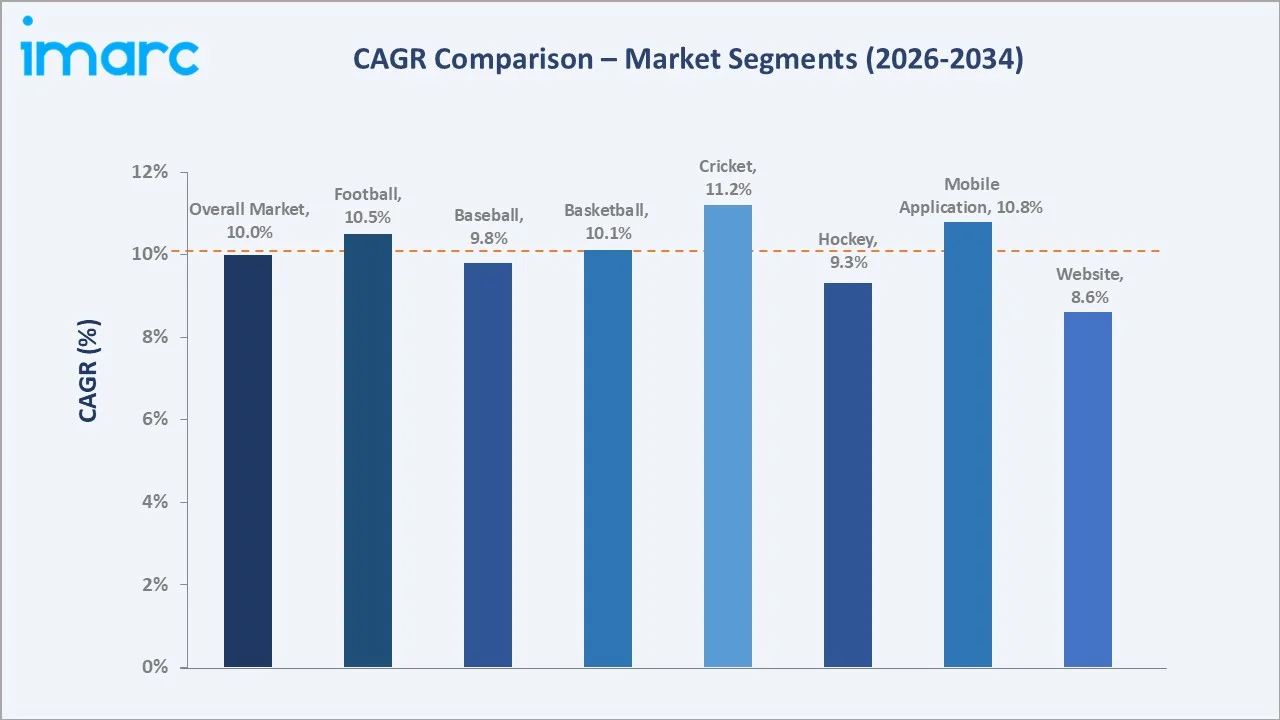
Cricket grows fastest at 11.2%. Football grows at ~10.5% CAGR through international tournament fantasy integration. Mobile application leads at ~10.8% CAGR through app-first DFS and season-long fantasy adoption. Basketball grows at ~10.1% CAGR through NBA Mexico fan base digital engagement.
Executive Summary
The Mexico fantasy sports market is witnessing robust growth, supported by the country's passionate sports fan base, expanding smartphone penetration, and increasing availability of high-quality real-time sports data. Rising fantasy sports participation, especially across football, baseball, and basketball, is strengthening Mexico's position as one of Latin America's fastest-growing fantasy sports markets.
Football at 52.7% leads through FIFA tournament fantasy adoption. Mobile application at 74.8% leads through smartphone-first DFS and season-long fantasy contest design. Central Mexico leads regionally at 46.9%.
Key Market Insights
|
Insight |
Data |
|
Dominant Sports Type |
Football – 52.7% share (2025) |
|
Leading Platform |
Mobile Application – 74.8% market share (2025) |
|
Leading Region |
Central Mexico – 46.9% share (2025) |
|
Market Opportunity |
AI-powered draft tools; cross-border US-Mexico fantasy integration; DFS regulation clarity; regional youth fan engagement programs |
Key Analytical Observations Supporting the Above Data:
- Football at 52.7%: Football dominates due to Mexico's deep-rooted passion for the national team, combined with global events like the FIFA World Cup and CONCACAF tournaments driving fantasy engagement. The sport's frequent match schedule provides consistent fantasy contest opportunities throughout the year.
- Mobile Application at 74.8%: Mobile applications dominate as they enable on-the-go lineup management, real-time push notifications for player updates, and seamless entry into daily fantasy contests. Mexico's smartphone users and strong 4G/5G network expansion are driving mobile-first fantasy sports adoption across urban and peri-urban demographics.
- Central Mexico at 46.9%: Central Mexico dominates regionally due to Mexico City's concentration of sports-passionate consumers, higher disposable income enabling DFS entry fee participation, and superior internet infrastructure supporting real-time data-driven fantasy gameplay.
Mexico Fantasy Sports Market Overview
The Mexico fantasy sports market encompasses a broad range of digital sports gaming activities where participants assemble virtual teams of real professional athletes to compete based on statistical performance. It includes season-long fantasy leagues, daily fantasy sports (DFS), and salary-cap-based contests across football, baseball, basketball, cricket, hockey, and other sports. The market covers contest design, player data aggregation, mobile and web platform development, payment processing, and prize distribution services. It serves sports enthusiasts, casual gamers, digital sports media companies, and DFS operators. Growing real-time sports analytics, AI-driven draft tools, and multilingual platform development are expanding the scope of fantasy sports in Mexico. Macroeconomic factors include rising discretionary consumer spending, sustained sports broadcasting investments, and increasing FDI in Mexico's digital entertainment sector.
Market Dynamics
To evaluate market opportunities, Request Sample
Market Drivers
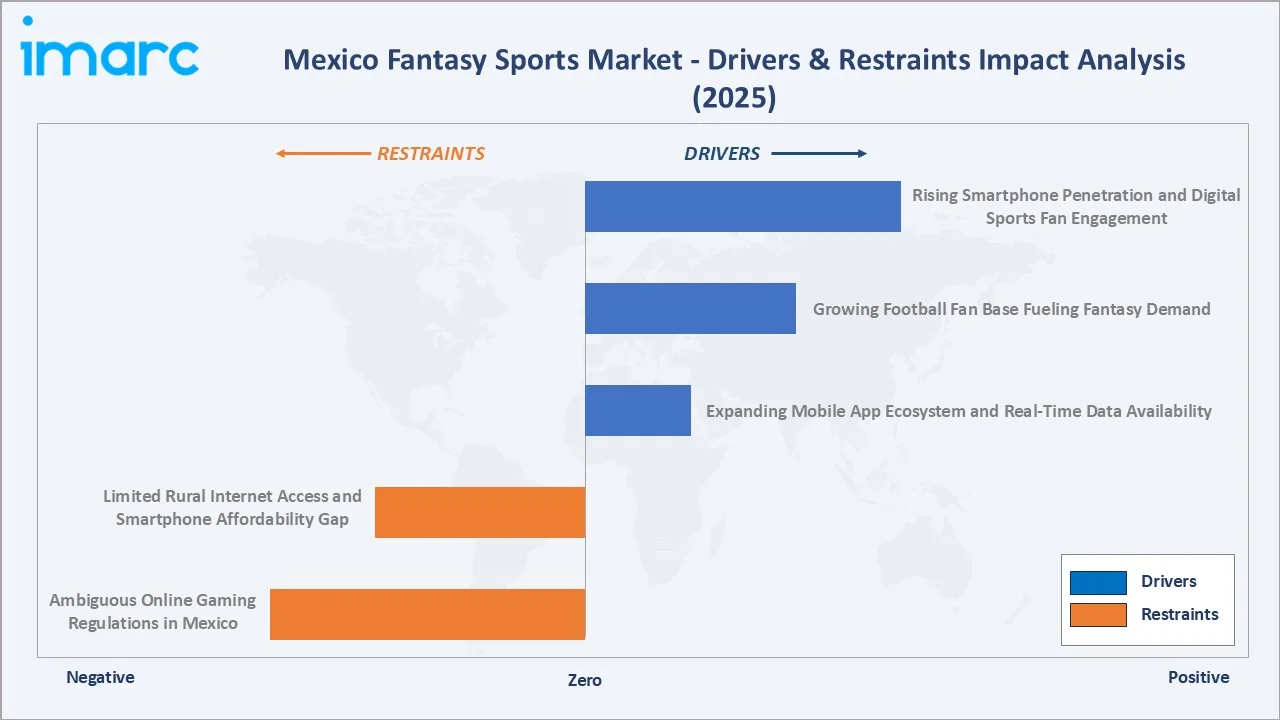
- Rising Smartphone Penetration and Digital Sports Fan Engagement: By late 2025, Mexico had around 110 million internet users, representing an internet penetration rate of 83.5%. Meanwhile, GSMA Intelligence estimated approximately 145 million cellular mobile connections, equivalent to about 110% of the country’s total population, enabling broader access to fantasy sports mobile applications. Real-time player statistics, live score integration, and instant lineup management capabilities are driving daily active user retention across DFS and season-long fantasy platforms.
- Growing Football Fan Base Fueling Fantasy Demand: Mexico’s large and highly engaged football fan base is driving participation in fantasy sports by encouraging users to create virtual teams and track player performance in real time. Major domestic and international tournaments further increase engagement, helping fantasy platforms attract new users and boost contest participation.
- Expanding Mobile App Ecosystem and Real-Time Data Availability: Mexico's mobile-first digital environment, combined with increasing availability of real-time player statistics, injury reports, and match schedules through sports data APIs, is enabling platforms to offer increasingly sophisticated and engaging fantasy sports products at competitive price points.
Market Restraints
- Ambiguous Online Gaming Regulations in Mexico: Ambiguous online gaming regulations in Mexico create uncertainty around licensing, taxation, and the legal classification of paid fantasy contests. This can increase compliance costs, discourage new platform entry, and slow investment and product expansion.
- Limited Rural Internet Access and Smartphone Affordability Gap: While urban Mexico demonstrates strong smartphone and internet penetration, rural and lower-income segments remain underserved. Limited 4G/5G coverage and high entry-level smartphone costs restrict fantasy sports market expansion beyond major metropolitan areas.
Market Opportunities
- AI-Powered Draft Assistance and Personalized Fantasy Recommendations: Deploying machine learning models for personalized lineup suggestions, injury prediction, and real-time player value optimization can differentiate platforms in a crowded market. AI-driven features improve retention among the 25-40 year core demographic, who represent Mexico's highest-value fantasy sports users.
- Cross-Border US-Mexico Fantasy Integration: Mexico's proximity to the United States and cultural overlap in NFL, NBA, and MLB fandom creates opportunities for US-based platforms to localize services in Spanish and Mexican Peso pricing, tapping into bilingual sports fans with cross-border fantasy sports interest.
Market Challenges
- Payment Processing and DFS Entry Fee Infrastructure: Limited credit card and formal banking penetration, with over 66 million Mexicans, or 51% of the population, remaining unbanked, restricts DFS entry fee payment options. Developing cash-in agent networks and integrating e-wallet payment gateways are critical for expanding the total addressable market.
- Building Trust and Player Integrity Assurance: Educating Mexican consumers about the skill-based nature of fantasy sports versus gambling, combined with ensuring transparent prize distribution and secure personal data handling under Mexico's Federal Data Protection Law, is an ongoing challenge for market participants building first-time user trust.
Emerging Market Trends
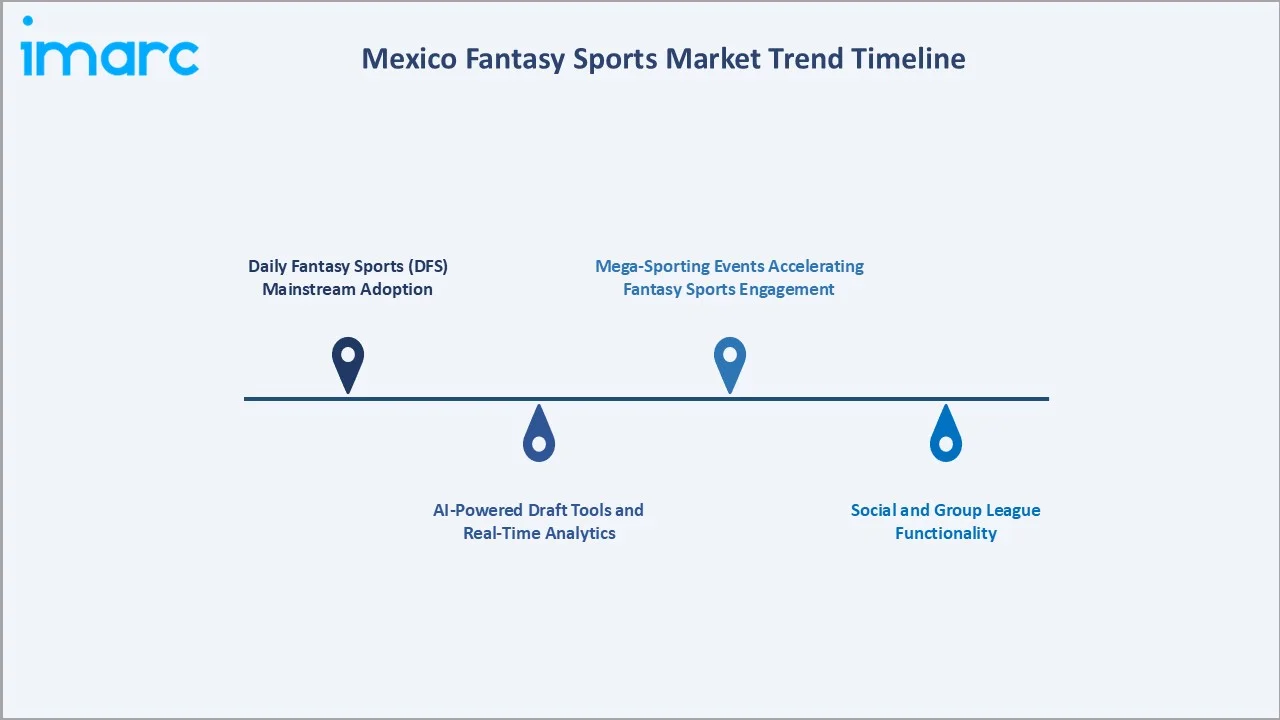
1. Daily Fantasy Sports (DFS) Mainstream Adoption
Daily fantasy sports contests are rapidly transitioning from niche to mainstream in Mexico, driven by shorter participation cycles, lower entry fees, and immediate prize payout structures. The format’s flexibility, frequent engagement opportunities, and mobile accessibility are helping attract casual users beyond traditional season-long fantasy participants.
2. AI-Powered Draft Tools and Real-Time Analytics
Leading fantasy platforms are deploying machine learning algorithms for real-time player value scoring, injury impact analysis, and automated lineup optimization. AI-powered draft assistants reduce the knowledge barrier for new users while providing advanced tools for experienced players, driving both user acquisition and premium subscription conversion across mobile-first platforms.
3. Mega-Sporting Events Accelerating Fantasy Sports Engagement
In June 2026, the 2026 FIFA World Cup opened in Mexico City, with co-host Mexico facing South Africa at Estadio Azteca in the tournament’s first match. Mexico became the first country to host the men’s FIFA World Cup three times, following previous editions in 1970 and 1986, while the 2026 tournament is the largest in FIFA history in terms of participating teams, players, and matches. The 2026 FIFA World Cup launch in Mexico is strengthening fantasy sports participation by generating sustained fan interest, higher match-day engagement, and increased demand for interactive digital experiences. The tournament’s expanded scale is also creating more opportunities for fantasy platforms to introduce match-based contests, promotions, and real-time player engagement features.
4. Social and Group League Functionality
Private group leagues with social sharing features, friend-vs-friend contest formats, and WhatsApp-integrated score notifications are accelerating word-of-mouth user acquisition in Mexico's highly social media-engaged market. Social fantasy features increase season-long retention by creating personal accountability and competitive community dynamics among friend groups.
Industry Value Chain Analysis
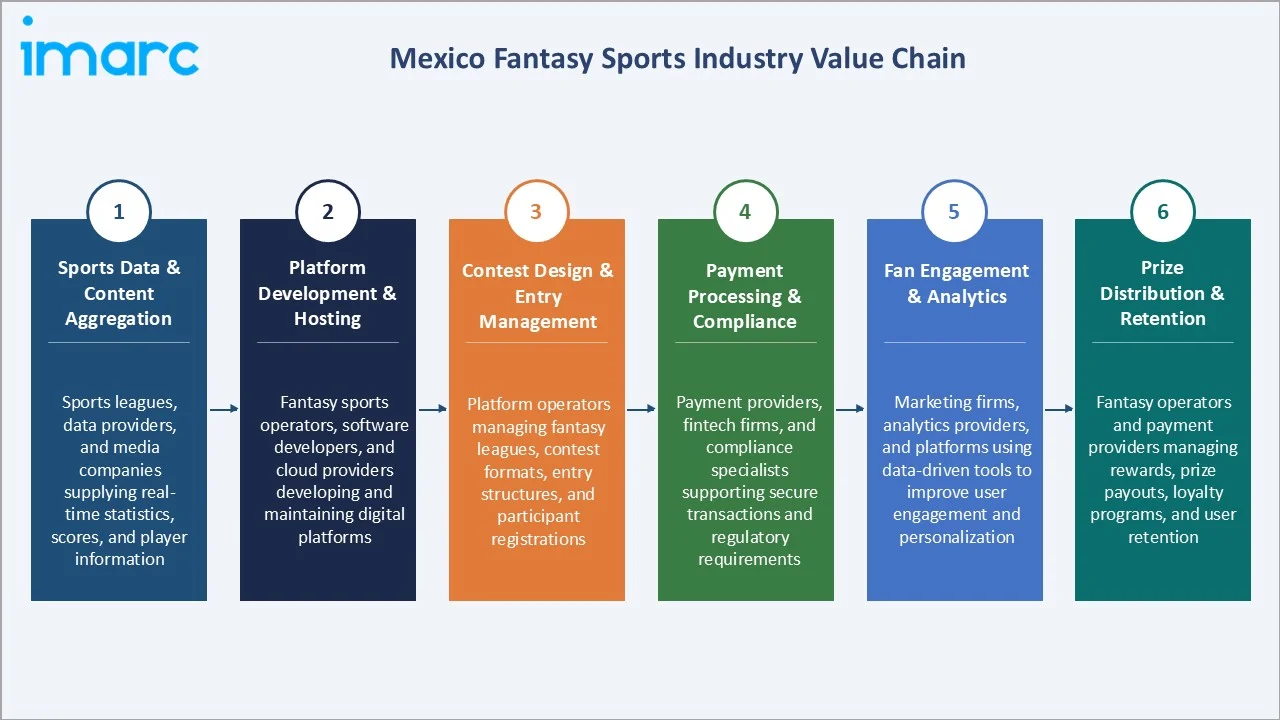
The Mexico fantasy sports value chain integrates sports data & content aggregation, platform development & hosting, contest design & entry management, payment processing & compliance, fan engagement & analytics, and prize distribution & retention.
|
Stage |
Key Participants |
|
Sports Data & Content Aggregation |
Sports leagues, data providers, and media companies supplying real-time statistics, scores, and player information. |
|
Platform Development & Hosting |
Fantasy sports operators, software developers, and cloud providers developing and maintaining digital platforms. |
|
Contest Design & Entry Management |
Platform operators managing fantasy leagues, contest formats, entry structures, and participant registrations. |
|
Payment Processing & Compliance |
Payment providers, fintech firms, and compliance specialists supporting secure transactions and regulatory requirements. |
|
Fan Engagement & Analytics |
Marketing firms, analytics providers, and platforms using data-driven tools to improve user engagement and personalization. |
|
Prize Distribution & Retention |
Fantasy operators and payment providers managing rewards, prize payouts, loyalty programs, and user retention. |
Platform development and contest design represent the most value-added stage in Mexico's fantasy sports value chain, as it directly determines user experience quality, contest variety, and platform retention. This phase encompasses mobile app development, real-time data integration, AI-powered lineup tools, and regulatory compliance architecture, making it the most technologically intensive and competitively critical segment.
Technology Landscape in the Mexico Fantasy Sports Industry
Artificial Intelligence and Machine Learning
AI and machine learning are transforming fantasy sports through automated draft assistance, real-time player valuation algorithms, injury prediction models, and personalized contest recommendations. Platforms using AI-driven features report higher user retention rates. Natural language processing is enabling Spanish-language sports commentary analysis to enhance player performance insights for Mexican users.
Real-Time Data Integration
Real-time analytics enables platforms to process live scores, player statistics, match events, and performance metrics. It ensures rapid calculation of fantasy points and continuous leaderboard updates. This technology is particularly important during high-engagement football tournaments and live contests.
Predictive Analytics Technology
Predictive analytics uses historical statistics, recent player performance, team form, and other match-related data to estimate future outcomes. These insights assist users in making more informed fantasy team selections. Platforms can also use predictive models to improve recommendations and contest engagement.
Market Segmentation Analysis
The report covers the following segments:
|
Segment Category |
Leading Segment |
Market Share |
Year |
|
Sports Type |
Football |
52.7% |
2025 |
|
Platform |
Mobile Application |
74.8% |
2025 |
|
Demographics |
🔒 |
🔒 |
2025 |
|
Region |
Central Mexico |
46.9% |
2025 |

By Sports Type
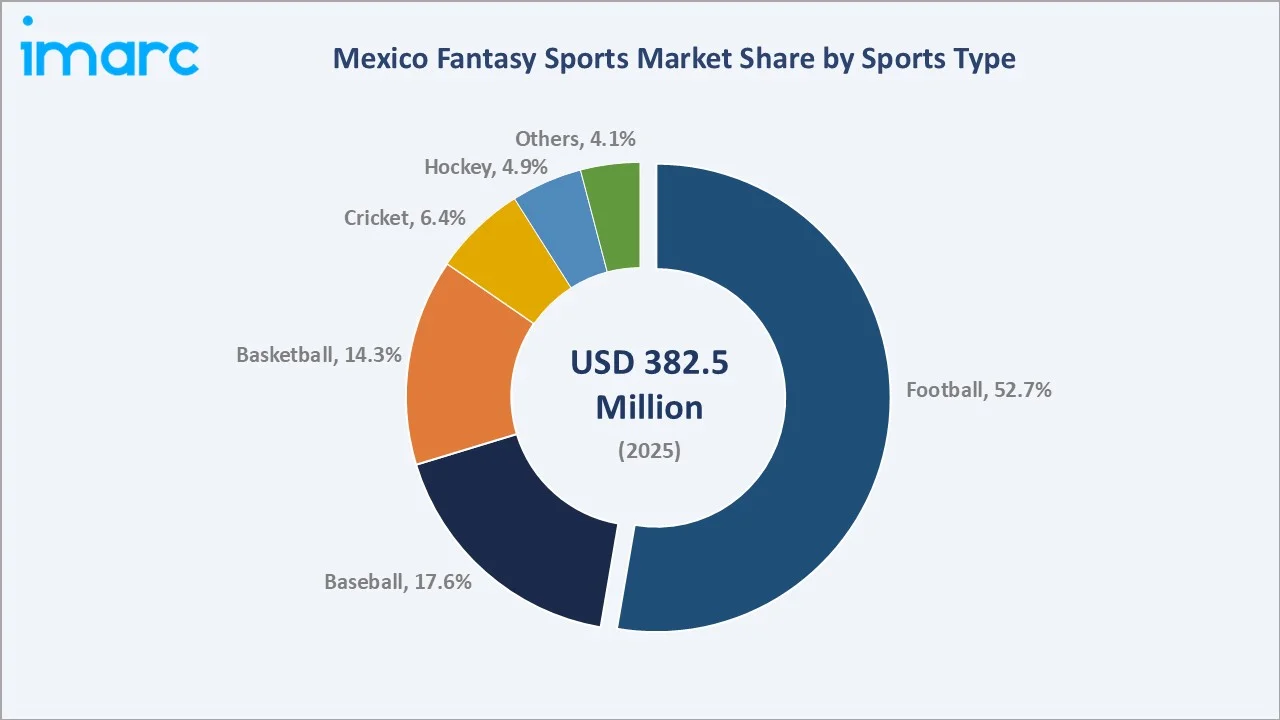
Football leads at 52.7% (2025), reflecting Mexico's passionate international football fan base of dedicated supporters. The sport's frequent match schedule and high media coverage create ideal conditions for both season-long and daily fantasy football contests.
To access detailed market analysis, Request Sample
Baseball holds 17.6% (2025), supported by Mexico's strong professional baseball tradition. Basketball accounts for 14.3% (2025), driven by the NBA's growing Mexican fan base. Cricket accounts for 6.4%, hockey at 4.9%, and others at 4.1%.
By Platform
Mobile application leads at 74.8% (2025), driven by Mexico's mobile-first digital culture and the inherent portability advantages of fantasy sports lineup management. Real-time push notifications, biometric login, and seamless DFS contest entry through mobile are key drivers of platform dominance.
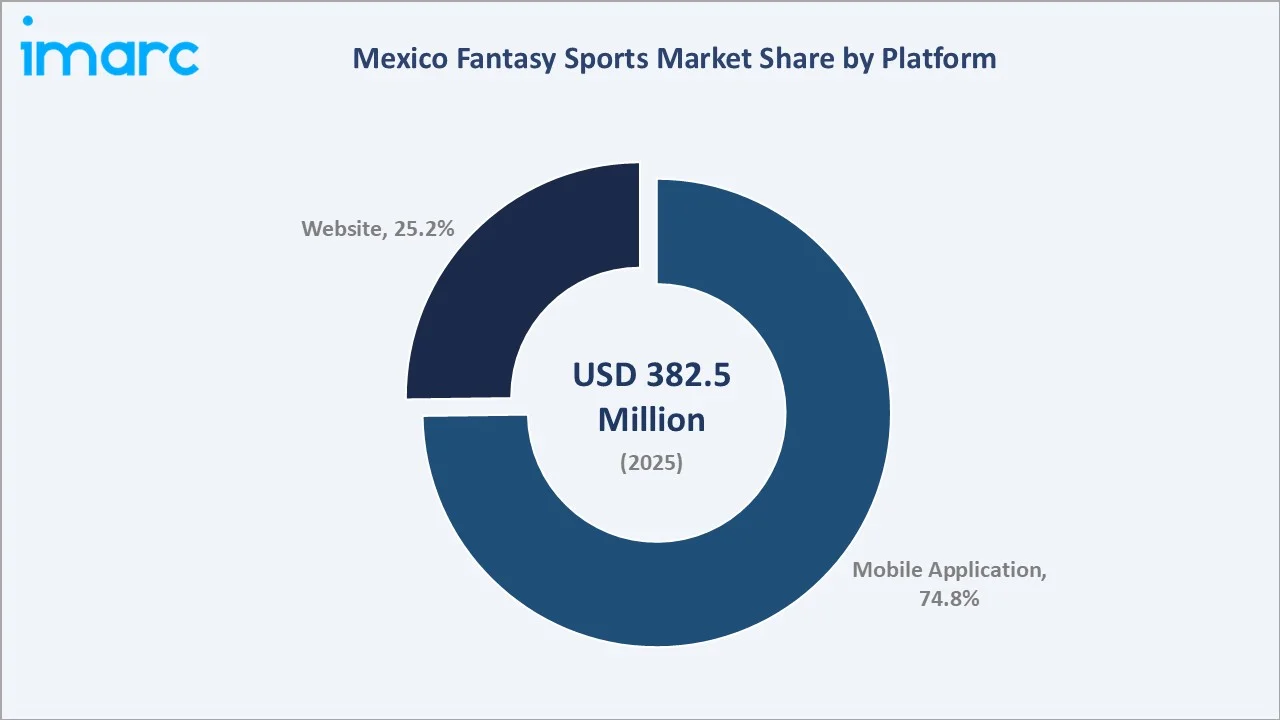
Website account for 25.2% (2025), serving experienced fantasy managers who prefer desktop interfaces for multi-lineup DFS optimization, deep statistical analysis, and large-screen live scoring dashboards. Web platforms remain strategically important for tournament-style contests and first-time user onboarding through sports media website integrations.
Regional Market Insights
|
Region |
Share (2025) |
Key Fantasy Sports Market Drivers & Characteristics |
|
Central Mexico |
46.9% |
Mexico City metropolitan area with a huge number of sports fans, high smartphone penetration, concentration of fantasy platform offices, and a premium DFS demographic with above-average disposable income. |
|
Northern Mexico |
31.5% |
Strong US sports cultural overlap driving fantasy sports adoption, high border-region bilingualism enabling US platform cross-use, growing digital sports infrastructure. |
|
Southern Mexico |
14.0% |
Emerging fantasy sports market with growing Liga MX fan base, expanding 4G connectivity, and increasing youth demographic engagement through mobile-first social fantasy leagues and free-to-play contest formats. |
|
Others |
7.6% |
Pacific coast and Gulf regions with tourism-driven sports viewing and seasonal fantasy contest participation, particularly during FIFA and CONCACAF tournament cycles. |
Central Mexico's 46.9% dominance is driven by Mexico City's concentration of high-income fantasy sports users, advanced digital infrastructure, and the presence of major sports broadcasting and media headquarters. Northern Mexico's 31.5% reflects strong cultural affinity with US-based sports leagues, driven by geographic proximity and cross-border media consumption.
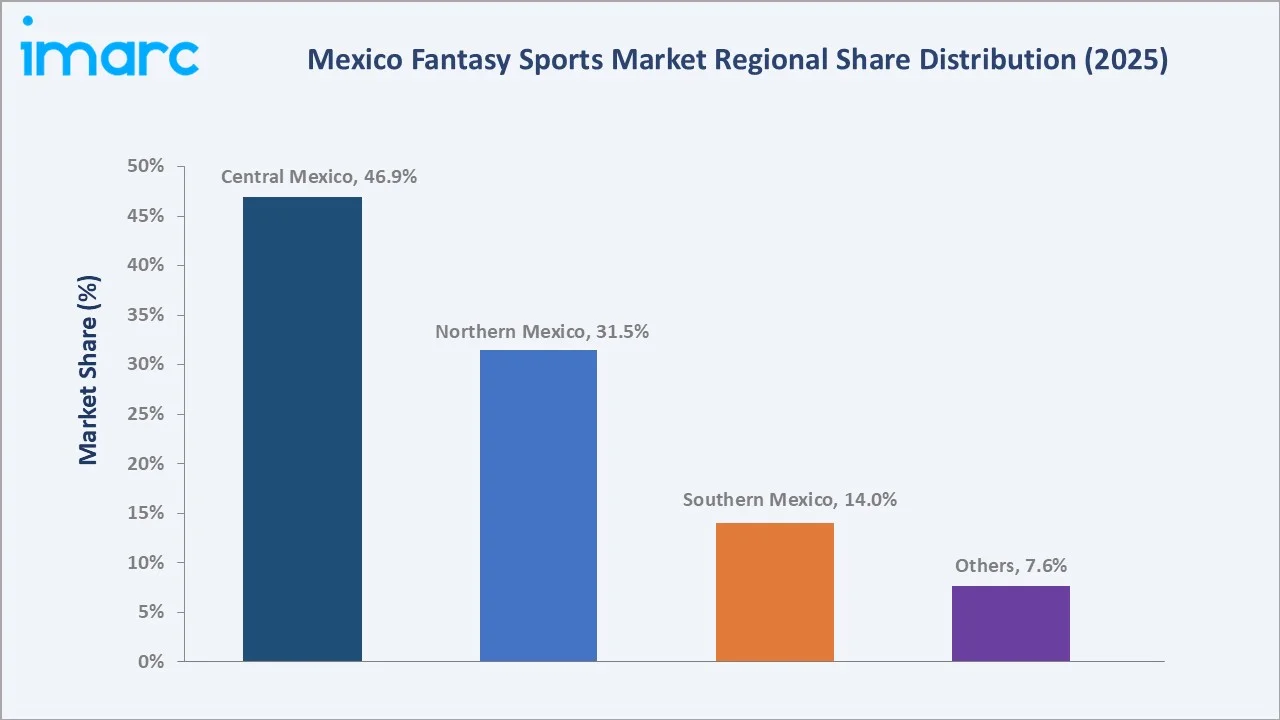
Southern Mexico's 14.0% represents a growing opportunity driven by expanding 4G/5G connectivity and rising smartphone penetration among youth demographics aged 18-25. The Others segment at 7.6% captures Pacific coast and Gulf region fantasy sports activity, with seasonal spikes during FIFA World Cup and CONCACAF tournament periods.
Competitive Landscape
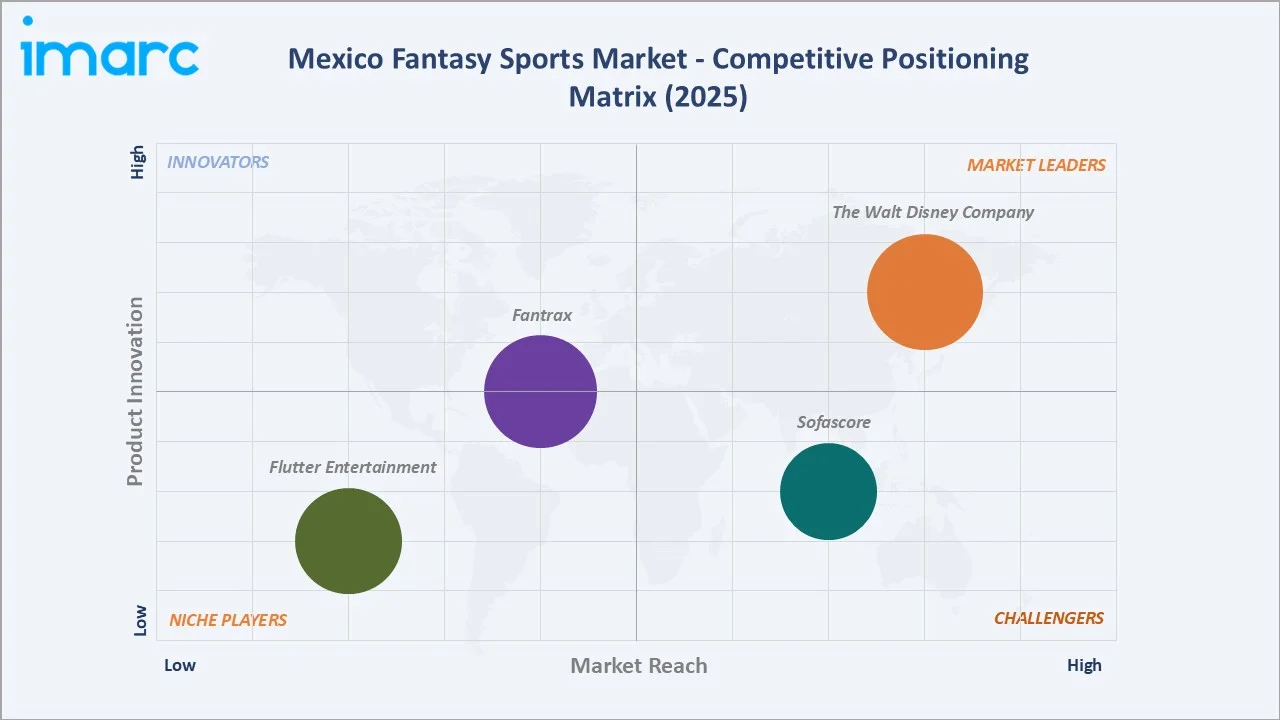
The Mexico fantasy sports market is moderately fragmented, with competition among global DFS operators, domestic sports media platforms, and specialized fantasy sports technology providers. Market participants compete on contest variety, real-time data quality, Spanish-language UX design, prize pool structures, and mobile platform performance. Partnerships with sports clubs, sports broadcasters, and payment gateway providers are key competitive differentiators.
|
Company |
Key Offerings |
Market Position |
Core Strength |
|
Flutter Entertainment |
FanDuel |
Niche Player |
Through FanDuel, Flutter has historically partnered with Mexican football properties and sponsored major regional sporting events. |
|
The Walt Disney Company |
ESPN Fantasy |
Market Leader |
The Walt Disney Company drives the Mexican fantasy sports market primarily through ESPN. |
|
Fantrax |
Fantrax Fantasy Sports |
Established Player |
Fantrax serves as a premier, highly customizable platform for dedicated fantasy sports players in Mexico. |
|
Sofascore |
Sofascore Fantasy |
Challenger |
Sofascore serves as a critical real-time data provider and a standalone platform for Mexican fantasy sports players. |
Companies are also investing in AI-powered lineup tools, Spanish-language content, data partnerships, and mobile payment gateway integrations to improve contest accessibility and platform retention. The market is expected to witness further consolidation through DFS licensing agreements, sports media brand partnerships, and technology platform acquisitions as leading operators expand their Mexico-specific product ecosystems.
Key Company Profiles
Flutter Entertainment
Flutter Entertainment is a leading DFS and sports betting company, operating the FanDuel platform. The platform's strength in DFS product design, real-time player statistics integration, and bonus acquisition programs positions it competitively for Mexico's growing daily fantasy sports segment.
- Key Offerings: FanDuel.
- Strategic Focus: Latin America localization with Peso pricing, sports media broadcast integration partnerships, brand ambassador programs with Liga MX players, mobile-first onboarding for first-time fantasy users.
The Walt Disney Company
The Walt Disney Company is an entertainment and media company with operations spanning film and television production, streaming, sports media, consumer products, and theme parks. Through its broad portfolio of brands and digital platforms, the company serves audiences worldwide and maintains a strong presence across traditional and online entertainment channels.
- Key Offerings: ESPN Fantasy.
- Strategic Focus: Strengthening its digital entertainment ecosystem, expanding direct-to-consumer streaming services, and leveraging its strong portfolio of media and sports brands. The company also emphasizes technology-driven audience engagement, content monetization, and broader integration across entertainment platforms.
Market Concentration Analysis
The Mexico fantasy sports market is moderately fragmented. Global DFS operators hold the largest share of premium paid-contest revenue, while domestic and regional platforms command strong brand loyalty among Mexico-first football fantasy enthusiasts. Fragmentation persists across sports type coverage, DFS versus season-long contest design, and payment gateway integration depth, creating a competitive landscape where localized value propositions determine market penetration success. The market is expected to witness consolidation through official league partnership agreements and DFS licensing frameworks as Mexico's regulatory environment matures.
Investment & Growth Opportunities
Highest Growth Segments
Cricket (11.2%), football (~10.5% CAGR), mobile application platforms (~10.8% CAGR), AI-powered premium fantasy subscriptions (~12%+ CAGR from emerging base), and Central Mexico youth demographic expansion represent Mexico's highest-growth investment vectors through 2034.
Investment Themes
- Mobile-first AI product differentiation: Deploying AI-powered draft assistants, personalized contest recommendations, and real-time injury impact scoring within Spanish-language mobile interfaces addresses Mexico's core 18-34 demographic, who represent the highest lifetime value fantasy sports users.
- DFS regulatory positioning: Early engagement with state gaming regulators to establish clear DFS contest classification as skill-based gaming, distinct from gambling, positions operators favorably for first-mover advantage when Mexico formalizes DFS licensing frameworks between 2026 and 2030.
Future Market Outlook (2026-2034)
The Mexico fantasy sports market is projected to grow from USD 382.5 Million in 2025 to USD 924.4 Million by 2034, delivering a 9.99% CAGR over the forecast period through football DFS adoption, mobile-first platform growth, AI-powered fantasy tool deployment, and Liga MX official fantasy product scaling. The market's anchor value of USD 615.8 Million in 2030 represents Mexico's fantasy sports ecosystem at DFS mainstream adoption and regulated contest framework inflection.
Three structural forces are expected to define the growth of the Mexico fantasy sports market through 2034. First, increasing football fandom will create multi-year fantasy sports participation surges, establishing durable user habits across Mexico's core 18-40 demographic. Second, the rapid adoption of AI-powered draft tools, real-time data integration, social fantasy league features, and mobile-first contest design will improve platform engagement and premium subscription conversion, driving sustained revenue growth per user. Third, a maturing regulatory environment under gaming licensing reform, expanding mobile payment infrastructure through e-wallets and cash networks, and Mexico's structural role as a co-host of the FIFA World Cup will strengthen Mexico's position as the fastest-growing fantasy sports market in Latin America through 2034.
Research Methodology
Primary Research
Primary research comprised in-depth interviews with senior executives from fantasy sports platforms, sports media companies, digital payment providers, regulatory technology specialists, and industry consultants operating in Mexico. Discussions validated market size estimates, assessed platform adoption trends, evaluated competitive dynamics, and provided insights into regulatory developments, technology investment priorities, and long-term growth opportunities in the Mexico fantasy sports market.
Secondary Research
Secondary research encompassed company annual reports, gaming licensing publications, digital connectivity data, broadcast ratings, sports media industry reports, app store download analytics, fintech payment processing data, and credible sports gaming publications. These sources supported market trend analysis, competitive positioning, regulatory assessment, and sports fan engagement data across Mexico's regional demographics.
Forecasting Models
Forecasting models were developed using historical market trends, digital sports gaming participation data, smartphone penetration trajectories, sports broadcast engagement metrics, and macroeconomic indicators. Both top-down and bottom-up approaches were applied and validated through primary expert consultations. Regulatory developments, sports event cycles, technology adoption curves, and competitive platform expansion strategies were incorporated to generate reliable forecasts through 2034.
Mexico Fantasy Sports Market Report Coverage:
| Report Features | Details |
|---|---|
| Base Year of the Analysis | 2025 |
| Historical Period | 2020-2025 |
| Forecast Period | 2026-2034 |
| Units | Million USD |
| Scope of the Report |
Exploration of Historical Trends and Market Outlook, Industry Catalysts and Challenges, Segment-Wise Historical and Future Market Assessment:
|
| Sports Types Covered | Football, Baseball, Basketball, Hockey, Cricket, Others |
| Platforms Covered | Website, Mobile Application |
| Demographics Covered | Under 25 Years, 25-40 Years, Above 40 Years |
| Regions Covered | Northern Mexico, Central Mexico, Southern Mexico, Others |
| Companies Covered | Flutter Entertainment, The Walt Disney Company, Fantrax, Sofascore, etc. |
| Customization Scope | 10% Free Customization |
| Post-Sale Analyst Support | 10-12 Weeks |
| Delivery Format | PDF and Excel through Email (We can also provide the editable version of the report in PPT/Word format on special request) |
Key Benefits for Stakeholders:
- IMARC’s industry report offers a comprehensive quantitative analysis of various market segments, historical and current market trends, market forecasts, and dynamics of the Mexico fantasy sports market from 2020-2034.
- The research report provides the latest information on the market drivers, challenges, and opportunities in the Mexico fantasy sports market.
- Porter's five forces analysis assist stakeholders in assessing the impact of new entrants, competitive rivalry, supplier power, buyer power, and the threat of substitution. It helps stakeholders to analyze the level of competition within the Mexico fantasy sports industry and its attractiveness.
- Competitive landscape allows stakeholders to understand their competitive environment and provides an insight into the current positions of key players in the market.
Frequently Asked Questions About the Mexico Fantasy Sports Market Report
The Mexico fantasy sports market reached USD 382.5 Million in 2025, driven by rising football fandom, smartphone penetration, and expanding DFS platform adoption. Growing fan engagement and FIFA World Cup co-hosting anticipation are further supporting near-term market growth.
The Mexico fantasy sports market grows at 9.99% CAGR during 2026-2034, reaching USD 924.4 Million by 2034. The CAGR reflects Mexico's large football fan base opportunity, expanding mobile digital infrastructure, and a maturing DFS regulatory environment.
Football leads at 52.7% (2025), driven by a dedicated fan base and frequent match schedule. FIFA World Cup and CONCACAF tournament cycles create consistent fantasy participation surges, reinforcing football's dominant position through the forecast period.
Mobile application dominates at 74.8% (2025), driven by Mexico's smartphone user base and mobile-first digital culture. Real-time push notifications, biometric login, and seamless DFS entry through optimized mobile UX are core drivers of platform dominance.
Central Mexico leads at 46.9% (2025), anchored by Mexico City's sports fans, high smartphone penetration, and concentration of premium-income fantasy sports users with higher DFS contest participation rates.
Leading companies include Flutter Entertainment, The Walt Disney Company, Fantrax, and Sofascore, among others.
The market is projected to reach approximately USD 615.8 Million by 2030, driven by FIFA World Cup participation surge, expanding DFS product adoption, and AI-powered mobile platform maturation across Mexico's core 18-40 fantasy sports demographic.
Priority investment opportunities include official Liga MX data partnership licensing, AI-powered Spanish-language draft tools, and mobile payment gateway integration through networks targeting Mexico's large unbanked sports fan population.
Need more help?
- Speak to our experienced analysts for insights on the current market scenarios.
- Include additional segments and countries to customize the report as per your requirement.
- Gain an unparalleled competitive advantage in your domain by understanding how to utilize the report and positively impacting your operations and revenue.
- For further assistance, please connect with our analysts.
 Request Customization
 Speak to an Analyst
 Request Brochure
 Inquire Before Buying
Benefits of Customization
- Personalize this research
- Triangulate with your data
- Get data as per your format and definition
- Gain a deeper dive into a specific application, geography, customer, or competitor
- Any level of personalization
Get in Touch With Us
UNITED STATES
Phone: +1-201-971-6302
INDIA
Phone: +91-120-433-0800
UNITED KINGDOM
Phone: +44-753-714-6104
Email: [email protected]
Client Testimonials




.webp)




.webp)













Related Reports

Choose your plan
*Please note that the prices mentioned below are starting prices for each bundle type. Kindly contact our team for further details.*
Single User License
- 1 User License, Access on 2 Devices
- PDF Report + Excel Dataset (Password Protected)
- Lifetime Access
- No Printing Rights
- 10% Free Report Customization
- 10–12 Weeks of Analyst Support
Five User License
- Access for 5 Users, 2 Devices per User
- PDF Report + Excel Dataset (Password Protected)
- Lifetime Access
- Dedicated Account Manager
- 12–14 Weeks of Analyst Support
- No Printing Rights
- 15% Free Report Customization
- 25% Discount on Your Next Purchase
Corporate User License
- Unlimited User Access (Within Your Organization)
- PDF Report + Excel Dataset
- Lifetime Access
- Dedicated Account Manager
- 14–20 Weeks of Analyst Support
- No Printing Rights
- 20% Free Report Customization
- 30% Discount on Your Next Purchase
Essential Insights
What's included:
3 reports
- Lifetime Access
- PDF Reports
- Excel Datasets
- 2 Weeks of Free Analyst Support
- 2 User Licenses
- Access on 2 Devices
- Printing Rights
- Complimentary PowerPoint (PPT) Version
- Complimentary License Upgrade
Professional Access
What's included:
5 reports
- Lifetime Access
- PDF Reports
- Excel Datasets
- 8 Weeks of Free Analyst Support
- 2 User Licenses
- Access on 2 Devices
- Printing Rights
- Complimentary PowerPoint (PPT) Version
- Complimentary License Upgrade
Business Advantage
What's included:
8 reports
- Lifetime Access
- PDF Reports
- Excel Datasets
- 14 Weeks of Free Analyst Support
- 2 User Licenses
- Access on 2 Devices
- Printing Rights
- Complimentary PowerPoint (PPT) Version
- Complimentary License Upgrade
Enterprise Intelligence
What's included:
10 reports
- Lifetime Access
- PDF Reports
- Excel Datasets
- 20 Weeks of Free Analyst Support
- 2 User Licenses
- Access on 2 Devices
- Printing Rights
- Complimentary PowerPoint (PPT) Version
- Complimentary License Upgrade