
Mexico Health Insurance Market Size, Share, Trends and Forecast by Provider, Type, Plan Type, Demographics, Provider Type, and Region, 2026-2034
Mexico Health Insurance Market Size, Share, Trends & Forecast (2026-2034)
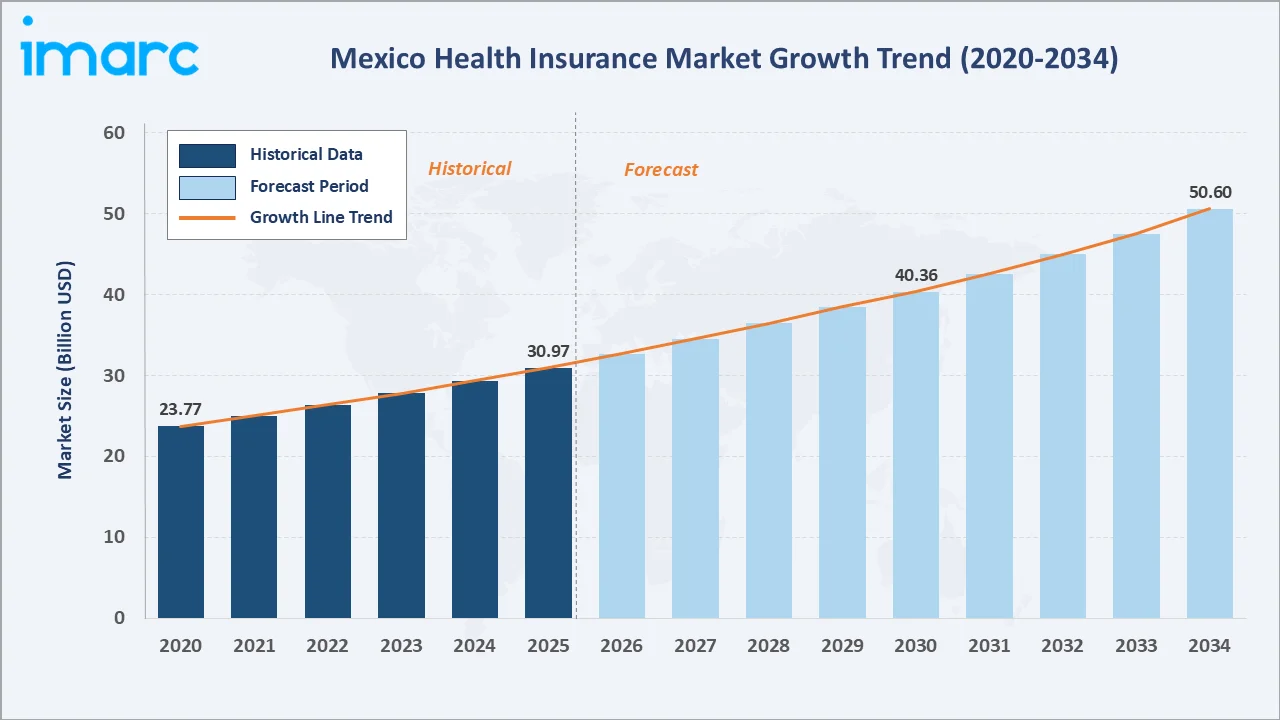
The Mexico health insurance market grew from USD 30.97 Billion in 2025 to USD 32.66 Billion in 2026 and is projected to reach USD 50.60 Billion by 2034, growing at a CAGR of 5.44% during 2026-2034. In 2024, health insurance accounted for 5.6% of insured individuals in Mexico. Low health insurance penetration creates significant scope for insurers to expand coverage and reach underserved consumers. Private providers command a dominant 63.8% market share in 2025, while life-time coverage plans account for 58.6% of total premium income. Central Mexico leads regional share at 44.8%, supported by the country's highest concentration of corporate headquarters and above-national-average per-capita household income.
Market Snapshot
|
Metric |
Value |
|
Base Year Market Size (2025) |
USD 30.97 Billion |
|
Market Size (2026) |
USD 32.66 Billion |
|
Forecast Market Size (2034) |
USD 50.60 Billion |
|
CAGR (2026-2034) |
5.44% |
|
Base Year |
2025 |
|
Historical Period |
2020-2025 |
|
Forecast Period |
2026-2034 |
|
Dominant Provider |
Private Providers (63.8%, 2025) |
|
Dominant Type |
Life-Time Coverage (58.6%, 2025) |
|
Leading Region |
Central Mexico (44.8%, 2025) |
The Mexico health insurance market grew from USD 23.77 Billion in 2020 to USD 30.97 Billion by 2025 and is estimated to reach USD 32.66 Billion in 2026. The market is projected to reach USD 40.36 Billion by 2030 and USD 50.60 Billion by 2034.
To get more information on this market, Request Sample
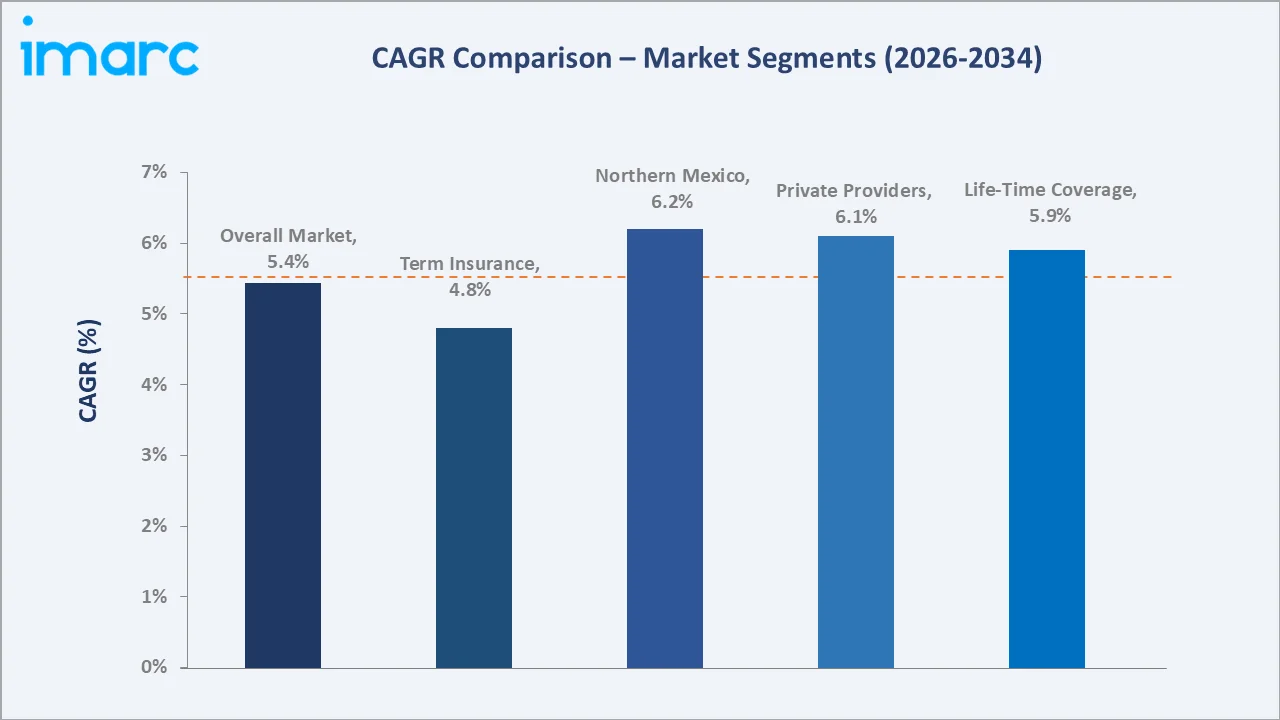
Life-time coverage expands at ~5.9% CAGR through 2034, outpacing term insurance at ~4.8% CAGR, as consumers increasingly prioritize permanent medical protection amid rising chronic disease prevalence. Northern Mexico registers the fastest regional growth at ~6.2% CAGR through industrial workforce formalization. Private providers grow at ~6.1% CAGR through 2034.
Executive Summary
The Mexico health insurance market is one of Latin America's most dynamic insurance growth opportunities, driven by structural demographic demand, an expanding formal employment base, digital InsurTech distribution platforms, and rising middle-class health awareness. The market grew from USD 30.97 Billion in 2025 to USD 32.66 Billion in 2026 and is projected to reach USD 50.60 Billion by 2034 at a CAGR of 5.44%.
Private providers command 63.8% market share in 2025, reflecting consumer preference for private hospital networks over public systems. Life-time coverage plans hold a 58.6% type share. Central Mexico anchors the market at 44.8% share, while Northern Mexico accelerates at the fastest regional CAGR of ~6.2% through employer-sponsored industrial sector plan formation driven by near-shoring manufacturing investment.
Key Market Insights
|
Insight |
Data |
|
Dominant Provider |
Private Providers - 63.8% share (2025) |
|
Dominant Type |
Life-Time Coverage - 58.6% share (2025) |
|
Leading Region |
Central Mexico - 44.8% (2025) |
|
Key Market Opportunity |
Digital micro-insurance for informal sector workers, senior citizen long-term care coverage expansion, telemedicine-integrated supplemental plans for near-shoring corporate workforce, and employer group benefit administration platforms. |
Key Analytical Observations Supporting the Above Data:
- Private Providers at 63.8%: Private insurers dominate because Mexico's public IMSS system covers only formal-sector employees, leaving most of the workforce reliant on out-of-pocket payment. Private plans deliver access to premium hospital networks and specialist physicians unavailable under public schemes.
- Life-Time Coverage at 58.6%: Mexican consumers prioritize permanent coverage plans that guarantee policy renewal regardless of health status changes. Mexico's high chronic disease burden makes permanent coverage essential over renewable-term alternatives.
- Central Mexico at 44.8%: Mexico City and Estado de Mexico host most of Mexico's formally insured population. High corporate density and premium hospital infrastructure make private insurance the preferred healthcare access mechanism for formal sector professionals.
Mexico Health Insurance Market Overview
The Mexico health insurance market encompasses private and public health coverage instruments including medical expense insurance, critical illness policies, family floater plans, and group employer-sponsored health benefit programs. Mexico's total healthcare expenditure reflects the structural significance of private insurance in the country's healthcare financing architecture. Macroeconomic influences include near-shoring manufacturing expansion, a growing middle class, and reforms creating complementary demand for private supplemental coverage.
Market Dynamics
To evaluate market opportunities, Request Sample
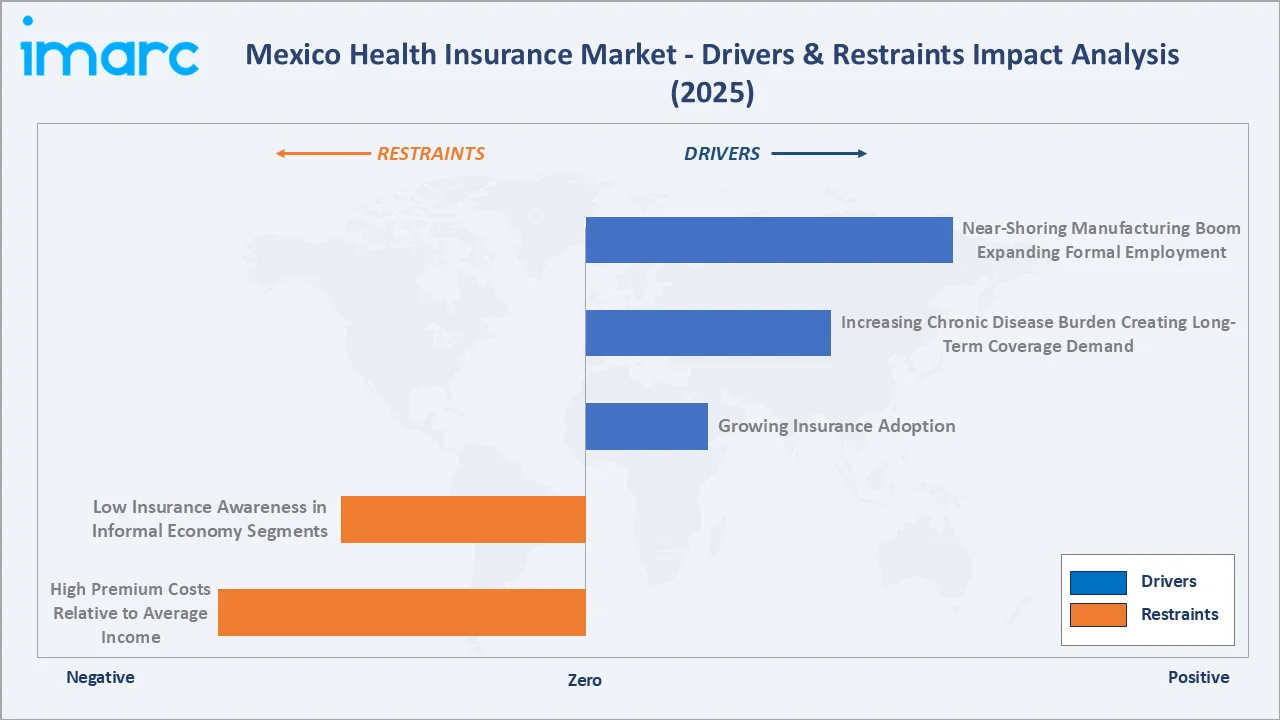
Market Drivers
- Near-Shoring Manufacturing Boom Expanding Formal Employment: Mexico attracted USD 43.2 Billion in FDI in 2025, with a significant share targeting manufacturing. An estimated number of net formal manufacturing jobs were created, each generating IMSS enrollment plus supplemental private insurance demand for enhanced employer-sponsored group coverage.
- Increasing Chronic Disease Burden Creating Long-Term Coverage Demand: The number of adults with diabetes in Mexico increased from 13.6 million in 2024 and is projected to reach 19.9 million by 2050, driving demand for life-time coverage plans with chronic disease management benefits.
- Growing Insurance Adoption: According to the Mexican Association of Insurance Institutions (AMIS), Mexico’s insurance sector recorded MX$558.94 billion (US$33 billion) in direct premiums in the first half of 2026, reflecting a 5% year-on-year increase from MX$533.19 billion (US$31.47 billion) registered during the corresponding period in 2025. This growth reflects increasing consumer and corporate awareness of financial protection against healthcare and medical expenses.
Market Restraints
- High Premium Costs Relative to Average Income: The average cost of an individual health insurance plan in Mexico stood at USD 5,485 (approximately MXN 96,678) in 2024. With median formal sector wages, affordability remains a structural barrier for the formal workforce.
- Low Insurance Awareness in Informal Economy Segments: Approximately 59% of Mexico's working-age population operates in the informal economy. Low financial literacy and absence of employer premium co-payment limit penetration of this potential policyholder segment.
Market Opportunities
- Micro-Insurance for Informal Sector Workers: Mexico's 32.9 Million informal workers represent Latin America's largest underserved insurance segment. Mobile-first micro-insurance products with premiums could unlock high annual addressable premium income by 2030.
- Senior Citizen Health Coverage Gap: Mexico’s aging population is creating greater demand for healthcare services and financial protection against age-related medical expenses. However, limited affordability and coverage restrictions for older individuals can leave significant gaps in health insurance protection. This creates an opportunity for insurers to develop senior-focused, affordable health plans with tailored benefits, flexible premiums, and broader coverage for chronic and age-related conditions.
Market Challenges
- Claims Inflation and Medical Cost Escalation: Rising hospital charges, treatment costs, specialist fees, and pharmaceutical expenses can increase claim payouts for insurers. This puts pressure on underwriting margins and may lead to higher premiums for policyholders.
- Regulatory Compliance Complexity and Reporting Requirements: Health insurers must comply with evolving regulatory standards, documentation requirements, and reporting obligations. Managing these requirements can increase administrative costs and require continuous investment in compliance systems and processes.
Emerging Market Trends
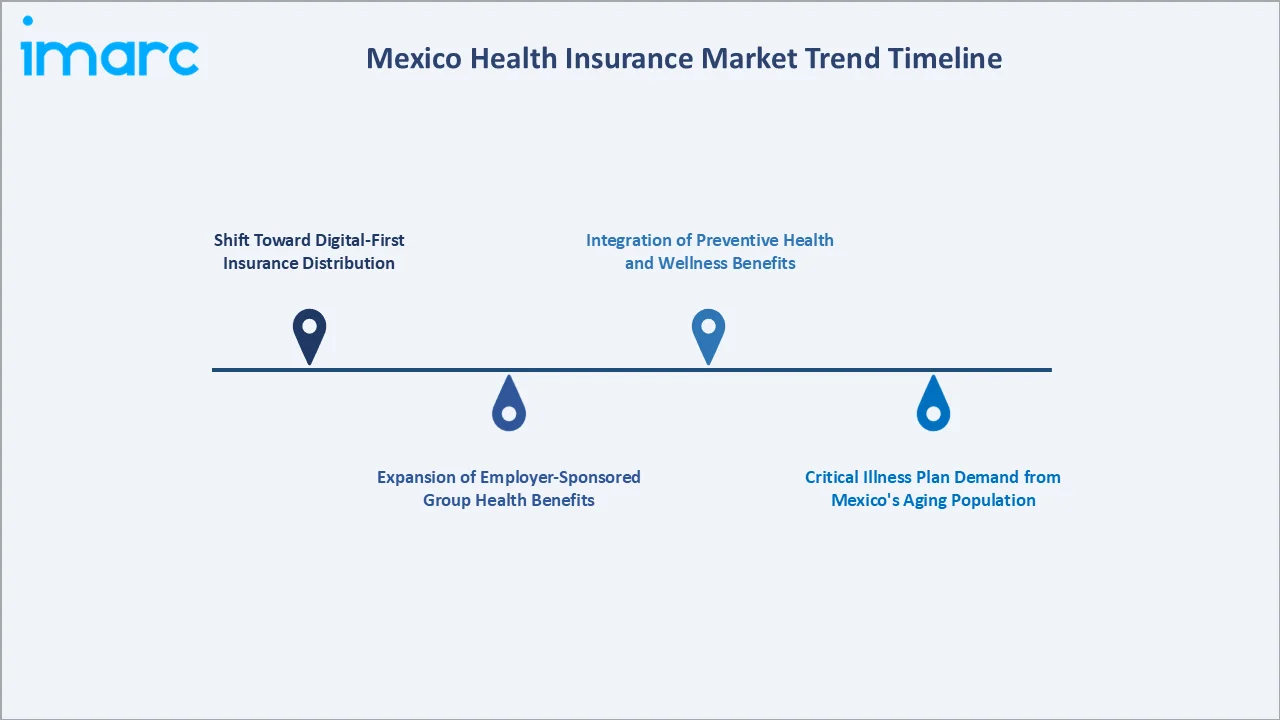
1. Shift Toward Digital-First Insurance Distribution
The Mexico health insurance market is experiencing a structural shift in how policies are sold and serviced, with digital channels progressively replacing traditional agent-intermediated distribution. InsurTech platforms and bancassurance mobile applications are enabling consumers to compare plans, obtain quotes, and complete enrollment in a single digital session. This shift is expanding the addressable market by reaching income segments and geographic areas where the economics of agent-based distribution were previously unviable.
2. Expansion of Employer-Sponsored Group Health Benefits
Foreign direct investment in Mexico's manufacturing and industrial sectors is creating a sustained wave of new formal employment, with employer-sponsored group health plans emerging as a key workforce attraction and retention tool. Companies establishing operations in Mexico's industrial corridors are increasingly structuring comprehensive group health benefit packages as part of their employee value proposition, driving new group premium enrollment across Northern and Central Mexico.
3. Integration of Preventive Health and Wellness Benefits
Leading insurers in Mexico are evolving their value proposition beyond pure financial indemnification toward proactive health management. Annual health screenings, nutrition counseling, chronic disease management programs, and wellness incentive platforms are being bundled into standard policy offerings. This shift supports better health outcomes among insured populations, reduces the frequency of high-cost claims, and improves policyholder engagement and renewal rates.
4. Critical Illness Plan Demand from Mexico's Aging Population
Mexico's demographic transition toward an older population is generating growing demand for critical illness insurance products covering cancer, cardiac events, stroke, and renal failure. Consumers in the 45-65 age range are increasingly aware of the financial risk posed by catastrophic health events and are seeking coverage that provides lump-sum or benefit payments beyond standard medical expense reimbursement. Critical illness plans are among the fastest-growing product categories within the private health insurance market.
Industry Value Chain Analysis
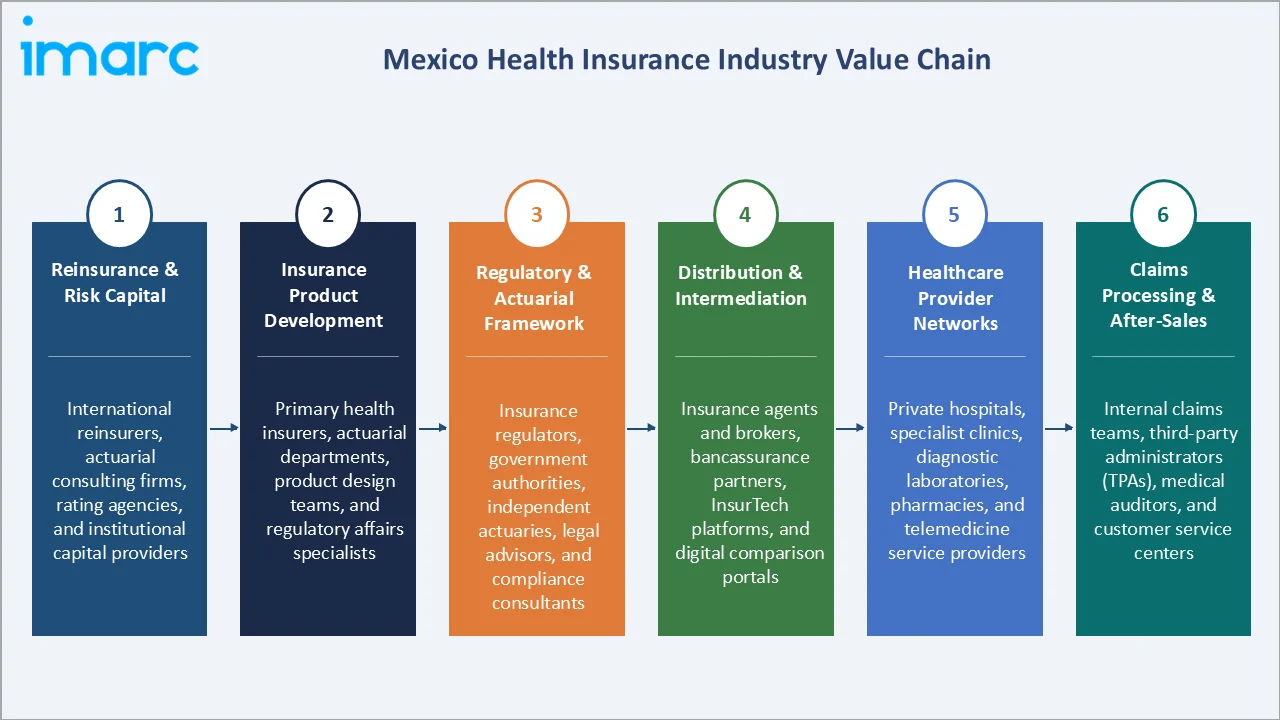
The Mexico health insurance market value chain encompasses six stages from reinsurance capacity provision through claims settlement, with each stage representing distinct competitive advantages and barriers to market entry.
|
Stage |
Key Participants |
|
Reinsurance & Risk Capital |
International reinsurers, actuarial consulting firms, rating agencies, and institutional capital providers. |
|
Insurance Product Development |
Primary health insurers, actuarial departments, product design teams, and regulatory affairs specialists. |
|
Regulatory & Actuarial Framework |
Insurance regulators, government authorities, independent actuaries, legal advisors, and compliance consultants. |
|
Distribution & Intermediation |
Insurance agents and brokers, bancassurance partners, InsurTech platforms, and digital comparison portals. |
|
Healthcare Provider Networks |
Private hospitals, specialist clinics, diagnostic laboratories, pharmacies, and telemedicine service providers. |
|
Claims Processing & After-Sales |
Internal claims teams, third-party administrators (TPAs), medical auditors, and customer service centers. |
Distribution and intermediation represent the highest-value competitive differentiation stage, where the quality and reliability of digital enrollment and post-sale service determine customer retention and annual renewal rates across all provider tiers.
Technology Landscape in the Mexico Health Insurance Industry
Digital Underwriting and AI-Powered Risk Assessment
Artificial intelligence and machine learning are increasingly being adopted by Mexican insurers to automate and enhance the underwriting process. AI-powered risk scoring models allow insurers to evaluate applicant health profiles, predict claim propensity, and make real-time policy decisions without lengthy manual review. This reduces administrative costs, shortens the time from application to policy issuance, and enables more precise risk segmentation across individual and group portfolios.
Telemedicine Platform Integration
The integration of telemedicine services directly into health insurance plan benefits has become a competitive differentiator among leading insurers in Mexico. Policyholders can access virtual consultations with general practitioners and specialists as part of their coverage, reducing the need for in-person visits for routine conditions. Telemedicine integration supports earlier detection and management of health issues, which over time helps moderate claims severity and frequency.
Blockchain-Enabled Claims Processing
Blockchain technology is being explored as a tool to improve transparency and efficiency in health insurance claims management. Distributed ledger systems can provide a shared, tamper-resistant record of policy terms, medical service delivery, and payment authorization, reducing the risk of duplicate billing and fraudulent claims. Smart contract applications have the potential to automate straightforward claims settlements, reducing processing time and administrative overhead for both insurers and healthcare providers.
Wearable Device and Connected Health Data Integration
A growing number of insurers are exploring programs that link premium pricing or rewards to data generated by wearable health devices such as fitness trackers and smartwatches. By incentivizing healthy behaviors through measurable activity and biometric data, insurers aim to engage policyholders in managing their own health outcomes. Connected health programs support a shift toward usage-based and behavior-linked insurance models, particularly among younger and more digitally engaged consumer segments.
Market Segmentation Analysis
The report covers the following segments:
|
Segment Category |
Leading Segment |
Market Share |
Year |
|
Provider |
Private Providers |
63.8% |
2025 |
|
Type |
Life-Time Coverage |
58.6% |
2025 |
|
Plan Type |
🔒 |
🔒 |
2025 |
|
Demographics |
🔒 |
🔒 |
2025 |
|
Provider Type |
🔒 |
🔒 |
2025 |
|
Region |
Central Mexico |
44.8% |
2025 |

By Provider
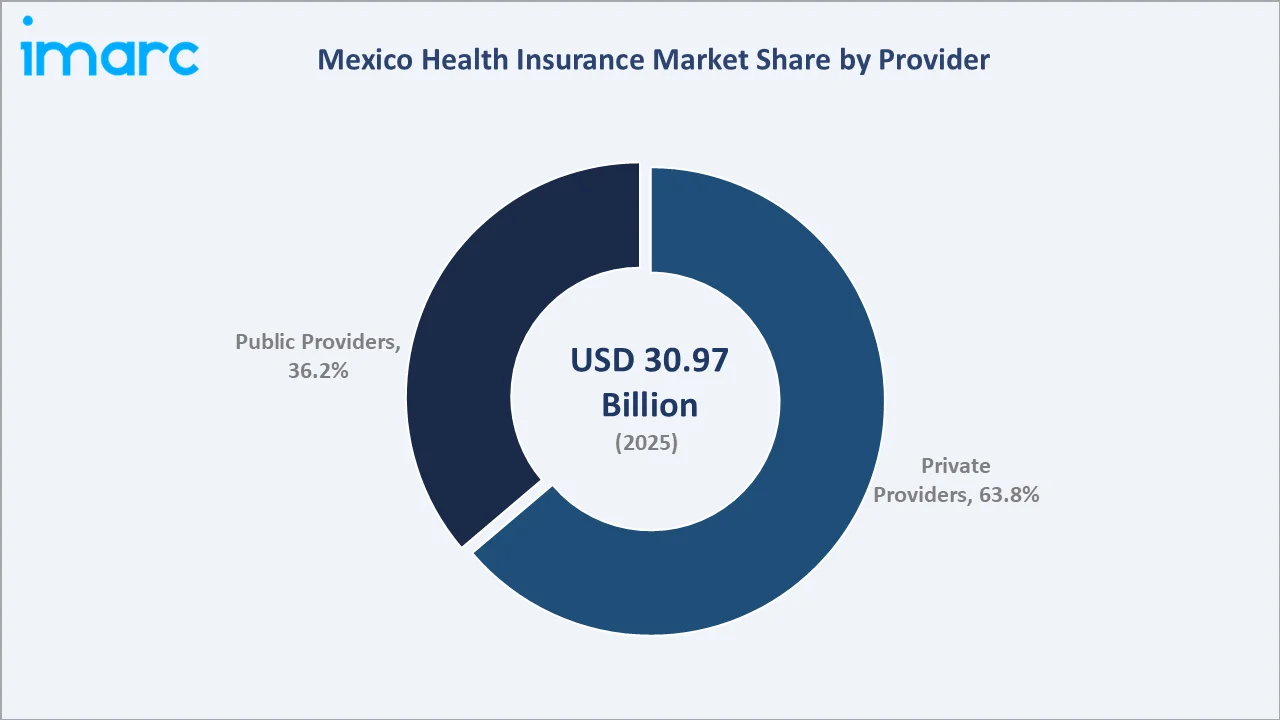
Private providers command 63.8% market share in 2025, driven by consumer demand for premium hospital network access and specialist physician availability that public IMSS schemes cannot match. Private providers grow at an estimated 6.1% CAGR through 2034, as near-shoring formal employment expansion disproportionately benefits private insurer enrollment growth.
To access detailed market analysis, Request Sample
Public providers represent 36.2% of the market, reflecting employer-employee contribution premiums within the social security system. Mexico's formal sector IMSS-enrolled population forms the underlying base for public provider premium income.
By Type
Life-time coverage commands 58.6% of market premium income in 2025, guaranteeing continuous coverage renewal regardless of health condition changes after policy inception. Life-time plans carry higher annual premiums than term equivalents but exhibit significantly lower annual lapse rates than term plans, providing insurers with superior premium income predictability.
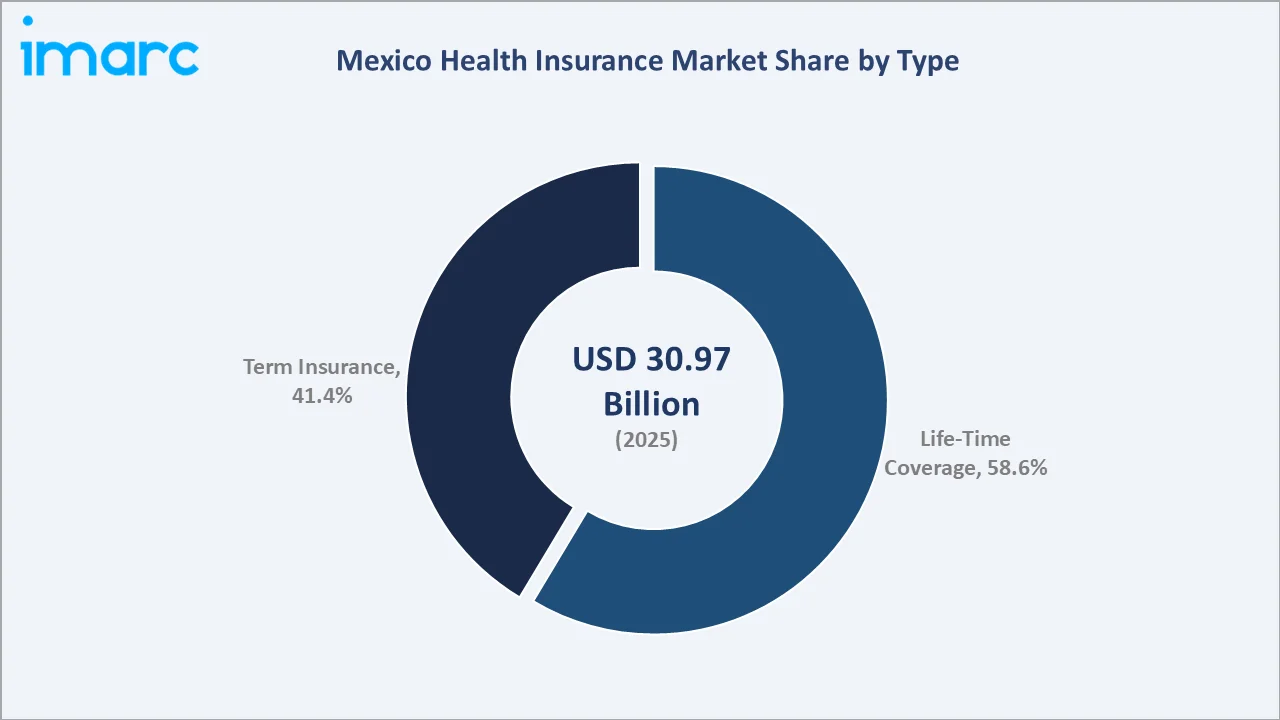
Term insurance holds a 41.4% market share in 2025. Term plans are disproportionately adopted by younger insured individuals aged 25-40 who prioritize lower initial premiums. Term insurance is the primary vehicle for mass-market digital distribution, expanding at approximately 4.8% CAGR through 2034.
Regional Market Insights
|
Region |
Share (2025) |
Key Mexico Health Insurance Market Drivers & Characteristics |
|
Central Mexico |
44.8% |
Central Mexico leads through the highest corporate concentration and per-capita income, anchored by Mexico City's large formally insured population and premium private hospital infrastructure. |
|
Northern Mexico |
33.5% |
Northern Mexico's industrial manufacturing corridor drives employer-sponsored group plan growth, with near-shoring FDI creating sustained new group benefit enrollment events across the region. |
|
Southern Mexico |
16.7% |
Southern Mexico reflects lower private insurance penetration due to higher informality rates, with public programs dominant and micro-insurance representing the primary growth opportunity. |
|
Others |
5.0% |
Includes low-density regions, with tourism-linked health coverage gaining traction in resort corridors. |
Central Mexico's 44.8% dominance reflects Mexico City’s position as the country's undisputed financial and corporate center. The metropolitan area hosts most of Mexico's Fortune 500-equivalent companies, generating the highest density of employer-sponsored group health benefit enrollment in the country.
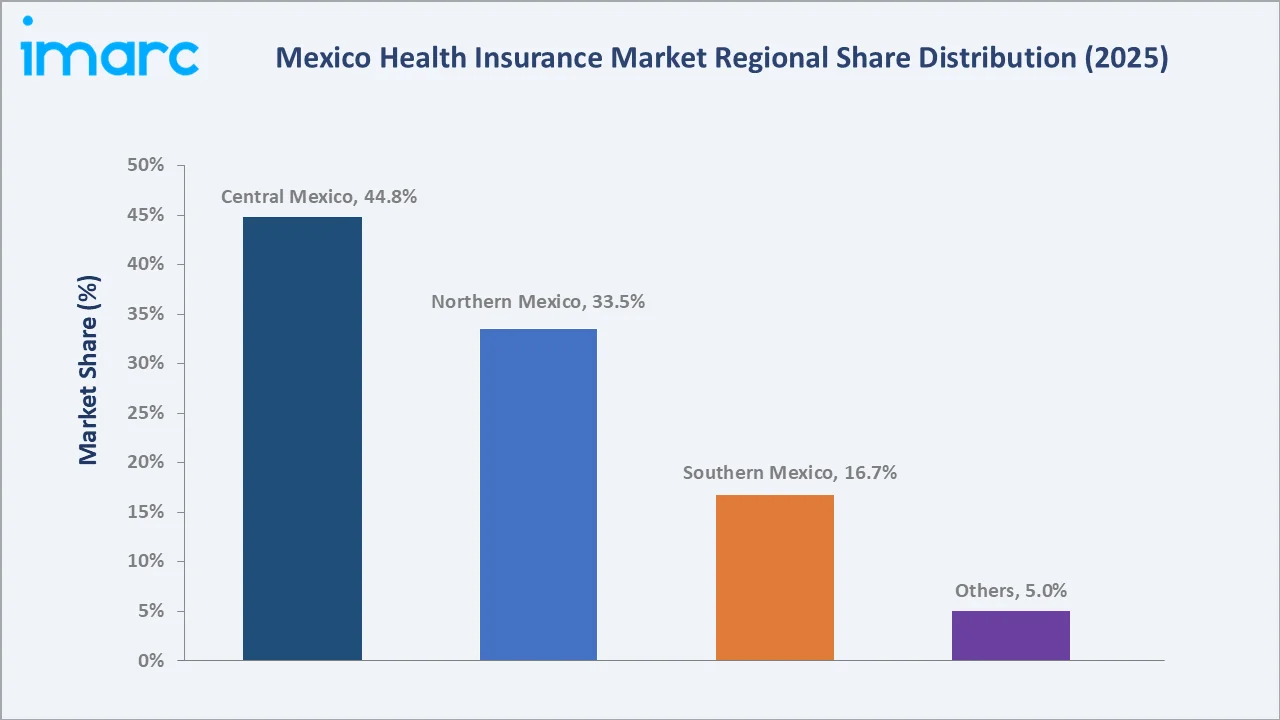
Northern Mexico at 33.5% is experiencing the fastest premium growth through financial center expansion and workforce formalization. Southern Mexico at 16.7% represents the most significant underpenetration opportunity, with private insurance penetration among the economically active population. Other regions are at 5.0%.
Competitive Landscape
Mexico health insurance market features a moderately concentrated competitive structure. The competitive landscape is evolving through bancassurance model dominance, digital direct channel investment, and product differentiation through integrated health service ecosystems.
| Company | Brand Name | Market Position | Core Strength |
|---|---|---|---|
| AXA | AXA Salud | Market Leader | Provides traditional high-coverage policies protecting individuals and corporate employees against costly treatments for cancer, chronic conditions, surgeries, and emergencies |
| MetLife Inc. | MetLife | Innovator | MetLife Inc. operates as a leading private provider of major medical, accident, and health insurance in Mexico through its subsidiary, MetLife Mexico. |
| Allianz | Care International health insurance | Established Player | Allianz provides international and local health insurance coverage in Mexico through Allianz Care, catering heavily to expats, travelers, and local citizens seeking private medical access. |
| HSBC Group | Planmed | Established Player | HSBC Group plays a targeted role in Mexico's insurance sector by integrating health and life protection directly into its premium banking and wealth management services. |
Competitive dynamics are shifting as digital InsurTech challengers reduce customer acquisition costs and traditional agent commission structures face margin pressure. Group employer benefit plan structuring remains the primary battleground among established players, while the individual direct-to-consumer digital channel is the fastest-growing contested segment.
Key Company Profiles
AXA
AXA is a major insurance provider operating in Mexico, offering a broad portfolio of insurance and risk-protection solutions. In the health insurance segment, the company provides medical coverage designed to support individuals and families with healthcare and hospitalization expenses. Its offerings are distributed through various channels, including agents, brokers, and digital platforms. The company also emphasizes access to healthcare services and customer support through its provider network.
- Key Brands: AXA Salud.
- Strategic Focus: Expanding its health insurance portfolio by strengthening healthcare access, enhancing customer-centric services, and incorporating digital solutions into insurance processes. The company also emphasizes efficient claims management, preventive healthcare services, and partnerships across the healthcare ecosystem.
MetLife Inc.
MetLife Inc. is an insurance and financial services company with operations in Mexico, offering a range of insurance and employee benefit solutions. In the health insurance segment, the company provides products designed to help individuals and corporate customers manage medical and healthcare-related expenses. Its offerings are supported through insurance intermediaries, employer relationships, and digital channels. The company also focuses on customer service, healthcare access, and streamlined insurance processes.
- Key Brands: MetLife.
- Strategic Focus: Strengthening its health and employee-benefit offerings by expanding customer access, improving service delivery, and leveraging digital technologies. The company also emphasizes tailored insurance solutions, efficient claims management, and stronger engagement with corporate and individual customers.
Market Concentration Analysis
Mexico health insurance market exhibits moderate-to-high concentration in the private provider segment, with AXA, MetLife Inc., Allianz, and HSBC Group collectively representing an estimated 55-62% of private health premium income in 2025. This concentration reflects decades of brand equity investment, established hospital network contracts, and regulatory capital requirements that create meaningful barriers for new market entrants.
The market's fragmentation level is higher in the SME group benefit segment, where active insurers compete for corporate accounts. Mid-tier players operate profitably in specialty product niches while lacking the distribution scale of the top four competitors. Consolidation trends are accelerating as solvency and reserve requirements increase operational capital demands.
Investment & Growth Opportunities
Highest Growth Segments
Private providers are growing at ~6.1% CAGR and life-time coverage is growing at ~5.9% CAGR. Regionally, Northern Mexico records the highest growth at 6.2% CAGR, supported by industrial workforce formalization and employer-sponsored insurance demand.
Investment Themes
- Digital Distribution and Insurtechs: Investment in digital enrollment, mobile-first policy management, and AI-powered underwriting that reduces policy administration costs to levels enabling affordable micro-insurance products for lower-income segments. Digital distribution economics are the primary constraint on reaching the large uninsured Mexican population, and insurtechs that solve this cost equation access a structurally large addressable market.
- Medical Cost Management Infrastructure: Investment in hospital network contracting, pharmacy benefit management, and managed care coordination capabilities that reduce the medical loss ratio impact of medical inflation on insurer economics. Companies that develop superior medical cost management achieve sustainable competitive advantage in pricing accuracy and profitability that enables competitive premium levels and sustains enrollment growth.
Future Market Outlook (2026-2034)
The Mexico health insurance market is projected to grow from USD 30.97 Billion in 2025 to USD 32.66 Billion in 2026, reaching USD 50.60 Billion by 2034, exhibiting a CAGR of 5.44% during 2026-2034. The market is projected to reach USD 40.36 Billion by 2030, the mid-period milestone when digital direct-to-consumer channels are expected to represent new individual policy issuance, critical illness plans will account for private premium income, and micro-insurance products will have established a measurable informal sector policyholder base.
Three transformative forces will shape Mexico's health insurance market through 2034. First, the digital distribution transformation will democratize policy access for middle- and lower-middle-income Mexicans, potentially adding new individual policyholders by 2034 who would not have been reached through traditional channels. Second, the chronic disease insurance demand acceleration will elevate average premium per policy, as life-time coverage plans with chronic disease management benefits command premiums over standard indemnification plans. Third, near-shoring-driven formal employment expansion will create the highest sustained group health benefit plan formation rate in Mexico's history through 2030, adding new formally insured group plan members by 2034.
Research Methodology
Primary Research
Primary research comprised structured interviews with health insurance product managers and actuarial directors at major Mexican insurers, corporate HR directors managing employer group benefit programs, regulatory affairs contacts, hospital network contracting managers, InsurTech founders and senior management interviews, and independent health economics researchers. Consumer demand validation incorporated structured surveys with urban and peri-urban Mexican household respondents across income quintiles and age cohorts.
Secondary Research
Secondary research incorporated statistical bulletins on insurance premium income and policyholder counts, IMSS enrollment and contribution data, national health and income surveys, industry reports, company annual reports, OECD health expenditure statistics for Mexico, and macroeconomic forecasts from Mexico country outlook publications.
Forecasting Models
Market forecasting integrated Mexico's formal employment trajectory projections from near-shoring FDI scenarios, income distribution evolution models, coverage expansion scenarios, InsurTech adoption rate modeling based on comparable Latin American market digital insurance penetration trajectories, and medical cost inflation curves from CNSF claims data trends.
Mexico Health Insurance Market Report Coverage:
| Report Features | Details |
|---|---|
| Base Year of the Analysis | 2025 |
| Historical Period | 2020-2025 |
| Forecast Period | 2026-2034 |
| Units | Billion USD |
| Scope of the Report |
Exploration of Historical Trends and Market Outlook, Industry Catalysts and Challenges, Segment-Wise Historical and Future Market Assessment:
|
| Providers Covered | Private Providers, Public Providers |
| Types Covered | Life-Time Coverage, Term Insurance |
| Plan Types Covered | Medical Insurance, Critical Illness Insurance, Family Floater Health Insurance, Others |
| Demographics Covered | Minor, Adults, Senior Citizen |
| Provider Types Covered | Preferred Provider Organizations (PPOs), Point of Service (POS), Health Maintenance Organizations (HMOs), Exclusive Provider Organizations (EPO) |
| Regions Covered | Northern Mexico, Central Mexico, Southern Mexico, Others |
| Companies Covered | AXA, MetLife Inc., Allianz, HSBC Group, etc. |
| Customization Scope | 10% Free Customization |
| Post-Sale Analyst Support | 10-12 Weeks |
| Delivery Format | PDF and Excel through Email (We can also provide the editable version of the report in PPT/Word format on special request) |
Key Benefits for Stakeholders:
- IMARC’s industry report offers a comprehensive quantitative analysis of various market segments, historical and current market trends, market forecasts, and dynamics of the Mexico health insurance market from 2020-2034.
- The research report provides the latest information on the market drivers, challenges, and opportunities in the Mexico health insurance market.
- Porter's five forces analysis assist stakeholders in assessing the impact of new entrants, competitive rivalry, supplier power, buyer power, and the threat of substitution. It helps stakeholders to analyze the level of competition within the Mexico health insurance industry and its attractiveness.
- Competitive landscape allows stakeholders to understand their competitive environment and provides an insight into the current positions of key players in the market.
Frequently Asked Questions About the Mexico Health Insurance Market Report
The Mexico health insurance market reached USD 32.66 Billion in 2026, driven by private sector enrollment growth, employer group plan expansion, rising chronic disease awareness, and increasing middle-class income allocation to healthcare protection.
The market is projected to grow at a CAGR of 5.44% during 2026-2034, driven by digital distribution expansion, near-shoring formal employment creation, critical illness plan demand from an aging population, and InsurTech-enabled micro-insurance market formation for informal sector workers.
The market is projected to reach USD 40.36 Billion by 2030, when digital channels are expected to represent new individual policy issuance and near-shoring industrial corridor group enrollment reaches peak growth velocity through continued FDI-driven manufacturing formalization.
Private providers lead with a 63.8% share in 2025, serving corporate and middle-income consumers through premium hospital networks. Private providers grow at ~6.1% CAGR versus ~4.3% for public social security programs through 2034.
Life-time coverage plans lead with a 58.6% share in 2025, driven by consumer demand for guaranteed renewal protection as chronic disease prevalence rises. Mexico's diagnosed diabetics and significant cardiovascular disease incidence make permanent coverage a priority over renewable-term alternatives.
Central Mexico leads with a 44.8% share in 2025, anchored by Mexico City's corporate concentration, highest per-capita private health spending, and premium hospital infrastructure density, making private insurance the preferred healthcare access mechanism.
Key players include AXA, MetLife Inc., Allianz, and HSBC Group, among others.
The market is projected to reach USD 50.60 Billion by 2034, driven by digital distribution democratizing policy access, chronic disease insurance demand escalating average premium per policy, near-shoring expanding formal group enrollment, and senior citizen coverage expansion from Mexico's aging demographic profile.
Need more help?
- Speak to our experienced analysts for insights on the current market scenarios.
- Include additional segments and countries to customize the report as per your requirement.
- Gain an unparalleled competitive advantage in your domain by understanding how to utilize the report and positively impacting your operations and revenue.
- For further assistance, please connect with our analysts.
 Request Customization
 Speak to an Analyst
 Request Brochure
 Inquire Before Buying
Benefits of Customization
- Personalize this research
- Triangulate with your data
- Get data as per your format and definition
- Gain a deeper dive into a specific application, geography, customer, or competitor
- Any level of personalization
Get in Touch With Us
UNITED STATES
Phone: +1-201-971-6302
INDIA
Phone: +91-120-433-0800
UNITED KINGDOM
Phone: +44-753-714-6104
Email: [email protected]
Client Testimonials




.webp)




.webp)













Related Reports

Choose your plan
*Please note that the prices mentioned below are starting prices for each bundle type. Kindly contact our team for further details.*
Single User License
- 1 User License, Access on 2 Devices
- PDF Report + Excel Dataset (Password Protected)
- Lifetime Access
- No Printing Rights
- 10% Free Report Customization
- 10–12 Weeks of Analyst Support
Five User License
- Access for 5 Users, 2 Devices per User
- PDF Report + Excel Dataset (Password Protected)
- Lifetime Access
- Dedicated Account Manager
- 12–14 Weeks of Analyst Support
- No Printing Rights
- 15% Free Report Customization
- 25% Discount on Your Next Purchase
Corporate User License
- Unlimited User Access (Within Your Organization)
- PDF Report + Excel Dataset
- Lifetime Access
- Dedicated Account Manager
- 14–20 Weeks of Analyst Support
- No Printing Rights
- 20% Free Report Customization
- 30% Discount on Your Next Purchase
Essential Insights
What's included:
3 reports
- Lifetime Access
- PDF Reports
- Excel Datasets
- 2 Weeks of Free Analyst Support
- 2 User Licenses
- Access on 2 Devices
- Printing Rights
- Complimentary PowerPoint (PPT) Version
- Complimentary License Upgrade
Professional Access
What's included:
5 reports
- Lifetime Access
- PDF Reports
- Excel Datasets
- 8 Weeks of Free Analyst Support
- 2 User Licenses
- Access on 2 Devices
- Printing Rights
- Complimentary PowerPoint (PPT) Version
- Complimentary License Upgrade
Business Advantage
What's included:
8 reports
- Lifetime Access
- PDF Reports
- Excel Datasets
- 14 Weeks of Free Analyst Support
- 2 User Licenses
- Access on 2 Devices
- Printing Rights
- Complimentary PowerPoint (PPT) Version
- Complimentary License Upgrade
Enterprise Intelligence
What's included:
10 reports
- Lifetime Access
- PDF Reports
- Excel Datasets
- 20 Weeks of Free Analyst Support
- 2 User Licenses
- Access on 2 Devices
- Printing Rights
- Complimentary PowerPoint (PPT) Version
- Complimentary License Upgrade