
Mexico Pet Supplement Market Size, Share, Trends and Forecast by Pet Type, Source, Distribution Channel, Application, and Region, 2026-2034
Mexico Pet Supplement Market Size, Share, Trends & Forecast (2026-2034)
The Mexico pet supplement market reached USD 20.48 Million in 2025 and is projected to reach USD 31.09 Million by 2034, growing at a CAGR of 4.61% during 2026-2034. Growth is driven by rising pet humanization, expanding veterinary recommendations, and increasing household spending on preventive pet healthcare. Mexico's pet population has expanded steadily, with INEGI’s ENBIARE 2021 national survey reporting that nearly 70% of households owned a pet, led by an estimated 43.8 million dogs and 16.2 million cats. This is supporting sustained demand for multivitamins, joint-health, and digestive-care formulations. Dogs lead the pet type segment at 67.8%. Conventional sources lead at 71.4%. Central Mexico leads regionally at 45.8%.
Market Snapshot
|
Metric |
Value |
|
Market Size (2025) |
USD 20.48 Million |
|
Forecast Market Size (2034) |
USD 31.09 Million |
|
CAGR (2026-2034) |
4.61% |
|
Base Year |
2025 |
|
Historical Period |
2020-2025 |
|
Forecast Period |
2026-2034 |
|
Dominant Pet Type |
Dogs (67.8%, 2025) |
|
Dominant Source |
Conventional (71.4%, 2025) |
|
Leading Region |
Central Mexico (45.8%, 2025) |
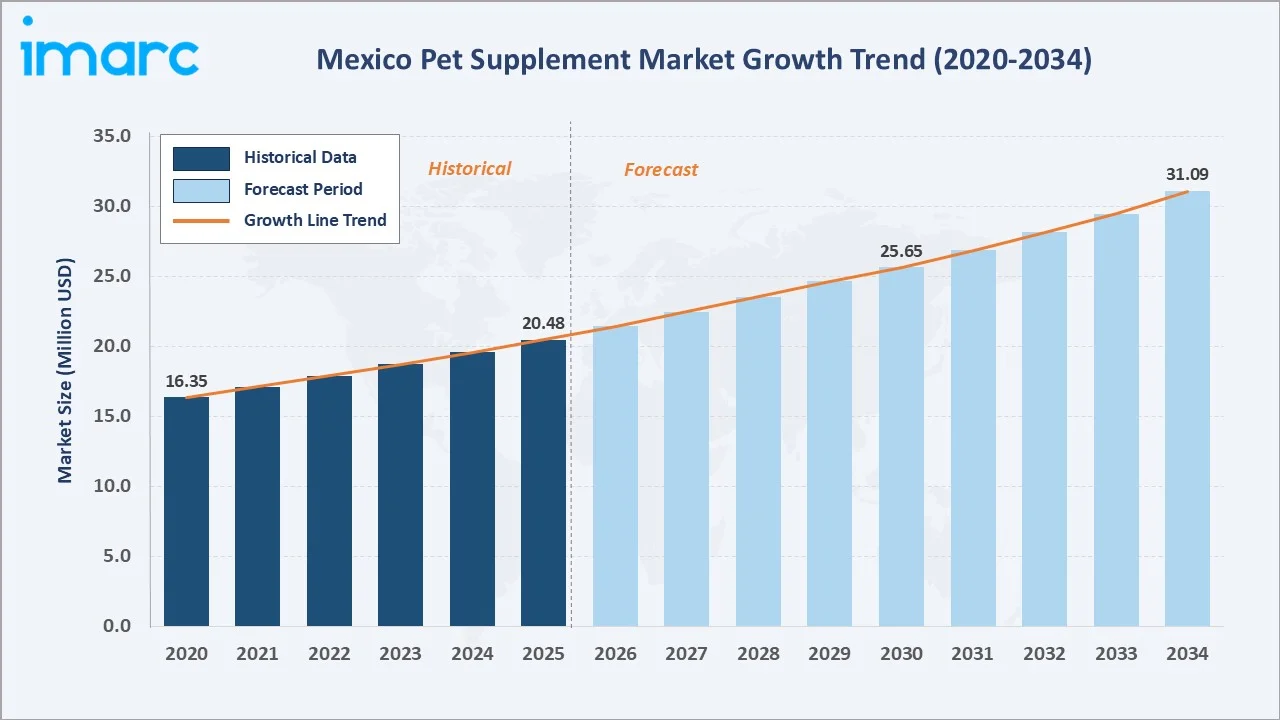
The Mexico pet supplement market grew from USD 16.35 Million in 2020 to USD 20.48 Million in 2025, reflecting steady demand from rising pet ownership and preventive healthcare adoption. It is expected to reach USD 25.65 Million by 2030, supported by growing use of multivitamins, skin and coat formulas, and hip and joint solutions. By 2034, the market is forecast to reach USD 31.09 Million, driven by premiumization, veterinary endorsement, and expanding e-commerce access. Overall, the market shows consistent long-term growth as Mexican households increasingly treat pets as family members.
To evaluate market opportunities, Request Sample
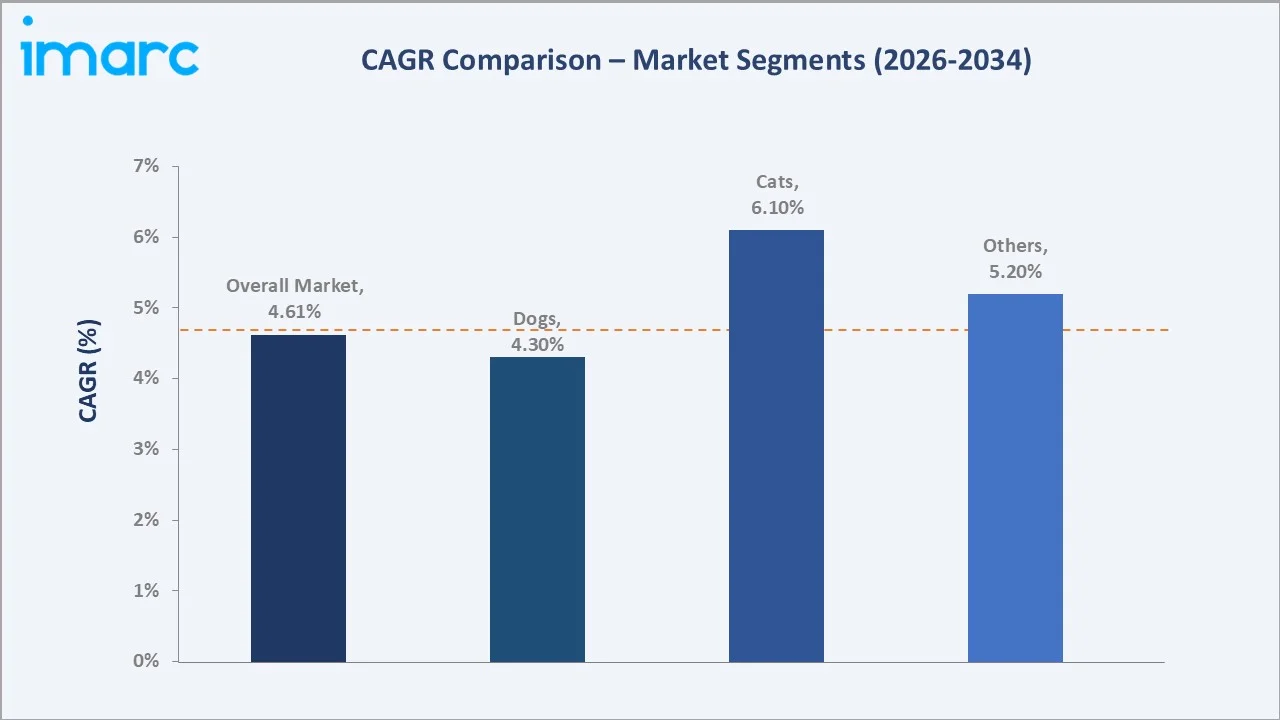
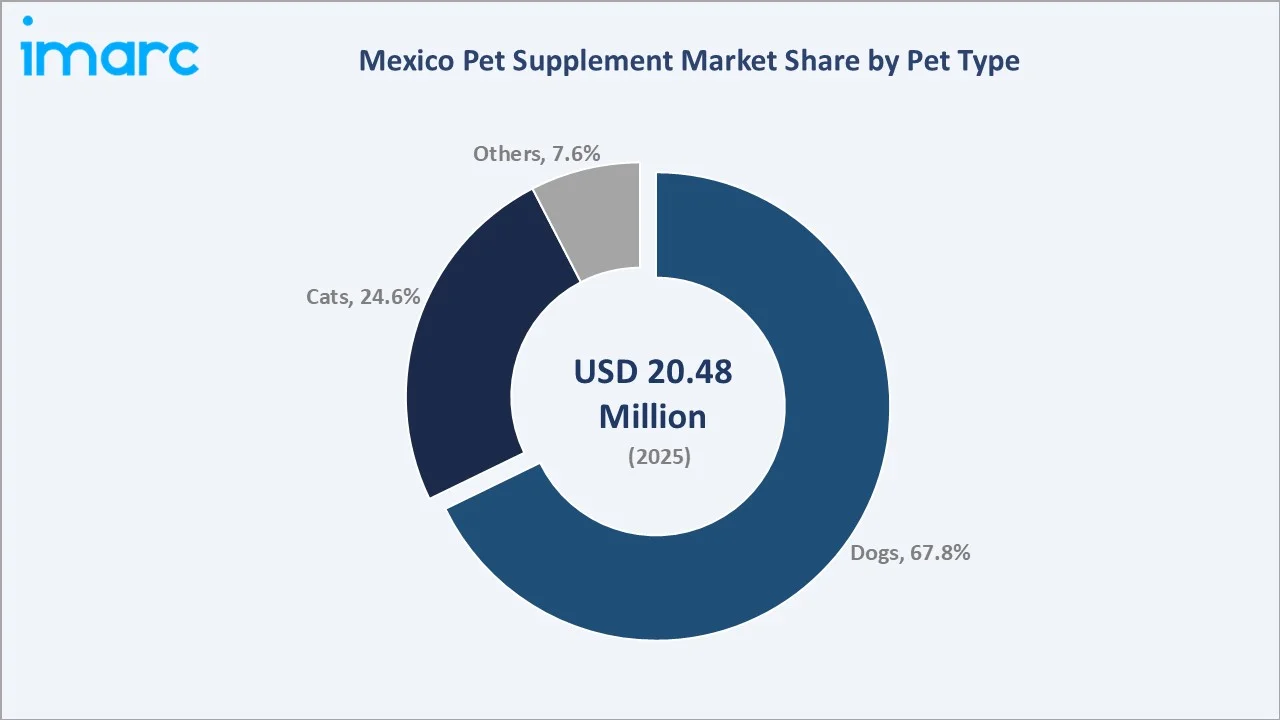
Cats grow fastest at an estimated ~6.1% CAGR through 2034, supported by rising urban cat ownership and feline-specific formulations. Others grow at ~5.2% CAGR through small mammal and avian wellness products. Dogs grow steadily at ~4.3% CAGR as the largest base segment maintains broad penetration.
Executive Summary
The Mexico pet supplement market is expanding steadily, supported by rising pet humanization and growing household spending on preventive animal healthcare. Increasing adoption of dogs and cats across urban centers is raising demand for multivitamins, skin and coat formulas, hip and joint products, and digestive-support supplements. Pet owners are increasingly seeking veterinarian-recommended formulations to address age-related and breed-specific health concerns.
Market growth is further supported by expanding e-commerce penetration, growing specialty pet retail networks, and regulatory oversight from SADER/SENASICA and NOM-012-SAG/ZOO-2020 standards that strengthen consumer trust. However, the presence of counterfeit and unregistered products continues to create price pressure and quality concerns, encouraging a gradual shift toward certified, traceable supplement brands.
Dogs at 67.8% lead through higher dosage volumes and broader veterinary engagement. Conventional sources at 71.4% lead through established formulation chemistry and wide retail availability. Central Mexico leads regionally at 45.8%, supported by its dense urban pet-owning population and developed distribution infrastructure.
Key Market Insights
|
Insight |
Data |
|
Dominant Pet Type |
Dogs - 67.8% share (2025) |
|
Dominant Source |
Conventional - 71.4% market share (2025) |
|
Leading Region |
Central Mexico - 45.8% share (2025) |
|
Fastest Growing Segment |
Cats - ~6.1% CAGR (2026-2034) |
|
Market Opportunities |
Organic and natural formulation expansion; e-commerce-led distribution; hip and joint products for aging dogs; feline-specific palatability innovation; veterinary clinic partnership programs |
Key Analytical Observations Supporting The Above Data:
- Dogs at 67.8%: Dogs dominate due to their larger national population, higher dosage requirements, and more frequent veterinary visits, which translate into consistent multivitamin and joint-health supplement consumption across urban and semi-urban households.
- Conventional at 71.4%: Conventional formulations dominate due to their established efficacy, broad retail availability, and lower price point relative to certified organic alternatives, making them the preferred choice for cost-conscious pet owners.
- Central Mexico at 45.8%: Central Mexico dominates regionally due to its dense urban population, higher disposable incomes, and concentration of pet specialty stores and veterinary clinics that actively recommend supplement regimens.
- Cats fastest-growing: Feline-specific palatable formats such as gels and soft chews are improving administration ease and accelerating cat segment growth as urban pet owners increasingly favor compact companion animals.
- Veterinary access: Government-backed veterinary clinic expansion under the 2024 public veterinary care reform is broadening professional guidance, embedding supplement recommendations into routine pet healthcare visits.
Mexico Pet Supplement Market Overview
The Mexico pet supplement market encompasses nutritional products formulated to support canine, feline, and other companion animal health, including multivitamins, skin and coat formulas, hip and joint solutions, prebiotics and probiotics, and calming supplements. It serves households seeking preventive and condition-specific animal healthcare across veterinary clinics, pet specialty stores, supermarkets, and online retail platforms. Growth is supported by rising pet humanization, expanding disposable incomes, and growing awareness of functional ingredients such as glucosamine, omega-3 fatty acids, and probiotics. Macroeconomic factors include Mexico's expanding urban middle class, rising pet ownership documented by INEGI, and strengthening regulatory oversight under NOM-012-SAG/ZOO-2020.
Market Dynamics
To evaluate market opportunities, Request Sample
Market Drivers
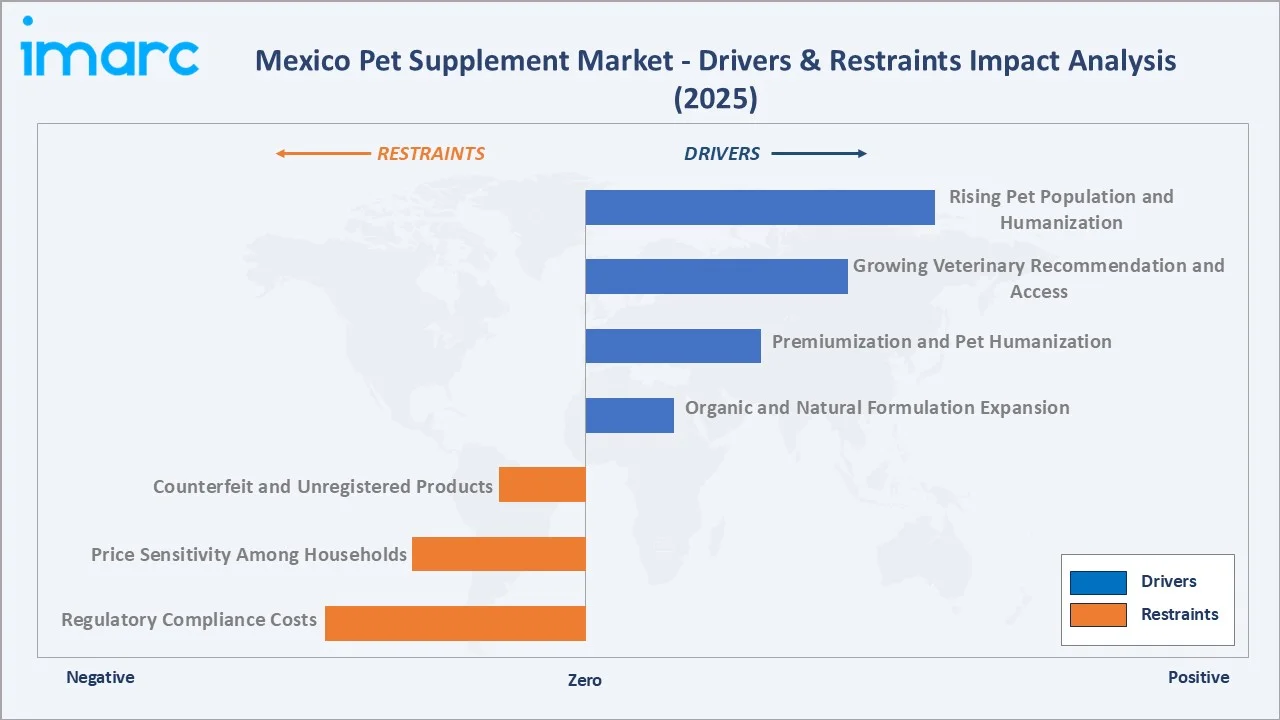
- Rising Pet Population and Humanization: Mexico's pet population has grown substantially, with INEGI's study finding that 69.8% of households owned a pet, including an estimated 43.8 million dogs and 16.2 million cats. This expanding base is directly increasing demand for preventive and condition-specific supplement formulations.
- Growing Veterinary Recommendation and Access: Public veterinary clinic expansion under Mexico's 2024 veterinary care reform is broadening professional access to pet healthcare guidance. Municipal clinics are increasingly recommending supplement regimens for joint health, digestion, and immunity, particularly among price-sensitive households.
- Premiumization and Pet Humanization: Rising disposable incomes and urban pet humanization are driving demand for premium, condition-specific formulations such as hip and joint, skin and coat, and calming supplements, as owners increasingly view pets as family members deserving preventive healthcare investment.
Market Restraints
- Counterfeit and Unregistered Products: The presence of counterfeit and unregistered pet supplement products in informal retail channels undermines consumer trust and creates price pressure for certified, NOM-compliant brands, particularly in price-sensitive rural and peri-urban markets.
- Price Sensitivity Among Households: Price-sensitive household spending patterns, especially outside major urban centers, continue to limit penetration of premium and organic supplement formulations, favoring lower-cost conventional alternatives instead.
Market Opportunities
- Organic and Natural Formulation Expansion: Growing consumer preference for clean-label, additive-free formulations is creating opportunities for organic and natural pet supplement brands to expand distribution through specialty retail and e-commerce channels targeting health-conscious pet owners.
- E-Commerce Channel Expansion: Rising internet penetration and digital payment adoption are expanding e-commerce as a distribution channel, enabling supplement brands to reach pet owners in underserved regions beyond Mexico's major urban centers.
Market Challenges
- Regulatory Compliance Costs: Compliance with NOM-012-SAG/ZOO-2020 labeling and quality control requirements, regulated under SADER/SENASICA, with PROFECO related consumer-protection obligations, requires manufacturers to invest in traceability documentation and certified testing, raising operational costs for smaller suppliers.
- Limited Rural Awareness: Limited awareness of functional supplement benefits among rural and lower-income pet owners continues to constrain category penetration outside Mexico's major metropolitan markets.
Emerging Market Trends
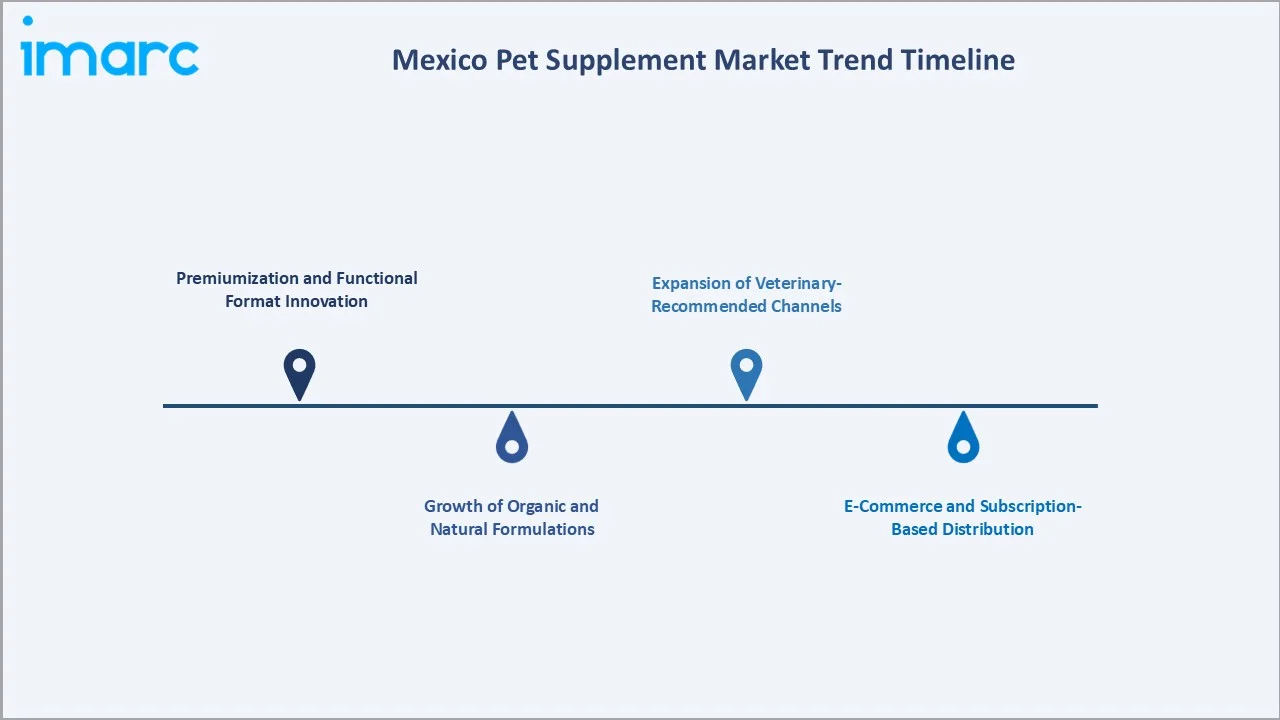
1. Premiumization and Functional Format Innovation
Premiumization is emerging as pet owners increasingly seek condition-specific formulations such as hip and joint, calming, and skin and coat supplements. Manufacturers are responding with chewable and palatable formats that mimic human wellness routines, supporting higher per-unit spending.
2. Growth of Organic and Natural Formulations
Demand for organic supplements, currently at 28.6% share, is rising as health-conscious owners seek additive-free, clean-label products. This trend is encouraging investment in natural ingredient sourcing and certification compliance among Mexican manufacturers.
3. Expansion of Veterinary-Recommended Channels
Mexico's 2024 public veterinary clinic reform is embedding supplement recommendations into routine pet healthcare visits, particularly benefiting joint-health and digestive-care categories among lower-income households gaining first-time professional access.
4. E-Commerce and Subscription-Based Distribution
Online retail channels are gaining share as cold-chain logistics and secure packaging improve consumer confidence. Subscription-based replenishment models are emerging as a convenient option for recurring multivitamin and joint-health purchases.
Industry Value Chain Analysis
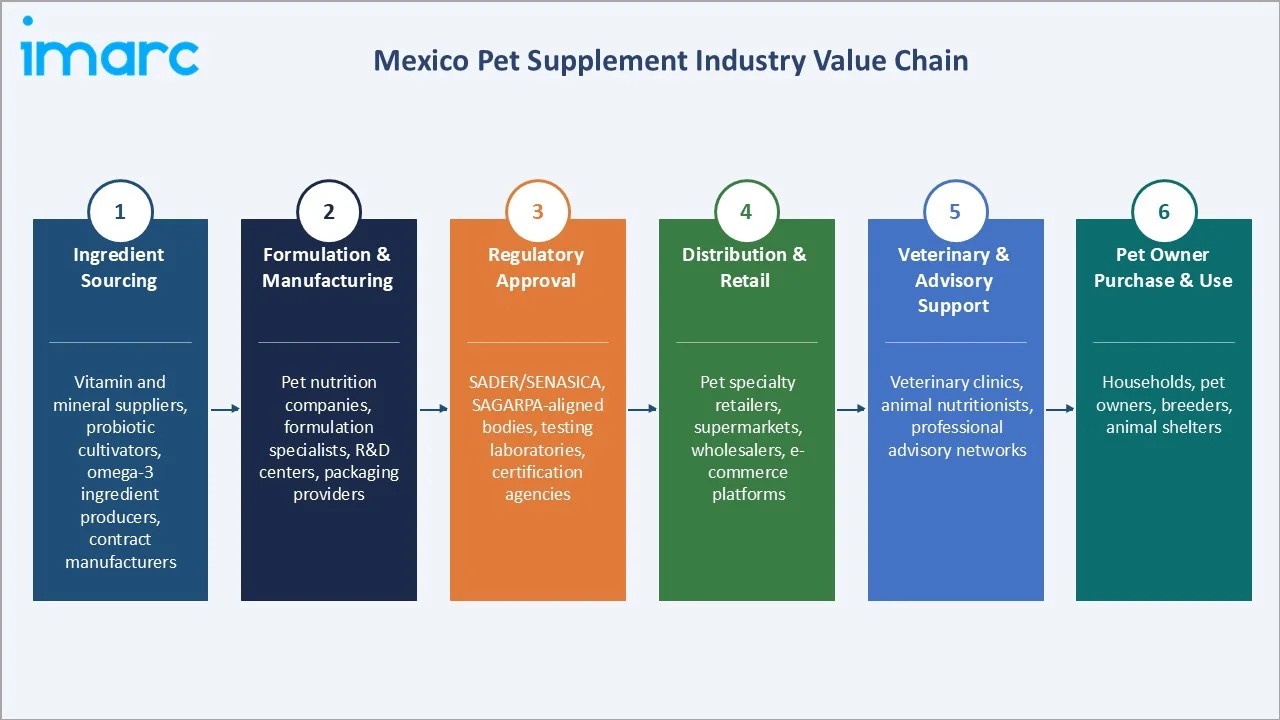
The Mexico pet supplement value chain integrates ingredient sourcing, formulation and manufacturing, regulatory approval, distribution and retail, veterinary and advisory support, and final pet owner purchase and use.
|
Stage |
Key Participants |
|
Ingredient Sourcing |
Vitamin and mineral suppliers, probiotic cultivators, omega-3 ingredient producers, contract manufacturers |
|
Formulation & Manufacturing |
Pet nutrition companies, formulation specialists, R&D centers, packaging providers |
|
Regulatory Approval |
SADER/SENASICA, SAGARPA-aligned bodies, testing laboratories, certification agencies |
|
Distribution & Retail |
Pet specialty retailers, supermarkets, wholesalers, e-commerce platforms |
|
Veterinary & Advisory Support |
Veterinary clinics, animal nutritionists, professional advisory networks |
|
Pet Owner Purchase & Use |
Households, pet owners, breeders, animal shelters |
The formulation and manufacturing stage represents the most value-added point in the Mexico pet supplement value chain. This stage transforms raw ingredients into differentiated products with specific efficacy, palatability, and safety characteristics. Innovation in bioavailability, flavor science, and delivery formats enables companies to command premium pricing and strengthen brand loyalty among pet owners.
Technology Landscape in the Mexico Pet Supplement Industry
Formulation and Bioavailability Technology
Advanced formulation technologies are improving the bioavailability of active ingredients such as glucosamine, omega-3 fatty acids, and probiotics. Encapsulation and controlled-release techniques help extend product effectiveness and improve nutrient absorption in companion animals.
Palatability and Delivery Innovation
Manufacturers are investing in chewable, gel, and powder delivery formats designed to improve administration ease, particularly for feline-specific products. These innovations are reducing dosing resistance and supporting category expansion among cat owners.
Digital Traceability and Quality Verification
Digital traceability systems are increasingly used to support NOM-012-SAG/ZOO-2020 compliance, enabling manufacturers to document ingredient sourcing, batch testing, and certification status, strengthening consumer trust amid counterfeit product concerns.
Market Segmentation Analysis
The report covers the following segments:
|
Segment Category |
Leading Segment |
Market Share |
Year |
|
Pet Type |
Dogs |
67.8% |
2025 |
|
Source |
Conventional |
71.4% |
2025 |
|
Distribution Channel |
🔒 |
🔒 |
2025 |
|
Application |
🔒 |
🔒 |
2025 |
|
Region |
Central Mexico |
45.8% |
2025 |

By Pet Type
Dogs lead the pet type segment at 67.8% in 2025, supported by their larger national population and higher dosage requirements across multivitamin and joint-health categories.
To access detailed market analysis, Request Sample
Cats account for 24.6% share in 2025 and are projected to grow fastest at an estimated ~6.1% CAGR, driven by rising urban cat ownership and growing recognition of feline-specific health needs such as urinary tract support. Others, comprising small mammals and birds, hold 7.6% share.
By Source
Conventional formulations lead the source segment at 71.4% in 2025, supported by established efficacy, broad availability, and lower price points relative to certified organic alternatives.
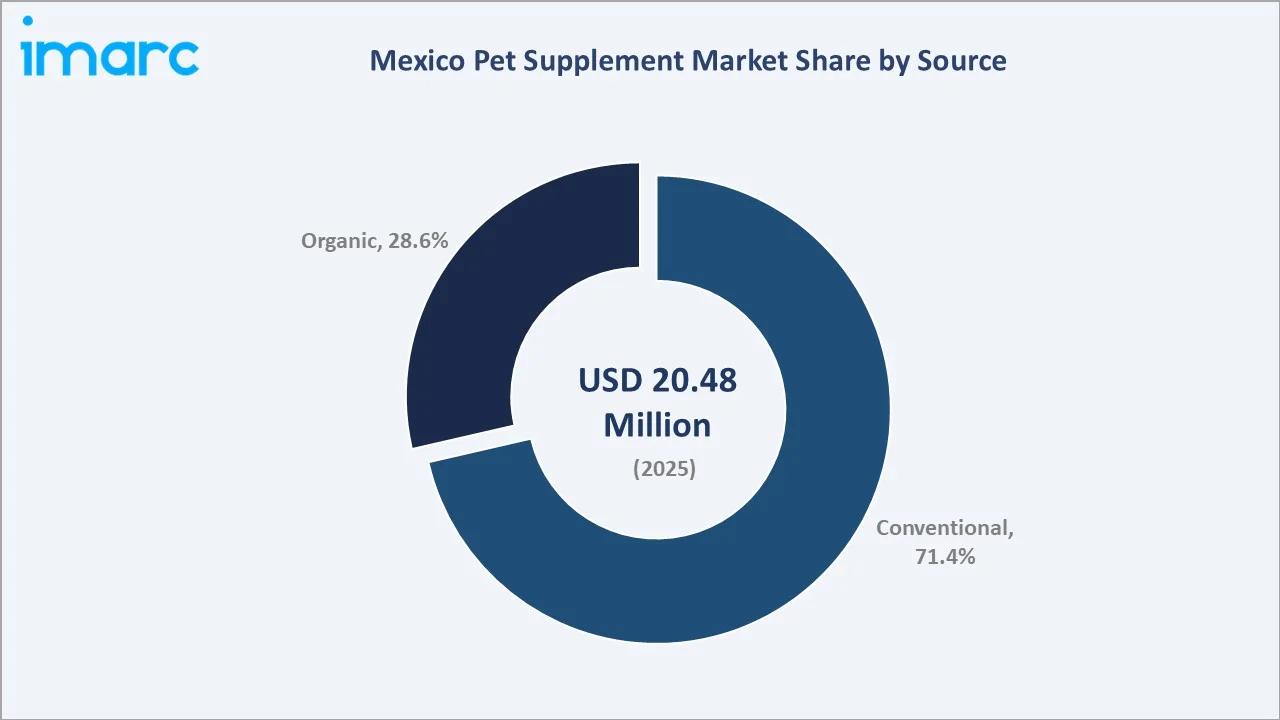
Organic supplements hold 28.6% share in 2025 and are gaining traction as health-conscious pet owners increasingly seek clean-label, additive-free formulations free from synthetic preservatives and fillers.
Regional Market Insights
|
Region |
Share (2025) |
Key Mexico Pet Supplement Market Drivers & Characteristics |
|
Central Mexico |
45.8% |
Reflects a dense urban pet-owning population, higher disposable incomes, and strong concentration of pet specialty stores and veterinary clinics. |
|
Northern Mexico |
29.7% |
Supported by industrial urban centers, growing middle-class pet ownership, and expanding modern retail and veterinary infrastructure. |
|
Southern Mexico |
15.9% |
Reflects developing retail networks and gradually rising pet humanization trends across regional urban centers. |
|
Others |
8.6% |
Other regions, including coastal and border areas, contribute through diversified pet ownership patterns and emerging e-commerce access. |
Central Mexico's 45.8% dominance is supported by its dense urban population, higher household incomes, and concentration of pet specialty retailers and veterinary advisory networks. Northern Mexico's 29.7% follows with industrial urban growth and expanding modern retail infrastructure.
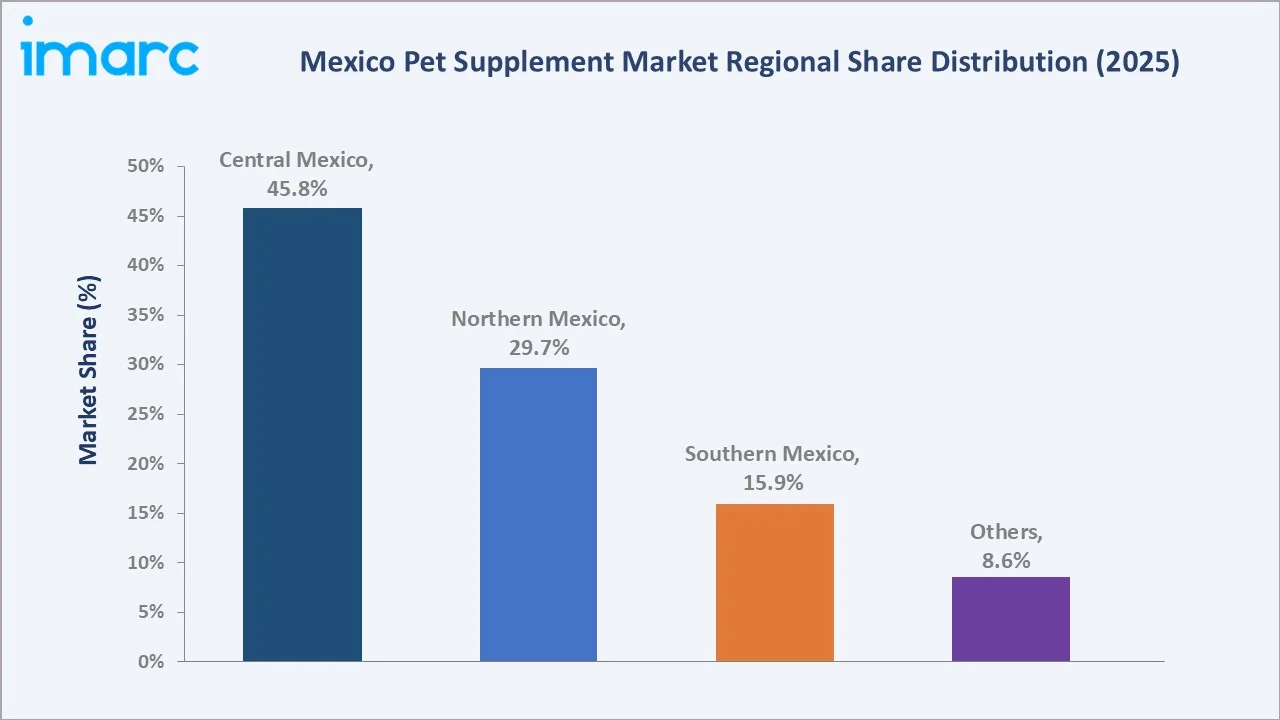
Southern Mexico's 15.9% share reflects gradually developing retail and veterinary infrastructure, while Others at 8.6% contribute through diversified ownership patterns and emerging e-commerce penetration in underserved areas.
Competitive Landscape
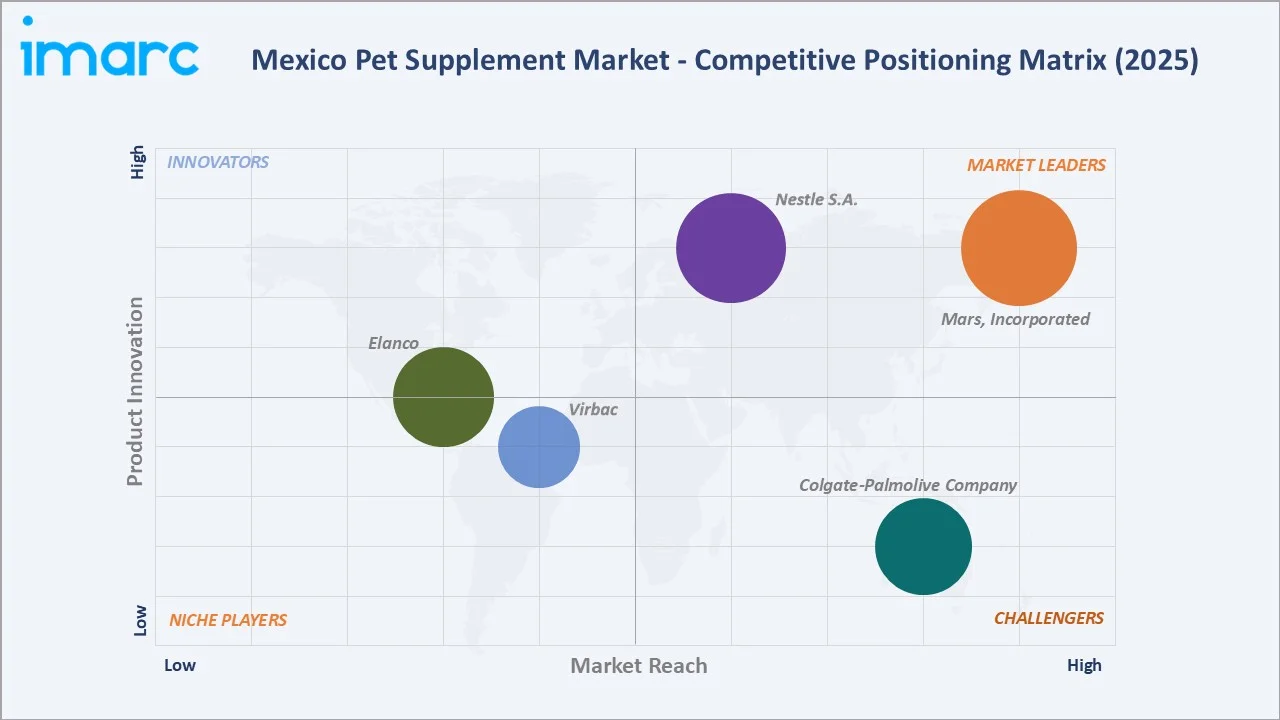
The Mexico pet supplement market is moderately competitive, with multinational pet nutrition companies competing alongside regional formulators and emerging digital-first brands. Key firms focus on multivitamins, joint-health, and functional treat formulations supported by veterinary endorsement and brand trust.
|
Company |
Brand Name |
Market Position |
Core Strength |
|
Mars, Incorporated |
Royal Canin, Pedigree |
Market Leader |
Operates Mars Petcare, which holds a leading position in Mexico's functional pet treat and supplement category |
|
Nestle S.A. |
Purina Pro Plan Veterinary Supplements, FortiFlora, Calming Care |
Market Leader |
Operates Nestle Purina PetCare which maintains strong retail presence across Mexico through its broad pet nutrition portfolio and veterinary channel partnerships supporting functional supplement positioning |
|
Colgate-Palmolive Company |
Hill's Pet Nutrition |
Strong Challenger |
Hill's Pet Nutrition is recognized for science-based formulations and veterinary-endorsed nutrition products addressing specific health conditions in dogs and cats. |
|
Virbac |
MOVOFLEX, Megaderm, Anxitane |
Emerging Player |
Veterinary-exclusive, clinically backed formulations, strong product lines in the region center on dermatological/skin barrier health and dental hygiene |
|
Elanco |
Equilibrium |
Established Player |
Veterinary trust and endorsement, supplement portfolio under trusted legacy, targeted formulations, omnichannel distribution |
Companies are increasingly investing in palatable delivery formats, veterinary clinic partnerships, and NOM-012-compliant certification to address sustainability and consumer-trust requirements amid rising counterfeit product concerns.
Key Company Profiles
Mars, Incorporated
Mars, Incorporated, which is operational via its Mars Petcare division, is a leading pet nutrition company operating in the Mexico pet supplement market. The product offering includes functional treats formulated with added vitamins, omega-3 fatty acids, and natural prebiotics for adult dogs.
- Key Products: Royal Canin nutritional supplements, health chews, and specialized therapeutic diets; Pedigree pet wellness supplements, including daily multivitamins and omega-3/6 additions for skin and coat health.
- Recent Development: In February 2026, Mars, Incorporated announced the launch of the Mars Impact Fund, which selected Humane World for Animals as one of its initial grant recipients and approved a $726,000 grant distributed among its projects in India and Mexico. This fund is focused on providing equitable access to high-quality veterinary care.
- Strategic Focus: Strengthening functional treat portfolio across joint health, digestion, and immune support, combining nutrition science with accessible retail distribution.
Nestle S.A.
Nestle S.A. maintains a strong presence in the Mexico pet supplement market through its Purina PetCare, offering a broad portfolio of nutrition and supplement products supported by veterinary channel partnerships and extensive retail distribution.
- Key Products: Purina Pro Plan Veterinary Supplements, FortiFlora, and Calming Care supplements.
- Recent Development: In February 2026, Nestle announced the opening of Purina Experience Center, a new science and innovation space located within its plant in Silao, with a primary focus on science-based pet nutrition, including pet supplements.
- Strategic Focus: Expanding veterinary-endorsed product lines and strengthening e-commerce distribution to reach a broader base of Mexican pet owners.
Market Concentration Analysis
The Mexico pet supplement market shows moderate concentration, with global pet nutrition leaders such as Mars and Nestle competing alongside regional formulators including Grupo Nupec. Large multinational players hold stronger positions in branded, veterinary-endorsed products, while the market remains fragmented at the distribution and retail level due to numerous local pet stores and informal sellers. Rising demand for organic and natural formulations is also opening space for specialized niche supplement brands. Overall, competition is shifting from price-based selling toward differentiated formulations, palatability innovation, and NOM-012 compliance credibility.
Investment & Growth Opportunities
Highest Growth Segments
Cats (~6.1% CAGR), Others (~5.2% CAGR), Northern Mexico (~5.5% CAGR), and e-commerce-based distribution (~8% CAGR from a growing base) represent the Mexico pet supplement market's highest-growth investment vectors through 2034.
Investment Themes
- Organic and Natural Formulation Expansion: Growing consumer preference for clean-label formulations is creating opportunities for organic and natural pet supplement brands to expand through specialty retail and digital channels targeting health-conscious pet owners.
- Feline-Specific Product Innovation: Feline-specific palatable formats addressing administration challenges represent a high-growth investment opportunity as urban cat ownership continues to rise across Mexico's major metropolitan centers.
Future Market Outlook (2026-2034)
The Mexico pet supplement market is projected to grow from USD 20.48 Million in 2025 to USD 31.09 Million by 2034, delivering a 4.61% CAGR over the forecast period through rising pet humanization, veterinary channel expansion, and organic formulation adoption. The market's anchor value of USD 25.65 Million in 2030 represents the midpoint of premiumization and e-commerce distribution scaling.
Three structural forces define Mexico pet supplement market growth through 2034. First, continued expansion of urban pet ownership and humanization trends is increasing demand for condition-specific formulations. Second, growing veterinary clinic access following the 2024 public veterinary care reform is embedding professional supplement recommendations into routine pet healthcare. Third, the modernization of distribution through e-commerce and subscription models is supporting higher penetration while improving consumer access across underserved regions.
Research Methodology
Primary Research
Primary research comprised interviews with pet supplement manufacturers, distributors, veterinary clinics, and pet specialty retailers across Mexico. Discussions also covered pet owners and breeders involved in dog and cat ownership. Inputs were gathered on supplement demand, product preference, pricing, and adoption of organic formulations. Feedback from industry participants helped validate market size, regional trends, and competitive positioning.
Secondary Research
Secondary research encompassed INEGI pet population statistics, SADER/SENASICA regulatory publications, NOM-012-SAG/ZOO-2020 standard documentation, company reports, and industry databases. Public sources on pet ownership trends, veterinary infrastructure, and e-commerce adoption were assessed to map regional supplement usage. These inputs helped validate market estimates and competitive landscape findings.
Forecasting Models
Forecasting models combined historical market performance, pet population trends, supplement consumption patterns, and macroeconomic indicators to project future demand. The analysis incorporated expected growth in pet humanization, veterinary access, and e-commerce adoption. Market estimates were validated through triangulation of primary insights, secondary research, and segment-level demand analysis to ensure robust long-term projections through 2034.
Mexico Pet Supplement Market Report Coverage:
| Report Features | Details |
|---|---|
| Base Year of the Analysis | 2025 |
| Historical Period | 2020-2025 |
| Forecast Period | 2026-2034 |
| Units | Million USD |
| Scope of the Report |
Exploration of Historical Trends and Market Outlook, Industry Catalysts and Challenges, Segment-Wise Historical and Future Market Assessment:
|
| Pet Types Covered | Dogs, Cats, Others |
| Sources Covered | Organic, Conventional |
| Distribution Channels Covered | Online, Offline |
| Applications Covered | Multivitamins, Skin and Coat, Hip and Joint, Prebiotics and Probiotics, Calming, Others |
| Regions Covered | Northern Mexico, Central Mexico, Southern Mexico, Others |
| Companies Covered | Mars, Incorporated, Nestle S.A., Colgate-Palmolive Company, Virbac, Elanco, etc. |
| Customization Scope | 10% Free Customization |
| Post-Sale Analyst Support | 10-12 Weeks |
| Delivery Format | PDF and Excel through Email (We can also provide the editable version of the report in PPT/Word format on special request) |
Key Benefits for Stakeholders:
- IMARC’s industry report offers a comprehensive quantitative analysis of various market segments, historical and current market trends, market forecasts, and dynamics of the Mexico pet supplement market from 2020-2034.
- The research report provides the latest information on the market drivers, challenges, and opportunities in the Mexico pet supplement market.
- Porter's five forces analysis assist stakeholders in assessing the impact of new entrants, competitive rivalry, supplier power, buyer power, and the threat of substitution. It helps stakeholders to analyze the level of competition within the Mexico pet supplement industry and its attractiveness.
- Competitive landscape allows stakeholders to understand their competitive environment and provides an insight into the current positions of key players in the market.
Frequently Asked Questions About the Mexico Pet Supplement Market Report
The Mexico pet supplement market reached USD 20.48 Million in 2025, driven by rising pet humanization, growing veterinary recommendations, and expanding household spending on preventive pet healthcare.
The Mexico pet supplement market grows at 4.61% CAGR during 2026-2034, reaching USD 31.09 Million by 2034, supported by premiumization and e-commerce expansion.
Dogs lead at 67.8% due to their larger national population, higher dosage requirements, and more frequent veterinary engagement compared to other pet types.
Conventional formulations lead at 71.4% due to established efficacy, broad retail availability, and lower price points relative to certified organic alternatives.
Central Mexico leads at 45.8% due to its dense urban pet-owning population, higher disposable incomes, and concentration of pet specialty retailers and clinics.
Leading companies include Mars, Incorporated, Nestle S.A., Colgate-Palmolive Company, Virbac, and Elanco, among others.
The market is projected to reach approximately USD 25.65 Million by 2030, supported by expanding pet ownership and rising veterinary-recommended supplement adoption.
Priority opportunities include feline-specific palatable formats, organic and natural formulation expansion, and e-commerce-based subscription distribution models for recurring purchases.
Growth is driven by rising pet humanization, INEGI-documented pet population expansion, growing veterinary clinic access, and increasing household spending on preventive healthcare.
Key challenges include counterfeit and unregistered product circulation, price-sensitive household spending, and compliance costs tied to NOM-012-SAG/ZOO-2020 regulatory standards.
Need more help?
- Speak to our experienced analysts for insights on the current market scenarios.
- Include additional segments and countries to customize the report as per your requirement.
- Gain an unparalleled competitive advantage in your domain by understanding how to utilize the report and positively impacting your operations and revenue.
- For further assistance, please connect with our analysts.
 Request Customization
 Speak to an Analyst
 Request Brochure
 Inquire Before Buying
Benefits of Customization
- Personalize this research
- Triangulate with your data
- Get data as per your format and definition
- Gain a deeper dive into a specific application, geography, customer, or competitor
- Any level of personalization
Get in Touch With Us
UNITED STATES
Phone: +1-201-971-6302
INDIA
Phone: +91-120-433-0800
UNITED KINGDOM
Phone: +44-753-714-6104
Email: [email protected]
Client Testimonials




.webp)




.webp)













Related Reports

Choose your plan
*Please note that the prices mentioned below are starting prices for each bundle type. Kindly contact our team for further details.*
Single User License
- 1 User License, Access on 2 Devices
- PDF Report + Excel Dataset (Password Protected)
- Lifetime Access
- No Printing Rights
- 10% Free Report Customization
- 10–12 Weeks of Analyst Support
Five User License
- Access for 5 Users, 2 Devices per User
- PDF Report + Excel Dataset (Password Protected)
- Lifetime Access
- Dedicated Account Manager
- 12–14 Weeks of Analyst Support
- No Printing Rights
- 15% Free Report Customization
- 25% Discount on Your Next Purchase
Corporate User License
- Unlimited User Access (Within Your Organization)
- PDF Report + Excel Dataset
- Lifetime Access
- Dedicated Account Manager
- 14–20 Weeks of Analyst Support
- No Printing Rights
- 20% Free Report Customization
- 30% Discount on Your Next Purchase
Essential Insights
What's included:
3 reports
- Lifetime Access
- PDF Reports
- Excel Datasets
- 2 Weeks of Free Analyst Support
- 2 User Licenses
- Access on 2 Devices
- Printing Rights
- Complimentary PowerPoint (PPT) Version
- Complimentary License Upgrade
Professional Access
What's included:
5 reports
- Lifetime Access
- PDF Reports
- Excel Datasets
- 8 Weeks of Free Analyst Support
- 2 User Licenses
- Access on 2 Devices
- Printing Rights
- Complimentary PowerPoint (PPT) Version
- Complimentary License Upgrade
Business Advantage
What's included:
8 reports
- Lifetime Access
- PDF Reports
- Excel Datasets
- 14 Weeks of Free Analyst Support
- 2 User Licenses
- Access on 2 Devices
- Printing Rights
- Complimentary PowerPoint (PPT) Version
- Complimentary License Upgrade
Enterprise Intelligence
What's included:
10 reports
- Lifetime Access
- PDF Reports
- Excel Datasets
- 20 Weeks of Free Analyst Support
- 2 User Licenses
- Access on 2 Devices
- Printing Rights
- Complimentary PowerPoint (PPT) Version
- Complimentary License Upgrade