
Mexico Vegan Food Market Size, Share, Trends and Forecast by Product, Source, Distribution Channel, and Region, 2026-2034
Mexico Vegan Food Market Size, Share, Trends & Forecast (2026-2034)
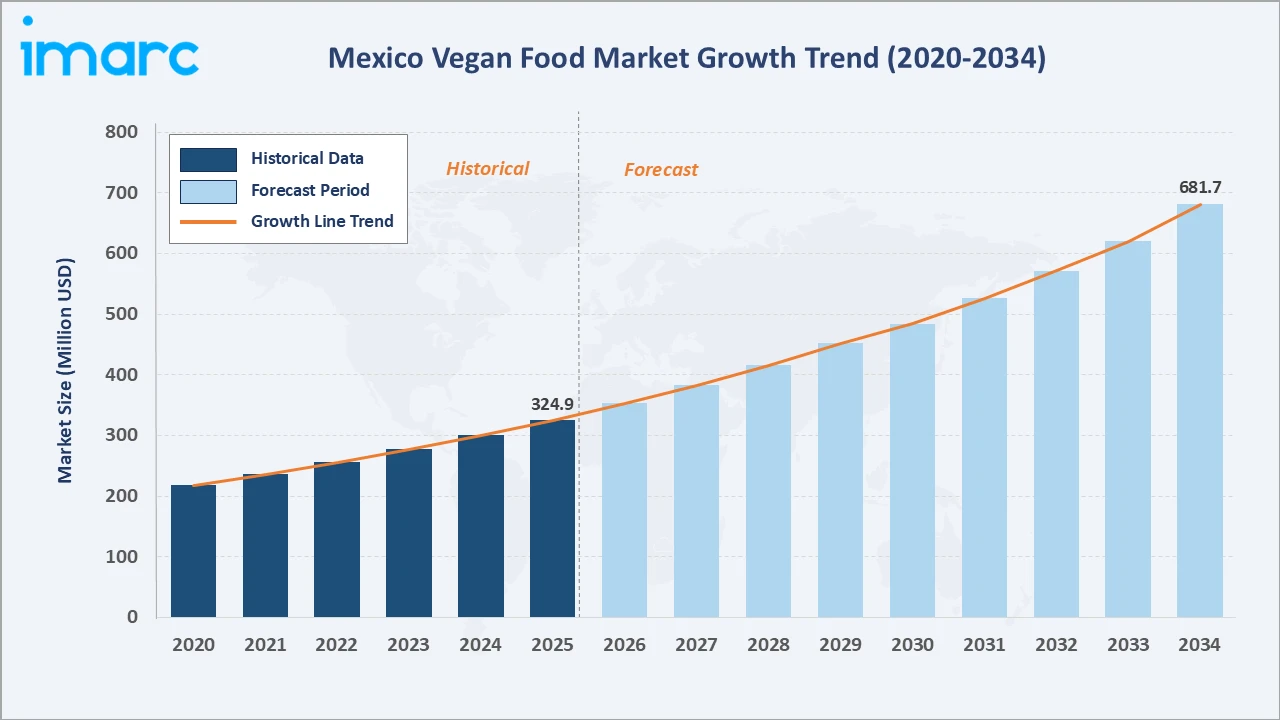
The Mexico vegan food market grew from USD 324.9 Million in 2025 to USD 351.9 Million in 2026 and is projected to reach USD 681.7 Million by 2034, growing at a CAGR of 8.33% during 2026-2034. Key health indicators are reshaping consumer behavior: Mexico's adult obesity rate exceeded 37.36% in 2024, approximately 17% of the country’s population, equivalent to 14.4 million adults, is affected by diabetes, and lactose intolerance collectively drives a structural shift toward plant-based diets. Dairy alternatives lead with a 45.0% product share, almond leads the source segment with 35.0%, and Central Mexico dominates regionally with a 55.0% revenue share in 2025.
Market Snapshot
| Metric | Value |
|---|---|
| Base Year Market Size (2025) | USD 324.9 Million |
| Market Size (2026) | USD 351.9 Million |
| Forecast Market Size (2034) | USD 681.7 Million |
| CAGR (2026-2034) | 8.33% |
| Base Year | 2025 |
| Historical Period | 2020-2025 |
| Forecast Period | 2026-2034 |
| Dominant Product | Dairy Alternatives (45.0%, 2025) |
| Dominant Source | Almond (35.0%, 2025) |
| Leading Region | Central Mexico (55.0%, 2025) |
The Mexico vegan food market grew from USD 217.8 Million in 2020 to USD 324.9 Million in 2025, reflecting consistent consumer-driven demand for plant-based nutrition. By 2030, the market is projected to reach USD 484.6 Million, underpinned by sustained retail penetration and product innovation across key urban centers.
To get more information on this market, Request Sample
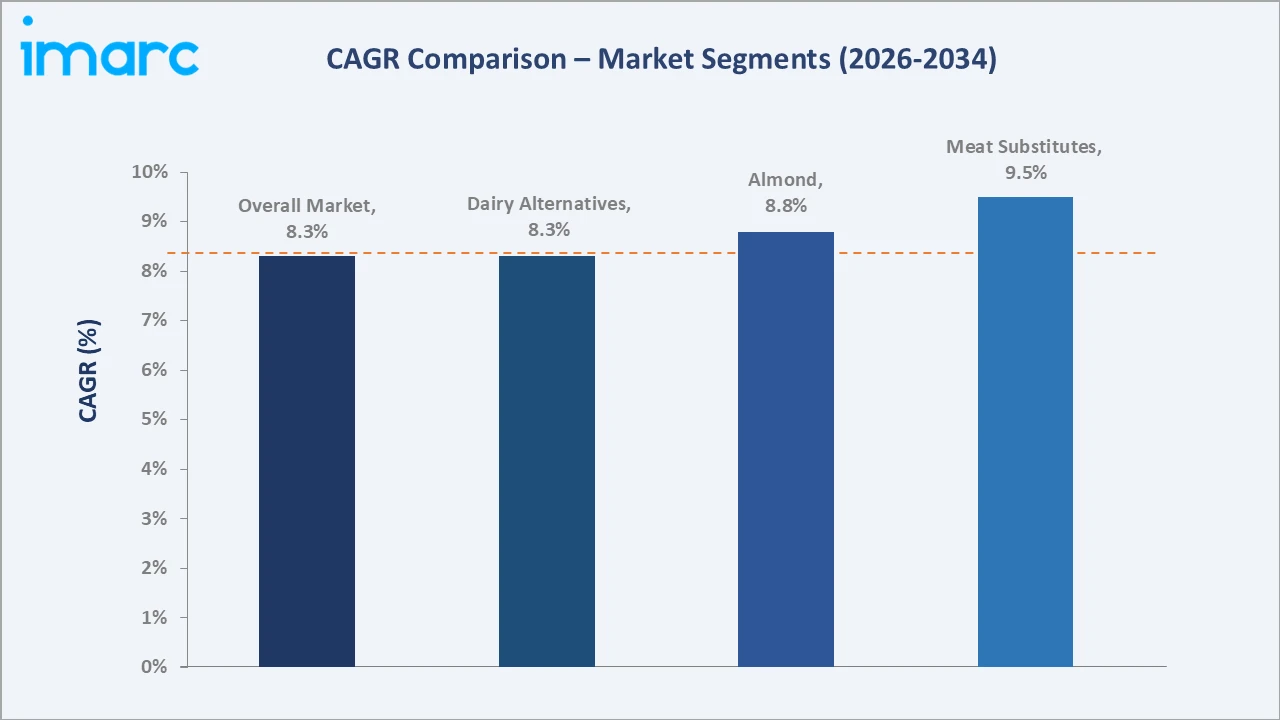
Among leading market segments, meat substitutes exhibit the fastest growth at an estimated CAGR of 9.5% during 2026-2034, driven by protein diversification trends and product localization. Almond-based products follow at 8.8%, reflecting strong consumer preference for nut-based dairy alternatives across beverages, desserts, and cooking applications.
Executive Summary
Key industry trends include growing localization of plant-based product portfolios to align with traditional Mexican cuisine, expanding digital and specialty retail distribution, and rising participation in global sustainability campaigns. The competitive landscape features both global leaders and emerging local brands, contributing to rapid product diversification and competitive pricing across the market.
Dairy alternatives dominate with a 45.0% market share in 2025, anchored by almond-based and oat-based milk, yogurt, and cheese. The almond segment leads by source with 35.0%. Central Mexico accounts for 55.0% of revenues, reflecting the dense urban consumer base in Mexico City and surrounding metropolitan areas, where health-focused specialty retail is most developed.
Key Market Insights
| Insight | Data |
|---|---|
| Largest Product | Dairy Alternatives (45.0%, 2025) |
| Leading Source | Almond (35.0%, 2025) |
| Leading Region | Central Mexico (55.0%, 2025) |
| Key Market Opportunities | Plant-based adaptations of traditional Mexican cuisine, online retail growth, flexitarian segment expansion. |
Key Analytical Observations Supporting the Above Data:
- Dairy Alternatives at 45.0%: Mexico has an estimated lactose intolerance prevalence exceeding 60% among adults, providing a naturally large addressable market for dairy-free alternatives. Almond and oat milk are increasingly used as direct substitutes across households and foodservice establishments.
- Almond Source at 35.0%: Almond-based products hold the largest source share due to strong consumer familiarity with almond milk and its versatility across beverages, desserts, and cooking applications. Its nutritional profile, rich in vitamin E and healthy fats, further drives preference.
- Central Mexico at 55.0%: Central Mexico dominates due to Mexico City's large middle-class consumer base and high density of specialty health food stores, international supermarket chains, and online delivery platforms catering to health-conscious urban consumers.
Mexico Vegan Food Market Overview
The Mexico vegan food market encompasses the production, distribution, and retail of plant-based food products excluding all animal-derived ingredients. The market serves a diverse ecosystem spanning individual consumers, foodservice providers, specialty health retailers, and digital platforms.
To evaluate market opportunities, Request Sample
Macroeconomic factors including rising disposable incomes in urban areas, increasing awareness of lifestyle-related diseases and growing access to international plant-based brands are collectively broadening market participation across demographic segments, accelerating mainstream adoption beyond the initial health-conscious niche.
Market Dynamics
Market Drivers
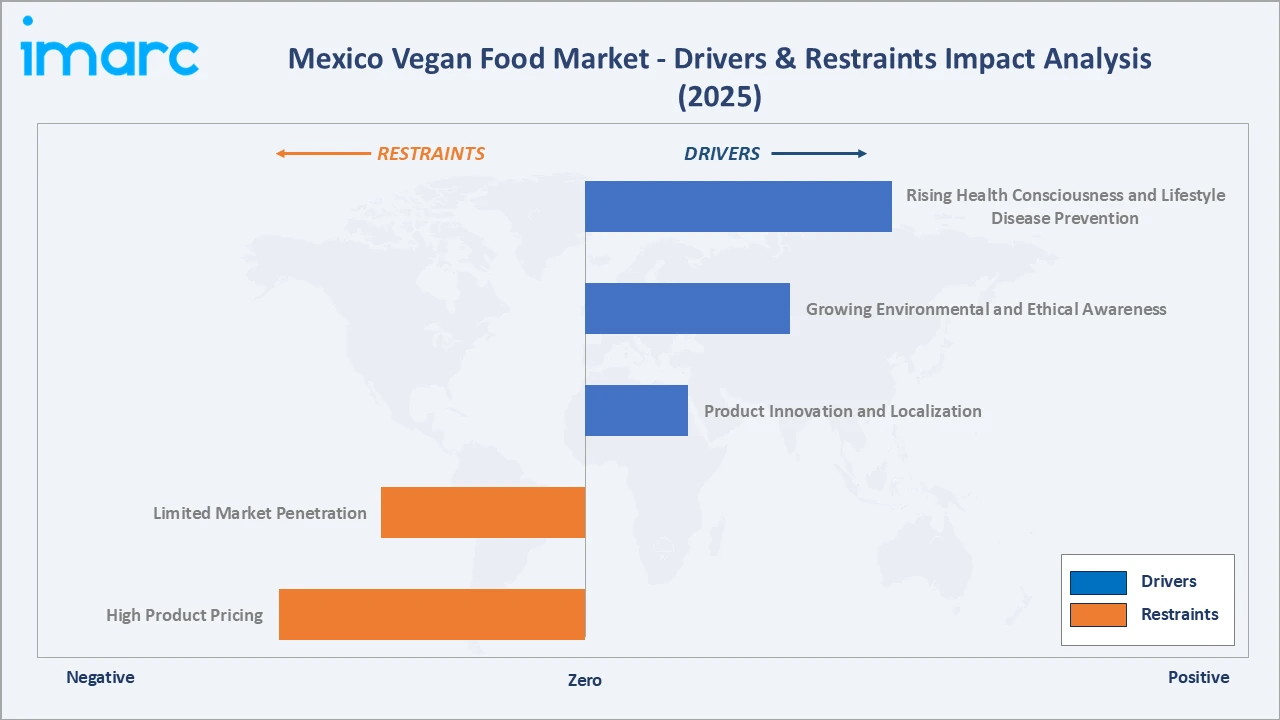
- Rising Health Consciousness and Lifestyle Disease Prevention: Mexico is among the 19 countries in the IDF SACA region, which currently has 35 million people living with diabetes, a figure projected to reach 52 million by 2050. This drives demand for lower-calorie, nutrient-dense plant-based foods as preventive dietary choices across consumer segments, particularly among urban middle-class households.
- Growing Environmental and Ethical Awareness: Millennial and Generation Z consumers in Mexico increasingly align purchasing decisions with environmental and animal welfare values. Social media campaigns have amplified these concerns, accelerating adoption of vegan diets, particularly in densely populated metropolitan areas.
- Product Innovation and Localization: Brands are creating vegan versions of traditional Mexican dishes such as tamales, tacos, and enchiladas using plant-based ingredients. In February 2025, Heura Foods introduced Tex Mex Chunks, a high-protein, additive-free meat alternative designed specifically for Mexican cuisine, exemplifying this localization strategy.
Market Restraints
- High Product Pricing: Higher price points of vegan food products relative to conventional animal-based alternatives remain a significant barrier to mass-market adoption, particularly among price-sensitive consumer segments in secondary cities and lower-income demographic groups.
- Limited Market Penetration: Limited consumer awareness and underdeveloped specialty retail infrastructure in rural and semi-urban regions constrain market penetration beyond major metropolitan areas, slowing geographic expansion of the vegan food sector.
Market Opportunities
- Adaptation to Traditional Mexican Cuisine: Significant untapped opportunity exists for plant-based brands to develop culturally resonant products mirroring the flavors and textures of traditional Mexican dishes, enabling deeper penetration among mainstream consumers who have not yet adopted vegan diets.
- Growth of Online and Specialty Retail: Expanding e-commerce ecosystems and rising specialty health food store networks provide new channels for vegan food brands to reach health-conscious and younger consumer demographics more effectively across urban and suburban markets.
Market Challenges
- Supply Chain Constraints and Volatility in Specialized Plant-Based Ingredients: Maintaining ingredient supply chain consistency for specialized plant-based inputs such as almond protein, soy isolates, and oat concentrates present operational and cost challenges for manufacturers, impacting product pricing and profit margins.
- Challenges in Replicating the Taste, Texture, and Mouthfeel of Conventional Products: Achieving taste, texture, and mouthfeel parity with conventional animal-based products remains a persistent technical challenge that affects repeat purchase rates and long-term consumer retention in the category.
Emerging Market Trends
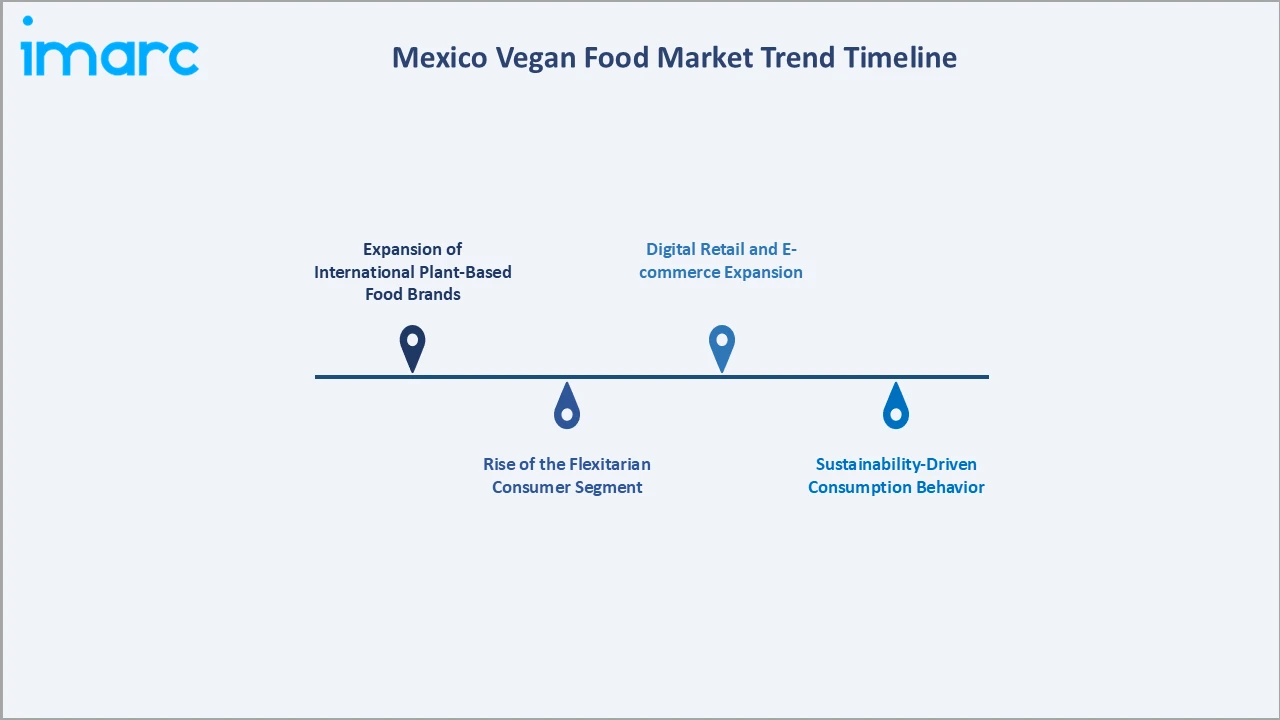
1. Expansion of International Plant-Based Food Brands
Global vegan food manufacturers are increasingly entering the Mexican market through strategic partnerships and product launches to capitalize on growing interest in plant-based diets. In February 2024, Chunk Foods expanded into Mexico through a strategic partnership, introducing its soy- and wheat-based products developed using solid-state fermentation. The expansion reflects growing interest in sustainable plant-based alternatives and the company's efforts to cater to local consumer preferences.
2. Rise of the Flexitarian Consumer Segment
The Vegan Entrepreneurs Association of Mexico (AEVM) estimates that approximately 30% of the country's population follows a flexitarian diet, while a Nielsen survey indicates that 9% identify as vegan, 19% as vegetarian, and 15% as flexitarian, creating consistent weekly demand for plant-based alternatives without requiring full dietary conversion from consumers.
3. Digital Retail and E-commerce Expansion
Online grocery platforms and specialty health e-commerce channels are emerging as critical distribution pathways, particularly among urban millennials. Digital retail is projected to grow at above-market rates within the vegan food channel through 2030, outpacing traditional brick-and-mortar retail growth across product categories.
4. Sustainability-Driven Consumption Behavior
Environmental concerns related to livestock's contribution to greenhouse gas emissions and water consumption are driving plant-based diet adoption among environmentally conscious Mexican consumers. Participation of Latin American brands in Veganuary 2025 reflects the growing commercial relevance and consumer demand behind this structural trend.
Industry Value Chain Analysis
The Mexico vegan food market value chain comprises six integrated stages, from the sourcing of plant-based raw materials through to end consumer delivery. Each stage adds differentiated value and plays a critical role in product quality, cost efficiency, and market availability across distribution channels.
| Stage | Description |
|---|---|
| Raw Material Sourcing | Procurement of plant-based inputs including almonds, soybeans, oats, wheat, and specialty botanicals from agricultural sources. |
| Processing & Ingredient Extraction | Conversion of raw plant materials into refined ingredients such as protein isolates, plant oils, and concentrated fibers through advanced extraction processes. |
| Product Manufacturing | Formulation and production of finished vegan food products using extrusion, fermentation, blending, or other specialized processing technologies. |
| Quality Testing & Packaging | Nutritional testing, quality assurance, labeling compliance, and packaging of products for retail or foodservice distribution channels. |
| Distribution & Logistics | Warehousing and multi-channel distribution including supermarkets, specialty stores, online platforms, and foodservice operators across Mexico. |
| End Consumers | Final purchase and consumption by individuals, foodservice establishments, and institutional buyers seeking plant-based food options. |
The product manufacturing stage holds the greatest strategic value in the vegan food value chain. Innovation in protein extraction, texture engineering, and flavor development at this stage directly determines product competitiveness, consumer acceptance, and pricing power across retail and foodservice distribution channels.
Technology Landscape in the Mexico Vegan Food Industry
Advanced Protein Extraction and Texturization
High-moisture extrusion technology and advanced protein isolation processes enable manufacturers to produce plant-based meat alternatives with improved fiber alignment and meat-like texture. These technologies are central to producing products such as plant-based chorizo and taco fillings that meet consumer texture and mouthfeel expectations in the Mexican market.
Fermentation and Bioprocessing
Precision fermentation is applied to develop plant-based dairy alternatives with improved flavor profiles and extended shelf life. This technology enables production of casein-equivalent proteins from plant sources, broadening the dairy alternatives portfolio without animal involvement and improving product quality attributes for consumers.
AI-Driven Product Formulation
Artificial intelligence platforms are deployed to accelerate plant-based recipe development by analyzing ingredient compatibility, nutritional profiles, and consumer preference data. Such AI-driven approaches significantly reduce product development timelines and improve formulation accuracy for culturally localized Mexican flavor requirements.
Sustainable and Smart Packaging
Biodegradable and recyclable packaging solutions are increasingly adopted by vegan food brands to align with their sustainability positioning. Active packaging technologies incorporating oxygen scavengers and antimicrobial coatings extend product shelf life across distribution channels, reducing food waste and supporting the broader sustainability value proposition.
Market Segmentation Analysis
The report covers the following segments:
| Segment Category | Leading Segment | Market Share | Year |
|---|---|---|---|
| Product | Dairy Alternatives | 45.0% | 2025 |
| Source | Almond | 35.0% | 2025 |
| Distribution Channel | 🔒 | 🔒 | 2025 |
| Region | Central Mexico | 55.0% | 2025 |

By Product
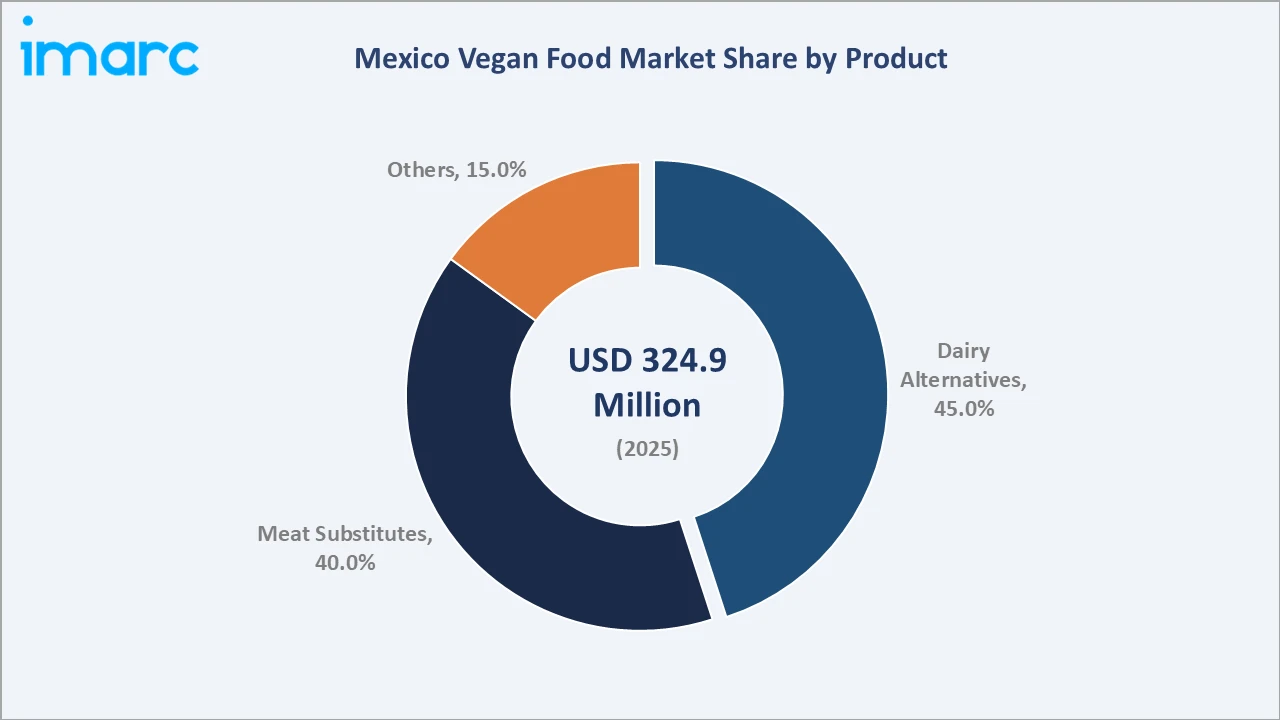
Dairy alternatives lead with a 45.0% share in 2025, anchored by strong consumer demand for almond milk, oat milk, plant-based yogurt, and vegan cheese. Mexico's high lactose intolerance prevalence provides a naturally large addressable market for dairy-free alternatives across all demographic segments.
To access detailed market analysis, Request Sample
Meat substitutes accounted for 40.0% of the market in 2025, the fastest-growing product category driven by protein diversification trends and flexitarian diet adoption. Products such as tofu, texturized vegetable protein (TVP), seitan, and Quorn-style analogs are gaining shelf presence across supermarkets and specialty retail. The others segment holds 15.0%, encompassing plant-based snacks, condiments, and bakery products, expected to grow as brands expand portfolios beyond core dairy and meat replacement categories.
By Source
Almond is the leading source category with a 35.0% share in 2025, driven by high consumer familiarity with almond milk and its widespread use across beverages, desserts, and cooking applications. The nutritional profile of almonds further supports consumer preference for almond-based vegan products.
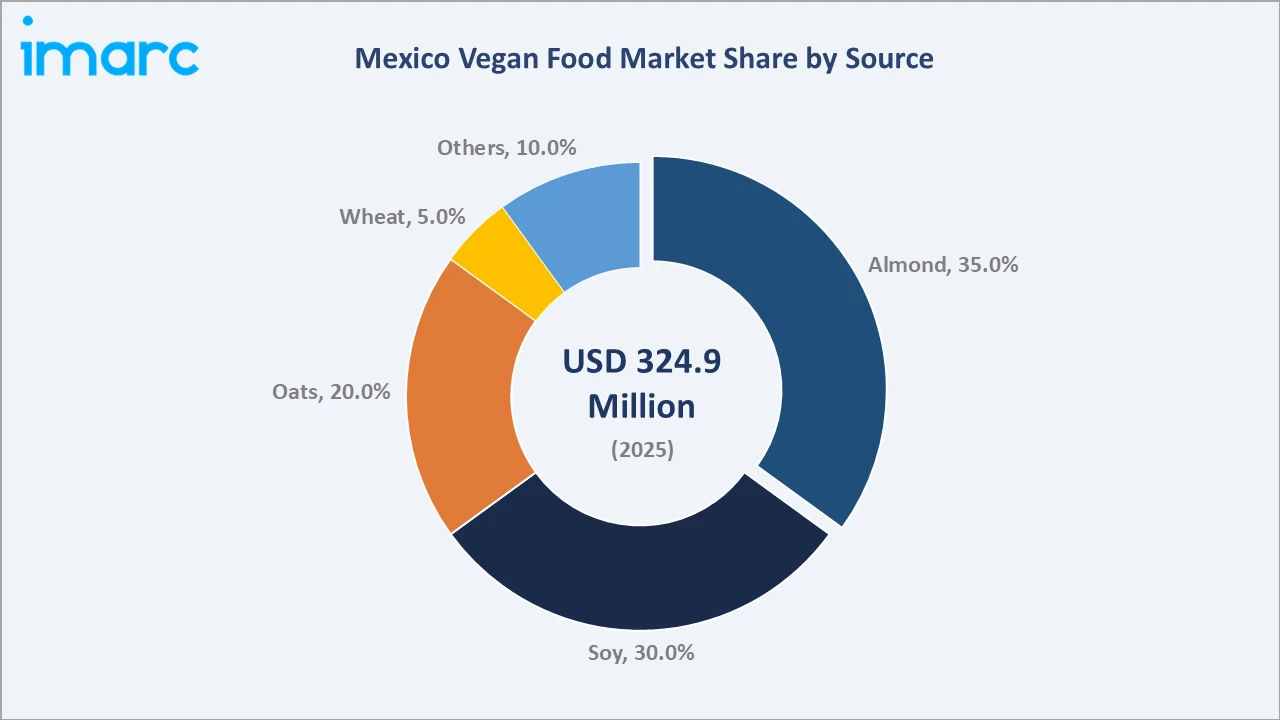
Soy-based products represent 30.0% of the market, underpinned by soy's well-established role as a high-protein plant-based ingredient with complete amino acid profiles, essential for meat substitutes and tofu production. Oats account for 20.0%, supported by the global popularity of oat milk and rising demand for fiber-rich plant-based options. Wheat-derived products hold a 5.0% share, while other botanical sources collectively represent the remaining 10.0%.
Regional Market Insights
| Region | Share (2025) | Demand Characteristics |
|---|---|---|
| Central Mexico | 55.0% | Leading region with large urban consumer base, high product availability, and diverse retail formats. |
| Northern Mexico | 25.0% | Cross-border influences, growing health trends, and expanding specialty retail. |
| Southern Mexico | 15.0% | Rising awareness and increasing adoption in secondary cities. |
| Others | 5.0% | Nascent but growing consumer interest and limited specialty retail infrastructure. |
Central Mexico dominates with a 55.0% share in 2025, driven by the large and affluent consumer base in Mexico City and surrounding states. High density of specialty health food stores, international supermarket chains, and online delivery platforms supports strong market penetration of premium vegan food products.
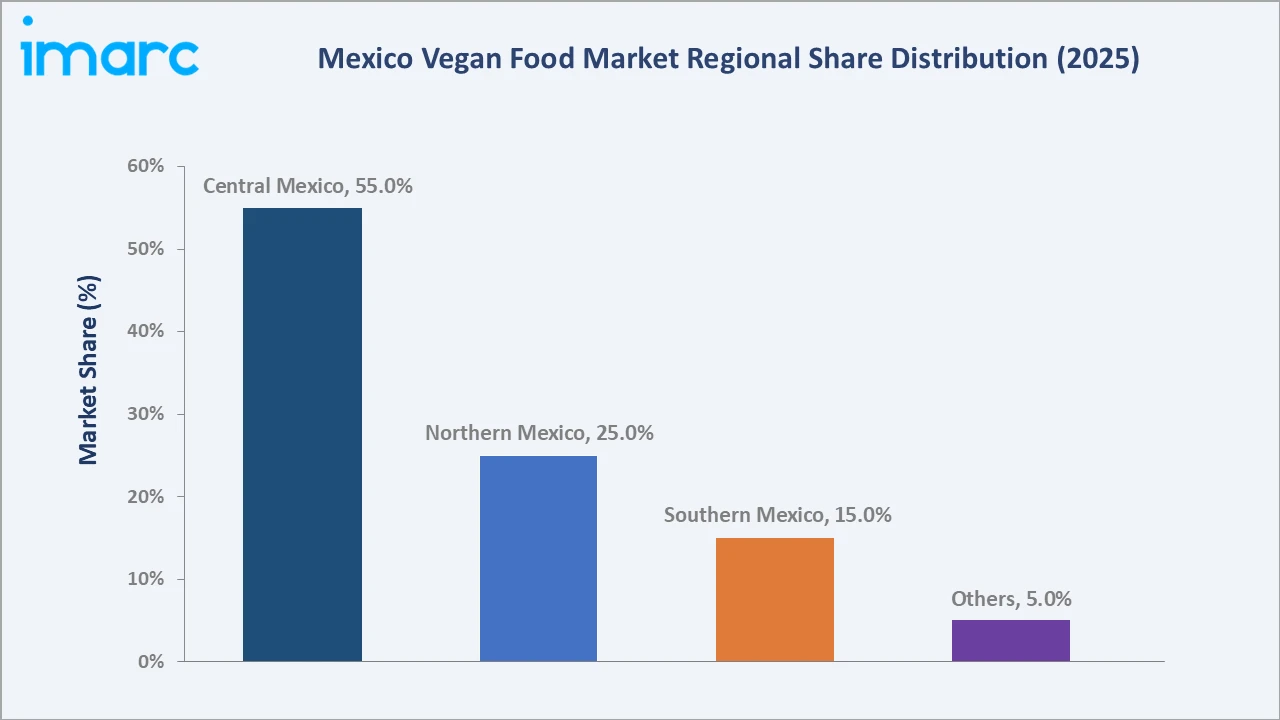
Northern Mexico accounts for 25.0% of market revenues, benefiting from cross-border cultural influences and trade flows with the United States that accelerate plant-based food trend adoption. Southern Mexico, representing 15.0%, is an emerging growth corridor where rising urbanization and increasing nutritional awareness are gradually driving vegan food adoption across secondary cities and regional markets. Other regions account for 5.0%.
Competitive Landscape
The Mexico vegan food market features a mix of global plant-based leaders and emerging regional players. International brands bring strong R&D capabilities and established distribution networks, while local brands offer culturally aligned product formulations and competitive pricing. The market is moderately consolidated at the premium segment level and increasingly competitive across mainstream retail price points.
| Company | Key Brands | Market Position | Core Strength |
|---|---|---|---|
| Foods For Tomorrow S.L. | Heura Foods | Market Leader | Foods For Tomorrow S.L. through Heura Foods plays a critical role as an international innovator and market expander in Mexico's rapidly evolving vegan food landscape. |
| Beyond Meat Inc. | Beyond | Market Leader | Beyond Meat Inc. plays a role in Mexico's plant-based and vegan food market by offering high-protein animal-meat alternatives. |
| Danone | Silk | Challenger | Danone is a dominant corporate leader in Mexico's vegan and plant-based food market, though it primarily operates through its Silk brand. |
| Nestlé | Garden Gourmet | Established Player | Nestlé plays an active role in Mexico's plant-based and vegan-friendly food and beverage market by expanding its product portfolio, acquiring local plant-based brands, and investing heavily in regional manufacturing. |
Competition is intensifying as global players expand local distribution agreements and invest in product localization. Regional brands are competing on the basis of authentic Mexican flavor profiles and price competitiveness in the mass market segment, driving category diversification across all distribution channels.
Key Company Profiles
Foods For Tomorrow S.L.
Foods For Tomorrow S.L. plays a leading role through its Heura Foods, a plant-based food brand with a focused presence in Latin American markets, known for developing high-protein, clean-label meat alternatives formulated with locally relevant flavor profiles. The company positions itself as a culturally attuned vegan food brand in the Mexican market, targeting both retail and foodservice segments.
- Key Brands: Heura Foods.
- Strategic Focus: Expanding distribution partnerships in Latin America and deepening product localization to align with regional culinary traditions and consumer taste preferences.
Beyond Meat Inc.
Beyond Meat Inc. is a leading plant-based food company known for its science-driven approach to developing meat alternatives that closely replicate the taste and texture of animal protein. The company serves both retail and foodservice channels across multiple geographies with a diversified portfolio of plant-based products.
- Key Brands: Beyond.
- Strategic Focus: Advancing protein ingredient technology, reducing product cost structure, and broadening foodservice penetration in emerging markets including Latin America.
Market Concentration Analysis
The Mexico vegan food market exhibits moderate concentration, with a small number of globally recognized plant-based brands capturing a significant share of premium retail and foodservice revenue. Leading players maintain competitive advantages through proprietary ingredient technologies, established distribution networks, and strong brand equity among health-conscious and environmentally aware consumer segments.
The broader market, particularly at mainstream and value price points, remains highly fragmented with a growing number of regional and local brands entering the space. This fragmentation is driving increased product diversity, price competition, and innovation in culturally localized plant-based formulations, ultimately benefiting consumers through broader product choice and improving overall market accessibility.
Investment & Growth Opportunities
Highest Growth Segments
Meat substitutes at 40.0% of market share represent the highest-growth product category, with an estimated CAGR of 9.5% during 2026-2034. Consumer demand for plant-based chorizo, taco fillings, and al pastor alternatives is creating significant product development and market entry opportunities for established brands and new entrants alike.
Investment Themes
- Product Localization R&D: Investment in research to develop culturally resonant vegan food products tailored to traditional Mexican cuisine represents a high-return opportunity, enabling brands to access the mass-market consumer segment beyond the existing health-conscious niche.
- Digital and Specialty Retail Channel Expansion: Growing e-commerce penetration and expanding specialty health food store networks present scalable distribution investment opportunities for vegan food brands seeking to broaden reach in secondary Mexican cities and suburban market corridors.
Future Market Outlook (2026-2034)
The Mexico vegan food market grew from USD 324.9 Million in 2025 to USD 351.9 Million in 2026 and is projected to reach USD 681.7 Million by 2034, growing at a CAGR of 8.33% during 2026-2034. By 2030, the market is estimated at USD 484.6 Million, reflecting consistent demand momentum across product categories and distribution channels throughout the forecast period.
Three structural forces will define the Mexico vegan food market through 2034. First, continued health awareness and lifestyle disease prevention will sustain baseline demand for plant-based foods, particularly among urban middle-class consumers. Second, product innovation will accelerate category expansion beyond the existing vegan consumer base to mainstream and flexitarian segments. Third, rapid expansion of digital retail and specialty distribution channels will improve product accessibility and consumer discovery.
Research Methodology
Primary Research
Primary research comprised structured consultations with vegan food product manufacturers, retail buyers, foodservice operators, plant-based ingredient suppliers, and industry associations in Mexico. These consultations provided direct market intelligence on pricing dynamics, distribution channel performance, and consumer adoption trends across segments.
Secondary Research
Secondary research incorporated published government health and trade data, industry association reports, company annual reports, food industry trade publications, academic research on plant-based nutrition trends, and market announcements from leading vegan food brands operating in Mexico.
Forecasting Models
Market forecasts were developed using bottom-up and top-down modeling approaches incorporating historical market size data from 2020 to 2025, segment-level growth analysis, macroeconomic indicators, consumer behavior survey data, and validated CAGR models. Forecast figures were cross-validated with industry expert inputs to ensure accuracy and reliability.
Mexico Vegan Food Market Report Coverage:
| Report Features | Details |
|---|---|
| Base Year of the Analysis | 2025 |
| Historical Period | 2020-2025 |
| Forecast Period | 2026-2034 |
| Units | Million USD |
| Scope of the Report |
Exploration of Historical Trends and Market Outlook, Industry Catalysts and Challenges, Segment-Wise Historical and Future Market Assessment:
|
| Products Covered |
|
| Sources Covered | Almond, Soy, Oats, Wheat, Others |
| Distribution Channels Covered | Supermarkets and Hypermarkets, Convenience Stores, Specialty Stores, Online Stores, Others |
| Regions Covered | Northern Mexico, Central Mexico, Southern Mexico, Others |
| Companies Covered | Foods For Tomorrow S.L., Beyond Meat Inc., Danone, Nestlé, etc. |
| Customization Scope | 10% Free Customization |
| Post-Sale Analyst Support | 10-12 Weeks |
| Delivery Format | PDF and Excel through Email (We can also provide the editable version of the report in PPT/Word format on special request) |
Key Benefits for Stakeholders:
- IMARC’s industry report offers a comprehensive quantitative analysis of various market segments, historical and current market trends, market forecasts, and dynamics of the Mexico vegan food market from 2020-2034.
- The research report provides the latest information on the market drivers, challenges, and opportunities in the Mexico vegan food market.
- Porter's five forces analysis assist stakeholders in assessing the impact of new entrants, competitive rivalry, supplier power, buyer power, and the threat of substitution. It helps stakeholders to analyze the level of competition within the Mexico vegan food industry and its attractiveness.
- Competitive landscape allows stakeholders to understand their competitive environment and provides an insight into the current positions of key players in the market.
Frequently Asked Questions About the Mexico Vegan Food Market Report
The Mexico vegan food market reached USD 351.9 Million in 2026, driven by rising health awareness, ethical consumerism, and expanding plant-based product availability across retail channels.
The market is projected to grow at a CAGR of 8.33% during 2026-2034, supported by sustained demand for dairy alternatives and meat substitutes across Mexican urban markets.
The market is projected to reach USD 681.7 Million by 2034, driven by product innovation, expanding retail distribution, and growing mainstream consumer adoption of plant-based diets.
Dairy alternatives lead with a 45.0% share in 2025, anchored by almond milk, oat milk, and plant-based yogurt demand driven by high lactose intolerance prevalence among Mexican adults.
Central Mexico leads with a 55.0% market share in 2025, reflecting the large urban consumer base in Mexico City and high availability of specialty vegan food products through diverse retail formats.
Almond-based products hold the largest source share at 35.0% in 2025, driven by consumer familiarity with almond milk and its strong nutritional profile across food and beverage applications.
Leading companies include Foods For Tomorrow S.L., Beyond Meat Inc., Danone, and Nestlé, among others.
The Mexico vegan food market is projected to reach USD 484.6 Million by 2030, maintaining consistent growth across dairy alternative and meat substitute categories through the forecast period.
Need more help?
- Speak to our experienced analysts for insights on the current market scenarios.
- Include additional segments and countries to customize the report as per your requirement.
- Gain an unparalleled competitive advantage in your domain by understanding how to utilize the report and positively impacting your operations and revenue.
- For further assistance, please connect with our analysts.
 Request Customization
 Speak to an Analyst
 Request Brochure
 Inquire Before Buying
Benefits of Customization
- Personalize this research
- Triangulate with your data
- Get data as per your format and definition
- Gain a deeper dive into a specific application, geography, customer, or competitor
- Any level of personalization
Get in Touch With Us
UNITED STATES
Phone: +1-201-971-6302
INDIA
Phone: +91-120-433-0800
UNITED KINGDOM
Phone: +44-753-714-6104
Email: [email protected]
Client Testimonials















Related Reports

Choose your plan
*Please note that the prices mentioned below are starting prices for each bundle type. Kindly contact our team for further details.*
Single User License
- 1 User License, Access on 2 Devices
- PDF Report + Excel Dataset (Password Protected)
- Lifetime Access
- No Printing Rights
- 10% Free Report Customization
- 10–12 Weeks of Analyst Support
Five User License
- Access for 5 Users, 2 Devices per User
- PDF Report + Excel Dataset (Password Protected)
- Lifetime Access
- Dedicated Account Manager
- 12–14 Weeks of Analyst Support
- No Printing Rights
- 15% Free Report Customization
- 25% Discount on Your Next Purchase
Corporate User License
- Unlimited User Access (Within Your Organization)
- PDF Report + Excel Dataset
- Lifetime Access
- Dedicated Account Manager
- 14–20 Weeks of Analyst Support
- No Printing Rights
- 20% Free Report Customization
- 30% Discount on Your Next Purchase
Essential Insights
What's included:
3 reports
- Lifetime Access
- PDF Reports
- Excel Datasets
- 2 Weeks of Free Analyst Support
- 2 User Licenses
- Access on 2 Devices
- Printing Rights
- Complimentary PowerPoint (PPT) Version
- Complimentary License Upgrade
Professional Access
What's included:
5 reports
- Lifetime Access
- PDF Reports
- Excel Datasets
- 8 Weeks of Free Analyst Support
- 2 User Licenses
- Access on 2 Devices
- Printing Rights
- Complimentary PowerPoint (PPT) Version
- Complimentary License Upgrade
Business Advantage
What's included:
8 reports
- Lifetime Access
- PDF Reports
- Excel Datasets
- 14 Weeks of Free Analyst Support
- 2 User Licenses
- Access on 2 Devices
- Printing Rights
- Complimentary PowerPoint (PPT) Version
- Complimentary License Upgrade
Enterprise Intelligence
What's included:
10 reports
- Lifetime Access
- PDF Reports
- Excel Datasets
- 20 Weeks of Free Analyst Support
- 2 User Licenses
- Access on 2 Devices
- Printing Rights
- Complimentary PowerPoint (PPT) Version
- Complimentary License Upgrade