Chloromethane Prices Reveal Key Regional Trends and Real-Time Market Insights
22-Jul-2026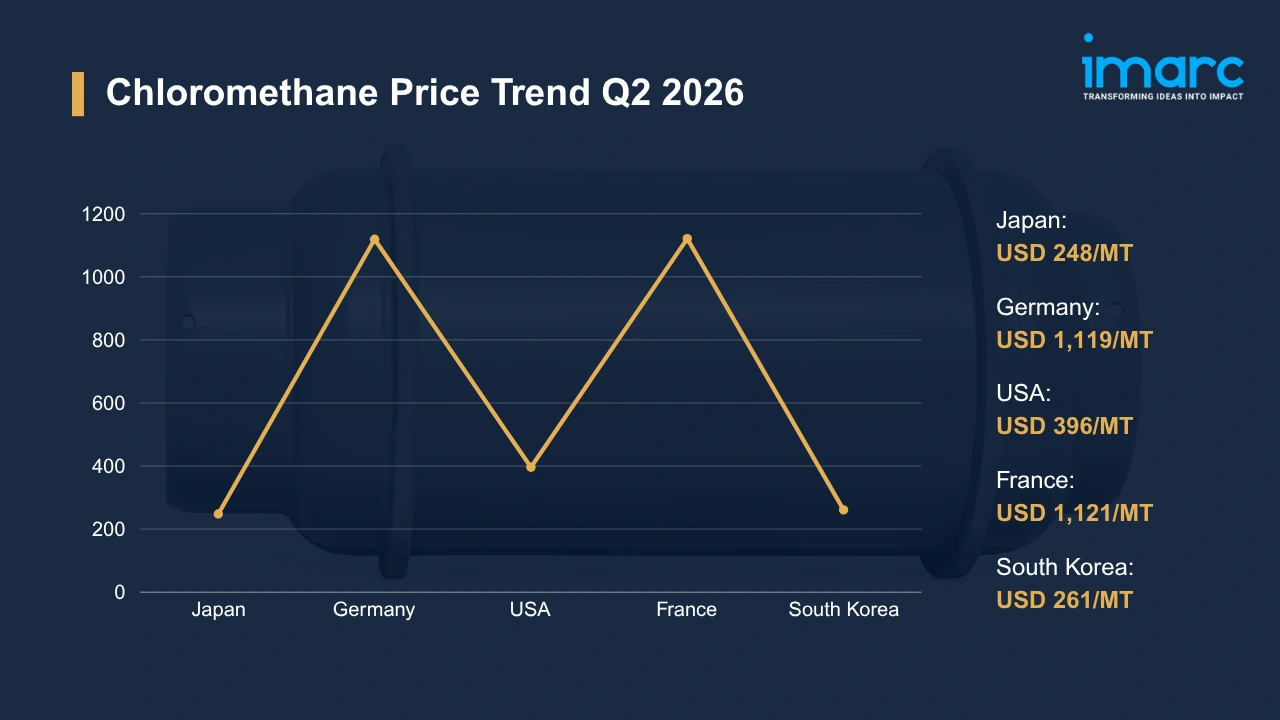
Chloromethane is a colorless gas known industrially as methyl chloride. Manufactured primarily through the reaction of methanol with hydrochloric acid, it forms a chemically stable compound suited to further demanding industrial synthesis. Its versatility drives demand across silicone polymer production, agrochemical formulation, and pharmaceutical synthesis, where chloromethane prices track shifts in these end-use sectors. Across these value chains, upstream methanol costs, energy expenditure, freight logistics, and seasonal demand swings govern pricing sensitivity.
Global Market Overview:
Globally, the chloromethane industry was valued at USD 4.47 Billion in 2025. Market projections indicate steady growth, with the industry expected to reach USD 6.50 Billion by 2034, with a compound annual growth rate (CAGR) of 4.30% during 2026-2034. Expanding silicone and pharmaceutical applications continue to broaden the chloromethane price trend, while rising chemical intermediate demand across Asia-Pacific reinforces long-term consumption growth.
Chloromethane Price Trend Q2 2026:
Regional prices (USD per MT) and QoQ changes Q2 2026 vs Q1 2026:
| Region | Price (USD/MT) | QoQ Change | Direction |
|---|---|---|---|
| Japan | 248 | -3.32% | ↓ |
| Germany | 1,119 | -6.43% | ↓ |
| USA | 396 | -7.54% | ↓ |
| France | 1,121 | -5.33% | ↓ |
| South Korea | 261 | -4.45% | ↓ |
To access real-time prices Request Sample
What Moved Prices:
Japan:
- In Q2 2026, chloromethane prices in Japan slipped to USD 248/MT as silicone producers pared back spot purchases amid comfortable domestic inventories. Softer specialty chemical processor orders compounded the pullback, even as regional plants held steady output through the quarter. Feedstock methanol costs stayed largely range-bound, limiting any offsetting upward pressure on settlements.
- Regional buyers navigated a chloromethane price chart marked by muted momentum, favoring competitively priced imports from neighboring Asian suppliers over premium domestic material. Distribution networks operated smoothly, and inventory positioning across converter facilities remained comfortable enough to defer near-term restocking.
Germany:
- During Q2 2026, chloromethane prices in Germany fell to USD 1,119/MT, extending losses as silicone, pharmaceutical, and specialty chemical buyers trimmed contract volumes. Ample regional production capacity outpaced order intake, giving buyers leverage to negotiate lower settlements through the quarter.
- Energy costs at German processing plants stayed manageable, as producers optimised plant utilisation to control operating expenses despite subdued offtake. Import competition from Asian suppliers added further pressure on quoted values, while logistics networks across the region functioned without notable disruption.
USA:
- In the second quarter of 2026, chloromethane prices in the USA declined to USD 396/MT as silicone and broader chemical manufacturing demand softened. Producers maintained stable operating rates despite thinner order books, keeping Gulf Coast supply comfortably ahead of consumption.
- Industrial consumers held back on spot purchases, relying on existing inventories rather than adding fresh volumes at prevailing offers. Inland logistics remained efficient, and feedstock availability stayed favorable, preventing supply-driven upward pressure on settlements through the quarter.
France:
- During Q2 2026, chloromethane prices in France dropped to USD 1,121/MT as chemical processing and specialty applications recorded softer procurement. Regional suppliers sustained normal production schedules, avoiding the supply constraints that had supported firmer pricing in prior quarters.
- Silicone producers and specialty chemical users trimmed purchasing activity, while manageable energy and raw material conditions limited cost-driven price support. Asia-Europe freight corridors stayed relatively calm, easing landed costs for French converters throughout the assessment period.
South Korea:
- In Q2 2026, chloromethane prices in South Korea eased to USD 261/MT amid moderate downstream demand from chemical processing industries. Domestic producers kept output levels steady, sustaining comfortable supply conditions even as consumption growth remained limited.
- Export competitiveness shaped domestic offers, as South Korean suppliers adjusted pricing to match international benchmarks amid softer overseas orders. Silicone manufacturing consumption held steady but lacked the momentum needed to absorb available supply more forcefully.
Drivers Influencing the Market:
Several factors continue to shape chloromethane pricing and market behavior:
- Silicone and Specialty Chemical Demand: Sustained consumption from silicone polymer, agrochemical, and pharmaceutical manufacturers anchors baseline procurement volumes for chloromethane worldwide. Expanding construction and automotive applications in Asia-Pacific generate consistent orders, while cyclical production schedules at specialty chemical plants introduce periodic swings in purchasing patterns across major consuming regions.
- Upstream Methanol Feedstock Costs: Chloromethane production depends heavily on methanol as the primary feedstock, so fluctuations in methanol pricing feed directly into manufacturing economics. Tracking the chloromethane price index alongside methanol benchmarks helps producers anticipate margin pressure, particularly when regional supply tightens or logistics bottlenecks limit feedstock delivery to processing plants.
- Energy Expenditure in Production: Natural gas and electricity costs remain a critical input for chloromethane manufacturers, particularly during chlorination and purification stages. Per the EIA's Short-Term Energy Outlook, the Henry Hub natural gas spot price is projected to average close to USD 3.70 per Million Btu in 2026, shaping cost structures for US producers. Regional energy pricing gaps continue to influence competitive positioning globally.
- Ocean Freight and Logistics Economics: International freight expenses directly affect landed costs for chloromethane shipped across major trade lanes. Drewry's World Container Index recorded a 2% weekly decline to USD 4,547 per 40-foot container in mid-July 2026, reflecting easing peak-season pressure on global container rates. Softer freight benchmarks generally support lower landed costs for import-dependent buyers.
- Environmental and Regulatory Compliance: Tightening environmental regulations governing chlorinated compound handling, storage, and emissions raise operational compliance expenditures for producers and distributors. Registration and safety evaluation requirements under chemical frameworks in Europe and Asia impose additional administrative and testing costs, which gradually filter into market pricing across jurisdictions with stringent enforcement standards.
- Trade Policy and Currency Dynamics: Currency fluctuations across major producing and consuming regions influence import parity pricing for chloromethane, particularly where contracts are denominated in US dollars. Tariff adjustments and trade policy shifts periodically alter competitive positioning between domestic and imported material, prompting suppliers to recalibrate offers in response to shifting cost structures.
Recent Highlights & Strategic Developments:
Recent strategic moves within the industry further illustrate evolving dynamics:
- In September 2025, INEOS Inovyn confirmed the strategic idling of its Tavaux chloromethane production site. The move shifted operational focus toward the company's Rosignano facility in Italy, aiming to strengthen supply reliability and cost efficiency for customers.
Outlook & Strategic Takeaways:
Looking ahead, the chloromethane market is expected to sustain gradual expansion through 2034, underpinned by growing silicone, agrochemical, and pharmaceutical consumption alongside emerging applications in specialty chemical synthesis. Methanol feedstock cost trajectories will remain the pivotal variable shaping the chloromethane price forecast across regional supplier margins.
To navigate this complex landscape, stakeholders should:
- Monitor Regional Price Differentials: Track quarterly pricing variations across Japan, Germany, USA, France, and South Korea to identify cost-saving procurement windows. Benchmark landed costs against prevailing contract rates for optimal sourcing decisions.
- Assess Freight Market Developments: Track container shipping rate trends on key Asia-Europe and transpacific corridors to anticipate landed cost shifts. Negotiate flexible logistics contracts incorporating rate adjustment mechanisms tied to spot market conditions.
- Evaluate Downstream Demand Indicators: Track silicone and pharmaceutical sector order books to gauge near-term consumption trends. Correlate demand signals with chloromethane price per MT benchmarks to optimise inventory positioning across markets.
- Review Regulatory Compliance Expenditures: Audit current compliance costs tied to chlorinated compound handling and disposal requirements. Identify operational efficiencies that reduce regulatory burden without compromising chemical safety obligations.
- Strengthen Currency Exposure Management: Implement hedging strategies for procurement denominated in volatile currencies to stabilize landed cost projections. Coordinate treasury and procurement functions to align currency coverage with import payment timelines.
- Explore Emerging Application Segments: Investigate growth potential within emerging chloromethane applications across specialty chemical synthesis. Engage research partners to assess commercial viability of novel uses that could expand addressable demand.
Subscription Plans & Customization:
IMARC offers flexible subscription models to suit varying needs:
- Monthly Updates: 12 deliverables/year
- Quarterly Updates: 4 deliverables/year
- Biannual Updates: 2 deliverables/year
Each includes detailed datasets (Excel + PDF) and post-report analyst support.
Get in Touch With Us
UNITED STATES
Phone: +1-201-971-6302
INDIA
Phone: +91-120-433-0800
UNITED KINGDOM
Phone: +44-753-714-6104
Email: [email protected]
Client Testimonials




.webp)




.webp)












