Ethylene Glycol Prices Rise in Q2 2026; Germany Reaches USD 600/MT Amid Tight Supply
08-Jul-2026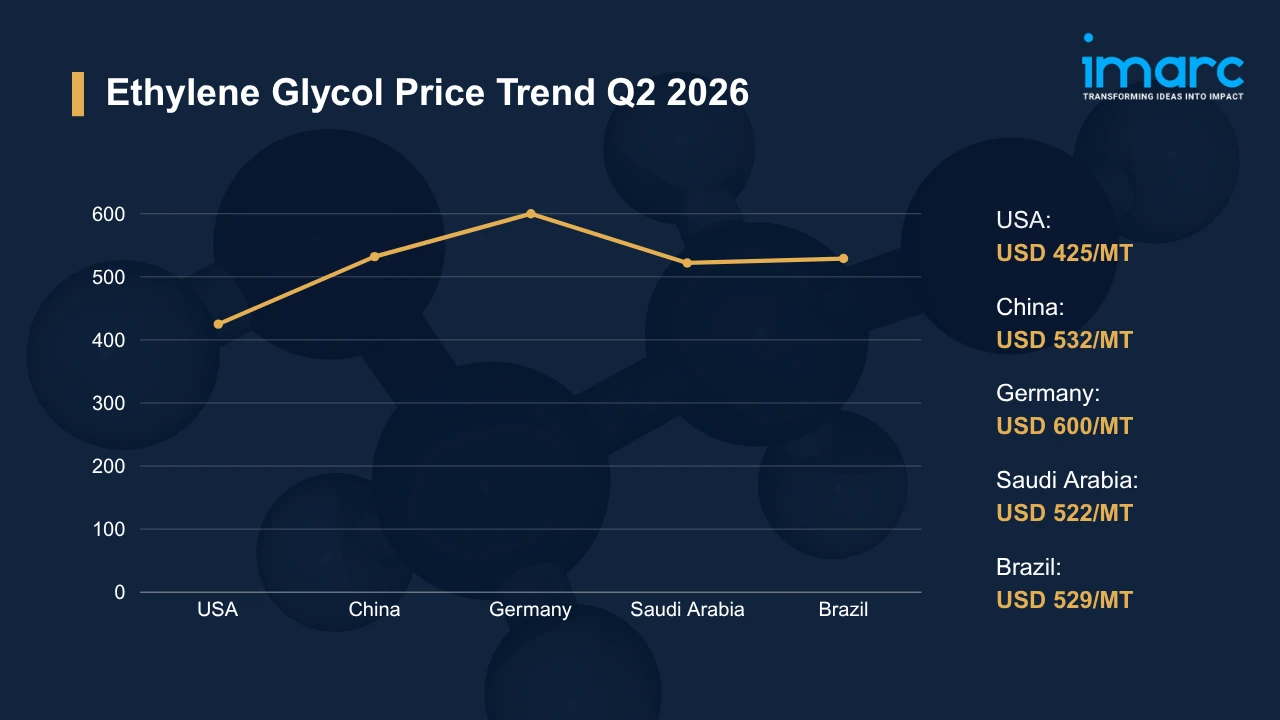
Ethylene glycol is a colorless, hygroscopic diol, produced commercially via catalytic ethylene oxidation and subsequent ethylene oxide hydration. Ethylene glycol prices are a benchmark reference for downstream polyester fiber, PET resin, antifreeze, packaging film, and industrial coolant sectors spanning textile, automotive, and chemical manufacturing. Upstream ethylene feedstock and ethylene oxide costs, energy inputs in oxidation and hydration stages, container freight economics on Asia-origin lanes, and polyester demand cycles together set the principal pricing parameters for this commodity.
Global Market Overview:
Globally, the ethylene glycol industry was valued at USD 50.0 Billion in 2025. Market projections indicate steady growth, with the industry expected to reach USD 69.3 Billion by 2034, with a compound annual growth rate (CAGR) of 3.58% during 2026-2034. Structural gains in polyester fiber output and expanding PET packaging adoption across food, beverage, and e-commerce end uses anchor long-run demand, while rising automotive coolant requirements and data center thermal management broaden the consumption base. Tracking the ethylene glycol price trend reveals a market where robust textile-sector demand is offset periodically by large Chinese capacity wave additions, keeping pricing under measured downward pressure through midcycle phases.
Ethylene Glycol Price Trend Q2 2026:
Regional prices (USD per MT) and QoQ changes Q2 2026 vs Q1 2026:
| Region | Price (USD/MT) | QoQ Change | Direction |
|---|---|---|---|
| USA | 425 | -3.44% | ↓ |
| China | 532 | -3.97% | ↓ |
| Germany | 600 | -3.21% | ↓ |
| Saudi Arabia | 522 | -3.34% | ↓ |
| Brazil | 529 | -3.45% | ↓ |
To access real-time prices Request Sample
What Moved Prices:
USA:
- In Q2 2026, ethylene glycol prices in the USA eased to USD 425/MT as polyester converters and packaging buyers held restocking activity to a minimum. Gulf Coast inventory adequacy kept sellers' pricing power contained throughout the period, limiting any recovery in spot assessments.
- Competitively priced Asian imports widened sourcing options across North American distribution channels. Antifreeze formulators procured on a need-basis rather than building buffer stock, and cautious order placement by PET resin producers compounded bearish sentiment, driving the quarter's decline.
China:
- During Q2 2026, ethylene glycol prices in China fell to USD 532/MT as domestic polyester producers scaled back spot purchases, aligning procurement volumes with near-term production schedules. Textile-related downstream segments offered little offsetting demand lift, sustaining the downward trajectory.
- Comfortable inventory levels at trading hubs in Guangzhou and Yiwu held procurement urgency low. The ethylene glycol price chart captured a market where active export volumes from domestic producers failed to compensate for weak internal demand, reinforcing the bearish price bias through the quarter.
Germany:
- In the second quarter of 2026, ethylene glycol prices in Germany settled at USD 600/MT as polyester fiber and chemical manufacturing sectors posted demand below seasonal norms. Converter and formulation buyers confined purchases to essential replenishment rather than discretionary stock building.
- Softer naphtha costs in upstream European cracker economics reduced the cost floor supporting seller offers. Import flows via key Continental ports remained steady, keeping supply comfortable throughout the quarter and shifting negotiating leverage toward buyers in contract discussions.
Saudi Arabia:
- In Q2 2026, ethylene glycol prices in Saudi Arabia eased to USD 522/MT as balanced supply from integrated regional production complexes met moderate downstream consumption. Petrochemical derivative manufacturers and coolant formulators procured primarily on operational necessity, limiting upside pricing potential.
- Steady domestic operating rates at integrated Gulf facilities maintained available product, keeping supply pressure active through the period. Pegged-currency procurement mechanics provided price-settlement predictability for import-oriented buyers, though overall market sentiment remained tilted toward buyers through the quarter.
Brazil:
- During Q2 2026, ethylene glycol prices in Brazil declined to USD 529/MT as moderate demand from Sao Paulo-based packaging and polyester manufacturing clusters generated insufficient buying momentum. Inventory optimization took priority over volume accumulation across key downstream segments.
- Comfortable import availability sustained supply across Brazilian distribution channels, reinforcing buyer negotiating leverage. BRL exchange rate variability introduced some complexity in landed cost calculations, though stable import parity pricing prevented currency movements from translating into meaningful spot price divergence.
Drivers Influencing the Market:
Several factors continue to shape ethylene glycol pricing and market behavior:
- Polyester and PET Sector Demand: Polyester fiber and PET resin manufacturing absorb the largest share of global ethylene glycol output, anchoring baseline procurement volumes in every major producing region. Textile and apparel production cycles introduce quarterly variability, while beverage and food packaging converters follow inventory restocking rhythms that create periodic surges in spot purchasing activity and short-run price support.
- Upstream Ethylene and Ethylene Oxide Costs: Feedstock inputs dominate variable production costs for ethylene glycol, tying market pricing closely to upstream ethylene monomer and ethylene oxide movements. Naphtha and ethane cracker economics across North America, Europe, and Northeast Asia transmit into glycol production cost structures with a consistent lag, reshaping competitive positioning between integrated producers and merchant-market suppliers across regions.
- Energy Expenditure in Production: Natural gas and electricity costs drive a material portion of ethylene glycol manufacturing economics, covering both cracker operation and ethylene oxide hydration stages. Per the EIA, the wholesale US natural gas spot price at Henry Hub averaged USD 3.52 per Million British thermal units in 2025, a 56% increase from the prior year's record low, setting higher energy cost baselines for North American glycol producers. Persistent regional gas price differentials continue to influence competitiveness among global production locations.
- Ocean Freight and Logistics Economics: Container shipping costs on Asia-origin trade lanes determine landed cost competitiveness for ethylene glycol imported into European, North American, and Middle Eastern markets. Drewry's World Container Index recorded USD 4,530 per 40ft container as of 2 July 2026, a 9% weekly surge driven by stronger cargo demand on Transpacific and Asia-Europe corridors. Elevated freight benchmarks compress importer margins, supporting firmer destination-market spot assessments even when origin pricing remains under pressure.
- Environmental and Regulatory Compliance: Expanding obligations governing ethylene oxide handling, fugitive emission controls, and hazardous material storage raise baseline operating costs for ethylene glycol producers across key jurisdictions. The ethylene glycol price index at compliant production sites embeds cumulative expenditure for environmental permitting, occupational health protocols, and chemical safety registration under frameworks including REACH in Europe. Stricter enforcement in some regions creates structural cost asymmetries versus producers in less-regulated markets.
- Trade Policy and Currency Dynamics: Tariff structures, anti-dumping duties, and bilateral trade provisions shape import competitiveness across the USA, European, and Gulf markets, with periodic policy changes altering procurement cost dynamics at the buyer level. Currency volatility in Brazil and the interplay between USD contract pricing and local-currency procurement budgets introduce settlement complexity, affecting both sourcing decisions and price negotiation outcomes in Latin American importing markets.
Recent Highlights & Strategic Developments:
Recent strategic moves within the industry further illustrate evolving dynamics:
- In April 2026, researchers identified lignocellulose pre-treatment and hydrogenolysis as viable bio-based pathways for manufacturing ethylene glycol from biomass feedstocks. The feasibility study benchmarked this approach against ethanol production economics, evaluating lignin, ash, and extractives as process efficiency constraints across two production concepts aimed at improving renewable glycol yields and supporting lower-carbon chemical manufacturing.
Outlook & Strategic Takeaways:
Looking ahead, the ethylene glycol market is expected to expand steadily through 2034, underpinned by structurally rising polyester fiber demand from Asia-based textile manufacturing, widening PET packaging adoption in emerging consumer markets, and growing industrial cooling requirements across automotive and data center applications. Shifts in ethylene and ethylene oxide feedstock economics will remain the pivotal variable calibrating the ethylene glycol price forecast over the medium term, with Chinese integrated capacity additions continuing to shape global supply-demand balance.
To navigate this complex landscape, stakeholders should:
- Assess Freight Market Developments: Monitor container rate movements on Asia-Europe and Transpacific corridors to anticipate landed cost shifts for imported material. Logistics contracts with rate-adjustment clauses tied to the Drewry WCI or comparable freight indices improve cost predictability across import cycles.
- Evaluate Downstream Demand Indicators: Track polyester fiber output data, PET converter order books, and packaging industry activity indices across principal consumption regions. Aligning procurement cycles with textile and packaging sector seasonal patterns improves inventory positioning and avoids over-stocking risk.
- Review Regulatory Compliance Expenditures: Audit compliance costs covering ethylene oxide handling, storage safety, and environmental discharge obligations at each operating site. Targeted process efficiency reviews can reduce the regulatory cost burden without compromising chemical safety obligations or permitting standing.
- Strengthen Currency Exposure Management: Implement hedging strategies for procurement in BRL, EUR, and other volatile currencies to stabilize landed cost projections across import cycles. Coordinating treasury and procurement functions ensures that foreign exchange coverage aligns with anticipated payment schedules and reduces settlement risk.
- Monitor Regional Price Differentials: Track quarterly pricing movements across the USA, China, Germany, Saudi Arabia, and Brazil to identify cost-effective procurement windows. Structured benchmarking protocols that compare ethylene glycol price per MT against contract rates across sourcing regions sharpen buying-decision quality and reduce landed cost volatility.
- Explore Emerging Application Segments: Investigate commercial potential in renewable and bio-based ethylene glycol production routes as sustainability mandates broaden buyer specifications. Engaging research and technology partners to assess biodegradable polymer and thermal management material applications can expand addressable demand reach over the medium term.
Subscription Plans & Customization:
IMARC offers flexible subscription models to suit varying needs:
- Monthly Updates: 12 deliverables/year
- Quarterly Updates: 4 deliverables/year
- Biannual Updates: 2 deliverables/year
Each includes detailed datasets (Excel + PDF) and post-report analyst support.
Get in Touch With Us
UNITED STATES
Phone: +1-201-971-6302
INDIA
Phone: +91-120-433-0800
UNITED KINGDOM
Phone: +44-753-714-6104
Email: [email protected]
Client Testimonials




.webp)




.webp)












