Iron Scrap Price Update: Modest Gains Across Key Markets in Q2 2026
10-Aug-2026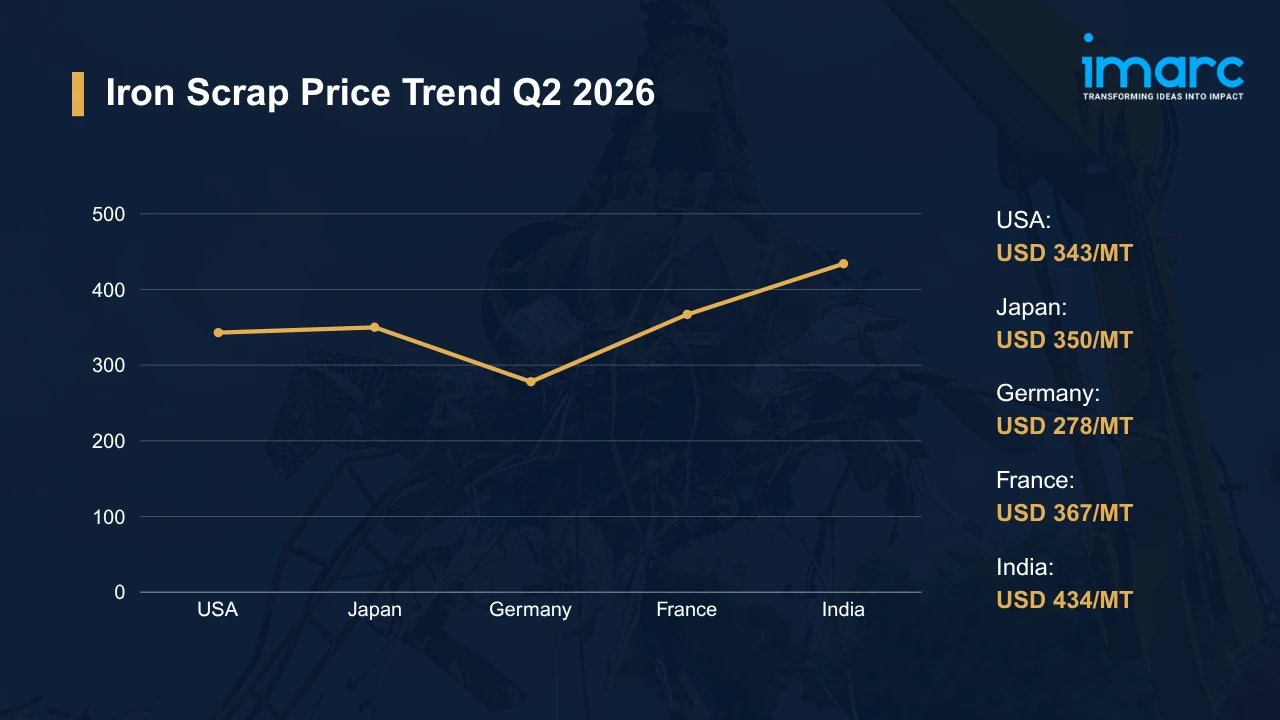
Iron scrap is a recycled ferrous material recovered from demolished structures, discarded machinery, vehicles, and manufacturing residues, carrying high iron content with trace alloying elements. As furnace feedstock, steelmakers depend on it heavily, especially within electric arc furnace operations. Construction steel output and automotive component fabrication round out the sectors most exposed to iron scrap prices. Shaped by collection volumes, melting energy costs, freight economics on cross-border shipments, and cyclical steel demand, quarterly valuations move accordingly.
Global Market Overview:
Globally, the iron scrap industry reached a volume of 628.6 Million Tons in 2025. Market projections indicate steady growth, with the industry expected to reach a volume of 827.6 Million Tons by 2034, with a compound annual growth rate (CAGR) of 3.10% during 2026-2034. Expanding electric arc furnace capacity and stronger recycling mandates widen the scrap-intensive production base. Infrastructure spending and emissions targets on virgin ore smelting reinforce the iron scrap price trend.
Iron Scrap Price Trend Q2 2026:
Regional prices (USD per MT) and QoQ changes Q2 2026 vs Q1 2026:
| Region | Price (USD/MT) | QoQ Change | Direction |
|---|---|---|---|
| USA | 343 | +0.12% | ↑ |
| Japan | 350 | +0.45% | ↑ |
| Germany | 278 | +0.34% | ↑ |
| France | 367 | +0.38% | ↑ |
| India | 434 | +0.34% | ↑ |
To access real-time prices Request Sample
What Moved Prices:
USA:
- In Q2 2026, iron scrap prices in the USA edged up to USD 343/MT as electric arc furnace operators maintained steady melt schedules through the quarter. Gulf Coast mill demand held firm, while inland logistics networks kept collection yards supplied without major bottlenecks. The iron scrap price chart through the period reflected a narrow, contained upward drift.
- Scrap collection volumes from demolition and end-of-life vehicle recycling stayed adequate, limiting spot premiums even as converter run rates ticked higher. Freight costs on inland rail corridors held roughly flat, and buyers avoided aggressive forward booking given the modest scale of the quarterly gain.
Japan:
- During Q2 2026, iron scrap prices in Japan advanced to USD 350/MT, supported by consistent domestic mill offtake and firmer export inquiries from regional steelmakers. Currency movements kept outbound shipments competitively priced, encouraging suppliers to hold firmer quotes rather than discount into slower-moving order books.
- Domestic scrap yards reported balanced intake, with processors citing steady manufacturing-sector generation rather than any tightening in collection. Coastal loading operations ran smoothly, and export interest from neighboring steelmakers reinforced supplier confidence in holding firmer price levels through the quarter.
Germany:
- In Q2 2026, iron scrap prices in Germany rose to USD 278/MT as steel producers sustained regular procurement activity tied to recycling-based production lines. Regional gas storage levels stayed comfortable, easing energy-cost pressure that had weighed on processor margins in earlier quarters.
- Collection flows across German recycling hubs remained orderly, keeping supply broadly matched with mill requirements throughout the quarter. Export inquiries from neighboring European converters added modest competitive tension, nudging domestic suppliers toward firmer offers without materially straining overall availability across the market.
France:
- During Q2 2026, iron scrap prices in France climbed to USD 367/MT, driven by steady demand from domestic steelmakers and construction-linked fabrication activity across the country. Suppliers maintained firmer pricing as available tonnage stayed tightly matched to industrial requirements, leaving limited room for aggressive buyer negotiation.
- Higher collection and processing costs continued filtering into supplier offers, while Asia-Europe freight conditions stayed largely stable and did not meaningfully affect landed input costs. Buyers focused on securing near-term volumes rather than building inventory ahead of anticipated seasonal demand shifts.
India:
- In Q2 2026, iron scrap prices in India advanced to USD 434/MT, supported by strong demand from secondary steel producers and ongoing infrastructure-linked construction activity. Domestic manufacturers continued securing scrap volumes to sustain production schedules, reinforcing price firmness through the quarter.
- Import-dependent buyers stayed sensitive to quality variations across incoming cargoes even as port gateway operations processed volumes without major delay. Domestic scrap generation held steady, easing pressure on secondary producers reliant on imported tonnage to fill supply gaps.
Drivers Influencing the Market:
Several factors continue to shape iron scrap pricing and market behavior:
- Steel Manufacturing and End-Use Demand: Worldwide steel production establishes a foundation for scrap consumption as input material for both electric arc and basic oxygen processes. Per the World Steel Association, total world crude steel production reached 1,849.4 Million Tons in 2025, sustaining a broad procurement base for recycled ferrous material. Construction, automotive, and infrastructure programs continue generating steady downstream orders for finished steel products.
- Scrap Collection and Feedstock Availability: Domestic scrap generation depends heavily on demolition activity, vehicle retirement rates, and industrial equipment turnover across each consuming market. Slower construction cycles in a given quarter can tighten obsolete scrap supply, while robust manufacturing turnover typically eases availability. Collection network density and processing capacity further shape how quickly generated scrap reaches steelmaking customers.
- Energy Expenditure in Melting and Processing: Electricity costs remain a critical input for scrap-based steelmaking, particularly within electric arc furnace melting stages. Per the EIA, average industrial electricity revenues in the United States reached 8.71 cents per kilowatt-hour in May 2026, up 5.1% from the prior year. Rising power costs continue pressuring processor margins and shaping the iron scrap price index across energy-intensive producing regions.
- Ocean Freight and Logistics Economics: Cross-border scrap shipments depend on container and bulk freight availability, port handling efficiency, and inland transportation costs to consuming mills. Softer freight rates on key trade corridors can ease landed costs for import-reliant buyers, while congestion or vessel shortages tighten near-term supply. Logistics reliability increasingly shapes procurement timing across scrap-deficit markets.
- Environmental and Regulatory Compliance: Tightening emissions standards on virgin steelmaking routes continue favoring scrap-intensive electric arc furnace production across several regions. Recycling mandates and extended producer responsibility frameworks raise compliance costs for collectors and processors, which filter into supplier pricing. Jurisdictions with stricter environmental enforcement typically see firmer scrap valuations relative to less regulated markets.
- Trade Policy and Currency Dynamics: Export restrictions, tariffs, and currency fluctuations directly influence cross-border scrap flows and competitive positioning among supplying regions. A weaker domestic currency can make outbound shipments more attractive to foreign buyers, tightening local availability. Conversely, import-dependent markets face landed cost volatility whenever exchange rates shift against them.
Recent Highlights & Strategic Developments:
Recent strategic moves within the industry further illustrate evolving dynamics:
- In October 2025, JSW Steel disclosed plans for a new scrap processing facility in Chennai focused on recycling iron and steel material from vehicles and other end-of-life products. The facility is expected to feed recycled iron scrap into JSW's steelmaking operations in Karnataka and Andhra Pradesh, reinforcing the company's domestic supply chain.
Outlook & Strategic Takeaways:
Looking ahead, the iron scrap market is expected to expand steadily through 2034, propelled by rising electric arc furnace capacity, deepening recycling mandates, and continued infrastructure investment across steelmaking economies worldwide. Feedstock collection efficiency, melting energy cost trajectories, and regional trade policy shifts will remain the pivotal variables shaping the iron scrap price forecast across major consuming regions.
To navigate this complex landscape, stakeholders should:
- Monitor Regional Price Differentials: Track quarterly pricing variation across the USA, Japan, Germany, France, and India to identify favorable procurement windows. Compare landed costs against domestic contract rates to guide sourcing decisions.
- Assess Freight Market Developments: Track ocean and inland freight rate trends on key scrap trade corridors to anticipate landed cost shifts. Negotiate flexible logistics contracts tied to prevailing spot conditions.
- Evaluate Downstream Demand Indicators: Monitor electric arc furnace utilization rates and construction sector order books across principal consuming regions. Align procurement timing with anticipated shifts in steelmaking output.
- Review Regulatory Compliance Expenditures: Audit current recycling and emissions compliance costs tied to collection and processing operations. Identify efficiencies that reduce regulatory burden without compromising material quality standards.
- Strengthen Currency Exposure Management: Implement hedging strategies for procurement denominated in volatile currencies to stabilize import cost projections. Coordinate treasury and sourcing functions around anticipated payment timelines.
- Explore Emerging Application Segments: Investigate growth potential in automotive lightweighting and green steel initiatives that could expand scrap-intensive demand. Benchmark the iron scrap price per MT against regional contract rates to time procurement.
Subscription Plans & Customization:
IMARC offers flexible subscription models to suit varying needs:
- Monthly Updates: 12 deliverables/year
- Quarterly Updates: 4 deliverables/year
- Biannual Updates: 2 deliverables/year
Each includes detailed datasets (Excel + PDF) and post-report analyst support.

Get in Touch With Us
UNITED STATES
Phone: +1-201-971-6302
INDIA
Phone: +91-120-433-0800
UNITED KINGDOM
Phone: +44-753-714-6104
Email: sales@imarcgroup.com
Client Testimonials




.webp)




.webp)












