Mixed Xylene Price Trends Unveiled with IMARC Group’s Real-Time Pricing and Forecast Reports
11-Aug-2026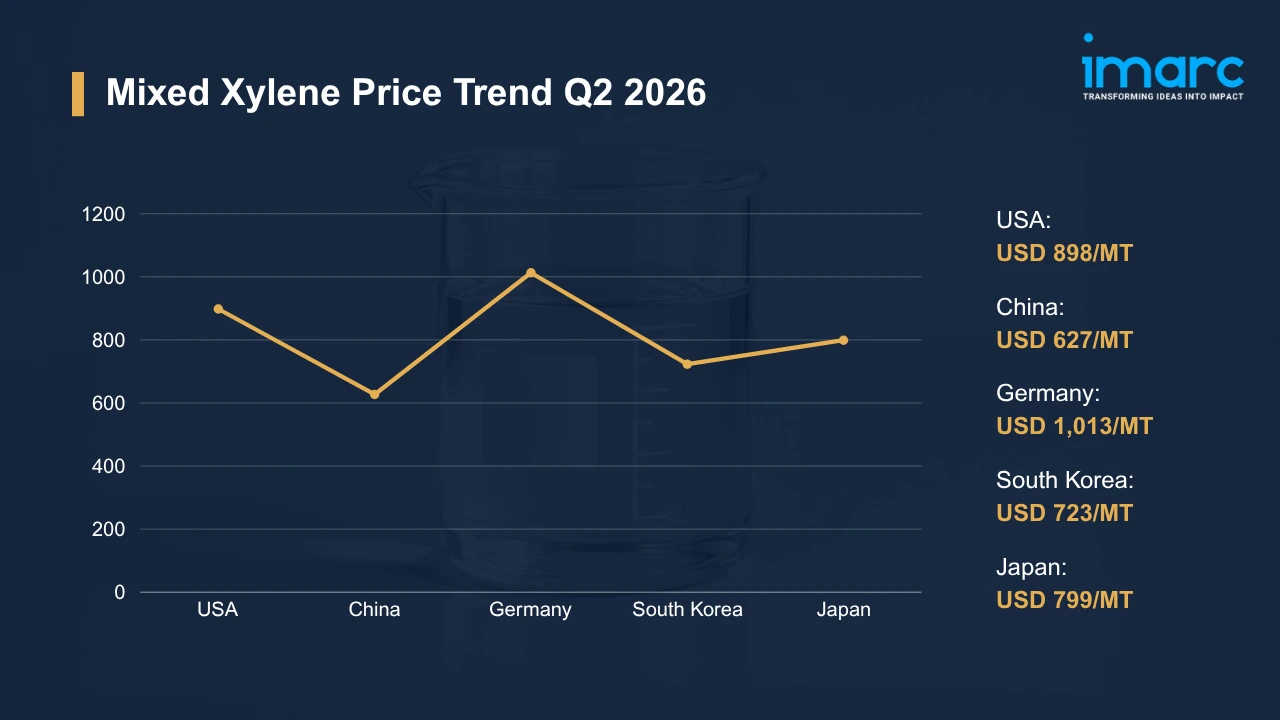
Mixed xylene is a clear, flammable aromatic hydrocarbon blend containing ortho, meta, and para xylene isomers produced through petroleum refining and aromatic extraction. Widely used in paraxylene production, polyester intermediates, paints, coatings, adhesives, and industrial cleaning formulations, mixed xylene prices are shaped by feedstock naphtha costs, refinery energy expenditure, freight economics on major trade lanes, and shifting demand across petrochemical and solvent-consuming industries.
Global Market Overview:
Globally, the mixed xylene industry was valued at USD 61.5 Billion in 2025. Market projections indicate steady growth, with the industry expected to reach USD 96.8 Billion by 2034, with a compound annual growth rate (CAGR) of 5.17% during 2026-2034. Paraxylene and polyester manufacturing demand anchors consumption, while coatings and industrial cleaning solvent use adds incremental volume. New refining capacity across Asia continues reshaping the mixed xylene price trend.
Mixed Xylene Price Trend Q2 2026:
Regional prices (USD per MT) and QoQ changes Q2 2026 vs Q1 2026:
| Region | Price (USD/MT) | QoQ Change | Direction |
|---|---|---|---|
| USA | 898 | +1.02% | ↑ |
| China | 627 | +1.34% | ↑ |
| Germany | 1,013 | +5.24% | ↑ |
| South Korea | 723 | +2.34% | ↑ |
| Japan | 799 | +0.45% | ↑ |
To access real-time prices Request Sample
What Moved Prices:
USA:
- In Q2 2026, mixed xylene prices in the USA climbed to USD 898/MT as Gulf Coast refiners maintained steady operating rates while inland logistics costs held firm. Converter run rates across aromatic derivative producers stayed elevated, reflecting consistent feedstock demand from petrochemical manufacturers absorbing output for downstream paraxylene and solvent applications.
- Domestic supply availability remained balanced through the quarter, limiting the need for aggressive spot procurement among converters. The mixed xylene price chart traced a gradual upward path as refinery economics favored measured output adjustments over aggressive expansion, with distributors managing inventory positions to match steady downstream offtake.
China:
- During Q2 2026, mixed xylene prices in China advanced to USD 627/MT, supported by firmer paraxylene sector offtake and steadier CNY-denominated import costs. Guangzhou and Yiwu converter hubs reported improved order flow from downstream polyester producers, while refiners calibrated output to match recovering consumption after a sluggish prior quarter.
- Export curtailment from select domestic refiners tightened available cargo volumes, nudging traders toward firmer offer levels even as broader industrial activity remained mixed. Producers weighed feedstock naphtha cost movements against softer margins, adjusting pricing incrementally rather than through sharp quarterly swings.
Germany:
- In the second quarter of 2026, mixed xylene prices in Germany surged to USD 1,013/MT as chemical processing demand strengthened alongside tighter regional supply. Suppliers navigating elevated feedstock and energy costs passed through higher offers, while Asia-Europe shipping economics added further pressure on landed cost structures for imported cargoes.
- EU regulatory compliance costs tied to chemical handling and emissions monitoring continued adding to producer overhead, reinforcing the upward pricing trajectory. Regional gas storage levels stayed adequate, tempering the pace of increase even as solvent and petrochemical processing buyers maintained regular contractual purchasing through the quarter.
South Korea:
- During Q2 2026, mixed xylene prices in South Korea rose to USD 723/MT, driven by supportive petrochemical demand and controlled refinery supply conditions. Aromatic chemical manufacturers sustained steady purchasing activity, while integrated complexes balanced export commitments against domestic feedstock requirements amid firm regional consumption patterns.
- Producers monitored refinery margins closely, adjusting offers in response to feedstock cost shifts and shipping schedules across regional trade lanes. Export-oriented supply dynamics shaped local availability, with buyers favoring short-term contracts to manage exposure amid fluctuating upstream naphtha valuations.
Japan:
- In Q2 2026, mixed xylene prices in Japan edged up to USD 799/MT as steady petrochemical demand offset otherwise cautious downstream sentiment. Producers maintained balanced output levels, adjusting offers according to feedstock cost changes while solvent manufacturers sustained regular procurement through the quarter.
- Aromatic derivative production remained a consistent demand anchor, supporting incremental price gains despite subdued coatings-sector activity elsewhere in the region. Refiners weighed naphtha cost volatility against export opportunities, favoring stable operating rates over aggressive output swings to preserve margin discipline.
Drivers Influencing the Market:
Several factors continue to shape mixed xylene pricing and market behavior:
- Petrochemical and Solvent Sector Demand: Consumption from paraxylene production, polyester intermediates, and industrial solvent formulations underpins baseline procurement volumes worldwide. Expanding coatings, adhesives, and cleaning-product manufacturing across emerging economies generates incremental orders, while mature markets sustain steady replenishment cycles tied to established petrochemical processing capacity.
- Naphtha and Feedstock Cost Dynamics: Fluctuations in upstream naphtha pricing directly shape mixed xylene production economics, given naphtha's role as the primary feedstock for aromatic extraction processes. Refiners adjust output allocation between gasoline blending and aromatics production based on relative margins, a balancing act that continues to influence the mixed xylene price index across major producing regions.
- Energy Expenditure in Refining Operations: Natural gas and electricity costs remain material determinants of aromatic extraction economics, particularly during energy-intensive distillation and separation stages. Per the US Energy Information Administration, Henry Hub natural gas spot prices are projected to average close to USD 3.70 per Million Btu in 2026, shaping cost structures for refiners across North America. Regional energy pricing disparities continue influencing competitive positioning among global producers.
- Ocean Freight and Logistics Economics: Container shipping costs on major Asia-Europe and Transpacific trade lanes directly affect landed prices for internationally traded cargoes. Easing freight costs partially offset firmer regional feedstock and energy expenses for import-dependent buyers.
- Environmental and Regulatory Compliance: Tightening emissions and chemical handling regulations across major producing regions raise compliance expenditures tied to storage, transport, and disposal protocols. Registration and testing requirements under regional chemical safety frameworks add administrative costs that gradually filter into pricing, particularly for producers operating across multiple regulatory jurisdictions simultaneously.
- Trade Policy and Currency Dynamics: Tariff structures and bilateral trade arrangements influence cross-border flows of mixed xylene and related aromatic feedstocks between major producing and consuming regions. Currency fluctuations against the US dollar affect import affordability for buyers in emerging markets, prompting some producers to adjust regional pricing strategies to preserve competitive positioning.
Recent Highlights & Strategic Developments:
Recent strategic moves within the industry further illustrate evolving dynamics:
- In August 2025, researchers at Sinopec's JiuJiang Petrochemical facility in China published findings on advanced catalytic and separation techniques aimed at improving conversion efficiency for mixed xylene streams in petrochemical processing. The study highlighted potential pathways for enhancing isomer management and process stability, with implications for refining and aromatics production efficiency going forward.
Outlook & Strategic Takeaways:
Looking ahead, the mixed xylene market is expected to sustain gradual expansion through 2034, propelled by steady paraxylene and polyester manufacturing demand alongside emerging solvent applications across coatings and industrial cleaning segments. Feedstock naphtha cost trajectories and refining capacity decisions will remain the pivotal variables shaping the mixed xylene price forecast across major producing and consuming regions.
To navigate this complex landscape, stakeholders should:
- Monitor Regional Price Differentials: Track quarterly pricing variation across the five tracked markets to identify favorable procurement windows. Benchmark landed costs against prevailing contract rates to optimize regional sourcing decisions throughout the year.
- Assess Freight Market Developments: Track container shipping rate movements on Asia-Europe and Transpacific corridors to anticipate landed cost shifts. Negotiate logistics contracts with flexible rate-adjustment clauses tied to prevailing spot market conditions.
- Evaluate Downstream Demand Indicators: Track paraxylene, polyester, and solvent-sector order books across principal consumption regions for early demand signals. Align procurement planning cycles with observed indicators to avoid unnecessary inventory buildup.
- Review Regulatory Compliance Expenditures: Audit current costs tied to chemical handling, storage, and emissions reporting obligations across operating jurisdictions. Identify efficiency opportunities that reduce regulatory burden without compromising safety standards.
- Strengthen Currency Exposure Management: Implement hedging strategies for procurement denominated in volatile currencies to stabilize landed cost projections. Coordinate treasury and procurement functions to align foreign exchange coverage with import payment schedules.
- Explore Emerging Application Segments: Investigate growth potential in specialty solvent and advanced aromatic derivative applications for portfolio diversification. Comparing mixed xylene price per MT against regional contract benchmarks helps identify emerging cost-saving opportunities.
Subscription Plans & Customization:
IMARC offers flexible subscription models to suit varying needs:
- Monthly Updates: 12 deliverables/year
- Quarterly Updates: 4 deliverables/year
- Biannual Updates: 2 deliverables/year
Each includes detailed datasets (Excel + PDF) and post-report analyst support.

Get in Touch With Us
UNITED STATES
Phone: +1-201-971-6302
INDIA
Phone: +91-120-433-0800
UNITED KINGDOM
Phone: +44-753-714-6104
Email: [email protected]
Client Testimonials




.webp)




.webp)












