Nylon DTY Price Update: Sustained Growth Across Key Markets in Q2 2026
28-Jul-2026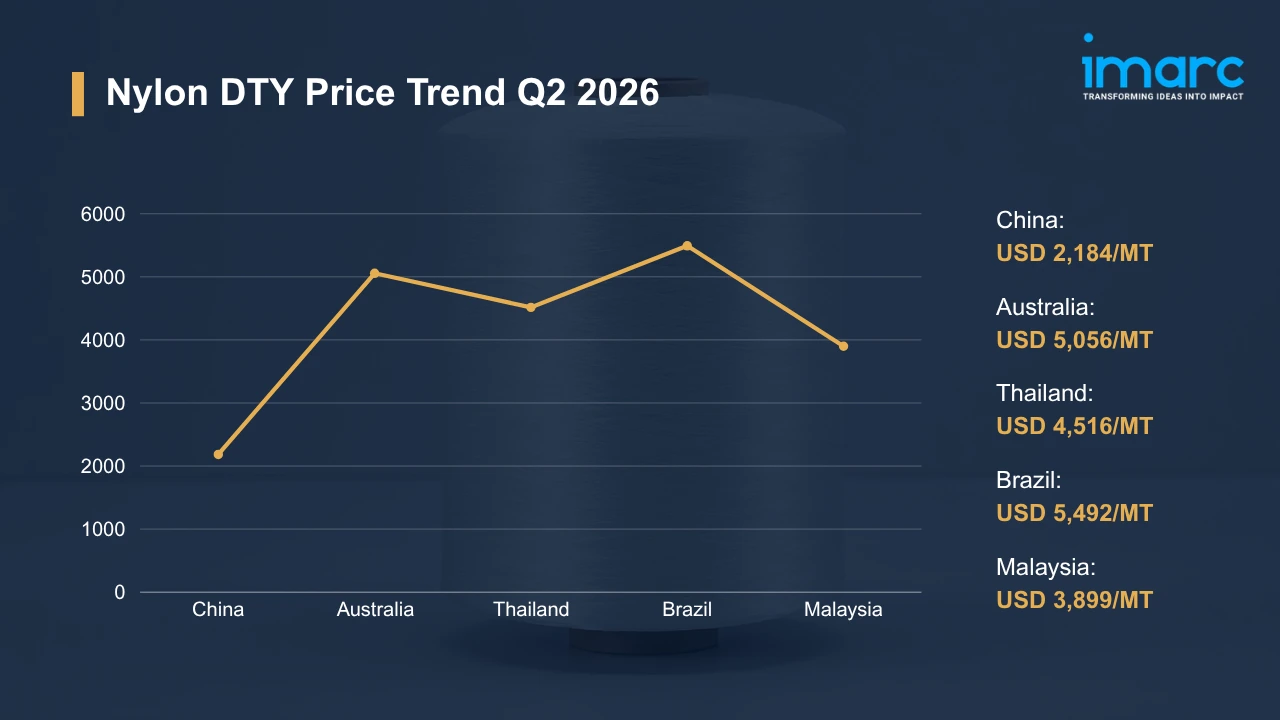
Nylon DTY, produced by texturing partially oriented polyamide fiber in nylon 6 or nylon 66 grades, delivers strength, elasticity, abrasion resistance, and a soft crimped hand feel. Broadly spanning hosiery, activewear, sportswear, upholstery, and technical textiles, nylon DTY prices reflect diverse global demand. Pricing cost structures are primarily feedstock-driven. Shaped by upstream caprolactam costs, energy expenditure in texturing operations, and container freight on intra-Asia trade lanes, valuations remain closely tied to commodity supply chains.
Global Market Overview:
Globally, the nylon DTY industry was valued at USD 19.10 Billion in 2025. Market projections indicate steady growth, with the industry expected to reach USD 31.99 Billion by 2034, with a compound annual growth rate (CAGR) of 5.90% during 2026-2034. Across activewear and sportswear markets, demand stays firm. Rising synthetic fiber adoption in automotive, upholstery, and technical textile applications sustains the nylon DTY price trend, supporting long-term volume expansion across key consuming regions.
Nylon DTY Price Trend Q2 2026:
Regional prices (USD per MT) and QoQ changes Q2 2026 vs Q1 2026:
| Region | Price (USD/MT) | QoQ Change | Direction |
|---|---|---|---|
| China | 2,184 | +4.44% | ↑ |
| Australia | 5,056 | +1.31% | ↑ |
| Thailand | 4,516 | +3.12% | ↑ |
| Brazil | 5,492 | +3.67% | ↑ |
| Malaysia | 3,899 | +1.42% | ↑ |
To access real-time prices Request Sample
What Moved Prices:
China:
- In Q2 2026, nylon DTY prices in China climbed to USD 2,184/MT as downstream textile mills raised procurement for apparel, home furnishing, and industrial fabric manufacturing. Overall market sentiment stayed broadly bullish. Firmer caprolactam costs and growing export demand from regional converters added upward pressure on supplier offers through the quarter.
- At USD 2,184/MT, a 4.44% QoQ advance, disciplined pricing by producers and prompt buying by knitting and weaving mills fueled the quarterly change. Buyer restocking urgency remained broadly moderate. Across Chinese markets, the nylon DTY price chart through Q2 2026 confirmed sustained upward momentum from recovering textile production schedules.
Australia:
- During Q2 2026, nylon DTY prices in Australia rose to USD 5,056/MT, supported by heightened demand from sportswear, upholstery, and technical fabric manufacturers. Spot availability stayed relatively lean. Constrained by higher replacement costs in import-reliant supply chains, suppliers lifted quotations as limited stock reinforced the upward pricing direction.
- Steady purchasing from technical and industrial textile processors maintained baseline procurement. Constrained by lean inventories, buyers faced reduced negotiating room. Firming freight conditions on Asia-Pacific routes further elevated landed costs, while limited spot availability reduced downward pressure on contract and spot offer levels through the quarter.
Thailand:
- In Q2 2026, nylon DTY prices in Thailand advanced to USD 4,516/MT as demand from fabric producers and garment manufacturers strengthened across apparel and home textile segments. Order flow improved markedly through Q2. Constrained by firmer caprolactam costs, producers raised offers as regional textile mills expanded purchasing.
- Across garment manufacturing clusters, export orders improved. Constrained by firmer upstream costs, Thai producers maintained disciplined offers with limited discounting. Buyer sentiment improved as order visibility strengthened, with forward purchasing gaining traction in both knitted and woven fabric manufacturing segments through the quarter.
Brazil:
- During Q2 2026, nylon DTY prices in Brazil rose to USD 5,492/MT as domestic textile demand improved and buyers from apparel, furnishing, and industrial fabric sectors raised procurement. Currency-linked import cost pressures intensified markedly. Constrained by elevated landed costs, distributors and traders revised quotations upward as suppliers passed through higher input expenses.
- Balanced inventories limited scope for price concessions. Rising synthetic fiber demand from sportswear and fashion textile segments added fresh buying interest. Across Brazilian textile markets, firm import costs and currency dynamics sustained upward pricing pressure, keeping the overall market tone broadly supportive through Q2 2026.
Malaysia:
- In Q2 2026, nylon DTY prices in Malaysia increased to USD 3,899/MT amid steady demand from knitting, weaving, and apparel manufacturing sectors. Regional buyers raised purchasing activity as textile production improved. With feedstock costs firming, producers maintained disciplined offers and limited scope for discounting through the quarter.
- Broadly steady across both local and export channels, demand from fabric manufacturers kept downside pressure contained. Among producers, price discounting stayed broadly contained. Constrained by higher upstream costs and firm import replacement prices, steady distribution channel availability reinforced the 1.42% QoQ increase recorded through the period.
Drivers Influencing the Market:
Several factors continue to shape nylon DTY pricing and market behavior:
- Textiles and Apparel Sector Demand: Across activewear, sportswear, hosiery, lingerie, and performance garment manufacturing, nylon DTY maintains a consistent global consumption base driven by sustained procurement activity. Athleisure and performance wear adoption is accelerating broadly. Shifting lifestyle patterns across Asia, North America, and Europe sustain downstream order activity, while recovering export garment production in key Asian markets gradually expands the procurement base for synthetic textured yarn.
- Upstream Caprolactam and Feedstock Cost Dynamics: Synthesized from benzene and cyclohexane, caprolactam serves as the primary raw material for nylon 6 and the dominant cost variable in nylon DTY production economics. Feedstock costs remain inherently volatile globally. Tied to crude oil movements and refining margin shifts, benzene price swings directly compress or widen producer margins, making the nylon DTY price index particularly responsive to upstream commodity cycles when precursor supply tightens.
- Energy Expenditure in Synthetic Fiber Processing: Across the draw texturing and heat-setting stages of nylon DTY production, natural gas and electricity costs remain critical determinants of manufacturing economics. Processing energy costs are structurally significant.
- Ocean Freight and Logistics Economics: On intra-Asia and transoceanic trade lanes, container shipping rates directly shape landed costs in import-dependent nylon DTY markets. Freight rates have risen quite substantially. Capturing this trajectory, Drewry's World Container Index recorded USD 4,639 per 40ft container in early July 2026, its highest level since September 2024, as Asia-Europe route surges extended landed cost pressure across key importing regions.
- Environmental and Regulatory Compliance: Tightening chemical safety and environmental discharge regulations governing polyamide production and caprolactam handling are adding compliance expenditures for manufacturers across key producing regions. Environmental regulatory obligations are expanding globally. Driven by registration and evaluation requirements under chemical management frameworks, administrative and testing costs progressively filter into nylon DTY pricing, while emerging standards push capital expenditure toward cleaner production technologies.
- Trade Policy and Currency Dynamics: Across trade corridors for synthetic yarn shipments, import tariffs, antidumping measures, and policy shifts influence landed cost structures in consuming markets, altering competitive dynamics between producing and importing regions. Currency exchange rate volatility matters considerably. Within import-dependent economies like Brazil and Malaysia, exchange rate depreciation elevates procurement costs and adds pricing uncertainty to nylon DTY valuations, making currency hedging increasingly important.
Recent Highlights & Strategic Developments:
Recent strategic moves within the industry further illustrate evolving dynamics:
- In July 2025, Century Enka Limited committed to significant capital investment to expand downstream nylon filament yarn and tyre-cord fabric manufacturing capacity, encompassing DTY-related product lines. The company simultaneously announced investments in renewable power infrastructure and nylon waste recycling programs, reinforcing its sustainability commitments across polyamide fiber operations.
Outlook & Strategic Takeaways:
Looking ahead, the nylon DTY market is expected to sustain gradual expansion through 2034, driven by consistent growth in activewear, sportswear, and technical textile manufacturing alongside rising synthetic fiber adoption in automotive and industrial applications. Caprolactam feedstock trajectories, ocean freight developments, and currency dynamics in import-dependent economies will remain the pivotal variables shaping the nylon DTY price forecast across regional markets.
To navigate this complex landscape, stakeholders should:
- Assess Freight Market Developments: Monitor container shipping rate trajectories on intra-Asia and transoceanic trade corridors to anticipate landed cost movements. Negotiate logistics contracts with rate adjustment mechanisms tied to prevailing Drewry WCI benchmarks to stabilize import cost projections.
- Evaluate Downstream Demand Indicators: Track activewear, sportswear, and technical textile production indices across key consuming regions to forecast nylon DTY procurement cycles. Align inventory replenishment schedules with order flow signals from major garment manufacturing hubs in Asia.
- Review Regulatory Compliance Expenditures: Audit current chemical safety, wastewater management, and environmental compliance costs associated with polyamide production and distribution. Identify operational efficiencies that reduce regulatory burden without compromising quality or sustainability obligations across the supply chain.
- Monitor Regional Price Differentials: Track quarterly price movements across China, Australia, Thailand, Brazil, and Malaysia to identify cost-effective procurement windows. Benchmarking nylon DTY price per MT against regional contract rates will help procurement teams build defensible sourcing strategies.
- Strengthen Currency Exposure Management: Implement hedging strategies for procurement denominated in currencies prone to volatility, particularly BRL and MYR, to stabilize landed cost projections. Coordinate treasury and procurement functions to align foreign exchange coverage with anticipated import payment schedules.
- Explore Emerging Application Segments: Investigate growth potential within recycled nylon DTY and bio-based polyamide segments as sustainability mandates reshape purchasing criteria across apparel and industrial textile clients. Engage with fiber development partners to assess commercial viability of novel sustainable yarn offerings.
Subscription Plans & Customization:
IMARC offers flexible subscription models to suit varying needs:
- Monthly Updates: 12 deliverables/year
- Quarterly Updates: 4 deliverables/year
- Biannual Updates: 2 deliverables/year
Each includes detailed datasets (Excel + PDF) and post-report analyst support.

.webp)
Get in Touch With Us
UNITED STATES
Phone: +1-201-971-6302
INDIA
Phone: +91-120-433-0800
UNITED KINGDOM
Phone: +44-753-714-6104
Email: [email protected]
Client Testimonials




.webp)




.webp)












