
Non-Invasive Prenatal Testing Market Size, Share, Trends and Forecast by Product Type, Test Type, Technology, Method, Application, End-User, and Region, 2026-2034
Non-Invasive Prenatal Testing Market Size, Share, Trends & Forecast (2026-2034)
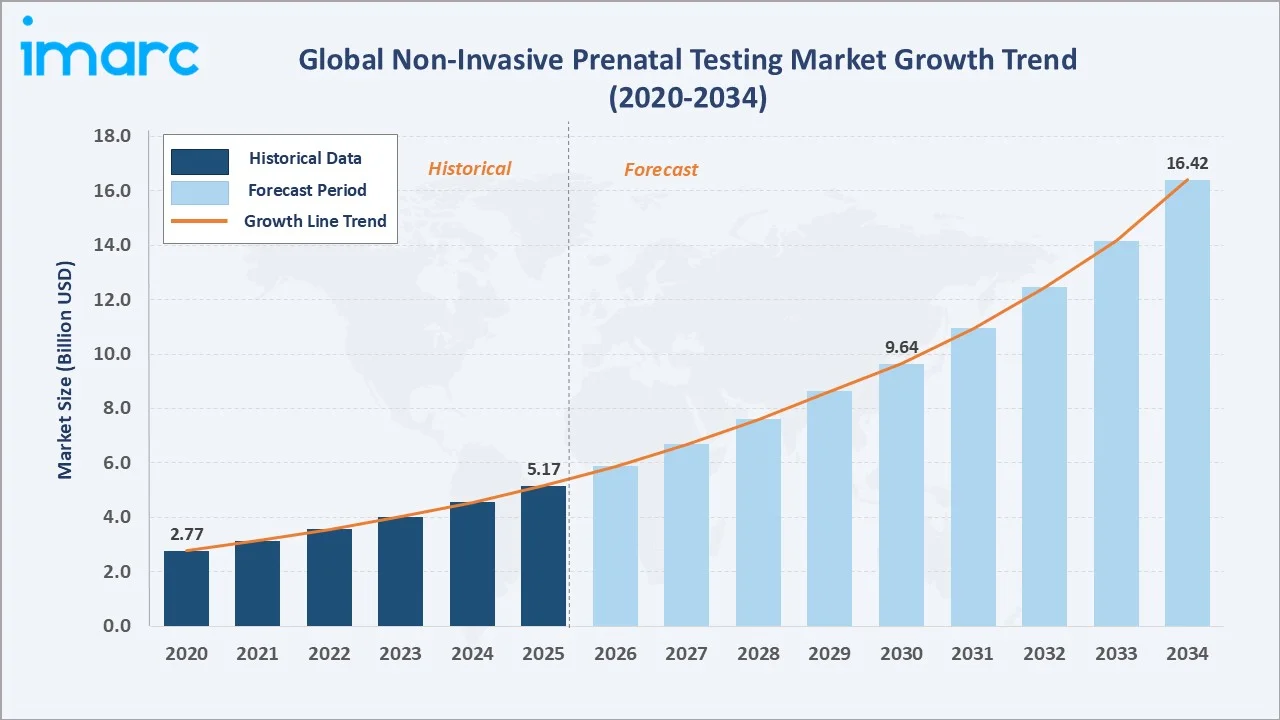
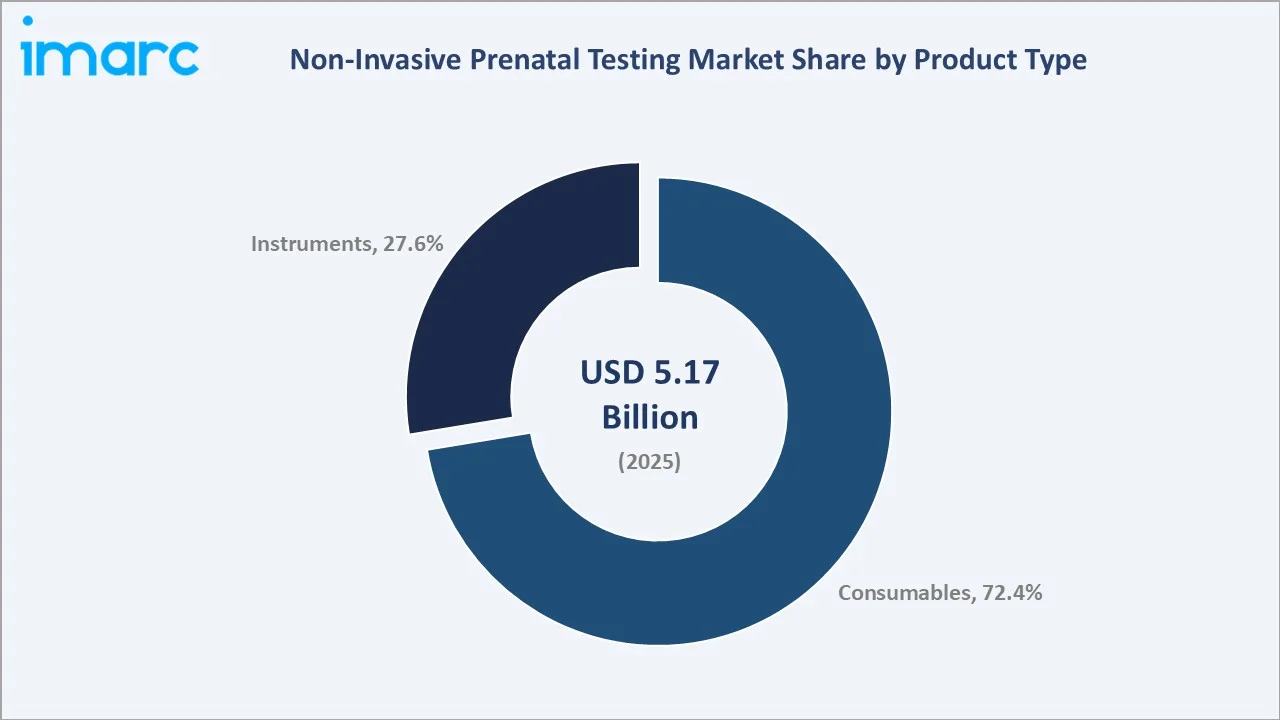
The global non-invasive prenatal testing market reached USD 5.17 Billion in 2025 and is projected to reach USD 16.42 Billion by 2034, growing at a CAGR of 13.30% during 2026-2034. Growth of the non-invasive prenatal testing market share is driven by rising maternal age, expanding genetic-disorder awareness, and increasing cell-free DNA screening adoption. The mean age at first birth in the United States rose from 26.6 years in 2016 to 27.5 years in 2023, per CDC data. This shift is elevating demand for accurate, early aneuploidy screening. Consumables lead product type at 72.4%. NGS dominates technology at 68.5%. North America commands 39.2% of the global market share.
Market Snapshot
|
Metric |
Value |
|
Market Size (2025) |
USD 5.17 Billion |
|
Forecast Market Size (2034) |
USD 16.42 Billion |
|
CAGR (2026-2034) |
13.30% |
|
Base Year |
2025 |
|
Historical Period |
2020-2025 |
|
Forecast Period |
2026-2034 |
|
Dominant Product Type |
Consumables (72.4%, 2025) |
|
Dominant Technology |
NGS (68.5%, 2025) |
|
Leading Region |
North America (39.2%, 2025) |
The global non-invasive prenatal testing market expanded from USD 2.77 Billion in 2020 to USD 5.17 Billion in 2025, anchored at USD 9.64 Billion in 2030, and forecast to reach USD 16.42 Billion by 2034. Post-pandemic health systems prioritized early, non-invasive genetic screening to reduce hospital visit frequency. ACOG's current guidance recommends that cell-free DNA screening be offered to all pregnant patients regardless of maternal age or risk status, widening the eligible screening population industry-wide.
To get more information on this market, Request Sample
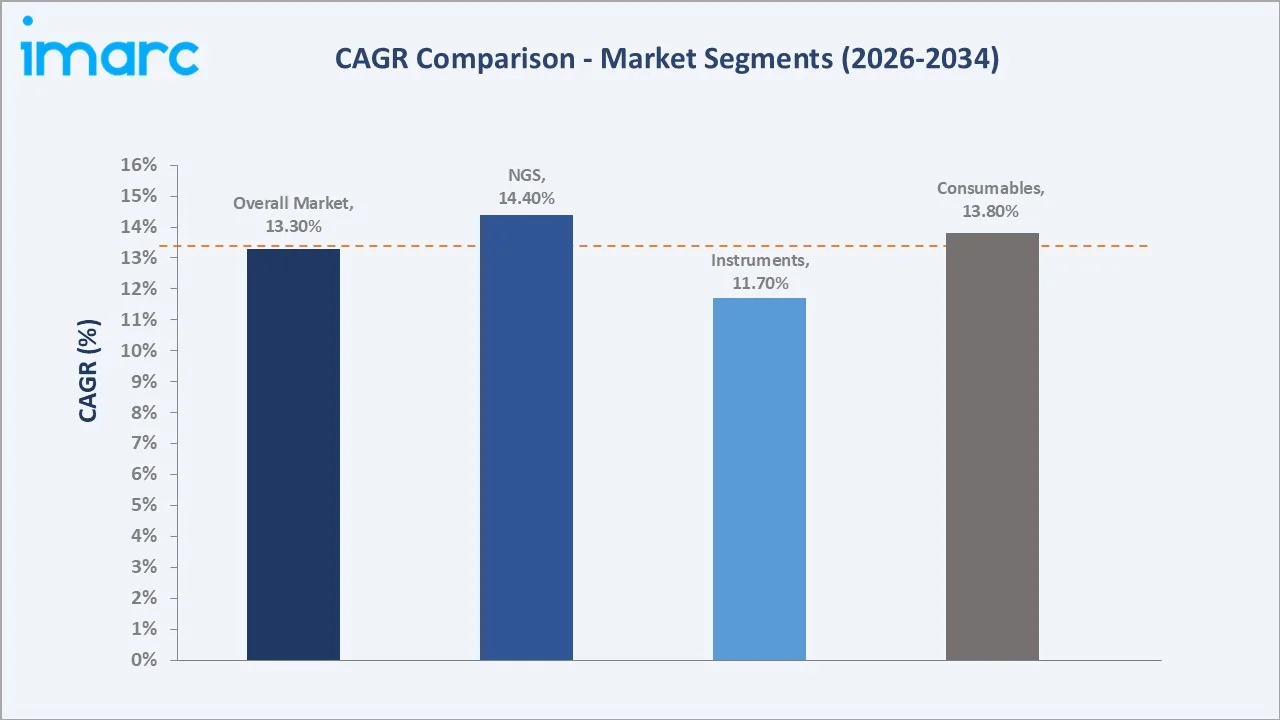
NGS-based testing grows fastest at an estimated ~14.4% CAGR as multiplexed sequencing panels expand detection beyond common trisomies into microdeletion syndromes. Consumables grow at an estimated ~13.8% CAGR through recurring reagent and kit demand tied to rising test volumes across diagnostic laboratories and hospital networks.
Executive Summary
The global non-invasive prenatal testing market reached USD 5.17 Billion in 2025, reflecting the convergence of reproductive genomics, cell-free DNA sequencing, and value-based prenatal care. The market encompasses consumable reagent kits, sequencing and analysis instruments, and bioinformatics software that convert a maternal blood draw into an aneuploidy risk assessment without invasive amniocentesis or chorionic villus sampling procedures.
Consumables at 72.4% dominate through recurring per-test reagent, library preparation, and sequencing kit consumption across diagnostic laboratories. NGS at 68.5% leads technology through multiplexed massively parallel sequencing that screens trisomy 21, 18, and 13 alongside expanding microdeletion panels within a single maternal blood draw. North America, at 39.2%, leads through broad payer coverage and ACOG's universal cell-free DNA screening guidance.
Rising maternal age, expanding insurance reimbursement, and government-backed screening programmes such as the NHS's national NIPT pathway are widening the eligible patient population. The market outlook through 2034 favors laboratories combining SNP-informed and NGS-based sequencing accuracy with lower no-call rates and broader payer coverage.
Key Market Insights
|
Insight |
Data |
|
Dominant Product Type |
Consumables - 72.4% share (2025) |
|
Dominant Technology |
NGS - 68.5% market share (2025) |
|
Leading Region |
North America - 39.2% market share |
|
Market Opportunity |
Expanded microdeletion and carrier panels; SNP-informed low fetal-fraction sequencing; government screening programme adoption; emerging market laboratory buildout |
Key Analytical Observations Supporting The Above Data:
- Consumables at 72.4%: Consumables dominate due to recurring reagent kit, library preparation, and sequencing consumable demand generated by every individual test processed, creating a stable, volume-linked revenue base for diagnostic laboratories as testing throughput increases.
- NGS at 68.5%: NGS-based testing leads technology because massively parallel sequencing enables simultaneous screening for trisomy 21, 18, 13, and expanding microdeletion syndromes from a single maternal blood sample, improving laboratory workflow efficiency versus targeted array methods.
- North America at 39.2%: North America dominates through broad private and public payer reimbursement, ACOG's guidance recommending cell-free DNA screening for all pregnant patients regardless of risk status, and dense diagnostic laboratory infrastructure across the United States.
- Rising maternal age: The mean age at first birth in the United States increased from 26.6 years in 2016 to 27.5 years in 2023, per CDC data, with births to women aged 35 and older rising 25% over the same period, widening the population at elevated aneuploidy risk.
Non-Invasive Prenatal Testing Market Overview
The global non-invasive prenatal testing market encompasses cell-free DNA extraction reagents, next-generation and whole-genome sequencing instruments, bioinformatics interpretation software, and clinical reporting services used to screen maternal blood samples for fetal chromosomal abnormalities. The market spans hospital-based laboratories, independent reference laboratories, and specialty reproductive genomics companies.
Macroeconomic factors include rising healthcare expenditure, expanding insurance coverage for prenatal genetic screening, and government-backed antenatal screening programmes. In addition, increasing maternal age, higher genetic-disorder awareness, and growing demand for non-invasive alternatives to amniocentesis are accelerating adoption worldwide, particularly across Asia Pacific's expanding private healthcare networks.
Market Dynamics
To evaluate market opportunities, Request Sample
Market Drivers
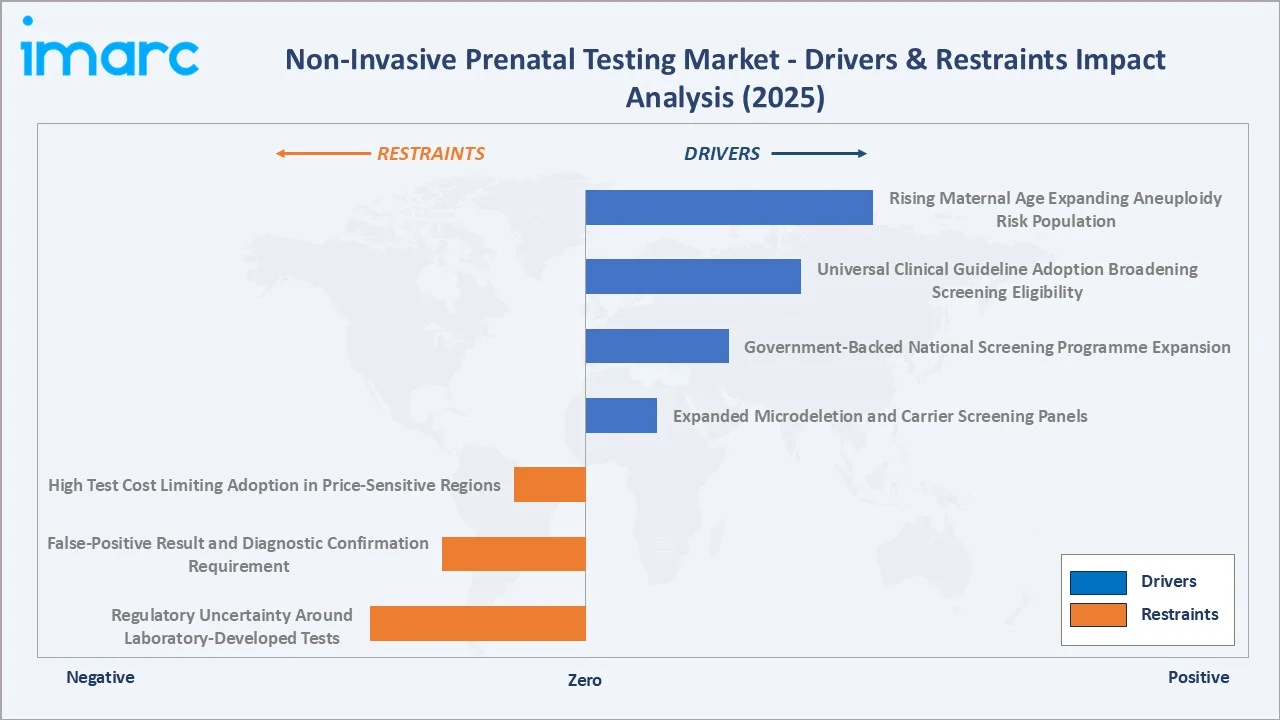
- Rising Maternal Age Expanding Aneuploidy Risk Population: The mean age at first birth in the United States increased from 26.6 years in 2016 to 27.5 years in 2023, according to CDC data, with births to women aged 35 and older rising 25% over the same period. Advanced maternal age is directly associated with elevated chromosomal aneuploidy risk, expanding the population of pregnancies for which clinicians recommend genetic screening. This demographic shift is broadening the addressable patient base for non-invasive prenatal testing across developed and emerging healthcare systems alike.
- Universal Clinical Guideline Adoption Broadening Screening Eligibility: ACOG's current guidance recommends that cell-free DNA screening be offered to all pregnant patients regardless of maternal age or risk status, stating it is the most sensitive and specific screening test for common fetal aneuploidies. This universal-offering recommendation has shifted non-invasive prenatal testing from a high-risk-only option toward a first-line screening standard, meaningfully expanding the eligible patient population across obstetric practices.
- Government-Backed National Screening Programme Expansion: The NHS added non-invasive prenatal testing to England's NHS Fetal Anomaly Screening Programme (FASP) pathway as an evaluative rollout covering June 2021 to September 2022, with 96% of samples returning reported results and about three-quarters of eligible women choosing NIPT following a higher-chance screening result. Government-backed programmes such as this are formalizing non-invasive prenatal testing as standard antenatal care and reducing reliance on invasive diagnostic procedures.
Market Restraints
- High Test Cost Limiting Adoption in Price-Sensitive Regions: Non-invasive prenatal testing remains costlier than conventional biochemical and ultrasound-based screening, limiting adoption among price-sensitive patients in regions lacking comprehensive insurance coverage or government reimbursement. Out-of-pocket cost sensitivity slows penetration across parts of Latin America, Middle East and Africa, and Asia Pacific despite rising clinical awareness.
- False-Positive Result and Diagnostic Confirmation Requirement: The FDA has cautioned that genetic non-invasive prenatal screening tests may produce false results, particularly for rarer chromosomal conditions, and that a positive result requires confirmatory diagnostic testing such as amniocentesis or chorionic villus sampling. This confirmation requirement adds cost, anxiety, and turnaround time to the clinical pathway, tempering test utilization in some settings.
Market Opportunities
- Expanded Microdeletion and Carrier Screening Panels: Laboratories are broadening non-invasive prenatal test panels beyond common trisomies into microdeletion syndromes and expanded carrier screening, creating incremental per-test revenue opportunity. Growing clinician familiarity with expanded panels is increasing attach rates alongside core aneuploidy screening across reference laboratory menus.
- SNP-Informed Low Fetal-Fraction Sequencing Technology: In May 2026, Natera announced an enhanced Panorama NIPT powered by novel SNP-informed deep sequencing technology, achieving 100% sensitivity for trisomy 21 and 13 and reducing the no-call rate to 0.5% in a 3,323-patient clinical study. Technologies that resolve low fetal-fraction samples reduce repeat blood draws and expand the addressable patient population, including higher-BMI patients previously prone to inconclusive results.
Market Challenges
- Regulatory Uncertainty Around Laboratory-Developed Tests: The FDA's May 2024 final rule extending device oversight to laboratory-developed tests was vacated by a federal court in March 2025, and the agency reverted to its prior regulatory framework in September 2025. This regulatory back-and-forth creates planning uncertainty for laboratories investing in long-term compliance infrastructure.
- Genetic Counseling Workforce Shortage: Rising non-invasive prenatal testing volumes are increasing demand for genetic counseling to interpret results and support patient decision-making, but the specialized genetic counseling workforce has not scaled proportionally. This shortage can delay result interpretation and extend patient wait times, particularly in regions with limited maternal-fetal medicine infrastructure.
Emerging Market Trends
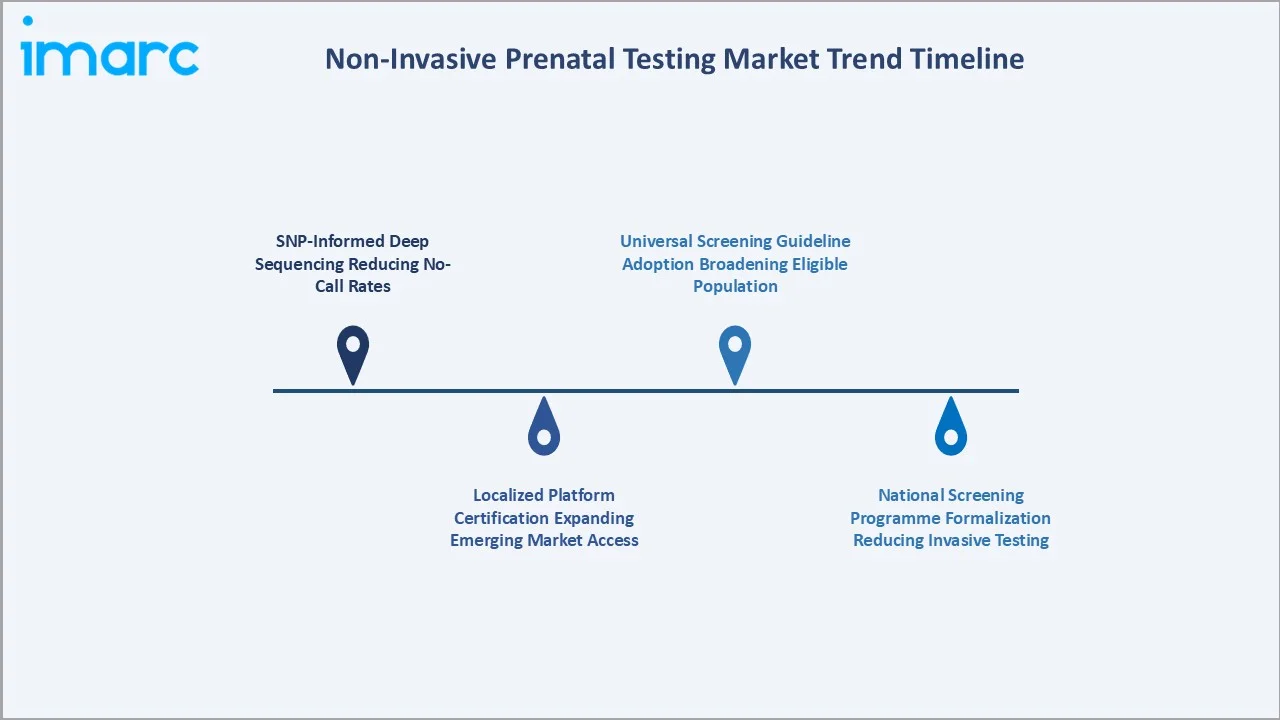
1. SNP-Informed Deep Sequencing Reducing No-Call Rates
Sequencing providers are adopting SNP-informed deep sequencing technology to resolve low fetal-fraction samples that previously required repeat blood draws. Natera's May 2026 enhanced Panorama launch demonstrated a no-call rate reduction to 0.5% alongside 100% sensitivity for trisomy 21 and 13 in a 3,323-patient study, signaling an industry-wide accuracy benchmark shift.
2. Localized Platform Certification Expanding Emerging Market Access
Sequencing platform manufacturers are pursuing regional regulatory certification to expand decentralized testing access. BGI Genomics' NIFTY DNBSEQ-G99 platform achieved CE-IVDD certification for the European market, while BGI Genomics and Prom-Test Laboratories launched Armenia's first localized NIPT project, reducing sample export dependency and turnaround time.
3. Universal Screening Guideline Adoption Broadening Eligible Population
Professional guidance bodies are shifting non-invasive prenatal testing from a high-risk-only recommendation toward universal first-line screening. ACOG's current guidance recommends offering cell-free DNA screening to all pregnant patients regardless of age or risk status, meaningfully expanding the addressable patient population across obstetric practices globally.
4. National Screening Programme Formalization Reducing Invasive Testing
Government health systems are formalizing non-invasive prenatal testing within national antenatal screening pathways. The NHS's evaluative rollout reported that roughly three-quarters of eligible women chose NIPT following a higher-chance result, reducing invasive diagnostic procedure volumes and associated miscarriage risk within the public screening pathway.
Industry Value Chain Analysis
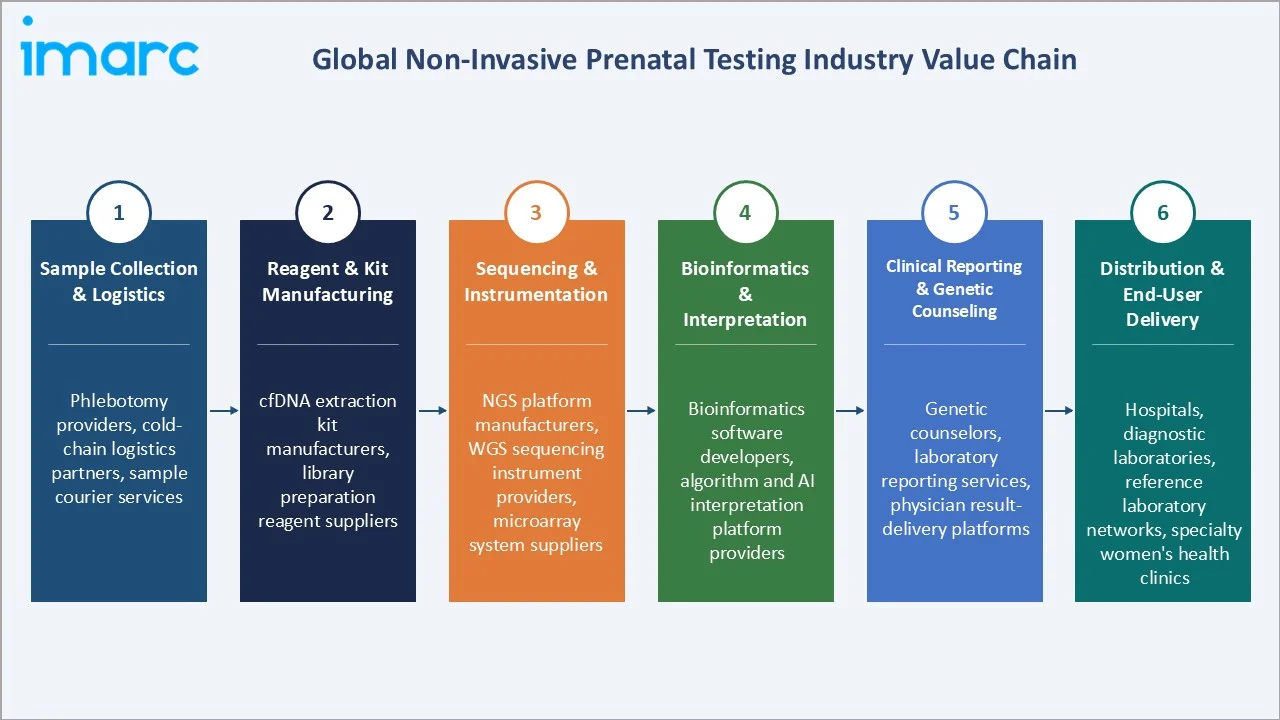
The non-invasive prenatal testing value chain integrates sample collection and cold-chain logistics, reagent and library preparation kit manufacturing, sequencing instrumentation, bioinformatics interpretation, clinical reporting and genetic counseling, and distribution to hospitals and diagnostic laboratories.
|
Stage |
Key Participants |
|
Sample Collection & Logistics |
Phlebotomy providers, cold-chain logistics partners, sample courier services |
|
Reagent & Kit Manufacturing |
cfDNA extraction kit manufacturers, library preparation reagent suppliers |
|
Sequencing & Instrumentation |
NGS platform manufacturers, WGS sequencing instrument providers, microarray system suppliers |
|
Bioinformatics & Interpretation |
Bioinformatics software developers, algorithm and AI interpretation platform providers |
|
Clinical Reporting & Genetic Counseling |
Genetic counselors, laboratory reporting services, physician result-delivery platforms |
|
Distribution & End-User Delivery |
Hospitals, diagnostic laboratories, reference laboratory networks, specialty women's health clinics |
The bioinformatics and interpretation stage is the value chain's most technically differentiated phase, converting raw sequencing reads into a clinically actionable aneuploidy risk score. The clinical reporting and genetic counseling layer sustains the trust premium that non-invasive prenatal testing commands over conventional biochemical screening.
Technology Landscape in the Non-Invasive Prenatal Testing Industry
Next-Generation Sequencing (NGS) Platforms
NGS platforms enable massively parallel sequencing of cell-free DNA fragments, allowing simultaneous screening for trisomy 21, 18, 13, and expanding microdeletion panels from a single maternal blood draw. Illumina's sequencing systems and library preparation chemistry underpin the majority of global reference laboratory NIPT workflows, supporting high-throughput testing at declining per-sample cost.
SNP-Informed and Whole-Genome Sequencing
SNP-informed sequencing distinguishes maternal and fetal DNA fractions with greater precision than counting-based methods, improving accuracy at low fetal fraction. Natera's enhanced Panorama test, launched in May 2026, demonstrated this approach can reduce no-call rates to 0.5%, while whole-genome sequencing platforms extend screening breadth to rarer chromosomal abnormalities.
AI-Driven Bioinformatics Interpretation
AI-based bioinformatics platforms are increasingly used to interpret sequencing output, flag low-confidence results, and support genetic counselor workflows. These platforms help laboratories manage rising test volumes while maintaining reporting accuracy and turnaround time as non-invasive prenatal testing scales globally.
Market Segmentation Analysis
The report covers the following segments:
|
Segment Category |
Leading Segment |
Market Share |
Year |
|
Product Type |
Consumables |
72.4% |
2025 |
|
Test Type |
Materni 21 |
🔒 |
2025 |
|
Technology |
NGS |
68.5% |
2025 |
|
Method |
Cell-Free DNA in Maternal Plasma Tests |
🔒 |
2025 |
|
Application |
Trisomy |
🔒 |
2025 |
|
End-User |
Diagnostic Laboratories |
🔒 |
2025 |
|
Region |
North America |
39.2% |
2025 |

By Product Type
Consumables lead at 72.4% (2025). The consumables segment encompasses cell-free DNA extraction reagents, library preparation kits, and sequencing consumables that generate recurring, volume-linked revenue with every test processed across diagnostic laboratories.
To access detailed market analysis, Request Sample
Instruments at 27.6% encompass NGS sequencers, WGS platforms, and microarray systems. Instruments grow at an estimated ~11.7% CAGR through periodic laboratory capacity upgrades, which trail the faster, recurring-revenue growth of consumables.
By Technology
NGS leads at 68.5% (2025). The NGS segment encompasses massively parallel sequencing platforms that screen trisomy 21, 18, 13, and expanding microdeletion syndromes from a single maternal blood draw, supporting high laboratory throughput.
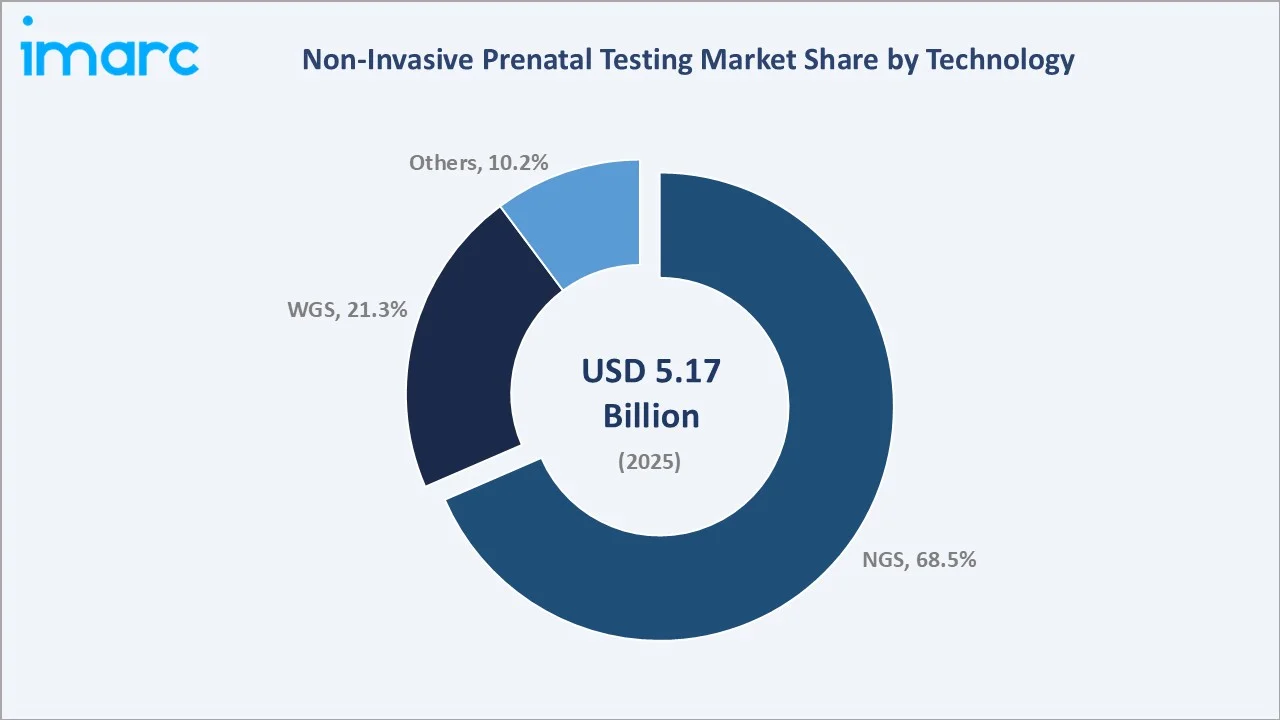
WGS at 21.3% grows at an estimated ~11.9% CAGR through expanding whole-genome screening breadth. Others at 10.2% encompasses targeted microarray and biochemical-adjacent hybrid testing methods used across select regional laboratory networks.
Regional Market Insights
|
Region |
Share (2025) |
Key NIPT Market Drivers & Characteristics |
|
North America |
39.2% |
Driven by broad payer reimbursement, universal clinical screening guidelines, and dense diagnostic laboratory infrastructure. |
|
Europe |
28.1% |
Supported by government-backed national screening programmes, regulatory certification pathways, and established reference laboratory networks. |
|
Asia Pacific |
24.3% |
Driven by expanding private healthcare networks, rising birth rates in select markets, and growing government screening initiatives. |
|
Latin America |
4.9% |
Supported by gradually expanding insurance coverage and increasing awareness of genetic prenatal screening options. |
|
Middle East and Africa |
3.5% |
Driven by growing investment in maternal healthcare infrastructure and rising adoption of advanced diagnostic technologies. |
North America's 39.2% market leadership is anchored by comprehensive private and public payer reimbursement alongside ACOG's universal screening guidance across the United States. Europe's 28.1% reflects the NHS's national screening pathway and CE-IVDD-certified platform availability across the region.
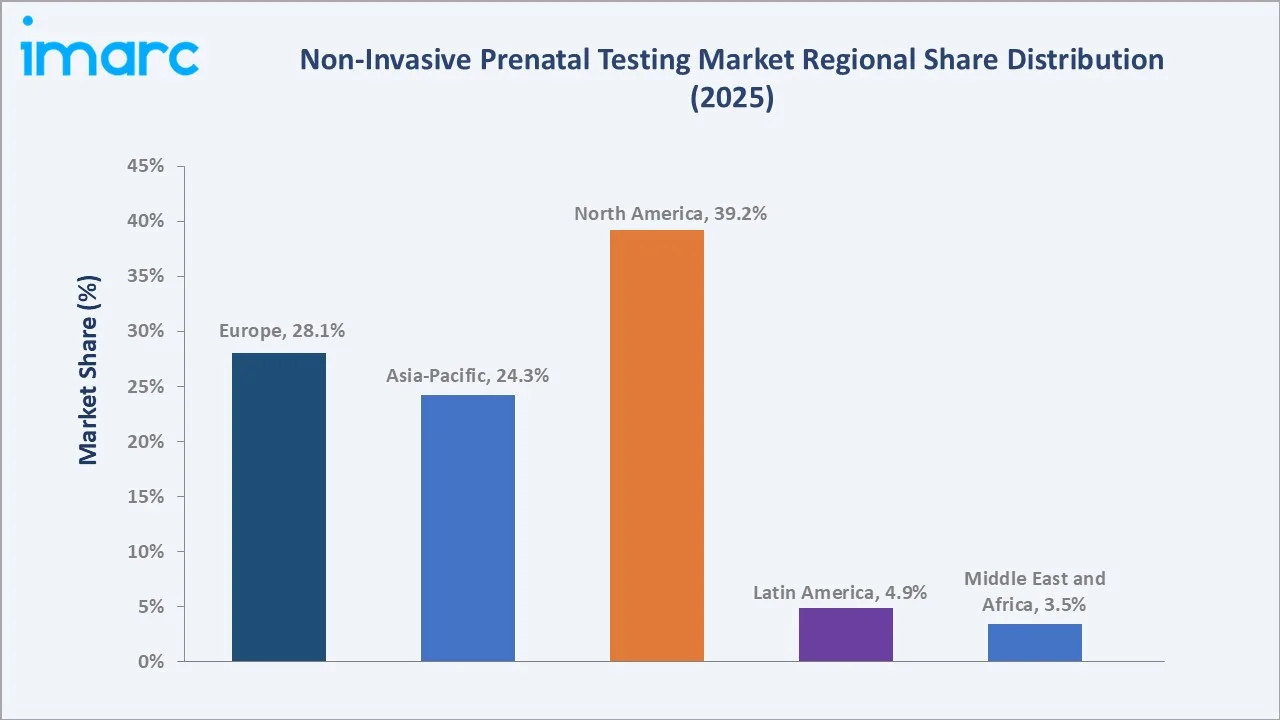
Asia Pacific's 24.3% encompasses China's large-scale reference laboratory network alongside expanding private healthcare access across India and Southeast Asia. The Middle East and Africa, at 3.5%, is emerging as a growth region as maternal healthcare investment accelerates.
Competitive Landscape
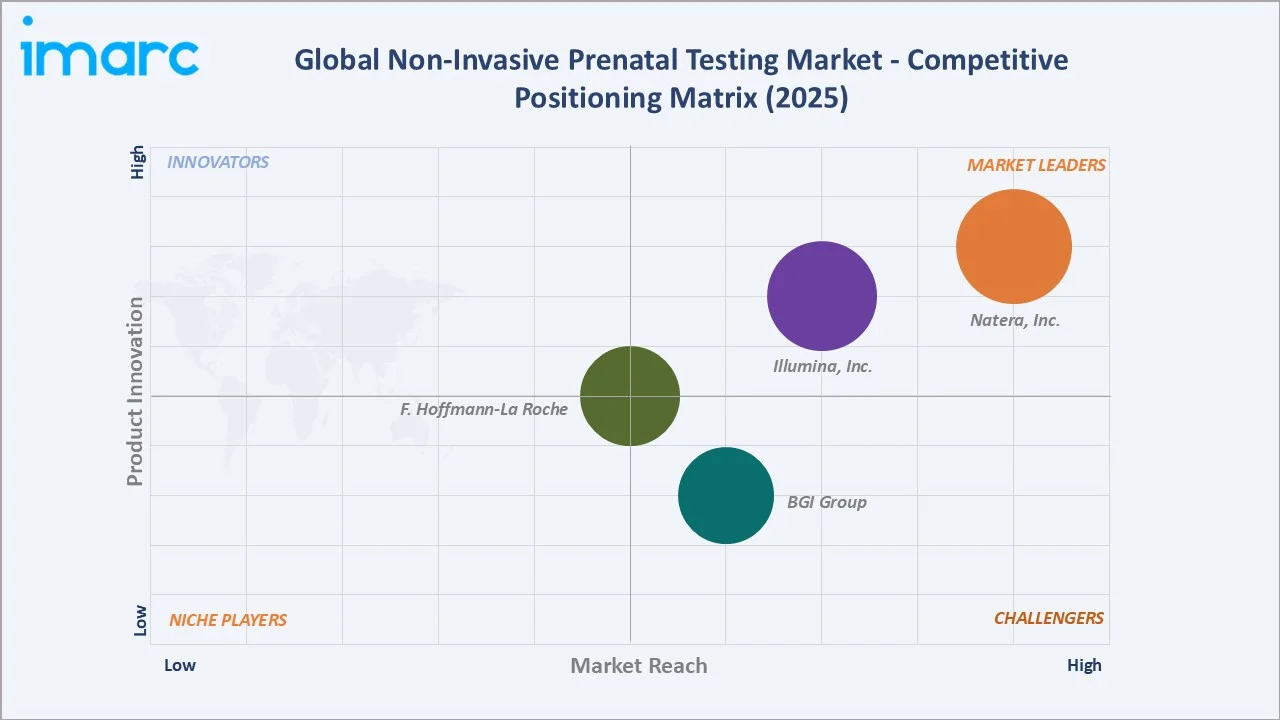
The global non-invasive prenatal testing market competitive landscape encompasses distinct tiers: sequencing platform manufacturers, reproductive genomics test providers, and diagnostic reference laboratory networks.
|
Company Name |
Brand / Test Name |
Market Position |
Core Strength |
|
Natera, Inc. |
Panorama, Vistara, Horizon |
Market Leader |
Natera plays a central role in NIPT through SNP-informed sequencing technology, offering high-sensitivity trisomy detection and broad payer coverage across average- and high-risk pregnancies. |
|
Illumina, Inc. |
VeriSeq NIPT |
Market Leader |
Illumina plays a central role in NIPT by supplying the NGS sequencing platforms and library preparation chemistry that power the majority of global reference laboratory testing workflows. |
|
F. Hoffmann-La Roche |
Harmony NIPT |
Strong Challenger |
Harmony prenatal test has been shown to have superior accuracy in a direct comparison to traditional first trimester screening in over 15,000 women. |
|
BGI Group |
NIFTY |
Established Player |
Operates BGI Genomics which plays a central role in NIPT by providing DNBSEQ sequencing platforms and the NIFTY test, expanding localized testing access across Asia Pacific, Europe, and emerging markets. |
Sequencing platform concentration creates a technology dependency where Illumina and BGI Genomics' instrument ecosystems underpin most reference laboratory workflows globally. Consolidation is increasing as reproductive genomics companies pursue integrated sequencing, bioinformatics, and reporting platforms to reduce coordination complexity.
Key Company Profiles
Natera, Inc.
Natera, Inc. is a global leader in cell-free DNA-based non-invasive prenatal testing, offering its SNP-informed Panorama test across average- and high-risk pregnancies worldwide.
- Key Products: Panorama NIPT, Horizon carrier screening, and Vistara single-gene panel, among others.
- Recent Developments: In May 2026, Natera announced an enhanced Panorama NIPT powered by novel SNP-informed deep sequencing technology, achieving 100% sensitivity for trisomy 21 and 13, and reducing the no-call rate to 0.5% in a 3,323-patient clinical study.
- Strategic Focus: Focuses on improving low fetal-fraction performance, expanding payer coverage, and broadening SNP-based reproductive genomic testing.
BGI Group
BGI Genomics, a subsidiary of BGI Group, is a global genomics leader offering the NIFTY non-invasive prenatal test through DNBSEQ sequencing platforms across more than 100 countries.
- Key Products: NIFTY Pro, NIFTY Mono, and NIFTY Standard, among others.
- Recent Developments: In February 2024, BGI Genomics upgraded its NIFTY Test kit line by integrating its DNBSEQ-G99 next-generation sequencing platform to meet the European Union regulations for medical devices.
- Strategic Focus: Centered on localized platform certification, emerging market laboratory partnerships, and expanding NIPT accessibility across Asia Pacific, Europe, and Latin America.
Market Concentration Analysis
The global non-invasive prenatal testing market is moderately concentrated at the sequencing technology platform tier, where Illumina and BGI Genomics supply the instruments underpinning the majority of laboratory testing workflows worldwide. The test-provider tier is comparatively fragmented and numerous regional reference laboratories competing on accuracy, turnaround time, and payer coverage. Consolidation is increasing as diagnostic laboratories seek integrated sequencing, bioinformatics, and reporting platforms to reduce operational complexity and improve reporting consistency.
Investment & Growth Opportunities
Highest Growth Segments
NGS-based testing (~14.4% CAGR), consumables reagent demand (~13.8% CAGR), Asia Pacific laboratory buildout, expanded microdeletion and carrier screening panels, and SNP-informed low fetal-fraction sequencing represent the highest-growth non-invasive prenatal testing investment vectors through 2034.
Emerging Investment Opportunities
Asia Pacific's expanding private healthcare networks and government-backed screening programmes represent the largest near-term non-invasive prenatal testing opportunity. Companies establishing localized manufacturing and CE-IVDD or regionally certified platforms are positioned for above-market revenue growth as laboratory infrastructure expands.
Investment Themes
- SNP-informed deep sequencing investment reducing no-call rates: Companies investing in enhanced sequencing chemistry and bioinformatics algorithms by 2026-2027 are positioned to capture the accuracy-driven competitive shift validated by Natera's 2026 clinical study.
- Localized platform certification expanding emerging market access: Regional regulatory certification of sequencing platforms, following BGI Genomics' DNBSEQ-G99 approach, creates recurring reagent revenue as decentralized testing laboratories scale across Asia Pacific, Latin America, and Eastern Europe.
Future Market Outlook (2026-2034)
The global non-invasive prenatal testing market is projected to grow from USD 5.17 Billion in 2025 to USD 16.42 Billion by 2034, delivering a 13.30% CAGR over the forecast period. The market's anchor value of USD 9.64 Billion in 2030 represents an industry at a transformative inflection: SNP-informed deep sequencing will have achieved broader adoption reducing no-call rates industry-wide, universal ACOG-aligned screening guidelines will have widened eligible populations across developed markets, and government-backed national screening programmes will have matured from evaluative rollout toward standard-of-care across additional health systems.
Three structural forces define non-invasive prenatal testing market growth through 2034 with strong confidence. Rising global maternal age, evidenced by the CDC's finding that mean age at first birth climbed from 26.6 years in 2016 to 27.5 years in 2023, sustains a structurally expanding aneuploidy risk population. Universal clinical guideline adoption, following ACOG's recommendation that cell-free DNA screening be offered regardless of risk status, is durable and policy-anchored rather than cyclical. Regulatory evolution, including the FDA's September 2025 reversion to its prior laboratory-developed test framework, is preserving the pathway most NIPT assays currently depend on for market access.
Research Methodology
Primary Research
Primary research comprised structured interviews with industry stakeholders including laboratory directors, genetic counselors, maternal-fetal medicine specialists, reproductive genomics company executives, and regional diagnostics market specialists.
Secondary Research
Secondary research encompassed FDA and ACOG regulatory and clinical guidance publications, CDC vital statistics and birth defects data, NHS and UK national screening programme reports, company annual reports, and peer-reviewed reproductive genomics literature.
Forecasting Models
Market revenue forecasts were developed using a segment bottom-up model spanning: (i) consumables and reagent kit component; (ii) sequencing instrument component; (iii) bioinformatics and reporting services component.
Non-Invasive Prenatal Testing Market Report Coverage:
| Report Features | Details |
|---|---|
| Base Year of the Analysis | 2025 |
| Historical Period | 2020-2025 |
| Forecast Period | 2026-2034 |
| Units | Billion USD |
| Scope of the Report | Exploration of Historical Trends and Market Outlook, Industry Catalysts and Challenges, Segment-Wise Historical and Future Market Assessment:
|
| Product Types Covered | Consumables, Instruments |
| Test Types Covered | Materni 21, Harmony, Panaroma, Verifi, NIFTY, Others |
| Technologies Covered | NGS, WGS, Others |
| Methods Covered | Ultrasound Detection, Biochemical Screening Tests, Cell-Free DNA in Maternal Plasma Tests, Fetal Cells in Maternal Blood Tests, Others |
| Applications Covered | Trisomy, Microdeletion Syndrome, Others |
| End-Users Covered | Hospitals, Diagnostic Laboratories, Others |
| Region Covered | North America, Asia Pacific, Europe, Latin America, Middle East and Africa |
| Countries Covered | United States, Canada, China, Japan, India, South Korea, Australia, Indonesia, Germany, France, United Kingdom, Italy, Spain, Russia, Brazil, Mexico |
| Companies Covered | Natera Inc., Illumina Inc., F. Hoffmann-La Roche, BGI Group, etc. |
| Customization Scope | 10% Free Customization |
| Post-Sale Analyst Support | 10-12 Weeks |
| Delivery Format | PDF and Excel through Email (We can also provide the editable version of the report in PPT/Word format on special request) |
Frequently Asked Questions About the Non-Invasive Prenatal Testing Market Report
The global non-invasive prenatal testing market reached USD 5.17 Billion in 2025, driven by rising maternal age, expanding genetic-disorder awareness, and growing cell-free DNA screening adoption worldwide.
The market grows at a 13.30% CAGR during 2026-2034, reaching USD 16.42 Billion by 2034. NGS-based testing grows fastest at an estimated ~14.4% CAGR through expanding sequencing panels.
Consumables lead at 72.4% through recurring reagent, library preparation, and sequencing kit demand generated by every test processed across diagnostic laboratories and hospital networks worldwide.
NGS leads technology at 68.5% through multiplexed sequencing that screens trisomy 21, 18, and 13, and expanding microdeletion syndromes from a single maternal blood draw.
North America leads at 39.2% through broad payer reimbursement, ACOG's universal cell-free DNA screening guidance, and dense diagnostic laboratory infrastructure across the United States.
Leading companies include Natera, Inc., Illumina, Inc., F. Hoffmann-La Roche, and BGI Group, among others.
The market is projected to reach approximately USD 9.64 Billion by 2030, with SNP-informed sequencing and expanded microdeletion panels achieving broader clinical and payer adoption.
Rising maternal age, universal screening guideline adoption, government-backed national programmes, and technological advancements in cell-free DNA sequencing are the primary demand drivers globally.
Most NIPT assays operate as laboratory-developed tests under FDA oversight in the United States, while ACOG issues clinical guidance and CE-IVDD certification governs European market access.
The FDA has cautioned that NIPT is a screening test, not a diagnostic test, and can produce false-positive or false-negative results, particularly for rarer chromosomal conditions.
Need more help?
- Speak to our experienced analysts for insights on the current market scenarios.
- Include additional segments and countries to customize the report as per your requirement.
- Gain an unparalleled competitive advantage in your domain by understanding how to utilize the report and positively impacting your operations and revenue.
- For further assistance, please connect with our analysts.
 Request Customization
 Speak to an Analyst
 Request Brochure
 Inquire Before Buying
Benefits of Customization
- Personalize this research
- Triangulate with your data
- Get data as per your format and definition
- Gain a deeper dive into a specific application, geography, customer, or competitor
- Any level of personalization
Get in Touch With Us
UNITED STATES
Phone: +1-201-971-6302
INDIA
Phone: +91-120-433-0800
UNITED KINGDOM
Phone: +44-753-714-6104
Email: [email protected]
Client Testimonials




.webp)




.webp)













Related Reports

Choose your plan
*Please note that the prices mentioned below are starting prices for each bundle type. Kindly contact our team for further details.*
Single User License
- 1 User License, Access on 2 Devices
- PDF Report + Excel Dataset (Password Protected)
- Lifetime Access
- No Printing Rights
- 10% Free Report Customization
- 10–12 Weeks of Analyst Support
Five User License
- Access for 5 Users, 2 Devices per User
- PDF Report + Excel Dataset (Password Protected)
- Lifetime Access
- Dedicated Account Manager
- 12–14 Weeks of Analyst Support
- No Printing Rights
- 15% Free Report Customization
- 25% Discount on Your Next Purchase
Corporate User License
- Unlimited User Access (Within Your Organization)
- PDF Report + Excel Dataset
- Lifetime Access
- Dedicated Account Manager
- 14–20 Weeks of Analyst Support
- No Printing Rights
- 20% Free Report Customization
- 30% Discount on Your Next Purchase
Essential Insights
What's included:
3 reports
- Lifetime Access
- PDF Reports
- Excel Datasets
- 2 Weeks of Free Analyst Support
- 2 User Licenses
- Access on 2 Devices
- Printing Rights
- Complimentary PowerPoint (PPT) Version
- Complimentary License Upgrade
Professional Access
What's included:
5 reports
- Lifetime Access
- PDF Reports
- Excel Datasets
- 8 Weeks of Free Analyst Support
- 2 User Licenses
- Access on 2 Devices
- Printing Rights
- Complimentary PowerPoint (PPT) Version
- Complimentary License Upgrade
Business Advantage
What's included:
8 reports
- Lifetime Access
- PDF Reports
- Excel Datasets
- 14 Weeks of Free Analyst Support
- 2 User Licenses
- Access on 2 Devices
- Printing Rights
- Complimentary PowerPoint (PPT) Version
- Complimentary License Upgrade
Enterprise Intelligence
What's included:
10 reports
- Lifetime Access
- PDF Reports
- Excel Datasets
- 20 Weeks of Free Analyst Support
- 2 User Licenses
- Access on 2 Devices
- Printing Rights
- Complimentary PowerPoint (PPT) Version
- Complimentary License Upgrade