
POC Blood Analyzer Manufacturing Plant Project Report 2026: Industry Trends, Plant Setup, Machinery, Raw Materials, Investment Opportunities, Cost and Revenue
POC Blood Analyzer Manufacturing Plant Project Report (DPR) Summary:
IMARC Group's comprehensive DPR report, titled "POC Blood Analyzer Manufacturing Plant Project Report 2026: Industry Trends, Plant Setup, Machinery, Raw Materials, Investment Opportunities, Cost and Revenue," provides a complete roadmap for setting up a POC blood analyzer manufacturing plant unit. Demand is anchored in the migration of routine blood testing from central laboratories to emergency departments, intensive care units, and physician offices, where turnaround time directly shapes treatment decisions. Cartridge-based microfluidics now deliver cardiac, coagulation, and infection markers from a single whole-blood sample within minutes at the bedside, widening adoption in decentralized and resource-limited settings. Rising chronic disease prevalence and hospital infection-control programs reinforce this shift toward closed, single-use test formats. According to industry reports, North America accounts for approximately 35.0% of the global market.
This feasibility report covers a comprehensive market overview to micro-level information such as unit operations involved, raw material requirements, utility requirements, infrastructure requirements, machinery and technology requirements, manpower requirements, packaging requirements, transportation requirements, etc.
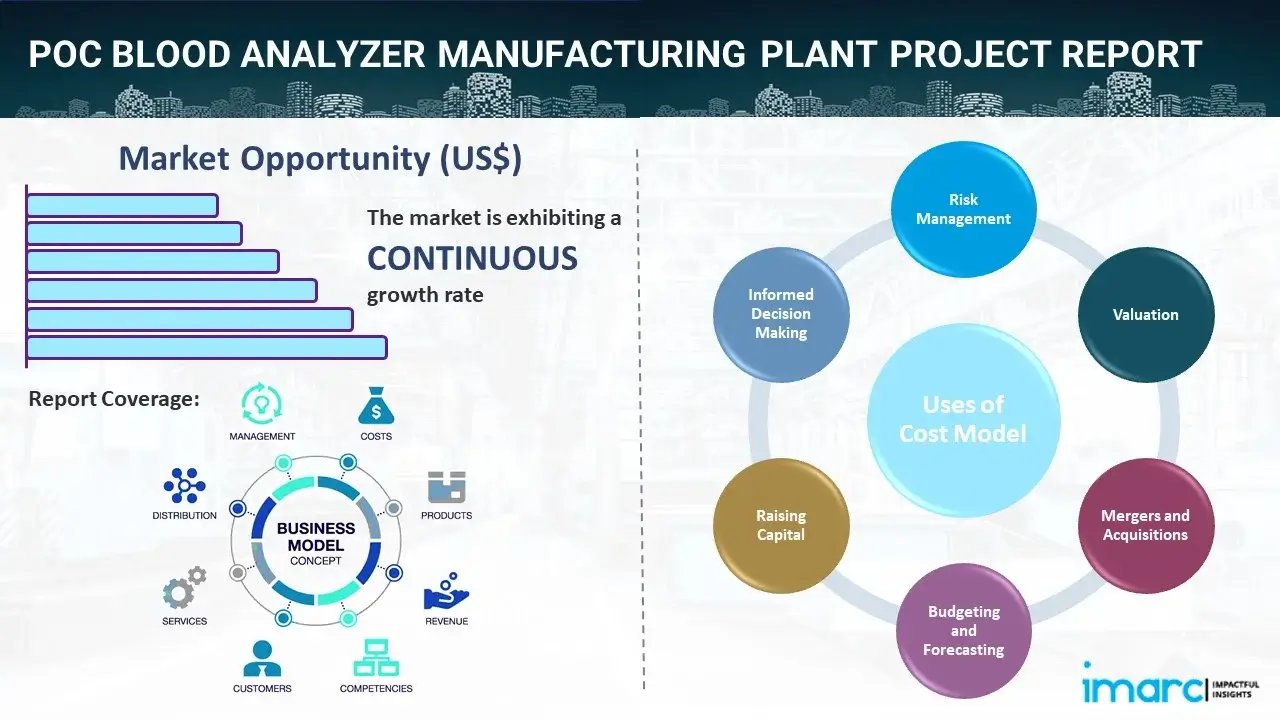
The POC blood analyzer manufacturing plant setup cost is provided in detail covering project economics, capital investments (CapEx), project funding, operating expenses (OpEx), income and expenditure projections, fixed costs vs. variable costs, direct and indirect costs, expected ROI and net present value (NPV), profit and loss account, financial analysis, etc.
To gain detailed insights into the report, Request Sample
What is POC Blood Analyzer?
A POC blood analyzer is a compact diagnostic instrument that performs quantitative blood tests outside a central laboratory, at the bedside or in a clinic. The system combines a small reader, usually weighing a few kilograms, with a single-use cartridge that accepts whole blood from a fingerstick. Results appear on an integrated display within minutes, and most units provide barcode identification, onboard storage, and wireless connectivity to laboratory information systems. Configurations range from single-parameter coagulation, glucose, and hemoglobin meters to multiplex platforms reporting cardiac markers, blood gases, electrolytes, and complete blood counts from one cartridge. Emergency departments, intensive care units, anticoagulation clinics, and outpatient diagnostic centers use these instruments to shorten the interval between sample collection and treatment decisions. Commercial supply pairs each reader with validated test cartridges, calibration and quality-control materials, connectivity software, and installation and training support.
Key Investment Highlights
- Process Used: Production begins with receiving and testing PCBs and electronic components, which are inspected for solderability before surface-mount assembly onto the control board; optical/sensor modules are then calibrated and aligned to reference standards, and test cartridge components are molded, reagent-dosed, and assembled into sealed single-use cassettes; completed modules are integrated into the reader housing, run through software loading and performance verification, and packaging.
- End-use Industries: Hospitals and emergency departments, primary care and physician offices, intensive and critical care units, outpatient and anticoagulation clinics, diagnostic laboratories, and home healthcare.
- Applications: Cardiac marker testing, blood gas and electrolyte analysis, coagulation and anticoagulation monitoring, complete blood count, glucose and lactate measurement, infectious disease and sepsis biomarkers, hemoglobin and hematocrit testing, and drug screening.
POC Blood Analyzer Plant Capacity:
The proposed facility is designed with an annual production capacity of 20,000 units, enabling economies of scale while maintaining operational flexibility.
POC Blood Analyzer Plant Profit Margins:
The project demonstrates healthy profitability potential under normal operating conditions. Gross profit margins typically range between 35–45%, supported by stable demand and value-added applications.
- Gross Profit: 35–45%
- Net Profit: 12–20%
POC Blood Analyzer Plant Cost Analysis:
The operating cost structure of a POC blood analyzer manufacturing plant is primarily driven by raw material consumption, including PCBs and electronic components, optical/sensor modules and test cartridge components, which accounts for approximately 50–60% of total operating expenses (OpEx).
- Raw Materials: 50–60% of OpEx
- Utilities: 2–4% of OpEx
Financial Projection:
The financial projections for the proposed project have been developed based on realistic assumptions related to capital investment, operating costs, manufacturing capacity utilization, pricing trends, and demand outlook. These projections provide a comprehensive view of the project's financial viability, ROI, profitability, and long-term sustainability.
Major Applications:
- Cardiac Marker Testing: Emergency departments run troponin and natriuretic peptide panels on these analyzers to distinguish acute coronary syndrome from other causes of chest pain without waiting for a central laboratory result.
- Coagulation Monitoring: Anticoagulation clinics use cartridge-based INR and aPTT testing to adjust warfarin dosing during the same visit, replacing a two-day laboratory turnaround with an immediate result.
- Blood Gas and Electrolyte Analysis: Critical care teams measure pH, oxygen, carbon dioxide, sodium, and potassium at the bedside to titrate ventilation and fluid therapy in unstable patients.
- Complete Blood Count and Hemoglobin: Physicians screen for anemia, infection, and thrombocytopenia in minutes, which supports triage decisions in urgent care centers and prenatal clinics.
- Infectious Disease and Sepsis Biomarkers: Multiplex cartridges detect pathogens and inflammatory markers such as CRP and procalcitonin, supporting early antibiotic decisions in emergency and intensive care settings.
Why POC Blood Analyzer Manufacturing Plant?
✓ Decentralized Testing Demand: Hospitals and clinics are shifting diagnostic volume toward bedside testing, creating sustained orders for compact readers and the single-use cartridges that generate recurring revenue.
✓ Recurring Cartridge Revenue: Each installed analyzer locks in a multi-year stream of consumable cartridge sales, giving manufacturers predictable utilization-based income rather than one-time instrument margins.
✓ Broad Clinical Coverage: A single platform design can address cardiac, coagulation, blood gas, hematology, and infection panels, spreading development cost across several diagnostic segments.
✓ Value Addition Over Components: Assembling sourced sensors, boards, and cartridge parts into a validated, regulatory-cleared device multiplies component value several times at the instrument level.
✓ Assembly and Scale Opportunity: Module assembly, calibration, and software loading suit medium-scale plants, and rising regional healthcare spending supports local manufacturing and export of analyzers.
Transforming Vision into Reality:
This report provides the comprehensive blueprint needed to transform your POC blood analyzer manufacturing vision into a technologically advanced and highly profitable reality.
POC Blood Analyzer Industry Outlook 2026:
The POC blood analyzer market is anticipated to expand as health systems decentralize diagnostic testing toward emergency departments and outpatient clinics. Shorter turnaround requirements in acute cardiac and sepsis care make laboratory-free testing a structural necessity rather than a convenience. Demand is reinforced by aging populations managing anticoagulation, diabetes, and heart failure, who need frequent monitoring near home. Health ministries are procuring compact analyzers to extend diagnostic access to district hospitals that lack full laboratory infrastructure. Manufacturers are focusing on cartridge cost reduction, ambient-temperature reagent stability, connectivity with medical records, and simplified calibration for non-laboratory operators. Over the forecast period, opportunity lies in multiplex panels that consolidate several tests on one cartridge and in underserved regional markets. Suppliers pairing regulatory clearance with dependable consumable supply are positioned to capture the installed-base economics of this segment.
Leading POC Blood Analyzer Manufacturers:
Leading manufacturers in the global POC blood analyzer industry include several innovative firms with broad product portfolios and advanced technological capabilities. Key players include:
- Abbott Laboratories
- Roche Diagnostics
- Siemens Healthineers
- Danaher Corporation
- Sysmex Corporation
- Nova Biomedical
all of which serve end-use sectors such as hospitals and emergency departments, critical care units, outpatient clinics, diagnostic laboratories, and home healthcare.
How to Setup a POC Blood Analyzer Manufacturing Plant?
Setting up a POC blood analyzer manufacturing plant requires evaluating several key factors, including technological requirements and quality assurance. Some of the critical considerations include:
- Detailed Process Flow: The manufacturing process is a multi-step operation that involves several unit operations, material handling, and quality checks. Below are the main stages involved in the POC blood analyzer manufacturing process flow:
- Unit Operations Involved
- Mass Balance and Raw Material Requirements
- Quality Assurance Criteria
- Technical Tests
- Site Selection: The location must offer easy access to key raw materials such as PCBs and electronic components, optical/sensor modules and test cartridge components. Proximity to target markets will help minimize distribution costs. The site must have robust infrastructure, including reliable transportation, utilities, and waste management systems. Compliance with local zoning laws and environmental regulations must also be ensured.
- Plant Layout Optimization: The layout should be optimized to enhance workflow efficiency, safety, and minimize material handling. Separate areas for raw material storage, production, quality control, and finished goods storage must be designated. Space for future expansion should be incorporated to accommodate business growth.
- Equipment Selection: High-quality, corrosion-resistant machinery tailored for POC blood analyzer manufacturing must be selected. Essential equipment includes SMT pick-and-place machines, reflow soldering ovens, automated optical inspection systems, PCB depaneling routers, precision injection molding machines for cartridge bodies, reagent dispensing and lyophilization units, ultrasonic welding stations, sensor calibration and alignment rigs, optical detection module test benches, firmware programming stations, environmental stress chambers, leak and pressure testing units, precision liquid handling robots, barcode printing and labeling systems, electromagnetic compatibility and electrical safety testers, cleanroom air handling and particle monitoring systems, final functional test stations, data logging and traceability software systems, and automated cartoning and sealing machines. All machinery must comply with industry standards for safety, efficiency, and reliability.
- Raw Material Sourcing: Reliable suppliers must be secured for raw materials like PCBs and electronic components, optical/sensor modules and test cartridge components to ensure consistent production quality. Minimizing transportation costs by selecting nearby suppliers is essential. Sustainability and supply chain risks must be assessed, and long-term contracts should be negotiated to stabilize pricing and ensure a steady supply.
- Safety and Environmental Compliance: Safety protocols must be implemented throughout the production process of the POC blood analyzer. Advanced monitoring systems should be installed to detect leaks or deviations in the process. Effluent treatment systems are necessary to minimize environmental impact and ensure compliance with emission standards.
- Quality Assurance Systems: A documented quality management system aligned with ISO 13485 governs incoming component inspection, assembly, calibration, and final release of every analyzer. Component lot records, work-in-process travelers, and device history files give full traceability from PCB serial numbers to finished instrument shipment. Analytical validation covers precision, linearity, and correlation against reference laboratory methods at clinically relevant concentrations, with results retained for regulatory review. Calibration rigs and reference standards are checked on a fixed schedule, and periodic internal and notified-body audits verify that procedures match approved device master records. A corrective and preventive action framework investigates any out-of-specification result or field complaint and verifies the fix before affected units ship.
Project Economics:
Establishing and operating a POC blood analyzer manufacturing plant involves various cost components, including:
- Capital Investment: The total capital investment depends on plant capacity, technology, and location. This investment covers land acquisition, site preparation, and necessary infrastructure.
- Equipment Costs: Equipment costs, such as those for SMT pick-and-place machines, reflow soldering ovens, automated optical inspection systems, PCB depaneling routers, precision injection molding machines for cartridge bodies, reagent dispensing and lyophilization units, ultrasonic welding stations, sensor calibration and alignment rigs, optical detection module test benches, firmware programming stations, environmental stress chambers, leak and pressure testing units, precision liquid handling robots, barcode printing and labeling systems, electromagnetic compatibility and electrical safety testers, cleanroom air handling and particle monitoring systems, final functional test stations, data logging and traceability software systems, and automated cartoning and sealing machines, represent a significant portion of capital expenditure. The scale of production and automation level will determine the total cost of machinery.
- Raw Material Expenses: Raw materials, including PCBs and electronic components, optical/sensor modules and test cartridge components, are a major part of operating costs. Long-term contracts with reliable suppliers will help mitigate price volatility and ensure a consistent supply of materials.
- Infrastructure and Utilities: Costs associated with land acquisition, construction, and utilities (electricity, water, steam) must be considered in the financial plan.
- Operational Costs: Ongoing expenses for labor, maintenance, quality control, and environmental compliance must be accounted for. Optimizing processes and providing staff training can help control these operational costs.
- Financial Planning: A detailed financial analysis, including income projections, expenditures, and break-even points, must be conducted. This analysis aids in securing funding and formulating a clear financial strategy.
Capital Expenditure (CapEx) and Operational Expenditure (OpEx) Analysis:
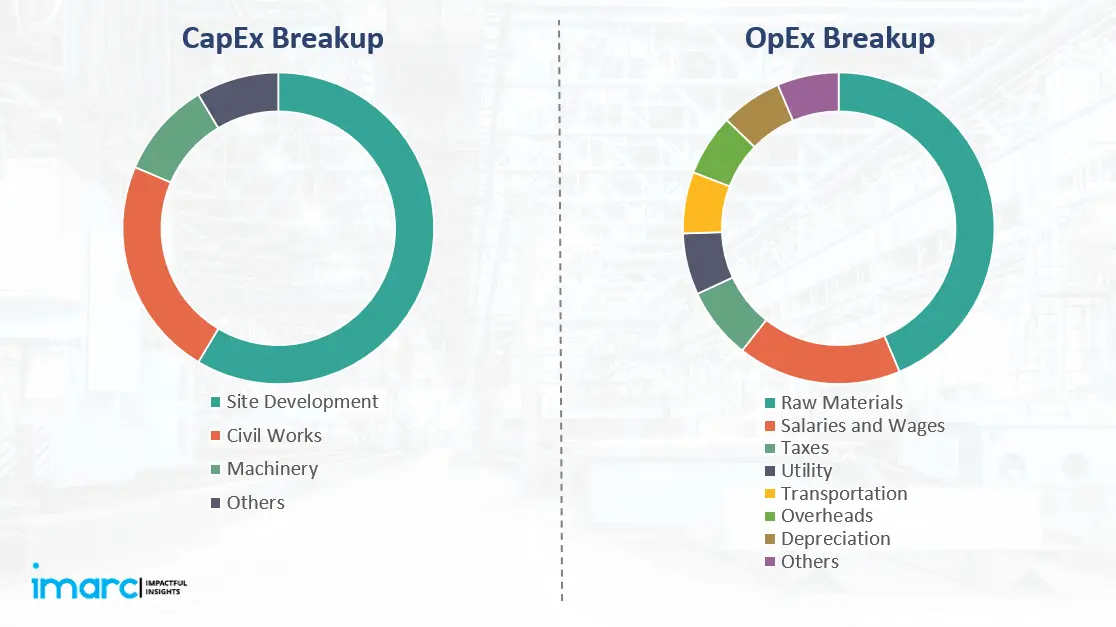
Capital Investment (CapEx): Machinery costs account for the largest portion of the total capital expenditure. The cost of land and site development, including charges for land registration, boundary development, and other related expenses, forms a substantial part of the overall investment. This allocation ensures a solid foundation for safe and efficient plant operations.
Operating Expenditure (OpEx): In the first year of operations, the operating cost for the POC blood analyzer manufacturing plant is projected to be significant, covering raw materials, utilities, depreciation, taxes, packing, transportation, and repairs and maintenance. By the fifth year, the total operational cost is expected to increase substantially due to factors such as inflation, market fluctuations, and potential rises in the cost of key materials. Additional factors, including supply chain disruptions, rising consumer demand, and shifts in the global economy, are expected to contribute to this increase.
Capital Expenditure Breakdown:
| Particulars | Cost (in US$) |
|---|---|
| Land and Site Development Costs | XX |
| Civil Works Costs | XX |
| Machinery Costs | XX |
| Other Capital Costs | XX |
To access CapEx Details, Request Sample
Operational Expenditure Breakdown:
| Particulars | In % |
|---|---|
| Raw Material Cost | 50-60% |
| Utility Cost | 2-4% |
| Transportation Cost | XX |
| Packaging Cost | XX |
| Salaries and Wages | XX |
| Depreciation | XX |
| Taxes | XX |
| Other Expenses | XX |
To access OpEx Details, Request Sample
Profitability Analysis:
| Particulars | Unit | Year 1 | Year 2 | Year 3 | Year 4 | Year 5 | Average |
|---|---|---|---|---|---|---|---|
| Total Income | US$ | XX | XX | XX | XX | XX | XX |
| Total Expenditure | US$ | XX | XX | XX | XX | XX | XX |
| Gross Profit | US$ | XX | XX | XX | XX | XX | XX |
| Gross Margin | % | XX | XX | XX | XX | XX | 35-45% |
| Net Profit | US$ | XX | XX | XX | XX | XX | XX |
| Net Margin | % | XX | XX | XX | XX | XX | 12-20% |
To access Financial Analysis, Request Sample
Latest Industry Developments:
- July 2, 2026: Algocyte launched its PROXIMA portable blood analyzer in London, featuring AI-powered technology that analyzes small blood samples and measures over 11 full blood count biomarkers. The UKCA-marked device is designed for healthcare professionals and remote monitoring, supporting faster, more accessible blood testing outside traditional laboratories.
Report Coverage:
| Report Features | Details |
|---|---|
| Product Name | POC Blood Analyzer |
| Report Coverage | Detailed Process Flow: Unit Operations Involved, Quality Assurance Criteria, Technical Tests, Mass Balance, and Raw Material Requirements Land, Location and Site Development: Selection Criteria and Significance, Location Analysis, Project Planning and Phasing of Development, Environmental Impact, Land Requirement and Costs Plant Layout: Importance and Essentials, Layout, Factors Influencing Layout Plant Machinery: Machinery Requirements, Machinery Costs, Machinery Suppliers (Provided on Request) Raw Materials: Raw Material Requirements, Raw Material Details and Procurement, Raw Material Costs, Raw Material Suppliers (Provided on Request) Packaging: Packaging Requirements, Packaging Material Details and Procurement, Packaging Costs, Packaging Material Suppliers (Provided on Request) Other Requirements and Costs: Transportation Requirements and Costs, Utility Requirements and Costs, Energy Requirements and Costs, Water Requirements and Costs, Human Resource Requirements and Costs Project Economics: Capital Costs, Techno-Economic Parameters, Income Projections, Expenditure Projections, Product Pricing and Margins, Taxation, Depreciation Financial Analysis: Liquidity Analysis, Profitability Analysis, Payback Period, Net Present Value, Internal Rate of Return, Profit and Loss Account, Uncertainty Analysis, Sensitivity Analysis, Economic Analysis Other Analysis Covered in The Report: Market Trends and Analysis, Market Segmentation, Market Breakup by Region, Price Trends, Competitive Landscape, Regulatory Landscape, Strategic Recommendations, Case Study of a Successful Venture |
| Currency | US$ (Data can also be provided in the local currency) |
| Customization Scope | The report can also be customized based on the requirement of the customer |
| Post-Sale Analyst Support | 10-12 Weeks |
| Delivery Format | PDF and Excel through email (We can also provide the editable version of the report in PPT/Word format on special request) |
Key Questions Answered in This Report?
- How has the POC blood analyzer market performed so far and how will it perform in the coming years?
- What is the market segmentation of the global POC blood analyzer market?
- What is the regional breakup of the global POC blood analyzer market?
- What are the price trends of various feedstocks in the POC blood analyzer industry?
- What is the structure of the POC blood analyzer industry and who are the key players?
- What are the various unit operations involved in a POC blood analyzer manufacturing plant?
- What is the total size of land required for setting up a POC blood analyzer manufacturing plant?
- What is the layout of a POC blood analyzer manufacturing plant?
- What are the machinery requirements for setting up a POC blood analyzer manufacturing plant?
- What are the raw material requirements for setting up a POC blood analyzer manufacturing plant?
- What are the packaging requirements for setting up a POC blood analyzer manufacturing plant?
- What are the transportation requirements for setting up a POC blood analyzer manufacturing plant?
- What are the utility requirements for setting up a POC blood analyzer manufacturing plant?
- What are the human resource requirements for setting up a POC blood analyzer manufacturing plant?
- What are the infrastructure costs for setting up a POC blood analyzer manufacturing plant?
- What are the capital costs for setting up a POC blood analyzer manufacturing plant?
- What are the operating costs for setting up a POC blood analyzer manufacturing plant?
- What should be the pricing mechanism of the final product?
- What will be the income and expenditures for a POC blood analyzer manufacturing plant?
- What is the time required to break even?
- What are the profit projections for setting up a POC blood analyzer manufacturing plant?
- What are the key success and risk factors in the POC blood analyzer industry?
- What are the key regulatory procedures and requirements for setting up a POC blood analyzer manufacturing plant?
- What are the key certifications required for setting up a POC blood analyzer manufacturing plant?
Report Customization
While we have aimed to create an all-encompassing report, we acknowledge that individual stakeholders may have unique demands. Thus, we offer customized report options that cater to your specific requirements. Our consultants are available to discuss your business requirements, and we can tailor the report's scope accordingly. Some of the common customizations that we are frequently requested to make by our clients include:
- The report can be customized based on the location (country/region) of your plant.
- The plant’s capacity can be customized based on your requirements.
- Plant machinery and costs can be customized based on your requirements.
- Any additions to the current scope can also be provided based on your requirements.
Why Buy IMARC Reports?
- The insights provided in our reports enable stakeholders to make informed business decisions by assessing the feasibility of a business venture.
- Our extensive network of consultants, raw material suppliers, machinery suppliers and subject matter experts spans over 100+ countries across North America, Europe, Asia Pacific, South America, Africa, and the Middle East.
- Our cost modeling team can assist you in understanding the most complex materials. With domain experts across numerous categories, we can assist you in determining how sensitive each component of the cost model is and how it can affect the final cost and prices.
- We keep a constant track of land costs, construction costs, utility costs, and labor costs across 100+ countries and update them regularly.
- Our client base consists of over 3000 organizations, including prominent corporations, governments, and institutions, who rely on us as their trusted business partners. Our clientele varies from small and start-up businesses to Fortune 500 companies.
- Our strong in-house team of engineers, statisticians, modeling experts, chartered accountants, architects, etc. have played a crucial role in constructing, expanding, and optimizing sustainable manufacturing plants worldwide.
Need more help?
- Speak to our experienced analysts for insights on the current market scenarios.
- Include additional segments and countries to customize the report as per your requirement.
- Gain an unparalleled competitive advantage in your domain by understanding how to utilize the report and positively impacting your operations and revenue.
- For further assistance, please connect with our analysts.


Factory Setup Services
IMARC Group's factory setup services streamline the entire establishment process, ensuring efficient planning, seamless execution, and optimal operational readiness for your manufacturing facility.


Site Selection Services
IMARC Group's site selection services optimize location choices for businesses, ensuring strategic, cost-effective, and efficient manufacturing operations.


Factory Audit Services
IMARC Group's plant audit services offer comprehensive evaluations of your industrial facility's health, efficiency, and regulatory compliance.


Regulatory Approvals, and Licensing Services
IMARC Group's regulatory approval and licensing services ensure businesses meet all compliance requirements, facilitating smooth and timely market entry.
 Inquire Before Buying
 Speak to an Analyst
 Request Brochure
 Request Customization
Related Reports

Frequently Asked Questions
Our feasibility studies assess several key factors to provide a detailed evaluation of your project's potential. The study includes a pricing analysis of feedstocks, helping to understand industry profit margins and cost variations. Detailed insights into mass balance, unit operations, raw material requirements, and the manufacturing process flow are also provided to ensure a clear understanding of the production setup.
The study also covers critical elements such as location analysis, environmental impact, plant layout, and costs associated with land, machinery, raw materials, packaging, transportation, utilities, and human resources. The project economics section provides an in-depth analysis of capital expenditure (CapEx), operating expenditure (OpEx), income projections, taxation, depreciation, liquidity, profitability, payback period, net present value (NPV), uncertainty, and sensitivity analysis.
Additionally, IMARC Group's feasibility studies address regulatory procedures, financial assistance, and necessary certifications, ensuring all legal and compliance requirements are met. By covering these aspects, IMARC Group's feasibility studies support informed decision-making, risk reduction, and the overall viability of your business.
Yes, our site identification services include a thorough assessment of potential sites based on proximity to raw materials, ensuring cost-effective and timely supply chain operations. We also consider access to infrastructure, such as transportation networks, utilities, and technology, which are essential for smooth plant operations. Labor availability is another key factor we analyze to ensure that the site has access to a skilled workforce. Additionally, we evaluate the environmental impact to ensure compliance with regulations and sustainable practices. By integrating these factors, we provide a comprehensive site evaluation to identify the optimal location for your new plant, supporting your strategic goals and operational efficiency.
Yes, our regulatory approvals and licensing services are made specifically to support companies in effectively and efficiently navigating the ever-changing regulatory environment. We start by carefully evaluating your company's requirements as well as the unique regulatory framework that applies to your sector. After that, you are assisted by our team of professionals throughout the whole process of securing the necessary industrial permits, business licenses, and environmental clearances.
Additionally, we help with industry-specific regulatory licensing so that your company complies with all sector-specific regulations. To further safeguard your brand and innovations from the outset, we also offer support for intellectual property rights (IPR) registrations and licensing. We manage the required documentation and communicate with pertinent authorities on your behalf by utilizing our deep industry experience and painstaking attention to detail. This allows you to focus on building and growing your business while we take care of the regulatory complexities. Partnering with us ensures that your business is fully compliant and ready to thrive from the start.
Our skilled engineering staff specializes in designing efficient and effective plant layouts that meet your unique needs. We begin with a comprehensive process design to ensure the best possible workflow and use of resources.
Our services include careful equipment selection, ensuring that your plant design incorporates the most suitable and advanced machinery. We also focus on meticulous layout planning, strategically arranging workstations and equipment to optimize output and reduce operational bottlenecks. Furthermore, our facility design takes into account every important factor, such as regulatory compliance, scalability, and safety.
By leveraging our expertise, we ensure that your plant layout not only meets your current operational needs but is also adaptable to future growth and technological advancements. Our goal is to create a well-organized, efficient, and compliant facility that enhances your overall operational efficiency and supports your business objectives.
Yes, our raw material and machinery sourcing services are designed to identify and connect you with reliable and affordable providers. We leverage our extensive network and industry expertise to source high-quality raw materials and advanced machinery that meet your specific requirements.
We also conduct supplier audits and evaluations so that you get the best value for your investment. We evaluate potential suppliers on the basis of cost, quality, reliability, and delivery timelines. We also make sure that all the legal requirements are met, including customs, tax regulations, labor laws, and import/export laws, to ensure you are fully compliant.
When you choose to work with us, you gain access to a list of suppliers pre-screened for affordability and reliability, helping you optimize your procurement process and reduce overall operational costs. It is our goal to assist you in establishing a new plant effectively and economically, ensuring long-term success and sustainability.
IMARC Group can effectively manage the construction of your new facility through our comprehensive construction management services. Our dedicated construction management team oversees the entire construction phase, ensuring that all activities are executed according to plan and within the specified timeline. We manage contractors, coordinating their efforts to ensure smooth and efficient workflow on-site.
Furthermore, our team pays great attention to the progress of the construction work, and we conduct site reviews and quality control to ensure that the construction work is done to the highest standards. We resolve any problems as they arise, thus avoiding any form of delay and keeping the project on schedule. When you work with us, you can be assured that your new facility will be constructed to the highest standards that will enable you to concentrate on your core business activities.
Yes, our distributor identification services are designed to connect companies with trusted distributors who meet high standards of reliability, performance, and ethical practices. We leverage our vast network of vetted distributors across various industries and regions to find the best match for your business needs.
Our process begins with a careful analysis of your particular needs and business goals. We then carry out rigorous research and due diligence to identify the distributors that have market reach and the capability to manage your product lines effectively. Our thorough vetting process involves the distributors' background checks and performance history reviews to ensure that they meet industry standards and have a proven track record.
Also, we ensure compliance with the relevant legislation and regulations to avoid legal issues that may affect the functioning of the company. Once potential distributors are identified, we organize business meetings, as well as handle all logistics to facilitate productive discussions. We provide continuous support throughout the partnership, including performance monitoring and logistics coordination, to ensure the success and optimization of your distribution networks in the long run.
Yes, our factory audit services provide a systematic and thorough evaluation of your plant's performance across various critical parameters. Our experienced auditors utilize industry best practices to conduct detailed inspections, focusing on safety, quality, efficiency, compliance, and sustainability.
Our audits assess safety protocols to ensure a secure working environment, evaluate quality standards to enhance product satisfaction and optimize processes to increase productivity and reduce costs. Compliance checks ensure adherence to relevant regulations, mitigating legal risks, and our sustainability assessments recommend eco-friendly practices to minimize environmental impact.
Our holistic approach delivers actionable insights through detailed audit reports, offering clear recommendations for continuous improvement. By partnering with us, you gain valuable insights into your plant's operations, enabling you to drive enhancements, achieve operational excellence, and maintain a competitive edge.
Yes, our contract manufacturer identification services are designed to assist businesses in navigating the complex landscape of contract manufacturing. We start by defining the ideal contract manufacturer through in-depth discussions with our clients, followed by extensive research to identify potential candidates.
Once potential manufacturers are identified, we conduct a rigorous evaluation and vetting process to ensure they meet high standards of quality, reliability, and compliance with relevant regulations. Our team handles the pre-screening process, arranging meetings between our clients and interested candidates, and managing all logistics to facilitate productive discussions.
We have strict performance monitoring and quality control checks to ensure the manufacturers remain at par with your expectations and contribute positively to your business throughout the partnership lifecycle. Through our expertise and extensive network, we ensure that you partner with capable and credible contract manufacturers, who help you drive efficiency, quality, and growth in your production processes.
IMARC Group offers a comprehensive suite of marketing and sales services dedicated to helping businesses increase revenues and effectively sell products. Our performance marketing services focus on data-driven campaigns that maximize return on investment, utilizing programmatic advertising and retargeting techniques to reach the right audience at the right time. We enhance your online presence through SEO and SMO, driving organic traffic and improving your digital footprint.
The lead generation strategies we use target high-quality quality leads that convert into loyal clients, while our brand promotion strategies including influencer marketing and creative designing enhance the visibility and credibility of your brand. Our social media management services assist you in engaging with your audience, establishing relationships with them, and driving conversions through targeted campaigns.
By partnering with IMARC Group, you benefit from our approach that is tailored to your business needs and unique objectives. Our strategies cover all aspects of digital marketing so that you can reach your target audience consistently, along with our ongoing support and optimization to keep your campaigns effective and relevant. Our cutting edge and performance driven marketing services help you gain the competitive advantage and ensure long-term success.
Choose your plan
*Please note that the prices mentioned below are starting prices for each bundle type. Kindly contact our team for further details.*
Single User License
- 1 User License, Access on 2 Devices
- PDF Report + Excel Dataset (Password Protected)
- Lifetime Access
- No Printing Rights
- 10% Free Report Customization
- 10–12 Weeks of Analyst Support
Five User License
- Access for 5 Users, 2 Devices per User
- PDF Report + Excel Dataset (Password Protected)
- Lifetime Access
- Dedicated Account Manager
- 12–14 Weeks of Analyst Support
- No Printing Rights
- 15% Free Report Customization
- 25% Discount on Your Next Purchase
Corporate User License
- Unlimited User Access (Within Your Organization)
- PDF Report + Excel Dataset
- Lifetime Access
- Dedicated Account Manager
- 14–20 Weeks of Analyst Support
- No Printing Rights
- 20% Free Report Customization
- 30% Discount on Your Next Purchase
Essential Insights
What's included:
3 reports
- Lifetime Access
- PDF Reports
- Excel Datasets
- 2 Weeks of Free Analyst Support
- 2 User Licenses
- Access on 2 Devices
- Printing Rights
- Complimentary PowerPoint (PPT) Version
- Complimentary License Upgrade
Professional Access
What's included:
5 reports
- Lifetime Access
- PDF Reports
- Excel Datasets
- 8 Weeks of Free Analyst Support
- 2 User Licenses
- Access on 2 Devices
- Printing Rights
- Complimentary PowerPoint (PPT) Version
- Complimentary License Upgrade
Business Advantage
What's included:
8 reports
- Lifetime Access
- PDF Reports
- Excel Datasets
- 14 Weeks of Free Analyst Support
- 2 User Licenses
- Access on 2 Devices
- Printing Rights
- Complimentary PowerPoint (PPT) Version
- Complimentary License Upgrade
Enterprise Intelligence
What's included:
10 reports
- Lifetime Access
- PDF Reports
- Excel Datasets
- 20 Weeks of Free Analyst Support
- 2 User Licenses
- Access on 2 Devices
- Printing Rights
- Complimentary PowerPoint (PPT) Version
- Complimentary License Upgrade