
Potassium Sorbate Prices, Trend, Chart, Demand, Market Analysis, News, Historical and Forecast Data Report 2026 Edition
Potassium Sorbate Price Trend, Index and Forecast
Track the latest insights on potassium sorbate price trend and forecast with detailed analysis of regional fluctuations and market dynamics across North America, Latin America, Central Europe, Western Europe, Eastern Europe, Middle East, North Africa, West Africa, Central and Southern Africa, Central Asia, Southeast Asia, South Asia, East Asia, and Oceania.
Potassium Sorbate Prices Outlook Q2 2026
- USA: USD 2817/MT
- Germany: USD 3226/MT
- China: USD 2768/MT
- Brazil: USD 2653/MT
- Canada: USD 2975/MT
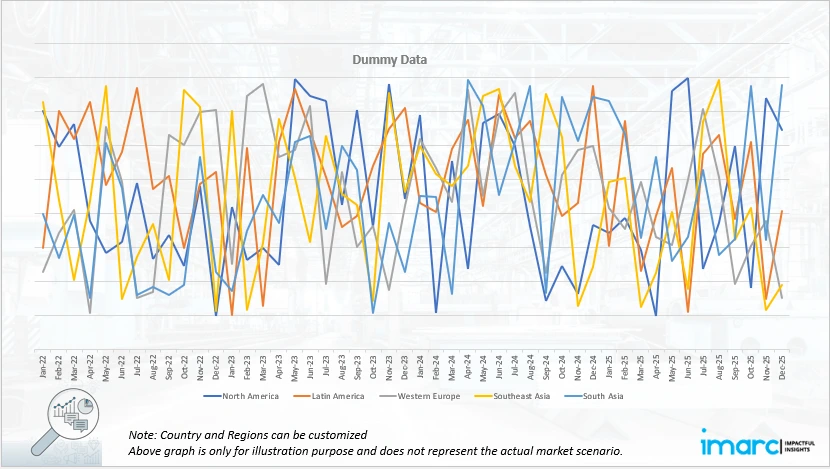
Potassium Sorbate Price Chart
Get real-time access to monthly/quarterly/yearly prices Request Sample
During the second quarter of 2026, the potassium sorbate prices in the USA reached 2817 USD/MT in June. Prices strengthened as higher sorbic acid and caustic potash costs raised production and conversion expenses for overseas suppliers. Import dependent buyers also faced firmer landed costs as ocean freight remained elevated and container availability tightened on major Asian shipping routes. Distributor inventories were comparatively lean, reducing the ability of sellers to absorb higher replacement costs and encouraging firmer offers.
During the second quarter of 2026, the potassium sorbate prices in Germany reached 3226 USD/MT in June. The market moved higher as rising sorbic acid and caustic potash costs increased production expenses for major exporting suppliers. Germany remained reliant on imported material, making domestic quotations sensitive to changes in Asian export offers, ocean freight, insurance, and port handling costs. Limited spot availability added further support as exporters maintained controlled allocations and buyers competed for replacement cargoes.
During the second quarter of 2026, the potassium sorbate prices in China reached 2768 USD/MT in June. Domestic prices advanced as sorbic acid and caustic potash became more expensive, raising conversion costs for potassium sorbate producers. Export demand remained supportive, with overseas buyers rebuilding inventories and securing material from Chinese suppliers for food preservation applications. Tighter container bookings and higher shipping costs encouraged exporters to prioritize contracted cargoes, reducing prompt availability for spot buyers.
During the second quarter of 2026, the potassium sorbate prices in Brazil reached 2653 USD/MT in June. Prices moved upward as buyers faced higher replacement costs for imported potassium sorbate from major overseas production centers. Firm sorbic acid and caustic potash costs at origin lifted supplier quotations, while elevated ocean freight increased the delivered cost of incoming cargoes. Global export availability also tightened as Asian producers maintained disciplined allocations and stronger offers to international customers. This reduced access to lower priced spot material and strengthened bargaining power for suppliers.
During the second quarter of 2026, the potassium sorbate prices in Canada reached 2975 USD/MT in June. Canadian prices increased as the market absorbed higher import replacement costs and stronger supplier offers from major producing regions. Rising sorbic acid and caustic potash costs increased production expenses at origin, which were passed through to export quotations. Freight and container constraints also raised delivered costs for North American buyers and limited the availability of competitively priced prompt cargoes.
Potassium Sorbate Prices Outlook Q1 2026
- USA: USD 2363/MT
- Germany: USD 2792/MT
- China: USD 2384/MT
- Brazil: USD 2151/MT
- Canada: USD 2482/MT
During the first quarter of 2026, the potassium sorbate prices in the USA reached 2363 USD/MT in March. Prices moved downward as buyers maintained limited procurement and relied on sufficient inventories from earlier purchases. Demand from food preservation, beverage, and processed food applications remained steady but lacked strong momentum. Import availability was adequate, and suppliers faced pressure to offer competitive quotations to secure contracts.
During the first quarter of 2026, the potassium sorbate prices in Germany reached 2792 USD/MT in March. Prices increased slightly as regional demand from food additives and packaged food manufacturers improved after earlier destocking. Buyers returned to the market for routine replenishment, supporting firmer negotiations. Supply remained balanced, but import costs and currency related procurement pressure added some support to offers.
During the first quarter of 2026, the potassium sorbate prices in China reached 2384 USD/MT in March. Prices declined as domestic supply remained comfortable and downstream buyers limited fresh purchases. Food preservative demand was stable but not strong enough to absorb available volumes. Export inquiries were cautious, with overseas buyers delaying commitments amid expectations of softer offers. Producers faced competitive pressure and adjusted quotations to improve sales.
During the first quarter of 2026, the potassium sorbate prices in Brazil reached 2151 USD/MT in March. Prices moved lower as import availability improved and buyers maintained conservative procurement strategies. Demand from processed food, beverages, condiments, and bakery applications remained functional but did not show strong expansion. Distributors held adequate inventories, reducing urgency for fresh bulk purchases. Competitive overseas offers placed pressure on local suppliers to revise prices downward.
During the first quarter of 2026, the potassium sorbate prices in Canada reached 2482 USD/MT in March. Prices declined as demand from food processing and beverage preservation sectors remained steady but cautious. Buyers focused on need based procurement and avoided building high inventories. Import supply from global producers remained adequate, which strengthened buyer negotiation power.
Potassium Sorbate Prices Outlook Q2 2025
- USA: USD 2507/MT
- Germany: USD 2817/MT
- China: USD 2527/MT
- Brazil: USD 2323/MT
Regional Coverage
The report provides a detailed analysis of the market across different regions, each with unique pricing dynamics influenced by localized market conditions, supply chain intricacies, and geopolitical factors. This includes price trends, price forecast and supply and demand trends for each region, along with spot prices by major ports. The report also provides coverage of FOB and CIF prices, as well as the key factors influencing potassium sorbate prices.
Europe Potassium Sorbate Price Trend
Q2 2026:
The potassium sorbate price index in Europe moved upward as imported replacement costs increased across the region. Rising sorbic acid and caustic potash values raised manufacturing expenses for exporting producers, prompting firmer offers into European markets. Ocean freight and insurance costs strengthened, increasing delivered costs for cargoes arriving from Asia. Importers faced limited spot availability as suppliers managed allocations carefully and prioritized contracted volumes. Port inventories remained lean in several trading channels, leaving buyers more exposed to higher replacement quotations. Demand from bakery, dairy, beverage, pharmaceutical, and processed food manufacturers remained steady, supporting procurement and limiting the scope for price corrections.
Q1 2026:
The potassium sorbate price index in Europe showed a slightly firmer tone as demand from food preservation, bakery, dairy, and beverage applications improved after earlier destocking. Germany recorded a modest upward movement, supported by routine replenishment and steadier contract demand. Regional buyers returned to the market, but procurement remained disciplined because inventories were not critically low. Import costs and producer operating expenses provided some support to offers. Supply availability remained balanced, which prevented sharp price escalation.
This analysis can be extended to include detailed potassium sorbate price information for a comprehensive list of countries.
| Region | Countries Covered |
|---|---|
| Europe | Germany, France, United Kingdom, Italy, Spain, Russia, Turkey, Netherlands, Poland, Sweden, Belgium, Austria, Ireland, Switzerland, Norway, Denmark, Romania, Finland, Czech Republic, Portugal, and Greece, among other European countries. |
North America Potassium Sorbate Price Trend
Q2 2026:
The potassium sorbate price index in North America advanced as higher import and production costs moved through supply chains. Sorbic acid and caustic potash became more expensive for overseas producers, raising conversion costs and supporting stronger export quotations. Ocean freight remained firm, while container constraints increased landed costs for buyers dependent on imported material. Distributors entered the quarter with controlled inventories, which increased sensitivity to replacement purchases when supplier offers strengthened. Demand from food processing, beverages, bakery, dairy, nutraceutical, and pharmaceutical applications remained stable and supported procurement.
Q1 2026:
The potassium sorbate price index in North America softened as prices in the USA and Canada declined. Buyers maintained cautious procurement strategies and relied on adequate inventories. Demand from processed foods, beverages, sauces, and bakery applications remained steady but lacked strong restocking momentum. Import availability stayed sufficient, giving buyers greater room to negotiate. Suppliers reduced offers to maintain sales volumes in a weaker market. Feedstock pressure remained limited, which further supported the downtrend.
Specific potassium sorbate historical data within the United States and Canada can also be provided.
| Region | Countries Covered |
|---|---|
| North America | United States and Canada |
Middle East and Africa Potassium Sorbate Price Trend
Q2 2026:
The study includes potassium sorbate price patterns across the Middle East and Africa, taking into consideration variables that have a direct impact on market prices, such as regional industrial expansion, natural resource availability, and geopolitical conflicts.
Q1 2026:
According to the potassium sorbate price chart, prices in the Middle East and Africa exhibited fluctuations due to a combination of factors, mainly influenced by supply chain disruptions, changing seasonal demand patterns, and ongoing geopolitical developments.
In addition to region-wise data, information on potassium sorbate prices for countries can also be provided.
| Region | Countries Covered |
|---|---|
| Middle East & Africa | Saudi Arabia, UAE, Israel, Iran, South Africa, Nigeria, Oman, Kuwait, Qatar, Iraq, Egypt, Algeria, and Morocco, among other Middle Eastern and African countries. |
Asia Pacific Potassium Sorbate Price Trend
Q2 2026:
The potassium sorbate prices in Asia Pacific strengthened as feedstock inflation and export demand supported firmer producer quotations. Sorbic acid and caustic potash costs increased for manufacturers, raising conversion expenses and reducing room for price discounting. China remained a production and export center, and disciplined supplier offers influenced pricing across neighboring importing markets. Container availability tightened on trade routes, while higher freight costs raised delivered expenses for buyers outside major production hubs. Export orders were supportive as overseas customers rebuilt inventories and secured preservative supplies for food and beverage applications.
Q1 2026:
In the Asia Pacific, potassium sorbate prices were bearish, with China showing weakness. Chinese prices declined due to sufficient supply, cautious domestic buying, and slower export interest. Regional buyers in food additives and beverage preservation maintained routine procurement but avoided heavy stocking. Competitive supplier offers shaped market behavior across import dependent countries. Feedstock cost pressure was limited, reducing support for higher quotations.
This potassium sorbate price analysis can be expanded to include a comprehensive list of countries within the region.
| Region | Countries Covered |
|---|---|
| Asia Pacific | China, India, Indonesia, Pakistan, Bangladesh, Japan, Philippines, Vietnam, Thailand, South Korea, Malaysia, Nepal, Taiwan, Sri Lanka, Hongkong, Singapore, Australia, and New Zealand, among other Asian countries. |
Latin America Potassium Sorbate Price Trend
Q2 2026:
The potassium sorbate prices in Latin America moved higher as importers faced rising replacement costs from global suppliers. The region relies on imported preservative material, making local pricing sensitive to feedstock movements, exporter offers, freight conditions, and currency related purchasing costs. Higher sorbic acid and caustic potash expenses strengthened production costs at origin and encouraged firmer export quotations. Ocean freight remained elevated, adding to delivered costs for cargoes moving into Latin American ports. Supply flexibility was reduced by tighter container availability and disciplined allocations from Asian exporters.
Q1 2026:
A thorough overview is given by the analysis of potassium sorbate pricing in Latin America, which reflects the distinct market dynamics in the area impacted by trade frameworks, industrial growth, and economic policies.
This comprehensive review can be extended to include specific countries within the region.
| Region | Countries Covered |
|---|---|
| Latin America | Brazil, Mexico, Argentina, Columbia, Chile, Ecuador, and Peru, among other Latin American countries. |
Potassium Sorbate Pricing Report, Market Analysis, and News
IMARC's latest publication, “Potassium Sorbate Prices, Trend, Chart, Demand, Market Analysis, News, Historical and Forecast Data Report 2026 Edition,” presents a detailed examination of the potassium sorbate market, providing insights into both global and regional trends that are shaping prices. This report delves into the spot price of potassium sorbate at major ports and analyzes the composition of prices, including FOB and CIF terms. It also presents detailed potassium sorbate prices trend analysis by region, covering North America, Europe, Asia Pacific, Latin America, and Middle East and Africa. The factors affecting potassium sorbate pricing, such as the dynamics of supply and demand, geopolitical influences, and sector specific developments, are thoroughly explored. This comprehensive report helps stakeholders stay informed with the latest market news, regulatory updates, and technological progress, facilitating informed strategic decision-making and forecasting.

Potassium Sorbate Industry Analysis
The global potassium sorbate market size reached USD 198.4 Million in 2025. By 2034, IMARC Group expects the market to reach USD 296.2 Million, at a projected CAGR of 4.42% during 2026-2034. The market is primarily driven by the rising demand for packaged foods, wider use of preservatives in beverages and bakery products, and expanding processed food consumption.
Latest News and Developments:
- June 2023: Celanese Corporation, a leading producer of sorbic acid and potassium sorbate preservatives, signed a definitive agreement with Mitsui & Co, to form a food ingredients joint venture under the name Nutrinova. Under this agreement, Celanese will retain 30 percent stakes, while Mitsui will acquire the remaining 70% stakes at a price of $472.5 million.
Product Description
Potassium sorbate is the potassium salt of sorbic acid and has the chemical formula C6H7KO2. It is commonly supplied as a white crystalline powder or granular material and is readily soluble in water, which makes it convenient for incorporation into liquid and solid formulations. Commercial production generally involves neutralizing sorbic acid with potassium hydroxide, followed by purification, concentration, crystallization, and drying. The compound is valued mainly for its ability to inhibit molds, yeasts, and certain microorganisms, helping manufacturers extend product shelf life and maintain product quality. Potassium sorbate is widely used in bakery products, dairy foods, beverages, sauces, processed foods, dried fruits, and other packaged products.
Report Coverage
| Key Attributes | Details |
|---|---|
| Product Name | Potassium Sorbate |
| Report Features | Exploration of Historical Trends and Market Outlook, Industry Demand, Industry Supply, Gap Analysis, Challenges, Potassium Sorbate Price Analysis, and Segment-Wise Assessment. |
| Currency/Units | US$ (Data can also be provided in local currency) or Metric Tons |
| Region/Countries Covered | The current coverage includes analysis at the global and regional levels only. Based on your requirements, we can also customize the report and provide specific information for the following countries: Asia Pacific: China, India, Indonesia, Pakistan, Bangladesh, Japan, Philippines, Vietnam, Thailand, South Korea, Malaysia, Nepal, Taiwan, Sri Lanka, Hongkong, Singapore, Australia, and New Zealand Europe: Germany, France, United Kingdom, Italy, Spain, Russia, Turkey, Netherlands, Poland, Sweden, Belgium, Austria, Ireland, Switzerland, Norway, Denmark, Romania, Finland, Czech Republic, Portugal and Greece North America: United States and Canada Latin America: Brazil, Mexico, Argentina, Columbia, Chile, Ecuador, and Peru Middle East & Africa: Saudi Arabia, UAE, Israel, Iran, South Africa, Nigeria, Oman, Kuwait, Qatar, Iraq, Egypt, Algeria, and Morocco The list of countries presented is not exhaustive. Information on additional countries can be provided if required by the client. |
| Information Covered for Key Suppliers |
|
| Customization Scope | The report can be customized as per the requirements of the customer |
| Report Price and Purchase Option |
Plan A: Monthly Updates - Annual Subscription
Plan B: Quarterly Updates - Annual Subscription
Plan C: Biannually Updates - Annual Subscription
|
| Post-Sale Analyst Support | 360-degree analyst support after report delivery |
| Delivery Format | PDF and Excel through email (We can also provide the editable version of the report in PPT/Word format on special request) |
Key Benefits for Stakeholders:
- IMARC’s report presents a detailed analysis of potassium sorbate pricing, covering global and regional trends, spot prices at key ports, and a breakdown of Ex Works, FOB, and CIF prices.
- The study examines factors affecting potassium sorbate price trend, including raw material costs, supply-demand shifts, geopolitical impacts, and industry developments, offering insights for informed decision-making.
- The competitive landscape review equips stakeholders with crucial insights into the latest market news, regulatory changes, and technological advancements, ensuring a well-rounded, strategic overview for forecasting and planning.
- IMARC offers various subscription options, including monthly, quarterly, and biannual updates, allowing clients to stay informed with the latest market trends, ongoing developments, and comprehensive market insights. The potassium sorbate price charts ensure our clients remain at the forefront of the industry.
Need more help?
- Speak to our experienced analysts for insights on the current market scenarios.
- Include additional segments and countries to customize the report as per your requirement.
- Gain an unparalleled competitive advantage in your domain by understanding how to utilize the report and positively impacting your operations and revenue.
- For further assistance, please connect with our analysts.
 Request Customization
 Inquire Before Buying
 Speak to an Analyst
 Request Brochure
Benefits of Customization
- Personalize this research
- Triangulate with your data
- Get data as per your format and definition
- Gain a deeper dive into a specific application, geography, customer, or competitor
- Any level of personalization
Get in Touch With Us
UNITED STATES
Phone: +1-201-971-6302
INDIA
Phone: +91-120-433-0800
UNITED KINGDOM
Phone: +44-753-714-6104
Email: [email protected]
Client Testimonials




.webp)




.webp)













Related Reports

Why Choose Us
IMARC offers trustworthy, data-centric insights into commodity pricing and evolving market trends, enabling businesses to make well-informed decisions in areas such as procurement, strategic planning, and investments. With in-depth knowledge spanning more than 1000 commodities and a vast global presence in over 150 countries, we provide tailored, actionable intelligence designed to meet the specific needs of diverse industries and markets.
1000
+Commodities
150
+Countries Covered
3000
+Clients
20
+Industry

Robust Methodologies & Extensive Resources
IMARC delivers precise commodity pricing insights using proven methodologies and a wealth of data to support strategic decision-making.

Subscription-Based Databases
Our extensive databases provide detailed commodity pricing, import-export trade statistics, and shipment-level tracking for comprehensive market analysis.

Primary Research-Driven Insights
Through direct supplier surveys and expert interviews, we gather real-time market data to enhance pricing accuracy and trend forecasting.

Extensive Secondary Research
We analyze industry reports, trade publications, and market studies to offer tailored intelligence and actionable commodity market insights.
Trusted by 3000+ industry leaders worldwide to drive data-backed decisions. From global manufacturers to government agencies, our clients rely on us for accurate pricing, deep market intelligence, and forward-looking insights.