
Power Metering Market Size, Share, Trends and Forecast by Phase, Technology, End Use, and Region, 2026-2034
Power Metering Market Size and Share:
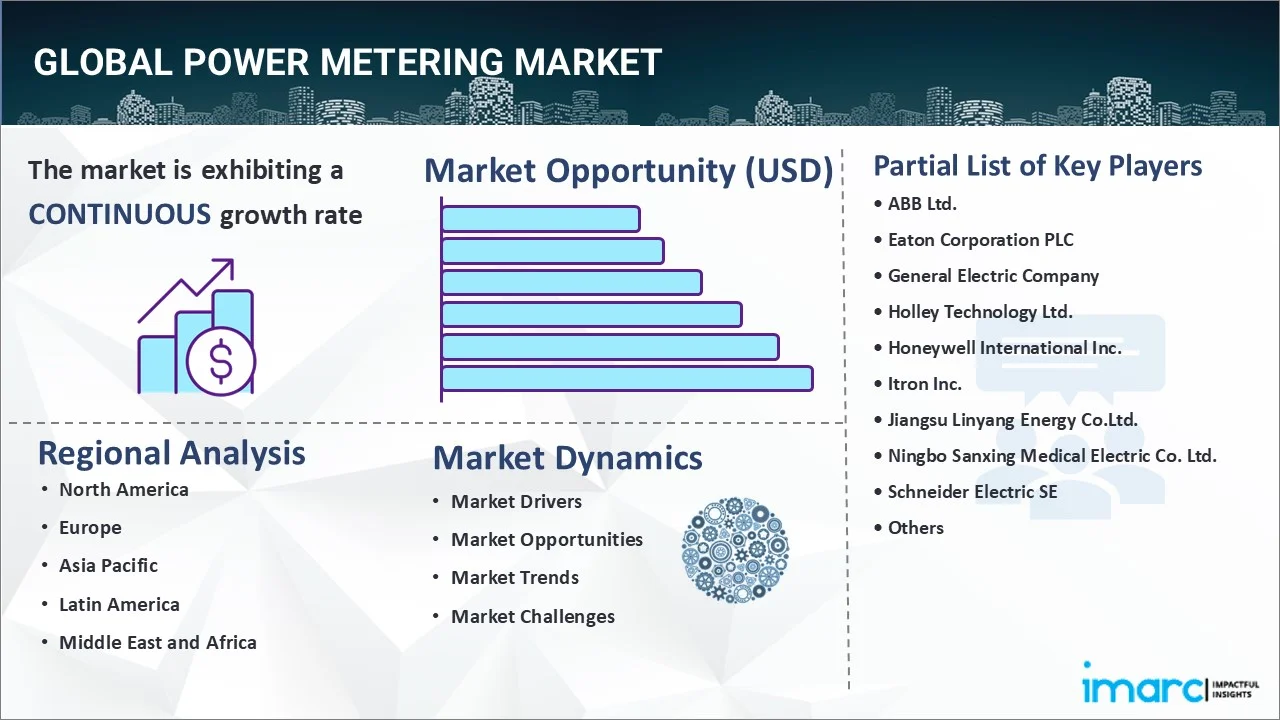
The global power metering market size was valued at USD 20.00 Billion in 2025. Looking forward, IMARC Group estimates the market to reach USD 29.28 Billion by 2034, exhibiting a CAGR of 3.84% from 2026-2034. Asia-Pacific currently dominates the market, holding a market share of 44% in 2025. The region benefits from rapid urbanization, an extensive electricity distribution network, and strong government policy mandates for grid modernization and energy efficiency, all of which continue to drive large-scale adoption of advanced metering technologies across the power metering market share.
The international power metering market is currently undergoing steady growth due to a number of interrelated factors that highlight the paramount significance of precise energy measurement and management. The increasing global electricity demand, driven by the rapid growth of industrialization, population, and the subsequent rise of electrification in emerging economies, is generating a massive demand for efficient metering solutions. Governments across the world are enforcing the need to upgrade antiquated energy metering infrastructure with cutting-edge solutions that have the capability to enable two-way communication and facilitate real-time data transfer, further fueling the growth of the power metering market. The increasing adoption of renewable energy sources such as solar and wind energy is adding complexity to energy management, necessitating the need for advanced metering solutions that have the capability to handle variable energy generation. Moreover, increasing consumer consciousness about energy costs and efficiency is encouraging both residential and commercial consumers to opt for advanced energy metering solutions that have the capability to offer detailed insights into energy consumption patterns.
The United States has emerged as a major region in the power metering market owing to many factors. The country's aging electrical grid infrastructure has prompted significant federal and state-level investment in grid modernization programs, creating strong demand for contemporary metering solutions that support advanced functionality and two-way communication capabilities. For example, in September 2025, utilities such as National Grid have accelerated the rollout of advanced metering infrastructure across upstate New York, installing hundreds of thousands of smart meters to replace aging analog networks and provide real‑time usage data to customers and operators. Regulatory frameworks established by energy oversight agencies have incentivized utilities to upgrade their metering infrastructure to enable dynamic pricing structures and improved consumer engagement. Furthermore, the accelerating deployment of electric vehicles and rooftop solar installations is necessitating more sophisticated metering technologies capable of bidirectional energy measurement, enabling utilities and consumers to accurately track both consumption and generation simultaneously. The growing emphasis on demand response programs is also compelling utilities to invest in metering systems that support flexible load management and real-time grid optimization strategies.
To get more information on this market Request Sample
Power Metering Market Trends:
Growing Adoption of Advanced Metering Infrastructure
The transition toward advanced metering infrastructure (AMI) represents a fundamental shift in how electricity is measured, monitored, and managed across the power sector. Traditional electromechanical meters, which provided only periodic readings and limited data, are increasingly being replaced by sophisticated electronic systems capable of transmitting detailed consumption data in real time. This evolution is enabling utilities to gain unprecedented visibility into network performance, identifying inefficiencies, detecting outages more rapidly, and responding to demand fluctuations with greater precision. The two-way communication capabilities embedded within AMI systems are transforming the relationship between utilities and consumers, empowering households and businesses to monitor their energy usage patterns closely and adjust behaviors accordingly. Integration with home energy management platforms and smart home devices is further extending the utility of advanced metering, creating a connected ecosystem that supports comprehensive energy efficiency initiatives.
Integration of IoT and Digital Connectivity
The convergence of Internet of Things (IoT) technology with power metering is reshaping the operational capabilities of modern electricity networks, reflecting broader power metering market trends observed across energy-intensive economies globally. IoT-enabled meters can continuously collect, transmit, and analyze vast volumes of energy data, facilitating more intelligent grid management and enabling utilities to detect anomalies, predict equipment failures, and optimize distribution efficiency with minimal human intervention. For instance, in August 2025, Vodafone Idea’s enterprise arm announced plans in 2025 to connect 12 million IoT‑enabled smart electricity meters across India over the next three years, leveraging connected networks to provide utilities with real‑time insights into consumption and operational performance. The embedded communication modules within smart meters interface seamlessly with a broad range of grid management platforms, demand response systems, and consumer energy applications, creating an interconnected digital energy ecosystem. This digital integration supports the implementation of dynamic pricing models, allowing utilities to signal price changes in near real-time and enabling consumers to shift energy-intensive activities to lower-cost periods.
Rising Focus on Energy Efficiency and Sustainability
Increasing awareness of climate change and the urgent need to reduce carbon emissions is reshaping energy consumption practices across residential, commercial, and industrial sectors, with significant implications for power metering market outlook globally. Accurate, real-time metering data is becoming an indispensable tool for achieving energy efficiency targets, as it enables users to identify waste, track progress against benchmarks, and make informed decisions about energy use. In December 2025, India’s Power Minister reported that nearly 4.03 crore smart meters had already been installed nationwide under programs such as the Revamped Distribution Sector Scheme (RDSS), significantly enhancing the ability of utilities and customers to monitor consumption patterns and support cleaner energy objectives. Governments and regulatory bodies in numerous regions are introducing stringent energy efficiency standards and mandatory metering requirements that are compelling utilities and end users to adopt more capable measurement systems. The growing deployment of microgrids, energy storage systems, and distributed renewable energy resources is also creating demand for advanced metering solutions capable of monitoring complex energy flows in multi-directional grid configurations.
Power Metering Industry Segmentation:
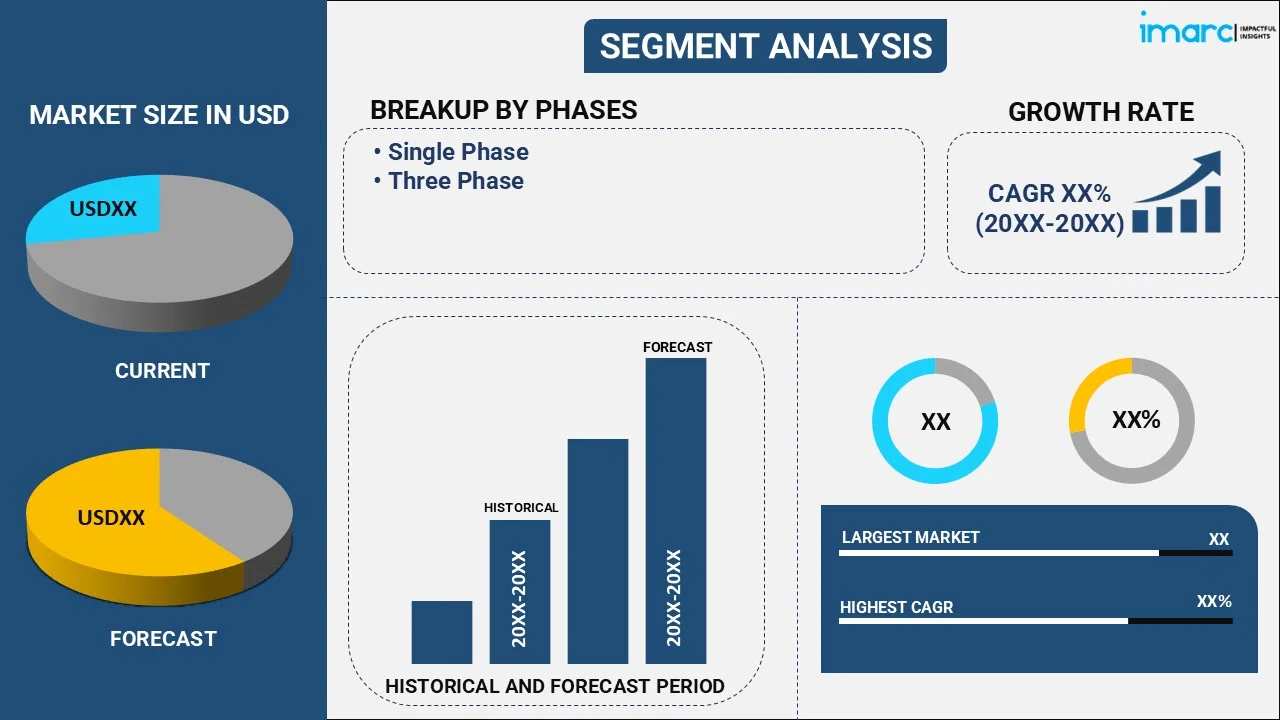
IMARC Group provides an analysis of the key trends in each segment of the global power metering market, along with forecast at the global, regional, and country levels from 2026-2034. The market has been categorized based on phase, technology, and end use.
Analysis by Phase:
To get detailed segment analysis of this market Request Sample
- Single Phase
- Three Phase
Single phase currently comprises 72% of the market share. Single phase metering is the most common type of metering used in residential and light commercial sectors, where the power demand is not very high and the distribution system is based on standard low-voltage connections. The pervasive presence of single phase infrastructure in suburban and rural areas of developed and developing countries alike attests to the leading market position of this segment in the global power metering market. Single phase meters are intended for measuring the electrical energy consumed by devices and appliances connected to a single alternating current circuit, providing a simple and economical means for monitoring energy consumption in millions of individual homes and small businesses. The continued global extension of residential electrification schemes, especially in South and Southeast Asian countries and sub-Saharan Africa, is continuously generating new demand for single phase metering installations. Moreover, the development of single phase meters from simple mechanical models to sophisticated smart meters is continuously generating high replacement demand in already established market infrastructures.
Analysis by Technology:
- Analog Meters
- Digital Meters
- Smart Meters
Smart meters leads the market with a share of 57%. Smart meters represent the most technologically advanced category within the power metering market, integrating digital processing capabilities, bidirectional communication interfaces, and remote management functions into a unified metering platform. Unlike conventional analog and digital meters, smart meters enable automatic meter reading without the need for physical site visits, substantially reducing operational costs for utility companies while improving billing accuracy. The embedded communication systems within smart meters support a range of wireless and wired protocols, facilitating seamless integration with utility back-office systems, demand response platforms, and consumer-facing energy management applications. Smart meters also play a pivotal role in supporting time-of-use pricing structures, grid balancing initiatives, and outage detection programs, making them indispensable components of modern smart grid architectures. The ongoing global transition toward smart metering, supported by government mandates and declining device costs, is reinforcing the dominant position of this segment. The power metering market forecast reflects continued strong deployment of smart metering solutions across both emerging and mature electricity markets worldwide.
Analysis by End Use:
- Residential
- Commercial
- Industrial
Residential dominates the market, with a share of 64%. The residential segment accounts for the largest share of global power metering demand, reflecting the sheer scale of household electricity connections across the world and the universal need to accurately measure and bill residential energy consumption. The global smart meters market size reached USD 28.6 billion in 2025, and looking forward, IMARC Group expects it to reach USD 52.0 billion by 2034, reflecting strong ongoing growth in the sector. Residential end users represent the most numerous category of electricity subscribers, creating massive installed base demand for metering equipment at the point of delivery for individual homes and apartments. Government-driven electrification initiatives targeting underserved rural communities are continuously expanding the population of residential electricity consumers, adding incremental demand for new metering installations in fast-growing economies across Asia, Africa, and Latin America. The replacement cycle for aging residential metering infrastructure in mature markets, combined with regulatory mandates requiring upgrades to smart metering technology, is generating sustained demand for advanced residential meters. Additionally, the rise of distributed energy generation through rooftop solar installations is creating specialized metering requirements for residential prosumers, further enriching the diversity of products demanded within this segment.
Regional Analysis:
To get more information on the regional analysis of this market Request Sample
- North America
- United States
- Canada
- Asia Pacific
- China
- Japan
- India
- South Korea
- Australia
- Indonesia
- Others
- Europe
- Germany
- France
- United Kingdom
- Italy
- Spain
- Russia
- Others
- Latin America
- Brazil
- Mexico
- Others
- Middle East and Africa
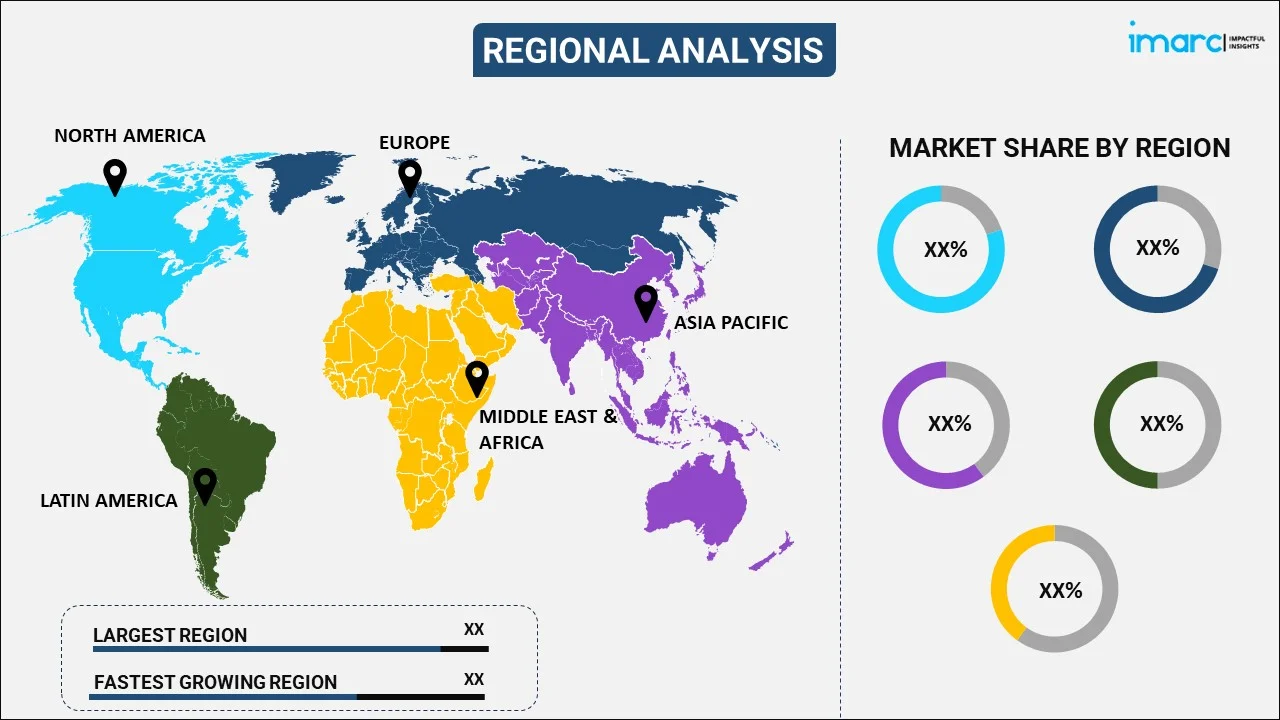
Asia-Pacific, accounting for 44% of the share, enjoys the leading position in the market. The Asia-Pacific region's dominance in the global power metering market reflects the combined influence of massive electricity infrastructure scale, rapid urbanization, and dynamic government policy environments that are accelerating the adoption of advanced metering technologies. Nations across the region, particularly China and India, are simultaneously managing the dual imperatives of expanding access to electricity in underserved communities and modernizing existing metering infrastructure in densely populated urban centers. The region's electricity utilities are among the most active globally in deploying smart metering programs at scale, driven by regulatory pressure to reduce non-technical losses, improve billing efficiency, and support the integration of renewable energy sources into national grids. Southeast Asian economies including Indonesia and Australia are also investing substantially in metering infrastructure as rising incomes fuel electricity demand growth across residential and commercial segments. The breadth and scale of metering deployment activity across Asia-Pacific positions the region as the pivotal driver of global market expansion over the forecast horizon.
Key Regional Takeaways:
North America Power Metering Market Analysis
North America represents a significant and highly mature market for power metering solutions, characterized by an extensive installed base of electricity meters, advanced regulatory frameworks, and a strong commitment to grid modernization and energy efficiency. The United States and Canada collectively operate some of the most sophisticated electricity distribution networks in the world, and ongoing investments in smart grid infrastructure are creating sustained demand for next-generation metering technologies that support two-way communication and real-time data analytics. Federal and state-level policy initiatives in the United States, complemented by provincial energy regulatory mandates in Canada, have established robust frameworks incentivizing utilities to deploy advanced metering infrastructure across residential, commercial, and industrial customer segments. The region's electricity utilities are investing substantially in the replacement of legacy metering equipment with smart meter solutions capable of supporting demand response programs, time-of-use tariff structures, and distributed energy resource integration. The rapid growth of electric vehicle adoption and rooftop solar deployment across North America is creating specialized metering requirements, driving demand for bidirectional meters capable of accurately tracking energy flows in complex prosumer environments. Canada's ongoing smart meter transition programs and the United States' continued grid resilience investments underscore the long-term growth potential of the North American power metering market.
United States Power Metering Market Analysis
The United States power metering market is underpinned by a mature yet rapidly evolving utility sector that is channeling significant capital into the replacement of aging metering infrastructure with advanced digital and smart metering systems. Federal energy policy frameworks, including funding allocated through major infrastructure investment initiatives, have substantially accelerated the pace of smart meter deployment across American utilities, with a particular focus on enhancing grid resilience, reducing energy waste, and improving the customer experience through accurate real-time billing. The country's electricity sector faces the dual challenge of maintaining reliable service for a growing population while integrating a rapidly expanding portfolio of distributed renewable energy resources, both of which are creating incremental demand for sophisticated metering solutions capable of supporting complex, multi-directional energy flows. Utilities across the United States are also investing in advanced metering infrastructure to support the expansion of demand response programs that help manage peak electricity demand and reduce the need for costly grid upgrades. The increasing electrification of transportation, heating, and industrial processes is further broadening the range of metering applications and driving sustained investment in next-generation measurement technologies across the country.
Europe Power Metering Market Analysis
Europe's power metering market is shaped by a comprehensive regulatory environment that has placed the deployment of smart metering technologies at the center of the region's broader energy transition agenda. As of the end of 2023, more than 60 % of electricity customers across the EU27+3 region (EU member states plus Norway, Switzerland and the UK) had smart electricity meters installed, highlighting substantial adoption progress across European utilities. The European Union has established clear mandates for the rollout of smart meters across member states, with national transposition of these directives creating country-specific deployment programs that are progressing at varying rates across the continent. Major markets including Germany, France, the United Kingdom, Italy, and Spain are in various stages of smart meter deployment, with regulatory bodies actively monitoring progress and compelling utilities to meet established installation targets. The region's ambitious renewable energy integration goals are creating additional demand for advanced metering systems capable of supporting the variable, distributed nature of solar and wind power generation, particularly as prosumer participation in energy markets continues to grow.
Asia Pacific Power Metering Market Analysis
The Asia-Pacific region commands the dominant position in the global power metering market, driven by the extraordinary scale of electricity infrastructure across major economies including China, India, Japan, South Korea, and the rapidly developing nations of Southeast Asia. China's state-directed electricity grid modernization programs have resulted in mass deployment of smart meters across hundreds of millions of residential and commercial connections, establishing the country as the single largest market for power metering equipment globally. India's national metering programs, supported by government schemes aimed at reducing aggregate technical and commercial losses, are driving substantial demand for prepaid and smart metering solutions across the country's diverse utility landscape. The continued expansion of electricity access in emerging Southeast Asian markets, combined with active grid modernization initiatives in countries such as South Korea and Australia, is sustaining robust metering demand throughout the region.
Latin America Power Metering Market Analysis
Latin America presents a developing yet promising market for power metering solutions, with the region's utilities increasingly prioritizing investments in advanced metering infrastructure to address persistent challenges related to non-technical losses and billing inefficiencies. Brazil and Mexico, the region's two largest electricity markets, are at the forefront of smart metering deployment, with national programs aimed at modernizing residential and commercial metering infrastructure already underway. The region's growing middle class, expanding industrial base, and improving regulatory environments are collectively supporting increased investment in energy measurement systems that improve transparency, accuracy, and efficiency across electricity distribution networks throughout Latin America.
Middle East and Africa Power Metering Market Analysis
The Middle East and Africa region is witnessing accelerating adoption of advanced power metering solutions, underpinned by ambitious electrification programs and grid modernization initiatives across both oil-exporting Gulf Cooperation Council (GCC) nations and sub-Saharan African countries. Gulf states including Saudi Arabia, the UAE, and Qatar are investing in smart meter deployments as part of comprehensive energy efficiency and demand management strategies aligned with national sustainability frameworks. In Africa, the expansion of electricity access under various national and international development programs is creating primary demand for basic and prepaid metering solutions, while more mature markets on the continent are beginning to explore advanced metering technologies.
Competitive Landscape:
The global power metering market is characterized by a moderately consolidated competitive landscape, with a relatively small number of large multinational corporations holding significant market share alongside a diverse array of regional and domestic manufacturers serving local utility requirements. Leading companies are actively investing in research and development to expand their smart metering portfolios, integrate advanced communication technologies, and enhance the cybersecurity resilience of their connected metering platforms in response to growing regulatory scrutiny. Strategic partnerships between meter manufacturers and telecommunications providers are becoming increasingly common as utilities seek end-to-end metering solutions that encompass hardware, communication infrastructure, and data management services. The market also faces competitive pressure from emerging Asian manufacturers that offer cost-competitive smart metering solutions, particularly in price-sensitive developing markets. Companies operating in this space are differentiating through advanced software capabilities, comprehensive service offerings, and the ability to deliver large-scale deployment programs efficiently and on schedule.
The report provides a comprehensive analysis of the competitive landscape in the power metering market with detailed profiles of all major companies, including:
- ABB Ltd.
- Eaton Corporation PLC
- General Electric Company
- Holley Technology Ltd.
- Honeywell International Inc.
- Itron Inc.
- Jiangsu Linyang Energy Co.Ltd.
- Ningbo Sanxing Medical Electric Co. Ltd.
- Schneider Electric SE
- Sensus USA Inc. (Xylem Inc.)
- Siemens AG
- Toshiba Corporation
Latest News and Developments:
- In February 2026, Ubicquia has launched an AI-driven power monitoring solution for commercial and industrial customers, providing real-time visibility and predictive analytics to prevent power disruptions and optimize operations. The platform enhances energy efficiency and reliability for critical infrastructure.
Power Metering Market Report Scope:
| Report Features | Details |
|---|---|
| Base Year of the Analysis | 2025 |
| Historical Period | 2020-2025 |
| Forecast Period | 2026-2034 |
| Units | Billion USD |
| Scope of the Report | Exploration of Historical Trends and Market Outlook, Industry Catalysts and Challenges, Segment-Wise Historical and Future Market Assessment:
|
| Phases Covered | Single Phase, Three Phase |
| Technologies Covered | Analog Meters, Digital Meters, Smart Meters |
| End Uses Covered | Residential, Commercial, Industrial |
| Regions Covered | Asia Pacific, Europe, North America, Latin America, Middle East and Africa |
| Countries Covered | United States, Canada, Germany, France, United Kingdom, Italy, Spain, Russia, China, Japan, India, South Korea, Australia, Indonesia, Brazil, Mexico |
| Companies Covered | ABB Ltd., Eaton Corporation PLC, General Electric Company, Holley Technology Ltd., Honeywell International Inc., Itron Inc., Jiangsu Linyang Energy Co.Ltd., Ningbo Sanxing Medical Electric Co. Ltd., Schneider Electric SE, Sensus USA Inc. (Xylem Inc.), Siemens AG, Toshiba Corporation, etc. |
| Customization Scope | 10% Free Customization |
| Post-Sale Analyst Support | 10-12 Weeks |
| Delivery Format | PDF and Excel through Email (We can also provide the editable version of the report in PPT/Word format on special request) |
Key Benefits for Stakeholders:
- IMARC’s report offers a comprehensive quantitative analysis of various market segments, historical and current market trends, market forecasts, and dynamics of the power metering market from 2020-2034.
- The research study provides the latest information on the market drivers, challenges, and opportunities in the global power metering market.
- The study maps the leading, as well as the fastest-growing, regional markets. It further enables stakeholders to identify the key country-level markets within each region.
- Porter's Five Forces analysis assists stakeholders in assessing the impact of new entrants, competitive rivalry, supplier power, buyer power, and the threat of substitution. It helps stakeholders to analyze the level of competition within the power metering industry and its attractiveness.
- Competitive landscape allows stakeholders to understand their competitive environment and provides an insight into the current positions of key players in the market.
Frequently Asked Questions About the Power Metering Market Report
The power metering market was valued at USD 20.00 Billion in 2025.
The power metering market is projected to exhibit a CAGR of 3.84% during 2026-2034, reaching a value of USD 29.28 Billion by 2034.
The power metering market is driven by accelerating government mandates for smart meter deployment, rising electricity demand across residential and commercial sectors, growing integration of renewable energy resources, and increasing emphasis on energy efficiency. Utility modernization programs and advancements in communication technologies are further enabling broader adoption of sophisticated metering solutions worldwide.
Asia-Pacific currently dominates the power metering market, accounting for a share of 44%. The region benefits from rapid urbanization, an extensive electricity distribution network, strong government policy mandates for grid modernization, and active large-scale smart meter deployment programs in key economies including China and India.
Some of the major players in the power metering market include ABB Ltd., Eaton Corporation PLC, General Electric Company, Holley Technology Ltd., Honeywell International Inc., Itron Inc., Jiangsu Linyang Energy Co.Ltd., Ningbo Sanxing Medical Electric Co. Ltd., Schneider Electric SE, Sensus USA Inc. (Xylem Inc.), Siemens AG, Toshiba Corporation, etc.
Need more help?
- Speak to our experienced analysts for insights on the current market scenarios.
- Include additional segments and countries to customize the report as per your requirement.
- Gain an unparalleled competitive advantage in your domain by understanding how to utilize the report and positively impacting your operations and revenue.
- For further assistance, please connect with our analysts.
 Request Customization
 Speak to an Analyst
 Request Brochure
 Inquire Before Buying
Benefits of Customization
- Personalize this research
- Triangulate with your data
- Get data as per your format and definition
- Gain a deeper dive into a specific application, geography, customer, or competitor
- Any level of personalization
Get in Touch With Us
UNITED STATES
Phone: +1-201-971-6302
INDIA
Phone: +91-120-433-0800
UNITED KINGDOM
Phone: +44-753-714-6104
Email: [email protected]
Client Testimonials




.webp)




.webp)













Related Reports

Choose your plan
*Please note that the prices mentioned below are starting prices for each bundle type. Kindly contact our team for further details.*
Single User License
- 1 User License, Access on 2 Devices
- PDF Report + Excel Dataset (Password Protected)
- Lifetime Access
- No Printing Rights
- 10% Free Report Customization
- 10–12 Weeks of Analyst Support
Five User License
- Access for 5 Users, 2 Devices per User
- PDF Report + Excel Dataset (Password Protected)
- Lifetime Access
- Dedicated Account Manager
- 12–14 Weeks of Analyst Support
- No Printing Rights
- 15% Free Report Customization
- 25% Discount on Your Next Purchase
Corporate User License
- Unlimited User Access (Within Your Organization)
- PDF Report + Excel Dataset
- Lifetime Access
- Dedicated Account Manager
- 14–20 Weeks of Analyst Support
- No Printing Rights
- 20% Free Report Customization
- 30% Discount on Your Next Purchase
Essential Insights
What's included:
3 reports
- Lifetime Access
- PDF Reports
- Excel Datasets
- 2 Weeks of Free Analyst Support
- 2 User Licenses
- Access on 2 Devices
- Printing Rights
- Complimentary PowerPoint (PPT) Version
- Complimentary License Upgrade
Professional Access
What's included:
5 reports
- Lifetime Access
- PDF Reports
- Excel Datasets
- 8 Weeks of Free Analyst Support
- 2 User Licenses
- Access on 2 Devices
- Printing Rights
- Complimentary PowerPoint (PPT) Version
- Complimentary License Upgrade
Business Advantage
What's included:
8 reports
- Lifetime Access
- PDF Reports
- Excel Datasets
- 14 Weeks of Free Analyst Support
- 2 User Licenses
- Access on 2 Devices
- Printing Rights
- Complimentary PowerPoint (PPT) Version
- Complimentary License Upgrade
Enterprise Intelligence
What's included:
10 reports
- Lifetime Access
- PDF Reports
- Excel Datasets
- 20 Weeks of Free Analyst Support
- 2 User Licenses
- Access on 2 Devices
- Printing Rights
- Complimentary PowerPoint (PPT) Version
- Complimentary License Upgrade