
Rear Spoiler Market Size, Share, Trends and Forecast by Technology, Material Type, System Type, Vehicle Type, Distribution Channel, and Region, 2026-2034
Rear Spoiler Market Size, Share, Trends & Forecast (2026-2034)
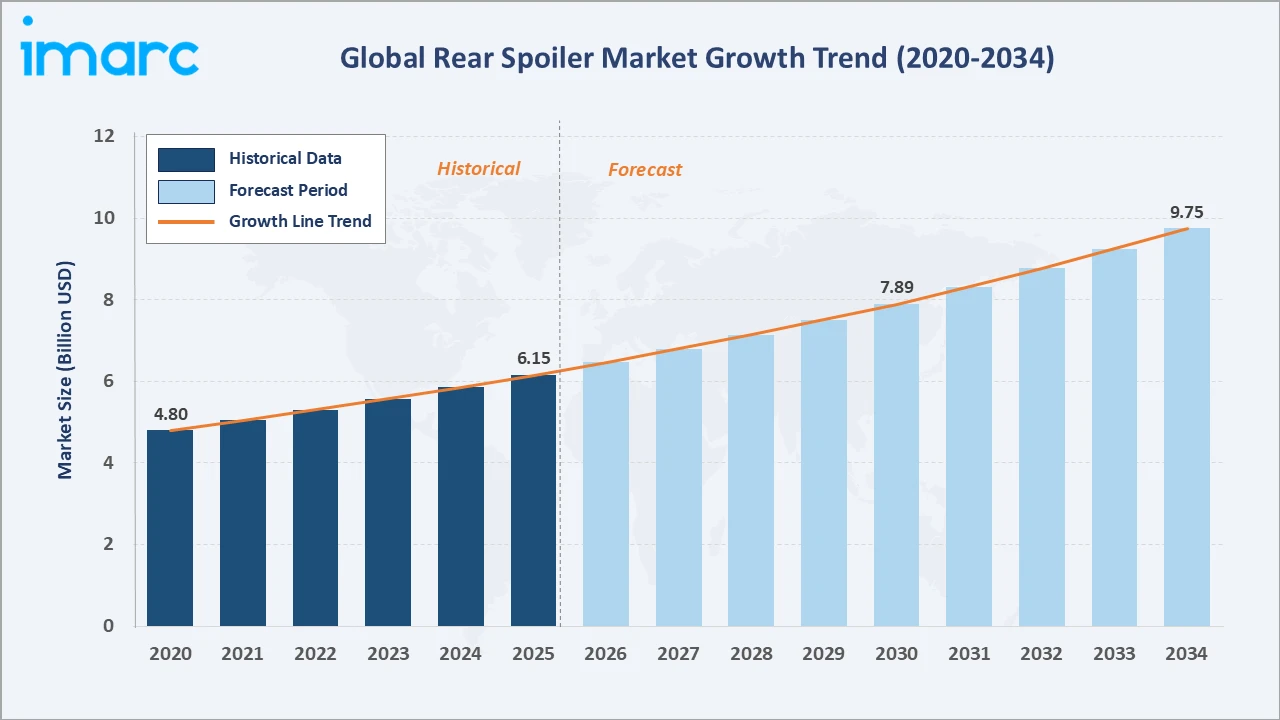
The rear spoiler market grew from USD 6.15 Billion in 2025 to USD 6.47 Billion in 2026 and is projected to reach USD 9.75 Billion by 2034, growing at a CAGR of 5.09% during 2026-2034. The market is driven by rising consumer demand for vehicle personalization and aerodynamic performance enhancements. According to the International Organization of Motor Vehicle Manufacturers (OICA), worldwide vehicle manufacturing increased from 92.7 Million units in 2024 to 96.4 Million units in 2025 (+3.9%), whereas global sales grew from 95.3 Million to 99.8 Million units (+4.7%), providing a robust end-market foundation for exterior styling components including rear spoilers.
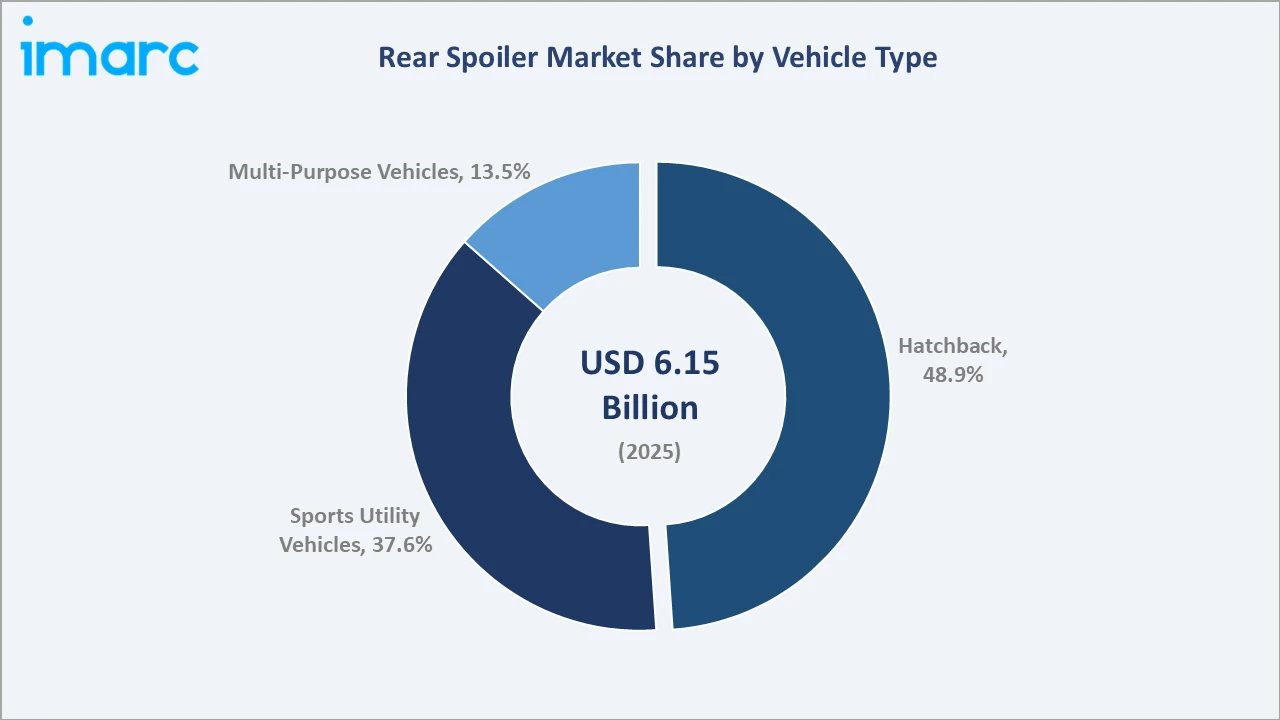
Hatchback leads vehicle type segmentation at 48.9%, while aftermarket dominates distribution channel at 54.7%. Asia-Pacific commands the largest regional share at 52.8%.
Market Snapshot
|
Metric |
Value |
|
Base Year Market Size (2025) |
USD 6.15 Billion |
|
Market Size (2026) |
USD 6.47 Billion |
|
Forecast Market Size (2034) |
USD 9.75 Billion |
|
CAGR (2026-2034) |
5.09% |
|
Base Year |
2025 |
|
Historical Period |
2020-2025 |
|
Forecast Period |
2026-2034 |
|
Largest Region |
Asia-Pacific (52.8%, 2025) |
|
Second Largest Region |
North America (21.6%, 2025) |
|
Leading Vehicle Type |
Hatchback (48.9%, 2025) |
|
Leading Distribution Channel |
Aftermarket (54.7%, 2025) |
The rear spoiler market size increased from USD 4.80 Billion in 2020 to USD 6.15 Billion in 2025 and is estimated to reach USD 6.47 Billion in 2026. The market is further expected to grow to USD 7.89 Billion by 2030 and USD 9.75 Billion by 2034, reflecting accelerating sports utility vehicle production, deepening aftermarket penetration, and sustained demand for aerodynamically optimized exterior designs, supported by consistent growth in global vehicle production, expanding consumer interest in vehicle aesthetics, and the rising adoption of lightweight composite materials in exterior component manufacturing.
To get more information on this market, Request Sample
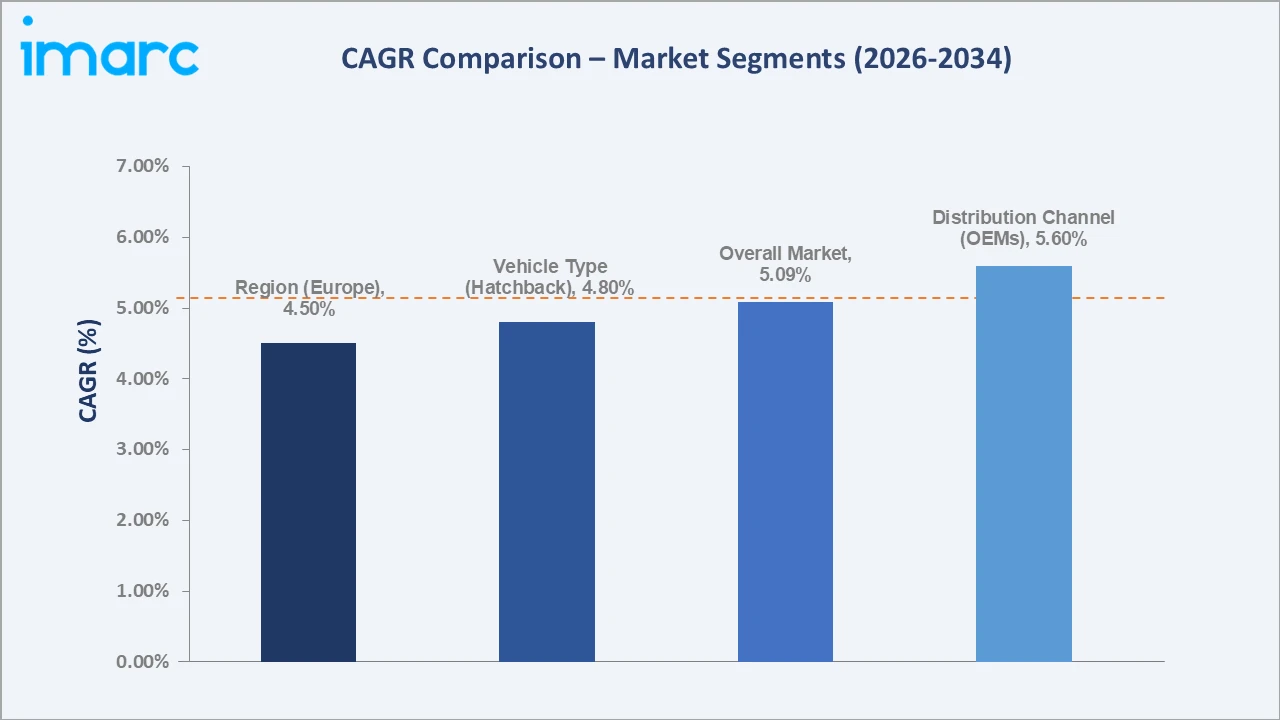
CAGR trajectories across vehicle type and distribution channel sub-segments, together with regional patterns, show sports utility vehicles and Latin America expanding faster than the overall 5.09% market CAGR, driven by rising disposable incomes and expanding aftermarket distribution networks in emerging economies.
Executive Summary
The rear spoiler market expanded from USD 6.15 Billion in 2025 to an estimated USD 6.47 Billion in 2026. The industry has evolved from a niche motorsport accessory to a mainstream exterior component integrated across hatchbacks, sports utility vehicles, and multi-purpose vehicles. Growing consumer awareness of aerodynamic benefits, combined with rising disposable incomes in key automotive markets, is supporting broad-based demand growth across both OEM fitment and aftermarket channels.
Hatchback dominates the vehicle type segment at 48.9% in 2025, driven by the widespread popularity of compact passenger cars, urban mobility requirements, and the growing adoption of sporty exterior styling. Aftermarket leads distribution channel at 54.7%, reflecting both widespread vehicle ownership and the strong consumer desire for post-purchase customization. Asia-Pacific commands 52.8% of the global market in 2025, anchored by China, Japan, India, and South Korea's dense automotive manufacturing ecosystems.
Key Market Insights
|
Insight |
Data |
|
Leading Vehicle Type |
Hatchback – 48.9% share (2025) |
|
Second Largest Vehicle Type |
Sports Utility Vehicles – 37.6% share (2025) |
|
Leading Distribution Channel |
Aftermarket – 54.7% share (2025) |
|
Second Largest Distribution Channel |
OEMs – 45.3% share (2025) |
|
Leading Region |
Asia-Pacific – 52.8% share (2025) |
|
Second Largest Region |
North America – 21.6% share (2025) |
|
Top Companies |
Magna International Inc., OPmobility SE, Samvardhana Motherson International Limited (SAMIL) |
Key Analytical Observations Expanding On the Data Above:
- Hatchback dominance at 48.9% is driven by the high global volume of compact vehicle production, where rear spoilers serve dual purposes as both aerodynamic functional components and accessible styling additions across mass-market price segments.
- Sports utility vehicles at 37.6% reflect surging global sports utility vehicle adoption across both developed and emerging markets, with performance-oriented spoiler designs increasingly integrated as standard or optional OEM equipment on mid-to-premium sports utility vehicle variants.
- Aftermarket leadership at 54.7% is supported by the large global installed vehicle base, low average fitment cost relative to new vehicle price, and wide availability through online retail and specialty automotive accessory distributors.
- OEMs share at 45.3% reflects the integration of rear spoilers into factory vehicle designs, allowing automakers to align aerodynamic performance, exterior styling, and manufacturing efficiency while offering model-specific features to buyers.
- Asia-Pacific at 52.8% leads regional share, underpinned by the region's position as the world's primary automotive manufacturing hub and rapidly expanding domestic vehicle customization culture in markets including China, India, and Southeast Asia.
Rear Spoiler Market Overview
A rear spoiler is an aerodynamic exterior component mounted on the rear of a vehicle, typically on the trunk lid, roofline, or tailgate, designed to reduce aerodynamic drag, enhance vehicle stability at speed, and provide a distinctive visual styling element. Available in materials including acrylonitrile butadiene styrene (ABS) plastic, carbon fiber-reinforced polymers, fiberglass, and aluminum alloys, rear spoilers are offered as factory-fitted OEM equipment and as aftermarket accessories across vehicle categories.
The global ecosystem integrates raw material suppliers, tier-1 component manufacturers, OEM vehicle assemblers, independent aftermarket distributors, specialty retailers, and end-user vehicle owners. Regulatory authorities governing vehicle homologation, road safety standards, and materials compliance play an increasingly influential role in shaping product design parameters and market entry requirements across key regions including Europe, North America, and Asia-Pacific.
Market Dynamics
To evaluate market opportunities, Request Sample
Market Drivers
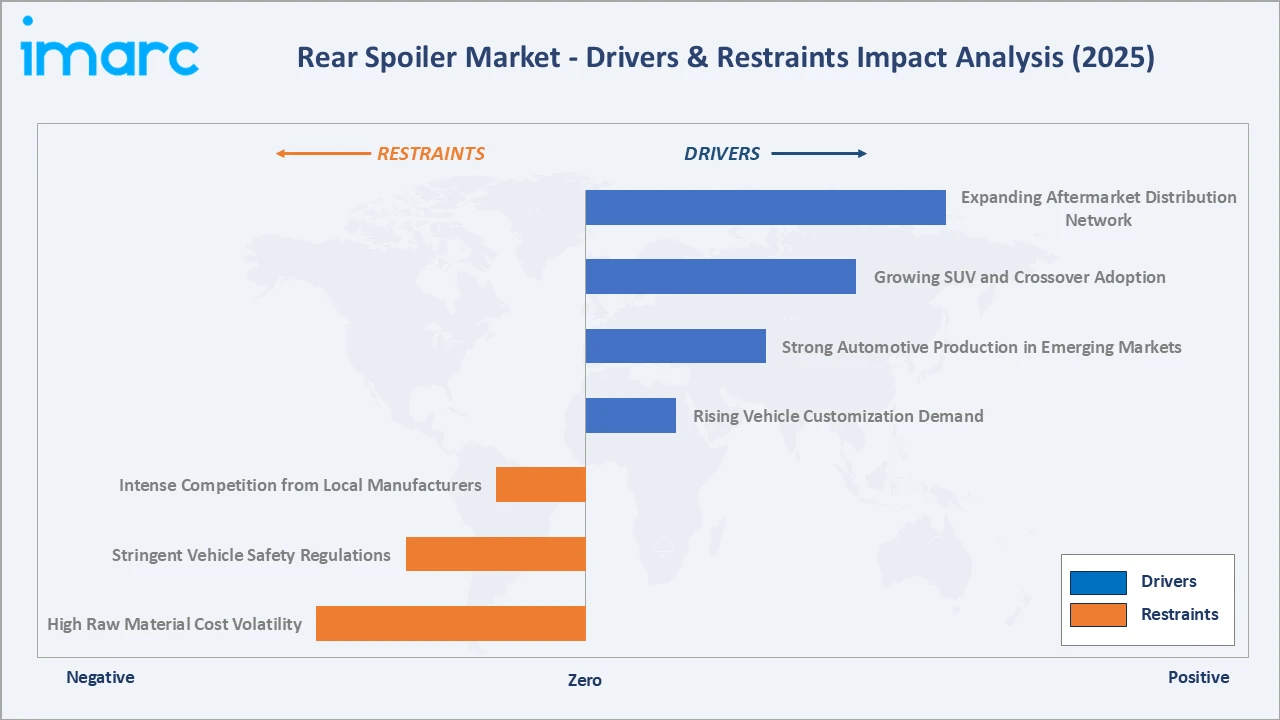
- Rising Vehicle Customization Demand: Consumers across global automotive markets are increasingly seeking vehicle personalization options that combine aesthetics with performance benefits. Rear spoilers, positioned at an accessible price point, represent one of the most popular exterior customization choices, driving consistent aftermarket demand across compact, sports, and utility vehicle segments and supporting the growth of the automotive rear spoiler market.
- Strong Automotive Production in Emerging Markets: India's passenger vehicle market recorded sales exceeding 4.3 Million units in fiscal year 2024–25, according to the Society of Indian Automobile Manufacturers, reflecting the broad strength of automotive demand in Asia-Pacific markets that directly support both OEM and aftermarket rear spoiler consumption.
- Growing Sports Utility Vehicles and Crossover Adoption: The ongoing global shift toward sports utility vehicles and crossover platforms is expanding the addressable base for rear spoiler integration. Sports utility vehicle owners exhibit higher propensity for exterior styling additions, while automakers increasingly offer performance-oriented spoiler packages as factory options on mid-range and premium sports utility vehicle trims.
- Expanding Aftermarket Distribution Network: The expanding global vehicle fleet, combined with rising average vehicle age in key markets, is supporting aftermarket rear spoiler demand. Independent installers, online retailers, and specialty automotive stores are widening consumer access to compatible spoiler products across diverse vehicle makes and models.
Market Restraints
- High Raw Material Cost Volatility: Rear spoiler manufacturers rely on petrochemical derivatives, aluminum, and carbon fiber feedstocks whose prices are subject to significant commodity market volatility. Supply chain disruptions and raw material cost pressures can compress manufacturer margins and limit pricing flexibility across both OEM supply contracts and aftermarket retail segments.
- Stringent Vehicle Safety and Homologation Regulations: Vehicle exterior components including rear spoilers must meet vehicle type approval regulations, pedestrian safety standards, and aerodynamic compliance requirements across major markets. Evolving regulatory frameworks, particularly in Europe and North America, require manufacturers to continuously invest in product re-engineering and compliance testing.
- Intense Competition from Local Manufacturers: The aftermarket segment faces competition from a large number of low-cost regional and local manufacturers, particularly in Asia-Pacific, who offer spoilers at prices substantially below those of established tier-1 suppliers. Price competition can erode margin realization for global manufacturers investing in quality materials and engineering innovation.
Market Opportunities
- EV Aerodynamic Integration: The rapid adoption of EVs globally is opening new design opportunities for aerodynamic spoiler integration. EV platforms prioritize drag reduction to maximize range efficiency, and automakers are collaborating with exterior component suppliers to develop lightweight spoilers specifically optimized for EV aerodynamic profiles.
- Expanding Demand in Emerging Markets: Rapid urbanization, rising middle-class incomes, and growing vehicle ownership rates in Southeast Asia, Latin America, and the Middle East and Africa are creating new demand centers for both OEM-fitted and aftermarket rear spoilers, with hatchbacks and compact sports utility vehicles representing the primary addressable segments in these emerging markets.
Market Challenges
- Evolving Consumer Design Preferences: Consumer preferences for vehicle styling are subject to change, with evolving design trends potentially reducing the commercial appeal of traditional fixed-wing spoiler profiles. Manufacturers must invest in agile product development capabilities to track and respond to shifting aesthetic preferences across global markets.
- Maintaining Quality-Cost Balance: Ensuring consistent aerodynamic performance, material durability, UV resistance, and finish quality at competitive price points remains a persistent engineering and manufacturing challenge, particularly for aftermarket suppliers targeting mass-market vehicle segments.
Emerging Market Trends
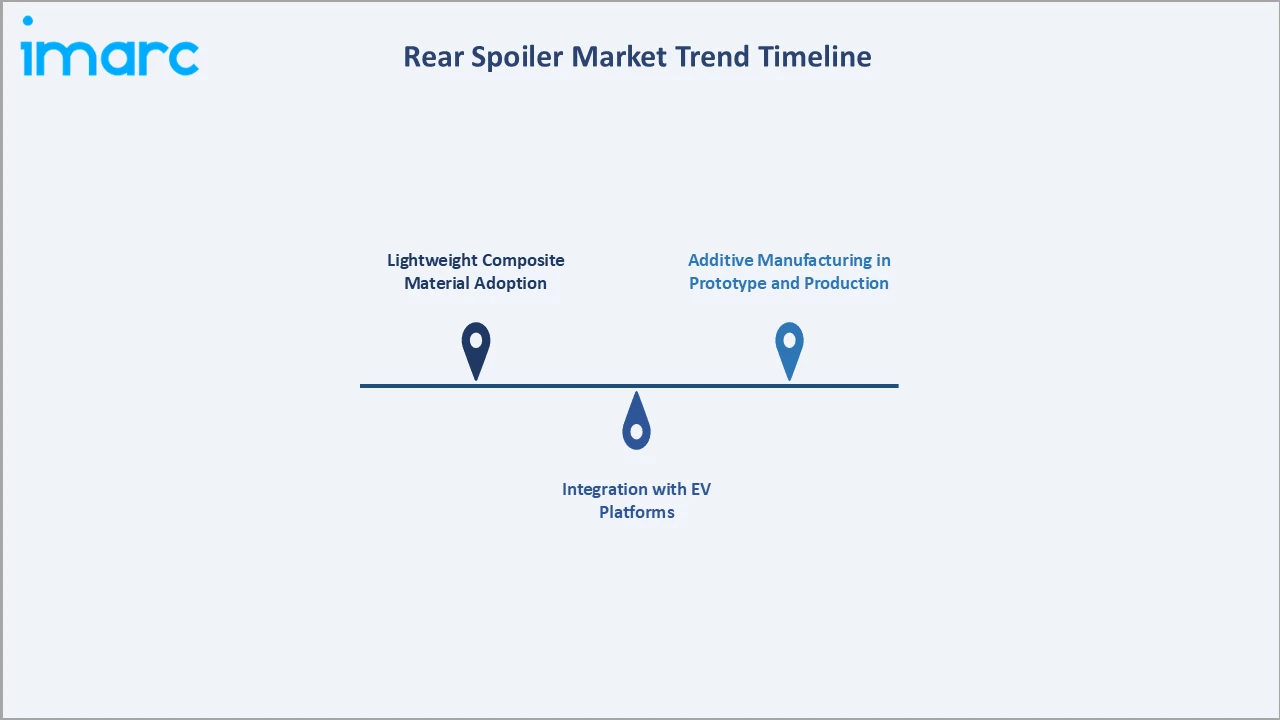
1. Lightweight Composite Material Adoption
Automakers and tier-1 suppliers are progressively replacing conventional ABS plastic spoilers with carbon fiber-reinforced polymer and glass fiber composite variants. These materials offer superior strength-to-weight ratios, supporting vehicle lightweighting initiatives aligned with tightening fuel economy and emissions regulations. Premium and sports vehicle segments are leading composite spoiler adoption, creating opportunities for the automotive active spoiler market to expand through the development of lightweight and performance-oriented aerodynamic components.
2. Integration with EV Platforms
EV manufacturers are increasingly incorporating rear spoilers as functional aerodynamic components rather than purely aesthetic additions. Optimized spoiler designs help reduce aerodynamic drag and improve driving range by lowering energy consumption. As EV production expands, automakers are prioritizing aerodynamic exterior components that balance styling, efficiency, and vehicle performance.
3. Additive Manufacturing in Prototype and Production
Three-dimensional printing technologies are being deployed by spoiler manufacturers for rapid prototyping, tooling production, and small-batch customized spoiler manufacturing. This capability accelerates product development cycles and enables cost-efficient production of low-volume variants for specialty and limited-edition vehicle programs.
Industry Value Chain Analysis
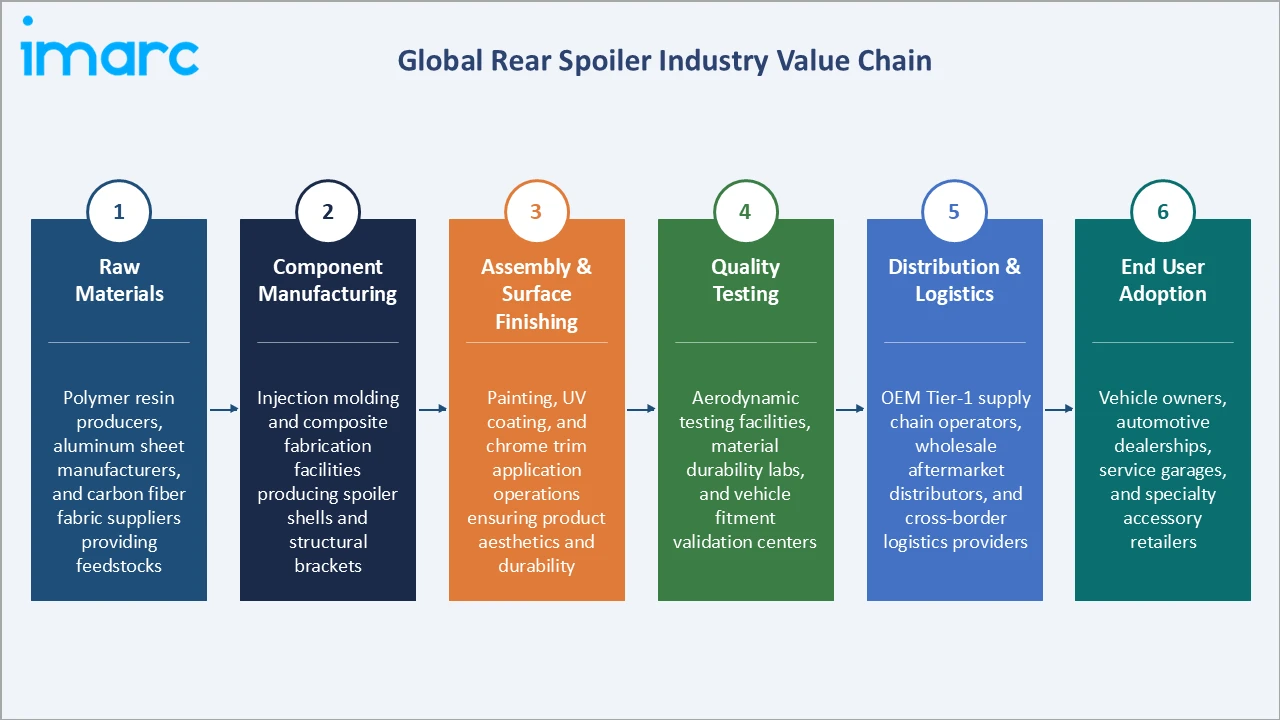
The global rear spoiler market value chain spans six stages, from raw material sourcing and component manufacturing through assembly, quality validation, distribution, and end-user adoption. Manufacturing and surface finishing operations capture the highest value-add, while distribution and aftermarket retail increasingly determine competitive positioning for mass-market spoiler suppliers across price-sensitive consumer segments.
|
Stage |
Key Players / Examples |
|
Raw Materials |
Polymer resin producers, aluminum sheet manufacturers, and carbon fiber fabric suppliers providing feedstocks for spoiler production |
|
Component Manufacturing |
Injection molding and composite fabrication facilities producing spoiler shells and structural brackets |
|
Assembly & Surface Finishing |
Painting, UV coating, and chrome trim application operations ensuring product aesthetics and durability |
|
Quality Testing |
Aerodynamic testing facilities, material durability labs, and vehicle fitment validation centers |
|
Distribution & Logistics |
OEM Tier-1 supply chain operators, wholesale aftermarket distributors, and cross-border logistics providers |
|
End User Adoption |
Vehicle owners, automotive dealerships, service garages, and specialty accessory retailers |
Vertically integrated players, particularly those controlling proprietary tooling, composite material processing capabilities, and direct OEM supply relationships, are positioned to capture greater value than assemblers or distributors reliant on third-party component sourcing and contract manufacturing arrangements.
Technology Landscape in the Rear Spoiler Industry
Advanced Composite Materials
Carbon fiber-reinforced polymers and glass fiber composites are gaining traction in performance and premium spoiler segments as alternatives to traditional ABS plastic. These materials offer lower weight and enhanced structural stiffness, enabling manufacturers to balance aesthetic appeal, durability, and aerodynamic performance.
Precision Injection Molding and Thermoforming
Modern injection molding systems with multi-cavity tooling and computer-controlled process parameters enable high-volume, dimensionally consistent spoiler production for mass-market vehicle segments. Thermoforming is deployed for larger spoiler profiles requiring complex three-dimensional surface geometries across sports utility vehicle and MPV applications.
Surface Finishing and Paint Technology
Water-based paint systems, UV-resistant clearcoat formulations, and chrome vacuum metallization processes are widely adopted to achieve OEM-grade surface quality in spoiler production. Advanced paint robotics ensure color-matched finishes compatible with vehicle body assembly requirements across global automotive manufacturing plants.
Market Segmentation Analysis
The report covers the following segments:
|
Segment Category |
Leading Segment |
Market Share |
Year |
|
Technology |
Blow Molding |
🔒 |
2025 |
|
Material Type |
ABS |
🔒 |
2025 |
|
System Type |
Active Spoiler |
🔒 |
2025 |
|
Vehicle Type |
Hatchback |
48.9% |
2025 |
|
Distribution Channel |
Aftermarket |
54.7% |
2025 |
|
Region |
Asia-Pacific |
52.8% |
2025 |

By Vehicle Type
Hatchback commands a 48.9% majority share in 2025, driven by the high global production volumes of compact vehicles and the strong consumer propensity for aftermarket customization in this segment. The combination of affordable spoiler pricing relative to vehicle cost and the significant aesthetic impact on compact body profiles sustains hatchback segment leadership across global markets.
To access detailed market analysis, Request Sample
Sports utility vehicles at 37.6% in 2025 represent the fastest-growing vehicle type segment, driven by the global sports utility vehicle boom and the growing integration of performance-oriented spoiler packages as factory options on mid-range and premium sports utility vehicle trims.
By Distribution Channel
Aftermarket leads with 54.7% share in 2025, reflecting the large global installed vehicle base, expanding online retail accessibility, and consumer preference for post-purchase vehicle customization. The segment benefits from wide product variety, competitive pricing, and the ability to cater to diverse vehicle makes and models across all price tiers.
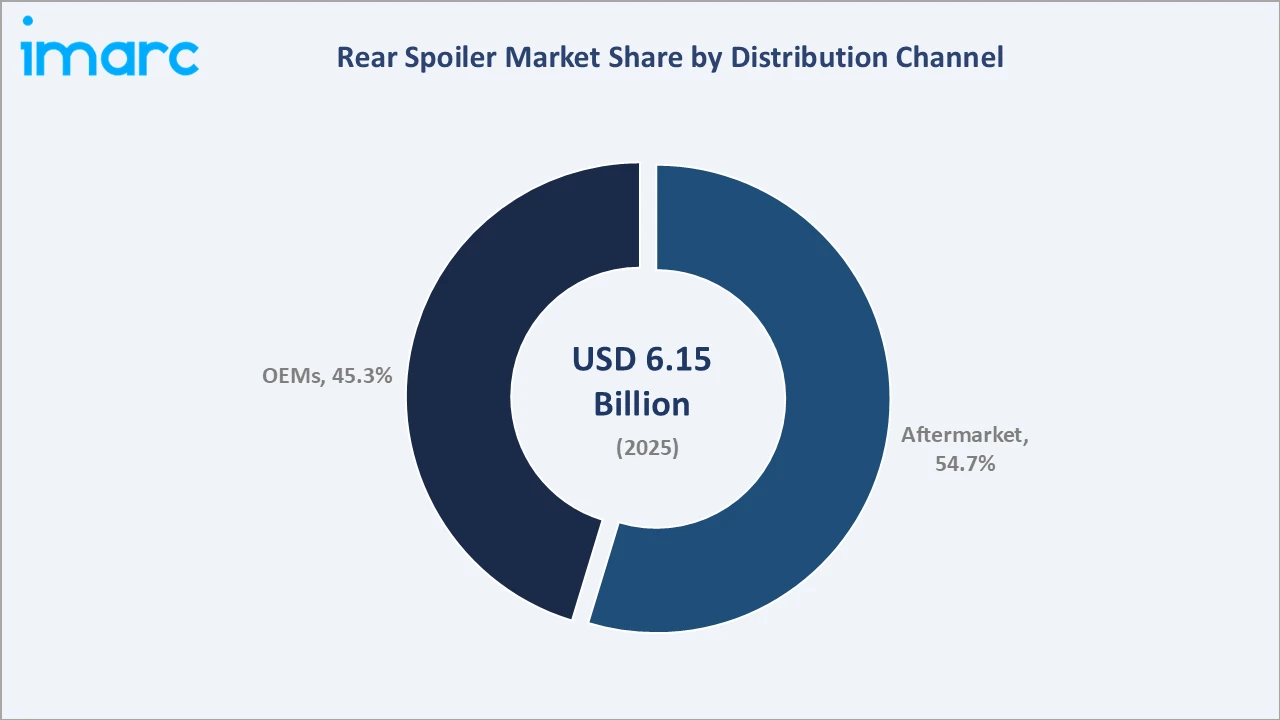
OEMs account for 45.3% in 2025, driven by the growing integration of factory-fitted spoiler packages on premium, sport, and crossover vehicle variants. OEM channels offer manufacturers higher volume stability through long-term supply agreements but require rigorous quality certification and investment in vehicle-specific tooling to meet automaker specifications.
Regional Market Insights
|
Region |
Share (2025) |
Key Growth Drivers |
|
Asia-Pacific |
52.8% |
Large automotive production base, expanding domestic vehicle sales, growing consumer customization culture, and strong presence of both OEM manufacturers and aftermarket distributors |
|
North America |
21.6% |
High per-capita vehicle ownership, established aftermarket distribution infrastructure, strong consumer spending on vehicle accessories, and presence of major automotive OEMs |
|
Europe |
17.3% |
Stringent vehicle aerodynamics regulations driving OEM integration, strong performance vehicle culture, and presence of premium automotive brands incorporating spoilers as standard equipment |
|
Latin America |
5.1% |
Rising vehicle ownership rates, growing middle-class consumer base, expanding aftermarket retail networks, and increasing adoption of vehicle customization products |
|
Middle East and Africa |
3.2% |
Growing automotive imports, rising disposable incomes in Gulf markets, expanding retail infrastructure, and increasing consumer interest in vehicle personalization |
Asia-Pacific at 52.8% in 2025 leads the rear spoiler market, anchored by China, Japan, India, South Korea, and Southeast Asian manufacturing hubs that collectively account for the majority of global vehicle production. The region's vast OEM supplier base, combined with rapidly expanding aftermarket retail channels, ensures sustained demand across all vehicle type segments through 2034.
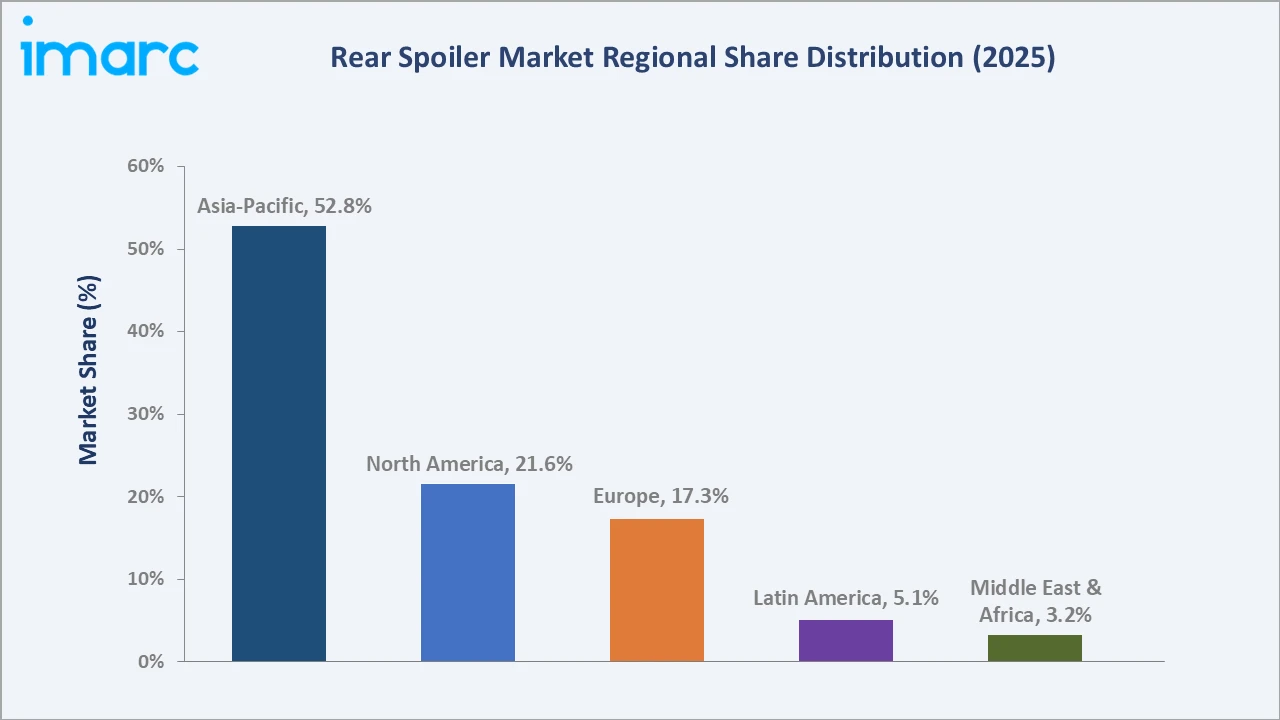
Latin America, while currently contributing 5.1% of global market revenue, is the fastest growing region as rising vehicle ownership in Brazil, Mexico, and Argentina expands the addressable aftermarket base.
Competitive Landscape
The rear spoiler market is moderately fragmented, with established tier-1 automotive exterior component suppliers competing alongside specialized aftermarket manufacturers and regional players. Competitive differentiation is driven by material innovation, aerodynamic engineering capability, OEM relationship depth, and aftermarket distribution network coverage.
| Company Name | Brand / Key Product | Position | Strategic Focus |
|---|---|---|---|
| Magna International Inc. | Magna Exteriors | Leader | Strengthening global exterior component portfolio through continued innovation in lightweight materials and OEM partnership expansion |
| OPmobility SE | OPmobility Exterior and Lighting Solutions | Leader | Expanding aerodynamic exterior product offerings and deepening OEM integration across global automotive platforms as the company advances its shift toward electrification |
| Samvardhana Motherson International Limited (SAMIL) | SMP Automotive | Challenger | Growing global footprint in automotive exterior plastics through manufacturing scale and expanding customer partnerships |
Key players include Magna International Inc., OPmobility SE, and Samvardhana Motherson International Limited (SAMIL), among others.
Key Company Profiles
Magna International Inc.
Magna International Inc. is a leading global automotive supplier headquartered in Aurora, Ontario, Canada, providing a broad range of vehicle systems and components to automotive OEMs worldwide, including exterior body systems such as rear spoilers and aerodynamic panels.
- Product Portfolio: Exterior body systems, door systems, seating, vision systems, and complete vehicle assembly capabilities.
- Recent Developments: The company continues to develop its automotive exterior component portfolio, focusing on advancing material technologies and supporting new vehicle program launches across global OEM customers.
- Strategic Focus: Reinforcing its position in global exterior systems by integrating advanced lightweight material technologies and expanding long-term OEM program commitments across major automotive production regions.
OPmobility SE
OPmobility SE is a French multinational automotive supplier specializing in exterior body systems and clean energy systems, with manufacturing operations across Europe, North America, Asia-Pacific, and Latin America.
- Product Portfolio: Exterior and lighting systems including bumpers, tailgates, and aerodynamic components; hydrogen and clean energy modules.
- Recent Developments: The company has continued expanding its global exterior and lighting product footprint while advancing its electrification-aligned product development roadmap.
- Strategic Focus: Capitalizing on growing OEM demand for electrification-ready body systems by developing aerodynamic exterior products compatible with electric and hybrid vehicle platforms.
Samvardhana Motherson International Limited (SAMIL)
Samvardhana Motherson International Limited (SAMIL) is an Indian multinational automotive components manufacturer with extensive global operations in exterior and interior automotive components through its SMP Automotive business, supplying exterior plastic systems to leading OEMs worldwide.
- Product Portfolio: Exterior plastic components including bumpers, cockpits, door panels, and aerodynamic trim systems.
- Recent Developments: The group has progressed its exterior component manufacturing capabilities and continued to secure new program awards across its global OEM customer base.
- Strategic Focus: Multiplying global manufacturing capacity in the exterior plastics space to capture incremental OEM program awards in high-growth automotive production regions.
Market Concentration Analysis
The rear spoiler market is moderately fragmented, with the top three players, Magna International Inc., OPmobility SE, and Samvardhana Motherson International Limited (SAMIL), collectively accounting for a significant portion of OEM segment revenues. The aftermarket segment remains more fragmented, with a large number of regional and local manufacturers competing on price and availability.
Barriers to entry in the OEM segment are meaningful, requiring substantial tooling investment, vehicle-specific engineering validation, and long-term supply program qualifications. These factors favor established tier-1 suppliers with proven manufacturing reliability and broad engineering capabilities. In contrast, the aftermarket segment has lower entry barriers, sustaining a competitive and price-driven competitive environment.
Consolidation activity is gradually increasing as larger players acquire specialized composite material and aerodynamic engineering capabilities to serve the growing EV and performance vehicle segments. Strategic partnerships between OEM manufacturers, material suppliers, and aerodynamic engineering firms are further shaping competitive positioning across the rear spoiler market through the forecast period.
Investment & Growth Opportunities
Fastest-Growing Segments
Sports utility vehicles represent the fastest-growing vehicle type segment, with global sports utility vehicle adoption broadening across both developed and emerging markets driving demand for integrated and accessory spoiler products.
Emerging Markets
Latin America and Middle East and Africa represent high-potential emerging market opportunities, with rising vehicle ownership, expanding middle-class populations, and growing aftermarket retail infrastructure creating new demand centers for rear spoiler products.
Venture & Investment Trends
Investment activity in the rear spoiler value chain is concentrated in lightweight composite material development, active aerodynamic system engineering, and digital design tools that accelerate aerodynamic validation. Capital is also directed toward aftermarket e-commerce platform integration and supply chain localization in fast-growing Asian and Latin American markets.
Future Market Outlook (2026-2034)
The rear spoiler market is projected to grow from USD 6.15 Billion in 2025 to USD 6.47 Billion in 2026, reaching USD 9.75 Billion by 2034, registering a CAGR of 5.09% during 2026-2034.
Four forces will shape the rear spoiler market through 2034: the ongoing transition to EVs creating new aerodynamic design requirements; continued lightweighting imperatives driving composite material adoption; growth in active aerodynamic systems across premium vehicle segments; and the expansion of the addressable aftermarket base as the global vehicle fleet grows and matures in emerging economies.
By 2034, the rear spoiler market is expected to be characterized by greater integration of composite materials and active aerodynamic systems across OEM applications. Growing emphasis on vehicle efficiency and design differentiation is likely to encourage automakers to adopt advanced spoiler technologies across a wider range of vehicle categories.
Research Methodology
Primary Research
Primary research included structured interviews with automotive exterior component manufacturers, tier-1 OEM suppliers, aftermarket distributors, and industry specialists, validating market sizing, segment composition, and regional demand patterns across key geographic markets.
Secondary Research
Secondary sources included automotive industry association publications, vehicle production statistics from the International Organization of Motor Vehicle Manufacturers (OICA), government trade data, company annual reports, and regulatory authority documentation governing vehicle exterior component standards across major markets.
Forecasting Models
Market forecasts utilized top-down and bottom-up approaches combining vehicle production volume trends, aftermarket penetration rates, consumer spending data, and macroeconomic variables. Scenario analysis considered raw material price trajectories, EV adoption pace, and regulatory developments affecting exterior component design and manufacturing.
Global Rear Spoiler Market Report Scope:
| Report Features | Details |
|---|---|
| Base Year of the Analysis | 2025 |
| Historical Period | 2020-2025 |
| Forecast Period | 2026-2034 |
| Units | Billion USD |
| Scope of the Report |
Exploration of Historical Trends and Market Outlook, Industry Catalysts and Challenges, Segment-Wise Historical and Predictive Market Assessment:
|
| Technologies Covered | Blow Molding, Injection Molding, Reaction Injection Molding |
| Material Types Covered | ABS, Carbon Fiber, Fiberglass, Sheet Metal, Others |
| System Types Covered | Active Spoiler, Passive Spoiler |
| Vehicle Types Covered | Hatchback, Sports Utility Vehicles, Multi-Purpose Vehicles |
| Distribution Channels Covered | OEMs, Aftermarket |
| Regions Covered | Asia Pacific, Europe, North America, Latin America, Middle East and Africa |
| Countries Covered | United States, Canada, Germany, France, United Kingdom, Italy, Spain, Russia, China, Japan, India, South Korea, Australia, Indonesia, Brazil, Mexico |
| Companies Covered | Magna International Inc., OPmobility SE, Samvardhana Motherson International Limited (SAMIL), etc. |
| Customization Scope | 10% Free Customization |
| Post-Sale Analyst Support | 10-12 Weeks |
| Delivery Format | PDF and Excel through Email (We can also provide the editable version of the report in PPT/Word format on special request) |
Key Benefits for Stakeholders:
- IMARC’s industry report offers a comprehensive quantitative analysis of various market segments, historical and current market trends, market forecasts, and dynamics of the rear spoiler market from 2020-2034.
- The research report provides the latest information on the market drivers, challenges, and opportunities in the global rear spoiler market.
- The study maps the leading, as well as the fastest-growing, regional markets. It further enables stakeholders to identify the key country-level markets within each region.
- Porter's five forces analysis assists stakeholders in assessing the impact of new entrants, competitive rivalry, supplier power, buyer power, and the threat of substitution. It helps stakeholders to analyze the level of competition within the rear spoiler industry and its attractiveness.
- The competitive landscape allows stakeholders to understand their competitive environment and provides insight into the current positions of key players in the market.
Frequently Asked Questions About the Rear Spoiler Market Report
The rear spoiler market size is estimated at USD 6.47 Billion in 2026, driven by rising vehicle customization demand, expanding automotive production, and the growing popularity of sports utility vehicles.
The market is projected to grow at a CAGR of 5.09% from 2026-2034, reaching USD 9.75 Billion by 2034, supported by sports utility vehicle adoption, aftermarket expansion, and composite material integration.
Hatchback leads the vehicle type segment at 48.9% in 2025, driven by high compact vehicle production volumes and strong consumer demand for affordable exterior styling enhancements.
Aftermarket leads at 54.7% in 2025, supported by the large global installed vehicle base, expanding online retail access, and strong consumer interest in post-purchase vehicle customization.
Asia-Pacific commands 52.8% of the rear spoiler market in 2025, underpinned by the region's dominant automotive manufacturing base and rapidly growing vehicle customization culture.
Leading players include Magna International Inc., OPmobility SE, and Samvardhana Motherson International Limited (SAMIL), among others.
Rear spoilers are manufactured from ABS plastic, carbon fiber-reinforced polymers, fiberglass, and aluminum alloys, with composite materials increasingly adopted for weight reduction and performance benefits.
EVs are driving new aerodynamic design requirements for rear spoilers, expanding the addressable base beyond traditional internal combustion engine vehicles and emphasizing functional drag reduction integration.
Key drivers include rising vehicle customization spending, growing SUV adoption, expanding automotive production in Asia-Pacific, and widening aftermarket distribution networks in emerging economies.
Key challenges include raw material cost volatility, stringent vehicle safety regulations, intense competition from low-cost regional manufacturers, and the need to adapt to evolving consumer design preferences.
Need more help?
- Speak to our experienced analysts for insights on the current market scenarios.
- Include additional segments and countries to customize the report as per your requirement.
- Gain an unparalleled competitive advantage in your domain by understanding how to utilize the report and positively impacting your operations and revenue.
- For further assistance, please connect with our analysts.
 Request Customization
 Speak to an Analyst
 Request Brochure
 Inquire Before Buying
Benefits of Customization
- Personalize this research
- Triangulate with your data
- Get data as per your format and definition
- Gain a deeper dive into a specific application, geography, customer, or competitor
- Any level of personalization
Get in Touch With Us
UNITED STATES
Phone: +1-201-971-6302
INDIA
Phone: +91-120-433-0800
UNITED KINGDOM
Phone: +44-753-714-6104
Email: [email protected]
Client Testimonials























Related Reports

Choose your plan
*Please note that the prices mentioned below are starting prices for each bundle type. Kindly contact our team for further details.*
Single User License
- 1 User License, Access on 2 Devices
- PDF Report + Excel Dataset (Password Protected)
- Lifetime Access
- No Printing Rights
- 10% Free Report Customization
- 10–12 Weeks of Analyst Support
Five User License
- Access for 5 Users, 2 Devices per User
- PDF Report + Excel Dataset (Password Protected)
- Lifetime Access
- Dedicated Account Manager
- 12–14 Weeks of Analyst Support
- No Printing Rights
- 15% Free Report Customization
- 25% Discount on Your Next Purchase
Corporate User License
- Unlimited User Access (Within Your Organization)
- PDF Report + Excel Dataset
- Lifetime Access
- Dedicated Account Manager
- 14–20 Weeks of Analyst Support
- No Printing Rights
- 20% Free Report Customization
- 30% Discount on Your Next Purchase
Essential Insights
What's included:
3 reports
- Lifetime Access
- PDF Reports
- Excel Datasets
- 2 Weeks of Free Analyst Support
- 2 User Licenses
- Access on 2 Devices
- Printing Rights
- Complimentary PowerPoint (PPT) Version
- Complimentary License Upgrade
Professional Access
What's included:
5 reports
- Lifetime Access
- PDF Reports
- Excel Datasets
- 8 Weeks of Free Analyst Support
- 2 User Licenses
- Access on 2 Devices
- Printing Rights
- Complimentary PowerPoint (PPT) Version
- Complimentary License Upgrade
Business Advantage
What's included:
8 reports
- Lifetime Access
- PDF Reports
- Excel Datasets
- 14 Weeks of Free Analyst Support
- 2 User Licenses
- Access on 2 Devices
- Printing Rights
- Complimentary PowerPoint (PPT) Version
- Complimentary License Upgrade
Enterprise Intelligence
What's included:
10 reports
- Lifetime Access
- PDF Reports
- Excel Datasets
- 20 Weeks of Free Analyst Support
- 2 User Licenses
- Access on 2 Devices
- Printing Rights
- Complimentary PowerPoint (PPT) Version
- Complimentary License Upgrade