
Australia Healthcare Cold Chain Logistics Market Size, Share, Trends and Forecast by Product, Segment, and Region, 2026-2034
Australia Healthcare Cold Chain Logistics Market Size, Share, Trends & Forecast (2026-2034)
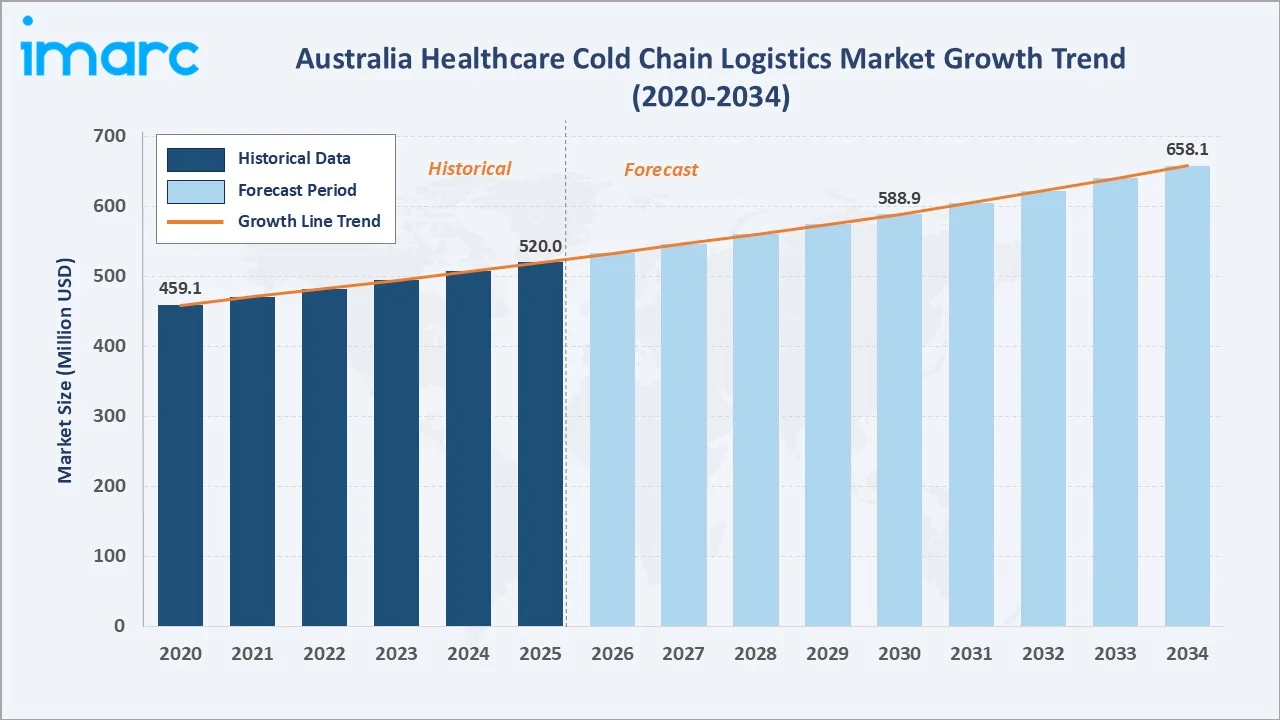
The Australia healthcare cold chain logistics market reached USD 520.0 Million in 2025 and is projected to reach USD 658.1 Million by 2034, exhibiting a CAGR of 2.52% during 2026-2034. The sustained expansion of Australia's biopharmaceutical product pipeline and the growing Australian clinical trial ecosystem are the primary growth catalysts. More than 16% of Australia's population is currently aged 65 years and above. This aging demographic is projected to grow significantly, with nearly one in four Australians (around 4.5 million people) expected to be aged 65 or older by 2066. Australia's expanding elderly population is increasing demand for temperature-sensitive pharmaceuticals, vaccines, biologics, insulin, specialty medicines, and advanced therapies used to manage chronic and age-related diseases. Biopharmaceuticals lead the product at 45.2%, transportation leads the segment at 56.4%, and Australia Capital Territory & New South Wales account for the largest regional share at 40.5%.
Market Snapshot
|
Metric |
Value |
|
Market Size (2025) |
USD 520.0 Million |
|
Forecast Market Size (2034) |
USD 658.1 Million |
|
CAGR (2026-2034) |
2.52% |
|
Base Year |
2025 |
|
Historical Period |
2020-2025 |
|
Forecast Period |
2026-2034 |
|
Dominant Product |
Biopharmaceuticals – 45.2% (2025) |
|
Dominant Segment |
Transportation – 56.4% (2025) |
|
Leading Region |
Australia Capital Territory & New South Wales – 40.5% (2025) |
The Australia healthcare cold chain logistics market grew from USD 459.1 Million in 2020 to USD 520.0 Million in 2025, driven initially by the extraordinary COVID-19 vaccine logistics operation that required establishment of ultra-cold chain (-70°C) capability for mRNA vaccines at hundreds of hospital vaccine hubs nationally, the sustained growth of Australia's biopharmaceutical dispensing through the PBS (Pharmaceutical Benefits Scheme) where expensive biologics and biosimilars are dispensed through hospital outpatient pharmacies and community pharmacies with strict 2-8°C storage requirements, and the progressive expansion of the clinical trials sector. The market is projected to reach USD 588.9 Million by 2030 and USD 658.1 Million by 2034.
To get more information on this market, Request Sample
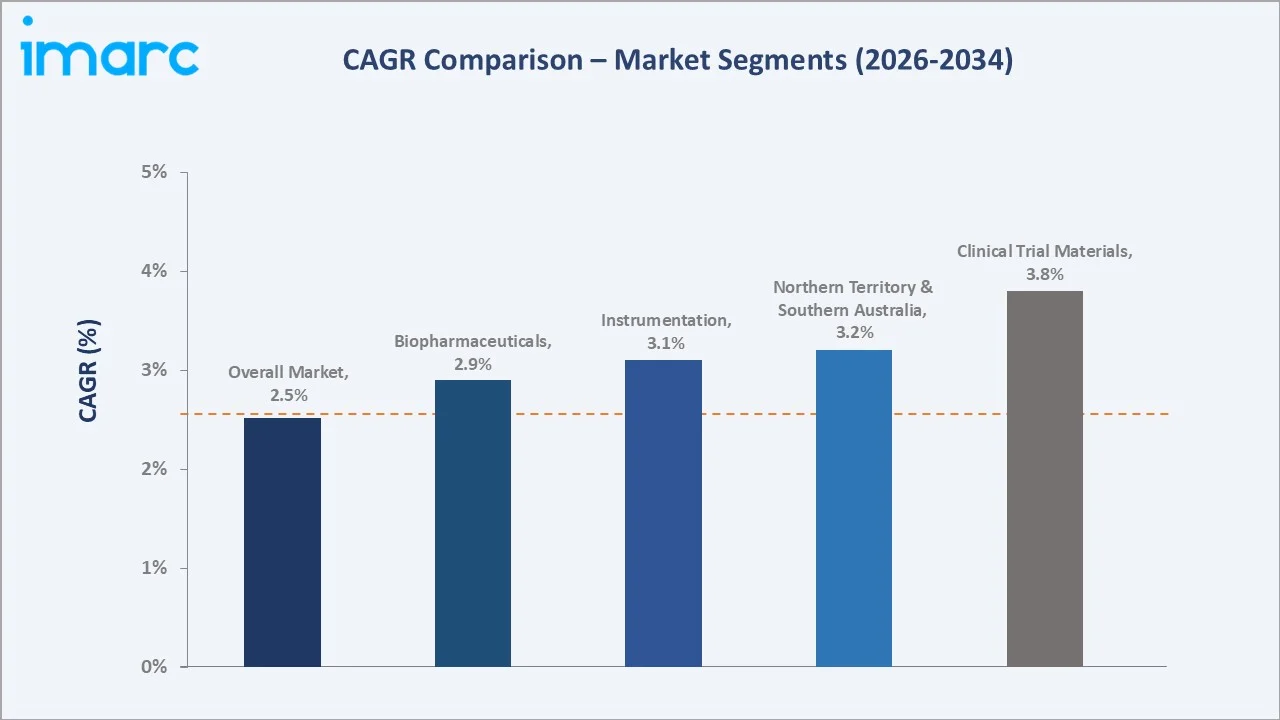
Clinical trial materials grow at ~3.80% CAGR through research expansion and Australia's competitive position as a preferred clinical trial destination due to tax offsets, experienced CROs, and streamlined processes. Northern Territory & Southern Australia grows at ~3.20% CAGR through resources sector workforce healthcare needs and NT immunization program complexity. Instrumentation grows at ~3.10% CAGR through temperature monitoring device adoption, IoT data loggers, and smart cold chain track-and-trace platforms. Biopharmaceuticals grow at ~2.90% CAGR through biologics listing expansion and cell therapy commercialization.
Executive Summary
The Australia healthcare cold chain logistics market is one of the most highly regulated and operationally complex segments of the national logistics industry. Unlike conventional logistics where delivery speed and cost dominate procurement decisions, healthcare cold chain procurement is primarily governed by regulatory compliance, temperature integrity assurance, and emergency response capability. The market encompasses three complementary infrastructure layers: transportation, packaging, and instrumentation.
Biopharmaceuticals lead at 45.2% (2025) through the relentless growth of Australia's PBS biologics expenditure. The transportation segment leads at 56.4% through the operational scale of temperature-controlled distribution across Australia's continental geography. Australia Capital Territory & New South Wales lead at 40.5% through the concentration of pharmaceutical wholesale distribution infrastructure in Sydney, Australia's largest pharmaceutical market, and the concentration of hospital outpatient pharmacies and clinical trial sites in Sydney and Canberra.
Key Market Insights
|
Insight |
Data |
|
Dominant Product |
Biopharmaceuticals – 45.2% share (2025) |
|
Dominant Segment |
Transportation – 56.4% share (2025) |
|
Leading Region |
Australia Capital Territory & New South Wales – 40.5% share (2025) |
|
Market Opportunity |
Cell and gene therapy cryogenic logistics; remote area vaccine cold chain IoT; mRNA therapy cold chain infrastructure; clinical trial IMP temperature-controlled courier; state-of-the-art GMP warehouse-as-a-service |
Key Analytical Observations:
- Biopharmaceuticals at 45.2% (2025): Biopharmaceuticals, encompassing monoclonal antibodies, blood products, recombinant proteins, and advanced therapy medicinal products, command the largest product segment share through the combination of high volume, strict 2-8°C storage requirements creating persistent cold chain dependency, and the extraordinary unit value of biopharmaceuticals that justifies premium cold chain service expenditure.
- Transportation at 56.4% (2025): Transportation, encompassing temperature-controlled road transport, temperature-controlled air freight, and specialist cryogenic courier services, commands the majority market share through the sheer cost of maintaining temperature control across Australia's continental distribution geography.
- Australia Capital Territory & New South Wales at 40.5% (2025): Australia Capital Territory & New South Wales lead the market due to their concentration of major hospitals, pharmaceutical companies, research institutions, and advanced cold storage infrastructure.
Australia Healthcare Cold Chain Logistics Market Overview
Australia's healthcare cold chain logistics market encompasses the specialized logistics infrastructure, services, and technology required to maintain the integrity of temperature-sensitive pharmaceutical and healthcare products, including biopharmaceuticals, vaccines, blood products, diagnostic reagents, and investigational medicinal products, throughout their supply chain from international or domestic manufacturing origin through to final patient delivery across Australia's geographically vast and climatically diverse territory. Macroeconomic factors include rising healthcare expenditure, an aging population, and increasing demand for biologics, vaccines, and specialty pharmaceuticals. Additionally, government investments in healthcare infrastructure, expanding pharmaceutical manufacturing, and advancements in temperature-controlled logistics support sustained market growth.
Market Dynamics
To evaluate market opportunities, Request Sample
Market Drivers
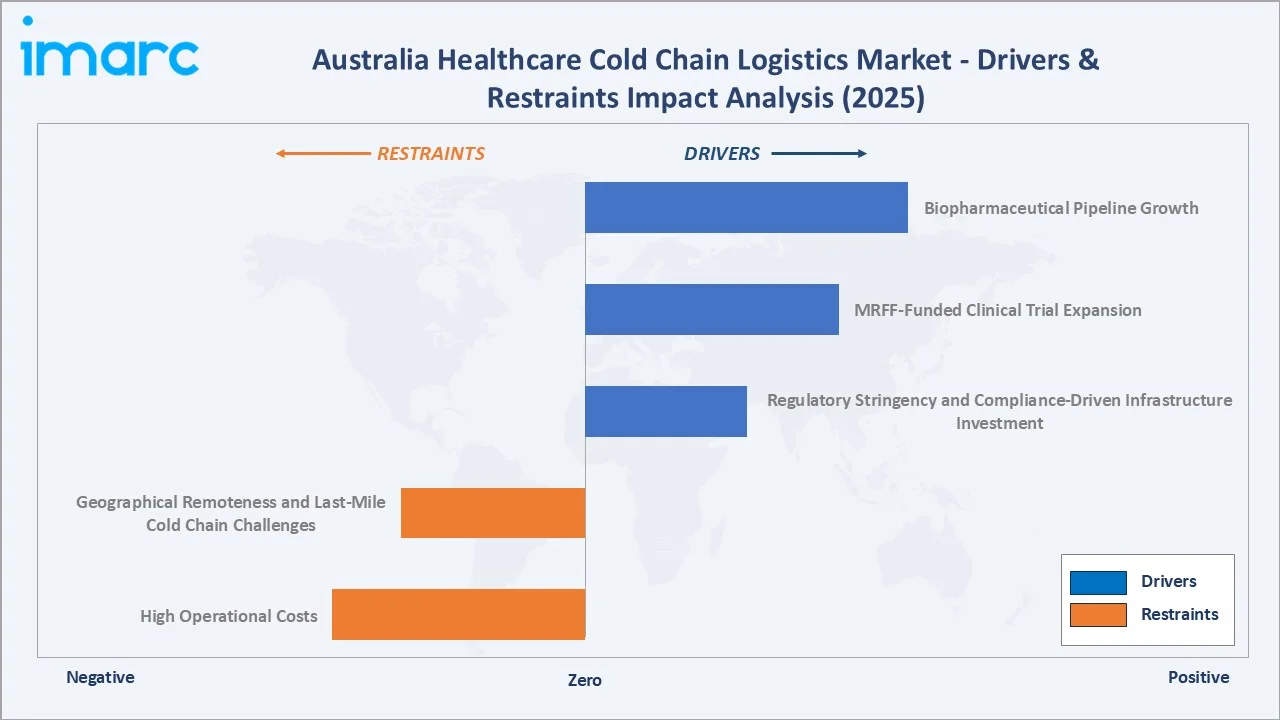
- Biopharmaceutical Pipeline Growth: The Australian Government continues to list new biopharmaceutical medicines on the PBS at an accelerating pace, creating a new permanent cold chain demand stream once listed that persists for the medicine's entire commercial lifecycle. In July 2025, Biocon Biologics Ltd launched Nepexto, a biosimilar of Enbrel (etanercept), in Australia in partnership with Generic Health, expanding patient access to advanced biologic treatments. As biologics and biosimilars require strict temperature-controlled storage and transportation, their increasing commercialization is strengthening demand for specialized healthcare cold chain logistics services.
- MRFF-Funded Clinical Trial Expansion: The Australian Government announced a $6.5 billion third 10-year Medical Research Future Fund (MRFF) Investment Plan covering 2024–25 to 2033–34 as part of the 2024–25 Budget. The plan builds on earlier MRFF investments, strengthens and updates existing programs, and directs funding toward emerging healthcare priorities. The expanded funding strengthens demand for specialized cold chain infrastructure, validated packaging, and compliant logistics services to support the safe movement of clinical trial materials across research sites and healthcare facilities.
- Regulatory Stringency and Compliance-Driven Infrastructure Investment: Regulatory stringency is driving investment in validated cold storage facilities, temperature-controlled vehicles, and real-time monitoring systems across Australia’s healthcare logistics sector. Pharmaceutical and logistics companies must maintain strict temperature ranges, product traceability, and documented handling procedures to protect medicine quality. Compliance requirements also encourage the adoption of automated data logging, backup power systems, and qualified packaging solutions. These investments improve supply chain reliability and support the safe distribution of vaccines, biologics, and specialty pharmaceuticals.
Market Restraints
- High Operational Costs: Maintaining pharmaceutical cold chain infrastructure in Australia is exceptionally capital-intensive: a licensed pharmaceutical cold store facility requires validated refrigeration systems with redundant backup, continuous temperature monitoring with certified calibrated sensors, documented cleaning and pest control programs, controlled access security, personnel training in GDP requirements, and a documented quality management system. The annualized infrastructure cost of a licensed pharmaceutical cold store creates a significant cost base that healthcare cold chain logistics providers must recover through service pricing that is inevitably higher than conventional temperature-controlled food or beverage logistics.
- Geographical Remoteness and Last-Mile Cold Chain Challenges: Australia's unique geographical challenge creates last-mile cold chain delivery complexity that no other comparable developed-nation healthcare cold chain market faces at equivalent scale. The NT and Northern WA represent the most operationally challenging healthcare cold chain environments in Australia: remote community health centers may have unreliable power supply, limited cold chain monitoring capability, community health workers without specialized pharmaceutical GDP training, and no access to cold chain rescue infrastructure when excursions occur.
Market Opportunities
- Cell and Gene Therapy Cryogenic Logistics: In March 2026, Australia’s Therapeutic Goods Administration (TGA) approved a clinical trial application for KMCAR T-cell therapy, an innovative autologous CAR T-cell therapy targeting the Kappa Myeloma Antigen. The therapy is being evaluated for patients with kappa-restricted relapsed or refractory multiple myeloma. CAR-T cell therapies and other advanced cell therapies require extraordinary cryogenic logistics: the patient's own leukapheresis material must be transported to a US or European manufacturing site in liquid nitrogen vapor-phase shippers at -150°C to -180°C, the manufactured CAR-T product returned to Australia in the same cryogenic conditions, and administered to the patient within a validated administration window, creating a round-trip cryogenic cold chain with multiple custody chain transfers, import permits, TGA regulated goods requirements, and chain-of-identity documentation requirements that make each CAR-T logistics event one of the most complex pharmaceutical logistics operations in the industry.
- mRNA Vaccine and Therapeutic Cold Chain Expansion: The COVID-19 pandemic's validation of mRNA vaccine technology creates a sustained demand for ultra-cold chain infrastructure that extends beyond the COVID-19 program into ongoing mRNA medicine logistics. Australia's strategic interest in mRNA manufacturing sovereignty will create domestic mRNA product distribution logistics once manufacturing commences, adding a domestic origin cold chain component to a market currently almost entirely dependent on imported temperature-sensitive products.
Market Challenges
- Biosimilar Price Pressure Compressing Logistics Service Margins: The PBS biosimilar mandatory substitution policy reduces per-unit product value across biosimilar categories while maintaining equivalent cold chain logistics requirements. As biosimilar unit prices fall to 20-30% of original innovator product pricing under PBS biosimilar price disclosure provisions, pharmaceutical manufacturers face increasing pressure to reduce cold chain logistics service costs proportionally, creating margin compression for 3PL providers whose cost structures are driven by regulatory compliance requirements rather than product value.
- Temperature Excursion Liability and Insurance Complexity: Healthcare cold chain logistics providers face significant financial liability exposure from temperature excursions. The complex contractual allocation of liability between pharmaceutical manufacturer, logistics provider, packaging supplier, and end healthcare facility for temperature excursion product losses, combined with the insurance complexity of underwriting cold chain liability for high-value biological medicines, creates operational and commercial risk management challenges that smaller logistics providers find difficult to sustain, progressively consolidating the market toward large operators with comprehensive insurance programs and robust quality management systems.
Emerging Market Trends
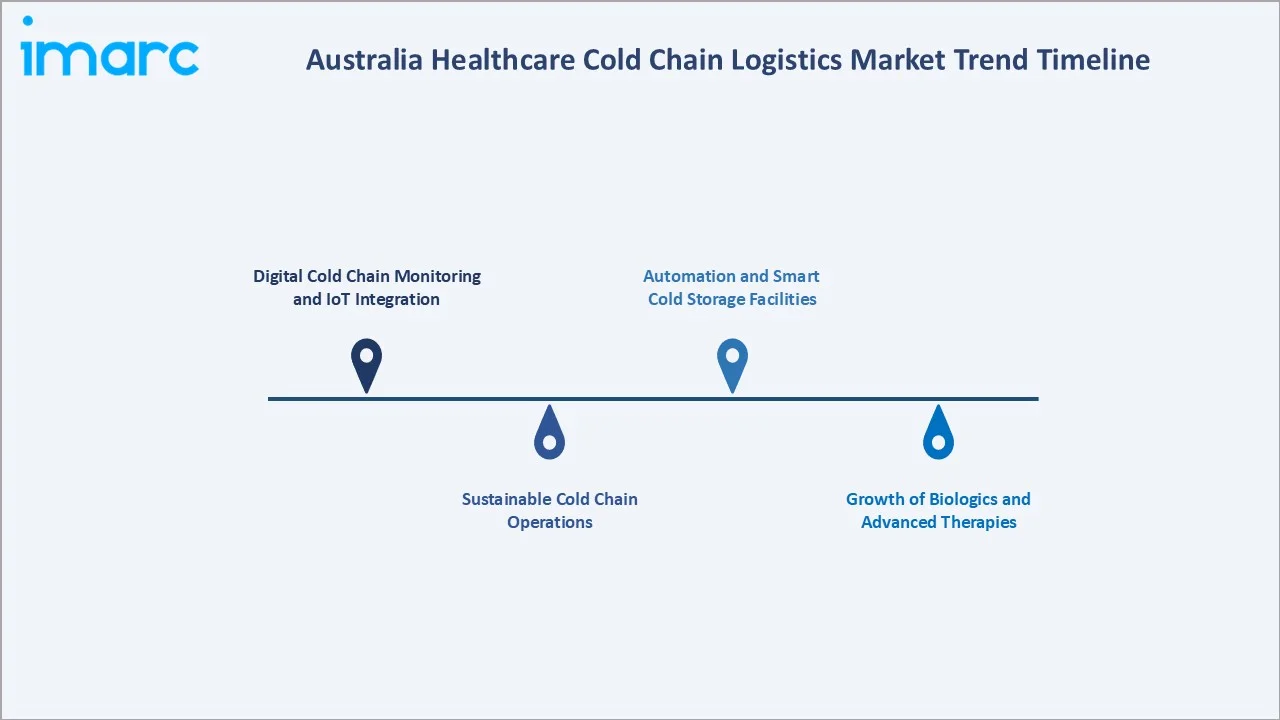
1. Digital Cold Chain Monitoring and IoT Integration
Healthcare logistics providers are increasingly deploying IoT sensors, GPS tracking, cloud-based monitoring platforms, and real-time temperature analytics. These technologies improve shipment visibility, ensure regulatory compliance, reduce product loss, and enable proactive intervention during temperature excursions.
2. Sustainable Cold Chain Operations
Companies are adopting energy-efficient refrigeration systems, reusable insulated packaging, electric refrigerated vehicles, and low-emission logistics practices to reduce environmental impact. Sustainability initiatives help healthcare organizations meet ESG goals while improving operational efficiency and reducing waste.
3. Growth of Biologics and Advanced Therapies
The increasing adoption of biologics, biosimilars, cell and gene therapies, and personalized medicines is driving demand for specialized cold chain logistics. In September 2025, Celltrion launched Steqeyma, a biosimilar of Janssen’s Stelara for treating autoimmune diseases, and Omlyclo, a biosimilar of Roche and Novartis’ Xolair for managing allergic conditions, in Australia. These products require strict temperature control throughout storage and transportation, encouraging logistics providers to expand ultra-low temperature capabilities and validated distribution networks.
4. Automation and Smart Cold Storage Facilities
Warehouse operators are investing in automated storage and retrieval systems (AS/RS), robotics, AI-driven inventory management, and digital warehouse management systems. These technologies improve inventory accuracy, optimize temperature-controlled storage, increase throughput, and enhance supply chain resilience.
Industry Value Chain Analysis
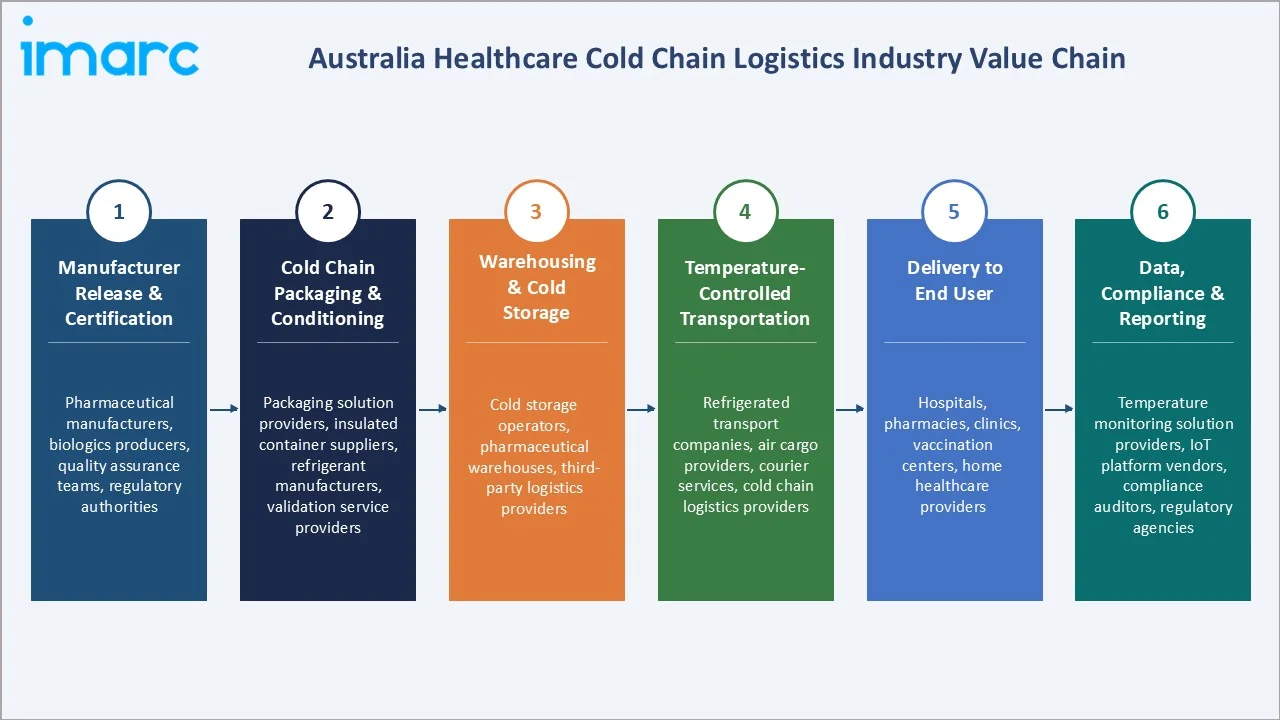
The Australia healthcare cold chain logistics value chain integrates manufacturer release & certification, cold chain packaging & conditioning, warehousing & cold storage, temperature-controlled transportation, delivery to end user, and data, compliance & reporting.
|
Stage |
Key Participants |
|
Manufacturer Release & Certification |
Pharmaceutical manufacturers, biologics producers, quality assurance teams, regulatory authorities. |
|
Cold Chain Packaging & Conditioning |
Packaging solution providers, insulated container suppliers, refrigerant manufacturers, validation service providers. |
|
Warehousing & Cold Storage |
Cold storage operators, pharmaceutical warehouses, third-party logistics providers. |
|
Temperature-Controlled Transportation |
Refrigerated transport companies, air cargo providers, courier services, cold chain logistics providers. |
|
Delivery to End User |
Hospitals, pharmacies, clinics, vaccination centers, home healthcare providers. |
|
Data, Compliance & Reporting |
Temperature monitoring solution providers, IoT platform vendors, compliance auditors, regulatory agencies. |
Temperature-controlled transportation is the most value-added stage in the Australia healthcare cold chain logistics market. It requires specialized refrigerated vehicles, real-time temperature monitoring, validated handling processes, and strict regulatory compliance to preserve the integrity of high-value pharmaceuticals, biologics, vaccines, and advanced therapies throughout distribution.
Technology Landscape in the Australia Healthcare Cold Chain Industry
IoT-Based Real-Time Temperature Monitoring
IoT-enabled sensors continuously monitor temperature, humidity, and location throughout the supply chain. The data is transmitted to cloud platforms, allowing operators to detect temperature excursions instantly and take corrective action. This technology improves product integrity, enhances visibility, and supports compliance with pharmaceutical regulations.
AI-Powered Cold Chain Analytics
Artificial intelligence analyzes shipment, inventory, and environmental data to predict potential cold chain failures and optimize logistics operations. AI helps improve route planning, demand forecasting, and warehouse utilization while reducing product spoilage and operational costs. It also enables predictive maintenance for refrigeration equipment.
Smart Packaging and Data Loggers
Validated insulated packaging integrated with electronic data loggers records temperature, shock, humidity, and transit conditions throughout shipment. These solutions provide complete shipment traceability, improve regulatory compliance, and help ensure pharmaceutical products remain within validated temperature ranges until delivery.
Market Segmentation Analysis
The report covers the following segments:
|
Segment Category |
Leading Segment |
Market Share |
Year |
|
Product |
Biopharmaceuticals |
45.2% |
2025 |
|
Segment |
Transportation |
56.4% |
2025 |
|
Region |
Australia Capital Territory & New South Wales |
40.5% |
2025 |

By Product
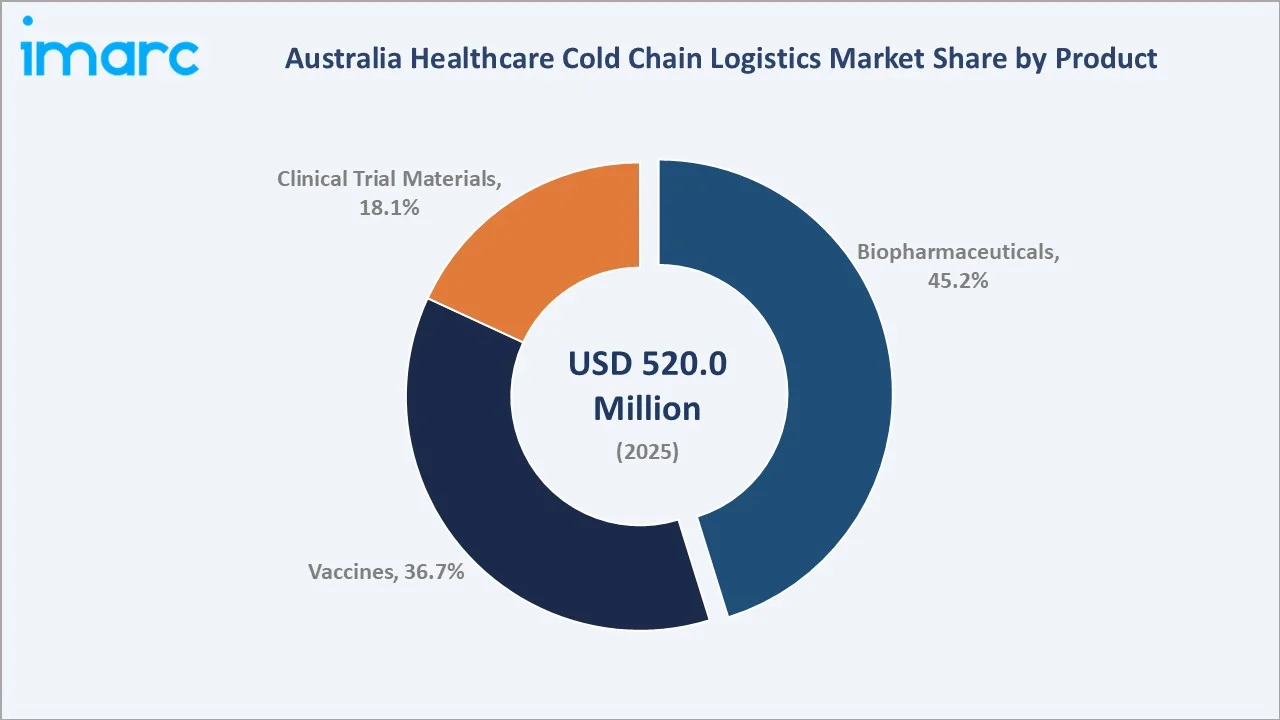
Biopharmaceuticals lead at 45.2% (2025) through PBS biologics dispensing volume and TGA-approved cell and gene therapies requiring the most demanding cold chain specifications. Vaccines at 36.7% serve the national immunization perpetual distribution requirement and flu vaccine program.
To access detailed market analysis, Request Sample
Clinical trial materials at 18.1%, growing fastest at ~3.80% CAGR, serve MRFF-funded and international sponsor trials at Australia's active trial sites. The biopharmaceutical product segment's sustained dominance reflects the structural relationship between Australia's PBS biologics investment and the cold chain logistics cost embedded in delivering these products from international manufacturers to Australian patients.
By Segment
Transportation leads at 56.4% through the cost of maintaining temperature-controlled road, air, and cryogenic courier services across Australia's continental distribution geography, including the premium cost of international air freight pharmaceutical programs and domestic refrigerated last-mile delivery to rural and remote healthcare facilities.
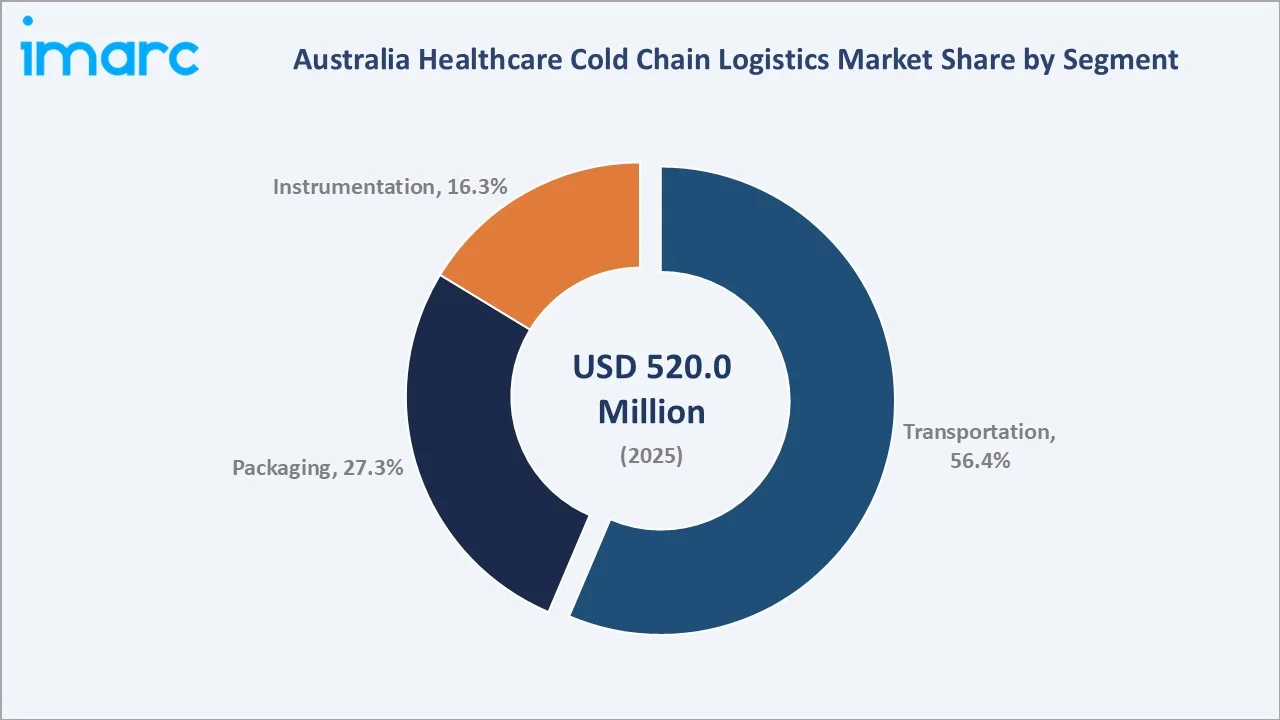
Packaging at 27.3% encompasses dry ice shippers, cryogenic dewars, and active powered containers that enable temperature maintenance during transit. Instrumentation at 16.3%, growing at ~3.10% CAGR, serves temperature monitoring compliance requirements with IoT data loggers, warehouse monitoring systems, and temperature mapping services.
Regional Market Insights
|
Region |
Share (2025) |
Key Healthcare Cold Chain Logistics Drivers & Characteristics |
|
Australia Capital Territory & New South Wales |
40.5% |
Largest concentration of hospitals, pharmaceutical companies, research institutes, and distribution hubs. Strong healthcare spending and advanced cold chain infrastructure support market leadership. |
|
Victoria & Tasmania |
24.2% |
Home to major biotechnology and pharmaceutical manufacturing facilities. Growing clinical research activity and vaccine distribution drive demand for temperature-controlled logistics. |
|
Queensland |
15.9% |
Rising healthcare investments, expanding regional healthcare services, and increasing biologics distribution support market growth. |
|
Western Australia |
11.3% |
Demand is supported by long-distance transportation requirements and healthcare services for dispersed populations. |
|
Northern Territory & Southern Australia |
8.1% |
Growth is driven by improving healthcare access, vaccine distribution programs, and expanding cold storage capacity to serve rural and remote communities efficiently. |
Australia Capital Territory & New South Wales dominate the market at 40.5%, supported by dense healthcare infrastructure, pharmaceutical activity, and major distribution hubs. Victoria and Tasmania follow with 24.2%, benefiting from strong biotechnology research, clinical trials, and pharmaceutical manufacturing. Queensland accounts for 15.9%, driven by expanding healthcare services and the need to supply regional and remote populations.
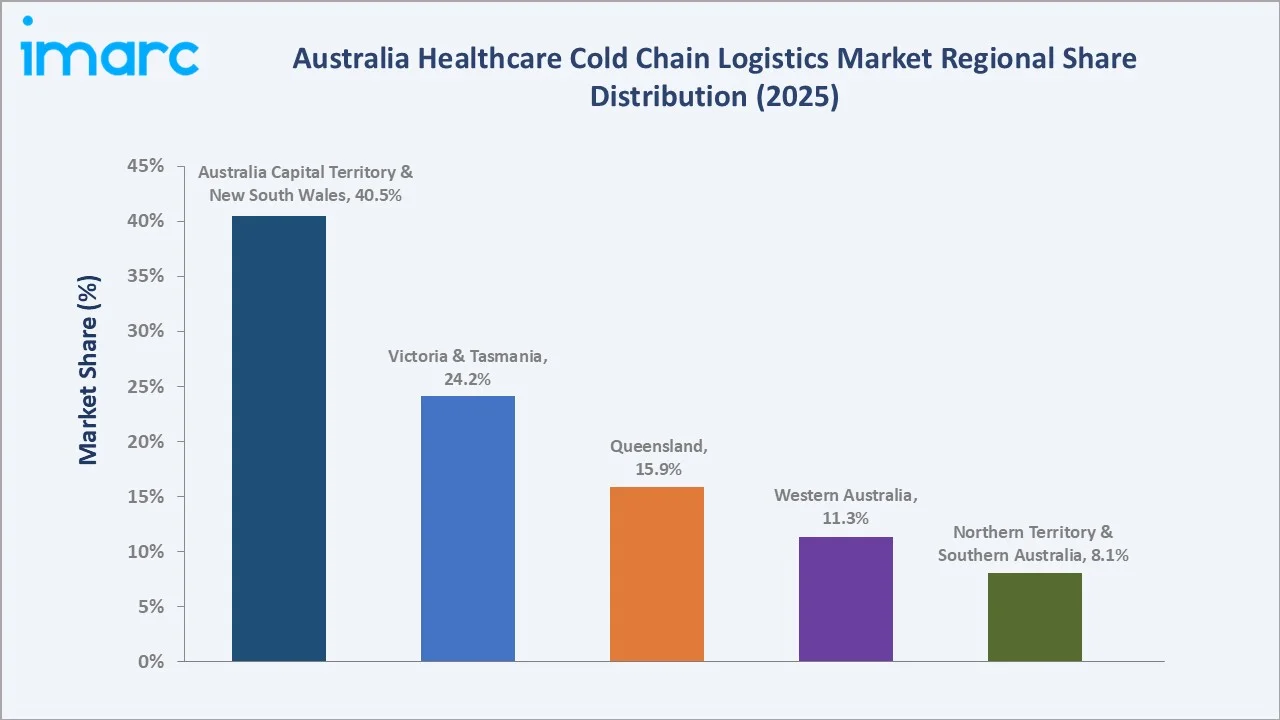
Western Australia holds 11.3%, where long transport distances increase reliance on specialized refrigerated logistics. The Northern Territory and South Australia collectively represent 8.1%, supported by vaccine distribution and improving healthcare access.
Competitive Landscape
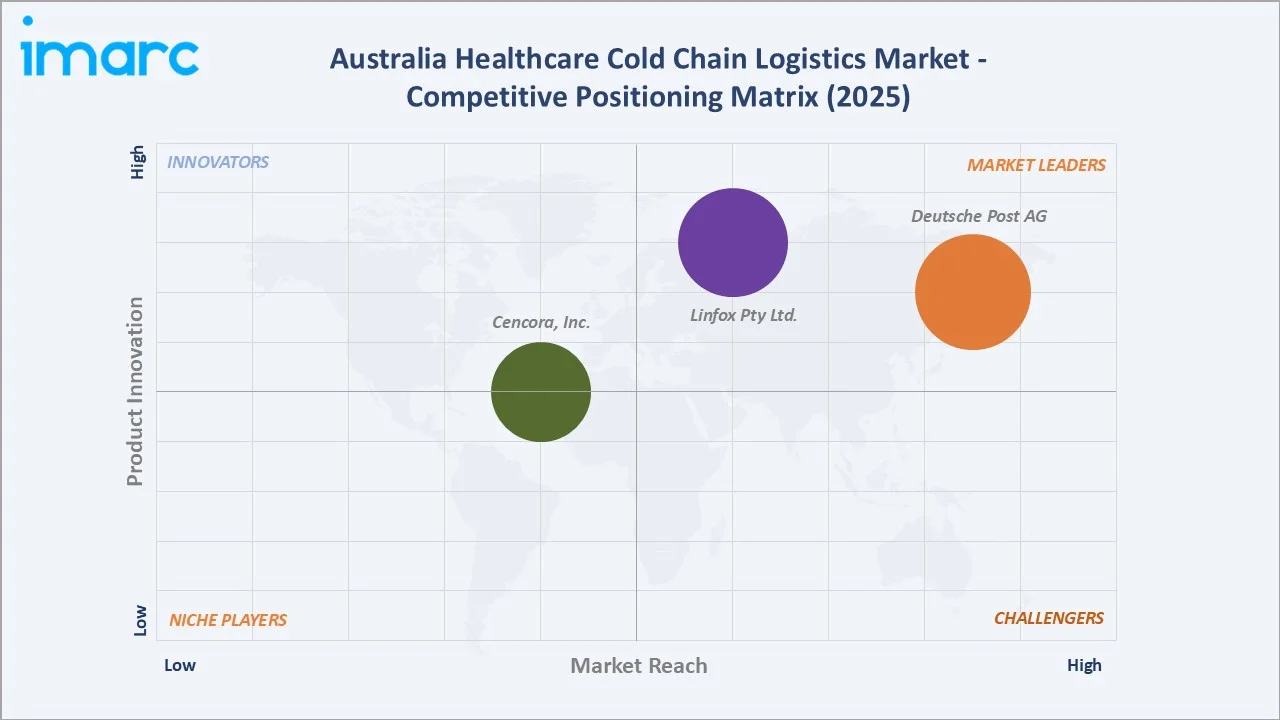
The Australia healthcare cold chain logistics market is moderately concentrated, while specialist providers serve the high-value niche segments at premium service pricing that generates disproportionate margin contribution relative to their volume market share. The pharmaceutical wholesale distributors serve the community pharmacy and hospital supply chain segments with integrated distribution models combining product sourcing, cold chain storage, and delivery services.
|
Company |
Key Services |
Market Position |
Core Strength |
|
Deutsche Post AG |
DHL Health Logistics |
Market Leader |
Deutsche Post AG, operating primarily through its DHL divisions, is a leading 3PL provider in Australia’s healthcare sector. It manages end-to-end temperature-sensitive logistics, supporting biopharmaceuticals, vaccines, and clinical trials. |
|
Linfox Pty Ltd. |
Healthcare and Pharmaceutical Logistics |
Market Leader |
Linfox Pty Ltd. serves as a critical, licensed backbone for Australia's healthcare cold chain, providing pharmaceutical companies with tier-one, digitally enabled warehousing and temperature-controlled transport. |
|
Cencora, Inc. |
Pharmaceutical Logistics |
Established Player |
Cencora, Inc. operates as a premier specialty logistics and third-party logistics (3PL) provider in Australia through its subsidiary, World Courier. |
The competitive landscape is progressively consolidating through strategic acquisitions reflecting global healthcare logistics providers' recognition that the Australian healthcare cold chain market's regulatory complexity, high operational standards, and specialist pharmaceutical customer relationships create durable competitive moats that resist entry by operators without established regulatory compliance infrastructure and pharmaceutical customer relationships.
Key Company Profiles
Deutsche Post AG
Deutsche Post AG, operating under the DHL Group brand, is one of the leading logistics companies with a strong presence in healthcare and life sciences logistics. The company provides end-to-end temperature-controlled transportation, warehousing, packaging, customs brokerage, and last-mile delivery solutions for pharmaceuticals, vaccines, biologics, clinical trial materials, and medical devices. Through its specialized DHL Health Logistics network, the company offers GDP-compliant cold chain services supported by real-time shipment monitoring, validated packaging solutions, and an extensive global distribution network.
- Key Services: DHL Health Logistics.
- Strategic Focus: Expanding its healthcare logistics capabilities by investing in GDP-compliant cold storage facilities, temperature-controlled transportation networks, and specialized life sciences distribution services. The company is strengthening its digital logistics platform through real-time shipment visibility, IoT-enabled temperature monitoring, and predictive analytics to improve supply chain reliability.
Linfox Pty Ltd.
Linfox Pty Ltd. is one of the largest logistics providers in the Asia-Pacific region, offering integrated supply chain and temperature-controlled logistics solutions for the healthcare sector. The company provides refrigerated transportation, cold storage, warehousing, inventory management, and distribution services for pharmaceuticals, vaccines, medical devices, and other temperature-sensitive healthcare products. Its healthcare logistics operations are supported by a network of strategically located distribution centers, specialized refrigerated fleets, and advanced warehouse management systems. With expertise in regulatory compliance and end-to-end cold chain management, Linfox supports hospitals, pharmaceutical manufacturers, wholesalers, and healthcare providers across Australia and neighboring markets.
- Key Services: Healthcare and Pharmaceutical Logistics.
- Strategic Focus: Expanding its temperature-controlled logistics capabilities to support the growing demand for pharmaceuticals, biologics, vaccines, and specialty healthcare products across Australia. The company is investing in advanced cold storage facilities, refrigerated transport fleets, and digital supply chain technologies, including real-time temperature monitoring and warehouse automation.
Market Concentration Analysis
The Australia healthcare cold chain logistics market is moderately concentrated, with a mix of global logistics providers and established domestic companies competing across pharmaceutical and healthcare supply chains. Major players leverage extensive cold chain infrastructure, nationwide distribution networks, and advanced temperature-monitoring technologies to strengthen their market positions. Competition is increasingly centered on GDP-compliant logistics, digital tracking capabilities, and specialized services for biologics, vaccines, and cell and gene therapies. Companies are also investing in cold storage capacity, last-mile delivery, and automation to meet evolving regulatory requirements and rising demand for temperature-sensitive healthcare products. Regional logistics providers continue to compete by offering customized services and strong local distribution capabilities.
Investment & Growth Opportunities
Highest Growth Segments
Clinical trial materials (~3.80% CAGR), NT and Southern Australia (~3.20% CAGR), instrumentation (~3.10% CAGR), and biopharmaceuticals (~2.90% CAGR) represent the Australia healthcare cold chain logistics market's highest-growth investment vectors through 2034.
Investment Themes
- Cell and Gene Therapy Cryogenic Infrastructure Expansion: Rising adoption of cell and gene therapies is driving investment in cryogenic storage facilities, ultra-low temperature freezers, and specialized transportation systems capable of maintaining temperatures below -150°C. These investments strengthen Australia's ability to support advanced therapies while ensuring product integrity and regulatory compliance.
- Remote Area IoT Cold Chain Monitoring for Immunization Programs: Investment is increasing in IoT-enabled temperature sensors, GPS tracking, and cloud-based monitoring platforms to improve vaccine distribution across Australia's rural and remote communities. These technologies provide real-time visibility, reduce temperature excursions, and enhance the reliability of immunization supply chains.
Future Market Outlook (2026-2034)
The Australia healthcare cold chain logistics market is projected to grow from USD 520.0 Million in 2025 to USD 658.1 Million by 2034, delivering a 2.52% CAGR that reflects steady, regulation-driven market expansion rather than the volatile high-growth dynamics of technology or consumer markets, appropriate to the fundamentally infrastructure and compliance-driven nature of pharmaceutical cold chain logistics where growth tracks the pharmaceutical market's expansion plus the progressive tightening of GDP regulatory requirements adding compliance investment cost to the market baseline. The anchor value of USD 588.9 Million in 2030 is driven by three structural forces that compound through the forecast period.
First, the Australian PBS biopharmaceutical expenditure trajectory creates the foundational cold chain volume growth that sustains the biopharmaceutical product segment's 45.2% market leadership and ~2.90% CAGR through 2034. Second, the TGA's progressive GDP regulatory stringency creates a compliance investment imperative that generates market revenue growth independent of underlying pharmaceutical volume growth. Third, Australia's clinical trial sector expansion is creating the fastest-growing segment of the healthcare cold chain market at a rate that exceeds the overall market.
Research Methodology
Primary Research
Primary research comprised in-depth interviews with pharmaceutical cold chain logistics operations directors, clinical trial logistics specialists, pharmaceutical company supply chain directors, TGA compliance consultants, clinical trial managers at major Australian hospital trial sites, and National Immunization Program cold chain coordinators at state health departments. Discussions validated market size estimates, segment dynamics, competitive positioning, and regulatory impact assessment.
Secondary Research
Secondary research encompassed TGA Good Distribution Practice guidelines, Clinical Trial Notification scheme documentation, MRFF Annual Reports, company annual reports, plasma fractionation and distribution documentation, healthcare expenditure statistics, and IMARC Group Australia healthcare logistics market intelligence resources.
Forecasting Models
Forecasting models were developed using historical Australia healthcare cold chain logistics market data, PBS biopharmaceutical expenditure growth projection, National Immunization Program vaccine procurement and distribution volume trajectory, MRFF clinical trial investment disbursement schedule and clinical trial volume projection, regional market growth differential estimation across five Australian regions, cell and gene therapy TGA approval pipeline and cryogenic logistics demand projection, and competitive market share trajectory by key vendor. Both top-down and bottom-up approaches were validated through primary research.
Australia Healthcare Cold Chain Logistics Market Report Coverage:
| Report Features | Details |
|---|---|
| Base Year of the Analysis | 2025 |
| Historical Period | 2020-2025 |
| Forecast Period | 2026-2034 |
| Units | Million USD |
| Scope of the Report |
Exploration of Historical Trends and Market Outlook, Industry Catalysts and Challenges, Segment-Wise Historical and Future Market Assessment:
|
| Products Covered | Clinical Trial Materials, Vaccines, Biopharmaceuticals |
| Segments Covered | Transportation, Packaging, Instrumentation |
| Regions Covered | Australia Capital Territory & New South Wales, Victoria & Tasmania, Queensland, Northern Territory & Southern Australia, Western Australia |
| Companies Covered | Deutsche Post AG, Linfox Pty Ltd., Cencora, Inc., etc. |
| Customization Scope | 10% Free Customization |
| Post-Sale Analyst Support | 10-12 Weeks |
| Delivery Format | PDF and Excel through Email (We can also provide the editable version of the report in PPT/Word format on special request) |
Key Benefits for Stakeholders:
- IMARC’s industry report offers a comprehensive quantitative analysis of various market segments, historical and current market trends, market forecasts, and dynamics of the Australia healthcare cold chain logistics market from 2020-2034.
- The research report provides the latest information on the market drivers, challenges, and opportunities in the Australia healthcare cold chain logistics market.
- Porter's five forces analysis assist stakeholders in assessing the impact of new entrants, competitive rivalry, supplier power, buyer power, and the threat of substitution. It helps stakeholders to analyze the level of competition within the Australia healthcare cold chain logistics industry and its attractiveness.
- Competitive landscape allows stakeholders to understand their competitive environment and provides an insight into the current positions of key players in the market.
Frequently Asked Questions About the Australia Healthcare Cold Chain Logistics Market Report
The Australia healthcare cold chain logistics market reached USD 520.0 Million in 2025, driven by PBS biologics dispensing growth, TGA GDP guideline updates strengthening temperature monitoring compliance requirements, COVID-19 vaccine ultra-cold infrastructure establishment sustaining mRNA vaccine logistics capability, and influenza vaccine manufacturing creating NIP vaccine distribution cold chain volumes.
The market grows at 2.52% CAGR, reaching USD 658.1 Million by 2034. This steady growth is supported by increasing demand for temperature-sensitive pharmaceuticals, biologics, vaccines, and advanced therapies, along with continued investments in compliant cold chain infrastructure.
Biopharmaceuticals lead at 45.2% (2025) through PBS biologics and TGA-approved CAR-T cell therapies requiring the market's highest cold chain specifications.
Transportation leads at 56.4% (2025) through the cost of temperature-controlled distribution across Australia's continental geography, international pharmaceutical air freight cold chain management, and specialist cryogenic courier services for CAR-T cell therapies.
Australia Capital Territory & New South Wales leads at 40.5% (2025) through Sydney as Australia's primary pharmaceutical import port and wholesale hub, concentration of major pharmaceutical company Australian sponsor offices managing cold chain compliance, and NSW hospital biopharmaceutical dispensing volumes.
Leading companies include Deutsche Post AG, Linfox Pty Ltd., and Cencora, Inc., among others.
The market is projected to reach USD 588.9 Million by 2030, driven by PBAC additional biologic PBS listings, PBS GLP-1 agonist dispensing volume growth, and NT remote community health IoT monitoring programs.
Top opportunities include cell and gene therapy cryogenic logistics scale-up, remote area IoT cold chain monitoring, mRNA cold chain infrastructure, decentralized clinical trial home delivery, and clinical trial packaging localization.
Need more help?
- Speak to our experienced analysts for insights on the current market scenarios.
- Include additional segments and countries to customize the report as per your requirement.
- Gain an unparalleled competitive advantage in your domain by understanding how to utilize the report and positively impacting your operations and revenue.
- For further assistance, please connect with our analysts.
 Request Customization
 Speak to an Analyst
 Request Brochure
 Inquire Before Buying
Benefits of Customization
- Personalize this research
- Triangulate with your data
- Get data as per your format and definition
- Gain a deeper dive into a specific application, geography, customer, or competitor
- Any level of personalization
Get in Touch With Us
UNITED STATES
Phone: +1-201-971-6302
INDIA
Phone: +91-120-433-0800
UNITED KINGDOM
Phone: +44-753-714-6104
Email: [email protected]
Client Testimonials




.webp)




.webp)













Related Reports

Choose your plan
*Please note that the prices mentioned below are starting prices for each bundle type. Kindly contact our team for further details.*
Single User License
- 1 User License, Access on 2 Devices
- PDF Report + Excel Dataset (Password Protected)
- Lifetime Access
- No Printing Rights
- 10% Free Report Customization
- 10–12 Weeks of Analyst Support
Five User License
- Access for 5 Users, 2 Devices per User
- PDF Report + Excel Dataset (Password Protected)
- Lifetime Access
- Dedicated Account Manager
- 12–14 Weeks of Analyst Support
- No Printing Rights
- 15% Free Report Customization
- 25% Discount on Your Next Purchase
Corporate User License
- Unlimited User Access (Within Your Organization)
- PDF Report + Excel Dataset
- Lifetime Access
- Dedicated Account Manager
- 14–20 Weeks of Analyst Support
- No Printing Rights
- 20% Free Report Customization
- 30% Discount on Your Next Purchase
Essential Insights
What's included:
3 reports
- Lifetime Access
- PDF Reports
- Excel Datasets
- 2 Weeks of Free Analyst Support
- 2 User Licenses
- Access on 2 Devices
- Printing Rights
- Complimentary PowerPoint (PPT) Version
- Complimentary License Upgrade
Professional Access
What's included:
5 reports
- Lifetime Access
- PDF Reports
- Excel Datasets
- 8 Weeks of Free Analyst Support
- 2 User Licenses
- Access on 2 Devices
- Printing Rights
- Complimentary PowerPoint (PPT) Version
- Complimentary License Upgrade
Business Advantage
What's included:
8 reports
- Lifetime Access
- PDF Reports
- Excel Datasets
- 14 Weeks of Free Analyst Support
- 2 User Licenses
- Access on 2 Devices
- Printing Rights
- Complimentary PowerPoint (PPT) Version
- Complimentary License Upgrade
Enterprise Intelligence
What's included:
10 reports
- Lifetime Access
- PDF Reports
- Excel Datasets
- 20 Weeks of Free Analyst Support
- 2 User Licenses
- Access on 2 Devices
- Printing Rights
- Complimentary PowerPoint (PPT) Version
- Complimentary License Upgrade