
India Agricultural Micronutrients Market Size, Share, Trends and Forecast by Type, Source, Application, Crop Type, and Region, 2026-2034
India Agricultural Micronutrients Market Size, Share, Trends & Forecast (2026-2034)
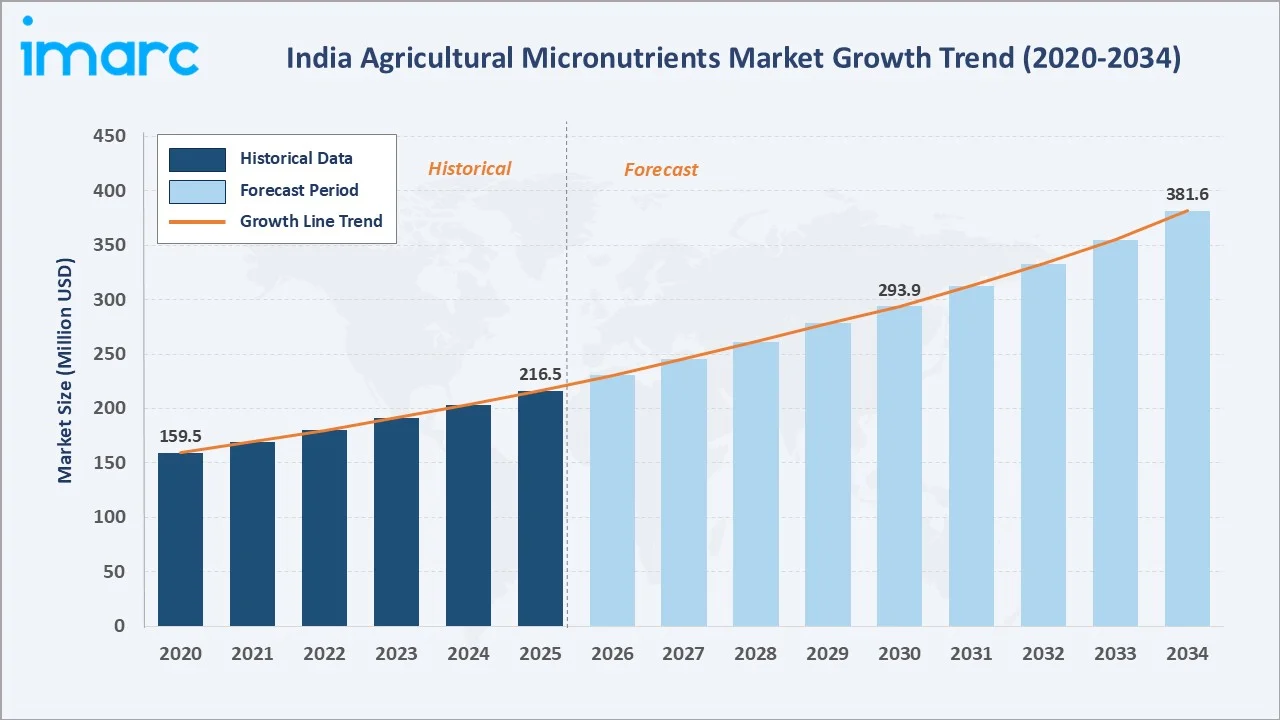
The India agricultural micronutrients market reached USD 216.5 Million in 2025 and is projected to reach USD 381.6 Million by 2034, growing at a CAGR of 6.30% during 2026-2034. The market is driven by declining soil fertility, rising demand for high-yield crops, and government initiatives promoting balanced fertilization. The Non-Chelated segment dominates the source category at 63.0%. Soil application leads at 54.0%. North India commands 33.0% of the national market share.
Market Snapshot
|
Metric |
Value |
|
Market Size (2025) |
USD 216.5 Million |
|
Forecast Market Size (2034) |
USD 381.6 Million |
|
CAGR (2026-2034) |
6.30% |
|
Base Year |
2025 |
|
Historical Period |
2020-2025 |
|
Forecast Period |
2026-2034 |
|
Dominant Source |
Non-Chelated (63.0%, 2025) |
|
Dominant Application |
Soil (54.0%, 2025) |
|
Leading Region |
North India (33.0%, 2025) |
The market expanded from USD 159.5 Million in 2020 to USD 216.5 Million in 2025, anchored at USD 293.9 Million in 2030 and forecast to reach USD 381.6 Million by 2034. Structural demand for soil-health correction sustained steady growth, strengthening through 2023-2024 as government fertilizer schemes and precision-farming adoption accelerated nationwide.
To get more information on this market, Request Sample
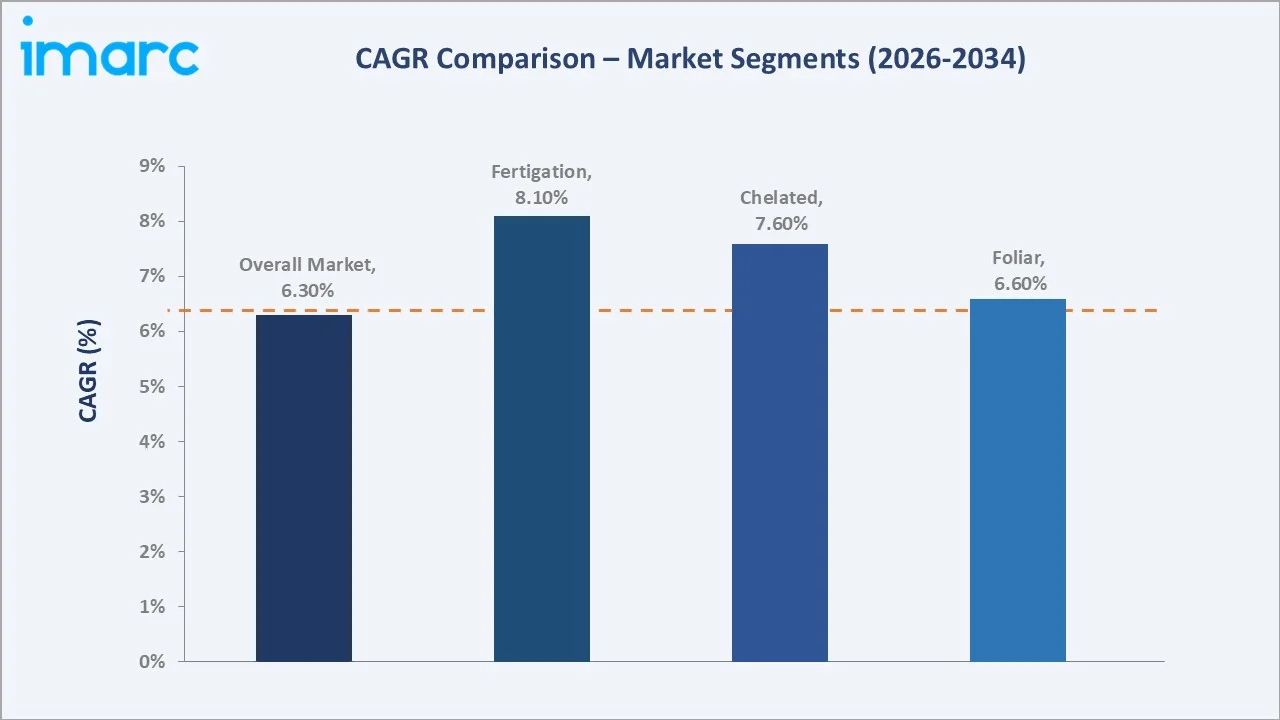
Chelated micronutrients grow fastest at ~7.6% CAGR as precision farming and high-value horticulture crops demand higher nutrient-use efficiency. Fertigation applications grow at ~8.1% CAGR as drip-irrigation expansion and government micro-irrigation subsidies enable farmers to deliver dissolved micronutrients directly to the root zone, outperforming traditional soil and foliar methods.
Executive Summary
The India agricultural micronutrients market reached USD 216.5 Million in 2025, reflecting growing recognition of micronutrient deficiency as a core constraint on crop productivity across Indian farmland. Micronutrients such as zinc, boron, iron, manganese, and molybdenum correct nutrient imbalances that macronutrient-only fertilization cannot resolve, directly enhancing yield, quality, and farmer income. The market is projected to reach USD 381.6 Million by 2034.
Non-Chelated sources at 63.0% dominate through lower cost and wide compatibility with conventional soil-application methods. Soil application at 54.0% leads through established farmer familiarity and compatibility with existing fertilizer distribution infrastructure. North India at 33.0% leads nationally through intensive rice-wheat cropping systems and acute zinc deficiency.
Key Market Insights
|
Insight |
Data |
|
Dominant Source |
Non-Chelated - 63.0% share (2025) |
|
Dominant Application |
Soil - 54.0% market share (2025) |
|
Leading Region |
North India - 33.0% market share (2025) |
|
Market Opportunity |
Nano-micronutrient formulations; bio-based chelates; fertigation-compatible blends; precision farming-linked soil testing services |
Key Analytical Observations Supporting the Above Data:
- Non-Chelated at 63.0%: The segment dominates as it costs less and suits standard soil-broadcast application widely used by smallholder farmers, with wide FCO-compliant sulphate and oxide product availability reinforcing continued adoption across cost-sensitive cropping regions.
- Soil at 54.0%: The application mode leads because most Indian farmers apply micronutrients through basal soil application, aligning with conventional fertilization practices and existing NPK/DAP blending infrastructure used across cereal and oilseed systems.
- North India at 33.0%: The region leads due to intensive rice-wheat rotation across Punjab, Haryana, and western Uttar Pradesh, which depletes zinc and boron reserves faster than natural replenishment, driving the country's highest per-hectare micronutrient consumption.
India Agricultural Micronutrients Market Overview
The India agricultural micronutrients market encompasses the production, formulation, and distribution of trace-element fertilizers, including zinc, boron, iron, manganese, and molybdenum, applied through soil, foliar, and fertigation methods. The ecosystem integrates raw-material and chelating-agent suppliers, micronutrient formulators, agri-input distributors, cooperative societies, and regulatory bodies enforcing the Fertilizer Control Order. The Soil Health Card Scheme, rising input costs, and growing farmer awareness are reshaping procurement patterns nationwide.
Market Dynamics
To evaluate market opportunities, Request Sample
Market Drivers
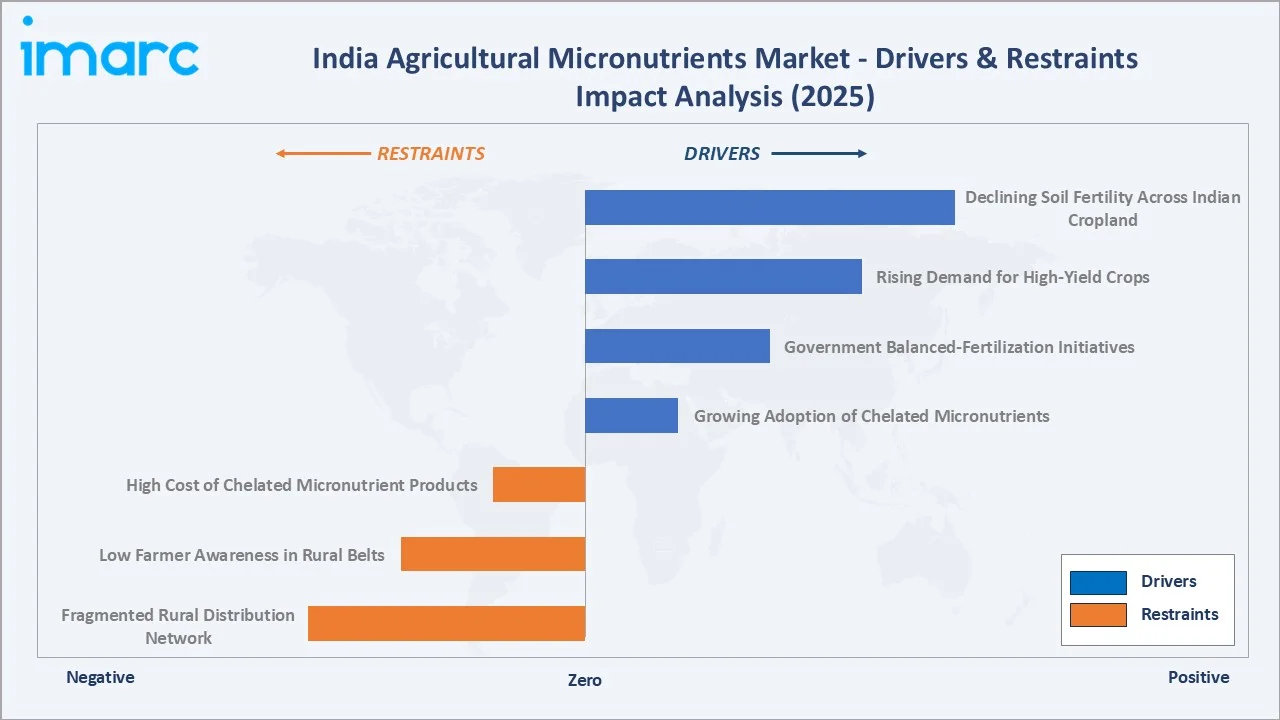
- Declining Soil Fertility Across Indian Cropland: Continuous intensive cultivation combined with imbalanced NPK-only fertilization has depleted zinc, iron, and boron reserves in Indian soils. This structural fertility decline is compelling farmers and government agencies to adopt targeted micronutrient correction programs, sustaining long-term demand. Repeated rice-wheat and cotton cropping cycles accelerate this depletion further, leaving progressively smaller nutrient reserves for each successive season. As a result, manufacturers are witnessing consistent reorder demand from farmers seeking to restore baseline soil productivity.
- Rising Demand for High-Yield Crops: Growing food-security concerns and export ambitions are pushing farmers toward high-yield hybrid seed varieties that require balanced micronutrient nutrition to realize their genetic yield potential, directly increasing consumption across cereal and horticulture cropping systems. Hybrid and high-density planting systems place additional nutrient uptake pressure on soils, making micronutrient supplementation a near-mandatory input rather than an optional enhancement. Seed companies are increasingly bundling agronomic advisory that recommends micronutrient application alongside primary fertilizers.
- Government Balanced-Fertilization Initiatives: The Soil Health Card Scheme has tested various soil samples, guiding evidence-based micronutrient application. Continued fortified-rice distribution under PMGKAY and NBS subsidy support for micronutrient-blended fertilizers reinforce structured government demand-side support. State agriculture departments are also expanding farmer training camps that demonstrate visible yield gains from corrected micronutrient deficiencies, reinforcing adoption at the grassroots level. These combined efforts are gradually shifting micronutrient use from a niche practice to a mainstream input across major cropping states.
- Growing Adoption of Chelated Micronutrients: Chelated formulations offer superior nutrient-use efficiency and reduced application rates compared with conventional inorganic sources. Rising farmer awareness and expanding precision farming are accelerating the shift toward chelated zinc and other premium formulations. Horticulture and export-oriented crop growers are willing to absorb the price premium given the measurable improvements in fruit quality and shelf life. Domestic chelate manufacturers are consequently scaling production capacity to meet this rising premium-segment demand.
Market Restraints
- High Cost of Chelated Micronutrient Products: Chelated micronutrients carry a significant price premium over conventional sulphate and oxide forms, limiting affordability for smallholder and marginal farmers, who represent the majority of India's cultivator base, constraining broader market penetration. Limited access to institutional credit further restricts smallholder capacity to invest in premium nutrition inputs, even where agronomic benefits are well understood. This cost sensitivity keeps non-chelated products dominant across the bulk of India's low-margin cereal cultivation.
- Low Farmer Awareness in Rural Belts: Many farmers in remote and rain-fed regions remain unaware of micronutrient deficiency symptoms and correction benefits, relying solely on traditional NPK fertilization despite active government extension and soil-testing outreach programs. Limited last-mile reach of agricultural extension officers in hilly and tribal belts further slows the pace of farmer education. Language and literacy barriers also reduce the effectiveness of printed advisory material distributed through dealer networks.
- Fragmented Rural Distribution Network: India's agri-input retail network remains highly fragmented, with inconsistent product availability, counterfeit risk, and inadequate dealer-level advisory support, particularly across eastern and hilly regions, constraining consistent product access. Many independent retailers lack cold-chain-independent storage practices suited to liquid and chelated formulations, occasionally compromising product efficacy. This fragmentation also limits manufacturers' ability to standardize pricing and after-sales agronomic support nationwide.
Market Opportunities
- Nano-Micronutrient Formulation Commercialization: Nano-encapsulated zinc and copper formulations, recently licensed by IFFCO, offer higher nutrient-use efficiency at lower application volumes, unlocking new premium product categories for manufacturers targeting precision-agriculture adopters. Reduced per-hectare application volumes also lower transportation and packaging costs, improving margins for manufacturers willing to invest in nano-formulation capability. Early regulatory approval for nano zinc and copper provides a credible commercial pathway for additional trace elements to follow.
- Bio-Based and Organic Micronutrient Expansion: Rising organic farming adoption is creating demand for seaweed-extract and humic-acid-based micronutrient products targeting residue-free and export-oriented crop segments. Export-oriented horticultural growers supplying European and Gulf markets increasingly require documentation of certified organic inputs, thereby favoring bio-based micronutrient suppliers. This creates a differentiated, higher-margin product category distinct from conventional synthetic formulations.
Market Challenges
- Counterfeit and Sub-Standard Product Prevalence: The presence of counterfeit and under-strength micronutrient products in rural markets undermines farmer trust and agronomic outcomes, requiring manufacturers to invest in traceability and dealer-level authentication to protect category credibility. Weak enforcement of quality standards in remote retail outlets allows substandard products to persist despite regulatory prohibitions. Rebuilding farmer confidence after a counterfeit-related crop loss can take multiple growing seasons, making prevention a higher priority than remediation.
Emerging Market Trends
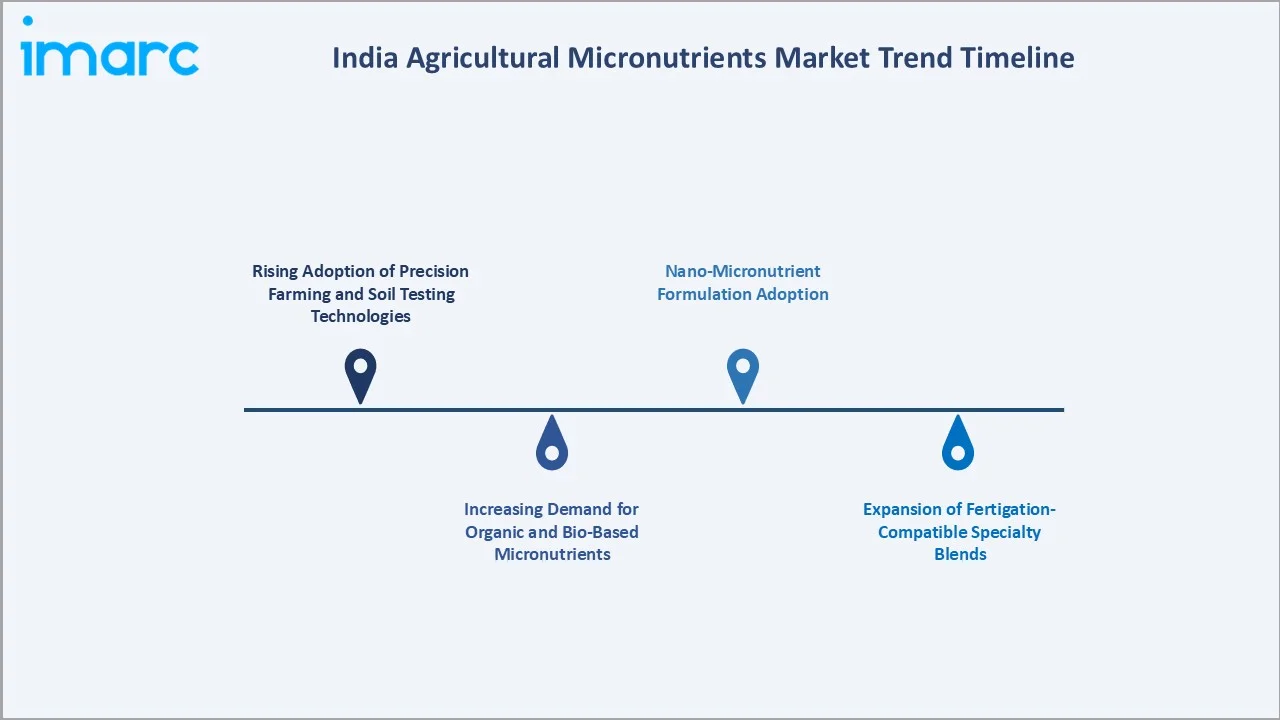
1. Rising Adoption of Precision Farming and Soil Testing Technologies
Precision farming is increasingly being adopted in India to improve nutrient management and optimize fertilizer application through data-driven soil analysis. Government-led soil testing initiatives and digital agriculture programs are encouraging farmers to make more informed decisions regarding soil health and micronutrient requirements. The growing adoption of precision agriculture and modern farming technologies is expected to support demand for efficient and targeted micronutrient solutions.
2. Increasing Demand for Organic and Bio-Based Micronutrients
Growing awareness of sustainable agricultural practices is driving interest in organic and bio-based micronutrient solutions as alternatives to conventional fertilizers. Farmers are increasingly exploring inputs such as seaweed extracts, humic substances, bio-based chelates, and other naturally derived formulations to improve soil health and crop productivity. This shift toward sustainable and environmentally conscious farming practices is expected to support the adoption of bio-based micronutrient products.
3. Nano-Micronutrient Formulation Adoption
Nano-formulated micronutrients are gaining regulatory and commercial traction as manufacturers seek higher efficiency at lower application volumes. IFFCO's central government license for nano liquid zinc and copper reflects this shift, aiming to reduce deficiency-related yield losses while lowering per-hectare application costs.
4. Expansion of Fertigation-Compatible Specialty Blends
Government micro-irrigation subsidies are accelerating drip and sprinkler adoption, creating demand for fully water-soluble, fertigation-compatible micronutrient blends. These formulations enable precise, root-zone nutrient delivery with minimal wastage, appealing to horticulture and cash-crop growers targeting yield and water-use efficiency.
Industry Value Chain Analysis
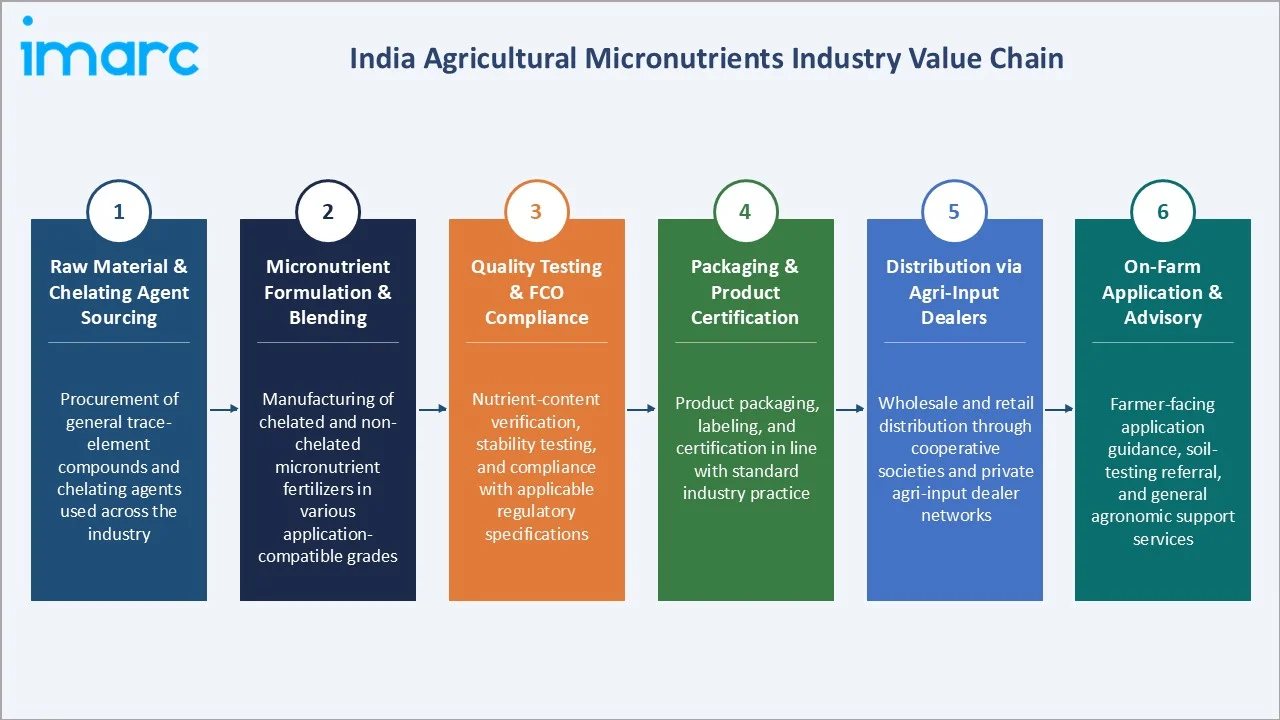
The India agricultural micronutrients value chain integrates raw-material and chelating-agent sourcing, formulation and blending, quality testing under Fertilizer Control Order specifications, distribution through agri-input dealer networks, and on-farm application supported by agronomic advisory. Consolidation toward integrated formulator-distributor models is reshaping the traditional multi-tier trading structure.
|
Stage |
Key Participants |
|
Raw Material & Chelating Agent Sourcing |
Procurement of general trace-element compounds and chelating agents used across the industry |
|
Micronutrient Formulation & Blending |
Manufacturing of chelated and non-chelated micronutrient fertilizers in various application-compatible grades |
|
Quality Testing & FCO Compliance |
Nutrient-content verification, stability testing, and compliance with applicable regulatory specifications |
|
Packaging & Product Certification |
Product packaging, labeling, and certification in line with standard industry practice |
|
Distribution via Agri-Input Dealers |
Wholesale and retail distribution through cooperative societies and private agri-input dealer networks |
|
On-Farm Application & Advisory |
Farmer-facing application guidance, soil-testing referral, and general agronomic support services |
The formulation and blending stage is the value chain's most commercially critical tier, where product differentiation between chelated and non-chelated grades determines pricing power. Distribution remains the most fragmented tier, with advisory quality varying significantly between organized cooperatives and independent rural retailers.
Technology Landscape in the India Agricultural Micronutrients Industry
Chelation Technology
Chelation technology binds metal micronutrient ions such as zinc, iron, and manganese to organic molecules like EDTA, improving solubility, plant uptake, and resistance to soil fixation. Chelated formulations enable lower application rates and higher nutrient-use efficiency, making them increasingly preferred for high-value horticulture and precision farming applications.
Nano-Formulation Technology
Nano-formulation technology reduces particle size to enhance nutrient absorption and reduce required application volumes. IFFCO's licensed nano liquid zinc and copper products exemplify this shift, offering manufacturers a pathway to lower logistics costs and improved farmer economics while addressing deficiency correction more efficiently.
Water-Soluble Fertigation Technology
Water-soluble fertigation-compatible micronutrient technology enables precise, root-zone nutrient delivery through drip and sprinkler irrigation systems. As government micro-irrigation subsidies expand coverage, demand for fully soluble, non-clogging micronutrient formulations is rising among horticulture and cash-crop growers.
Market Segmentation Analysis
The report covers the following segments:
|
Segment Category |
Leading Segment |
Market Share |
Year |
|
Type |
🔒 |
🔒 |
2025 |
|
Source |
Non-Chelated |
63.0% |
2025 |
|
Application |
Soil |
54.0% |
2025 |
|
Crop Type |
🔒 |
🔒 |
2025 |
|
Region |
North India |
33.0% |
2025 |

By Source
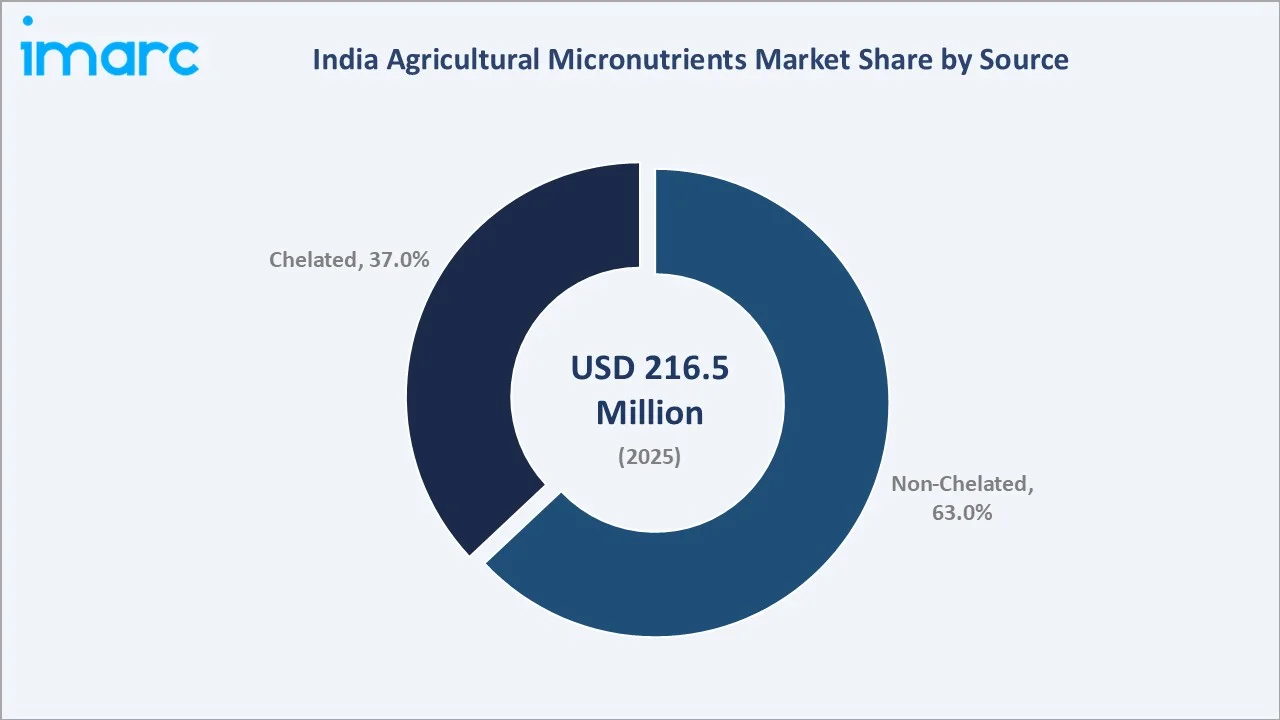
The Non-Chelated segment leads at 63.0% in 2025, encompassing sulphate, oxide, and other inorganic micronutrient forms that dominate cost-sensitive, high-volume soil application across India's cereal and oilseed cropping base, the most commercially accessible product category in the market.
To access detailed market analysis, Request Sample
The Chelated segment at 37.0% is growing fastest at approximately 7.6% CAGR as precision farming, horticulture expansion, and rising farmer awareness of nutrient-use efficiency drive a gradual shift toward organically-bound micronutrient forms across high-value cropping segments.
By Application
Soil application leads at 54.0% through its compatibility with conventional basal fertilization practices and existing NPK/DAP blending infrastructure. Foliar application at 31.0% captures fast-acting deficiency correction, particularly for standing crops showing visible zinc or iron chlorosis symptoms.
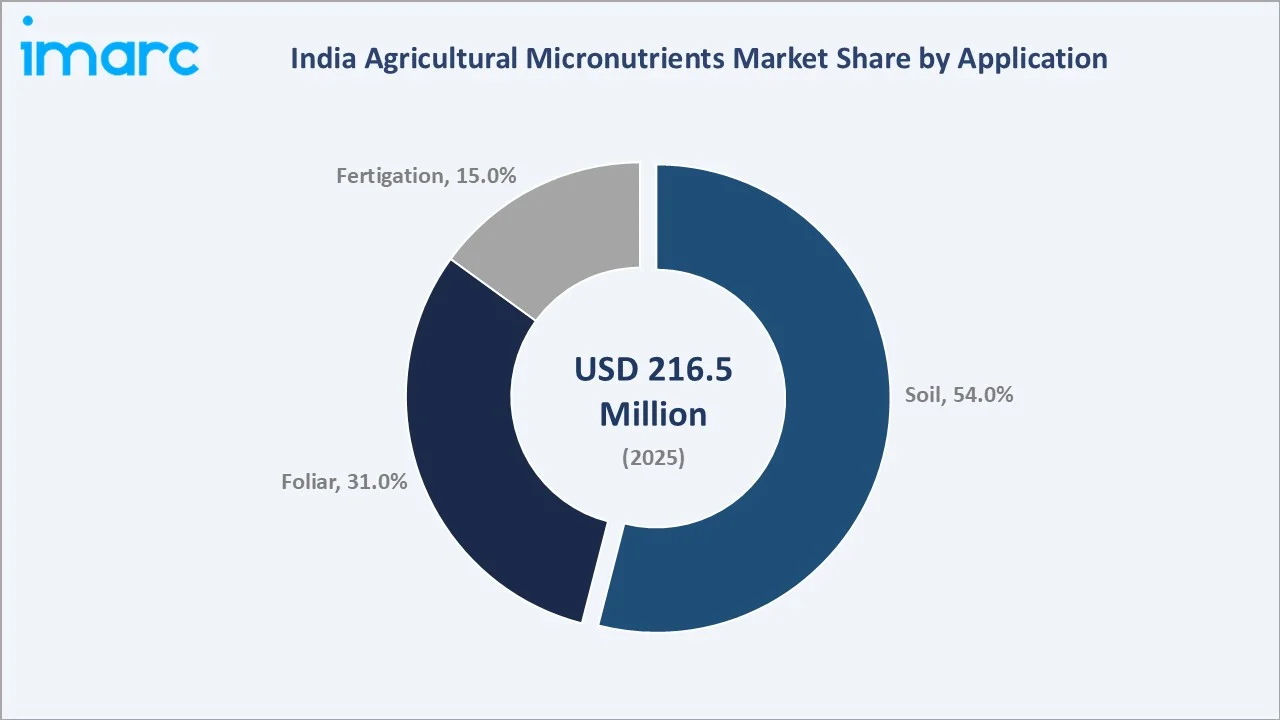
Fertigation at 15.0% is the fastest-growing application method at approximately 8.1% CAGR, driven by expanding drip-irrigation coverage under government micro-irrigation subsidy schemes, enabling precise, water-efficient nutrient delivery directly to the crop root zone.
Regional Market Insights
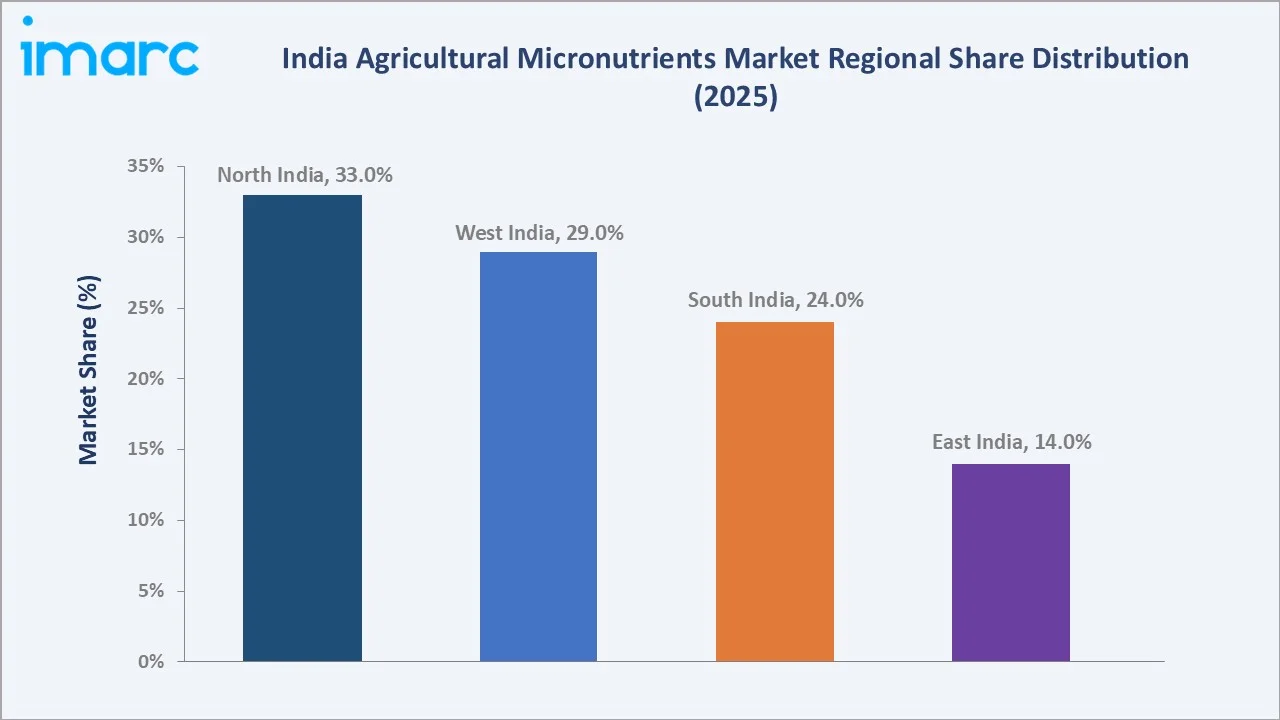
India's agricultural micronutrients market spans four major regions, each shaped by distinct cropping patterns, soil deficiency profiles, and irrigation infrastructure. North India leads through intensive cereal cultivation, while western and southern states show strong horticulture- and export-crop-driven demand.
|
Region |
Share (2025) |
Key Market Drivers & Characteristics |
|
North India |
33.0% |
Driven by intensive rice-wheat rotation across Punjab, Haryana, and western Uttar Pradesh, acute zinc and boron soil deficiency, and strong Soil Health Card Scheme penetration |
|
West India |
29.0% |
Supported by Maharashtra and Gujarat's horticulture and cotton cultivation, established agri-input distribution networks, and cooperative-driven procurement |
|
South India |
24.0% |
Driven by Karnataka, Andhra Pradesh, and Tamil Nadu's fruit, vegetable, and plantation crop cultivation requiring precise micronutrient correction |
|
East India |
14.0% |
Emerging through West Bengal and Odisha's rice cultivation, government extension programs, and rising awareness despite fragmented distribution infrastructure |
North India, at 33.0%, leads the country in zinc-deficient soils and in highest per-hectare fertilizer consumption. West India, at 29.0%, reflects horticulture-driven demand and established cooperative networks.
South India, at 24.0%, is anchored by plantation crops. East India, at 14.0%, represents an early-stage, government-supported opportunity.
Competitive Landscape
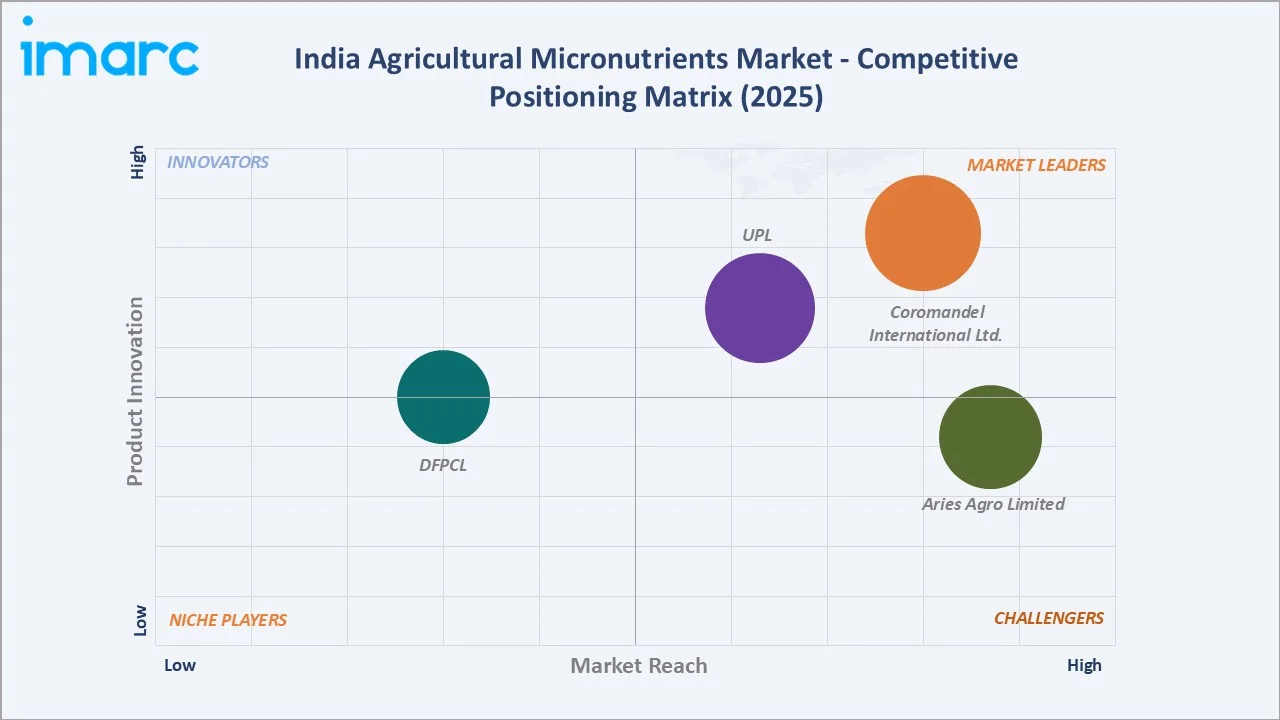
The India agricultural micronutrients market competitive landscape is moderately fragmented, comprising diversified fertilizer conglomerates, cooperative institutions, and specialist chelate manufacturers competing across cost-sensitive and premium product tiers. Large players leverage established distribution networks, while specialists compete on formulation expertise and chelate technology leadership.
|
Company Name |
Key Products |
Market Position |
Core Strength |
|
Coromandel International Ltd. |
Chelated & Non-Chelated Zinc, Boron Formulations |
Market Leader |
Extensive pan-India distribution and balanced-fertilizer blending capacity |
|
UPL |
Speciality Micronutrient & Crop Nutrition Portfolio |
Market Leader |
Global agrochemical scale and R&D capacity supporting specialty nutrition expansion |
|
Aries Agro Limited |
Agromin, Chelamin Chelated Micronutrients |
Strong Challenger |
Pioneer of chelate technology in India |
|
DFPCL |
Water-Soluble Fertigation Nutrient Blends |
Emerging Player |
Specialty water-soluble products for fertigation and horticulture applications |
Key players include Coromandel International Ltd., UPL, Aries Agro Limited, DFPCL, and others.
Key Company Profiles
Coromandel International Ltd.
Coromandel International is an India-based diversified fertilizer and crop protection company with a strong presence in the agricultural micronutrients market through its balanced fertilizer blending portfolio.
- Key Products: Chelated and non-chelated zinc, boron, and multi-micronutrient formulations.
- Strategic Focus: Expanding integrated crop nutrition offerings combining primary, secondary, and micronutrient fertilizers for pan-India distribution. The company is also investing in dealer training programs to strengthen last-mile agronomic advisory across its extensive retail network. Continued capacity additions in specialty blending are expected to support faster new-product rollout across regional cropping segments.
Aries Agro Limited
Aries Agro Limited is a Mumbai-based specialist manufacturer that pioneered chelate technology in India, maintaining a leading presence in the agricultural micronutrients market since 1969.
- Key Products: Agromin chelated micronutrients, Chelamin chelated zinc, and water-soluble NPK complexes.
- Strategic Focus: Strengthening chelate manufacturing leadership and expanding customized, crop-specific micronutrient formulations across domestic and export markets. The company continues to invest in in-house R&D to broaden its portfolio of secondary and micro-nutrient complexes for high-value horticulture. Deepening its subsidiary-backed raw-material supply base is also intended to improve cost leadership over the forecast period.
Market Concentration Analysis
The India agricultural micronutrients market is moderately fragmented, with the key players collectively accounting for an estimated 35-45% of national branded micronutrient fertilizer revenue. Regional and unbranded generic products retain a meaningful residual share, particularly in price-sensitive rural markets. Market concentration is expected to gradually increase as chelate and nano-formulation technology adoption favors manufacturers with stronger R&D and quality-assurance capabilities.
Investment & Growth Opportunities
Highest Growth Segments
Fertigation application (~8.1% CAGR), chelated micronutrients (~7.6% CAGR), nano-micronutrient formulations, bio-based and organic micronutrient products, and North India's zinc-deficient cereal belt represent the highest-growth investment vectors through 2034, supported by precision farming and micro-irrigation subsidy programs.
Emerging Investment Opportunities
Nano-micronutrient manufacturing represents the market's highest-potential emerging opportunity, as IFFCO's licensed nano zinc and copper products demonstrate viable regulatory and commercial pathways. Bio-based and organic formulations targeting residue-free export crops similarly offer premium pricing potential amid double-digit organic-sector growth.
Investment Themes
- Chelate and Nano-Formulation R&D Investment: Manufacturers investing in advanced chelation and nano-encapsulation technology can capture premium pricing and farmer loyalty as precision farming accelerates. Early-mover technology leadership, as shown by Aries Agro and IFFCO, creates a durable competitive advantage.
- Rural Distribution Network Strengthening: Expanding dealer-level agronomic advisory and distribution infrastructure into fragmented eastern and hilly regions represents a structural growth opportunity, capturing underserved farmer segments currently limited by product availability and awareness gaps.
Future Market Outlook (2026-2034)
The India agricultural micronutrients market is projected to grow from USD 216.5 Million in 2025 to USD 381.6 Million by 2034, delivering a 6.30% CAGR over the forecast period. The market's anchor value of USD 293.9 Million in 2030 represents a transitional inflection point where chelated and fertigation-compatible formulations gain meaningful share from conventional soil-applied products. Government-backed soil-health initiatives, expanding precision farming adoption, and rising farmer awareness of nutrient-use efficiency will continue driving structural demand through 2034.
Three forces define growth with strong confidence: continued soil-fertility decline sustaining baseline correction demand, precision and fertigation technology adoption multiplying value per hectare treated, and government policy support ensuring consistent farmer access to affordable, quality-assured micronutrient products across India's diverse agro-climatic zones.
Research Methodology
Primary Research
Primary research comprised structured interviews with industry stakeholders, including agronomists, fertilizer company product managers, cooperative society representatives, agri-input dealers, and progressive farmers across North, South, East, and West India's major cropping regions.
Secondary Research
Secondary research encompassed company annual reports, Indian Council of Agricultural Research publications, Soil Health Card Scheme data, APEDA organic farming statistics, Fertilizer Control Order specifications, and government agricultural ministry reports covering micronutrient consumption trends.
Forecasting Models
Market revenue forecasts were developed using a bottom-up model incorporating: (i) regional cropped area by crop type; (ii) micronutrient application rate per hectare by source and application method; (iii) average product pricing by chelated versus non-chelated grade; and (iv) technology-adoption premium adjustments.
India Agricultural Micronutrients Market Report Coverage:
| Report Features | Details |
|---|---|
| Base Year of the Analysis | 2025 |
| Historical Period | 2020-2025 |
| Forecast Period | 2026-2034 |
| Units | Million USD |
| Scope of the Report |
Exploration of Historical Trends and Market Outlook, Industry Catalysts and Challenges, Segment-Wise Historical and Future Market Assessment:
|
| Types Covered | Zinc, Boron, Iron, Molybdenum, Manganese, Others |
| Sources Covered | Chelated, Non-Chelated |
| Applications Covered | Soil, Foliar, Fertigation |
| Crop Types Covered | Cereals, Pulses and Oilseeds, Fruits and Vegetables, Others |
| Regions Covered | North India, South India, East India, West India |
| Companies Covered | Coromandel International Ltd., UPL, Aries Agro Limited, DFPCL, etc. |
| Customization Scope | 10% Free Customization |
| Post-Sale Analyst Support | 10-12 Weeks |
| Delivery Format | PDF and Excel through Email (We can also provide the editable version of the report in PPT/Word format on special request) |
Key Benefits for Stakeholders:
- IMARC’s industry report offers a comprehensive quantitative analysis of various market segments, historical and current market trends, market forecasts, and dynamics of the India agricultural micronutrients market from 2020-2034.
- The research report provides the latest information on the market drivers, challenges, and opportunities in the India agricultural micronutrients market.
- Porter's five forces analysis assist stakeholders in assessing the impact of new entrants, competitive rivalry, supplier power, buyer power, and the threat of substitution. It helps stakeholders to analyze the level of competition within the India agricultural micronutrients industry and its attractiveness.
- Competitive landscape allows stakeholders to understand their competitive environment and provides an insight into the current positions of key players in the market.
Frequently Asked Questions About the India Agricultural Micronutrients Market Report
The India agricultural micronutrients market reached USD 216.5 Million in 2025, driven by the Non-Chelated source segment dominant at 63.0%, Soil application leading at 54.0%, and North India commanding 33.0% market share through intensive zinc-deficient cereal cultivation.
The market grows at 6.30% CAGR during 2026-2034, reaching USD 381.6 Million by 2034, reflecting continued soil-fertility decline, government balanced-fertilization initiatives, and rising adoption of chelated and fertigation-compatible micronutrient formulations.
The Non-Chelated segment leads at 63.0%, capturing cost-sensitive, high-volume soil-application demand, alongside the faster-growing Chelated segment at 37.0%, expanding at approximately 7.6% CAGR through precision farming adoption.
Soil application leads at 54.0% through compatibility with conventional basal fertilization practices, followed by Foliar at 31.0% and Fertigation at 15.0%, with Fertigation growing fastest at approximately 8.1% CAGR.
North India leads at 33.0% through intensive rice-wheat rotation across Punjab, Haryana, and western Uttar Pradesh, followed by West India at 29.0%, South India at 24.0%, and East India at 14.0%.
Leading companies include Coromandel International Ltd., UPL, Aries Agro Limited, DFPCL, and others.
The market is projected to reach approximately USD 293.9 Million by 2030, with chelated and nano-micronutrient formulations gaining meaningful share as precision farming and fertigation infrastructure continue expanding nationwide.
Three priority investment opportunities: nano-micronutrient formulation manufacturing, bio-based and organic micronutrient product development, and rural distribution network strengthening across underserved eastern and hilly agricultural regions.
Need more help?
- Speak to our experienced analysts for insights on the current market scenarios.
- Include additional segments and countries to customize the report as per your requirement.
- Gain an unparalleled competitive advantage in your domain by understanding how to utilize the report and positively impacting your operations and revenue.
- For further assistance, please connect with our analysts.
 Request Customization
 Speak to an Analyst
 Request Brochure
 Inquire Before Buying
Benefits of Customization
- Personalize this research
- Triangulate with your data
- Get data as per your format and definition
- Gain a deeper dive into a specific application, geography, customer, or competitor
- Any level of personalization
Get in Touch With Us
UNITED STATES
Phone: +1-201-971-6302
INDIA
Phone: +91-120-433-0800
UNITED KINGDOM
Phone: +44-753-714-6104
Email: [email protected]
Client Testimonials




.webp)




.webp)













Related Reports

Choose your plan
*Please note that the prices mentioned below are starting prices for each bundle type. Kindly contact our team for further details.*
Single User License
- 1 User License, Access on 2 Devices
- PDF Report + Excel Dataset (Password Protected)
- Lifetime Access
- No Printing Rights
- 10% Free Report Customization
- 10–12 Weeks of Analyst Support
Five User License
- Access for 5 Users, 2 Devices per User
- PDF Report + Excel Dataset (Password Protected)
- Lifetime Access
- Dedicated Account Manager
- 12–14 Weeks of Analyst Support
- No Printing Rights
- 15% Free Report Customization
- 25% Discount on Your Next Purchase
Corporate User License
- Unlimited User Access (Within Your Organization)
- PDF Report + Excel Dataset
- Lifetime Access
- Dedicated Account Manager
- 14–20 Weeks of Analyst Support
- No Printing Rights
- 20% Free Report Customization
- 30% Discount on Your Next Purchase
Essential Insights
What's included:
3 reports
- Lifetime Access
- PDF Reports
- Excel Datasets
- 2 Weeks of Free Analyst Support
- 2 User Licenses
- Access on 2 Devices
- Printing Rights
- Complimentary PowerPoint (PPT) Version
- Complimentary License Upgrade
Professional Access
What's included:
5 reports
- Lifetime Access
- PDF Reports
- Excel Datasets
- 8 Weeks of Free Analyst Support
- 2 User Licenses
- Access on 2 Devices
- Printing Rights
- Complimentary PowerPoint (PPT) Version
- Complimentary License Upgrade
Business Advantage
What's included:
8 reports
- Lifetime Access
- PDF Reports
- Excel Datasets
- 14 Weeks of Free Analyst Support
- 2 User Licenses
- Access on 2 Devices
- Printing Rights
- Complimentary PowerPoint (PPT) Version
- Complimentary License Upgrade
Enterprise Intelligence
What's included:
10 reports
- Lifetime Access
- PDF Reports
- Excel Datasets
- 20 Weeks of Free Analyst Support
- 2 User Licenses
- Access on 2 Devices
- Printing Rights
- Complimentary PowerPoint (PPT) Version
- Complimentary License Upgrade