
India Respiratory Care Devices Market Size, Share, Trends and Forecast by Product Type, Indication, End User, and Region, 2026-2034
India Respiratory Care Devices Market Size, Share, Trends & Forecast (2026-2034)
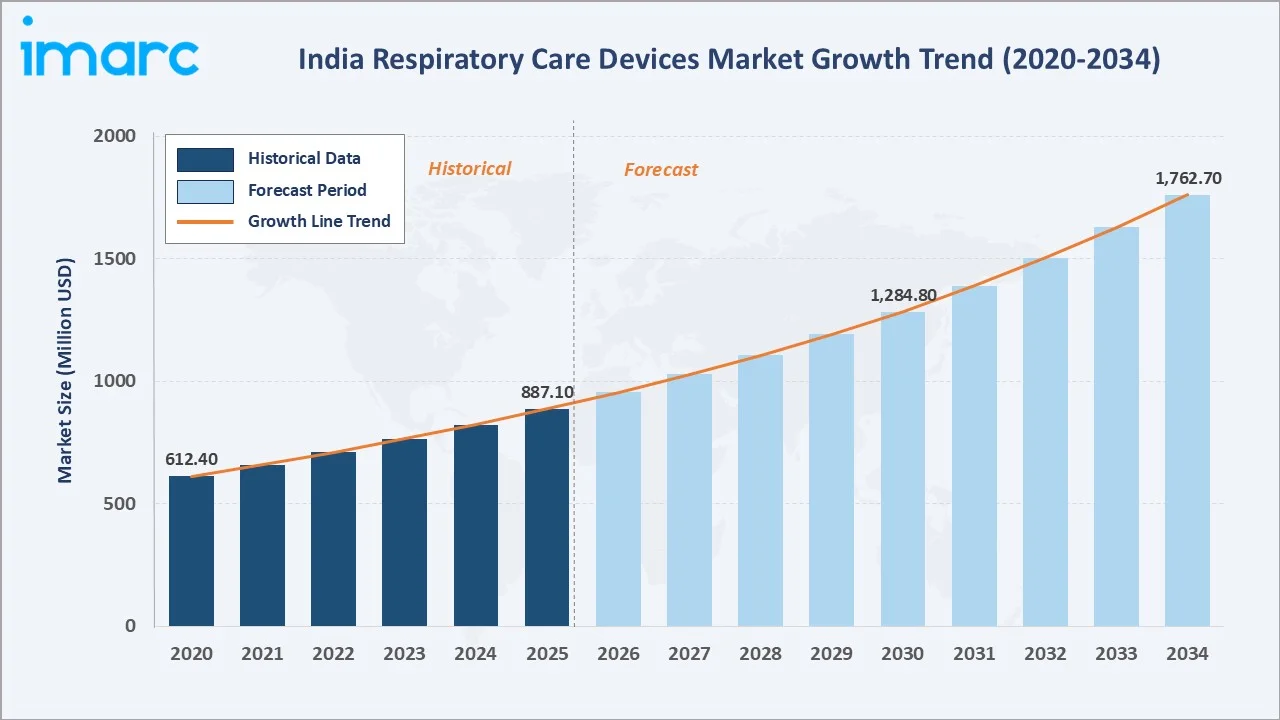
The India respiratory care devices market reached USD 887.1 Million in 2025 and is projected to reach USD 1,762.7 Million by 2034, growing at a CAGR of 7.69% during 2026-2034. The market is driven by the rising burden of chronic respiratory disorders, expanding domestic manufacturing of oxygen and ventilation equipment, and growing government investment in critical care infrastructure. India's post-pandemic healthcare capacity expansion, rising air pollution-linked respiratory illness, and increasing adoption of home-based respiratory care are further strengthening demand. Therapeutic devices dominate at 42.8%. Hospitals and clinics lead to end-user demand at 72.6%. North India commands 31.8% of the national market share.
Market Snapshot
|
Metric |
Value |
|
Market Size (2025) |
USD 887.1 Million |
|
Forecast Market Size (2034) |
USD 1,762.7 Million |
|
CAGR (2026-2034) |
7.69% |
|
Base Year |
2025 |
|
Historical Period |
2020-2025 |
|
Forecast Period |
2026-2034 |
|
Dominant Product Type |
Therapeutic Devices (42.8%, 2025) |
|
Dominant End User |
Hospitals and Clinics (72.6%, 2025) |
|
Leading Region |
North India (31.8%, 2025) |
The India respiratory care devices market expanded from USD 612.4 Million in 2020 to USD 887.1 Million in 2025, anchored at USD 1,284.8 Million in 2030, and is forecast to reach USD 1,762.7 Million by 2034. The COVID-19 pandemic triggered unprecedented demand for oxygen concentrators, ventilators, and monitoring devices, and this momentum has sustained above-trend growth in domestic manufacturing and hospital procurement through 2022-2025.
To get more information on this market, Request Sample
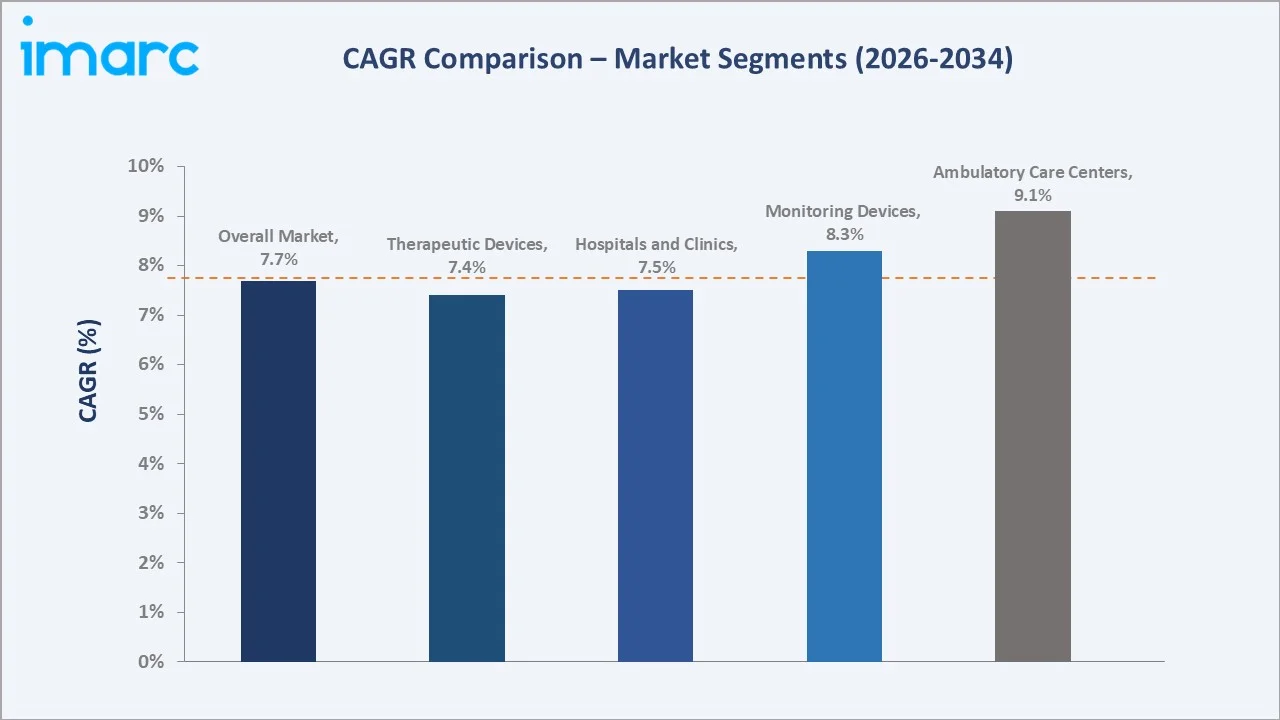
Ambulatory care centers grow fastest at ~9.1% CAGR as home-based and portable respiratory therapy gains acceptance. Monitoring devices grow at ~8.3% CAGR through rising adoption of pulse oximeters and remote patient monitoring systems in both hospital and homecare settings.
Executive Summary
The India respiratory care devices market reached USD 887.1 Million in 2025, reflecting the country's rapidly strengthening critical care and pulmonary health infrastructure. The market encompasses therapeutic devices, monitoring devices, diagnostic devices, and consumables and accessories that together support the diagnosis, treatment, and continuous management of respiratory conditions across hospitals, ambulatory centers, and home-care settings.
Therapeutic devices lead product type demand at 42.8%, driven by sustained procurement of oxygen concentrators, ventilators, and nebulizers. Hospitals and clinics account for 72.6% of end-user demand through their role as the primary point of critical respiratory intervention. North India, at 31.8%, leads regional demand through its concentration of tertiary care hospitals and device manufacturing clusters.
Key Market Insights
|
Insight |
Data |
|
Dominant Product Type |
Therapeutic Devices - 42.8% share (2025) |
|
Dominant End User |
Hospitals and Clinics - 72.6% market share (2025) |
|
Leading Region |
North India - 31.8% market share |
|
Market Opportunity |
AI-enabled remote monitoring; portable oxygen concentrators; home mechanical ventilation; smart connected inhalers; domestic component manufacturing |
Key Analytical Observations Supporting the Above Data:
- Therapeutic Devices at 42.8%: The segment dominates due to consistent hospital and homecare demand for oxygen therapy, ventilation, and nebulization equipment, supported by rising COPD, asthma, and post-COVID respiratory complication caseloads across India.
- Hospitals and Clinics at 72.6%: This end-user segment leads due to its role as the primary center for acute respiratory intervention, ICU ventilation, and diagnostic testing, backed by expanding public and private hospital bed capacity nationwide.
- North India at 31.8%: The region leads through its concentration of super-specialty hospitals, device manufacturing hubs in Delhi-NCR, and higher per-capita healthcare spending relative to other regions.
India Respiratory Care Devices Market Overview
The India respiratory care devices market encompasses the design, manufacturing, distribution, and clinical deployment of equipment used to diagnose, monitor, and treat respiratory conditions, including oxygen therapy systems, ventilators, nebulizers, pulse oximeters, spirometers, and CPAP/BiPAP devices. The market spans product manufacturing, regulatory certification, hospital and retail distribution, and after-sales service and maintenance.
Macroeconomic factors include rising urbanization, an aging population, and increasing prevalence of air pollution-linked respiratory disorders across Indian cities. Government initiatives such as the Production Linked Incentive scheme for medical devices, Ayushman Bharat health infrastructure expansion, and post-pandemic critical care capacity building are accelerating domestic respiratory device adoption and local manufacturing investment.
Market Dynamics
To evaluate market opportunities, Request Sample
Market Drivers
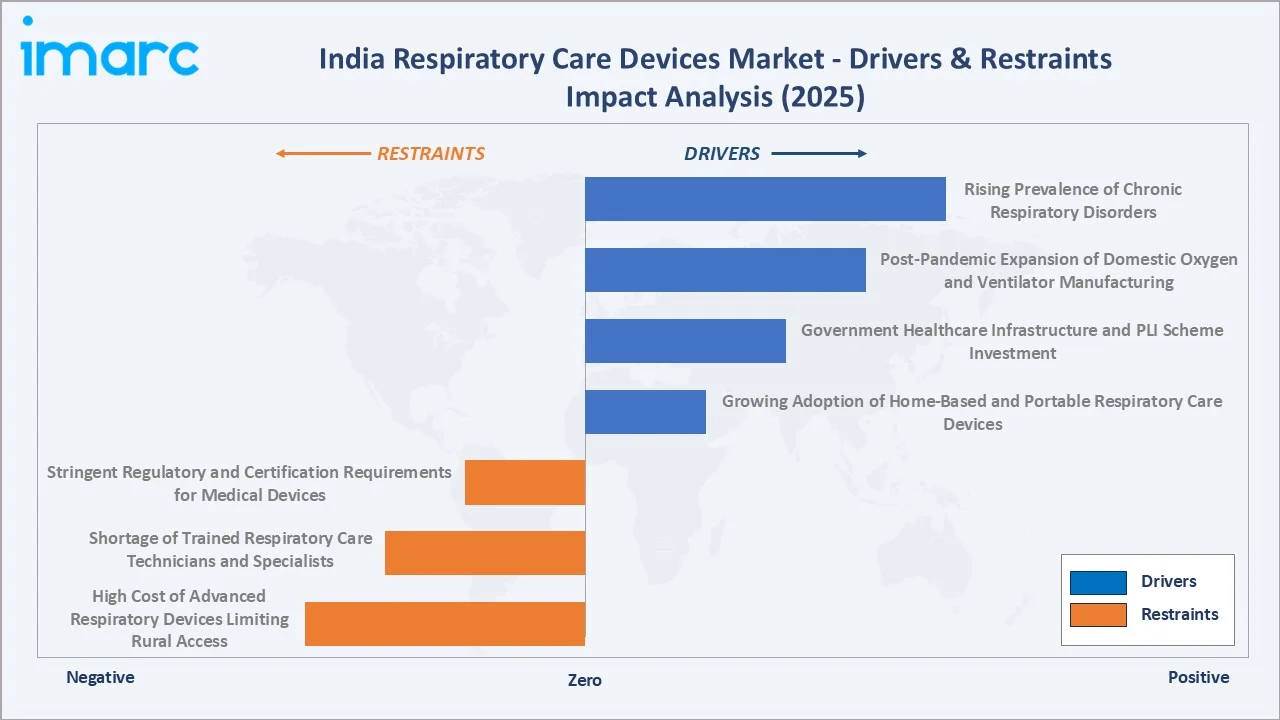
- Rising Prevalence of Chronic Respiratory Disorders: India's growing burden of COPD, asthma, tuberculosis, and post-COVID pulmonary complications is driving sustained demand for therapeutic and monitoring devices. Air pollution in major metros is a significant contributing factor, pushing both hospitals and households toward long-term respiratory care solutions.
- Post-Pandemic Expansion of Domestic Oxygen and Ventilator Manufacturing: The COVID-19 pandemic exposed critical gaps in India's oxygen and ventilator supply chain, prompting large-scale government and private investment in domestic manufacturing capacity. This has improved device availability, reduced import dependency, and lowered costs across therapeutic device categories.
- Government Healthcare Infrastructure and PLI Scheme Investment: The Production Linked Incentive scheme for medical devices and expanding public hospital infrastructure under Ayushman Bharat are increasing institutional procurement of respiratory monitoring and diagnostic equipment, particularly across tier-2 and tier-3 city hospitals.
- Growing Adoption of Home-Based and Portable Respiratory Care Devices: Rising awareness of chronic respiratory disease management and improving affordability of portable oxygen concentrators and CPAP devices are supporting a shift toward home-based respiratory therapy, reducing hospital readmission rates and expanding the consumer device segment.
Market Restraints
- High Cost of Advanced Respiratory Devices Limiting Rural Access: Advanced ventilators and monitoring systems remain cost-prohibitive for smaller hospitals and rural healthcare facilities, restricting broader device penetration outside major urban centers.
- Shortage of Trained Respiratory Care Technicians and Specialists: A limited pool of trained pulmonologists, respiratory therapists, and biomedical technicians constrains the effective deployment and maintenance of advanced respiratory care equipment, particularly in smaller cities and rural hospitals.
- Stringent Regulatory and Certification Requirements for Medical Devices: Compliance with CDSCO medical device regulations and quality certification processes can lengthen product approval timelines, creating barriers for smaller domestic manufacturers seeking to scale production.
Market Opportunities
- AI-Enabled Remote Respiratory Monitoring: Cloud-connected pulse oximeters, smart inhalers, and AI-based diagnostic platforms present significant growth potential by enabling continuous patient monitoring and early intervention, particularly for chronic respiratory disease management in home-care settings.
- Domestic Component Manufacturing and Import Substitution: Growing government support for local production of critical device components such as sensors, valves, and compressors offers manufacturers an opportunity to reduce costs and strengthen supply chain resilience.
Market Challenges
- Dependence on Imported Components for Advanced Devices: Many high-precision respiratory device components continue to be imported, exposing manufacturers to currency fluctuations, global supply chain disruptions, and extended lead times for critical parts.
- Fragmented Distribution Network Across Tier-2 and Tier-3 Cities: Inconsistent last-mile distribution and after-sales service infrastructure outside major metros limits timely access to devices, spare parts, and maintenance support for smaller healthcare facilities.
Emerging Market Trends
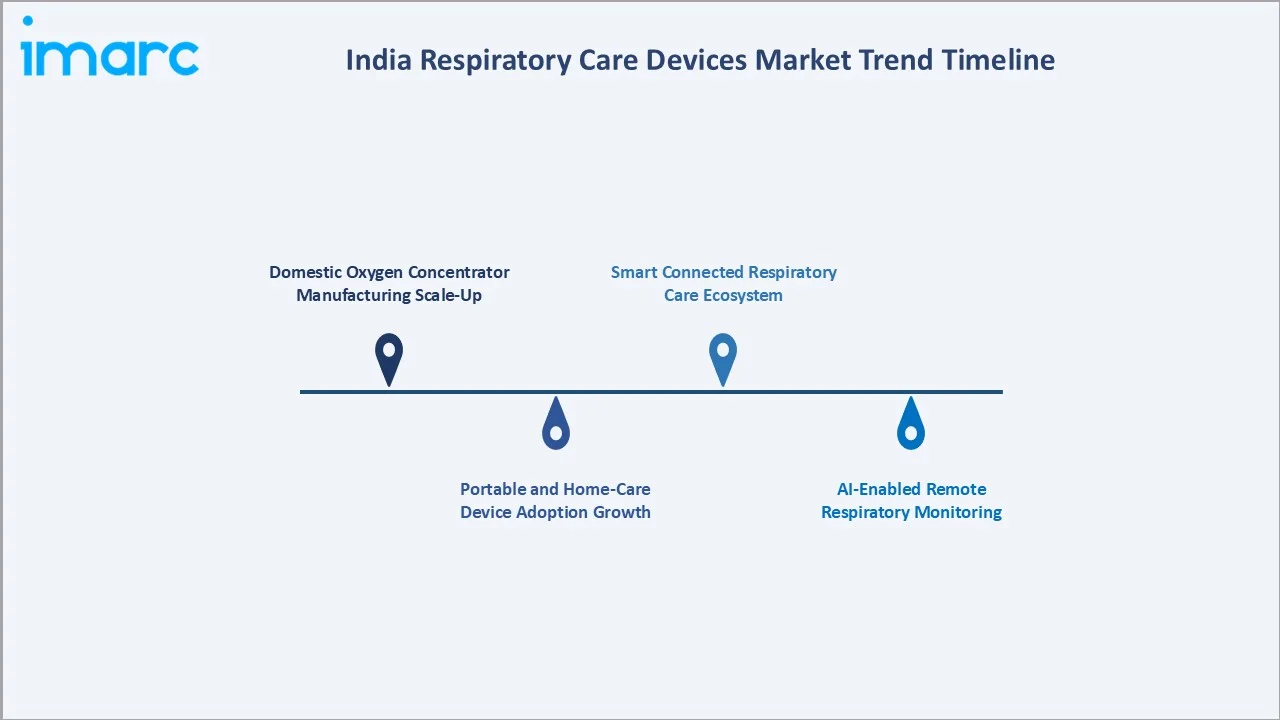
1. Domestic Oxygen Concentrator Manufacturing Scale-Up
Domestic oxygen concentrator manufacturing is scaling rapidly as Indian medical device companies expand production capacity to reduce import dependency. This trend is supported by government incentives under the PLI scheme and growing hospital preference for locally serviced equipment with shorter supply chains and faster after-sales support across urban and semi-urban healthcare facilities.
2. Portable and Home-Care Device Adoption Growth
Increasing patient preference for home-based respiratory therapy is driving adoption of portable oxygen concentrators, compact nebulizers, and travel-friendly CPAP devices. This shift reduces hospital dependency for stable chronic patients and is supported by improving device affordability and expanding e-commerce and homecare distribution channels across Indian cities.
3. AI-Enabled Remote Respiratory Monitoring
AI-enabled remote monitoring platforms are gaining traction, allowing clinicians to track patient oxygen saturation, breathing patterns, and device usage remotely. These platforms support early intervention for COPD and asthma patients, reducing emergency hospitalizations and enabling more proactive, data-driven respiratory disease management across both urban and rural care settings.
4. Smart Connected Respiratory Care Ecosystem
Respiratory device manufacturers are increasingly integrating connectivity features into inhalers, spirometers, and ventilators, enabling data sharing with electronic health records and clinician dashboards. This connected ecosystem trend is expected to accelerate through 2034 as hospitals and homecare providers adopt integrated digital health platforms.
Industry Value Chain Analysis
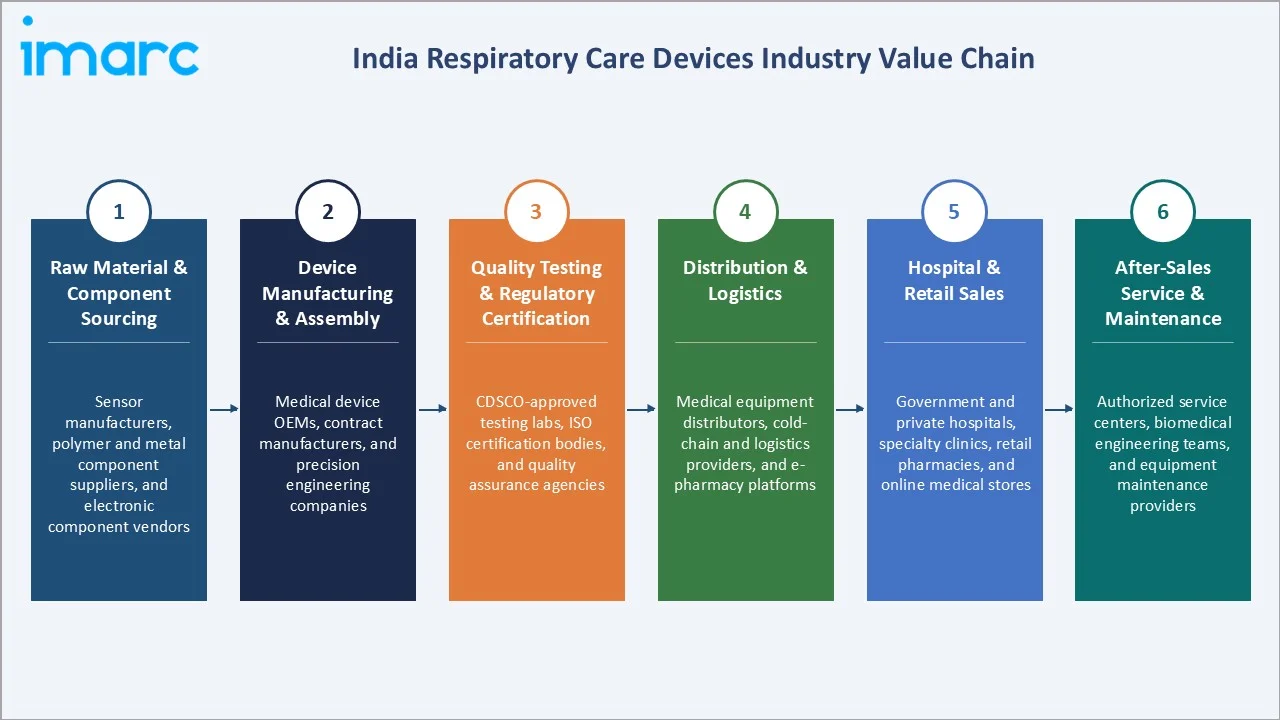
The India respiratory care devices value chain integrates raw material and component sourcing, device manufacturing and assembly, quality testing and regulatory certification, distribution and logistics, hospital and retail sales, and after-sales service and maintenance.
|
Stage |
Key Participants |
|
Raw Material & Component Sourcing |
Sensor manufacturers, polymer and metal component suppliers, electronic component vendors |
|
Device Manufacturing & Assembly |
Medical device OEMs, contract manufacturers, precision engineering companies |
|
Quality Testing & Regulatory Certification |
CDSCO-approved testing labs, ISO certification bodies, quality assurance agencies |
|
Distribution & Logistics |
Medical equipment distributors, cold-chain and logistics providers, e-pharmacy platforms |
|
Hospital & Retail Sales |
Government and private hospitals, specialty clinics, retail pharmacies, online medical stores |
|
After-Sales Service & Maintenance |
Authorized service centers, biomedical engineering teams, equipment rental and maintenance providers |
Quality testing and regulatory certification represent the value chain's most critical control point, ensuring device safety and clinical reliability. Distribution and after-sales service infrastructure increasingly differentiate manufacturers competing for long-term hospital procurement contracts across India's fragmented healthcare landscape.
Technology Landscape in the India Respiratory Care Devices Industry
Portable Oxygen Concentrator Technology
Portable oxygen concentrator technology enables lightweight, battery-powered oxygen delivery for home and ambulatory use. Advances in molecular sieve efficiency and battery life are improving device portability and patient mobility. As demand for home-based respiratory therapy grows, portable concentrators are becoming a preferred alternative to traditional stationary oxygen systems across Indian households.
Non-Invasive Ventilation (CPAP/BiPAP) Technology
Non-invasive ventilation technology, including CPAP and BiPAP systems, supports patients with sleep apnea and chronic respiratory insufficiency without requiring invasion. Growing awareness of sleep-disordered breathing and increasing diagnosis rates are expanding adoption of these devices across hospitals, sleep clinics, and home-care settings in urban India.
AI-Based Remote Patient Monitoring Platforms
AI-based remote monitoring platforms integrate pulse oximetry, spirometry, and ventilator usage data to enable continuous, real-time tracking of patient respiratory status. These platforms help clinicians identify early warning signs of deterioration, reduce hospital readmissions, and improve long-term outcomes for chronic respiratory disease patients.
Market Segmentation Analysis
The report covers the following segments:
|
Segment Category |
Leading Segment |
Market Share |
Year |
|
Product Type |
Therapeutic Devices |
42.8% |
2025 |
|
Indication |
🔒 |
🔒 |
2025 |
|
End User |
Hospitals and Clinics |
72.6% |
2025 |
|
Region |
North India |
31.8% |
2025 |

By Product Type
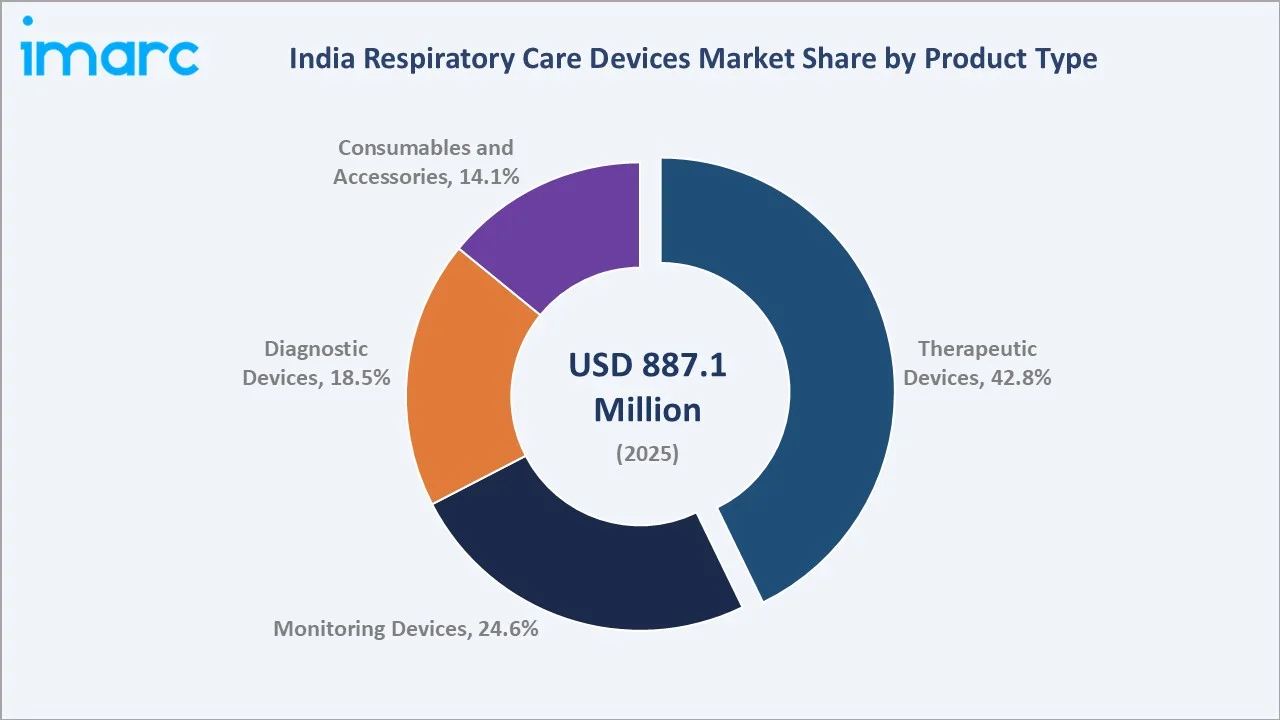
Therapeutic devices lead at 42.8% (2025). The therapeutic devices segment encompasses oxygen concentrators, ventilators, nebulizers, and CPAP/BiPAP systems used for the direct treatment and management of respiratory conditions across hospital and home-care settings.
To access detailed market analysis, Request Sample
Monitoring devices at 24.6% encompass pulse oximeters, capnographs, and spirometers, growing at ~8.3% CAGR through rising adoption of continuous patient monitoring in both hospital and homecare settings. Diagnostic devices at 18.5% and consumables and accessories at 14.1% together support the broader clinical respiratory care workflow.
By End User
Hospitals and clinics lead at 72.6% (2025). This segment encompasses government and private hospitals, specialty pulmonology clinics, and multi-specialty healthcare centers that serve as the primary point of acute and chronic respiratory intervention.
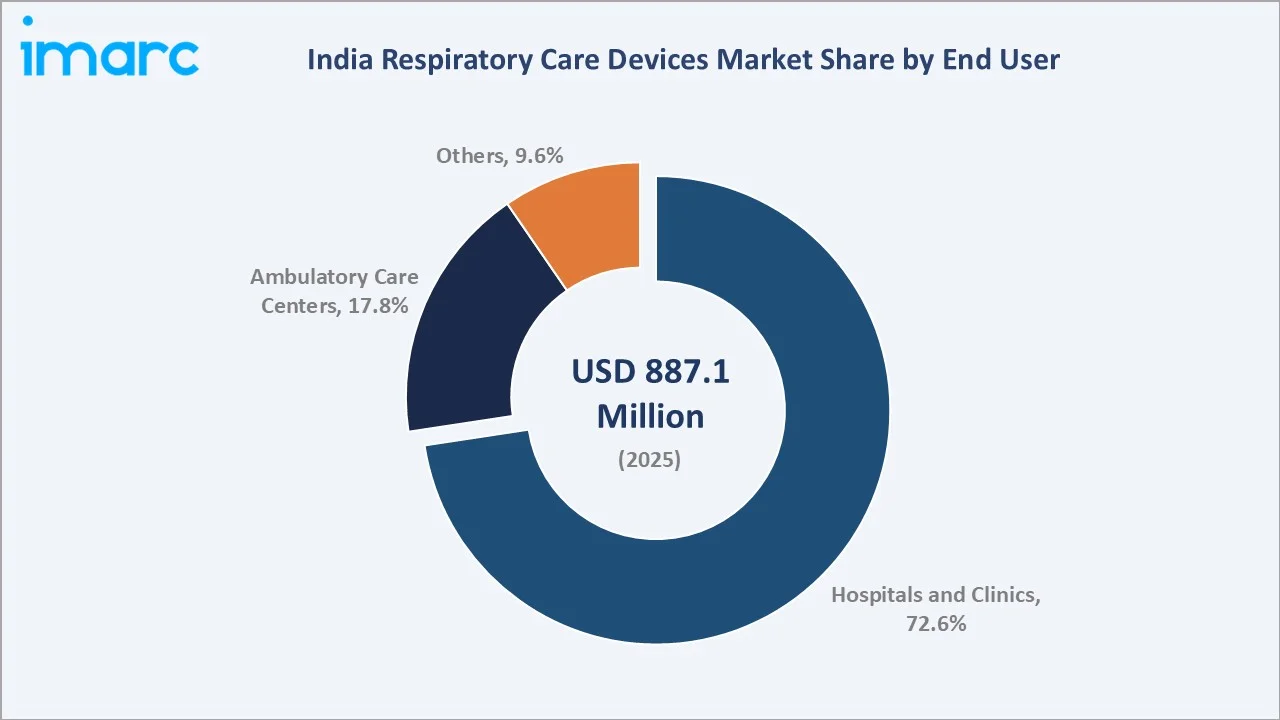
Ambulatory care centers at 17.8% grow fastest at ~9.1% CAGR through rising outpatient respiratory diagnostics and treatment demand. Others at 9.6% includes home-care providers and diagnostic laboratories offering respiratory testing and monitoring services.
Regional Market Insights
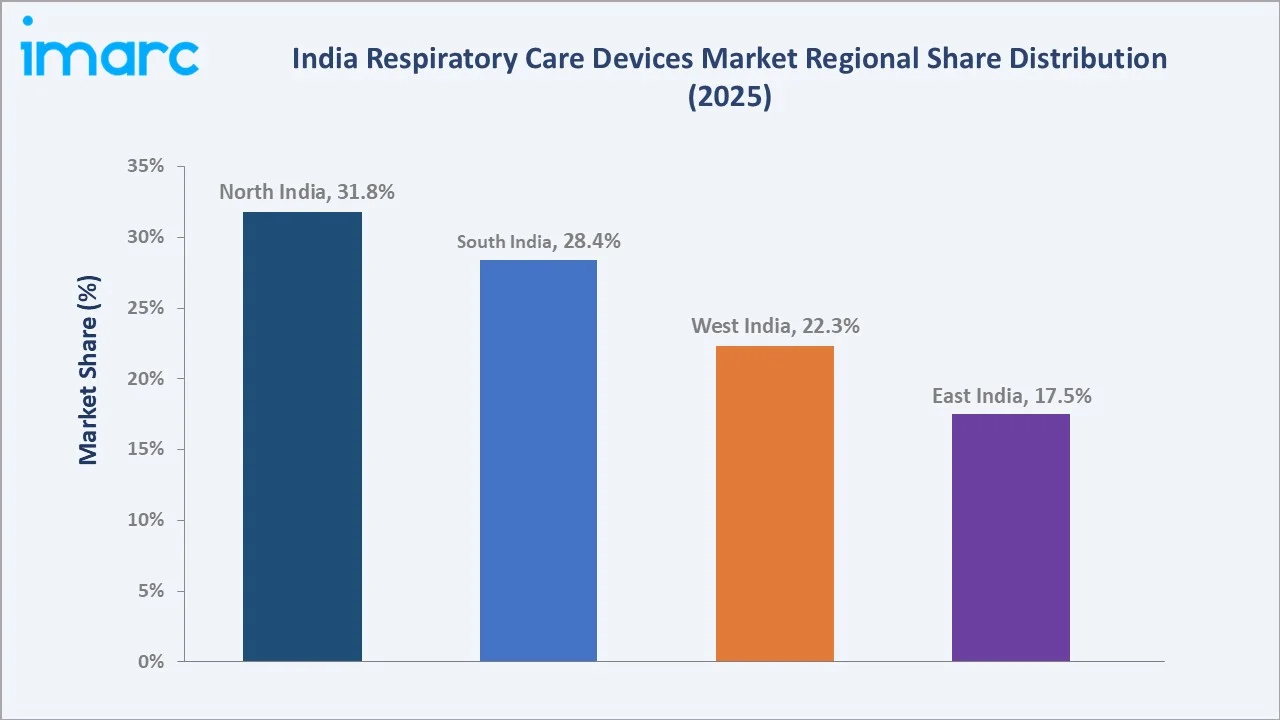
|
Region |
Share (2025) |
Key India Respiratory Care Devices Market Drivers & Characteristics |
|
North India |
31.8% |
Driven by concentration of super-specialty hospitals, device manufacturing clusters in Delhi-NCR, and higher healthcare spending capacity. |
|
South India |
28.4% |
Supported by a strong medical device manufacturing base in Karnataka and Tamil Nadu, and high hospital bed density. |
|
West India |
22.3% |
Driven by Maharashtra and Gujarat's pharmaceutical and medical device manufacturing ecosystem and growing private healthcare investment. |
|
East India |
17.5% |
Supported by expanding public healthcare infrastructure and rising government investment in tertiary care hospitals. |
North India's 31.8% market leadership is anchored by Delhi-NCR's concentration of super-specialty hospitals and device manufacturing units. South India's 28.4% reflects Karnataka and Tamil Nadu's established medical device production clusters and strong private hospital networks.
Competitive Landscape
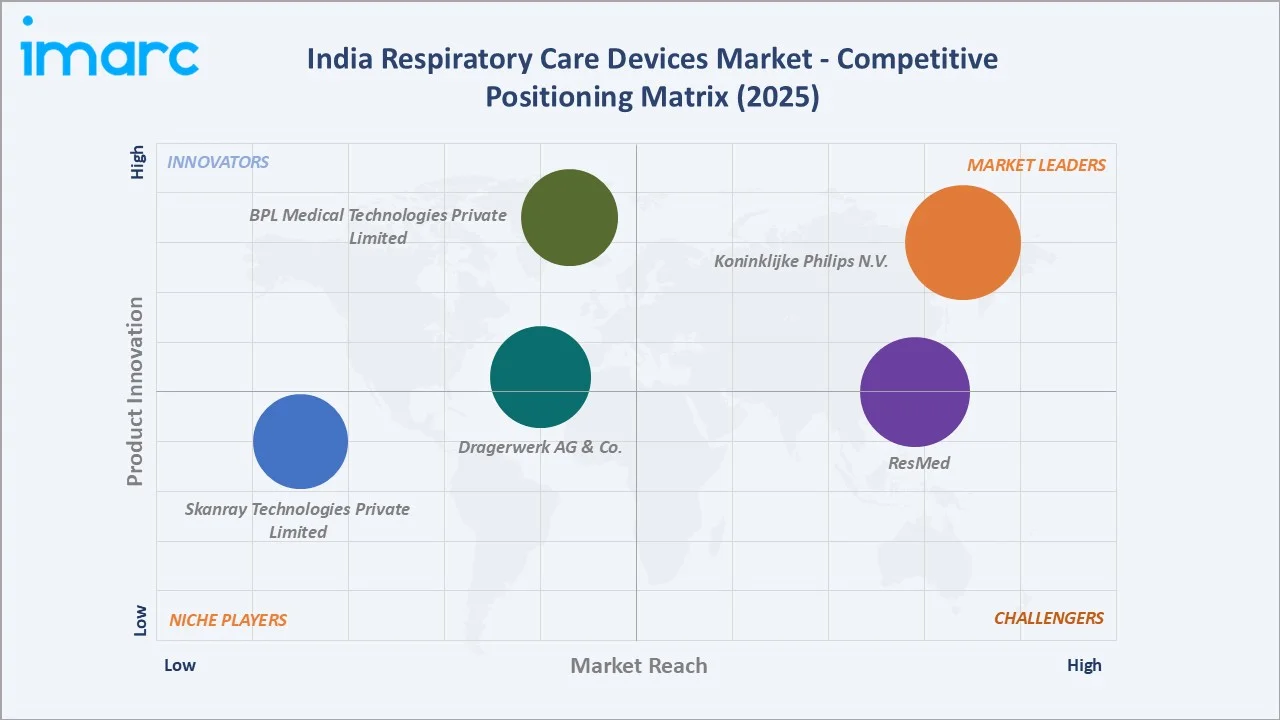
The India respiratory care devices market competitive landscape encompasses global medical technology majors, established domestic manufacturers, and specialized respiratory device companies competing across product innovation, distribution reach, and after-sales service capability.
|
Company Name |
Key Products |
Market Position |
Core Strength |
|
Koninklijke Philips N.V. |
Respironics ventilators, oxygen concentrators, CPAP systems |
Market Leader |
Broad product portfolio and strong hospital distribution network across India |
|
ResMed |
AirSense, Lumis ventilators |
Market Leader |
Global expertise in sleep apnea and home ventilation devices |
|
BPL Medical Technologies Private Limited |
Ventilators, patient monitors, oxygen concentrators |
Established Player |
Strong domestic manufacturing base and government hospital relationships |
|
Skanray Technologies Private Limited. |
Respiratory Care |
Established Player |
Made-in-India manufacturing focus and PLI scheme participation |
|
Dragerwerk AG & Co. |
Critical care ventilators, anesthesia workstations |
Established Player |
Advanced critical care technology and premium hospital positioning |
Consolidation among domestic manufacturers is increasing as companies seek economies of scale in component sourcing and distribution. Global players continue to expand local manufacturing footprints to comply with government procurement preferences favoring domestically produced medical devices.
Key Company Profiles
Koninklijke Philips N.V.
Koninklijke Philips N.V. is a leading provider of respiratory therapeutic and monitoring devices in the Indian healthcare market. The company offers a broad portfolio spanning oxygen concentrators, ventilators, and sleep apnea management systems for hospital and home-care use.
- Key Products: Respironics ventilators, oxygen concentrators, CPAP and BiPAP systems.
- Recent Developments: In October, 2025 Philips Respironics extended the end-of-service and support date for its Trilogy Evo platform, including Trilogy Evo and Trilogy EV300, from January 25, 2029 to January 31, 2031. The extension allows customers using these ventilation devices to continue receiving service and support for an additional two years
- Strategic Focus: Focuses on expanding home healthcare device adoption and strengthening hospital service partnerships across India.
ResMed
ResMed is a global leader in sleep apnea and respiratory care technology with a growing presence in the Indian home healthcare market. The company specializes in CPAP systems, ventilators, and connected patient monitoring platforms.
- Key Products: AirSense CPAP systems, Lumis non-invasive ventilators, AirView patient monitoring platform.
- Strategic Focus: Centered on expanding home-based respiratory care adoption and cloud-connected patient monitoring solutions.
BPL Medical Technologies Private Limited
BPL Medical Technologies Private Limited is a prominent Indian manufacturer of respiratory and critical care devices, with a strong presence in government and private hospital procurement channels across the country.
- Key Products: Ventilators, patient monitors, oxygen concentrators.
- Strategic Focus: Focused on affordable, India-manufactured respiratory device solutions for public and private healthcare providers.
Market Concentration Analysis
The India respiratory care devices market is moderately fragmented, with global majors and domestic manufacturers competing across therapeutic, monitoring, and diagnostic device categories. Distribution and after-sales service networks are moderately concentrated among established players with pan-India hospital relationships. Market concentration is expected to increase gradually as domestic manufacturers scale production under government incentive programs.
Investment & Growth Opportunities
Highest Growth Segments
Ambulatory care center-based respiratory care (~9.1% CAGR), monitoring devices (~8.3% CAGR), home-based portable oxygen therapy, AI-enabled remote monitoring platforms, and domestic component manufacturing represent the highest-growth investment vectors in India's respiratory care devices market through 2034.
Emerging Investment Opportunities
Government-backed domestic manufacturing incentives under the PLI scheme represent the largest near-term investment opportunity. Companies establishing local production facilities and component supply partnerships are well positioned to capture government procurement contracts and reduce import dependency.
Investment Themes
- Domestic Component Manufacturing for Import Substitution: Companies investing in local production of sensors, compressors, and precision components are positioned to benefit from government incentives and reduced supply chain risk through 2026-2028.
- AI-Enabled Remote Monitoring Platform Development: Cloud-based respiratory monitoring platforms offer recurring subscription revenue potential as hospitals and homecare providers increasingly adopt connected patient monitoring solutions across India.
Future Market Outlook (2026-2034)
The India respiratory care devices market is projected to grow from USD 887.1 Million in 2025 to USD 1,762.7 Million by 2034, delivering a 7.69% CAGR over the forecast period. The market's anchor value of USD 1,284.8 Million in 2030 reflects continued expansion of domestic manufacturing capacity, growing hospital infrastructure, and rising adoption of home-based respiratory care solutions across urban and semi-urban India.
Three structural forces underpin sustained market growth through 2034. Rising chronic respiratory disease prevalence, driven by air pollution and an aging population, creates durable long-term device demand. Government healthcare infrastructure investment under Ayushman Bharat and the PLI scheme provides policy-backed procurement momentum. Growing consumer acceptance of home-based respiratory therapy is expanding the addressable market beyond traditional hospital-centric device demand.
Research Methodology
Primary Research
Primary research comprised structured interviews with industry stakeholders including hospital procurement heads, biomedical engineers, pulmonologists, and respiratory device company executives across India.
Secondary Research
Secondary research encompassed medical device industry publications, CDSCO regulatory filings, hospital infrastructure reports, government policy documents, and company annual reports. Multiple secondary sources were reviewed to validate market estimates.
Forecasting Models
Market revenue forecasts were developed using a segment bottom-up model incorporating (i) product type component, (ii) end-user component, and (iii) regional component.
India Respiratory Care Devices Market Report Coverage:
| Report Features | Details |
|---|---|
| Base Year of the Analysis | 2025 |
| Historical Period | 2020-2025 |
| Forecast Period | 2026-2034 |
| Units | Million USD |
| Scope of the Report |
Exploration of Historical Trends and Market Outlook, Industry Catalysts and Challenges, Segment-Wise Historical and Future Market Assessment:
|
| Product Types Covered | Therapeutic Devices, Monitoring Devices, Diagnostic Devices, Consumables and Accessories |
| Indications Covered | Chronic Obstructive Pulmonary Disease (COPD), Infectious Diseases, Asthma, Sleep Apnea, Others |
| End Users Covered | Hospitals and Clinics, Ambulatory Care Centers, Others |
| Regions Covered | North India, South India, East India, West India |
| Companies Covered | Koninklijke Philips N.V., ResMed, BPL Medical Technologies Private Limited, Skanray Technologies Private Limited., Dragerwerk AG & Co., etc. |
| Customization Scope | 10% Free Customization |
| Post-Sale Analyst Support | 10-12 Weeks |
| Delivery Format | PDF and Excel through Email (We can also provide the editable version of the report in PPT/Word format on special request) |
Key Benefits for Stakeholders:
- IMARC’s industry report offers a comprehensive quantitative analysis of various market segments, historical and current market trends, market forecasts, and dynamics of the India respiratory care devices market from 2020-2034.
- The research report provides the latest information on the market drivers, challenges, and opportunities in the India respiratory care devices market.
- Porter's five forces analysis assist stakeholders in assessing the impact of new entrants, competitive rivalry, supplier power, buyer power, and the threat of substitution. It helps stakeholders to analyze the level of competition within the India respiratory care devices industry and its attractiveness.
- Competitive landscape allows stakeholders to understand their competitive environment and provides an insight into the current positions of key players in the market.
Frequently Asked Questions About the India Respiratory Care Devices Market Report
The India respiratory care devices market reached USD 887.1 Million in 2025. Growth is driven by rising chronic respiratory disease prevalence, expanding domestic manufacturing, and increasing government healthcare infrastructure investment.
The market is projected to grow at a CAGR of 7.69% during 2026-2034, reaching USD 1,762.7 Million by 2034. Ambulatory care center-based demand grows fastest at ~9.1% CAGR.
Therapeutic devices lead at 42.8% through sustained demand for oxygen concentrators, ventilators, and nebulizers across hospital and home-care settings.
Hospitals and clinics lead at 72.6% through their role as the primary center for acute and chronic respiratory intervention across India.
North India leads at 31.8% through its concentration of super-specialty hospitals and device manufacturing clusters in Delhi-NCR.
Leading companies include Koninklijke Philips N.V., ResMed, BPL Medical Technologies Private Limited, Skanray Technologies Private Limited., and Dragerwerk AG & Co., among others.
The market is projected to reach approximately USD 1,284.8 Million by 2030, supported by continued domestic manufacturing expansion and rising home-care device adoption.
AI-enabled remote respiratory monitoring platforms present significant growth potential by enabling continuous patient tracking and early clinical intervention, particularly for chronic respiratory disease management in home-care settings across India.
Need more help?
- Speak to our experienced analysts for insights on the current market scenarios.
- Include additional segments and countries to customize the report as per your requirement.
- Gain an unparalleled competitive advantage in your domain by understanding how to utilize the report and positively impacting your operations and revenue.
- For further assistance, please connect with our analysts.
 Request Customization
 Speak to an Analyst
 Request Brochure
 Inquire Before Buying
Benefits of Customization
- Personalize this research
- Triangulate with your data
- Get data as per your format and definition
- Gain a deeper dive into a specific application, geography, customer, or competitor
- Any level of personalization
Get in Touch With Us
UNITED STATES
Phone: +1-201-971-6302
INDIA
Phone: +91-120-433-0800
UNITED KINGDOM
Phone: +44-753-714-6104
Email: [email protected]
Client Testimonials




.webp)




.webp)













Related Reports

Choose your plan
*Please note that the prices mentioned below are starting prices for each bundle type. Kindly contact our team for further details.*
Single User License
- 1 User License, Access on 2 Devices
- PDF Report + Excel Dataset (Password Protected)
- Lifetime Access
- No Printing Rights
- 10% Free Report Customization
- 10–12 Weeks of Analyst Support
Five User License
- Access for 5 Users, 2 Devices per User
- PDF Report + Excel Dataset (Password Protected)
- Lifetime Access
- Dedicated Account Manager
- 12–14 Weeks of Analyst Support
- No Printing Rights
- 15% Free Report Customization
- 25% Discount on Your Next Purchase
Corporate User License
- Unlimited User Access (Within Your Organization)
- PDF Report + Excel Dataset
- Lifetime Access
- Dedicated Account Manager
- 14–20 Weeks of Analyst Support
- No Printing Rights
- 20% Free Report Customization
- 30% Discount on Your Next Purchase
Essential Insights
What's included:
3 reports
- Lifetime Access
- PDF Reports
- Excel Datasets
- 2 Weeks of Free Analyst Support
- 2 User Licenses
- Access on 2 Devices
- Printing Rights
- Complimentary PowerPoint (PPT) Version
- Complimentary License Upgrade
Professional Access
What's included:
5 reports
- Lifetime Access
- PDF Reports
- Excel Datasets
- 8 Weeks of Free Analyst Support
- 2 User Licenses
- Access on 2 Devices
- Printing Rights
- Complimentary PowerPoint (PPT) Version
- Complimentary License Upgrade
Business Advantage
What's included:
8 reports
- Lifetime Access
- PDF Reports
- Excel Datasets
- 14 Weeks of Free Analyst Support
- 2 User Licenses
- Access on 2 Devices
- Printing Rights
- Complimentary PowerPoint (PPT) Version
- Complimentary License Upgrade
Enterprise Intelligence
What's included:
10 reports
- Lifetime Access
- PDF Reports
- Excel Datasets
- 20 Weeks of Free Analyst Support
- 2 User Licenses
- Access on 2 Devices
- Printing Rights
- Complimentary PowerPoint (PPT) Version
- Complimentary License Upgrade