
Rhinoplasty Market Size, Share, Trends and Forecast by Treatment Type, Technique, and Region, 2026-2034
Rhinoplasty Market Size and Share:
The global rhinoplasty market size was valued at USD 7.15 Billion in 2025. Looking forward, IMARC Group estimates the market to reach USD 14.62 Billion by 2034, exhibiting a CAGR of 7.39% from 2026-2034. North America currently dominates the market, holding a market share of 38% in 2025. The region benefits from advanced healthcare infrastructure, a high concentration of board-certified plastic surgeons, strong consumer demand for both cosmetic and functional nasal procedures, and widespread adoption of innovative surgical technologies, all contributing to the rhinoplasty market share.
The rising awareness regarding aesthetic appearance and growing consumer inclination toward cosmetic enhancements are primarily driving the global rhinoplasty market growth. The increasing adoption of technologically advanced treatment techniques, including three-dimensional computer-assisted imaging and piezoelectric bone-cutting systems, has significantly improved surgical precision, outcomes, and patient satisfaction. Furthermore, the growing influence of social media platforms has encouraged younger populations to pursue cosmetic procedures, including rhinoplasty, to enhance facial harmony and self-confidence. The inflating income levels across developed and developing economies, coupled with the expanding availability of financing options for elective procedures, are further catalyzing the rhinoplasty market outlook. Additionally, the rising geriatric population, which is more susceptible to breathing difficulties and structural nasal issues, has led to escalating demand for both functional and reconstructive rhinoplasty treatments worldwide. The increasing acceptance of medical tourism and the expansion of ambulatory surgical centers are also propelling the market forward.
The United States has emerged as a major region in the rhinoplasty market owing to many factors. The country possesses a robust healthcare infrastructure with a significant concentration of experienced and board-certified cosmetic surgeons. The growing societal emphasis on facial aesthetics, rising disposable incomes, and cultural acceptance of cosmetic procedures are fueling demand. For instance, according to the National Library of Medicine, over 350,000 nose-reshaping procedures are performed annually in the United States, making rhinoplasty one of the most common cosmetic surgical procedures in the country. The increasing popularity of minimally invasive and non-surgical rhinoplasty options, including injectable fillers, is further broadening the patient base. Moreover, advancements in three-dimensional imaging technology and personalized surgical planning tools are enabling more precise and satisfactory outcomes, thereby encouraging a greater number of individuals to consider rhinoplasty procedures.
To get more information on this market Request Sample
Rhinoplasty Market Trends:
Rising Demand for Natural-Looking Results
One of the most significant shifts in the rhinoplasty market is the increasing demand for natural-looking results that preserve individual identity rather than dramatically altering facial features. Patients are now seeking subtle refinements that enhance facial harmony while maintaining their unique ethnic and cultural characteristics. This trend reflects a broader cultural movement toward authenticity and individuality in cosmetic procedures. Preservation rhinoplasty, which works with existing nasal anatomy rather than aggressively restructuring it, has gained considerable traction among surgeons and patients alike. This approach minimizes tissue trauma, reduces swelling, and accelerates recovery times while delivering aesthetically pleasing results. For instance, according to the ISAPS 2024 Global Survey released in June 2025, approximately 60.1% of all rhinoplasty procedures worldwide were performed on individuals aged 18 to 34, reflecting the younger demographic preference for refined and subtle enhancements. The emphasis on personalized surgical planning using advanced imaging technologies further supports this growing rhinoplasty market forecast.
Advancements in Minimally Invasive Techniques
Technological advancements are transforming the rhinoplasty landscape, with minimally invasive techniques gaining substantial popularity among patients and practitioners. Ultrasonic rhinoplasty, which utilizes ultrasound-driven piezotome technology to sculpt nasal bones with exceptional precision, has emerged as a leading method for reducing tissue trauma and improving recovery outcomes. Endoscopic approaches are also being increasingly adopted, enabling surgeons to operate through smaller incisions with enhanced visualization. Non-surgical rhinoplasty using hyaluronic acid-based dermal fillers has further expanded the patient base by offering temporary enhancements without operative procedures. For instance, in June 2025, Spirair Inc. announced positive twelve-month results from the Zephyr Study, demonstrating a 71.8% improvement in nasal obstruction scores using its bioabsorbable SeptAlign implant for correcting nasal septal deviations. The integration of three-dimensional imaging and virtual consultation tools has improved preoperative planning and patient communication, allowing individuals to visualize potential outcomes before committing to surgical or non-surgical rhinoplasty procedures.
Increasing Male Participation in Cosmetic Procedures
The growing participation of male patients in cosmetic surgery represents a notable rhinoplasty market trends shift. Men are increasingly seeking rhinoplasty to enhance facial aesthetics, correct breathing issues, or address post-traumatic nasal deformities. The rising societal acceptance of male cosmetic procedures, combined with reduced stigma around aesthetic enhancements, has significantly expanded the male patient demographic. Social media platforms and professional networking environments have contributed to the growing desire among men to maintain a youthful and polished appearance. For instance, according to the AAFPRS 2024 survey released in February 2025, approximately 92% of facial plastic surgeons reported treating male patients regularly, with rhinoplasty ranking among the most commonly performed surgical procedures for men. The increasing availability of minimally invasive options has lowered the entry barrier for male patients who prefer procedures with shorter recovery times. Additionally, the rising awareness of functional benefits, including improved breathing and correction of structural abnormalities, continues to drive male rhinoplasty demand.
Rhinoplasty Industry Segmentation:
IMARC Group provides an analysis of the key trends in each segment of the global rhinoplasty market, along with forecast at the global, regional, and country levels from 2026-2034. The market has been categorized based on treatment type and technique.
Analysis by Treatment Type:
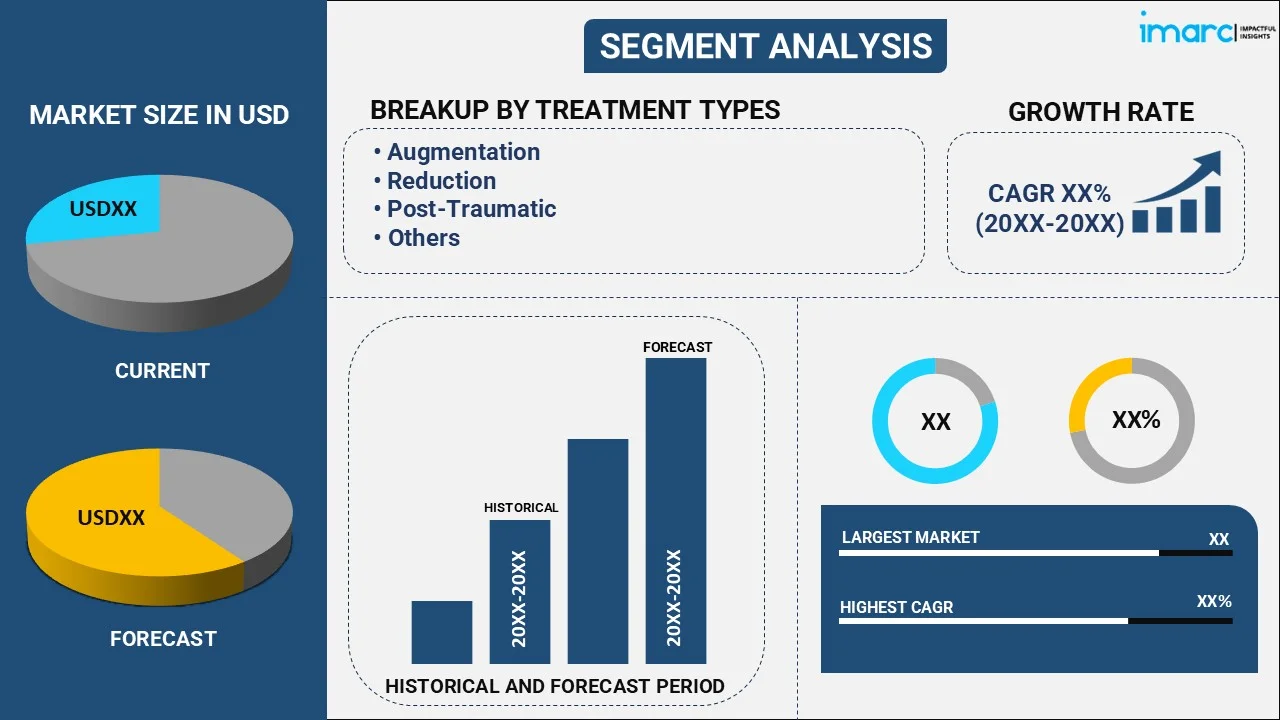
To get detailed segment analysis of this market Request Sample
- Augmentation
- Reduction
- Post-Traumatic
- Reconstructive
- Revision
- Others
Augmentation holds 28% of the market share. Augmentation rhinoplasty is the enlargement of nasal features with the use of implants, grafts, or dermal fillers to provide a better projection or volume and general contour of the nose. This is a very common surgery done both functionally and aesthetically to correct the defects of the nose that are present at birth, as well as those that are caused by trauma, or to polish the nose. Augmentation rhinoplasty is especially popular in areas where dorsal augmentation is very desired such as East Asian nations, where silicone implants and autologous cartilage grafts are widely used. The increase in the popularity of tailored augmentation surgery with new three-dimensional imaging and computer-assisted surgery planning is also a factor that is supporting a consistent rhinoplasty market growth. The presence of a variety of implantable materials, such as biocompatible polymers and autologous tissue-based grafts, has been increasing the options of the surgery and enhancing the results over the long-term.
Analysis by Technique:
- Open Rhinoplasty
- Closed Rhinoplasty
Open rhinoplasty leads the market with a share of 36%. Open rhinoplasty involves making a small incision across the columella, the strip of tissue separating the nostrils, providing surgeons with comprehensive visibility and direct access to the nasal framework. The technique is used in complex and extensive nasal surgeries that involve massive structural alteration such as dorsal hump removal, tip refinement, and septal correction. The increased exposure to surgery provided by the open technique allows to place cartilage grafts and implants with greater precision, which leads to more predictable and attractive results. According to the American Academy of Facial Plastic and Reconstructive Surgery, rhinoplasty remained the most commonly performed surgical procedure among its members throughout 2024, with the open technique being particularly favored for revision cases. The open rhinoplasty technique is particularly the most appropriate method to be applied in patients who need functional repair and cosmetic enhancement and the increasing demand for the combined aesthetic and functional surgery further consolidates its market leadership.
Regional Analysis:
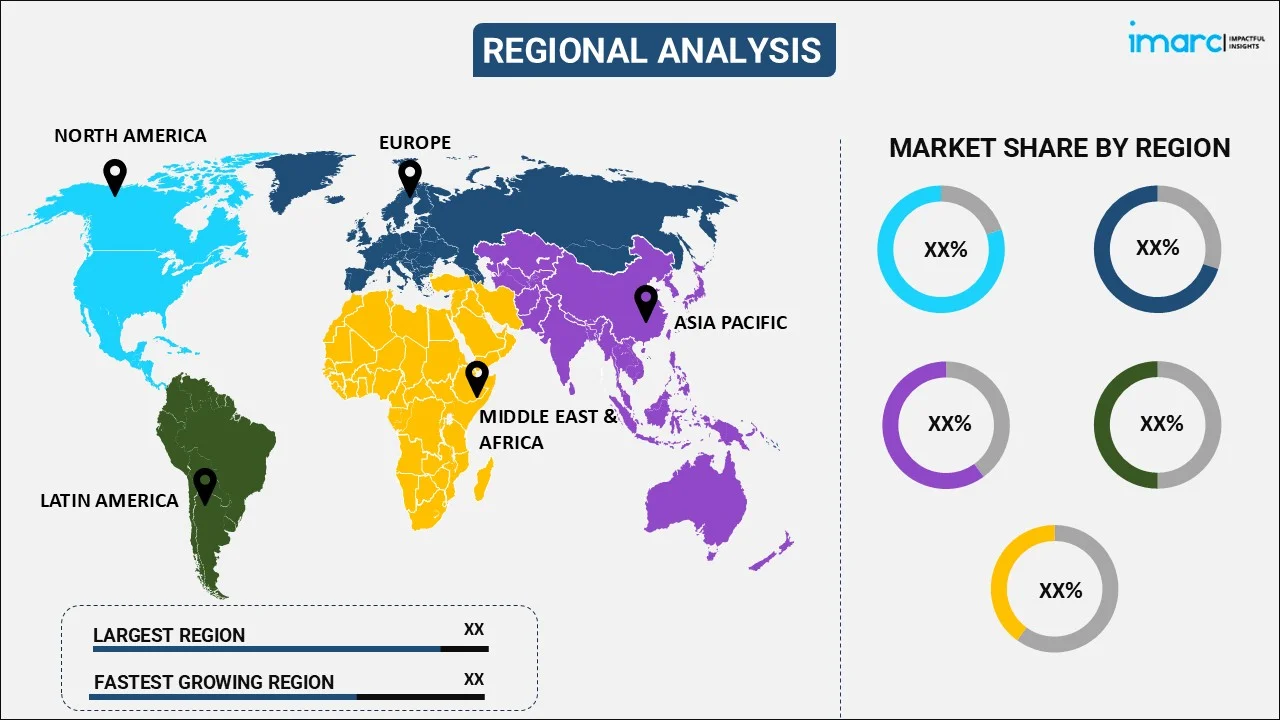
To get more information on the regional analysis of this market Request Sample
- North America
- United States
- Canada
- Asia-Pacific
- China
- Japan
- India
- South Korea
- Australia
- Indonesia
- Others
- Europe
- Germany
- France
- United Kingdom
- Italy
- Spain
- Russia
- Others
- Latin America
- Brazil
- Mexico
- Others
- Middle East and Africa
North America, accounting for 38% of the share, enjoys the leading position in the market. The region benefits from a highly developed healthcare infrastructure, a large base of board-certified plastic surgeons, and widespread consumer awareness regarding cosmetic and functional rhinoplasty procedures. The strong demand for both aesthetic enhancements and corrective nasal surgeries, coupled with high disposable incomes, drives substantial procedure volumes across the region. The increasing adoption of advanced surgical technologies, including piezoelectric bone-cutting devices, three-dimensional imaging systems, and computer-assisted planning tools, further strengthens the regional market position. The growing popularity of ambulatory surgical centers for outpatient rhinoplasty procedures is also contributing to market expansion by improving accessibility and reducing overall treatment costs for patients across North America. In addition, strong medical tourism inflows and favorable reimbursement frameworks in select cases further support sustained procedural growth across the region.
Key Regional Takeaways:
United States Rhinoplasty Market Analysis
The United States rhinoplasty market continues to demonstrate robust growth, driven by the strong emphasis on facial aesthetics, advanced healthcare infrastructure, and a culturally receptive environment for cosmetic procedures. The increasing demand for personalized and natural-looking results has encouraged the adoption of cutting-edge techniques, including preservation rhinoplasty and ultrasonic bone sculpting, which offer improved precision and reduced recovery times. The growing popularity of non-surgical rhinoplasty using injectable dermal fillers has further broadened the patient demographic by attracting individuals seeking temporary and less invasive enhancements. For instance, in September 2025, Rod J. Rohrich, a Dallas-based plastic surgeon and rhinoplasty expert, was recognized as the top rhinoplasty surgeon in the United States for the fifth consecutive year in Newsweek’s 2025 ranking of America’s Best Plastic Surgeons. The publication’s annual list uses a comprehensive scoring methodology that incorporates peer evaluations and quality metrics, with Dr. Rohrich earning the highest overall score and securing the number one position nationwide. The rising participation of male patients in cosmetic surgery, particularly for rhinoplasty and facial rejuvenation procedures, is expanding the overall market potential. Furthermore, the integration of artificial intelligence-powered surgical planning tools and virtual consultation platforms is enhancing preoperative assessments, improving outcome predictability, and increasing patient confidence. The availability of flexible financing options for elective surgeries continues to support market accessibility across diverse income segments.
Europe Rhinoplasty Market Analysis
The European rhinoplasty market is experiencing steady growth, supported by increasing consumer awareness of cosmetic procedures, a strong network of qualified plastic surgeons, and rising disposable incomes across the region. Germany, France, the United Kingdom, and Italy are some of the countries experiencing increasing demand for both cosmetic and reconstructive rhinoplasty. Implementation of new surgical technologies such as the use of three-dimensional imaging and endoscopic procedures are enhancing the outcome of procedures and patient satisfaction. For instance, the British Association of Aesthetic Plastic Surgeons reported a 67% increase in rhinoplasty procedures in the United Kingdom in 2022, with the total reaching 2,220 cases, reflecting growing acceptance of cosmetic nasal surgery. The effect of the increased popularity of social media and changing beauty ideals is pushing younger generations to demand more nuanced skin corrections. The competitive environment is being transformed with an increased regulatory scrutiny, especially after the adoption of revised Medical Device Regulation requirements in the entire European Union, which rewards firms that have good capabilities to comply. The increasing demand for minimally invasive surgery and ethnically sensitive options is still influencing the market in the region.
Asia-Pacific Rhinoplasty Market Analysis
The Asia-Pacific rhinoplasty market is the fastest-growing regional segment, propelled by rising disposable incomes, expanding healthcare infrastructure, and strong social media-driven demand for cosmetic enhancements. South Korea has emerged as a global hub for rhinoplasty, with Seoul hosting the highest concentration of cosmetic surgeons per capita worldwide. For instance, international patients account for approximately 40 to 50% of all plastic surgeries performed in South Korea, with rhinoplasty being among the most sought-after procedures. Medical tourism is a significant growth driver, with patients from across Asia, the Middle East, and Europe traveling to countries including South Korea, Thailand, and India for high-quality and cost-effective rhinoplasty treatments. The increasing availability of advanced augmentation techniques, including autologous cartilage grafting and hybrid implant approaches, is improving procedural outcomes and supporting market expansion across the region.
Latin America Rhinoplasty Market Analysis
The Latin American rhinoplasty market is experiencing consistent growth, driven by strong cultural emphasis on physical appearance, medical tourism activities, and cost-effective procedure availability. Brazil leads the region as the second-largest market for cosmetic surgery globally. Mexico and Colombia also represent significant markets, supported by the growing accessibility of skilled surgeons and modern surgical facilities. The increasing adoption of minimally invasive techniques and the rising influence of social media beauty trends among younger populations continue to support demand for rhinoplasty procedures across Latin America.
Middle East and Africa Rhinoplasty Market Analysis
The Middle East and Africa rhinoplasty market is witnessing gradual growth, supported by expanding healthcare infrastructure, rising disposable incomes, and growing awareness of cosmetic procedures. The region has emerged as a notable destination for medical tourism, with countries including Turkey, the United Arab Emirates, and Saudi Arabia attracting international patients seeking affordable rhinoplasty treatments. For instance, Bashar Bizrah founded Bizrahmed, a prominent medical center providing cosmetic surgery, hair restoration, and skincare services. Recognized as a trailblazer in rhinoplasty, Dr. Bizrah achieved a remarkable career milestone by performing more than 40,000 rhinoplasty procedures. His sustained dedication to surgical excellence and innovation underscores his extensive experience and skill in treating patients from a wide range of multi-ethnic backgrounds. The increasing societal acceptance of aesthetic enhancements, particularly among younger demographics, and the expansion of specialized cosmetic surgery clinics continue to drive market development across the region.
Competitive Landscape:
The rhinoplasty market exhibits a moderately fragmented competitive landscape, with key players focusing on product innovation, strategic acquisitions, and geographic expansion to strengthen their market positions. Leading companies are investing in research and development activities to introduce technologically advanced surgical instruments, biocompatible implant materials, and computer-assisted planning systems that enhance procedural precision and patient outcomes. The growing demand for minimally invasive and non-surgical rhinoplasty options has encouraged market participants to develop innovative solutions, including bioabsorbable nasal implants and advanced dermal filler products. Strategic partnerships between medical device manufacturers, surgical training institutions, and healthcare providers are facilitating the adoption of cutting-edge rhinoplasty technologies globally. The increasing emphasis on surgeon education programs, clinical evidence generation, and regulatory compliance is shaping competitive dynamics, with established players leveraging their broader product portfolios and distribution networks to maintain market leadership. Emerging companies are targeting niche segments, including preservation-specific instruments and patient-specific three-dimensional printed implants, to differentiate their offerings.
The report provides a comprehensive analysis of the competitive landscape in the rhinoplasty market with detailed profiles of all major companies, including:
- COMEG
- GROVER AESTHETICS
- Implantech
- KLS Martin Group
- New York Center for Plastic Surgery
- Stryker Corporation
- Sunset Cosmetic Surgery
- Surgiform Technologies LLC
Latest News and Developments:
- In January 2026, Deepak Dugar, a double board-certified plastic surgeon and internationally recognized rhinoplasty specialist, formally announced the articulation of his Principles of Practice amid increasing private equity influence and volume-driven trends in aesthetic medicine. The newly defined framework emphasizes surgical mastery, disciplined judgment, and adherence to established surgical lineage. By prioritizing precision and clinical integrity over scale and marketing-driven growth, Dr. Dugar seeks to reinforce a patient-centered, outcomes-focused model within an increasingly commercialized aesthetic industry.
- In February 2025, Asli Tarcan Clinic, a leading Turkish medical center specializing in hair transplantation, dental treatments, and plastic surgery, announced the introduction of its new “Ethnic Rhinoplasty” service. This highly anticipated launch represents an important advancement in cosmetic surgery, providing a customized rhinoplasty approach designed to preserve and enhance the distinct facial characteristics of patients from diverse ethnic backgrounds. Operating from Turkey, recognized globally for its advanced healthcare services, the clinic aims to integrate innovation, cultural awareness, and patient safety while elevating standards in personalized nasal surgery.
Rhinoplasty Market Report Coverage:
| Features | Details |
|---|---|
| Base Year of the Analysis | 2025 |
| Historical Period | 2020-2025 |
| Forecast Period | 2026-2034 |
| Units | Billion USD |
| Scope of the Report |
Exploration of Historical Trends and Market Outlook, Industry Catalysts and Challenges, Segment-Wise Historical and Future Market Assessment:
|
| Treatment Types Covered | Augmentation, Reduction, Post-Traumatic, Reconstructive, Revision, Others |
| Techniques Covered | Open Rhinoplasty, Closed Rhinoplasty |
| Region Covered | North America, Asia-Pacific, Europe, Latin America, Middle East and Africa |
| Countries Covered | United States, Canada, China, Japan, India, South Korea, Australia, Indonesia, Germany, France, United Kingdom, Italy, Spain, Russia, Brazil, Mexico |
| Companies Covered | COMEG, GROVER AESTHETICS, Implantech, KLS Martin Group, New York Center for Plastic Surgery, Stryker Corporation, Sunset Cosmetic Surgery, Surgiform Technologies LLC, etc. |
| Customization Scope | 10% Free Customization |
| Post-Sale Analyst Support | 10-12 Weeks |
| Delivery Format | PDF and Excel through Email (We can also provide the editable version of the report in PPT/Word format on special request) |
Key Benefits for Stakeholders:
- IMARC’s report offers a comprehensive quantitative analysis of various market segments, historical and current market trends, market forecasts, and dynamics of the rhinoplasty market from 2020-2034.
- The research study provides the latest information on the market drivers, challenges, and opportunities in the global rhinoplasty market.
- The study maps the leading, as well as the fastest-growing, regional markets. It further enables stakeholders to identify the key country-level markets within each region.
- Porter’s Five Forces analysis assists stakeholders in assessing the impact of new entrants, competitive rivalry, supplier power, buyer power, and the threat of substitution. It helps stakeholders to analyze the level of competition within the rhinoplasty industry and its attractiveness.
- Competitive landscape allows stakeholders to understand their competitive environment and provides an insight into the current positions of key players in the market.
Frequently Asked Questions About the Rhinoplasty Market Report Report
The rhinoplasty market was valued at USD 7.15 Billion in 2025.
The rhinoplasty market is projected to exhibit a CAGR of 7.39% during 2026-2034, reaching a value of USD 14.62 Billion by 2034.
The rhinoplasty market is primarily driven by rising consumer awareness of aesthetic appearance, growing societal acceptance of cosmetic procedures, and advancements in minimally invasive surgical techniques. The increasing influence of social media platforms, inflating disposable incomes, and expanding medical tourism activities are further catalyzing market growth.
North America currently dominates the rhinoplasty market, accounting for a share of 38%. The region benefits from advanced healthcare infrastructure, a high concentration of board-certified plastic surgeons, strong consumer demand for cosmetic enhancements, and widespread adoption of innovative surgical technologies.
Some of the major players in the rhinoplasty market include COMEG, GROVER AESTHETICS, Implantech, KLS Martin Group, New York Center for Plastic Surgery, Stryker Corporation, Sunset Cosmetic Surgery, Surgiform Technologies LLC, etc.
Need more help?
- Speak to our experienced analysts for insights on the current market scenarios.
- Include additional segments and countries to customize the report as per your requirement.
- Gain an unparalleled competitive advantage in your domain by understanding how to utilize the report and positively impacting your operations and revenue.
- For further assistance, please connect with our analysts.
 Request Customization
 Speak to an Analyst
 Request Brochure
 Inquire Before Buying
Benefits of Customization
- Personalize this research
- Triangulate with your data
- Get data as per your format and definition
- Gain a deeper dive into a specific application, geography, customer, or competitor
- Any level of personalization
Get in Touch With Us
UNITED STATES
Phone: +1-201-971-6302
INDIA
Phone: +91-120-433-0800
UNITED KINGDOM
Phone: +44-753-714-6104
Email: sales@imarcgroup.com
Client Testimonials




.webp)




.webp)













Related Reports

Choose your plan
*Please note that the prices mentioned below are starting prices for each bundle type. Kindly contact our team for further details.*
Single User License
- 1 User License, Access on 2 Devices
- PDF Report + Excel Dataset (Password Protected)
- Lifetime Access
- No Printing Rights
- 10% Free Report Customization
- 10–12 Weeks of Analyst Support
Five User License
- Access for 5 Users, 2 Devices per User
- PDF Report + Excel Dataset (Password Protected)
- Lifetime Access
- Dedicated Account Manager
- 12–14 Weeks of Analyst Support
- No Printing Rights
- 15% Free Report Customization
- 25% Discount on Your Next Purchase
Corporate User License
- Unlimited User Access (Within Your Organization)
- PDF Report + Excel Dataset
- Lifetime Access
- Dedicated Account Manager
- 14–20 Weeks of Analyst Support
- No Printing Rights
- 20% Free Report Customization
- 30% Discount on Your Next Purchase
Essential Insights
What's included:
3 reports
- Lifetime Access
- PDF Reports
- Excel Datasets
- 2 Weeks of Free Analyst Support
- 2 User Licenses
- Access on 2 Devices
- Printing Rights
- Complimentary PowerPoint (PPT) Version
- Complimentary License Upgrade
Professional Access
What's included:
5 reports
- Lifetime Access
- PDF Reports
- Excel Datasets
- 8 Weeks of Free Analyst Support
- 2 User Licenses
- Access on 2 Devices
- Printing Rights
- Complimentary PowerPoint (PPT) Version
- Complimentary License Upgrade
Business Advantage
What's included:
8 reports
- Lifetime Access
- PDF Reports
- Excel Datasets
- 14 Weeks of Free Analyst Support
- 2 User Licenses
- Access on 2 Devices
- Printing Rights
- Complimentary PowerPoint (PPT) Version
- Complimentary License Upgrade
Enterprise Intelligence
What's included:
10 reports
- Lifetime Access
- PDF Reports
- Excel Datasets
- 20 Weeks of Free Analyst Support
- 2 User Licenses
- Access on 2 Devices
- Printing Rights
- Complimentary PowerPoint (PPT) Version
- Complimentary License Upgrade