
Saudi Arabia Fermented Superfoods Market Size, Share, Trends and Forecast by Product Type, Distribution Channel, End User, and Region, 2026-2034
Saudi Arabia Fermented Superfoods Market Summary:
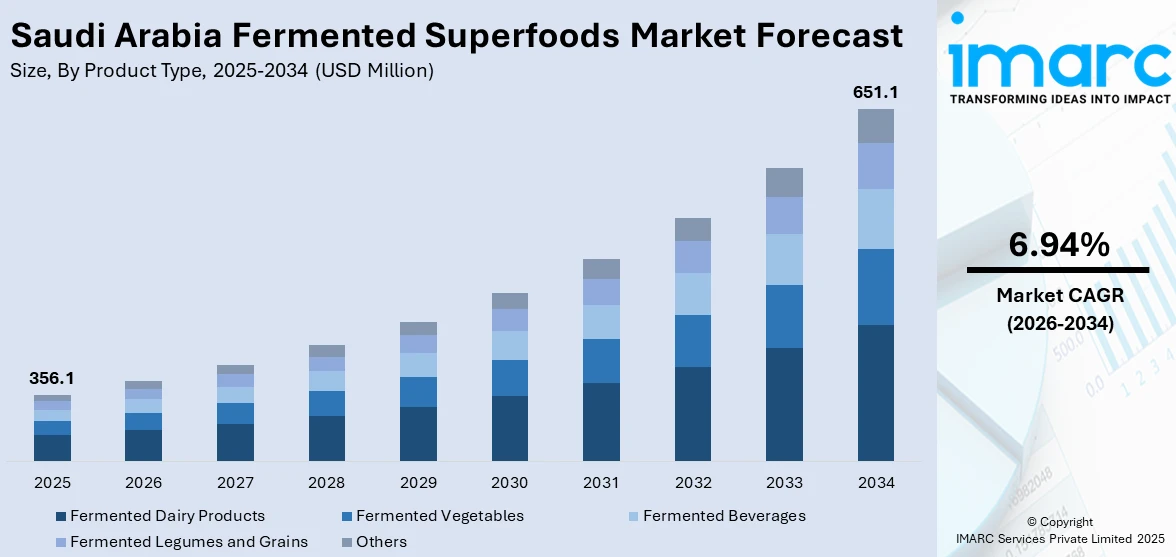
The Saudi Arabia fermented superfoods market size was valued at USD 356.1 Million in 2025 and is projected to reach USD 651.1 Million by 2034, growing at a compound annual growth rate of 6.94% from 2026-2034.
The Saudi Arabia fermented superfoods market is expanding rapidly, as consumers embrace healthier dietary choices, aligned with preventive wellness approaches. Increasing urbanization, changing lifestyles, and rising awareness about gut health benefits are driving demand for probiotic-rich fermented superfoods. Traditional consumption patterns combined with modern functional food preferences are reshaping the market landscape, positioning fermented superfoods as essential components of health-conscious Saudi households.
Key Takeaways and Insights:
- By Product Type: Fermented dairy products dominate the market with a share of 42% in 2025, owing to deep-rooted cultural preferences for yogurt and laban, combined with increasing demand for probiotic-enriched functional dairy products. Rising health consciousness is further fueling the market expansion.
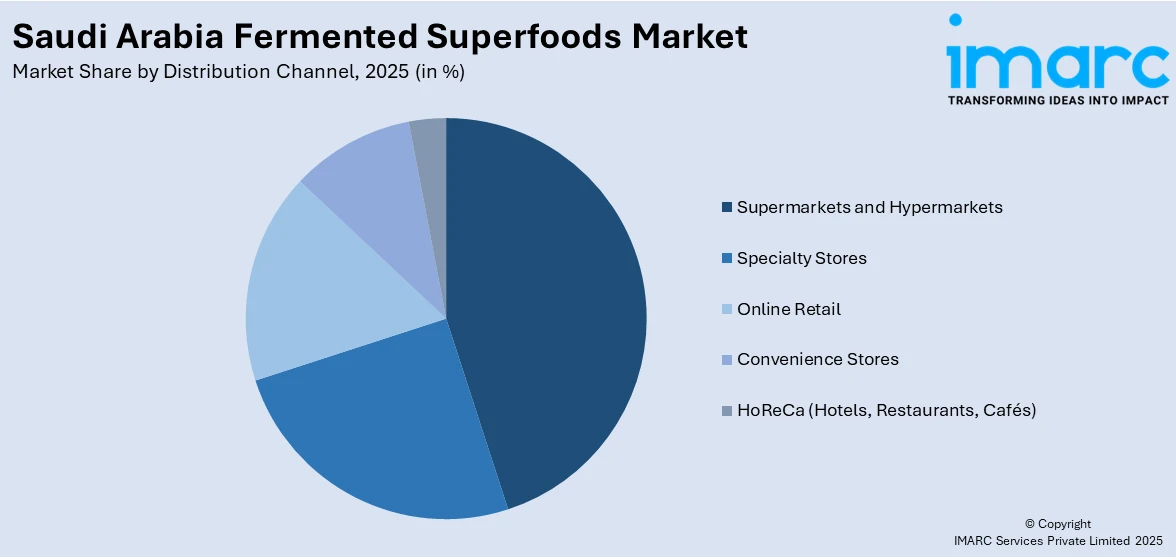
- By Distribution Channel: Supermarkets and hypermarkets lead the market with a share of 45% in 2025. This dominance is driven by extensive product variety, competitive pricing, and one-stop shopping convenience that appeals to health-conscious consumers seeking fermented superfood options.
- By End User: Households comprise the largest segment with a market share of 60% in 2025, reflecting strong consumer preference for incorporating fermented superfoods into daily home-based nutrition routines and growing family awareness about digestive health benefits.
- By Region: Northern and Central Region represents the largest region with 35% share in 2025, driven by concentration of population in Riyadh metropolitan area, higher disposable incomes, advanced retail infrastructure, and greater consumer exposure to health and wellness trends.
- Key Players: Key players drive the Saudi Arabia fermented superfoods market by expanding product portfolios, improving fermentation technologies, and strengthening nationwide distribution. Their investments in marketing, affordability, and partnerships with healthcare providers boost awareness, accelerate adoption, and ensure consistent product availability across diverse consumer segments.
To get more information on this market Request Sample
In Saudi Arabia, the market is advancing, as consumers, healthcare providers, and food manufacturers recognize the substantial benefits of probiotic-rich fermented superfoods for digestive wellness and immune support. The market benefits from strong government support through Vision 2030 initiatives promoting healthier lifestyles and domestic food production capabilities. Major dairy producers are investing heavily in advanced fermentation technologies and probiotic formulations tailored to local taste preferences. The expanding retail infrastructure, including hypermarkets and specialty health stores, enhances product accessibility across major urban centers. As per IMARC Group, the Saudi Arabia retail market size was valued at USD 293.6 Billion in 2025. Additionally, rising disposable incomes among the young population, combined with increasing exposure to global health trends through digital platforms, are reshaping consumption patterns.
Saudi Arabia Fermented Superfoods Market Trends:
Rising Demand for Probiotic-Rich Functional Foods
Growing awareness about gut health and microbiome balance is driving significant demand for probiotic-enriched fermented superfoods across Saudi Arabia. Consumers are increasingly seeking functional foods that offer digestive benefits beyond basic nutrition. The Saudi Food and Drug Authority updated probiotic regulations in May 2024, establishing clearer classification criteria that enhance consumer confidence in probiotic products. Manufacturers are responding with innovative formulations, featuring multiple probiotic strains, supporting the Saudi Arabia fermented superfoods market growth.
Expansion of Plant-Based Fermented Superfood Options
The growing interest in vegetarian and vegan diets is accelerating demand for plant-based fermented superfoods in Saudi Arabia. Products like kombucha, tempeh, and fermented vegetable varieties are gaining popularity among consumers seeking sustainable alternatives to traditional dairy-based fermented foods. This shift is also supported by rising awareness about lactose intolerance and preference for cleaner ingredient labels. Younger consumers are embracing plant-based fermented foods as part of balanced, wellness-focused lifestyles.
Increasing Popularity of Convenient Ready-to-Eat (RTE) Formats
Busy lifestyles among Saudi consumers are driving demand for convenient, portable fermented superfood formats. Single-serve yogurt cups, drinkable kefir, and RTE fermented snacks are increasingly popular among urban professionals and young families. Manufacturers are developing innovative packaging solutions that extend shelf life while preserving probiotic viability. In February 2025, Go Greek Yogurt entered the Saudi market, offering wellness-oriented dairy products aligned with growing consumer preference for convenient health-focused options.
How Vision 2030 is Transforming the Saudi Arabia Fermented Superfoods Market:
Vision 2030 is transforming the Saudi Arabia fermented superfoods market by reshaping consumer lifestyles, food production capabilities, and retail ecosystems. The national focus on health and wellness is accelerating awareness about gut health, immunity, and functional nutrition, driving demand for fermented products, such as kombucha, kefir, yogurt-based drinks, and probiotic foods. Vision 2030 initiatives aimed at promoting local food processing and agri-tech adoption are encouraging domestic production of value-added fermented foods, reducing reliance on imports. Rapid expansion of modern retail, fitness culture, and digital food delivery platforms is improving product visibility and accessibility. Additionally, rising disposable incomes, a young population, and exposure to global dietary trends are supporting premiumization and product innovation, positioning fermented superfoods as a growing segment within Saudi Arabia’s evolving food and beverage (F&B) landscape.
Market Outlook 2026-2034:
The Saudi Arabia fermented superfoods market is poised for sustained expansion, as health consciousness continues to permeate consumer behavior and government policies increasingly prioritize nutritional wellness. The integration of fermented superfoods into mainstream dietary patterns is accelerating, supported by expanding retail infrastructure and enhanced product availability. The market generated a revenue of USD 356.1 Million in 2025 and is projected to reach a revenue of USD 651.1 Million by 2034, growing at a compound annual growth rate of 6.94% from 2026-2034. Vision 2030 initiatives supporting domestic food production and healthier lifestyles will continue to drive market development. E-commerce channels and modern retail formats are enhancing product accessibility, while consumer education campaigns are expanding awareness about fermented superfood benefits across diverse demographic segments.
.webp)
Saudi Arabia Fermented Superfoods Market Report Segmentation:
|
Segment Category |
Leading Segment |
Market Share |
|
Product Type |
Fermented Dairy Products |
42% |
|
Distribution Channel |
Supermarkets and Hypermarkets |
45% |
|
End User |
Households |
60% |
|
Region |
Northern and Central Region |
35% |
Product Type Insights:
- Fermented Dairy Products
- Yogurt
- Kefir
- Buttermilk
- Fermented Vegetables
- Kimchi
- Sauerkraut
- Pickles
- Fermented Beverages
- Kombucha
- Kanji
- Fermented Teas
- Fermented Legumes and Grains
- Idli
- Dosa
- Dhokla
- Tempeh
- Miso
- Others
Fermented dairy products dominate with a market share of 42% of the total Saudi Arabia fermented superfoods market in 2025.
Fermented dairy products maintain their leadership position in the Saudi Arabia fermented superfoods market, driven by deep cultural traditions and strong consumer familiarity with yogurt and laban. The Saudi Arabia yogurt market was valued at USD 1.3 Billion in 2025 and projected to reach USD 2.0 Billion by 2034, reflecting robust demand for dairy-based fermented foods. Traditional consumption patterns, combined with modern functional food preferences, position fermented dairy products as essential dietary components among Saudi households seeking probiotic benefits and digestive health support.
The segment benefits from significant investments by major dairy producers who are expanding their fermented product portfolios. Manufacturers are introducing innovative probiotic formulations, Greek-style yogurts, and fortified varieties enriched with vitamins and minerals. The availability of low-fat, lactose-free, and protein-enriched options addresses evolving consumer preferences for healthier alternatives while maintaining the traditional appeal of fermented dairy products. Strong distribution through supermarkets, hypermarkets, and convenience stores further ensures high visibility and consistent consumption of fermented dairy products across the Kingdom.
Distribution Channel Insights:
Access the comprehensive market breakdown Request Sample
- Supermarkets and Hypermarkets
- Specialty Stores
- Online Retail
- Convenience Stores
- HoReCa (Hotels, Restaurants, Cafés)
Supermarkets and hypermarkets lead with a share of 45% of the total Saudi Arabia fermented superfoods market in 2025.
Supermarkets and hypermarkets dominate the distribution channel landscape for fermented superfoods in Saudi Arabia, offering consumers comprehensive product selections under one roof. Major retail chains provide extensive fermented superfood selections, ranging from traditional dairy products to innovative plant-based alternatives, catering to diverse consumer preferences. In-store sampling, nutrition labeling, and educational promotions help consumers better understand product benefits. Private-label fermented offerings are also expanding, providing affordable options alongside premium brands.
The expansion of modern retail infrastructure supports fermented superfood accessibility across the Kingdom. Panda Retail Co. announced plans to open more than 20 new stores in 2025, with emphasis on Riyadh and remote areas, enhancing distribution reach for health-focused products. Supermarkets offer competitive pricing, promotional activities, and loyalty programs that attract health-conscious shoppers. Cold chain capabilities maintained by major retailers ensure product freshness and probiotic viability, while strategic shelf placement and dedicated health sections increase consumer awareness about fermented superfood options.
End User Insights:
- Households
- Food Service Industry
- Health and Wellness Industry
Households exhibit a clear dominance with a 60% share of the total Saudi Arabia fermented superfoods market in 2025.
Households represent the primary end user segment for fermented superfoods in Saudi Arabia, reflecting strong family-oriented eating habits and increasing health awareness among home consumers. The Saudi Arabia digestive health supplements market reached USD 135.00 Million in 2024, indicating growing consumer investment in gut health products for household consumption. Families are incorporating fermented superfoods into daily meal preparations, recognizing benefits for digestive wellness, immune support, and overall nutritional enhancement across all age groups, ranging from children to elderly family members.
Rising disposable incomes and changing lifestyle patterns are driving household demand for premium fermented superfood products. Parents are increasingly prioritizing probiotic-rich foods for children, while younger household members influence family purchasing decisions through exposure to global health trends. Convenient packaging formats and extended shelf-life technologies enable households to maintain regular fermented superfood consumption without frequent shopping trips. Growing availability through supermarkets, online grocery platforms, and subscription-based delivery services is further reinforcing household-level adoption of fermented superfoods.
Regional Insights:
- Northern and Central Region
- Western Region
- Eastern Region
- Southern Region
Northern and Central Region represents the leading segment with a 35% share of the total Saudi Arabia fermented superfoods market in 2025.
Northern and Central Region leads fermented superfood consumption in Saudi Arabia. The presence of major dairy processing facilities, advanced cold chain logistics, and high consumer exposure to health trends positions this region as the primary market for fermented superfoods. High population density supports consistent volume demand across product categories. Strong influence of nutritionists, fitness centers, and wellness communities is shaping consumption habits. Frequent product launches and marketing campaigns further strengthen regional market leadership.
Higher disposable incomes and urban lifestyle patterns in Riyadh drive premium fermented superfood adoption. The region benefits from extensive supermarket networks, specialty health stores, and growing e-commerce penetration that enhance fermented superfood accessibility for health-conscious consumers. Consumers show strong willingness to experiment with new flavors and functional formulations. Subscription-based purchases and ready-to-consume formats are gaining traction. Brand visibility and trust are higher compared to other regions, supporting repeat consumption.
Market Dynamics:
Growth Drivers:
Why is the Saudi Arabia Fermented Superfoods Market Growing?
Rising Health Consciousness and Gut Health Awareness
Significant demand for fermented superfoods that promote immune system support and digestive wellbeing is being driven by Saudi consumers' growing health consciousness. Consumer interest in probiotic-rich fermented superfoods has increased due to the high understanding of the gut-brain connection and microbiome health. Public awareness of the advantages of fermentation is growing due to educational initiatives and digital health content. Adoption of fermented superfoods is being facilitated by government health efforts that support preventative healthcare and balanced nutrition in line with Vision 2030. Fermented superfoods are becoming more legitimate as functional nutrition options since medical professionals promote probiotic-rich meals for managing digestive health. Regular intake of fermented items is being accelerated by the increasing prevalence of digestive problems associated with lifestyle choices. Customers are looking for products with pure ingredients and proven probiotic strains, and they are increasingly examining labels.
Expanding Modern Retail Infrastructure and Product Accessibility
The rapid expansion of modern retail channels is enhancing fermented superfood accessibility across Saudi Arabia. Supermarkets, hypermarkets, and specialty health stores are dedicating increased shelf space to functional foods, including fermented superfood products. Major retailers are investing in cold chain infrastructure to maintain product quality and probiotic viability. As per IMARC Group, the Saudi Arabia cold chain market size was valued at USD 3.5 Billion in 2025 and is projected to attain USD 15.9 Billion by 2034. E-commerce platforms provide convenient access to diverse fermented superfood options, while online health retailers offer specialty products not available in traditional stores. The combination of physical and digital retail expansion is creating multiple purchase touchpoints for consumers. This multichannel availability is accelerating trial rates, repeat purchases, and broader consumer adoption of fermented superfoods across different income groups.
Government Support Through Vision 2030 Food Security Initiatives
Saudi Arabia's Vision 2030 initiatives are creating supportive conditions for the fermented superfoods market through emphasis on food security, domestic production, and healthier lifestyles. Government policies encourage local food manufacturing capabilities while promoting nutritional wellness among citizens. Regulatory frameworks supporting functional food development and quality standards enhance consumer confidence in fermented superfood products. Investment incentives for food processing facilities are attracting manufacturers to expand fermented product portfolios, strengthening domestic supply chains and reducing import dependencies. Public–private partnerships (PPPs) are facilitating technology transfer and skill development within the food processing sector. Support for agri-tech and local sourcing is improving raw material availability for fermentation-based products. Vision 2030–aligned wellness programs are increasing demand for functional and preventive nutrition solutions. Collectively, these measures are positioning fermented superfoods as a strategic growth segment within Saudi Arabia’s evolving food ecosystem.
Market Restraints:
What Challenges the Saudi Arabia Fermented Superfoods Market is Facing?
Storage and Stability Challenges in Hot Climate Conditions
The sensitivity of probiotic-rich fermented superfoods to temperature and moisture presents significant challenges in Saudi Arabia's hot climate conditions. Maintaining bacterial viability during transportation and storage requires advanced cold-chain logistics, increasing operational costs. Product stability concerns limit distribution reach, particularly in remote and semi-urban areas lacking reliable refrigeration infrastructure. Manufacturers must invest in innovative formulations and packaging technologies to ensure probiotic survival throughout the supply chain.
Intense Competition and Price Pressures
The fermented superfoods market faces intense competition from established dairy producers, international brands, and private label products. Major players dominate shelf space, creating barriers for new entrants and specialty producers. Price wars and aggressive promotional activities compress profit margins, limiting investment in product innovation. Smaller manufacturers struggle to achieve economies of scale necessary for competitive pricing while maintaining quality standards.
Regulatory Compliance and Product Standardization Issues
Fermented superfoods often fall between conventional food and functional nutrition categories, creating regulatory complexity. Compliance with evolving food safety standards, labeling requirements, and probiotic claims increases approval timelines and costs. Lack of standardized definitions for probiotic efficacy complicates product differentiation and marketing. Smaller players face challenges navigating certification processes, while frequent regulatory updates require continuous reformulation, testing, and documentation, adding to operational and compliance burdens.
Competitive Landscape:
The Saudi Arabia fermented superfoods market features a dynamic competitive environment with both domestic and international players vying for market share. Leading dairy manufacturers are leveraging their established distribution networks and brand recognition to expand fermented product portfolios. Competition is intensifying as companies focus on product innovations, including probiotic formulations, clean-label offerings, and functional dairy variants tailored to health-conscious consumers. Strategic investments in advanced fermentation technologies and quality control systems are enhancing production capabilities. Market players are forming partnerships with healthcare providers and wellness influencers to strengthen brand positioning.
Saudi Arabia Fermented Superfoods Market Report Coverage:
| Report Features | Details |
|---|---|
| Base Year of the Analysis | 2025 |
| Historical Period | 2020-2025 |
| Forecast Period | 2026-2034 |
| Units | Million USD |
| Scope of the Report |
Exploration of Historical Trends and Market Outlook, Industry Catalysts and Challenges, Segment-Wise Historical and Future Market Assessment:
|
| Product Types Covered |
|
| Distribution Channels Covered | Supermarkets and Hypermarkets, Specialty Stores, Online Retail, Convenience Stores, HoReCa (Hotels, Restaurants, Cafés) |
| End Users Covered | Households, Food Service Industry, Health and Wellness Industry |
| Regions Covered | Northern and Central Region, Western Region, Eastern Region, Southern Region |
| Customization Scope | 10% Free Customization |
| Post-Sale Analyst Support | 10-12 Weeks |
| Delivery Format | PDF and Excel through Email (We can also provide the editable version of the report in PPT/Word format on special request) |
Frequently Asked Questions About the Saudi Arabia Fermented Superfoods Market Report
The Saudi Arabia fermented superfoods market size was valued at USD 356.1 Million in 2025.
The Saudi Arabia fermented superfoods market is expected to grow at a compound annual growth rate of 6.94% from 2026-2034 to reach USD 651.1 Million by 2034.
Fermented dairy products dominated the market with a share of 42%, driven by deep cultural preferences for yogurt and laban, combined with increasing demand for probiotic-enriched functional dairy products supporting digestive health.
Key factors driving the Saudi Arabia fermented superfoods market include rising health consciousness, growing awareness about gut health benefits, expanding modern retail infrastructure, government support through Vision 2030 initiatives, and product innovations.
Major challenges include limited consumer knowledge about probiotics, storage and stability concerns in hot climate conditions, intense competition among established players, price pressures from private labels, and regulatory compliance requirements.
Need more help?
- Speak to our experienced analysts for insights on the current market scenarios.
- Include additional segments and countries to customize the report as per your requirement.
- Gain an unparalleled competitive advantage in your domain by understanding how to utilize the report and positively impacting your operations and revenue.
- For further assistance, please connect with our analysts.
 Request Customization
 Speak to an Analyst
 Request Brochure
 Inquire Before Buying
Benefits of Customization
- Personalize this research
- Triangulate with your data
- Get data as per your format and definition
- Gain a deeper dive into a specific application, geography, customer, or competitor
- Any level of personalization
Get in Touch With Us
UNITED STATES
Phone: +1-201-971-6302
INDIA
Phone: +91-120-433-0800
UNITED KINGDOM
Phone: +44-753-714-6104
Email: [email protected]
Client Testimonials




.webp)




.webp)













Related Reports

Choose your plan
*Please note that the prices mentioned below are starting prices for each bundle type. Kindly contact our team for further details.*
Single User License
- 1 User License, Access on 2 Devices
- PDF Report + Excel Dataset (Password Protected)
- Lifetime Access
- No Printing Rights
- 10% Free Report Customization
- 10–12 Weeks of Analyst Support
Five User License
- Access for 5 Users, 2 Devices per User
- PDF Report + Excel Dataset (Password Protected)
- Lifetime Access
- Dedicated Account Manager
- 12–14 Weeks of Analyst Support
- No Printing Rights
- 15% Free Report Customization
- 25% Discount on Your Next Purchase
Corporate User License
- Unlimited User Access (Within Your Organization)
- PDF Report + Excel Dataset
- Lifetime Access
- Dedicated Account Manager
- 14–20 Weeks of Analyst Support
- No Printing Rights
- 20% Free Report Customization
- 30% Discount on Your Next Purchase
Essential Insights
What's included:
3 reports
- Lifetime Access
- PDF Reports
- Excel Datasets
- 2 Weeks of Free Analyst Support
- 2 User Licenses
- Access on 2 Devices
- Printing Rights
- Complimentary PowerPoint (PPT) Version
- Complimentary License Upgrade
Professional Access
What's included:
5 reports
- Lifetime Access
- PDF Reports
- Excel Datasets
- 8 Weeks of Free Analyst Support
- 2 User Licenses
- Access on 2 Devices
- Printing Rights
- Complimentary PowerPoint (PPT) Version
- Complimentary License Upgrade
Business Advantage
What's included:
8 reports
- Lifetime Access
- PDF Reports
- Excel Datasets
- 14 Weeks of Free Analyst Support
- 2 User Licenses
- Access on 2 Devices
- Printing Rights
- Complimentary PowerPoint (PPT) Version
- Complimentary License Upgrade
Enterprise Intelligence
What's included:
10 reports
- Lifetime Access
- PDF Reports
- Excel Datasets
- 20 Weeks of Free Analyst Support
- 2 User Licenses
- Access on 2 Devices
- Printing Rights
- Complimentary PowerPoint (PPT) Version
- Complimentary License Upgrade