
Saudi Arabia Luxury Apparel Market Size, Share, Trends and Forecast by Type, Distribution Channel, End User, and Region, 2026-2034
Saudi Arabia Luxury Apparel Market Size, Share, Trends & Forecast (2026-2034
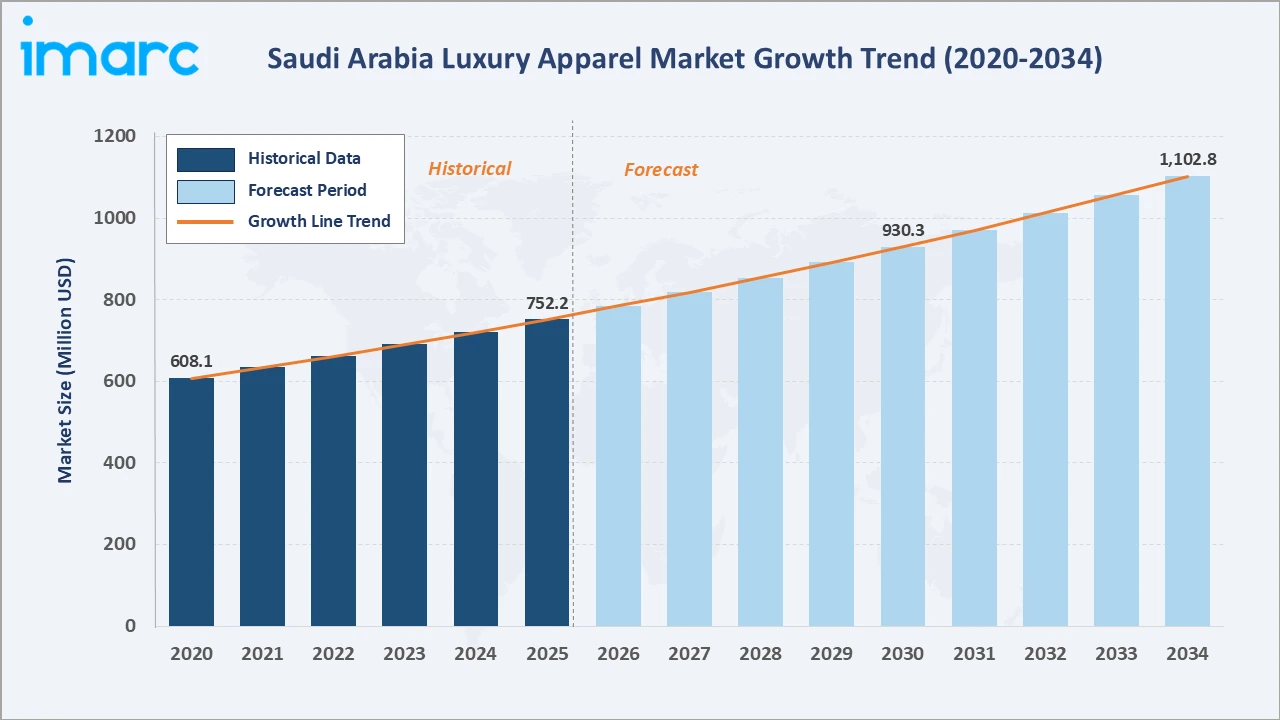
The Saudi Arabia luxury apparel market reached USD 752.2 Million in 2025 and is projected to reach USD 1,102.8 Million by 2034, growing at a CAGR of 4.34% during 2026-2034. The market is driven by rising affluent consumer spending, Vision 2030 social and entertainment reforms, and the rapid expansion of luxury retail infrastructure. Upper Wear dominates at 52.8%. Offline Channel leads distribution at 76.3%. Northern and Central Region commands 39.5% of market share.
Market Snapshot
|
Metric |
Value |
|
Market Size (2025) |
USD 752.2 Million |
|
Forecast Market Size (2034) |
USD 1,102.8 Million |
|
CAGR (2026-2034) |
4.34% |
|
Base Year |
2025 |
|
Historical Period |
2020-2025 |
|
Forecast Period |
2026-2034 |
|
Dominant Type |
Upper Wear (52.8%, 2025) |
|
Dominant Distribution Channel |
Offline Channel (76.3%, 2025) |
|
Leading Region |
Northern and Central Region (39.5%, 2025) |
The Saudi Arabia luxury apparel market expanded from USD 608.1 Million in 2020 to USD 752.2 Million in 2025, anchored at USD 930.3 Million in 2030, and forecast to reach USD 1,102.8 Million by 2034. Vision 2030 accelerated luxury retail investment and social liberalization, sustaining above-trend market growth through 2022-2025.
To get more information on this market, Request Sample
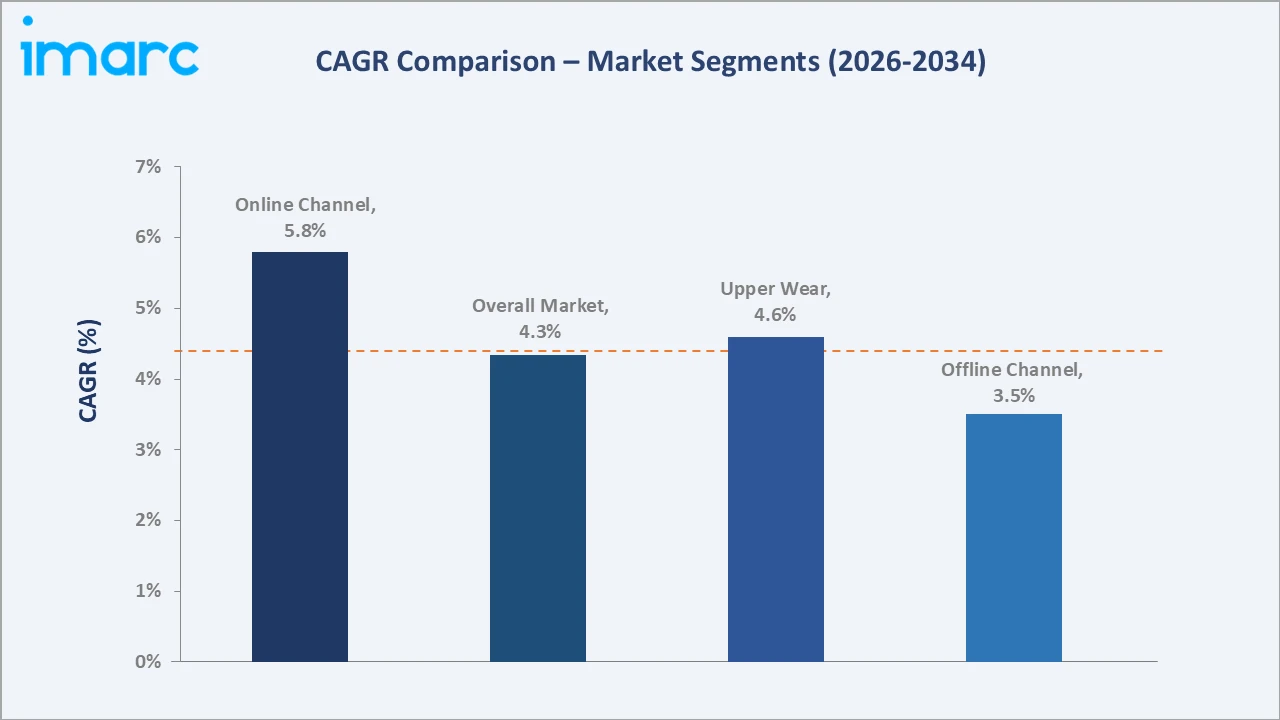
Online channels are growing at ~5.8% CAGR as digital adoption accelerates across Saudi demographics, while offline channels continue to dominate through the experiential luxury retail model. Upper Wear maintains market leadership through premium abaya evolution and international designer collections growing at ~4.6% CAGR.
Executive Summary
The Saudi Arabia luxury apparel market reached USD 752.2 Million in 2025, representing one of the Middle East's most dynamic luxury fashion markets. The market encompasses premium clothing, luxury accessories, designer ready-to-wear collections, and fashion retail services across offline and online channels.
Upper Wear at 52.8% dominates through the cultural centrality of premium abayas and thobes. Offline Channel at 76.3% leads through the experiential luxury shopping model. The Northern and Central Region at 39.5% commands market leadership through Riyadh's position as Saudi Arabia's luxury retail capital.
Key Market Insights
|
Insight |
Data |
|
Dominant Type |
Upper Wear – 52.8% share (2025) |
|
Dominant Distribution |
Offline Channel – 76.3% market share (2025) |
|
Leading Region |
Northern and Central Region – 39.5% market share |
|
Market Opportunity |
Premium abaya modernization; Digital luxury retail; Tourism-linked personal shopping; Sustainable luxury; AI-powered personalization |
Key Analytical Observations Supporting the Above Data:
- Upper Wear at 52.8%: Upper Wear dominates due to the cultural significance of premium abayas and thobes, growing adoption of international designer ready-to-wear collections, and strong gifting culture around luxury clothing across Saudi demographics.
- Offline Channel at 76.3%: Offline channels dominate because luxury shopping in Saudi Arabia is an experiential activity, with consumers valuing personalized service, product authentication, and the prestige of flagship boutique environments in luxury malls.
- Northern and Central Region at 39.5%: This region leads due to Riyadh's concentration of high-net-worth households, premium retail destinations including Kingdom Centre and Mall of Arabia, and its role as Saudi Arabia's premier commercial and cultural hub.
Saudi Arabia Luxury Apparel Market Overview
The Saudi Arabia luxury apparel market encompasses the design, sourcing, manufacturing, marketing, and retail of high-end clothing, accessories, and fashion collections targeting affluent Saudi and expatriate consumers. The market covers premium ready-to-wear, haute couture-inspired collections, luxury sportswear, and designer accessories.
Macroeconomic factors include Vision 2030 economic diversification, rising household disposable incomes, expanding tourism infrastructure, and growing female labor force participation. Increasing entertainment investment, luxury mall proliferation, and digital commerce adoption are accelerating market growth across all Saudi regions.
Market Dynamics
To evaluate market opportunities, Request Sample
Market Drivers
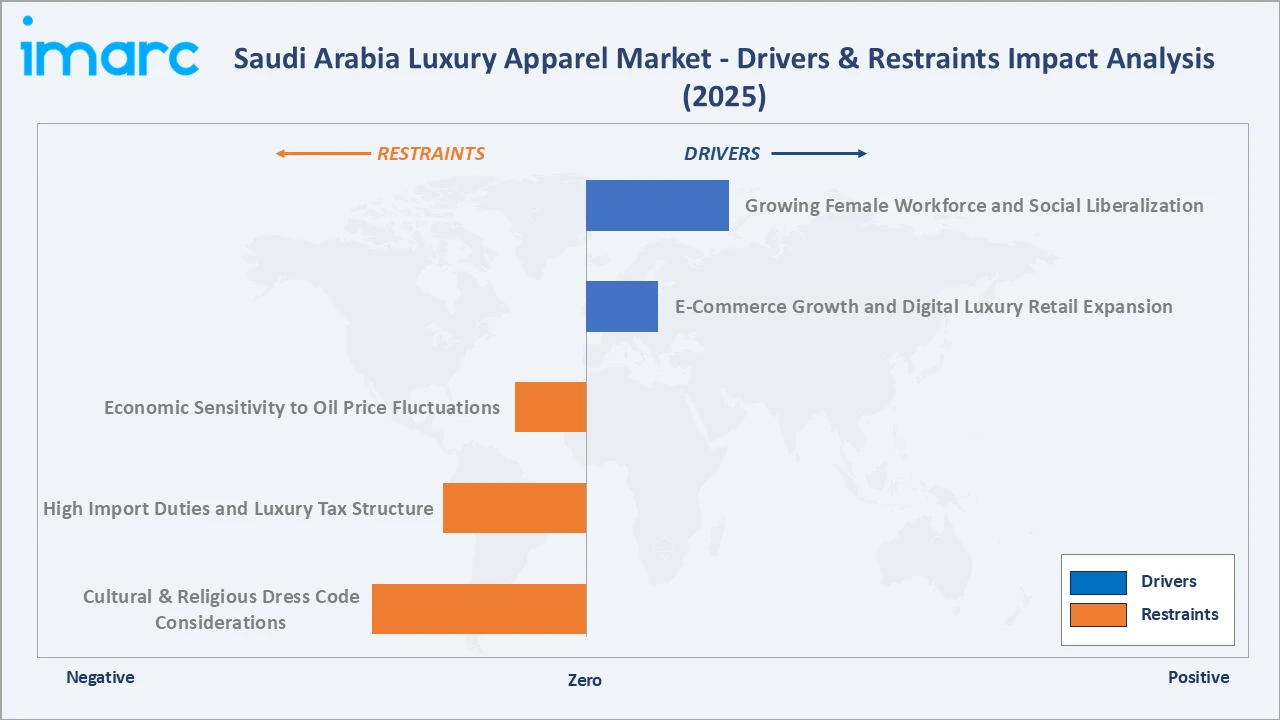
- Rising Disposable Income and Affluent Consumer Base Expansion: Saudi Arabia's per capita GDP growth and rising household wealth are expanding the luxury consumer base. High-income Saudi nationals and expatriates are increasing spending on premium fashion brands, driving sustained demand for luxury apparel across men's, women's, and children's segments.
- Vision 2030 Tourism and Entertainment Investment: The Saudi government's Vision 2030 initiative is creating unprecedented luxury retail growth through entertainment liberalization, international tourism promotion, and landmark events. The influx of high-spending tourists is expanding luxury fashion consumption beyond domestic demographics.
- Growing Female Workforce and Social Liberalization: Increasing female participation in the Saudi workforce, relaxation of dress code regulations, and growing female economic empowerment are significantly expanding the women's luxury apparel market. Saudi women are investing more in premium fashion for professional and social occasions.
- E-Commerce Growth and Digital Luxury Retail Expansion: Rapid digital adoption across Saudi demographics is fueling luxury e-commerce growth at ~5.8% CAGR. Luxury brands are investing in sophisticated Arabic-language digital platforms, personalized digital experiences, and social commerce channels targeting Saudi consumers.
Market Restraints
- Cultural and Religious Dress Code Considerations: Despite liberalization under Vision 2030, traditional dress code norms continue to limit certain luxury fashion categories. Brands must balance international luxury aesthetics with local cultural requirements to maintain market relevance.
- High Import Duties and Luxury Tax Structure: Saudi Arabia's customs duties and VAT frameworks increase the landed cost of imported luxury apparel, potentially constraining price-sensitive segments and supporting parallel import market channels.
- Economic Sensitivity to Oil Price Fluctuations: Saudi consumer spending on luxury goods demonstrates sensitivity to oil price movements and government fiscal policy changes. Prolonged oil price weakness can impact discretionary luxury expenditure across affluent household segments.
Market Opportunities
- Premium Abaya and Traditional Wear Modernization: The evolution of traditional Saudi garments into fashion-forward luxury items represents a significant opportunity. Luxury houses partnering with local designers for culturally resonant premium collections are tapping into a growing style-conscious consumer segment.
- Luxury Sustainable Fashion Segment Development: Growing environmental consciousness among younger Saudi consumers is creating demand for sustainable luxury fashion. Brands offering eco-certified materials and transparent supply chains are positioned to capture the premium sustainability segment.
Market Challenges
- Counterfeit Luxury Goods Competition: The prevalence of counterfeit luxury apparel through grey market channels creates brand dilution challenges and price competition for authentic luxury brands operating in the Saudi market.
- Talent and Local Fashion Expertise Development: Building local luxury retail talent, visual merchandising expertise, and fashion design capabilities within Saudi Arabia remains a challenge for brands seeking to deliver an authentically premium consumer experience.
Emerging Market Trends
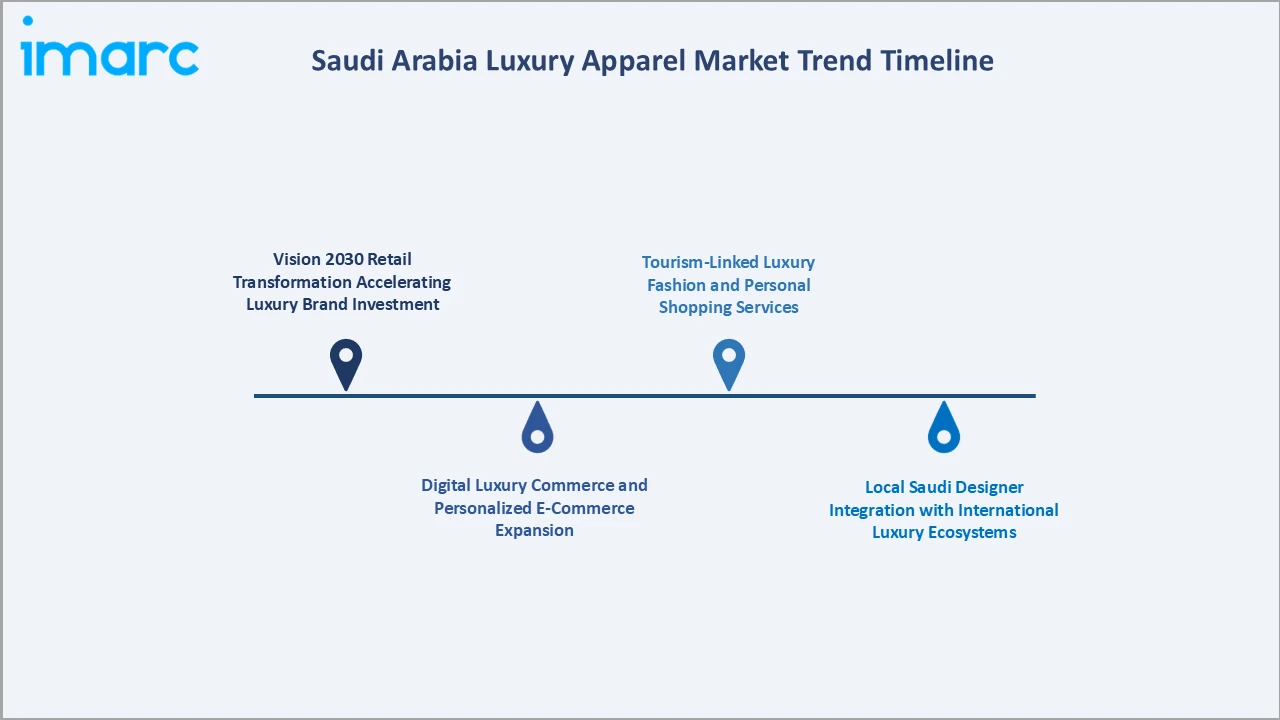
1. Vision 2030 Retail Transformation Accelerating Luxury Brand Investment
Vision 2030 is fundamentally reshaping Saudi Arabia's luxury retail landscape by attracting unprecedented brand investment. International luxury houses are opening flagship boutiques, expanding store networks, and investing in bespoke Saudi consumer engagement strategies. The government's focus on making Saudi Arabia a global tourism and entertainment destination is creating long-term structural demand for luxury fashion.
2. Digital Luxury Commerce and Personalized E-Commerce Expansion
Saudi luxury consumers are increasingly embracing digital channels for premium fashion discovery and purchase. Luxury brands are investing in sophisticated Arabic-language digital platforms, virtual try-on technology, and personalized recommendation engines. Social commerce through Instagram and Snapchat is emerging as a critical luxury fashion discovery channel among younger Saudi demographics.
3. Local Saudi Designer Integration with International Luxury Ecosystems
A new generation of Saudi designers is gaining international recognition and integrating with global luxury fashion ecosystems. Platforms like Riyadh Fashion Week are providing visibility for local luxury talent, creating a distinctive Saudi luxury fashion identity. International brands are increasingly collaborating with Saudi designers for limited edition collections.
4. Tourism-Linked Luxury Fashion and Personal Shopping Services
Saudi Arabia's growing tourism sector is driving demand for luxury fashion among international visitors. Premium malls and hotels are developing dedicated personal shopping services catering to high-spending tourists from GCC countries, Asia, and Europe. Duty-free luxury fashion zones in airports and integrated resort destinations are creating new consumption touchpoints.
Industry Value Chain Analysis
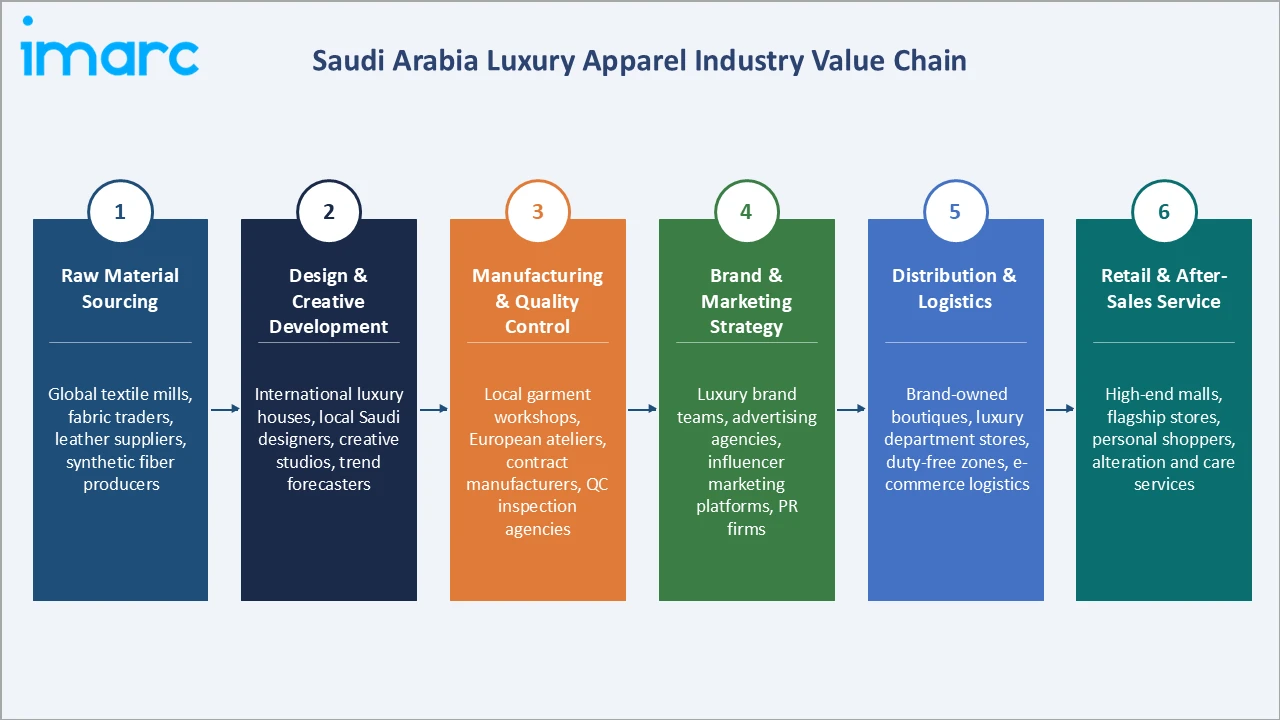
The Saudi Arabia luxury apparel value chain integrates global raw material sourcing, international design and creative development, manufacturing and quality control, brand marketing strategy, multi-channel distribution, and premium retail and after-sales service delivery.
|
Stage |
Key Participants |
|
Raw Material Sourcing |
Global textile mills, fabric traders, leather suppliers, synthetic fiber producers |
|
Design & Creative Development |
International luxury houses, local Saudi designers, creative studios, trend forecasters |
|
Manufacturing & Quality Control |
Local garment workshops, European ateliers, contract manufacturers, QC inspection agencies |
|
Brand & Marketing Strategy |
Luxury brand teams, advertising agencies, influencer marketing platforms, PR firms |
|
Distribution & Logistics |
Brand-owned boutiques, luxury department stores, duty-free zones, e-commerce logistics |
|
Retail & After-Sales Service |
High-end malls, flagship stores, personal shoppers, alteration and care services |
The brand and marketing strategy stage is the value chain's most commercially differentiated phase, where luxury house heritage and creative direction determine premium price realization. The distribution and retail stage determines market accessibility, with high-end mall locations and flagship boutiques serving as critical luxury equity anchors in the Saudi market.
Technology Landscape in the Saudi Arabia Luxury Apparel Industry
Omnichannel Luxury Retail Technology
Omnichannel luxury retail technology enables seamless integration between physical boutiques and digital shopping platforms. Saudi luxury brands are investing in RFID inventory management, clienteling software, and integrated e-commerce platforms that provide consistent luxury experiences. These technologies enable personalized service delivery at scale, improving customer retention and lifetime value.
AI-Powered Personalization and Styling Technology
AI-driven personalization platforms are transforming luxury fashion retail in Saudi Arabia. Machine learning algorithms analyze purchase history, style preferences, and social media behavior to deliver curated product recommendations and virtual styling assistance. These technologies enhance the luxury shopping experience and drive higher average transaction values across digital and in-store channels.
Market Segmentation Analysis
The report covers the following segments:
|
Segment Category |
Leading Segment |
Market Share |
Year |
|
Type |
Upper Wear |
52.8% |
2025 |
|
End User |
🔒 |
🔒 |
2025 |
|
Distribution Channel |
Offline Channel |
76.3% |
2025 |
|
Region |
Northern and Central Region |
39.5% |
2025 |
.webp)
By Type
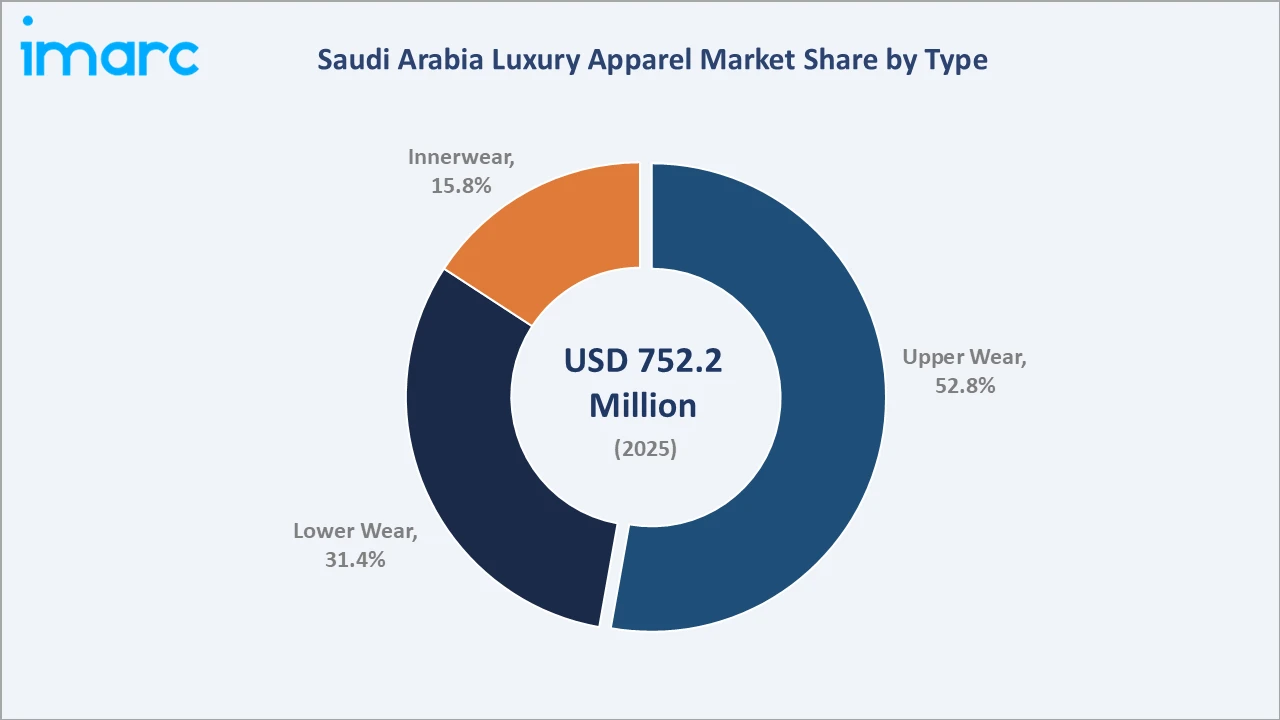
Upper Wear leads at 52.8% (2025). The upper wear segment encompasses premium abayas, luxury thobes, international designer shirts, blouses, couture jackets, and high-end sportswear tops. Upper Wear's ~4.6% CAGR reflects the cultural centrality of upper garments in Saudi fashion and growing adoption of international luxury ready-to-wear collections.
To access detailed market analysis, Request Sample
Lower Wear at 31.4% and Innerwear at 15.8% represent growing segments as Saudi consumers adopt diverse luxury fashion categories. Lower Wear's ~4.1% CAGR is driven by liberalization of social norms and growing fashion consciousness. Innerwear is the fastest-growing type segment through premium international brand expansion and digital retail accessibility.
By Distribution Channel
Offline Channel leads at 76.3% (2025). The offline channel encompasses luxury brand flagship stores, high-end department stores, luxury multi-brand boutiques, and premium malls. The offline channel's dominance reflects the experiential nature of luxury shopping in Saudi Arabia, with ~3.5% CAGR sustained through premium retail format expansion and enhanced in-store experiences.
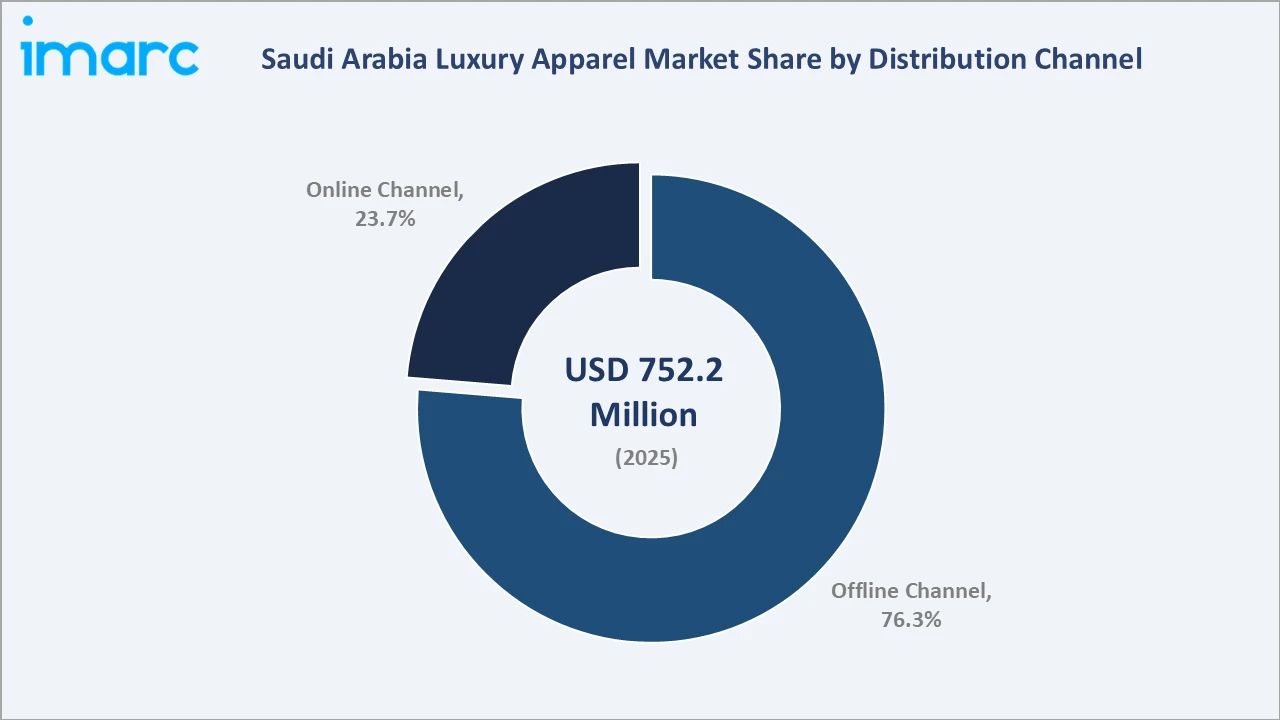
Online Channel at 23.7% is growing rapidly at ~5.8% CAGR, the fastest of any distribution channel segment. As luxury brands invest in sophisticated Arabic-language e-commerce platforms and social commerce channels, digital luxury adoption is accelerating among digitally-native Saudi consumers, particularly in the under-35 demographic.
Regional Market Insights
|
Region |
Share (2025) |
Key Saudi Arabia Luxury Apparel Market Drivers & Characteristics |
|
Northern and Central Region |
39.5% |
Driven by the concentration of affluent consumers in Riyadh, strong retail infrastructure, high tourism footfall, and presence of major luxury shopping destinations. |
|
Western Region |
29.2% |
Supported by Jeddah's cosmopolitan culture, Makkah's high tourist volume, proximity to Red Sea resorts, and a historically fashion-forward consumer base. |
|
Eastern Region |
19.4% |
Driven by high-income oil-sector workforce, growing expat population, and rising demand for premium fashion in Al Khobar and Dhahran. |
|
Southern Region |
11.9% |
Supported by growing urban development, improving retail infrastructure, and rising aspirational consumption among younger demographics. |
The Northern and Central Region's 39.5% market leadership is driven by Riyadh's position as Saudi Arabia's commercial capital, hosting the highest concentration of luxury retail destinations including Kingdom Centre Mall, Riyadh Gallery, and Al Nakheel Mall. Vision 2030 entertainment investments in Riyadh are further consolidating the region's luxury market dominance.
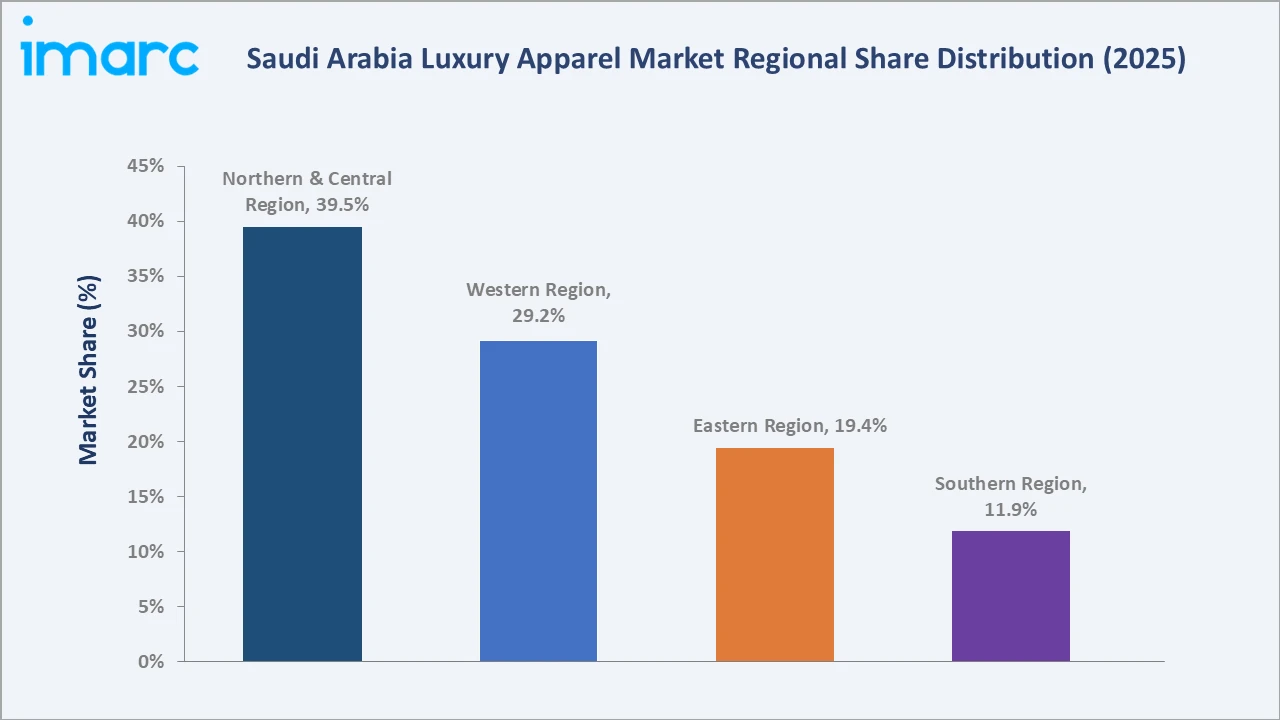
The Western Region's 29.2% share reflects Jeddah's historic role as Saudi Arabia's most cosmopolitan city, combined with Makkah's high tourist volume and the emerging Red Sea project's premium resort retail destinations. The Eastern Region at 19.4% benefits from a high-income oil-sector workforce and significant expatriate population.
Competitive Landscape
The Saudi Arabia luxury apparel market competitive landscape encompasses international luxury conglomerates, independent luxury houses, and emerging Saudi luxury brands. Market leadership is concentrated among global luxury powerhouses with established Saudi retail presence and sophisticated local consumer engagement strategies.
|
Company Name |
Key Products |
Market Position |
Core Strength |
|
Louis Vuitton (LVMH) |
LV Monogram Collection, Ready-to-Wear |
Market Leader |
Louis Vuitton plays a central role in Saudi luxury apparel by providing iconic luxury collections, exclusive boutique experiences, and prestigious brand equity that drives premium consumer spending across Riyadh and Jeddah flagship locations. |
|
Kering |
GG Collection, Aria, Bamboo Bags |
Market Leader |
Gucci plays a central role in Saudi luxury apparel by providing bold, internationally recognized fashion collections that appeal to younger Saudi consumers and expatriates seeking contemporary luxury expression. |
|
Chanel |
Classic Flap, Gabrielle, Haute Couture RTW |
Market Leader |
Chanel plays a central role in Saudi luxury apparel by providing timeless, heritage-driven fashion collections and exclusive client experiences that resonate deeply with affluent Saudi female consumers. |
|
Burberry |
Heritage Trench, TB Monogram, Classic Check |
Established Player |
Burberry plays a central role in Saudi luxury apparel by providing British heritage fashion collections and expanding digital commerce channels that target younger Saudi consumers. |
The luxury conglomerate model, led by LVMH and Kering, creates competitive advantages through portfolio diversity, shared retail infrastructure, and coordinated Saudi market investment. Independent luxury houses maintain competitive positions through heritage differentiation, exclusivity management, and bespoke consumer relationship strategies.
Key Company Profiles
Louis Vuitton (LVMH)
Louis Vuitton is the flagship brand of LVMH Moët Hennessy Louis Vuitton SE, the world's largest luxury conglomerate. The brand is a dominant force in the Saudi Arabia luxury apparel market with flagship boutiques in Riyadh's Kingdom Centre Mall and Jeddah's Red Sea Mall, offering premium collections and personalized client services.
- Key Products: LV Monogram Collection, Ready-to-Wear Collections, Accessories and Leather Goods.
- Recent Developments: In 2026, Louis Vuitton launched new apparel from its “LV FALL” collection under Men’s Creative Director Pharrell Williams, featuring embroidered signature zip blousons, reversible fleece blousons, quilted liner jackets, denim overshirts, knitwear, T-shirts, chinos, and embroidered denim pants. The collection expands Louis Vuitton’s premium men’s ready-to-wear offering and combines functional outerwear with the Maison’s signature Monogram and embroidery details.
- Strategic Focus: Centered on Saudi market localization, exclusive event-driven consumer experiences, and expanding digital luxury services through the LV mobile application.
Kering
Gucci, owned by French luxury conglomerate Kering, is one of the most recognized luxury fashion brands in Saudi Arabia. The brand has established a strong market presence through multiple boutique locations across premium Saudi malls and active engagement with Saudi fashion culture and influencer communities.
- Key Products: GG Collection, Aria Ready-to-Wear, Bamboo and Horsebit Bag Collections.
- Recent Developments: In 2026, Gucci unveiled its Fall 2026 Ready-to-Wear collection, marking creative director Demna’s runway debut at the house. The apparel collection introduced a more body-conscious direction, featuring fitted tops, jeans, stretchy tube dresses, embellished evening gowns and contemporary tailoring. The collection represents Gucci’s renewed focus on ready-to-wear apparel, combining the brand’s heritage with more sensual and youthful silhouettes.
- Strategic Focus: Focused on youth luxury market capture, social commerce channel development, and digital personalization for Saudi consumer engagement.
Chanel
Chanel SAS is an iconic independent luxury house with an exceptionally strong position in the Saudi Arabia women's luxury apparel market. The brand's heritage, exclusivity, and timeless design aesthetic resonate strongly with affluent Saudi female consumers seeking investment-grade luxury fashion pieces.
- Key Products: Classic Flap Collections, Gabrielle Ready-to-Wear, Haute Couture-Inspired Collections.
- Recent Developments: In 2026, Chanel presented its Spring/Summer 2027 Ready-to-Wear collection at Paris Fashion Week, marking Matthieu Blazy’s first major Spring/Summer collection for the house. The collection continues Chanel’s evolution under Blazy, combining the brand’s traditional codes with contemporary ready-to-wear silhouettes and materials.
- Strategic Focus: Committed to exclusivity management, ultra-high-net-worth client relationship development, and heritage narrative communication in the Saudi luxury market.
Market Concentration Analysis
The Saudi Arabia luxury apparel market is moderately concentrated at the brand level, with leading luxury conglomerates LVMH, Kering, and Richemont collectively holding significant market share through multi-brand retail presence. Independent luxury houses maintain strong individual brand positions. Market concentration is increasing through luxury conglomerate expansion, premium mall anchor agreements, and exclusive brand-retailer partnerships.
Investment & Growth Opportunities
Highest Growth Segments
Online luxury channel (~5.8% CAGR), women's luxury apparel (~4.9% CAGR), premium abaya modernization (~5.5% CAGR from growing base), sustainable luxury lines (~7% CAGR from small base), and tourism-linked personal shopping services (~8% CAGR) represent the highest-growth Saudi luxury apparel investment vectors through 2034.
Emerging Investment Opportunities
Saudi Arabia's Vision 2030 tourism targets represent the largest near-term luxury apparel growth opportunity. Luxury brands and multi-brand retailers establishing dedicated tourist consumer services, Arabic-language digital platforms, and partnership arrangements with premium hotel concierge networks are positioned for above-market revenue growth.
Investment Themes
- Saudi luxury e-commerce platform development capturing growing digital luxury consumer segment: Saudi luxury consumers under 35 demonstrate high digital engagement and growing willingness to purchase luxury fashion online. Brands investing in Arabic-language luxury digital platforms, mobile-first luxury commerce experiences, and social commerce integrations are positioned to capture above-market digital revenue growth.
- Vision 2030 tourism-linked luxury fashion service model for international visitor capture: Saudi Arabia's target of 150 million annual visitors by 2030 creates a major luxury fashion retail opportunity. Luxury brands investing in multilingual personal shopping services, airport luxury retail presence, and hotel concierge partnerships are positioned to capture high-spending international tourist luxury expenditure.
Future Market Outlook (2026-2034)
The Saudi Arabia luxury apparel market is projected to grow from USD 752.2 Million in 2025 to USD 1,102.8 Million by 2034, delivering a 4.34% CAGR over the forecast period. The market's anchor value of USD 930.3 Million in 2030 represents a luxury industry at its most transformative inflection point since Vision 2030 launch.
Three structural forces define Saudi luxury apparel market growth through 2034. Vision 2030 as a policy mandate creates government-backed luxury retail investment demand that is multi-decade and budget-committed. Saudi demographic transformation, with a majority young population increasingly exposed to global fashion culture, creates sustained structural luxury demand growth. Technology adoption is making premium luxury experiences more accessible across digital channels.
Research Methodology
Primary Research
Primary research comprised structured interviews with 50+ industry stakeholders (2025) including luxury brand regional directors, premium retail managers, Saudi fashion industry executives, luxury e-commerce platform operators, and regional consumer insights specialists.
Secondary Research
Secondary research encompassed Saudi retail industry publications, Vision 2030 economic reports, luxury conglomerate annual reports, Saudi fashion week data, GCC luxury market statistics, and Saudi consumer spending surveys. Over 60 secondary sources reviewed.
Forecasting Models
Market revenue forecasts developed using a segment bottom-up model: (i) type segment component; (ii) distribution channel component; (iii) regional component, cross-validated against luxury conglomerate Saudi Arabia revenue disclosures and industry expert consensus.
Saudi Arabia Luxury Apparel Market Report Coverage:
| Report Features | Details |
|---|---|
| Base Year of the Analysis | 2025 |
| Historical Period | 2020-2025 |
| Forecast Period | 2026-2034 |
| Units | Million USD |
| Scope of the Report |
Exploration of Historical Trends and Market Outlook, Industry Catalysts and Challenges, Segment-Wise Historical and Future Market Assessment:
|
| Types Covered | Upper Wear, Lower Wear, Innerwear |
| Distribution Channels Covered | Offline Channel, Online Channel |
| End Users Covered | Men, Women, Children |
| Regions Covered | Northern and Central Region, Western Region, Eastern Region, Southern Region |
| Companies Covered | Louis Vuitton (LVMH), Kering, Chanel, Burberry, etc. |
| Customization Scope | 10% Free Customization |
| Post-Sale Analyst Support | 10-12 Weeks |
| Delivery Format | PDF and Excel through Email (We can also provide the editable version of the report in PPT/Word format on special request) |
Key Benefits for Stakeholders:
- IMARC’s industry report offers a comprehensive quantitative analysis of various market segments, historical and current market trends, market forecasts, and dynamics of the Saudi Arabia luxury apparel market from 2020-2034.
- The research report provides the latest information on the market drivers, challenges, and opportunities in the Saudi Arabia luxury apparel market.
- Porter's five forces analysis assist stakeholders in assessing the impact of new entrants, competitive rivalry, supplier power, buyer power, and the threat of substitution. It helps stakeholders to analyze the level of competition within the Saudi Arabia luxury apparel industry and its attractiveness.
- Competitive landscape allows stakeholders to understand their competitive environment and provides an insight into the current positions of key players in the market.
Frequently Asked Questions About the Saudi Arabia Luxury Apparel Market Report
The Saudi Arabia luxury apparel market reached USD 752.2 Million in 2025. The market is driven by rising disposable income, Vision 2030 social reforms, growing tourism, and increasing female workforce participation. The expansion of luxury malls, brand boutiques, and digital retail channels is further supporting market growth.
The market grows at 4.34% CAGR during 2026-2034, reaching USD 1,102.8 Million by 2034. Online channels are growing fastest at ~5.8% CAGR through digital adoption and e-commerce platform expansion among younger Saudi demographics.
Upper Wear leads at 52.8% through dominance of premium abayas, traditional thobes, and international designer ready-to-wear collections. Upper Wear grows at ~4.6% CAGR through increasing fashion consciousness and social liberalization.
Offline Channel leads at 76.3% through the importance of the luxury shopping experience, personalized customer service, and the prestige of high-end brick-and-mortar retail formats. Online Channel is growing fastest at ~5.8% CAGR.
The Northern and Central Region leads at 39.5% through Riyadh's position as the commercial and cultural capital, highest concentration of luxury retail destinations, and the affluent consumer base generated by oil-sector income.
Leading companies include Louis Vuitton (LVMH), Kering, Chanel, and Burberry, among others.
The market is projected to reach approximately USD 930.3 Million by 2030, with continued expansion driven by Vision 2030 tourism targets, growing digital luxury channels, and rising consumer sophistication across all Saudi regions.
Vision 2030 is a primary growth catalyst, driving luxury market expansion through entertainment investment, tourism development, female empowerment programs, and positioning Saudi Arabia as a premium global shopping destination attracting international luxury tourists.
Need more help?
- Speak to our experienced analysts for insights on the current market scenarios.
- Include additional segments and countries to customize the report as per your requirement.
- Gain an unparalleled competitive advantage in your domain by understanding how to utilize the report and positively impacting your operations and revenue.
- For further assistance, please connect with our analysts.
 Request Customization
 Speak to an Analyst
 Request Brochure
 Inquire Before Buying
Benefits of Customization
- Personalize this research
- Triangulate with your data
- Get data as per your format and definition
- Gain a deeper dive into a specific application, geography, customer, or competitor
- Any level of personalization
Get in Touch With Us
UNITED STATES
Phone: +1-201-971-6302
INDIA
Phone: +91-120-433-0800
UNITED KINGDOM
Phone: +44-753-714-6104
Email: [email protected]
Client Testimonials




.webp)




.webp)













Related Reports

Choose your plan
*Please note that the prices mentioned below are starting prices for each bundle type. Kindly contact our team for further details.*
Single User License
- 1 User License, Access on 2 Devices
- PDF Report + Excel Dataset (Password Protected)
- Lifetime Access
- No Printing Rights
- 10% Free Report Customization
- 10–12 Weeks of Analyst Support
Five User License
- Access for 5 Users, 2 Devices per User
- PDF Report + Excel Dataset (Password Protected)
- Lifetime Access
- Dedicated Account Manager
- 12–14 Weeks of Analyst Support
- No Printing Rights
- 15% Free Report Customization
- 25% Discount on Your Next Purchase
Corporate User License
- Unlimited User Access (Within Your Organization)
- PDF Report + Excel Dataset
- Lifetime Access
- Dedicated Account Manager
- 14–20 Weeks of Analyst Support
- No Printing Rights
- 20% Free Report Customization
- 30% Discount on Your Next Purchase
Essential Insights
What's included:
3 reports
- Lifetime Access
- PDF Reports
- Excel Datasets
- 2 Weeks of Free Analyst Support
- 2 User Licenses
- Access on 2 Devices
- Printing Rights
- Complimentary PowerPoint (PPT) Version
- Complimentary License Upgrade
Professional Access
What's included:
5 reports
- Lifetime Access
- PDF Reports
- Excel Datasets
- 8 Weeks of Free Analyst Support
- 2 User Licenses
- Access on 2 Devices
- Printing Rights
- Complimentary PowerPoint (PPT) Version
- Complimentary License Upgrade
Business Advantage
What's included:
8 reports
- Lifetime Access
- PDF Reports
- Excel Datasets
- 14 Weeks of Free Analyst Support
- 2 User Licenses
- Access on 2 Devices
- Printing Rights
- Complimentary PowerPoint (PPT) Version
- Complimentary License Upgrade
Enterprise Intelligence
What's included:
10 reports
- Lifetime Access
- PDF Reports
- Excel Datasets
- 20 Weeks of Free Analyst Support
- 2 User Licenses
- Access on 2 Devices
- Printing Rights
- Complimentary PowerPoint (PPT) Version
- Complimentary License Upgrade