
Saudi Arabia Nanotechnology Market Size, Share, Trends and Forecast by Type, Application, and Region, 2026-2034
Saudi Arabia Nanotechnology Market Size, Share, Trends & Forecast (2026-2034)
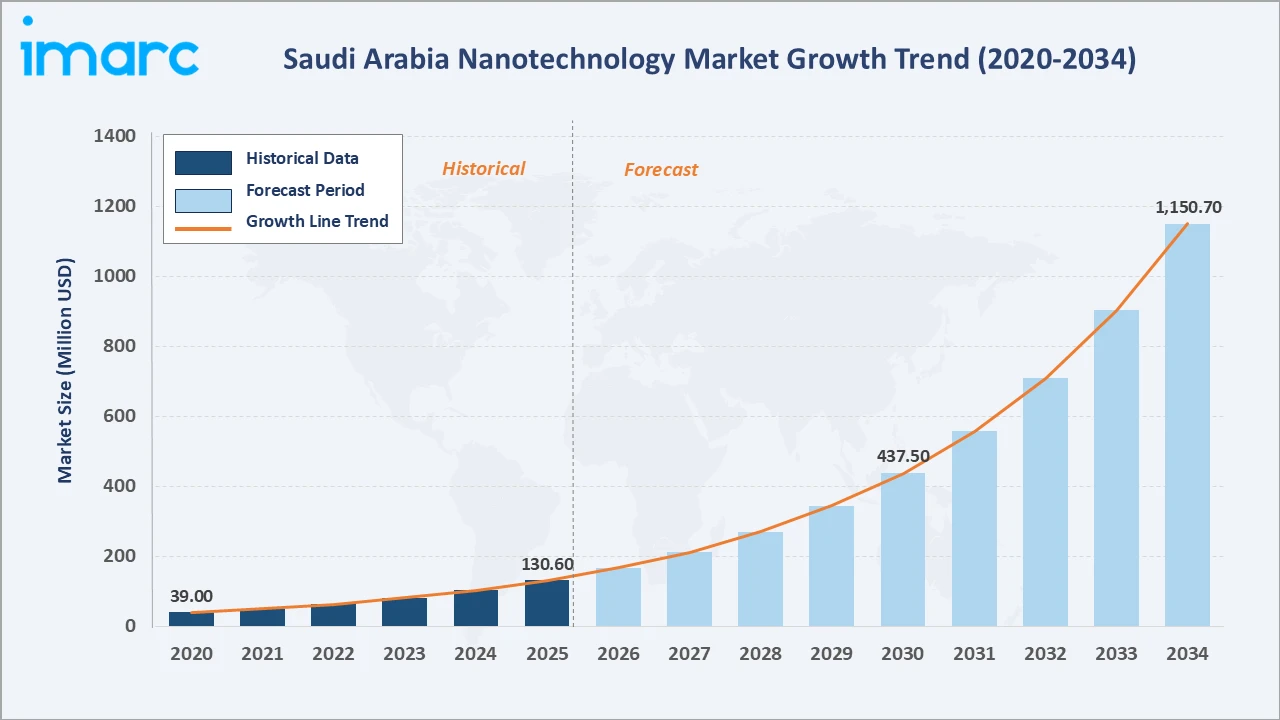
The Saudi Arabia nanotechnology market reached USD 130.6 Million in 2025 and is projected to reach USD 1,150.7 Million by 2034, growing at a CAGR of 27.35% during 2026-2034. The market is experiencing rapid growth, driven by advancements in healthcare, artificial intelligence, and sustainable technologies. Along with this, increasing investments in research and development, as well as strategic international partnerships, are accelerating innovation across the Kingdom. This expansion is positively impacting the Saudi Arabia nanotechnology market across multiple sectors, including medicine, electronics, and energy. Nanomaterials dominate at 44.8%. Electronics leads application at 29.4%. Northern and Central Region commands 47.2% of the market share.
Market Snapshot
|
Metric |
Value |
|
Market Size (2025) |
USD 130.6 Million |
|
Forecast Market Size (2034) |
USD 1,150.7 Million |
|
CAGR (2026-2034) |
27.35% |
|
Base Year |
2025 |
|
Historical Period |
2020-2025 |
|
Forecast Period |
2026-2034 |
|
Dominant Type |
Nanomaterials (44.8%, 2025) |
|
Dominant Application |
Electronics (29.4%, 2025) |
|
Leading Region |
Northern and Central Region (47.2%, 2025) |
The Saudi Arabia nanotechnology market expanded from USD 39.0 Million in 2020 to USD 130.6 Million in 2025, anchored at USD 437.5 Million in 2030, and forecast to reach USD 1,150.7 Million by 2034. Vision 2030-driven research investment and strategic international partnerships sustained above-trend nanotechnology market growth through 2022-2025.
To get more information on this market, Request Sample
Nanosensors grow fastest at ~31.5% CAGR as AI-integrated diagnostics and industrial monitoring expand nanosensor deployment across healthcare and industrial applications. Nanomaterials grow at ~26.0% CAGR through sustained petrochemical and construction-sector demand.
.webp)
Executive Summary
The Saudi Arabia nanotechnology market reached USD 130.6 Million in 2025, representing one of the Kingdom's most dynamic intersections of advanced materials science, healthcare innovation, and industrial technology. The market encompasses nanomaterial synthesis, nano device fabrication, nanosensor development, and integrated research infrastructure that converts laboratory-scale innovation into commercial and clinical applications.
Nanomaterials at 44.8% dominate through established petrochemical-sector demand. Electronics at 29.4% leads application through the Kingdom's growing semiconductor and device manufacturing base. The Northern and Central Region, at 47.2%, leads through Riyadh's concentration of research institutions and government funding bodies.
Key Market Insights
|
Insight |
Data |
|
Dominant Type |
Nanomaterials - 44.8% share (2025) |
|
Dominant Application |
Electronics - 29.4% market share (2025) |
|
Leading Region |
Northern and Central Region - 47.2% market share |
|
Market Opportunity |
Nanomedicine diagnostics; AI-integrated nanosensors; graphene-based filtration; nano-enhanced oil recovery; government nanotechnology investment; advanced materials manufacturing |
Key Analytical Observations Supporting the Above Data:
- Nanomaterials at 44.8%: The nanomaterials segment dominates due to established petrochemical-sector demand for nano-enhanced coatings, catalysts, and composites. These materials are widely used by industrial manufacturers for high-performance applications, energy sector deployment, and reduced operational costs.
- Electronics at 29.4%: The electronics application leads because semiconductor and consumer-device miniaturization requires nanoscale precision. These technologies help maintain component performance, improve device durability, and support consistent manufacturing quality.
- Northern and Central Region at 47.2%: The Northern and Central Region dominates the market due to its strong concentration of research institutions, automation, and government-funded nanotechnology programs. The region's focus on translational research, high-value manufacturing, and academic-industry collaboration further supports its leading position.
Saudi Arabia Nanotechnology Market Overview
The Saudi Arabia nanotechnology market encompasses the design, synthesis, fabrication, and application of nanoscale materials and devices used across healthcare, electronics, energy, chemical manufacturing, and aerospace sectors. The market encompasses nanomaterial synthesis, nano device production, nanosensor technology, research infrastructure, and commercialization support services.
Macroeconomic factors include Vision 2030 economic diversification, rising healthcare investment, population growth, and increasing investments in advanced research infrastructure. In addition, semiconductor localization goals, industrial modernization, and government support for translational research are accelerating nanotechnology adoption nationwide.
Market Dynamics
To evaluate market opportunities, Request Sample
Market Drivers
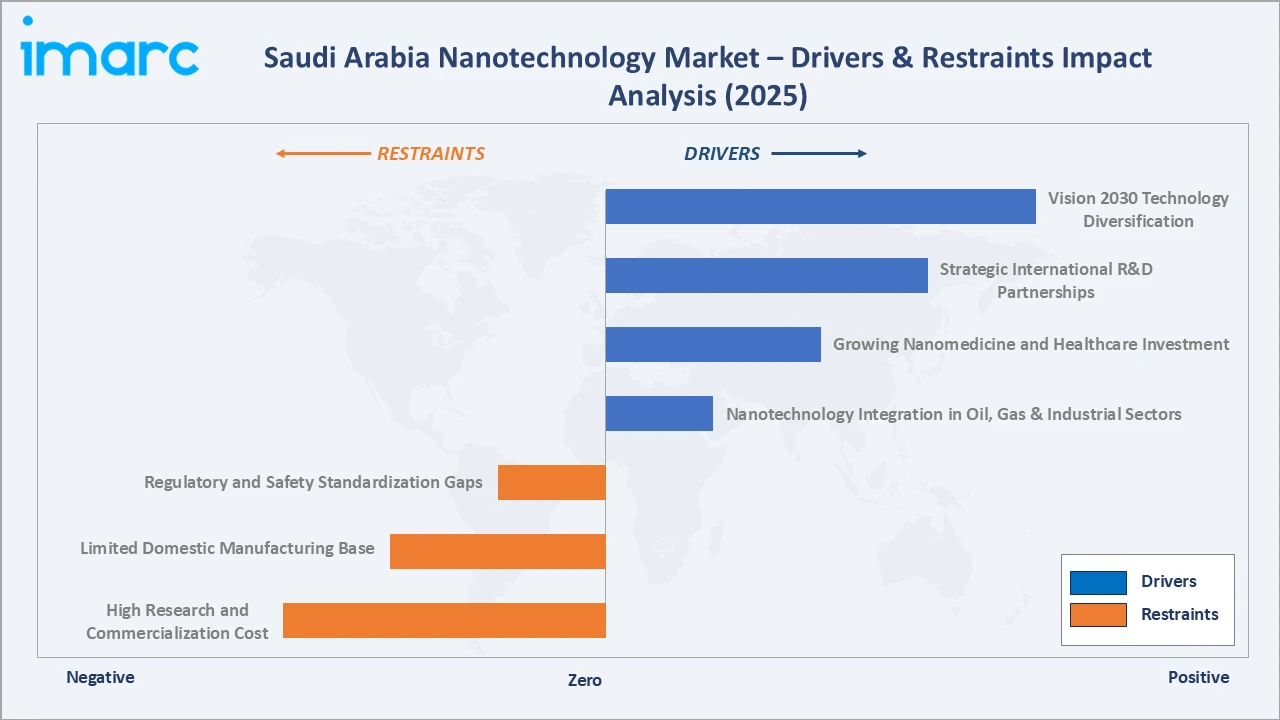
- Vision 2030 Technology Diversification: Vision 2030 channels sustained government funding into nanotechnology as part of the Kingdom's broader economic diversification agenda. The National Nanotechnology Strategy directs research funding toward university-industry collaboration, positioning nanotechnology as a strategic growth pillar alongside artificial intelligence and advanced materials. This structured national programme is accelerating translational research, encouraging private sector co-investment, and supporting long-term capability building across Saudi Arabia's nanotechnology ecosystem, from foundational materials science through to commercial-scale manufacturing and deployment.
- Strategic International R&D Partnerships: Growing international research collaborations are strengthening the Kingdom's nanotechnology capability. Partnerships between domestic universities and global research institutions accelerate knowledge transfer, joint publication output, and translation of laboratory research into real-world diagnostic, industrial, and materials applications. These alliances also attract foreign direct investment, deepen local technical talent pools, and position Saudi Arabia's research institutions as credible partners within the global nanotechnology innovation network.
- Growing Nanomedicine and Healthcare Investment: Nanomedicine is emerging as a core growth driver through structural nanostructure research for targeted drug delivery, diagnostics, and disease treatment. Expanding collaboration between healthcare institutions and biotechnology companies is accelerating clinical translation of engineered nanostructures for complex disease treatment, including oncology and infectious disease applications. Government-backed healthcare investment under Vision 2030 is further channelling capital toward nanomedicine research centres, clinical trial infrastructure, and specialized diagnostic platforms across major Saudi medical institutions.
- Nanotechnology Integration in Oil, Gas and Industrial Sectors: Energy and petrochemical companies increasingly deploy nanoparticles to improve enhanced oil recovery, pipeline coatings, and catalytic processes. This industrial-scale adoption of nanomaterials across the Kingdom's core energy sector sustains steady, diversified commercial demand. Continued investment in nano-enhanced industrial coatings, specialty catalysts, and advanced composite materials is reinforcing the sector's role as a stable, large-scale consumer of nanotechnology innovation.
Market Restraints
- High Research and Commercialization Cost: Nanotechnology research and pilot-scale production require significant capital investment in specialized equipment, cleanroom facilities, and skilled personnel. High upfront costs and long commercialization timelines limit participation to well-funded institutions and large corporates, constraining broader small-enterprise entry and slowing the pace of translating laboratory discoveries into scalable commercial products.
- Limited Domestic Manufacturing Base: Saudi Arabia's nanotechnology manufacturing capacity remains concentrated in research institutions rather than commercial-scale production facilities. Dependence on imported specialized equipment and precursor materials increases costs and lead times, slowing the transition from laboratory research to large-scale industrial nanomaterial manufacturing and limiting near-term export competitiveness.
- Regulatory and Safety Standardization Gaps: Nanomaterial safety, handling, and quality standards are still developing across regulatory frameworks. Inconsistent testing and certification protocols create uncertainty for manufacturers and healthcare applications, slowing commercial approval timelines and adoption of new nanotechnology-based products, therapies, and industrial materials across regulated end markets.
Market Opportunities
- Nanomedicine Diagnostics and Targeted Drug Delivery: Nanomedicine diagnostics and targeted drug delivery platforms enable earlier disease detection and more precise treatment. These technologies help reduce side effects, improve therapeutic outcomes, and support Saudi Arabia's ambition to build a world-class healthcare system. Growing clinical partnerships are encouraging the adoption of nanostructure-based diagnostic and therapeutic infrastructure.
- AI-Integrated Nanosensor and Industrial Monitoring Systems: AI-integrated nanosensors enable real-time detection of chemical, biological, and environmental parameters with high sensitivity. These systems support industrial process monitoring, environmental safety, and predictive maintenance applications. Rising demand for smart manufacturing and automated quality control is encouraging the adoption of nanosensor infrastructure across Saudi industrial facilities.
Market Challenges
- Dependence on Specialized Equipment and Technical Talent: Dependence on specialized fabrication equipment and highly trained technical talent is a major challenge because nanoscale research and production require precision instrumentation and advanced expertise. Equipment import delays or talent shortages can negatively affect research timelines, production quality, and overall project delivery, increasing operational risk for research institutions and manufacturers alike.
- Intellectual Property and Technology Transfer Complexity: Intellectual property protection and technology transfer complexity create difficulties when translating university research into commercial products. Ambiguous licensing frameworks and cross-border collaboration agreements can slow commercialization timelines. These issues increase transaction costs and highlight the need for streamlined technology transfer mechanisms and clear intellectual property frameworks.
Emerging Market Trends
1. Nanomedicine Partnerships Accelerating Clinical Translation
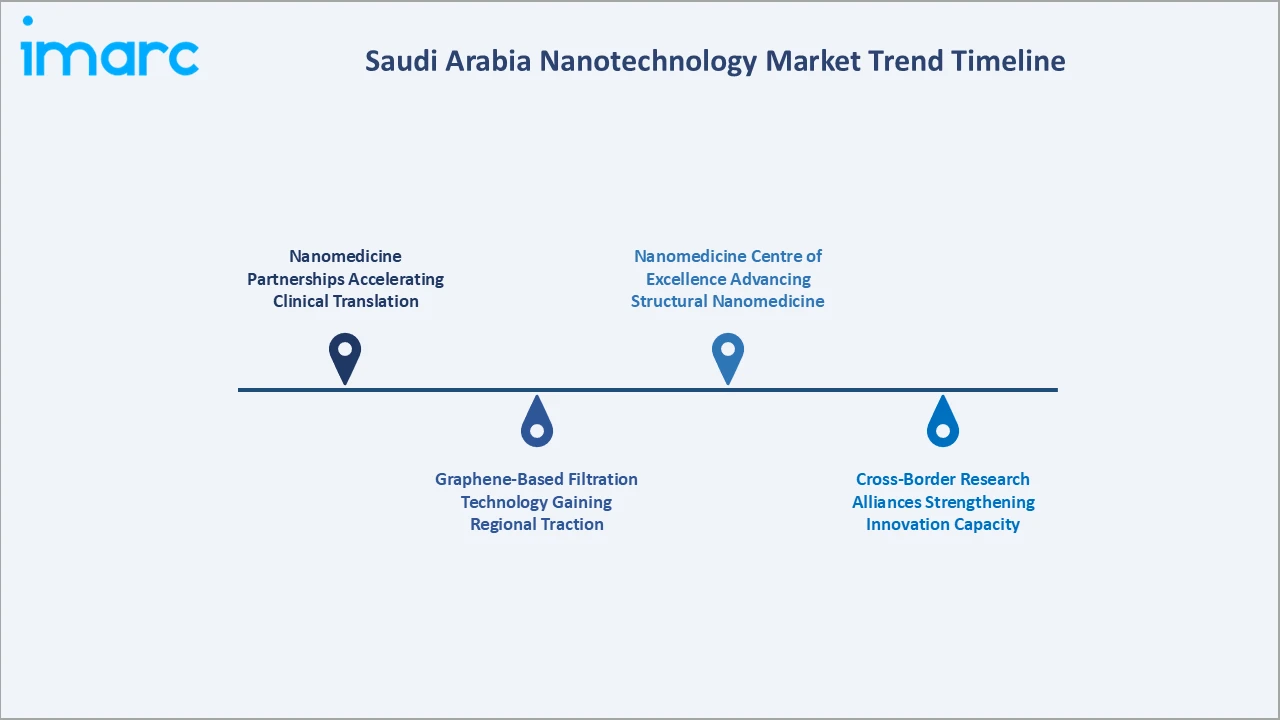
Strategic partnerships between research centres and biotechnology firms are fast-tracking nanomedicine from laboratory to clinic. In May 2025, ImmunityBio partnered with Saudi Arabia's MISA, KFSHRC, and KAIMRC to launch the Cancer BioShield platform, integrating nanotechnology and CAR-NK advancements to enhance immune responses in cancer treatment. This initiative is boosting Saudi Arabia's biotechnology sector and accelerating nanotechnology applications in healthcare diagnostics and therapeutics.
2. Graphene-Based Filtration Technology Gaining Regional Traction
Graphene-enhanced materials are expanding beyond electronics into air and water filtration applications. In April 2025, Zentek partnered with FSCO to distribute ZenGUARD graphene-silver-enhanced HVAC filters across the GCC. This collaboration advanced nanotechnology in air filtration, improving viral filtration efficiency and reducing energy consumption, while strengthening the region's position in graphene-based technologies and boosting market demand for sustainable filtration solutions.
3. Cross-Border Research Alliances Strengthening Innovation Capacity
International research alliances are deepening Saudi Arabia's nanotechnology knowledge base. The collaboration between KAUST and Italy's IIT, established in February 2025, focuses on advancing research in life sciences, artificial intelligence, and nanotechnology, with a particular emphasis on creating real-world applications with both scientific and industrial impact. Over 30 international research partnerships are now active in the Kingdom's nanotech ecosystem, accelerating commercialization of nanomaterial innovations.
4. Nanomedicine Centre of Excellence Advancing Structural Nanomedicine
Dedicated nanomedicine research centres are accelerating the development of precisely engineered nanostructures for drug delivery and disease treatment. In November 2024, Flashpoint Therapeutics formed a partnership with KAIMRC to establish the Flashpoint-KAIMRC Center of Excellence for Structural Nanomedicine, aiming to treat diseases previously deemed undruggable and advance the Kingdom's ambition to establish a world-class healthcare system.
Industry Value Chain Analysis
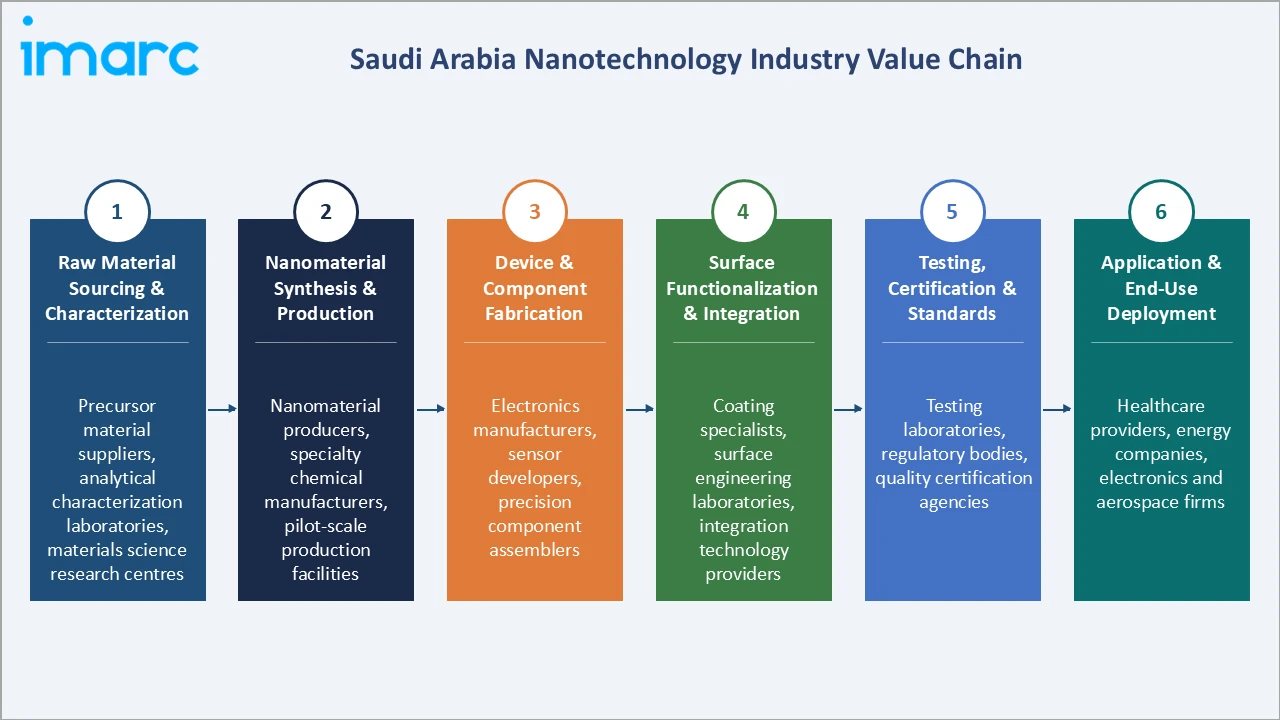
The Saudi Arabia nanotechnology value chain integrates raw material sourcing and characterization, nanomaterial synthesis and production, device and component fabrication, surface functionalization, testing and certification, and application deployment across healthcare, electronics, energy, and industrial end markets.
|
Stage |
Key Participants |
|
Raw Material Sourcing & Characterization |
Precursor material suppliers, analytical characterization laboratories, materials science research centres |
|
Nanomaterial Synthesis & Production |
Nanomaterial producers, specialty chemical manufacturers, pilot-scale production facilities |
|
Device & Component Fabrication |
Electronics manufacturers, sensor developers, precision component assemblers |
|
Surface Functionalization & Integration |
Coating specialists, surface engineering laboratories, integration technology providers |
|
Testing, Certification & Standards |
Testing laboratories, regulatory bodies, quality certification agencies |
|
Application & End-Use Deployment |
Healthcare providers, energy companies, electronics and aerospace firms |
The nanomaterial synthesis stage is the value chain's most capital-intensive phase, given specialized equipment requirements. The surface functionalization and integration layer creates the precision interface where nanoscale materials achieve application-specific performance. Testing and certification increasingly determines commercial viability as healthcare and industrial buyers demand verified safety standards.
Technology Landscape in the Saudi Arabia Nanotechnology Industry
Nanomaterial Synthesis and Fabrication Technology
Nanomaterial synthesis and fabrication technology enables precise control over particle size, morphology, and surface chemistry for industrial and healthcare applications. Advanced techniques including chemical vapor deposition, sol-gel processing, and hydrothermal synthesis support scalable production of nanoparticles, nanocomposites, and functional coatings. These structures are widely adopted for high-value materials applications due to their tunable properties and performance advantages. As demand for precision manufacturing grows, advanced synthesis technologies are becoming a preferred solution for modern nanomaterial production across Saudi Arabia's petrochemical and electronics manufacturing base.
AI-Integrated Nanosensor and Diagnostic Technology
AI-integrated nanosensor and diagnostic technology enables real-time detection of chemical, biological, and environmental parameters with high sensitivity and specificity. It helps improve early disease diagnosis, industrial process monitoring, and environmental safety while reducing detection time compared to traditional analytical methods. These sensors also support continuous monitoring in low-resource and remote healthcare settings. As institutions focus on precision diagnostics and smart manufacturing, AI-integrated nanosensors are becoming a key technology in modern Saudi healthcare and industrial operations. In early 2025, several Saudi research institutions expanded pilot deployment of AI-integrated nanosensor platforms for industrial safety monitoring.
Nanomedicine and Targeted Drug Delivery Technology
Nanomedicine and targeted drug delivery technology enables precisely engineered nanostructures to improve therapeutic outcomes for complex diseases including cancer and neurological disorders. These systems use real-time diagnostic data and predictive analytics to optimize drug targeting, reduce side effects, and support clinical translation. As a result, healthcare institutions can improve treatment precision, patient outcomes, and research productivity across the Kingdom's growing nanomedicine sector.
Market Segmentation Analysis
The report covers the following segments:
|
Segment Category |
Leading Segment |
Market Share |
Year |
|
Type |
Nanomaterials |
44.8% |
2025 |
|
Application |
Electronics |
29.4% |
2025 |
|
Region |
Northern and Central Region |
47.2% |
2025 |

By Type
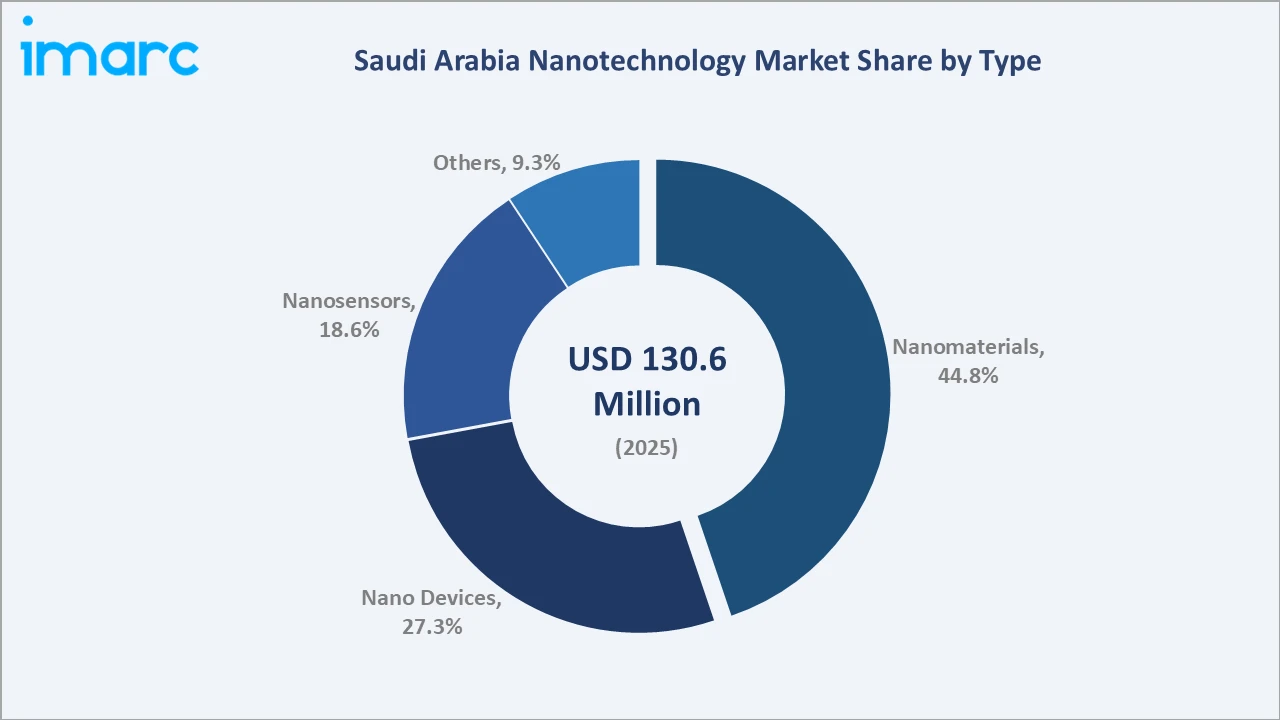
Nanomaterials lead at 44.8% (2025). The nanomaterials segment encompasses nanoparticles, nanocomposites, and nanocoatings used across petrochemical, construction, and healthcare applications, supported by established industrial research and materials development capability across the Kingdom's advanced manufacturing base.
To access detailed market analysis, Request Sample
Nano Devices at 27.3% encompass sensors, actuators, and diagnostic instruments supporting healthcare and industrial automation. Nano Devices' ~29.8% CAGR is above the historical rate through rising demand for miniaturized electronic components and smart diagnostic instruments across Saudi Arabia's expanding technology sector.
By Application
Electronics leads applications at 29.4% (2025). The electronics segment encompasses semiconductor components, consumer-device miniaturization, and sensor integration technologies. Electronics' ~28.5% CAGR reflects the Kingdom's semiconductor localization goals, creating sustained investment in nanoscale device manufacturing capability.
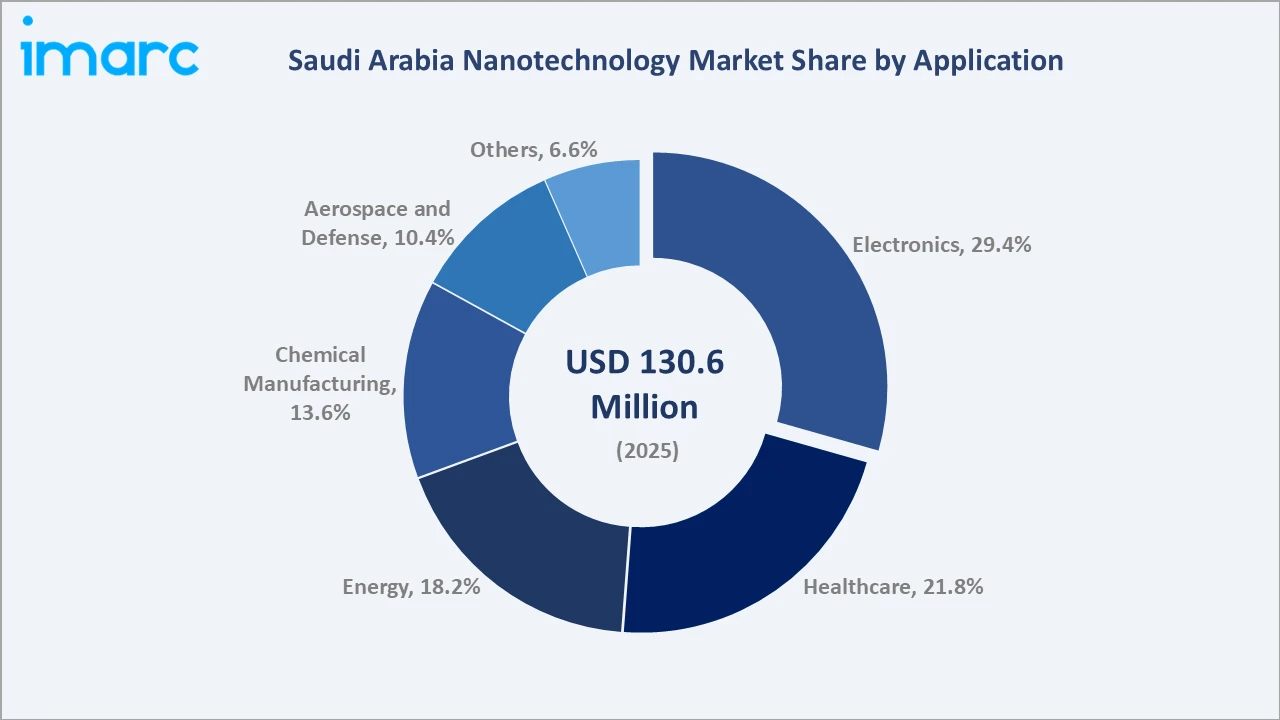
Healthcare at 21.8% grows through expanding nanomedicine diagnostics and drug delivery research. Energy at 18.2%, Chemical Manufacturing at 13.6%, Aerospace and Defense at 10.4%, and Others at 6.6% complete the application landscape across the Kingdom's diversifying industrial base.
Regional Market Insights
|
Region |
Share (2025) |
Key Saudi Arabia Nanotechnology Market Drivers & Characteristics |
|
Northern and Central Region |
47.2% |
Driven by concentrated research infrastructure, government funding bodies, and industrial headquarters supporting nanotechnology commercialization. |
|
Western Region |
24.1% |
Supported by port-based industrial zones, petrochemical manufacturing clusters, and growing healthcare investment. |
|
Eastern Region |
17.8% |
Anchored by energy sector nanomaterial applications and proximity to major petrochemical and oil production facilities. |
|
Southern Region |
10.9% |
Emerging through gradual industrial diversification and expanding healthcare and research infrastructure investment. |
The Northern and Central Region's 47.2% market leadership is anchored by Riyadh's concentration of research universities, government ministries, and corporate headquarters. The Western Region's 24.1% reflects Jeddah and Yanbu's industrial and petrochemical manufacturing base supporting nanomaterial production.
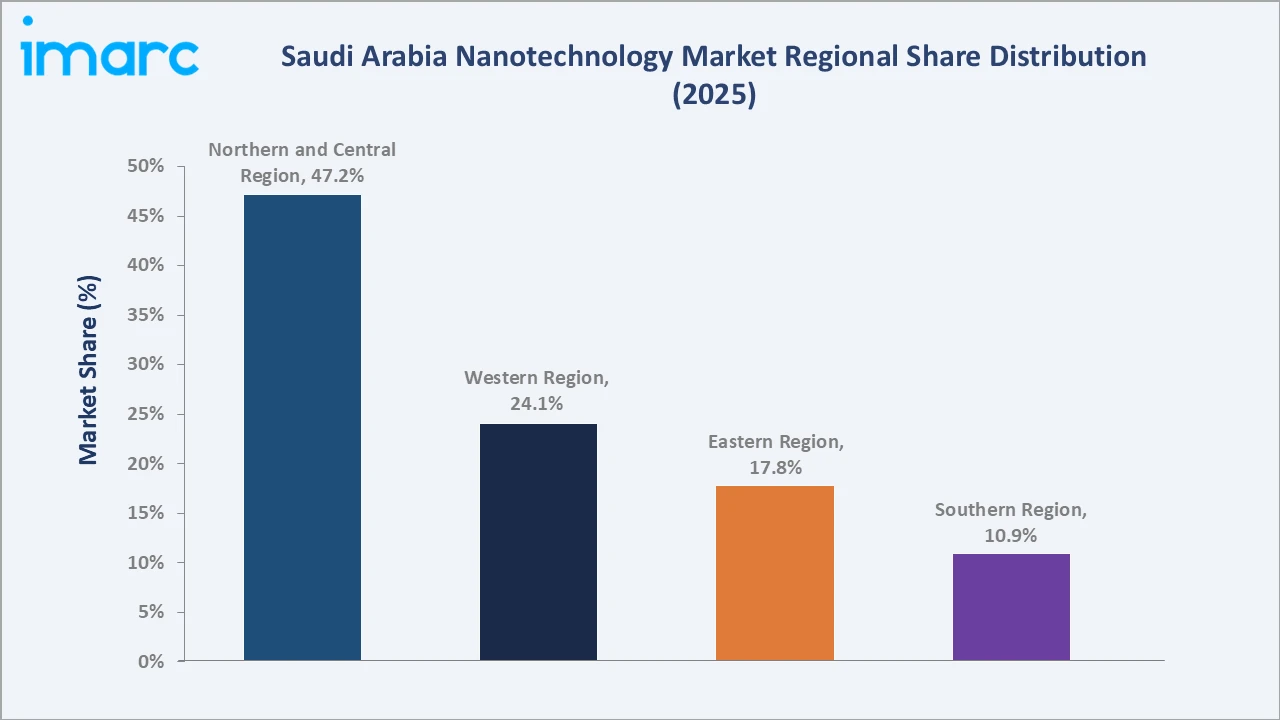
The Eastern Region's 17.8% is driven by Dammam and Dhahran's energy-sector nanomaterial applications. The Southern Region, at 10.9%, is the most nascent market, gradually expanding through diversification of regional healthcare and research infrastructure.
Competitive Landscape
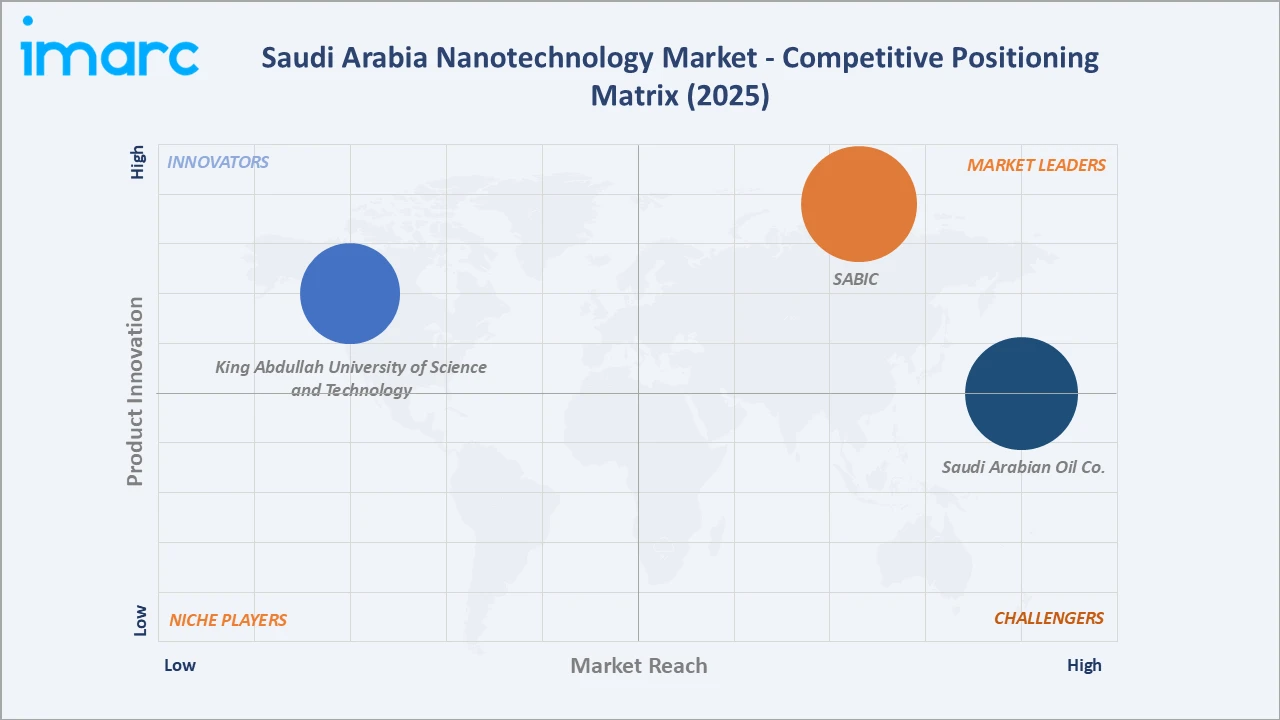
The Saudi Arabia nanotechnology market competitive landscape encompasses distinct tiers: petrochemical majors, national research institutions, specialized materials companies, and healthcare technology providers.
|
Company Name |
Key Products |
Market Position |
Core Strength |
|
SABIC |
Nano-enhanced polymers, specialty nanomaterials |
Market Leader |
SABIC plays a central role in Saudi nanotechnology by providing petrochemical-scale nanocomposite production, specialty coatings, and joint ventures supporting industrial and construction applications globally. |
|
Saudi Arabian Oil Co. |
Nano-silica |
Market Leader |
Saudi Aramco plays a central role in Saudi nanotechnology by integrating nanoparticles into enhanced oil recovery and pipeline protection through in-house research and technology programs. |
|
King Abdullah University of Science and Technology |
Nanomedicine platforms, nanomaterials research |
Established Player |
KAUST plays a central role in Saudi nanotechnology by driving foundational research through international partnerships spanning nanomedicine, materials science, and AI-integrated diagnostics. |
National research institution concentration creates a geographic concentration of nanotechnology expertise that sustains Saudi institutions' global competitive advantage through knowledge spillover and talent market depth unmatched in any other regional nanotechnology cluster. Consolidation reflects nanotechnology customers' preference for integrated materials suppliers, reducing coordination complexity.
Key Company Profiles
SABIC
SABIC is a leading Saudi petrochemical company applying nanotechnology across specialty polymers, coatings, and advanced materials. The company invests in nanomaterial research to enhance product performance across construction, automotive, and packaging applications.
- Key Products: Nano-enhanced polymers, specialty nanocomposite coatings, advanced masterbatches.
- Recent Developments: In July 2025, SABIC launched LNP™ THERMOTUF™ WF0087N, the industry's first flame-retardant polybutylene terephthalate (PBT) compound developed for Nano Molding Technology (NMT). The nanotechnology-enabled material delivers strong metal-plastic bonding, high impact resistance, and flame retardancy for lightweight consumer electronics components. The innovation also won a 2025 Edison Award, reinforcing SABIC's leadership in advanced nanomaterials for next-generation electronics.
- Strategic Focus: Focuses on nanomaterial-enabled specialty chemicals and advanced polymer solutions supporting industrial diversification.
Saudi Arabian Oil Co.
Saudi Arabian Oil Co.: applies nanotechnology across upstream and midstream operations, using nanoparticles to improve oil recovery, pipeline durability, and operational efficiency. The company invests in in-house research supporting nano-enhanced energy sector applications.
- Key Products: Nano-enhanced enhanced oil recovery fluids, pipeline coatings, nanomaterial catalysts.
- Recent Developments: In February 2025, Saudi Arabian Oil Co. (Aramco) expanded its Namaat industrial investment program by signing an MoU with Solvay to develop advanced non-metallic materials and localize a composite value chain in Saudi Arabia. The initiative supports innovation in high-performance materials, including nanotechnology-enabled composites for energy, construction, automotive, and industrial applications, strengthening the Kingdom's advanced materials ecosystem.
- Strategic Focus: Centered on nanotechnology applications that improve energy sector operational efficiency and asset durability.
King Abdullah University of Science and Technology
King Abdullah University of Science and Technology (KAUST) is a leading research university driving nanotechnology innovation across life sciences, materials, and AI-integrated diagnostics. The institution partners internationally to translate laboratory research into commercial and clinical nanotechnology applications.
- Key Products: Nanomedicine research platforms, nanomaterial synthesis technologies, AI-integrated nanosensors.
- Strategic Focus: Focused on translational nanotechnology research through international academic and industry partnerships.
Market Concentration Analysis
The Saudi Arabia nanotechnology market is moderately concentrated, with petrochemical majors and national research institutions holding significant influence over commercialization pathways. Research-stage nanotechnology remains fragmented across universities, while industrial-scale application concentrates among established petrochemical and materials companies with integrated production capability. Market concentration is increasing at the healthcare technology tier through strategic partnerships.
Investment & Growth Opportunities
Highest Growth Segments
Nanosensors (~31.5% CAGR), nanomedicine diagnostics in healthcare institutions (~30-33% CAGR), AI-integrated nanosensor platforms (~28% CAGR), graphene-based filtration technology (~22% CAGR from small base), nano-enhanced oil recovery (~15% CAGR), and advanced nanomaterial coatings (~24% CAGR from small base) represent the highest-growth Saudi Arabia nanotechnology investment vectors through 2034.
Emerging Investment Opportunities
Government-backed nanotechnology research funding under Vision 2030 represents the largest near-term Saudi Arabia nanotechnology opportunity. Companies establishing research partnerships with KAUST, KACST, and healthcare institutions are positioned for above-market revenue growth as national nanotechnology strategy disbursement accelerates.
Investment Themes
- Nanomedicine platform development for regional healthcare partnerships capturing clinical diagnostic and drug delivery revenue: Nanomedicine platforms combine targeted drug delivery with diagnostic capability using engineered nanostructures. Companies investing in nanomedicine platform development, clinical partnership structures, and regulatory approval capability by 2026-2027 are positioned to capture the commercial deployment wave.
- Nanomaterial-enhanced industrial products for energy and construction sector modernization: Saudi nanotechnology industrial application has documented commercial benefits including improved coating durability and catalytic efficiency. Investment in nano-enhanced coatings, composites, and catalysts creates an above-commodity-margin business model sustaining recurring revenue as the industrial materials portfolio grows.
Future Market Outlook (2026-2034)
The Saudi Arabia nanotechnology market is projected to grow from USD 130.6 Million in 2025 to USD 1,150.7 Million by 2034, delivering a 27.35% CAGR over the forecast period. The market's anchor value of USD 437.5 Million in 2030 represents a Saudi Arabia nanotechnology industry at its most transformative commercial inflection since the Vision 2030 nanotechnology strategy launch, nanomedicine will have achieved mainstream clinical deployment across major healthcare institutions, AI-integrated nanosensors will have moved from pilot to commercial industrial deployment, and international research partnerships will have created permanent new nanotechnology production and research capacity across the Kingdom.
Three structural forces define Saudi Arabia nanotechnology market growth through 2034 with strong confidence. Vision 2030's technology diversification mandate creates government-backed nanotechnology investment demand that is policy-mandated, multi-decade, and budget-committed regardless of commercial market conditions. Growing healthcare investment increases nanomedicine's competitive advantage as the only diagnostic and therapeutic platform providing molecular-level precision. Technology cost reduction is making premium nanotechnology capability commercially accessible.
Research Methodology
Primary Research
Primary research comprised structured interviews with 40+ industry stakeholders (2025) including research directors, technology officers, healthcare innovation leads, nanotechnology company executives, and regional market specialists.
Secondary Research
Secondary research encompassed government science and technology publications; university research repositories; company disclosures; National Nanotechnology Strategy documentation; Saudi healthcare investment reports; nanotechnology industry data; regional market statistics. Over 45 secondary sources reviewed.
Forecasting Models
Market revenue forecasts developed using a segment bottom-up model: (i) nanomaterials component; (ii) nano devices component; (iii) nanosensors component.
Saudi Arabia Nanotechnology Market Report Coverage:
| Report Features | Details |
|---|---|
| Base Year of the Analysis | 2025 |
| Historical Period | 2020-2025 |
| Forecast Period | 2026-2034 |
| Units | Million USD |
| Scope of the Report |
Exploration of Historical Trends and Market Outlook, Industry Catalysts and Challenges, Segment-Wise Historical and Future Market Assessment:
|
| Types Covered | Nanosensors, Nano Devices, Nanomaterials, Others |
| Applications Covered | Electronics, Energy, Chemical Manufacturing, Aerospace and Defense, Healthcare, Others |
| Regions Covered | Northern and Central Region, Western Region, Eastern Region, Southern Region |
| Companies Covered | SABIC, Saudi Arabian Oil Co., King Abdullah University of Science and Technology, etc. |
| Customization Scope | 10% Free Customization |
| Post-Sale Analyst Support | 10-12 Weeks |
| Delivery Format | PDF and Excel through Email (We can also provide the editable version of the report in PPT/Word format on special request) |
Key Benefits for Stakeholders:
- IMARC’s industry report offers a comprehensive quantitative analysis of various market segments, historical and current market trends, market forecasts, and dynamics of the Saudi Arabia nanotechnology market from 2020-2034.
- The research report provides the latest information on the market drivers, challenges, and opportunities in the Saudi Arabia nanotechnology market.
- Porter's five forces analysis assist stakeholders in assessing the impact of new entrants, competitive rivalry, supplier power, buyer power, and the threat of substitution. It helps stakeholders to analyze the level of competition within the Saudi Arabia nanotechnology industry and its attractiveness.
- Competitive landscape allows stakeholders to understand their competitive environment and provides an insight into the current positions of key players in the market.
Frequently Asked Questions About the Saudi Arabia Nanotechnology Market Report
The Saudi Arabia nanotechnology market reached USD 130.6 Million in 2025. The market is driven by advancements in healthcare, artificial intelligence, and sustainable technologies. Increased investments in research and development, along with strategic international partnerships, are further supporting market growth.
The market grows at 27.35% CAGR during 2026-2034, reaching USD 1,150.7 Million by 2034. Nanosensors grow fastest at ~31.5% CAGR through AI-integrated diagnostics and industrial monitoring expansion across the Kingdom.
Nanomaterials lead at 44.8% through established petrochemical-sector demand, nano-enhanced coatings and composites, and sustained industrial research investment across the Kingdom's advanced manufacturing base.
Electronics leads at 29.4% through the foundational role of nanoscale precision in enabling semiconductor and consumer-device manufacturing in Saudi Arabia's growing technology sector.
The Northern and Central Region leads at 47.2% through Riyadh's concentration of research institutions and government-backed nanotechnology funding programmes.
Leading companies include SABIC, Saudi Arabian Oil Co. and King Abdullah University of Science and Technology, among others.
The market is projected to reach approximately USD 437.5 Million by 2030, with nanomedicine achieving broader clinical adoption across major healthcare institutions, AI-integrated nanosensor platforms scaling into commercial industrial deployment, government nanotechnology investment at peak annual programme velocity, and international research partnerships creating expanded permanent research and production capacity across the Kingdom.
Nanomedicine applies engineered nanostructures to targeted drug delivery and diagnostic platforms, improving therapeutic precision while reducing side effects through molecular-level treatment targeting. The commercial case combines diagnostic revenue with therapeutic revenue from an expanding healthcare partnership base.
Need more help?
- Speak to our experienced analysts for insights on the current market scenarios.
- Include additional segments and countries to customize the report as per your requirement.
- Gain an unparalleled competitive advantage in your domain by understanding how to utilize the report and positively impacting your operations and revenue.
- For further assistance, please connect with our analysts.
 Request Customization
 Speak to an Analyst
 Request Brochure
 Inquire Before Buying
Benefits of Customization
- Personalize this research
- Triangulate with your data
- Get data as per your format and definition
- Gain a deeper dive into a specific application, geography, customer, or competitor
- Any level of personalization
Get in Touch With Us
UNITED STATES
Phone: +1-201-971-6302
INDIA
Phone: +91-120-433-0800
UNITED KINGDOM
Phone: +44-753-714-6104
Email: [email protected]
Client Testimonials




.webp)




.webp)













Related Reports

Choose your plan
*Please note that the prices mentioned below are starting prices for each bundle type. Kindly contact our team for further details.*
Single User License
- 1 User License, Access on 2 Devices
- PDF Report + Excel Dataset (Password Protected)
- Lifetime Access
- No Printing Rights
- 10% Free Report Customization
- 10–12 Weeks of Analyst Support
Five User License
- Access for 5 Users, 2 Devices per User
- PDF Report + Excel Dataset (Password Protected)
- Lifetime Access
- Dedicated Account Manager
- 12–14 Weeks of Analyst Support
- No Printing Rights
- 15% Free Report Customization
- 25% Discount on Your Next Purchase
Corporate User License
- Unlimited User Access (Within Your Organization)
- PDF Report + Excel Dataset
- Lifetime Access
- Dedicated Account Manager
- 14–20 Weeks of Analyst Support
- No Printing Rights
- 20% Free Report Customization
- 30% Discount on Your Next Purchase
Essential Insights
What's included:
3 reports
- Lifetime Access
- PDF Reports
- Excel Datasets
- 2 Weeks of Free Analyst Support
- 2 User Licenses
- Access on 2 Devices
- Printing Rights
- Complimentary PowerPoint (PPT) Version
- Complimentary License Upgrade
Professional Access
What's included:
5 reports
- Lifetime Access
- PDF Reports
- Excel Datasets
- 8 Weeks of Free Analyst Support
- 2 User Licenses
- Access on 2 Devices
- Printing Rights
- Complimentary PowerPoint (PPT) Version
- Complimentary License Upgrade
Business Advantage
What's included:
8 reports
- Lifetime Access
- PDF Reports
- Excel Datasets
- 14 Weeks of Free Analyst Support
- 2 User Licenses
- Access on 2 Devices
- Printing Rights
- Complimentary PowerPoint (PPT) Version
- Complimentary License Upgrade
Enterprise Intelligence
What's included:
10 reports
- Lifetime Access
- PDF Reports
- Excel Datasets
- 20 Weeks of Free Analyst Support
- 2 User Licenses
- Access on 2 Devices
- Printing Rights
- Complimentary PowerPoint (PPT) Version
- Complimentary License Upgrade