
Saudi Arabia Organic Cotton Market Size, Share, Trends and Forecast by Type, Quality Type, Application, and Region, 2026-2034
Saudi Arabia Organic Cotton Market Summary:
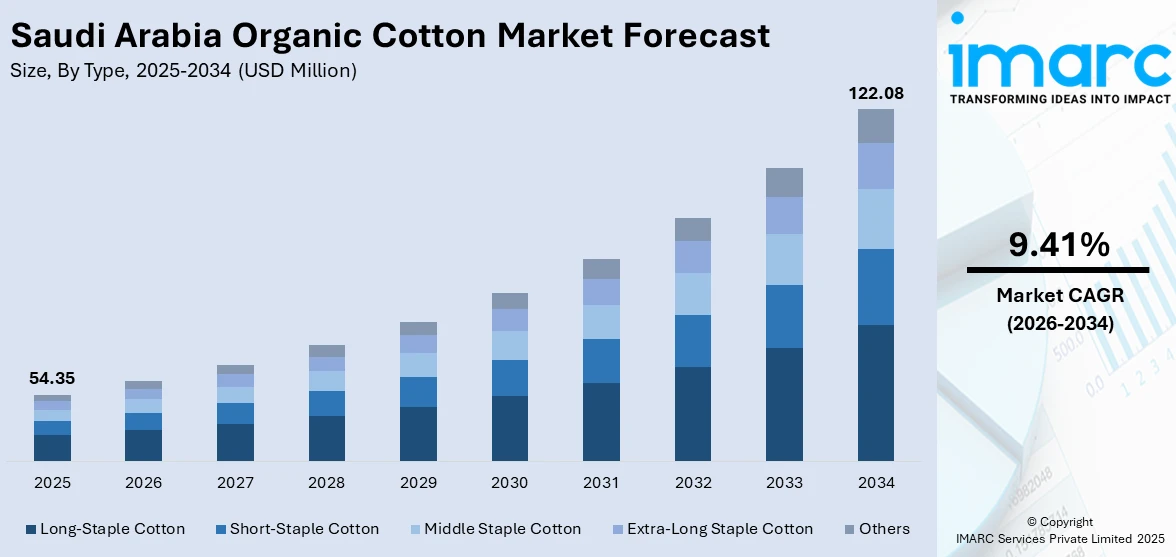
The Saudi Arabia organic cotton market size was valued at USD 54.35 Million in 2025 and is projected to reach USD 122.08 Million by 2034, growing at a compound annual growth rate of 9.41% from 2026-2034.
The Saudi Arabia organic cotton market is experiencing notable expansion as consumer awareness regarding sustainable and eco-friendly textiles continues to rise across the Kingdom. Growing preference for natural, chemical-free fabrics among health-conscious consumers is accelerating product adoption. The government's Vision 2030 sustainability initiatives and the Saudi Green Initiative are fostering favorable conditions for organic textile development. Rising disposable incomes and evolving lifestyle preferences among the affluent population are strengthening demand for premium organic cotton products, thereby enhancing Saudi Arabia organic cotton market share.
Key Takeaways and Insights:
- By Type: Long-staple cotton dominates the market with a share of 33% in 2025, owing to its superior fiber strength, exceptional softness, and enhanced durability that meet premium textile manufacturing requirements. The growing preference for luxury fabrics among affluent consumers is fueling segment expansion.
- By Quality Type: Supima/Pima leads the market with a share of 35% in 2025, driven by its extra-long staple fibers that deliver unparalleled softness, color retention, and durability. Rising demand for premium quality organic cotton products is propelling segment growth.
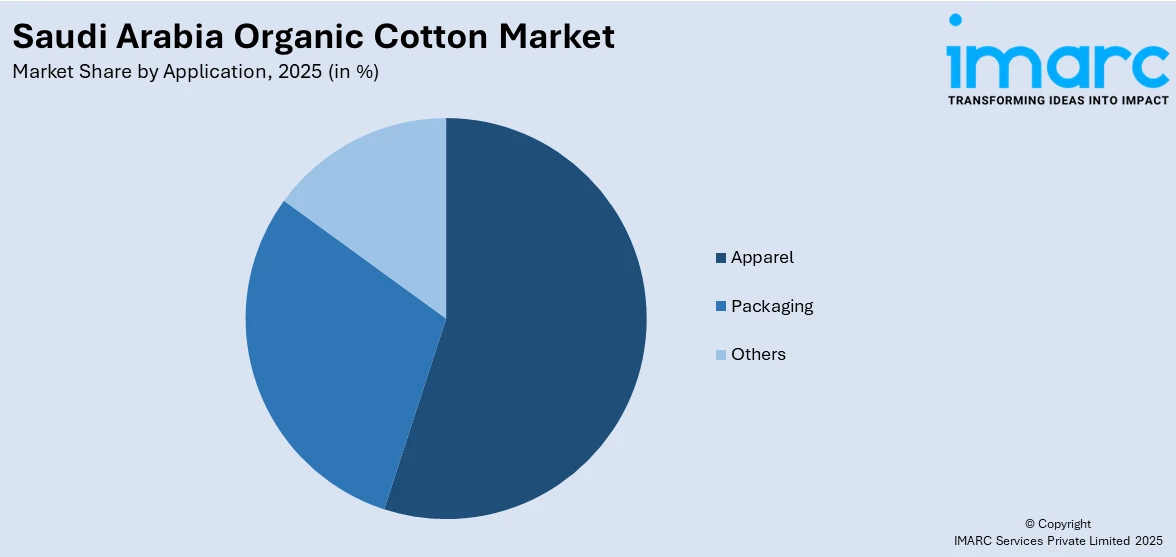
- By Application: Apparel holds the largest segment with a market share of 51% in 2025, reflecting the strong consumer preference for sustainable fashion and skin-friendly clothing options. Increasing adoption by fashion brands and designers is accelerating segment dominance.
- By Region: Northern and Central Region represents the largest region with 30% share in 2025, driven by the concentration of retail infrastructure, higher disposable incomes in Riyadh, and strong presence of premium fashion outlets catering to affluent consumers.
- Key Players: Key players drive the Saudi Arabia organic cotton market by expanding sustainable product portfolios, strengthening distribution networks, and investing in eco-friendly manufacturing technologies. Their partnerships with international suppliers ensure consistent quality and availability.
To get more information on this market Request Sample
The Saudi Arabia organic cotton market is witnessing substantial transformation as the Kingdom's fashion and textile ecosystem embraces sustainability principles aligned with Vision 2030. Consumer awareness regarding the environmental and health benefits of organic cotton is expanding significantly, driving demand across apparel, home textiles, and personal care applications. The Saudi Fashion Commission's initiatives to develop a sustainable fashion value chain are creating favorable conditions for organic cotton adoption. The expansion of retail infrastructure, including shopping malls and specialty stores, is improving organic cotton product accessibility to consumers. Rising skin sensitivity concerns and increasing preference for chemical-free fabrics are encouraging consumers to choose organic cotton alternatives. Premium pricing remains a challenge, yet affluent consumers demonstrate willingness to pay more for sustainable and ethically produced textile products. The market trajectory indicates continued Saudi Arabia organic cotton market growth through the forecast period.
Saudi Arabia Organic Cotton Market Trends:
Rising Consumer Preference for Sustainable and Eco-Friendly Textiles
The Saudi Arabia organic cotton market is experiencing a significant shift toward sustainable textile consumption as environmental consciousness grows among consumers. The Saudi Green Initiative and Vision 2030's circular economy approach are encouraging consumers and manufacturers to prioritize eco-friendly materials. The Fashion Commission's GFX Fashion Swap initiative in Riyadh promotes garment exchange and educates participants on the environmental benefits of sustainable fashion choices. Local designers are increasingly incorporating organic cotton into their collections, reflecting the Kingdom's commitment to responsible fashion that aligns with global sustainability standards. In March 2025, the Fashion Commission launched the Future of Sustainability Initiative, a groundbreaking project designed to promote fashion recycling across retail spaces through strategically placed recycling bins in prominent malls, promoting the adoption of ethical fashion recycling techniques by the public and business sectors.
Growing Demand for Premium Quality Fabrics Among Affluent Consumers
In Saudi Arabia, the growing luxury goods industry is fostering excellent conditions for high-end organic cotton items. Rich consumers are beginning to link organic cotton to quality, exclusivity, and health advantages. Rich consumers look for ethically and sustainably made goods that are both fashionable and environmentally conscious. In order to appeal to discriminating customers looking for superior fabric quality and comfort, luxury fashion manufacturers are launching organic cotton lines in the clothing, bedding, and personal care categories.
Expansion of Retail Infrastructure and E-commerce Platforms
The broadening retail landscape is significantly impacting market accessibility across Saudi Arabia. Shopping malls, lifestyle stores, and specialty boutiques are expanding their organic cotton product offerings to meet evolving consumer preferences. The retail sector's robust performance reflects strong demand for quality textile products. E-commerce platforms are providing consumers with convenient access to diverse organic cotton products while enabling brands to educate customers about sustainability benefits. Digital transformation in retail continues to support market expansion and consumer engagement. The Saudi Central Bank (SAMA) reports that electronic payments made up 79% of all retail transactions in Saudi Arabia in 2024. Non-cash retail transactions increased from 10.8 billion in 2023 to 12.6 billion in 2024, indicating the ongoing expansion and uptake of electronic payment systems throughout the nation.
How Vision 2030 is Transforming the Saudi Arabia Organic Cotton Market:
Saudi Arabia's Vision 2030 has reshaped the outlook of the organic cotton market by diversifying the economy away from oil dependency and positioning the Kingdom as a regional hub for sustainable textile manufacturing and fashion innovation. Such strategic initiatives as the Public Investment Fund's substantial allocation for domestic manufacturing industries including textiles, the National Industrial Development and Logistics Program's dedicated support for textile and apparel production, and the Saudi Fashion Commission's establishment have boosted investor confidence and attracted global sustainable fashion brands to establish direct market presence. Demand for premium organic cotton products is accelerated by the Kingdom's predominantly young and environmentally conscious population, rising female workforce participation rates driving demand for sustainable professional attire, and increasing disposable incomes among affluent consumers. Meanwhile, the Fashion Commission's development of The Lab product development studio in Riyadh, alongside the Future of Sustainability Initiative promoting circular textile recycling systems, creates sophisticated sustainable fashion infrastructure that elevates the organic cotton purchasing and production experience across the Kingdom.
Market Outlook 2026-2034:
The future for the Saudi Arabian organic cotton market is still favorable because sustainability is becoming more and more important throughout the textile value chain. Adoption of organic cotton is being facilitated by government support through Vision 2030 initiatives and environmental legislation. Consumer preference for natural, chemical-free textiles is being driven by the growing emphasis on health and wellness as well as greater knowledge of skin sensitivity. The demand for high-end organic cotton products is anticipated to increase over the course of the projection period due to growing disposable incomes among the youthful, fashion-conscious population and the growing tourism industry. The market generated a revenue of USD 54.35 Million in 2025 and is projected to reach a revenue of USD 122.08 Million by 2034, growing at a compound annual growth rate of 9.41% from 2026-2034.
Saudi Arabia Organic Cotton Market Report Segmentation:
|
Segment Category |
Leading Segment |
Market Share |
|
Type |
Long-Staple Cotton |
33% |
|
Quality Type |
Supima/Pima |
35% |
|
Application |
Apparel |
51% |
|
Region |
Northern and Central Region |
30% |
Type Insights:
- Long-Staple Cotton
- Short-Staple Cotton
- Middle Staple Cotton
- Extra-Long Staple Cotton
- Others
Long-staple cotton dominates with a market share of 33% of the total Saudi Arabia organic cotton market in 2025.
Long-staple cotton has emerged as the preferred fiber type in the Saudi Arabia organic cotton market owing to its superior quality characteristics that cater to premium textile manufacturing requirements. The fiber length typically ranges between 1.125 and 1.25 inches, providing enhanced strength, softness, and durability compared to shorter staple varieties. These properties make long-staple organic cotton ideal for producing high-quality fabrics that meet the discerning preferences of affluent Saudi consumers seeking luxurious and comfortable textile products. The growing emphasis on quality over quantity among fashion-conscious consumers continues to drive segment dominance.
Long-staple organic cotton is in high demand because it may be used to make high-end clothing, bedding, and household textile products that are more expensive. Long-staple cotton is preferred by textile makers because it yields smoother yarns with fewer weak places, making materials resistant to wear, distortion, and pilling over time. The fiber's capacity to efficiently absorb dyes guarantees vivid, long-lasting colors that appeal to customers looking for items that are both long-lasting and aesthetically beautiful. Long-staple organic cotton is increasingly being specified by foreign fashion designers entering the Saudi market for their high-end collections, supporting the segment's expansion.
Quality Type Insights:
- Supima/Pima
- Upland
- Giza
- Others
Supima/Pima leads with a share of 35% of the total Saudi Arabia organic cotton market in 2025.
Supima/Pima organic cotton has solidified its position as the market leader owing to its superior fiber quality, which offers unmatched softness, strength, and durability. In the luxury textile market, the extra-long staple fibers—which are longer than 1.5 inches—produce yarns and textiles with exceptional performance qualities that support high prices. Because Supima cotton's fibers are longer than those of typical cotton kinds, the resulting fabrics are twice as robust and far more resistant to fading and pilling. The growing inclination of Saudi customers for superior, eco-friendly textile items is ideally matched with this premium positioning.
The segment's dominance is further reinforced by the growing luxury goods market in Saudi Arabia, which was valued at reached USD 2,087.3 Million in 2025. Affluent consumers demonstrate strong willingness to pay premium prices for Supima/Pima organic cotton products that offer superior comfort, enhanced color retention, and extended product lifespan. The fiber's traceability and certification standards provide consumers with confidence in product authenticity and ethical production practices. Leading international brands including premium fashion houses and luxury home textile manufacturers increasingly utilize Supima/Pima organic cotton, strengthening its market position in the Kingdom.
Application Insights:
Access the comprehensive market breakdown Request Sample
- Apparel
- Packaging
- Others
Apparel exhibits a clear dominance with a 51% share of the total Saudi Arabia organic cotton market in 2025.
The apparel segment commands the largest market share as sustainable fashion gains significant traction among Saudi consumers increasingly concerned about environmental impact and personal health. Organic cotton's natural, chemical-free properties make it particularly appealing for clothing items that remain in direct contact with skin throughout the day. The growing prevalence of skin sensitivities and allergic reactions to synthetic fabrics is prompting consumers to seek safer, hypoallergenic alternatives. Healthcare providers and wellness brands actively promote organic cotton apparel for undergarments, sleepwear, and daily wear, further enhancing segment demand.
The Saudi fashion market's robust expansion is creating substantial opportunities for organic cotton apparel products. Sustainability is emerging as a key differentiator among consumers seeking quality textile products. Increasing female workforce participation, which reached 36.2% in 2024, is driving demand for diverse professional attire made from comfortable, sustainable fabrics. Local designers are incorporating organic cotton into their collections, while international sustainable fashion brands are expanding their presence in the Kingdom, collectively strengthening the apparel segment's market leadership.
Regional Insights:
- Northern and Central Region
- Western Region
- Eastern Region
- Southern Region
Northern and Central Region represents the leading segment with a 30% share of the total Saudi Arabia organic cotton market in 2025.
The Northern and Central Region, anchored by Riyadh, dominates the Saudi Arabia organic cotton market through its concentration of affluent consumers, premium retail infrastructure, and government-backed fashion initiatives. The region benefits from superior logistics networks, advanced urban development, and substantial government support for sustainable industries. Rising disposable incomes among the capital's population and increasing preference for eco-friendly textiles are strengthening demand for organic cotton products. Riyadh's retail market occupancy rates climbed to 90% in mid-2024, reflecting robust consumer demand.
The Saudi Fashion Commission's creation of The Lab, a product development studio in Riyadh, highlights the region's strategic significance and highlights the capital's pivotal role in promoting sustainable fashion manufacturing and innovation throughout the Kingdom. Organic cotton products have a wide range of distribution channels because to the concentration of shopping centers, lifestyle shops, and specialized boutiques. Local designers and global sustainable fashion businesses are drawn to the area by government investments in infrastructural development and economic diversification programs.
Market Dynamics:
Growth Drivers:
Why is the Saudi Arabia Organic Cotton Market Growing?
Expanding Hospitality Sector Demand for Premium Organic Textiles
The rapid expansion of Saudi Arabia's hospitality and luxury hotel sector is generating significant business-to-business demand for organic cotton products. As the Kingdom develops world-class tourism destinations and welcomes increasing numbers of international visitors, hotels, resorts, and serviced residences are seeking premium organic cotton for bedding, towels, bathrobes, and linens to meet discerning guest expectations. Luxury hospitality brands are incorporating sustainable textile sourcing into their operational standards, recognizing that environmentally conscious amenities enhance guest experiences and brand reputation. The development of mega-projects featuring extensive hospitality components is creating sustained procurement demand for high-quality organic cotton textiles. International hotel chains entering the Saudi market are bringing established sustainability protocols that prioritize organic and eco-friendly materials. This institutional demand from the hospitality sector provides stable, large-volume purchasing channels that complement retail consumer demand and strengthen the overall organic cotton market infrastructure across the Kingdom.
Increasing Skin Sensitivity Awareness and Health Consciousness
The growing prevalence of skin sensitivities is significantly influencing the Saudi Arabia organic cotton market as consumers increasingly seek safer, chemical-free fabric alternatives. Rising dermatological awareness and medical advice encouraging natural fabrics are supporting this consumer shift toward organic cotton products. Healthcare providers and wellness brands actively promote organic cotton for personal care items, undergarments, and daily wear applications. Individuals are becoming more conscious about materials touching their skin throughout the day, including towels, sleepwear, and bed linens. The Saudi Arabia health and wellness market is projected to reach USD 85,661.6 Million by 2034, demonstrating the substantial consumer emphasis on health-related purchasing decisions. Social media influencers and digital platforms amplify awareness about organic cotton's hypoallergenic properties and skin benefits. This health-driven consumer behavior represents a fundamental shift in textile preferences that supports sustained market growth.
Expanding Retail Infrastructure and Tourism Growth
The rapid expansion of retail infrastructure across Saudi Arabia is significantly enhancing organic cotton product accessibility and market penetration. Shopping malls, lifestyle stores, and specialty boutiques are increasingly stocking sustainable textile products to meet evolving consumer preferences. Rising disposable incomes among the growing middle class are fueling demand for premium, sustainable apparel and home textiles. The e-commerce sector continues expanding rapidly, providing consumers with convenient access to diverse organic cotton products while enabling brands to educate customers about sustainability benefits. These infrastructure developments are creating multiple touchpoints for organic cotton products to reach consumers across all regions of the Kingdom.
Market Restraints:
What Challenges the Saudi Arabia Organic Cotton Market is Facing?
Higher Production Costs and Premium Pricing
The elevated cost of organic cotton production presents a significant barrier to widespread market adoption in Saudi Arabia. Organic farming practices require more labor, specialized cultivation methods, and longer transition periods compared to conventional cotton farming. These higher production costs translate into premium pricing that may deter price-sensitive consumer segments. Industry stakeholders consistently identify cost concerns as the primary bottleneck for increased organic cotton sourcing, limiting mainstream adoption. Retailers face challenges in marketing premium-priced organic products while maintaining competitive positioning in the broader textile market.
Limited Domestic Cultivation and Supply Chain Constraints
Saudi Arabia's limited domestic organic cotton cultivation creates significant dependence on imports to meet market demand. The Kingdom's arid climate and water scarcity present substantial challenges for expanding local organic cotton production. Supply chain complexities, including sourcing certified organic seeds and establishing dedicated organic processing facilities, add logistical hurdles. The limited availability of certified organic cotton growers globally can lead to supply constraints and price volatility. These supply-side limitations can occasionally restrict product availability and impact market growth momentum.
Competition from Conventional and Synthetic Textiles
Organic cotton faces substantial competition from lower-priced conventional cotton and synthetic textile alternatives in the Saudi market. Conventional cotton products offer similar aesthetic appeal at significantly lower price points, appealing to cost-conscious consumers. Synthetic fabrics provide enhanced durability and performance characteristics for certain applications. Consumer awareness gaps regarding organic cotton benefits may limit demand expansion among segments unfamiliar with sustainability advantages. Fast fashion trends promoting affordable, frequently updated wardrobes present ongoing competitive challenges for premium organic cotton products.
Competitive Landscape:
International sustainable fashion businesses and up-and-coming local designers dedicated to eco-friendly techniques make up the competitive landscape of the Saudi Arabian organic cotton market. Participants in the market are concentrating on building trustworthy supply chain alliances, growing sustainable product portfolios, and fortifying distribution networks through retail and online channels. To gain the trust of customers and set themselves apart from the competition, businesses are investing in certification and traceability systems. Knowledge transfer and product innovation are made possible by strategic partnerships between foreign suppliers and domestic firms. The advent of international fashion retailers with sustainability-focused shop formats further intensifies the competitive landscape. In order to gain market share among Saudi consumers who are becoming more discriminating and looking for high-end organic cotton products, participants are focusing on quality, authenticity, and ethical sourcing.
Recent Developments:
In November 2025, the Saudi Fashion Commission launched the Red Sea Seaweed Project at the Misk Global Forum, unveiling a pioneering bio-textile developed from marine algae blended with Lyocell and organic cotton. The innovative fabric was manufactured at The Lab, the Fashion Commission's product development studio in Riyadh, demonstrating Saudi Arabia's commitment to sustainable material innovation. This initiative reflects the Kingdom's broader strategy to develop next-generation eco-conscious textiles using local natural resources.
Saudi Arabia Organic Cotton Market Report Coverage:
| Report Features | Details |
|---|---|
| Base Year of the Analysis | 2025 |
| Historical Period | 2020-2025 |
| Forecast Period | 2026-2034 |
| Units | Million USD |
| Scope of the Report |
Exploration of Historical Trends and Market Outlook, Industry Catalysts and Challenges, Segment-Wise Historical and Future Market Assessment:
|
| Types Covered | Long-Staple Cotton, Short-Staple Cotton, Middle Staple Cotton, Extra-Long Staple Cotton, Others |
| Quality Types Covered | Supima/Pima, Upland, Giza, Others |
| Applications Covered | Apparel, Packaging, Others |
| Regions Covered | Northern and Central Region, Western Region, Eastern Region, Southern Region |
| Customization Scope | 10% Free Customization |
| Post-Sale Analyst Support | 10-12 Weeks |
| Delivery Format | PDF and Excel through Email (We can also provide the editable version of the report in PPT/Word format on special request) |
Frequently Asked Questions About the Saudi Arabia Organic Cotton Market Report
The Saudi Arabia organic cotton market size was valued at USD 54.35 Million in 2025.
The Saudi Arabia organic cotton market is expected to grow at a compound annual growth rate of 9.41% from 2026-2034 to reach USD 122.08 Million by 2034.
Long-staple cotton dominated the market with a share of 33%, driven by its superior fiber strength, exceptional softness, and enhanced durability that meet premium textile manufacturing requirements in the Kingdom.
Key factors driving the Saudi Arabia organic cotton market include government sustainability initiatives under Vision 2030, increasing skin sensitivity awareness, rising consumer preference for eco-friendly textiles, and expanding retail infrastructure.
Major challenges include higher production costs and premium pricing, limited domestic organic cotton cultivation, supply chain constraints, competition from conventional and synthetic textiles, and consumer awareness gaps regarding organic cotton benefits.
Need more help?
- Speak to our experienced analysts for insights on the current market scenarios.
- Include additional segments and countries to customize the report as per your requirement.
- Gain an unparalleled competitive advantage in your domain by understanding how to utilize the report and positively impacting your operations and revenue.
- For further assistance, please connect with our analysts.
 Request Customization
 Speak to an Analyst
 Request Brochure
 Inquire Before Buying
Benefits of Customization
- Personalize this research
- Triangulate with your data
- Get data as per your format and definition
- Gain a deeper dive into a specific application, geography, customer, or competitor
- Any level of personalization
Get in Touch With Us
UNITED STATES
Phone: +1-201-971-6302
INDIA
Phone: +91-120-433-0800
UNITED KINGDOM
Phone: +44-753-714-6104
Email: [email protected]
Client Testimonials




.webp)




.webp)













Related Reports

Choose your plan
*Please note that the prices mentioned below are starting prices for each bundle type. Kindly contact our team for further details.*
Single User License
- 1 User License, Access on 2 Devices
- PDF Report + Excel Dataset (Password Protected)
- Lifetime Access
- No Printing Rights
- 10% Free Report Customization
- 10–12 Weeks of Analyst Support
Five User License
- Access for 5 Users, 2 Devices per User
- PDF Report + Excel Dataset (Password Protected)
- Lifetime Access
- Dedicated Account Manager
- 12–14 Weeks of Analyst Support
- No Printing Rights
- 15% Free Report Customization
- 25% Discount on Your Next Purchase
Corporate User License
- Unlimited User Access (Within Your Organization)
- PDF Report + Excel Dataset
- Lifetime Access
- Dedicated Account Manager
- 14–20 Weeks of Analyst Support
- No Printing Rights
- 20% Free Report Customization
- 30% Discount on Your Next Purchase
Essential Insights
What's included:
3 reports
- Lifetime Access
- PDF Reports
- Excel Datasets
- 2 Weeks of Free Analyst Support
- 2 User Licenses
- Access on 2 Devices
- Printing Rights
- Complimentary PowerPoint (PPT) Version
- Complimentary License Upgrade
Professional Access
What's included:
5 reports
- Lifetime Access
- PDF Reports
- Excel Datasets
- 8 Weeks of Free Analyst Support
- 2 User Licenses
- Access on 2 Devices
- Printing Rights
- Complimentary PowerPoint (PPT) Version
- Complimentary License Upgrade
Business Advantage
What's included:
8 reports
- Lifetime Access
- PDF Reports
- Excel Datasets
- 14 Weeks of Free Analyst Support
- 2 User Licenses
- Access on 2 Devices
- Printing Rights
- Complimentary PowerPoint (PPT) Version
- Complimentary License Upgrade
Enterprise Intelligence
What's included:
10 reports
- Lifetime Access
- PDF Reports
- Excel Datasets
- 20 Weeks of Free Analyst Support
- 2 User Licenses
- Access on 2 Devices
- Printing Rights
- Complimentary PowerPoint (PPT) Version
- Complimentary License Upgrade