
Saudi Arabia Personal Luxury Goods Market Size, Share, Trends and Forecast by Type, Gender, Distribution Channel, and Region, 2026-2034
Saudi Arabia Personal Luxury Goods Market Size, Share, Trends & Forecast (2026-2034)
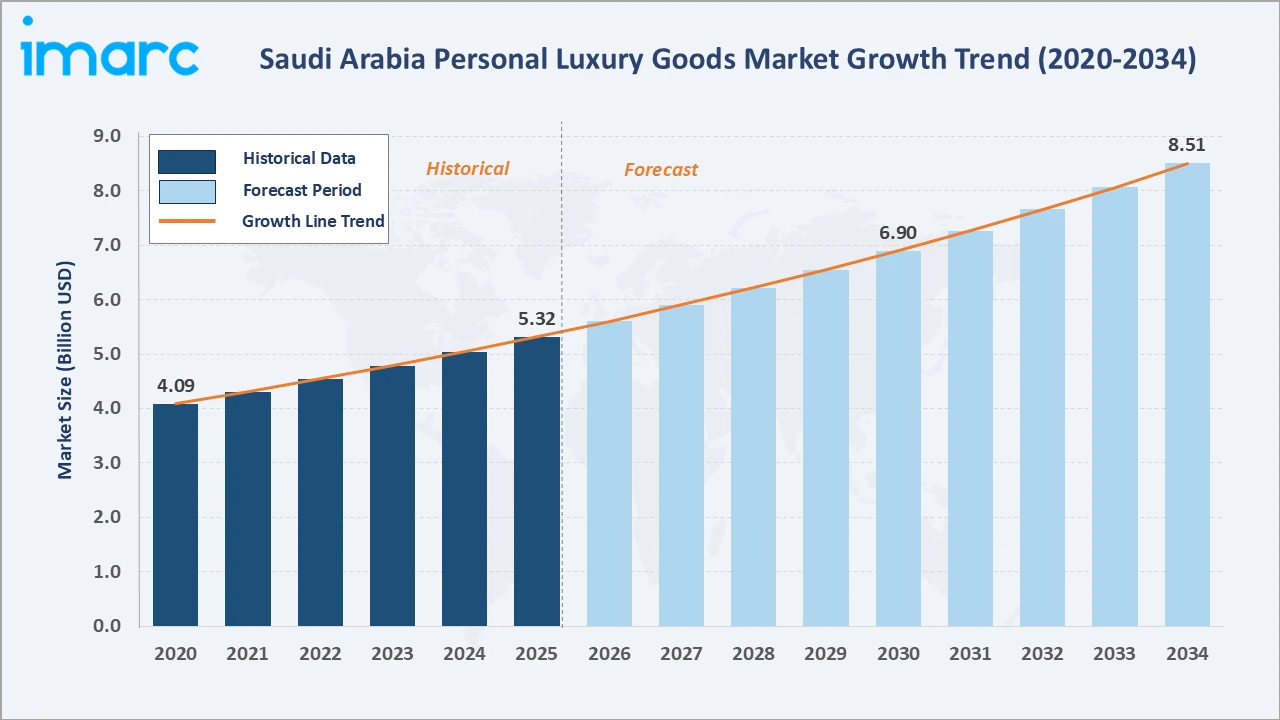
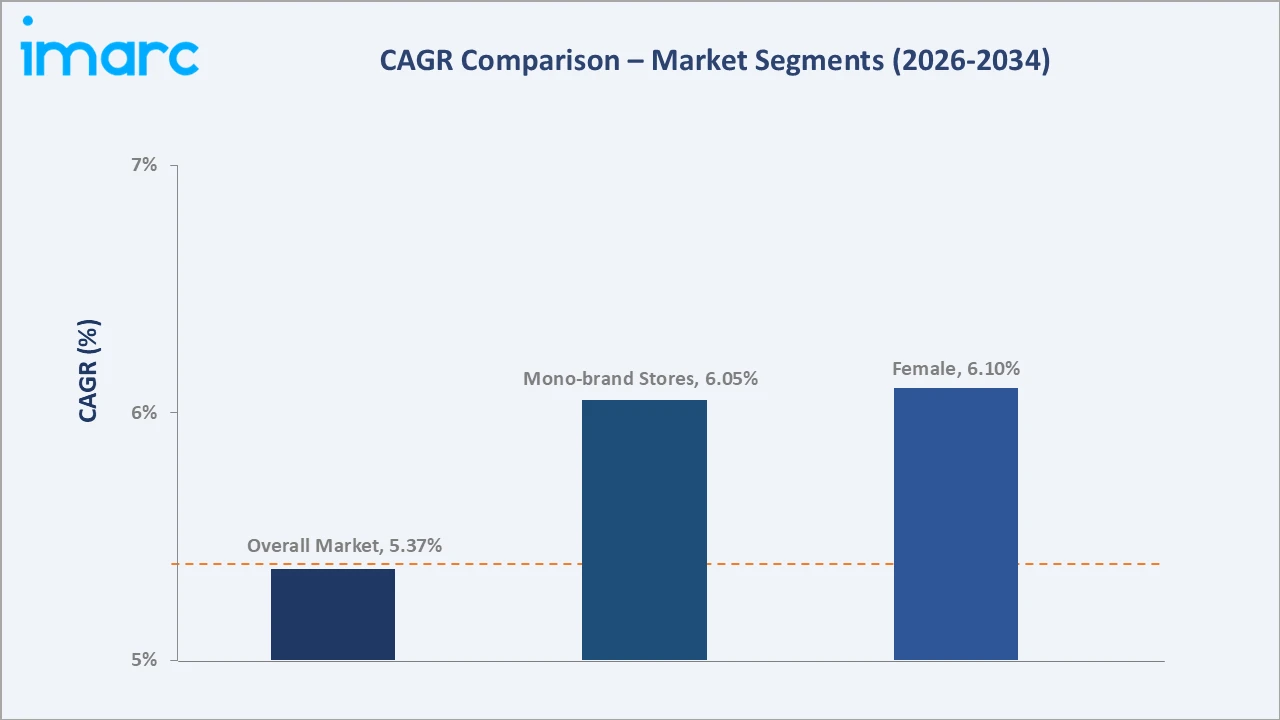
The Saudi Arabia personal luxury goods market reached USD 5.32 Billion in 2025 and is projected to reach USD 8.51 Billion by 2034, growing at a CAGR of 5.37% during 2026-2034. Saudi Arabia's personal luxury goods market is driven by a rapidly expanding base of high-net-worth individuals and sweeping social reforms under Vision 2030 that are reshaping consumer lifestyles and widening women's participation in the economy. Female shoppers dominate at 61.8% of 2025 demand. Mono-brand stores lead distribution at 36.9% share. The Northern and Central Region leads regionally at 41.6%, anchored by Riyadh's concentration of affluent consumers and flagship retail destinations.
Market Snapshot
|
Metric |
Value |
|
Market Size (2025) |
USD 5.32 Billion |
|
Forecast Market Size (2034) |
USD 8.51 Billion |
|
CAGR (2026-2034) |
5.37% |
|
Base Year |
2025 |
|
Historical Period |
2020-2025 |
|
Forecast Period |
2026-2034 |
|
Largest Gender Segment |
Female (61.8%, 2025) |
|
Largest Distribution Channel |
Mono-brand Stores (36.9%, 2025) |
|
Dominant Region |
Northern & Central Region (41.6%, 2025) |
The market expanded from USD 4.09 Billion in 2020 to USD 5.32 Billion in 2025, anchored at USD 6.90 Billion in 2030, and forecast to reach USD 8.51 Billion by 2034. Growth is supported by Vision 2030's tourism and entertainment expansion, rising disposable incomes, and the Kingdom's growing appetite for globally recognized luxury brands across fashion, jewelry, and personal accessories categories.
To get more information on this market, Request Sample
Saudi Arabia's personal luxury goods market is set to maintain a broadly steady annual growth pace through 2034, reflecting sustained wealth creation. Forecast-period growth builds cumulatively, with annual increments expanding in absolute USD terms even as the percentage growth rate remains largely consistent year over year.
Executive Summary
The Saudi Arabia personal luxury goods market reached USD 5.32 Billion in 2025, propelled by a fast-growing population of high-net-worth individuals, transformative Vision 2030 social reforms, and a modernizing retail landscape featuring global flagship boutiques. The market is projected to reach USD 8.51 Billion by 2034 at a 5.37% CAGR, reflecting steady expansion driven by rising female workforce participation, cultural liberalization, and growing appetite for exclusive, status-driven products among the Kingdom's affluent consumer base.
Female consumers command 61.8% of 2025 demand, reflecting Vision 2030's expansion of women's rights and workforce participation, which has unlocked a powerful new luxury consumer segment. Mono-brand stores retain 36.9% share, anchored by consumer preference for authenticated, brand-controlled retail experiences, while specialty stores add a further 25.4%. The Northern and Central Region dominates at 41.6%, anchored by Riyadh's concentration of wealth and flagship retail destinations, while the Western Region benefits from Jeddah's commercial port status and religious tourism traffic.
Looking ahead, the market outlook remains positive, supported by continued mega-project development, expanding luxury retail infrastructure, and rising digital engagement among younger Saudi consumers.
Key Market Insights
|
Insight |
Data |
|
Largest Gender Segment |
Female - 61.8% share (2025) |
|
Dominant Distribution Channel |
Mono-brand Stores - 36.9% share (2025) |
|
Dominant Region |
Northern & Central Region - 41.6% share (2025) |
|
Market Growth Rate |
5.37% CAGR (2026-2034) |
|
Fastest Growing Channel |
Online Stores (2026-2034) |
Key Analytical Observations Supporting The Above Data:
- Female shoppers at 61.8% share (2025) reflect Vision 2030's social reforms: Expanding female workforce participation and lifted mobility restrictions have created a large, financially independent luxury consumer base seeking fashion and status-driven products.
- Mono-brand stores anchor 36.9% share, driven by consumer preference for authenticated products: Saudi luxury shoppers favor brand-owned boutiques for the assurance of authenticity, personalized service, and access to limited-edition collections.
- Northern & Central Region leads with 41.6% share (2025): Riyadh's concentration of high-net-worth households, government offices, and flagship malls such as Solitaire anchors the region's outsized contribution to national demand.
- Online stores, though smallest at 12.8% (2025), represent the fastest-growing channel: Digital-first younger consumers and improving logistics are accelerating e-commerce adoption for luxury categories.
- Specialty stores hold 25.4% share: Supported by multi-brand curated retail concepts that give consumers broader product discovery within a single destination.
- The market's 5.37% CAGR (2026-2034) reflects sustained wealth creation: Tourism growth and continuing cultural liberalization under Vision 2030 are reinforcing long-run demand.
Saudi Arabia Personal Luxury Goods Market Overview
Saudi Arabia's personal luxury goods market encompasses apparel, accessories, watches and jewelry, luxury cosmetics, and other premium personal-use categories sold through mono-brand, specialty, departmental, and online retail channels across the Kingdom. The market operates within a regulatory ecosystem overseen by the Ministry of Commerce and the Saudi Standards, Metrology and Quality Organization (SASO), which governs import compliance, product labeling, and consumer protection standards. Macroeconomic tailwinds include Vision 2030's economic diversification agenda, rising non-oil GDP contribution, expanding tourism inflows, and sustained government investment in retail and entertainment infrastructure, reinforcing consumer confidence and discretionary spending on premium personal goods.
Market Dynamics
To evaluate market opportunities, Request Sample
Market Drivers
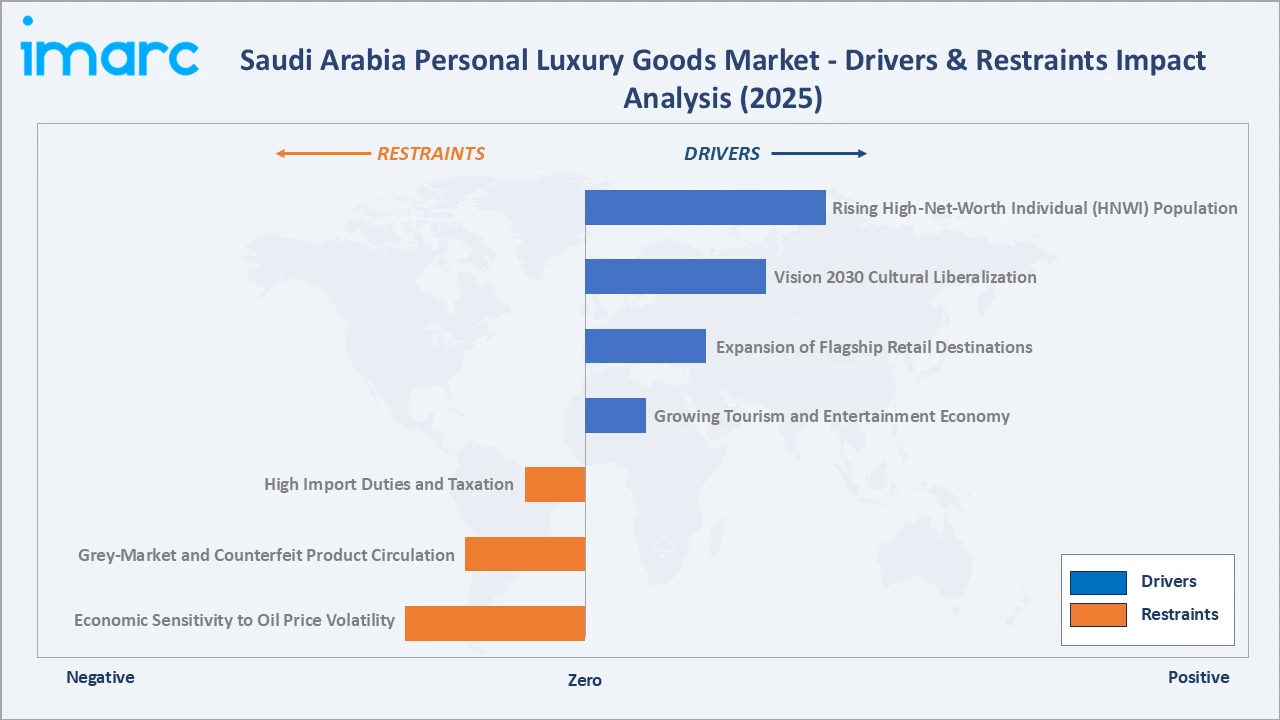
- Rising High-Net-Worth Individual (HNWI) Population: Saudi Arabia's wealth base is expanding on the back of economic diversification, elevated government spending, and growth in finance, technology, and real estate sectors, fueling demand for exclusive and status-driven luxury products.
- Vision 2030 Cultural Liberalization: Loosened dress codes, expanded women's rights including the right to drive, and rising female workforce participation have unlocked a powerful new generation of luxury consumers expressing individuality through fashion.
- Expansion of Flagship Retail Destinations: The opening of premium malls such as Solitaire in Riyadh and flagship brand centers, including Dolce&Gabbana's Diriyah boutique, is broadening luxury retail infrastructure and brand visibility across the Kingdom.
- Growing Tourism and Entertainment Economy: Vision 2030's investment in cinemas, entertainment complexes, and hospitality is driving footfall to shopping destinations and normalizing luxury consumption in public life.
Market Restraints
- High Import Duties and Taxation: Saudi Arabia's tariff structure on imported luxury goods raises end-consumer prices, occasionally directing high-value purchases toward international shopping trips.
- Grey-Market and Counterfeit Product Circulation: Informal channels and counterfeit goods create brand-value dilution risks and complicate authorized distributors' pricing strategies.
Market Opportunities
- Digital and Omnichannel Retail Expansion: Rising smartphone penetration and e-commerce adoption present opportunities for luxury brands to develop direct-to-consumer digital platforms tailored to Saudi shoppers.
- Localization of Retail Experiences: Brands that adapt store design, product assortments, and marketing to Saudi cultural preferences can strengthen loyalty among the Kingdom's next generation of luxury consumers.
Market Challenges
- Economic Sensitivity to Oil Price Volatility: Fluctuations in oil revenue can influence government spending and broader consumer sentiment, indirectly affecting discretionary luxury purchases.
- Intensifying Regional Competition: Neighboring markets such as the UAE continue to attract luxury retail investment and tourist spending, requiring Saudi-focused brands to differentiate through localized experiences.
Emerging Market Trends
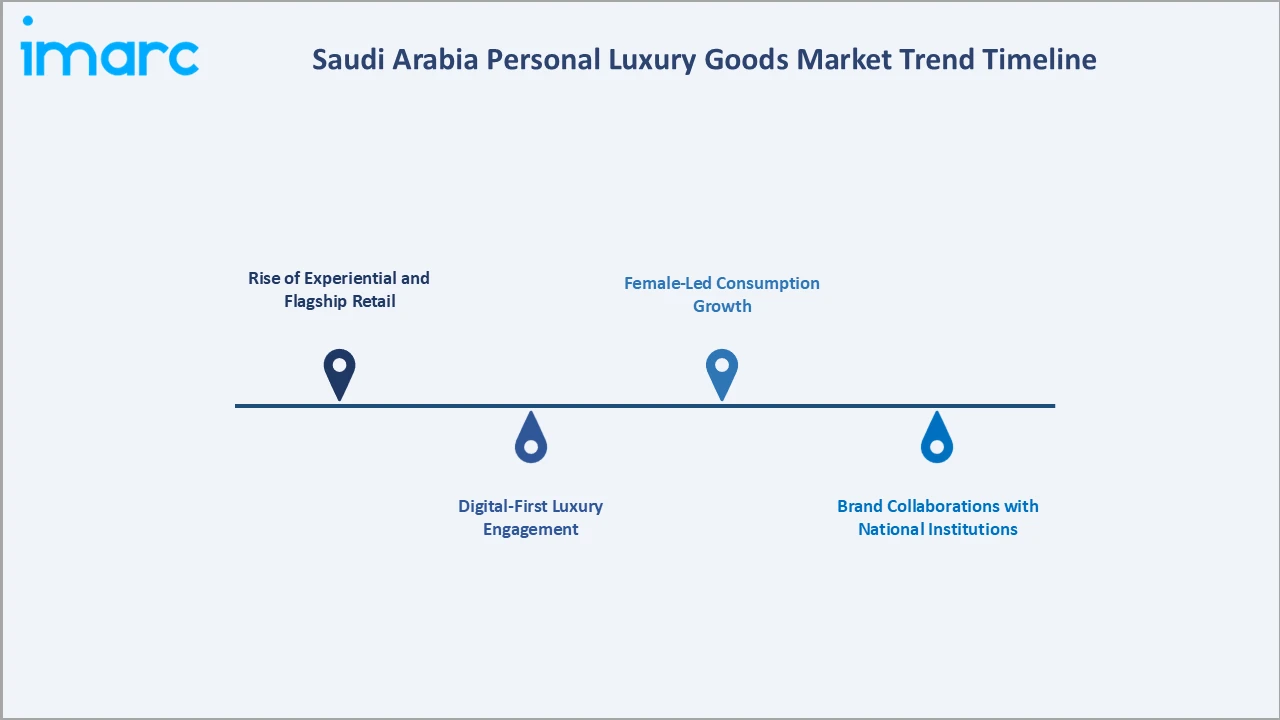
1. Rise of Experiential and Flagship Retail
Global luxury houses are investing in large-format flagship boutiques that blend retail with hospitality, exemplified by Dolce&Gabbana's 1,500-square-meter Diriyah center featuring an integrated cafe concept.
2. Digital-First Luxury Engagement
Younger Saudi consumers increasingly discover and research luxury products through social media and digital platforms before purchasing in-store, prompting brands to strengthen omnichannel personalization.
3. Female-Led Consumption Growth
Expanding female workforce participation and loosened social restrictions continue to drive a structural rise in independent female luxury spending across fashion, jewelry, and cosmetics.
4. Brand Collaborations with National Institutions
Partnerships such as Saudia Airlines' collaboration with ELIE SAAB for premium amenity kits reflect a broader trend of luxury brands embedding themselves within Saudi national institutions and travel experiences.
5. Sustainability and Provenance Focus
Consumers are placing growing emphasis on product provenance, ethical sourcing, and sustainable packaging, prompting brands to highlight craftsmanship credentials in their Saudi marketing.
Industry Value Chain Analysis
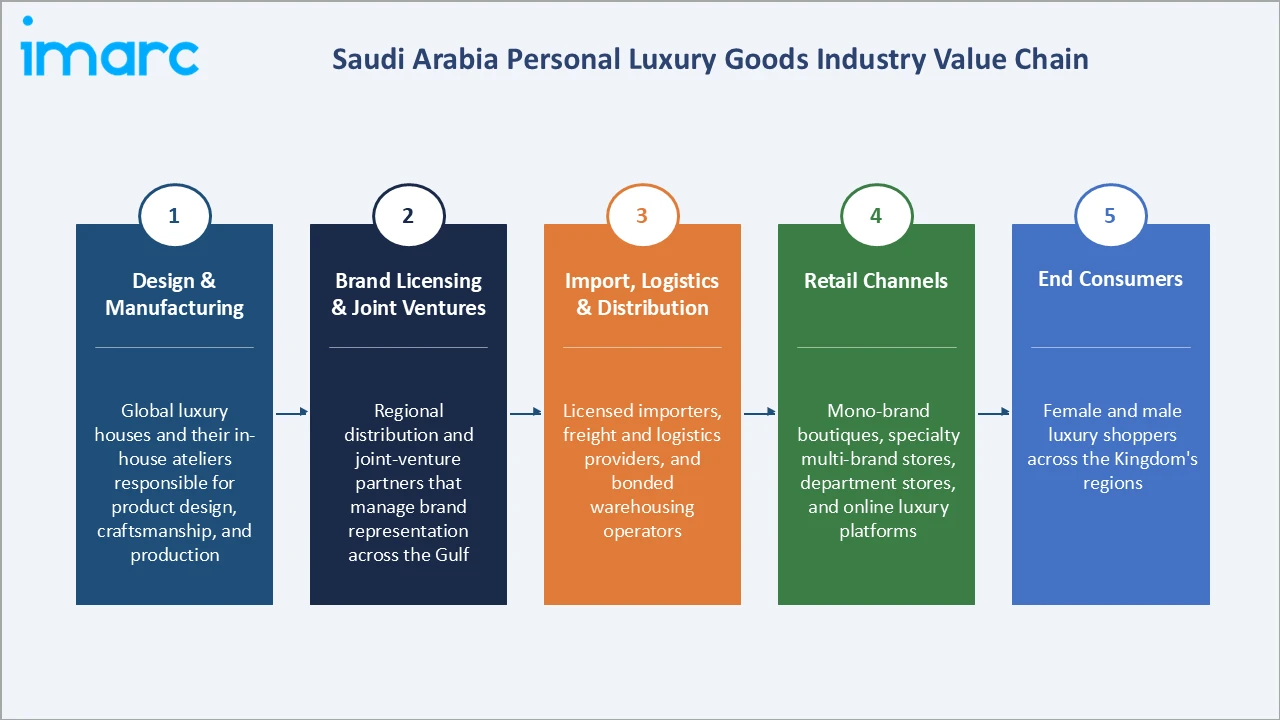
Saudi Arabia's personal luxury goods value chain spans global design and manufacturing through regional distribution partnerships, multi-channel retail, and end-consumer purchase, serving a market valued at USD 5.32 Billion in 2025.
|
Stage |
Key Participants |
|
Design & Manufacturing |
Global luxury houses and their in-house ateliers responsible for product design, craftsmanship, and production |
|
Brand Licensing & Joint Ventures |
Regional distribution and joint-venture partners that manage brand representation across the Gulf |
|
Import, Logistics & Distribution |
Licensed importers, freight and logistics providers, and bonded warehousing operators |
|
Retail Channels |
Mono-brand boutiques, specialty multi-brand stores, department stores, and online luxury platforms |
|
End Consumers |
Female and male luxury shoppers across the Kingdom's regions |
Saudi Arabia's luxury distribution largely follows a joint-venture model, in which global houses partner with established regional groups that bring retail infrastructure, government relationships, and consumer insight. This structure allows international luxury brands to scale quickly while regional partners capture management fees and retail margins across the value chain.
Technology Landscape in the Saudi Arabia Personal Luxury Goods Industry
Digital & Omnichannel Retail Technology
Luxury retailers operating in Saudi Arabia are investing in unified commerce platforms that connect in-store inventory with e-commerce and mobile applications, enabling click-and-collect and personalized styling appointments for Saudi shoppers.
Authentication & Anti-Counterfeiting Technology
Brands are deploying near-field communication tags, blockchain-based provenance certificates, and QR-linked authentication tools to protect against counterfeit circulation and reassure high-value buyers of product authenticity.
AI-Driven Personalization and CRM
Clienteling applications powered by artificial intelligence are helping boutique staff anticipate client preferences, track purchase history, and deliver tailored recommendations, strengthening loyalty among the Kingdom's high-spending consumers.
Sustainable Materials and Craftsmanship Innovation
Luxury houses are increasingly highlighting traceable sourcing and sustainable material innovation in their Saudi marketing, aligning with growing consumer interest in ethically produced goods without compromising traditional craftsmanship.
Market Segmentation Analysis
The report covers the following segments:
|
Segment Category |
Leading Segment |
Market Share |
Year |
|
Type |
🔒 |
🔒 |
2025 |
|
Gender |
Female |
61.8% |
2025 |
|
Distribution Channel |
Mono-brand Stores |
36.9% |
2025 |
|
Region |
Northern & Central Region |
41.6% |
2025 |

By Gender
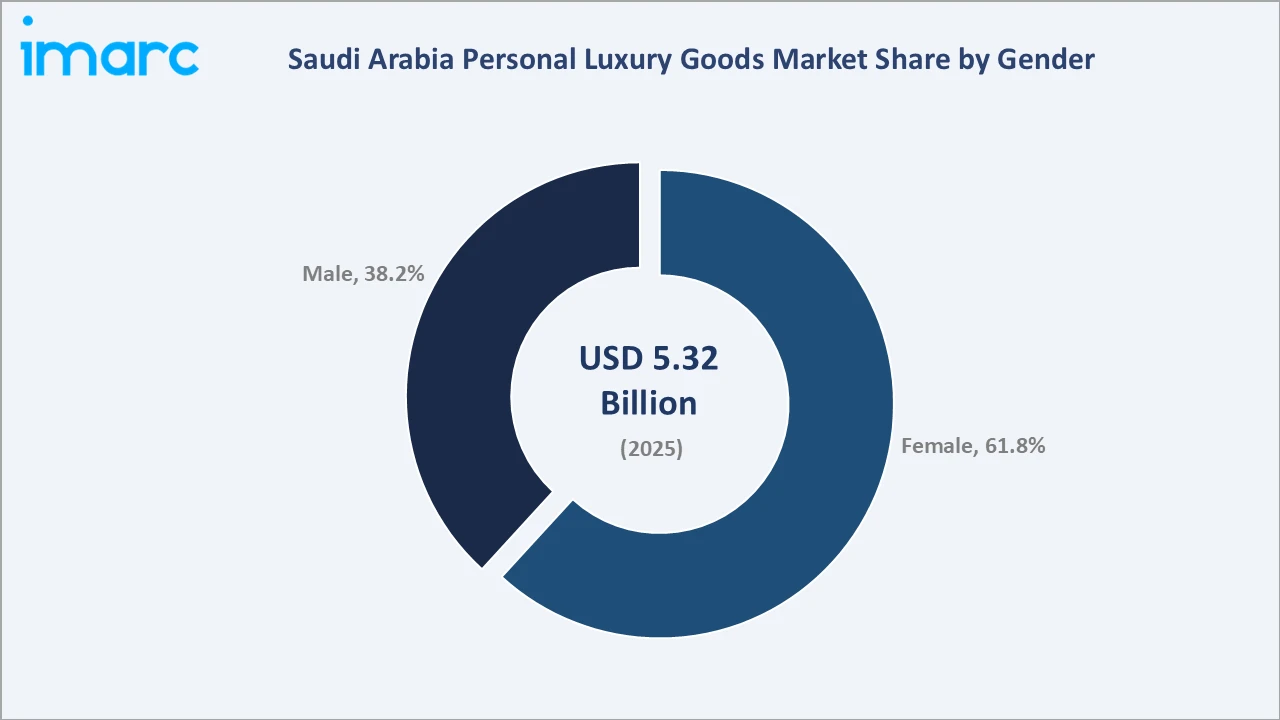
Female consumers accounted for 61.8% of Saudi Arabia's personal luxury goods market in 2025, reflecting the structural impact of Vision 2030 reforms that have expanded women's workforce participation, mobility, and financial independence. Rising representation of Saudi women in retail, hospitality, and corporate sectors has created a substantial, financially empowered consumer segment actively engaging with global fashion and beauty trends.
To access detailed market analysis, Request Sample
Male consumers represent 38.2% of 2025 demand, concentrated in watches, leather accessories, and tailored apparel categories. Growing interest in grooming and personal care among younger Saudi men is gradually broadening male engagement with luxury cosmetics and fragrance lines.
By Distribution Channel
Mono-brand stores lead distribution at 36.9% share (2025), reflecting Saudi consumers' preference for brand-controlled boutiques that guarantee authenticity, exclusive collections, and premium in-store service standards consistent with global flagship locations.
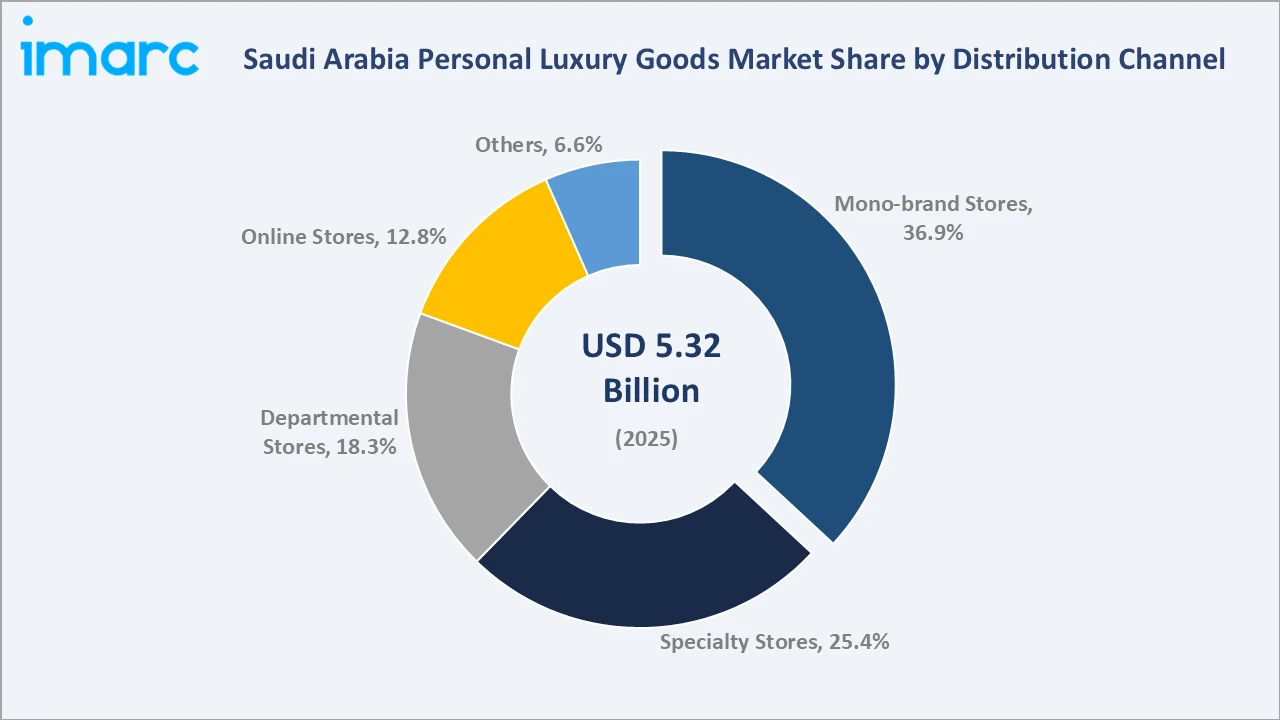
Specialty stores hold 25.4% share, offering curated multi-brand assortments that support product discovery, while departmental stores contribute 18.3% through established retail anchors in major malls. Online stores, at 12.8% share, represent the fastest-growing channel as digital-first consumers embrace e-commerce convenience, with remaining formats, including duty-free and pop-up stores, accounting for the residual 6.6%.
Regional Market Insights
|
Region |
Share (2025) |
Key Growth Drivers & Characteristics |
|
Northern & Central Region |
41.6% |
Highest concentration of high-net-worth households and flagship retail destinations centered around Riyadh; strong government and corporate presence supporting luxury spending |
|
Western Region |
27.2% |
High religious and leisure tourism traffic through Jeddah, Makkah, and Madinah; strong port-city commercial activity supporting premium retail demand |
|
Eastern Region |
19.5% |
Concentration of oil, gas, and petrochemical sector wealth generating strong demand for premium and luxury lifestyle products |
|
Southern Region |
11.7% |
Emerging retail infrastructure development and gradually rising urban affluence supporting incremental luxury demand growth |
The Northern and Central Region's 41.6% dominance reflects Riyadh's status as Saudi Arabia's economic and administrative capital, home to the highest concentration of high-net-worth households and flagship luxury retail destinations. Riyadh's rapid population and corporate growth continues to reinforce the region's outsized contribution to national luxury spending.
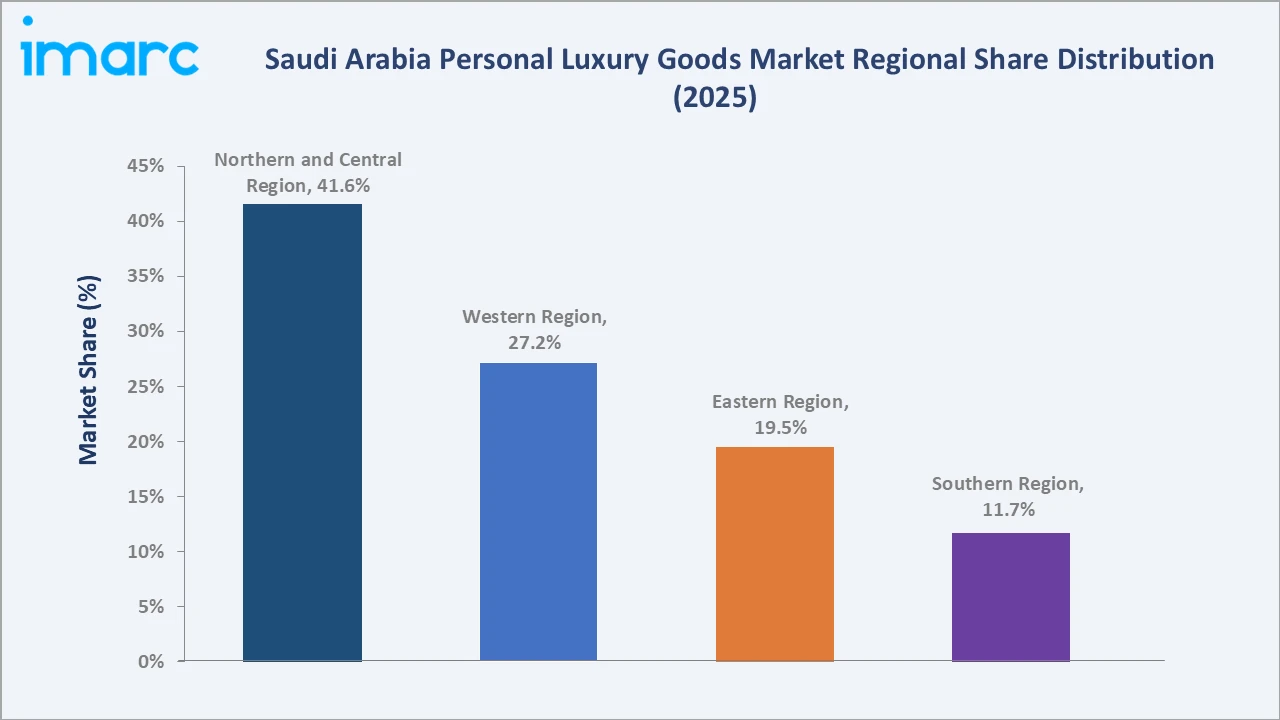
The Western Region's 27.2% share is anchored by Jeddah's role as a major commercial gateway, alongside sustained religious tourism traffic to Makkah and Madinah that supports premium retail spending. The Eastern Region's 19.5% share reflects wealth concentration linked to the oil, gas, and petrochemical sector, while the Southern Region's 11.7% share points to a smaller but steadily developing luxury retail base.
Competitive Landscape
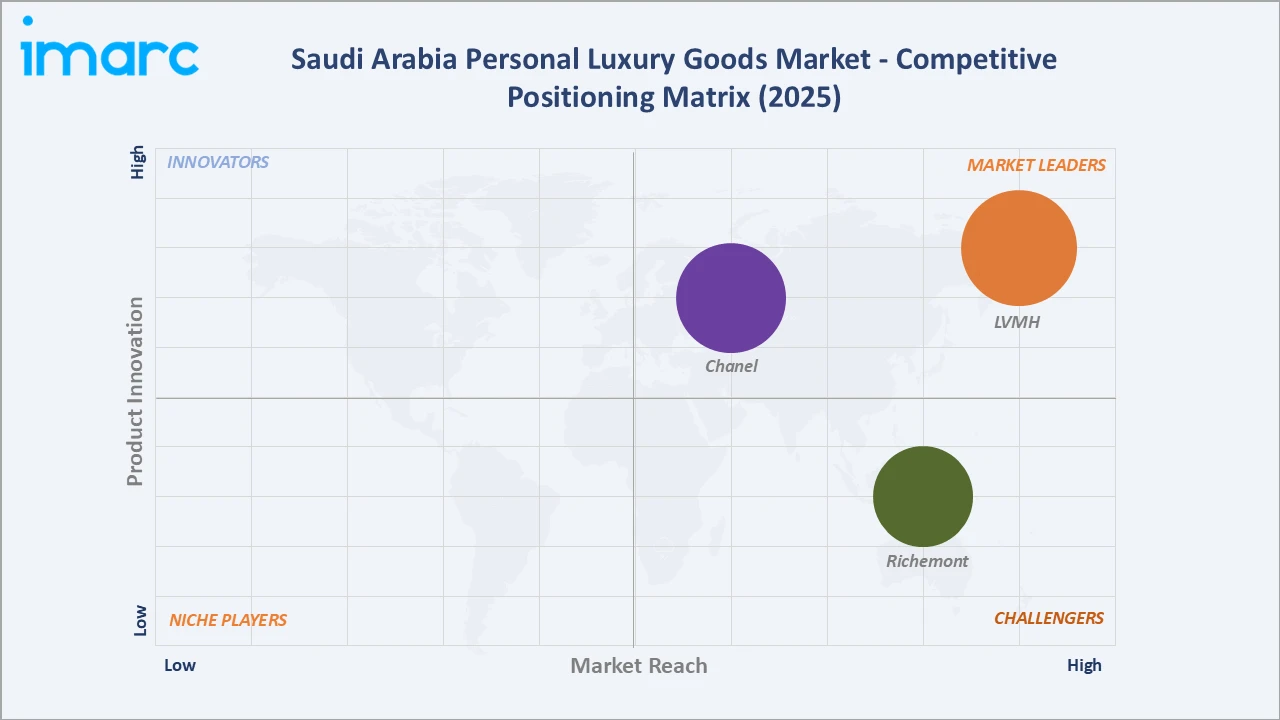
Saudi Arabia's personal luxury goods market is moderately concentrated among global houses represented through regional joint-venture and distribution partners, with LVMH-affiliated brands and Chanel commanding strong brand equity across fashion and leather goods categories.
|
Company Name |
Brand / Product Line |
Market Position |
Core Strength |
|
LVMH |
Louis Vuitton, Christian Dior, Tiffany & Co., Bvlgari, Fendi |
Market Leader |
One of the world’s largest luxury conglomerate, centres on capturing the nation's rising affluent consumer base, expanding through upscale malls in cities like Riyadh and Jeddah |
|
Chanel |
Chanel Fashion, Chanel Beauty, Chanel Fine Jewellery |
Market Leader |
Entrenched brand heritage and exclusivity strategy resonate strongly with Saudi Arabia's discerning luxury clientele |
|
Richemont |
Cartier, Van Cleef & Arpels, Montblanc, Panerai, Vacheron Constantin |
Strong Challenger |
Operates via Richemont Saudi Arabia L.L.C. with multiple Riyadh boutiques, including a flagship at Solitaire Mall |
Key Company Profiles
LVMH
LVMH is a leading conglomerate in Saudi Arabia's personal luxury goods market, with a diverse portfolio spanning fashion, leather goods, and beauty brands.
- Product Portfolio: Louis Vuitton, Christian Dior, Tiffany & Co., Bvlgari, Fendi, and others.
- Strategic Focus: Flagship store expansion in partnership with Chalhoub Group to deepen Kingdom-wide brand presence.
Chanel
Chanel maintains a premium standalone presence in Saudi Arabia across fashion, fine jewelry, and beauty, emphasizing brand exclusivity and heritage craftsmanship.
- Product Portfolio: Chanel Ready-to-Wear, Chanel Fine Jewellery, Chanel Fragrance and Beauty, and others.
- Strategic Focus: Preserving brand exclusivity through controlled distribution and limited retail footprint expansion.
Richemont
Richemont operates in Saudi Arabia through Richemont Saudi Arabia L.L.C., with Cartier maintaining a growing boutique network across Riyadh.
- Product Portfolio: Cartier, Van Cleef & Arpels, Montblanc, Panerai, Vacheron Constantin, and others.
- Strategic Focus: Expanding boutique presence in premium malls while deepening craftsmanship training programs for Saudi talent.
Market Concentration Analysis
Saudi Arabia's personal luxury goods market exhibits moderate concentration at the top tier, with LVMH-affiliated brands and Chanel commanding an estimated combined 30-38% of premium fashion and leather goods value share (2025), while distribution remains consolidated among a small number of regional joint-venture partners.
Below the top tier, the market shows greater fragmentation across specialty and departmental store formats, where multiple mid-tier and emerging designer brands compete for shelf space. Chalhoub Group and Al Tayer Group together control access to a substantial share of Saudi Arabia's mono-brand and specialty retail infrastructure, creating a distribution bottleneck that shapes competitive dynamics for brands entering the Kingdom.
Consolidation trends continue at the retail infrastructure level, with global houses increasingly favoring joint-venture partnerships over independent market entry to leverage established local relationships, government engagement, and flagship mall access.
Investment & Growth Opportunities
Fastest Growing Segments
Online stores represent Saudi Arabia's fastest-growing distribution channel through 2034, driven by rising digital adoption among younger consumers and improving luxury e-commerce logistics. The female consumer segment is also expected to sustain above-market growth, supported by continuing workforce participation gains under Vision 2030.
Emerging Market Opportunities
Saudi Arabia's Vision 2030 entertainment and tourism investment creates a viable pathway for luxury brands to expand experiential retail formats, including flagship boutiques integrated with hospitality and dining concepts, similar to recent openings in Diriyah.
Investment Themes
- Digital Luxury Platform Investment: Growing opportunity for brands and distributors to develop localized e-commerce and mobile clienteling platforms tailored to Saudi shoppers.
- Flagship Experiential Retail: Rising investment potential in large-format boutiques combining retail, hospitality, and cultural storytelling elements.
- Regional Joint-Venture Partnerships: Continued opportunity for global brands to enter or expand in the Kingdom through established distribution partners such as Chalhoub Group and Al Tayer Group.
Future Market Outlook (2026-2034)
Saudi Arabia's personal luxury goods market is projected to grow from USD 5.32 Billion in 2025 to USD 8.51 Billion by 2034, at a 5.37% CAGR, reflecting sustained wealth creation and continuing Vision 2030-driven social transformation. The market's USD 6.90 Billion valuation in 2030 will be shaped by expanding flagship retail infrastructure, rising female consumer spending, and growing digital engagement across the Kingdom's luxury retail landscape.
Three structural forces underpin the market's growth trajectory through 2034: Vision 2030's continuing expansion of women's economic participation, sustained high-net-worth wealth creation linked to economic diversification, and the ongoing build-out of flagship retail and entertainment infrastructure across Riyadh, Jeddah, and the Eastern Province.
Research Methodology
Primary Research
Primary research comprised structured interviews with luxury retail executives, regional distribution and joint-venture partners, mall management representatives, and consumer insight specialists across Riyadh and Jeddah.
Secondary Research
Secondary research encompassed Saudi General Authority for Statistics (GASTAT) consumer spending data, Ministry of Commerce regulatory filings, Saudi Central Bank (SAMA) household income statistics, Vision 2030 program documentation, and company disclosures from major luxury groups operating in the Kingdom.
Forecasting Models
Market value forecasts were developed using a combination of top-down macroeconomic modeling and bottom-up channel-level demand estimation, validated against historical retail spending trends and regional wealth distribution data.
Saudi Arabia Personal Luxury Goods Market Report Coverage:
| Report Features | Details |
|---|---|
| Base Year of the Analysis | 2025 |
| Historical Period | 2020-2025 |
| Forecast Period | 2026-2034 |
| Units | Billion USD |
| Scope of the Report |
Exploration of Historical Trends and Market Outlook, Industry Catalysts and Challenges, Segment-Wise Historical and Future Market Assessment:
|
| Types Covered | Accessories, Apparel, Watch and Jewellery, Luxury Cosmetics, Others |
| Genders Covered | Female, Male |
| Distribution Channels Covered | Mono-brand Stores, Specialty Stores, Departmental Stores, Online Stores, Others |
| Regions Covered | Northern and Central Region, Western Region, Eastern Region, Southern Region |
| Companies Covered | LVMH, Chanel, Richemont, etc. |
| Customization Scope | 10% Free Customization |
| Post-Sale Analyst Support | 10-12 Weeks |
| Delivery Format | PDF and Excel through Email (We can also provide the editable version of the report in PPT/Word format on special request) |
Key Benefits for Stakeholders:
- IMARC’s industry report offers a comprehensive quantitative analysis of various market segments, historical and current market trends, market forecasts, and dynamics of the Saudi Arabia personal luxury goods market from 2020-2034.
- The research report provides the latest information on the market drivers, challenges, and opportunities in the Saudi Arabia personal luxury goods market.
- Porter's five forces analysis assist stakeholders in assessing the impact of new entrants, competitive rivalry, supplier power, buyer power, and the threat of substitution. It helps stakeholders to analyze the level of competition within the Saudi Arabia personal luxury goods industry and its attractiveness.
- Competitive landscape allows stakeholders to understand their competitive environment and provides an insight into the current positions of key players in the market.
Frequently Asked Questions About the Saudi Arabia Personal Luxury Goods Market Report
The Saudi Arabia personal luxury goods market reached USD 5.32 Billion in 2025, driven by rising high-net-worth wealth, Vision 2030 social reforms, and expanding flagship retail infrastructure across the Kingdom.
The market is projected to grow at a CAGR of 5.37% during 2026-2034, reaching USD 8.51 Billion by 2034, supported by sustained wealth creation and cultural liberalization.
Female consumers lead with 61.8% share (2025), reflecting Vision 2030's expansion of women's workforce participation, mobility, and financial independence across the Kingdom.
Mono-brand stores hold the largest share at 36.9% (2025), anchored by consumer preference for brand-controlled boutiques offering authenticated products and premium service.
Online stores are the fastest-growing channel through 2034, driven by rising digital adoption among younger consumers and improving e-commerce logistics for luxury categories.
The Northern and Central Region leads with 41.6% share (2025), anchored by Riyadh's concentration of high-net-worth households and flagship retail destinations.
Leading companies include LVMH, Chanel, and Richemont, among other global and regional luxury players.
Vision 2030 is expanding women's workforce participation, loosening social restrictions, and driving tourism and entertainment investment, collectively fueling demand for luxury goods.
The market is projected to reach approximately USD 6.90 Billion by 2030, supported by continuing flagship retail expansion and rising female consumer spending under Vision 2030.
Joint ventures with regional partners such as Chalhoub Group and Al Tayer Group allow global luxury houses to scale quickly by leveraging established retail infrastructure and relationships.
Need more help?
- Speak to our experienced analysts for insights on the current market scenarios.
- Include additional segments and countries to customize the report as per your requirement.
- Gain an unparalleled competitive advantage in your domain by understanding how to utilize the report and positively impacting your operations and revenue.
- For further assistance, please connect with our analysts.
 Request Customization
 Speak to an Analyst
 Request Brochure
 Inquire Before Buying
Benefits of Customization
- Personalize this research
- Triangulate with your data
- Get data as per your format and definition
- Gain a deeper dive into a specific application, geography, customer, or competitor
- Any level of personalization
Get in Touch With Us
UNITED STATES
Phone: +1-201-971-6302
INDIA
Phone: +91-120-433-0800
UNITED KINGDOM
Phone: +44-753-714-6104
Email: [email protected]
Client Testimonials




.webp)




.webp)













Related Reports

Choose your plan
*Please note that the prices mentioned below are starting prices for each bundle type. Kindly contact our team for further details.*
Single User License
- 1 User License, Access on 2 Devices
- PDF Report + Excel Dataset (Password Protected)
- Lifetime Access
- No Printing Rights
- 10% Free Report Customization
- 10–12 Weeks of Analyst Support
Five User License
- Access for 5 Users, 2 Devices per User
- PDF Report + Excel Dataset (Password Protected)
- Lifetime Access
- Dedicated Account Manager
- 12–14 Weeks of Analyst Support
- No Printing Rights
- 15% Free Report Customization
- 25% Discount on Your Next Purchase
Corporate User License
- Unlimited User Access (Within Your Organization)
- PDF Report + Excel Dataset
- Lifetime Access
- Dedicated Account Manager
- 14–20 Weeks of Analyst Support
- No Printing Rights
- 20% Free Report Customization
- 30% Discount on Your Next Purchase
Essential Insights
What's included:
3 reports
- Lifetime Access
- PDF Reports
- Excel Datasets
- 2 Weeks of Free Analyst Support
- 2 User Licenses
- Access on 2 Devices
- Printing Rights
- Complimentary PowerPoint (PPT) Version
- Complimentary License Upgrade
Professional Access
What's included:
5 reports
- Lifetime Access
- PDF Reports
- Excel Datasets
- 8 Weeks of Free Analyst Support
- 2 User Licenses
- Access on 2 Devices
- Printing Rights
- Complimentary PowerPoint (PPT) Version
- Complimentary License Upgrade
Business Advantage
What's included:
8 reports
- Lifetime Access
- PDF Reports
- Excel Datasets
- 14 Weeks of Free Analyst Support
- 2 User Licenses
- Access on 2 Devices
- Printing Rights
- Complimentary PowerPoint (PPT) Version
- Complimentary License Upgrade
Enterprise Intelligence
What's included:
10 reports
- Lifetime Access
- PDF Reports
- Excel Datasets
- 20 Weeks of Free Analyst Support
- 2 User Licenses
- Access on 2 Devices
- Printing Rights
- Complimentary PowerPoint (PPT) Version
- Complimentary License Upgrade