
Saudi Arabia Plant-Based Cheese Market Size, Share, Trends and Forecast by Raw Material, Product Type, Application, Distribution Channel, and Region, 2026-2034
Saudi Arabia Plant-Based Cheese Market Summary:
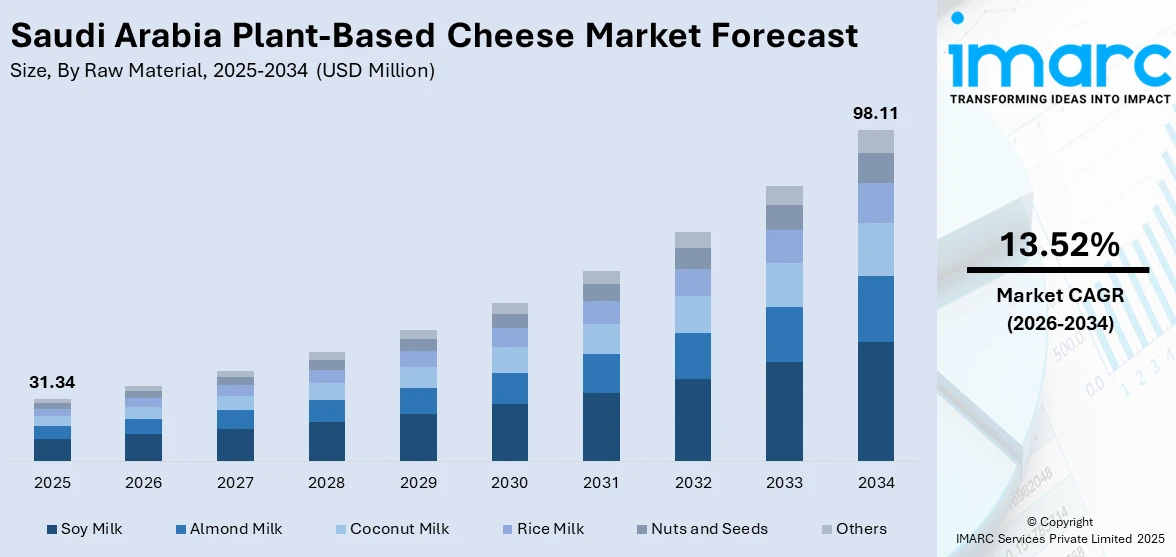
The Saudi Arabia plant-based cheese market size was valued at USD 31.34 Million in 2025 and is projected to reach USD 98.11 Million by 2034, growing at a compound annual growth rate of 13.52% from 2026-2034.
The market for plant-based cheese in Saudi Arabia is expanding rapidly due to urban consumers' growing adoption of flexitarian lifestyles, greater knowledge of lactose sensitivity, and growing health consciousness. Market expansion is being accelerated by government initiatives under Vision 2030 and the expansion of contemporary retail infrastructure. Consumer buying habits are changing throughout the Kingdom as dietary tastes shift toward sustainable and ethical food substitutes.
Key Takeaways and Insights:
- By Raw Material: Soy milk dominates the market with a share of 32% in 2025, owing to its high protein content, cost-effectiveness, and widespread availability across retail channels. Rising consumer awareness of soy-based products as viable dairy alternatives is fueling market expansion.
- By Product Type: Mozzarella leads the market with a share of 40% in 2025, driven by the thriving quick-service restaurant sector and growing pizza consumption patterns. Superior melting properties and versatile culinary applications are strengthening product adoption.
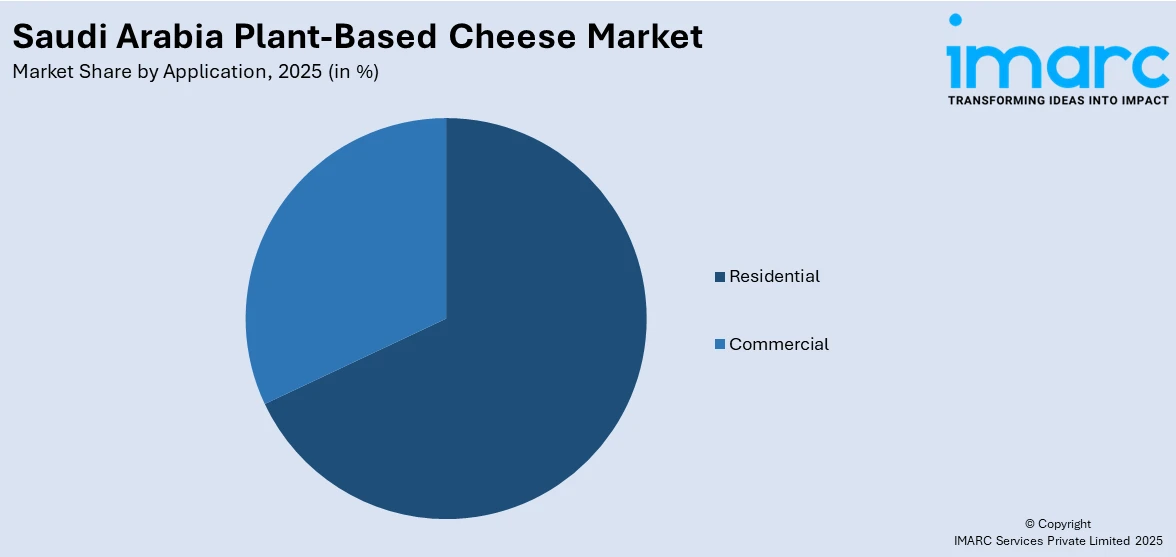
- By Application: Residential represents the biggest segment with a market share of 68% in 2025, reflecting strong household demand for plant-based alternatives among health-conscious families. Rising urbanization and busy lifestyles are driving home consumption.
- By Distribution Channel: Offline stores exhibit a clear dominance with 62% share in 2025, supported by expanding hypermarket and supermarket networks offering diverse product assortments. Physical retail channels provide product visibility and immediate availability.
- By Region: Northern and Central Region is the largest region with 29% share in 2025, driven by Riyadh's concentrated urban population, higher disposable incomes, and modern retail infrastructure supporting specialty food products.
- Key Players: Key players drive the Saudi Arabia plant-based cheese market by expanding product portfolios, enhancing taste and texture technologies, and strengthening nationwide distribution networks. Their investments in marketing, affordability, and partnerships with foodservice providers boost awareness.
To get more information on this market Request Sample
The Saudi Arabia plant-based cheese market is advancing as consumers, foodservice operators, and retailers embrace dairy-free alternatives driven by health concerns and evolving dietary preferences. The Kingdom's large young population, with approximately 71% under the age of 35, is demonstrating heightened interest in sustainable food choices and plant-based lifestyles. Significant dietary changes toward plant-based dairy substitutes are being brought about by growing awareness of lactose sensitivity. Plant-based mozzarella with better melting qualities is in high demand due to the growing quick-service restaurant industry and rising pizza consumption. Government initiatives promoting food security and sustainable agriculture under Vision 2030 are encouraging local production and innovation in alternative protein sectors. Product visibility and accessibility are being improved by modern retail growth. By giving urban customers looking for healthier lifestyle options easy access to niche plant-based products, e-commerce penetration is further boosting market growth.
Saudi Arabia Plant-Based Cheese Market Trends:
Rising Health Consciousness Among Young Consumers
Saudi Arabia's dietary habits are changing due to the steadily rising health consciousness, especially among millennials and Generation Z customers who are actively looking for healthier options. People are looking for plant-based options that have lower cholesterol and less saturated fat because lifestyle-related conditions are becoming more common. Younger populations are drawn to dairy-free cheese products that meet their health-conscious goals as a result of social media influencers and wellness advocates raising awareness of the advantages of plant-based diets.
Expansion of Specialty and International Plant-Based Brands
International plant-based brands are increasingly penetrating the Saudi market through strategic retail partnerships and distribution agreements. In order to appeal to both health-conscious consumers and expatriate groups, upscale supermarket chains are allocating shelf space to imported dairy-free cheese variants. The diversification of product offerings, including artisanal and gourmet plant-based cheese options, is elevating consumer expectations and encouraging trial purchases among mainstream shoppers seeking sophisticated dairy alternatives.
Growing Foodservice Adoption of Plant-Based Cheese Alternatives
Quick-service restaurants and cafes are increasingly incorporating plant-based cheese options into their menus to attract health-conscious and dietary-restricted customers. The thriving foodservice industry is recognizing the commercial potential of offering vegan and lactose-free alternatives alongside traditional menu items. Restaurant operators are partnering with plant-based suppliers to develop custom formulations that deliver consistent melting performance and taste profiles required for commercial food preparation applications.
How Vision 2030 is Transforming the Saudi Arabia Plant-Based Cheese Market:
Saudi Arabia's Vision 2030 initiative is fundamentally reshaping the plant-based cheese market by prioritizing food security, sustainable agriculture, and economic diversification. The government's comprehensive framework encourages local production of alternative protein products while reducing dependence on imports. Strategic agreements between the Ministry of Environment, Water and Agriculture and domestic companies are fostering innovation in plant-based manufacturing capabilities. The Saudi Green Initiative complements these efforts by promoting sustainable food practices and supporting local plant-based food startups. Regulatory bodies are establishing clear guidelines and incentives for businesses producing or selling vegan products, creating a favorable environment for market expansion. The emphasis on healthy eating and nutritional awareness within Vision 2030's social transformation agenda is driving consumer acceptance of plant-based alternatives as mainstream dietary options.
Market Outlook 2026-2034:
The Saudi Arabia plant-based cheese market is poised for substantial expansion as consumer preferences increasingly shift toward healthier and sustainable food alternatives. Growing awareness of lactose intolerance and rising demand for cholesterol-free options are creating significant opportunities for market participants. The market generated a revenue of USD 31.34 Million in 2025 and is projected to reach a revenue of USD 98.11 Million by 2034, growing at a compound annual growth rate of 13.52% from 2026-2034. Plant-based mozzarella and processed cheese types will continue to be in high demand due to the growing foodservice industry, especially quick-service restaurants and pizzerias. Product accessibility in urban and semi-urban areas is being improved by modern retail expansion and e-commerce penetration, setting up the market for long-term, steady growth.
Saudi Arabia Plant-Based Cheese Market Report Segmentation:
| Segment Category | Leading Segment | Market Share |
|---|---|---|
| Raw Material | Soy Milk | 32% |
| Product Type | Mozzarella | 40% |
| Application | Residential | 68% |
| Distribution Channel | Offline Stores | 62% |
| Region | Northern and Central Region | 29% |
Raw Material Insights:
- Soy Milk
- Almond Milk
- Coconut Milk
- Rice Milk
- Nuts and Seeds
- Others
Soy milk dominates with a market share of 32% of the total Saudi Arabia plant-based cheese market in 2025.
Soy milk maintains its leading position as the preferred raw material for plant-based cheese production in Saudi Arabia due to its exceptional protein content and functional properties essential for cheese-making processes. The ingredient offers complete amino acid profiles comparable to dairy proteins, enabling manufacturers to create products with desirable texture and nutritional characteristics that appeal to health-conscious consumers. Soy-based cheese alternatives provide cost-effective solutions for both consumers and producers, making them accessible across various income segments throughout the Kingdom. The versatility of soy milk in replicating traditional cheese flavors and melting properties further strengthens its dominance in the market.
The widespread availability of soy ingredients through established agricultural supply chains supports consistent production and competitive pricing in the market. In January 2025, Siniora Foods announced plans to invest 150 Million Saudi Riyals in a new food production facility focusing on plant-based alternatives, reflecting the growing industrial interest in soy-based product manufacturing. Consumer familiarity with soy products and their recognized health benefits, including lower cholesterol content, continues to drive preference for soy milk-based cheese alternatives among health-conscious Saudi consumers.
Product Type Insights:
- Mozzarella
- Parmesan
- Cheddar
- Others
Mozzarella leads with a share of 40% of the total Saudi Arabia plant-based cheese market in 2025.
Due to the booming quick-service restaurant industry and rising pizza consumption in Saudi Arabia, mozzarella holds the greatest product type share. The product is essential for making pizza, which makes up a sizable amount of the Kingdom's foodservice services, due to its exceptional melting properties and stretchy texture. In order to obtain genuine taste profiles and functional performance that satisfy commercial foodservice requirements, producers of plant-based mozzarella are investing in formulation technology. High-quality mozzarella substitutes that function reliably in professional kitchen settings are in constant demand because to the rising appeal of Italian food and Western-style restaurants.
The Saudi Arabia pizza restaurant market is experiencing robust growth, with cheese being the most essential ingredient for creating signature menu offerings. This substantial commercial demand creates consistent purchasing patterns for plant-based mozzarella suppliers serving both quick-service chains and independent pizzerias throughout urban centers. Residential consumers are also increasingly purchasing plant-based mozzarella for home cooking applications, particularly for preparing Italian-inspired dishes and family meals that traditionally require melting cheese. The versatility of mozzarella in various culinary applications beyond pizza, including lasagna, sandwiches, and appetizers, further strengthens its market position.
Application Insights:
Access the comprehensive market breakdown Request Sample
- Residential
- Commercial
Residential exhibits a clear dominance with 68% share of the total Saudi Arabia plant-based cheese market in 2025.
The residential segment dominates the market as Saudi households increasingly incorporate plant-based cheese into daily meal preparation driven by health considerations and dietary preferences. Urban families with higher disposable incomes are leading adoption trends, particularly in major metropolitan areas where modern retail formats offer diverse product selections. The convenience of home cooking combined with growing awareness of dairy-free benefits among family members with lactose intolerance is accelerating household consumption patterns. Parents are increasingly seeking nutritious alternatives for children while maintaining familiar taste profiles that encourage acceptance of plant-based options within family dining routines.
Saudi Arabia's high urbanization rate concentrates consumers in cities where plant-based products are readily available through supermarkets and hypermarkets offering extensive specialty food sections. Busy lifestyles among dual-income households are driving demand for convenient meal solutions, with plant-based cheese serving as a versatile ingredient for quick home-prepared dishes including sandwiches, pasta, and breakfast items. The growing influence of health-focused social media content and nutrition awareness campaigns is encouraging families to explore dairy alternatives as part of healthier eating habits. Home entertainment trends and increased family gatherings further boost residential consumption of plant-based cheese products.
Distribution Channel Insights:
- Offline Stores
- Online Stores
Offline stores represent the leading segment with 62% share of the total Saudi Arabia plant-based cheese market in 2025.
Offline retail channels maintain market dominance through extensive hypermarket and supermarket networks that provide essential product visibility and immediate availability to consumers across Saudi Arabia. Major retail chains have expanded their specialty food sections to accommodate growing demand for plant-based products, dedicating prominent shelf space to dairy alternatives. The physical retail environment enables consumers to examine product packaging, compare options, and receive guidance from store personnel regarding plant-based alternatives. In-store sampling programs and promotional activities organized by retailers help introduce hesitant consumers to plant-based cheese products, encouraging trial purchases and building brand familiarity.
The Saudi hypermarket and supermarket sector continues expanding with major retailers announcing significant store opening plans in urban and suburban locations to capture growing consumer demand. Leading retail operators maintain nationwide networks with expansion plans targeting underserved areas to improve food accessibility for diverse consumer segments. Cold chain infrastructure investments by leading retailers ensure product freshness and quality maintenance for perishable plant-based cheese products, building consumer confidence in purchasing dairy alternatives through traditional retail channels. Strategic store placements in shopping malls and residential neighborhoods maximize consumer convenience while providing accessible locations for regular grocery shopping that includes specialty plant-based items.
Regional Insights:
- Northern and Central Region
- Western Region
- Eastern Region
- Southern Region
Northern and Central Region holds the largest share with 29% of the total Saudi Arabia plant-based cheese market in 2025.
The Northern and Central Region commands market leadership driven by Riyadh's position as the Kingdom's capital and largest metropolitan area with concentrated urban population and superior retail infrastructure. The region hosts numerous food establishments including restaurants, cafes, and bakeries, creating substantial commercial demand for plant-based ingredients across diverse foodservice formats. Higher disposable incomes and exposure to international food trends among the capital's diverse population accelerate adoption of specialty products including plant-based cheese alternatives. The presence of multinational corporations and expatriate communities introduces cosmopolitan dietary preferences that favor innovative food products and dairy-free options.
Riyadh's modern retail landscape features flagship hypermarkets and premium supermarkets that stock comprehensive selections of plant-based products imported from international suppliers and produced domestically. The region benefits from advanced logistics infrastructure enabling efficient distribution of temperature-sensitive products throughout urban neighborhoods and suburban developments. Government investments in food security initiatives and sustainable agriculture are concentrated in the central region, fostering innovation ecosystems that support plant-based food manufacturing and distribution capabilities. Educational institutions and healthcare facilities in the capital region contribute to heightened nutritional awareness, encouraging consumers to explore plant-based alternatives as part of balanced dietary approaches aligned with modern wellness principles.
Market Dynamics:
Growth Drivers:
Why is the Saudi Arabia Plant-Based Cheese Market Growing?
Rising Prevalence of Lactose Intolerance and Health Awareness
The increasing prevalence of lactose intolerance among the Saudi population is significantly driving demand for plant-based cheese alternatives that provide dairy-free nutrition without digestive discomfort. Medical awareness campaigns and improved diagnostic capabilities are helping more individuals identify lactose sensitivity, prompting dietary modifications that include plant-based dairy substitutes. Healthcare professionals and nutritionists are recommending plant-based alternatives to patients experiencing dairy-related digestive issues, legitimizing these products as therapeutic dietary options. Consumer education initiatives highlighting the connection between dairy consumption and various health conditions are encouraging proactive dietary changes toward plant-based alternatives. The growing body of research linking plant-based diets to improved cardiovascular health and weight management is resonating with health-conscious Saudi consumers seeking preventive nutrition strategies. Social media platforms and wellness influencers are amplifying health messages that position plant-based cheese as superior alternatives for maintaining optimal wellbeing and managing dietary restrictions effectively.
Expanding Quick-Service Restaurant and Foodservice Industry
The thriving quick-service restaurant sector in Saudi Arabia is creating substantial commercial demand for plant-based cheese products that can accommodate diverse dietary preferences among restaurant patrons. Foodservice operators are recognizing the business opportunity in offering vegan and dairy-free menu options to attract health-conscious customers and those with dietary restrictions. International pizza chains and local pizzerias are increasingly incorporating plant-based mozzarella to serve the growing segment of consumers seeking cheese alternatives without compromising taste experience. Menu diversification strategies adopted by restaurants reflect changing consumer expectations for inclusive dining options that cater to various dietary lifestyles and preferences. The Kingdom's foodservice market continues expanding with significant investments in infrastructure and new restaurant openings across urban centers creating consistent demand channels. Cloud kitchen proliferation and food delivery service growth are further expanding plant-based cheese applications as operators develop specialized menu offerings for health-focused consumer segments seeking convenient meal solutions.
Government Support and Food Security Initiatives
The Saudi government's commitment to food security and sustainable agriculture under national transformation programs is creating favorable conditions for plant-based food industry development. Strategic agreements between regulatory authorities and domestic companies are fostering innovation and local production capabilities in alternative protein manufacturing sectors. Government incentives for businesses producing or selling plant-based products are encouraging entrepreneurial investments and market entry by both local and international companies. The Ministry of Environment, Water and Agriculture has established frameworks supporting domestic production of meat and dairy alternatives through advanced agricultural technologies. Public health initiatives promoting balanced nutrition and healthy eating habits are driving consumer acceptance of plant-based alternatives as mainstream dietary options. Investment allocations for food manufacturing infrastructure and technology transfer programs are strengthening the Kingdom's capacity to develop competitive plant-based food processing capabilities for domestic consumption and regional export opportunities.
Market Restraints:
What Challenges the Saudi Arabia Plant-Based Cheese Market is Facing?
Higher Price Points Compared to Traditional Dairy Cheese
The premium pricing of plant-based cheese products compared to conventional dairy alternatives presents significant barriers to mass market adoption among price-sensitive consumer segments. Manufacturing complexities and specialized ingredient requirements contribute to elevated production costs that translate into higher retail prices affecting purchasing decisions. Limited economies of scale in domestic production further compound pricing challenges, creating affordability concerns that restrict market penetration across diverse income demographics.
Taste and Texture Perception Challenges
Consumer perceptions regarding taste and texture differences between plant-based and traditional dairy cheese continue limiting trial and repeat purchases among mainstream shoppers. Achieving authentic melting properties and flavor profiles that satisfy discerning consumers requires ongoing formulation improvements and technological investments from manufacturers. Cultural preferences for traditional dairy products deeply rooted in Saudi cuisine create resistance to accepting plant-based substitutes in familiar recipes and meal preparations.
Limited Product Awareness and Availability
Insufficient consumer awareness regarding plant-based cheese benefits and availability constrains market growth potential, particularly in suburban and rural areas with limited retail options. Distribution challenges in reaching smaller retail outlets and remote locations restrict product accessibility for consumers outside major metropolitan centers. Marketing investments required to educate consumers and build brand recognition represent substantial barriers for new market entrants seeking to establish competitive positions.
Competitive Landscape:
The Saudi Arabia plant-based cheese market exhibits a moderately fragmented competitive landscape with international brands and emerging regional players vying for market share. Leading companies are focusing on product innovation, taste improvement technologies, and strategic distribution partnerships to strengthen market positions. Competitive strategies include expanding product portfolios across multiple cheese varieties, enhancing nutritional profiles, and developing localized flavor offerings that resonate with Saudi consumer preferences. Market participants are investing in marketing initiatives to build brand awareness and educate consumers about plant-based benefits. Strategic collaborations with foodservice operators and retail chains are enabling wider product distribution and enhanced market penetration across the Kingdom.
Saudi Arabia Plant-Based Cheese Market Report Coverage:
| Report Features | Details |
|---|---|
| Base Year of the Analysis | 2025 |
| Historical Period | 2020-2025 |
| Forecast Period | 2026-2034 |
| Units | Million USD |
| Scope of the Report |
Exploration of Historical Trends and Market Outlook, Industry Catalysts and Challenges, Segment-Wise Historical and Future Market Assessment:
|
| Raw Materials Covered | Soy Milk, Almond Milk, Coconut milk, Rice Milk, Nuts and Seeds, Others |
| Product Types Covered | Mozzarella, Parmesan, Cheddar, Others |
| Applications Covered | Residential, Commercial |
| Distribution Channels Covered | Offline Stores, Online Stores |
| Regions Covered | Northern and Central Region, Western Region, Eastern Region, Southern Region |
| Customization Scope | 10% Free Customization |
| Post-Sale Analyst Support | 10-12 Weeks |
| Delivery Format | PDF and Excel through Email (We can also provide the editable version of the report in PPT/Word format on special request) |
Frequently Asked Questions About the Saudi Arabia Plant-Based Cheese Market Report
The Saudi Arabia plant-based cheese market size was valued at USD 31.34 Million in 2025.
The Saudi Arabia plant-based cheese market is expected to grow at a compound annual growth rate of 13.52% from 2026-2034 to reach USD 98.11 Million by 2034.
Soy milk dominated the market with a share of 32%, driven by its high protein content, cost-effectiveness, and widespread availability across retail channels.
Key factors driving the Saudi Arabia plant-based cheese market include rising lactose intolerance awareness, expanding quick-service restaurant sector, government food security initiatives, and growing health consciousness.
Major challenges include higher price points compared to traditional dairy cheese, taste and texture perception challenges, limited product awareness, restricted distribution in remote areas, and competition from established dairy brands.
Need more help?
- Speak to our experienced analysts for insights on the current market scenarios.
- Include additional segments and countries to customize the report as per your requirement.
- Gain an unparalleled competitive advantage in your domain by understanding how to utilize the report and positively impacting your operations and revenue.
- For further assistance, please connect with our analysts.
 Request Customization
 Speak to an Analyst
 Request Brochure
 Inquire Before Buying
Benefits of Customization
- Personalize this research
- Triangulate with your data
- Get data as per your format and definition
- Gain a deeper dive into a specific application, geography, customer, or competitor
- Any level of personalization
Get in Touch With Us
UNITED STATES
Phone: +1-201-971-6302
INDIA
Phone: +91-120-433-0800
UNITED KINGDOM
Phone: +44-753-714-6104
Email: [email protected]
Client Testimonials




.webp)




.webp)













Related Reports

Choose your plan
*Please note that the prices mentioned below are starting prices for each bundle type. Kindly contact our team for further details.*
Single User License
- 1 User License, Access on 2 Devices
- PDF Report + Excel Dataset (Password Protected)
- Lifetime Access
- No Printing Rights
- 10% Free Report Customization
- 10–12 Weeks of Analyst Support
Five User License
- Access for 5 Users, 2 Devices per User
- PDF Report + Excel Dataset (Password Protected)
- Lifetime Access
- Dedicated Account Manager
- 12–14 Weeks of Analyst Support
- No Printing Rights
- 15% Free Report Customization
- 25% Discount on Your Next Purchase
Corporate User License
- Unlimited User Access (Within Your Organization)
- PDF Report + Excel Dataset
- Lifetime Access
- Dedicated Account Manager
- 14–20 Weeks of Analyst Support
- No Printing Rights
- 20% Free Report Customization
- 30% Discount on Your Next Purchase
Essential Insights
What's included:
3 reports
- Lifetime Access
- PDF Reports
- Excel Datasets
- 2 Weeks of Free Analyst Support
- 2 User Licenses
- Access on 2 Devices
- Printing Rights
- Complimentary PowerPoint (PPT) Version
- Complimentary License Upgrade
Professional Access
What's included:
5 reports
- Lifetime Access
- PDF Reports
- Excel Datasets
- 8 Weeks of Free Analyst Support
- 2 User Licenses
- Access on 2 Devices
- Printing Rights
- Complimentary PowerPoint (PPT) Version
- Complimentary License Upgrade
Business Advantage
What's included:
8 reports
- Lifetime Access
- PDF Reports
- Excel Datasets
- 14 Weeks of Free Analyst Support
- 2 User Licenses
- Access on 2 Devices
- Printing Rights
- Complimentary PowerPoint (PPT) Version
- Complimentary License Upgrade
Enterprise Intelligence
What's included:
10 reports
- Lifetime Access
- PDF Reports
- Excel Datasets
- 20 Weeks of Free Analyst Support
- 2 User Licenses
- Access on 2 Devices
- Printing Rights
- Complimentary PowerPoint (PPT) Version
- Complimentary License Upgrade